





Globally, anaemia affects 29 % of pregnant women and 38 % of non-pregnant women( Reference Stevens, Finucane and De-Regil 1 ) and is associated with one-fifth of maternal deaths( Reference Black, Allen and Bhutta 2 ). Anaemia puts women at greater risk of mortality, morbidity, postpartum haemorrhage and poor birth outcomes, including preterm births and low birth weight( Reference Kavle, Stoltzfus and Witter 3 , Reference Rahman, Abe and Rahman 4 ). The WHO recommends daily iron–folic acid (IFA) supplementation (30–60 mg iron, 0·4 g folic acid) initiated as early as possible and continued throughout pregnancy for all adolescent and adult women as a key intervention to reduce the risk of maternal anaemia, iron deficiency and infants born with low birth weight( 5 ). According to findings from a recent meta-analysis, IFA supplementation would increase the mean blood Hb concentration by 10·2 (95 % CI 6·1, 14·2) g/l in pregnant women and by 8·6 (95 % CI 3·9, 13·4) g/l in non-pregnant women (aged 19–21 years)( 6 ). Applying these shifts to estimated blood Hb concentrations indicates that about 50 % of anaemia in women could be eliminated by IFA supplementation( 6 ).
A secondary analysis of national Demographic and Health Survey data sets in nineteen African countries found that when pregnant women received at least ninety IFA supplements through antenatal care (ANC), the risk of neonatal mortality decreased by 34 %( Reference Titaley, Dibley and Roberts 7 ). Similar findings were shown in Nepal, as neonatal mortality decreased by 45 % in the first week and 42 % in the first 28d when women started taking IFA supplements in their first trimester of pregnancy, or if they took at least 150 IFA supplements during their pregnancy( Reference Nisar, Dibley and Mebrahtu 8 , Reference Nisar and Dibley 9 ).
Despite these benefits of maternal IFA supplementation, many low- and middle-income countries continue to face high anaemia rates( Reference Black, Victora and Walker 10 , 11 ). Interventions delivered at the health facility level, such as IFA supplementation, are not operating at scale in most countries due to lack of demand from health sectors and beneficiaries (e.g. low ANC attendance), limited funding, stock outages and ineffective management of supplies( Reference Christian, Shrestha and LeClerq 12 – Reference Trowbridge and Martorell 15 ).
Although these findings reveal the benefits of IFA supplementation for anaemia and neonatal outcomes, more information is needed on best practices and the most effective strategies to deliver IFA supplementation through community-based channels to complement ANC, since access and supply are issues( Reference Christian, Shrestha and LeClerq 12 – Reference Trowbridge and Martorell 15 ). In the present review, we examine evidence for community-based distribution (CBD) of IFA supplementation as a feasible approach to improve anaemia rates in low- and middle-income countries.
Design and methods
An extensive literature review of peer-reviewed and grey literature on CBD of IFA supplementation for pregnant women and women of reproductive age (WRA) was conducted. This search strategy was developed and reviewed by the authors and included the following keywords in various combinations: ‘community based distribution’ & ‘IFA’, ‘iron–folic acid’ & ‘community health workers’, ‘CBD of IFA’, ‘iron–folic acid’ & ‘community level’, ‘IFA’ & ‘community utilization’ and/or ‘community’ & ‘iron–folic acid supplements’. We searched published literature, including quantitative, qualitative and mixed-methods studies, from PubMed, Cochrane Library, LILAC and Scopus databases. The initial search returned 147 articles, which were reviewed to determine eligibility for inclusion. Inclusion criteria included studies published between the years of 2000 and 2015 and studies which reported a community element and/or community-based distribution of IFA supplements that described at least one of the following components of programme implementation: type of health worker, supply and demand issues, coverage within the community, and strategies to improve IFA supplementation coverage and utilization for pregnant women and WRA in low- and middle-income countries. CBD of IFA supplementation was reported through various platforms, including private pharmacies within communities, community health centres, home visits from health workers and community gatherings for health education sessions. The type of worker/distributor at the community level varied and included midwives, community health workers (CHW), volunteer health workers, mobile health workers from local health centres, village youth volunteers and pharmacists.
One author reviewed and screened titles and abstracts to determine initial inclusion, while the other author confirmed the final articles for the review. This resulted in a final pool of twenty-two articles with findings from Ending Preventable Maternal and Child Deaths (EPCMD)Footnote * priority countries, including Bangladesh, India, Kenya, Mali, Nepal, Pakistan, Senegal and Tanzania, as well as findings from other countries: Cambodia, Iran, Philippines, Tibet and Vietnam (see Table 1). Excluded articles were those without a community component (e.g. IFA supplementation strictly at the health facility level) and reviews of previous programmes (e.g. systematic reviews of programme evaluations).
Summary of key findings from articles included in the present review of community-based distribution of iron–folic acid supplementation in low- and middle-income countries
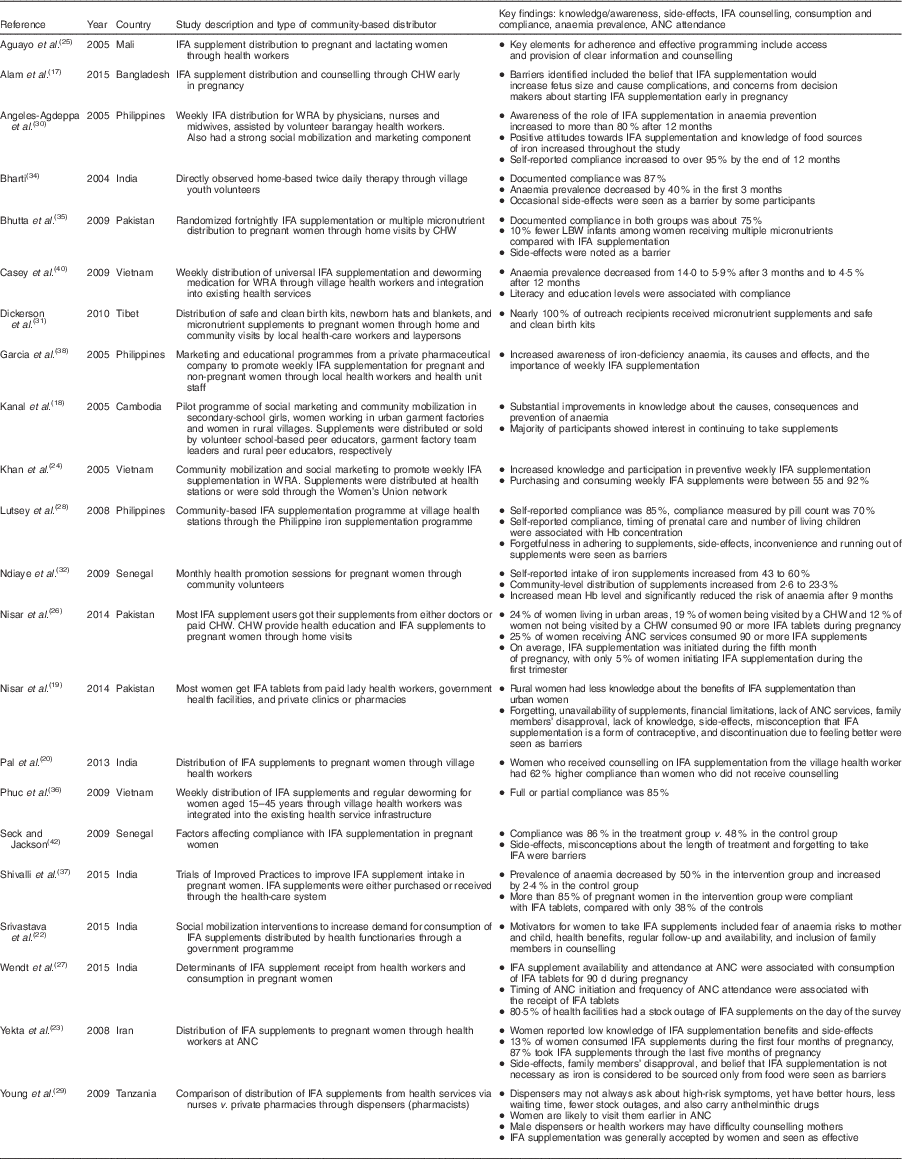
IFA, iron–folic acid; ANC, antenatal care; CHW, community health workers; WRA, women of reproductive age; LBW, low birth weight.
Results
Strengths of community-based distribution of iron–folic acid supplementation
Community-based distribution of iron–folic acid supplementation is a valuable platform to increase awareness and knowledge of anaemia and iron–folic acid supplementation
Seven studies reported on increased knowledge and coverage of IFA supplementation through provision of messages and counselling on anaemia and IFA supplementation through community-based channels( Reference Alam, Rasheed and Khan 17 – Reference Yekta, Ayatollahi and Pourali 23 ). A study from Iran found that CHW provided counselling on the importance of taking IFA supplements for reducing anaemia. Due to increased awareness and knowledge, pregnant women who received messages from CHW about the benefits of IFA supplementation and potential side-effects adhered to IFA supplements for a significantly longer duration (5–9 months) than women who did not receive messages( Reference Yekta, Ayatollahi and Pourali 23 ). Another study in Cambodia, which reported on the implementation of a weekly IFA supplementation government programme with secondary-school girls (n 423), women employed in garment factories (n 478) and rural women (n 639), showed substantial improvements in knowledge about the causes, consequences and prevention of anaemia following promotion through social marketing strategies( Reference Kanal, Busch-Hallen and Cavalli-Sforza 18 ). The programme consisted of public broadcasts, billboards, CHW visiting residents, and programme-related T-shirts and bags distributed to community residents.
A government and private-sector pilot project in Vietnam, which employed community-based social mobilization and social marketing approaches in sites supported by volunteer village health workers, government health facility workers and non-governmental organizations, demonstrated significant increases in the percentage of women with awareness that ‘poor nutrition led to anaemia’, that ‘weekly iron–folic acid supplementation could help to prevent anaemia’, of the need for ‘more iron during pregnancy’ and the role of hookworm infection as a cause of iron-deficiency anaemia (P<0·001). The percentage of women who recognized the health effects of anaemia and the health benefits of taking an IFA supplement also increased significantly (P<0·001)( Reference Khan, Thanh and Berger 24 ). Another study in India registered community-level medical practitioners, increased distribution of IFA tablets, and provided women with correct information and messages about consuming IFA tablets. Programme results indicated an increase in awareness of anaemia at the endline survey to more than 90 % of women, which nearly doubled from the baseline figure (49·2 %). In addition, knowledge that taking IFA supplements during pregnancy can prevent anaemia increased significantly from 12·9 % at baseline to 51·5 % at the endline survey( Reference Srivastava, Kotecha and Singh 22 ).
Qualitative data from a study in Pakistan illustrated the value of CBD of IFA supplementation as a platform for communicating the benefits of IFA supplements. One rural mother in Pakistan described her experience: ‘These tablets are good to provide strength to our bodies which are weak during the pregnancy, and also improve the feeling of dizziness; these tablets are good for my health’( Reference Nisar, Alam and Aurangzeb 19 ). In other country contexts such as Bangladesh, India and Senegal, where women received IFA supplements through community channels such as pharmacists and village health workers, women relayed how taking IFA tablets had improved health benefits such as increasing blood volume, leading to fetal nourishment and compensation for blood loss during delivery( Reference Alam, Rasheed and Khan 17 , Reference Pal, Sharma and Sarkar 20 , Reference Seck and Jackson 21 ). In agreement with these studies, in Mali, mothers who received community-based IFA supplementation messages discussed their experience with taking IFA supplements: ‘I feel healthy’, ‘I feel good’ or ‘I don’t fall sick’, ‘the baby is/stays healthy’ and ‘the baby breast-feeds well/a lot/frequently’( Reference Aguayo, Koné and Bamba 25 ).
Community-based distribution of iron–folic acid supplementation can encourage attendance to antenatal care
CBD of IFA supplementation can also be an important mechanism to complement ANC, to encourage early and frequent attendance at ANC, and to achieve the WHO recommendation of at least four visits during pregnancy. Late presentation to ANC, in the second or third trimester, and utilization of health services is a key challenge to maternal IFA supplementation provided through ANC( Reference Yekta, Ayatollahi and Pourali 23 , Reference Khan, Thanh and Berger 24 , Reference Nisar, Dibley and Mir 26 , Reference Wendt, Stephenson and Young 27 ). For example, in the Philippines, the first prenatal visit occurred at 3·80 (sd 1·56) months and mothers averaged less than one visit per month after the initial visit( Reference Lutsey, Dawe and Villate 28 ). Similarly, in another study conducted in Pakistan, maternal IFA supplementation was initiated, on average, in the fifth month of pregnancy, and only 5 % of women presented to ANC and received IFA supplements during their first trimester of pregnancy( Reference Nisar, Dibley and Mir 26 ). Moreover, one-third of participants in Pakistan did not use ANC services at all during their last pregnancy.
In Pakistan, the Philippines, Nepal, Tanzania and Thailand, distribution of IFA supplementation through community-based channels, such as CHW and various women’s social networks, was found to reach a greater proportion of women compared with ANC( Reference Alam, Rasheed and Khan 17 , Reference Yekta, Ayatollahi and Pourali 23 , Reference Nisar, Dibley and Mir 26 , Reference Young, Ali and Beckham 29 ). Six studies found that CBD of IFA supplementation can increase ANC attendance through community agents encouraging earlier and consistent ANC visits( Reference Aguayo, Koné and Bamba 25 , Reference Nisar, Dibley and Mir 26 , Reference Lutsey, Dawe and Villate 28 , Reference Angeles-Agdeppa, Paulino and Ramos 30 – Reference Ndiaye, Siekmans and Haddad 32 ). In Nepal, a programme with community volunteers that distributed IFA supplements found a substantial increase in compliance (defined as those taking 80 % of the recommended number of supplements) and increased ANC attendance through community volunteers, which dispelled a common local belief that community distribution would discourage women from seeking care at health facilities( Reference Pandey, Maharjan and Thapa 33 ).
Community-based distribution of iron–folic acid supplementation can increase compliance and address side-effects
Fourteen( Reference Alam, Rasheed and Khan 17 , Reference Kanal, Busch-Hallen and Cavalli-Sforza 18 , Reference Pal, Sharma and Sarkar 20 , Reference Seck and Jackson 21 , Reference Khan, Thanh and Berger 24 , Reference Aguayo, Koné and Bamba 25 , Reference Wendt, Stephenson and Young 27 , Reference Lutsey, Dawe and Villate 28 , Reference Dickerson, Crookston and Simonsen 31 , Reference Dickerson, Crookston and Simonsen 34 – Reference Shivalli, Srivastava and Singh 37 , Reference Mora 39 ) of twenty-six studies identified CBD platforms as being successful in addressing factors related to compliance, such as maintaining the daily regimen of one pill per day, temporary side-effects (e.g. vomiting, nausea, dizziness) and forgetfulness. In addition, eight studies reported that more than 75 % of women had high compliance (taking ≥70 % of tablets) with IFA supplementation when there was a consistent supply of IFA supplements from the community level, either with or without IFA supplements delivered through health facilities( Reference Seck and Jackson 21 , Reference Khan, Thanh and Berger 24 , Reference Aguayo, Koné and Bamba 25 , Reference Lutsey, Dawe and Villate 28 , Reference Bharti 34 – Reference Shivalli, Srivastava and Singh 37 ).
In India, compliance was higher (62 %) among mothers who were counselled by health workers on when, how and why IFA supplementation is important than among those who did not receive guidance( Reference Pal, Sharma and Sarkar 20 ). In Vietnam, a free monthly distribution of IFA supplements indicated that 85 % of WRA achieved full or partial compliance (defined as taking some but not all tablets) to weekly IFA supplementation through the existing health service infrastructure (e.g. health clinics and facilities) with village health workers as the direct point of contact; and included training for village health workers on anaemia, IFA supplementation and deworming( Reference Phuc, Mihrshahi and Casey 36 ). In a randomized study in Senegal, midwives were a strong motivator for improved IFA supplementation compliance in the treatment group (86 %) v. the control group (48 %; P<0·0001), as midwives encouraged women to take IFA tablets by influencing their perceptions that IFA tablets would improve health and reduce anaemia( Reference Seck and Jackson 21 ).
In addition to the findings above, seven studies described the use of social marketing, counselling and health education methods, in combination with CBD, to increase access and compliance to IFA supplementation( Reference Alam, Rasheed and Khan 17 , Reference Kanal, Busch-Hallen and Cavalli-Sforza 18 , Reference Khan, Thanh and Berger 24 , Reference Aguayo, Koné and Bamba 25 , Reference Wendt, Stephenson and Young 27 , Reference Dickerson, Crookston and Simonsen 31 , Reference Garcia, Datol-Barrett and Dizon 38 ). In Vietnam, rates of buying and consuming a weekly IFA supplement for WRA in programme sites were 55 and 92 %, respectively. High rates were attributed to increased knowledge from community-based social marketing and mobilization( Reference Khan, Thanh and Berger 24 ). In another study carried out in Pakistan, lady health workers, who conduct routine home visits, positively influenced increased consumption of IFA supplements, as 19 % of women residing in programme areas consumed ninety or more tablets, compared with only 12 % in non-programme areas( Reference Nisar, Dibley and Mir 26 ).
Community workers aided women to comply with IFA supplementation throughout pregnancy through home visit reminders, as forgetfulness to take the supplements on a daily basis was reported as a primary reason for non-compliance in settings such as India, Mali, Pakistan, the Philippines and Senegal( Reference Nisar, Alam and Aurangzeb 19 , Reference Seck and Jackson 21 , Reference Aguayo, Koné and Bamba 25 , Reference Lutsey, Dawe and Villate 28 ). Five studies circumvented forgetfulness by utilizing village health volunteers to encourage mothers to use ANC and visiting homes to provide reminders for taking pills( Reference Pal, Sharma and Sarkar 20 , Reference Dickerson, Crookston and Simonsen 31 , Reference Bharti 34 – Reference Phuc, Mihrshahi and Casey 36 ). Moreover, in India, Tibet and Nicaragua, community health volunteers and other community-level workers delivered supplements and provided clients with follow-up counselling, which helped women understand how to address potential and temporary side-effects such as vomiting, nausea and dizziness( Reference Srivastava, Kotecha and Singh 22 , Reference Dickerson, Crookston and Simonsen 31 , Reference Mora 39 ). These strategies often resulted in significantly higher IFA supplement consumption among mothers who received an explanation on IFA supplements from CHW compared with those who were not provided information by the health worker (χ 2=4·529; P<0·05)( Reference Pal, Sharma and Sarkar 20 ).
Barriers to successful roll-out of community-based distribution of iron–folic acid supplementation
Advice from influential family and community members
Four articles identified advice from influential family members as a barrier to consumption of the IFA supplements( Reference Alam, Rasheed and Khan 17 , Reference Nisar, Alam and Aurangzeb 19 , Reference Srivastava, Kotecha and Singh 22 , Reference Yekta, Ayatollahi and Pourali 23 ). One woman reported her mother-in-law’s response when she perceived the iron tablets were causing her to feel ill: ‘I used these [IFA] tablets but after few days I had vomiting and diarrhoea with these [supplements] and my mother-in-law told me to stop this medicine; she [mother-in-law] told me not to take any medicine during pregnancy’( Reference Nisar, Alam and Aurangzeb 19 ). Similarly, in Iran, although most women adhered to IFA for a 5–9-month period, 13 % of women surveyed stopped taking IFA supplements early, because relatives advised them to stop( Reference Yekta, Ayatollahi and Pourali 23 ). CBD can be used to help alleviate potentially negative advice from family members. Using an example from Tibet as to how programmatically this can be achieved, the Pregnancy and Village Outreach Tibet (PAVOT) programme conducted comprehensive community and home-based maternal newborn and nutrition outreach to rural pregnant women and family members on anaemia and IFA supplementation, as well as antenatal/postpartum care, birth planning, danger sign recognition, clean and safe delivery practices, and breast-feeding( Reference Dickerson, Crookston and Simonsen 31 ). The PAVOT programme included training of master trainers, who then trained outreach providers comprising laypersons and health-care workers, through role playing, hands-on skills, and distribution of IFA supplements and counselling on their use. Skills included identification of barriers and solutions to reinforce key messages to women and their families. The programme reported that 68 % of programme participants, consisting of pregnant women and family members, received three or more home visits by CHW that entailed counselling and support to address seeking ANC early, antenatal nutrition, micronutrient supplementation and safe delivery practices( Reference Dickerson, Crookston and Simonsen 31 ). Through the programme, 99 % of pregnant women received IFA supplements, but the programme did not assess compliance to IFA supplementation( Reference Dickerson, Crookston and Simonsen 31 ).
Supplies of iron–folic acid supplements: availability at health facilities v. community
Unavailability of IFA tablets at local health facilities was cited as a barrier to compliance in four articles( Reference Srivastava, Kotecha and Singh 22 , Reference Aguayo, Koné and Bamba 25 – Reference Wendt, Stephenson and Young 27 ), and seven articles reported high compliance (above 75 %) to IFA supplementation when there was a consistent supply of IFA supplements available to them( Reference Khan, Thanh and Berger 24 , Reference Aguayo, Koné and Bamba 25 , Reference Lutsey, Dawe and Villate 28 , Reference Bharti 34 – Reference Shivalli, Srivastava and Singh 37 ). For example, in India, adequate IFA supplement supply was significantly associated with increased IFA supplement consumption when controlling for demographic variables (OR=1·33; 95 % CI 1·03, 1·71)( Reference Wendt, Stephenson and Young 27 ). Women residing in villages where a health centre had available supplies of IFA supplements were more likely to have consumed IFA tablets for ninety or more days during their last pregnancy (OR=1·37; 95 % CI 1·04, 1·82)( Reference Wendt, Stephenson and Young 27 ).
Findings from a few studies revealed that stock outages at the health facility level were more frequently reported as a barrier than side-effects (e.g. constipation and nausea)( Reference Srivastava, Kotecha and Singh 22 , Reference Wendt, Stephenson and Young 27 ). Community channels, such as private pharmacies, midwives and community agents, were more likely to have consistent supplies of IFA supplements compared with clinics and hospitals, who faced stock outages( Reference Young, Ali and Beckham 29 , Reference Garcia, Datol-Barrett and Dizon 38 ). In one study, it was noted that women will ‘only sometimes’ purchase IFA supplements from a pharmacy with a prescription when community-based lady health workers and/or health facilities faced stock outages of IFA supplements( Reference Nisar, Dibley and Mir 26 ).
Cost in relation to compliance
Six studies reported IFA supplementation was provided free of charge through CBD( Reference Alam, Rasheed and Khan 17 , Reference Nisar, Alam and Aurangzeb 19 , Reference Aguayo, Koné and Bamba 25 , Reference Ndiaye, Siekmans and Haddad 32 , Reference Phuc, Mihrshahi and Casey 36 , Reference Garcia, Datol-Barrett and Dizon 38 ). A few studies assessed the impact of cost in relation to compliance and in relation to purchasing IFA tablets through private pharmacies. In Senegal, a study found significantly higher compliance (86 %) when midwives distributed free IFA tablets to pregnant women after their initial ANC visit at a health facility, compared with women receiving a prescription to purchase the tablets from a private pharmacy or community vendor for $US 0·01 for ten tablets (48 %), indicating that when women are expected to purchase the tablets, compliance may be lessened( Reference Seck and Jackson 21 ). In Cambodia, supplements were sold to women for $US 0·01 for one month’s supply (four tablets) and peer educators went door-to-door to educate and promote the supplements in rural villages, whereas in two other study settings (factories and schools), IFA tablets were provided free of charge. Compliance, defined as adhering to a weekly regimen, as reported by women in each of the three settings, was 55 % for schoolgirls, 57 % for female factory workers and 71 % for rural WRA( Reference Kanal, Busch-Hallen and Cavalli-Sforza 18 ), indicating the sale of tablets, along with the peer education, proved to be the most effective in getting women to consume IFA supplements.
Impact of community-based distribution of iron–folic acid supplementation: coverage and reductions in maternal anaemia
Targeting pregnant women and WRA through community settings demonstrated increased accessibility, high compliance, and reductions in anaemia in thirteen studies( Reference Pal, Sharma and Sarkar 20 , Reference Yekta, Ayatollahi and Pourali 23 , Reference Khan, Thanh and Berger 24 , Reference Aguayo, Koné and Bamba 25 , Reference Lutsey, Dawe and Villate 28 , Reference Angeles-Agdeppa, Paulino and Ramos 30 , Reference Bharti 34 – Reference Shivalli, Srivastava and Singh 37 , Reference Casey, Phuc and Macgregor 40 , Reference Seck and Jackson 42 ). Nicaragua increased IFA supplementation coverage among pregnant women to over 80 % and experienced a substantial drop in anaemia prevalence through use of community-based distributors who provided counselling and follow-up to pregnant women( Reference Mora 39 ). A study that applied the Trial of Improved Practices (TIPs) methodology in India aimed to increase positive perceptions of IFA supplementation, IFA supplementation uptake and dietary practices( Reference Shivalli, Srivastava and Singh 37 ). Results of that study indicated that the prevalence of anaemia was reduced by half in the TIPs group and increased by 2·4 % in the control group( Reference Shivalli, Srivastava and Singh 37 ). In Senegal, CBD of iron supplements, alongside implementation of monthly healthy pregnancy promotion sessions delivered via community volunteers, improved accessibility and significantly reduced anaemia prevalence from 85 to 55 % between baseline and endline (P<0·0001) in the positive deviant intervention group, which was significantly different from the control group not receiving the positive deviant approach (P=0·003)( Reference Ndiaye, Siekmans and Haddad 32 ).
In another study, a free weekly IFA supplementation programme in Vietnam assessed effects on anaemia levels. Weekly IFA supplementation and four monthly deworming tablets were distributed through the existing health structure, where all WRA were encouraged to collect packs of four ferrous sulfate/folic acid tablets (60 mg/0·4 mg) from their village health worker each month( Reference Casey, Phuc and Macgregor 40 ). At 3 months post-implementation, anaemia reduced to 5·9 % (relative risk=0·43; 95 % CI 0·26, 0·70; P=0·001); and after 12 months, anaemia levels were further reduced to 4·5 % (relative risk=0·32; 95 % CI 0·15, 0·68; P=0·003)( Reference Casey, Phuc and Macgregor 40 ). Similarly, a community-based programme in India reported a significant overall decrease in anaemia between baseline and endline from 72·6 to 50·7 % (P<0·001) through the use of registered medical practitioners at the community level to provide women with information, tablets and messaging around consuming IFA tablets( Reference Srivastava, Kotecha and Singh 22 ).
Discussion
To our knowledge, the present review is the first which has assessed the effectiveness, strengths and challenges of CBD of IFA supplementation via a programmatic perspective relevant to low- and middle-income countries. The strength of the review lies in the compilation of data on CBD of IFA supplementation as a valuable and potential platform for reducing anaemia and increasing ANC coverage and access, which included increases in awareness and knowledge, compliance and coverage of IFA supplementation for pregnant women and WRA. CBD of IFA supplementation showed success in reducing anaemia with community-based health workers or volunteers who counselled on health benefits, side-effects and compliance with IFA supplementation. These findings are consistent with other research that found community-level workers or volunteers to be instrumental in educating women about common side-effects and how to manage side-effects in order to increase compliance( Reference Wendt, Stephenson and Young 27 , Reference Emamghorashi and Heidari 41 ).
The present review also highlights that CBD of IFA supplementation is a potential platform for encouraging earlier and frequent attendance at ANC, as community-level workers were more likely to identify and reach a greater number of women earlier in pregnancy because women tended not to present to ANC until after the first trimester( Reference Wendt, Stephenson and Young 27 , Reference Lutsey, Dawe and Villate 28 , Reference Pandey, Maharjan and Thapa 33 ). Thus, targeted community distribution could be a successful strategy to not only encourage women to go for earlier ANC visits, but also to start women on an IFA supplementation regimen earlier in their pregnancy( Reference Young, Ali and Beckham 29 ).
Several potential challenges to CBD of IFA supplementation exist. Women reported IFA tablets were more frequently available from CBD channels, such as community vendors or community workers, as compared with health facilities that face stock outages( Reference Young, Ali and Beckham 29 , Reference Garcia, Datol-Barrett and Dizon 38 ). However, inventory systems would be required to forecast and monitor IFA supplies at the community level. Logistics, storage and distribution of IFA supplements (ninety or more supplements per pregnant woman) could be bulky and cumbersome for community workers to provide during household visits.
Several studies have provided strong recommendations for IFA supplementation to be free of charge at the community and facility levels for increased utilization and compliance( Reference Khan, Thanh and Berger 24 , Reference Phuc, Mihrshahi and Casey 36 , Reference Seck and Jackson 42 , Reference Ugwu, Olibe and Obi 43 ). Our findings indicate that the availability and accessibility of free or low-cost commodities improved the use of antenatal IFA supplements. However, even when free of charge, distribution was still cited as a barrier due to frequent stock outages, and this was consistent with other reviews( Reference Nisar, Alam and Aurangzeb 19 , Reference Galloway, Dusch and Elder 44 ). It was also noted that women who live far from government health clinics or outside the CHW service area have a difficult time obtaining free IFA tablets and often cannot afford to purchase them from a private pharmacy( Reference Nisar, Alam and Aurangzeb 19 ). Private distribution points and pharmacies often have associated costs that may limit accessibility and/or desire for IFA supplements( Reference Angeles-Agdeppa, Paulino and Ramos 30 ). However, some women considered paying for and the price of IFA tablets to be acceptable( Reference Khan, Thanh and Berger 24 ), and others would be willing to purchase the tablets after free distribution programmes ended( Reference Kanal, Busch-Hallen and Cavalli-Sforza 18 ).
Our findings revealed that counselling on IFA supplementation could be strengthened through community-based distributors who provide consistent and clear messages on IFA supplementation, as raising awareness and increasing knowledge of IFA and anaemia are critical. Key factors for successful CBD of IFA supplementation programmes include ensuring adequate supply of the IFA commodities, strengthening mechanisms for CBD to increase access for women, provision of training and supervision for CHW on why, how and when IFA should be given, in addition to preparing mothers on how to manage any potential, yet temporary, side-effects (i.e. constipation, black stool), and promotion of behaviour change communications through culturally relevant key messages and counselling in order to increase demand for and compliance with IFA supplementation( 45 ). Engagement with professional associations, such as local nursing, midwifery and physician associations, may be valuable as stakeholders to promote inclusion of CBD of IFA supplementation in national policies and programmes.
Limitations
The current review has several limitations. Information on the role of governance (i.e. public sector-supported CHW, dedicated policies on CBD of IFA supplementation) in relation to community-based platforms was not collected or provided in the studies included in the review. Information on CBD of IFA supplementation consists only of information provided in the current reviewed studies, which often lacked specific data on the IFA supplementation counselling that was received and seldom reported on the specific messages. Only fourteen studies reported data on compliance with IFA supplementation regimens, and few studies reported programme coverage and impact on anaemia.
Conclusions
CBD of IFA supplementation can be a valuable platform for increasing awareness, improving knowledge, addressing compliance and side-effects, and increasing access and coverage of IFA supplementation. Programmatic efforts should focus on community-based platforms that complement services at the health facility level. Provision of training and supportive supervision for community-level agents on how to counsel women on benefits and side-effects and when, why and how to take IFA supplements, as part of behaviour change communication, should be strengthened, alongside logistics and supply systems to ensure consistent supplies of IFA tablets.
Acknowledgements
Acknowledgements: The authors gratefully acknowledge Allison Gottwalt, who provided support to the extraction of data and editing of this manuscript. Financial support: This work is made possible by the generous support of the American people through the US Agency for International Development (USAID) under the terms of the Cooperative Agreement AID-OAA-A-14-00028. The contents are the responsibility of the Maternal and Child Survival Program and do not necessarily reflect the views of USAID or the United States Government. USAID had no role in the design, analysis or writing of this article. Conflict of interest: None. Authorship: J.A.K. formulated the research question and directed the literature review. M.L. carried out the literature review and compilation of data, with input from J.A.K. J.A.K. and M.L. jointly wrote the manuscript. Both authors reviewed and approved the final manuscript. Ethics of human subject participation: Not applicable.


 Open access

