





Policy Significance Statement
This systematic review examines the role of smart algorithms in development policy-making, with a focus on planning. This study provides a comprehensive overview of AI and other intelligent techniques in planning policy, considering geographic distribution, planning environment, sustainable development goals, and the kinds of algorithms employed. This study is an empirical evaluation of the application of smart algorithms that can guide policymakers in evaluating how to integrate smart algorithms into their decision processes. Policymakers can thus use this article as a foundation to reap the benefits of AI techniques in various nations’ contexts and to heighten awareness regarding the possible application of AI for development planning policy in the future.
1. Introduction
Contemporary approaches to development challenges such as poverty, climate change, pandemics, and global conflict are increasingly turning to data collection and analysis to address these complex challenges. Despite tremendous strides in tackling the development agenda in 2015, the United Nations Millennium Development Goals (MDGs) revealed significant disparities across regions and countries (UN, 2015). Aid programmes have fallen short in assisting poorer countries in achieving the MDGs’ targets (Clemens et al., Reference Clemens, Kenny and Moss2007). Additionally, according to M. Andrews’ assessments of World Bank programmes, the failure rate of development policies is relatively high, ranging from 24% to 51%, depending on how success or failure is defined (2018). The literature has identified several impediments: lack of essential data and information (Streeten, Reference Streeten1976); too much system complexity across numerous institutions throughout different sectors (Streeten, Reference Streeten1976; Hudson et al., Reference Hudson, Hunter and Peckham2019; Patel, Reference Patel2020); poor policy design (Hudson et al., Reference Hudson, Hunter and Peckham2019); a solution that does not prioritise prevention or long-term goals (Catanese and Steiss, Reference Catanese and Steiss1970; Patel, Reference Patel2020); and scarcity of financial and human resources (Streeten, Reference Streeten1976). To mitigate these impediments, policymakers across governments, non-governmental organisations (NGOs), local communities, the private sector, and global organisations are increasingly applying smart algorithms to support their decision-making processes. While making policy is a difficult endeavour (Thissen and Walker, Reference Thissen and Walker2013), this study identifies the role of recent smart algorithms in preventing or aggravating these kinds of failures.
ICT-based applications have been used widely in policy-making processes, particularly in decision support systems and data management. For instance, the Poverty Assessor software assists decision-makers in visualising the direct impacts of specific livelihood factors on poverty (Heffernan and Yu, Reference Heffernan and Yu2010). An instance of e-participation applies social networks, gaming, and simulation to enhance public engagement in policy dynamics (Janssen and Helbig, Reference Janssen and Helbig2018; Simonofski et al., Reference Simonofski, Fink and Burnay2021). Technology can assist policymakers, transforming the way policies are designed (Janssen and Helbig, Reference Janssen and Helbig2018). These tools have also been utilised in decision-making for development planning purposes. Decision-support tools have been used to discover unusual patterns of illness prevalence and to identify public health risks (Wirjo et al., Reference Wirjo, Calizo, Vasquez and San Andres2022), paving the way to preventative interventions (Berryhill et al., Reference Berryhill, Heang, Clogher and McBride2019) embedded in health planning strategy. Additionally, complex challenges such as forecasting and mapping poverty to effectively allocate resources for poverty alleviation development programmes (Hofer et al., Reference Hofer, Sako, Addawe, Bulan, Durante and Martillan2020) illustrate the demand for more advanced decision-support technologies. In this regard, smart algorithms may offer the solutions.
In recent years, “AI for good” initiatives have emerged to foster new computational techniques in tackling societal problems (Aula and Bowles, Reference Aula and Bowles2023). Their implementation covers varied sectors, including climate change and environment (Kumar et al., Reference Kumar, Ashokkumar, Niranjana, Saravanan, Sundararajan and Narayanan2023), healthcare (Ramezani et al., Reference Ramezani, Takian, Bakhtiari, Rabiee, Ghazanfari and Mostafavi2023), education (Fengchun et al., Reference Fengchun, Wayne, Huang and Zhang2021), communication (Feriani and Hossain, Reference Feriani and Hossain2021), energy (Anthopoulos and Kazantzi, Reference Anthopoulos and Kazantzi2022), agriculture (Kremmydas et al., Reference Kremmydas, Athanasiadis and Rozakis2018), disaster risk reduction (Espada et al., Reference Espada, Apan and McDougall2014), transport (Besinovic et al., Reference Besinovic, De Donato, Flammini, Goverde, Lin, Liu, Marrone, Nardone, Tang and Vittorini2022), economy (Goolsbee, Reference Goolsbee2018; Zheng et al., Reference Zheng, Trott, Srinivasa, Parkes and Socher2021), gender (Newstead et al., Reference Newstead, Eager and Wilson2023), intelligent cities (Dong and Liu, Reference Dong and Liu2023), and sustainability leadership (De Jong, Reference De Jong2020). In addition to these initiatives, there is a plethora of research and publications on using AI for policy-making in development (Milano et al., Reference Milano, O’Sullivan and Gavanelli2014; Valle-Cruz et al., Reference Valle-Cruz, Criado, Sandoval-Almazn and Ruvalcaba-Gomez2020; Sinanan and McNamara, Reference Sinanan and McNamara2021; Margetts, Reference Margetts2022). Therefore, a comprehensive overview of the use of intelligent algorithms in development policy is deemed necessary. Key discoveries reveal the widespread use of smart algorithms at each stage of policy-making, including solution design, outcome projection, and evaluation mainly through prediction tasks (Adey Nigatu Mersha et al., Reference Mersha, Masih, de Fraiture, Wenninger and Alamirew2018; Amer, Reference Amer2013; Jiang, Reference Jiang2018; Pautasso et al., Reference Pautasso, Osella and Caroleo2019; Souza et al., Reference Souza, Morgado, Costa and Vianna2023; Xie et al., Reference Xie, Zhu and He2022). They also assist in problem analysis and resource identification using classification, detection, and optimisation tasks (Najjary et al., Reference Najjary, Saremi, Biglarbegian and Najari2016; Ashcroft, Reference Ashcroft2022; Uwizera et al., Reference Uwizera, Ruranga and McSharry2022; Addas, Reference Addas2023; Tafula et al., Reference Tafula, Justo, Moura, Mendes and Soares2023). The utilisation of intelligent algorithms in these tasks significantly enhances performance, elevating accuracy, optimising planning procedures, and expediting output. Importantly, AI-based decision support systems introduce innovative approaches to development planning, greatly benefiting decision-makers and planners (Mubea et al., Reference Mubea, Goetzke and Menz2014; Alle et al., Reference Alle, Metternicht and Wiedmann2016; Ashcroft, Reference Ashcroft2022; Addas, Reference Addas2023; AlKhereibi et al., Reference AlKhereibi, Wakjira, Kucukvar and Onat2023; Guariso et al., Reference Guariso, Guerrero and Castaeda2023).
This study performed a systematic literature review, following the PRISMA protocol, to describe and evaluate the application of smart algorithms across domains and stages of the policy planning cycle. More than 200 studies were examined to understand the extent to which smart algorithms have been used in development planning policy. The analysis highlights their utilisation within and across the major stages of the policy planning cycle, including problem diagnosis, resource identification, solution design, outcome projection, and evaluation. However, disparities exist in smart algorithm applications across different stages of the policy planning cycle, economic development levels, and Sustainable Development Goals (SDGs). Smart algorithms primarily focus on resource identification (29%) within the policy planning cycle, with fewer applications in evaluation (10%), while also significantly contributing to designing alternatives, such as long-term national energy policies, and projecting outcomes, including predicting multi-scenario land-use ecological security regulation strategies. Regarding economic development, low-income nations have yet to fully optimise smart algorithm applications, with a utilisation rate of 6.52%, whereas upper-middle-income countries are leveraging these algorithms significantly, with a utilisation rate of 58.15% to enhance their planning capabilities. The application of smart algorithms in pursuit of the SDGs is also uneven with the primary emphasis on the promotion of sustainable cities and communities (SDG 11), which accounts for 47.78% of the total cases. Contrariwise, SDG 5 (gender equality) and SDG 17 (partnerships for the goals) have the lowest representation, comprising <0.5% of the observed papers. This imbalance proportion might be attributed to the notion of policy-making in development planning, with the preponderance of physical planning cases accounting for 60.66% of the research area, followed by socio-economic planning (15.98%) and environmental planning (23.36%). In contrast, cases of the planning of development programmes are scarce, with only six cases out of 207 studies. Furthermore, a wide variety of smart algorithms—primarily used for prediction—are applied in policy planning.
One of the conceptual contributions of this study is using the stages of the planning policy cycle to systematically characterise where and how smart algorithms are applied to address complex development challenges. The next section provides an overview of development and planning policy theory and the role of smart algorithms in these processes. The subsequent part describes the systematic review methodology, with findings and discussion in the penultimate section. Finally, the last section summarises the results and provides suggestions for future study.
2. AI for policy-making in development planning
Scholars have introduced multiple theories of development and planning over the last decadesFootnote 1. In the normative concept, Dale (Reference Dale2004) defines development as a desirable ongoing or intended process of change in a societal context for the benefit of the public. Sumner and Tribe (Reference Sumner and Tribe2008) broaden this definition by emphasising socio-economic factors that are not always associated with “positive” improvements but also impoverishment and inequality in the distribution of benefits (Kothari and Minogue, Reference Kothari and Minogue2002). The recent concept of international development points out sustainable development by also including environmental aspects alongside society and economy pillars (Vinuesa et al., Reference Vinuesa, Azizpour, Leite, Balaam, Dignum, Domisch, Fellnder, Langhans, Tegmark and Fuso Nerini2020) within the SDGs framework (UN, 2023). Subsequently, to achieve these goals and to ensure the benefits are delivered to the recipients equally, development programmes and initiatives shall be planned carefully and strategically (Dale, Reference Dale2004).
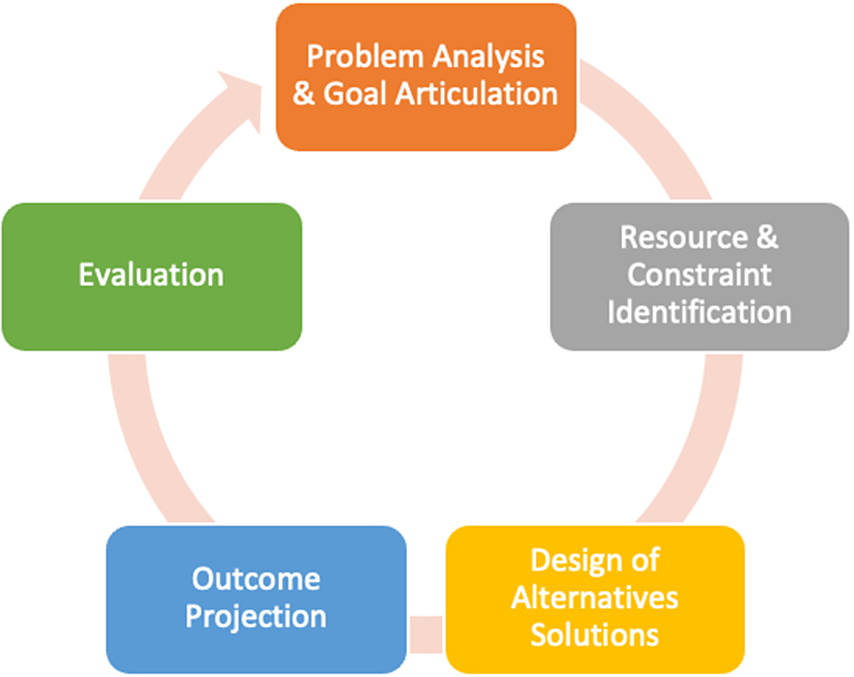
Why plan? Alexander (Reference Alexander1995) underlines the importance of planning in making decisions or developing policies. It is the ability to apply the tools of rationality in public policy (Thissen and Walker, Reference Thissen and Walker2013) by allowing several analytic steps such as problem analysis and goal articulation, resource and constraint identification, design of alternative solutions, outcome projection, and evaluation (Mack, Reference Mack1971, cited in Alexander, Reference Alexander1995). Policy-making as a rational decision-making process (Thissen and Walker, Reference Thissen and Walker2013) in development works is crucial since all development planning should be rational (Dale, Reference Dale2004). The value of rationality in development refers to the value incorporated in the intended achievements of a planned development scheme as viewed by stakeholders. In other words, development planning is defined as the planning of any organised effort aimed at fostering development. It comprises a broad range of economic, social, and institutional thrusts at various societal levels ranging from local to global.
The overall purpose of strategic planning is to find the best possible fit between an intended action (mission, goals/objectives), capabilities (resources and organisational abilities), and its societal context (future and present opportunities, constraints, and threats) (Dale, Reference Dale2004). On the one hand, mission or development goals must be achieved within specific periods. On the other hand, resources are not unlimited, and organisational capabilities differ across countries. Many nations today require assistance to carry out critical development initiatives due to insufficient resources and ineffective organisations (Zafarullah and Huque, Reference Zafarullah and Huque2021). As a result, making decisions in development planning is crucial in order to prioritise which activities best serve development goals.
However, making decisions in development planning is never easy (Thissen and Walker, Reference Thissen and Walker2013). Complexity and ambiguity abound (Alexander, Reference Alexander2020), particularly in long-term planning-decision problems (Catanese and Steiss, Reference Catanese and Steiss1970). The policy-making process must also deal with uncertainty (Alexander, Reference Alexander1995; Thissen and Walker, Reference Thissen and Walker2013). Analysing uncertainty in policy-making is essential because ignoring it means ignoring the reality (Marchau et al., Reference Marchau, Walker, Bloemen and Popper2019) that might lead to unachievable goals. The other challenges are a lack of data and difficulty identifying key issues (Thissen and Walker, Reference Thissen and Walker2013; United Nations Department of Economic and Social Affairs, 2023). Without appropriate data and proper analysis, decisions may be made solely on intuition, judgment, and guesses. In addition, the policy processes may take a long time and sometimes generate regrettable results (Catanese and Steiss, Reference Catanese and Steiss1970; Thissen and Walker, Reference Thissen and Walker2013). Crafting development plans, selecting priorities, and identifying uncertainty may be too complex for humans to navigate in a restricted time frame effectively. Smart algorithms, including AI and intelligent systems, could assist planners and policymakers in formulating development plans.
The term “artificial intelligence” has numerous interpretations according to different scholars. Drawing from earlier research, particularly in development studies, Bjola (Reference Bjola2022) outlines the principles of AI as processing enormous amounts of data using advanced algorithms to simulate human reasoning and behaviour. Dwivedi et al. (Reference Dwivedi, Hughes, Ismagilova, Aarts, Coombs, Crick, Duan, Dwivedi, Edwards, Eirug, Galanos, Ilavarasan, Janssen, Jones, Kar, Kizgin, Kronemann, Lal, Lucini and Williams2021) define AI as the capability of machines to perform specific tasks and human roles in particular workspaces and societies. Additionally, Goralski and Tan (Reference Goralski and Tan2020) contend that machine intelligence with deep learning skills already solves cognitive problems related to human intelligence. Vinuesa et al. (Reference Vinuesa, Azizpour, Leite, Balaam, Dignum, Domisch, Fellnder, Langhans, Tegmark and Fuso Nerini2020) detail AI capabilities such as perception, decision-making, prediction, automatic knowledge extraction and pattern recognition, interactive communication, and logical reasoning.
Despite these varied definitions, the core concept of AI can be summarised as machines’ ability to perform human tasks and roles (Goralski and Tan, Reference Goralski and Tan2020; Dwivedi et al., Reference Dwivedi, Hughes, Ismagilova, Aarts, Coombs, Crick, Duan, Dwivedi, Edwards, Eirug, Galanos, Ilavarasan, Janssen, Jones, Kar, Kizgin, Kronemann, Lal, Lucini and Williams2021), such as identification, classification, optimisation, and prediction, using specialised algorithms. Particularly from a global development perspective, AI shows significant promise for tackling complexity. For example, it supports public servants in managing intricate tasks and facilitates the delivery of more personalised and relevant services to citizens (Anshari et al., Reference Anshari, Hamdan, Ahmad and Ali2024). Within the SDG framework, AI also underscores essential aspects of development, including its multidimensional nature and the interconnected relationships between various indicators (Guerrero et al., Reference Guerrero, Guariso and Castañeda2023).
Looking beyond the term “AI,” intelligent systems encompass a wide range of computing techniques, knowledge-based systems, and their hybrids that simulate real intelligence to solve complex problems more effectively (Hopgood, Reference Hopgood2016). These systems often rely on data-driven approaches and interactive visualisations, which are essential for advancing complex methods (Ward et al., Reference Ward, Grinstein and Keim2010; Kumari et al., Reference Kumari, Chapa, Chaitanya, Mahajan and Shahakar2024). Other smart techniques, such as scenario modeling, recommender systems, simulation intelligence, and adaptive systems, are particularly significant in planning disciplines (Higgins and Duane, Reference Higgins and Duane2008; Batas Bjelić and Rajaković, Reference Batas Bjelić and Rajaković2015; Alle et al., Reference Alle, Metternicht and Wiedmann2016; Anthony Jnr, Reference Anthony Jnr2021). To reflect the broad scope of these techniques and their applications, this study adopts the term “smart algorithms” to describe this comprehensive range of methods. The term itself does not have a clear, widely agreed-upon point of introduction in the literature, but the concept emerged as part of the broader development of algorithms and intelligent system, including machine learning (Jansen, Reference Jansen2018), web intelligence (Shroff, Reference Shroff2015), scenario modelling (Chernov et al., Reference Chernov, Dranko, Guo, Novikov, Pan and Raikov2023), decision support systems (Guerlain et al., Reference Guerlain, Brown and Mastrangelo2000), simulation intelligence (Stoffer et al., Reference Stoffer, Ivanova and Korthorst2009; Rauf et al., Reference Rauf, Guan, Sarfraz, Mumtaz, Shehab, Jahanzaib and Hanif2020), data-driven approaches (Sun et al., Reference Sun, Liu, Xu and Xu2022), and visualisation systems (Ward et al., Reference Ward, Grinstein and Keim2010).
Given its capabilities, smart algorithms, including AI, have emerged as a top-priority technology to assist policy-making in the development works (Wirjo et al., Reference Wirjo, Calizo, Vasquez and San Andres2022). Certain countries, namely Australia, France, Italy, and Singapore, govern AI strategies in multiple sectors (Moniz et al., Reference Moniz, McLeod and Vindrola-Padros2023), whilst the UK government integrates AI into all fields (Beswick and Krier, Reference Beswick and Krier2020; Seddon, Reference Seddon2023; Stacey, Reference Stacey2023; Aldane, Reference Aldane2024). These techniques have been viewed as tools that can transform development theory and practice by exploring how data and algorithms could generate insights to identify, study, and manage development challenges (Bjola, Reference Bjola2022). From the lens of rational problem-solving in development planning (Alexander, Reference Alexander1995), smart algorithms may offer the ability to analyse development problems (Najjary et al., Reference Najjary, Saremi, Biglarbegian and Najari2016; Addas, Reference Addas2023), to examine and optimise resource allocation (Uwizera et al., Reference Uwizera, Ruranga and McSharry2022; Tafula et al., Reference Tafula, Justo, Moura, Mendes and Soares2023), to design alternative solutions (Amer, Reference Amer2013; Souza et al., Reference Souza, Morgado, Costa and Vianna2023), to predict the likely outcomes of these alternatives (Jiang, Reference Jiang2018; Xie et al., Reference Xie, Zhu and He2022), and to evaluate development plan (Adey Nigatu Mersha et al., Reference Mersha, Masih, de Fraiture, Wenninger and Alamirew2018; Pautasso et al., Reference Pautasso, Osella and Caroleo2019). Hence, the contribution of smart algorithms to development planning policy must be thoroughly explored. An in-depth knowledge of the where, when, and how intelligent algorithms perform best under specific circumstances could support the application of these methods in real-world policy-making.
3. Materials and Methods
As an interdisciplinary study that combines social science and computer science, this article applies a systematic review to produce a scientific summary of the evidence in a given field (Petticrew, Reference Petticrew2006). This approach emphasises structured, transparent, objective, methodical, standardised, and reproducible methods (Booth, Reference Booth2016). The study follows the Preferred Reporting Items for Systematic Reviews and Meta-Analyses (PRISMA) protocol to ensure the review methods and findings are sufficiently described (Haddaway et al., Reference Haddaway, Page, Pritchard and McGuinness2022). The PRISMA guidelines outline key stages for conducting systematic reviews and meta-analyses, including protocol development, comprehensive search strategies, study selection based on clear criteria, data extraction, and risk of bias assessment (Liberati et al., Reference Liberati, Altman, Tetzlaff, Mulrow, Gøtzsche, Ioannidis, Clarke, Devereaux, Kleijnen and Moher2009; Higgins et al., Reference Higgins, Altman, Gotzsche, Juni, Moher, Oxman, Savovic, Schulz, Weeks and Sterne2011; Moher et al., Reference Moher, Shamseer, Clarke, Ghersi, Liberati, Petticrew, Shekelle and Stewart2015). This method has been previously employed in studies on AI and public policy (Valle-Cruz et al., Reference Valle-Cruz, Gil-Garcia, Sandoval-Almazan, Charalabidis, Medaglia and Van Noordt2024) and the exploration of the negative impacts of AI in government (Valle-Cruz et al., Reference Valle-Cruz, García-Contreras and Gil-Garcia2024).
This review utilises three criteria of eligibility for inclusion and exclusion. Firstly, as this study aims to provide a broad picture of smart algorithm applications in development planning policy, all research must clearly define smart algorithms that specifically address subjects of development planning. Secondly, any study design and methodology, such as quantitative, qualitative, mixed-method, other literature reviews, case studies, case reports, perspectives, and position papers, are included in this study. Finally, this study includes all peer-reviewed articles, chapters, and conference papers from databases with permitted records in English. Although inclusion and exclusion criteria are often mutually exclusive (Boland et al., Reference Boland, Cherry and Dickson2017), it is necessary to sharpen the details of exclusion criteria to prevent the results from ambiguous questions and scope. This review’s search results exclude studies that do not employ or have a clear implementation of smart algorithms in their study. It also excludes research on AI planning, such as robot route planning and model planning. A study with an unclear planning background in the context of development is removed, for example, production planning, manufacturing planning, and individual planning. Finally, research on development planning outside of the public domain is withdrawn.
Furthermore, the search query for existing work focused on four major themes: smart algorithms, policy, development, and planning. It was used to identify articles published between January 2013 and July 2023 across four databases: ProQuest, Scopus, Web of Science, and the ACM Digital Library, with an English language filter applied. The search was conducted in August 2023, and keywords were targeted in article titles, abstracts, and subject headings.
The initial database search yielded a total of 693 published articles. Reference management software automatically identified two articles as retracted, and 257 records were eliminated due to duplication. The abstracts of 434 papers were screened, yielding 148 reports that should be eliminated based on inclusion and exclusion criteria. Only 227 studies could be assessed for eligibility via full-text screening, although 286 papers were sought for retrieval. Subsequently, 20 studies must be excluded from the review for several reasons, including the following: four studies do not apply or have a clear implementation of smart algorithms, three articles discuss the planning in AI algorithms, 11 reports have unclear planning backgrounds in the development context, and two papers fail to meet the public domain development planning criteria. Finally, our review consisted of just 207 studies. The PRISMA diagram is provided in Supplementary File 1.
To ensure the robustness of the methods used, as well as the validity and reliability of this study (Salvador-Oliván et al., Reference Salvador-Oliván, Marco-Cuenca and Arquero-Avilés2019; Shaheen et al., Reference Shaheen, Shaheen, Ramadan, Hefnawy, Ramadan, Ibrahim, Hassanein, Ashour and Flouty2023), an objective and reproducible approach for generating and testing search strategies was implemented. The R package litsearchr was employed for this purpose. This approach leverages text mining and keyword co-occurrence networks to identify the key terms most relevant to the review, resulting in a more objective, data-driven query formulation (Grames et al., Reference Grames, Stillman, Tingley, Elphick and Freckleton2019). A set of terms was generated and tested against the results of the naïve search, as well as against included and important titles serving as a gold standard. The results demonstrated that 82.83% of the original results appeared in the generated query, 75.47% of the included papers were retrieved, and all important titles were successfully identified by the generated query. Furthermore, a comparison of the terms between the naïve search and the generated query revealed an 83.24% similarity, as determined by string dissimilarity analysis (van der Loo, Reference van der Loo2014).
4. Findings and discussion
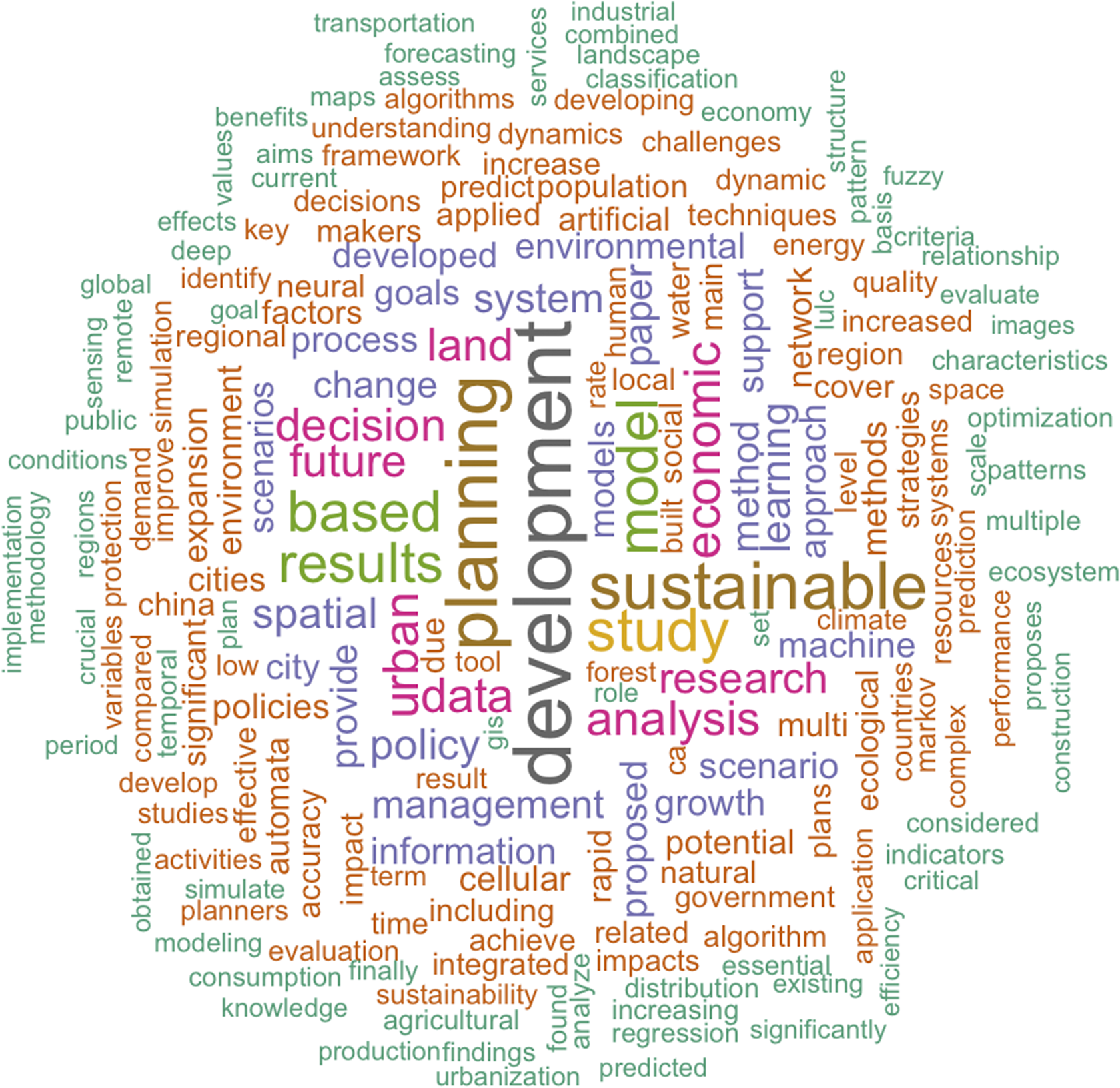
Based on the collected abstracts, a text analysis identified “development,” “planning,” and “sustainable” as the most frequent words, highlighting a focus on development, growth, and sustainability. In planning, “urban,” “land,” and “environmental” are prominent, reflecting current trends. “Model(s)” often appears with “machine learning,” “scenarios,” “spatial,” and “system,” indicating their role in supporting various methods. Information management is also crucial for future policy and decision-making. Figure 1 shows word clouds from the abstracts, providing a brief overview of the findings. These will be explored further in the following sections.
Word cloud of abstracts highlighting key themes and trends.
4.1. Geography of smart algorithms in development planning
The scope of development planning supported by smart algorithms, as identified in this study, is broad and multifaceted. Nearly half of the cases focus on local development contexts, including provinces, districts, cities, and rural areas. While 42 publications examine these techniques at the national level, only 21 explore their application in international development planning and six address regional contexts. In terms of topological areas, 37 studies investigated the use of smart algorithms in specific geographical features, such as mountains, basins, or watersheds. In contrast, only one study focuses on smaller entities, such as universities.
Based on their geographical scope, research on smart algorithms for development planning can be categorised into global, regional, and national scales. Globally, 21 articles do not confine their analyses to specific countries or regions. These studies commonly highlight data-driven approaches, particularly emphasising the availability of data and advanced computational methods in domains such as economic forecasting, urban planning, healthcare management, sustainable development, and decision-making. Several studies focus on specific development planning topics, including urban planning (Hanoon et al., Reference Hanoon, Abdullah, Shafri and Wayayok2022; Koumetio Tekouabou et al., Reference Koumetio Tekouabou, Diop, Azmi, Jaligot and Chenal2022; Son et al., Reference Son, Weedon, Yigitcanlar, Sanchez, Corchado and Mehmood2023), land use planning (Gaur and Singh, Reference Gaur and Singh2023), and physical planning (Wang et al., Reference Wang, Mazumder, Salarieh, Salman, Shafieezadeh and Li2022), while others propose new frameworks (Cui et al., Reference Cui, Zhuo and Hua2013; Fan et al., Reference Fan, Peng, Sun, Li, Yingying, Guiran and Zhen2015; Alle et al., Reference Alle, Metternicht and Wiedmann2016; Allen et al., Reference Allen, Metternicht and Wiedmann2017; Mallick, Reference Mallick2021; Nutkiewicz, Reference Nutkiewicz2021), algorithms, methods, and models (Vermeulen, Reference Vermeulen2018; Hinova et al., Reference Hinova, Baeva and Popov2020; Faisal et al., Reference Faisal, Alomari, Alasmari, Alghamdi and Saeedi2021; Moghimi and Beheshtinia, Reference Moghimi and Beheshtinia2021; Hatcha, Reference Hatcha2022; Olowolaju and Livani, Reference Olowolaju and Livani2022; Ozdemir et al., Reference Ozdemir, Bulu and Zor2022; Zheng et al., Reference Zheng, Su, Ding, Jin and Li2023). Additionally, some papers explore specific fields, such as marine development (Lubchenco et al., Reference Lubchenco, Cerny-Chipman, Reimer and Levin2016) and healthcare planning (Elavarasan et al., Reference Elavarasan, Pugazhendhi, Shafiullah, Irfan and Anvari-Moghaddam2021), using case studies from various countries.
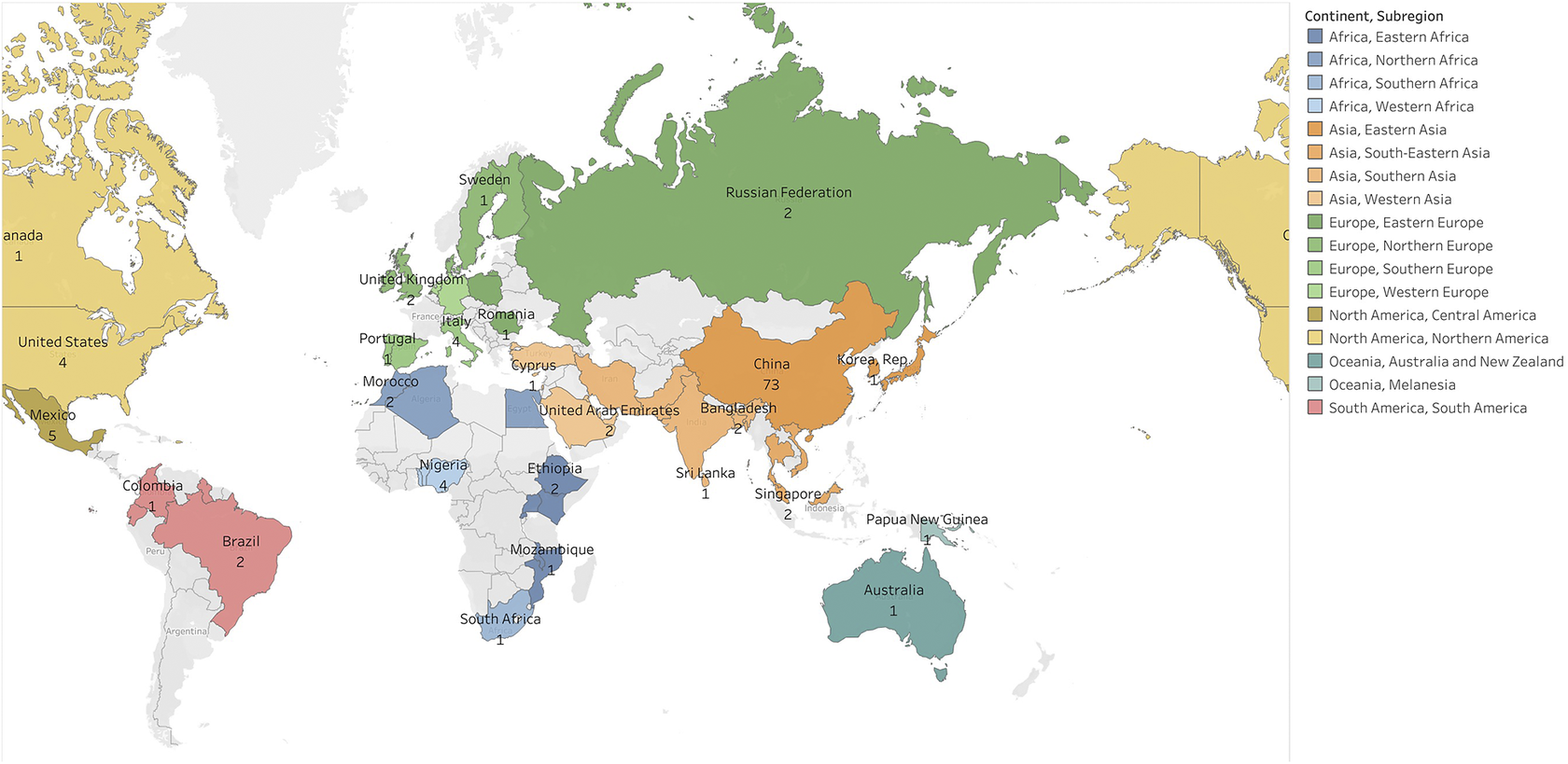
At the regional level, six studies focus on development planning within specific areas, such as Europe (Dastour and Hassan, Reference Dastour and Hassan2023; Razghonov et al., Reference Razghonov, Lesnikova, Kuznetsov, Kuzmenko, Khalipova, Chernikov, Zvonarova, Prokhorchenko, Horulia and Bekh2023), the Western Balkans (Knez et al., Reference Knez, Štrbac and Podbregar2022), OECD countries (Ashcroft, Reference Ashcroft2022), Sub-Saharan Africa (Cintas et al., Reference Cintas, Akinwande, Raghavendra, Tadesse, Walcott-Bryant, Wayua, Makumbi, Wanyenze and Weldemariam2021), and the Eastern Caribbean (Spalding et al., Reference Spalding, Longley-Wood, McNulty, Constantine, Acosta-Morel, Anthony, Cole, Hall, Nickel, Schill, Schuhmann and Tanner2023). At the national scale, China emerges as the most studied country, with 73 publications. Other notable case study locations include India (11 studies), Iran (9 studies), Mexico (5 studies), and Thailand (5 studies).
The distribution of research on smart algorithms in development planning varies significantly across continents. North America accounts for 10 studies, primarily focused on Central and Northern America. South America contributes five studies, mainly from Brazil, Colombia, Ecuador, and Guyana. The majority of research (124 publications) is centred on Asia, with notable contributions from Eastern Asia (74), Southern Asia (26), Western Asia (10), and South-Eastern Asia (13). Oceania is represented by just two studies, from Australia and Papua New Guinea. In Europe, 23 studies explore the use of smart algorithms in development planning, spanning Western, Eastern, Northern, and Southern regions. Africa contributes 20 studies, primarily focusing on policy planning, with no representation from Middle Africa. Overall, the geographical distribution of studies reveals significant imbalances. Only one-fifth of nations (54 out of 257) have been analysed for the application of smart algorithms in development planning policies. Figure 2 illustrates the distribution of studies by continent, subregion, and nation.
Country map of AI for development planning policy research distribution.
When examining the proportion of total scientific articles, although Asia accounts for the largest absolute number of scientific publications in the field, it ranks second to Africa in terms of percentage of total publications. Africa contributed 20 articles out of 1,078,893 total publications (0.00185%) during 2013–2023 period, followed by South America, which accounted for 0.00044% of publications in the field. Europe, Oceania, and North America fell into the lower half of the distribution, with proportions below 0.0002%. From an economic perspective, the highest proportions of articles out of total scientific articles were observed in low-income and lower-middle-income countries, such as Papua New Guinea, Togo, Mozambique, Benin, and Rwanda, all of which exceeded 0.01%. In contrast, high-income countries recorded the lowest percentages. This trend may reflect a focus on development-related research in low- and middle-income regions, while high-income countries, being more established, allocate less attention to such areas (Eyben et al., Reference Eyben, Lister and Dickinson2004; McGregor et al., Reference McGregor, Henderson and Kaldor2014; El-Ali et al., Reference El-Ali, Padilla, Bucher, Kirkland, Heintz and Kunaratnam2022). For detailed information, see Supplementary file 4.
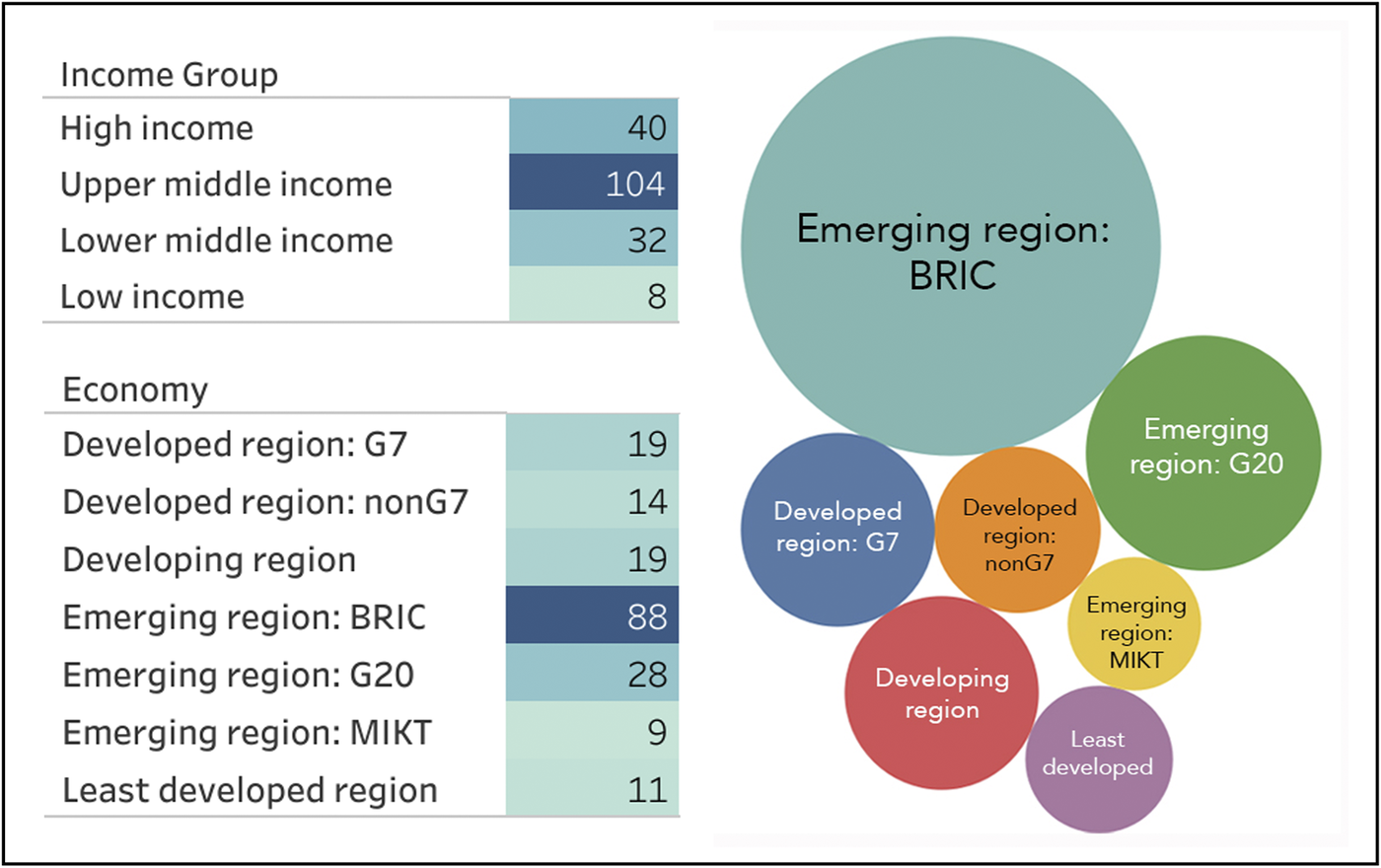
Despite the relatively high proportion of research in low-income countries compared to their total scientific articles, the absolute number of studies in this area remains very limited (only eight). More research is still needed to determine whether these techniques support or hinder development planning processes (Vinuesa et al., Reference Vinuesa, Azizpour, Leite, Balaam, Dignum, Domisch, Fellnder, Langhans, Tegmark and Fuso Nerini2020). Additionally, as seen in the proportions of the articles, upper-middle-income countries lead research on the use of smart algorithms in development planning. Similarly, BRIC countries, as emerging economies, are maximising their potential by employing these techniques for decision-making in development planning (Figure 3). This suggests that both upper-middle-income and emerging economies are leveraging smart algorithms to enhance their planning capabilities effectively.
Classification of works on smart algorithms for development planning policy by economy and income group.
4.2. What SDGs is it developed for?
The global development agenda is now guided by the SDGs, a framework designed to address both social and economic development challenges alongside environmental issues (Vinuesa et al., Reference Vinuesa, Azizpour, Leite, Balaam, Dignum, Domisch, Fellnder, Langhans, Tegmark and Fuso Nerini2020). The SDGs include 17 objectives and 169 targets, which aim to be achieved by 2030. Among the most pressing goals are eliminating poverty and hunger and combating climate change (United Nations Department of Economic and Social Affairs, 2023). However, progress has been slow. Since the global indicator framework was introduced in 2017 (UN, 2023), over 50% of the SDG targets remain off track (United Nations Department of Economic and Social Affairs, 2023). Unexpected challenges, such as pandemics, climate crises, and conflicts, have disrupted progress. To overcome these hurdles, countries need effective and adaptive plans to meet both national and SDG targets. Smart algorithms offer significant potential to help stakeholders design such plans. This review analyses 207 studies to explore how smart algorithms can assist planners and policymakers in achieving development goals.
Mapping the articles to the 17 SDGs, approximately 47.78% of the studies underpin the goal of sustainable cities and communities (SDG 11), while just over 18.23% contribute to the life on land goal (SDG 15). The affordable and clean energy goal (SDG 7) and the decent work and economic growth goal (SDG 8) are addressed by 12.32% and 11.33% of the papers, respectively, with the remainder supporting other goals (Figure 4). Each study may focus on achieving specific goals, whether single or multiple objectives. However, only a few papers comprehensively address all SDGs. These primarily discuss frameworks, models, or methods for aligning SDGs with national development plans at different stages of planning (Alle et al., Reference Alle, Metternicht and Wiedmann2016; Allen et al., Reference Allen, Metternicht and Wiedmann2017; Galsurkar et al., Reference Galsurkar, Singh, Wu, Vempaty, Sushkov, Iyer, Kapto and Varshney2018), budgeting (Guariso et al., Reference Guariso, Castaeda and Guerrero2023), or evaluation (Fan et al., Reference Fan, Peng, Sun, Li, Yingying, Guiran and Zhen2015). This coverage spans not only country contexts but also regional (Ashcroft, Reference Ashcroft2022) and urban settings (Koumetio Tekouabou et al., Reference Koumetio Tekouabou, Diop, Azmi, Jaligot and Chenal2022).
Classification of works on smart algorithms for Sustainable Development Planning, based on the SDGs they tackle.
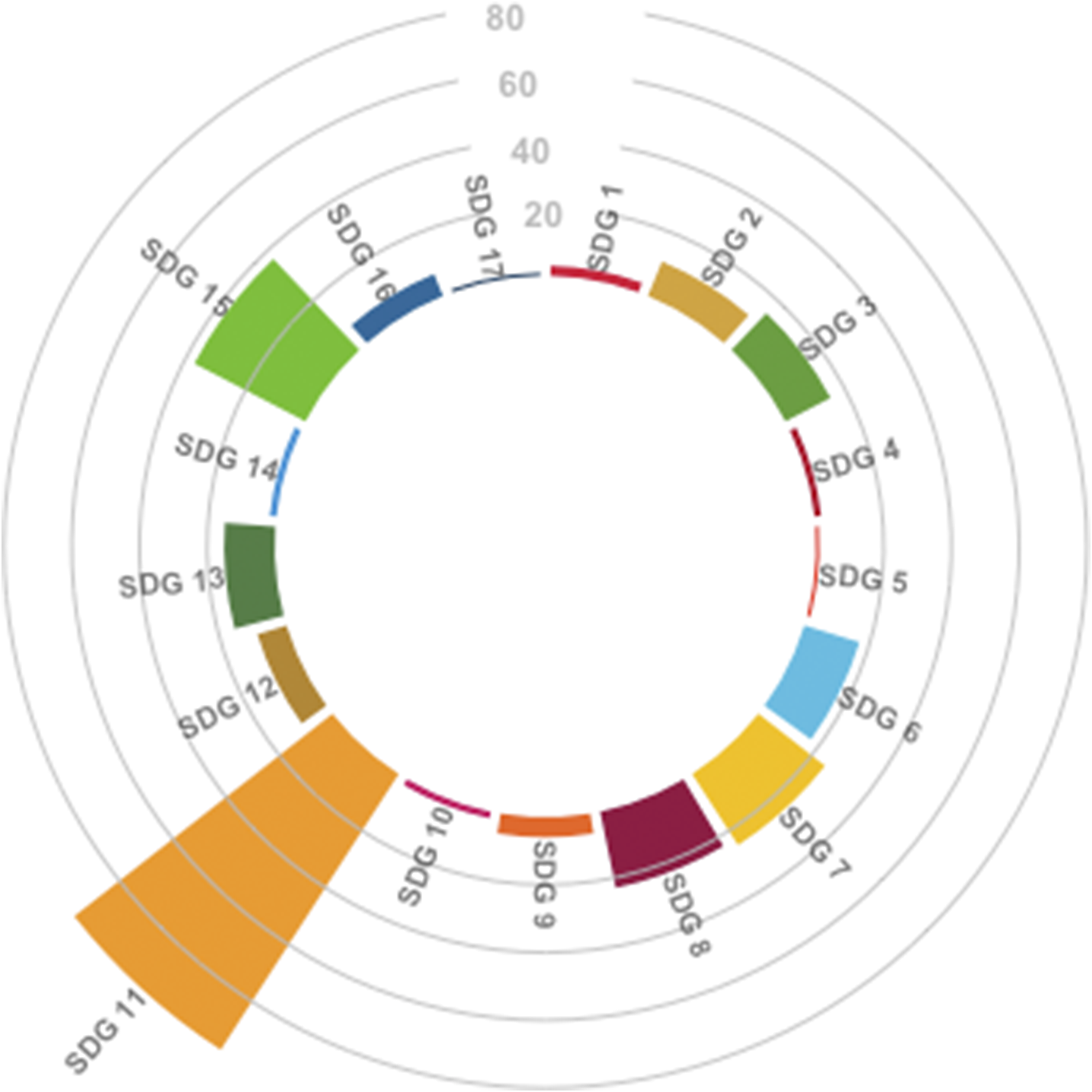
As the most development goal studied, SDG 11 focuses on urban planning. Smart algorithms have been used to identify, predict, classify, and optimise many aspects of living in big cities. Although most of them discuss physical and environmental planning, the socio-economic subject seems to be a new emerging topic in urban planning. Several studies have applied these techniques to assess socioeconomic factors, including Wang et al. (Reference Wang, Li, Liu and Wu2022), who highlight the socio-economic status (SES) of urban neighborhoods; Slave et al. (Reference Slave, Ioj, Hossu, Grdinaru, Petrior and Hersperger2023), who explores public opinion in urban planning; and a number of scholars who examine urban growth and population dynamics (Moghadam and Helbich, Reference Moghadam and Helbich2013; Mubea et al., Reference Mubea, Goetzke and Menz2014; Thitawadee and Yoshihisa, Reference Thitawadee and Yoshihisa2018; Can and Doratl, Reference Can and Doratl2021; Mallick et al., Reference Mallick, Das, Maity, Rudra, Pramanik, Pradhan and Sahana2021; Zhuang et al., Reference Zhuang, Liu, Yan, Ou, He and Wu2021; Jimenez et al., Reference Jimenez, Vilchez, Delgado, Benavente and Gonzalez2022). Furthermore, several research incorporates ecological, socioeconomic, and political issues (Liu et al., Reference Liu, Liu, Xu, Tang, Zhou and Pham2019; Botequilha-Leito and Daz-Varela, Reference Botequilha-Leito and Daz-Varela2020; Yang et al., Reference Yang, Luan, Li, Zhang and Tian2023), which may provide a more holistic approach to assisting urban planners in better planning for cities.
Apart from being discussed in the specific context of urban planning, the environment subject has also been examined in much broader areas which encompass clean water and sanitation (SDG 6), affordable and clean energy (SDG 7), climate action (SDG 13), life below water (SDG 14), and life on land (SDG 15). It ranges from using AI in forestry to marine, energy, and tourism. It also covers many topologies, including plateau, basin, lake, rural area, river, watershed, and mountain.
Although the use of smart algorithms for development planning encompasses all SDGs, some goals receive less attention, such as gender equality (SDG 5) and partnerships for the goals (SDG 17). This uneven focus across SDGs may reflect the suitability of specific goals—such as peace, justice, and strong institutions (SDG 16) and partnerships for the goals (SDG 17)—for international policy interventions (Blind, Reference Blind2020) rather than direct applications of smart algorithms. However, this does not imply that these goals are less significant. Instead, it underscores the need for enhanced efforts and innovative strategies to integrate smart algorithms into planning and decision-making processes for these areas.
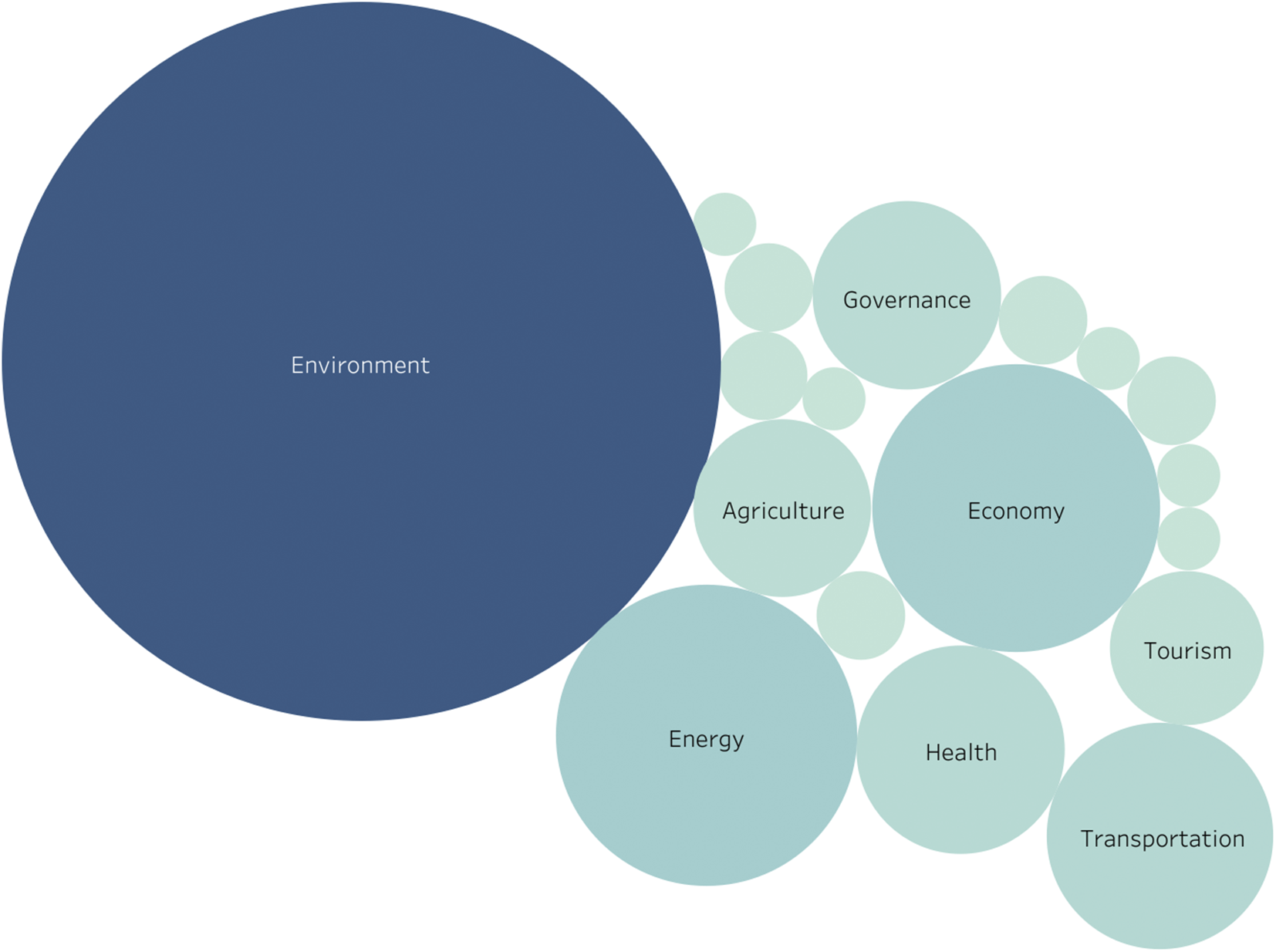
The disproportionate distribution of research on these techniques is also evident in the subjects covered by the studies. Topics such as mining, industry, disaster management, gender and child welfare, water, migration, poverty, education, and marine resources are addressed in fewer than three papers per subject. In contrast, smart algorithms are already widely applied in more popular fields, including the environment, economy, energy, transportation, and health. Figure 5 shows that smart algorithms for planning are used massively in some sectors but are less studied in other fields.
Classification of works on AI for development planning based on subjects.
4.3. In what domains are smart algorithms being applied?
As discussed in the previous section, the most prominent application of smart algorithms in policy-making is for urban planning, aligning with SDG 11. This includes town and city planning, referenced in more than 80 studies. Although urban planning and development theory has evolved from a focus on physical planning to incorporating socio-economic and environmental dimensions (Friedmann, Reference Friedmann1987; Alexander, Reference Alexander1995), the use of smart algorithms in development planning remains predominantly centred on physical planning. Sectoral-functional analysis reveals that physical planning accounts for 60.66% of the research, followed by socio-economic planning at 23.36% and environmental planning at 15.98%.
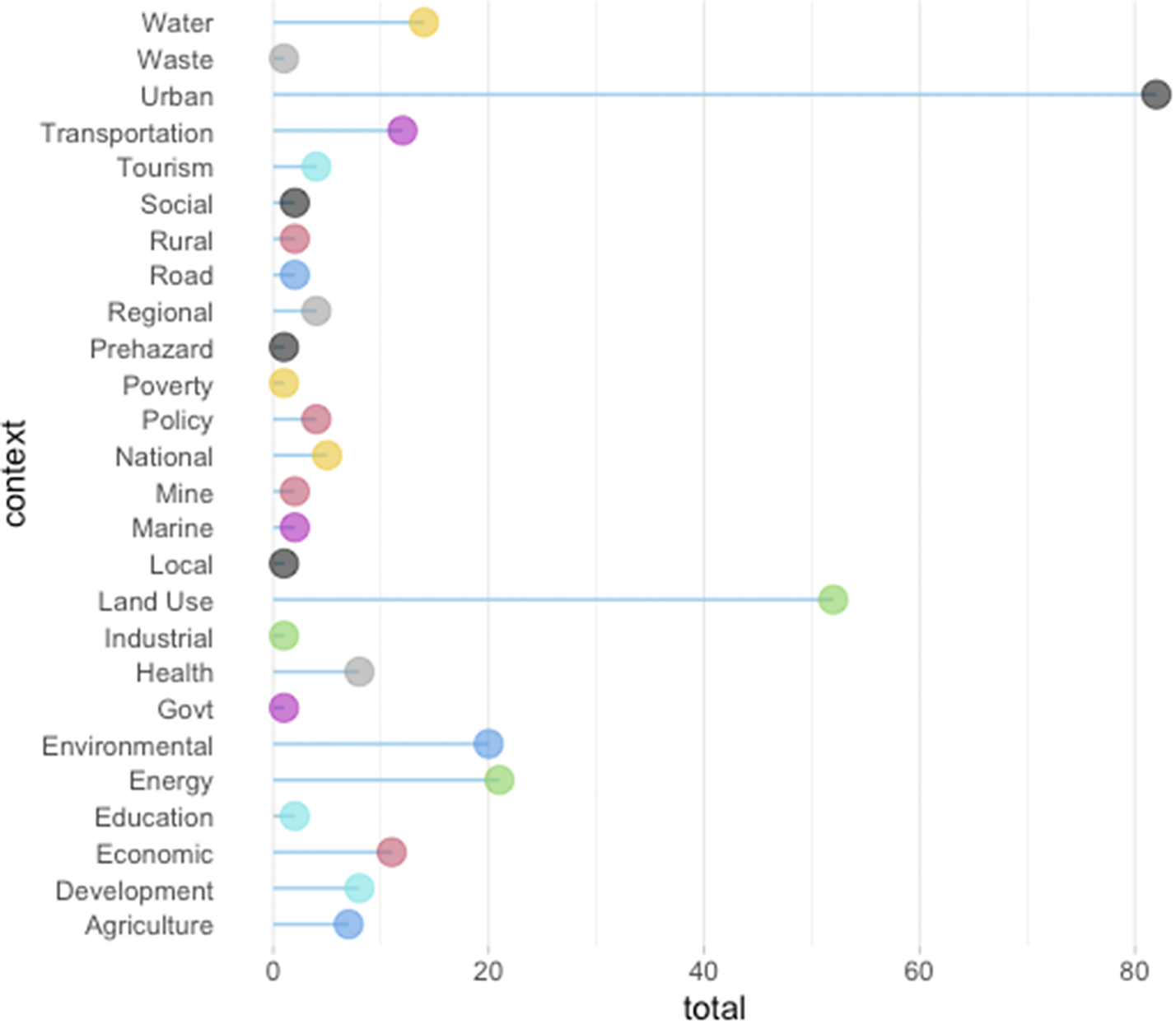
Additionally, related terms frequently mentioned in the studies include land use planning, energy planning, environmental planning, water planning, transportation planning, and economic planning. In contrast, fewer studies address topics such as local planning, government planning, industrial planning, pre-hazard planning, waste planning, and poverty planning.
Figure 6 illustrates that most planning terms used in the literature are related to sectoral-functional planning, often referred to as substantive planning (Alexander, Reference Alexander1995). Furthermore, terms describing the levels of authority or governance, such as national, regional, and local planning, are also frequently mentioned. These categories of substantive and level-based planning may overlap, either with each other or within themselves. For example, Mashaba-Munghemezulu et al. (Reference Mashaba-Munghemezulu, Chirima and Munghemezulu2021) apply SVM and Xgboost algorithms to estimate maize farm outputs within the context of local agricultural planning; Omarzadeh et al. (Reference Omarzadeh, Pourmoradian, Feizizadeh, Khallaghi, Sharifi and Kamran2022) utilize GIS-based ecotourism sustainability assessments to support regional tourism planning in West Azerbaijan; and Oyedotun and Moonsammy (Reference Oyedotun and Moonsammy2021) focus on waste planning at the national level. These diverse planning categories contribute to the evolving body of planning theory, particularly in the context of development planning.
Planning context in AI for development policy.
4.4. What smart algorithms are most used?
This study examines smart algorithms used in existing literature. There are 153 specific algorithms identified in the studies, with more than half of them being machine learning (ML) derivatives. The remaining categories include intelligence agents, evolutionary computation, biologically inspired and hybrid models, mathematical models, data-driven approaches, scenario modelling, complex adaptive systems, and other algorithms such as spatial, quantitative, and qualitative modelling. Each main algorithm consists of a wide range of variations. The results suggest that AI-based techniques such as machine learning, artificial neural networks, cellular automata-Markov, fuzzy logic, and deep learning are the most utilised in development planning policies. Other non-AI techniques, such as statistical methods and scenario analysis, are also prominent. Furthermore, the combination of those methods is also common.
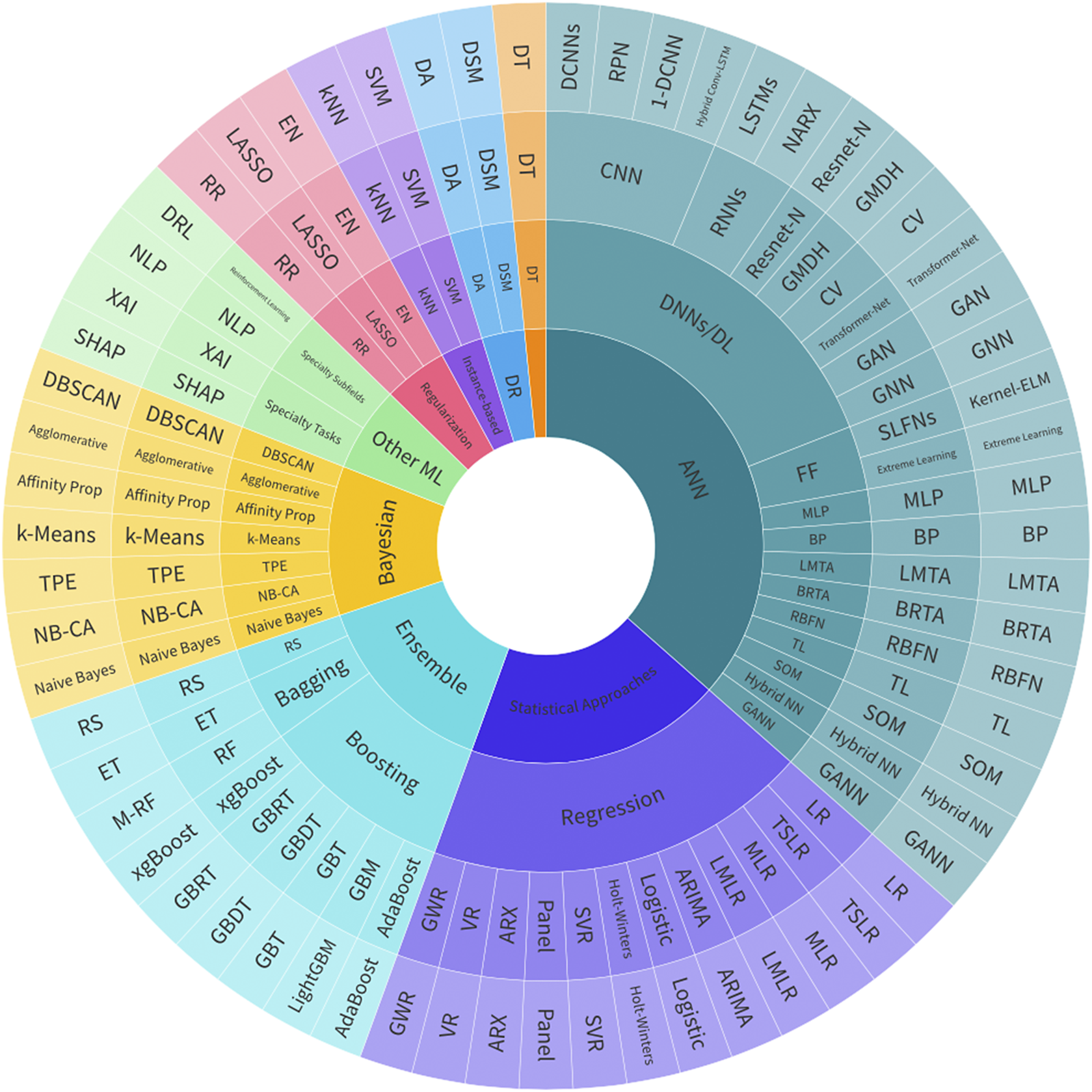
Moreover, as its main feature is learning from examples (Russell and Norvig, Reference Russell and Norvig2016), several approaches are used in ML for policy-making in development planning. The first approach is statistical machine learning with regression as its standard method. Each regression has a specific use depending on the type of parameters, values, or variables, such as autoregressive integrated moving average (ARIMA) regression that works best with adequate time series data (Adeyinka and Muhajarine, Reference Adeyinka and Muhajarine2020), or geographically weighted regression (GWR) that is suitable for analysing social sensing, remote sensing, and crowdsource data (Shi et al., Reference Shi, Shan, Ding, Ye, Yang and Jiang2019). The subsequent ML method is an artificial neural network (ANN). Inspired by how the neurons work (Russell and Norvig, Reference Russell and Norvig2016), ANN is a very well-known AI algorithm with the most varied derivatives, including multi-layer perceptrons (MLP), back-propagation (BP), feed-forward (FF), levenberg–marquardt training algorithm (LMTA), transfer learning, self-organising map (SOM), and Deep Learning (DL). Delving further into DL, convolutional neural network (CNN), recurrent neural network (RNN), residual network (Resnet-N), and the new emerging generative adversarial network (GAN) are several powerful algorithms mostly used not only for policy-making in development planning but also in other fields (Koumetio Tekouabou et al., Reference Koumetio Tekouabou, Diop, Azmi, Jaligot and Chenal2022). The following popular learning algorithm is the ensemble method, which can improve the prediction models by converting weak learners to strong learners with any given learning algorithm (Shaier, Reference Shaier2022), as well as to lessen many redundant features and over-fitting problems (Addas, Reference Addas2023). The rest of the ML algorithms used in this field range from instance-based algorithms to regularisation, as well as from the classical decision tree (DT) to algorithms with particular tasks and subfields, for example, explainable artificial intelligence (XAI), natural language processing (NLP) and deep reinforcement learning (DRL) (Figure 7).
Machine learning derivatives in development planning.
Furthermore, case studies show that a combination of algorithms has been applied to boost the model’s capability to predict, classify, or optimise. For example, Jimenez-Lopez et al. (Reference Jimenez-Lopez, Ruge-Ruge and Jimenez-Lopez2021) employ a convolutional long short-term memory (LSTM) hybrid model (CNN-LSTM) to help farmers decide on irrigation planning. In the energy sector, Hinova et al. (Reference Hinova, Baeva and Popov2020) point out some common algorithms, including the combination of statistical and regression, ANN with statistical methods, and hybrid neural networks. The combination of genetic algorithms and ANN (GANN) has been applied in economic forecasting by Gao et al. (Reference Gao, Liu, Hu, Hao and Zhang2022). Wang et al. (Reference Wang, Li, Liu and Wu2022) introduce the use of an integrated logistic multi-criteria evaluation (MCE) cellular automata (CA) Markov (logistic-MCE-CA-Markov) model to evaluate and predict the changes in land use land cover to support local decision-makers. Although most of the results of these integrated techniques produce better prediction (Jimenez-Lopez et al., Reference Jimenez-Lopez, Ruge-Ruge and Jimenez-Lopez2021; Gao et al., Reference Gao, Liu, Hu, Hao and Zhang2022; Wang et al., Reference Wang, Li, Liu and Wu2022 ) or forecasting effectiveness (Hinova et al., Reference Hinova, Baeva and Popov2020), the combined algorithms should be chosen carefully to minimise its shortcomings, including algorithmic biases or errors in adjustment process for the model factors and parameters (Wang et al., Reference Wang, Li, Liu and Wu2022), among others.
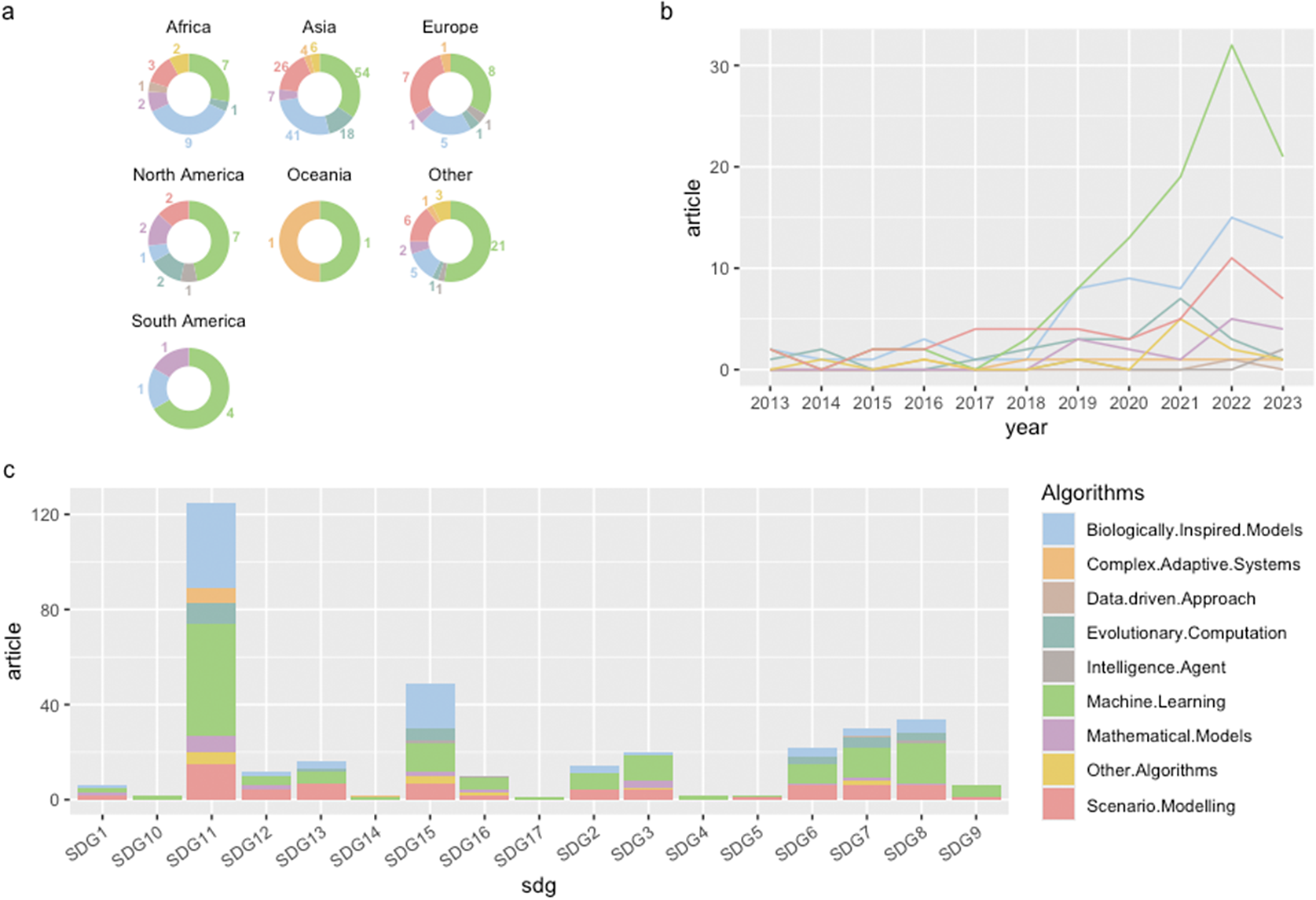
Generally, the distribution of algorithms can be analysed through their geographical spread, alignment with SDGs, and potential changes in their patterns over time. Figure 8a illustrates that the popularity of machine learning is evident across almost all continents, except for Africa. Biologically inspired and hybrid models, such as genetic algorithms (GA), are more popular in Africa. These models are also the second most popular algorithms in Asia, with 41% of cases utilising them. Machine learning algorithms are further prevalent in global or regional contexts, categorised here as other continents. In terms of SDGs, as expected, machine learning dominates most cases across nearly all SDGs, except for SDG 13—Climate Action, and SDG 15—Life on Land (Figure 8c). In the context of combating climate change and its impacts, scenario modelling is particularly prominent. For example, it is used to support ecosystem services-based spatial planning for climate change adaptation (Onur and Tezer, Reference Onur and Tezer2015), configure carbon emissions (Raungratanaamporn et al., Reference Raungratanaamporn, Iamtrakul, Klaylee and Sornlertlumvanich2022), mitigate climate change (Sandi et al., Reference Knez, Štrbac and Podbregar2022), and assess the dynamics of urban vulnerability to climate change (Jurgilevich et al., Reference Jurgilevich, Rsnen and Juhola2021). Meanwhile, biologically inspired and hybrid models are most commonly employed to protect, restore, and promote the sustainable use of terrestrial ecosystems. Lastly, analysing patterns over the period from 2013 to 2023 reveals an increasing trend in the use of algorithms such as machine learning, biologically inspired models, scenario modelling, intelligent agents, and mathematical models. In contrast, approaches like evolutionary computation, data-driven methods, and other algorithms show a declining trend, while the utilisation of complex adaptive systems has remained steady throughout this period.
Distribution of algorithms by continent, year of publication, and SDGs (Note: “Other” in subfigure (a) refers to cases in global or regional contexts, not limited to specific countries or regions within particular countries).
In terms of data sources, the studies employ both traditional and non-traditional data sources. Traditional data sources, such as population census and administration data (Lio, Reference Lio2022), are used in land use land cover (LULC) change modelling for urban development (Gaur and Singh, Reference Gaur and Singh2023). Surveys and official records, among other traditional data sources (Blazquez and Domenech, Reference Blazquez and Domenech2018), have also been utilised to support electricity access planning by using monthly electricity billing reports from 1994 to 2020 (Boubakar et al., Reference Boubakar, Williams, Diallo and Lare2022). Adeyinka and Muhajarine (Reference Adeyinka and Muhajarine2020) also employ national historical datasets to predict mortality rates for health planning in Nigeria.
The growing use of big data for socioeconomic analysis has increased the allure of unconventional data sources (Weber et al., Reference Weber, Imran, Ofli, Mrad, Colville, Fathallah, Chaker and Ahmed2021). For instance, Li et al. (Reference Li, Li, Jia, Zhou and Hijazi2022) utilise social media data to determine urban vitality and affecting factors. Geetha et al. (Reference Geetha, Deepalakshmi and Pande2019) employ sensors and the Internet of Things (IoT) to help manage crops in Indian agriculture. Exploring the use of more diverse data sources is worth considering, especially in the age of crowdsourcing and IoT. However, non-traditional data is intended to augment traditional data rather than replace it (Lio, Reference Lio2022). Using both kinds of data sources may provide better results, as Yang et al. (Reference Yang, Luan, Yang, Xue, Zhang, Wang and Pian2022) research explores the use of multidimensional poverty data, including government statistical yearbook, light satellite imagery data, and moderate-resolution imaging spectroradiometer.
4.5. How are smart algorithms implemented in policy-making processes?
While Valle-Cruz et al. (Reference Valle-Cruz, Criado, Sandoval-Almazn and Ruvalcaba-Gomez2020) assess the use of AI in the broader four-stage policy cycle (Birkland, Reference Birkland2016), this study focuses on the policy cycle in development planning. The decision-making process in planning theory is often referred to as rational problem-solving (Alexander, Reference Alexander1995; Dale, Reference Dale2004; Thissen and Walker, Reference Thissen and Walker2013). This process comprises several stages: diagnosing the problem and defining objectives and goals; analysing the environment and identifying available resources and constraints; designing alternative solutions, strategies, and actions; predicting the likely outcomes of these alternatives; and evaluating them against the goal (Mack, Reference Mack1971, cited in Alexander, Reference Alexander1995) (Figure 9). In practice, smart algorithms have been increasingly utilised to support these steps.
Rational problem-solving in policy planning.
The first phase of decision-making in the planning cycle involves two essential tasks: problem diagnosis and goal articulation. Regarding the former, Addas (Reference Addas2023) employs machine learning techniques to detect environmental consequences caused by unplanned land use and land cover (LULC) shifts from agricultural farms to residential zones. Satellite imagery is used to map urban heat island (UHI) phenomena in a dry, hot desert area in Jeddah, Saudi Arabia. One key finding of this research is a dramatic increase in high UHI values, with 80% of the area exhibiting very high levels. This result underscores the need for governments, city planners, political actors, and particularly private developers responsible for residential construction to address these environmental challenges (Addas, Reference Addas2023). Additionally, correlations between environmental parameters could lead to the development of new tools or algorithms that are more effective, accurate, and immediate in analysing environmental problems. This also raises awareness of data availability issues, which often hinder policy analysts from addressing such developmental challenges (Streeten, Reference Streeten1976; Thissen and Walker, Reference Thissen and Walker2013). Another example of utilising intelligent algorithms for problem diagnosis is provided by Najjary et al. (Reference Najjary, Saremi, Biglarbegian and Najari2016), who address the adverse effects of deprivation and inequality within the cities of Fars Province, Iran. As Kothari and Minogue (Reference Kothari and Minogue2002) argue, instead of focusing solely on successful development stories, it is critical to recognise the persistent and growing challenges of deprivation and inequality in the development context. Najjary et al. (Reference Najjary, Saremi, Biglarbegian and Najari2016) employ a hybrid fuzzy-clustering method to analyse and quantify the degree of deprivation in cities across various domains, including education, culture, welfare, health, economics, transportation, housing, and services. This flexible and adaptable approach provides policymakers with both quantitative and qualitative insights, facilitating informed planning for sustainable development and identifying specific development challenges unique to each region.
The latter task in the first stage of policy planning involves formulating indicators of achievement. To address this, Ashcroft (Reference Ashcroft2022) examines the interrelationships among the 17 UN SDGs in OECD countries, selecting targets for each goal based on the most commonly used indicators. Various methods are applied, including regression, multivariate random forest, ANN, and RNN. Despite challenges related to data availability, the study successfully maps interactions among SDG targets. The findings suggest that governments can use these interactions to formulate and prioritise development objectives. Additionally, identifying the most interconnected development indicators can aid in the selection process when defining planning policy goals (Dale, Reference Dale2004). However, further research is needed to explore these relationships in other countries or regions, as SDG connections may vary significantly between contexts. Yang et al. (Reference Yang, Luan, Yang, Xue, Zhang, Wang and Pian2022) also emphasise the importance of multidimensional development policies, particularly concerning the goal of poverty eradication.
The second step in policy-making for development planning involves analysing the environment, which includes identifying potential resources to support initiatives and recognising constraints that may hinder policy implementation. Understanding the current situation is crucial for uncovering resources before enacting policies. Uwizera et al. (Reference Uwizera, Ruranga and McSharry2022) address this need by employing deep learning techniques to classify and assess the distribution of various economic zones in East Africa. Instead of relying on traditional methods like surveys or questionnaires, they utilise satellite imagery data, achieving 98% accuracy in detecting five economic zones: Commercial, Industrial, High-Residential, Middle-Residential, and Low-Residential areas. This data can inform policymakers in implementing spatially targeted policies based on economic development zones (Barbieri et al., Reference Barbieri, Pollio and Prota2020; Grover et al., Reference Grover, Lall and Maloney2022). In addition to identifying resources, recognising constraints is equally critical. Tafula et al. (Reference Tafula, Justo, Moura, Mendes and Soares2023) examine barriers to rural electrification through microgrid and off-grid solar projects, applying GIS, Boolean Logic, Fuzzy Logic, and Analytic Hierarchy Process Multicriteria Decision-Making methods. Their study identifies factors influencing the selection of optimal locations for power generation in remote areas, including climatological, orographical, technical, social, and institutional criteria. The findings reveal that approximately 49% of the total study area is initially suitable for off-grid solar photovoltaic microgrid projects, with suitability levels ranging from low (4%) to highly suitable (13%). However, over 50% of the area falls into unfeasible or restricted zones, mainly due to conservation regulations, protected areas, or high-risk zones prone to flooding and cyclones. Identifying these constraints reduces uncertainty, enhances flexibility in site selection, and strengthens the indicators for decentralised rural electrification initiatives.
The third stage of policy planning involves designing alternative solutions, strategies, and actions. Amer (Reference Amer2013) provides a case study illustrating this process, focusing on the development of a technology roadmap for Pakistan’s energy sector. Using an integrated Fuzzy Cognitive Map (FCM) model, four scenarios were established. For each scenario, the most critical barriers and challenges were identified, and targeted actions were proposed to overcome these obstacles and achieve the roadmap’s objectives. This multi-scenario roadmap offers key stakeholders—government, the wind industry, regulators, and electricity distribution firms—a structured framework to anticipate necessary actions in response to potential future developments. Similarly, Souza et al. (Reference Souza, Morgado, Costa and Vianna2023) explore alternative futures using an ANN-based LULC dynamics model. Six predictive scenarios were developed within three socioeconomic frameworks and two territorial intervention actions, derived from agricultural and environmental guidelines outlined in public policies such as the Santa Catarina State Development Plan 2030 and the Chapecó Ecological Corridor Management Plan. These scenarios also incorporated climate projections and socioeconomic indicators. Each predictive scenario was visualised as a future LULC trends map, illustrating the outcomes of policy interventions. This process transitions seamlessly into the next stage of the policy planning cycle: predicting outcome alternatives.
In the fourth stage of policy planning, Xie et al. (Reference Xie, Zhu and He2022) utilise cellular automata (CA) algorithms to construct multi-scenario land-use ecological security patterns (LUESP) aimed at balancing urban expansion, food security, and ecological security. Three scenarios were developed in Xingguo County, China, offering land-use regulation strategies that satisfy the region’s ecological, agricultural, and economic demands. While all scenarios met these objectives, the spatial allocation varied. Based on simulations, the scenarios ranked in order of effectiveness as follows: bottom-line security (BS), satisfactory security (SS), and ideal security (IS). These findings enable policymakers to adopt regulation strategies aligned with regional development priorities. Rather than predicting outcomes based on policy options, Jiang (Reference Jiang2018) set specific environmental targets before identifying strategies to achieve them. A scenario analysis was conducted to explore pathways for limiting global temperature increases to below 2 °C and 1.5 °C. In the 2 °C scenario, renewable energy would constitute 48% of total power generation, coal-fired power would be reduced to 17%, and nuclear energy capacity would expand to 430 GW, contributing 28% of total power by 2050. The 1.5 °C scenario necessitates even greater reductions in emissions, with renewable and nuclear energy accounting for 80% of total power generation, and coal-fired and natural gas-fired power limited to just 5.3% and 7.1%, respectively. These precise predictions provide development stakeholders with a framework to plan energy projects and policies that align with global environmental targets.
Lastly, Adey Nigatu Mersha et al. (Reference Mersha, Masih, de Fraiture, Wenninger and Alamirew2018) exemplify the final stage of policy-making in the planning process by evaluating the impacts of planned irrigation expansion and water demand management strategies in Ethiopia. Using the Water Evaluation and Planning System (WEAP) model, they assess various “what if” scenarios informed by policies, strategies, and development plans, effectively bridging the gap between water management policies and practical implementation. The study underscores the necessity of organised, multi-objective, and multi-sectoral planning tailored to specific regional and national contexts, while also highlighting the value of qualitative information in policy formulation and monitoring. In contrast to post-implementation evaluation, Pautasso et al. (Reference Pautasso, Osella and Caroleo2019) integrate evaluation within the planning process through ex-ante policy assessment. Their study employs System Dynamics (SD) methodologies and scenario analysis to examine the impacts of electric vehicle (EV) diffusion. A key finding is the identification of critical environmental, social, and economic factors influencing the success of EV policies. By leveraging SD ex-ante evaluation, policymakers can identify significant variables driving EV adoption, trace causal relationships, and anticipate the outcomes of planned policy adjustments. Table 1 provides a summary of the case studies corresponding to each stage of the policy planning process.
Case studies in policy planning stages
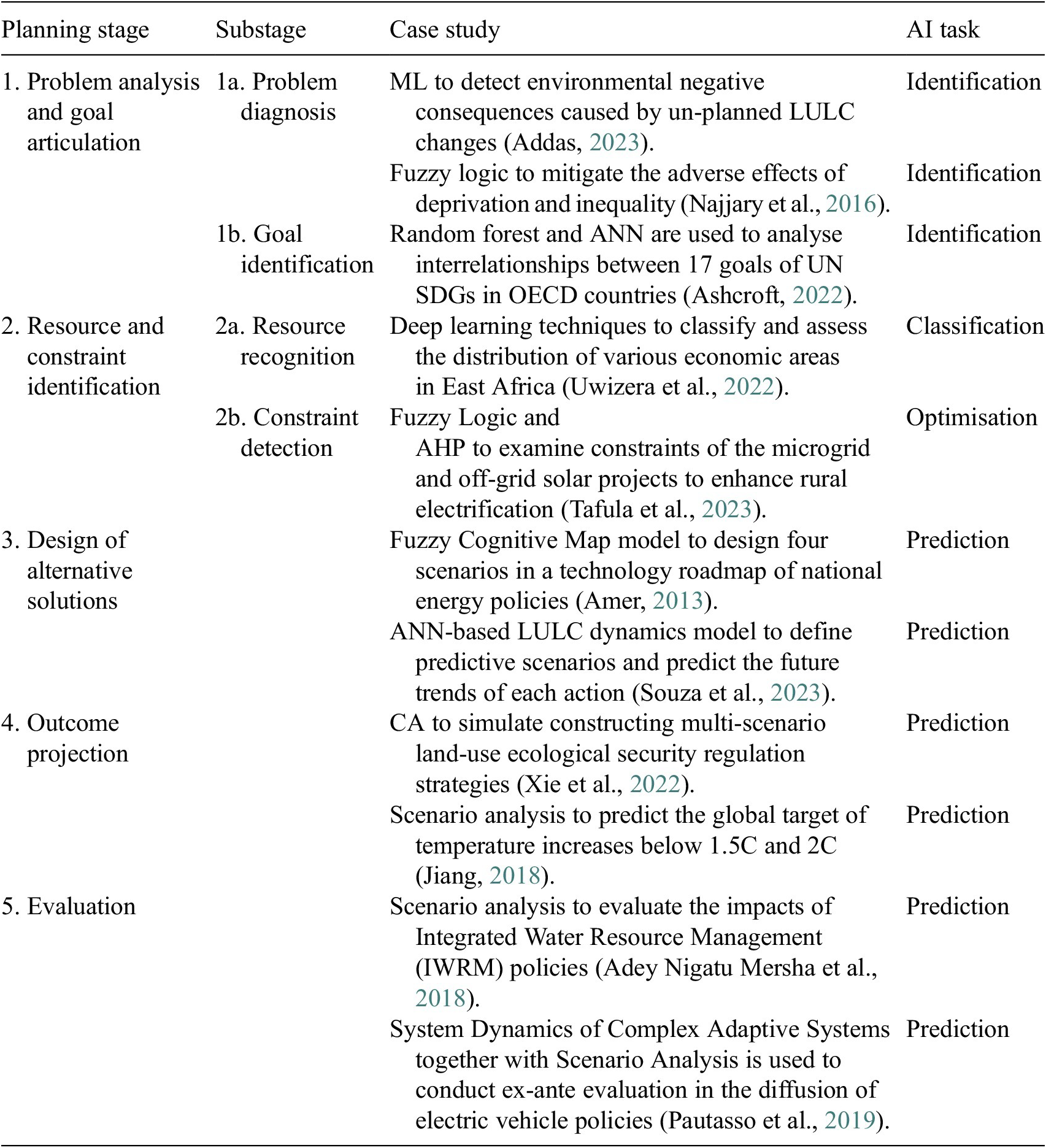
Prediction unsurprisingly emerges as the most prevalent AI task in development planning, aligning with the core focus of decision-making and planning on forecasting future outcomes (Petropoulos et al., Reference Petropoulos, Apiletti, Assimakopoulos, Babai, Barrow, Ben Taieb, Bergmeir, Bessa, Bijak, Boylan, Browell, Carnevale, Castle, Cirillo, Clements, Cordeiro, Cyrino Oliveira, De Baets, Dokumentov and Ziel2022). Approximately 61% of studies employ intelligent algorithms for tasks such as prediction, projection, simulation, or estimation. Beyond prediction, these techniques are also utilised for identifying, exploring, analysing, and extracting information or knowledge (21%), classification or clustering (8%), and optimisation (10%). The application of smart algorithms across these diverse tasks has demonstrated substantial performance improvements (Awad and Zaid-Alkelani, Reference Awad and Zaid-Alkelani2019; Almusalami et al., Reference Almusalami, Habuza, Singh and Zaki2022), including increased accuracy (Adeyinka and Muhajarine, Reference Adeyinka and Muhajarine2020; Akay, Reference Akay2022; AlDousari et al., Reference AlDousari, Kafy, Saha, Fattah, Bakshi and Rahaman2023), enhanced planning effectiveness (Alban et al., Reference Alban, Blaettchen, de Vries and Van Wassenhove2022; Alem and Kumar, Reference Alem and Kumar2022; Auwalu Faisal Koko et al., Reference Koko, Wu, Ghali, Hamed and Alabsi2020), and faster, more efficient outputs (Jimenez et al., Reference Jimenez, Vilchez, Delgado, Benavente and Gonzalez2022; Kaczorek and Jacyna, Reference Kaczorek and Jacyna2022). Most importantly, AI-driven decision support systems introduce innovative methodologies to development planning, significantly aiding decision-makers and planners in achieving their objectives (Mubea et al., Reference Mubea, Goetzke and Menz2014; Alle et al., Reference Alle, Metternicht and Wiedmann2016; Ashcroft, Reference Ashcroft2022; Addas, Reference Addas2023; AlKhereibi et al., Reference AlKhereibi, Wakjira, Kucukvar and Onat2023; Guariso et al., Reference Guariso, Castaeda and Guerrero2023).
While smart algorithms offer significant benefits, some technical limitations are identified across different stages of policy-making in development planning. For example, during problem analysis and goal articulation, machine learning models often face limitations due to context dependency. Country-specific factors and data availability frequently pose substantial obstacles to developing reliable AI models (Ashcroft, Reference Ashcroft2022). Similarly, despite their high accuracy, deep learning and fuzzy logic techniques may misclassify zoning plans during the resource and constraint identification phase, underscoring the critical need for more precise data at this stage (Uwizera et al., Reference Uwizera, Ruranga and McSharry2022). In the subsequent phase, designing alternative solutions, limitations such as data bias and context specificity affect fuzzy cognitive map-based scenarios (Amer, Reference Amer2013). Limitations such as data quality issues, missing data, the absence of certain needed data types, and a limited range of variables pose challenges, particularly in the fourth phase of outcome projection (Auwalu Faisal Koko et al., Reference Koko, Wu, Ghali, Hamed and Alabsi2020; Chen et al., Reference Chen, Li, Wang, Liu and Ai2013; Huang et al., Reference Huang, Chen, Zhang and Ren2023; W. Li et al., Reference Li, Zhang, Pan and Li2023). Lastly, in the evaluation stage, Kaczmarek et al. (Reference Kaczmarek, Iwaniak, Wietlicka, Piwowarczyk and Nadolny2022) found that inflectional languages, such as Polish, present greater challenges for NLP processing compared to English, for which numerous well-developed machine-learning models are available. Additionally, Pautasso et al. (Reference Pautasso, Osella and Caroleo2019) acknowledge that the assumption in their model—that the incentive mechanism and the market share of new battery electric vehicles remain constant over time—may need to be reconsidered, highlighting a potential limitation in its current application.
Additionally, a range of real-world challenges can also complicate the implementation of smart algorithms in development planning. Key barriers include privacy and security concerns arising from the extensive data required and issues of trust (Valle-Cruz et al., Reference Valle-Cruz, Criado, Sandoval-Almazn and Ruvalcaba-Gomez2020; Holzinger et al., Reference Holzinger, Kieseberg, Tjoa and Weippl2021; Andrews et al., Reference Andrews, Cooke, Gomez, Hurtado, Sanchez, Shah and Wright2022); ethical and social equity issues, as algorithms risk perpetuating existing biases (Valle-Cruz et al., Reference Valle-Cruz, Criado, Sandoval-Almazn and Ruvalcaba-Gomez2020; Andrews et al., Reference Andrews, Cooke, Gomez, Hurtado, Sanchez, Shah and Wright2022; Engin, Reference Engin2024); problems with standardisation and the digital divide (Valle-Cruz et al., Reference Valle-Cruz, Criado, Sandoval-Almazn and Ruvalcaba-Gomez2020); and regulatory and policy gaps, as legislation often lags behind technological advancements (Iqbal and Biller-Andorno, Reference Iqbal and Biller-Andorno2022) or results in over-regulation (Andreessen, Reference Andreessen2023). These factors underscore the need for a thoughtful, adaptable approach to harness the full potential of AI in this field.
Anticipating change is a fundamental aspect of decision-making, particularly when addressing future-oriented challenges (Marchau et al., Reference Marchau, Walker, Bloemen and Popper2019). Planning must account for not only rare events such as natural disasters, financial crises, or pandemics but also enduring issues like climate change, urban development, resource demands, and energy transitions, often characterised as “deep uncertainty” (Marchau et al., Reference Marchau, Walker, Bloemen and Popper2019). In policy-making, uncertainty refers to limited knowledge about events, shaped by subjective factors such as policymakers’ satisfaction with available information and their underlying values and perspectives (Thissen and Walker, Reference Thissen and Walker2013). This concept is distinct from risk; as Daníelsson (Reference Daníelsson2022) explains, citing Professor Frank Knight, risk can be quantified, whereas uncertainty pertains to outcomes that cannot be mathematically defined. This study focuses exclusively on cases that explicitly address uncertainty.
Despite its critical role, uncertainty is often underemphasised in development planning. While 20 studies explicitly examine uncertainty, 58 merely mention it without integrating its theoretical framework, and the majority overlook it altogether. Incorporating uncertainty into planning processes is crucial for enhancing the success of development initiatives (Andrews, Reference Andrews2018), particularly in forecasting future scenarios (Petropoulos et al., Reference Petropoulos, Apiletti, Assimakopoulos, Babai, Barrow, Ben Taieb, Bergmeir, Bessa, Bijak, Boylan, Browell, Carnevale, Castle, Cirillo, Clements, Cordeiro, Cyrino Oliveira, De Baets, Dokumentov and Ziel2022). Exploring complex adaptive systems (Pautasso et al., Reference Pautasso, Osella and Caroleo2019) and employing advanced smart algorithms, such as generative adversarial networks, present promising strategies for addressing these challenges (Koumetio Tekouabou et al., Reference Koumetio Tekouabou, Diop, Azmi, Jaligot and Chenal2022).
4.6. How can smart algorithms enhance the success rate of development initiatives?
The success of any action or initiative to improve people’s lives begins with formulating and designing programme plans. This review examines six primary papers that elaborate on the development programme during the planning process. These six articles primarily focus on the planning process, budget allocation, and a broader perspective on city planning, including physical or urban planning and socio-economic and environmental planning. The authors of the articles highlight varied development contexts, such as global development from an SDG perspective (Alle et al., Reference Alle, Metternicht and Wiedmann2016; Allen et al., Reference Allen, Metternicht and Wiedmann2017; Guariso et al., Reference Guariso, Castaeda and Guerrero2023), national development planning (Fernandez-Cortez et al., Reference Fernandez-Cortez, Valle-Cruz and Gil-Garcia2020; Valle-Cruz et al., Reference Valle-Cruz, Gil-Garcia and Fernandez-Cortez2020), and urban planning (Koumetio Tekouabou et al., Reference Koumetio Tekouabou, Diop, Azmi, Jaligot and Chenal2022). They also explore the relationship between SDGs and national plans (Alle et al., Reference Alle, Metternicht and Wiedmann2016; Allen et al., Reference Allen, Metternicht and Wiedmann2017), as well as development planning at the city level, which aligns with the SDGs framework. City-level planning encompasses numerous aspects of development, including population, infrastructure, socio-economic factors, land use, climate, waste management, and pollution (Koumetio Tekouabou et al., Reference Koumetio Tekouabou, Diop, Azmi, Jaligot and Chenal2022).
The algorithms used to support decision-making in development planning range from scenario modelling to AI-based methods. Scenario analysis has been employed to formulate national SDG planning by identifying the best fit within the policy planning cycle and selecting the most suitable alternatives given specific policy priorities (Allen et al., Reference Allen, Metternicht and Wiedmann2017). Among AI approaches, machine learning algorithms—both classical and neural network-based—are the most commonly applied. These methods have been used to analyse elements of city planning by leveraging various urban data sources, including sensor data, survey data, and combinations of the two (Koumetio Tekouabou et al., Reference Koumetio Tekouabou, Diop, Azmi, Jaligot and Chenal2022). In addition to ML, NLP and genetic algorithms have been utilised to identify, classify, and optimise national budget allocations (Fernandez-Cortez et al., Reference Fernandez-Cortez, Valle-Cruz and Gil-Garcia2020; Valle-Cruz et al., Reference Valle-Cruz, Gil-Garcia and Fernandez-Cortez2020). Regarding budget allocation, Guariso et al. (Reference Guariso, Castaeda and Guerrero2023) investigate the potential impacts of public expenditure on achieving SDGs by assessing the effectiveness of three types of smart algorithms: regression analysis, machine learning techniques, and agent-based computing.
In addition to analysing the use of smart algorithms for programme planning, two studies propose frameworks to assist planners and decision-makers in formulating development plans. Allen et al. (Reference Allen, Metternicht and Wiedmann2017) suggest an iterative framework for national scenario modelling to support SDG planning. Their framework comprises five steps: (1) developing a country profile by describing existing conditions based on variables and SDG indicators, (2) identifying national targets to determine a list of priority sectors aligned with the 17 SDGs and 169 targets, (3) shortlisting sectoral priorities, (4) selecting specific targets and indicators, and (5) translating goals and targets into analysable variables. In contrast, focusing on public expenditure for SDGs, Guariso et al. (Reference Guariso, Castaeda and Guerrero2023) propose a framework called Policy Priority Inference (PPI). This dynamic model incorporates a political-economy factor, representing the relationship between a central authority allocating resources and public servants implementing government programmes. PPI uses iteration to learn the optimal efficiency rate for resource allocation by the central authority.
However, implementing such initiatives, including smart algorithms in development planning, poses several challenges. Key obstacles identified in this study include hardware capabilities, algorithm selection, data availability, and time consumption. In urban planning, machine learning applications are complex and require significant computational power and energy to operate (Koumetio Tekouabou et al., Reference Koumetio Tekouabou, Diop, Azmi, Jaligot and Chenal2022). Furthermore, the choice of algorithms can either enhance or hinder the process. Koumetio Tekouabou et al. (Reference Koumetio Tekouabou, Diop, Azmi, Jaligot and Chenal2022) observe that many emerging deep-learning model architectures need substantial training on urban data. They highlight challenges in selecting appropriate models for specific types of data and urban applications, partly due to the uneven distribution of scientific studies across different regions. Similarly, Valle-Cruz et al. (Reference Valle-Cruz, Gil-Garcia and Fernandez-Cortez2020) note that acquiring high-quality data that AI can automatically exploit is not always feasible, leading to issues in developing accurate models. They also highlight that processing times for some simulations remain long, as current technology cannot yet provide real-time or near-instant responses.
Despite these advancements, the existing literature on this topic has several limitations. First, it tends to overlook technology-rich, bottom-up models that are sector-specific and lack system-level feedback to broader socioeconomic and environmental variables (Alle et al., Reference Alle, Metternicht and Wiedmann2016). Second, current modelling approaches explicitly focus on specific goals and systems, limiting their ability to examine detailed interrelationships within the economy-society-environment nexus, which is critical for achieving the SDGs (Allen et al., Reference Allen, Metternicht and Wiedmann2017). Third, there is a lack of comprehensive scenario-modelling exercises capable of analysing all SDGs within a single analytical framework. Analysts must balance the inherent need for system-based approaches with decision-makers’ demands for actionable outcomes. Finally, political and environmental aspects are often excluded from these studies, which limits their applicability and robustness (Fernandez-Cortez et al., Reference Fernandez-Cortez, Valle-Cruz and Gil-Garcia2020).
5. Conclusions and future study
Smart algorithms have been extensively applied across numerous sectors, including development studies, planning theories, and practice. They are widely used in various planning contexts, particularly substantive planning domains such as agriculture, education, energy, waste, land use, and environmental planning. Urban planning emerges as the most frequently discussed context in the existing literature. Although the focus of development and planning theory has shifted towards socio-economic and environmental planning, physical planning remains predominant in practical applications. While many studies address sectoral planning, relatively few focus on development programme planning. The studies analysed encompass all SDGs, with a particular emphasis on supporting sustainable cities and communities (SDG 11). However, a more equitable focus across global objectives is needed, especially for SDGs 5 (gender equality) and 17 (partnerships for the goals). Furthermore, a significant geographical disparity exists, with limited research conducted in less developed or low-income nations. This gap highlights the need for more research to adapt smart algorithm implementation to diverse regional characteristics and technological capacities.
From a technical perspective, policy-making in development planning utilises a diverse range of advanced algorithms. Nine major techniques are identified in the literature: machine learning, intelligent agents, evolutionary computation, biologically inspired and hybrid models, mathematical models, data-driven approaches, scenario modelling, complex adaptive systems, and other algorithms. The most frequently employed techniques include AI-based methods such as machine learning, ANNs, cellular automata-Markov models, fuzzy logic, deep learning, statistical methods, and scenario analysis. Combining these methods can enhance predictive accuracy but requires careful selection to mitigate potential issues, such as model parameterisation errors and data incompatibilities. The integration of diverse data sources, particularly with the rise of crowdsourcing and the Internet of Things, offers promising avenues for future exploration.
In the policy planning process, smart algorithms have been applied at various stages, including problem diagnosis, goal articulation, resource and constraint identification, alternative design, outcome projection, and evaluation. Predictive modelling is a key application, as planning and decision-making inherently involve forecasting. However, addressing uncertainty is critical to improving development initiatives aimed at enhancing quality of life. Few studies specifically explore the use of smart algorithms in development programme planning. Those that do examine areas such as aligning SDGs with national planning, city-level development, policy prioritisation, national scenario modelling, optimising budget allocations, and assessing the impacts of public expenditure on SDGs. Despite these advancements, significant challenges persist, including limited hardware capacity, algorithm selection, data availability, and time-intensive computations. The existing literature also reveals significant gaps: it often excludes technology-rich, bottom-up models that lack integration with broader socioeconomic and environmental systems. Current models tend to focus narrowly on specific goals, hindering the exploration of interconnections within the economy–society–environment system, which is essential for achieving the SDGs. Additionally, scenario modelling exercises rarely address all SDGs within a unified framework, requiring a balance between comprehensive system-based approaches and decision-makers’ need for actionable insights. Political and environmental factors are also often neglected, limiting the holistic analysis required for sustainable development planning.
Building on these studies, future research should focus on reducing computational complexity, increasing algorithmic transparency, diversifying model offerings, and generating more comprehensive datasets with varied variables. Integrating new elements into the urban planning process is essential to address the evolving challenges of modern cities. While most algorithms identified thus far are relatively simple, newer, more complex algorithms are emerging, necessitating further investigation into their applications, impacts, risks, and ethical considerations. Finally, in-depth research on AI stipulations in policy-making, particularly regarding ethical AI and transparency issues, is crucial to ensure responsible and effective implementation.
Supplementary material
The supplementary material for this article can be found at http://doi.org/10.1017/dap.2025.10.
Data availability statement
The list of papers and collected data is available in the following open repository: https://doi.org/10.5522/04/27692952.v3.
Acknowledgements
The authors would like to express their sincere gratitude to the editors and anonymous reviewers for their careful reading of this manuscript and helpful comments and suggestions.
Author contribution
Conceptualisation: Sofiarti Dyah Anggunia, Jesse Sowell, and María Pérez-Ortiz Methodology: Sofiarti Dyah Anggunia and Jesse Sowell Data curation: Sofiarti Dyah Anggunia Formal analysis: Sofiarti Dyah Anggunia, Jesse Sowell, and María Pérez-Ortiz Supervision: Jesse Sowell and María Pérez-Ortiz Validation: Jesse Sowell and María Pérez-Ortiz Visualisation: Sofiarti Dyah Anggunia Writing original draft: Sofiarti Dyah Anggunia Writing review and editing: Sofiarti Dyah Anggunia, Jesse Sowell, and María Pérez-Ortiz. All authors approved the final submitted draft.
Funding statement
Anggunia acknowledges funding support from the Indonesia Endowment Fund for Education (Lembaga Pengelola Dana Pendidikan Republik Indonesia/LPDP RI) under grant number KEP.1296/LPDP/LPDP.3/2022.
Competing interest
The authors declare no conflict of interest.


 Open access


Comments
No Comments have been published for this article.