





Commercially processed products have been produced and purchased by African consumers for over 50 years; however, in recent years, the sale of products often referred to as ‘ultra-processed products’ has grown rapidly(Reference Reardon, Tschirley and Liverpool-Tasie1). Ultra-processed products are formulations of food substances that result from a series of industrial processes. Some of these processes include chemical modifications of food substances, frying, use of additives and nutrients of concern to limit to make the product highly palatable, then placed in sophisticated packaging(Reference Adams, Hofman and Moubarac2) and aggressively advertised and marketed. Regular consumption of these commercially produced products has been linked to various health issues, including obesity, type 2 diabetes, CVD and cancer(Reference Popkin and Ng3), and it is suggested that decreasing the dietary share of these products may substantially improve the nutritional quality of diets and contribute to the prevention of diet-related non-communicable diseases (NCD)(Reference Monteiro, Cannon and Levy4). In South Africa, it has been found that 76 % of packaged foods in supermarkets are ultra-processed(Reference Frank, Thow and Ng5). Most ultra-processed products are energy-dense, high in fats, sugar or sodium or contain non-sugar sweeteners (NSS)(Reference Popkin, Miles and Smith Taillie6). These products are extensively marketed which is a public health concern as it results in an increased preference towards ultra-processed snacks, causes poor dietary patterns from an early age and contributes to the development of obesity and NCDs which places a burden on the national health care system(Reference Hlongwane and Reddy7). Obesity prevalence rates in South Africa are high and continue to rise, affecting 11 % of men and 41 % of women(8).
The growth in sales of packaged foods over recent decades(Reference Swart and Sambu9) is due to factors such as convenience, affordability and aggressive marketing strategies. Some common marketing tactics used by the food industry to increase consumer awareness of the product and the brand, the desirability and drive the sales of these products are price, packaging, placement, promotions and advertisements. Expanding on this, the packaging of ultra-processed products is designed to attract attention and create a positive perception. Colourful and eye-catching packaging, along with attractive graphics and images, is often used to make products visually appealing to the target audience, particularly children(Reference Letona, Chacon and Roberto10). Packaging may also include claims such as ‘low fat’ or ‘no additives’ to give the impression of healthier options, even if the actual nutritional content is poor(Reference André, Chandon and Haws11). In addition, advertising of packaged products is the tool used to foreground the brand and/or product for consumers and is designed to create brand loyalty, increase appeal and influence consumer choices(Reference Sato, Leite and Khandpur12). These adverts often include celebrities and attractive visuals to engage viewers and create positive associations with the products. Adverts frequently target children, who are more susceptible to marketing,(Reference Sato, Leite and Khandpur12) and translate into strong pester power(Reference Abbasi, Amran and Riaz13).
Specifically within the supermarket retail context, in-store marketing involves strategic planning and implementation of promotional activities, product placement strategies and other tactics to increase product and brand visibility, encourage impulse purchases, drive sales and optimise the shopping experience for customers(Reference Matamalas and Ramos14). In the supermarket retail environment, packaged snack products are often prominently displayed at high consumer traffic areas which are the checkout counters, end-of-aisle displays or near the entrances, making them easily accessible and tempting for customers(Reference Miller15). Additionally, the use of promotional techniques such as discounts and ‘buy one, get one free’ special offers encourages consumers to purchase more. Product displays play a crucial role in promoting merchandise and influencing consumer behaviour. Stores often utilise a ‘one-way’ layout to guide customers through the entire store, encouraging impulse purchases as customers are exposed to a variety of products they may not have initially planned to purchase. Supermarkets strategically position profitable items along the store’s side and back walls, compelling shoppers to navigate past slower-moving products. This increases the likelihood of customers making additional impulse purchases(Reference Matamalas and Ramos14).
This study focuses on packaged snack products in the South African retail food environment. Over time snacking has become a popular dietary practice and the increasing frequency of consumption has been shown to correlate positively with total energy intake(Reference Almoraie, Saqaan and Alharthi16). This is partly because packaged ultra-processed snacks typically contain excessive amounts of added sugar, saturated fat and sodium, while lacking essential nutrients. The South African draft R3337 proposes to introduce front-of-pack warning labels to alert consumers about packaged products containing NSS or excessive levels of nutrients of concern to limit (i.e. sugar, saturated fat and sodium), restricts health claims on concerning products and aims to protect children from aggressive marketing. Additionally, it incentivises producers to offer healthier options, promoting a healthier food supply(17). Snack products have a presence at checkout areas in most supermarkets, making them largely unavoidable and increasing the likelihood of unwanted impulsive purchases(Reference Basch and Fera18). Ultra-processed snacks are often more affordable and accessible than healthier options, especially in low-income communities(Reference Gittelsohn, Kasprzak and Hill19). As a result, individuals and families facing financial difficulty may rely more on these snacks as a cheap and convenient food source. This can have negative health implications when they displace whole and minimally processed foods which are more diverse, nutrient-dense and associated with better health outcomes(Reference Ziso, Chun and Puglisi20). There is a limited body of research on the marketing and nutritional composition of snack products specific to South Africa. This study aims to provide insight into available snack products in South African supermarkets, and the marketing thereof, which can be used to support policy development aimed at improving the healthfulness of the food supply and consumption patterns.
Methods
This was an observational cross-sectional, mixed-method study.
Nutritional composition of snack foods
Information on processed and packaged snacks available from South African supermarkets between February and April 2019 was extracted from the secondary database of the Researching the Obesogenic Food Environment in South Africa and Ghana (ROFE) study.
The data collection entailed taking photographs of all sides of packaged products from six major supermarket chains located within Durbanville, Langa and Khayelitsha, in Cape Town, South Africa. Stores in both low- and middle-income neighbourhoods were included as the product supply can differ in socio-economic areas. This resulted in a total of six supermarket chains, but eight stores were included in the study. Half (n 4) were from a middle socio-economic area and the rest (n 4) from low-socio-economic areas. The low socio-economic areas referred to are characterised by high rates of poverty, unemployment, relatively low levels of income and greater social challenges, whereas the middle socio-economic areas exhibit a mix of both affluent and economically disadvantaged households.
The six supermarket chain stores were selected because they are the major supermarkets accounting for more than 50 % of the grocery store market share in South Africa and provide a fair representation of products available to consumers nationally(21).
All product information obtained (name, brand, weight, manufacturer, price, reconstitution information, nutritional values and ingredient list) was entered into REDCap, a web database application, where the nutritional information was captured per 100 g for solids and per 100 ml for liquids. Measures for quality control of the nutritional composition data included daily quality checks by a single data supervisor who used REDCap to execute rules and check for discrepancies such as missing values and data validation errors. A structured quality assurance process was then followed once all data had been entered.
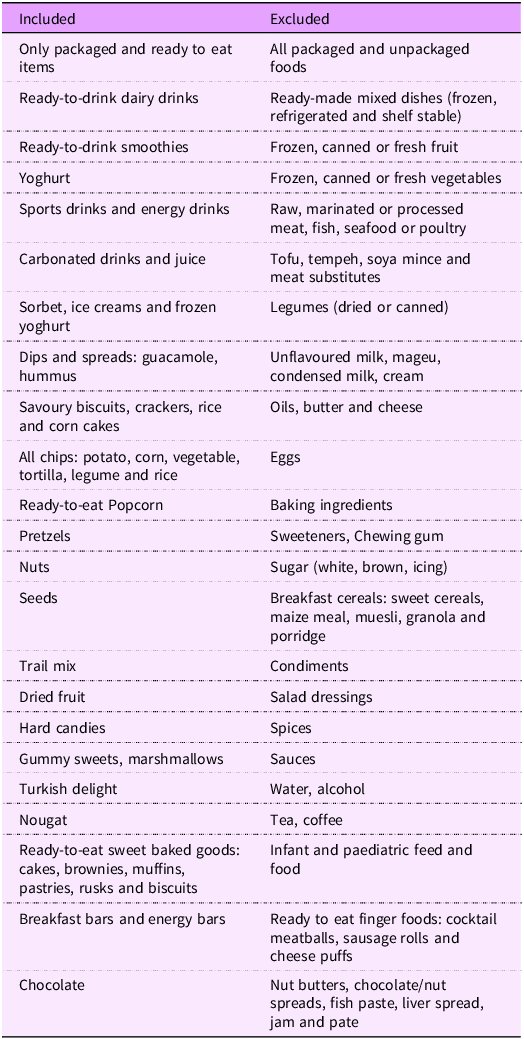
As a universal definition of a snack does not exist(Reference Hess, Jonnalagadda and Slavin22), a modification of the guide by Thornton et al.(Reference Thornton, Cameron and Mcnaughton23) was used to identify appropriate snack items for data extraction (Table 1). Using Microsoft Excel, ten categories of data, consisting of 7965 products, were screened to identify and extract products eligible for inclusion. The data screening process was duplicated by a second reviewer who specifically examined a subset of the dataset to confirm adherence to the predefined inclusion criteria and any differences found were resolved by discussion.
Inclusion criteria (adapted from Thornton et al., 2013)

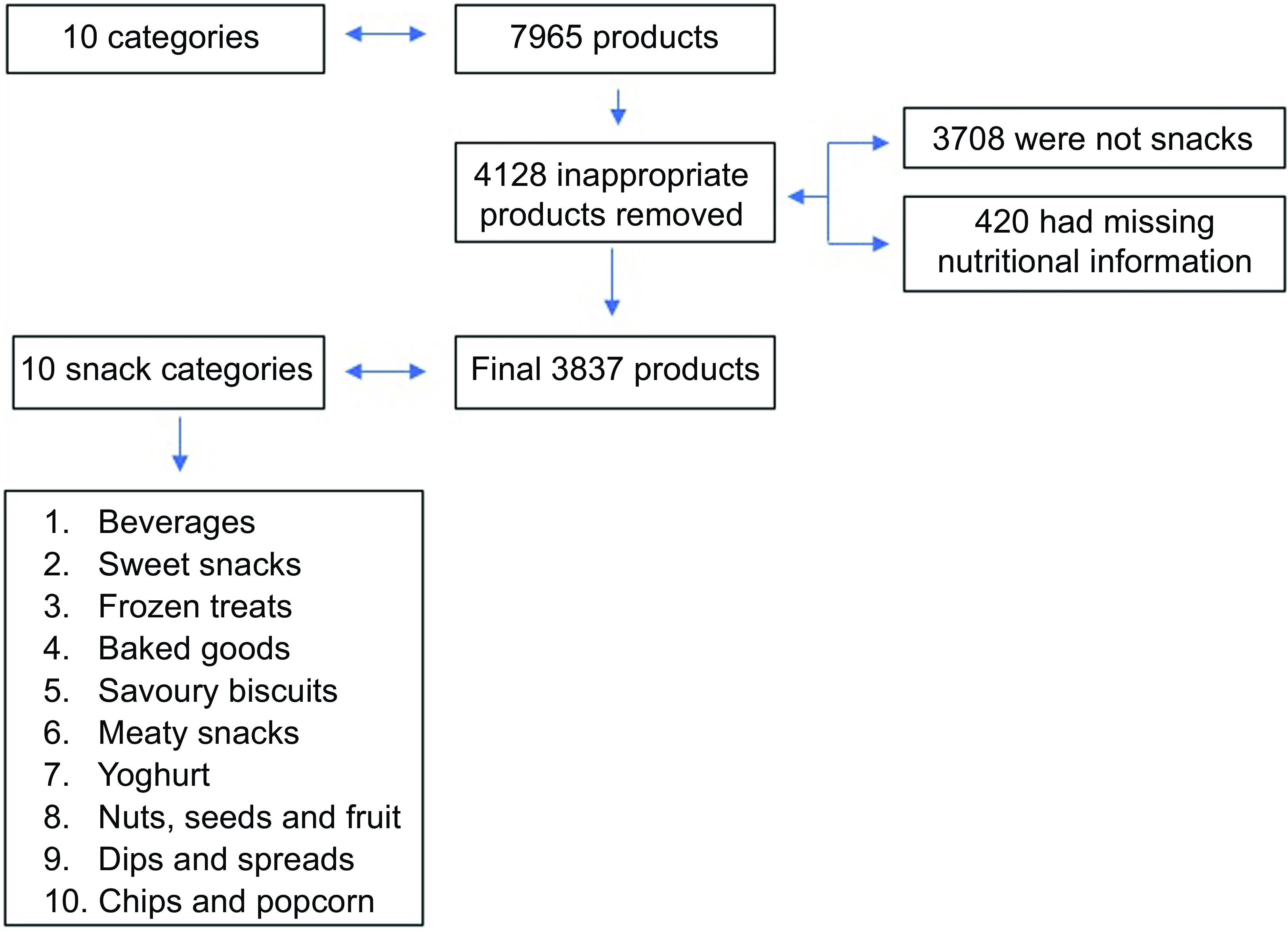
There was an exclusion of 4128 products because they either had missing nutrient values or ingredient lists, were duplicates or were not considered to be snack items according to the inclusion criteria (Table 1). The remaining 3837 products were included in this study and grouped into ten new snack categories and 34 sub-categories (Fig. 1) following recommended snack product categories in existing literature(Reference Thornton, Cameron and Mcnaughton23), as shown in Appendix 1.
Product elimination flow chart.

Marketing
In October 2021, additional primary data regarding the in-store marketing and variety of processed and packaged snack items as well as information on the perceptions of the store managers was collected from the same eight supermarkets used in the 2019 study of nutrition composition of packaged food products. To obtain information on the in-store marketing of snacks, we used an observational checklist (Appendix 2), adapted from the Supermarket Snack Food Audit Tool developed by Thornton et al.(Reference Thornton, Cameron and Mcnaughton23) and the International Network for Food and Obesity/NCD Research, Monitoring and Action Support(24) protocol for Food Availability in Supermarkets. The checklist was created to include observations of the in-store marketing of snack products, the variety of snacks available at the checkout areas, special offers, combo deals, branded notice boards, branded temporary display units, branded display cabinets and aisle lengths dedicated to snacks. After completing the checklist, short face-to-face interviews with structured questions were conducted with the store managers (Appendix 3). The interviews helped to obtain additional information that could not be collected via observation alone such as details regarding snack placement strategies, in-store marketing decision-making, shelf space allocations, promotions, responsible parties for these decisions and store manager views on how their store environment influences the customers purchasing behaviour. Ethics approval to conduct the study was granted by the Humanities and Social Sciences Research Ethics Committee of the University of the Western Cape, ethics number HS 20/4/38.
Analysis
IBM Statistical Package for Social Sciences (SPSS) version 28 software was used for nutritional composition analysis. Descriptive statistics was used to express frequencies of the presence of snack categories and sub-categories at stores as well as the central tendencies of the nutritional composition of each category and sub-category for total energy, protein, total fat, saturated fat, sugar, free sugar, fibre and sodium. Guidelines from the PAHO Nutrient Profiling Model (NPM) were used to estimate the content of free sugar(25). Certain nutrient values were then evaluated using the criteria of the South African Nutrient Profiling Model (SA NPM) developed by Frank et al.(Reference Frank, Thow and Ng5) to identify products high in nutrients of concern to limit or containing NSS (e.g. sucralose, acesulfame potassium, aspartame, stevia, etc).
NPM are tools designed to classify the healthiness of foods according to their nutritional composition, which allows for regulating nutrient and health claims, front-of-package labelling and the development of food-related policies. The SA NPM was specifically developed to identify unhealthy products that should be limited. In the context of this study, the term unhealthy refers to products exceeding the criteria for one or more nutrients of concern to limit. The SA NPM is applied to any packaged food or beverage that contains free sugar, added sodium, added saturated fat or NSS. The thresholds differ for solids and liquids and cannot exceed 10 g/100 g and 5 g/100 ml total sugar; 4 g/100 g and 3 g/100 ml saturated fat; 400 mg/100 g and 100 mg/100 ml sodium or contain any NSS(Reference Frank, Thow and Ng5).
The SA NPM criteria were selected because it has been proposed in South African draft regulations relating to the labelling and advertising of foodstuffs (R3337 of 2023) for the purpose of identifying products that should carry a front-of-package warning label and not be marketed to children(17). The proportion of products within each category and sub-category that exceed SA NPM criteria was assessed.
The information from the observational checklist was analysed in Microsoft Excel version 16·54. Total shelf space allocated to each snack category was calculated and percentages were determined. Qualitative data from the store manager interviews were analysed inductively by reading each response from all stores (n 8) and grouping similar themes together in Microsoft Word version 16.54.
Results
The snack categories consisting of the largest number of products were beverages (26·4 %, n 1013), sweet snacks (23·1 %, n 885) and baked goods (13·9 %, n 532), making up just over 60 % of the dataset. The sub-categories with the most products were baked goods (13·9 %, n 532), chocolate (11 %, n 423), dairy yogurt (10·8 %, n 416), candy (10·2 %, n 391) and 100 % fruit juice (8·3 %, n 319).
Snack products excessive in nutrients of concern to limit
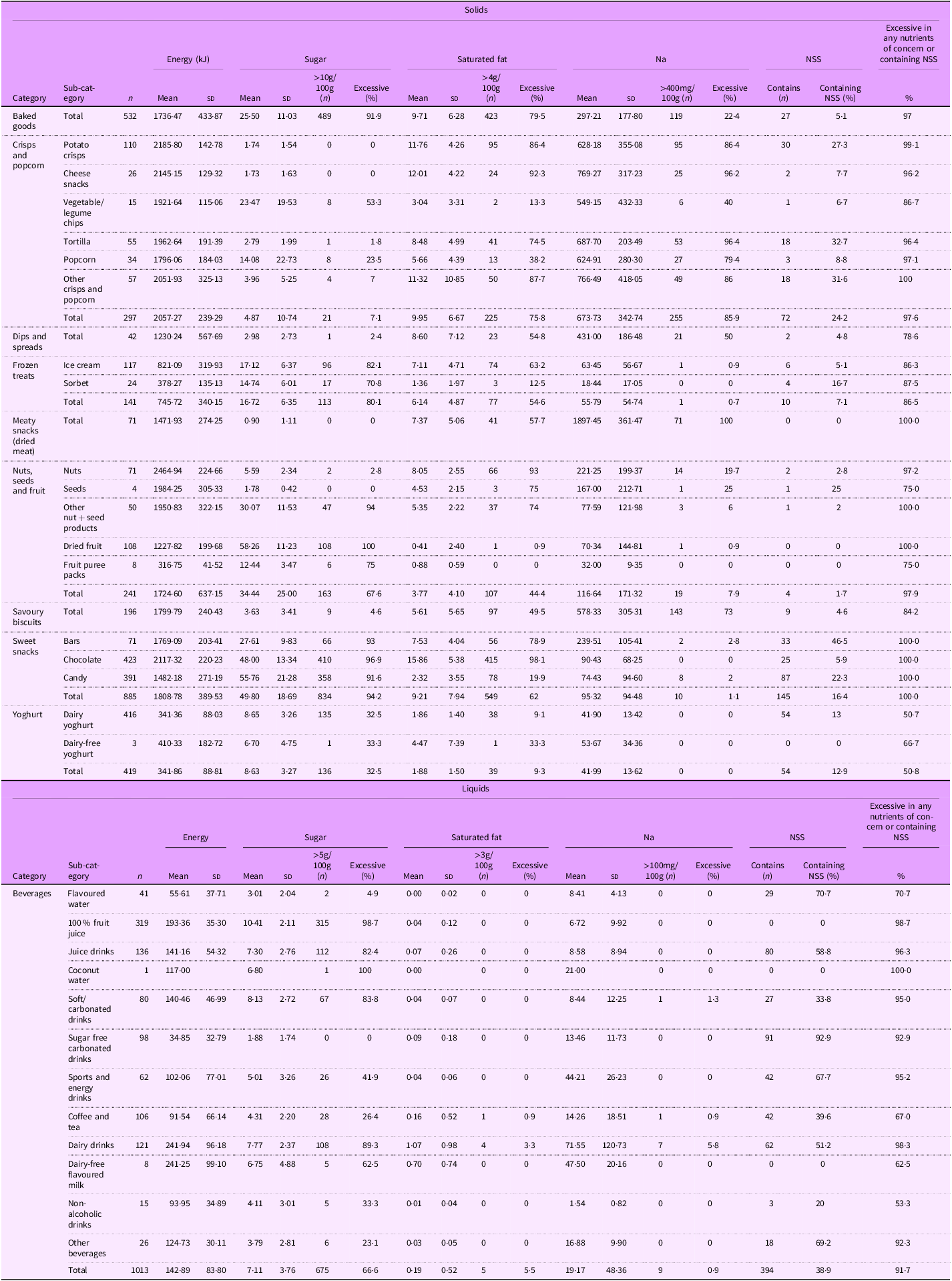
The top five energy-dense categories were crisps and popcorn (2057 kJ/100 g), sweet snacks (1809 kJ/100 g), savoury biscuits (1800 kJ/100 g), baked goods (1736 kJ/100 g) and nuts, seeds and dried fruit (1725 kJ/100 g) (Table 2 and Appendix 4).
Mean nutritional values for each snack category and proportion of products within snack categories and sub-categories that are excessive in nutrients of concern to limit or containing non-sugar sweetener (NSS)
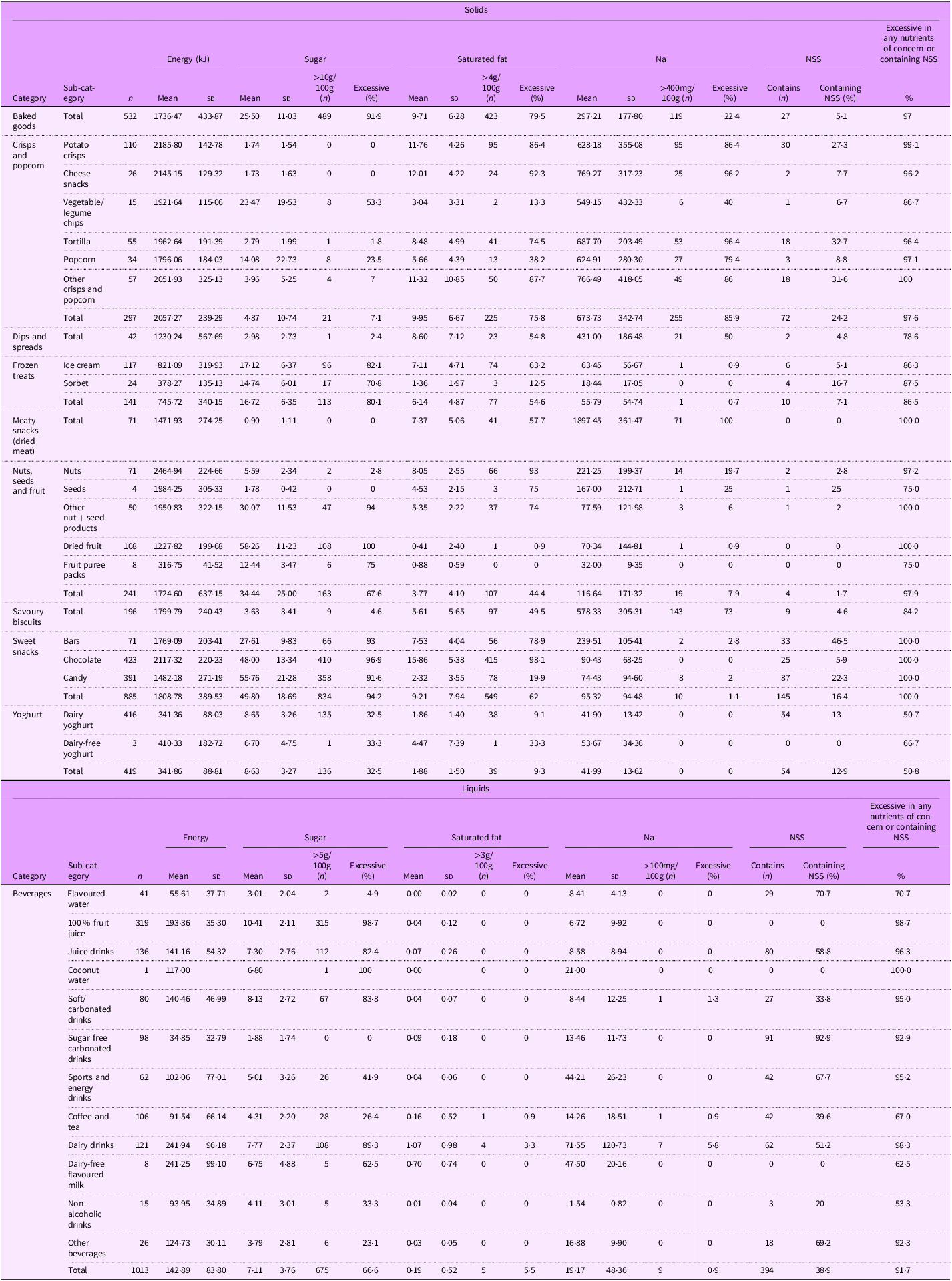
Majority of the products assessed (89 %) either contained NSS or were high in sugar, saturated fat or sodium (Table 2). The sub-categories with the lowest proportion (< 55 %) of products containing excess amounts of any nutrient of concern to limit are dairy yoghurts and non-alcoholic drinks.
Approximately half (50·7 %) of dairy yogurt products exceeded the recommended limits for nutrients of concern to limit. Additionally, nearly all (98·3 %) products in the dairy drinks sub-category were found to be excessive in nutrients of concern to limit, primarily surpassing the sugar threshold (89·3 %) or contained NSS (51·2 %).
Half of the beverage sub-categories had over 50 % of products containing NSS, while coconut water, 100 % fruit juice and dairy-free flavoured milks showed no presence of NSS.
Majority of products (97·2 %) in the nuts, seeds and dried fruit category had excess amounts of nutrients of concern to limit. Specifically, the nuts (93 %) and seeds (75 %) sub-categories exceeded recommended levels for saturated fat. Additionally, a substantial proportion of other nut and seed products (94 %), dried fruit (100 %) and fruit puree packs (75 %) displayed high levels of sugar, surpassing the recommended threshold.
In-store marketing in South African supermarkets
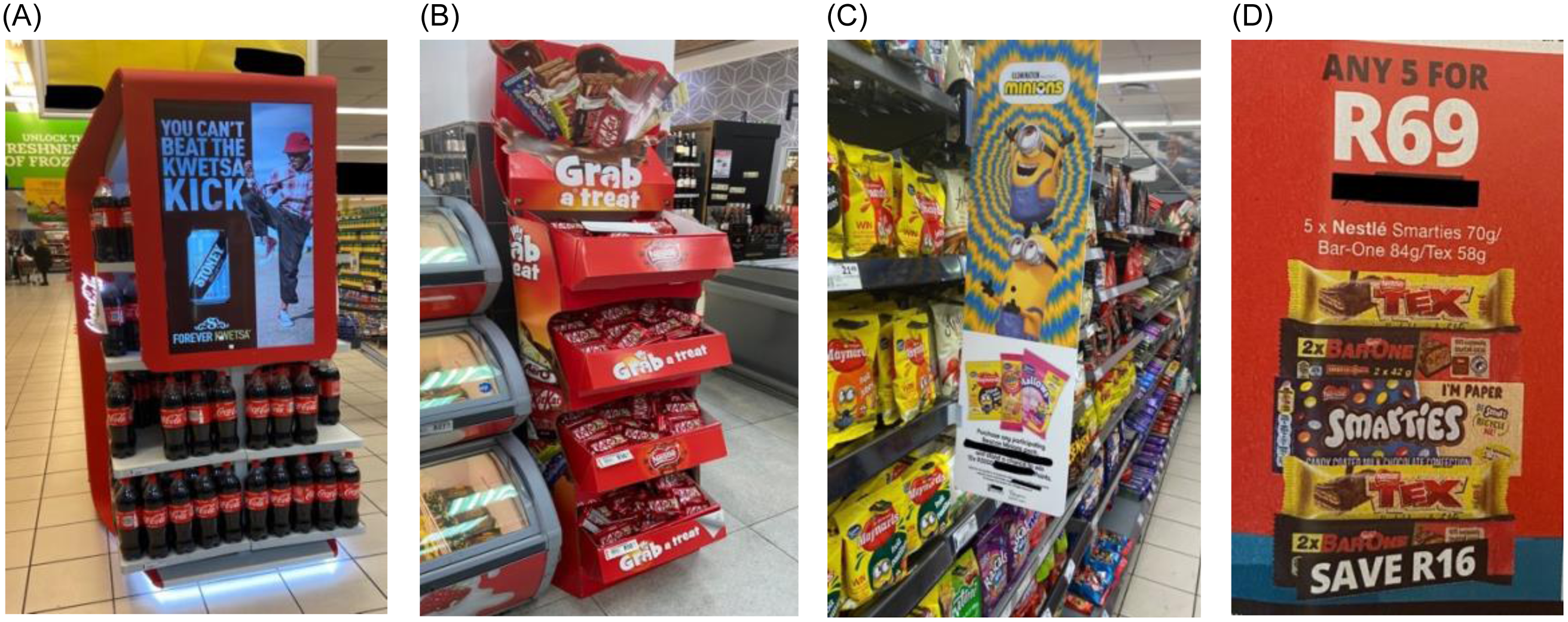
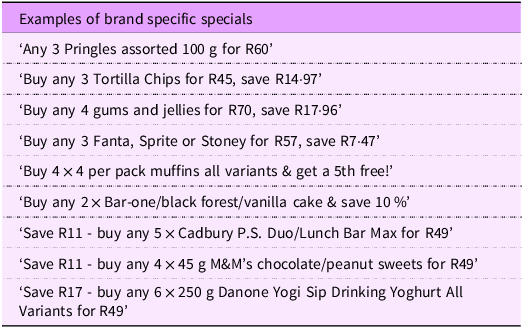
All stores had eye-catching in-store branded marketing of snack products (Fig. 2). Branded display cabinets were present at most (n 7) stores and branded temporary display units (pop-up holders and shelves) were observed at three stores. Branded notice boards were observed in five stores, and all eight stores had brand-specific specials (Table 3). The in-store marketing was of packaged, ready-to-eat snacks i.e. sweet baked goods, chips, chocolate and sugar-sweetened beverages.
Visual examples of the branded marketing found at supermarkets and presence observed in stores (total stores =8). * A: Example of branded display cabinets; similar branded display cabinets were observed in 87·5 % of stores. * B: Example of branded temporary display units; similar branded temporary display units were observed in 37·5 % of stores. * C: Example of branded pop out notice board in aisle; similar branded pop out notice boards were observed in 62·5 % of stores. * D: Example of branded specific specials on snacks; similar branded specific specials on snacks were seen at 100 % of stores.

Examples of brand specific specials seen in stores

Ultra-processed packaged snack products were present at checkout areas in all eight stores (Appendix 5). Potato chips, chocolate and breakfast/energy bars were the most frequent snacks, present at all stores’ checkout areas. At most checkout areas, there were nuts, dried fruit, candy, regular and sugar-free carbonated beverages, sport and energy drinks and baked goods.
Across the ten snack categories we focused on in the eight stores, there was a combined total of 649·2 m shelf space dedicated to snacks (Appendix 5). The beverages accounted for the largest proportion of shelf space (33·56 %), followed by baked goods (22·44 %) and sweet snacks (14·33 %). Less than 10 % of the snack shelf space was used by frozen treats (5·36 %), nuts, seeds and fruit (4·78 %) and savoury biscuits (3·54 %).
Store managers perspectives
All store managers reported having ‘high (traffic) volume’ areas that attract the attention of shoppers, to encourage more sales. These areas were at the end of aisles, in the fresh sections, i.e. fruit and vegetables, which are usually located at the entrance, as well as the butchery, bakery and checkout areas. ‘Gondola ends’ (products placed at the end of an aisle), or ‘champion end displays’ and ‘euro stands’ (stands displaying imported products) were popular areas as well as square or round bins located near the checkout. The reason reported for placing round bins near the checkout was because impulsive purchases occur while customers wait to check out (Store 8 manager). Store 1 manager reported keeping imported products in round bins because it brings in more money than displaying them on shelves.
All store managers (n 8) stated that their head office received some sort of compensation, either money or free stock at store level, from suppliers for marketing their products through prioritising the display in high (traffic) volume areas. Most stores in low socio-economic status areas did not receive money at store level, instead they received free stock from suppliers. Some received free stock in return for specific placement and putting up branded displays, whereas others received free stock but the supplier did not have placement power at the store.
Most managers (n 7) reported that their in-store marketing of snack products encourages customers to make healthy decisions, for various reasons (Appendix 6). Store manager 6 believed that there is more encouragement for healthy purchases from supermarkets targeting an affluent demographic. The manager stated that at the store they try their best to encourage healthy shopping behaviours but cater to a low socio-economic status community and the type of marketing depends on the store location. Store manager 5, from a low socio-economic status area, shared that consumer demands shift towards ultra-processed items but the store does not disregard their responsibility to promote health. It was stated that they have a different target market compared to stores targeting affluent customers. Most managers from stores in low socio-economic status areas (stores 5, 7 and 8) believe that it is the consumer’s responsibility to make healthy purchasing choices and not the store’s responsibility.
Only Store manager 8 thought that the store does not encourage healthy shopping behaviours, stating ‘Snacks are luxuries. They will always be in the store. It is placed in the high traffic areas because it will always sell, even if they are moved. Why must we tell them (customers) to not buy it if it is being sold in the store?’.
Discussion
In this study looking at commercially processed snack products sold in South African supermarkets, we discovered that the majority of the products exceeded recommended amounts for nutrients of concern to limit. The overconsumption of saturated fat, sodium and sugar is known to contribute to obesity and nutrition-related NCD(Reference Popkin, Barquera and Corvalan26). Therefore, the abundance of snack items surpassing recommended nutrient limits is a concerning health issue and highlights the lack of nutritious alternatives for consumers seeking packaged snack options at supermarkets. In addition, we found that these unhealthy snacks were frequently found in high-traffic and checkout areas in all stores, which can make it difficult for customers to practice healthy purchasing behaviours.
Our findings align with earlier work in other low- and middle-income countries reporting that consumers are steered towards ultra-processed packaged snacks through eye-catching packaging and the branded marketing presence such as notice boards, display cabinets and temporary display units in stores(Reference Islam, Ahmad and Dada27). These marketing strategies have been proven to increase the likelihood of impulsive purchases(Reference Khan, Qayyum and Hanif28). In addition, cross-merchandising placement strategies, combo deals and reduced prices of snack items were prevalent in-store marketing strategies found in this study. Such pricing or volume promotions make these products attractive to budget-conscious low-income shoppers.
These findings stand in contrast to the belief shared by many store managers that their stores encourage consumers to make healthy shopping decisions. It is important to note that, in this study, the perceptions of store managers regarding what constitutes healthy food differed from scientific evidence of what constitutes healthy food, as seen by their responses. This difference in understanding may influence their awareness and inclination to modify store layouts which highlights the need for comprehensive education across all levels to gather support for effective food and nutrition policies.
Despite the belief that their stores encourage consumers to make healthy shopping decisions, all store managers received incentives in the form of free stock or cash from suppliers for prioritising the display and marketing their products in high volume or checkout areas. It has been argued that the receipt of such ‘slotting fees’ is problematic on several fronts. Firstly, it creates an uneven playing field for smaller businesses that do not have the financial resources to afford it(Reference Wood, Williams and Nagarajan29), possibly being in violation of South Africa’s 1998 Competition Act(30). Secondly, slotting fees may dictate product availability, and thus crowds out other options for the public in the sense that they can only purchase what is available on the shelves. Past studies have shown that it is less common for healthy products to attract the same attention as the less healthy products in stores. A study by Potvin et al.(Reference Potvin Kent, Rudnicki and Usher31) found 5·3 times more shelf facings, 4·2 more end-of-aisle displays, 1·7 more mid-aisle displays and 3·3 more special pricing signage for less healthy products compared to healthier products within the same category. Petimar et al.(Reference Petimar, Moran and Grummon32) add that in-store promotions, which are mostly of unhealthy foods, are associated with a large increase in the volume of products sold. Thirdly, there is a lack of transparency when it comes to the agreements made by these companies and stores. Consumers are inadvertently supporting companies that invest in tactics such as paying for placement in high-traffic areas. Consumers are unaware that stores are accepting incentives, and unfortunately the in-store marketing will influence their food purchases and ultimately shape dietary patterns(Reference Truman and Elliott33,Reference Glanz, Bader and Iyer34) . Retailers bear a responsibility to provide consumers with accurate and transparent information due to the impact it has on them.
Decisions regarding the food one buys and consumes can be influenced by the practices of the private sector such as manufacturers, retailers and by government policies. Findings from this study suggest that the proposed Draft R3337(17) from the National Department of Health is a step in the right direction. This draft regulation includes mandatory front-of-package nutrient-specific warning labels that are easily understandable, attention-grabbing and effective at assisting consumers to identify products high in nutrients of concern to limit and discourage purchase intention of unhealthy products(Reference Bopape, De Man and Smith Taillie35). Upon its implementation, the Draft R3337 will require mandatory nutrition labelling of all packaged food items. Not only do nutrition labelling systems assist customers in making informed decisions when selecting products in store, they also drive manufacturers towards product reformulation or new product formulation with reduced levels of nutrients of concern to limit(Reference Roberto, Ng and Ganderats-Fuentes36). While it is expected that draft R3337, if implemented, will encourage the reformulation of packaged food products to healthier versions(Reference Crosbie, Gomes and Olvera37), assist customers in identifying items to avoid through warning labels and introduce mandatory restrictions on claims and child-directed marketing, in isolation it remains insufficient in reducing the challenges associated with in-store marketing of ultra-processed products within the supermarket food environment. Taxation has proven to be an effective intervention in reducing purchases of ultra-processed products, with results being even greater when combined with nutrition warning labels as it reduces social inequalities between high- and low-income groups(Reference Langellier, Stankov and Hammond38). The revenue generated from tax could be allocated to government funds aimed at addressing healthcare expenses related to NCD.
Retail settings have the potential to transform the shopping environment by positively influencing purchasing behaviours and enhancing dietary quality. As such, supermarkets should be considered as a multi-component intervention point for reducing obesity and NCD(Reference Glanz, Bader and Iyer34). Store layouts are identified as an area for intervention. Vogel et al.(Reference Vogel, Crozier and Penn-Newman39) found that relocating the fruit and vegetable section near store entrances led to a significant increase in sales, ultimately improving overall dietary quality. Strategic placement of healthier food options, such as fruits and vegetables, with messages emphasising their benefits, can encourage customers to make healthier choices while shopping(Reference Kelly, Jewell and Whatnall40). Minimising the visibility and accessibility of ultra-processed products can help prevent purchases. Initiatives such as banning unhealthy foods from prominent locations demonstrate promising results in discouraging unhealthy impulse buys, as shown by Berkeley, California which prohibits stores larger than 2500 square feet from displaying unhealthy items at checkout areas(Reference Gomez-Donoso, Sacks and Vanderlee41). Similar measures have been implemented in the United Kingdom where less healthy products are restricted at checkouts, store entrances and end-of-aisles(42). Supermarkets can be strategic with their layout by reorganising product placement to guide customers through healthier sections first and placing healthy options in high-traffic areas(Reference Glanz, Bader and Iyer34).
Efforts to enhance the availability of healthier options within supermarkets are necessary for promoting healthier food choices among consumers. Allocating a greater share of space and prominence to healthier products can significantly impact purchasing behaviours(Reference Glanz, Bader and Iyer34). Gomez-Donoso et al.(Reference Gomez-Donoso, Sacks and Vanderlee41) suggest that initiatives aimed at providing more shelf space for fresh and healthier foods, received high support from consumers, with 72 % of consumers expressing favourability towards this approach. By modifying shelf space to prioritise healthier options and increasing their availability in high-traffic areas, customers can be influenced to opt for more nutritious items(Reference Moore, Pinard and Yaroch43). Establishing healthy checkout areas, free from ultra-processed products, can be useful in reducing unhealthy impulse purchases(Reference Glanz, Bader and Iyer34,Reference Gomez-Donoso, Sacks and Vanderlee41) . In a study by Winkler et al.(Reference Winkler, Christensen and Glümer44) that evaluated the effects of substituting unhealthy snack products at checkout areas with fruit and healthy snacking options, it was found that the intervention was positively viewed by consumers and they believed that it could help others make healthier choices. For example, van Kleef et al.(Reference van Kleef, Otten and van Trijp45) found that when checkout displays have 25 % of healthy options available, the healthy products purchased were 40·74 %; this rose to 85·25 % when 75 % of offerings were healthy.
Price incentives have a significant role in shaping consumer behaviour and influencing purchasing decisions, particularly in the context of creating a healthier supermarket environment. Implementing price incentives such as discounts or promotions on healthier food items can make them more affordable and attractive to consumers(Reference Moore, Pinard and Yaroch43). Slapø et al.(Reference Slapø, Schjøll and Strømgren46) state that price discounts have promising effects on increasing sales of healthy food options. Gittelsohn et al.(Reference Gittelsohn, Trude and Kim47) are in agreement, finding that pricing interventions led to improvements in the purchasing and consumption of healthy foods and beverages, while simultaneously decreasing the purchasing and consumption of unhealthy items. Regulation restricting price promotions of ultra-processed products should be considered. There have been emerging interventions of banning the sales of ultra-processed products to minors in supermarkets. Several states in Mexico, including Oaxaca and Tabasco, have implemented bans on the sale of sugar-sweetened beverages and highly processed foods to individuals under 18 years old(Reference Agren48). Similarly, in 2019, the UK government announced plans to ban the sale of energy drinks to those under 16 years old(49).
Supermarkets offer opportunities for consumer education and engagement, which can encourage positive dietary habits. Offering samples of healthy foods and cooking demonstrations can provide practical insights into incorporating healthier ingredients into everyday cooking routines and give customers an opportunity to taste and experience the new flavours, which can positively influence their perceptions and preferences(Reference Hanson and Connor50).
It is important to acknowledge that when developing food and nutrition policies relating to in-store marketing and layouts there are some barriers to consider, such as budget constraints for implementing layout changes or having to purchase new equipment, limited availability of space, especially in smaller/crowded stores, shelf life of products and appropriate storage temperatures. There is also the challenge of effectively communicating policy change to the relevant people and ensuring compliance and resistance from supermarkets to change the layout. Additionally, ensuring consistency and enforcement of policies across the country and evaluating the effectiveness of these types of interventions all highlight the complexities of implementing policies in retail environments.
Strengths and limitations
This study limited snack items to commercially available processed and pre-packaged items that had nutritional composition information with an ingredient list and excluded home-prepared snacks as well as those freshly prepared at commercial outlets. Therefore, predominately unhealthy snacks were assessed and the findings on the nutritional composition of snacks available in supermarkets may be misleading as not all snacks available to consumers were included. However, a large (n 3837) sample size was used for analysis and reflects the wide variety of snack products available to South African consumers who purchase their food at supermarkets.
Although the stores used for data collection were from one city, it is one of the largest metropolitan municipalities in South Africa. This study excluded small retailers, especially those in the informal sector but included the major supermarket chains which provides a reasonable representation of the variety of snack products available. Most products sold in small retailers are also sold in supermarkets, and thus the products not captured are likely to be a small proportion of the packaged food supply.
One of the strengths of this study was having a structured data cleaning process and a single data supervisor who did daily checks to ensure quality. An assumption was made that the nutritional composition of packaged snacks in 2021 (when interviews with store managers were done) had a similar composition to that which was collected in 2019. The store manager’s responses reflected their opinions and practices, which does not comprehensively reflect broader company policies since certain marketing and sales information may differ from company headquarter to store level and between different stores. This study only measured shelf space dedicated to snacks, rather than assessing the entire store, making the relationship between the reported snack shelf space and overall size of the supermarket unclear.
Conclusion
This study has highlighted that a large share of packaged snacks found in South African supermarkets are high in energy, sugar, saturated fat and sodium or contain NSS. These snacks are widely available at checkout areas and there are numerous in-store marketing strategies present in supermarkets. Ultra-processed packaged snack products were extensively marketed using a combination of different strategies to attract consumers to these products in all stores assessed. These findings suggest that supermarkets create an enabling environment that encourages the purchase of such snacks. It is concerning as excessive consumption of ultra-processed snacks, high in nutrients of concern to limit, increases the risk of obesity and the development of NCD, which ultimately places a great burden on the country’s health care system. There is a need for the South African national government to lead in policy development, implementation and monitoring to ensure a healthier retail food environment for all South Africans.
Supplementary material
For supplementary material accompanying this paper visit https://doi.org/10.1017/S1368980024002246
Acknowledgements
The authors thank Aneeqah Latief, Morongoa Tlhako, Noleen Mokgadi, Stephanie Röhrs, Tyler Coates, Valentine Khumalo and Zintle Nelani (School of Public Health University of the Western Cape), who conducted the nutritional composition data collection and entry in 2019. We thank Alice Scaria Khan for assisting with data quality management. We thank Donna Miles (University of North Carolina) for assistance with data management; and Jessica Ostrowski and Bridget Hollingsworth (University of North Carolina) for research assistance. We thank the School of Public Health at the University of the Western Cape for administrative support.
Authorship
S.L.S., T.F. and E.C.S conceptualised and planned the methodology for the manuscript. S.L.S. collected data, analysed data and drafted the original manuscript. Review and editing were performed by S.L.S., T.F., S.W.N. and E.C.S. Funding acquisition and resources were handled by E.C.S. and S.W.N., and T.F. and E.C.S. supervised the project.
Financial support
This study was funded by Bloomberg Philanthropies sub-agreement number 124 183. Financial assistance in the form of a master’s bursary (S.L.S.) of the National Research Foundation (NRF) is also acknowledged.
Competing interests
All of the authors have no conflict of interest to declare.
Ethics of human subject participation
This study was conducted according to the guidelines laid down in the Declaration of Helsinki and all procedures involving research study participants were approved by the Humanities and Social Sciences Research Ethics Committee of the University of the Western Cape, (HS 20/4/38). Written informed consent was obtained from all subjects/patients.


 Open access

