


- MDG
millennium development goal
- NCD
non-communicable diseases
The demographic transition, described as an upward shift in population dynamics associated with socio-economic development (i.e. rising incomes, education, employment, improvements in health status and life expectancy and changes in lifestyles), has been said to be accompanied by an epidemiological transition(Reference Lee1). The latter transition was described by Omran in the 1970s as a characteristic shift in the disease pattern of a population as mortality falls during the demographic transition(Reference Omran2). Thus, as acute infectious diseases are reduced, chronic degenerative diseases increase in prominence, causing a gradual shift in the age pattern of mortality from younger to older ages. It is believed that the epidemiological transition in industrialized countries emerged towards the early 1900s, with rising levels of non-communicable diseases (NCD) that probably peaked by the mid 1950s, accompanied by a marked fall in infectious-disease morbidity and mortality(Reference Detels, Breslow, Detels, Holland, McEwen and Omenn3). Evidence for the emergence of the epidemiological transition has often been associated with epidemics of diseases of the heart and blood vessels (including hypertension, IHD and cerebrovascular disease), cancers, type 2 diabetes mellitus, osteoporosis, neuropsychiatric disorders and other chronic diseases(Reference Patel, Srinivasan, Laycock, Hornstra, Uauy and Yang4), which are now major contributors to the burden of disease in both developed and developing countries.
As the understanding of the links between demographic changes and their impact on the nutritional status of individuals and populations has increased, the term nutrition transition has been used to characterize the shift in disease patterns towards diet- or nutrition-related NCD, including type 2 diabetes mellitus, CVD, stroke, high blood pressure, gout and certain cancers. This shift in disease patterns is associated with changes in behaviours, lifestyles, diets, physical inactivity, smoking and alcohol consumption.
Accumulating evidence points to strong phenotypic and genotypic factors that define individual risk to stressful environmental-exposure variables during fetal life(Reference Barker5, Reference Lucas6), the early infant environment and later life. Adverse exposure and the accumulation of nutritional and health risk has a greater impact in developing countries, in which a very strong link between poor maternal nutritional status and low birth weight and increased infant and childhood morbidity and mortality has been established. Compared with developed countries, which have low intrauterine growth restriction rates, in developing countries the incidence of intrauterine growth restriction and congenital anomalies varies between 15 and 50%(Reference de Onis and Blossner7, Reference Ramakrishnan, Manjrekar, Rivera, Gonzales-Cossio and Martorell8).
Of greater importance and concern to nutritional scientists, health workers and governments in developing countries is the double burden of disease following the epidemiological and nutritional transition. Whereas in developed countries there has been a fall in perinatal, infant and childhood mortality rates from communicable diseases and a drop in maternal mortality rates in real terms, in most developing countries diseases related to poverty and food insecurity continue to contribute to rising mortality rates. At the same time, in those developing countries that have rising incomes the overall NCD burden is relatively higher than that seen in developed countries(Reference Beaglehole and Yach9). Furthermore, diseases such as malaria, and over the last three decades the HIV/AIDS pandemic, have added to the overall burden of disease in countries with poor health services and weaker economies. A matter of great concern and requiring urgent action is how these various factors have combined to undermine human and economic development in these countries.
Veterans of the early malnutrition wars
The ‘early malnutrition wars’ begin in utero during early embryonic and fetal development when the developing fetus depends entirely on its own genotype and the materno–fetal environment. During these critical periods of human development there is increased demand for energy to meet the metabolic demands of pregnancy, i.e. to support maternal weight gain and ensure the growth of the fetus, placenta and associated maternal tissues(Reference Prentice, Spaaij, Goldberg, Poppitt, van Raaij, Totto, Swann, Black, Scrimshaw, Waterlow and Schürch10–12). Reduced energy intake or food restriction, particularly in an undernourished mother, will predispose to nutritional stresses resulting in intrauterine growth restriction as a coping mechanism, with varying outcomes that include the birth of babies who are small for their gestational age or of low birth weight, which has early-life and/or later-life health consequences(Reference Barker13–Reference Godfrey and Robinson15). The pattern of growth during the critical periods of fetal life is a strong predictor of later susceptibility to type 2 diabetes mellitus, hypertension and hyperlipidaemias(Reference Barker, Gluckman, Godfrey, Harding, Owens and Robinson16–Reference Ericksson20).
There is considerable evidence from animal studies and clinical assessments in human subjects to support the view that the prenatal environment triggers developmental changes in the endocrine, organ and physiological characteristics of the fetus that may persist after birth. The list of postnatal traits shown to be influenced by the prenatal environment has expanded to include such important functions as immunity, reproductive function, growth rates and muscle mass(Reference Prentice and Goldberg21, Reference Kuzawa22).
Chronic hunger and continuous maternal malnutrition during pregnancy thus triggers fetal adaptations that are aimed at survival, probably with ‘energy economy’ at the centre of these survival mechanisms. This notion is supported by the fact that the largest component of tissue deposition, even in the mother during pregnancy, is that of fat deposition, accounting for 72% of tissue deposition(Reference Prentice, Spaaij, Goldberg, Poppitt, van Raaij, Totto, Swann, Black, Scrimshaw, Waterlow and Schürch10, 12, Reference Hytten, Chamberlain, Hytten and Chamberlain23). It has previously been demonstrated that undernourished pregnant women in developing countries may show a pronounced suppression of metabolism that persists into the third trimester and offsets later increases in BMR, resulting in net energy saving over the entire gestational period(Reference Lawrence, Lawrence, Coward, Cole and Whitehead24). This avid desire to economize and preserve energy at all costs under extreme conditions most probably occurs at the expense of other metabolic needs such as the synthesis of protective proteins of the immune system. Such ‘compromises’ may in turn increase the risk of infectious and communicable diseases in the neonate and infant and thus contribute markedly to the high rates of perinatal and infant mortality seen in many poor countries. Fig. 1 shows a proposed model of interactions that may have a bearing on health outcomes in food-insecure environments.
A proposed model of interactions between food insecurity, human adaptations and nutritional and health risk in situations of poverty and chronic hunger. IUGR, intrauterine growth restriction; ↓, decreased; ↑, increased.

It has been suggested that inter-individual variations in metabolic responses to pregnancy represent a biologically-significant plasticity that has true adaptive value in enabling women to carry pregnancy to term under a wide range of nutritional conditions(Reference Prentice, Spaaij, Goldberg, Poppitt, van Raaij, Totto, Swann, Black, Scrimshaw, Waterlow and Schürch10), the full significance of the long-term outcomes of which are now becoming clearer(Reference Godfrey and Barker25). The inter-individual differences have been interpreted as evidence of a functional plasticity that offers survival value to the fetus under conditions of suboptimal maternal nutritional status(Reference Prentice and Goldberg21). These authors have suggested that there is a mechanism that can monitor the mother's pre-pregnancy energy status and adjust the homeorrhetic changes in maternal metabolism accordingly, and evidence suggests that these metabolic adjustments, on average, assure a fetal weight that is proportional to maternal size(Reference Prentice and Goldberg21).
However, the costs of such metabolic adjustments to the offspring should be considered in the short and long term. It is known that women from poorer countries have much lower percentage pregnancy weight gains despite having low initial body weights(Reference Neuman, Bwibo and Sigman26), and this factor appears to help reduce the rate of fetal growth restriction and weight reduction in the newborn(Reference King27).
Links between the ‘early malnutrition wars’ or nutritional stresses in pregnancy and chronic adult disease through programming have been widely studied and reported since Hale's original hypothesis in 1962(Reference Barker5, Reference Goldberg and Prentice17–Reference Ericksson20, Reference Kuzawa22, Reference Lucas, Bock and Whelan28, Reference Barker, Osmond, Simmonds and Wield29).
In the context of mothers in poor developing countries, the thrifty phenotype and thrifty genotype hypotheses(Reference Hales and Barker30) are of particular significance. In the former it is proposed that fetuses subjected to early nutrient restriction become metabolically attuned to these conditions and sustain aspects of a thrifty metabolism for the rest of their life(Reference Wells31, Reference Wells and Cole32). The implications are that if the conditions of poverty and chronic hunger are replaced by affluence or nutritional abundance in later life, then thrifty phenotypes may be especially vulnerable to diseases of affluence, including type 2 diabetes mellitus and CVD(Reference Moore33). Furthermore, the ‘veterans’ of the ‘early malnutrition wars’, who are born alive and may be of low birth weight, are more susceptible to infectious illnesses developed through the effects of intrauterine malnutrition on the developing immune system(Reference Prentice and Goldberg21). The thrifty phenotype model suggests that the organism adapts to poor nutrition in early life by programming its insulin metabolism to expect a similarly-depleted environment subsequently, and this adaptation appears to operate through insulin resistance rather than insulin secretion(Reference Fowden and Hill34).
The thrifty genotype hypothesis(Reference Hales and Barker30), on the other hand, proposes that insulin resistance may have been beneficial during periods of starvation because of its ability to maintain nutrition of the brain without degrading body protein stores, thus leading to natural selection of the underlying ‘diabetes genes’(Reference Reaven35). The notion that genes reducing insulin secretion or increasing insulin resistance will predispose to diabetes even in the young has been supported by a number of studies, including one relating to birth weight(Reference Lindsay, Dabellea, Roumain, Hanson, Bennett and Knowler36) and mutations of the glucokinase gene that influence both insulin secretion and birth weight(Reference Hattersley, Beards, Ballantyne, Appleton, Harvey and Ellard37).
Indeed, the thrifty phenotype and thrifty genotype hypotheses are best viewed as complementary. The thrifty genotype hypothesis can account for selection over many generations, and hence explain the population differences in susceptibility to type 2 diabetes mellitus, whereas the thrifty phenotype hypothesis lends itself to individual adaptations during a single lifespan(Reference Lindsay and Bennett38).
Although veterans of the ‘early malnutrition wars’ bear many scars, these scars may not be readily visible but may be subclinical, subtle and present in a number of different ways (Fig. 1). It is the hidden scars that should be of particular concern, as they occur in the silent majority and may deprive them of their full genetic potential. Such scars include micronutrient deficiencies and other biochemical disorders affecting metabolism, child development and cognitive and immune functions (Fig. 1).
The offspring may remain well protected as long as the environment is poor, but the programmed trait becomes inappropriate and maladaptive when the environment improves, e.g. with affluence or improved nutrition.
A model of interacting factors predisposing to the double burden of disease in developing countries in relation to attainment of the millennium development goals
In 2000 diet-related diseases were by far the leading causes of death globally, accounting for >23·5×106 deaths(39). These deaths undoubtedly include deaths attributable to under- and overnutrition, the co-existence of which, particularly in developing countries, is a major cause for concern. As is well known, high perinatal and infant mortality rates are strong markers of economic development, and in turn are an expression of the extent of poverty and the state of health service provision.
The clinical and physical manifestations of poverty and malnutrition must never be considered in isolation, as they have a direct impact on both present and future generations based on the thrifty phenotype and genotype hypotheses. An attempt has been made to put the model of interacting factors influencing the double burden of disease (Fig. 1) in the context of the millennium development goals (MDG) set out by the UN to be achieved by 2015(40).
The first MDG is to eradicate extreme poverty and hunger. To achieve this ambitious goal the underlying causes of poverty and chronic hunger need to be addressed. Thus, the environmental, political and socio-economic influences giving rise to low productivity and poor economic output need to be resolved through national efforts towards self-emancipation and meaningful, honest and targeted global partnerships (MDG8). Such efforts should form part of mainstream national economic planning and its multi-faceted multi-sectoral nature recognized as the basis for national multi-agency policy planning and implementation through targeted national development plans. Failure to address these underlying causes has remained the major cause of national, household and individual food insecurity, the manifestations of which include subclinical micronutrient deficiencies and overt clinical presentations of growth failure and other forms of malnutrition.
Current global trends of disease burden further support the need for urgent sustained national and global action, particularly in developing countries. The global burden of NCD and the contribution of low- to middle-income countries is presented in Table 1.
Contribution of low- and middle-income countries to the global burden of disease (from Reddy(Reference Reddy52))
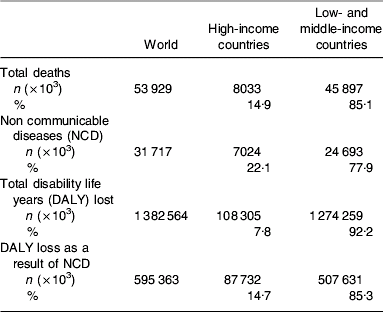
Furthermore, recent statistics of the global leading causes of death emphasize the impact of the double burden of disease in developing countries. Of the ten leading causes of death in 2000 IHD and cerebrovascular disease were at the top in both developed (36·3% leading ten causes) and developing (17·1% leading ten causes) countries(Reference Beaglehole and Yach9). Except for respiratory infections (3·5% leading ten causes), all ten leading causes of death in developed countries were NCD(Reference Beaglehole and Yach9). In contrast, the majority of the ten leading causes of death in developing countries were largely preventable, and included (% leading ten causes): respiratory infections, 7·7; HIV/AIDS, 6·9; perinatal conditions, 5·6; chronic obstructive pulmonary disease, 5; diarrhoeal disease, 4·9; tuberculosis, 3·7; malaria, 2·6; road-traffic accidents, 2·5(Reference Beaglehole and Yach9).
Perinatal conditions, diarrhoeal diseases and tuberculosis are related to poverty, overcrowding and poor obstetric services. Diarrhoeal diseases are the direct result of poor water resource availability and management as well as food-safety issues. The high burden of disease from chronic obstructive pulmonary disease is largely related to tobacco smoking, which has been increasing in developing countries at the time when government legislation in developed countries has led to restrictions on smoking in public places. Reducing the extent of diseases of poverty and perinatal mortality would require the attainment of MDG2 and 3, i.e. achieving universal primary education and promoting gender equality and empowerment of women respectively.
Other MDG include: reduction in child mortality (MDG4); improving maternal health (MDG5); combating HIV/AIDS, malaria and other diseases (MDG6). Reducing childhood morbidity and mortality would require improved mother and child health services for early identification of nutritional and health risk. Skills training for health workers in the detection and treatment of malnutrition has also proved to markedly reduce child mortality, as a number of case studies in developing countries have shown(Reference Jackson, Ashworth and Khanum41), and it is the present authors' view that this approach must be actively promoted and pursued globally as part of the strategy to achieving the MDG. Such an approach alongside improvements in maternal health services and, in particular, obstetric services would improve maternal well-being and, hopefully, result in better pregnancy outcomes. Improving maternal nutrition may help to reduce intrauterine nutritional stress, thereby reducing the levels of intrauterine growth restriction and its associated fetal adaptations, which may have health implications in early and/or later life.
Addressing the HIV/AIDS burden as a major goal has wide-ranging benefits, and failure to do so not only increases the health burden and decreases the lifespan, but has direct economic consequences, as most of those affected comprise the work force in developing countries. The relationship between HIV/AIDS and attainment of the MDG has been discussed elsewhere(Reference Colecraft42).
Malaria control remains a major unresolved issue despite decades of apparent attempts to control the disease. Vector control to break the life cycle of the plasmodium parasite, although the best strategy for dealing with the disease, continues to elude health policy makers in many malaria-endemic developing countries. The use of mosquito nets impregnated with pyrethroids such as carbofusan and permetrin only deal with exposure to the parasite indoors and at certain times. Furthermore, following their apparent initial success in reducing malaria incidence, morbidity and mortality, resistance to these chemical agents is increasingly being reported(Reference Fanello, Santomalazza and della Torre43), thus suggesting that their limited impact may be short-lived and thus less cost effective in the long term.
Ultimately, the lynchpin between socio-economic status, food security and nutritional well-being lies in the ability of the individual, family and community to obtain good-quality food at affordable prices all year round and to have good water resources and food preservation methods that ensure food and nutritional safety. Approaches to increased food production in developing countries must be seriously addressed, using approaches similar to those of the Green Revolution of the 1970s, and will be a strong element in ensuring environmental sustainability (MDG7). Sustainable agriculture and appropriate applications of biodiversity need to be at the centre of the food security and nutrition agenda. The merits and disadvantages of food biotechnology need to be weighed very carefully and with great sensitivity, but objectively and with strong ethical standards. There is no doubt that biotechnology has a place in meeting the ultimate goal of eradicating chronic hunger. The way in which this process of increasing food production is executed, and the long-term benefits and sustainability, however, remain rather contentious issues.
Meeting national targets for poverty reduction and eradication of hunger would also require global partnerships for development (MDG8). Recently, the G8 group of economically-powerful nations, the UN and EU countries as well as the USA, Canada, Australia and some Arab Gulf States, have pledged their commitment to support poor countries in getting out of poverty. Individuals and organisations have also contributed in no small measure to the new drive to ‘make poverty history’, although the fruits of these endeavours are yet to be fully realized.
The burden of NCD is projected to increase in developing countries if present trends continue. As shown in the model (Fig. 1), the adaptive or coping strategies of the individual lead to a number of physical, physiological and metabolic manifestations ranging from subtle subclinical outcomes to more overt and severe outcomes. Micronutrient deficiencies including Fe deficiency remain one of the major global nutritional challenges associated with poverty. Over the last six decades the global prevalence of Fe deficiency has been increasing, with levels rising from approximately 32% in 1960, to 42% in 1990 and approximately 60% in 2000(39).
Projections of global IHD prevalence rates by the year 2020, based on 1990 levels (Table 2) and on current epidemiological trends, have recently been presented(Reference Yusuf, Reddy, Ôunpuu and Anand44). These projections show clearly that there is a skewing of the global burden of IHD, with the heaviest burden being borne by developing countries among women (120% overall) and Latin America having the highest increase in prevalence (144%) from 1990 levels. Over the same period the increase in IHD prevalence in developed countries is expected to be 29% among women. A similar pattern is expected in the male population, with increases by 2020 of 137% and 48% in developing and developed countries respectively. A number of countries in the EU have recently passed legislation to limit smoking in public places. If these policies on smoking prove effective, it is possible that levels of IHD in these richer countries could be even lower than predicted.
Projected global IHD mortality rates based on 1990 levels (from Bellizzi et al.(Reference Bellizzi, Horgan, Guillaume, Dietz, Chen and Dietz45))

Impact of the epidemiological and nutritional transition on childhood obesity and nutritional risk in a developing country in which incomes are rising
Trends in overweight and obesity among children and adolescents have been reported for Europe and high-income Asian countries(Reference Bellizzi, Horgan, Guillaume, Dietz, Chen and Dietz45), as well as for developing countries(Reference de Onis and Blossner7) in which income levels are rising, including China(Reference Chen, Chen and Dietz46), Chile(Reference Kain, Burrows, Uauy, Chen and Dietz47) and Kuwait(Reference Al-Moussa, Shaltout, Nkansa-Dwamena, Mourad, AlSheikh, Agha and Galal48). The evidence suggests that as income levels rise obesity and its co-morbidities become more prevalent among children and young adults in developing countries(Reference Freedman, Serdula, Khan, Chen and Dietz49). The obesity phenomenon has been investigated in a genetically-homogenous sample of 1536 6–13-year-old Kuwaiti schoolchildren and an attempt has been made to study the trends over the last two decades. Some of the findings have recently been reported(Reference Al-Shammari, Amuna, Tewfik, Bumejjdad and Zotor50, Reference Al-Shammari, Bumejjdad, Amuna, Carr and Descheemaeker51) and they show that present-day age- and gender-matched cohorts of 6–13-year-old Kuwaiti children are taller and heavier than their counterparts were 20 years ago, with a significant upward shift in BMI in both boys and girls (P=0·02; Fig. 2). Similarly, a significant excess of energy intake above estimated total daily energy expenditure was found for both boys and girls (P<0·005; Fig. 3). Rising income levels in Kuwait have led to a more sedentary lifestyle, over-reliance on motor vehicles and fast foods and poor food choices among school-age children. If these present trends are allowed to continue, the impact on the health service would be enormous. These significant shifts in an otherwise homogenous population within the last two decades seem to confirm an impact of the demographic and epidemiological transition on nutritional risk.
Comparison of mean weight (a,b), height (c,d) and BMI (e,f) of age- and gender-matched 6–13-year-old Kuwaiti schoolchildren (males: a,c,e; females: b,d,f) in 2004 (—)(Reference Al-Shammari, Amuna, Tewfik, Bumejjdad and Zotor50) and 1984 (- - -)(Reference Eid, Al-Hooti, Boorisly and Khalafawi53).

Differences between mean energy intake (EI; ■) and total daily energy expenditure (TEE; ◊) among male (a) and female (b) Kuwaiti schoolchildren. Values are means and standard deviations represented by vertical bars. Differences were significant for both males and females (P<0·005). (From Al-Shammari et al.(Reference Al-Shammari, Bumejjdad, Amuna, Carr and Descheemaeker51).)

Implications for training of nutrition and health professionals
The increasing burden of communicable diseases and NCD in developing countries has extensive economic ramifications, requiring ever-increasing contributions of the national income for health services. Developing countries will continue to bear an enormous burden of NCD, and the economic costs of the total disability-adjusted life years lost are extremely high. Furthermore, with persistently high levels of poverty and malnutrition the MDG set by the UN will not be met by 2015. The need for urgent, targeted and meaningful action is thus overdue and needs to happen at different levels, including building capacity in the field of nutrition and public health to help to address the issues. Currently, well-trained nutritionists and other relevant health professionals are in short supply in many developing countries, particularly Africa. To help to address the growing gap, the following proposals are put forward:
1. there is a clear and urgent need in developing countries, especially Africa, for modifications in the curricula for the health sciences (medicine, nursing, pharmacy, dentistry, public health and other subjects allied to medicine) to reflect these new realities;
2. the key focus of nutrition education of health professionals should be to enable them to: appreciate the relevance and importance of nutrition to the promotion of good health and the prevention and treatment of disease; identify nutrition-related problems of individuals and of the community; give consistent and sound advice to individuals in an appropriate manner and to work in close collaboration with dietitians and clinical nutritionists for more specific advice; know and promote dietary guidelines and nutrition requirements; provide appropriate and safe clinical nutritional support, working closely with registered dietitians in a multi-disciplinary team;
3. there must be an understanding of the costs and benefits of nutritional approaches in addition to pharmacological and other approaches to therapeutic and preventive health care, e.g. in the treatment of malnutrition and HIV/AIDS;
4. evidence-based nutritional knowledge should be assessed, updated and applied in healthcare practice;
5. the important role of nutrition in clinical-care audit and its importance as part of public health promotion and preventive programmes should be recognized.
Summary
Joint training in nutrition for health professionals from all disciplines is desirable and should be considered. The input on nutrition should also be planned on a multi-disciplinary basis wherever possible. There is a need for global South–South and North–South collaboration between healthcare institutions to undertake joint research, nutrition interventions and other projects of benefit to populations in developing countries. Finally, nutrition needs to be at the centre of the health policy, and nutritionists and healthcare professionals need to work together to influence change in current approaches to healthcare provision in the fight against the double burden of disease in Africa and other developing regions.



