


Food insecurity – defined at the household level as having limited access to food or limited availability of food to promote a healthy and productive life – negatively impacts human capital and compromises the development of fragile economies( Reference Maxwell and Frankenberger 1 , Reference Campbell 2 ). The deleterious effect of household food insecurity on children's health and well-being has been well established( Reference Park, Kersey and Geppert 3 – Reference Saha, Tofail and Frongillo 5 ). Particularly in developing countries, children who grow up in food-insecure households are more likely to have high rates of school absenteeism, delayed early language development and have worse morbidity in general than children who live in food-secure homes( Reference Saha, Tofail and Frongillo 5 – Reference Casey, Szeto and Robbins 8 ).
In Honduras, a lower-middle-income country where 60 % of the population lives on less than $US 2 per day( 9 ), malnutrition due to food insecurity poses a substantial threat for children. Fewer social safety nets and global food price fluctuations may negatively impact individual access to food( Reference Webb 10 ). In order to address the problem of decreased access to food and limited availability of food in resource-limited contexts, identifying those at highest risk for food insecurity is critical for programme planning( 11 ). Research in other developing countries has identified household size( Reference Feleke, Kilmer and Gladwin 12 ), maternal age( Reference Regassa and Stoecker 13 ) and educational status( Reference Regassa and Stoecker 13 ), as well as the presence of social support, as being important determinants of food insecurity( Reference Tsai, Bangsberg and Frongillo 14 ). Information on proven risk factors can aid in targeting programmes specifically aimed at reducing household food insecurity within unique socio-cultural contexts. While patterns do exist for the importance of specific characteristics within other populations, the factors associated with food insecurity may be unique to each context. Research identifying the factors associated with food insecurity in Honduras is limited( Reference David, Moncada and Ordonez 15 , Reference Gray, Cossman and Powers 16 ).
In regions with limited resources, child anthropometrics may be used to assess household food security( Reference de Haen, Klasen and Qaim 17 ). Such indicators may be used not only for effective targeting of food programmes but also in determining whether an intervention has been successful( Reference Merten and Haller 18 , Reference Pelletier 19 ). Despite high rates of poverty in countries of Latin America, there is lower prevalence of underweight and stunting than in other poor regions of the world( Reference Black, Allen and Bhutta 20 , Reference Black, Morris and Bryce 21 ). There has been limited research examining the association between food insecurity and growth parameters during early childhood in Honduras. A study conducted among school-aged children in Honduras found that food insecurity was associated with stunting( Reference Gray, Cossman and Powers 16 ). There have been no similar examinations of the influence of limited household food supply on the growth parameters of infants or young toddlers in Honduras.
The specific objectives of the present study were to determine the factors, specifically maternal socio-economic and demographic characteristics, that are associated with food insecurity using a cross-sectional study design as well as to determine whether child anthropometrics are associated with caregiver food security status and severity in the rural department of Intibucá, Honduras.
Methods
Study area and study population
The site of the study was the Department (state) of Intibucá in rural Honduras. Of the nearly 8 million Honduran residents, 51 % live in rural areas and lead mainly a subsistence lifestyle( 9 , 22 ). Intibucá occupies a land area of 536·74 km2 with an estimated population of 179 862 people and has several main agricultural products, including corn, sorghum and beans, with the harvest arriving between the months of May and October( 23 ). The present data were collected prior to the harvest season and food scarcity was presumably more prevalent. Intibucá is one of the five poorest states in Honduras, with over 60 % of its inhabitants living on less than $US 2 per day( 24 ). The burden of child malnutrition is high: the prevalence of stunting and wasting among children under 5 years old is 25 % and 20 %, respectively, according to national surveys( 25 ).
Study design
The present study used baseline, cross-sectional data collected from a sample of 298 adult caregivers enrolled in the Mejorando la Alimentaciòn de los Niños en Intibucá (MANI) project, a community-based nutrition education and supplementation trial (Clinical Trials No. NCT01312987) conducted to assess the efficacy of a lipid-based nutritional supplement in improving nutritional status in rural Honduran infants 6–18 months of age. The sample was recruited from eighteen communities within Intibucá located in three municipalities (Santa Lucia, Magdalena and San Antonio), chosen because of their existing relationship with a collaborating non-profit organization, Shoulder to Shoulder. Mother–child dyads were recruited by convenience sampling for the study by radio advertisements and distribution of flyers/posters at community venues as well as door-to-door distribution of flyers.
Caregivers were invited to enrol in the study if they were the primary caregiver of an infant 6–18 months of age, if they were 16 years of age or older, and if they had no plans to move from the study region. Caregivers were excluded from the study if they had infants with medical conditions including congenital abnormalities, mental retardation, severe physical handicap or allergy to peanuts. Infants with weight-for-length Z-score below –2 using the 2006 WHO growth reference parameters were excluded and referred for close supervision by a qualified health-care facility. Infants who were allergic to peanuts, a major component of the lipid-based nutritional supplement used in the trial, were also excluded.
The study was conducted according to the guidelines laid down in the Declaration of Helsinki and all procedures involving human subjects were approved by the University of North Carolina Bio-medical Institutional Review Board. Verbal informed consent was witnessed and formally recorded for all subjects.
Data collection
Data were gathered for each caregiver at their enrolment into the study between March and April 2009, corresponding to a time prior to the harvest season, by means of an in-person standardized questionnaire at each study site. Household food security status over the last month was assessed with a fourteen-item instrument developed and validated within the context of an urban Latin American community( 25 , Reference Gonzalez, Jimenez and Madrigal 26 ). The present study is the first to use this instrument in a rural population. The instrument was verbally administered in Spanish by a trained data collector for the project during an in-person interview. The instrument used in the study is similar to the eighteen-item instrument used by the US Department of Agriculture in assessment of food insecurity in US households, in which participants respond to questions around food availability for adults and children in the home. During development of this instrument in prior research, the severity of food insecurity was based upon the respondent's answers to specific questions in the instrument (Table 1). Food insecurity was categorized into three levels: (i) mild food insecurity (families feeling uncertain and worry about ability to satisfy food needs for the family and adults’ diet quality reduced); (ii) moderate food insecurity (adults’ diet quantity is compromised, but the meal frequency and food patterns are sustained, and child diet quality is reduced); and (iii) severe food insecurity (child diet quantity is reduced, eating patterns are interrupted, and adults carry out shameful and socially unacceptable coping behaviours to obtain food)( Reference Gonzalez, Jimenez and Madrigal 26 ).
Food insecurity questionnaire items and the frequency of affirmative participant responsesFootnote * at baseline (with respect to the previous month); caregivers (n 298) of children aged 6–18 months, Intibucá, rural Honduras, March–April 2009

* For each item, responses of ‘many times’ or ‘sometimes’ were considered affirmative and responses of ‘never’ were considered as negative.
† Among those not otherwise classified as having severe or moderate food insecurity, affirmative response to any of these items resulted in classification of mild food insecurity.
‡ Among those not otherwise classified as having severe food insecurity, affirmative response to any of these items resulted in classification of moderate food insecurity.
§ Regardless of other responses, affirmative response to any of these items resulted in classification of severe food insecurity.
Socio-economic and demographic characteristics
We assessed the relationship of the caregiver to the child, as well as demographic characteristics of the caregiver including age, ever attended school, total number of years attending school, highest level reached in school, parity, the age at initial parity and total number of children. We also identified the primary provider of the household's monetary resources for food (e.g. father, mother, grandparent or spouse), the caregiver's employment status and household structure (specifically the number of adults in the home and the total number of people, including the presence of non-biological children). In addition, marital status was assessed by interviewers who asked each participant the following question: ‘What is your marital status?’ (¿Cuál es su estado civil?). The provided response options were ‘single’, ‘married’, ‘not married/living together’, ‘divorced/separated’ or ‘widowed’ (soltera/o, casada/o, convive (no está casada/o), divorciada/o o separada/o, viuda/o).
Child anthropometric measurement
As part of the nutritional supplementation intervention, trained research staff gathered anthropometric data for each infant. Infant weight and height were assessed without clothing or wet diapers, using an electronic scale (SECA) to the nearest 10 g for weight and an infantometer (SECA) to the nearest 0·10 cm for length.
Statistical analysis
To develop informative coding structures for each potential covariate representing demographic information, univariable logistic regression was used to assess linearity of estimated odds of food insecurity in the study population. For variables that violated the linearity assumption, categorical variable functions were created for use in multivariable models.
In bivariate analysis, χ 2 tests (for categorical variables) and ANOVA (for continuous variables) were used to examine statistical associations between food insecurity and each potential covariate using an a priori α level of 0·05 (Tables 2 and 3).
Sociodemographic characteristics of the study population at baseline by food insecurity status; caregivers (n 298) of children aged 6–18 months, Intibucá, rural Honduras, March–April 2009

*P values are two-sided and based on Fisher's exact test of table probability for each item.
Anthropometric growth characteristics of the study population at baseline by food insecurity status; caregivers (n 298) of children aged 6–18 months, Intibucá, rural Honduras, March–April 2009

P25, 25th percentile; P75, 75th percentile.
*P values are based on the F test for contrast using one-way ANOVA.
For the purpose of multivariable modelling, after its distribution as a continuous/discrete variable was considered in univariable logistic regression, caregiver's age was categorized into a three-level variable (≤22, 23–30 and ≥31 years of age). Based on the number of years reported for attending school, caregiver's level of education was treated as a binary variable (completion of education beyond primary school v. no more than primary-school education). Marital status was treated as a three-level nominal variable with categories of married, cohabiting (i.e. not married but living together) and a third category comprising single status, divorced, separated and widowed.
In exploratory analysis, 7 % of surveyed households were classified as food secure; these households were combined with those classified as having mild food insecurity (13 %) since these two groups represented the lowest levels of food insecurity and their demographic characteristics were not different (data not shown). Child length-for-age, weight-for-age and weight-for-length Z-scores were calculated using available anthropometric data on enrolled children according to the WHO Child Growth Standards( Reference de Onis, Martorell and Garza 27 ).
To begin assessment of which measured covariates were predictors of food insecurity, a binary variable was created for food insecurity based on the original four-level variable, grouping ‘food security’ and ‘mild food security’ as the reference outcome and ‘moderate food insecurity’ together with ‘severe food insecurity’ as the index outcome. Backwards elimination using multivariable logistic regression was employed to examine the goodness-of-fit contributed to the logistic model by each potential covariate and each hypothesized interaction term. Interaction terms included age of caregiver by level of education and age of caregiver by number of live children. Goodness-of-fit was evaluated using a likelihood ratio test with an a priori α level of 0·10 for elimination of interaction terms and potential covariates from the final logistic model.
To account for the nominal nature of the outcome categories and to relax the assumptions incurred by grouping four variable levels into two, the covariates associated with food insecurity under the final logistic model were applied to a multinomial model characterized by a three-level food insecurity outcome variable with the following levels: ‘food security/mild food insecurity’, ‘moderate food insecurity’ and ‘severe food insecurity’. Because the proportional odds assumption was not appropriate in the context of the three-level food insecurity outcome variable, a multinomial logit model was used to estimate the odds of moderate food insecurity or severe food insecurity, relative to none/mild food insecurity, along with 95 % confidence intervals for each contrast. Simulation profiles from the multinomial logit model were processed to reflect predicted odds ratios and 95 % confidence intervals for all potential covariate pattern combinations. All statistical analyses were carried out using the FREQ, GENMOD and LOGISTIC procedures within the SAS statistical software package version 9·2. Computations pertaining to child growth parameters were performed with WHO Anthro software version 3·2·2.
Results
Descriptive characteristics
Nearly all respondents (94 %) were mothers of the children enrolled in the study. At baseline, median caregiver age was 25 years (25th, 75th percentile (P25, P75): 21, 32 years). The participants had a median of two biological children (P25, P75: 1, 4) and 32 % of participants reported that other non-biological children lived in their home. The median size of the household was seven (P25, P75: 5, 9) persons. One-third were single/divorced/separated/widowed, 20 % were married and 48 % were unmarried but living together. While the majority (94 %) reported that they had attended school, the median number of years of schooling was 6 years (P25, P75: 3, 6 years). Only 10 % of the respondents reported being employed.
Out of 300 participants in the original sample, two were eliminated from analysis because they were ineligible based on age at the time of recruitment. Characteristics of the sample are described in Table 1. One hundred and eleven respondents (37 %) were identified with severe food insecurity; 126 respondents (42 %) with moderate food insecurity, forty participants (13 %) with mild food insecurity and twenty-one (7 %) with food security. Using the categorical three-level food insecurity variable, Table 2 shows the distribution of food insecurity by demographic characteristics of the sample.
In bivariate analysis, a larger proportion (38 %) of caregivers who had severe food insecurity were older (≥31 years old) than caregivers classified as having none/mild food insecurity (21 %) or moderate food insecurity (29 %), but these differences were not statistically significant based on a χ 2 test using an a priori α level of 0·05. The mean number of children was lower for food-secure/mildly food-insecure caregivers (2·4) than for moderately (3·1) or severely (3·7) food-insecure caregivers and there were also fewer people living in the home for those who were classified as being food secure (6·4 people) than those who were moderately or severely food insecure (6·9 and 7·3 people, respectively), not a statistically significant difference (data not shown). Food insecurity was also associated with the primary caregiver's maximum educational level (χ 2 P = 0·04, Table 2). Caregivers with none or mild food insecurity had a higher prevalence of having completed education beyond primary school (24 %) than those with moderate (11 %) or severe food security (8 %; χ 2 P = 0·02, data not shown).
There was no evidence of an association between food security and the age at which the mother gave birth to her first child (Table 2). A larger proportion of caregivers from food-secure/mildly food-insecure households reported receiving monetary support from grandparents than those who lived in households with severe food insecurity (16 % v. 7 %); however, this difference was not statistically significant using an a priori α level of 0·05.
There was no association between food security and anthropometric Z-scores (Table 3).
Multivariate results
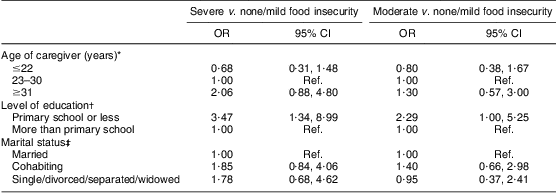
Following backwards elimination using multivariable logistic regression and an a priori α level of 0·10, the covariates that were independently associated with moderate and severe food insecurity were caregiver's age, level of education and marital status (data not shown). In the multinomial logit model, these three covariates exhibited attenuated independent associations with food insecurity; however, only the association between caregiver education and food insecurity was precise enough to have a 95 % confidence interval exclusive of a null association (Table 4).
Odds ratios for severe and moderate food insecurity compared with none/mild food insecurity based on a multinomial logit model: caregivers (n 298) of children aged 6–18 months, Intibucá, rural Honduras, March–April 2009
Ref., referent category.
*OR are adjusted for main effects for level of education and marital status.
†OR are adjusted for main effects for age of caregiver and marital status.
‡OR are adjusted for main effects for age of caregiver and level of education.
Controlling for age of the child's caregiver and marital status, caregivers with education at or below primary-school level lived in households associated with severe and, to a lesser extent, moderate food insecurity. Compared with having more than primary-school education, caregivers having no more than primary-school education lived in households with 3·47 (95 % CI 1·34, 8·99) times the odds of severe food insecurity and 2·29 (95 % CI 1·00, 5·25) times the odds of moderate food insecurity.
Figure 1 illustrates the range of simulated profiles according to odds ratio estimates computed by the multinomial logit model for the three-level outcome for food insecurity.
Predicted odds ratios for severe (a) and moderate (b) food insecurity compared with none or mild food insecurity, based on primary caregiver's level of education, age in years and marital status ( , married;
  , cohabiting;
  , single/divorced/separated/widowed) at baseline; caregivers (n 298) of children aged 6–18 months, Intibucá, rural Honduras, March–April 2009. *Referent was caregivers aged 23–30 years who had attained more than a primary-school level of education and who were married at baseline

Discussion
Food insecurity exists across diverse geographic settings, both in developed and developing countries. The factors that are associated with food insecurity vary and some may be unique to each particular geographic and socio-cultural setting. In the present study, according to caregiver report on their perceptions of household food availability, food insecurity was very common. We found that maternal educational attainment – specifically if she had completed primary school or not – was associated with moderate and severe food insecurity after controlling for maternal age and marital status. In this rural and impoverished community in Honduras we also found that, contrary to our assumptions, the severity of household food insecurity was not associated with anthropometric measurements among young children.
Aside from these findings, there are limited data on the existence of associations between food insecurity and household/caregiver characteristics within the context of Honduras. Prior research in Honduras has shown that children who live in areas of lower maternal education have increased risk of poor nutritional status( Reference David, Moncada and Ordonez 15 , Reference Sparks 28 ). According to results from a 2006 national survey, over 60 % of Honduran women lacked a secondary education and in areas that had lower levels of maternal education, child nutritional status in terms of height-for-age Z-score was compromised( Reference Sparks 28 ). However, the present study is the first to our knowledge that describes an inverse relationship between household food insecurity and maternal educational attainment in Honduras.
Women who are able to complete school are able to lower the risk of household food insecurity and improve their financial resources by being better equipped in cognitive skills and self-efficacy which allows them to participate in the formal market economy of their communities( Reference Augustine, Cavanagh and Crosnoe 29 ). According to the most recently available statistics, over 90 % of girls in Intibucá, Honduras have less than a secondary education( Reference Sparks 28 ). Improved education for women is a critical target in advancing public health, highlighted by the mandate set forth by the UN Millennium Development Goals to promote universal primary-school education for both boys and girls by the year 2015( 30 ). Results from the present study would suggest that policies in Honduras directly promoting primary education for young girls would have an impact on the problem of household food security, ultimately improving child health and development.
We also found that other demographic characteristics including marital status, number of children in the home and caregiver age were not significantly associated with the presence and severity of food insecurity. These results differ from other studies in developing countries which have highlighted the importance of such factors on influencing household food security( Reference Hackett, Melgar-Quinonez and Taylor 31 – Reference Nagata, Magerenge and Young 34 ). For example, female head of household, low household income and older age of the caregiver were found to be associated with food insecurity in one study conducted in Antioquia, Colombia( Reference Hackett, Melgar-Quinonez and Taylor 31 ). Our sampling limits our ability to generalize our findings to other areas of Honduras; however, it is possible that coping strategies to manage food insecurity include dependence on other family members outside the household. In the current study, we did not assess whether caregivers benefited from monetary remittances received from relatives who worked abroad. Cash remittances are known to improve nutritional outcomes among children living in the Latin American region( Reference Anton 35 ). This information may be useful in understanding the degree of importance of these characteristics in alleviating food insecurity despite the existence of other established risk factors. Further research on risk factors for household food insecurity in Honduras is warranted.
In the present study household food insecurity was a common problem, with nearly 93 % having some degree of food insecurity (mild, moderate or severe). Results of a cross-sectional study in 2006 found a 65 % prevalence of food insecurity in an area of Central Honduras( Reference Gray, Cossman and Powers 16 ). Several factors unique to this setting may provide insight into the high prevalence of food insecurity that we observed. The study was conducted in one of the poorest regions of Honduras, where unemployment rates are high and the social safety net is limited. Further, the regional economy is heavily dependent upon agricultural production. This vulnerability may have been illustrated in the fact that the study was conducted during the time period before the harvest, during a time of maximum food scarcity. As the instrument administered to assess food insecurity was based upon the caregiver's perception and experience of food scarcity, further examination of food availability in the home through dietary recall would be useful.
It is notable that there was no difference seen in anthropometric measurements in the enrolled children by food insecurity severity. While overt clinical signs of nutritional deficiency may not be evident in these children, lack of access to proper nutrition at all times threatens their optimal growth and development( Reference Hernandez and Jacknowitz 36 ). There are several explanations for this finding. First, adults in the home tend to prioritize food distribution to the most vulnerable and children are often protected from hunger related to food insecurity. Our sample also included young infants who were likely to have benefited from prolonged breast-feeding, known to protect against malnutrition in poor populations, and this may have reduced any observed differences in our study population. Also, there may be a communal sharing of resources among various households in this community. Children who live in the most severely food-insecure households may have normal anthropometric measurements if they are sent to the neighbour's or another family member's house for meals and other food resources. Despite these factors, our results corroborate previously published observations on the disassociation between anthropometrics and perceptions of food insecurity in Honduras and argue for more accurate indicators of food insecurity than anthropometric data, at least among children( Reference Gray, Cossman and Powers 16 ).
There are limitations in our study that should be considered. We excluded caregivers younger than 16 years old and children who had Z-scores <– 2 for weight/length-for-age, leading to potential bias in our results. Without the age exclusion we may have found a different relationship between caregiver age and food insecurity. Further, we may have excluded children based on their anthropometric measurements who were most severely affected by food insecurity. We also did not assess other sociodemographic factors, such as income, and this is a limitation considering that poverty has a direct relationship to the likelihood of being food insecure( Reference Smith, El Obeid and Jensen 37 , Reference Tarasuk 38 ).
Despite these limitations, there are strengths to the present study. First, the span of time over which our baseline data were collected – two months – limits the potential influence of seasonality in our results on these data. In addition, since the study was conducted in one of the poorest areas of Honduras, our findings can be used to supplement community-based interventions targeting those areas most likely to be heavily affected by food insecurity. Finally, while the instrument used in the study was developed using an urban sample, it was validated in a similar cultural setting as our sample. It is possible that rural families have unique experiences in coping with food insecurity that are not captured in the current instrument such as reliance on monetary remittances or community sharing of food resources. Further research should use validation techniques to develop a food insecurity instrument specific for this rural context in Honduras.
Conclusion
Food insecurity is known to negatively impact child nutrition, health status and overall development. As such, awareness of factors that are associated with food insecurity will help to target those households most at risk for food insecurity as well as focus policy recommendations and public health interventions on modifying factors that may help decrease the burden of suffering. The present study illustrated the high prevalence of food insecurity in a rural Honduran population and that household food security was associated with maternal educational attainment but not child anthropometrics. These results indicate that public health programmes focusing on increasing educational opportunities for women would have a significant impact on food insecurity and therefore on child health in Honduras.
Acknowledgements
Sources of funding: This project has been supported by The Mathile Institute for the Advancement of Human Nutrition (Dayton, OH, USA), which had no role in the design, analysis or writing of this article. This research was also supported by a Health Resources and Services Administration (HRSA) Training Grant (no. T32-14001-24 to M.E.B.-D.), which had no role in the design, analysis or writing of this article. Conflicts of interest: No author has any conflicts of interest to disclose. Authors’ contributions: M.E.B.-D., Y.E.d.C., M.E.B. and A.M.S.-R. designed the research; M.E.B.-D., Y.E.d.C., M.E.B. and A.M.S.-R. conducted the research; M.E.B.-D. and A.K. performed the statistical analysis; M.E.B.-D. and A.K. wrote the paper; M.E.B.-D. had primary responsibility for final content. All authors have read and approved the final manuscript.



