


A terracotta human figure riding a camel or horse, approximately 300mm in height, from Koma Land in northern Ghana. Long-term archaeological investigations by the University of Ghana and partners have revealed a series of burial mounds around the village of Yikpabongo containing large numbers of anthropomorphic and zoomorphic terracotta figurines, ceramic sherds, and animal and human bone. Stylistically, the figurines are distinct from those known from other parts of West Africa and may reflect trans-Saharan contacts with North Africa. The mounds have been dated by radiocarbon and thermoluminescence to the sixth to fourteenth centuries AD. The figurine is on display in the newly refurbished National Museum of Ghana in Accra, which reopened in June 2022 (photograph © Ghana Museums and Monuments Board).

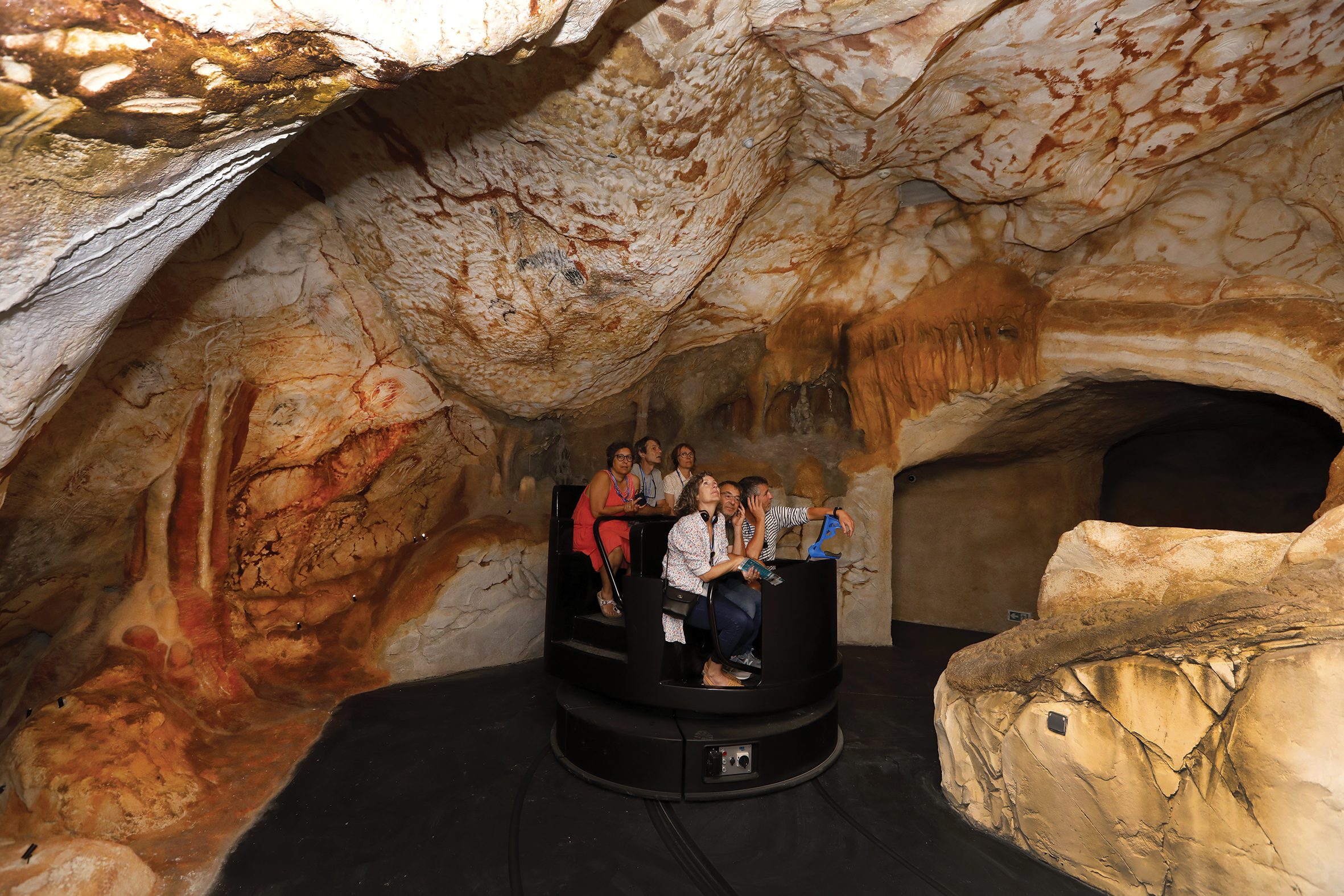
Visitors experience a 3D-replica of the Cosquer Cave at the Cosquer Méditerranée, which opened in the Villa Méditerranée, Marseille, in June 2022. Discovered in 1991 and reported the following year in Antiquity (66: 583–98) by Jean Clottes, Antonio Beltrán, Jean Courtin and Henri Cosquer, the cave features more than 500 paintings and engravings, including 200 depictions of a dozen different animal species, and more than 50 hand stencils. Two phases of activity date to 33 000 and 19 000 years ago. As a result of sea-level rise after the Last Glacial Maximum, today the cave entrance lies 35m below sea level; further sea-level rise due to anthropogenic climate change now threatens some of the art (www.grotte-cosquer.com © Kleber Rossillon & Région Provence-Alpes-Côte d'Azur / Sources 3D MC / Patrick Aventurier).
Absence minded
 It is a truism that the archaeological record preserves only a fraction of the material culture that existed in the past. Most of it never enters the archaeological record and much that does decays; a host of other taphonomic and recovery biases then limit what archaeologists are finally able to document. Whether as a result of the recycling of materials, geomorphological processes or the limitations of time and money on excavation, the evidence with which we work is, at best, fragmentary. Consequently, archaeologists have become experts at tracing indirect lines of evidence or finding proxies, such as using symmetry to complete the plan of a building, predictive modelling to identify ‘missing’ sites, or isotope analysis of human tooth enamel to reconstruct diet for which we have no direct archaeobotanical or zooarchaeological evidence. Sometimes these gaps are frustrating—the absence of bone due to acidic soils or an archaeologically invisible funerary practice, for instance. At other times, these absences can be tantalising, such as genetic glimpses of hominin ‘ghost populations’, whose existence can be only indirectly and statistically inferred. Often these gaps are loaded with social and cultural significance, such as the invisibility of enslaved peoples. For all these reasons, archaeologists spend lots of time joining the dots, filling in the gaps or completing jigsaw puzzles. These metaphors, however, imply the reconstruction of something that is incomplete, a correction of the imperfect evidence to restore its integrity. Yet, sometimes a lack of evidence—that is, an absence—can be real and meaningful: one need only think, for example, of a cenotaph, defined precisely by its emptiness, or of the aniconism of some religious art.
In this issue, Roger Thomas and Timothy Darvill tackle the question of ‘negative’ evidence, posing the question, ‘What haven't you found?’. As the authors note, finding nothing is often considered an unwelcome archaeological outcome. Yet, over the past 30 years, in some parts of the world, large-scale development-led archaeology has quietly changed the nature of archaeological data to the extent that we can now confidently talk about ‘evidence of absence’. In places such as the UK, investigations in advance of building work have now documented large, contiguous swathes of the landscape. Understandably, it is the unexpected discoveries made by such work that have dominated the attention of archaeologists and the public alike; syntheses of this evidence demonstrate the extent to which developer-led work has changed our understanding of the past.Footnote 1 But in addition to these new sites and objects, we have now begun to build up a detailed knowledge of what Thomas and Darvill call ‘true-negative’ evidence. Examples include areas of the landscape where we can now be confident that the lack of sites, deposits or other finds reflects a genuine absence of archaeological evidence. Of course, this need not mean that such areas were unused or unvisited in the past; forests or wetlands, for example, might produce limited evidence for human activity but they were often considered to be of great economic and cultural significance. Indeed, it is precisely by identifying these archaeological absences, that we can better understand how the landscape as a whole was perceived and exploited. In turn, the authors argue, we need to think more carefully about our recording systems, and how these can more effectively document both positive and negative forms of evidence.
In paying more sustained attention not only to the incompleteness of the archaeological record, but also to the absences, we can gain a better understanding of ‘traditional’ categories of archaeological evidence such as pottery or buildings. Indeed, presence and absence, the material and immaterial are mutually constitutive. Composed in the mid-first millennium BC and traditionally attributed to the Chinese philosopher Laozi (Lao Tzu), the Tao Te Ching contains some observations of relevance for archaeologists:
We throw clay to shape a pot,
But the utility of the clay pot is a function of the nothingness inside it.
We bore out doors and windows to make a dwelling,
But the utility of the dwelling is a function of the nothingness inside it.Footnote 2
In other words, the usefulness of the clay pot and the dwelling derives not from their material form, but rather from the (empty) spaces that the materials define. As archaeologists, our attention is often dominated by the physical traces of the past, such as the form and fabric of an amphora or the architectural layout of a city. Laozi reminds us not to forget the absent wine once contained within the amphora or the activities that formally animated the central, open spaces of urban sites.
Animal instincts
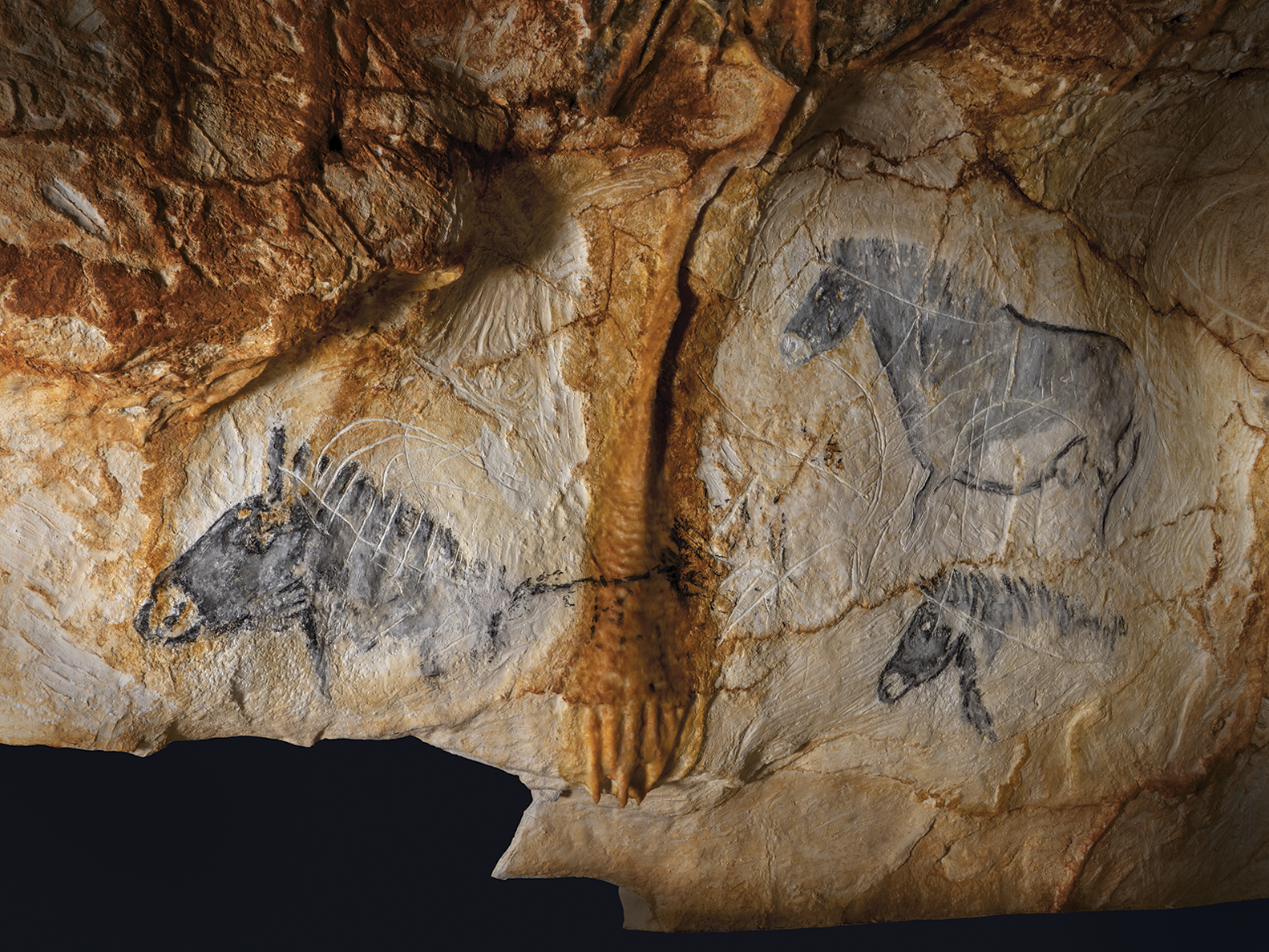
 The study of human-animal relations has become an important focus for a number of historical and contemporary disciplines.Footnote 3 Archaeological and genetic studies, in particular, make clear that the long-term evolution of human societies cannot be separated from our co-existence with and exploitation of animals. We have used their meat and milk for food, their horns and bones for craftworking, and their skins and fleeces for clothing; we have drawn on their instincts for surveillance and protection, and on their size and strength for labour and prestige; we have also formed strong bonds of companionship.Footnote 4 It is therefore no surprise that the earliest figurative art depicts not humans but animals (Figure 1). Our relationships with these animals, both wild and domesticated, have even changed us genetically, for example, through the ability of some adults to digest animal milk; they also expose us to zoonotic diseases and parasites, such as bubonic plague, COVID-19 and monkeypox.
Horses depicted as part of a replica of the Upper Palaeolithic cave art from the Cosquer Cave, on the Mediterranean coast of France. See also Frontispiece 2 (photograph © Kleber Rossillon & Région Provence-Alpes-Côte d'Azur / Sources 3D MC).
In this issue, we feature several articles that illustrate, in one way or another, the long and diverse histories of human-animal relations, and how our reliance upon them has shaped settlement patterns and social relations. We start in the Philippines, where Hsiao-chun Hung and colleagues report on research at the shell middens of the Cagayan Valley on the island of Luzon. Some of these preceramic middens are as much as 100m in length and 3m in depth, containing millions of shells attesting to the specialised and sustained gathering of marine shellfish. In order to explore the early migrations of Austronesian-speaking farmers from the Asian mainland into the islands of Southeast Asia and Oceania, the authors assess the occupational histories of these shell middens. Strikingly, the estuarine resources were so abundant here, that, unlike in southern China, Vietnam and Malaysia, where Early Holocene shell middens were abandoned during the Neolithic, radiocarbon dating shows that occupation of the Cagayan shell middens continued well into later farming periods, and in some cases even into the Metal Age of the first millennium BC. Here, shellfish were more than simply food—they helped to define long-term place-making and perhaps even helped to negotiate relations between indigenous hunter-fisher-gatherers and immigrant farmers.
Another example of the way in which the management and exploitation of animals intersects with human settlement and sociality comes from the Trypillia site of Maidanetske, in Ukraine. Geophysical survey at Maidanetske has revealed some 3000 rectangular houses, organised in concentric rings, covering an area of approximately 200ha. Whether permanently or only seasonally occupied, fourth-millennium BC megasites such as Maidanetske hosted large populations that needed to be fed. Here, Cheryl Makarewicz and colleagues report on isotopic analyses of zooarchaeological assemblages from the site. Of the domesticated livestock, cattle are characterised by pronounced differences in nitrogen isotope (δ15N) values that suggest two distinct pasturing strategies. Some cattle, along with sheep and goats, have low δ15N values, similar to those of local wild fauna, indicating extensive, unimproved grazing. Other cattle, however, have much higher values, which the authors ascribe to intensive grazing on pastures enriched by manuring. The authors link the maintenance of these parallel grazing systems to the social organisation of the megasites, arguing that the management of access to this partitioned landscape was integral to ongoing negotiations between households, the wider Maidanetske community and with neighbouring sites. Here, again, animals were more than just calories; they were vital to these early experiments in urban cooperation.
Yet, as well as cooperation, animals have also been used for social competition, their ownership reflecting and enhancing the wealth and status of families and individuals. Whether by the acquisition of large herds or individual specimens of unusual size, colour or origin, humans have long sought to enhance and secure their social positions through the possession of animals. For a few of the richest and most powerful, however, additional status came not from accumulating even more animals, but from fewer—that is, the conspicuous consumption of animals through sacrifice. In this issue, Yue Li and colleagues report on a zooarchaeological study of horses interred in Emperor Qin Shihuang's mausoleum near Xi'an, China. This vast funerary complex drew in human and material resources from across the Qin Empire: the Terracotta Army which guarded the tomb, for example, numbered at least 7000 soldiers, requiring a second army of craftspeople to shape, fire and assemble the terracotta figures. Here, the authors focus on a pit containing 12 terracotta human figures and a wooden cart, plus the remains of at least 24 horses. Their analysis demonstrates that the animals were all nine years or more of age at death, of higher-than-average height compared with contemporaneous horses, and, of the two-thirds that could be sexed, all were male. Horse sacrifices in first-millennium BC China were not unusual, but the animals interred in Qin Shihuang's tomb were, the authors argue, of the highest prestige, killed in their prime to accompany the emperor into the afterlife.
It's later (or earlier) than you think
 Compared with Qin Shihuang's horses, it is hard to imagine a less high-status animal than the humble chicken. As Julia Best and colleagues observe in this issue, given the ubiquity of chickens in the contemporary global human food chain, it is easy to assume that they were originally domesticated for their meat and eggs. Yet, some of the earliest archaeological evidence for chickens comes in the form not of the disarticulated leftover bones of a chicken dinner, but rather, the burial of complete individual animals, often alongside humans. Rather than a source of food, the authors argue that these birds were kept as exotica. So, when did these animals make the transition from ‘show birds’ to food? The timing of the introduction of chickens to Europe and Africa has been much debated, with suggested dates as early as the Neolithic. To explore when, and why, chickens were introduced to these regions, here, the authors present the result of a radiocarbon dating programme on chicken bones from early archaeological contexts across Europe and Morocco. Of these early contexts, however, less than one quarter of the samples are consistent with their stratigraphic dates, with the majority being of more recent, and even modern, date. Reviewing the results, the authors conclude that chickens were introduced to Europe in the first millennium BC, but it then took hundreds of years before they were exploited as a source of food. In Britain, for example, seven or eight centuries elapsed between the arrival of chickens and evidence for their consumption—and even then, the evidence is limited to higher-status sites. Attitudes towards chickens in the past were very different from how these animals are perceived and exploited today.
A more general conclusion from the result of the authors’ analysis is that studies of the introduction of animal species require rigorous archaeometric assessment to corroborate independently the integrity of stratigraphic contexts. There are many reasons for the presence of intrusive bones on archaeological sites—not the least of which are burrowing animals, such as rabbits, which frequently disturb archaeological stratigraphy, introducing later material—including their own bones—into earlier contexts. The case of the rabbit is particularly challenging, as it can be both a confounding taphonomic agent and the subject of analysis.
Interest in the origins of the domestication of species and the dates at which they were subsequently introduced to new environments reflects a pervasive archaeological interest in pushing back ever further in time to identify the first example of a phenomenon, from the origins of representational art to the earliest writing. Radiocarbon dating has, of course, played a key role in many such investigations. The results presented here by Best et al. are a reminder that unexpectedly late dates can be as important as finding the earliest.
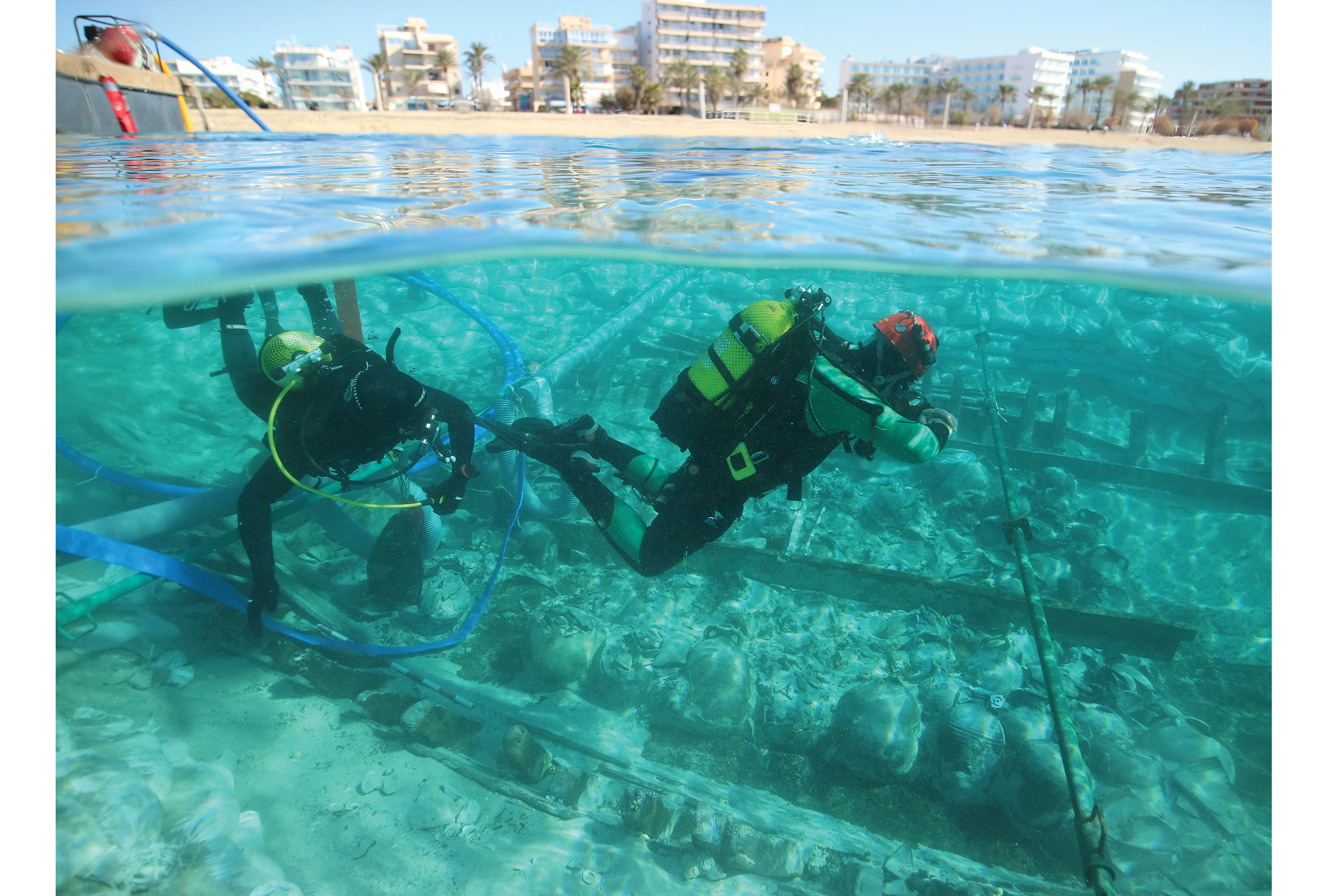
Another article in this issue similarly extols the virtues of radiocarbon dating for looking afresh at chronological evidence we assume to be secure. Shipwrecks are an enduring subject for archaeological research, not only for the insights into maritime technology and trade that they provide, but also because they act as chronological markers—each shipwreck represents a discrete moment in time (Figure 2). In the watery graveyard of the Mediterranean, however, most ancient wrecks are dated only to broad ranges spanning multiple decades or even a century or more. In their article, Sturt Manning and colleagues use the example of the Mazotos wreck, off the southern coast of Cyprus, to demonstrate the value of combining radiocarbon and dendrochronological techniques to narrow down significantly these broad time spans. The dating of Mediterranean wrecks has typically relied on the evidence of their cargoes and the chronological information associated with the typologies of ceramic transport amphorae. Different amphora types, however, frequently circulated for several decades or more and their dating is often less certain than we imagine. Here, the authors use Bayesian modelling to estimate a more precise date for the sinking of the Mazotos ship; the results not only narrow the date range, but also show that the ship foundered somewhat earlier than previously thought. In contrast with the date suggested by the ceramic evidence, 350–325 BC, the new model gives a sinking date of 390–382 BC (at 68.3 per cent probability) and a likely launch date of 409–387 BC. In the grand scheme of things, shifting the date of this wreck from the third to the first quarter of the fourth century BC is a relatively minor adjustment. In terms of historical context, however, this firmly relocates the wreck from the dawn of the Hellenistic Age back into the period of the Achaemenid Empire. Cumulatively, moreover, the routine radiocarbon dating of shipwrecks using the approach set out by the authors could lead to significant new insights into the timing, organisation and scale of Mediterranean trade and connectivity.
Divers investigating the fourth-century AD Ses Fontanelles shipwreck and its cargo of amphorae in the Bay of Palma, off the coast of Mallorca, Spain. Discovered in 2019, the site lies only 60m from the coastline, in 2m of water. The wreck is the focus of a three-year research project (2021–2023), ARQUEOMALLORNAUTA (photograph © José A. Moya; ARQUEOMALLORNAUTA project-Consell de Mallorca, Universitat de Barcelona, Universidad de Cádiz & Universitat de les Illes Balears).
The Age of Revolution
 Of course, radiocarbon dating is far from a new technology. Indeed, it is exactly 75 years since the publication of a two-page technical paper co-authored by Willard Libby concluded with the understated suggestion that
The discovery of cosmic-ray carbon has a number of interesting implications in the biological, geological, and meteorological fields; a number of these are being explored, particularly the determination of ages of various carbonaceous materials in the range of 1,000–30,000 years.Footnote 5
The subsequent ‘radiocarbon revolution’ transformed the discipline by demonstrating that many of our chronological and cultural assumptions were incorrect.Footnote 6 But what is the next technology that will change our methods and disrupt and redefine our understanding of the past? Without doubt, one of the strongest contenders must be ancient DNA (aDNA)—in particular, the ability to sequence whole genomes that, over the last 15 years, has become not only possible but is also being realised at an industrial scale. Kristian Kristiansen, for example, considers aDNA analysis as core to archaeology's ‘Third Science Revolution’Footnote 7 and, echoing Noël Hume's characterisation of the relationship between archaeology and text-based history,Footnote 8 the geneticist David Reich argues that whole-genome sequencing has propelled the role of genetic studies from the “poor handmaiden to the main business of archaeology”.Footnote 9
So far, most aDNA work has focused on deep prehistory, including Neanderthals and Denisovans, early Eurasian farming societies and the peopling of Oceania. Increasing attention, however, is now being directed towards the more recent past—the last 4000 years and, even, the last 400. Counterintuitively, these relatively recent times can be more, rather than less, challenging to analyse than deep prehistory. Early hominin populations were highly mobile, but across vast swathes of time, their genetic ancestry was clearly differentiated. Over the past few millennia, the scale, pace and complexity of human mobility have all greatly increased, making it harder to untangle both individual and population-scale ancestry. At the same time, huge databases of modern-day genetic data open up the possibility of connecting contemporary populations with the recent past to produce high-resolution analyses of migration and selective adaptation pressures. Such approaches are already helping to document some of the biological consequences of colonialism, for example, in relation to sex bias in genetic ancestry.Footnote 10
In this issue, Vera Tielser and colleagues present a genomic study of individuals from an early colonial Hispanic cemetery in Campeche, on Mexico's Yucatán coast. Founded in the mid-sixteenth century AD, Campeche was one of the Spanish Empire's principal New World ports. Archaeological investigations of the town's central plaza have revealed a densely packed cemetery, next to the settlement's first church, with burials dating to c. AD 1540–1680. Through the application of a suite of techniques, including isotope analyses, previous studies had sought to identify the origins of some of the 120+ individuals recovered from the cemetery. What might aDNA analysis add to those results? Here, the authors present newly generated, whole-genome profiles to trace the detailed life histories of 10 individuals. In most cases, the genetic evidence complements and extends the results of the other techniques previously deployed, deepening our knowledge of these mostly young, local, Indigenous American and first-generation European and African immigrants. In a few cases, however, the genetic results contradict the existing data, underlining the importance of comparing and integrating multiple lines of evidence. A surprising result, perhaps, is that none of the individuals sampled shows evidence of genetic admixture. The sample is small, but the results suggest that, in these earliest colonial days at Campeche, the ethnic mixing of the dead in the cemetery was not reflected in the genetic mixing of the town's population in life. As the numbers of whole genomes from more recent centuries increase, it will be possible to assess and refine these initial results and to deepen significantly our understanding of the genetic legacies of European colonialism.
Also in this issue
 Elsewhere in this issue, we feature Research and Project Gallery articles ranging widely over both time and space. These include new studies of Pleistocene cave sites in the Gobi Desert (Arina Khatsenovich et al.) and on the Slovakia-Poland border (Pawel Valde-Nowak et al.), lithic evidence for the early peopling of South America (Hugo Nami) and new radiocarbon dates for the cemetery site at Jebel Moya in Sudan (Isabelle Vella Gregory et al.). Other articles explore the emergence of social complexity during the Formative period at Chavin de Huántar in Peru (Christian Mesía-Montenegro) and the role of an exceptionally well-preserved highland fortress in the Zagros Mountains in the disputed territory between the Parthian and Roman Empires (Brown et al.).
As ever, if you would like to see your research featured in Antiquity, then please head to our website at www.antiquity.ac.uk for full details of our formats, guidelines and submission instructions. We also welcome enquiries at editor@antiquity.ac.uk or, if you are planning to attend the European Archaeologists’ Association annual meeting in Budapest (31 August–3 September), do visit the Antiquity conference stand and catch up in person. We hope to see you there!



