

Setting the scene
Perceptions of Latin in UK society as an elitist subject, serving as a barrier to access and reinforcing the notion that it is the prerogative of privately educated students, have been thoroughly documented (Canevaro Reference Canevaro2021; Case and Haley Reference Case and Haley2020; Goodman Reference Goodman2017; Hodgkinson Reference Hodgkinson2021; Holmes-Henderson and Watts Reference Holmes-Henderson and Watts2021; Moran Reference Moran2019; Perale Reference Perale2023; Vereeck et al. Reference Vereeck, Bracke, De Herdt and Janse2024). The literature highlights concerns related to equality, diversity, and privilege. In light of declining enrolment figures, it also a preoccupation with the sustainability of the discipline (e.g. ‘Classics will always be facing the threat of extinction’, Perale Reference Perale2023, p. 27). A marked trend towards the democratisation of the curriculum as a whole, shaped by critical pedagogy and the critical sociology of education (Apple Reference Apple1979; Bourdieu and Passeron Reference Bourdieu and Passeron1977; Freire Reference Freire1970 see also Forrest Reference Forrest1996; McMillan Reference McMillan2015; Paul Reference Paul, Hardwick and Harrison2013; Stray Reference Stray1998 for an outlook on Latin), and its orientation towards more ‘useful’ disciplines have contributed to the decline of Latin teaching in England (and beyond) since the 1960s and 1970s (Vereeck et al. Reference Vereeck, Bracke, De Herdt and Janse2024, p. 103). This shift has generated a tension between two intertwining discourses, both aimed at ensuring survival: one advocating for curricular democratisationFootnote 1 as an antidote to privilege, and the other seeking to preserve a subject perceived to be under existential threat by justifying its value through a variety of angles (Vereeck et al. Reference Vereeck, Bracke, De Herdt and Janse2024). Compared to much of this literature, centred on class and access, our research takes a different angle: by bringing in religion as a factor long neglected in the literature, we focus on Latin within Catholic education to show how ecclesial identity and faith-based values shape curricular priorities and pedagogical practices.
To situate our study of linguistic ideologies and pedagogical practices in its broader institutional context, we first briefly trace the Church’s evolving official pronouncements on Latin instruction, whose potential effects on curricular rationales and classroom approaches in Catholic schools underpin our investigation. Building on John XXIII’s Apostolic Constitution Veterum Sapientia (1962) and Paul VI’s Studia Latinitatis (1964), both of which advocated for Latin instruction in seminaries, Benedict XVI’s motu proprio Latina Lingua (2012, para. 4) further affirmed the Church’s responsibility for preserving and disseminating Latin beyond clerical formation: ‘It therefore appears urgently necessary to support the commitment to a greater knowledge and more competent use of Latin, both in the ecclesial context and in the broader world of culture’. Accordingly, he established the Pontificia Academia Latinitatis, endowed with a broad mandate to promote the language, most notably through its scholarly journal Latinitas. Although Pope Francis’s motu proprio Traditionis Custodes (2021) controversially revised certain provisions of Benedict XVI’s Summorum Pontificum (2007) regarding liturgical use of Latin, it did not address the language’s role in education or culture; consequently, Pope Benedict XVI’s endorsement of Latin pedagogy remains operative. In the wake of Francis’s death on 21 April 2025 and the election of Pope Leo XIV (8 May 2025), this moment of ecclesial transition presents an ideal opportunity to take stock of Latin’s status within English Catholic education and its wider cultural significance.
Starting from these premises, this study offers the first in-depth, empirically grounded analysis of how Latin is taught and positioned within a handful of Catholic secondary schools and colleges in the North of England, investigating whether, and to what extent, Catholic education ‘receives and responds to’ the papal mandate. Do these institutions view themselves as custodians of Latin? Do they teach Latin on different grounds than secular institutions? Do they engage with Christian Latin at all, and if so, to what extent?
Catholicism in the North West has long exhibited a layered history of recusant endurance, regional Catholic gentry, and working-class and immigrant Catholic communities. For centuries, the region was home to prominent recusant families, such as the Scarisbricks of Lancashire, whose long-standing Catholic identity and estate-based chapels exemplify the persistence of Catholic practice through the penal era (Scarisbrick Hall Trust n.d.). This recusant substratum was complemented by organised lay Catholic life in towns such as Preston, where institutions like the First Catholic Charitable Society (founded in 1731) attest to a substantial and continuous Catholic communal presence in the 18th century (Preston Historical Society n.d.). In the 19th century, waves of Irish immigration to industrial Lancashire, including Preston, further reshaped the religious demography and strengthened parish-based Catholic identity (Catháin Reference Ó Catháin2024). Broader historical studies confirm that Lancashire remained one of England’s most distinctively Catholic regions, with recusant and Catholic-gentry networks persisting well into the modern period (Blackwood Reference Blackwood1994; Callow Reference Callow2003). Together, this historical layering (gentry recusancy, evolving Catholic demography, and sustained communal institutions) has produced a region in which Catholic heritage, social memory, and identity remain deeply rooted (Harris Reference Harris2023), conditions that help explain local schools’ ongoing negotiation of tradition, identity, and education.
By focusing on the under-researched context of Catholic education, this study exposes how market forces, institutional (including practical/logistical) constraints, and individual teacher agency, more than ecclesial mandates, all have an impact on Latin teaching. By identifying a typology of inclusivity and branding discourses that shape Latin’s survival (or demise) in faith-based education, this research offers a novel contribution in tracing the ideological and practical tensions at the intersection of religious tradition and secular curriculum imperatives. Compounded with pressures noted in the Literature for secular institutions, Catholic education navigates a more complex ideological landscape. Instead of looking like a promising field for the strengthening of Latin’s teaching, complexities in the clergy’s positioning towards Latin usage in the Church often result in a further layer of disengagement, indifference, or lack of institutional support.
Methodology
To investigate these issues in depth, semi-structured interviews, inspired by a phenomenological and hermeneutical position, were conducted with Latin teachers at four Catholic secondary schools and colleges in Northern England. These participants were drawn from an initial sample of 27 institutions invited to participate; however, since the majority had discontinued Latin instruction, the interviewees possibly represent a close approximation and a highly representative sample of the remaining provision of Latin in the North West (from Cheshire/Derbyshire to Cumbria) and parts of the North East (North Yorkshire). The decision to focus on the North was guided by two considerations: the researchers’ affiliation with Northern universities and their interest in understanding the local communities in which they are embedded, and the region’s relatively sparse Catholic sector and lower incidence of Latin teaching compared to the South (differences driven largely by variations in affluence and the scale of the independent school sector), thereby providing a ‘peripheral’ case through which to examine the phenomenon.Footnote 2 Albeit being only a small sample, these four schools/colleges differ significantly in terms of institutional prestige, geographical reach, outreach priorities, and student recruitment patterns, ranging from primarily local catchments to regional, national, and even international appeal. They also vary in their funding models, fee structures, and institutional status (i.e. state-funded versus independent), which in turn shape their educational positioning and perceived accessibility.
School 1 (S1) is a state-funded, Roman Catholic, coeducational sixth form college for students aged 16–19, offering a broad range of A-level and vocational programmes. School 2 (S2) is a selective, state-funded boys’ grammar school. School 3 (S3) is an independent, coeducational boarding and day school serving pupils aged 3–18. School 4 (S4) is an independent, fee-charging, coeducational boarding and day school for pupils aged 11–18. Teachers are referred to as T1, T2, T3, and T4.
Several limitations stem from our modest sample size. Although it provides a reasonable approximation of existing provision, especially for the North West, it cannot rather obviously, encompass the full heterogeneity of Catholic Latin instruction nationally. Moreover, the low response rate (approximately 15%) is also likely to reflect the overall decline in Latin provision but does not rule out potential response bias. In particular, it remains possible that teachers who continue to offer Latin and are willing to engage in academic research possess distinctive attributes that may not be representative of the broader population.
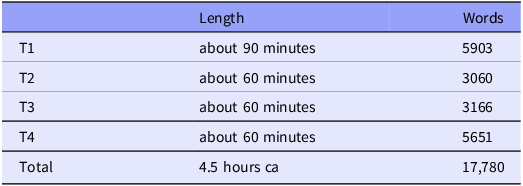
The interviews were carried out in person (T1, T2 and T3) or online (T4) by LZ in the period January–October 2024, after obtaining ethics clearance from the University of (Confidential [13037]), ratified by the University of (Confidential). The teachers were emailed our questions one week in advance (Appendix), together with the consent form and information sheet. The interviews were transcribed orthographically by LZ and anonymised. The data (summarised in Table 1) were coded using broad thematic and sociolinguistic/discourse analytical categories (e.g. enregisterment, linguistic capital, indexing) and thoroughly discussed between authors through ongoing and dynamic processes of dialogue.
Overview of the Four Interviews (Data Volume)

In keeping with the broad objectives outlined in Setting the scene, this paper aims at answering the following specific research questions, with reference to the institutions selected for this study.
-
RQ1: To what extent, if any, does the neoliberal logic of marketability and consumer choice shape the symbolic and pedagogical role of Latin in Catholic education?
-
RQ2: What is the perceived role of Catholic identity and institutions in promoting, maintaining or neglecting Latin teaching in Catholic education?
-
RQ3: In what ways, if any, do attitudes towards the Latin Mass influence attitudes towards the teaching of Latin?
-
RQ4: In what way are different understandings of inclusivity influencing the pedagogy of Latin within Catholic education?
-
RQ5: How is Late/Medieval/Christian Latin integrated into the curriculum? Is there potential for greater integration?
The Catholic branding
One way to explore the nexus between Catholic identity and Latin education (RQ1) is through the notion of Latin as a form of institutional ‘branding’. Catholic schools in England have long enjoyed a reputation for rigorous academic standards and exemplary teaching (Cleary Reference Cleary2024; Grace Reference Grace2002; Morris Reference Morris1994, Reference Morris2007, Reference Morris2009a, Reference Morris2009b). This esteemed institutional profile is especially evident in the contexts represented by T3 and T4, where Latin functions as a salient attractor for both national and international fee-paying families. T2’s reflections, instead, attest to the enduring association of Latin with the prestige of grammar schools.
In contrast, S1 offers a revealing counterpoint. As a non-fee-paying institution located in a better-off neighbourhood of a working-class, post-industrial town, and serving a predominantly local catchment, it neither positions Latin as a marker of Catholic identity nor as a symbol of institutional prestige. The absence of a Latin motto or anthem aligns with its broader educational ethos, where Latin is offered only as an optional enrichment activity accessible to all students. This decoupling of Latin from both elite cultural capital and overt Catholic symbolism positions S1 as an analytical foil to the more market-oriented deployments observed in S2, S3 and S4. S1’s inclusive approach to Latin reflects T1’s commitment to educational justice, aligning with its market positioning driven by local demand for accessible education but distancing it from a strongly confessional identity (see The inclusivity spectrum). In contrast, the following discussion shifts to how fee-paying institutions, such as S3 and S4, leverage Latin as a commodified symbol of prestige within the competitive educational marketplace.
Extracts (1)–(3) show that in S3 and S4, Latin serves to enhance the symbolic value of the educational offering (Bourdieu Reference Bourdieu1991). The heritage elements of Catholicism, including Latin and liturgical practices, are commodified as forms of symbolic capital, particularly within fee-paying schools. This process reflects enregisterment (Agha Reference Agha2003), whereby these practices become socially recognised indices of prestige and moral authority, functioning within a broader prestige ideology (Irvine and Gal Reference Irvine, Gal and Kroskrity2000). The invocation of familial and cultural Catholic networks further reinforces the social capital associated with attending well-reputed Catholic institutions, while Latin simultaneously indexes a form of linguistic capital. Extracts (1) and (2) illustrate how Latin and Catholic heritage practices, such as school mottos and liturgies, contribute to the schools’ prestige and moral authority.
(1)
Int.: What attracts your pupils in particular?
T3: Family connections… Coming from the [Faith] schools… if it’s international pupils wanting catholic education… […]
Int.: I see… You said you also have international students, didn’t you…
T3: Yes, yes. Spanish, Germans, Chinese, the odd American. Many countries. Yeah. Yeah. A couple of Korean pupils. In some cases it’s coming through agents, word of mouth, because you know, families send their child and they tell others… […]
T3: […] quite often is German pupils.
Int.: Is there a reason?
T3: They’re usually German Catholic families. In some cases, they have been to [Faith] schools or have family connections with [Faith] schools in Germany.Footnote 3
(2)
Int.: Right. Okay. And why do you think they actually choose S4?
T4: Largely, but not exclusively,Footnote 4 because they want a Catholic education. We are one of the more pronounced in our Catholic identity.
Int.: That’s interesting.
T4: The average child here is a boarder. We’ll pray three times a day. We’ll have mass at least twice a week, sometimes more. Prayers before all meetings and before some lessons. So we are more Catholic in our practice than many Catholic schools. And I think if parents want that for their children, they know we get to give it. Of course, if parents don’t want it, then they don’t send their children here. We have some parents who don’t really mind. They know they’re not Catholic, but maybe they’re Christian, or they think that they are sympathetic enough to religion to feel they’d like their children to benefit from what we can offer. […]
(3)
T3: […] There is a tradition… to all intents and purposes the school’s song is the Pater Noster… so Latin… […] There is some of that heritage that comes through but…
However, Latin’s position within the curriculum is not immune to market pressures. Extract (4) illustrates how concerns about Latin’s potential discontinuation arise from the need to balance tradition with modern educational demands, such as performance in standardised assessments.
(4)
Int.: But… if there are complaints?
T2: Well he{the headmaster: CG} probably would, I think he’d probably have to change his mind… if there were widespread resistance. I know there are a number of parents who regard Latin as something quite special, something that belongs in a Grammar school education, so these particular parents will be I think quite angry…
Another example of the commodification of Latin is found in school identity markers such as mottos: in S2, the school motto is in Latin, serving as a clear index of institutional heritage and prestige, while S3 and S4 use mottos in Old French.Footnote 5 S3 maintains the tradition of singing the Pater Noster before events such as sport matches, further embedding Latin within the school’s symbolic repertoire. The use of Latin in school mottos carries substantial symbolic and ideological weight, drawing on associations with tradition, authority, and timelessness.Footnote 6 In this context, Latin enhances the schools’ cultural capital by aligning them with enduring values and signalling distinction through linguistic heritage.
While Latin often indexes heritage, tradition, and prestige within Catholic schools, these values are not unique to religious settings.Footnote 7 However, there are aspects of Latin’s use that remain specific to Catholic contexts, particularly where it intersects with liturgical practice, historical memory, and perceptions shaped by England’s confessional history. Excerpt (5) is illustrative of these associations.
(5)
T2: Yeah, I think people see that as part of the mystique maybe of the Catholic Church compared to the Protestant… hmm… they may have a negative impression for that reason, if they are a little anti-Catholic…
This perception can be meaningfully situated within the long-standing religious and political tensions rooted in the English Reformation of the 1530s (Duffy Reference Duffy2005). This historical rupture reshaped public attitudes towards Catholic ritual and symbolism, including the Latin liturgy, which came to be seen as opaque, foreign, and even subversive. In contrast, Protestant forms of worship, particularly within Anglican traditions, emphasised austerity, transparency, and the use of the vernacular, deliberately rejecting Latin as a symbol of hierarchical and inaccessible religiosity. These Protestant-inflected discourses left a durable imprint on the cultural imagination in England (Harris Reference Harris, Cummings, Matovina and Orsi2016, Reference Harris2023), even if this landscape was later complicated by the rise of Anglo-Catholicism, which reintroduced Catholic ritual and aesthetic sensibilities into parts of the Anglican tradition without entirely displacing the broader Protestant cultural frame (Nockles Reference Nockles1994). Crucially, this imprint remained influential even in the post-Vatican II era, which officially embraced the vernacular in Catholic liturgy (see The inclusivity spectrum). As a result, negative associations with Latin may persist in some strata of society, not only with regard to its liturgical use but potentially extending to classical Latin itself. Despite Catholic institutions also accepting individuals professing other faiths or no faiths at all (T4: ‘we have quite a few children here who are Anglican or not religious’), this residual anti-Catholic sentiment may complicate the reception of Latin, particularly within secular or pluralistic contexts, precisely because of its indexing of Catholicism.
Thus, while some elite Catholic institutions actively harness the cultural and symbolic capital of Latin, leveraging its indexical association with ‘heritage’ and ‘quality’ (Ochs and Taylor Reference Ochs, Taylor, Hall and Bucholtz1995; Silverstein Reference Silverstein2003) to reinforce institutional prestige and associated broader ideological frameworks (Kroskrity Reference Kroskrity2000; Schieffelin et al. Reference Schieffelin, Woolard and Kroskrity1994), others may adopt a more cautious stance. In such cases, the potential for Latin to index Catholicism may be perceived as a liability rather than an asset, particularly in pluralistic contexts where residual anti-Catholic sentiment lingers. This results in a degree of ambivalence towards Latin’s symbolic role, shaped by competing desires for tradition, inclusivity, and cultural neutrality. In contexts where both the elite connotations of Latin and its Catholic associations are simultaneously enregistered and deployed, institutions may risk being pigeonholed at the intersection of a ‘double minority positioning’, being marked as both socially elite and religiously distinctive within a largely secular and Protestant-majority cultural landscape.
The use of Latin in fee-paying Catholic schools illustrates a complex interplay between religious tradition and neoliberal branding. Latin functions not merely as a subject but as a cultural signal (indexing heritage, prestige, and Catholic identity) within a competitive educational marketplace. This reflects what Grace (Reference Grace2002) describes as the Catholic school ‘at the crossroads’, balancing its spiritual mission with the pressures of market performance. While positioning Latin as part of a school’s prestige may attract elite or international families, it risks commodifying both language and faith. The strategic use of Latin by fee-paying Catholic schools underscores the broader ideological tensions between education’s spiritual mission and its market-driven pressures. From the standpoint of Catholic social teaching (Himes Reference Himes2005), this instrumentalisation conflicts with the principles of Gravissimum Educationis (1965) and Caritas in Veritate (Reference Benedict and Miller2009, para, 40 and 61), which emphasise holistic human development over market logic. Biesta’s critique of education’s shift towards ‘learnification’ further underscores the ethical tensions (Reference Biesta2006, Reference Biesta2025, p. 76). Ultimately, marketing Latin as a heritage asset may bolster visibility but may slightly undermine the deeper theological and communal purposes of Catholic education. This contrast underscores how institutional context shapes the symbolic and pedagogical role of Latin (whether commodified as cultural capital or reframed as a tool of inclusive enrichment), highlighting the varied ideological meanings Latin acquires across different educational settings.
Waning institutional commitment
This section examines the dynamic relationship between Catholic (institutional and the teacher’s personal) identity and the support, maintenance, or decline of Latin instruction in schools and colleges (RQ2) and how perceptions of the Latin Mass may shape broader attitudes towards the place of Latin in the curriculum (RQ3). Although analytically distinct, these questions often overlap in practice. In particular, interviewees frequently moved between discussing Latin as a subject in the curriculum and as the language of liturgy, highlighting how ecclesial practices and preferences inform educational choices. Moreover, the Latin Mass emerges not only as a theological or ideological touchpoint but also as a symbolic barometer of the Church’s wider stance on Latin. While all teachers report a lack of institutional backing for Latin, the situation regarding the relation between Latin as a liturgical language and Latin as a school subject is more complex.
(6)
T1: So, in terms of the role of Catholic schools and colleges in the teaching of Latin… Hmm there just isn’t one at the moment. It’s just not there at the moment. I mean, I think schools and colleges have so many challenges that it’s just not even talked about […].
T1 […] But certainly in terms of do we feel as a catholic community like we should have some kind of mission to restore Latin, I think in the great scheme of things there isn’t money for it, there isn’t time for it. You know, when time’s having to be shaved off other subjects… It’s the last thing, not for me personally, I’d teach Latin all day long, but in terms of priorities, definitely not…
As we move forward, excerpt (7) shows how ecclesiastical attitudes (Baker Reference Baker1992; Garrett Reference Garrett2010) towards the Latin liturgy are reported to connect with institutional reluctance, or even obstruction, towards the support of Latin instruction in schools. Here, the clergy’s attitudes as reported by T1 are compatible with Vatican II’s emphasis on intellectual accessibility, suggesting that Latin inhibits comprehension and, by extension, participation in worship.
(7)
T1: […] and also I mean I know clergy and chaplains and so on who are actually not in favour of Latin being brought back.
Int.: Why?
T1: Because unless you fully understand Latin you’re not gonna be able to follow the mass. So what they say is… I think they feel that it can alienate people from understanding the mass. So it’s not that they’re saying that people shouldn’t learn Latin but to suddenly bring back a mass in Latin when there isn’t the baseline of people knowing Latin. That’s what they’re saying, you know, the word of God should be accessible, that’s the whole point.
The clergy’s stance, as reported by T1, reflects a logos-based sacred language ideology, based on the assumption that cognitive access and rational understanding are prerequisites for authentic liturgical participation. In contrast, the vernacular is seen as inclusive and participatory, whereas Latin becomes marked as exclusive. This contrasts with an alternative framework grounded in pathos (the affective, aesthetic, and mystical, transcendent and timeless experience of liturgy) as well as ethos (a ‘legitimising’ connection to the authority of tradition). For example, T2’s reference to the ‘mystique’ of the Latin Mass in The Catholic branding echoes this second position, suggesting that the spiritual and symbolic weight of Latin can evoke a deeper form of engagement (which, however, may be looked at with suspicion by outsiders). Thus, T1’s framing presents these positions as binary and incommensurable ‘camps’, with no evident middle ground between comprehension and reverence.
(8)
T1: […] Don’t take me wrong, I think there are camps, people who really want to be able to understand what has been said and there’s another camp that enjoys the experience of the mass. (…)
Despite this divide, T1 proposes a tentative compromise, suggesting that Latin Mass attendance could be supported by Latin instruction. However, this suggestion ultimately shifts Latin from the domain of pathos/ethos back into the realm of logos.
(9)
T1: Yeah. […] I am in favour of a Latin revival in Church but it’s got to be supported with, you know, learning.
In a more critical turn, T1 later directs a more pointed critique at the institutional Church, and particularly the Vatican, for its failure to provide the necessary infrastructure to support Latin instruction. This animated critique invokes the Church’s historical role as Latin’s custodian, implying a moral obligation to uphold that legacy.
(10)
T1: […] I think the point is, if this is coming from the Vatican, what is the Vatican doing to provide the resources for that to happen. I mean, religion has always been the area that’s preserved Latin you know, after the fall of the Roman Empire, you know, it’s the monasteries and so on that preserve Latin which is fantastic, but there’s no parity between what’s been said and what’s…
Int.: been done?
Turning now to a different perspective and moving on to T3, they are equally sceptical of any institutional support, noting that Latin’s presence is limited to symbolic elements like the school song (the Pater Noster) while lacking a deeper pedagogical connection.
(11)
Int.: What about the Church? What role, if any, has the Catholic Church to play in the maintenance and teaching of Latin?
T3: Not really, I mean we have… There is a tradition… to all intents and purposes the school’s song is the Pater Noster… so Latin…(…) but there’s not other, real connection. There is some of that heritage that comes through but…
In contrast to T1 and T2, T3 only comments on the Latin Mass when directly asked. By prefacing their response with ‘I’m not Catholic; I’m Church of England’, a Protestant identity is foregrounded by T3. This is significant as the Protestant tradition has championed vernacular worship over Latin rites since the Reformation. This disclaimer both establishes her epistemic distance, thus framing her as an external, neutral observer, and hedges against any accusation of bias. When prompted, they go on to link the Latin Mass primarily with the Church’s most conservative factions, implying that its revival carries a politically charged, rather than universally welcoming, message.
(12)
Int.: OK… Do you have an opinion about the revival of the Mass in Latin?
T3: I am not Catholic. I’m Church of England… I think one of the arguments is that, if you’re travelling it’s a universal service… it’s much easier to pick up… but I think… it’s got to…and certainly people here who are sort of interested would say that it’s much more the extreme conservative element of the Church that… and that’s not necessarily a positive message for people’s as they see it…
Moving to a more indirect view, unlike T3, who confidently situates herself as Anglican, T2 never specifies their own confessional stance. Instead, they present themself as a ‘locally situated’ outsider with limited expertise, repeatedly disclaiming personal authority and framing their remarks as second-hand. Drawing on the perspectives of ‘strict Catholic’ parents, they indicate that these parents’ attachment to the Latin Mass rests on two pillars: a commitment to unbroken liturgical tradition and a drive for theological precision in terminology. While they acknowledge the Church’s broader appreciation of Latin as heritage, they stop short of linking this to any formal educational mandate.
(13)
Int.: Can we now talk about the role of Catholic schools and the Catholic Church in regard to Latin?
T2: Well… I know that in the Catholic Mass there’s very little evidence of Latin… I know far less about this area, hmm well I know just from knowledge of some parents, what they said to me… let’s call them strict Catholics… they regard it as important, something precious to hold on to, and they don’t like any changes from tradition and they like to be precise about the terms they use and so on. And think Latin… might be a part of that kind of thinking about the Catholic church… They see changes as weakening of the liturgy
Int.: Change as…?
T2: Phasing out Latin… but I don’t know how it would work practically in reality because I don’t have enough knowledge in this area. Academically I think the Church regards Latin as something that connects them with the past, with the Catholic traditions.
In a more distinct shift, in contrast to T1, T2, and T3, T4 articulates a strong alignment between personal Catholic identity, institutional context, and a sense of mission linking Latin to both spiritual formation and educational practice. Speaking from within a uniquely ‘cohesive’ department, T4 situates their commitment within a collective ethos that reinforces the religious and pedagogical value of Latin. Unlike the other teachers in this study, who either distance themselves from the Latin Mass or frame Latin instruction as ideologically neutral, T4 integrates Latin explicitly into the life of faith and school culture.
(14)
Int.: So an interesting part is the role of Catholic schools and colleges. Do you feel like you have this sort of a role in transmitting it or not?
T4: I do. Most of my department does, also. But most Catholic schools I’ve taught in don’t share that. It so happens that every member of my department is a Catholic, which is quite impressive and unusual actually within the school. And one [person] of our department is a monk. That’s one of the monks, the [Order] monks. So we do take our faith seriously. And yes, Latin as a route towards expressing that. […]
This framing of Latin situates it not only as a teaching tool but also as an essential medium through which students connect to a larger religious narrative. The spiritual and ideological significance of Latin is most evident when they assert: ‘Let them accept that Latin is the language, the official language of the Church’. The verb ‘accept’ functions here as a presupposition trigger (Levinson Reference Levinson1983), implying that Latin’s status as the Church’s official language is a given and that the students’ current views are either resistant or unformed. In this way, the utterance subtly pressures students to align with an institutional truth. From a critical discourse perspective (Fairclough Reference Fairclough2003), this phrasing encodes a power relation: the teacher acts as epistemic authority, tasked with shaping students’ beliefs within a framework sanctioned by the Church. Latin, then, is not merely a classical language to be learned but also a doctrinal and ideological vehicle reinforcing ecclesial identity and hierarchy.
However, despite their convictions, T4 operates within a broader institutional landscape that offers uneven support for their liturgical and pedagogical commitments. While they report some freedom, such as being permitted to open lessons with the Pater Noster (saying that ‘the head was very on board’), this support is limited. Notably, the school has recently prohibited taking students to the Latin Mass, which they interpret as a form of institutional suppression: ‘So I promote it, if I’m allowed to, which I’m obviously not’. This tension reflects the paradox of T4’s position: they are both deeply embedded in a faith-driven teaching community and constrained by institutional decisions that limit liturgical expression.
(15)
T4: […] We used to have one here at school until last year. And now we’re actually not allowed to take the children to it. It’s being suppressed. […] So I promote it, if I’m allowed to, which I’m obviously not. […]
Lastly, their personal stance on the Latin Mass is notably nuanced. Although their spouse regularly attends the Old Rite, they themself prefer the New Rite, citing personal comfort. Yet they maintain an inclusive attitude, expressing respect for both forms of worship (‘I respect both’).
(16)
T4: I do have a real interest in this because my [spouse] attends the old Rite Mass. Pretty much exclusively. I don’t. Well, I tend to worship (…) the New Rite. Often using Latin, but not celebrating it. And there’s a difference. […]
This ability to navigate between tradition and reform further distinguishes T4 from other participants: they neither distance themself from the Latin Mass (as T2 and T3 do) nor render Latin ideologically neutral. Instead, they frame Latin as simultaneously a liturgical inheritance (‘it is after all, a valid Rite of Church, been around for a very long time’), a pedagogical tool (see Integration in the curriculum/classroom practice), and a site of institutional contention, underscoring how Catholic educators must negotiate doctrinal commitment, spiritual alignment, and institutional constraint.
T4 defends the legitimacy of the Old Rite and criticises its marginalisation under Pope Francis, stating, ‘So all these things are becoming… the Pope is limiting access to them’. This critique attributes this suppression to wider political and ecclesial tensions, particularly the influence of American ‘sedevacantists’ – a radical minority within traditionalist Catholicism who reject the authority of post-Vatican II popes and maintain allegiance to the Tridentine Latin Mass. Although institutionally marginal, sedevacantists are ideologically intense, thus complicating efforts by more moderate/progressive Catholics to defend its place.
(17)
T4: (…) because of the political divides across the world, and particularly, I see what’s happening in America, actually, more than anywhere else, where, you know, [unclear] doesn’t really, people who are not accepting that Pope Francis is the Pope, among the traditionalist group, it’s becoming very divisive. And as a result, the Vatican has been limiting access to old Rite Latin Mass. (…)
Finally, in qualifying their own appreciation for the Latin Mass, T4 emphasises that this extends beyond linguistic familiarity, highlighting the ritual’s structure and theological significance. The Old Rite serves as a complex semiotic medium through which sacred meanings are conveyed and experienced (Ratzinger Reference Ratzinger2005; Tambiah Reference Tambiah1979; Yelle Reference Yelle2012). In fact, the interview excerpt from T4 offers a compelling insight into the semiotic and anthropological significance of the Old Rite.
(18)
T4: […] It’s quite apart from the fact that it’s the language I happen to teach. It’s more than the language. It’s more the ritual, the structure… There are certain prayers which have been in that, which aren’t said in the New Rite. I even went to an Old Rite baptism. There are certain things done, like you put salt on a baby’s mouth. […]
Despite acknowledging elsewhere the symbolic and spiritual value of liturgical Latin, T4 backgrounds this in their account, favouring a more complex and integrated view of the rite, going beyond language itself. However, despite advocating for choice and opportunity, an implicit personal preference for the ideology of the logos nevertheless emerges (‘But Latin is fine, because I understand it’).
(19)
T4: […] Now, my own view is that, given the choice, I prefer to worship in the New Rite, because it happens to be a Rite I’m comfortable with. I don’t mind if it’s in Latin, or in English, or Italian, if I’m on holiday, or wherever it is. You know, I’m just… in a vernacular.
But Latin is fine, because I understand it.
(20)
T4: […] The Old Rite… which I never really felt that attached to… Really, so that people who want to worship.
Int.: They have the opportunity…
T4: They have the opportunity. Which includes my [Spouse] and some of my family. Probably not me (…)
T4 frames Latin – especially in the context of the Latin Mass – as a source of cultural and spiritual value, central to her teaching philosophy, though this view lacks institutional backing.
These interviews reveal not only the limited and often ambivalent institutional commitment to Latin instruction in Catholic schools, but also how debates over the Latin Mass resonate far beyond liturgy, shaping broader curricular and ideological priorities. By foregrounding the interplay between ecclesial language ideologies and classroom practice, this section brings into focus a largely overlooked nexus, whereby liturgical politics/preferences intersect with pedagogical practices.
The inclusivity spectrum
This section investigates how different understandings of inclusivity are at play in shaping the pedagogy of Latin within Catholic schools and colleges (RQ4). After contrasting two antithetic ways in which inclusivity may be understood within the Catholic Church (T1’s pluralistic and secularly aligned inclusivity and T4’s faith-based intra-ecclesial inclusivity), it shows how these frameworks shape Latin instruction: T1’s approach supports an interdisciplinary, culturally resonant pedagogy, while T4’s stance argues for a pedagogical space that honours Latin’s sacred and liturgical role.
Inclusivity in two ways: transcendence and immanence
Historically, Latin functioned as a powerful symbol of inclusivity within the Catholic Church, not through universal comprehension, but by transcending national and linguistic boundaries. This symbolic role became pronounced after the Council of Trent, when the Latin Mass was standardised as a global form of worship. Paradoxically, this universality was enabled precisely because Latin had ceased to be a spoken vernacular: its fixed form preserved doctrinal and ritual consistency across time and space, even as lay comprehension declined. The Second Vatican Council (Flannery Reference Flannery1975) responded to concerns about lay passivity, clerical elitism, and the exclusion of the laity by promoting vernacular liturgies to foster greater engagement and participation. Though seemingly opposed, both Latin and vernacular liturgies reflect attempts to overcome exclusion; however, they express a deeper philosophical tension between universalism of form, i.e. Latin as a neutral, unifying medium and pluralism of experience, whereby vernacular languages aim to make worship locally meaningful. Each mode enacts a different logic of inclusivity: one through transcendence, the other through immanence.
Today, 60 years after Vatican II, the clerical mainstream continues to support the vernacular turn, often casting Latin as marginal or reactionary. Globalisation, pluralism, and decolonial critiques have further bolstered moves towards ‘inculturation’ and local representation. These shifts align with broader (and arguably neoliberal) discourses of diversity and inclusion, privileging accessibility, agency, and cultural specificity over ritual uniformity. Latin’s perceived elitism increasingly clashes with the Church’s democratising aspirations. Once celebrated for neutrality, Latin is now often seen as emblematic of a hierarchical and Western-dominated tradition. Today, mainstream Catholic clergy largely favour vernacular liturgies, viewing Latin as outdated or elitist. The clergy’s reported position in the interview with T1 reflects this view. The counter-argument of the uniformity and universalism of Latin is only lightly touched upon: T2 mentions that ‘strict Catholics… (…) they don’t like any changes from tradition and they like to be precise about the terms they use’, and T3 reports that for some the Latin Mass is seen as a ‘universal service’, which is, however, evaluated from a utilitarian rather than symbolic viewpoint (‘it’s much easier to pick up’).
Pluralism
T1’s commitment to inclusivity is evident in efforts to dismantle both social and intellectual barriers often associated with Latin, particularly its perception as a subject for elites or the ‘gifted and talented’.Footnote 8 Rather than rejecting Latin as a sacred language outright, T1 reframes it within a broader discourse that ‘dilutes’ its exclusive association with the Catholic Church. This reframing occurs through shared classroom discussions that contrast religion, presented as a ‘man-made concept’, with spirituality, described as ‘something innate’ (Lévi-Strauss 1964 [Reference Lévi-Strauss, Weightman and Weightman1969] culture versus nature). In these conversations, Latin is de-centred from its specifically Catholic connotations and situated instead along a transcultural continuum of sacred languages, from Mesopotamian prayers to Christian psalms.
(21)
T1: […] One of the things I talk about with my students is why Latin is seen as a sacred language, why is it associated with prayers and spells and all those things, you know, we have conversations about that, I have talked to them about Sanskrit and another example of that.
(22)
T1: […] But yeah, one of the things we’ve done actually in future classicists is we talked about prayer quite a lot and spirituality more broadly: so I start right at the beginning with stone age and pre history and what makes people who have absolutely nothing invest all the time and energy to build these great monuments and we talk about the difference between spirituality and religion, and you know religion is a man made concept, spirituality has something innate. We tap into it in different degrees. What we looked at, some of the ancient Mesopotamian prayers and we talked about the progression of language throughout the Christian psalms, what’s the difference, you know, you’ve now got an introduction of, you know, the difference between the chants… Latin has a sacred connection associated with prayer and so on. (…) At the beginning of the course I spoke clearly about the different types of Latin, that there’s also the Vulgate…
This pedagogical approach reframes Latin not as a doctrinally privileged language, but as part of a universal human search for transcendence. It allows T1 to affirm the value of liturgical Latin without aligning it with traditionalist positions or ecclesiastical authority. The analogy between prayers and spells functions here as a productive heuristic rather than a theological claim. Although Catholic doctrine explicitly rejects magical practices (Catechism 1994, §2117, Deuteronomy 18:10, Acts 19:19), Latin has historically appeared in both liturgical and esoteric contexts (e.g. Clavicula Salomonis, see Mathers Reference Mathers2008). This complex entanglement highlights Latin’s symbolic resonance across different modes of sacrality/spirituality (Durkheim 1995 [Reference Durkheim and Fields1912]).
In positioning Latin within a comparative framework, T1’s approach aligns with pluralistic pedagogies that emphasise cultural interpretation over doctrinal allegiance. Catholic liturgical language is thereby integrated into a broader educational discourse grounded in interfaith awareness, historical relativism, and inclusive engagement. Faith is reframed not as a singular truth claim but as one expression within a diverse spiritual landscape, a marketplace of spiritual options. This orientation is highly compatible with contemporary equality, diversity, and inclusion (EDI) agendas as they appear in secular educational contexts, where they are often shaped by neoliberal frameworks, prioritising individual agency, cultural recognition, and accessibility over tradition, authority, or doctrinal consistency.
Universalism
At the opposite end of the spectrum compared to T1, T4 articulates a bold, countercultural position that affirms Latin’s distinct theological and expressive role within Catholicism. T4’s comments highlight a relatively overlooked issue, that is, the marginalisation of traditionalist Catholics within Catholic institutions, which can lead to forms of self-exclusion. Therefore, T4 advocates for greater institutional accommodation of traditional expressions of faith.
Although T4 does not self-identify as a traditionalist (referring to them as ‘they’), T4’s discourse aligns sympathetically with this group, casting them as ‘the underdog’ and adopting an advocative stance. This contrasts with dominant discourses in Catholic education, such as T1’s own emphasis on interfaith dialogue and (secular) pluralism. In such environments, expressions of traditional piety, such as wearing a mantilla or attending the Latin Mass, are often met with scepticism or derision, reflecting a broader cultural tendency to equate tradition with regressiveness or political conservatism. Consequently, adherents of older liturgical and doctrinal forms may be pushed to the margins, both within society and the Church.
(23)
T4: […] When you’re looking at traditional Catholics, they tend not to go to school a lot of them. They home educate. More of that political divide you’re talking about […] But by home educating, they’re not taking their children to Catholic schools. […] I’d love to see more joined up thinking. More joining together. I’d like to see more traditional Catholics in our schools. I’d like to see us being more open-minded to traditional Catholics. We’re very open-minded to people who don’t believe in God. We’re very open-minded to people from other religions. But if somebody comes and says that they wear a mantilla to mass… people are closed-minded. It’s not fair.
In this context, T4’s advocacy is not an uncritical embrace of traditionalism but a call for pedagogical and ecclesial unity that challenges dominant frameworks of legitimacy within Catholic discourse. Rather than reinforcing binaries of ‘us’ versus ‘them’ (Bucholtz and Hall Reference Bucholtz and Hall2005), their position gestures towards a model of differential inclusion (Mezzadra and Neilson Reference Mezzadra and Neilson2013). This invites closer attention to the diversity within traditionalist Catholicism itself. T4 implicitly differentiates between more extreme expressions (such as American sedevacantists) and moderate traditionalist families they hope to welcome into Catholic schools. A richer understanding of the identity of ‘traditionalists’ must therefore account for this complexity (Cuneo Reference Cuneo1999 for the US; Faggioli Reference Faggioli2012; Clements and Bullivant Reference Clements and Bullivant2022 on Britain). Moreover, as T1 observes in reference to a ‘camp’ drawn to the aesthetic or experiential aspects of the Latin Mass, it is crucial to recognise that appreciation for traditional liturgy is not limited to conservative Catholics: in fact, ‘progressive’ Catholics may also find spiritual depth and beauty in these forms of worship (Ivereigh Reference Ivereigh2021).
(24)
T4: […] So when you say a revival of the Mass, I almost say the opposite. It’s being suppressed. (…) We used to have one here at school until last year. And now we’re actually not allowed to take the children to it. It’s being suppressed. (…) I now feel quite cross that the people who want to worship in the Old Rite are not getting the chance to. So I promote it (…) I promote it because I believe people have a right to it. (…) So all these things are becoming… the Pope is limiting access to them. So I don’t see a revival. I actually see that it’s being threatened. And for that reason, because I’m the sort of person who likes to try to support the underdog. If you know what I mean. I speak up for it. Because I think it deserves to be allowed to continue. Really, so that people who want to worship.
Int.: They have the opportunity…
T4: They have the opportunity.
T4’s stance is animated by a logic of inclusion that seeks to address internal Church biases by advocating for the recognition of marginalised Catholic voices. Through an emphasis on choice and access, also resonating with broader neoliberal discourses, T4 expands the parameters of ecclesial belonging and supports a pedagogical vision in which diverse liturgical practices can coexist.
Thesis, antithesis… synthesis?
As discussed extensively in Waning institutional commitment, the clergy’s positioning, aligned with the linguistic ideologies supported by Vatican II (illustrated in Inclusivity in two ways: transcendence and immanence), has clear pedagogical implications, resulting in waning institutional support for Latin, even within Catholic education where it used to have a stronghold. Against this institutional background, T1 and T4 exemplify two ways of positioning Latin instruction within Catholic schools and colleges (sections Pluralism and Universalism). While both T1 and T4 invoke inclusivity, their logics diverge sharply. These tensions illustrate the uneasy fit between neoliberal inclusivity and ecclesial values, raising critical questions about what kind of inclusion Catholic schools should seek to cultivate: one based on individual autonomy or one grounded in shared doctrinal and liturgical traditions. Although inclusivity is central to the debate from all sides, its definition shifts between pluralism, accessibility, doctrinal inclusion, and neoliberal choice. In light of the institutional decline in support for Latin within Catholic schools and colleges, the positions articulated by T1 and T4 provide valuable points of comparison and offer the potential for meaningful dialogue, particularly in relation to neoliberal inclusivity. A critical question arises: How might T1’s pluralistic approach either limit or expand the ‘sacred’ role of Latin as described by T4? Conversely, how could T4’s sensitivity to the pluralism of practice within an inclusive Catholic Church inform T1’s interfaith perspective, especially with greater consideration of contemporary cultural and social movements? Addressing these questions would offer a valuable addition within the broader contemporary discussions surrounding secularism, religious education, and institutional inclusivity. While this section has examined the philosophical foundations of inclusivity in the context of Latin instruction, the specific pedagogical implications of these perspectives, as well as the constraints to their full implementation, are explored in Integration in the curriculum/classroom practice.
Integration in the curriculum/classroom practice
Following on from The inclusivity spectrum, this section focuses on the relationship between ideological stances and instructional choices, investigating how Late, Medieval, and Christian Latin are currently integrated into the curriculum and whether there is potential for their greater inclusion (RQ5). Unlike The inclusivity spectrum, it considers the views of all four teacher-interviewees, displaying a range of positionings and practical choices.
Let’s start with T2, who displays a minimal level of engagement with non-classical Latin as potential teaching content. While acknowledging that some students have expressed interest, T2’s attitude signals a lack of pedagogical investment in diversifying Latin provision beyond the standard curriculum. Notably, students’ interest in Christian Latin is framed as an extension of the religious identity of ‘committed Catholics’, a term T2 uses here analogously to ‘strict Catholics’ (see excerpt 13 above). In the broader context of T2’s school, where Latin provision is in decline, there is no indication that such interest could translate into curriculum development or the integration of new materials.
(25)
Int.: Last question: do you think that there is any room for Late Latin (Christian Latin, Medieval)?
T2: I have had enquiries about it from pupils. They were curious about knowledge and history…
Int.: This in your school, right?
T2: Yes, I had pupils asking ‘Can we do some Vulgate Latin?’. In fact I think in one case he was a very committed Catholic…
Int.: That’s interesting…
T2: There’s one boy who’s doing AS Latin in his own time with a tutor, who is a very committed Catholic, he’s interested in that, and he’s interested in early Church history. So those people with a particular special interest in religion… I have never looked into it personally.
In contrast to T2, T3 reveals a cautious and largely instrumental perspective. While suggesting that post-classical Latin may be ‘simpler’, a perception that is not necessarily supported by scholarly consensus (but see Sinding-Larsen Reference Sinding-Larsen2011) and is challenged by other participants such as T4 below (excerpt 33), T3 attempts to identify specific curricular spaces where Church Latin might be meaningfully integrated. In doing so, they gesture towards a more concrete potential for curriculum expansion, even if this remains at the level of speculative planning.
(26)
T3: (…) so Latin… You can do things like use it to illustrate grammar and vocab sometimes… but there’s not other, real connection. There is some of that heritage that comes through but…
Int.: What about Church Latin?
T3: It could come in. There’s absolutely no reason why… hmm…
Int.: How do you feel about it?
T3: My impression is that it’s simpler… I think probably the most useful place for it in terms of looking at it with a hard-headed assessment will be the coursework elements, so it could be an influence on the writing… the 100 words of Latin, the composition task… It could also potentially coming to be the research project, in terms of using it as an author…
Some level of concrete inclusion of material in the curriculum is expressed by T1, who integrates elements of Late and Medieval Latin into the OCR Entry Level Latin course to broaden students’ exposure and foster engagement. Rather than focusing on Christian texts, the material selected typically draws on secular sources that resonate with pupils’ interests and provide vivid examples of grammatical forms in context.
(27)
T1: (…) In terms of including the teaching of some Late and Medieval Latin, in my class I always try to include a little bit just to give them a taste…
Int.: What do you do?
T1: It’s a really small example but to kinda tick the medieval box because some people are interested in medieval history, when I talk about the vocative case I talk about the Carmina Burana, I talk about the ‘O Fortuna’ and I play and I have them all singing, to show-tell an example of how the vocative is used. It’s just a way of showing them a different period of Latin.
Int.: Are they interested?
T1: Yes. I have a student at the moment who wants to do medieval history eventually. Another thing that I do is when we were doing the verb ‘to be’ I used a couple of examples from the Bayeux Tapestry to show them again another form, how is it being used in a tapestry.
Int.: Again, in context…-
While Christian Latin is occasionally mentioned in the interview, including references to psalms or the Vulgate, there is no clear indication that these are actively analysed in class. Instead, they are presented more as part of a broader discussion about Latin’s historical and stylistic/sociolinguistic variation. Their use is thus indicative of a broader sociolinguistic framing of Latin’s historical evolution, rather than an engagement with Christian Latin as a liturgical or theological corpus.
(28)
T1: (…) At the beginning of the course I spoke clearly about the different types of Latin, that there’s also the Vulgate…
When asked about the possibility of teaching Late Latin more systematically, T1 affirms their openness to it, but qualifies this with a self-deprecating remark about feeling ‘rusty’ after many years of focusing on Entry Level content. This response suggests a degree of ambivalence or diminished confidence, which may point to broader structural limitations, such as uneven availability of development resources or off-the-shelf suitable teaching material, affecting teachers’ engagement with less commonly taught historical varieties of Latin.
(29)
Int.: So you think there is room for Late Latin? And would you be feel comfortable in teaching it?
T1: Yes. I’ve been teaching Entry Level Latin for so long that I don’t really remember much beyond that (we laugh). I feel very rusty. But definitely yes, I’d be teaching it.
Among the participants, the most articulate and sustained engagement with the pedagogical integration of Late, Christian and Medieval Latin comes from T4. There is a clear sense of pedagogical commitment underpinning their approach, as illustrated in (30), where Church Latin is framed as a necessary complement to Classical Latin in the classroom.
(30)
T4: […] So that’s, for example, an example of how we are really introducing them to Church Latin as well as to Classical Latin. (…) And it’s important to bring in Church Latin into the classroom alongside classical Latin.
This positioning reflects a deliberate effort to make Church Latin a visible and legitimate element of the school’s language offering. However, T4 is also attentive to the constraints imposed by the formal curriculum, particularly the centrality of Classical Latin as prescribed by examination boards, and severe time constraints. As noted, ‘the focus needs to be on the classical, the sense that it’s a language there that they’re learning’, while Church Latin is positioned as ‘an addition’, framed primarily as ‘an enrichment’ rather than as core content. Despite its marginal curricular status, liturgical Latin has the potential to play a role in teaching by integrating already familiar material drawn from the students’ participation in school-based religious observance.
(31)
T4: […] Every Sunday, there’s a school mass. They’re in that mass. And they sing, well, I don’t normally go to that mass, actually. They sing the Agnus. They sing the Sanctus in Latin. Gloria, I think, they tend to sing in English. I’m not quite sure why.Footnote 9 But there we go. But the Sanctus and Agnus, they always sing in Latin. So, let’s make it relevant for them. […] We have a choir that often sings in Latin. We have many prayers in Latin. Let them get to know them and the words in them. And then we can use examples. So, Agnus Dei is a wonderful example of the genitive. So we always want to use Church Latin as examples.
This integration is also personalised: Church Latin is used strategically to support individual learners, as seen in the example of a student engaging with the Latin Mass.
(32)
T4: […] I have a girl in my year 11 class who I know attempts the old rite Latin mass. And so she will be very familiar with quite a lot of prayers in Latin that many others won’t. And I will use those with her to help her to recognise case endings. So you’re aware, for example, the prayer to the Confiteor…
Int.: Yeah, yeah, yeah, yeah, of course.
T4: And you’ve been that in the old rite mass, you’re using a lot of cases of a lot of declensions. So you’re like Confiteor Deo omnipotenti. Second declension. So you’re getting all these examples.
The potential for Church Latin to be an adaptable resource, facilitating the learning of morphology and grammar is articulated in a broader instrumental rationale, advocating for the use of Church Latin irrespective of religious belief.
(33)
T4: […] It’s actually, looking at it purely outside the idea of practising the faith, I think it’s just enormously useful resource. We’d be wasteful not to consider the role of Church Latin.
At the same time, T4 acknowledges some pedagogical complexity arising from the integration of non-classical forms of Latin, specifically the divergence from classical ‘norms’, potentially confusing students (see excerpt 26).
(34)
T4: And you know that Church Latin, later Latin, often breaks the rules that they’re learning so hard, trying so hard to learn.
The argument thus shifts beyond purely functional justifications to emphasise the contemporary liturgical and spiritual relevance of Latin, which is presented as a shared, ongoing ‘living’ practice (‘We do use it’) rather than a static historical artefact. Within this framework, Latin assumes a role that transcends instrumental utilitarianism: its ‘usefulness’ emerges through its embeddedness in lived religious experience, ritual practice, and the construction of spiritual identity.
(35)
T4: […] Because I think they need to know that what they are learning is going to be useful. With Latin, that’s not immediately easy. But Church Latin gives the real application. […]
Despite showing variation in the levels of commitment to non-classical Latin, three out of four teachers see the potential to incorporate some Late/Medieval/Christian Latin, at least for functional or student-engagement purposes. Major structural limitations, curriculum constraints, and teacher confidence emerge as key barriers, suggesting that while there is some potential for greater integration, this is overall rather modest, depending largely on individual agency.
Conclusion
This study offers a new lens on Latin teaching by foregrounding how faith-based values intersect with curriculum, pedagogy, and institutional identity in Catholic education. These are the main findings of this study, corresponding to the five RQs.
[RQ1] In grammar and fee-paying schools, Latin functions as deliberately commodified symbolic capital, visibly deployed in school mottos, anthems, and liturgical ceremonies to signal heritage and prestige. By contrast, in more working-class settings, Latin is reframed as an inclusive enrichment activity that decouples it from elitist connotations, thereby broadening its appeal and accessibility.
[RQ2] Across all four case studies, institutional backing for Latin is minimal. Rather than reflecting coordinated policy, the continuity of Latin instruction depends almost entirely on individual teacher enthusiasm and personal convictions. This finding underscores the precariousness of Latin provision in Catholic education and highlights the pivotal role of teacher agency in sustaining the subject.
[RQ3]: The interaction between liturgical politics and curricular provision emerges as a key influence on Latin pedagogy. Where clergy advocate for vernacular liturgy, Latin instruction is routinely de-prioritised; conversely, in schools where the Latin Mass retains at least some symbolic importance, teachers may be able to leverage liturgical Latin as both a cultural and pedagogical resource, at least to an extent. This documented interplay between attitudes towards the Latin Mass and classroom practice is, to our knowledge, unprecedented in the literature.
[RQ4] Two contrasting inclusivity paradigms shape pedagogical approaches. Under pluralistic inclusivity, Latin is presented as one among many sacred languages, linked to universal spiritual quests and comparative religion, thus diluting its exclusively Catholic associations. By contrast, doctrinal inclusivity upholds Latin as the distinctive language of the Church, meriting preferential curricular space alongside classical Latin in the service of a transnational Catholic identity. This typology advances a more nuanced understanding of how inclusivity is conceptualised and operationalised in faith-based education, especially considering the complex interactions of these views with the neoliberal views of inclusivity.
[RQ5] With regard to Late/Medieval/Christian Latin, most teachers utilise or see the potential to utilise liturgical texts instrumentally (a typical example being drawing grammatical engagement through traditional prayers). While this illustrates the potential for systematic incorporation of Church Latin as a meaningful curricular resource, strict prevailing curriculum constraints continue to limit its broader adoption.
In principle, the continued formal endorsement of Latin by the Vatican might suggest fertile ground for its revitalisation within Catholic education. One could imagine that faith-based schools, supported by clear ecclesial pronouncements and rooted in a liturgical tradition that historically prized Latin, might offer a ‘safe haven’ or even a platform for growth. However, the empirical evidence presented in this study tells a more sobering story. Rather than constituting a protective enclave, Catholic schools and colleges in the UK reflect many of the same structural challenges, ideological tensions, and curricular marginalisations seen in their secular counterparts, a picture further complicated by ecclesial ambivalence or practical disengagement. Through a novel, empirically grounded analysis of the teaching of Latin in a small sample of Catholic secondary schools and colleges, this study reveals how religious identity interacts with pedagogical practice, market forces, and competing inclusivity paradigms. By shifting the focus away from the well-trodden axis of class and access and towards the underexplored role of faith-based schooling, it opens a new perspective on Latin’s fragile institutional life. Ultimately, Latin provision appears to rest not on ecclesial mandates but on the isolated convictions of individual teachers, resulting in a fragmented landscape. In the absence of a broader shift in institutional priorities or coherent support structures, the imagined ‘safe island’ of Catholic education may be more mirage than sanctuary.
Acknowledgments
The authors would like to thank an anonymous reviewer for constructive comments and insightful remarks on local history and on ideas surrounding ‘democratisation’. Special thanks are also due to J.C. for his friendship, valuable discussions and intellectual support throughout the development of this article.
Financial support
This research was funded by the University of Liverpool Research and Development Initiative Fund (2023/24).
Appendix
-
1. School factual information (including levels at which the course is taught and demographics)
-
2. Based on your experience, what is the motivation for your students to learn Latin?
-
3. Some people think that one needs to be very clever to learn Latin, while others claim that everyone can achieve it if they put themselves to it. What do you think?
-
4. What is your motivation for teaching Latin?
-
5. Some people think that Latin is an elitist subject, whereas others think it is a subject for everybody. What do you think?
-
6. Now I am going to ask you some questions about the role of Catholic schools/colleges and the Catholic Church in the maintenance and transmission of Latin.
-
7. Now I am going to ask you a few questions about what you teach and how you teach it.

 Open access

