


Current descriptions of dietary behaviours among youth are troubling and include underconsumption of fruit and vegetables and overconsumption of sugars and fatsReference French, Story, Neumark-Sztainer, Fulkerson and Hannan1–Reference Bell, Kremer, Magarey and Swinburn3. The latter behaviours appear to have worsened over the past decadesReference Troiano, Briefel, Carroll and Bialostosky4, Reference Demory-Luce, Morales, Nicklas, Baranowski, Zakeri and Berenson5. Although dietary behaviours are implicated in the obesity epidemicReference Prentice and Jebb6, Reference Stubbs and Lee7, longitudinal studies exploring childhood predictors of adiposity have not demonstrated clear and consistent relationships between diet and obesityReference Magarey, Daniels, Boulton and Cockington8, Reference Remer, Dimitriou and Kersting9. Psychological research on childhood diet has shown attitudes surrounding weight control to be implicated in youth dietary behavioursReference Davison, Markey and Birch10, Reference Carper, Orlet Fisher and Birch11 and weight gainReference Fisher and Birch12, Reference Wardle, Steptoe, Oliver and Lipsey13. Understanding how youth dietary behaviours evolve over time and their concomitant health outcomes can contribute to our knowledge of the obesity epidemic and orient future nutrition interventions. This report describes patterns of eating behaviours during the transition from childhood to adolescence and examines their association with weight status and dietary restraint in mid-adolescence.
Existing knowledge about patterns of dietary behaviours
Compared with their younger counterparts, dietary behaviours among older adolescents are increasingly influenced by their peersReference Cusatis, Chinchilli, Johnson-Rollings, Kieselhorst, Stallings and Lloyd14, the food to which they have access outside of the homeReference French, Story, Neumark-Sztainer, Fulkerson and Hannan1, Reference Feunekes, de Graaf, Meyboom and van Staveren15, body image and body weight concernsReference Cusatis and Shannon16. Although there is a dearth of longitudinal evidence on adolescent dietary behaviours, existing data suggest a decrease in fruit and vegetable consumption from childhood to younger adolescenceReference Lytle, Seifert, Greenstein and McGovern17 as well as during mid-adolescence to young adulthoodReference Lien, Lytle and Klepp18. An overall decrease in energy from fat and an increase in energy from simple sugars have been shown among adolescent girlsReference Cusatis, Chinchilli, Johnson-Rollings, Kieselhorst, Stallings and Lloyd14.
Dietary behaviours have familial roots, and particular patterns of behaviours have been associated with the development of obesity. For example, role modelling influences preferences for fruits and vegetablesReference Drewnowski, Durth and Rahaim19. The preference for energy-dense foods is influenced by past tasting experience and perceived satiety from these foodsReference Kern, McPhee, Fisher, Johnson and Birch20. In particular, child-feeding control styles have been shown to influence the self-regulation of energy intake based on internal cues of satiety and hungerReference Birch, Fisher and Davison21.
Psychological research describes a range of maladaptive eating styles which correspond to a lack of responsiveness to internal hunger and satiety cuesReference Wardle, Marsland, Sheikh, Quinn, Fedoroff and Ogden22. One such style, dietary restraint, has been identified among children and adolescentsReference Carper, Orlet Fisher and Birch11, Reference Wardle, Steptoe, Oliver and Lipsey13. Restrained eaters are individuals who struggle to maintain control over their food intake and weight and who demonstrate stress-induced hyperphagic eating behavioursReference Irving and Neumark-Sztainer23, Reference Hill24. Dietary restraint has been documented among females as early as 5 years of ageReference Carper, Orlet Fisher and Birch11, and among pre-adolescent males and females between the ages of 9 and 11 yearsReference Braet and Van Strien25–Reference Shapiro, Newcomb and Loeb27. It has been associated with a number of adverse psychosocial outcomes among teens, including depression, feelings of worthlessness, body dissatisfaction and social anxietyReference Rosen, Gross and Vara28, Reference Killen, Taylor and Hayward29.
The current investigation
The objective of this longitudinal study was two-fold: (1) to describe patterns of dietary behaviours during the transition from childhood to adolescence; and (2) to examine how these patterns are associated with tendencies towards dietary restraint and the occurrence of overweight and obesity in mid-adolescence. This study is part of a 5-year longitudinal study aimed at exploring how behaviour-specific environments and family characteristics might be associated with heart health behaviours (dietary consumption, physical activity and cigarette smoking) during pre- and early adolescenceReference Fisher, Soubhi, Mansi, Paradis, Gauvin and Potvin30, Reference Frohlich, Potvin, Chabot and Corin31.
Methods
Participants
Grade four classes were recruited from 14 rural, five suburban and 13 urban elementary schools in control and experimental sites of the Quebec Heart Health Demonstration ProjectReference Fisher, Soubhi, Mansi, Paradis, Gauvin and Potvin30, Reference Frohlich, Potvin, Chabot and Corin31. A total of 1274 fourth grade students for whom parental consent was obtained provided baseline data in March 1995. This represented participation rates of 74, 71 and 41%, respectively, from rural, suburban and urban communities. Low participation in urban communities was possibly due to a high proportion of subjects from families who spoke neither French nor English. New students present for the follow-up survey in 1997 (n = 377) were added to the original cohort. A total of 1307 grade 6 pupils were surveyed in 1997, and this cohort was surveyed again in 1998 (grade 7, n = 1189) and 2000 (grade 9, n = 1354). A total of 2019 students were followed-up on a least one of the four surveys. After excluding students providing unusable data on diet, gender, place of residence, physical activity or smoking, weight, height or dietary restraint, the final results are based upon a total of 1188 participants and 3417 repeated measures. Estimates at the fourth, sixth, seventh and ninth grade are based on samples of 812, 804, 790 and 1011 participants. The mean and standard deviation of dietary restraint, body mass index (BMI), sex and smoking status did not differ between the group which was excluded and those retained in the cohort. Similarly, mean and standard deviation for BMI and dietary restraint did not differ between groups reporting dietary data at four, three, two and one time point. Participant characteristics are provided in Table 1.
Characteristics of participants (n=1188) providing dietary data on at least one occasion
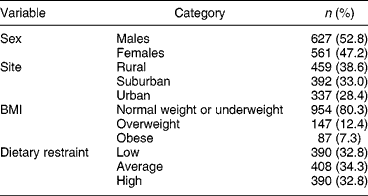
BMI – body mass index.
Measures
Eating behaviour
Eating behaviour was measured with the same self-administered food-frequency questionnaire at each data collection point. Food items and response scales were adapted from the cross-national Health Behaviour among School Children (HBSC) questionnaireReference King, Wold, Tudor-Smith and Harel32. Participants were asked to report their weekly consumption of 35 different types of foods, including four items on fruit and vegetable consumption: (1) fruits, (2) cooked vegetables, (3) raw vegetables or (4) green salad (‘not at all’, ‘one or several times’ and ‘each day’, coded 0, 3.5 and 7 times per week, respectively); three items on low quality snacking: (1) doughnuts, cakes or pastries, (2) chips or (3) candy (sweets) or chocolate bars (‘not at all’, ‘one or several times’ and ‘each day’, coded 0, 3.5 and 7 times per week, respectively); and four items pertaining to fast food consumption: (1) French fries or poutine (a popular local fast food consisting of French fries, sauce and cheese curds), (2) hamburgers, (3) hot dogs or (4) fried chicken (‘not at all’, ‘once or twice per week’ and ‘3 or more times per week’, coded 0, 1.5 and 3 times per week, respectively). Responses were then summed to create an index of weekly consumption for each of fruit and vegetable consumption, low quality snacking and fast food consumption. The items relevant to these categories of low quality snacking and fruit and vegetable consumption have shown good agreement for next day retest (κ values all >0.45) and a good validity using a single 24-hour dietary recall and a 7-day food-frequency questionnaire (correlations ranging from 0.52 to 0.82)Reference Vereecken and Maes33. Furthermore, the food-frequency questionnaire is recognised as an appropriate data assessment method for large-scale studiesReference Hammond, Nelson, Chinn and Rona34 and as suitable for youth from the age of 10Reference Livingstone and Robson35. Food item categories similar to those reported in this study have been used to assess dietary habits of Canadian youth. Fatty food intake, fruit and vegetable intake, and snacking, each derived from a self-reported food-frequency questionnaire, have been used as proxies for unhealthy dietary behaviours among adolescentsReference Cartwright, Wardle, Steggles, Simon, Croker and Jarvis36.
BMI
BMI was estimated by calculating the ratio of self-reported weight to the squared value of self-reported height (kg m− 2) and was recorded only in the final year of the follow-up when the participants were in the ninth grade. The classification of youth into weight status categories for our study is based upon sex- and age-specific BMI cut-offs established by the Centers for Disease Control and Prevention growth chartsReference Kuczmarski, Ogden, Grummer-Strawn, Flegal, Guo and Wei37. BMI is considered an appropriate measure of fatness in adolescenceReference Barlow and Dietz38, Reference Dietz and Bellizzi39, and self-reported heights and weights have been shown to provide reliable BMI estimates for youthReference Brener, McManus, Galuska, Lowry and Wechsler40–Reference Strauss42. Some studies have found BMI to underestimate overweight and obesity when reliant upon self-reportsReference Janssen, Katzmarzyk, Boyce, King and Pickett2. For the purposes of this study, however, the use of self-reported height and weight was deemed appropriate since the purpose was to determine an association and not to establish prevalence.
Dietary restraint
Similarly to BMI, restrained eating was evaluated only during the final year of the study. Questions on restrained eating were taken from the Dutch Eating Behavior Questionnaire (DEBQ)Reference Van Strien, Frijters, Bergers and Defares43. Both the French validated versionReference Lluch, Kahn, Sticker-Drongrand, Ziegler, Drouin and Méjean44 and the original English version were used. The DEBQ contains 10 questions to assess levels of restrained eating. Questions ask about changes in eating behaviours as a direct response to weight concerns, such as ‘if you gain weight, do you make an effort to eat less than usual?’. Questions are scored from 1 to 5, with 1 representing ‘never’ and 5 ‘always’. The 10 items are averaged to produce a restrained eating score. Internal consistency of the scale was high, with a Cronbach α of 0.93 The DEBQ scale has been reported to be better suited to assess eating style among children and adolescents than more complex scales requiring information about weight historyReference Allison and Franklin45, Reference Wardle46.
Physical activity and smoking were reported throughout the study; however, we only used data reported during the final year of the follow-up. Physical activity during the previous week was assessed dichotomously as vigorous (i.e. running, hockey, aerobics, basketball), moderate (i.e. tennis, volleyball, football) or mild (i.e. walking, bowling) activity three or more times for 15 min or more. Participants were categorised as regular smokers (smoking at least on a weekly basis), experimental smokers (smoking at some point during the previous month or years) or non-smokers (never smoking).
Procedures
Each of the school boards facilitated data collection by endorsing the research initiative. Data were collected in classrooms by self-administered questionnaires under the supervision of a trained interviewer. For the final collection period, a confidential master list with children's names and schools was used to trace children into high schools along with contact information provided by the parents at baseline. At the two final data collection points, subjects were aged ~14 and 16 years and could provide written informed consent. The human research ethics committee of the Faculty of Medicine of the University of Montreal approved the study.
Statistical analysis
Hierarchical linear modelling analyses (HLM, version 6.02) were applied to the longitudinal data set, first to describe patterns of each of the three food frequency consumption indices (i.e. fruit and vegetable, low quality snacking and fast food) across the 5-year period and next to determine if patterns of eating behaviours during that time were associated with dietary restraint and/or BMI measured in the fifth year of data collection. That is, we first estimated a null model to determine the intraclass correlation coefficient (ICC) and the plausible value ranges to describe the variation for each of the three food frequency indices. Next, we modelled changes in each food frequency index across time by adding a fixed time variable which permitted the establishment of a linear growth trend across the 5-year period. The baseline represented estimated food frequency when children were in the fourth grade or ~10 years old. Quadratic changes across time (i.e. squared value of linear trend representing accelerated change) were also tested for each index. Only changes in fast food consumption were curvilinear. Therefore, the quadratic effect was only kept in this model. We then controlled for sex and place of residence by adding dummy variables as moderators of the baseline intercept and the time variable slopes. Non-significant coefficients were subsequently removed from the model. Next, BMI (or dietary restraint) was added to each of the three food frequency models as moderators of the baseline intercept and time slopes. Finally, the dummy variables accounting for smoking and physical activity were added as moderators of both the baseline intercept and the time slope to control for potential confounding. Only results for the final models are reported in Tables 2–4 .
Results for model of weekly frequency of fruit and vegetable and its association with dietary restraint and BMI

BMI – body mass index; SE – standard error.*P < 0.05; **P < 0.01; ***P < 0.001.
Results for the model of weekly frequency of low quality snacking and its association with dietary restraint and BMI

BMI – body mass index; SE – standard error.*P < 0.05; **P < 0.01; ***P < 0.001.
Results for model of weekly frequency of fast food consumption and its association with dietary restraint and BMI

BMI – body mass index; SE – standard error.*P < 0.05; **P < 0.01; ***P < 0.001.
During model construction, the number of cases available to be included in the model was reduced due to missing information. During the process of model construction, results of model testing on larger and smaller data sets were contrasted and revealed that reduction in sample size due to missing data did not systematically influence the results.
Results
Modelling food frequency indices across time
Frequency of consumption of fruit and vegetables espoused a normal distribution and was therefore modelled as a continuous variable. Testing of the null model showed that the ICC was 0.44, indicating that slightly more than half of the variance was attributed to within-student changes across time. Students reported consuming fruit and/or vegetables about 17 times per week over the 5-year study. There was a significant amount of interindividual variability in average fruit and vegetable consumption (plausible values ranged from 8 to 25). Modelling of linear change showed that fruit and vegetable consumption decreased over the 5-year period (P < 0.025). Students living in rural or in suburban settings reported consuming fruit and vegetables more frequently than those living in urban settings at baseline (respectively 17, 17 and 15 times per week; P < 0.05 for rural versus urban setting and P < 0.001 for suburban versus urban setting). Girls reported a slightly higher rate of consumption (18 times per week; P < 0.05).
Frequency of low quality snacking was also normally distributed. Testing of the null model showed that the ICC was 0.33, suggesting that about two-thirds of the variance was attributed to within-student changes across time. Students reported consuming low quality snacks an average of 10 times per week over 5 years (plausible values ranged from 2 to 17). Consumption of low quality snacks increased over time (P < 0.0001). Girls reported lower frequency of low quality snacking than boys at baseline (8 versus 9, P < 0.001) and students living in rural settings consumed low quality snacks more frequently than students living in urban settings (10 versus 9, P < 0.01). Change in frequency of low quality snacking across time was not associated with sex or place of residence.
Fast food consumption also showed a normal distribution and had no outliers. Students reported consuming fast foods an average of 4 times per week over the 5 years. The 95% plausible value range extended from 1 to 6. The majority of variance in this outcome measure was attributed to within-student changes across time (ICC = 0.33). Frequency of consumption of fast foods decreased over time both linearly (γ10 = − 0.21, P < 0.001) and quadratically (γ10 = 0.02, P < 0.04). Both sex and place of residence were associated with fast food consumption at baseline, but not with the time trend. At baseline, girls reported less frequent consumption of fast foods compared with boys (P < 0.0001), as did students living in rural settings compared with those living in urban settings (P < 0.02).
BMI and dietary restraint
The overall BMI was normally distributed with a mean of 21.5 (standard deviation (SD) 4.2) kg m− 2. Due to the higher level of dietary restraint among females and the positively skewed data, participants were divided into low, average and high restraint groups through a gender-specific tertile split. Mean dietary restraint scores (SD) for the low, average and high restraint groups were 1.31 (0.25), 2.27 (0.29) and 3.37 (0.53) for girls, and 1.08 (0.08), 1.51 (0.17) and 2.51 (0.52) for boys. A small but significant correlation between dietary restraint and BMI was found (r = 0.21; P < 0.001).
Associations of food frequency indices with dietary restraint and BMI
The next set of models tested the association of BMI and dietary restraint measured in the fifth year of the study with baseline and changes in the fruit and vegetable, low quality snacking and fast food consumption indices over time (Tables 2–4). Fruit and vegetable consumption at baseline and changes in consumption over time were not associated with BMI and dietary restraint (Table 2). The addition of physical activity and smoking status did not influence these findings.
BMI was not associated with frequency of low quality snacking at baseline; however, it was associated with changes over time (Table 3). Although overall the sample increased snacking over time, low quality snacking remained relatively stable among those participants classified as obese (Fig. 1a). Dietary restraint was associated with frequency of low quality snacking at baseline and across time. At baseline, high dietary restrainers reported less frequent low quality snacking than average restrainers (P < 0.02). Teenagers who reported lower dietary restraint showed greater increase in the frequency of low quality snacks over time (P < 0.001) than those with average or high levels of dietary restraint (Table 3 and Fig. 2a). Addition of dummy variables accounting for smoking and activity levels did not change these findings.
Weekly frequency of low quality snacking (a) and fast food consumption (b) across a 5-year period among youths with normal/underweight, overweight and obesity

Weekly frequency of low quality snacking (a) and fast food consumption (b) across a 5-year period among youths with lower, average and higher dietary restraint

The frequency of fast food consumption was associated with BMI at baseline and over time (Table 4). Obese students reported a higher consumption of fast food at baseline (P < 0.05), which declined along with the rest of the sample, but at a significantly faster rate (P < 0.05) (Fig. 1b). Students with low dietary restraint reported less frequent fast food consumption than those with average dietary restraint at baseline (P < 0.001) (Table 4). The consumption of fast food decreased over time for the entire sample except for individuals reporting low dietary restraint (P < 0.019) (see Table 4 and Fig. 2b). The presence of smoking and activity levels did not influence the time trend between dietary restraint, BMI and fast food consumption.
Discussion
The first aim of this longitudinal study was to describe changes in dietary behaviours with respect to fruit and vegetable consumption, low quality snacking and fast food consumption over a 5-year transitional phase between childhood and adolescence (pre-teen to teen), namely from 9/10 years (fourth graders) to 14/15 years (ninth graders) of age. The second aim was to explain how these changes might be associated with dietary restraint and the occurrence of overweight and obesity measured at the end of the 5-year follow-up. Results show an overall decrease in the frequency of fruit and vegetable consumption, an increase in the frequency of low quality snacking and a decrease in the frequency of fast food consumption. Girls reported higher frequency of fruit and vegetable consumption, and lower frequency of both low quality snacking and fast food consumption than boys. In comparison with students living in rural or suburban settings, students living in urban areas consumed more fast food and less fruit and vegetables. Obesity was associated with more stable low quality snacking over time, and with higher fast food consumption at baseline but a greater decline in fast food consumption over time (Fig. 1). Low dietary restraint was associated with a greater frequency of both fast food consumption and low quality snacking by the end of the study period (Fig. 2). In particular, students with low dietary restraint in the ninth grade demonstrated incremental increases in low quality snacking over time. Students who reported low dietary restraint maintained a stable consumption of fast food over time whereas the rest of the sample decreased consumption of fast food over time. Thus, at the end of follow-up, consumption of fast food was higher among low dietary restrainers than among average and high restrainers (Fig. 2b).
Longitudinal evidence suggests a decline in quality in eating patterns during adolescenceReference Lytle, Seifert, Greenstein and McGovern17, Reference Morton and Guthrie47. Results reported in this study are in line with these findings for fruit and vegetable consumption and for low quality snacking. In particular, the dietary trajectories of boys and those living in rural areas may suggest a greater occurrence of unhealthy dietary patterns over time among these groups of individuals. However, the youth in our study demonstrated an overall decline in fast food consumption from a mean of 5.0 fast food servings weekly to 3.0 weekly servings. This finding is at odds with the literature reporting that fast food intake increases with increasing ageReference Schmidt, Affenito, Striegel-Moore, Khoury, Barton and Crawford48. It is possible that the students in our study replaced meals (i.e. chicken and hamburgers) with snacks (i.e. salty snacks and soft drinks), a phenomenon which is becoming more prevalent among adolescentsReference Nielsen, Siega-Riz and Popkin49. Alternatively, this effect could be caused because the food-frequency questionnaire used in this study did not include pizza, a fast food item whose consumption among adolescents has increasedReference Nielsen, Siega-Riz and Popkin49.
Our sample is characterised by slightly lower occurrence of obesity and overweight (19.9%) relative to the general population of Canadian and Quebec youth50. The Canadian Community Health Survey (2005) reports the national average of overweight and obese Canadian youth to be 26.3%. This prevalence is slightly lower in the province of Quebec (22.6%). It is possible that the low participation rate within our study from among urban families has influenced the lower proportion of overweight youth found in our sample. The overall mean dietary restraint in our study (2.3 for girls and 1.5 for boys) is similar to findings in other studies using the same psychometric tool in the adolescent populationReference Lluch, Herbeth, Méjean and Siest51.
Contrasted with other restrictive dietary practice scales which measure the presence of eating boundaries and are associated with the maintenance of ideal weightReference Wardle and Griffith52, dietary restraint measured with the DEBQ among adolescents has been found to be associated with unhealthy weight control measuresReference Wardle, Robb, Johnson, Griffith, Brunner, Power and Tovee53, overeating in response to stressReference Stice, Cameron, Killen, Hayward and Taylor54, Reference Roemmich, Wright and Epstein55, negative attitudes toward foodReference Wardle, Marsland, Sheikh, Quinn, Fedoroff and Ogden22 and weight gain in interaction with stressReference Tiggemann56. In addition, higher dietary restraint among adolescent females is associated with higher body weight but lower energy intakeReference Lluch, Herbeth, Méjean and Siest51. Higher dietary restraint in our study was associated with less fast food consumption and low quality snacking by the ninth grade. Research using food grouping similar to ours, such as low quality snacking and energy-dense foods, has found associations with weight statusReference Drapeau, Despres, Bouchard, Allard, Fournier and Leblanc57, Reference Nicklas, Yang, Baranowski, Zakeri and Berenson58. Although our results related to fast food consumption at baseline among obese students are in line with these studies, the decline found in fast food consumption and low quality snacking may be surprising. Although it is possible that this finding is due to the methodological limitations in our measures, whereby obese individuals are snacking or eating fast foods not reported in our survey, counterintuitive findings related to weight status and diet among youth are not uncommonReference Magarey, Daniels, Boulton and Cockington8, Reference Remer, Dimitriou and Kersting9. Findings in this regard have been explained in terms of reporting bias whereby youth with weight problems are increasingly concerned with body image and more inclined to underreport fat consumptionReference Magarey, Daniels, Boulton and Cockington8, Reference Livingstone and Robson35. These findings also correspond with suggestions that obese children are more likely to be practising dietary restraint on the one hand, but eating in response to external and negative emotional cues, on the otherReference Braet and Van Strien59. Underreporting in this sense might result from subconscious overeating, particularly with regard to fat, which is more likely than other macronutrients to lead to passive overconsumption60. Alternatively, obese children might be trying to lose weight and thus eating fewer low quality snacks.
Additional limitations to this study need to be underscored. As in most longitudinal research, subject attrition occurred. It is possible that those persons who were not followed-up had different eating behaviour patterns from those who were tracked. Also, we did not measure BMI and dietary restraint until grade 9 for feasibility reasons. It is likely that a more differentiated picture of the evolution of eating behaviours would have emerged had we had the opportunity to link up eating behaviour changes over time with changes in weight status and tendencies to restrain food intake over time. In this respect, associations in evolution in dietary behaviours with dietary restraint and BMI are cross-sectional, and do not suggest causality.
Despite these limitations, we conclude that eating behaviours do evolve from late childhood to early adolescence and that some of these changes are associated with psychosocial tendencies such as dietary restraint. Our results suggest a need for continued exploration into overweight and obesity as a complex process which goes beyond energy balance equations to include psychosocial processes with intimate ties to eating behaviour. The findings presented show dietary restraint to be associated with dietary behaviours and their evolution during adolescence, and thus support research suggesting that maladaptive eating style practices such as dietary restraint may be implied in the development of overweight and obesity. In particular, we show that links between this psychosocial phenomenon and eating behaviour develop early in adolescence. Future research is required to replicate these findings and to explain further the processes through which developmental change and environmental exposure to eating cues interact towards producing change in eating behaviours and differential associations with dietary restraint.
Acknowledgements
Sources of funding: Research reported herein was supported by Operating Grant # 97 030 P-35878-PSB-38212 from the Medical Research Council of Canada and #6605-5254-002 from the National Health Research Development Program. S.B. is a recipient of a CIHR Doctoral Research Award.
Conflict of interest declaration: None of the authors have a competing interest regarding these data being published.
Authorship responsibilities: S.B. was awarded a summer bursary from the Équipe de recherche en promotion de la santé (Université de Montréal, Faculté de médecine) in order to complete data analysis and write-up of this research. Analysis and write-up were completed under the direct supervision of L.G. G.P. and L.P. contributed to the conceptual design of the analyses and write-up of the article, through editing and input to presentation.



