


Inadequate complementary feeding practices have a detrimental impact on children’s health and growth in the first 2 years of life( Reference Kabir, Khanam and Agho 1 ). This period has been recognized as the ‘critical window’ for the promotion of optimal growth, health and development of a child( 2 ). Children may become stunted if they do not receive sufficient quantities of quality complementary foods after 6 months of age even if they receive optimum breast-feeding( Reference Black, Allen and Bhutta 3 ). By ensuring optimal complementary feeding an estimated 6 % of deaths among children under 5 years of age could be prevented( Reference Black, Morris and Bryce 4 ). Inappropriate complementary feeding after 6 months of age is one major cause of malnutrition in Ghana. Malnutrition is currently the leading cause of the global burden of disease( Reference Ezzati, Lopez and Rodgers 5 ) and has been identified as the underlying factor in about 50 % of deaths of under-fives in developing countries( Reference Black, Morris and Bryce 4 ). Nearly a third of these children are stunted and a quarter are underweight; a situation which is expected to worsen in some parts of the world including sub-Saharan Africa( Reference De Onis, Blössner and Borghi 6 ). In Ghana, it is estimated that about 40 % of children aged 18–23 months are stunted (height-for-age more than −2 sd below the median height-for-age of the reference population)( 7 ).
As a result of recognition of the significance of complementary feeding for the optimal growth, development and good health of young children under the age of 24 months, the WHO issued a recommendation that all children should be exclusively breast-fed for the first 6 months of life; infants should thereafter receive complementary foods that are nutritionally safe and adequate while breast-feeding continues until 2 years or beyond( 8 ).
In spite of these efforts, complementary feeding practices in many low- and middle-income countries are still not optimal, contributing to failure to thrive, malnutrition, morbidity and mortality among children in developing countries( 9 ). In Ghana, only 68 % of breast-feeding children (aged less than 3 years) receive complementary foods( 7 ). In order to make significant improvements in the nutritional status of Ghanaian children, LINKAGES (a project funded by the US Agency for International Development managed by the Academy for Educational Development) and the Ghana Health Service (GHS) have been jointly implementing a national nutrition Behaviour Change Commission (BCC) programme to promote early initiation of breast-feeding, exclusive breast-feeding for the first 6 months of life, and timely and adequate complementary feeding( Reference Adjei and Schubert 10 ). The programme’s community component commenced in the year 2000 in the Upper East, Upper West and Northern administrative regions of Ghana where malnutrition rates were most acute( 11 ). In 2000, the GHS/LINKAGES worked closely with three organizations and radio stations to implement nutrition BCC activities in nine districts situated in the three northern administrative regions. In 2001 and 2002, the project expanded its network of partners and hence extended activities to twenty-two out of twenty-four districts in the three regions. By 2003, the project covered all twenty-four districts in the three regions and had fourteen participating partners.
A few researchers have published papers about complementary feeding in Ghana( Reference Anderson, Bignell and Winful 12 – Reference Adokiya 14 ). However, such reports have focused only on particular regions of the country and to the best of our knowledge no researchers have used nationally representative data to examine complementary feeding. The present study adopted a procedure similar to the one followed by the South Asia Infant Feeding Research Network( Reference Senarath and Dibley 15 ).
Methods
Data sources and design
A publicly available data set, the 2008 Ghana Demographic and Health Survey (GDHS)( 7 ), was used in the present study. The 2008 GDHS was conducted over a 3-month period between early September and late November 2008. The survey used a two-stage sample based on the year 2000 Population and Housing Census to produce separate estimates for key indicators for each of the ten regions in Ghana. The 2008 GDHS sample of more than 12 000 households was large enough to provide a sampling frame for conducting case-specific child mortality surveillance for children under 5 years of age using a Verbal Autopsy Questionnaire. Each household selected for the 2008 GDHS was eligible for interview with the Household Questionnaire and a total of 11 778 households were interviewed. All eligible women aged 15–49 years and all eligible men aged 15–59 years in half of the households selected for the survey were interviewed with the Women’s and Men’s Questionnaires, respectively. A total of 4916 women aged 15–49 years and 4568 men aged 15–59 years from 6141 households were interviewed. Selected variables from all these questionnaires were used to determine complementary feeding indicators and the factors associated with suboptimal complementary feeding practices. A Household Questionnaire was used to collect sociodemographic data for all household members. Sampling procedures and data collection tools have been described in detail in the 2008 GDHS document( 7 ), from which a list of variables required for the present analysis was obtained. The present analysis was restricted to the youngest living child aged 6–23 months, living with the respondent (ever-married women aged 15–49 years), yielding a weighted total of 822 children. Height and weight measurements of female respondents and children under the age of 5 years were done only in the households selected for the individual interviews. Both simple and multiple logistic regression analyses were applied in the present study.
Complementary feeding practices were estimated according to the current WHO-recommended definitions of the four key indicators for assessing infant and young child feeding practices( Reference Filmer and Pritchett 17 ). In the present study, we aimed to use these indicators to estimate the prevalence of complementary feeding and identify the individual-, household- and community-level factors associated with inadequate complementary feeding practices by using the 2008 GDHS data. The indicators are: (i) ‘introduction of solid, semi-solid or soft foods rate’, defined as the proportion of infants 6–8 months of age who receive solid, semi-solid or soft foods; (ii) ‘minimum dietary diversity’, defined as the proportion of children 6–23 months of age who receive foods from four or more food groups; (iii) ‘minimum meal frequency’, defined as the proportion of breast-fed and non-breast-fed children 6–23 months of age who receive solid, semi-solid or soft foods (including milk feeds for non-breast-fed children) the minimum number of times or more in the previous day. The minimum number of times was defined as two times for breast-fed infants aged 6–8 months, three times for breast-fed children aged 9–23 months and four times for non-breast-fed children aged 6–23 months; and (iv) the final indicator is ‘minimum acceptable diet’, defined as the proportion of children 6–23 months of age who receive both minimum dietary diversity and minimum meal frequency( 16 ).
The seven food groups used for tabulation of the minimum dietary diversity indicator were ‘grains, roots and tubers’, ‘legumes and nuts’, ‘dairy products’, ‘flesh foods’ (meat, fish, poultry and liver/organ meats), ‘eggs’, ‘vitamin A-rich fruits and vegetables’ and ‘other fruits and vegetables’. GDHS collected the information on several food items provided to young children within 24 h preceding the survey. Consumption of any amount of food from each food group as reported by a mother was sufficient to ‘count’. In other words, there was no minimum quantity, except if an item was used as a condiment.
Data analysis
In order to determine the prevalence and factors associated with inadequate complementary feeding practices, the four complementary feeding indicators – namely, introduction of solid, semi-solid or soft foods, minimum dietary diversity, minimum meal frequency and minimum acceptable diet – were examined against a set of independent variables (predictors). The statistical software package Stata version 12·0 was used to perform the statistical analyses. Selected possible predictors of complementary feeding in Ghana included variables from attributes of the parents, infant and mother–infant dyad (which constitute individual-level factors); the household wealth index( Reference Patel, Badhoniya and Khadse 18 ) and source of drinking water (which constitute household-level environmental factors); and type of residence (urban or rural) and administrative region (community-level factors). ‘Svy’ commands were used to allow for adjustments for the cluster sampling design, sampling weights and the calculation of standard errors. The ‘svy’ commands used the Taylor series linearization method to estimate confidence intervals around prevalence estimates. The significance of associations in the cross-tabulations was tested by use of the χ 2 test.
To determine the factors significantly associated with inadequate complementary feeding practices, multiple logistic regression analysis using a stepwise backwards approach to model construction was employed. Factors that were not significant (P≥0·05) were eliminated in a stepwise manner and those factors when any level of the factor was significant (P≤0·05) were retained in the final model. The odds ratios with 95 % confidence intervals were calculated in order to assess the adjusted risk of independent variables.
Results
Characteristics of the sample
The distribution of the individual-, household- and community-level characteristics for the weighted total of 822 children aged 6–23 months is presented in Table 1. A high proportion (81·5 %) of mothers had worked in the past 12 months. More than half (51·0 %) of fathers sampled worked in the non-agricultural sector. Approximately one-third (31·2 %) of mothers had no education while about half (49·7 %) were aged between 25 and 34 years. A small proportion (5·5 %) of mothers had a BMI of <18 kg/m2 while about two-thirds (65·9 %) had a BMI between 18 and 25 kg/m2. The majority (89·7 %) of mothers were currently married and of the Christian religion (78·6 %). More than half (57·9 %) of the infants were born at a health facility; among these, a very small proportion (6·4 %) were delivered by other untrained personnel. More than nine out of ten infants were delivered by a non-caesarian mode. The majority of mothers (77·2 %) attended antenatal clinics. About three-quarters (74·2 %) had no access to potable water. While about half (48·1 %) of mothers listened to the radio almost every day, an almost equal proportion (47·3 %) did not watch any television and a high majority (89·7 %) did not read any newspapers at all. About half of the infants (47·1 %) were born to mothers from poor households and almost two-thirds (62·4 %) of them were born in rural areas.
Individual-, household- and community-level characteristics of children aged 6–23 months and their parents, Ghana, 2008 (n 822)

* Weighted total was 822 unless stated otherwise within parentheses.
† Included divorced, separated or widowed.
‡ Acute respiratory infection.
§ Included newspapers and magazines.
Types of food given to children by age
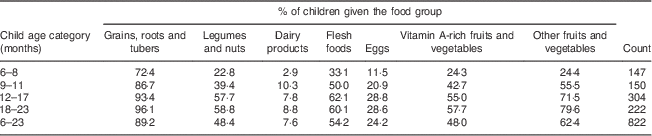
The types of foods given during the preceding 24 h to children aged 6–23 months are summarized in Table 2. The rates of consumption of the different groups during the past 24 h were uniformly lowest for children aged between 6 and 8 months. For this age group, the consumption of dairy products was the lowest (2·9 %), followed by the consumption of eggs (11·5 %). Except for dairy products and flesh foods (meat and fish), there was an increasing trend in consumption of the different food groups with increasing age. For children aged between 18 and 23 months, although the consumption rate was relatively higher for the different food groups, consumption of dairy products was low (8·8 %).
Types of food given during the preceding day according to age of the child among children aged 6–23 months, Ghana, 2008 (n 822)
Complementary feeding indicators
Table 3 shows that of the 822 children aged between 6 and 8 months, almost three-quarters (72·6 %) had been introduced to solid, semi-solid or soft foods. In all, slightly more than half of the children aged 6–23 months (51·4 %) met the minimum dietary diversity criterion; the prevalence was even lower (32·0 %) for infants aged 6–11 months and it doubled for children aged 18–23 months (63·6 %). Less than half of children in all age groups met the criterion for minimum meal frequency. Overall, less than half of children aged between 6 and 23 months (46·0 %) met the requirement for minimum meal frequency. Less than a third of the children aged 6–23 months (29·9 %) had minimum acceptable diet for breast-fed children only.
Complementary feeding indicators among children aged 6–23 months, Ghana, 2008 (n 822)
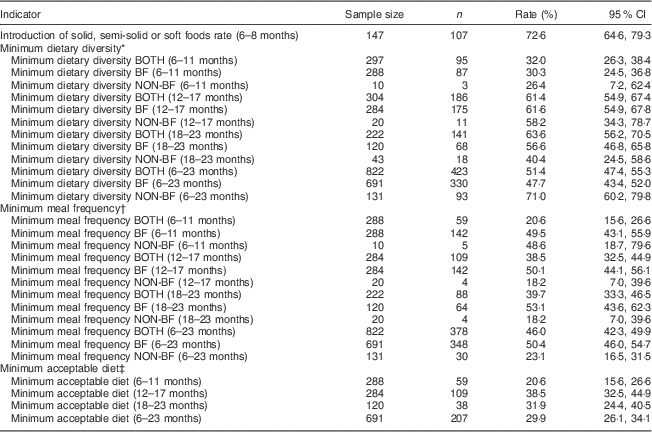
BOTH, both breast-fed and non-breast-fed children; BF, breast-fed children; NON-BF, non-breast-fed children.
* Minimum for dietary diversity: received foods from at least four food groups, consumption of any amount from each food group.
† Minimum for meal frequency: two meals for breast-fed infants aged 6–8 months, three meals for breast-fed children aged 9–23 months and four meals for non-breast-fed children aged 6–23 months.
‡ Minimum acceptable diet: combination of dietary diversity and meal frequency.
Differentials of complementary feeding indicators
Lower prevalence of introduction to solid, semi-solid or soft foods was evident for infants with fathers having an agricultural occupation, infants whose mothers who did not listen to the radio at all and infants of mothers from the Eastern region.
Infants born to Muslim mothers, infants aged 6–11 months, infants delivered at home, children delivered by traditional birth attendants, infants of mothers who did not watch television at all, infants from poor households and those whose mother resided in rural areas had significantly lower minimum dietary diversity rate. Infants from the Northern region reported a relatively low minimum meal frequency rate. All other administrative regions except the Volta, Greater Accra and the Upper West regions showed significantly low rates of minimum acceptable diet.
Determinants of inadequate complementary feeding practices
In Table 4, the risk factors for not meeting the requirements of the various complementary feeding indicators are presented. After controlling for potential confounders, our results reveal that mothers who belonged to the Muslim faith or other non-Christian religions had a higher risk of not introducing timely complementary feeds than their Christian counterparts (adjusted odds ratio (AOR)=2·46; 95 % CI 1·06, 5·75). Infants whose mothers could not read at all had a higher risk of inadequate complementary feeding compared with infants whose mothers who could read (AOR=3·55; 95 % CI 1·05, 12·02).
Multiple logistic regression modelling of a child not currently receiving adequate complementary feeding (unadjusted and adjusted odds ratios), Ghana, 2008 (n 822)

Ref., referent category.
Children of mothers from Ashanti and Central regions were almost three times more likely not to meet the minimum dietary diversity criterion (AOR=3·52; 95 % CI 1·74, 7·10 for Ashanti and AOR=3·45; 95 % CI 1·65, 7·19 for Central) than those of mothers from the Upper East region (AOR=1·27; 95 % CI 0·54, 2·96). Children aged 6–11 months were four times more likely not to meet the minimum dietary diversity criterion (AOR=4·29; 95 % CI 2·68, 6·84) than children aged 12–17 months (AOR=1·07; 95 % CI 0·70, 1·66). Also, children who were born at home were 87 % more likely not to meet the minimum dietary diversity criterion (AOR=1·87; 95 % CI 1·24, 2·81) compared with those who were born at a health facility. Infants born in the Northern region (AOR=11·08; 95 % CI 4·91, 24·99), Eastern region (AOR=9·14; 95 % CI 3·75, 22·29) and Western region (AOR=9·06; 95 % CI 3·65, 22·48) had a higher risk for not meeting the minimum meal frequency requirement than infants born in the Upper West region.
Infants born in Western (AOR=7·14; 95 % CI 2·74, 18·63), Eastern (AOR=6·99; 95 % CI 2·90, 16·83) and Northern (AOR=5·71; 95 % CI 2·74, 11·91) regions had a significantly higher risk for not meeting the minimum acceptable diet criterion compared with infants born in the Volta region. There was a significantly higher risk for children whose mothers attended postnatal check-ups at 3–6 d (AOR=1·47; 95 % CI 0·77, 2·80), compared with those whose mothers attended postnatal check-ups after more than 7 d (AOR=1·04; 95 % CI 0·67, 1·63), of not meeting the requirement for minimum acceptable diet.
Discussion
In the present study, factors that posed risks to adequate complementary feeding practices in Ghana included mother’s religion, administrative region, child’s age, place of delivery of the child, number of postnatal check-ups and household wealth. We found that children born to non-Christian mothers, children of the lowest age bracket (6–8 months), those who were delivered at home and those whose mothers did not have any postnatal check-ups were at risk of not meeting the requirements for adequate complementary feeding. The risk of inadequate complementary feeding was also found to be significantly higher among children from poor households.
Some important gaps in meeting the recommended minimum criteria of the newly established WHO complementary feeding indicators have been demonstrated by this analysis of nationally representative data for Ghana. The present publication is the first describing complementary feeding indicators in Ghana using the new WHO indicators. The prevalence of key complementary feeding indicators and the factors associated with inadequate complementary indicators have been explored. Findings of the study can be used to inform various stakeholders and policy makers in drafting future intervention programmes for improving complementary feeding practices among Ghanaian infants and young children.
The strength of the present study lies in the fact that the 2008 GDHS was a nationally representative survey that used standardized methods to achieve a high response rate (99 %). According to the WHO( 8 ), timely introduction of nationally adequate and safe complementary foods promotes good nutritional status and growth of infants and young children. Herein, we found two main factors to be significantly associated with delayed introduction to solid, semi-solid and soft foods. First, mothers who belonged to a non-Christian religion had a high risk of not meeting this criterion. This finding is consistent with a similar study in India( Reference Patel, Badhoniya and Khadse 18 ) where it was found that mothers from all religions except Christians had a higher risk of delayed introduction of solid, semi-solid and soft foods. This finding may reflect the role of early Christian missionaries( Reference Comaroff and Comaroff 19 ) in providing crucial social services such as education and health care in many African countries including Ghana.
Second, illiterate mothers had a high risk of delayed introduction of solid, semi-solid and soft foods. A similar finding has been reported from a study in Bangladesh( Reference Kabir, Khanam and Agho 1 ). In that study, a low level of maternal education was associated with not introducing complementary feeds at 6–8 months of age. Maternal education is therefore crucial in meeting the requirements for introduction of solid, semi-solid and soft foods. The Government of Ghana and other stakeholders should focus on enhancing female education beyond secondary level in order to provide mothers the requisite knowledge that would enable them to understand issues that affect the health and survival of their children. Interventions aimed at mitigating the conditions that lead girls to drop out of school early should be intensified. Uneducated mothers should be coaxed into patronizing antenatal and postnatal clinic services by making such services affordable to these mothers. Such visits would bring them in contact with health professionals who could offer them the right advice concerning appropriate complementary feeding practices.
Minimum dietary diversity has been shown to be associated with nutrient adequacy and nutritional status( Reference Joseph, Ownby and Havstad 20 ). In the present study, a number of factors were found to be significantly associated with minimum dietary diversity. Mothers who delivered their babies at home had a higher risk of not meeting the minimum dietary diversity requirement compared with those who delivered their babies at a health facility. This finding is supported by a previous study conducted in Indonesia( Reference Ng, Dibley and Agho 21 ) in which it was found that the minimum dietary diversity prevalence was significantly lower for mothers who delivered their babies at home, among other factors. In another study in Bangladesh( Reference Kabir, Khanam and Agho 1 ), researchers looked at factors associated with complementary feeding and found that babies who were delivered with the help of untrained birth attendants (among other factors) had significantly lower minimum dietary diversity. This association may be due to the fact that mothers who delivered their babies at a health facility were more likely to attend antenatal clinics where they were likely to have good contacts with health workers who would provide them with information and support on proper child feeding practices. Such mothers would use health facilities, which previous studies have shown to augment desirable infant and young child feeding practices( Reference Patel, Pusdekar and Badhoniya 22 – Reference Bahl, Frost and Kirkwood 25 ).
Our study also found that mothers who perceived the size of their babies to be smaller than average were more likely not to meet the minimum dietary diversity requirement, and may suggest an association between dietary diversity and the nutritional status of the young child. It is worthwhile to note that perceived baby size is a measure of the weight of the baby at birth. Since most mothers delivered their babies at home, the only way to have an idea about the birth weight was to ask the mother about its size at birth. There is evidence in the literature that indicates a close relationship between mean birth weight and size of the baby as perceived by the mother( Reference Channon 26 ). This finding is consistent with a study regarding the association of dietary diversity with nutrient intakes and nutritional status of children in Ghana( Reference Nti 27 ). In that study, dietary diversity was found to be significantly associated with weight-for-age, length-for-age and weight-for-length. This association, however, has been found to be independent of socio-economic status. At the household level, household poverty was associated with dietary diversity. Our study found a progressive decrease in the prevalence of children meeting the minimum dietary diversity as household wealth decreased. Similar findings about the link between household wealth, feeding practices and the nutritional status of infants and young children have been reported from other countries such as Malawi( Reference Vaahtera, Kulmala and Hietanen 28 ) and South Africa( Reference Faber 29 ). Despite the fact that most mothers and caregivers are aware of the important role that dietary diversity plays in the health of the child, lack of resources serves as a barrier for them to put their knowledge into practice( Reference Tulloch 30 ). Similar associations between minimum dietary diversity and higher socio-economic status have been found in other studies from developing countries( Reference Faber 29 ), and dietary diversity has been shown to be associated with total household expenditure( Reference Thorne-Lyman, Valpiani and Sun 31 ). The findings confirm that household purchasing power of securing household foods is a prerequisite for achieving dietary diversification for children.
Among the ten administrative regions of Ghana, the Ashanti and Central regions are those that had a high risk of not meeting the minimum dietary diversity requirement. The association between administrative/geographic region and meeting minimum dietary diversity requirement may be due to the cultural practices of the peoples of these regions or divisions. It is therefore important to investigate this finding in the Ashanti and Central regions. Interventions could be implemented in these regions to improve the situation based on the understanding of the context.
Our study revealed the low prevalence of consumption of flesh foods (such as meat, fish and poultry), dairy products, vitamin A-rich fruits and vegetables and other vitamin-rich foods by children aged 6–11 months. This prevalence, however, tended to improve as the age of the child increased. Similar findings have been reported in China( Reference Dang, Yan and Yamamoto 32 ), South Africa( Reference Faber 29 ) and Vietnam( Reference Victora, de Onis and Hallal 33 ). The main limiting factor for the daily consumption of these foods has been accessibility( Reference Bezanson and Isenman 34 ). The cost of these nutritious foods is often too high for low-income families in Ghana. In addition to this, different habits and beliefs in food consumption among ethnic groups could be a factor contributing to differences in complementary feeding practices across the different regions of Ghana( Reference Paul, Muti and Khalfan 35 ). For instance, a recent study( Reference Paul, Muti and Khalfan 35 ) found that children were not given nutritious foods such as fish and vegetables in Pemba-Zanzibar because of the indigenous belief that children cannot chew these foods. Unlike the staple foods such as grains, roots and tubers, the cost of dairy products such as milk, yoghurt and cheese is too high to meet the pockets of an average family in Ghana. In some communities in Ghana such as among the Dagombas (personal observation), it is unusual to give a child milk or yoghurt. The argument is that the child will become ‘spoilt’ when they are given such non-staple foods. Our study also found that the prevalence of minimum acceptable diet among children aged 6–23 months was low. Minimum acceptable diet incorporates the minimum dietary diversity and minimum meal frequency. Therefore the low prevalence of this indicator suggests that the majority of children were either not being fed as frequently as the recommended two to four times daily, or were not given food from four or more of the recommended food groups in their diet. Such low prevalence of minimum acceptable diet has been reported in past studies in Tanzania( Reference Victor, Baines and Agho 36 ) and Bangladesh( Reference Kabir, Khanam and Agho 1 ).
There is the need for formative assessment to understand the knowledge, attitudes and practices among key household actors in order to develop community-based nutrition intervention to improve complementary feeding practices that pay attention to the different socio-cultural context of each community. Poor cultural beliefs must be discouraged and the use of locally available nutritious foods that would improve quality of complementary feeding for the children be encouraged by the intervention.
Data from our study showed that children from the Eastern, Western and Northern regions had a negative association with meeting the minimum meal frequency criterion compared with the other administrative regions of Ghana. This negative association has been observed in countries such as Senegal, Guinea and Mali( 16 ). The prevalence of adequate meal frequency was however found to be positively significant within all geographic regions in Indonesia( Reference Ng, Dibley and Agho 21 ). Different cultural feeding practices and level of adult education may be some reasons for these variations in other countries( Reference Kabir, Khanam and Agho 1 , Reference Ng, Dibley and Agho 21 ). Investigations should be conducted in future studies to find out the reason for this regional variation. Appropriate intervention could then be instituted to improve the situation.
Our study found that children whose mothers did not attend a postnatal check-up had a negative association with meeting the minimum acceptable diet indicator. This finding is consistent with those reported in Sri Lanka and Tanzania( Reference Victor, Baines and Agho 36 , Reference Senarath, Godakandage and Jayawickrama 37 ). In the Sri Lankan study, lack of postnatal visits was found to be predictive of inappropriate complementary feeding practices while the Tanzanian study found that lack of postnatal check-ups was one of the main risk factors for not meeting the minimum acceptable diet (among other factors). This is because mothers who attend postnatal clinics are more likely to be educated about the importance of administering acceptable diets to the child. It is therefore recommended that mothers should be encouraged to attend antenatal and postnatal clinics in order to increase their knowledge about infant and young child feeding practices. We found that infants aged 12–17 months had a higher risk of not meeting the minimum acceptable diet criterion. In Nepal, infants aged 6–11 months were found to be significantly less likely to meet this criterion( Reference Adhikari 38 ). This is an indication of the relationship between different food groups by age, which implies that consumption of food groups decreases as age of the child decreases. A recent study also showed that the complementary food introduced to young children generally lacks variety and often is based on rice and legumes only. Meat, fish or eggs are infrequently given to children because of the belief about pure and impure food. Some food items like green leafy vegetables are considered cold and are not given to children at early age( Reference Adhikari 38 ). The Western and Eastern regions of Ghana had a higher risk of not meeting the minimum acceptable diet criterion. The reason for this is not known and this finding should be investigated so that appropriate interventions could be put in place to alleviate the situation.
The present study is limited in a number of ways. First, variables available to measure household- and community-level factors are limited. Second, the causal factors for inappropriate complementary feeding could not be established as the design is cross-sectional in nature. Third, several factors in the study were not specific to the infants included in the analyses as they reflected only the most recent conditions or birth, such as mother’s and father’s occupation, which represented the employment status within the last 12 months preceding the survey.
Considering the definitions of the four complementary feeding indicators, a complementary feeding practice would only be deemed optimal if it is timely, is frequent, has diversity and is nutritionally acceptable. This suggests that all four complementary feeding indicators are relevant in assessing the appropriateness of complementary feeding practices among children.
Conclusions
The significance of maintaining proper complementary feeding practices to reduce undernutrition and excess morbidity and mortality in children in developing countries like Ghana cannot be overemphasized. Attention should be paid to the sociodemographic and economic factors that have an influence on inadequate complementary feeding practices in Ghana. Promotion programmes should be instituted to provide advice and education to parents with regard to adequate foods and frequency of feeding of young children. The predictors that reflected negatively on inadequate complementary feeding indicators in Ghana could be addressed in order to alleviate undernutrition, morbidity and mortality in young children, thus gaining the full benefits of appropriate complementary feeding in a bid to achieve the fourth Millennium Development Goal.
Acknowledgements
Acknowledgements: The authors thank ICF Macro for making the 2008 GDHS data available. Financial support: This research received no specific grant from any funding agency in the in the public, commercial or not-for-profit sectors. Conflict of interest: None. Authorship: A.I.I. designed the study, performed the analysis and prepared the manuscript; K.E.A. provided advice on the study design and data analysis. P.B., A.P. and M.J.D. provided revision of the final manuscript. All authors read and approved the manuscript. A.I.I. would like to thank K.E.A for helping with the statistical analysis. Ethics of human subject participation: The study did not need any ethics approval from the Human Ethics Committee of the University of Western Sydney because the data set used is in the public domain.



