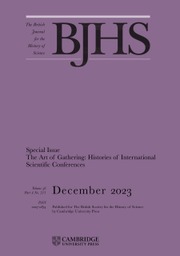





In September 1978, avant-garde musicians living in Manchester (Britain) decided to reuse a picture found in an astronomy encyclopedia as sleeve cover for their first album Unknown Pleasures. Conspiring to make it look elusive and mysterious, the sleeve's graphic designer removed the picture's astronomical details, inverted the colours and encased it in a large black frame. The now bewildering illustration travelled more widely than he expected, transforming the (black-on-white) plot of an astronomical object called pulsar into one of the (white-on-black) most popular and iconic expressions of post-punk (Figure 1).
Unknown Pleasures, Joy Division, 1979. Cover design Peter Saville from an image sourced by Bernard Sumner.

Documenting in an academic essay the unusual interplay of radio astronomy, post-punk and diplomacy may be challenging, but the changes in diplomacy studies that have typified the last decade justify such an effort. Dissatisfied with the perception of diplomacy as a fundamentally elite ambassadorial activity carried out by state officials, in recent years scholars have sought to reappraise protagonists, domains and devices of diplomatic practice. They have shown, for instance, that non-state actors and non-governmental organizations play an important role in international affairs.Footnote 1 They have also explained that diplomatic mediations are not confined to embassies, since various other public spheres are equally effective in shaping the relations of states and populations. Public, cultural and ‘science diplomacy’ studies have identified sports competitions, art exhibitions, international scientific meetings and concerts as events that have an important but not fully acknowledged diplomatic significance.Footnote 2
This shift in diplomacy studies includes an even more radical effort to explain practices of ‘everyday diplomacy’ in contexts where official legates and delegations are typically absent. For example, sociologist Richard Sennett contends that cooperation between workers in industrial societies resulted in an array of everyday gestures that made them recognizable to one another, helped forge their collective identity and shaped their mediation strategies in the capitalist milieu.Footnote 3 Drawing on Sennett's work, Costas Constantinou invites to think about alternative cultures of diplomacy ‘mediating and regulating otherness, formulating and renegotiating identity’.Footnote 4 Importantly for the content of this essay, Constantinou also contends that everyday mediation often entails indirection, thus using images and objects rather than words, arguing that ‘images, narratives and practices of diplomacy occur on a daily basis’, although diplomacy studies have yet to reflect on the ‘everydayness and ordinariness of diplomacy’.Footnote 5 Globalization and the evolution of mass media (and social media more recently) have made this everyday diplomacy by images even more noticeable by multiplying the number of actors on the world scene seeking to mediate their own stances by using images to give voice to ‘glocal’ subcultures in mediatized societies. Constantinou and other scholars thus call for greater attention to cultures of diplomacy that are visual and rooted in ordinary mediation practices.
This article seeks to test recent claims about images’ agency in the domains of both ‘science diplomacy’ and ‘everyday diplomacy’ through the historical examination of a set of scientific pictures, the stacked plots, particularly prominent in the late 1970s and early 1980s. In the 1930s, radio astronomers had introduced waveform visualization to display the power of signals from celestial radio sources. By the 1970s, they started to cut and stack sections of wave tracks to correlate intensity patterns, especially in order to understand those of mysterious astronomical objects called pulsars. Since then, stacked plots have featured in radio astronomy as valuable imaging tools revealing connections in the emission of celestial signals otherwise hidden in the tracks.Footnote 6
As the 1970s came to a close, however, the radio astronomers began to reuse the stacked plot to display instances when human transmitters interfered with the search for cosmic signals, producing electronic noise that inhibited research. Stacked plots thus assisted them in the context of international telecommunication negotiations by informing their advocacy for new provisions safeguarding radio astronomy from interference. Noise-displaying stacked plots represented their scientific interests as a group otherwise unfamiliar with traditional diplomatic spaces, but now seeking to play a role in international affairs.Footnote 7
The particular version of the stacked plot used as a sleeve cover for Unknown Pleasures was one of many pictures that contributed instead to the visualization of the subversive aspirations of post-punk as a distinctive subculture. These images sought to advertise post-punk's alterity, mediate its futuristic ambitions and negotiate a liberated social space for those sharing these subversive goals. Post-punk artists strove to reveal the controlling function of ordinary imagery in the mass-mediatic age of capitalism, which in their view had transformed the world into a ‘prison of images’.Footnote 8 Subversive image making thus mediated an interest in connecting those eager to metaphorically break away from this prison, and (more pragmatically) carved out a space for their cultural activism in post-industrial societies through the setting up of artistic and musical outlets. While originally a product of modern scientific research rather than modern industry, the stacked plot re-elaborated for the cover of Unknown Pleasures gave exemplary representation to these ambitions. Once stripped of its astronomical connections, it appeared as an explicit invitation to the viewer to independently establish its meaning anew, encapsulating the merit of participating in the subversive act of increasing one image's ‘semantic noise’.Footnote 9
Crucially, these reuses of the stacked plot in the domains of both science diplomacy and everyday diplomacy outlined contrasting understandings of what noise and diplomatic mediation meant to the actors involved. For the radio astronomers, electronic noise ought to be removed and the noise-displaying stacked plot helped them to frame a strategy to approach official international negotiations. In their science diplomacy exercise, images therefore facilitated the elaboration of new provisions supporting international scientific activities in radio astronomy. In contrast, post-punk interpreted semantic noise as a creative and liberating force, questioning established meanings and challenging the separation between signals and messages on the one hand, and noise and interference on the other. Semantic noise-producing imagery mediated these countercultural stances, funnelling them in the arena of everyday diplomacy, both shaping a (forbidden) collective identity and claiming a space in society for those who contributed to these subversive activities.
This article will focus first on the emergence of the stacked plot as a radio astronomy imaging technique. It will then examine its reuse as a diplomacy device by both post-punk and radio astronomy subcultures. Given the actors involved, the essay documents especially events occurring in the city of Manchester, where some of the musicians, artists and researchers discussed in the paper were active. In the 1970s this city was a hub with a distinctive propensity towards experimenting in science and art (something to which the conclusion returns). As a result, these same images travelled internationally through the city's scientific and countercultural networks, enabling them also to inform international affairs, as we shall now see.Footnote 10
The making of stacked plots
Stacked plots are a class of data-imaging charts distinctive of radio astronomy and elaborated in the development of its ‘waveform visualization’ techniques. Since this discipline is fundamentally reliant on the detection and analysis of radio signals from outer space, it has advanced in the past through plotting on-screen and on paper waves on single tracks. As signals produced in distant galaxies originally appeared to radio astronomers as indistinct cosmic noise, waveform visualization helped them to make this noise visible through the plotted oscillations in the tracks.Footnote 11 By the 1970s, however, the study of a specific astronomical object called pulsar informed their decisions to cut and stack sections of these tracks to understand their unique energy pulse emissions.
It did not take long for radio astronomers to realize that examining series of wave tracks provided them with a great deal more information on astronomical objects. For instance, in 1933 Bell Laboratories radio engineer Karl Guthe Jansky identified the Milky Way by visualizing its radio emissions in parallel tracks in what historians of radio astronomy consider one of the field's foundational discoveries. In particular, the humps appearing at regular intervals supported Jansky's claim that a strong radio source rose in a specific area of the sky, corresponding to the centre of what contemporary astronomers speculated was our galaxy.Footnote 12
After Jansky's pioneering findings, the study of radio signals from space expanded, and plotting tracks continued to play a conspicuous role in shaping the beginnings of radio astronomy. The improvement of signal reception techniques, especially in conjunction with the development of radar, further propelled these studies. In particular, the use of wartime radar receivers during and after the Second World War assisted the radio astronomers in their quest to acquire more knowledge of celestial phenomena.Footnote 13
More funding became available for radio-astronomical studies in the 1950s, and modern radio telescopes replaced wartime devices, also catering for the growth of the discipline internationally. Purpose-built large-scale reflector dishes substantially improved signal detection. Major observatories equipped with radio telescopes opened in Cambridge (the UK), Sidney (Australia), Dwingeloo (Netherlands) and Penticton (Canada), while in the United States the field really developed following the establishment of a National Radio Astronomy Observatory (NRAO) in the late 1950s. The observatory, set up at Green Bank (West Virginia), stemmed from a consortium of research institutes incorporated in 1946 as Associated Universities. Furthermore, from 1963 NRAO built a reflector dish in a natural sinkhole at Arecibo (Puerto Rico). The Arecibo NRAO facility, directed by US radio astronomer Frank Drake, thus hosted the largest radio telescope ever built in the twentieth century (with a diameter of 305 metres). The University of Manchester was home instead to one of the largest research groups in Britain, especially thanks to the wartime work of physicist Bernard Lovell. An observatory was eventually set up in an area fifty miles south of the city known as Jodrell Bank. From 1957 the gargantuan radio telescope Mark I (with a diameter of seventy-six metres), the largest in post-war Europe, started its operations there.Footnote 14
Radio astronomy imaging techniques improved from the late 1960s in the context of research carried out with these new instruments, and partly due to the study of mysterious radio sources initially dubbed ‘pulsars’. Their signals, in contrast with others previously examined by radio astronomers, displayed a distinctive pulsating pattern in their tracks, which stimulated the search for ways to plot the tracks differently in order to make sense of their regularity.
The Northern Irish doctoral student Jocelyn Bell Burnell detected the first pulsar at the Mullard Radio Astronomy Observatory (MRAO) of the University of Cambridge (Britain) at 19 hours and 19 minutes on 28 November 1967. Bell Burnell worked at the time in a team headed by astrophysicist Antony (Tony) Hewish and the UK Astronomer Royal Martin Ryle. Officially recorded as CP1919, the plotted signals captured the radio astronomers’ attention: in fact, the surprisingly uniform series of humps persuaded Bell Burnell and Hewish that an extraterrestrial civilization was responsible for the tracks (initially labelled LGM or ‘Little Green Men’).Footnote 15
Within two years, the Cambridge team detected seven more pulsars, and the NRAO groups at Green Bank and Arecibo recorded four each. The new tracks now persuaded the radio astronomers that the regular patterns were due to a rapidly rotating neutron star and not an extraterrestrial civilization.Footnote 16 To confirm this assumption (and rule out once and for all the LGM hypothesis), they looked for new plotting techniques on the understanding that the solution to the mystery lay in the waved track patterns. From 1968, the Manchester, Arecibo and Cambridge groups focused, therefore, on what they called ‘regimes of fluctuation’ and considered placing sections of the signals’ tracks close to one another. After that, they opted for isolating the pulsar's ‘average pulse shapes’ (the single humps, as it were), and then juxtaposing one above the other.Footnote 17
This is how the stacked plot was born, although radio astronomers referred to it as a plot showing successive mean pulse spectra. Two groups in particular, Lovell's in Manchester and Drake's at Arecibo, sought to improve ways of visualizing these spectra, which entailed designing purpose-built electronic instruments. In particular, the digital correlation spectrometer that the Australian R.D. (Rod) Davies assembled at Jodrell Bank allowed comparing various copies of the same signal by digital means before plotting them on paper.Footnote 18 University of Cambridge physics graduate Barnaby (Barney) J. Rickett was the first to benefit from Davies's work. Rickett had recently moved to Manchester to complete a PhD and examine the fluctuation patterns of various pulsars. He co-authored a paper on the subject showing juxtaposed mean pulse shapes. Thanks to Davies's spectrometer, Rickett could eventually elaborate, plot digitally and assemble a stacked plot of pulsar CP0328 (Figure 2).Footnote 19
Spectra from CP0328 as reproduced in B. Rickett, ‘Interstellar scintillation and pulsar intensity variations,’ Monthly Notices of the Royal Astronomical Society (1970) 150, pp. 67–91, 73. Courtesy of Barnaby Rickett and Andrew Lyne.

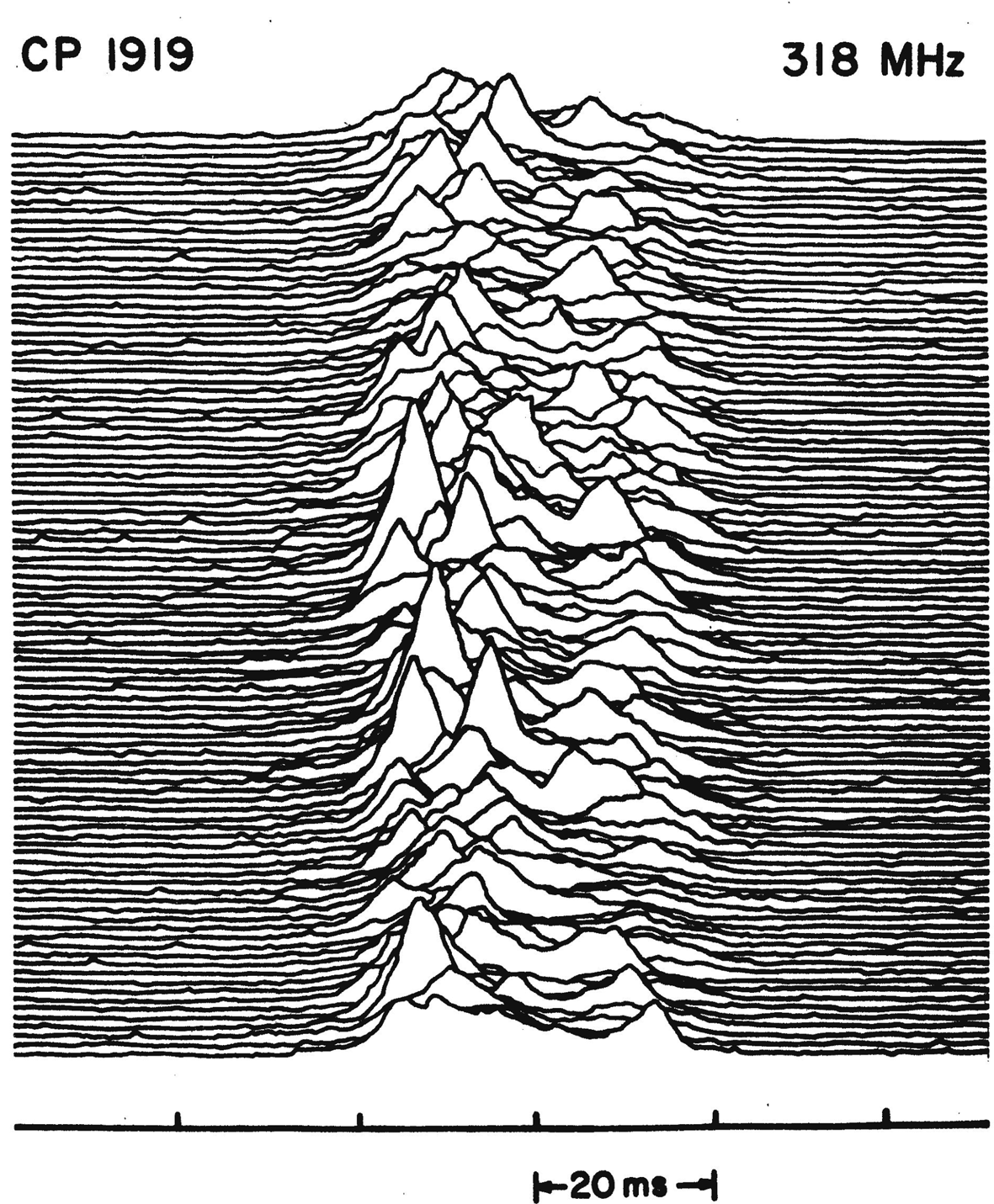
While the group in Manchester applied the plot-stacking technique first, Drake and his assistant at Arecibo, Harold (Hal) Dumont Craft Jr, followed suit. In particular, the PhD thesis that Craft completed in September 1970 had a number of these plots as well. Like his colleagues in Manchester, Craft had used a laboratory mainframe computer, a Control Data Corporation 3200, to digitize the track series, although he did not use an instrument similar to Davies's digital correlation spectrometer. In this way, he produced stacked plots of CP1919 (Figure 3) and other pulsars.Footnote 20
‘Many consecutive pulses from CP1919’, in Harold Dumont Craft Jr, ‘Radio observations of the pulse profiles and dispersion measures of twelve pulsars’, PhD dissertation, Cornell University, 1970, p. 214. Reprinted courtesy of Hal Craft.
In the five years that followed the birth of the stacked plot, many research communities adopted similar imaging techniques to find out more about the pulsars. By 1977, the over four hundred papers written on pulsars revealed that each one had a unique and identifiable pulse shape, and confirmed their signals as coming from rotating neutron stars emitting them at regular intervals (like light beacons). The relevant stacked plots also made it possible to assimilate spectral properties (in particular the presence of two or more pulse components), and became a very useful tool in mapping radio sources’ signal intensity and patterns.
The stacked plots marked, therefore, an important development in radio astronomy's imaging in that it prompted radio astronomers to move beyond simply displaying radio signals on tracks, encouraging them instead to visualize emission patterns by cutting and stacking these tracks.Footnote 21 Contingently stacked plots transited to a different domain, though, when they were reused in the set of artistic post-punk imagery producing (semantic) noise.
Make it noisier! Post-punk and its everyday diplomacy
Music has frequently created a space for public diplomacy, giving representation to social and political demands. Free jazz provided a platform for the identification of black Americans’ relation to their culture and political struggle. Reggae music performed so well in the movement against apartheid that the South African government censored the release of individual records.Footnote 22
Post-punk's diplomatic agency was both more radical and more mundane. It did not result in a set of explicit claims, but instead deployed images to produce semantic noise in distinctive acts of cultural activism. These subversive efforts aimed to attack the conventions and norms that underpinned the uses of ordinary images in everyday life, hence also mediating the futuristic aspirations of post-punk. Since post-punk believed that the confluence of mass media and capitalism would result in the transformation of ordinary images into tools for the imposition of a new social order, it aspired to sabotage this imagery. This entailed revealing the extent of this transformation by reworking the images and muddling their sense. Negotiating a social space for those involved in this sabotaging work was at the heart of the everyday-diplomacy agenda associated with this countercultural stance.Footnote 23
In the 1970s, punk had already sought to give to objects and images a subversive character through what British media theorist and sociologist Dick Hebdige calls semantic disorder. Decontextualizing and reconfiguring the purpose of mundane images and objects aimed to startle or shock the observer, as shown, for instance, by the use of safety pins in punk outfits. Other subversive punk approaches included redesigning and reassembling images and objects in bricolage work (Banksy's artworks are recent examples). Once stripped of their original meaning, objects and images bestowed on their user a ‘forbidden identity’, a sense of belonging derived from participating in disrupting the everyday function of images and objects. Punk inherited this emphasis on sabotaging a given semantics from situationism, which had its heyday during the May 1968 uprising in France, but had been theorizing disrupting images and conventions in what since the 1950s its promoters had called détournement.Footnote 24
Post-punk differed from its punk progeny because of its even more pronounced determination to establish this forbidden identity through the display of subversive images that presented their viewers with a fundamental ambiguity. In other words, rather than simply aiming at disrupting a given semantics in order to declare alterity to norms, post-punk imagery was more elusive (and allusive), inviting observers to find their own way to be subversive, and implicitly displaying the merits of participating in these sabotaging practices.Footnote 25
The stack plot elaborated for Joy Division's new record was a particularly successful example of a post-punk détournement. The album cover displayed a reworking of the image elaborated by Craft nine years earlier, deliberately stripped of details, and deceptively reworked with inverted colours (see Figure 1). In this way, the sleeve made the connection between image and message enigmatic. Leonard Navarez contends that this ambiguity was a distinctive trait of Joy Division's images and sounds: ‘meanings do not emerge immediately and stably from signs and their encapsulation in language – verbal, visual, aural, or otherwise. The ambiguity carves a space for individual re-interpretation’.Footnote 26 The sleeve's semantic noise resulted in fact from a set of decisions that deliberately obscured its connections to astronomy. In particular, the copy of the image that the band members utilized in their artistic project provided no details on its origins, as it was published without a citation of Craft's PhD dissertation. The graphic designer Peter Saville's final rendering fully aligned it to the subversive ambitions of post-punk.
Formed in 1976, Joy Division released their debut studio album, Unknown Pleasures, three years later. It was their guitarist and keyboard player Bernard Sumner who suggested using the stacked plot for the band's forthcoming record after he saw it on page 111 of the recently published Cambridge Encyclopedia of Astronomy. Cambridge-based astronomer Simon Mitton had assembled the encyclopedia the previous year to give wider exposure to recent work, and the publisher Jonathan Cape cleverly marketed it using the Cambridge trademark. Priced at fifteen pounds, its main asset was its illustrations – five hundred in total, of which 150 were in colour. Nature singled out this feature: ‘the choice of photographs is excellent and there are some stunning full page (20 × 20 cm) colour pictures of nebulae’.Footnote 27 Rich in coloured pictures, the encyclopedia was nevertheless scanty in detail, making it hard for the band members to establish the stacked plot's origins even if that had mattered to them. Table 6.7 at page 111 referred only to ‘successive pulses from the first pulsar discovered’.Footnote 28
Assigned the task of completing the artwork, graphic designer Peter Saville was able to give the picture its subversive appeal. The Manchester-born graphic designer had worked for the music label producing Unknown Pleasures for some time when he completed the record sleeve. A former student of the Manchester Polytechnic's School of Design, Saville was especially interested, in typical post-punk fashion, in deploying key design features of industrial settings when advertising musical products. While the stacked-plot image did not come from Saville's industrial repertoire but from the world of science, he made a few decisive alterations re-presenting it in an even more mystifying way and transforming it into a post-punk pictorial icon. He introduced two minimalist design features: the colour inversion and the large black frame encasing the plot.Footnote 29
Saville's reworking added further ambiguity to the original scientific image, turning it into a riddle that viewers tried to solve. After it was published as the album cover, its observers could see many different things in it, including mountain ridges, sea waves or a secretly encoded message. ‘Lots of people think it's a heartbeat’, Saville once noted.Footnote 30 Others associated it with the album's music, claiming that it was the repetitive sound of the drums that ‘seem to circle the rim of a crater’.Footnote 31 BBC reviewer Susie Goldring linked it to emotions, as the images ‘white on black lines reflect a pulse of power, a surge of bass, and raw angst’.Footnote 32 Saville eventually admitted its ambiguity to be deliberate; the picture was ‘a palimpsest’ – ‘it means whatever the individual thinks it means’.Footnote 33
Saville had posed a riddle with no correct answer as a means of critically questioning the broader role played by image representation in mediatized societies. It was an invitation to the viewer to take part in similar mutinous acts consisting of reworking an image's message, and, in that way, to go against the conventional understanding that only the creators of mass-produced and mass-communicated mundane images had the right or privilege to determine their message.
Was it thus an appeal for producing more semantic noise? It is important here to stress Saville's artwork was only one example, albeit a particularly successful one, of a sustained attack on mainstream images carried out through a variety of post-punk image productions. These artistic products facilitated the development of an international community of artists and musicians who questioned traditional spaces and practices of representation as they then existed in national and international spheres of public affairs. This community conceived the world as a ‘prison of images’ produced in a system of commercial relations, propagandized through mass media, and utilized to tie individuals to already established normative systems within nation states.Footnote 34 When analysed in its historical setting, one can thus understand the Joy Division sleeve cover as exemplifying a much broader set of everyday-diplomacy aspirations forging the collective post-punk (forbidden) identity, and in turn seeking to negotiate a space in society for this community through its countercultural artistic production.
To consider the wider diplomacy ambitions of this production, it is important to recall the role of Anthony (Tony) H. Wilson, the impromptu impresario behind Joy Division's music and Saville's artworks. An avowed situationist, Wilson had preached détournement as a Cambridge student before finding employment as a television presenter with the recently established Granada studios, which were based in Manchester. Having moved to the North West, Wilson became more aware of the merits of practising artistic subversion in order to negotiate a space for the city's post-punk youth. According to Simon Reynolds, ‘Manchester and Sheffield, both declining industrial cities in the North of England, formed the bleak heartland of British post-punk’.Footnote 35 Both cities, like many others in Britain and in other developed countries, were going through a critical phase in their urban history typified by loss of industry, proliferation of housing estates, growing unemployment and widespread social unrest.
Wilson interpreted Manchester's urban decay as an opportunity to make the modern city more attractive by enacting what the situationist Ivan Chtcheglov had flippantly referred in his Formulary for a New Urbanism as making space ‘for free play’ (thus also foreseeing the need for these cities to house a ‘Happy Quarter’). By promoting music events, Wilson thought that he could offer a viable enactment of Chtcheglov's surreal plans by further increasing urban spaces’ semantic noise, and in turn giving voice to those who wished to contribute to these picture-sabotaging activities. Sounds, images and objects like the one appearing on Unknown Pleasures were key to this enterprise. For instance, when Wilson agreed to open a new concert venue, he named it the ‘Factory’ in a city proliferating with abandoned industrial sites (his music label was hence named Factory Records). He then went on to allusively recall the Formulary's proclamation, ‘The Haçienda must be built’, to transform cities in freed spaces by setting up the dance club the Haçienda.Footnote 36 Unsurprisingly, Saville contributed to the dance club's noisy semantics by using factory safety instructions, the traditional yellow and black hazard stripes covering the dancing area, as a key design feature.
Over the years, these venues became spaces for artistic experimentation, inviting the members of this post-punk community to avoid mere music consumerism. The organization of an independent music scene offered them a way to express their artistic creativity, also challenging the ways in which music corporations contracted their musicians.Footnote 37 Wilson's entrepreneurial activities created a fertile space for independent, locally based musical and artistic productions and offered support to a local community of artists eager to work in this productive environment. Framed as an alternative entrepreneurial enterprise, this set of initiatives gave voice through images to radical instances distinctive of the post-punk subculture. Music journalist Paul Morley contends that these activities aimed at
subverting elements of the mainstream mass media, the rerouting of images and events into a radical new space, the deflection, integration, distortion, misuse, misappropriation, highjacking or general taking of one piece of artistic or commercial production and giving it another purpose, another meaning, often some extraordinary new life … The conventional purpose of neutral mainstream images could be superimposed with revolutionary values.Footnote 38
The music of Joy Division, in line with the post-punk tropes, aligned with these ambitions. In particular, the input of the music producer, the eclectic Martin Hannett, transformed Joy Division's sound into something unrecognizable and darker, especially through effects that filtered the sound electronically with echoes, delays and reverbs applied to drums and bass guitar.Footnote 39 His mixing of industrial racket and Joy Division's sounds aimed to blur the distinction between the two. However, it was not music alone that contributed to Wilson's quest to evade Manchester's prison of images, as a proliferation of fanzines translated the post-punk agenda into an everyday visual hub of semantic noise. The graphic designers of one of the most popular, City Fun, returned in their images to the same ambiguity of Saville's stacked plot, through the simple but effective graphic solutions of black lines plotted on white paper (see Figure 4).
The cover of City Fun magazine, 21 March 1980. Courtesy of the Manchester Digital Music Archive (MDMA).

As Reynolds has documented, post-punk made the ripping up of conventional images and objects the beginning of a process of emancipation through artistic expression for many other ‘glocal’ subcultures in industrial cities. Post-punk's everyday diplomacy had similar ambitions in London, New York, San Francisco, Berlin, Turin, Düsseldorf and Tampere – just to mention a few.Footnote 40 Local differences aside, artists across the world shared an effort to denounce the commodification of images. In 1979, Manhattan artist Jean-Michel Basquiat exhibited photocopies of his artworks implicitly challenging the conventional understanding of their uniqueness. Sound experimentation increasingly sought to carve a space for non-corporate approaches to music. From 1983, the London-based band Art of Noise produced avant-garde sound collages through samplings cut through digital synthesizers, while appearing faceless on adverts in an explicit refusal of the pop music industry's traditional merchandizing tropes.Footnote 41
Meanwhile Joy Division's stacked plot travelled widely, making transnational connections well beyond Manchester's countercultural experience. Indeed, from the 1980s onwards, many others in different parts of the world appropriated the same image in all sorts of ways, implicitly advertising similar subversive ambitions through T-shirts with the stacked plot. Some wanted the stacked plot tattooed on the back of their shoulder. A swathe of other products reused the image, from mugs to bike saddles. Condoms packaged with a stacked-plot sleeve made the puzzling association between the image and unknown pleasures less ambiguous.Footnote 42
Inevitably, over the years this proliferation of stacked plots lost its original subversive ambition and, ironically, ended up fuelling mainstream commercial interests. Joy Division fans were horrified when they learnt that Disney was about to print stack-plotted Mickey Mouse T-shirts.Footnote 43 Even so, for nearly fifty years one image in particular exemplified the ambitions of a community that preached and practised disrupting the content of images in order to mediate their own interests and attack the normative function of such images in the confluence of capitalism and mass media. Its reworking, admirably generating semantic disturbance, paved the way for musicians and artists to connect with one another as this image-based noise became a device of everyday diplomacy. Meanwhile, radio astronomers reused the stacked plot, too. However, they did so in far less subversive ways. In its last reincarnation, the stacked plot ended up representing noise again, but of a different kind.
Get rid of the noise! The diplomacy of radio astronomy
While the post-punk movement was transforming the CP1919 stacked plot into an iconic expression of their post-industrial aspirations, radio astronomers found themselves engaging with state officials administering international telecommunication regulations. Their concerns derived primarily from the growing number of radio transmitters on the planet, which radio astronomers viewed as an obstacle to their work. Interestingly, they ended up using the same imagery, the stacked plot, to display the satellite noise marring their research and, in contrast with post-punk artists, to represent their stance that electronic noise needed to be removed. In so doing, they introduced this imagery in their own domain of science diplomacy, or, in other words, sought to represent their scientific community interests within the realm of international affairs.Footnote 44
A noiselessness electronic environment is as vital to radio-astronomical studies as darkness is to visual astronomy, as the Dutch radio astronomer Jan Oort once remarked.Footnote 45 However, by the 1970s television transmitters, microwaves and orbiting satellites produced a planetary electronic cacophony, increasingly preventing the radio astronomers from going about their daily work of silently capturing radio signals from outer space. Some of the radio astronomers who pioneered key advancements in the field, including Bernard Lovell, Frank Drake and Martin Ryle, were keen to have their community's interests represented in international negotiations on the allocation of radio frequencies. The stacked plot helped them advocate for reform, and to campaign for removing the electronic noise threatening their research.
This happened at an important historical juncture. The 1979 World Administrative Radio Conference (WARC-79) took place in Geneva (Switzerland) exactly as Joy Division's Unknown Pleasures was climbing the music charts. The international meeting entailed the participation of many organizations representing the interests of satellite companies, microwave industries, broadcasters, defence agencies, space scientists and radio astronomers. All matters regarding radio frequencies and their allocations were about to be settled at this meeting for the following decade. Meetings of this kind had taken place for nearly a century, inaugurated by the 1865 International Telegraph Conference. Their evolution followed the development of telecommunications, initially covering only radiotelegraphy but then extending to other sectors. In 1932, the International Telecommunication Union (ITU) was set up. The first international conference devoted to telecommunications took place in 1947 in Atlantic City (USA), when ITU operations became part of the United Nations. The 1959 Administrative Radio Conference in Geneva was the first event of its kind catering for a specific focus on frequency allocations, and from then onwards World Administrative Radio Conferences (WARC) took place at intervals of ten years.Footnote 46
Radio astronomers were latecomers in this negotiating arena. Only after the Second World War did they succeed in setting up a commission (No. 40) devoted to radio astronomy as part of the International Astronomical Union (IAU, established 1919).Footnote 47 The 1959 Administrative Radio Conference was the first to provide radio astronomers with an exclusive allocation of radio frequencies. The conference's Recommendation No. 32 recognized in particular that radio astronomy was a discipline ‘based on the reception of radio waves of cosmic origin’ and set four frequency bands for the ‘observation of cosmic radiations by radio astronomers only if they are free from appreciable energy due to the emission of services other than the standard frequency service’.Footnote 48 Importantly, this international protection covered cosmic radio signals of wavelengths in the spectrum of hydrogen (H line, 1400–1427 MHz) and oxygen (OH line, 1645–1675 MHz), the most promising spectra for radio astronomy research.Footnote 49
Nevertheless, in the twenty years after the 1959 conference, many private companies paid less attention to these recommendations. Lovell often complained about the growth in the number of transmitters routinely marring radio-astronomical observations. He also engaged in public polemics, grumbling especially about projects increasing the number of satellites stationed around the Earth, since they multiplied interference. In the mid-1970s, for instance, he opposed two competing satellite projects launched in the US and the Soviet Union, since they directly affected radio astronomy's allocated frequencies.Footnote 50 With the 1979 WARC meeting approaching, Lovell and his colleagues turned to the stacked plot to represent these disciplinary interests. By 1977, the stacked-plot technique had transitioned from an innovative tool deployed to image the pulsars’ unique emission patterns to a routine visualization device used in radio-astronomical research. The extent to which its use was now normalized can be seen from the way in which mainstream scientific publishers treated this imaging technique. In 1971, Scientific American had used a full-page recoloured version of Craft's stacked plot to illustrate an article on pulsars. By 1978, an American Scientist article on the same subject also displayed a stacked plot, but this time tucked it away into the page corner.Footnote 51
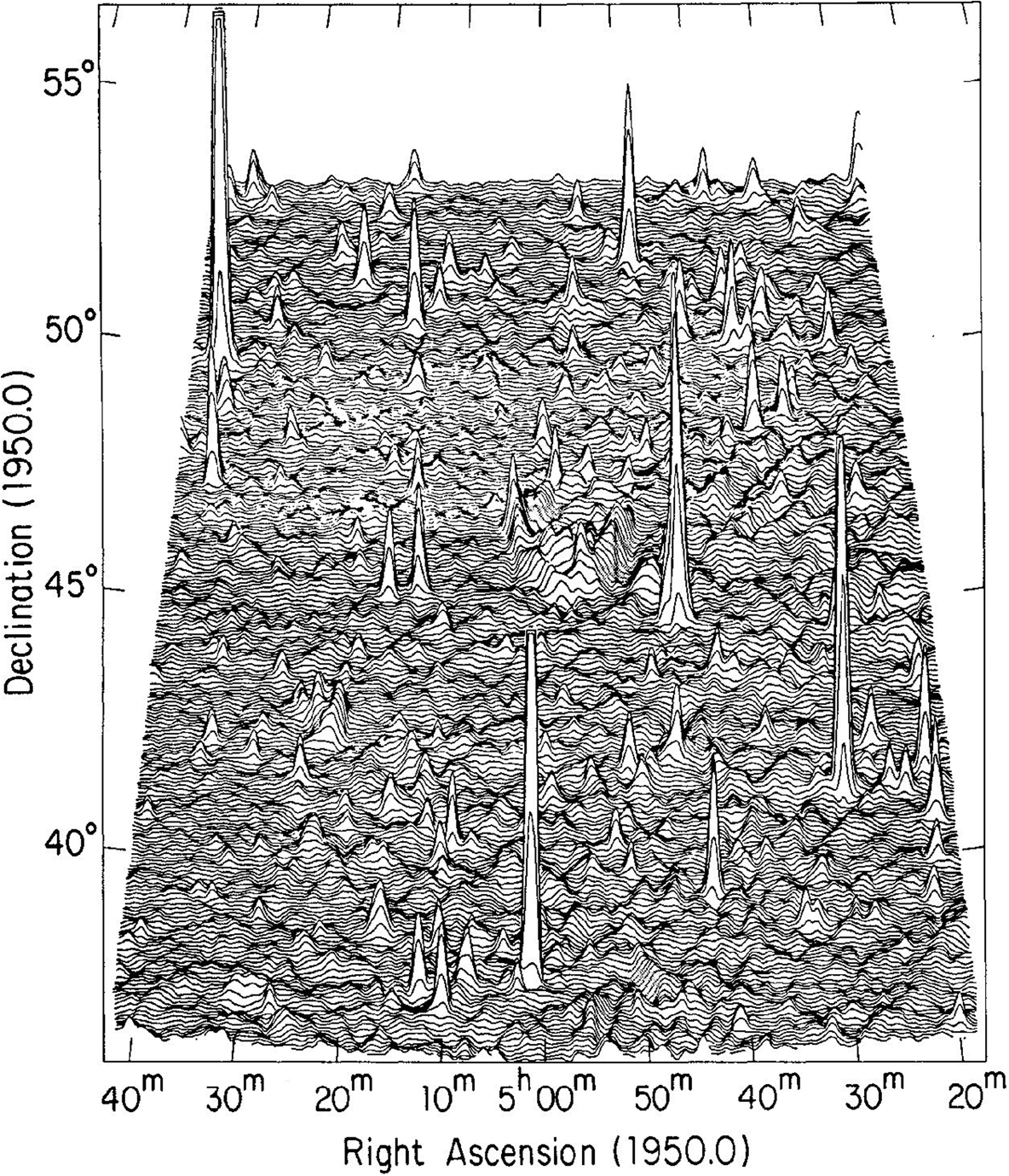
While the stacked-plot technique was no longer a novel item, it proved all the more useful to radio astronomers. For instance, radio astronomer J.J. (Jim) Condon used a similar imaging technique to map weak radio sources detected at the NRAO (see Figure 5). In fact, in the decade after its introduction the plot-stacking technique became a far more versatile tool deployed in mapping the intensity of radio sources in combination with a set of different variables including time, declination and frequency. This flexibility meant that, when faced with the challenge of human transmitters’ interference, radio astronomers thought of using it again.
A profile plot made from data on intensities of galactic radio sources. From J. J. Condon and J. J. Broderick, ‘A 1400 MHz sky survey: II. Confusion-limited maps covering 19h30m < α < 7h30m, –5° < δ < +82°’, Astronomical Journal (1986) 91(5), pp. 1051–7, 1052. Courtesy of J.J. Condon.
One group in particular adopted it for this purpose: Lovell's Canadian colleagues at the Dominion Radio Astrophysical Observatory (DRAO) of Penticton (British Columbia). In 1977, DRAO's radio astronomers sent two letters to Science to expose a commercial satellite transmitting in one of the reserved radio astronomy bands. Published in March and August, these letters contended that, while the satellite did not infringe on the reserved frequency band, it operated in such close proximity that there was trespass in the form of ‘a case of nonconformance’ at 1,427 MHz (the edge of the H spectral line).Footnote 52
The supporting evidence for their allegation was a stacked plot that the Canadian astrophysicist Carman Hudson Costain (who had previously worked with Ryle in Cambridge) separately sent to Lovell in July displaying the satellite interference. The satellite's signal unnaturally increased the receiver's electric flux density in an area close to the upper edge of one of the protected bands (Figure 6).Footnote 53
The stacked plot that Costain sent to Lovell documenting the findings of the DRAO group. Costain to Lovell, 8 July 1977, JBA/CS7/30/1 (courtesy of Robert Roger, Peter E. Dewdney and Thomas Landecker).

The new evidence helped Lovell and his colleagues to better prepare for WARC-79. They first looked for sponsors who could strengthen their stance. In particular, the International Council of Scientific Unions (ICSU), the umbrella organization comprising the IAU, and ICSU's Committee on Space Research (COSPAR), set up a purposely designed Inter-Union Commission on Frequency Allocations for Radio Astronomy and Space Science (IUCAF). Lovell agreed with radio astronomers in the UK, the US and Canada that John P. Hagen, professor of astronomy at Pennsylvania State University, should lead the IUCAF delegation. Not only had Hagen taken part in the IAU Commission 40 proceedings for many years, but also he was responsible the union's achievements at the 1959 Administrative Radio Conference.Footnote 54
A IUCAF document submitted to the WARC-79 secretary general clarified that the near-edge interference displayed in the Canadian stacked plot made them anxious, especially given that the radio astronomers were at this point satisfied with the 1959 frequency allocations and did not look for more. The DRAO stacked plot, however, drove their quest to submit a new claim for protection at the margins of spectral lines since ‘radio-emissions from air-borne and space-borne vehicles exist too close to the line frequencies’. ‘Because the radio astronomy sensitivities are so great and because propagation paths are uninterrupted’, it was further stated in the document, ‘it is most difficult to avoid interference from a space-borne transmitter, even though its central sending frequency may lie correctly within the assigned band’.Footnote 55 That was exactly what the DRAO stacked plot showed. Hence the IUCAF report argued for additional protection of the existing spectral lines of plus or minus 0.1 per cent of the given allocation (now indicated as ‘footnote protection’).
Both the ICSU and the IAU directly contributed to strengthening the IUCAF proposition by sending resolutions of their recent annual meetings to the WARC bureau. ICSU recalled ‘the potential catastrophic effects of interference’ on both radio astronomy and space science. The IAU stressed instead the ‘acquisition and/or maintenance’ of frequency bands of at least 1 to 2 per cent and their ‘preservation free of harmful interference from in-band, band-edge, and out-of-band transmissions’.Footnote 56 Moreover, on 18 October 1979 the Nigerian radio astronomer Samuel Okoye and NRAO's deputy director John W. Findlay summarized the scientific aims of radio astronomy and its achievements at the WARC-79 Committee 5 proceedings on frequency allocation. A close collaborator of Lovell since the Second World War, Findlay had then moved to NRAO's facility in Virginia, thus helping to forge closer transatlantic relations in the science and diplomacy of cosmic radio signals.Footnote 57
This campaigning notwithstanding, the radio astronomers soon realized that non-governmental scientific agencies had little influence on WARC proceedings unless state officials contributed to these efforts too. National authorities, however, had been slow to endorse the radio astronomers’ advocacy. In particular, Lovell and Drake displayed mounting concern for a UK proposal to reduce protection in the 1,660–1,670 MHz band, which led an early contributor to the stacking-plot technique, Jodrell Bank's Rod Davies, to contact the UK Home Office and ask for further explanations of its officials’ plans in the ongoing WARC negotiations.Footnote 58 In the follow-up exchange, it emerged that competing scientific and commercial interests had received priority in the British government's strategy, thus offering poor delegation to the radio astronomers. Lovell was particularly upset by this turn of events, and on 7 November 1979 he wrote to the Home Office again, manifesting hostility to any alternative solution to retaining the four bands plus footnote protection.Footnote 59
British authorities now reconsidered their position, and ultimately agreed to support this request. This does not mean that the Home Office had a clear appreciation of radio astronomy as a discipline. In fact, its officials had shifted allegiance over time to various lobbies involved in WARC-79, accommodating their competing interests in the representation process. The intervention of the Science Research Council was decisive, as it shifted Home Office consensus towards the radio astronomers after its representatives learnt about the potential economic loss to be derived from rejecting the radio astronomers’ request. By then the proposed project to unite radio telescopes at Jodrell Bank and Cambridge with the other four across the country into a Multi-Element Radio Linked Interferometer Network (MERLIN) was well under way. The council had already committed £5.3 million to its completion and its administrators understood that lack of success would prevent them from using MERLIN in the best possible way. Hence the Home Office simply accepted the argument that rejecting the radio astronomers’ request would have resulted in a loss of public funding already invested in research.Footnote 60
Nevertheless, the process left Lovell unnerved, stating that ‘at no time was there any consultation about a sacrifice of 2 MHz … to accommodate other services’.Footnote 61 In fact, the stacked plot had succeeded in making visible the radio astronomers’ interests and stirring protection of their research frequencies. On 13 December 1979, Lovell received a copy of the final WARC-79 report and concluded to his satisfaction that the frequency allocations were sufficient. While the 1,660–1,670 MHz allocation had proven highly contentious, most of the allocations for radio astronomy and space research were unchanged, leaving band space for satellite transmissions only in the 1,660.5 MHz band range and catering for footnote protection, as the radio astronomers had originally wanted.Footnote 62
Conclusions
This essay has focused on contrasting image-based approaches to diplomacy to suggest that images may offer an equally relevant, and possibly much wider, spectrum of representation modes than words do, especially in the globalized and mediatized world we live in. Similar classes of images can carry multiple arguments and endorse more than one argument at the same time. In a mediatized society, they also seem to offer more opportunities to persuasively and convincingly vehicle messages, and represent the interests and aspirations embedded in these messages, even if through indirection. As this article shows, the individuals involved in shaping the history of stacked plots used this subclass of radio astronomy images for a varied set of purposes, including deciphering the emission patterns of celestial objects, forensically displaying interference, astronomical mapping and charting, or plainly befuddling observers about what the images meant (hence celebrating the merit of producing semantic noise).
It is also worth recalling that stacked plots worked as well in radio astronomy as they did in post-punk artworks due to their origins as a subclass of astronomical images particularly useful in visualizing hidden connections connecting signals to noise. Notwithstanding their giving representation to celestial phenomena in primitive ways, as black lines on white paper, they deliberately invited radio astronomers to explore these connections by relating the pictures to a hidden arrangement that the images displayed but did not reveal. This is partly because, as this essay has shown, they were born in order to assist in uncovering correlations between the pulsars’ emission patterns.
These features were instrumental to their science and everyday-diplomacy reuses too, but operated in different ways in order to relate signal to noise. Revealing through the image the previously hidden noise of human transmitters transformed the radio astronomers’ previous usage of the stacked plot. Rather than visualizing a signal and its patterns, it now revealed the transmitters’ noise that prevented signal reception at the edge of assigned radio astronomy frequency bands. In this way, the stacked plot was used almost as a forensic device to display electronic noise interfering with radio-astronomical signals.
An entirely different process was distinctive of the post-punk subversive reuse of the stacked plot. Once stripped of its overt radio-astronomical connections, the image, as a ‘palimpsest’, deliberately invited observers to make independent inferences on what the image signalled (or what it meant). It also made the observers elaborating this meaning complicit in a subversive act of semantic noise production, in a cultural environment where similar acts played a role in shaping, as codified gestures, the collective identity of post-punk.
These different ways of connecting signal to noise through the stacked plots as sets of images shaped contrasting strategies in science diplomacy and everyday diplomacy for radio astronomers and post-punk artists respectively. Since the radio astronomers agreed to be part of an international sphere of public affairs mediated through international institutions and representatives in order to defend their own frequency allocations, they also accepted the conventional negotiation procedures outlined within this community. Displaying the noise therefore helped in promoting a solution, and in positioning themselves as a scientific group accessing and seeking to be accepted in an international negotiating arena through its customary representation and delegation procedures. In sum, they wished to mobilize official diplomacy for the science of radio astronomy.
Post-punk subversive practices enacted instead everyday diplomacy outside the realm of official legates or institutions by using images as devices to confer a (forbidden) collective identity and to mediate community interests in the social arena. Producing semantic noise through images supported the recruitment of more members eager to partake in similar subversive exercises. They also facilitated the negotiation and continued existence of social spaces such as independent artistic and musical venues for those who contributed to these subversive activities, both nationally and internationally.
It is important to recall that the stacked plot was only one of many images utilized in this creative and liberating process, and one that, in contrast with other imagery, came from modern science rather than the modern industry typically targeted in post-industrial artworks. However, this essay has argued that the stacked plot had considerable potential as a détournement device. It is also possible to speculate that its production resonated with the experience of the post-punk designers and musicians who reused it. We have seen that the making of stacked plots entailed utilizing makeshift techniques to cut and stack the signals. The musicians similarly utilized musical equipment filtering signals to achieve echoes and reverbs, such as that utilized in the production of Unknown Pleasures. Graphic designers like Saville experimented with bricolage work and made it a distinctive feature of post-punk imaging. These musicians, designers and radio astronomers also shared a similar prowess when experimenting with the technologies they often used in unusual ways. At one point Hannett instructed the Joy Division drummer to play from the roof outside the studio so that the recorded track would not feature sound bleeding through from the drumkit. The radio astronomers who elaborated the stacked plot revealing signal interference at the edge of the one radio astronomy band used a Raytheon fax machine to plot the tracks featuring this interference.Footnote 63 Moreover, while radio astronomers never engaged in subversive imagery production, they displayed an understanding of the need for media campaigns comprising photographic and film materials to support the building of expensive radio telescopes in image-saturated modern society. They thus shared with post-punk an understanding of the diplomatic power of images.Footnote 64
The success that radio astronomers and post-punk artists experienced in the use of images as diplomacy devices was in any case short-lived. While subversive images helped small communities of post-punk artists to thrive locally for a while in post-industrial urban spaces, the artists eventually turned for support to the corporate industry that they had originally challenged. Meanwhile, the radio astronomers underestimated the presence of other agendas in some governments (especially the British one), which led their officials to overlook the interference that the stacked plot displayed to protect the interests of other stakeholders.
There is also an important legacy for the events described here as the diplomatic tensions discussed in the article continue to the present day in both glocal subcultures and radio astronomy. In the case of radio astronomers, we can observe their present resistance to Elon Musk's Starlink satellite project, something that has once again renewed the radio astronomers’ quest for greater electronic silence to better detect cosmic signals.Footnote 65 In one of its most recent incarnations, the stacked plot's semantic noise advocated climate change remedial action. A mural showing yet another stacked plot has recently made its appearance, this time with no ridgelines at all. T-shirts claiming that there is ‘no music on a dead planet’ now associated the ridgelines with music sounds, rather than with radio signals as the original stacked plot had done.Footnote 66
Signals continued to travel across the planet and beyond, though, producing an understanding of our universe, and negotiating a space for humans who seek to connect and find ways to have their interests represented in our world through their imaging. It is thus important to recall that noise, too, once imaged through stacked plots, transformed post-punk and radio astronomers into unusual protagonists of contiguous but dissimilar contexts of representation, typifying the history of scientific diplomacy and the everyday diplomacy of cultural activism in the second half of the twentieth century.
Acknowledgements
I would like to thank, for critical feedback and suggestions, the two anonymous reviewers, Matthew Adamson and the BJHS editor. Thanks also to James Peters at the University Archive Centre (University of Manchester) for assisting me with the examination of Bernard Lovell's papers, and Carsten Timmermann for the gift of a particularly useful book. I am finally grateful to Alison Surtees and the Manchester Digital Music Archive team, Alice Cowling and Peter Saville Studio, Hal Craft, Robert Roger, Peter Dewdney, Tom Landecker, Jim Condon, Barnaby Rickett and Andrew Lyne for the images reproduced in this article.


 Open access

