Introduction
Cognitive testing has been a cornerstone of concussion management for many years. Recent studies have explored the effects of multiple factors that may influence the results of cognitive testing in athletes, including a past medical history of learning disabilities (LDs), poor sleep, history of playing contact sport,Reference Killam, Cautin and Santucci1–Reference Alexander, Shuttleworth-Edwards, Kidd and Malcolm3 and previous concussion.Reference Harmon, Drezner and Gammons4–Reference Covassin, Elbin, Kontos and Larson8 Previous concussion history has been inconsistently related to cognitive function, with some studies finding no correlation and other findings a dose–response relationship, with two or more concussions correlating with poorer cognitive performance.Reference Covassin, Elbin, Kontos and Larson8–Reference Guskiewicz, Marshall, Broglio, Cantu and Kirkendall12
Historically, the assessment of neurocognitive performance in athletes has been done using computerized tests. However, computerized testing has been shown to have only moderate sensitivityReference Resch, Driscoll and McCaffrey13 in detecting post-concussive cognitive deficits, requires a subscription that can be cost prohibitive, and is not readily available to some coaches, athletic therapists, or family physicians.Reference Resch, Driscoll and McCaffrey13 As well, previous studies using standardized neurocognitive testing in athletes have shown that sport participation (SP)Reference Killam, Cautin and Santucci1, Reference Alexander, Shuttleworth-Edwards, Kidd and Malcolm3 and a past medical history of migraine,Reference Kontos, Elbin and Lau14 attention deficit and hyperactivity disorder (ADHD),Reference Zuckerman, Lee, Odom, Solomon and Sills5 depression,Reference Covassin, Elbin, Larson and Kontos15 or anxietyReference Yengo-Kahn and Solomon16 may influence pre-injury assessments. The Sport Concussion Assessment Tool 3 and 5 (SCAT3 and 5)Reference McCrory, Meeuwisse and Aubry17–Reference McCrory, Meeuwisse and Dvorak20 has a brief cognitive component, based on the Standardized Assessment of ConcussionReference McCrory, Meeuwisse and Johnston18 and can be administered by qualified health-care providers. However, the SCAT has limited norms and provides a restricted assessment of an athlete’s cognition, as it only assesses delayed recall, orientation, and language. Additionally, at the International Conference on Concussion in Sport held in Berlin, 2016, the SCAT was deemed most appropriate for use as a post-sport-related concussion (SRC) tool; pre-season or random baseline testing with the SCAT was not considered necessary. To date, the neurocognitive tests most frequently used in athletic populations were developed to evaluate altered cognition in the acute phase following SRC. Other than traditional neuropsychological assessments, no global cognitive screening tool has been studied in athletic populations.
The Montreal Cognitive Assessment (MoCA) is a global cognitive assessment tool originally developed to screen for mild cognitive impairment (MCI) in the elderly.Reference Nasreddine, Phillips and Bédirian21 It is now used worldwide as a standard in clinical care, in multiple different languages, in different age groups, and in a variety of illnesses,Reference Nasreddine22 as a measure of general cognition. It takes approximately 10 min to complete and is cost-free. The MoCA yields a maximum score of 30 points from 7 domains: visuospatial abilities/executive functions, short-term memory, language, attention, concentration, working memory, and temporal and spatial orientation. Originally, normative data for the MoCA were based on 90 Canadian controls (mean age: 72.84 years and mean education: 13.33 years).Reference Nasreddine, Phillips and Bédirian21 From these data, a suggested normal cutoff was determined to be >26 on a 30-point scale. This value provided a sensitivity of 90% and a specificity of 100% for MCI.Reference Nasreddine, Phillips and Bédirian21 Since then, other studies have established normative data for the MoCA in other ethnic populations, ages (18–90 years), sex, and education levels.Reference Nasreddine, Phillips and Bédirian21, Reference Rossetti, Lacritz, Cullum and Weiner23–Reference Wen, Zhang, Niu and Li29 Most recently, three studies have administered the MoCA to patients with mild traumatic brain injury/concussion and found there was a relationship between severity of injury and lower scores on the MoCA.Reference de Guise, Alturki and LeBlanc30–Reference Panwar, Purohit, Deo Sinha and Joshi32 The authors concluded that the MoCA was a useful cognitive screening tool for patients with mild to severe traumatic brain injury (TBI).
Although the MoCA has the potential to serve as a brief, cost-free, comprehensive cognitive screening tool for athletic populations, it has yet to be examined for this purpose. Thus, the objectives of this study were to screen global cognitive function using the MoCA in high-performance athletes and to explore whether a previous concussion history influences cognition. We hypothesized that athletes with more self-reported SRC would score lower on the MoCA than those with none or fewer SRC. A second objective was to determine whether other factors, such as age, sex, type of SP, past medical history of migraine, depression, anxiety, and ADHD, would be associated with outcomes on the MoCA.
Methods
Study Population
University of Calgary varsity athletes and Canadian national athletes in Calgary, Alberta, Canada, were asked to participate in this observational cross-sectional cohort study from August 2011 to May 2013. Inclusion criteria included the ability to speak and comprehend English and having greater than grade 12 (i.e., completed high school) years of education. Exclusion criteria included being aged less than 18 years and having previous history of neurological issues, such as stroke, seizure, or known congenital intracranial abnormalities.
Material and Procedures
Biographical information and medical history were obtained from each subject prior to the start of the athletic season. Medical history included previous self-reported SRC history, other previous medical issues including concussion modifiers (migraines, ADHD,Reference McAllister, Flashman and Maerlender2, Reference Zuckerman, Lee, Odom, Solomon and Sills5 anxiety,Reference Covassin, Elbin, Larson and Kontos15 and depressionReference Covassin, Elbin, Larson and Kontos15), and varsity or Canadian national team SP. To collect data on concussion modifiers, the athletes were asked if they were ever diagnosed previously with migraine, ADHD, anxiety, or depression by a treating clinician.
Clinical assessments took approximately 30 min to complete. Each subject underwent standardized physical assessment by a sport medicine physician or physiatrist, including history, neurological examination, and SCAT3.Reference McCrory, Meeuwisse and Johnston18 The MoCAReference Nasreddine, Phillips and Bédirian21 was administered by a trained research assistant, athletic therapist, or physiatrist.
Statistical Analysis
Logistic regression was used to examine the relationship between MoCA subscale domains and concussion history. For analysis of the total MoCA score, athletes were divided into two different categories based on total MoCA scores: (1) MoCA scores ≥ 26 (signifying normal cognition) and (2) MoCA scores < 26 (signifying MCI). Logistic regression was used to examine the association between MoCA (<26 and ≥26) and concussion history, adjusting for age, sex, SP, and medical history (migraine, ADHD, depression, and anxiety). Current SP was stratified into no/limited contact sports and contact/collision sports based on the recommendation of the American Medical Society for Sports Medicine position statement: Concussion in SportReference Harmon, Drezner and Gammons4 and a paper by Rice documenting classifications of sport according to level of contact.Reference Rice34 Based on their recommendations, American football, ice hockey, rugby, wrestling, soccer, winter sports with contact, and basketball were considered contact/collision sports. Adjusted odds ratio and 95% confidence intervals were calculated. Results were considered significant at p < 0.05. All statistical analyses were performed using SAS 9.4.
Ethical Considerations
This study was approved by the University of Calgary Conjoint Health Research Ethics Board (Ethics ID 23963). This study was a study embedded within a larger study which assessed the utility of robotic assessments for motor impairment following SRC in varsity and national team athletes. All subjects provided informed consent prior to participation.
Results
Participant Characteristics
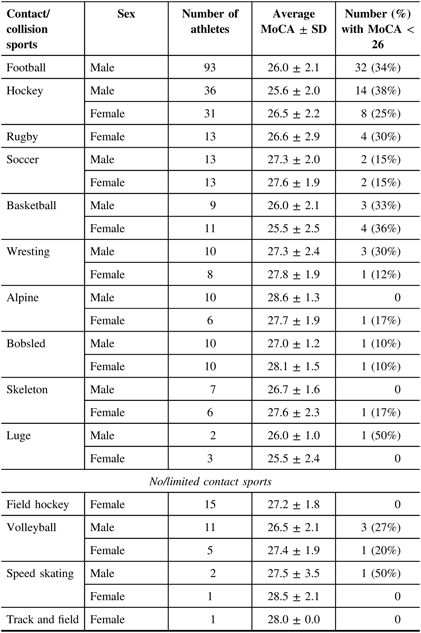
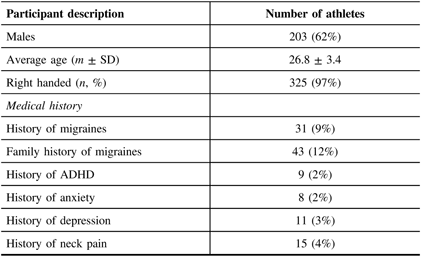
A cross-sectional sample of 345 varsity and Canadian national athletes were recruited to complete the study. Of these, 326 athletes met inclusion criteria for this study. Athletes excluded were 9 subjects that were less than 18 years of age and had not completed grade-12 education and 10 that did not complete the MoCA or past medical history questionnaire. There were 203 males (age 26.9 ± 2.8) and 123 females (age 26.5 ± 2.1) in the study. Two hundred ninety-one (65% male) athletes participated in contact/collision sports and 35 (37% male) in no/limited contact sports. Descriptive information regarding participants and average MoCA scores for each sport and sex are presented in Tables 1 and 2, respectively.
Participant characteristics
Average MoCA for each sport and sex
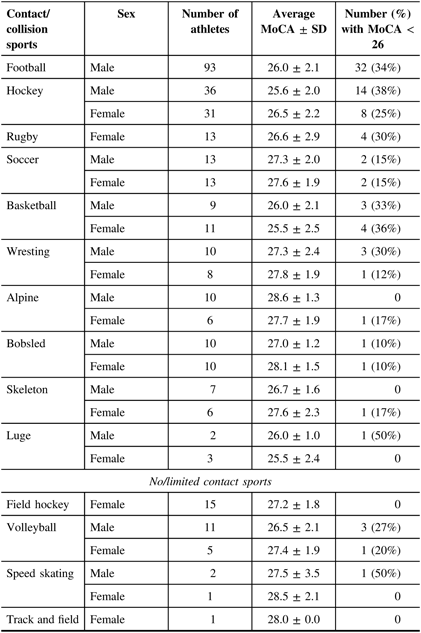
MoCA = Montreal Cognitive Assessment; MCI = mild cognitive impairment.
Influence of SRC History on MoCA Scores
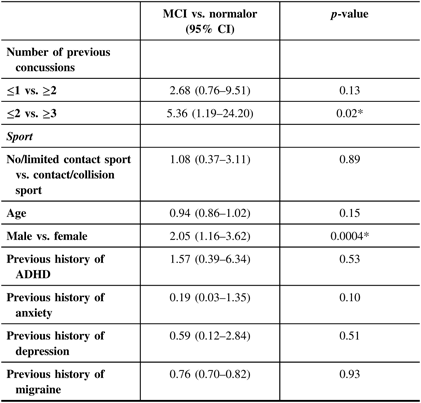
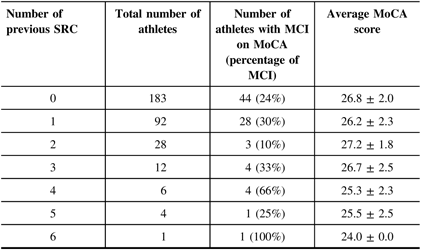
Among the 326 athletes, 85 (26%) scored less than 26 on the MoCA; of these, 64 (73%) were male. Athletes who reported a history of three or more previous concussions were 5.36 times (Table 3) more likely to have a score in the MCI range (less than 26/30 on the MoCA) (47%) than athletes who reported a history of two or less previous concussions (24%) (p = 0.02) (Table 4). Age, previous history of migraine, anxiety, depression, or ADHD, and sport type (contact/collision vs. no/limited contact) were not significantly associated with total MoCA scores. However, sex (male) was a significant predictor of MCI, with higher odds among males (see Table 3), with males 2.23 times more likely to have MCI than females (p = 0.0004). Of the 326 athletes assessed, only 9 reported a history of ADHD. It is not known whether they were on a neurostimulant at the time of testing. Further analysis of MoCA subscales revealed there was a significant relationship between the domains of attention (p = 0.05) and abstraction (p = 0.003) and previous concussion history, but not visuospatial/executive, naming, language, delayed recall, or orientation (Table 5). Finally, sex significantly influenced the relationship between the MoCA subscales of visuospatial (p = 0.018), attention (p = 0.003), and abstraction (p = 0.0001), but not naming, delayed recall, language, or orientation. Age did not influence the relationship between previous concussion and any MoCA subscales.
Comparison of concussion history and MoCA adjusted for age, sex, SP, and past medical history
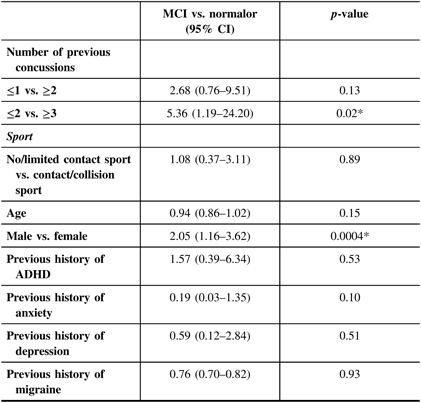
Adjusted odds ratios (95% CI) of predictors for differences between evidence of MCI (MoCA score < 26) and normal (MoCA ≥ 26) in the athletics population.
* Significance is based on p < 0.05.
Number of previous concussion, percentage of MCI, and average MoCA scores
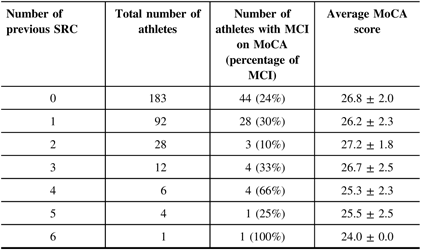
Relationship between subscale of MoCA and previous concussion history
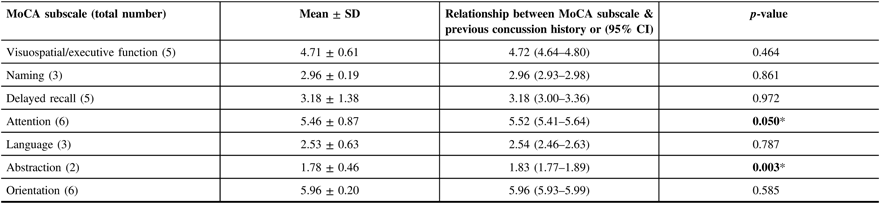
Relationship between the subscales on the MoCA and previous concussion history.
* p-value ≥ 0.05 signifies a significant relationship between attention and abstract thinking and increasing number of previous concussion.
Discussion
Influence of SRC History on MoCA Scores
We found that athletes who self-report a history of three or more SRC were significantly more likely to show MCI on the MoCA total score compared to athletes with two or less SRC. Further, we found that the MoCA subscales of attention and abstraction were significantly related to a greater number of previous concussions. The existing literature shows mixed results when analyzing the influence of previous concussion on cognitive performance in athletes. Plancher et al.Reference Plancher, Brooks-James, Nissen, Diduch and Petterson35 found lacrosse players with a history of concussion had significantly worse verbal memory on computerized cognitive testing compared to those without a history of concussion.Reference Plancher, Brooks-James, Nissen, Diduch and Petterson35 Likewise, Covassin et al. and Collins et al. found a dose–response relationship between the number of previous concussions and computerized cognitive testing,Reference Covassin, Elbin, Kontos and Larson8, Reference Collins, Grindel and Lovell36 such that participants with a previous history of two or more concussions had poorer cognitive outcomes than athletes with one or no previous concussion. In contrast, Brooks et al. and Tshushima et al. found adolescent athletes with one or more previous concussions showed similar cognitive test performance as athletes with no previous concussion.Reference Brooks, McKay, Mrazik, Barlow, Meeuwisse and Emery10, Reference Lichenstein, Moser and Schatz37 Furthermore, Brown et al. and Bruce and Echemendia found no difference on computerized testing in collegiate athletes with history of concussion versus those without.Reference Bruce and Echemendia38, Reference Brown, Guskiewicz and Bleiberg39 The reasons for such variable results are difficult to determine. Different types of neurocognitive testing were done in each of these studies, making comparison difficult. For example, our study used the MoCA, a global cognitive screening tool, whereas other studies used computerized neurocognitive testing or a full neuropsychological assessment. When comparing our studies to those above, we found similar results to the studies of Covassin et al.Reference Covassin, Elbin, Kontos and Larson8 and Collins et al.Reference Collins, Grindel and Lovell36 in which the computerized testing focused on frontal lobe dysfunction reflecting impairment in attention, executive function, working memory, and processing speed, and reflecting our findings of significantly lower scores on attention and abstraction in relation to a greater number of previous concussions. Additionally, we controlled for past medical history of migraine, depression, anxiety, or ADHD, and type of SP (contact/collision vs. no/limited contact), whereas some of the other studies did not. Finally, many of the previous studies, as well as ours, used self-report to determine concussion history, raising the possibility of recall bias.
We did not find a significant difference in total MoCA scores in athletes with two or less concussions. This most likely reflects the ceiling effect of the MoCA total score. Following concussion processing speed, memory, executive function, and attention are most often affected. The MoCA tests these domains with Trails B portion, attention, abstraction, delayed recall, and verbal fluency. However, we would not expect the other cognitive domains tested (language, visual spatial perception) to be impaired. Therefore, we would expect to see a ceiling effect and only those athletes with more concussions or greater cognitive impairment would have deficits on the overall MoCA score. This was evident when the MoCA subscales were analyzed and worse scores on attention and abstraction were related to a greater number of previous concussions. This suggests that screening tools that are more sensitive to impairments in frontal lobe dysfunction may be the most appropriate tools for those with fewer concussions or less severe concussion, compared to a global screening tool.
Comparison of SP, Age, Migraine, ADHD, Anxiety, and Depression
We found no significant difference in MoCA scores in athletes currently involved in contact/collision sports compared to those involved in no/limited contact sports. In contrast, other studies have found contact-sport athletes to be at a greater risk of cognitive impairment compared to control subjects. For example, Killam et al. found non-concussed collegiate athletes in contact sports scored worse on immediate memory, delayed memory, and overall score of the Repeatable Battery for the Assessment of Neuropsychological Status (RBANS) compared to controls.Reference Killam, Cautin and Santucci1 Similarly, McAllister et al. found collegiate football and ice hockey players performed worse on computerized cognitive testing compared to non-contact athletes post-season, despite not reporting a concussion during their season.Reference McAllister, Flashman and Maerlender2 More recently, Alexander et al. examined school-age male rugby players with and without a history of concussion and compared them to controls. They found both groups of rugby players scored significantly lower on WISC-III Coding Immediate Recall sub-test compared to controls.Reference Alexander, Shuttleworth-Edwards, Kidd and Malcolm3
The studies by Alexander et al., McAllister et al., and Killam et al. compared athletes who had experienced many previous years of contact/collision sports to non-contact athletes and controls. Our study examined elite varsity and national athletes who had been involved in a specific contact/collision sport for many years and found no difference among those involved in no/limited contact sports. We used a cognitive screening tool rather than a neuropsychological battery of tests. The MoCA may not be as sensitive a tool for assessing cognitive function as a neuropsychological battery of tests. Adding a cognitive screening tool, such as the MoCA, would be especially prudent in demographic areas where access to a full neuropsychological battery is extremely limited. If an athlete scores poorly on the MoCA, has a past medical history of multiple concussion, and is struggling in their daily functioning with cognitive demands, this may warrant further investigation with a full neuropsychological battery of test.
We found no significant difference in MoCA scores or MoCA subscales based on the age of the athlete. Previous studies have shown less influence of age on neurocognitive testing in the athletic population over the age of 18 years (post-high school) but a significant influence on the pre-teenage/teenage yearsReference Covassin, Elbin, Harris, Parker and Kontos40, Reference Hunt and Ferrara41 and post-SRC.Reference McClure, Zuckerman, Kutscher, Gregory and Solomon6, Reference Covassin, Elbin, Larson and Kontos15, Reference Schatz and Sandel42, Reference Schatz43 Similar to previous research, athletes in this study were between the age of 18 and 36 years, so fall in the age range where age differences are less common.
Finally, we found no significant difference in MoCA scores when controlling for a past medical history of migraine, ADHD, depression, or anxiety. As well, athletes with three or more SRC did not appear to have a greater incidence of a past medical history of one of these medical issues. Others have found a history of ADHD or LD can influence computerized neurocognitive testing in athletes.Reference Zuckerman, Lee, Odom, Solomon and Sills5 Zuckerman et al.Reference Zuckerman, Lee, Odom, Solomon and Sills5 found athletes with ADHD or LD did significantly worse on visual memory, verbal memory, and visual motor processing speed compared to athletes without ADHD or LD.Reference Zuckerman, Lee, Odom, Solomon and Sills5 Similarly, Covassin et al.Reference Covassin, Elbin, Larson and Kontos15 showed athletes scoring in the severe depressive range on the Beck Depression Inventory II did significantly worse on visual memory tasks than athletes scoring in the minimally depressed range.Reference Covassin, Elbin, Larson and Kontos15 Further, previous studies have shown psychological distress,Reference Bailey, Samples, Broshek, Freeman and Barth44 and a history of anxietyReference Yengo-Kahn and Solomon16 can influence neurocognitive testing in athletes, specifically effecting visual memory.Reference Yengo-Kahn and Solomon16 The reason why we did not find that a history of depression, anxiety, or ADHD influenced MoCA scores is unclear. Only 9% of athletes had a history of migraines, 2% a history of ADHD or anxiety, and 3% had a history of depression. These are small numbers, making it hard to detect any difference between groups. Regardless, based on previous research, a thorough medical history is important to obtain as it may influence neurocognitive results.
Sex Difference in MoCA Scores
Our study found males were significantly more likely to score in the MCI range on the total MoCA score and the MoCA subscales of visuospatial, attention, and abstraction compared to females. There is conflicting evidence in the literature regarding the impact of sex differences on neurocognitive testing in athletes. Covassin et al.Reference Covassin, Elbin, Larson and Kontos15 found that male athletes with a previous history of concussion (two or more) performed worse on computerized neurocognitive testing than females.Reference Covassin, Elbin, Larson and Kontos15 They also found that males performed worse on motor processing speed and reaction time compared to females whether they reported a previous concussion or not. In contrast, Zuckerman et al. found no significant differences between male and female athletes on computerized neurocognitive testing at baseline prior to or following SRC.Reference Zuckerman, Solomon, Forbes, Haase, Sills and Lovell45 Additionally, testing using the MoCA in other patient populations has not shown a sex difference.Reference Rossetti, Lacritz, Cullum and Weiner23, Reference Freitas, Simões, Alves and Santana24, Reference de Guise, Alturki and LeBlanc30, Reference Nasreddine, Phillips and Bédirian46 In our study, an equal proportion of males (45%) and females (46%) had a history of one or more concussions, and males were not more likely to have three or more of SRC. When comparing male athletes only, no significant difference was found between contact/collision sports and no/limited contact sport athletes (26.4 ± 2.1 vs. 26.8 ± 2.1; p = 0.49), and a previous medical history of migraine, ADHD, anxiety, and depression did not influence the results. The reason for the current sex difference is unclear. However, based on other studies, male athletes may perform worse in some domains, such as processing speed and reaction time, compared to female athletes,Reference Covassin, Elbin, Harris, Parker and Kontos40 and we found a sex difference in visuospatial, attention, and abstraction. The current results suggest a need for future studies that explore sex difference in neurocognitive functioning in athletes.
Advantages and Limitations of the MoCA as a Global Cognitive Screening Tool in Athletic Populations
The MoCA has many potential advantages as a screening tool for global cognition in athletes. Administration of the MoCA does not require access to a computer-based program. The test is publicly available and free of charge. A clinician or therapist can easily administer it in only 10 min, and it has well-established cutoff scores to reflect MCI across ages.Reference Rossetti, Lacritz, Cullum and Weiner23, Reference Freitas, Simões, Alves and Santana24 However, the MoCA also has limitations suggesting that it may not be an appropriate tool for screening global cognition in athletes. First, the MoCA has no embedded tests of effort to help detect athletes who are giving sub-maximal performance, and this may be important in this patient population.Reference Nelson, Pfaller, Rein and McCrea33 Second, the total MoCA score provides a single number that reflects multiple domains of cognitive function, and clinicians often only focus on the total score not exploring the scores of the subscales. Athletes with concussions often present with deficits in processing speed, memory, sustained attention, and executive function. The MoCA only tests for a portion of this and thus the test will be subject to a ceiling effect in athletes with one or two concussions and you may see a small change in those with multiple concussions. Third, interpreting a global cognitive screening test is risky in the absence of additional information about functional impairment or clinical corroboration, given the risk of false positives in healthy individuals.Reference Binder, Iverson and Brooks47 Finally, the study group is a young and relatively health population that has a lower prevalence of the past medical history of migraine, anxiety, and depression making the results of this study less generalizable to general public; however, previous studies have shown the MoCA to be a beneficial tool in patients with mild traumatic brain injury due to all causes.Reference Frenette, Tinawi and Correa31, Reference Panwar, Purohit, Deo Sinha and Joshi32, Reference de Guise, Alturki and LeBlanc48 Using a cognitive screening tool such as the MoCA should likely be considered in athletes with other symptoms and functional impairments, not in asymptomatic athletes or those with two or fewer concussions, and should not replace a full neuropsychological assessment if required.
Conclusion
This study is the first to administer the MoCA to athletes as a global cognitive screening tool. Using the MoCA, we found athletes with a self-reported history of three or more SRC were more likely to score less than 26, suggesting the presence of MCI. Similar to other studies assessing baseline cognition in athletes, males were more likely to score lower on the total MoCA score and MoCA subscales of visuospatial, attention, and abstraction than females. In contrast, age, current type of SP (contact/collision vs. limit/non-contact), and a past medical history of migraine, anxiety, depression, and ADHD were not associated with MoCA performance.
Previous studies have shown the MoCA to be a valid cognitive screening tool in different ethnicities, ages, sexes, and disease states including acute mild traumatic brain injury/concussion due to all causes for the purpose of determining MCI. The findings of this study suggest administering a cognitive screening tool, specifically focusing on impairments in working memory, attention, processing speed, and executive function, may be more appropriate in individuals with two or less concussions as the total MoCA score most likely has a ceiling effect. However, the MoCA can be administered in individuals with persistent cognitive and function symptoms and three or more concussions to screen for global cognitive impairment, but should not replace a formal neuropsychological assessment if deemed necessary. Further studies are required to compare the MoCA to full neuropsychological assessments in individuals with both acute SRC and persistent cognitive deficits following multiple concussions to better understand the utility of this cognitive screening tool in this population.
Acknowledgements
We would like to acknowledge the following individuals, facilities, and funding organizations: Sports Medicine Centre, University of Calgary, Calgary, Alberta, Canada, University of Calgary Varsity Athletic Therapists, and Sarah Snow, Research assistant, Calgary, Alberta, Canada.
Funding
This work was supported by Own the Podium funding agency (Supporting Canadian Athletes to achieve excellence).
Conflict of Interest
No authors of this paper have a conflict of interest.
Statement of Authorship
CTD - MD, MSc – Primary researcher, wrote manuscript.
JS - MD – Aided in collection data and editing manuscript.
TS - PhD – Data analysis.
MW - MSc – Data analysis.
KK - PhD – Data collection and editing manuscript.
BWB - MD, PhD – Co-PI of larger Own the Podium study and editing manuscript.
KY - PhD – Data analysis and editing manuscript.
SPD - MD, PhD – Data analysis and editing manuscript.