





Introduction
Despite substantial financial investment by India in environmental education programmes and rural sustainability initiatives, numerous villages continue to struggle with the adoption of eco-friendly practices within their communities. Recent studies suggest that environmental knowledge alone seldom results in collective sustainability initiatives, especially in socio-culturally intricate rural environments. The ongoing disparity between environmental consciousness and collective action has heightened academic scrutiny of leadership as a critical mediating element in grassroots environmental governance. Emotionally intelligent village leadership has been identified as an potential mechanism for converting environmental knowledge into participatory learning tactics and enhancing community sustainability initiatives. Nonetheless, empirical research investigating the impact of emotional intelligence (EI) in village leaders on environmental action competencies within rural communities is scarce. This study examines the influence of emotionally intelligent village leadership on promoting community-based environmental education and improving action competence for sustainable rural development in India.
In the proposed research, a very specific operationalisation of the idea of a village leader (Teles, Reference Teles2012) is performed in order to reflect the complexity of the concept of authority and influence in the rural Indian context. A village leader is a localised person who has institutional legitimacy, social capital, and communicative ability to generate collective action, liaise with governmental institutions at local, state, and central levels, and influence policies (Vedeld, Reference Vedeld2007) at the village level that are related to infrastructure, education, environmental governance, and welfare of the people. These leaders would usually consist of elected sarpanches (village heads in the Panchayati Raj system), key elders of the community, respected teachers, and village businesspersons and leaders of community-based institutions who have shown a long-term concern with village welfare. In contrast to formal administrative authorities who might not be thoroughly embedded in the community, village leaders in this scenario are defined by their alone knowledge of local social setups, accessibility to locals, ability to resolve disputes and ability to translate external development plans into culturally familiar programmes that would attract real community engagement. The theoretical importance of paying attention to village leaders lies in the fact that they are between formal institution structure and informal community structures that operate as boundary spanners and are therefore best placed to either help or hinder the transfer of environmental knowledge, resources, and innovative practices to rural areas.
EI constitutes the second core conceptual pillar of this research, theorised here as a multidimensional competency that fundamentally shapes how leaders perceive, process, regulate, and deploy emotional information in the service of social goals and decision-making processes (Drigas et al., Reference Drigas, Papoutsi and Skianis2023). Based on integrative theoretical frameworks, which abstractly and empirically combines the Ability Model of EI, which is based on the idea that EI is a combination of the ability to reason about emotions, and to use emotional information to enhance cognitive processes, the Mixed Model of Bar-On, which focuses on emotional and social competencies contributing to psychological well-being and adaptive functioning, and the Trait Model of Petrides, which focuses on self-perceived emotional abilities as constituent part of the personality, the current study conceptualises EI by self-awareness (the recognition of one’s own emotions and their impact), self-regulation (the management of disruptive emotions and impulses), motivation (the drive to achieve beyond external rewards), empathy (the consideration of others’ feelings in decision-making), and social skills (the proficiency in managing relationships and building networks). In the context of environmental leadership, EI is theorised as a critical mediating variable that transforms abstract sustainability knowledge into embodied, relational practices capable of inspiring collective action (Neubauer & Freudenthaler, Reference Neubauer and Freudenthaler2005). Emotionally intelligent leaders are hypothesised to create participatory, trust-based social environments that reduce the psychological and social barriers to behavioural change, enhance community members’ sense of self-efficacy regarding environmental challenges, and foster the action competence – defined as the integrated capacity of knowledge, confidence, and readiness to act – that enables individuals and families to translate environmental awareness into concrete sustainable behaviours.
The relevance of researching the EI-leadership-environment nexus cannot be overestimated, especially in light of the fact that the failures of technocratic, information-deficit models of environmental education through which knowledge is assumed to be the driver of behavioural change have been widely documented (Ahsan, Reference Ahsan2023). Much of the literature shows that rural communities tend to have deep indigenous ecological knowledge but have no organisational ability, motivation resources and institutional backing to implement their knowledge effectively in the context of sustainable objectives (Prisniakova & Agapova, Reference Prisniakova and Agapova2025). High EI leaders are hypothesised to help fill this implementation gap by reframing environmental issues as common emotional problems, modelling adaptive coping styles where ecological uncertainty exists, by identifying and confirming the emotional intensity that members of a community develop towards natural resources and place-based identities, and by developing interpersonal levels of trust that allow collective risk-taking and innovation (Duffy et al., Reference Duffy, Gallagher and Waitt2019). In India, where caste hierarchies, gender inequalities, and historical marginalisation often divide communities, emotionally intelligent leadership may be especially important for inclusive environmental governance that gives women, young people, and historically disadvantaged groups to take part in sustainability efforts.
The theoretical significance of this link extends beyond immediate developmental outcomes to contribute to emerging scholarship on ESD and collective action competence, offering empirical grounding for the proposition that sustainable transformation requires not merely cognitive understanding but affective engagement, relational capacity, and the social–emotional infrastructure to sustain long-term behavioural commitments (Brosch & Steg, Reference Brosch and Steg2021).
The research is based on twelve purposely sampled Indian villages that represent a continuum of sustainability performance: six high-performing villages, which have attracted national attention due to their innovative environmental performance (such as Punsari and Akodara in Gujarat, Hiware Bazar and Nepti in Maharashtra, and Piplantri and Dipty Khera in Rajasthan), and six underperforming villages, with chronic problems of development (such as Soda and Jaisinghpura in Rajasthan, Barkhedi and Rasla Khedi in Madhya Pradesh. The given comparative case study design will allow achieving a systematic analysis of the correlation between leadership EI and measurable changes in community involvement, infrastructure quality, and environmental performance. The study aims at answering three inquiries that are interrelated and have the following questions: (1) To what extent are EI of village leaders associated with community engagement, intergenerational learning, and environmental action competence in rural families? (2) What are the particular ways that emotionally intelligent leadership occurs to improve water conservation, waste management, adoption of renewable energy and adherence to sustainable building regulations such as through conflict mediation, vision articulation, network building and institutional advocacy? Information gathering will incorporate self-report of leaders, community surveys, secondary analysis of documents, participatory observations, as well as brief and thorough field reports to create elaborate leadership functioning and development patterns.
The relevance of this inquiry can be seen in the various fields of environmental education research and practice. As a contribution to scholarship, the research provides one of the initial systematic empirical analyses of EI in grassroots environmental leadership in the Global South, which is useful in decolonising EI research that has traditionally placed a priority on Western organisational settings. Connecting EI with the action competence theory and environmental education based on community settings, the study contributes to the theoretical knowledge of how affective and relational capabilities promote the shift between environmental awareness and long-term behavioural involvement. To policymakers and practitioners, the results will be used to design leadership training programmes that put more emphasis on the emotional and social skills as well as technical skills in administration, which may redefine the way the concept of rural governance capacity is conceptualised and developed in Indian states. This study is directly correlated with the United Nations Sustainable Development Goals namely SDG 4 (Quality Education), SDG 6 (Clean Water and Sanitation), SDG 11 (Sustainable Cities and Communities), and SDG 13 (Climate Action) because it reveals mechanisms to be used to create an improved community by applying to the local, emotionally sensitive leadership. In the end, such a study holds that sustainable rural development does not simply entail the movement of technical knowledge or financial assets, but the development of leadership that can foster the social–emotional bases of collective environmental custodianship, and thus, join global debates about the ways of how grassroots community formations can make people more resilient to the effects of environmental change in a world of mounting ecological insecurity.
Literature review
Community environmental education is progressively emphasising family involvement, digital technologies, and participatory learning methodologies to improve environmental knowledge and behaviour.
Environmental education and education for sustainable development
Environmental Education is worldwide recognised as an educational methodology centred on ecological preservation and the comprehension of humanity’s interaction with the environment (Orlovic-Lovren, Reference Orlović-Lovren2021). Conversely, ESD constitutes a contemporary, expansive framework that encompasses environmental concerns in conjunction with social, cultural, economic, and quality-of-life dimensions (Orlovic-Lovren, Reference Orlović-Lovren2021). Some scholars consider these as distinct concepts, while others view ESD as an evolution or improvement of traditional environmental education (Orlovic-Lovren, Reference Orlović-Lovren2021). Some studies examine the relationship between EE and ESD that indicates a substantial conceptual shift. Environmental Education primarily emphasises conservation and environmental protection, whereas ESD embraces a more holistic approach that integrates economic, social, and environmental dimensions (Acosta-Castellanos et al., Reference Acosta-Castellanos, Queiruga-Dios and Camargo-Mariño2024). The study indicates a significant disparity between the two frameworks – students frequently exhibit a superior comprehension of conventional environmental concepts compared to overarching sustainable development principles (Acosta-Castellanos et al., Reference Acosta-Castellanos, Queiruga-Dios and Camargo-Mariño2024).
Some studies describe that environmental education and participation in ESD substantially affect student behaviour and awareness. Students who have undergone environmental education are more likely to consider environmental consequences in their purchasing decisions, while individuals involved in environmental programmes demonstrate more consistent pro-environmental behaviours, such as waste reduction and energy conservation (Nastos et al., Reference Nastos, Mitoula, Theodoropoulou and Olga-Eleni2025).
Furthermore, ESD works through a number of psychological processes. For example, environmental views account for about 56% of its effect on pro-environmental behaviour, while perceptions of social norms and environmental self-efficacy are secondary factors (Zhang & Cao, Reference Zhang and Cao2025).
The ESD framework from UNESCO stresses the importance of teaching people the skills and values they need to live sustainably. This is based on promises made at international summits and programmes like the UN Decade of ESD (Hiroko Oe, Reference Oe, Yamaoka and Ochiai2022). Community Learning Centres (CLCs) are important for making this model work because they combine non-formal education with community involvement to deal with sustainability issues in a meaningful way (Abdellatif, Reference Abdellatif2025). Some studies show that Community Learning Centres (CLCs) can only teach effective ESD if the programmes are useful and important. This has a big effect on how much participants know about sustainability. The framework identifies five priority areas for ESD, particularly highlighting youth engagement and the crucial role of university students in fostering stimulating learning environments (Abdellatif, Reference Abdellatif2025). The significant elements for successful community-based ESD include active involvement, leadership, collaboration among peers, community engagement, and interdisciplinary approaches. There are still problems with implementation, such as a lack of resources and problems with governance. Success depends on policy support and fair partnerships. Whole Institution Approaches (WIAs) are pushed to create integrated learning experiences that stress sustainability in all subjects (Sinakou et al., Reference Sinakou, Donche, Boeve-de Pauw and Van Petegem2019).
Action competence: overview, origins, and elements
Action competency is a basic idea that comes from Scandinavian research on environmental education. It signifies a departure from conventional methods that emphasise solely knowledge and awareness. The concept underscores the cultivation of students’ abilities to engage in significant actions that advance sustainability.
It is rooted in the Bildung tradition – a multifaceted educational concept that started in Germany and significantly influenced Scandinavian and Nordic educational thought (Sjöström et al., Reference Sjöström, Frerichs, Zuin and Eilks2017). Bildung embodies a holistic educational philosophy centred on the cultivation of individuals within their social and cultural contexts, providing fundamental theoretical frameworks for understanding action competence (Sjöström et al., Reference Sjöström, Frerichs, Zuin and Eilks2017).
Distinction between environmental awareness, behaviour, and action competence
Environmental education has traditionally focused on increasing awareness and comprehension of ecological issues; nevertheless, action competence represents a more foundational and revolutionary notion. Environmental awareness and pro-environmental behaviour, while important, are separate from action competency. Environmental awareness means knowing about environmental problems, whereas pro-environmental behaviour means doing things that help the environment. On the other hand, action competency is the full ability to critically think about environmental issues, take part in democratic decision-making, and help bring about big changes in society and the environment (Ketchanok & Ketsing, Reference Ketchanok and Ketsing2025).
This difference is important because research shows that just knowing something doesn’t always lead to action that lasts. To achieve shared goals, action competency requires the combination of critical thinking and collaboration skills. This goes beyond individual consumer choices to support systemic change efforts.
Research emphasises the diverse interrelated elements that constitute the foundation of action competence:
1. Analytical Reflection: Critical reflection is vital for action competence. It involves the capacity to scrutinise environmental issues not merely as technological obstacles but as complex phenomena interwoven within social, political, and economic frameworks. School-based environmental initiatives founded on action competency frameworks demonstrate that students develop critical thinking by tackling authentic environmental issues within their local school communities (Ketchanok & Ketsing, Reference Ketchanok and Ketsing2025). Students learn how to figure out what causes environmental problems and how to look at different points of view on how to fix them.
2. Civic Engagement: Participating in democracy is an important part of being able to take action. This means that students work together to make choices and take action as a group. Studies on the evolution of action competence reveal that “democratic collaboration” is a measurable factor, as students demonstrate an increased willingness to take collective responsibility for environmental sustainability when engaged in authentic environmental initiatives (Ketchanok & Ketsing, Reference Ketchanok and Ketsing2025). This part makes it clear that sustainability issues cannot be solved by one person acting alone; instead, they need to be worked out together and everyone needs to be responsible for their actions.
3. Collective agency: The capacity to work together to achieve shared environmental goals – distinguishes action competence from individual actions. Students involved in emancipatory environmental initiatives addressing authentic community challenges develop “an increasing sense of social responsibility” and demonstrate “co-creation with educational stakeholders” (Ketchanok & Ketsing, Reference Ketchanok and Ketsing2025). This communal aspect recognises that environmental and sustainability issues are inherently social challenges requiring coordinated community responses.
Practical Integration: Action competency is cultivated through thorough, contextually pertinent learning that integrates these components. Bildung is a Scandinavian educational framework that promotes the development of action competence by emphasising the integration of cognitive, emotional, and practical dimensions of learning (Ohman & Sund, Reference Öhman and Sund2021). This framework situates sustainable commitment at the intersection of intellectual, emotional, and practical aspects of sustainability, with intellectual rigour providing a scientific basis, emotional engagement fostering dedication, and practical skills enabling effective action (Ohman & Sund, Reference Öhman and Sund2021).
Utilisation in Educational Environments: Action competency is developed when children engage in school-based environmental initiatives that address real issues. Instead of focusing on broad environmental impacts, effective strategies “nurture daily practices of care, engagement, and ethical consciousness – essential attributes for fostering enduring transformation towards a more eco-friendly and sustainable future” (Ketchanok & Ketsing, Reference Ketchanok and Ketsing2025). Students reorganise the school’s waste systems, suggest improvements through official channels, and look at how being a good citizen in their community affects the school’s overall sustainability goals (Ketchanok & Ketsing, Reference Ketchanok and Ketsing2025).
Linkage to sustainable development objectives
The concept of action competency is intimately linked to contemporary educational frameworks for sustainable development. By fostering critical thinking, democratic engagement, and collective agency, students acquire the necessary skills to address the complex challenges represented by the UN Sustainable Development Goals, particularly those requiring systemic change and community participation.
Participatory development and community governance
Education about sustainability is very important for changing the way leaders think and making leaders who can work together to solve difficult sustainability problems.
Leadership for sustainability represents an evolved comprehension of leadership that entails acting in accordance with sustainability principles, guiding from a living processes framework, and fostering an inclusive, collaborative, and reflective leadership approach.
Leadership for sustainability entails a novel paradigm that prioritises cooperation, diversity, and reflection, utilising pedagogical approaches such as observation, reflection, and experiential learning to cultivate environmental action competency (Burns et al., Reference Burns, Diamond-Vaught and Bauman2015).
Community leadership is essential in rural environmental governance, positively impacting three dimensions: leadership and demonstration, mobilisation and organisation, and reputation and credibility. The dimensions have different effects over time. Mobilisation and organisation work better in the short term, while reputation and credibility are more important in the long term. Community leadership also sets the rules for stakeholders and how policies are carried out, which shows how important it is for governance. To improve rural environmental governance, it is best to focus on building community leadership (Liu & Han, Reference Liu and Han2023).
In ESD, effective leadership means being able to inspire, teach, and empower the community, create a shared vision, and encourage teamwork. To reach ESD goals, leaders need training that focuses on communication, problem-solving, and creativity (Yusup et al., Reference Yusup2024).
Theoretical Foundations of Participatory Rural Appraisal (PRA) underscore its importance as a participatory development methodology that challenges top-down development strategies by prioritising community involvement in the identification of local needs and resources (Hardayani, Reference Hardayani2025). The PRA method works in many different situations and has been shown to be effective in getting people more involved in and aware of development planning. Community ownership is a key factor in long-lasting development outcomes. Projects that involve real community input in the planning stages tend to last longer. Decentralisation makes it easier for local governments to work, but it also needs people to get involved in their communities to improve service delivery. Different participatory models, such as the Appreciation-Influence-Control (AIC) model, show how successful collective action can lead to long-term improvements in governance (Ratner et al., Reference Ratner, Dotsch, Wigboldus, van Knippenberg and Amodio2014). There are still problems, though, such as methodological criticisms and structural barriers that make it hard for communities to get involved. To fix these problems, we need to invest in capacity building and supportive policies (Awoonor, Reference Awoonor2025). Future directions emphasise the necessity for participatory development to tackle ethical concerns and power dynamics, positioning it as a cooperative, justice-focused methodology for governance.
Village leadership in rural India: traditional and formal leadership structures
The Gram Panchayat System: The Gram Panchayat is the legal and constitutional basis for rural governance in India. It was created by the 73rd Constitutional Amendment Act of 1992. The three-tier Panchayati Raj system – consisting of village-level Gram Panchayats, block-level Block Panchayats, and district-level District Panchayats – was created to promote democratic decentralisation and improve democracy at the local level (Harsh Parmar et al., Reference Harsh Parmar2025). The system is the main way that the government carries out its policies and development plans at the village level. This makes Gram Panchayats very important for turning national development goals into action at the local level.
The constitutional recognition of the Panchayati Raj system was very important because it turned village councils from optional groups into constitutionally protected organisations with specific rights and responsibilities (Rana & Sagarika, Reference Rana and Sagarika2023). This formalisation intended to rectify the historical inadequacies of village-level governance, marked by bureaucratic inefficiency and hierarchical administration that often-neglected local needs and aspirations.
The study identifies significant factors influencing leadership effectiveness among Sarpanch and Deputy Sarpanch, emphasising education, media exposure, self-confidence, and social engagement as critical correlations. Women have become more involved in village leadership thanks to constitutional reservations, which have changed how governance works. However, problems still exist, such as patriarchal systems and social pressures. Informal leaders, such as religious leaders and leaders of self-help groups, are important for running the community and coordinating health services. For sustainability, it is important for formal and informal leadership to work together. This is because both types of leadership face challenges like limited resources and social hierarchies. To make leaders more effective, it is best to use a variety of strategies that include enough money, changes to the way things are run, and training for both formal and informal leaders (Ruducha et al., Reference Ruducha, Hariharan, Potter, Ahmad, Kumar, Mohanan, Irani and Long2019).
Community-centric environmental education
From School-Based to Community-Based Models: Traditional classroom-based environmental education, while beneficial, has significant limitations in fostering genuine environmental action and societal transformation. Evidence suggests that awareness of environmental issues does not automatically result in lasting behavioural change or community mobilisation (Patterson & Kinchington, Reference Patterson and Kinchington2024). The essential disparity exists between theoretical environmental knowledge and its implementation in the communities where individuals reside and engage in daily activities.
Informal Learning Spaces: Community-based environmental education thrives in informal learning settings, such as village gatherings and community assemblies, where local environmental issues are collectively discussed and addressed. This method connects education to making choices and gives communities the power to tailor environmental learning to their own needs and goals (Hardayani, Reference Hardayani2025).
Self-Help Groups (SHGs) in rural India, especially for women, are good examples of informal learning structures. They help people share information about sustainable practices and, with help building their skills, they raise environmental awareness and get people involved in their communities. SHGs also organise health services, manage natural resources, and support programmes that help people make a living, which helps members learn from each other (Ruducha et al, Reference Ruducha, Hariharan, Potter, Ahmad, Kumar, Mohanan, Irani and Long2019).
Farmer groups and agricultural collectives also help people learn about the environment by giving them hands-on experience with farming. Agricultural groups help farmers try out sustainable practices, see the results together, and share what they learn with each other through participatory action research and farmer field schools (Rijn, Reference Rijn2014). These groups transform learning from individual classroom experience into shared community knowledge that is tested and refined through actual farming practice.
Community radio is an important way for people in rural areas to learn informally about the environment in a way that is relevant to them. It sends out real-time weather information, tips on how to farm in a way that is good for the environment, and early warning systems in local languages. This is especially helpful in areas where people cannot read or write well and do not have easy access to the internet (Tejaswini Devakumar, Reference Tejaswini Devakumar2025).
Indigenous knowledge and ecological practices
Traditional Water Conservation, Seed Preservation, and Biodiversity Practices: Indigenous and tribal groups in India have complex systems of ecological knowledge that they have built up over many years of living in and interacting with their environment. Their traditional methods of conserving water, like “Zai pits” and collecting rainwater, work well in desert areas because they store seasonal rainfall for farming. These sustainable methods show how to make the most of limited water resources by using cost-effective and appropriate technologies (Swathi, Reference Swathi2025).
Modern environmental management emphasises the integration of traditional knowledge with contemporary scientific approaches, recognising their complementary insights. Working with indigenous communities as experts on knowledge is important for successful integration. Collaborations between farmers and scientists are good examples of how recording local traditions can help scientists learn how to adapt to specific sites. Participatory breeding and adaptive research combine traditional knowledge with scientific methods to support sustainable farming and make farms more resistant to climate change. Combining indigenous adaptive knowledge with climate research is necessary to come up with strong solutions to the problems that climate change causes. Including spiritual elements in conservation efforts strengthens cultural foundations and commitment to caring for the environment (Yulisinta et al., Reference Yulisinta, Setiadi and Suci2024). Previous research indicates that participatory and sustainability-oriented leadership significantly enhances community mobilisation and environmental governance outcomes in rural regions (Burns et al., Reference Burns, Diamond-Vaught and Bauman2015; Liu & Han, Reference Liu and Han2023; Yusup et al., Reference Yusup2024).
Sustainable rural development: environmental dimensions
The environmental factors of sustainable rural development in India present numerous interconnected challenges that require integrated, community-focused solutions.
Research in rural Indian communities revealed substantial environmental issues, such as limited irrigation water availability, inadequate waste management systems, and deficient sanitary hygiene infrastructure (Krishnendu et al., Reference Krishnendu2025). These issues have a direct impact on the well-being of the community and require localised solutions.
Environmental education is an important tool for dealing with these problems. Village government schools have started environmental activities like planting trees, sorting trash, and saving water to teach students and the people who live nearby about being eco-friendly (Khanum, Reference Khanum2024). These programmes show how schools can help protect the environment in rural areas more quickly.
The study indicates that for rural development to be environmentally sustainable, there needs to be a balance between social, economic, and environmental factors (Bhat et al., Reference Bhat, Zahid, Sheikh and Parrey2017). For the effective, solutions there are need to include a lot of different things, such as building sanitation infrastructure, teaching people how to do things better, and using sustainable farming methods (Krishnendu et al., Reference Krishnendu2025).
There are still big problems, like not enough resources, not enough curriculum integration, and not enough training, even though there are some important programmes like the National Green Corps and the Green Schools Programme (Kumar & Shobana, Reference Kumar and Shobana2024). To make sustainable advancements in the environment, government agencies, community leaders, and other interested parties must work together (Krishnendu et al., Reference Krishnendu2025).
Policy frameworks advocating for sustainability
India has unique policy support because the highest court has made it mandatory for all levels of formal education, including college, to teach about the environment (Chhokar, Reference Chhokar2010). This may be the sole nation with so extensive court support for environmental education policy.
The National Green Corps and the Green Schools Programme are two major policy frameworks that aim to make students more aware of the environment (Kumar & Shobana, Reference Kumar and Shobana2024). These programmes are in accordance with the UN Sustainable Development Goals, especially SDG 4, which stresses the importance of fair and high-quality education for long-term growth (Lunayach & Khichar, Reference Lunayach and Khichar2024).
Policy initiatives have focused on changing the structure of school curricula, which has led to the revision of textbooks for all subjects and grade levels to include ideas about the environment (Ravindranath, Reference Ravindranath2007). India’s education policy includes several components of sustainable development (Chhokar, Reference Chhokar2010). Even though there are strong policy frameworks in place, there are still some problems, such as not enough resources, not enough integration of the curriculum, and not enough training for teachers (Kumar & Shobana, Reference Kumar and Shobana2024). Studies in this area indicate that successful policy implementation requires improved policy support, innovative pedagogical strategies, public–private partnerships, and community involvement (Kumar & Shobana, Reference Kumar and Shobana2024). Research emphasises the imperative for proficient educational leaders with varied attributes to implement policies effectively (Singh, Reference Singh2023).
The study acknowledges sanitation and waste management as critical issues in rural development. Research conducted in rural Indian villages revealed inadequate waste management and sanitary hygiene as critical challenges requiring targeted interventions (Krishnendu et al., Reference Krishnendu2025). Village schools have introduced trash segregation measures as components of environmental programmes (Khanum, Reference Khanum2024).
Some studies demonstrate community empowerment through participatory methodologies, although they do not explicitly reference NRLM. Research shows that bottom-up, community-driven solutions that involve local stakeholders are very important for long-term rural development (Krishnendu et al., Reference Krishnendu2025). Educational Institutes are places where people can get involved in their communities and learn about the environment (Khanum, Reference Khanum2024).
Empirical research indicate that effective village leadership fosters inclusive decision-making and participatory planning, enabling communities to transform environmental knowledge into collective sustainability practices (Burns et al., Reference Burns, Diamond-Vaught and Bauman2015; Liu & Han, Reference Liu and Han2023; Vedeld, Reference Vedeld2007). This leadership-driven engagement enhances environmental action competencies by strengthening community members’ confidence, readiness, and capacity to participate in sustainability initiatives.
Research gap
While contemporary scholarship has markedly enhanced the understanding of environmental education, participatory governance, and grassroots leadership in promoting sustainable rural development, significant deficiencies remain, particularly within the rural Indian socio-institutional context.
There is a limited body of empirical research examining the relationship between village-level leadership and the development of environmental action competency in rural communities. Prior research has highlighted the importance of leadership in fostering community engagement and environmental awareness; however, there is a deficiency of systematic analyses examining how leadership attributes – especially affective competencies such as EI – transform environmental knowledge into sustained collective action at the grassroots level.
Secondly, the literature suggests insufficient incorporation of sociological theory into environmental education frameworks. Most contemporary research on environmental education predominantly focuses on pedagogical or psychological dimensions, often overlooking structural elements such as power hierarchies, caste dynamics, social capital, and governance processes that significantly affect community engagement in rural sustainability initiatives. Consequently, the social mechanisms facilitating the integration of environmental learning into daily communal activities remain inadequately theorised.
Third, even though there is more emphasis on decentralised governance in the Panchayati Raj system, there aren’t many studies that look at community environmental leadership in a way that separates men and women. Contemporary research frequently perceives rural communities as monolithic entities, thereby obscuring the diverse roles, degrees of participation, and decision-making capacities of women and marginalised groups within sustainability initiatives. This disparity is especially noteworthy considering constitutional provisions designed to improve women’s representation in local governing institutions.
Most of the studies that are already out there use cross-sectional or short-term project-based evaluations. This means that there aren’t many long-term rural case studies that show how leadership behaviour, community learning processes, and environmental outcomes change and develop over time. The absence of long-term empirical studies hinders the assessment of the sustainability and scalability of community-based environmental education approaches. This study aims to empirically investigate how emotionally intelligent village leadership promotes participatory environmental education and improves action competence within rural communities, thereby fostering more sustainable development pathways in India.
Theoretical framework
ESD is a transformative pedagogical method that empowers communities with the information, skills, and attitudes essential for fostering sustainable societal change. Leicht et al. (Reference Leicht, Heiss and Byun2018) identifies ESD as a critical “driver of change” that enables learners to make decisions that promote environmental and cultural sustainability. Rieckmann (Reference Rieckmann2018) underscores the significance of ESD in cultivating “sustainability competencies” that empower individuals to comprehend and contribute to sustainable development objectives.
The evidence encompasses several contexts, including Regina Veckalne (Reference Regina Veckalne2022), which underscores ESD’s capacity to promote “moral behaviour,” and Shulla et al. (Reference Shulla, Filho, Lardjane, Sommer and Borgemeister2020), which illustrates its relationship with essential sustainable development goals. Importantly, ESD serves as a real framework for facilitating significant societal reform, rather than being merely theoretical.
Action Competence Theory elucidates that cultivating environmental action competence is a complicated, comprehensive process that encompasses knowledge, motivation, and self-efficacy in tackling sustainability concerns.
Recent study offers compelling evidence for this theory. Sass et al. (Reference Sass2021) elucidated the concept by defining action competence as a capability encompassing dedication, knowledge, and self-efficacy in addressing contentious issues. Olsson et al. (Reference Olsson2022), conducted a longitudinal study including 760 Swedish students, demonstrating that ESD can cultivate action competence, however fostering confidence presents difficulties.
The study of Sass et al. (Reference Sass2021) validated this by developing the Action Competence in Sustainable Development Questionnaire (ACiSD-Q), which confirmed a three-dimensional model of action competence for early adolescents. Iikka Oinonen et al. (Reference Iikka Oinonen2023) in his study found that knowledge and expectations about outcomes have a big impact on actions that are good for the environment. This shows how complicated the relationship is between competence and actual behaviour. EI is essential in environmental leadership since it empowers leaders to foster collective learning and inspire sustainable behavioural change.
In the study by Prisniakova and Agapova (Reference Prisniakova and Agapova2025), three primary models elucidate the role of EI in environmental decision-making: Mayer and Salovey’s Ability Model illustrates that EI facilitates the assessment of environmental impacts; Bar-On’s Mixed Model emphasises the significance of emotional competencies in promoting sustainable lifestyles; and Petrides’ Trait Model highlights the emotional connection with nature. The research conducted by Hu et al. (Reference Hu2022) empirically established that green leadership, facilitated by EI, significantly influences employees’ green corporate citizenship behaviour. Kurup et al. (Reference Kurup2025) further corroborates this by presenting a conceptual model wherein components of EI, including self-awareness and empathy, promote ethical environmental decision-making and stakeholder engagement.
Methodology
A comparative case study methodology assessed twelve Indian villages, divided into six successful and six underperforming cases. Data were collected through leader self-assessments, villager questionnaires, secondary documents, participatory observation, and structured anthropological field notes. The prosperous villages comprised Punsari and Akodara in Gujarat, Hiware Bazar and Nepti in Maharashtra, and Piplantri and Dipty Khera in Rajasthan. The villages exhibiting subpar performance were Soda and Jaisinghpura in Rajasthan, Barkhedi and Rasla Khedi in Madhya Pradesh, and Kopa Kalan and Chichourha in Bihar. The following components were used to judge the EI of leaders: self-awareness, self-regulation, inspiration, compassion, and interpersonal skills. Villagers and leaders both used a scale from 1 to 9 to rate themselves and each other.
Villages were divided into two groups: high-performing and low-performing. This was based on a thorough look at sustainability indicators like water management systems, sanitation infrastructure, waste management practices, use of renewable energy, following building codes, and how much the community was involved in environmental projects. To make sure that the village categorisation was consistent and reliable, the classification data came from Panchayat development reports, district-level sustainability records, and direct field inspections. About 30 to 40 people in each village filled out questionnaires through purposive sampling. This led to an overall response rate of 82%, which ensured that there was enough representation across gender, age, and job categories.
Leader self-assessment surveys provided valuable insights into perceived EI competencies; however, notable limitations, such as social desirability bias and self-enhancement effects, were acknowledged. To resolve these issues, questionnaires assessing villagers’ perceptions of EI and observational data were employed for triangulation, thereby enhancing the reliability of evaluations of leadership EI. The EI assessment scale was modified from recognised EI frameworks, integrating the Ability, Trait, and Mixed Models of EI to guarantee contextual validity for rural leadership settings.
To make sure the survey data was clear and relevant to the situation, it was tested in two villages that weren’t part of the sample. Cronbach’s alpha was used to check the internal consistency reliability of the EI perception scale. The result was a good coefficient of 0.79.
Supplementary documents included reports on sanitation evaluations, water resource management, village infrastructure improvement, and strategies for the development of Gram Panchayats. We used thematic content analysis to find similarities in how these publications handle sustainability and governance.
Participatory observations were conducted over a three-month period during community meetings, environmental awareness campaigns, and infrastructure planning workshops. In each village, two to three field visits were made to see how leaders acted, how involved the community was, and how decisions were made about environmental issues.
Ethical considerations
The research adhered to accepted ethical criteria for social science inquiry. Before they could take part in the study, all participants had to give their informed consent. Participants received explicit information about the research’s objectives, the voluntary aspect of their involvement, and their entitlement to withdraw at any moment without consequence.
All data were gathered and preserved in a manner that guaranteed confidentiality and anonymity. There was no personally identifying information in the analysis or report. The study presented negligible risk to participants and complied with institutional ethical standards for field research.
Result
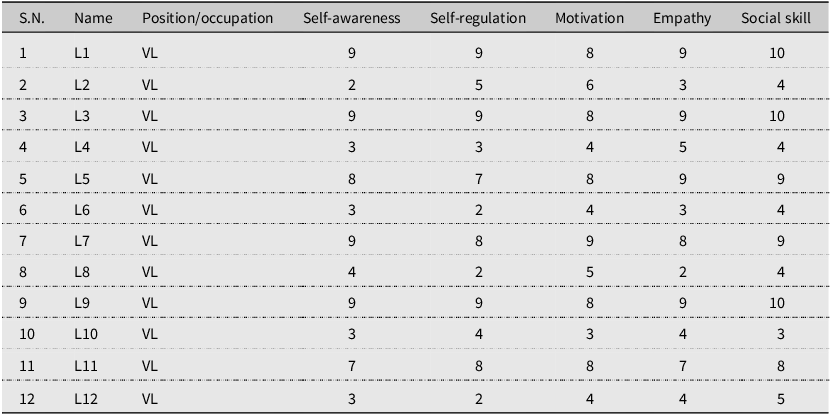
The analysis makes it evident that some villages are doing better than others. Leaders in successful villages have higher scores in all five areas of EI: self-awareness, self-regulation, motivation, empathy, and social skills. These trends are the same in both leader self-assessments and villager evaluations. Table 1 presents a comparative evaluation of EI between chosen successful and less successful village leaders in India.
Emotional_Intelligence_Scores_L1_L12

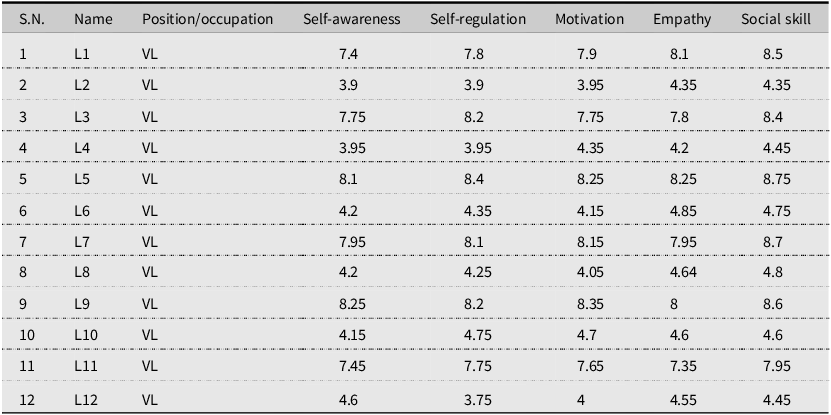
Table 2 provides an average comparative analysis of EI across all 12 successful and less successful village leaders, derived from surveys conducted among villagers.
EI_average_scores_L1_L12

The analysis shows a distinct pattern in the classification of communities as either effective or less successful in implementing the strategy. Successful village leaders have demonstrated markedly elevated levels of EI across all five domains: self-awareness, self-regulation, motivation, empathy, and social competence.
Amongst all dimensions of EI, motivation, empathy, and social skills were identified as the strongest factors of differentiation. Leaders of successful villages demonstrated their level of commitment and engagement with developmental goals, capacity for relating to the diverse needs of their communities, and interpersonal communication skills. In contrast, leaders of less successful villages demonstrated low levels of emotional engagement, communication, and responsiveness to community needs, which resulted in low levels of collective participation in these communities.
These leadership differences are reflected directly in various aspects of community participation and environmental education. Generally, environmentally responsible activities were pursued with a broad base of family participation, women’s groups, youth, schools, and institutions in villages with high-EI leaders. In these villages, environmental learning was not confined to formal education but became a part of everyday village life as it was integrated into community gatherings, digital forums, planning and participatory exercises, and general awareness creation. On the contrary, the pursuit of environmental education by the low-EI leadership in certain villages was fragmented, externally driven, or poorly sustained, where family participation was scant or lacking in intergenerational dimensions.
When looking at all nine factors that were used to measure sustainability, villages with emotionally intelligent leaders did better than those without in all areas. The results together show a clear progression, as follows: The results show that emotionally intelligent leadership makes it easier for people to get involved in their communities, which in turn helps with environmental education and the development of action competence.
The results show that emotionally intelligent leadership helps build trust and makes it easier for people in the village to work together to plan. Higher levels of empathy, motivation, and social skills in leaders were linked to more people in the community getting involved in sustainability programmes, such as waste management and water conservation. This higher level of participation probably led to better infrastructure and architecture in villages that do well.
Discussion
This study demonstrates that village leaders with higher EI are associated with significantly stronger community engagement, more effective environmental education practices, and improved sustainability outcomes. It contests a disjointed perspective on leadership, education, and architecture, instead depicting a coherent and interrelated process. These findings correspond with Clark (Reference Clark2016), notion of collective action competence, which underscores the necessity of leadership-mediated engagement for converting environmental knowledge into sustainability initiatives at the community level. This supports earlier findings in leadership and sustainability governance research indicating that participatory leadership practices enhance collective action competence in community-based environmental initiatives (Burns et al., Reference Burns, Diamond-Vaught and Bauman2015; Liu & Han, Reference Liu and Han2023).
By examining the results, it is clear that EI acts as an important basic skill for environmental leadership. Environmental leadership by individuals with high levels of EI enabled these leaders to motivate participation, resolve any burgeoning conflicts, and communicate the common vision and sustain collective action. These EI skills facilitated an empowering environment whereby families and communities became involved with environmental concerns and development activities. By contrast, low EI in leadership inhibited community participation even when physical resources or policy frameworks were in place. This implies that infrastructural or policy inputs, per se, may be insufficient in the absence of emotionally competent leadership that can effectively mobilise community participation.
These findings reinforce the correlation between concrete architectural and infrastructural results and leadership EI. In fact, successful villages always had better systems for managing water, sanitation, and waste; better upkeep of public buildings; working community centres; green public spaces; and more compliance with building codes and development controls. These architectural changes were important because they were not only physical structures but also places where people could learn through experience. They reinforced environmental values and sustainable practices through everyday use.
The findings strongly support and extend Action Competence Theory (Olsson et al.; Sass et al.), which frames action competence as an integration of knowledge, confidence, and readiness to act. In the studied villages, a catalyst for translating environmental knowledge into collective action was provided by leadership EI. Not only did communities with high-EI leaders demonstrate awareness, but the theory was also reinforced by showing a degree of confidence and willingness to implement sustainable practices, drawing on the emphasis on agency and empowerment.
Results also align with the ESD frameworks of Leicht and of Rieckmann, which emphasise participatory and community-embedded learning processes. The successful villages embodied ESD through the in-school and out-of-school integration of environmental education within the family and community institutions, supported by leaders who encouraged dialogue, reflection, and inclusion.
The findings, from a leadership perspective, support those studies that link EI to ethical, participatory, and green leadership. However, this study goes beyond previous studies by placing EI within rural governance and architectural sustainability, which has received considerably less empirical interest.
A major contribution of this study is to document empirically what has traditionally been assumed, although rarely shown:
Leader EI → Community Engagement → Environmental Education Outcomes → Action Competence → Sustainable Architectural and Developmental Enhancement
High EI leaders helped people in the community to understand architectural and infrastructural elements of the space such as a water system, community centre, public building, and green space as not only physical spaces but also as community learning spaces. These were functioning as “living laboratories” that promoted environmental behaviours through everyday use in a manner that supports experiential and place-based learning in architectural and environmental studies theory.
Nevertheless, this study has its limitations. Despite its contributions, the use of self-assessed data of EI and what the communities themselves can sense about the subject has some subjectivity embedded in the methodology. Also, the fact that this is a case-based study limits its generalisability across all rural settings in the country. Additionally, due to the nature of the study being cross-sectional in approach, the dynamic long-term effects of the relationship between leadership EI and sustainability can only be asserted.
It is important that in any future research, longitudinal and mixed methodology studies be implemented, more sample participants be included, as well as examining further the effects of leadership developmental interventions in EI on sustainable architectural and environmental outcomes.
These results show how important it is to include EI training in programmes that help rural leaders grow. To improve long-term rural development outcomes, policymakers should give equal weight to socio-emotional skills and technical governance abilities.
Conclusion
This study finds that emotionally intelligent leadership is crucial for enhancing community participation, environmental education, and sustainable rural development. Sustainable transformation in rural areas necessitates leadership that can galvanise community action via trust, empathy, and social involvement, rather than depending exclusively on infrastructure or regulatory measures. Incorporating EI into rural government structures can markedly improve environmental results and community resilience. Future study should employ longitudinal and mixed-method techniques to investigate the enduring effects of leadership EI on sustainability.
Acknowledgements
The authors would like to express their sincere gratitude to all the village leaders and community members who generously participated in this study and shared their valuable insights. We also acknowledge the support provided by Amity University Lucknow Campus for facilitating the research environment and academic resources necessary for this work. Special thanks are extended to field investigators and local coordinators whose assistance was crucial during data collection and field observations.
Ethical statement
This study was conducted in accordance with standard ethical guidelines for social science research. Informed consent was obtained from all participants prior to their involvement in the study. Participants were informed about the purpose of the research, their voluntary participation, and their right to withdraw at any stage without any consequences. All data were anonymised to ensure confidentiality and privacy. The study posed minimal risk to participants and adhered to institutional ethical norms for field-based research.
Financial support
This research received no external funding and was conducted as part of the authors’ independent academic research initiatives.
Author Biographies
Sheeba Khalid is a distinguished sociologist with over 16 years of academic, research, and leadership experience in higher education. She holds a PhD in Sociology from Jadavpur University, with a specialised focus on ageing and community care. Her expertise spans applied sociology, medical sociology, and psycho-social research, with strong capabilities in advanced data analysis and interdisciplinary methodologies. Dr. Khalid has an extensive record of teaching across diverse disciplines and has published widely in reputed journals. She serves as Editor-in-Chief of the International Journal of Interdisciplinary Research and actively contributes to scholarship on sustainability, ageing, and social policy.
Malobika Bose is an accomplished education professional with a robust blend of academic expertise and corporate acumen. Her area of expertise consists of digital finance, artificial intelligence, blockchain, management strategy, corporate governance, geopolitics, and socio-political issues. With over 18 years of relevant experience in both corporate and academics she is currently serving as Assistant Professor Senior Grade at Amity University Uttar Pradesh. She is a published author and has authored several articles and book chapters for national and international journals and publishers in the field of finance, AI, management, geopolitics, and social sciences indexed in both Web of Science and Scopus.
Deepti Rana Pandey is affiliated with the Amity School of Architecture and Planning, Amity University, Lucknow. She specialises in sustainable architecture, environmental planning, and community-centric design approaches. Her research focuses on integrating sustainability principles into architectural education and practice, with particular emphasis on rural development and ecological design. Dr. Rana has contributed to interdisciplinary research linking built environments with social and environmental outcomes. She is actively involved in academic teaching, curriculum development, and research projects that promote sustainable infrastructure and environmentally responsible planning practices.
Aradhana Yadav is a legal academic and researcher at Amity Law School, Amity University, Lucknow, with extensive teaching experience across diverse law programmes. Her expertise encompasses criminal law, personal laws, legislative drafting, insolvency law, environmental law, and international criminal law. She previously served as an Advocate Associate in the chambers of Senior Advocate Mr. K.T.S. Tulsi, gaining significant experience in criminal litigation, legal drafting, and research before the Delhi High Court. Her research focuses on the intersection of law, technology, and society, particularly artificial intelligence, blockchain, and criminal justice. She has published widely in Scopus and Web of Science indexed outlets.

 Open access

