


Only 35 % of UK babies are being exclusively breast-fed at 1 week, 21 % at 6 weeks, 7 % at 4 months and 3 % at 5 months(1), despite WHO recommendations that infants should be fed breast milk exclusively for the first six months of life(Reference Saadeh2). Although it is widely accepted that breast-feeding has numerous health benefits for both the infant and mother(Reference Davis3, Reference Schack-Nielsen, Larnkjaer and Michaelsen4), controversy remains over the benefits of breast-feeding on the incidence of adult CVD(Reference Greer5) and, in particular, CVD mortality(Reference Fall, Barker and Osmond6–Reference Martin, Ben-Shlomo and Gunnell8).
Increasing evidence suggests that breast-feeding is associated with lower CVD risk factors such as serum total cholesterol (TC) and LDL cholesterol (LDL-C)(Reference Owen, Whincup and Odoki9–Reference Ravelli, van der Meulen and Osmond11); however, the effect of breast-feeding is not clear for all known risk factors, including BMI and blood pressure(Reference Owen, Martin and Whincup12–Reference Gunnarsdottir, Aspelund and Birgisdottir15). Evidence suggests that breast-feeding in infancy may have a small effect on BMI in adolescence and adult life(Reference Owen, Martin and Whincup12). Breast-feeding is also associated with lower levels of TC and LDL-C in adulthood(Reference Fall, Barker and Osmond6, Reference Owen, Whincup and Odoki9). The magnitude of the effect of breast-feeding on blood pressure remains uncertain, and concerns have been expressed about the influence of publication bias and confounding on this relationship(Reference Owen, Whincup and Gilg13, Reference Martin, Gunnell and Smith14, Reference Martin, Ness and Gunnell16). Little is known about the effect of breast-feeding on height in adolescence and adulthood; however, emerging evidence points to a potential association with increased stature(Reference Victora, Barros and Lima17, Reference Martin, Smith and Mangtani18).
Several recent studies have assessed the association between breast-feeding and cardiovascular risk factors in adolescence, reporting no relationship between breast-feeding and TC and LDL-C(Reference Owen, Whincup and Odoki9, Reference Singhal, Cole and Fewtrell19), no relationship between breast-feeding and lower LDL-C:HDL cholesterol (HDL-C) ratio(Reference Singhal, Cole and Fewtrell19), and no relationship between breast-feeding and lower blood pressure(Reference Singhal, Cole and Lucas20); the persistence of these associations into adulthood is less clear. The present study examines the association between breast-feeding and blood pressure, anthropometric measures and plasma lipid profile in adolescents aged 12–15 years, and in these same individuals as young adults aged 20–25 years.
Methods
Participants
In 1989–90, a 2 % representative sample of schoolchildren from Northern Ireland aged 12 years and 15 years (n 1015) participated in a cross-sectional study of lifestyle and health (Young Hearts Study 1 (YH1))(Reference Boreham, Savage and Primrose21). In 1992–3, 455 of the former 12-year-olds participated in a second screening (Young Hearts Study 2 (YH2)); and between October 1997 and October 1999, all original participants were invited to participate in a third screening phase (Young Hearts Study 3 (YH3)) as young adults and 489 young adults attended(Reference Gallagher, Savage and Murray22). The present study utilises data and samples obtained at the first and third screening (YH1 and YH3) for all participants who attended the third screening (n 489). Ethical approval was obtained from the Research Ethics Committee, Queen’s University Belfast, and written informed consent was obtained from all participants.
Procedures
The sampling procedure for the Young Hearts Studies has been described in detail elsewhere(Reference Boreham, Savage and Primrose21–Reference Boreham, Twisk and Murray23). In brief, for both YH1 and YH3, information was collected on dietary intake (using the dietary history method with a trained researcher), physical activity (using a modified version of the Baecke questionnaire of habitual physical activity), smoking and drinking habits, and other lifestyle variables. Body weight was measured to the nearest 0·1 kg using an electronic balance (200 kg × 0·1 kg; SECA, Hamburg, Germany). Standing height and sitting height were measured to the nearest millimetre using a Harpenden portable stadiometer (Holtain, Crymych, UK). For measurements of height and weight, participants wore light indoor clothing and no shoes. BMI was computed as weight (kg)/[height (m)]2. Waist:hip ratio (WHR) was measured and used as a measure of central adiposity. Skinfold thicknesses were obtained from four sites (triceps, biceps, subscapular and suprailiac) using callipers (Holtain) and body fat composition was estimated according to the method of Durnin and Rahaman(Reference Durnin and Rahaman24). Blood pressure was measured twice from the right arm, using a Hawksley random zero sphygmomanometer, with the participant sitting quietly for at least 5 min; the average of these two readings was used for the current analysis.
Fasting blood samples (40 ml) were drawn from the antecubital vein. Blood was immediately separated into whole blood, plasma/serum and buffy coat and stored as aliquots at −70°C until analyses. TC and triacylglycerols from serum were measured using enzymatic assays (Boehringer Mannheim, East Sussex, UK) on a Cobas Fara centrifugal analyser. HDL-C was measured by enzymatic assay following phosphotungstate precipitation. LDL-C was calculated using the Friedewald formula(Reference Friedewald, Levy and Fredrickson25).
Occupational class of head of household was classified according to the Office of Population Censuses and Surveys (1990) using information gathered at YH1. Birth weight was recorded from the Child Health System records (n 456) and, where not available, birth weight as reported in a parental questionnaire was used (n 29). Birth weight standard deviation scores (SDS) were calculated as described by Freeman et al.(Reference Freeman, Cole and Chinn26). Information on infant feeding (breast-fed (yes/no) and duration of breast-feeding) was obtained from a parental questionnaire collected as part of YH1 (n 472). Maternal and paternal height and weight were also self-reported in this parental questionnaire, allowing the calculation of maternal and paternal BMI.
Statistical analyses
The SPSS statistical software package version 14·0 (SPSS Inc., Chicago, IL, USA) was used for statistical analysis. Mean and standard deviation were used to describe the continuous variables. Categorical variables were compared between the breast-fed and non-breast-fed groups using the χ 2 test. The means of continuous variables were compared in the breast-fed and non-breast-fed groups using the independent-samples t test. Multiple linear regression models were used to adjust for any difference between the breast-fed and non-breast-fed groups with respect to potential confounders either identified from the literature or identified from our analyses (sex, age, social class, birth weight SDS, gestational age, maternal height and paternal height (for height measures only); sex, age, social class, birth weight SDS, gestational age, maternal BMI and paternal BMI (for all other measures)). ANOVA was used to compare the mean of continuous variables by duration of breast-feeding and, as before, multiple linear regression models were used to adjust for potential confounders. Analysis of covariance was used to analyse differences in response between adolescence and adulthood.
Results
A total of 489 participants who participated in YH1 attended the YH3 screening, representing 48·2 % of the 1015 who had been originally screened. Breast-feeding information was available on 472 participants, with 101 participants (21·4 %) recorded as being breast-fed as infants. There were small but significant increases in maternal and paternal height, social class and birth weight in breast-fed infants (P = 0·005, P = 0·03, P = 0·001 and P = 0·04, respectively), while there were no significant differences in gestational age, maternal and paternal BMI between the two groups (Table 1).
Characteristics of participants by breast-fed status: Young Hearts Project, Northern Ireland
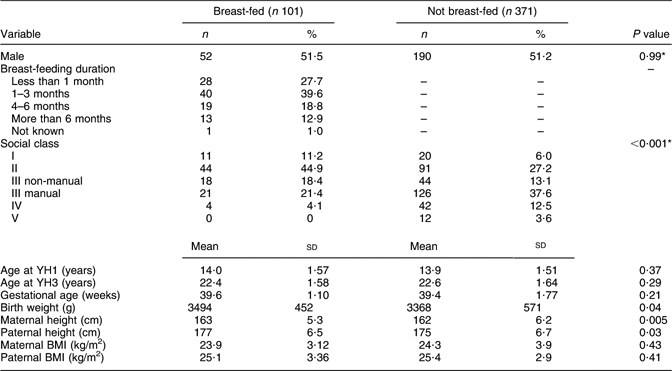
YH1, Young Hearts Study 1; YH3, Young Hearts Study 3.
Data are presented as or n and % or as mean and standard deviation.
Comparisons were made using the independent-samples t test except where indicated; *P value based upon exact χ 2 test.
The differences in the anthropometric measures, blood pressure and lipoproteins between the adolescents attending the YH1 screening according to breast-fed status are presented in Table 2. Adolescents who had been breast-fed had significantly lower average systolic blood pressure compared with those who had not been breast-fed (112 v. 115 mmHg, P = 0·04); however, after adjustment for confounders this association was attenuated (P = 0·23). There was no significant difference in height, weight, BMI, skinfold thickness measurements, diastolic blood pressure, TC or HDL-C in adolescents who had been breast-fed compared with those who had not been breast-fed.
Anthropometric measures, blood pressure and lipoproteins in breast-fed and non-breast-fed groups during adolescence (12–15 years; YH1): Young Hearts Project, Northern Ireland
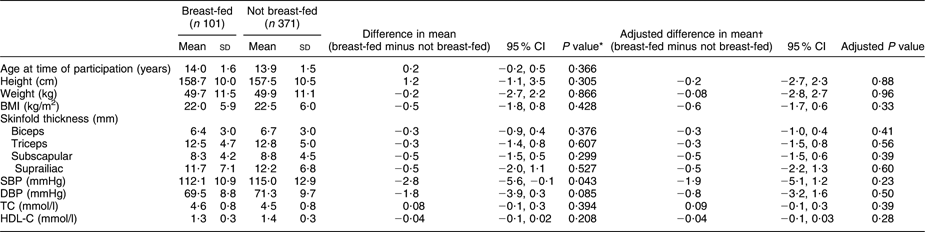
YH1, Young Hearts Study 1; SBP, systolic blood pressure; DBP, diastolic blood pressure; TC, total cholesterol; HDL-C, HDL cholesterol.
*Independent-samples t test.
†Adjusted analysis, model controlling for age, gender, social class, birth weight standard deviation score, gestational age and either maternal and paternal height (height measures only) or maternal and paternal BMI (all other measures).
The differences in the anthropometric measures, blood pressure and lipoproteins between the young adults in YH3 who had been breast-fed compared with those who had not been breast-fed are presented in Table 3. Adults who had been breast-fed were significantly taller (higher standing height, trunk length and leg length) than those who had not been breast-fed (P = 0·007, P = 0·045 and P = 0·006, respectively). After adjustment for potential confounding variables, including maternal and paternal height, the association remained for standing height (P = 0·013) and leg length (P = 0·035). Specifically, the breast-fed group was on average taller by 1·7 cm (95 % CI 0·4, 3·0 cm) and had longer legs by 1·0 cm (95 % CI 0·1, 1·9 cm) than the non-breast-fed group. Furthermore, the association with height in adulthood between the breast-fed and non-breast-fed groups remained after adjustment for height in adolescence (P = 0·013). There was evidence that adults who had been breast-fed had slightly higher mean TC (4·8 v. 4·5 mmol/l, P = 0·04) compared with those who had not been breast-fed and there was some indication of higher LDL-C (3·0 v. 2·8 mmol/l, P = 0·07) when compared with those who had not been breast-fed. However, when the analyses were adjusted for potential confounding variables these associations were slightly attenuated and were not statistically significant (P = 0·061 and P = 0·054, respectively).
Anthropometric measures, blood pressure and lipoproteins in breast-fed and non-breast-fed groups during young adulthood (20–25 years; YH3): Young Hearts Project, Northern Ireland
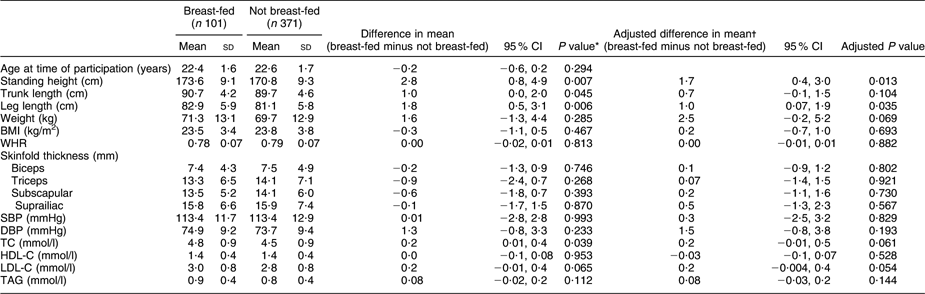
YH3 Young Hearts Study 3; WHR, waist:hip ratio; SBP, systolic blood pressure; DBP, diastolic blood pressure; TC, total cholesterol; HDL-C, HDL cholesterol; LDL-C, LDL cholesterol.
*Independent-samples t test.
†Adjusted analysis, model controlling for age, gender, social class, birth weight standard deviation score, gestational age and either maternal and paternal height (height measures only) or maternal and paternal BMI (all other measures).
The effect of duration of breast-feeding on anthropometric measures, blood pressure and lipoproteins in adolescents attending the YH1 screening and YH3 screening was examined. There was no significant association between these measures and duration of breast-feeding in the YH1 or YH3 participants (data not shown).
Discussion
In the current longitudinal study, individuals who had been breast-fed were, on average, 1·7 cm taller in adulthood than those who had not been breast-fed, a difference that was not observed during adolescence. The difference in standing height associated with breast-feeding, that was apparent in adulthood, seemed to be owing to longer leg length rather than trunk length. Adolescents who had been breast-fed had lower average systolic blood pressure compared with those who had not been breast-fed; however this association was attenuated after adjusting for confounding factors. Furthermore, adolescents who had been breast-fed were similar to those who had not been breast-fed for measures of weight, height, BMI, skinfold thickness and lipoproteins. In adulthood, those who had been breast-fed had higher TC and LDL-C than those who had not been breast-fed, although there was less evidence of this association after adjusting for confounding factors. Young adults who had been breast-fed were similar to those who had not been breast-fed in terms of weight, BMI, skinfold thickness, blood pressure, HDL-C and TAG. Birth weight was significantly different between individuals who had/had not been breast-fed; however, this was included as a potential confounding factor and adjusted for in regression analyses.
Our findings of an association between increased height, and in particular increased leg length, in adults who had been breast-fed confirm the findings of the Boyd-Orr cohort study(Reference Martin, Smith and Mangtani18). The Boyd-Orr cohort also reported an association between breast-feeding and increased height in childhood (2–15 years), whereas we did not find any such association at the adolescent stage (mean age 14 years) in the present study. However, our study focused on a specific adolescent year group (mean age 14 (sd 1·5) years), whereas the Boyd-Orr cohort reported data for childhood as a whole including children aged 2–15 years. Furthermore, since the Boyd-Orr cohort was born in the 1920s and 1930s, compared with the 1980s in the present study, there are likely to be differences in environmental factors that could influence the results. For example, the alternatives to breast milk that were offered to infants in the 1920s and 1930s and the exact composition of infant formulas that were available during this time are likely to be very different from those available 60 years later. Indeed, Martin et al.(Reference Martin, Smith and Mangtani18) query the contemporary relevance of their results. It is important to note, however, that the association of breast-feeding and height in the Boyd-Orr cohort was more pronounced after mid-childhood, suggesting that breast-feeding may differentially influence growth at puberty compared with early life(Reference Martin, Smith and Mangtani18). The present study in a contemporary population indicates that the association between breast-feeding and height may not become apparent until early adulthood. Martin et al.(Reference Martin, Smith and Mangtani18) suggest a number of reasons which may explain the association between breast-feeding and increased stature later in life, including setting of the growth trajectory through optimum nutrition(Reference Rogers, Emmett and Golding27), protection against enteric or respiratory infections and psychological effects relating to maternal bonding. The fetal origins hypothesis(Reference Moor and Davies28) contends that physiological or metabolic programming occurs during critical periods of ontogeny and determines health later in life. In line with this, and consistent with results of the present study, Dietz(Reference Dietz29) proposes that the consequences of infant feeding may only become apparent at some stage later in development rather than in early childhood, as suggested by an animal study where effects of overfeeding in infancy only became apparent some years later(Reference Lewis, Bertrand and McMahan30). The positive association between breast-feeding and stature in the present study naturally raises the possibility that the precise duration of breast-feeding may have an important influence on this relationship; however, this could not be adequately examined in the current study, perhaps owing to small numbers. A study in the literature in Brazilian young adult men, aged 18 years (n 2250), has reported a borderline association (P = 0·06) between duration of breast-feeding and height(Reference Victora, Barros and Lima17).
We found no significant association between breast-feeding and BMI in adolescence or adulthood. A recent quantitative systematic review examining the influence of breast-feeding on obesity in later life demonstrated a protective effect of breast-feeding on BMI(Reference Owen, Martin and Whincup12); however, the authors state that the precise magnitude of this effect is still unclear and that the impact of confounding and publication bias on this finding requires closer examination. It is worth noting that the small difference observed in the systematic review lies within our 95 % confidence intervals for the difference in BMI between breast-fed and non-breast-fed participants, and therefore the two studies are compatible in their findings.
We found no association between breast-feeding and blood pressure in adolescence or adulthood; however, two recent meta-analyses, mostly examining cross-sectional data, do report an association between breast-feeding and systolic(Reference Owen, Whincup and Gilg13, Reference Martin, Gunnell and Smith14) or diastolic blood pressure(Reference Martin, Gunnell and Smith14) in later life. Both indicate that the effect is likely to be small (pooled mean difference 0·5–1·4 mmHg) and, again, may be strongly influenced by confounding and bias. A unique study in the literature by Singhal et al.(Reference Singhal, Cole and Lucas20) measured blood pressure at age 13–16 years in a group of children who had been born prematurely and had participated at birth in a randomised trial of banked breast milk v. formula. Children assigned to receive banked breast milk had significantly lower mean arterial blood pressure (between-group difference of 4·2 mmHg) at age 13–16 years compared with those assigned to receive preterm formula. Although we were able to show lower average systolic blood pressure in adolescents who had been breast-fed compared with those who had not been breast-fed, this association was attenuated after adjusting for confounding factors.
In agreement with a meta-analysis examining the effects of infant feeding on cholesterol in children and adolescents (1–16 years)(Reference Owen, Whincup and Odoki9), we found no association between breast-feeding and TC or LDL-C at the adolescent stage of life. The same meta-analysis reported lower mean TC and LDL-C in adults (≥17 years) who had been breast-fed(Reference Owen, Whincup and Odoki9). In contrast, we found higher TC and LDL-C in breast-fed adults compared with those who had not been breast-fed, although this association was attenuated and lost significance when the analysis was adjusted for confounding factors. While not consistent with the majority of studies, two other studies in adults have also shown an association, albeit non-significant, between breast-feeding and increased lipoproteins(Reference Fall, Barker and Osmond6, Reference Martin, Ben-Shlomo and Gunnell8). Possible explanations for these differing results include differences in the alternatives to breast-feeding, chance or residual confounding(Reference Martin, Ben-Shlomo and Gunnell8, Reference Owen, Whincup and Odoki9).
An important strength of the current study is the length of follow-up; there are few studies in the literature where follow-up information is available into adulthood. This allowed us to examine associations between breast-feeding, anthropometry and cardiovascular risk factor status at both the adolescent and adult life stages in a representative sample of young people from Northern Ireland, a region of high coronary mortality. The wide spectrum of cardiovascular and anthropometric measures recorded and the ability to control for many confounding factors, such as gestational age, birth weight and maternal and paternal height and BMI, are also important strengths of the study. As with all studies of this nature, however, the limitations must be recognised. First, the numbers studied are relatively small, making it difficult to examine any effect of duration of breast-feeding on the parameters examined. Second, we had no information on the exclusivity of breast-feeding and were unable to examine differences in those who had been exclusively v. partially breast-fed. Although the classification of ‘breast-fed’ or ‘not breast-fed’ was based on questionnaire data collected from parents when the children were aged, on average, 14 years, the accuracy of such data has shown to be valid for up to 20 years after birth(Reference Kark, Troya and Friedlander31). Third, we had no information on weaning practices among those studied and could not assess the importance of age of weaning, although it is unclear if age of weaning is a significant confounder(Reference Martin, Ben-Shlomo and Gunnell8). Fourth, given the nature of epidemiological studies, the possibility of residual or unobserved confounding by this or other factors can only be minimised. Finally, in view of the small numbers of participants, the wide confidence intervals and the multiple comparisons carried out, the positive association between stature and breast-feeding must be interpreted with caution and may be a chance finding.
The current study did not find an association between breast-feeding and cardiovascular risk factor status; there was, however, a significant association between breast-feeding and increased adult stature. Evidence indicates that height is inversely associated with CVD mortality risk, respiratory disease risk and stroke, although results are inconsistent for risk of cancer(Reference Davey Smith, Hart and Upton32). The findings reported here confirm previous reports relating to breast-feeding and stature(Reference Martin, Smith and Mangtani18) and, given the association of increased height with improved life expectancy(Reference Davey Smith, Hart and Upton32, Reference Lee, Barzi and Woodward33), provide further evidence for the promotion of breast-feeding. The current study did not differentiate between exclusive and non-exclusive breast-feeding and duration of breast-feeding was not taken into account, yet an effect of breast-feeding on adult stature was still apparent. These results suggest that any breast-feeding in infancy, and not just exclusive breast-feeding to 6 months, may be associated with increased height in adulthood; however, this would need to be examined in an adequately powered data set. The WHO recommends that infants should be fed breast milk exclusively for the first six months of life(Reference Saadeh2). While such recommendations are to be encouraged owing to the numerous health benefits of breast-feeding for mother and infant, less than 3 % of infants in the UK are breast-fed exclusively to 6 months(Reference Saadeh2). It is important that mothers continue to be made aware that any breast-feeding is more beneficial than no breast-feeding, thus reducing the guilt experienced by mothers who are not able, for various reasons, to exclusively breast-feed for 6 months(Reference Mozingo, Davis and Droppleman34).
In summary, we have shown that breast-feeding is associated with increased adult height. Given the known association between increased adult height and improved life expectancy, the results from the present study add to the literature supporting a beneficial effect of breast-feeding on health-related parameters.
Acknowledgements
Sources of funding: The study was supported by the British Heart Foundation; the Wellcome Trust; Northern Ireland Chest, Heart and Stroke; and the Department of Health and Social Services in Northern Ireland. Conflict of interest declaration: None of the authors had a conflict of interest. Authorship responsibilities: V.A.H., J.V.W. and M.C.M. contributed to the implementation of the analysis. I.S.Y., L.J.M. and C.A.B. were responsible for the original study design. C.C., V.A.H. and J.V.W. undertook statistical analyses of the data. V.A.H. wrote the first draft of the paper and all authors were involved in revisions of the paper.



