




Introduction
Past societies around the world repeatedly reconfigured their technologies to accommodate the challenges and opportunities of novel food-production strategies. In Africa, mobile lifeways that economically and ideologically focused on herding livestock emerged before plant agriculture (Marshall & Hildebrand Reference Marshall and Hildebrand2002). Mobile herding facilitated the expansion of human, animal and plant populations, contributing to the development of social and economic diversity in sub-Saharan Africa (Bollig et al. Reference Bollig, Schnegg and Wotzka2013; Prendergast et al. Reference Prendergast2019). Broad geographic patterns were shaped by the specific solutions adopted by herders as they confronted new climatic and social situations. Stone-tool technologies were a primary component of early herder strategies, reflecting the ways in which these groups interacted with their environments. The lithic record provides a means of connecting regional archaeological patterns to broader trajectories of African food production.
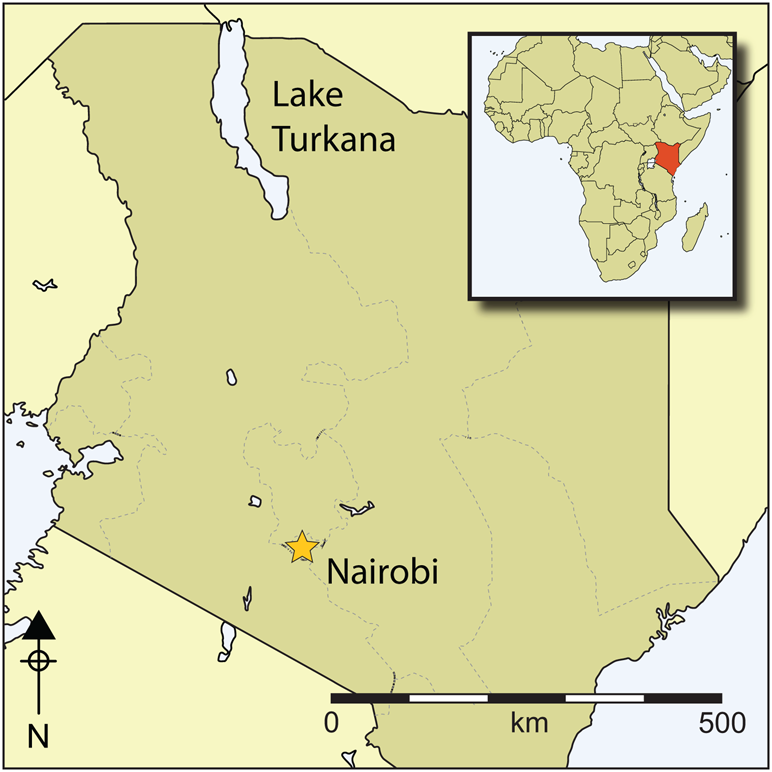
African pastoralism emerged in the Early Holocene Sahara, during a period of high rainfall and associated expansion of rivers, lakes and grasslands (Kuper & Kröpelin Reference Kuper and Kröpelin2006). Initially, people integrated herding into extant fisher-forager lifeways, while maintaining the widespread use of wavy-line pottery, barbed bone points and microlithic and bifacial toolkits (Sutton Reference Sutton1977; Holl Reference Holl and Stahl2005). As herding became more important, groups gradually increased their investment in systematic lithic raw-material acquisition, and reorganised their lithic chaîne opératoire (Cremaschi & di Lernia Reference Cremaschi and di Lernia1999; Garcea Reference Garcea, Livingstone Smith, Bosquet and Martineau2005). Aridity in the early Middle Holocene pushed herders southward. In eastern Africa, domesticated cattle (Bos taurus), sheep (Ovis aries) and goats (Capra hircus) first appear at Lake Turkana in northern Kenya by 5000 cal BP (Marshall et al. Reference Marshall, Stewart and Barthelme1984; Grillo & Hildebrand Reference Grillo and Hildebrand2013; Hildebrand et al. Reference Hildebrand2018).
Northern Kenya proved an important staging ground for the southward expansion of pastoralism (Bower Reference Bower1991). As herders ventured farther from resource-predictable river valleys such as the Nile in search of grazing, they encountered unpredictable and drought-prone environments already occupied by hunter-gatherers (e.g. Robbins Reference Robbins1979; Lahr et al. Reference Lahr2016; Beyin et al. Reference Beyin, Prendergast, Grillo and Wang2017). Hildebrand et al. (Reference Hildebrand2018) have identified that, in part, herders responded to these conditions by developing new social institutions, including the unprecedented tradition of constructing monumental ‘pillar-site’ cemeteries. Despite evidence for climatic and social change on this ‘moving frontier’ (Sawchuk et al. Reference Sawchuk, Goldstein, Grillo and Hildebrand2018), many aspects of herder economic strategies remain unclear. This is due predominantly to the challenge of differentiating herder and hunter-gatherer toolkits, and identifying meaningful variation within or between assemblages (Hildebrand et al. Reference Hildebrand, Shea and Grillo2011; Wright & Forman Reference Wright and Forman2011; Wright et al. Reference Wright, Forman, Kiura, Bloszies and Beyin2015, Reference Wright, Grillo and Soper2016).
This article explores the lithic technological organisation of the earliest herders in northern Kenya. The aim is to demonstrate the viability of lithic analyses in answering questions of local and regional significance: what are the technological relationships between habitations and special-purpose pillar sites? What do technological patterns reveal about the broader economic strategies associated with early herding in Turkana? Analyses of stone tools from new and previously unpublished assemblages from Lake Turkana are presented, followed by a discussion of the implications for the development of socio-economic mechanisms that, eventually, ensured the long-term resilience of herder lifeways in eastern Africa.
Early herding sites in northern Kenya
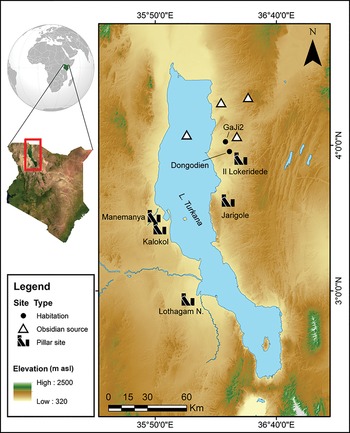
Debates concerning the origins of the earliest herders in Turkana have largely overshadowed discussion of how these economies operated. Due in part to the ephemeral nature of mobile herders on the landscape, only two habitation sites (Dongodien and GaJi2, see Figure 1) with domesticated cattle and caprines securely dated to 4500–4000 cal BP are currently known (Barthelme Reference Barthelme1981). Faunal evidence indicates that the inhabitants of these sites were diversified pastoralists who balanced herding with fishing (Marshall et al. Reference Marshall, Stewart and Barthelme1984). The continuity in use of both aquatic resources and microlithic toolkits (made from local basalt and chert) through the Early to Middle Holocene has been argued to show that local hunter-gatherer-fishers were integrating livestock into their subsistence economies (Ambrose Reference Ambrose, Clark and Brandt1984; Barthelme Reference Barthelme1985).
Nderit herder sites and obsidian sources mentioned in text (elevation data from NASA/JPL Shuttle Radar Topography Mission 1).
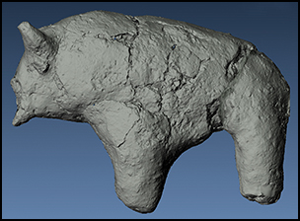
A combination of new ceramic styles, burial traditions and patterns of obsidian transport however, may suggest a more substantial economic shift in association with the first domesticated animals (Nelson Reference Nelson1973; Grillo & Hildebrand Reference Grillo and Hildebrand2013; Wright et al. Reference Wright, Forman, Kiura, Bloszies and Beyin2015). At Dongodien, evidence for early livestock is associated with a new, highly decorated style of ceramics, termed ‘Nderit ware’ that differs from the plain and wavy-line pottery traditions of local fisher-foragers (Wandibba Reference Wandibba1977; Barthelme Reference Barthelme1981). Nderit ceramics are also present at several of, but not all, the monumental cemeteries marked by natural basalt pillars that appear around Turkana after 5300 cal BP (Hildebrand & Grillo Reference Hildebrand and Grillo2012; see Figure 2). The construction of large burial mounds marked with rows of translocated natural basalt pillars at Lothagam North and Jarigole is attributed to early herders, based on material culture similarities with Dongodien (Nelson Reference Nelson1995; Gifford-Gonzalez Reference Gifford-Gonzalez and Stahl2005; Hildebrand et al. Reference Hildebrand, Shea and Grillo2011; Hildebrand et al. Reference Hildebrand2018). In addition, caprines have been identified in the faunal assemblage from Lothagam North (Hildebrand et al. Reference Hildebrand2018) and clay cattle figurines have been recovered from Jarigole (Figure 3; Nelson Reference Nelson1995).
Lothagam North pillar site, view facing east towards Lake Turkana, Kenya (photograph by S.T. Goldstein).

Three-dimensional scan of fired-clay cow figurine from Jarigole (figure by S.T. Goldstein).

Other, smaller pillar sites, such as Lothagam West and Kalokol have yielded no clear connections to herders, and differ from the Nderit sites in their organisation and material culture (Hildebrand et al. Reference Hildebrand, Shea and Grillo2011). Extant samples of lithics from such sites are too small to be statistically significant, and preliminary analysis suggests that a few of these assemblages are heavily weathered Middle Stone Age (c. 250–25 kya) artefacts. Whatever these other, smaller, sites may represent, the tradition(s) of pillar-site construction and associated Nderit pottery use disappeared from Turkana after 4000 BP. This coincides with another retreat of lake water levels and a prolonged shift towards more arid conditions across the Turkana Basin (van der Lubbe et al. Reference van der Lubbe, Krause-Nehring, Junginger, Garcin, Joordens, Davies, Beck, Feibel, Johnson and Vonhof2017). The few known post-Nderit sites attest to some continuation of mixed small-scale herding, fishing and foraging (Phillipson Reference Phillipson1977, Reference Phillipson, Krzyzaniak and Kobusiewicz1984; Wright et al. Reference Wright, Forman, Kiura, Bloszies and Beyin2015).
Dongodien, Jarigole and Lothagam North are the only herding sites that have yielded large lithic assemblages and Nderit pottery securely dated to this early phase of herding (5000–4000 BP). Similarities between the sites in ecological settings and known distances to obsidian sources permit reconstructions of lithic technological strategies—and thus the broader economies—of the earliest herders in the Lake Turkana Basin.
Lithic analysis
Confusion over the variability of Middle Holocene lithic signatures across eastern Africa may result from a legacy of identifying industries based on tool types and ratios, rather than technological strategies (Nelson Reference Nelson1973; Barthelme Reference Barthelme1985). Approaches focused on site ecologies, quantitative morphologies and reduction sequences among herders and foragers are better developed in southern Kenya, where they have helped to clarify culture-history and economic variability (e.g. Ambrose Reference Ambrose1998). The present research operates within a theoretical framework that considers stone-tool assemblages to reflect intentional systems of manufacture, maintenance and discard (Binford Reference Binford1979; Nelson Reference Nelson1991; Andrefsky Reference Andrefsky2009). Patterns of flake production and tool use are structured by decisions weighing cultural, economic and environmental considerations within a cost-benefit framework. Choices about flake shape, striking-platform size and intensity of tool use reflect raw-material conservation strategies as related to mobility (Shott Reference Shott1986; Nelson Reference Nelson1991). In general, highly mobile groups favour more formal industries that maximise the utility of the stone-tool supply that they carry with them; less mobile groups not under such curation pressures expediently reduce local raw materials. Variety in tool types and morphological variation within type-categories reflect ongoing and anticipated tool needs (i.e. craft production, hunting or other subsistence tasks). In summary, technological organisation reflects the degrees to which people were planning for, and investing in, different activities, such as herding, fishing, hunting and gathering across the landscape.
To understand the conditions that structured the lithic choices of ancient herders around Lake Turkana, I analysed lithic material from all three early herding sites that, to date, have yielded large, securely dated, tool and debitage assemblages. These are the single habitation site of Dongodien (Barthelme Reference Barthelme1981; Ashley et al. Reference Ashley, Ndiema, Spencer, Harris, Kiura, Dibble, Du and Lordan2017) and the pillar-cemetery sites at Jarigole and Lothagam North (Nelson Reference Nelson1995; Hildebrand et al. Reference Hildebrand, Shea and Grillo2011, Reference Hildebrand2018). Assessment of the cemetery assemblages demonstrates that they reflect construction, maintenance and mortuary activity, rather than being secondary deposits brought in as fill (Nelson Reference Nelson1995). Comparing assemblages from habitation and special-purpose sites is necessary given the lack of comparative assemblages from dated sites, but also presents an opportunity to identify social dimensions in technological variation (for specific details of the excavations, the archaeological contexts, sampling strategies and methods of lithic analysis, see the online supplementary material (OSM)).
Technological organisation
Raw material selection is the basis for the development of technological strategies. It has implications for group mobility in terms of more mobile societies with less predictable access to stone sources tending to favour high-quality raw materials that allow for greater utility of tool production per unit of stone (Andrefsky Reference Andrefsky2009). Cobbles of high-quality chert can be found in nearby streambeds around Jarigole and Dongodien, and there are pockets of tabular chert eroding from the western side of the Lothagam ridge, adjacent to Lothagam North (Figure 4). Geochemical sourcing shows that primary obsidian sources are distributed along the north-eastern lake basin (Nash et al. Reference Nash, Merrick and Brown2011; Brown et al. Reference Brown, Nash, Fernandez, Merrick and Thomas2013; see Figure 1). Early Holocene hunter-gatherer-fishers across northern Kenya made ample use of abundant, local lavas and cherts. Obsidian, if present at all, typically constitutes only a small percentage of assemblages, and is often restricted to heavily deflated and reworked surface or near-surface contexts (e.g. Robbins Reference Robbins1979). Hunter-gatherer-fishers produced a highly diverse range of lithic industries, with sites exhibiting expedient flake technologies, diverse microlithic toolkits and sometimes mixes of both (Robbins Reference Robbins1972, Reference Robbins1979; Barthelme Reference Barthelme1977; Phillipson Reference Phillipson1977; Beyin Reference Beyin2011; Beyin et al. Reference Beyin, Prendergast, Grillo and Wang2017).
Tabular chert eroding from the western ridge of Lothagam, near Lothagam North (photograph by S.T. Goldstein).

In contrast to the Early Holocene patterns, obsidian constitutes the vast majority (72–92 per cent) of the lithic material at Middle Holocene sites in the Lake Turkana Basin associated with early herding (Table 1). This signals a shift from down-the-line or incidental access to obsidians, to systematic or even semi-formalised acquisition systems. Ndiema et al. (Reference Ndiema, Dillian, Braun, Dillian and White2010) have proposed that newly formed obsidian exchange networks facilitated the movement of obsidian around, or across, Turkana after c. 5000 BP. Investment in new social systems to access high-quality raw material highlights the importance of predictable flake production and microlithisiation. While these features were certainly present across Late Stone Age (c. 25–5 kya) eastern Africa, their intensification at this time reflects major shifts in economic organisation. In other case studies around the world, similar shifts in raw-material selection are associated with pressure to maximise the efficiency of reducing a limited stone supply stemming from increased group mobility (e.g. Wallace & Shea Reference Wallace and Shea2006; Andrefsky Reference Andrefsky2009).
Radiocarbon chronology and lithic raw-material composition for the sample sites.

1 Calibrations employ OxCal 4.3 with IntCal13 Northern Hemisphere curve (Bronk Ramsey Reference Bronk Ramsey2009; Reimer et al. Reference Reimer2013); 2 Barthelme (Reference Barthelme1985); 3 Ashley et al. (Reference Ashley, Ndiema, Spencer, Harris, Kiura, Dibble, Du and Lordan2017); 4 Hildebrand et al. (Reference Hildebrand2018); 5 Hildebrand & Grillo (Reference Hildebrand and Grillo2012).
People at all three early herding sites used obsidian in the same way: in the manufacture of blade blanks for formal tools, following a single operational sequence (Figures 5–7) (Table 2). Other raw materials were flaked expediently, without a preference for any flake shape. Roughly 92 per cent of obsidian blades across all three assemblages exhibit parallel flake-scars, indicating maintenance of single-platform pyramidal blade cores (Table 3). Identical distributions for blade curvatures across the sites (Kruskal-Wallis H = 0.4538, p = 0.80; Figures 8A & S1) reflect further consistency in the morphology of core release surfaces, and thus core design. Striking platforms are consistently small and intensively prepared through abrasive grinding to remove loose material before subsequent flaking.
Lithics from Dongodien: A–B) backed crescents; C–D) oblique truncations; E) awl; F) core-tablet; G–L) representative bladelets; M) lateral or ‘flanc’ removal from a pyramidal core (figure by S.T. Goldstein).

Lithics from Jarigole: A–D) backed crescents; E–F) oblique truncations; G) utilised flake; H–I) outils écaillés/bipolar cores; J–M) typical bladelets; N) bipolar flake; O–P) large flakes. A–N are obsidian, O–P are basalt (figure by S.T. Goldstein).

Lithics from Lothagam North: A–D) typical bladelets; E–F) utilised bladelets; H) outil écaillés/ bipolar core; I) multidirectional core; J) opposed platform removal; K–L) oblique truncations; M–O) backed crescents; P) combination endscraper/burin; Q–R) bipolar cores. All pieces are obsidian (figure by S.T. Goldstein).

Summary of lithic assemblages from early herder sites.

Flake-scar orientation proportions for obsidian blades.

Reconstruction of core-reduction strategies in the assemblages reflects a shared chaîne opératoire (Figure 9). Obsidian cores begin with pyramidal shapes, with the single striking platform that retains cortex (Figure 9A–B & D). Average blade curvatures at all three sites increase through the reduction sequence along a similar regression line, suggesting the consistent management of core shape (see the OSM). Once reduced to lengths of ~20mm, cores were too small for continued bladelet production. At this stage, knappers switched to bipolar production techniques, producing outils écaillés, or ‘splintered-pieces’. Expended bipolar pieces make up a greater proportion of cores abandoned at Jarigole and Lothagam North (Table 4). Although pyramidal cores were more often abandoned before they reached the bipolar stage at Dongodien, differences in core proportions are not significant (χ2 = 11.55, Monte Carlo p = 0.165, df = 8). Intensity of core reduction is reflected in the differences between the volumes of unworked obsidian nodules from a source outcrop and recovered cores (Figure 8B).
Boxplots of obsidian blade curvature (A); estimated obsidian core volume (B); blade width (C); and blade thickness (D). Diamonds = sample mean. Volumes for unworked nodules in (B) are taken from five nodules in the National Museums of Kenya collected by John Barthelme (figure by S.T. Goldstein).

Cores from Dongodien: A–B) pyramidal bladelet cores with cortical platforms; C) multi-directional bifacial core; D) bipolar core; E) bi-directional core (figure by S.T. Goldstein).

Core proportions by platform type.

While fundamental aspects of lithic technological strategies are consistent across early herder sites in Turkana, there is some variability in how these strategies were deployed. Blade lengths are significantly higher at Lothagam North compared to Dongodien and Jarigole (Figure 8C, Kruskal-Wallis H = 10.3, p = 0.005), although the differences are not significant if several large refitting blades associated with a burial are removed from the analysis (Kruskal-Wallis H = 5.17, p = 0.075) (Figure 10). Blade-width distributions display the opposite pattern, with lower values at Lothagam North (Figures 8D & S2). Taken together, the length and width patterns of obsidian blades do not demonstrate a clear relationship with distance from raw-material sources, as would be expected with simple down-the-line exchange. Instead, this non-linear metric variation is more consistent with more organised lithic-provisioning behaviours.
Refitting blade sequence from Lothagam North (photograph by S.T. Goldstein).

Although striking platforms on obsidian blades are universally small, their relationships with blade metrics vary between sites. For pillar-site assemblages, platform size is a strong predictor of both blade width and thickness (Pearson's R2 = 0.70, p < 0.05 and Pearson's R2 = 0.71, p < 0.05, respectively). At the Dongodien habitation site, there are no correlations between platform size and metrics (Pearson's R2 = 0.49, p = 0.01, and Pearson's R2 = 0.18, p = 0.36, for width and thickness respectively).
Tool use is the final relevant dimension of lithic variability. I differentiate between formal, shaped tools and flakes with only casual retouch or edge damage. Lothagam North is the only site where these categories are equally represented. Informal modified pieces tend to be made from local raw-material sources, whereas obsidian blades are used as blanks in nearly all formal tool production. This reinforces the distinction between the structured and systematic use of obsidian by early herders, and the more opportunistic use of obsidian.
Formal assemblages from all three sites comprise a consistently narrow range of tool types (Table 5). The toolkits from Dongodien are predominately backed microliths (75–92 per cent), confirming Barthelme's (Reference Barthelme1981) observations. Crescents and truncations are the most common forms of backed tools (see Figures 5–7). The average sizes of crescents—which were probably used in composite projectiles or cutting tools—are consistent with values for the earliest herders in southern Kenya (Ambrose Reference Ambrose2002). Crescents are twice as abundant at Dongodien, whereas scrapers and awls are more common at Jarigole. This difference is partially driven by the unusual presence of chert awls, presumably for bead production, in the Jarigole assemblage (Nelson Reference Nelson1995: 55). Despite minor differences in ratios, the overall consistency in tool types, morphologies and sizes across all three sites suggest that they reflect the same toolkit and tool-use strategies.
Formal tool proportions.

Discussion
A comparative analysis of lithic assemblages from three early pastoralist sites provides new and valuable insights for addressing major questions concerning the spread of herding into northern Kenya. First, this analysis demonstrates that communities who lived at Dongodien, and those who constructed and used the Jarigole and Lothagam North pillar sites, all shared a distinct technological tradition that set them apart from other Late Stone Age sites in the region. Early herders at all three sites employed the same chaîne opératoire to produce morphologically consistent blade cores and bladelet blanks for formal tools from obsidian, while local raw materials were reduced and used expediently for informal tools. This contrasts with Early Holocene hunter-gatherer-fisher assemblages, which attest the manufacture of diverse microlithic and large-flake toolkits on local cherts and basalts (see Phillipson Reference Phillipson1977; Robbins Reference Robbins1979; Barthelme Reference Barthelme1985; Beyin Reference Beyin2011; Beyin et al. Reference Beyin, Prendergast, Grillo and Wang2017). While earlier hunter-gatherers used obsidian occasionally, the high proportions of obsidian at early herding sites have no precedent in the Turkana Basin.
The production of uniform, highly transportable blade blanks requires access to homogeneous raw materials with highly predictable fracture mechanics. Obsidian was preferred by many stone-tool-using societies around the world, both because it possesses these attributes and because it produces razor-sharp edges when flaked (e.g. Shackley Reference Shackley1988; Ambrose Reference Ambrose, Liritzis and Stevenson2012; Tripcevich & Contreras Reference Tripcevich, Contreras, Tripcevich and Vaughn2013).
These properties of obsidian allow for the manufacture of formal, prepared blade cores, which are generally associated with more mobile societies (Shott Reference Shott1986; Wallace & Shea Reference Wallace and Shea2006). Uniform blanks produced from these blade cores can be used to make a wide variety of tools, offering increased flexibility to exploit a broader range of resources and environments (Nelson Reference Nelson1991). Being able to respond rapidly to changing climatic conditions would have been advantageous for communities whose livelihoods depended on their ability to move livestock within a heterogeneous and ever-changing distribution of rain-fed pasture. The coarse volcanic stones used by many Early Holocene groups do not have these qualities and cannot be used to produce consistently uniform blade blanks. Site-by-site variation among Early Holocene hunter-gatherer-fishers may indicate more localised problem-solving.
Maintaining access to obsidian that had to be transported around, or across, Lake Turkana required not only increased mobility to and from obsidian sources, but also social investment and community bonds. Even though groups were mobile, they could not guarantee access to obsidian within seasonal rounds organised around the location of grazing lands. Formal exchange relationships akin to historically documented stock-friend partnerships would have been an ideal solution, wherein individuals distribute livestock among kin and friends as an insurance policy against the catastrophic loss of a herd (e.g. McCabe Reference McCabe2004). Similar risk-reduction networks were also developed by early herders in southern Kenya (Goldstein Reference Goldstein2019). Indeed, the presence of identical lithic-reduction techniques across the three sampled sites indicates participation in a shared ‘community-of-practice’, wherein these skills and techniques were transmitted and maintained among spatially disparate groups (Goldstein Reference Goldstein2018). Evidence for social networks surrounding lithic production reflect one facet of broader landscape-level cooperation that first appeared with early herders in Turkana, and culminated with the construction of megalithic cemeteries (Hildebrand et al. Reference Hildebrand2018).
While Dongodien, Lothagam North, and Jarigole share an identical lithic technological strategy, differences in tool ratios and reduction intensities signal subtle variations in how this strategy was deployed. Variation in core-reduction intensity between the mortuary sites of Lothagam North and Jarigole, for example, reflects differences in how material supply was managed during ritual/ceremonial activities at or around the monumental cemetery sites relative to domestic-use stone stockpiles at Dongodien. The variation in tool ratios is also a product of behavioural differences between sites. Activities involved in pillar-site construction, maintenance and human interment certainly differ from those expected for a herder habitation site. It is important to recognise that these minor differences within the early herding assemblages pale in comparison to the differences observed between herder assemblages and those of earlier hunter-gatherer-fishers.
The single greatest obstacle in exploring the relationships between herder and hunter-gatherer-fisher lithic assemblages continues to be the lack of published artefact inventories, measurements and technological descriptions from these site types. The present research establishes a clear and quantifiable lithic signature for the three sites with the best evidence for herding in northern Kenya. This can now be used to test this hypothesis in future analyses. Detecting, or failing to detect, local precedents for the mobility strategies that made herding lifeways possible in Turkana will add further lines of evidence for discussions about the processes by which pastoralism was first introduced into eastern Africa.
Conclusion
Technological strategies of the earliest herders in eastern Africa differ from those in regions where early food production entailed sedentary village agriculture. In the Lake Turkana region of northern Kenya, the earliest appearance of livestock and monumental mortuary complexes coincides with the adoption of obsidian as the dominant raw material, the development of consistent lithic reduction strategies and the formalisation of blade and tool morphologies. These changes reflect a reorientation and intensification of traits already present in Late Stone Age repertoires, highlighting the difficulty in disentangling lithic strategies based on qualitative attributes alone. Quantitative analyses reveal how herder assemblages deviate from those of hunter-gatherer-fishers, and that herder assemblages themselves exhibit a uniform technological strategy across the Lake Turkana area. This strategy appears to be oriented around preparing for heterogeneous environmental conditions and diverse economic tasks. If supported by further analyses, this would indicate that the introduction of herding fundamentally altered how certain peoples interacted with the landscape of the Turkana Basin.
The new technological strategies developed and employed by early herders were sustained by long-distance obsidian distribution networks. Exchange systems that appear after 5000 cal BP appear to have been far more cohesive and consistent than any observed among earlier hunter-gatherers around Lake Turkana. Such systems formed only one component of a larger pattern of affiliation and cooperation among early herders. Strategic experiments in Turkana, whether successful or not, probably conditioned how herders responded to similar environmental, economic and social challenges as lifeways based on cattle, sheep and goats subsequently spread throughout eastern and southern Africa (Ambrose Reference Ambrose, Clark and Brandt1984; Gifford-Gonzalez Reference Gifford-Gonzalez and Stahl2005; Marshall et al. Reference Marshall, Grillo, Arco, Miller, Moore and Ryan2011; Sadr Reference Sadr2015). Further comparative analyses of African archaeological data at the regional level will foster a more holistic understanding of how the spread of food production shaped population histories, social systems and human-environment interactions, both in Africa and around the world.
Acknowledgements
I wish to thank the National Museums of Kenya for permission and assistance, especially E. Ndiema and P. Kiura. I am grateful to E. Hildebrand and K. Grillo, the directors of the Later Prehistory in West Turkana project, who invited me to participate in research at Turkana. The suggestions of anonymous reviewers greatly improved the quality and clarity of the manuscript. I am indebted to J. Barthelme, C. Nelson and L. Robbins, whose foundational work made this study possible. Analysis and writing were supported by the National Science Foundation (grants BCS-1439123 and BCS-1124419), the National Geographic Society (grant 9473-14), Washington University in St Louis and the Turkana Basin Institute. Research in Kenya was carried out under NACOSTI permit #14/4316/1875-A 2257.
Supplementary material
To view supplementary material for this article, please visit https://doi.org/10.15184/aqy.2019.178


 Open access

