





In recognition of the link between the two major challenges of our lifetime: (1) malnutrition in all its forms and (2) environmental degradation(1), population dietary change is necessary to address these challenges. The Food and Agriculture Organisation (FAO) of the United Nations (UN), developed a definition for ‘sustainable diets’ in 2010 as: ‘Diets with low environmental impacts that contribute to food and nutrition security and to healthy lives for present and future generations. Sustainable diets are protective and respectful of biodiversity and ecosystems, culturally acceptable, accessible, economically fair and affordable, are nutritionally adequate, safe, and healthy, and optimize natural and human resources’ (2). Based on this definition, the FAO and World Health Organisation (WHO) developed 16 guiding principles for the development of sustainable healthy diets(1). These principles can be organised into three categories: health aspects, environmental impact and sociocultural aspects(Reference Martini, Tucci and Bradfield3), with the development of these guiding principles targeted at governments and policymakers for translation of the definition of sustainable diets into effective implementation of sustainable and healthy dietary patterns, through for example, the incorporation of these guiding principles into Food-based Dietary Guidelines (FBDGs)(1).
To date, sustainable FBDGs have been developed at the international level with the publication of the EAT-Lancet Commission’s Planetary Health Diet in 2019(Reference Willett, Rockström and Loken4) and at the national level with countries including Sweden, Brazil, Germany, The Netherlands, Denmark, Belgium and Qatar integrating sustainability into their official FBDGs(Reference James-Martin, Baird and Hendrie5,Reference Fischer and Garnett6) . Sustainable guidelines from non-governmental organisations such as the UK’s British Dietetics Association’s One Blue Dot also exist(7). Although there is considerable variability across these different sustainable FBDGs, there is consistency in the emphasis of these guidelines, as well as recommendations from intergovernmental bodies and independent advisory groups such as the Intergovernmental Panel on Climate Change and UK Climate Change Committee (UKCCC), to reduce intakes of meat and increase consumption of plant-based foods to transition to healthier and more sustainable diets in high-income countries (HICs)(Reference Martini, Tucci and Bradfield3–Reference James-Martin, Baird and Hendrie5,7–9) .
Whilst a consensus exists on the need to reduce meat intakes in HICs, recommended intakes for meat vary across different FBDGs, with the EAT-Lancet Commission recommending 0–200 g/week of red meat(Reference Willett, Rockström and Loken4), Danish guidelines recommending ≤ 350 g/week of total meat, and Swedish guidelines suggesting ≤ 500 g/week of red and processed meat(10). Current Healthy Eating Guidelines (HEGs) in Ireland stipulate ≤ 500 g/week of red meat (including beef, lamb and pork) and to limit processed meats such as bacon, ham and sausages(11). Similarly, the UK’s Eatwell Guide (EWG) recommends reducing red and processed meat intake to ≤ 70 g/d if consuming > 90 g/d(12). Since recommendations to limit red and processed meat in UK and Irish FBDGs are based on advice from the World Cancer Research Fund which considers the health impact of excessive red and processed meat consumption only(13), discrepancies exist in the recommendations made for red and processed meat in the UK and Ireland compared to sustainable FBDGs.
Alongside recommendations to reduce meat, increasing intakes of plant proteins such as legumes, nuts and seeds is encouraged in sustainable FBDGs(Reference Willett, Rockström and Loken4,7) , with a strong evidence-base for the health and environmental benefits associated with increased consumption of whole plant foods(Reference Woodside, Sun and De Roos14–Reference Harwatt, Sabate and Eshel21). The health benefits of replacing animal proteins with plant proteins using a whole diet approach, were demonstrated by Päivärinta et al. (2020) during a 12-week randomised controlled trial (RCT) with n 136 healthy adults, whereby, significant improvements in dietary fat quality, fibre intakes and blood lipoprotein profiles were observed in the Finnish population following diets comprising 50:50 and 30:70 animal: plant protein ratios in comparison to a diet consisting of 70:30 animal: plant proteins(Reference Päivärinta, Itkonen and Pellinen22). Similarly, a systematic review and meta-analysis of 13 RCTs (n 280) evaluating the effect of replacing animal proteins with plant proteins on glycemic control in individuals with diabetes, found that diets that replaced animal proteins with plant proteins at a median level of ∼35 % of total daily protein, showed a significant lowering of HbA1c (–0·15 %), fasting glucose (–0·53 mmol/l) and fasting insulin (–10·09 pmol/l) over a median follow-up duration of approximately 8 weeks(Reference Viguiliouk, Stewart and Jayalath23). As well as the health benefits associated with replacing animal proteins with plant proteins, studies which have measured the environmental impact of different dietary patterns with varying levels of animal-source foods, have noted that the more animal-source foods in the diet, the greater the environmental impact(Reference Bunge, Mazac and Clark19,Reference Baroni, Berati and Candilera24) . However, less is known about the health and environmental impact of substituting meat with plant-based meat alternatives (PBMAs) created to mimic meat(Reference Hu, Otis and McCarthy25). Therefore, this review aims to evaluate the literature on the nutritional, health and environmental impact of substituting meat with PBMAs to better understand the role these products may play in healthy and sustainable diets, with a focus on the UK and island of Ireland (IOI).
Why meat?
With the livestock sector responsible for approximately 14·5 % of anthropogenic greenhouse gas emissions (GHGEs)(Reference Gerber, Steinfeld and Henderson26), it is unsurprising that recommendations towards dietary patterns lower in meat (particularly from ruminant animals), have been deemed critical to maintain population health within the planetary boundaries(Reference Willett, Rockström and Loken4).
In addition to putting a burden on the environment, high intakes of red and processed meat are also associated with a higher risk of negative health outcomes including colorectal cancer(Reference Bouvard, Loomis and Guyton27), obesity(Reference Rouhani, Salehi-Abargouei and Surkan28), CVDs(Reference Micha, Michas and Mozaffarian29) and type 2 diabetes(Reference Pan, Sun and Bernstein30,Reference Li, Sharp and Pearce31) . However, due to the importance of meat to dietary protein and micronutrient intakes such as iron, selenium, zinc and vitamin 12, particularly in the UK and Ireland(Reference Raiten, Allen and Slavin32–Reference James, Lomax and Birkin36), recommendations from sustainable FBDGs are to reduce rather than omit meat from the diet(Reference Martini, Tucci and Bradfield3–Reference James-Martin, Baird and Hendrie5,7) .
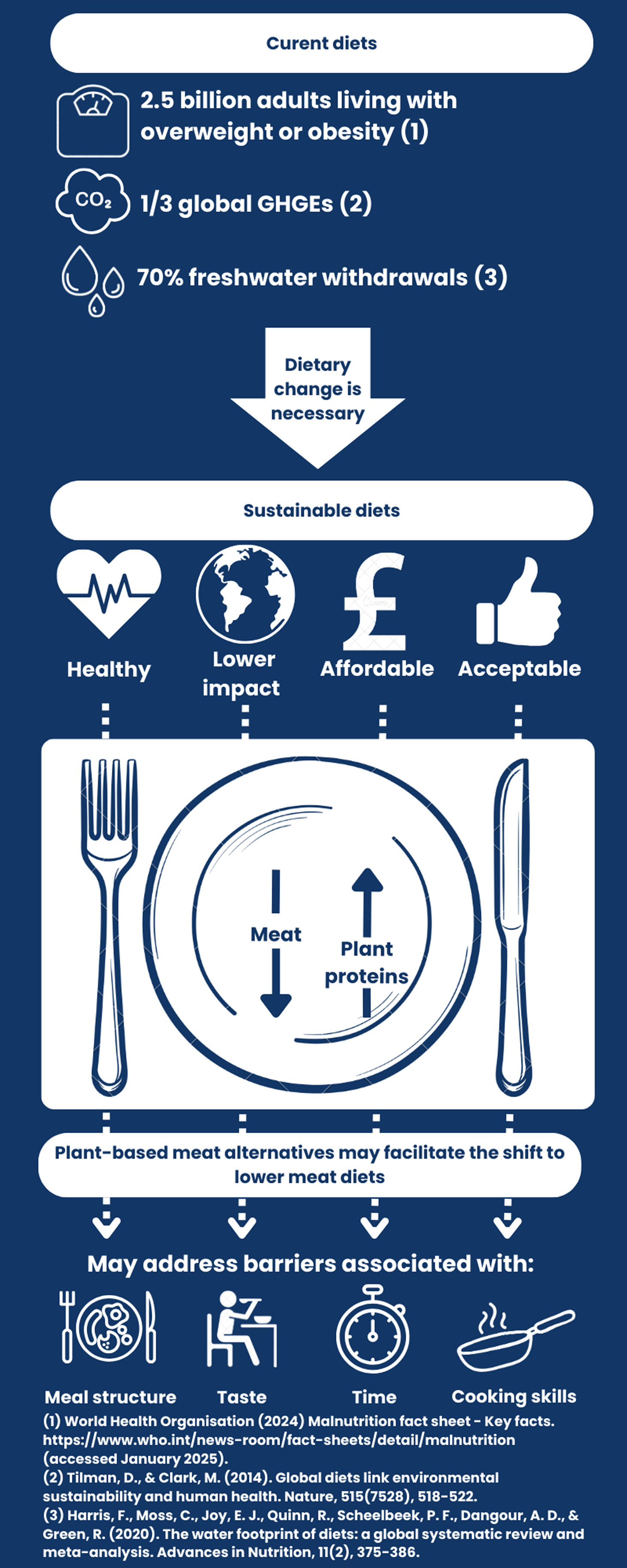
As well as contributing to nutrient intakes, meat also plays an important culinary and sociocultural role in many HICs(Reference Kenny, Woodside and Perry37,Reference Nungesser and Winter38) and is consumed daily by the majority of the population in the UK and Ireland(Reference Hyland, Henchion and McCarthy33,Reference Stewart, Piernas and Cook39) . Many culturally important dishes in the UK and Ireland contain meat, therefore reductions in meat intakes may require major dietary shifts which may not be considered acceptable or culturally appropriate, potentially reducing the likelihood of significant behaviour change. Therefore, dietary changes to reduce meat in the diet should align with the dimensions of the FAO’s definition of a sustainable diet and address the nutritional implications and sociocultural barriers associated with reduced meat consumption(Reference James, Lomax and Birkin36,Reference Fehér, Gazdecki and Véha40) , with PBMAs potentially well-positioned to fill this gap (Figure 1).
The potential role of plant-based meat alternatives in transitioning to sustainable diets.

Plant-based meat alternatives
PBMAs are products made from non-meat ingredients which, to varying degrees, aim to approximate the organoleptic and functional properties of animal-derived meat(Reference He, Evans and Liu41–Reference Van Vliet, Kronberg and Provenza44). Whilst human consumption of plant proteins such as tofu, tempeh and seitan can be traced back to ancient civilisations in Asia(Reference He, Evans and Liu41,Reference Riaz, Phillips and Williams45) , the concept of PBMAs became more developed in Western countries around the 1960s due to the creation of textured vegetable protein for use in vegetarian and vegan meat alternatives such as burger patties, sausages and mince(Reference He, Evans and Liu41,Reference Riaz, Phillips and Williams45) . More recently, a new wave of PBMAs have been developed to mimic more closely the eating experience and nutritional composition of meat to appeal to both non-meat eaters and meat-eaters alike. This new wave of products typically includes ingredients such as protein isolates, mycoprotein, vegetable fats, starches, seasonings and additives(46,Reference Lindberg, McCann and Smyth47) which undergo a high level of processing using techniques such as high moisture extrusion(Reference Andreani, Sogari and Marti48), to create products with a similar look, taste and texture to animal-derived meat.
Growth of the PBMA market
The PBMA market has grown rapidly over the last decade in terms of innovation, sales and consumer-base, with further growth projected(49). Research by Barclays estimates that meat alternatives will account for 10 % of the global meat industry by 2029, which is a 10-fold increase compared to 2019 figures(49). Sales of PBMAs in Europe have grown by 121 % since 2010, with the UK one of the biggest consumers of these products, accounting for a third of European sales(Reference Geijer50) which equates to around 1·1 billion pounds (GBP)(51).
According to an analysis of the climate plans and protein transition strategies of 15 of the largest European supermarket chains, five supermarkets were found to have strategies relating to either increased sales of plant-based products (Tesco and Carrefour) or strategies to invert the plant-to-animal protein ratio to 60:40 plant to animal proteins by 2030 (Lidl, Aldi Nord, Albert Heijn)(52). Current strategies are set at national rather than company level, however, successful roll-out could result in wider implementation at company level(52). With increased sales of plant-based products key aspects of sustainability targets for the largest European supermarkets, further growth and expansion of the PBMA market is likely.
These market changes align with recommendations proposed at the national level in the UK to reduce meat consumption and increase consumption of plant-based proteins. Such recommendations have been made by the UKCCC and the National Food Strategy to achieve climate change and public health targets, with the UKCCC recommending a 25 % reduction in average meat intakes by 2040 and a 35 % reduction by 2050 to reduce food-related emissions and free up land for nature(53). Similarly, the National Food Strategy recommends a 30 % reduction in meat consumption over the next decade to meet climate change targets and improve health outcomes(Reference Dimbleby54). To enable these dietary changes, both reports highlight the potential of PBMAs and encourage the implementation of policy measures and investment to increase the availability, affordability and choice of PBMAs on offer in supermarkets, restaurants and public institutions(53,Reference Dimbleby54) . Contrary to the recommendations proposed for the UK, Ireland’s Food Vision 2030 report focuses on the nutritional shortcomings of PBMAs, advising consumers not to use these products as replacements to meat in terms of nutrition(55). Therefore, at present, inconsistencies exist in the recommendations for PBMAs and their role in the transition to healthy and sustainable diets.
PBMA consumption in the UK and Ireland
Whilst the consumer base for PBMAs in the UK and Ireland has grown in recent years(51,Reference Alae-Carew, Green and Stewart56) , the degree of growth differs according to the source, with Mintel reporting the proportion of UK PBMA consumers increased from 50 % in 2017 to 65 % in 2019(51). However, consumer surveys conducted in 2020 (n 802 individuals aged 15–74 years) and 2021 (n 1, 916 individuals aged 16–75 years) by relevant IOI and UK policymakers, safefood and the Food Standards Agency, both reported around 30 % of individuals surveyed in the UK and Ireland consuming PBMAs(46,57) . For most consumers surveyed, consumption of PBMAs appeared to be mostly occasional, with only around a third of respondents in both surveys reporting consuming PBMAs multiple times a week(46,57) . According to the safefood consumer survey, the PBMAs most consumed on the IOI were ‘Meat substitute burgers’ (41 % of respondents), ‘Meat substitute mince, meatballs and bolognese’ (31 % of respondents) and ‘Sausage substitutes including sausage rolls’ (29 % of respondents)(46). All of which are alternatives to red and/or processed meat, for which recommended intakes are generally lower than white meat.
Although current consumption of PBMAs in the UK and Ireland appears to be mostly occasional, incorporation of these foods in the diet, may result in lower meat intakes(Reference Alae-Carew, Green and Stewart56). According to a cross-sectional analysis of national food consumption data from the UK’s National Diet and Nutrition Survey (waves 1–11 spanning years 2008/2009 to 2018/2019), the significant increase in the proportion of PBMA consumers (from 4·6 % to 7 %, P < 0·01 in 2008/2009 and 2018/209 respectively) occurred in conjunction with significant reductions in total meat consumption over the years (from 99·0 g/capita/d in 2008/2009 to 85·3 g/capita/d in 2018/2019, P < 0·01)(Reference Alae-Carew, Green and Stewart56).
The same study then grouped individuals according to ‘low meat consumers’ and ‘high meat consumers’ based on thresholds from the UKCCC animal-source foods recommendations of 66·8 g/d and 94·3 g/d for females and males respectively(Reference Alae-Carew, Green and Stewart56). Intakes of plant-based alternatives (including meat and dairy alternatives) were significantly higher in the ‘low meat consumers’ group compared to the ‘high meat consumers’ group (12·7 g/capita/d v. 4·1 g/capita/d, P < 0·01)(Reference Alae-Carew, Green and Stewart56). These findings suggest that plant-based alternatives may be being used as direct substitutes for animal-source foods for a small but increasing portion of the population. Therefore, further research into how PBMAs are used in the diet is necessary to better understand the degree to which these products reduce meat intakes, and the types of meat they displace in the diet. This is important, considering the difference in the nutritional profile and environmental impact of red, white and processed meats.
Role of PBMAs in addressing barriers associated with sustainable diets
Although an increasing number of people in the UK and Ireland are reportedly willing to reduce their meat intakes due to health, environmental or ethical reasons, several barriers exist which prevent these dietary changes from being implemented(Reference Kenny, Woodside and Perry37,Reference Bryant58,59) . A recently published systematic review on the barriers to adopting plant-based diets in HICs, included 10 studies and identified 11 themes relating to 40 barriers identified across the 1740 participants included. The aggregated themes were: lack of knowledge, convenience, emotional, health, social, enjoyment of meat, environmental, accessibility, personal ability, media and financial(Reference Rickerby and Green60), which are consistent with types of barriers to plant-based diets identified in an earlier comprehensive review(Reference Fehér, Gazdecki and Véha40). The lack of information on knowing what to eat was one of the most frequently mentioned barriers identified in the systematic review. This barrier related to the lack of knowledge on what foods to substitute animal-source foods with, is consistent with the findings from a study conducted in Australia on the barriers to plant-based diets(Reference Lea, Crawford and Worsley61). The incorporation of PBMAs into the diet may help overcome this information barrier by providing a direct replacement to meat in terms of functionality within a meal.
Convenience in relation to time, energy and effort spent shopping, creating, prepping and cooking meat-free meals is another associated barrier to following plant-based diets(Reference Fehér, Gazdecki and Véha40,Reference Bryant58,Reference Rickerby and Green60,Reference Lea, Crawford and Worsley61) , which PBMAs can potentially address due to having similar cooking requirements than the meat they aim to replace. An appreciation for the taste of meat is another identified barrier in the transition to reduced meat diets(Reference Fehér, Gazdecki and Véha40,Reference Bryant58,Reference Rickerby and Green60,Reference Lea, Crawford and Worsley61) . Since PBMAs aim to approximate the sensory properties of meat, further improvements in the sensory quality and appearance of these products could address the barrier of meat appreciation in a way that whole plant foods cannot(Reference Kenny, Woodside and Perry37,Reference Hoek, Luning and Weijzen62,Reference Weinrich63) .
The replacement of meat in the diet with whole plant foods such as legumes, nuts and seeds, as recommended in the EAT-Lancet Planetary Health diet(Reference Willett, Rockström and Loken4), requires modification of the component structure of familiar meals which may impede diet acceptability(Reference Mertens, Biesbroek and Dofková64,Reference Van Mierlo, Rohmer and Gerdessen65) and be unsuccessful in overcoming barriers associated with transitioning to plant-rich diets(Reference Fehér, Gazdecki and Véha40,Reference Bryant58,Reference Rickerby and Green60,Reference Lea, Crawford and Worsley61,Reference Röös, de Groote and Stephan66) . The inclusion of PBMAs into diets, may facilitate the shift towards reduced meat intakes by providing a convenient substitute for meat while maintaining a similar component structure of familiar meals(Reference Schösler, Boer and Boersema67). However, the ability of PBMAs to address challenges associated with the acceptability of plant-based diets or recommendations to reduce meat intakes, is mostly speculated, with a limited number of studies investigating this and reporting mixed outcomes(Reference Pellinen, Jallinoja and Erkkola68–Reference Roberts, Busque and Robinson72). Ensuring social and cultural acceptability is an important aspect of the FAO definition of sustainable and healthy diets(1). Therefore, further research into the role of PBMAs in increasing or reducing the acceptability healthy and sustainable diets is needed.
PBMAs in FBDGs
A comprehensive global analysis of 95 FBDGs across 100 countries, found that 38 % (n 36) of the guidelines analysed mentioned PBMAs(Reference Klapp, Feil and Risius73). However, these figures do not differentiate between FBDGs for the general population and those tailored for individuals following vegetarian and vegan diets. Also included in the PBMA grouping used in this analysis were traditional plant protein alternatives such as tofu, tempeh and seitan. Therefore, the proportion of FBDGs which mention more novel PBMAs such as plant-based burgers, sausages etc., is likely to be much lower than 38 %. The authors of this analysis recognised the health promoting and sustainability potential of diets consisting of mostly whole plant foods, as well as the role that PBMAs may play in accounting for cultural preferences. The study acknowledges the variability in the nutritional profiles of PBMAs and recommended revised FBDGs to provide guidance on the types of PBMAs which can be consumed frequently, and which should be consumed in moderation(Reference Klapp, Feil and Risius73). To make such recommendations, the authors emphasised the need for further research into the nutritional profile and health implications of PBMA consumption. As well as providing advice on PBMAs based on the nutrient profiles and health outcomes associated with the consumption of these products, a consideration of the raw ingredients, country of origin and degree of processing will be important from an environmental standpoint(Reference Klapp, Feil and Risius73).
Processed nature of PBMAs
The ultra-processed nature of PBMAs has raised concerns over the potential impact of these products on nutrient intakes, health outcomes and environmental impact(Reference Hu, Otis and McCarthy25). Foods characterised as ultra-processed foods (UPFs) are mostly formulated with extracted components of foods and additives(Reference Monteiro, Cannon and Lawrence74). With the widespread use of protein isolates and additives such as thickeners, emulsifiers, flavourings and colourants in PBMAs(75,Reference Gurung, Tobi and Leigh-Taylor76) , many of these products are considered UPFs according to the NOVA classification system(Reference Monteiro, Cannon and Lawrence74). Studies which have allocated NOVA scores to PBMAs have found that most products are assigned a score of 3 or 4, which puts them in the processed or UPF categories respectively(Reference Gurung, Tobi and Leigh-Taylor76–Reference Cutroneo, Angelino and Tedeschi81). When diets of adults from the French Third Individual and National Study on Food Consumption Survey (INCA3; 2014–2015) were modelled to replace meat with different PBMAs, the percentage of energy intake from UPFs increased in meat substitution simulations (from 28·6 % for reference diets to a maximum of 39·5 % for meat substitution diets)(Reference Salomé, Huneau and Le Baron79). Another study which looked at the percentage of energy intakes from UPFs in pescatarian, vegetarian and vegan diets, found that the greater the degree of avoidance of animal-source foods, the higher the consumption of UPFs, with UPFs contributing towards 33 %, 32·5 %, 37 %, and 39·5 % of energy intakes for meat-eaters, pescatarians, vegetarians, and vegans respectively(Reference Gehring, Touvier and Baudry82).
Previous studies investigating the impact of UPFs on health outcomes have shown that frequent consumption of UPFs was associated with poorer overall diet quality(Reference Da Costa Louzada, Ricardo and Steele83,Reference Moubarac, Batal and Louzada84) , overconsumption of calories and weight gain(Reference Hall, Ayuketah and Brychta85) and a deleterious effect on gut microbiome(Reference Miclotte and Van de Wiele86). As well as this, UPFs have also been associated with higher environmental impacts with regards to GHGEs(Reference Berardy, Fresán and Matos77). However, there is considerable heterogeneity across foods characterised as ultra-processed with regards to nutritional quality, health and environmental impact. One study reported a wide variation of Nutri-Scores (nutritional rating system) of foods classified as ultra-processed, with 61·7 % of plant-based alternative products within this category allocated an A or B Nutri-Score compared to 28·6 % of animal-based products in the UPFs category assigned an A or B Nutri-Score(Reference de Las Heras-Delgado, Shyam and Cunillera80). Nutri-Scores A and B are indicative of a better nutritional profile(Reference Hercberg, Touvier and Salas-Salvado87). In another study which used the UK’s Nutrient Profiling Model (NPM) to evaluate the ‘healthiness’ of n 62 PBMAs available in the UK and n 62 meat counterparts, 74 % of PBMAs v. 60 % of the meat counterparts were ‘healthy’ according to the NPM scores(Reference Ciobotaru, Tas and Khan88). However, a significant difference was observed only for the red meat category, whereby significantly more PBMAs within this category were ‘healthy’ compared to the proportion of red meat products categorised as ‘healthy’. Non-significant differences for the poultry and fish categories were observed, suggesting only PBMAs to red meat are healthier than their meat counterparts(Reference Ciobotaru, Tas and Khan88). Therefore, whilst concerns around UPFs are valid, the characterisation of foods with the NOVA classification system does not necessarily provide a full picture of the nutritional quality of the food and its impact on health outcomes and the environment.
Nutritional impact of PBMAs
Several audit and cross-sectional studies have evaluated the nutritional content of PBMAs available in different countries(Reference Gurung, Tobi and Leigh-Taylor76,Reference Rizzolo-Brime, Orta-Ramirez and Puyol Martin78,Reference Cutroneo, Angelino and Tedeschi81,Reference Ciobotaru, Tas and Khan88–Reference Lindberg, Woodside and Walton108) , with considerable variation in the nutrient contents of PBMAs observed within and between product categories and differing based on the main protein source used. To better understand these differences, we conducted a systematic review which included 33 studies reporting on the nutritional content of PBMAs grouped into 8 categories(Reference Lindberg, McCann and Smyth47). This systematic review found that, overall, when compared with comparable meat products, PBMAs tended to contain similar or lower energy, protein, total and saturated fat contents and higher carbohydrate, sugar and fibre contents per 100 g(Reference Lindberg, McCann and Smyth47). Salt/sodium contents were similar or higher for PBMAs compared to meat products, except for the ‘Sausages’, ‘Bacon/slices’ and ‘Meatball’ categories, in which most studies reported less sodium/salt contents in PBMAs within these categories(Reference Lindberg, McCann and Smyth47). These findings are consistent with another systematic review by Najera Espinosa et al., (2024), in which PBMAs were grouped according to their main protein source and compared with meat & poultry as an aggregated group(Reference Nájera Espinosa, Hadida and Jelmar Sietsma109). The authors of this systematic review included 35 studies in the nutritional evaluation and reported PBMAs to have a lower energy density and saturated fat content and a higher fibre and total sugar content per 100 g than meat & poultry, with mycoprotein-based alternatives reported to be the least energy dense, lowest in saturated fat and total sugar and highest in fibre compared to PBMAs from other protein sources such as cereals & grains or legumes(Reference Nájera Espinosa, Hadida and Jelmar Sietsma109). Similar sodium contents for PBMAs and animal meat were reported(Reference Nájera Espinosa, Hadida and Jelmar Sietsma109).
A recent comprehensive analysis by ProVeg International, of the nutritional profiles of 422 PBMAs available across 11 different countries and 4 continents, highlights the variation in the nutritional content of PBMAs according to location, with PBMAs from The Netherlands having the best nutritional score and PBMAs from Malaysia having the worst score(104). The scoring system used was developed specifically for the analysis, in which a point was allocated providing the content of total fats, saturated fats, salt and sugars were below thresholds based on guidelines from the WHO European Nutrient Profile Model (NPM), The Netherlands Nutrition Centre White Paper and the European Food Standard’s Agency (EFSA) nutrition claim legislation and a point for iron, vitamin B12, protein and fibre was allocated providing contents were above thresholds based on the Netherlands guidelines for micronutrients and EFSA legislation on nutrition claims for fibre. Although nutritional scores for PBMAs varied depending on location and product category, PBMAs had a slightly better overall nutritional score than animal-based meat(104).
This cross-sectional analysis by ProVeg International supports the findings from the systematic reviews mentioned above, whereby PBMAs tend to contain less protein and saturated fat and more fibre per 100 g than animal meat(104). Although PBMAs overall contained less protein than meat, when analysed according to product category, the differences were more nuanced with plant-based ‘Sausages’, ‘Minced meat’, ‘Bacon’, and ‘Meatballs’ containing more protein per 100 g than comparable meat products(104). As well as this, between 63–90 % of PBMAs across the different markets contained ≥ 20 % of energy from protein, indicating that in some markets such as the UK and USA where almost 90 % of PBMAs contained ≥ 20 % energy from protein, protein content is not an issue compared to other countries such as Malaysia or South Africa where a lower proportion of PBMAs contained ≥ 20 % energy from protein(104). The analysis showed that whilst the sugar content of PBMAs was higher than meat products, 98 % of the PBMAs included, contained sugar contents below the EFSA nutrition claim threshold of 5 g/100 g. Therefore, suggesting that sugar contents of these products are not problematic. However, the salt content of PBMAs was highlighted as an issue, with PBMAs in most countries exceeding the maximum threshold of 1·1 g/100 g and therefore not considered to be within the healthy range(104).
Although the ProVeg report highlighted regional variation in the nutritional quality of PBMAs, audit and cross-sectional studies investigating the nutritional content of PBMAs available in the UK and IOI reported similar findings with regards to macronutrient content(46,Reference Gurung, Tobi and Leigh-Taylor76,Reference Ciobotaru, Tas and Khan88,Reference Alessandrini, Brown and Pombo-Rodrigues91,Reference Lindberg, Mulhall and Woodside105,Reference Lindberg, Woodside and Walton108,Reference Coffey, Lillywhite and Oyebode110) . In a report by the Food Foundation, 71 plant protein products available for UK consumers at Tesco supermarkets, were categorised into 1 of 3 categories based on degree of processing; ‘Processed new generation’ which included PBMAs, ‘Processed traditional’ which included tofu, tempeh and seitan and ‘Beans and grains’(Reference Gurung, Tobi and Leigh-Taylor76). The plant-based categories were also compared with meat including red and white meats. Overall, the ‘Processed new generation’ PBMAs contained less calories, protein and saturated fat and more fibre, sugar and salt per 100 g compared to the meat category, whilst the less processed plant-based categories contained less calories, saturated fat, sugar and salt than the more processed PBMAs(Reference Gurung, Tobi and Leigh-Taylor76).
Due to inconsistencies in fortification regulations in different regions, varying levels of fortification of PBMAs with key micronutrients such as iron, zinc and vitamin B12 exist across different markets, brands and product categories, with iron and vitamin B12 the most used fortificants in PBMAs(Reference Lindberg, McCann and Smyth47,104,Reference Nájera Espinosa, Hadida and Jelmar Sietsma109) . According to the ProVeg report, the proportion of PBMAs fortified with iron ranged from 0–95 % across 11 countries with South Africa containing no products fortified with micronutrients, while > 95 % of PBMAs available in the USA were fortified with iron(104). Although almost all PBMAs in the USA were fortified with iron, only 24 % were fortified with vitamin B12. The Netherlands on the other hand had a more even distribution of PBMAs fortified with iron and vitamin B12 with around 75 % of products fortified with these micronutrients(104).
A number of studies have used modelling to assess the impact of full or partial substitution of meat with PBMAs on diet quality, nutrient intakes/adequacy and environmental indicators for several different settings including Australia(Reference Marchese, McNaughton and Hendrie111), the UK(Reference Farsi, Uthumange and Munoz112,Reference Guy, Bray and Appleton113) , Sweden(Reference Bunge, Mazac and Clark19), The Netherlands(Reference Tyszler, Kramer and Blonk114–Reference Temme, Van Der Voet and Thissen116), France(Reference Mertens, Biesbroek and Dofková64,Reference Salomé, Huneau and Le Baron79) , Italy, Denmark, Czech Republic(Reference Mertens, Biesbroek and Dofková64), the U.S.A(Reference Goldstein, Moses and Sammons117,Reference Tso and Forde118) and Singapore(Reference Tan, Hsien and Foo119). The modelling of partial replacement of meat (50 %) with PBMAs resulted in significant improvements in diet quality compared to Australian baseline diets, however full replacement of meat with PBMAs resulted in non-significant differences in diet quality(Reference Marchese, McNaughton and Hendrie111). Full replacement of meat and dairy with soy-based alternatives improved diet quality scores compared to French baseline diets, whilst full substitution with cereal-based alternatives resulted in slight reductions in diet quality assessed by PANDiet scores(Reference Salomé, Huneau and Le Baron79). Improvements in dietary scores were observed for full replacement of meat with ‘future food substitutes’ such as Quorn and insect-based proteins compared to baseline UK diets(Reference Guy, Bray and Appleton113). Whilst partial or full replacement of meat was found by most studies to result in lower saturated fat and higher fibre intakes(Reference Bunge, Mazac and Clark19,Reference Salomé, Huneau and Le Baron79,Reference Marchese, McNaughton and Hendrie111,Reference Farsi, Uthumange and Munoz112,Reference Seves, Verkaik-Kloosterman and Biesbroek115,Reference Temme, Van Der Voet and Thissen116) , substitutions negatively impacted intakes of sodium(Reference Bunge, Mazac and Clark19,Reference Mertens, Biesbroek and Dofková64,Reference Salomé, Huneau and Le Baron79,Reference Marchese, McNaughton and Hendrie111,Reference Farsi, Uthumange and Munoz112,Reference Tso and Forde118) , as well as certain micronutrients such as vitamin B12 (Reference Bunge, Mazac and Clark19,Reference Mertens, Biesbroek and Dofková64,Reference Salomé, Huneau and Le Baron79,Reference Farsi, Uthumange and Munoz112,Reference Tyszler, Kramer and Blonk114,Reference Seves, Verkaik-Kloosterman and Biesbroek115,Reference Tso and Forde118) , selenium(Reference Bunge, Mazac and Clark19,Reference Tyszler, Kramer and Blonk114) and zinc(Reference Bunge, Mazac and Clark19,Reference Mertens, Biesbroek and Dofková64,Reference Salomé, Huneau and Le Baron79,Reference Marchese, McNaughton and Hendrie111,Reference Tyszler, Kramer and Blonk114,Reference Temme, Van Der Voet and Thissen116,Reference Tso and Forde118) . Impacts on iron intakes differed across the studies and depended on whether the PBMAs used in the modelling scenarios were fortified or not, with fortified products resulting in increased iron intakes(Reference Bunge, Mazac and Clark19,Reference Farsi, Uthumange and Munoz112,Reference Tyszler, Kramer and Blonk114–Reference Temme, Van Der Voet and Thissen116) . However, whilst iron intakes were higher in the modelling studies which assessed fortified PBMAs, the iron provided by these products was less bioavailable(Reference Salomé, Huneau and Le Baron79,Reference Seves, Verkaik-Kloosterman and Biesbroek115,Reference Temme, Van Der Voet and Thissen116) .
Health impact of PBMAs
Studies investigating the impact of PBMA consumption on health outcomes are limited and heterogenous(Reference Bianchi, Aveyard and Astbury70–Reference Roberts, Busque and Robinson72,Reference Bottin, Swann and Cropp120–Reference Lousuebsakul-Matthews, Thorpe and Knutsen128) , with a range of different health outcomes assessed, different products used, different study designs employed and variability in the duration of the studies. As outlined in the section above, the nutritional profiles of PBMAs are more conducive to improvements in cardiovascular health compared to the nutritional profiles of animal meat(Reference Lindberg, McCann and Smyth47,Reference Nagra, Tsam and Ward129) . According to a systematic review and meta-analysis of 12 controlled trials which investigated the impact of substituting meat with PBMAs on cardiometabolic risk factors, full or partial substitution of meat with PBMAs was reported to positively affect blood lipid profile with a pooled analysis finding a significant association with PBMA consumption and lower total cholesterol (–0·50 mmol/l (95 % CIs −0·70, −0·29)), LDL-cholesterol (–0·39 mmol/l (95 % CIs −0·57, −0·21)) and triglycerides (–0·15 mmol/l (95 % CIs −0·29, −0·01))(Reference Gibbs and Leung130). However, the certainty of evidence was low to moderate, therefore, caution should be exercised in the interpretation of these findings.
As reported in our previously published systematic review, a small number of dietary intervention studies observed positive changes in nutrient intakes and health outcomes when meat was fully or partially substituted with PBMAs in the diet(Reference Lindberg, McCann and Smyth47). Reduced intakes of saturated fat(Reference Bianchi, Aveyard and Astbury70,Reference Crimarco, Springfield and Petlura71) , increased intakes of fibre(Reference Bianchi, Aveyard and Astbury70,Reference Coelho, Monteyne and Dirks123) , improvements in lipidome(Reference Crimarco, Springfield and Petlura71,Reference Coelho, Monteyne and Dirks123) and weight loss(Reference Bianchi, Aveyard and Astbury70,Reference Crimarco, Springfield and Petlura71) have been reported. However, considering the limited number of studies reporting these findings, further research investigating the long-term impact of PBMA consumption on human health is needed(Reference Lindberg, McCann and Smyth47,75,Reference Gurung, Tobi and Leigh-Taylor76,Reference Nájera Espinosa, Hadida and Jelmar Sietsma109) .
Environmental impact of PBMAs
Meat from different animals and production systems results in different environmental impacts(Reference Clark, Springmann and Rayner131,Reference Poore and Nemecek132) . Meat from monogastric animals such as chicken and pigs generally has a lower environmental impact than meat from ruminant animals such as beef and lamb, due to enteric fermentation in ruminants resulting in greater methane production, thus driving up the GHGEs and GWP of red meat(Reference Clark, Springmann and Rayner131,Reference Poore and Nemecek132) . The different feed conversion ratios of different species also determines the environmental impact of meat, with chickens having a more efficient feed conversion ratio than cattle(Reference Gržinić, Piotrowicz-Cieślak and Klimkowicz-Pawlas133). Therefore, the production of PBMAs tends to have a lower environmental impact than the production of animal meat(Reference Gurung, Tobi and Leigh-Taylor76,Reference Berardy, Fresán and Matos77,Reference Coffey, Lillywhite and Oyebode110,Reference Tyszler, Kramer and Blonk114,Reference Smetana, Profeta and Voigt134–Reference Saget, Costa and Santos136) , with reductions of > 70 % in GHGEs, land use and water footprint reported by Najera Espinosa et al., (2024) when shifting from animal-meat to PBMAs(Reference Nájera Espinosa, Hadida and Jelmar Sietsma109). However, smaller differences have been reported when PBMAs were compared to poultry or fish(Reference Gurung, Tobi and Leigh-Taylor76,Reference Coffey, Lillywhite and Oyebode110,Reference Smetana, Mathys and Knoch137) , with Smetana et al., (2015) highlighting the importance of the functional unit used and type of PBMA assessed, as determinants on how PBMAs compare to chicken in terms of environmental impact(Reference Smetana, Mathys and Knoch137). However, what should also be taken into consideration is the role of intensive poultry husbandry in increasing the risk of zoonotic diseases and antibiotic resistance in certain parts of the world where mismanagement of farming practices, overcrowding and inappropriate antibiotic use are more likely(Reference Gržinić, Piotrowicz-Cieślak and Klimkowicz-Pawlas133). Therefore, whilst the substitution of poultry with PBMAs may not result in great differences in environmental impact indices, poultry farming, if not managed well, can have serious and widespread adverse effects on public health and other wildlife in certain areas(Reference Clark, Springmann and Rayner131,Reference Poore and Nemecek132) .
Studies which modelled the environmental impact of full or partial replacement of baseline meat intakes with PBMAs reported GHGEs savings(Reference Bunge, Mazac and Clark19,Reference Mertens, Biesbroek and Dofková64,Reference Guy, Bray and Appleton113,Reference Tyszler, Kramer and Blonk114,Reference Goldstein, Moses and Sammons117,Reference Tan, Hsien and Foo119) , reductions in land use requirements(Reference Bunge, Mazac and Clark19,Reference Guy, Bray and Appleton113,Reference Tyszler, Kramer and Blonk114,Reference Temme, Van Der Voet and Thissen116,Reference Goldstein, Moses and Sammons117) and blue(Reference Goldstein, Moses and Sammons117) and freshwater withdrawals(Reference Bunge, Mazac and Clark19,Reference Guy, Bray and Appleton113) , demonstrating the potential of these products to transition towards more sustainable protein consumption. However, consideration of the impact that increased demand for ingredients commonly used in PBMAs, such as plant oils and soy, may have on biodiversity is important to prevent negative environmental outcomes resulting from increased consumption of these products. The risk of this can be mitigated through responsible sourcing and transparent supply chains(Reference Goldstein, Moses and Sammons117).
Future directions
There is greater scope to reduce the environmental impact of PBMAs than conventional meat products(Reference Ritchie, Reay and Higgins138). Measures such as the transition to a decarbonised energy grid, better sourcing of soy, greater transparency in soy and palm oil supply chains and product reformulation to remove or reduce ingredients with higher environmental impacts, all have the potential to further reduce the environmental impact of PBMAs, particularly soy and mycoprotein-based alternatives. Actions towards these measures have already been taken, with the UK government committing to a fully decarbonised electricity system by 2035(139) and the UK Soy Manifesto committing to ensure all soy transported to the UK is deforestation and conversion free by 2025(140). With successful implementation of such measures, the production of PBMAs in the next decade, will likely result in a lower environmental impact than PBMAs produced today. Therefore, highlighting the potential role of these products in future food systems.
Since PBMAs are manufactured foods, the nutrient profile of these products can be improved. Food manufacturers should focus on product reformulation to reduce salt content and increase micronutrient content through processing techniques such as soaking beans and grains to reduce phytic acid and increase iron and zinc bioavailability(Reference Gupta, Gangoliya and Singh141,Reference Rubio, Xiang and Kaplan142) or the use of fortification with micronutrients such as vitamin B12 and iron which are commonly found in meat equivalent products(Reference Murphy and Allen143). Since excess sodium is a public health concern in most HICs and one of the largest dietary contributors to the global burden of disease(Reference Afshin, Sur and Fay144), the high sodium content of these products is a major limiting factor to their role in healthy and sustainable diets. Micronutrient deficiencies persist in the UK and Ireland, with around 11 % of women aged 15–49 years old living with anaemia and no progress made to reduce prevalence of anaemia(145). Therefore, the ability of PBMAs to address rather than exacerbate micronutrient deficiencies through fortification, presents a major opportunity for the PBMA sector and public health.
Demographics associated with PBMA consumption include being female, being younger (millennials), having a higher income and higher educational attainment(46,Reference Alae-Carew, Green and Stewart56,Reference Neuhofer and Lusk146) . The popularity of PBMAs among younger females, a population sub-group known to have lower meat intakes(Reference Hyland, Henchion and McCarthy33,Reference Alae-Carew, Green and Stewart56) and higher risk of micronutrient deficiencies including iron and zinc(145,Reference De Benedictis, Trame and Rink147) , further emphasises the importance of the use of fortification in PBMAs and the potential of these products to address micronutrient deficiencies.
Within the UK and Irish contexts, being male and having a lower educational attainment has been associated with higher meat intakes and higher diet-related GHGEs(Reference Hyland, Henchion and McCarthy33,Reference James, Lomax and Birkin36,Reference Kirwan, Walton and Flynn148) . This therefore implies that the sociodemographic characteristics associated with PBMA consumption are not aligned with the sub-groups of the population who require greater dietary shifts to transition to healthier and more sustainable diets. Increasing the appeal and uptake of these products for males and individuals in lower socio-economic groups may reduce the environmental impact of the dietary patterns of these individuals, providing PBMAs are used as replacements to red and processed meat. Reductions in the price of PBMAs as well as developments in the sensory attributes of these products will be integral in facilitating this dietary shift for this consumer segment.
Currently, PBMAs available in the UK and Ireland are more expensive than conventional meat products(Reference Geijer50,Reference Gurung, Tobi and Leigh-Taylor76,Reference Coffey, Lillywhite and Oyebode110,Reference Guy, Bray and Appleton113) . Price is a key influencing factor in food choice, particularly in the context of a cost-of-living crisis(Reference Dimbleby54). Therefore, the higher cost of PBMAs presents a major barrier to the consumption of these products(149) and their role in sustainable diets(1). Reynolds et al., (2019)(Reference Reynolds, Horgan and Whybrow150) have shown through linear programming that healthy diets, lower in GHGEs could be affordable for all income-groups in the UK, with reductions in animal-source foods and increases in plant-based foods generally needed to meet cost and GHGE constraints whilst ensuring nutritional adequacy(Reference Reynolds, Horgan and Whybrow150). However, considering the higher cost of PBMAs compared to traditional plant proteins and conventional meat(Reference Geijer50,Reference Gurung, Tobi and Leigh-Taylor76,Reference Coffey, Lillywhite and Oyebode110) , the inclusion of these foods into dietary patterns would not be feasible for all income quintiles in the UK.
As demonstrated by Ritchie et al., (2018) price reductions and increased social acceptability of PBMAs are needed to encourage partial replacement of meat with these products(Reference Ritchie, Reay and Higgins138) whilst mitigating the risk of widening health inequities further. Such reductions and substitutions also have the potential to not only reduce GHGEs but also avoid up to 52 700 premature deaths per year(Reference Ritchie, Reay and Higgins138).
Some European retailers present in The Netherlands, Germany, Austria, Denmark, Belgium, Hungary and Luxembourg have launched price parity programmes in which PBMAs are comparable in price to equivalent meat products(52). Changes in consumer behaviour around these products as a result of price parities is reflected in sales data, with Lidl seeing a 30 % increase in its own-brand plant-based products within six months(52). Price parity strategies in several Western European countries support the need for the UK and Ireland to follow suit to increase the accessibility and affordability of PBMAs to consumers at all income levels.
The agri-food sector is a key contributor to UK and Irish economies and livelihoods(Reference Dimbleby54,151) . Therefore, dietary shifts to reduced meat intakes need to be facilitated with a just transition in mind(Reference Dimbleby54). The growth of the alternative protein market represents an opportunity for the UK and Ireland to become leading producers of these products(Reference Dimbleby54). An analysis by Green Alliance has highlighted the potential of the UK alternative protein industry to reach £6·8 billion by 2035 with continued investment and implementation of supportive policy reforms(Reference Witten152). The growth in the industry would generate up to 25 000 jobs according to the analysis, with over 4000 of these jobs in farming since alternative protein production requires agricultural inputs(Reference Witten152). To capitalise on the opportunity to become a global industry leader in alternative proteins, recent funding from UK Research and Innovation (UKRI), Biotechnology and Biological Sciences Research Council and Innovate UK has contributed to the announcement of a £35 million National Alternative Protein Innovation Centre (NAPIC) to be established in the UK(153). The NAPIC will be dedicated to developing safe, acceptable, affordable, healthy and environmentally friendly plant-based alternatives to animal proteins as part of the UK’s ambition to meet Net Zero goals(153). Within the NAPIC, academic partners, industry, regulators and policymakers will collaborate to create a roadmap for a National Protein Strategy for the UK, of which plant-based proteins will play an integral role(153).
Meat reduction has become a contentious issue due to the politicising of the topic with the UK conservative party insinuating that a meat tax was a labour party policy(Reference Gurung, Tobi and Leigh-Taylor76). Such insinuations risk meat reduction becoming a polarised, party-political issue instead of a requirement to meet public health and environmental targets(Reference Gurung, Tobi and Leigh-Taylor76). As well as this, feelings of mistrust around PBMAs have been propagated by misinformation online driven mostly by ‘wellness experts’ or right-wing media and political figures(154). Therefore, there is a clear need for transparent information from reputable sources on PBMAs on online platforms so that consumers are well informed about these products. The inclusion of PBMAs into sustainable FBDGs with guidance on which PBMAs can be consumed frequently, and which should be consumed occasionally due to their nutrient contents and environmental impact, would help consumers understand that this is not a homogenous food group and that differentiation between these products is important for human and environmental health(Reference Klapp, Feil and Risius73,Reference Nájera Espinosa, Hadida and Jelmar Sietsma109) .
However, before the integration of PBMAs into sustainable FBDGs, further research investigating the long-term impact of these products on health outcomes is required. To date, the evidence-base on the health outcomes associated with PBMA consumption is limited and heterogenous, however no adverse effects on human health have been reported as a result of consuming these products over meat(Reference Lindberg, McCann and Smyth47,Reference Gurung, Tobi and Leigh-Taylor76,Reference Nájera Espinosa, Hadida and Jelmar Sietsma109,Reference Nagra, Tsam and Ward129,Reference Gibbs and Leung130) . Considering the ultra-processed nature of PBMAs and the health implications associated with habitual consumption of UPFs(Reference Da Costa Louzada, Ricardo and Steele83–Reference Hall, Ayuketah and Brychta85,Reference Fardet155) , long-term RCTs and prospective cohort studies aimed to evaluate the impact of PBMAs on health outcomes would be beneficial in understanding the potential of these products in healthy and sustainable diets.
Currently, there is still a research gap on consumer behaviours around PBMA consumption, the foods PBMAs replace in meals and the diet, and the foods which typically accompany PBMAs in meals. Further analysis of national food consumption datasets or dietary intake data collected as part of RCTs which advised increased PBMA and reduced meat consumption, without further dietary recommendations(Reference Bianchi, Aveyard and Astbury70,Reference Crimarco, Springfield and Petlura71,Reference Toribio-Mateas, Bester and Klimenko126) could address these research gaps. Consumer surveys at individual and household level could also provide a better understanding of how PBMAs are being incorporated into diets, as well as the use of citizen science approaches to understand how these foods are received, used and consumed(Reference Reynolds, Oakden and West156,Reference Dickinson and Bonney157) . By better understanding the current role of PBMAs in the diet, we can better understand the dietary shifts required to reach the full potential of PBMAs to reduce diet-related environmental impacts(Reference Bunge, Mazac and Clark19,Reference Mertens, Biesbroek and Dofková64,Reference Bianchi, Aveyard and Astbury70,Reference Guy, Bray and Appleton113,Reference Tyszler, Kramer and Blonk114,Reference Goldstein, Moses and Sammons117,Reference Tan, Hsien and Foo119,Reference Ritchie, Reay and Higgins138) , address micronutrient shortfalls(Reference James, Lomax and Birkin36) and other barriers associated with meat reduction(Reference Fehér, Gazdecki and Véha40,Reference Rickerby and Green60,Reference Lea, Crawford and Worsley61) .
Conclusions
PBMAs will likely play an important role in the transition to dietary patterns conducive to both human and environmental health. There is huge scope for enhancement of PBMAs, with the importance of these products in healthy and sustainable diets dependent on advancements and improvements in the nutritional profiles of PBMAs, how they are used in the diet, reductions in cost, developments in the use of renewable energy sources and changes in the narrative surrounding meat reduction and PBMAs.
Acknowledgements
The authors acknowledge the Irish Section of The Nutrition Society for the invitation to present this review paper as part of the postgraduate review competition.
Financial support
This work was undertaken as part of a PhD scholarship funded by Northern Ireland’s Department of Agriculture, Environment and Rural Affairs (2019R546).
Competing interests
There are no conflicts of interest.
Authorship
L. L. drafted the manuscript. J. V. W and A. P. N. critically reviewed the manuscript. All authors have read and approved the final manuscript.

 Open access

