




Impact statement
The Global Plastics Treaty has been under negotiation by the Intergovernmental Negotiating Committee since 2022. The second part of the fifth session of the Global Plastics Treaty negotiations is scheduled for August 2025 in Geneva with the aim to develop an instrument with the objective to “end plastic pollution and to protect human and environmental health”. However, despite the overwhelming evidence of the adverse impacts of microplastics (i.e., plastic fragments <5 mm) on human and environmental health, how non-essential microplastics used in cosmetics, festival and holiday decorations will be addressed within the Global Plastics Treaty remains unclear. In this Letter to the Editor, we argue that inclusions be made for non-essential microplastics used in cosmetics, festival and holiday decorations under "non-essential plastics" within the Global Plastics Treaty.
Letter to the editor
The Global Plastics Treaty, an international legally binding instrument on plastic pollution, including in the marine environment, has been under negotiation by the Intergovernmental Negotiating Committee (INC) since 2022 (Walker, Reference Walker2022). The second part of the fifth session of Treaty negotiations is scheduled for August 2025 in Geneva with the aim to develop an instrument with the objective to “end plastic pollution and to protect human and environmental health” (Diana et al., Reference Diana, Vegh, Karasik, Bering, Caldas, Pickle, Rittschof, Lau and Virdin2022). Despite overwhelming evidence of the adverse impacts of microplastics (i.e., plastic fragments <5 mm) on human and environmental health, how non-essential microplastics used in cosmetics, festival and holiday decorations will be addressed within the Global Plastics Treaty remains unclear (Gündoğdu et al., Reference Gündoğdu, Bour, Köşker, Walther, Napierska, Mihai, Syberg, Hansen and Walker2024).
Festivities, holidays and celebrations are often associated with unsustainability and high environmental impact. Examples include unsustainable overconsumption and waste during Christmas (Kopnina, Reference Kopnina2014; Thompson, Reference Thompson2019), the excessive purchase resulting in food waste during Ramadan (Hassan and Low, Reference Hassan and Low2024) or the worsening of air quality due to fireworks used during the Chinese New Years celebrations (Islam, Reference Islam2024). Microplastics have also become a significant environmental concern during these periods. Common festive items like glitter, confetti, polymer laminate coating for spring festival couplets (also known as “door couplets”; i.e., plastic-coated banners used to decorate doorframes), plastic lanterns, window paper-cut decals, mooncake boxes (i.e., festive plastic packaging) (Zhang, Reference Zhang2017), balloons and other decorations contribute to microplastic pollution, potentially causing adverse effects on ecosystems and human health. For instance, popping 100 balloons can release up to 33 million microplastics (Luo et al., Reference Luo, Awoyemi, Liu, Niu, Naidu and Fang2024). There was also a peak in microplastic concentration in the surface waters of the River Thames Rivers in London, UK after the firework display on New Years Eve (Devereux et al., Reference Devereux, Westhead, Jayaratne and Newport2022).
Another item associated with festivities is glitter, which is often found in decorations, clothing, cosmetics, toys, arts and crafts and a myriad of various other non-essential items (Yurtsever, Reference Yurtsever2019a; Piccardo et al., Reference Piccardo, Anselmi and Renzi2022a). Glitter is composed of 300–700 μm plastic particles coated with metals, which may increase their toxicity (Piccardo et al., Reference Piccardo, Anselmi and Renzi2022a). Multiple studies have found glitter in wastewater, sediment and street dust samples (Yurtsever, Reference Yurtsever2019b). Others found that glitter, either directly or through leachates, has adverse effects on aquatic organisms (Green et al., Reference Green, Jefferson, Boots and Stone2021; Piccardo et al., Reference Piccardo, Provenza, Anselmi and Renzi2022b). While glitter may have some practical applications, such as its use as a reflective coating or thermal insulation, uses solely based on non-essential aesthetic purposes often result in its indiscriminate release and environmental contamination with unnecessary human exposure. This avoidable exposure is especially concerning in children’s toys, where it may result in ingestion of the particles.
Similarly, cosmetics also contain glitter, but most research focuses on the presence of microbeads with abrasive functions. Glittering or shimmering cosmetics may be achieved using microplastics, cellulose, mica or glass. Of the products tested (e.g., cream, nail polish), 3.5% of leave-on cosmetics contained microplastics, which have been overlooked in many regulations specifically targeting microplastics (Kukkola et al., Reference Kukkola, Chetwynd, Krause and Lynch2024). A random audit of glittering or shimmering makeup products found glitter microplastics in 32% of them (Siegel, Reference Siegel2021). These particles may be harmful to ecosystems (Green et al., Reference Green, Jefferson, Boots and Stone2021), especially considering their rinse-off properties. However, their direct application on the body can increase the risks of adverse human health effects. For instance, application of a pencil eyeliner inside the lash line results in migration of glitter particles into the tear film (Ng et al., Reference Ng, Evans, North and Purslow2015) and exposure of the ocular mucosa. Glitter makeup may also contain preservatives (e.g., methylchloroisothiazolinone) that can cause allergic contact dermatitis (Vincenzi et al., Reference Vincenzi, Ravaioli, Lambertini, Guicciardi, Piraccini, Bardazzi and La Placa2019).
A similar but understudied product is plastic confetti, which is like glitter but with larger dimensions. For instance, a 9-month-old girl was admitted to the hospital following a large retropharyngeal abscess compromising the airways due to the ingestion of a confetti plastic star (Heyworth and Shulman, Reference Heyworth and Shulman2019). Besides their use as decorations in festivities, confetti are often found in Party Poppers and spread during the explosion. A study in Italy reported the presence of polyethylene terephthalate confetti in Party Poppers and estimated the yearly release of 400 million individual particles of confetti (8 tons) during graduation celebrations in the country (Brambilla et al., Reference Brambilla, Ambrosini, Babi Almenar, Binelli, Bonisoli-Alquati, Casagrandi, Chesta, Costanzo, De Felice, Della Torre, Ilahiane, Magni, Mari, Melià, Parolini, Pini, Romano, Ronchi, Rubolini and Tremolada2024). The use of Party Poppers has also produced ocular injuries, including the introduction of foreign bodies in the eye (Ravilla and Vardhan, Reference Ravilla and Vardhan2022). If released to the environment, animals may ingest these particles, leading to gastrointestinal lesions with fibrosis, known as “plasticosis” (Charlton-Howard et al., Reference Charlton-Howard, Bond, Rivers-Auty and Lavers2023).
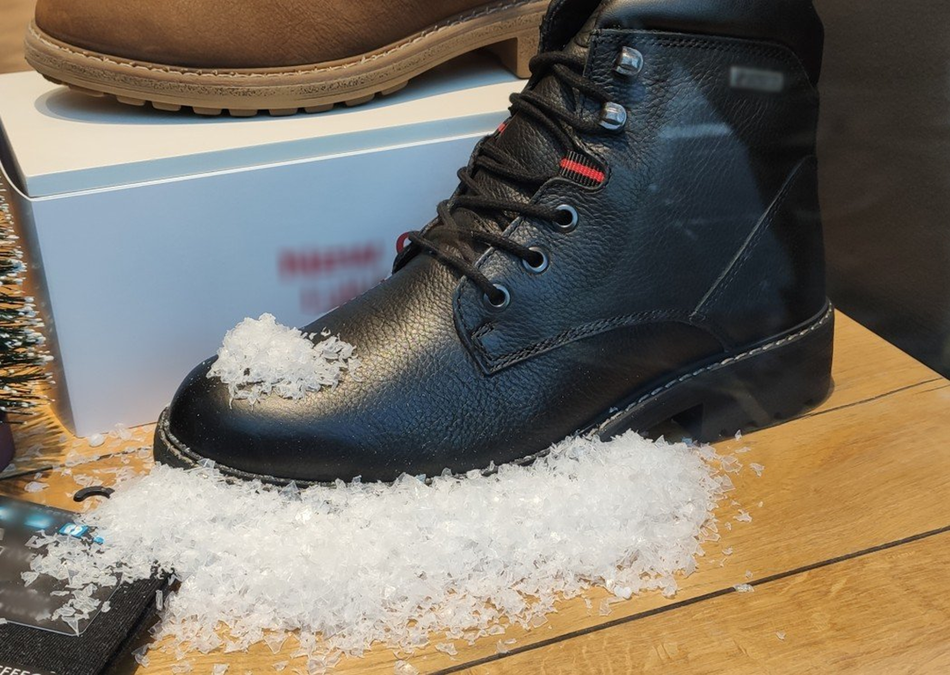
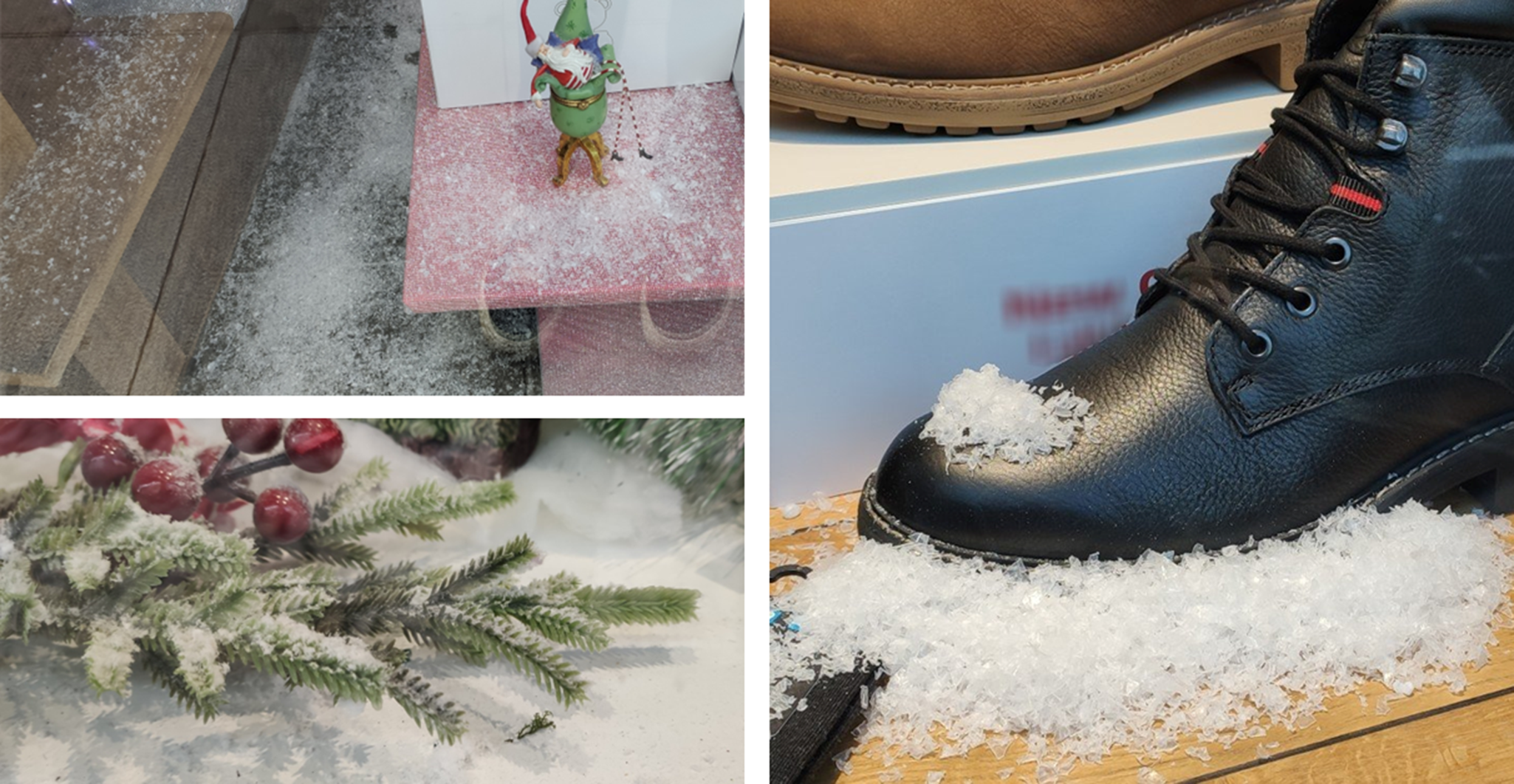
Fake snow may be a source of microplastics during winter holidays. One type of fake snow is composed of sodium polyacrylate, which forms a white foam when exposed to water. While sodium polyacrylate may not be strictly considered a microplastic (Frias and Nash, Reference Frias and Nash2019), its high-water absorption capacity has been associated with ocular injuries (Al-Amry and Al-Ghadeer, Reference Al-Amry and Al-Ghadeer2016) and asphyxiation (Stalder et al., Reference Stalder, Guechi, Bonnemain and Schmutz2024). Yet, many other forms of fake snow are made of microplastics. The use of fake snow indoors might lead to human exposure, while outdoors it is likely to be dispersed and result in environmental contamination. Nonetheless, there is an indiscriminate use of fake snow (Figure 1), and it is widely available in markets without any warning label or restriction regarding its use.
Microplastics used as storefront decorations in Porto, Portugal, during December 2024.
Regulations aimed at reducing or banning single-use plastics have often overlooked decorations or non-essential aesthetic uses, such as glitter (Grosso, Reference Grosso2022). Balloon sticks have been banned by the European Union (EU) Directive 2019/904 on single-use plastics. Despite their functional use as abrasives, microbeads have been included in bans since 2015 in the United States (The Microbead-Free Waters Act) and in Canada (Microbeads in Toiletries Regulations) in 2016 (Xanthos and Walker, Reference Xanthos and Walker2017; Schnurr et al., Reference Schnurr, Alboiu, Chaudhary, Corbett, Quanz, Sankar, Srain, Thavarajah, Xanthos and Walker2018). Canada became the first country to list microbeads as a “toxic substance” with regulations to ban the manufacture, import and sale of products containing microbeads (Pettipas et al., Reference Pettipas, Bernier and Walker2016). However, bans have often been misleading to the public because products may contain other added microplastics beyond microbeads (Kukkola et al., Reference Kukkola, Chetwynd, Krause and Lynch2024).
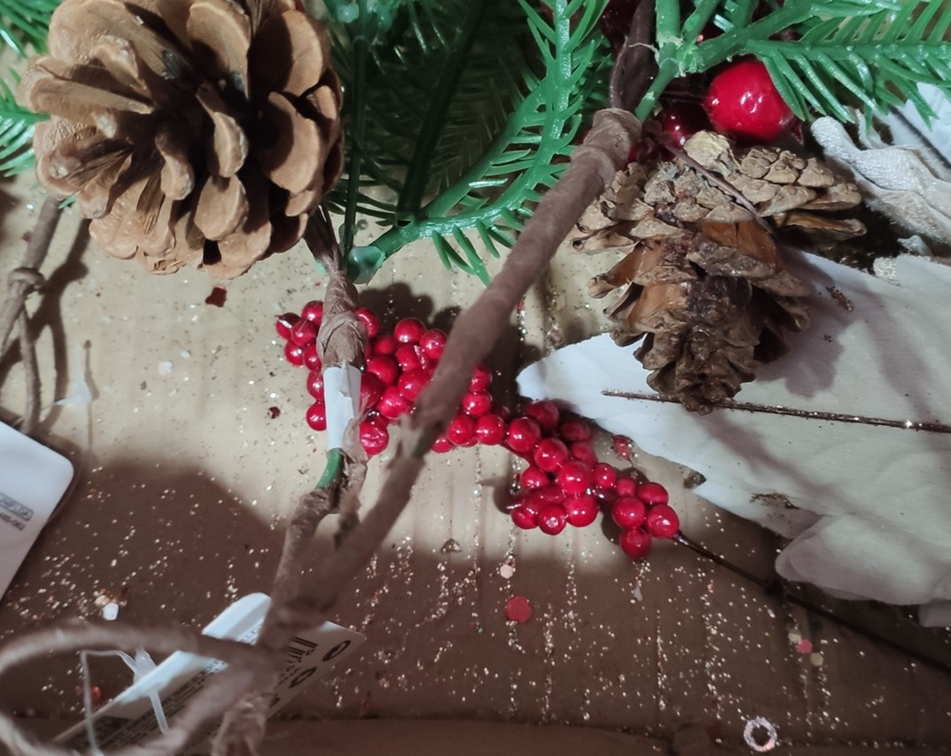
More recently, the EU’s Commission Regulation 2023/2055 extended restrictions to other microplastics intentionally added to products, including glitter in cosmetics but is still undecided in many products (e.g., fake polyester grass coverings, flock-coated products) and includes multiple exceptions (e.g., glitter incorporated in articles, sequins). Yet, glitter and other microplastics incorporated into products can be easily separated and lost (Figure 2). These applications are frequently aesthetical and other natural alternatives exist, such as paper or mineral-based particles. Moreover, the lack of awareness of the environmental impact of glitter or other decorative microplastics (e.g., fake snow) may lead to a higher risk of littering (Tagg and Ivar do Sul, Reference Tagg and Ivar do Sul2019; Yurtsever, Reference Yurtsever2019b).
Glitter, a form of microplastics, released from Christmas decorations into a storage box in a local market in Porto, Portugal, during December 2024.
The Global Plastic Treaty, still under negotiation, aims at establishing an international legally binding agreement on managing the full life cycle of plastics, initiated by the United Nations Environment Assembly. The scope of the most recent draft, which is the Chair’s Text (developed at INC – 5.1) remains unambitious, suggesting bans and restrictions like those already in place in many countries (United Nations Environment Programme, 2024). While the list of products in Article 3 Plastic Products, Annex Y and X can be expanded based on the Party’s suggestions, any inclusions will also depend on consensus, which has been hard to achieve so far (Arora et al., Reference Arora, March, Nieminen, -M and Walker2024; Knoblauch and Mederake, Reference Knoblauch and Mederake2024). Similar to previous regulations, only balloons and rinse-off microbeads in cosmetics are addressed, and no other decorative or aesthetic use of microplastics has been included. For example, in Article 3 Plastic Products, Annex Y “Rinse-off cosmetics and personal care products containing intentionally added microbeads” and “Toys and children’s products” are included, but the latter is only focused on harmful chemicals in toys and the former addresses only microbeads. While these inclusions of non-essential plastics are commendable, we argue that further inclusions be made for non-essential microplastics used in cosmetics, festival and holiday decorations within the Global Plastics Treaty. New regulations should be broader and more comprehensive, based on a list of undesirable product properties, such as hazardous or harmful to the environment and human health, difficult to reuse or recycle and non-essential. This ambitious approach, including to “phase out the most problematic plastic products and chemicals of concern in plastic products,” was recently reaffirmed by almost 100 INC member states at the United Nations Oceans Conference in Nice (UNOC3, 2025).
The current approach of listing products is reductionist and insufficient due to the diversity of products in the market. For instance, the EU’s Directive 2019/904 bans food containers made of expanded polystyrene, but this material continues to be used for decorative purposes. Notably, expanded polystyrene eggs are often used in egg hunts during Easter, which may lead to environmental losses. By adopting the Essential Use Concept proposed by members of the Scientists’ Coalition for an Effective Plastics Treaty, new regulations would complement broader Global Plastics Treaty priorities (Scientists’ Coalition, 2024). This would allow for the Global Plastics Treaty to be more comprehensive, to include a list of non-essential microplastic products used in cosmetics, festival and holiday decorations, as their properties are hazardous or harmful to the environment and human health, difficult to reuse or recycle and non-essential.
Open peer review
To view the open peer review materials for this article, please visit http://doi.org/10.1017/plc.2025.10013.
Author contribution
S.A.M. Silva: Methodology, Formal analysis, Writing – Original draft preparation; Writing – Reviewing and Editing; Weiwei Zhang: Writing – Reviewing and Editing. J.C. Prata: Conceptualization, Methodology, Formal analysis, Writing – Original draft preparation; Writing – Reviewing and Editing, Supervision. T.R. Walker: Conceptualization, Methodology, Formal analysis, Writing – Reviewing and Editing, Supervision.
Financial support
Sara Silva acknowledges her PhD fellowship 2024.04118.BD from FCT/MCTES through national funds.
Competing interests
The authors declare that they have no known competing financial interests or personal relationships that could have appeared to influence the work reported in this letter to the Editor.
Ethics statement
Ethical approval was not sought for this paper because the research analysis conducted here relies upon publicly available information on the Global Plastics Treaty. Ethics approval was not required for this letter to the Editor.


 Open access


Comments
This article is a Letter to Editor invited by Steve Fletcher.