





Food processing is important to promote food safety and food security(Reference Augustin, Riley and Stockmann1). However, there is a growing concern that a large share of the food products available to the public are highly modified, often high in energy, added sugars, salt and poor-quality fats, while being low in fibre and micronutrient content, with multiple food additives(Reference Aceves-Martins, Bates and Craig2,Reference Monteiro, Cannon and Moubarac3) . These products are generally referred to as ultra-processed foods (UPF)(Reference Monteiro, Cannon and Levy4) and are often palatable, convenient and have a long shelf life. They are also advertised aggressively and are omnipresent in our current food environment(Reference Monteiro, Cannon and Levy4).
The NOVA food classification system is the most widely used system for classifying foods according to the level of processing they undergo(Reference Monteiro, Cannon and Moubarac3). It classifies food into four groups: unprocessed and minimally processed foods (I), processed culinary ingredients (II), processed foods (III) and UPF (IV)(Reference Monteiro, Cannon and Levy4). When using this division of food intake in prospective cohort studies, higher consumption of UPF has consistently been associated with a higher prevalence of non-communicable diseases (NCD), including type 2 diabetes, CVD and other metabolic diseases(Reference Lane, Gamage and Du5).
Simultaneously, the NOVA classification of UPF has been criticized critics for including too broad a range of products, from whole grain bread, which seems to be protective of, for example, type 2 diabetes(Reference Hu, Ding and Sampson6,Reference Reynolds, Mann and Cummings7) and sugar-sweetened beverages, where high consumption has clearly been shown to increase the risk of type 2 diabetes(Reference Turck and Bohn8). Recent observational studies support this variation, showing that although overall UPF consumption is associated with an increased risk of NCD, UPF such as bread and cereals are suggested to be protective of the same outcomes(Reference Cordova, Viallon and Fontvieille9,Reference Mendoza, Smith-Warner and Rossato10) . While these findings highlight variation within UPF, they do not negate the value of NOVA as one approach to examining dietary patterns; different approaches may provide complementary insights into the relationship between diet and health.
Despite debates over categorisation of individual foods, most Food-Based Dietary Guidelines (FBDG), including Iceland’s, promote minimally processed, plant-rich and moderate-to-low animal-based diets and recommend limiting items high in added sugars, fats and salts – the majority of which are UPF. Populations following FBDG have lower rates of non-communicable diseases and a lower risk of premature mortality(Reference Morze, Danielewicz and Hoffmann11). This highlights the relevance of examining UPF in the context of FBDG.
Dietary choices influence food production(Reference Harwatt, Benton and Bengtsson12), which can have various daunting environmental impacts, including being a significant contributor to greenhouse gas (GHG) emissions(Reference Crippa, Solazzo and Guizzardi13) and to contributing to water scarcity(Reference Porkka, Gerten and Schaphoff14). The resource use of UPF production is substantial, accounting for a considerable share of total dietary GHG emissions, ranging from 27 to 35 %(Reference Anastasiou, Baker and Hadjikakou15). It is important to recognise the trade-offs concerning the sustainability of UPF, particularly in terms of their health and environmental impacts: higher energy intake, lower nutritional value and, in relative terms, a low carbon footprint(Reference Aceves-Martins, Bates and Craig2). However, this does not mitigate their negative impacts in relation to their water footprint, monoculture farming or biodiversity loss(Reference Anastasiou, Baker and Hadjikakou15). Although these aspects are beyond the scope of this study, they are important to acknowledge, as growing public attention to UPF and changes in perception towards this type of food could influence food choices.
In many high-income countries, over half of the energy intake is derived from UPF, for example, in the USA, UK and Canada(Reference Polsky, Jovovic and Nardocci16–Reference Rauber, Louzada and Steele18). By contrast, the share of energy from UPF in many European countries is much lower. These differences between countries underline the importance of assessing the consumption of UPF within each country(Reference Marino, Puppo and Del Bo’19,Reference Martini, Godos and Bonaccio20) . For Iceland, its geographical position between Europe and USA makes such examination particularly relevant, as the choice of UPF likely affects diet quality, health outcomes and GHG emissions. To date, no study has assessed UPF consumption in Iceland or its impact on diet quality, including food choices, nutrient intake or associated GHG emissions.
This study aimed to quantify ultra-processed food consumption and its association with diet quality and associated GHG emissions among Icelandic adults. The secondary aim was to assess the total share of ultra-processed foods consumed that falls within the Icelandic Dietary Guidelines.
Methods
Study design and population
This cross-sectional study used data from the Icelandic National Dietary Survey, collected from 2019 to 2021, with an extended timeline reflecting recruitment challenges and delays related to the COVID-19 pandemic. The survey was coordinated in Reykjavík, Iceland, by the Directorate of Health in Iceland and the Unit for Nutrition Research at the Faculty of Food Science and Nutrition, University of Iceland(Reference Gunnarsdóttir, Guðmannsdóttir and Þorgeirsdóttir21).
Participants in the Icelandic National Dietary Survey were selected from a random sample (n 2000) of subjects aged 18–80 years from the National Registry. The final sample comprised 1526 subjects, with reasons for exclusion including a lack of phone numbers, death during the survey period and various others (n 454). The response rate was 39 % (n 781). According to the EU Menu methodology guidelines, at least 260 participants are required in each age group(22). Due to the low participation rate of people aged 18–40 years compared with the national composition data, an additional forty-one participants were added through a second round of random sampling from the National Registry, targeting the youngest age group, resulting in a total of 822 participants, with a response rate of 51 %. Despite the additional recruitment, the sample included only 240 participants in the lowest age group (18–40 years).(Reference Gunnarsdóttir, Guðmannsdóttir and Þorgeirsdóttir21) However, as the population in Iceland is much lower than that in most other European countries (∼360·000 in 2021(23)), we argue that the results from the National dietary survey should be fairly representative of all age groups.
This study was approved by the Icelandic National Bioethics Committee and the Icelandic Data Protection Authority (approval no. VSN-19-115), and all procedures were conducted in accordance with ethical standards. All participants received an information letter by mail prior to data collection, explaining the purpose and procedures of the survey, as well as their rights as participants. Participation was confirmed via oral informed consent during the recruitment call, in accordance with the approval granted by the National Bioethics Committee.
Participant characteristics
The National Dietary Survey also included a questionnaire on socio-demographics(Reference Gunnarsdóttir, Guðmannsdóttir and Þorgeirsdóttir21). The socio-demographic variables included in the present study were as follows: sex, age, education (primary school and other, high school and university degree), BMI (BMI), difficulty in making ends meet (easy, neither nor hard), the number of individuals in a household (1 or 2; 3 or 4; > 4) and self-reported low-carb diet (yes/no).
Dietary assessment and nutrient intake
Food intake was assessed by trained interviewers using two 24-h food records of participants on non-consecutive days. Portion sizes were estimated using a brochure made for the study, which included fifty-four pictures of various food portions (see Appendix A).
The mean values of the two 24-h dietary recalls were used to describe the diet of the population. Dietary and nutrient intake were estimated using the Icelandic Food Composition Database (ISGEM)(24) and a recipe database based on ISGEM. The ICEFOOD software, designed for nutrition research, was used to compute the dietary intake.
Diet quality
To assess diet quality, food consumption and nutrient intake (macro- and micronutrient intake) were assessed. To assess the diet quality of food consumption, adherence to the Icelandic Food-Based Dietary Guidelines (FBDG) was estimated(25). The following seven criteria were considered for adherence to the guidelines: (1) consumption of less than 500 grams per week of red meat; (2) 375 grams or more per week of seafood, (3) 70 g or more per day of wholegrains; (4) consumption of beans, lentils and legumes (> 35 grams per day); (5) 500–750 grams per day of milk and milk products, including cheese; (6) 500 grams or more per day of fruit and vegetables and (7) 30 grams or more per day of nuts and seeds. All the included criteria are in the current Icelandic FBDG, except for the upper limit for milk and milk products. The Icelandic FBDG do not specify an upper limit for milk and milk products but recommends consuming two portions per day of milk or milk products. Since six decilitres of milk are sufficient to meet the Ca requirement(Reference Holven and Sonestedt26) and fall between two and three portions, a limit of 750 grams per day (three portions) was chosen as the upper limit, following consultation with nutrition science experts.
Macronutrient intake was compared with the Icelandic dietary guidelines. Six criteria were included: (1) 10–20 % of the total energy derived from protein, (2) 25–40 % from total fat, (3) <10 % from saturated fatty acids, (4) 45–60 % from carbohydrates, (5) <10 % from added sugar and (6) 25 g/d of fibres and 35 grams for males.
For micronutrients, the mean vitamin and mineral adequacy ratio (VMAR) was computed for vitamins and minerals,(Reference Hatløy, Torheim and Oshaug27) where sufficient and updated information was present in the ISGEM. Eight micronutrients were included: vitamin D, vitamin C, Ca, phosphorus, Fe, iodine, Mg and Se, according to their respective recommended daily values or average daily values, according to the Directorate of Health of Iceland(28). The MAR was calculated for micronutrients by first calculating the nutrient adequacy ratio by dividing the intake of included micronutrients by the corresponding recommended daily intake, with a cap set at 1 (meaning participants could only achieve up to 100 % of the recommended daily intake for each vitamin or mineral). Where the recommended daily intake was unavailable, the average daily intake was used, as was the case for phosphorus, iodine, Mg and Se. Different recommendations based on sex and age were considered in the calculations. To calculate the VMAR, the sum of individual nutrient adequacy ratio was divided by the number of included vitamins (n 8), making the possible range for VMAR 0–100 %.
Classification of food by the degree of processing
The NOVA food classification(Reference Mendoza, Smith-Warner and Rossato10,Reference Martini, Godos and Bonaccio20) is the most commonly used system for food classification according to industrial processing(Reference Gunnarsdóttir, Guðmannsdóttir and Þorgeirsdóttir21). The ISGEM, used to calculate nutrient intake, was used as a base for the 700 food items used in the National Dietary Survey. Two researchers assigned each food item to a NOVA group based on available product descriptions in ISGEM and supplementary information on typical product formulations in Iceland. As the food composition database was not developed to classify food according to the industrial processes they underwent, there was insufficient information to categorise food according to the NOVA classification in some cases (e.g. breads, cakes, mayonnaise and bacon). For these items, decisions were informed by typical commercial recipes and production methods in Iceland, resolved through consultation with nutrition and food science experts familiar with Icelandic dietary habits and product composition. No inter-rater reliability was calculated. However, consensus was reached for all ambiguous items, which were generally assigned to NOVA 4. In cases of uncertainty, items were classified as NOVA 4 – most notably for breads, cakes and bakery products. See Appendix A, Table A.2 for examples of foods from the ISGEM categorised by the NOVA classification. The contribution of ultra-processed foods to the total energy intake was calculated and divided into quartiles from lowest to highest (Q1, Q2, Q3 and Q4).
As an additional feature to the NOVA classification, the energy share of UPF items that fell within the Icelandic FBDG, or the Nordic Keyhole standard was estimated. The latter specifies criteria for food items, focusing on fat, sugar, salt and dietary fibre content(29). When used in the analysis, these food items were defined as NOVA V. These food items included processed fibre-rich breads, breakfast cereals and milk products.
Dietary greenhouse gas emission
The Big Climate Database from CONCITO Denmark (The Big Climate Database. Version 1.0., 2021) was used to estimate the GHG emissions of the participants’ dietary intake in the National Dietary Survey. These calculations were performed in a previous study by using the same dataset(Reference Guðmannsdóttir, Gunnarsdóttir and Geirsdóttir30). However, the study did not include the classification of ultra-processed foods. A detailed description of the method was provided in the previous study(Reference Guðmannsdóttir, Gunnarsdóttir and Geirsdóttir30).
The Big Climate Database estimates GHG emissions of ∼500 food items with a hybrid consequential life cycle assessment method, using input–output analysis, quantifying kg CO2-eq of GHG emissions related to producing 1 kg of said food item. Food items in the ISGEM were matched with their counterparts in The Big Climate Database. When direct food matches were not immediately apparent, the food items were matched based on closely related items or the aggregated median of the food group.
Statistical analyses
The FoodCalc v1.3 software, developed by the Danish Cancer Society, was used to calculate the consumption of macro- and micronutrients, total dietary GHG emissions and consumption of foods from different food groups. The software was also used to calculate the contribution of food belonging to the four NOVA groups (I, II, III and IV) as a percentage (%) of the total energy intake. All other calculations were performed using R studio Posit software (version 2023.12.1 + 402).
The study population was described by socio-demographic characteristics and quartiles of the contribution of ultra-processed foods to the total energy intake. Dichotomous variables were quantified using frequencies and percentages. Variables that followed a normal distribution, estimated using histograms and the Shapiro test, were described with means and standard deviations (±). Variables with non-normal distributions were described using medians and interquartile ranges (IQR). Associations between quartiles of ultra-processed food consumption and socio-demographic characteristics were assessed using the χ 2 test for dichotomous variables and Kruskal–Wallis test for numeric variables, the latter due to their non-normal distribution.
For food group consumption, results were reported as median and IQR. When > 50 % of the population had no consumption of a given food group (resulting in a median of zero), the number of those consuming that food group on the two consumption days was also reported. To assess the association between quartiles of the contribution of UPF to total energy intake and food consumption, the Kruskal–Wallis test was used to compare the consumption of food groups between the four quartiles. Dunn’s multiple comparison test was used as a post hoc test when applicable. Spearman correlation was used to evaluate the relationship between the quartile ranking of UPF consumption and the consumption of food groups.
A numeric variable (ranging 0–7) was then created to quantify the overall adherence to the FBDG, where a higher score indicates greater adherence. χ 2 and Fisher’s exact tests assessed the relationship between adherence to each FBDG criterion and quartiles of UPF consumption. Spearman’s correlation was used to evaluate the relationship between the quartile ranking of UPF consumption and the overall adherence score to the FBDG.
Generalised linear models were used to examine the trends in dietary intake across quartiles of ultra-processed food contribution to total energy. Nutrient intake was non-normally distributed; therefore, a logarithmic transformation was applied. The UPF quartile variable was included as an ordinal variable to examine the linear relationship between dietary intake and the contribution of UPF to the total energy intake. The results of the generalised linear models were reported as crude and adjusted for caloric intake using the residual model method and relevant socioeconomic variables, including sex, age, education, residence and difficulty in making ends meet. These variables are known determinants of dietary habits and energy requirements (sex, age and education(Reference Cloetens and Ellegård31,Reference Miller, Webb and Cudhea32) ), access to fresh and varied foods in Iceland (residence(Reference Guðjónsdóttir, Halldórsson and Gunnarsdóttir33)) and food choice (e.g. difficulty in making ends meet(Reference Darmon and Drewnowski34)). Importantly, a recent systematic review indicates that each of these factors is associated with difference in UPF consumption(Reference Dicken and Batterham35).
Next, we used the results from the generalised linear models, for energy intake, energy density, protein, fat, saturated fat, carbohydrates, added sugars, fibre and fibre density, to examine the relative difference in diet quality between quartile 1 (lowest consumption of ultra-processed foods; Q1) and quartile 4 (highest consumption of ultra-processed foods; Q4). The model results were then exponentiated to revert them to their original scale. The transformed outcomes were presented as crude means and se for the total population as well as the diet fractions (Q1, Q2, Q3 and Q4). Furthermore, the crude relative difference (%) between UPF Q1 and UPF Q4 was presented. The same results, as well as the crude and adjusted regression coefficients for the whole population and the diet fraction, can be found in Appendix E.
The results on dietary GHG emissions (in kg CO2-eq/d) were estimated for total food consumption and as a contribution to each NOVA group. The kg of CO2-eq/d from each NOVA group was divided by the total kg CO2-eq/d to calculate the share contribution. Due to the non-normality of the data, the results were reported as medians and IQR. The Kruskal–Wallis test was used to estimate the difference in dietary GHG emissions between the quartiles of UPF consumption. Dunn’s multiple comparison test was used as a post hoc test when applicable.
Results
Study population characteristics
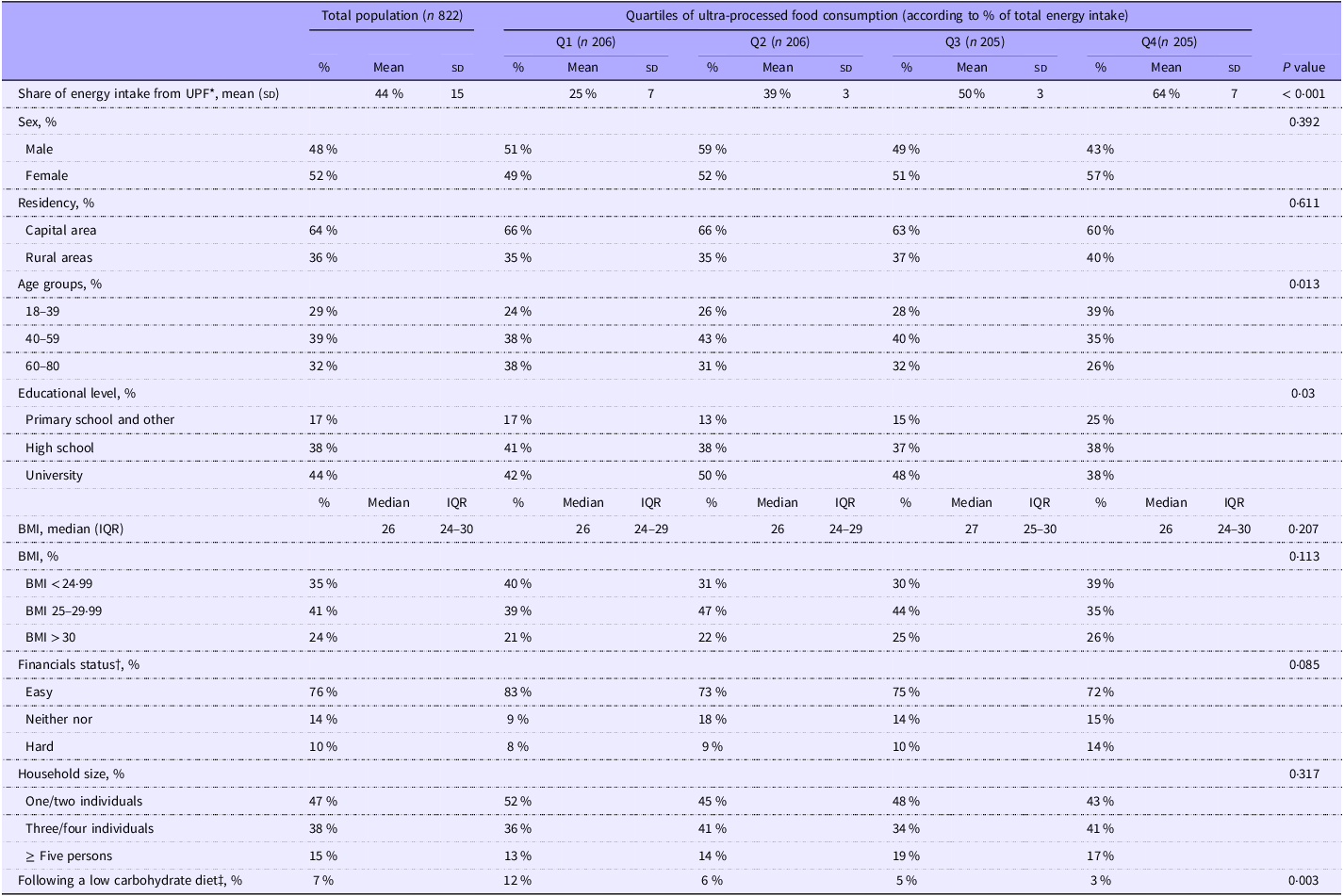
Characteristics of the study population are summarised in Table 1. The median (IQR) total daily calorie intake in the overall sample was 1980 (1557–2474) kcal. Unprocessed or minimally processed food contributed a mean (sd) of 32 % (13) of the energy intake (NOVA I), processed culinary ingredients 7 % (7) (NOVA II), and processed foods 16 % (10) (NOVA III). On average, 45 % (15) of the energy intake came from UPF (NOVA IV) or 938 kcal/d (494) (NOVA IV), ranging from 0 % to 90 %. When dividing the energy intake from the UPF into quartiles, the average energy contribution from the UPF in Q1 was 25 % (7), while 64 % (7) from UPF in Q4 (Table 1). Participants in the highest quartile of ultra-processed food consumption were often younger and had lower educational levels. In addition, most participants who reported having followed a low-carbohydrate diet in the past 12 months were more likely to be positioned in the UPF Q1. When dividing participants into singular- v. multi-person households, no statistical difference was observed between the quartiles of UPF consumption (P = 0·603).
Characteristics of the total study population (18–80 years old) in grey, as well as within quartiles of energy from ultra-processed food consumption, as obtained from the National Dietary Survey 2019–2021

UPF, ultra-processed food.
* Share of total energy intake deriving from ultra-processed food products.
† How easy or difficult has it been for you and your family (if applicable) to make ends meet over the past 12 months (e.g. paying for food, housing and other bills)?
‡ Participants who reported to follow a low carbohydrate diet at some point over the last 12 months (Yes/No).
Ultra-Processed dietary intake in the Icelandic national dietary survey
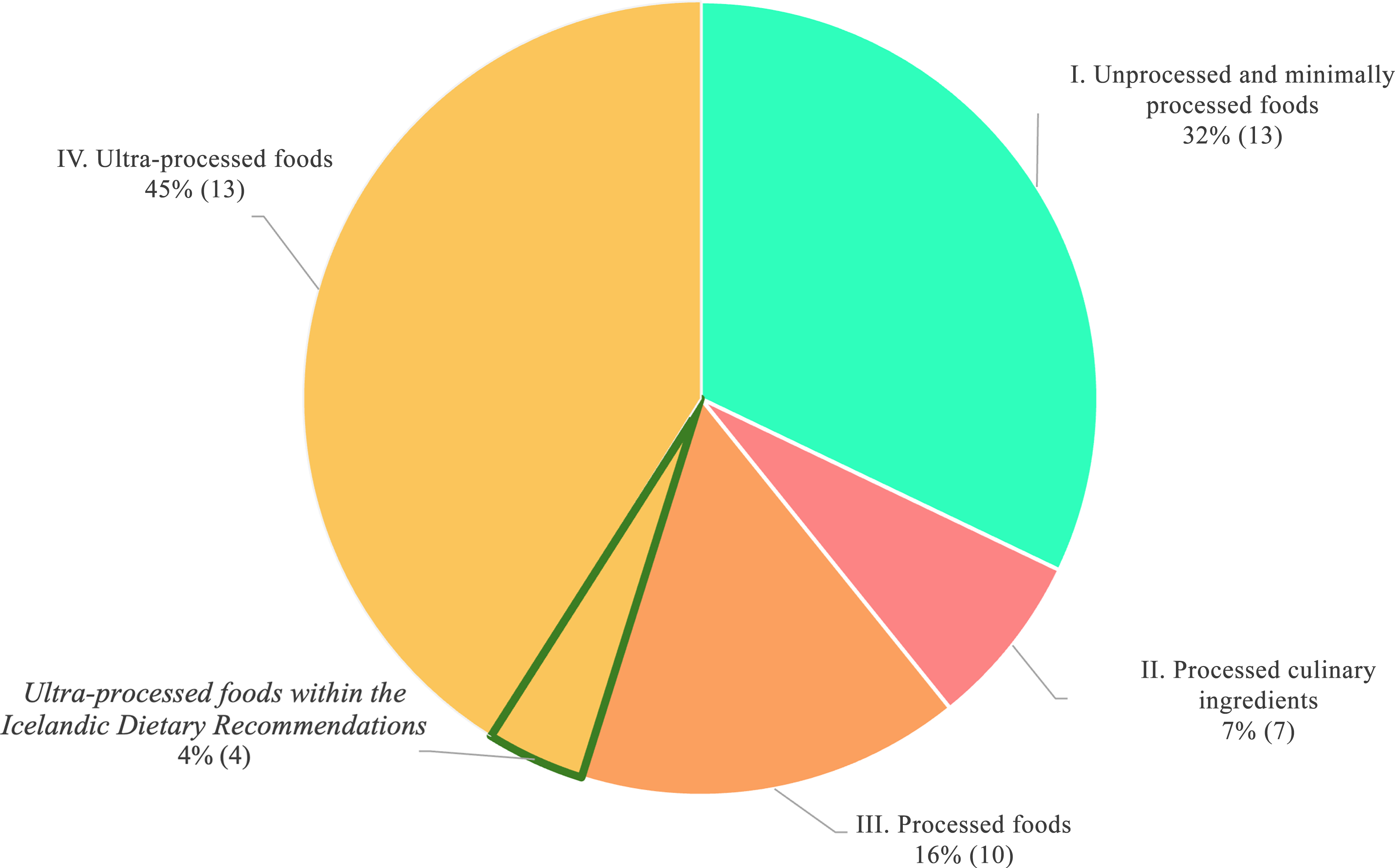
UPF that were considered to fall within the Icelandic dietary guidelines, such as fibre rich bread or cereals, accounted for on average 4 % (4) of the total energy intake (Figure 1). Notably, the consumption of these types of food items was not significantly different between the four quartiles of UPF consumption (see Appendix B, Table B.1).
The percentage of energy from the four NOVA classification groups as obtained in the Icelandic National Dietary Survey 2019–2021 (18–80 years) given as mean and sd. The subcategorisation of ultra-processed food (NOVA IV) based on whether they were considered to fall within the Icelandic Dietary Recommendations (here, Food-Based Dietary Guidelines and/or Nordic healthy keyhole guidelines were also included).

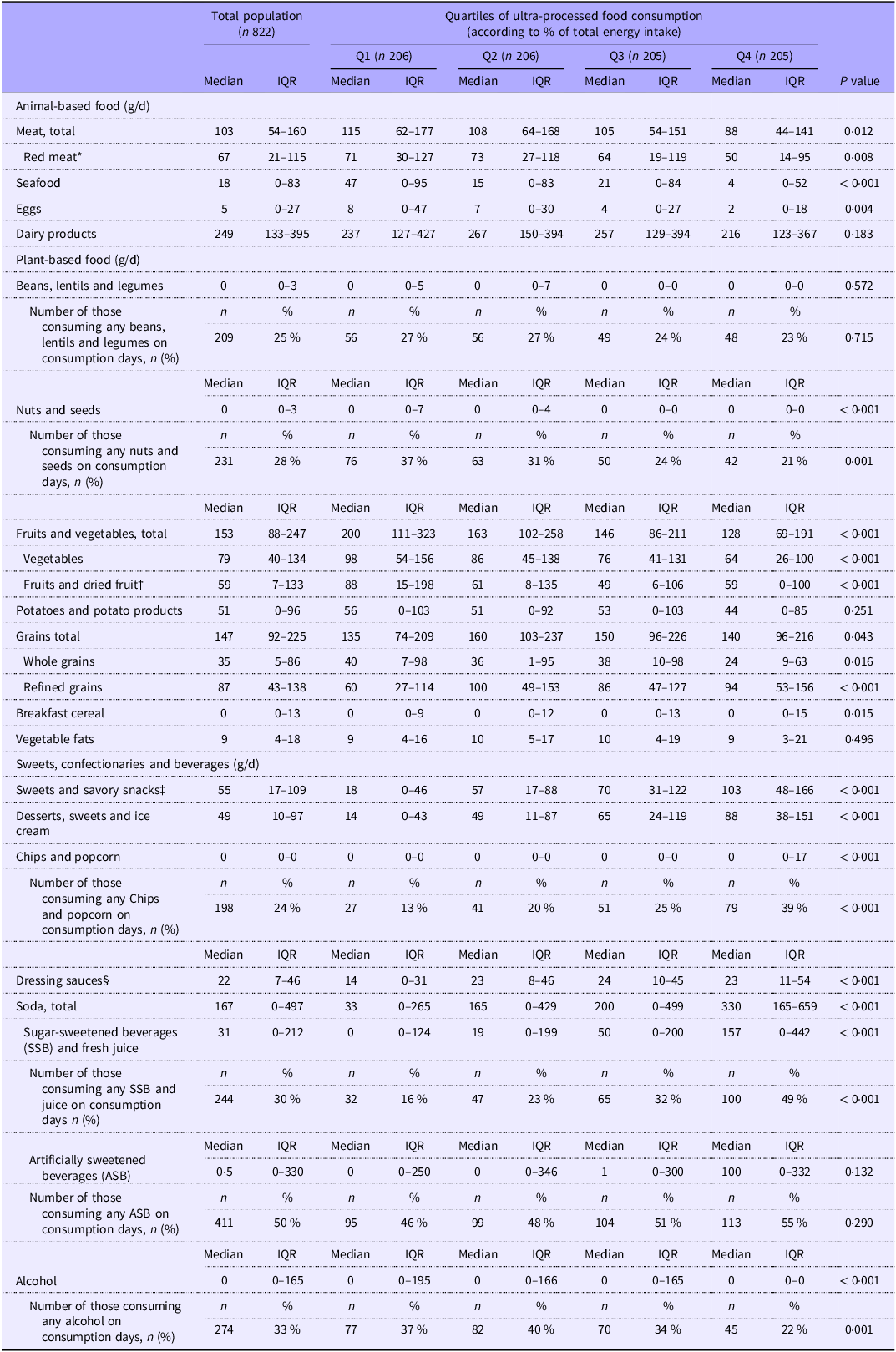
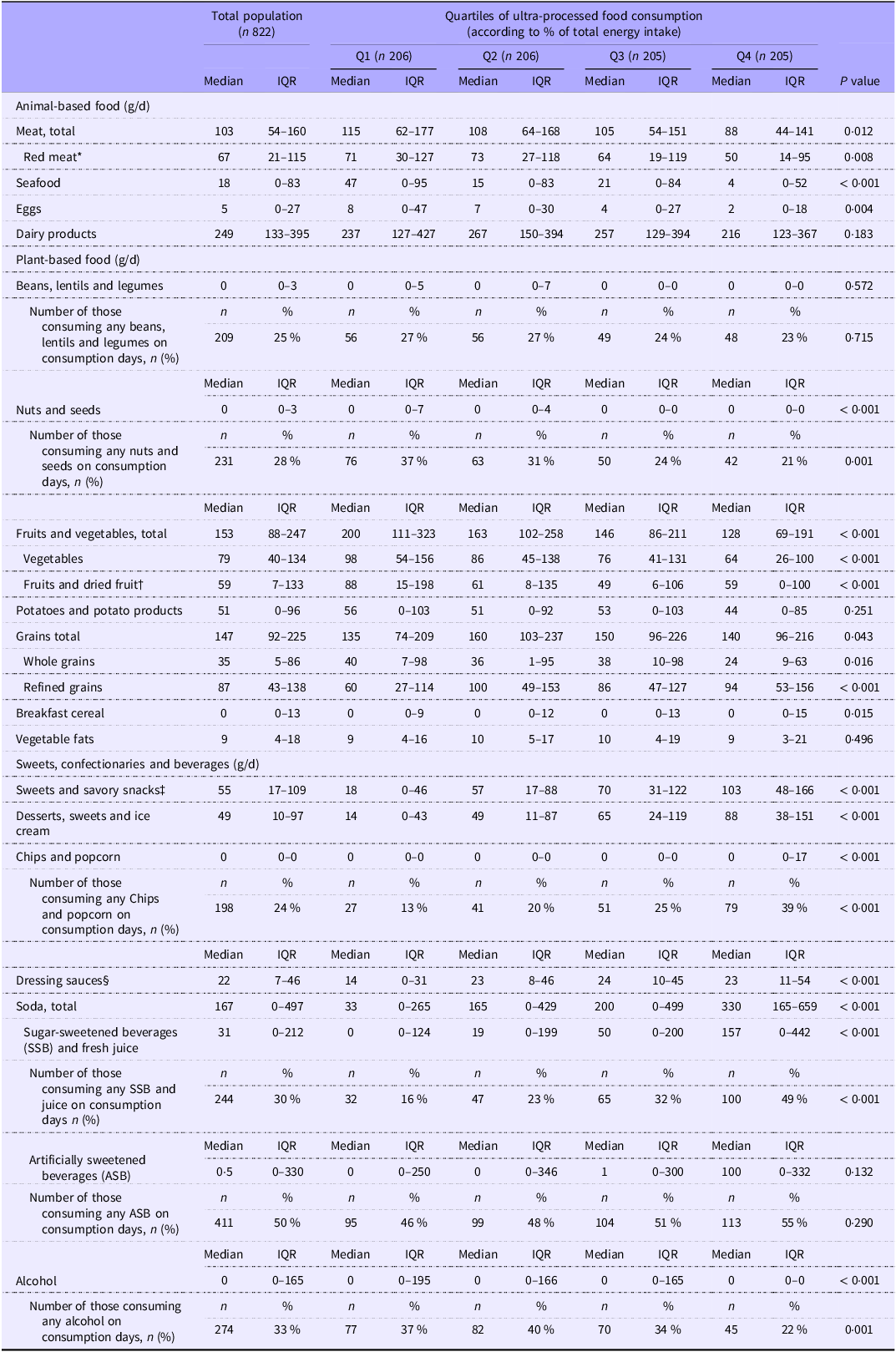
The consumption of food groups by quartiles of UPF consumption, along with the results of the Kruskal–Wallis test, is shown in Table 2. Post hoc analysis revealed a significant difference (P < 0·05) between participants in UPF Q4 and UPF Q1 for all food groups except total grain consumption (P = 0·7; online Supplementary Table B.2). Of note was the much lower consumption of seafood (median of 4 g/d (0–52)) in UPF Q4, compared with a median of 47 g/d (0–95)) in UPF Q1 (P < 0·001). A complete overview of the post hoc test can be found in Appendix B, Table B.2. The assessment of adherence to the Icelandic FBDG (defined on a scale from 0–7) is shown in Appendix B, Table B.3. No participant followed all the seven dietary guidelines included. Furthermore, a negative correlation was observed between the quartiles of UPF consumption and adherence to the Icelandic FBDG (ρ = –0·10, P = 0·003).
Food group consumption in grams per day across quartiles of ultra-processed food (UPF) consumption, as obtained from the National Dietary Survey 2019–2021 (median (IQR))
IQR, interquartile range.
* Red meat includes beef, lamb, pluck, pork, horse and reindeer meat.
† Median (IQR) consumption of dried fruit was 0 (0–0), and no significant difference was observed between the quartiles of UPF consumption (P = 0·082).
‡ Includes ice cream, sweets, desserts, chips and popcorn.
§ Dressing sauces: 97 % of dressing and sauces are UPF and consumption of UPF dressing and sauces did not differ between quartiles of UPF consumption (P = 0·621).
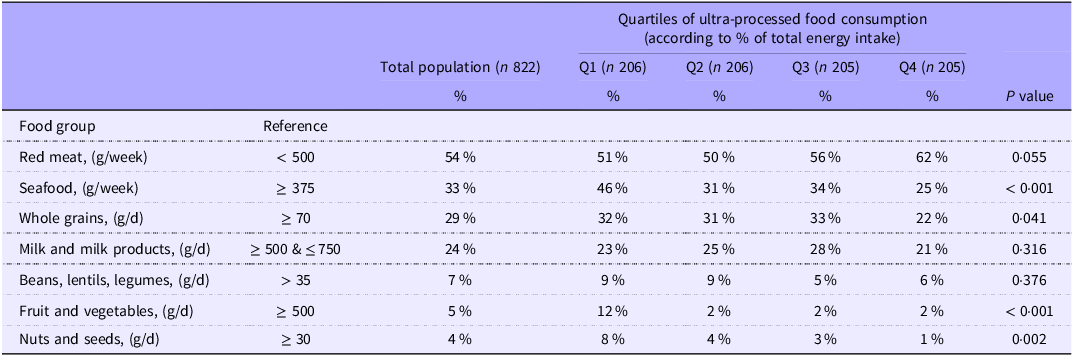
Table 3 presents the adherence to the Icelandic FBDG for the total population and according to the quartiles of UPF consumption. In a post hoc test, participants in UPF Q4 were less likely to adhere to the minimum of 375 grams of seafood per week (P < 0·001), > 500 grams of fruits and vegetables (P < 0·001) and > 30 g of nuts and seeds per day (P < 0·001) compared with participants in UPF Q1. No statistical difference was observed in the post hoc test regarding adherence to the Icelandic FDBG between UPF Q4 and UPF Q2 or UPF Q3 (P > 0·05).
Adherence to the Icelandic food-based dietary guidelines across quartiles of ultra-processed food consumption, as obtained from the National Dietary Survey 2019–2021 (18–80 years), %

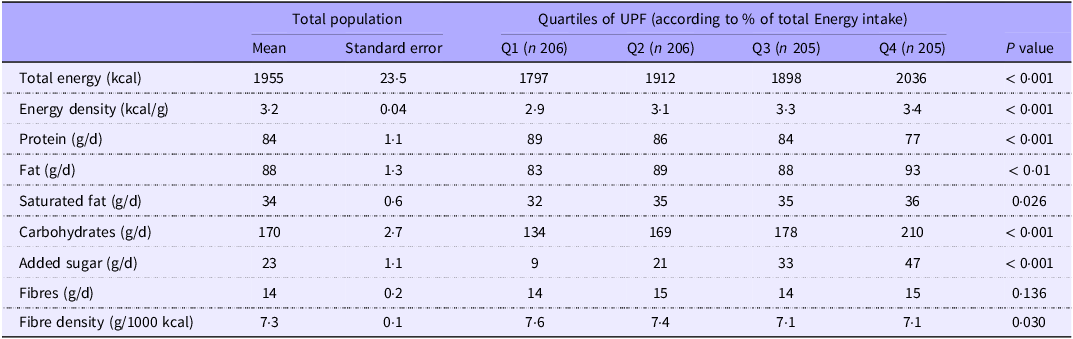
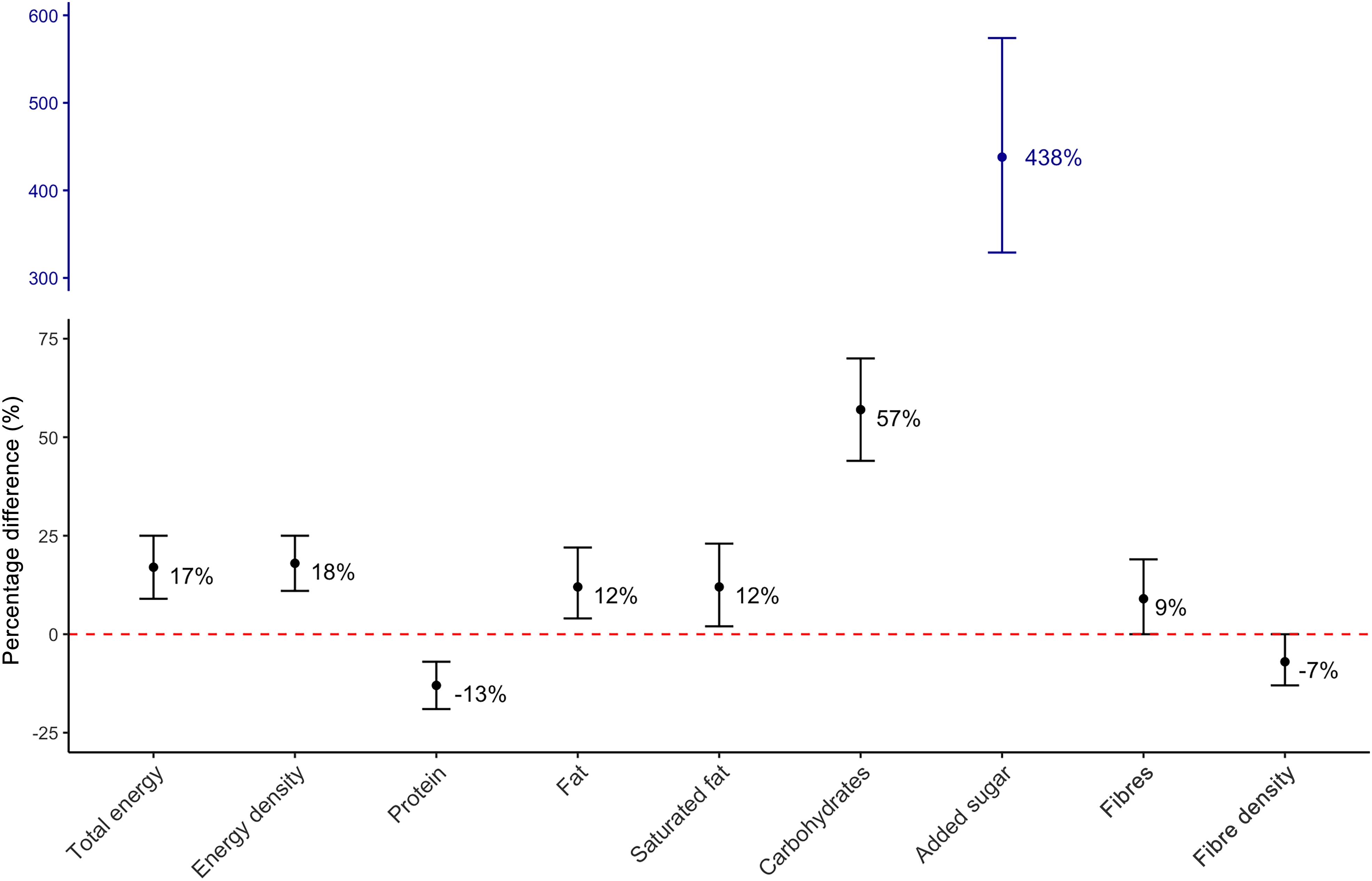
Table 4 shows the crude mean macronutrient intake by UPF quartiles. A difference was observed between UPF Q4 and UPF Q1 for all dietary indicators except fibre intake (P = 0·136). Notably, those in UPF Q4 had a higher intake of total fat (Δ = 12 %, P = 0·012) and saturated fat (Δ = 12 %, P = 0·026) compared with UPF Q1 (Figure 2). However, after adjusting for the caloric intake and socio-economic variables, no statistical difference was observed between UPF Q4 and UPF Q1 for intake of total fats (P = 0·084) or saturated fats (P = 0·077) (see Appendix C, Table C.1).
Energy and macronutrient intake across quartiles of ultra-processed food consumption in the Icelandic national dietary survey aged 18–80 years, results from generalized linear models

UPF, ultra-processed foods.
Relative difference (crude) in diet quality indicators between quartile 4 (higher consumption of UPF) and quartile 1 (lower consumption of UPF) in the Icelandic National Dietary Survey (18–80 years).

Adherence to the icelandic dietary guidelines
Macronutrients
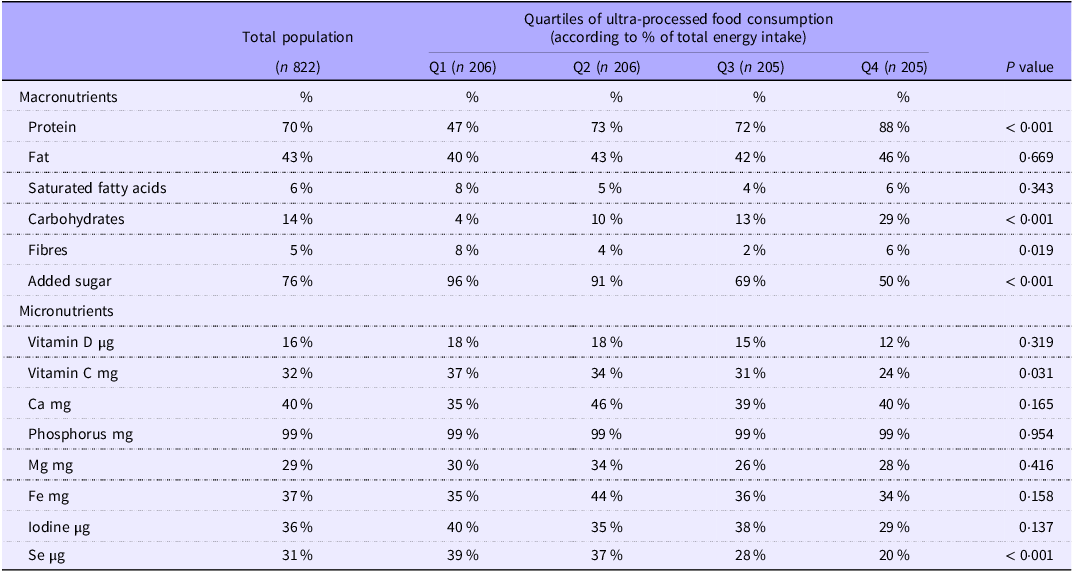
Adherence to the Icelandic dietary guidelines for macronutrients differed between the quartiles of UPF consumption for protein, carbohydrates and added sugar (P < 0·001) intake, as shown in Table 5. None of the participants adhered to all six macronutrient guidelines. Notably, 4 % of the participants in UPF Q4 had an intake that exceeded the upper level of the recommended range of obtaining 10–20 % of their total energy intake from protein, compared with 52 % in UPF Q1. Furthermore, 23 % of the total population exceeded the recommended maximum intake of 10 % of the total energy intake from added sugar; the corresponding numbers were 51 % for UPF Q4 and 4 % for UPF Q1. No difference between the quartiles of UPF consumption was observed when assessing adherence to the recommendations for dietary fibres. However, on average, UPF Q4 had 21 % of their fibre intake derived from fruits and vegetables, 27 % from bread and crisp bread and 8 % from biscuits and cakes. Conversely, UPF Q1 had on average 40 %, 18 % and 2 % of their fibres from fruits and vegetables, bread and crispbreads and biscuits and cakes, respectively.
Adherence to the dietary guidelines for included macro- and micronutrients across quartiles of ultra-processed food consumption, as obtained from the national dietary survey 2019–2021 (18–80 years), %

Micronutrients
Adherence to the Icelandic dietary guidelines for eight micronutrients (vitamin D, vitamin C, Ca, phosphorus, Mg, Fe, iodine and Se) for the total population and by the quartiles of UPF consumption differed for vitamin C and selenium, as shown in Table 5. In UPF Q4, 24 % of the participants met the recommended daily intake of vitamin C (95 mg for females and 110 mg for males), with a median intake of 59 (32–97), compared to 37 % in UPF Q1 (median 75 (46–135)). For selenium, 20 % of the participants in UPF Q4 met the average intake of selenium (75 mg for females and 90 mg for males), with a median intake of 76 mg (56–93), compared with 39 % in UPF Q1 (median 60 mg (41–78)).
For iodine, no statistical difference was observed in adherence to the recommended daily intake of 150 μg/d. However, UPF Q4 had a significantly lower iodine intake (median 98 μg (IQR 62–165)) compared with participants in UPF Q1 (median 123 (81–221)) (P < 0·001). No statistically significant difference was observed between the quartiles of UPF consumption for the intake of vitamin D, Ca, phosphorus, Fe and Mg (P > 0·05). An overview of nutrient and mineral intake for the total population and according to quartiles of UPF consumption can be found in Appendix D, Table D.1.
When using the mean vitamin and mineral adequacy ratio (VMAR), a significant difference was observed between the quartiles of UPF consumption (P < 0·001). Those in UPF Q4 (median 75 % (59–84)) had significantly lower VMAR than those in UPF Q1 (median 78 % (69–88), P = 0·001) and UPF Q2 (median 79 % (69–89), P = 0·001). This difference was mainly driven by the lower intake of vitamin C, iodine and Se (See Appendix D, Table D.2), as described above. Results on the mean VMAR from generalised linear models indicated that UPF Q4 (with an average of 75 %) was 7 % (CI − 12, −4) lower than UPF Q1 (average of 69 %). After caloric adjustment, UPF Q4 (with an average of 45 %) was 13 % (CI − 17, −11) lower in VMAR compared with UPF Q1 (average of 52 %).
Greenhouse gas emissions
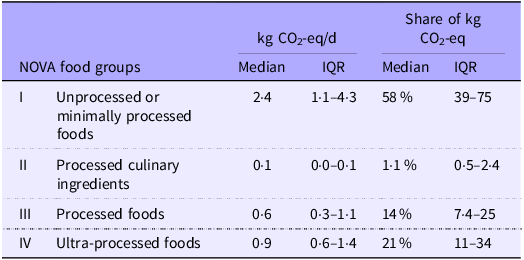
The median (IQR) for the total dietary GHG emissions was 4·5 CO2-eq/d (3·1–6·6). UPF were responsible for 21 % (11–34), or 0·9 kg of CO2-eq/d (0·6–1·4) (Table 6). Those in UPF Q4 had lower GHG emissions (median 3·8 CO2-eq/d (2·8–5·9)) compared with UPF Q1 (median 5·1 CO2-eq/d (3·6–7·4), P < 0·001) and UPF Q2 (median 4·8 CO2-eq/d (3·3–6·8), P = 0·002). No statistical difference was found between UPF Q4 and UPF Q3 (median 4·5 CO2-eq/d (3·0–6·3)). Notably, UPF within the Icelandic Dietary Guidelines contributed 1·2 % (0·4–3·1) of the total dietary GHG emissions.
Dietary share of greenhouse gas (GHG) emissions (%) among participants in the Icelandic dietary survey (18–80 years old). The median (interquartile range) is given for each NOVA classification group. GHG data were obtained from the Danish CONCITO database

Ultra-processed meat, consumed by 45 % of the population, accounted for 5·2 % of the total CO2-eq/d. Using the upper IQR of meat consumption, its contribution to the total energy intake (3·5 % of the total kJ/d) was lower than the dietary GHG emissions (6·5 % of total kg CO2-eq/d). Inversely, the contribution to the total energy intake was higher for grains (median 11·6 % (7·1–16·5)) as well as sweet and savoury snacks (median 11 % (4–20)), compared with the contribution to dietary GHG emissions (1·5 % (0·8–2·7), 3·1 % (1·0–6·5), respectively). Sweet and savoury snacks contributed 3·7 % of the total CO2-eq/d, and soft drink consumption 2·7 %. A complete overview of the contribution of UPF food groups to the total energy intake and dietary GHG emissions is provided in Appendix E, Table E.1.
Discussion
The study showed that close to half of the daily energy intake in Icelandic adults comes from UPF (45 %). Only a small share of energy was derived from UPF that were estimated to fall within the current Icelandic Dietary Guidelines (4 %). UPF consumption was negatively associated with overall diet quality, with the highest added sugar intake observed the highest consumption of UPF. However, GHG emissions were lowest in the group with the highest consumption of UPF, mainly as meat consumption was high in the group with the lowest UPF intake in this study.
Descriptive characteristics
The results align with other studies conducted in high-income countries where UPF account for a significant share of the total energy intake(Reference Martini, Godos and Bonaccio20). The energy intake from UPF consumption at 45 % is much higher than observed in many other European countries such as France, Portugal and Italy (31 %, 22 % and 17 % TEI from UPF, respectively)(Reference de Miranda, Rauber and de Moraes36,Reference Ruggiero, Esposito and Costanzo37) but lower than that found in the Netherlands, the USA and the UK (55 %, 58 % and 57 % of TEI from UPF, respectively)(Reference Rauber, Louzada and Steele18,Reference Martínez Steele and Monteiro38,Reference Vellinga, van Bakel and Biesbroek39) .
Those in UPF Q4, all of whom derived more than 56 % of their total energy intake from UPF, were more often younger and had lower education levels, a trend consistent with findings from other studies(Reference Dicken, Qamar and Batterham40). UPF are often palatable, convenient and ready to eat(Reference Monteiro, Cannon and Levy4), which is convenient if lacking culinary skills or pressed for time. This may also reflect their increased omnipresence in the food environment of younger participants during formative years. The relationship between education and UPF consumption varies by country(Reference Dicken, Qamar and Batterham40). Socio-economic and cultural differences might explain this; for example, differences in the affordability of UPF or the perceived status of these foods(Reference Baker, Machado and Santos41) in different countries.
Lower consumption of important food groups
Diet plays a vital role in preventing NCD, with higher consumption of UPF repeatedly associated with NCD and premature death in cohorts around the world(Reference Morze, Danielewicz and Hoffmann11). However, it is important to remember that both specific dietary factors, such as low consumption of nuts and seeds, fruits and vegetables and whole grains, and low adherence to healthy dietary patterns(Reference Morze, Danielewicz and Hoffmann11) have been shown to increase the risk and progression of these conditions(42). UPF are not consumed in isolation but may characterise entire dietary patterns where UPF are consumed at the expense of more nutritious, minimally processed foods(Reference Martini, Godos and Bonaccio20). Coherently, participants in UPF Q4 had lower consumption of more nutritious food groups, with markedly lower fish consumption. This could be explained by the observation that participants in UPF Q4 were more likely to be younger and have lower educational levels. This can influence food choices(Reference Konttinen, Halmesvaara and Fogelholm43) as minimally processed foods are often more expensive(Reference Aceves-Martins, Bates and Craig2,Reference Vellinga, van Bakel and Biesbroek39) . However, it must be highlighted that the consumption of fruits and vegetables and whole grains is lower in the general Icelandic population than in neighbouring countries(Reference Blomhoff, Andersen and Arnesen44). Furthermore, participants in UPF Q4 consumed more confectionery products such as sweets, desserts, savoury snacks and soft drinks. Interestingly, no difference was observed between the consumption of artificially sugared beverages across UPF quartiles. This might partially reflect perceptions of artificially sugared beverages as healthier alternatives to sugar-sweetened beverages, leading to consistent consumption, even among participants in UPF Q1(Reference Mullie, Aerenhouts and Clarys45). Notably, by default, artificially sugared beverages and artificially sweetened food were not included when calculating UPF energy intake but were factored into emission estimates.
Adherence to the Icelandic FBDG was generally low in the studied population, especially among those in UPF Q4. This is consistent with previous studies on other types of FBDGs, such as the Mediterranean diet(Reference Dinu, Tristan Asensi and Pagliai46). In the present study, only 5 % of the participants reached the recommended 500 g/d of fruits and vegetables, most of which belonged to UPF Q1 (65 %). This low adherence is especially noteworthy, as a recent modulation study estimated that 20 % of deaths, attributable to CVD and diet-related cancers could be prevented if Icelanders adhered to the Nordic nutrition recommendations, and ∼40 % by meeting the fruit and vegetable recommendations(Reference Saha, Nordström and Mattisson47).
Nutrients
Our study also aligns with previous studies(Reference Martini, Godos and Bonaccio20) where participants with higher UPF consumption had higher energy intake. The association between high energy density and increased food consumption is well known, as food intake remains the same while energy intake increases(Reference Klos, Cook and Crepaz48). The energy eating rate (kcal/min) and hyper-palatability could be some of the potential explanations; the food matrix of these products may require less chewing, allowing a higher consumption and absorption rate(Reference Forde, Mars and De Graaf49) and, therefore, more energy intake before feeling full(Reference Forde, Mars and De Graaf49). Although the energy density of UPF can vary considerably, most are energy dense and have poor nutrient profiles(Reference Gupta, Hawk and Aggarwal50).
The association between the quartiles of UPF consumption and intake of fat and saturated fat turned insignificant after adjusting for energy and socio-economic characteristics. However, it is debatable whether one should adjust for energy in this kind of study, where the exposure variable (UPF consumption) itself is hypothesised to increase energy intake(Reference Hall, Ayuketah and Brychta51,Reference Hamano, Sawada and Aihara52) . This is supported by the non-significant difference in sex, height or BMI between the four quartiles. Alternatively, the changes in significance when adjusting for energy intake indicate that the higher intake of fat and saturated fatty acids in UPF Q4 is only due to higher caloric consumption, that is, their relative intake is comparable. Interestingly, no difference was observed in fibre intake between the quartiles of UPF consumption in this study. Participants in UPF Q4 derived most of their fibre intake from breads, crispbreads, biscuits and cakes. Inversely, those in UPF Q1 sourced fibre mainly from fruits and vegetables. Dietary fibres are heterogeneous, and their physiological effects vary significantly(Reference Anderson, Baird and Davis53). However, higher intake is associated with decreased risk of various NCD(Reference Reynolds, Mann and Cummings7). Nevertheless, data on the effects of different fibre sources (e.g. fruits and vegetables v. whole grain breads) on health outcomes are more limited(Reference Carlsen and Pajari54). The lack of difference in intake across the UPF quartiles may also reflect the generally low adherence to the FBDG in this study.
For vitamins and minerals, the vitamin and mineral adequacy ratio (VMAR) differed significantly between UPF quartiles, increasing after energy adjustment, suggesting that participants in UPF Q4 consumed more energy-dense foods with lower nutrient density. This difference between the groups was mainly driven by low vitamin C, iodine and Se intakes. The intake of these nutrients was generally low, whereas ∼30 % of those in UPF Q1 did not reach the recommended daily intake or average intake, compared to ∼70 % in UPF Q4.
The ultra-processed foods that fall within dietary guidelines
Not all foods classified as UPF are nutritionally poor. Our study showed that 4 % of the total energy was derived from UPF that can be considered to fall within the Icelandic FBDG. These UPF, classified as NOVA V, most frequently included bread and breakfast cereals due to a high fibre content, milk and milk products with a low fat content, and fish oil products. The new Nordic Nutrition Recommendations excluded the UPF definition in their latest guidelines, questioning whether the NOVA classification adds value to the conventional food categorisation used in NNR2023(Reference Blomhoff, Andersen and Arnesen44). Notably, the recently published randomised controlled feeding trial by Dicken and coworkers(Reference Dicken, Jassil and Brown55) suggests that even UPF aligning with the UK dietary guidelines can lead to higher energy intake, compared with minimally processed food aligning with the same guidelines. However, the Keyhole criteria applied in this study are more restrictive in terms of UPF, as products containing artificial sweeteners do not meet the Keyhole requirements. While our study indicates that these foods represent a relatively small share of total energy intake in Iceland, it is essential to further investigate the association of different food groups, or other types of grouping, within the NOVA and NOVA IV for a better picture of the potential mechanism behind the previously mentioned detrimental effects of UPF in associations with several health outcomes, which remain significant and quite robust, even after adjustments for energy and macronutrients, suggesting that there is more to the associations than poor nutrient quality(Reference Lane, Gamage and Du5,Reference Dicken and Batterham35) . Recent prospective observational studies also suggest UPF subgroups contribute differently to NCD(Reference Cordova, Viallon and Fontvieille9,Reference Mendoza, Smith-Warner and Rossato10,Reference Chen, Khandpur and Desjardins56) . For example, total consumption of ultra-processed breads and cereals was found to be protective against the NCD in question(Reference Cordova, Viallon and Fontvieille9,Reference Chen, Khandpur and Desjardins56) . However, when stratified as in Chen et al. (Reference Chen, Khandpur and Desjardins56), only ultra-processed cereals and whole grain breads remained protective, which are, amongst others, the same UPF aligning with the Icelandic dietary guidelines.
The multifaceted relationship between ultra-processed foods, health, and environmental sustainability
Compared with the energy share of UPF (45 % of total energy intake), this study found that GHG emissions from UPF in Iceland were relatively low, accounting for 21 % of the total GHG emissions. This was somewhat lower than observed in other countries(Reference Anastasiou, Baker and Hadjikakou15) but comparable to Norway, where UPF contributed 32 % of GHG emissions and 48 % of the total energy intake(Reference Slaathaug, Paulsen and Jafarzadeh57). The gap between UPF’ contribution to energy and GHG emissions in this study may partly reflect limitations of the dietary measurement tool in capturing UPF from fast-food restaurants. For instance, a fast-food hamburger was categorised as a raw hamburger and classified as processed food (NOVA III), not ultra-processed (NOVA IV). Therefore, our analysis potentially underestimates meat-based UPF. Participants in UPF Q4 had lower GHG emissions than those in UPF Q1, reflecting higher consumption of red meat in UPF Q1. This highlights potential trade-offs: improving dietary quality does not always align with lowering GHG emissions, especially if replaced with higher-emission foods(Reference Poore and Nemecek58) such as red meat and even dairy. Of note, general adherence to FBDGs was low in the studied population, particularly for low-emission plant-based food groups such as legumes, fruits, vegetables, nuts and seeds. Greater adherence to the FBDG could reduce diet-related GHG emissions while improving nutrient quality and health outcomes(Reference Morze, Danielewicz and Hoffmann11,Reference Springmann, Spajic and Clark59) .
At the food group level, ultra-processed grain products contributed more to GHG emissions relative to their energy contribution, whereas the inverse was true for ultra-processed meats. This is consistent with previous studies(Reference Anastasiou, Baker and Hadjikakou15,Reference Garzillo, Poli and Leite60) . UPF have been reported to have lower nutritional quality and lower GHG emissions per 100 kcal than unprocessed and minimally processed foods(Reference Aceves-Martins, Bates and Craig2). Using grams as the denominator, a study found that UPF had higher GHG emissions per 100 g than minimally processed foods(Reference Vellinga, van Bakel and Biesbroek39). However, this approach has practical and nutritional limitations(Reference Harwatt, Benton and Bengtsson12), as one would not substitute 100 g of biscuits with 100 g of tomatoes. Moreover, correlations between GHG emissions and other impacts (e.g. eutrophication) are not always consistent(Reference Aleksandrowicz, Green and Joy61). For example, high UPF consumption has been associated with increased land use(Reference Anastasiou, Baker and Hadjikakou15), water scarcity(Reference Garzillo, Poli and Leite60) and diet-related biodiversity loss(Reference Anastasiou, Baker and Hadjikakou15). Other concerns include monoculture farming, plastic waste and deforestation(Reference Anastasiou, Baker and Hadjikakou15,Reference Fardet and Rock62) . Future studies should include other impact categories.
Importantly, only 1 % of total dietary GHG emissions was from UPF aligning with the Icelandic FBDG, suggesting these emissions predominantly come from producing foods such as processed meats, ice cream, sweet and savoury snacks and soft drinks, which are not only detrimental to human health in high amounts but also cause avoidable environmental impacts by inducing excessive energy intake(Reference Hall, Ayuketah and Brychta51). This highlights the paradox of using significant resources to produce, process, package, retail and refrigerate products, such as artificially sugared beverages, that do not serve as sustenance to energy needs but only for hedonic purposes, such as tobacco.
The importance of investigating the mechanisms between ultra-processed food and health
Currently, the mechanisms behind UPF’ suggested adverse health effects are not fully understood. Evidence suggests that it is due to the above-mentioned overreliance on UPF at the expense of minimally processed food. However, the concern is not isolated to the absence of important food groups; it also spills over to food culture by slowly eroding traditional culinary practices that are replaced by ready-to-eat products, that are often consumed in isolation, disrupting shared dining experiences(Reference Monteiro, Cannon and Moubarac3). Additionally, the higher energy density, poor nutritional quality, degraded food matrix and multiple food additives(Reference Juul, Vaidean and Parekh63), along with chemical contaminants, have been suggested to contribute to the adverse health effects of UPF(Reference Forde, Mars and De Graaf49,Reference Srour, Kordahi and Bonazzi64) .
While measuring the contribution of energy from UPF might be a blunt tool, if aiming to measure the direct effect on health, assessing whether UPF that fall within the dietary guidelines are associated with any health effects is vital. However, this analysis might also underpin a weakness in the NOVA classification of UPF, that is, that it is too broad, including diverse foods with varying mechanisms. Further mechanistic studies are urgently needed.
Strength and limitations
This is the first study to quantify the energy contribution of UPF and the resulting effects on diet quality, including GHG emissions, among Icelandic adults. The strengths include the use of a nationally representative sample. Therefore, the results should be generalisable to the Icelandic adult population apart from young adults, who are slightly underrepresented in this study. The 51 % response rate, though higher than in many comparable surveys(Reference Alkhaldy, Aljaadi and Jalil65), may introduce selection bias by underrepresenting individuals with high UPF consumption. The survey’s relatively time-intensive nature (∼45 min per participant) may have reduced participation. This could be important, as higher UPF consumption has been associated with perceived time scarcity(Reference Djupegot, Nenseth and Bere66). Future studies could consider technology-assisted methods, such as self-completed 24-h recall(Reference Alkhaldy, Aljaadi and Jalil65), to improve participation. This cross-sectional design provides only a snapshot of UPF consumption and its associations with diet quality and GHG emissions in Iceland, limiting causal inference and not capturing changes over time.
This study used the mean of two 24-h recalls assessing dietary intake and GHG emissions(Reference Mertens, Kuijsten and Geleijnse67). This introduces the risk of misreporting due to recall bias and social desirability(Reference Willett68). The latter is supported by Icelandic food supply data, where consumption of most food groups, apart from sweets, aligned with the Icelandic food supply(Reference Gunnarsdóttir, Guðmannsdóttir and Þorgeirsdóttir21). We therefore recognise probable underestimation of UPF and resulting GHG emissions(Reference Murakami and Livingstone69) in this study. No data were collected on the brand, preparation method or eating setting of most food items, which might confound the results. For example, breads and bakery products were commonly classified as UPF; if baked at home or purchased from a bakery, this could be a misclassification. Furthermore, the ISGEM database contains a mix of raw ingredients and prepared foods, so some ready-to-eat meals may not have been classified as UPF. Another limitation is that the ISGEM only contains sufficient information for eight micronutrients because of broader policy decisions. Increased and consistent funding for maintaining and updating the ISGEM is crucial for improving its accuracy and benefiting future research.
Policy and future perspective
Future research should aim to clarify the mechanism linking UPF to health outcomes, including the role of specific nutrient-dense subgroups to inform more targeted dietary recommendations. As public interest in UPF grows, it is essential to recognise the complexity surrounding their role in diets and sustainability(Reference Fardet and Rock62). While most UPF are associated with lower nutritional quality(Reference Gupta, Hawk and Aggarwal50). Exceptions exist where certain UPF might provide essential nutrients, such as fibre-rich packaged bread. Reducing the consumption of these products without considering their nutritional value may have unintended consequences for vulnerable groups relying on them. Additionally, our findings indicate that UPF contribute less to GHG emissions compared to their share of energy intake. Given Iceland’s low consumption of plant-based foods and high reliance on animal products, policy initiatives to reduce UPF should be coupled with efforts emphasising plant-based foods such as fruits and vegetables, whole grains and legumes. Such an approach supports integrating health and sustainability goals, a direction increasingly reflected in FBDGs(Reference Blomhoff, Andersen and Arnesen44,Reference James-Martin, Baird and Hendrie70) .
Conclusion
Almost half of the daily energy intake of Icelandic diets is from UPF, affecting diet quality negatively, with only a low percentage coming for UPF that also fall within the Icelandic dietary guidelines. Diets high in UPF were higher in energy and had substantially more added sugar, although they are lower in meat and therefore lower in GHG emissions. There is room for improvement by lowering the intake of UPF in Iceland, aligning diets more towards the official Food-Based Dietary Guidelines, which emphasises a more plant-rich and moderate to low animal-based whole food diet for better nutrient status, public health and lower total GHG emissions.
Acknowledgements
The authors thank the participants in the National Dietary Survey for their valuable contribution as well as the researchers who collected the data. Furthermore, we thank Ólafur Reykdal for his work on the Icelandic Food Composition Database (ÍSGEM).
The Eimskip University Fund funded this study. We would also like to acknowledge the RANNIS Fund for Societal Challenges in regard to the Sustainable Healthy Diets project (grant no. 200221-5601).
The Eimskip University Fund (grant no. HEI2393052) and the RANNIS Fund for Societal Challenges (grant no. 200221-5601) supported this work.
S. G.: Conceptualisation, data curation, formal analysis, funding acquisition, investigation, methodology, visualisation, writing – original draft and writing – review and editing. Ó. Ö.: Conceptualisation, supervision, writing – review and editing, methodology and funding acquisition. H. T.: Writing – review and editing, methodology and investigation. R. G.: Writing – review and editing, investigation. R. A.: Formal analysis, investigation, O. G. G.: writing – review and editing, methodology and conceptualisation. M. G.: Writing – review and editing, methodology and conceptualisation. I. G.: Writing – review and editing, methodology and investigation. J. E. T.: writing – review and editing, methodology and investigation. Þ. I. H.: Writing – review and editing, supervision, methodology, investigation, funding acquisition and conceptualisation. B. E. B.: writing – review and editing, supervision, methodology, investigation, funding acquisition, conceptualization and project administration.
The authors have no conflicts of interest to disclose.
Supplementary material
For supplementary material/s referred to in this article, please visit https://doi.org/10.1017/S0007114525105552


 Open access

