





Policy Significance Statement
Our study provides policymakers with strategies to mitigate ambiguities around participation in data-driven projects. We propose a set of principles to enable more transparent, clearly communicated, and problem-oriented forms of participation, which are relevant for policymakers on different levels. Policymakers in funding institutions may embed those principles in their funding schemes, for example, by educating facilitators or asking for a declaration of how the principles are followed or not followed in funded projects. Policymakers within organisations facilitating participatory data-driven projects can follow our principles to guide their own projects and embed them in project-internal policies and procedures. In addition to the principles, our study includes projects where internal policy documents, such as data access protocols and data governance agreements, were developed as part of participatory approaches. Such approaches can help realise policies that are more aligned with the collective interest in their governance.
1. Introduction
Participation has become a mainstream topic in a variety of contexts (Marres, Reference Marres2015, 16). In respect to data and data-driven technologies, participatory approaches are having a heyday; participation and power imbalances in data-intensive contexts, such as artificial intelligence (AI) systems, are discussed both in the academic debate (e.g. Falco, Reference Falco2019; Bondi et al., Reference Bondi, Xu, Acosta-Navas and Killian2021; Delgado et al., Reference Delgado, Barocas and Levy2022) and in policy- as well as practice-focused environments (e.g., Mozilla, n.d.; Ada Lovelace Institute, 2021).
At the same time, dissatisfaction with various forms of participatory approaches prevails. In discussions of participatory matters, ambiguities between the aim of levelling power imbalances and the risks of ineffectiveness, exploitation, or window dressing are repeatedly highlighted (Arnstein, Reference Arnstein1969; Birhane et al., Reference Birhane, Isaac, Prabhakaran, Diaz, Elish, Gabriel and Mohamed2022; Sloane et al., Reference Sloane, Moss, Awomolo and Forlano2022). Groves et al. (Reference Groves, Peppin, Strait and Brennan2023) show that some practitioners in commercial AI Labs have concerns about engaging in potentially exploitative and tokenistic forms of participatory practices (Groves et al., Reference Groves, Peppin, Strait and Brennan2023, 1169). Their study further shows a lack of a shared understanding of the value and utility of participation (Groves et al., Reference Groves, Peppin, Strait and Brennan2023, 1168).
Recent empirical work on participatory data-driven projects in the academic literature focuses mainly on qualitative studies of a small number of cases (Falco, Reference Falco2019; Birhane et al., Reference Birhane, Isaac, Prabhakaran, Diaz, Elish, Gabriel and Mohamed2022; Delgado et al., Reference Delgado, Barocas and Levy2022). Kelty et al. (Reference Kelty, Panofsky, Currie, Crooks, Erickson, Garcia, Wartenbe and Wood2015)provide a framework based on a much larger number of cases in which they outline dimensions of participation but do not explicitly focus on recommendations. The Ada Lovelace Institute (2021) provides a report that focuses on practical processes on a case-by-case basis and looks at generally facilitating participatory data stewardship. To complement these approaches and to contribute to a better understanding and addressing of the ambiguities of participation in data-driven projects, we conducted a large-scale systematic review of implemented projects described in the literature. We focus on the data level of the cases to derive implications that apply to a broader set of technologies.
For this purpose, we reviewed and screened 1,642 items and analysed the descriptions of 27 projects that rely on data for their functioning and incorporate participatory elements. The project descriptions were analysed from two angles: their openness to participation and the processes used within the data life cycle.
In the discussion, we look at two dominant forms of participatory processes—labour and resource participation and rule- and decision-making participation—and highlight aspects connected to participatory ambiguities, such as possible countermeasures. We define three types of participatory data-driven projects—projects that focus on participation in governance, projects that focus on participation in resource and labour aspects, and projects that combine both—to help address ambiguities and create more clarity in projects for participants and the public.
2. Background
The discussion of participatory approaches is often characterised by an ambiguity between an “attractive” image (Himmelreich, Reference Himmelreich2023)—in the sense of caring for people’s interests, co-determination, and levelling power imbalances—and, on the other hand, the potential for exploiting participants and misusing the participatory appeal to evoke a desirable public image of a participatory project. This ambiguity was captured early on in the late 1960s in the much-cited Ladder of Participation (Arnstein, Reference Arnstein1969). As the degree of power in the hands of the participants decreases, so too does the licence to call an approach actual participation, according to Arnstein. The highest rungs of the ladder—citizen control, delegated power, and partnership—implicitly carry the mentioned promises of participation, which others frame as the expectation to render a project “inclusive, equitable, robust, responsible, and trustworthy” (Birhane et al., Reference Birhane, Isaac, Prabhakaran, Diaz, Elish, Gabriel and Mohamed2022). The hopes in participatory practices pave the way for evoking a false-positive image, which has been referred to as “participation-washing” (Sloane et al., Reference Sloane, Moss, Awomolo and Forlano2022). Others point to forms of participation as “window dressing” (Gilman, Reference Gilman2022, 507) when instrumentalised by facilitators to enforce contested decisions. Within Arnstein’s framework, such practices would all be located on the lower ranks—placation, consultation, informing, therapy, and manipulation (Arnstein, Reference Arnstein1969). Critiques connected to further ambiguities point at instances when participatory methods are used to exploit participants for laborious tasks to enhance private interests (Resnik et al., Reference Resnik, Elliott and Miller2015; Sloane et al., Reference Sloane, Moss, Awomolo and Forlano2022). An additional important point of critique concerns the use of participation to shield power imbalances (Birhane et al., Reference Birhane, Isaac, Prabhakaran, Diaz, Elish, Gabriel and Mohamed2022; Riley and Mason-Wilkes, Reference Riley and Mason-Wilkes2024). Next to deliberate efforts by facilitators to reduce their own responsibilities through implementing participatory processes, a diffusion of roles in participation and co-creation organically brings a diffusion of responsibilities (Steen et al., Reference Steen, Brandsen and Verschuere2018; Zehner and Ullrich, Reference Zehner and Ullrich2024). The outlined aspects show that the ambiguities surrounding participation in data-driven projects are multi-layered. They relate to the question of what actually qualifies as participatory, what forms a participatory project can take, and the lack of clarity about the purpose, roles, and processes of participatory approaches.
To support a better analysis of participatory approaches in various dimensions, Kelty et al. (Reference Kelty, Panofsky, Currie, Crooks, Erickson, Garcia, Wartenbe and Wood2015) developed a framework based on comprehensive case studies in fields related to information studies. The seven dimensions that they draw out describe modalities as well as effects of participation in those cases: educative dividends for participants (1), participation in tasks and setting goals (2), participation in controlling resources (3), the possibility for participants to exit (4), and voice (5) their opinions, showing outcomes of participation in visible metrics (6) and the affective/communicative capacity (7) experienced through participation. They further point out the diversity in what is understood as participation.
The ambiguities of participatory approaches presumably result in part because of the lack of an agreed-upon definition of participation. Understandings of participation range from theoretical differentiations, for example, between a sociological and a political view, to procedural differentiations in participation. Carpentier (Reference Carpentier2016) contrasts a sociological perspective of participation as being part of a process—for example, buying something is understood as participating (Carpentier, Reference Carpentier2016, 71f)—with a political perspective, in which participation is understood as a means to counteract power asymmetries with a focus on decision-making (Carpentier, Reference Carpentier2016, 72f). Schrögel and Kolleck (Reference Schrögel and Kolleck2018) highlight siloed discussions within the discourse of participatory science between doing science in and a dialogue about science (Schrögel and Kolleck, Reference Schrögel and Kolleck2018, 78). Sloane et al. differentiate in the context of AI systems between participation as work, as consultation, and/or as justice; the first two modes describe processes where it is designed for participants, whereas the latter describes a mode of designing with participants. Sloane (Reference Sloane2024) further describes AI systems as “deeply participatory” (Sloane, Reference Sloane2024, 2), as the data used could only be collected with the participation of technology users, bringing us closer to the described sociological understanding of participation.
While Sloane et al. (Reference Sloane, Moss, Awomolo and Forlano2022) and Birhane et al. (Reference Birhane, Isaac, Prabhakaran, Diaz, Elish, Gabriel and Mohamed2022) provide categories for assessing participation in regards to AI systems, guidance for how to handle ambiguities in participatory data-driven projects is developing sparsely and in siloed discourses, for example, in the citizen science discourse (Resnik et al., Reference Resnik, Elliott and Miller2015). The academic debate on the participatory process in data-driven projects mostly focuses on particular technologies. The predominant focus is on participation in machine learning in specific application contexts, such as smart cities (Falco, Reference Falco2019), law (Delgado et al., Reference Delgado, Barocas and Levy2022), or on affected groups (Queerinai et al., Reference Queerinai, Ovalle, Subramonian, Singh, Voelcker, Sutherland, Locatelli, Breznik, Klubicka, Yuan, Hetvi, Zhang, Shriram, Lehman, Soldaini, Sap, Deisenroth, Pacheco, Ryskina, Mundt, Agarwal, Mclean, Xu, Pranav, Korpan, Ray, Mathew, Arora, John, Anand, Agrawal, Agnew, Long, Wang, Talat, Ghosh, Dennler, Noseworthy, Jha, Baylor, Joshi, Bilenko, Mcnamara, Gontijo-Lopes, Markham, Dong, Kay, Saraswat, Vytla and Stark2023). In regard to normative approaches, authors study the possibility to realise ethical or socially good AI through participation in capacity-building approaches (Bondi et al., Reference Bondi, Xu, Acosta-Navas and Killian2021) or value-sensitive design methods (Gerdes, Reference Gerdes2021). Given that the fine-grained implementation of participatory approaches is context-dependent, as can be seen, for example, in projects regarding indigenous data sovereignty (Pyper et al., Reference Pyper, Henry, Yates, Mecredy, Ratnasingham, Slegers and Walker2018; Love et al., Reference Love, Hardy, Heffernan, Heyd, Cardinal-Grant, Sparling, Healy, Smylie and Long2022), a comparison of a larger number of cases is needed to provide insights into common project types. We therefore conduct a systematic literature review to analyse participatory data-driven projects. In addition to reviewing a larger number of cases for comparison, we focus on the data level and specifically look at participation in the data life cycle (a model that describes the higher-level work steps relating to the data aspect of a project in chronological order; e.g., Faundeen et al., Reference Faundeen, Burley, Carlino, Govoni, Holl, Hutchison, Martín, Montgomery, Ladino, Tessler and Zolly2014). The choice of data-driven projects remains relevant to technologies such as machine learning, but is not limited to one technology. Kelty et al. (Reference Kelty, Panofsky, Currie, Crooks, Erickson, Garcia, Wartenbe and Wood2015), as well as researchers from the Ada Lovelace Institute (2021), provide frameworks and guidance applicable to broader data-driven technologies based on large-scale case studies; we aim to complement their work by focusing on project structure in combination with participatory processes, and how to handle the ambiguities of participation across different project types.
Our research questions are:
-
RQ1 How is participation in data-driven projects described in the empirical literature with regard to the openness of the project for participation and the nature of the processes along the data life cycle?
-
RQ2 What typical project types can be found, and how can we clarify participatory ambiguities in the process for participants and the public?
3. Method
To identify cases of data-driven projects with a participatory element, we conducted a systematic literature review (Kitchenham and Charters, Reference Kitchenham and Charters2007) by surveying the literature and then analysed the identified 27 cases from two angles:
-
1. We analysed the structural openness of the cases using the Participatory Science Cube (Schrögel and Kolleck, Reference Schrögel and Kolleck2018) and mapped who participates and the degree of participation in data handling and decision-making.
-
2. We looked at where and how in the data life cycle participatory processes were implemented and described these processes.
The Participatory Science Cube (Section 3.2.1) is crucial for our understanding of participation in this paper. Within our analysis, we identify something as participation as soon as external parties who do not belong to the facilitating organisation either actively participate in a data handling task and/or are included in a participatory process regarding the governance. There is no intention, however, to make this a normative measure for the evaluation of participation. We consider projects to be data-driven when the handling or processing of data within the project is a necessary aspect for the functioning of the project.
3.1. Systematic literature review
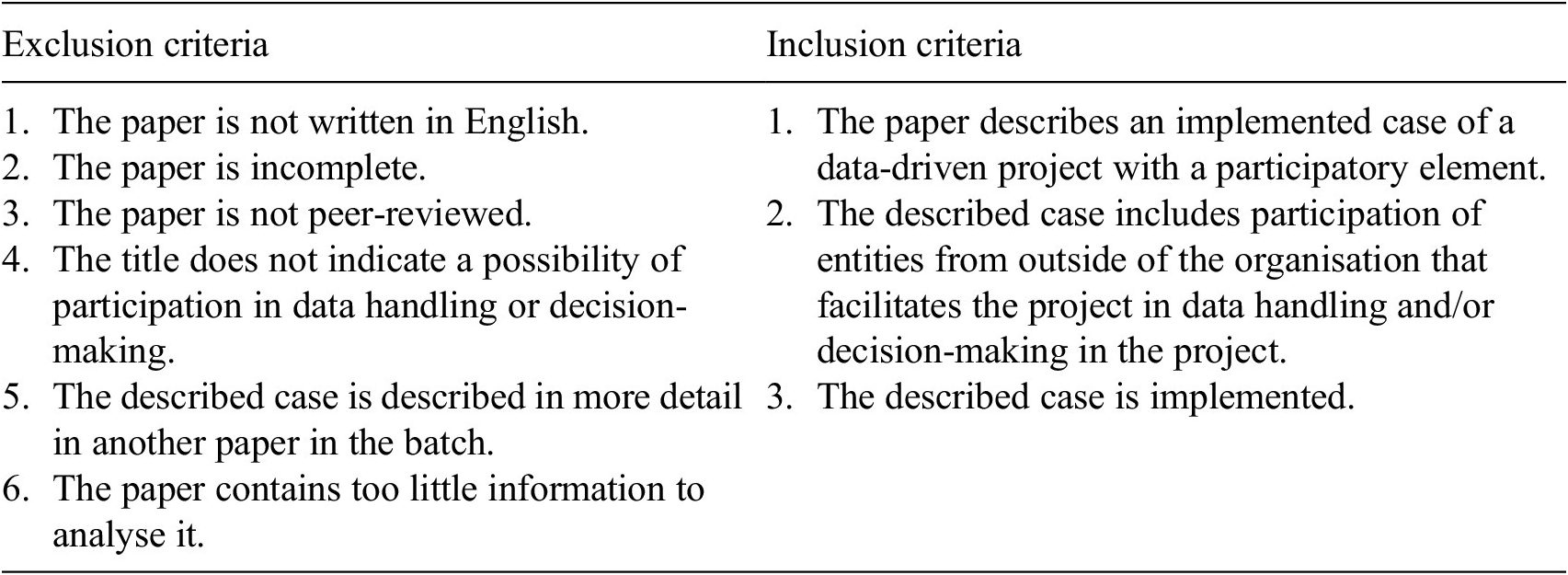
To extract cases from the literature, we followed Kitchenham and Charters (Reference Kitchenham and Charters2007) by selecting research databases, constructing two search strings to filter potentially relevant papers, and defining inclusion and exclusion criteria, which were employed by two reviewers to systematically identify relevant cases.
To cover the most relevant conference proceedings and journals in computer science, we chose the ACM Digital Library (Association for Computing Machinery, 2024) and the IEEE Xplore (Institute of Electrical and Electronics Engineers, 2024) as data sources. Given the interdisciplinary nature of the topic, Scopus (Elsevier, 2024) was added to cover other disciplines.
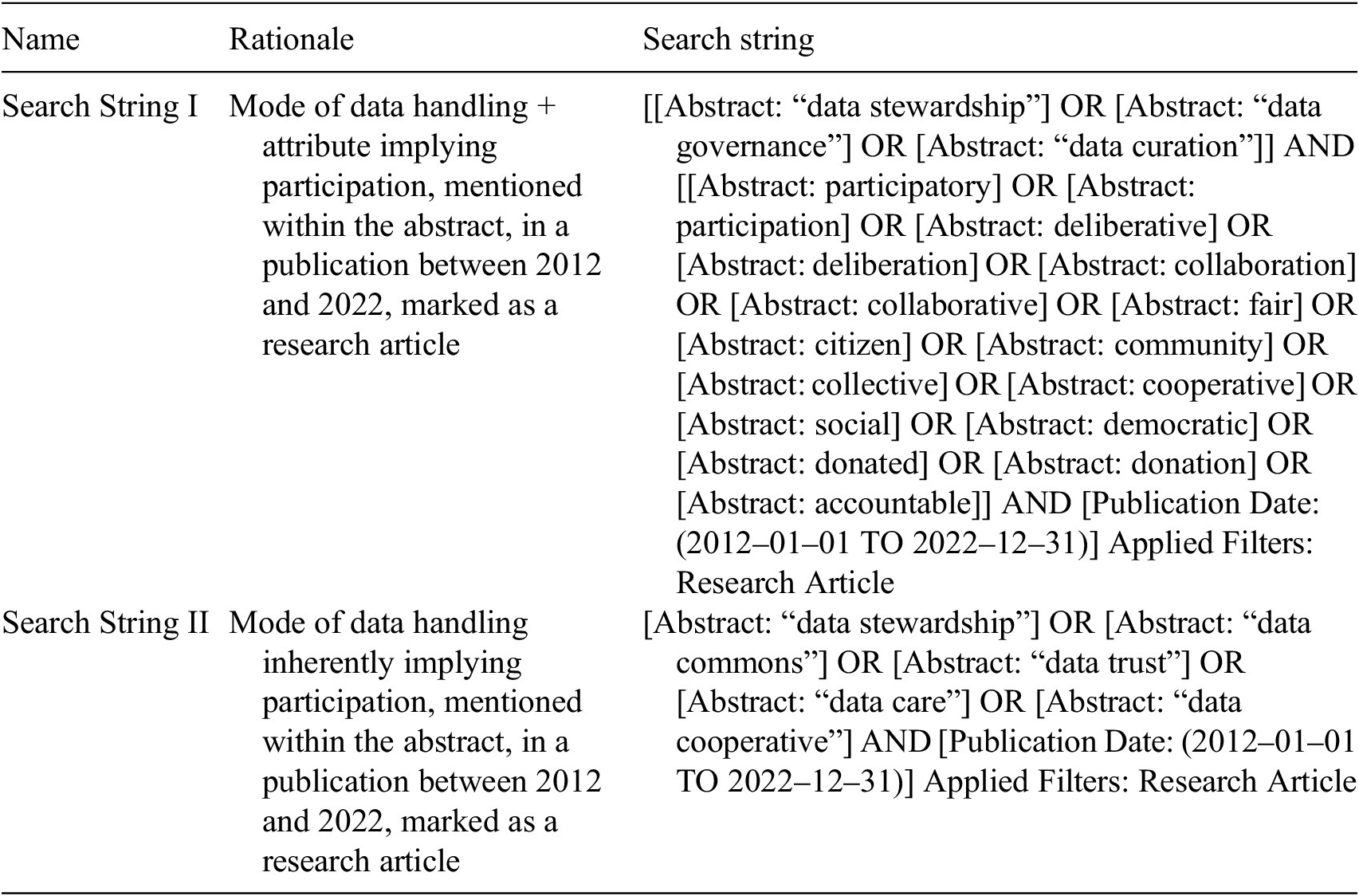
We derived our search terms from a report on participatory data stewardship (Ada Lovelace Institute, 2021) with additional terms based on our knowledge of the subject matter and discussions with fellow researchers.
We divided the search into two parts to separate search rationales (Table 1). Search String I combined modes of handling data (Data Stewardship, Data Governance, and Data Curation) with attributes that refer directly to participation or indicate a participatory character (e.g., participatory, cooperative, or democratic). Search String II considered modes that implicitly indicate a participatory approach or an orientation towards collective interests (e.g., Data Stewardship, Data Commons, Data Trusts, or Data Curation). In addition, we restricted the search to a 10-year period (2012–2022) and papers written in English. The search string was adapted depending on the options of the different databases.
Search strings used in the literature review
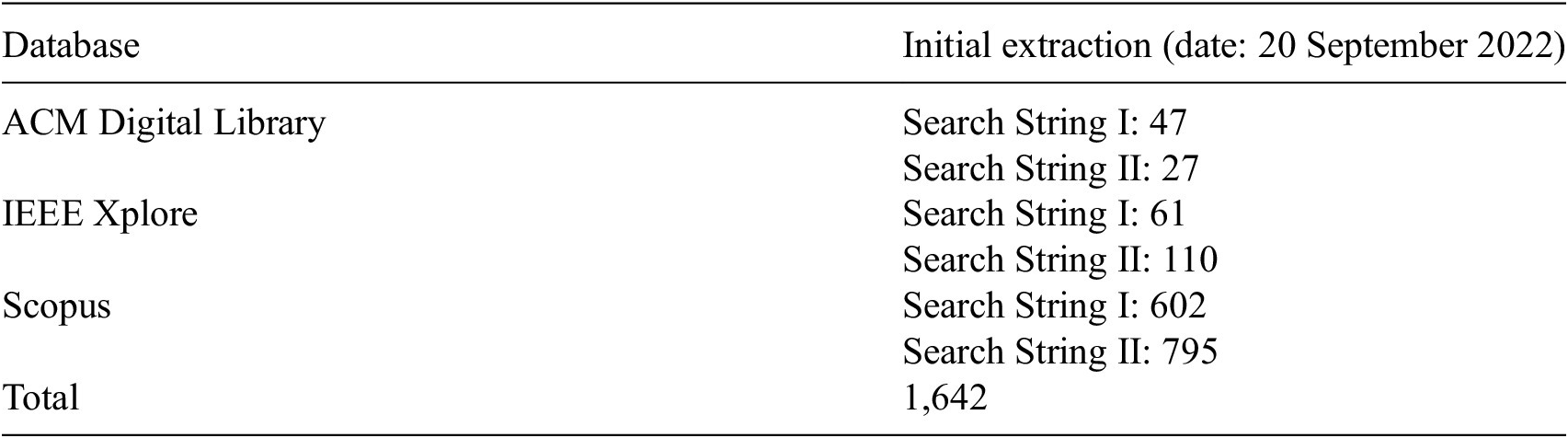
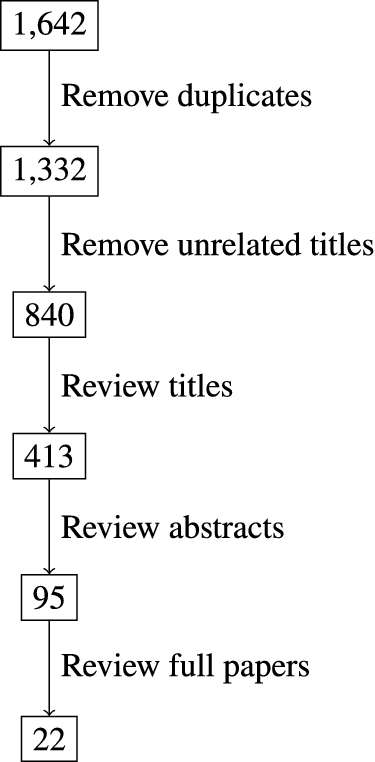
The search was conducted on 20 September 2022, and 1,642 items were found and imported to the Zotero reference manager (Corporation for Digital Scholarship, 2024). A detailed listing of the search results is part of Table 2; Figure 1 shows the reduction of the results, and Table 3 contains the inclusion and exclusion criteria used to do so.
Initial numbers of papers found in the databases
Reducing the total sample of papers.
Exclusion and inclusion criteria
3.2. Analysis of the cases
To apply the Participatory Science Cube, we analysed the identified cases qualitatively and coded the cases using MAXQDA (VERBI Software, 2024). We describe the derived models and coding categories below.
3.2.1. Participatory science cube
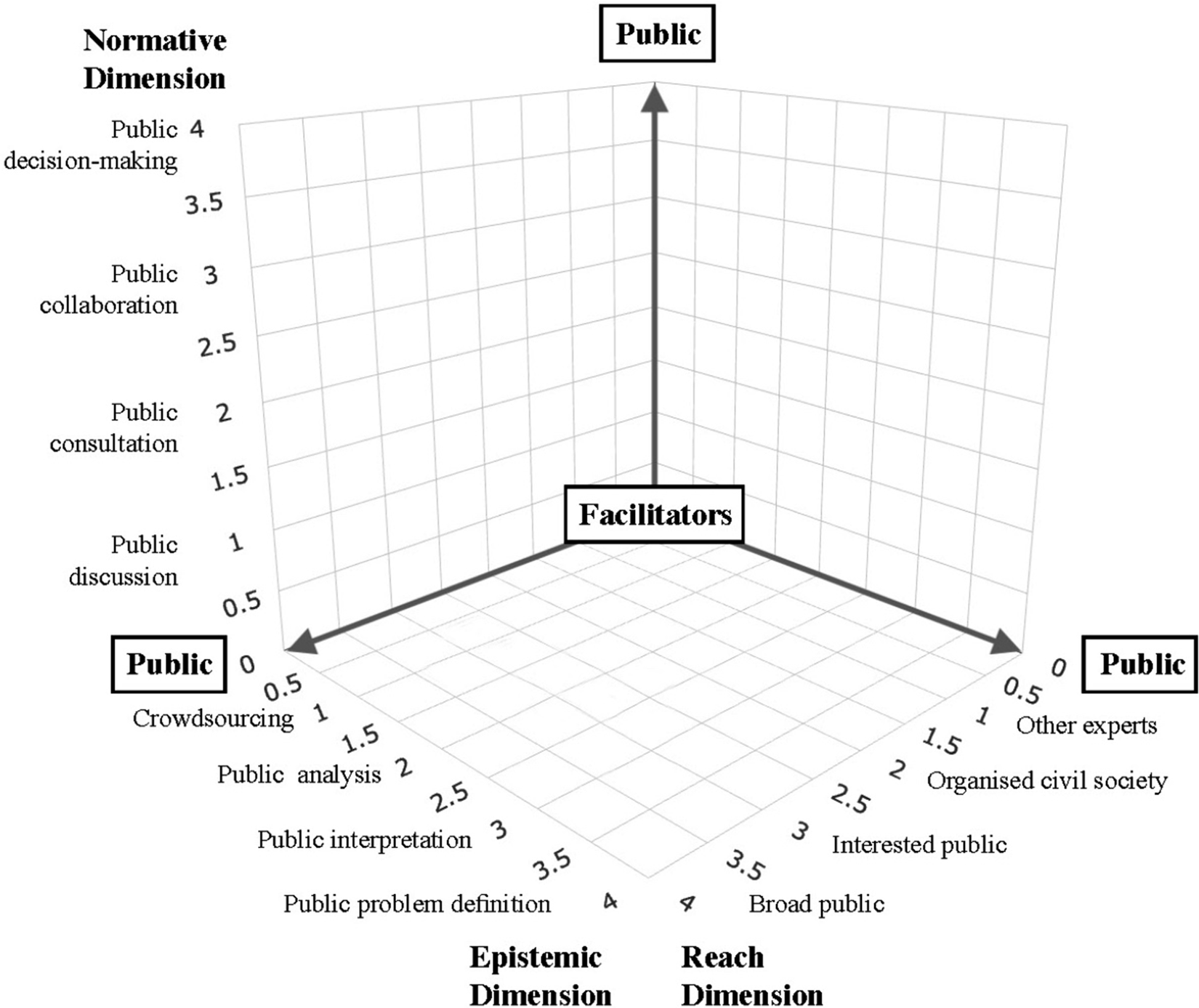
The Participatory Science Cube (Schrögel and Kolleck, Reference Schrögel and Kolleck2018) is a model to systematically describe and compare participatory science projects. It was developed on the basis of models from science governance, citizen science, and other participatory research frameworks, which were combined with the Democracy Cube by Fung (Reference Fung2006). The dimensions represent the following questions: Who participated? (reach); How is knowledge produced? (epistemic/doing); What ought to be done? (normative/deciding) (Schrögel and Kolleck, Reference Schrögel and Kolleck2018, 87–91).
While the framework is designed to map participatory science projects, most of the questions still apply to data-driven projects. To use the cube, we needed to make some minor adjustments, described below and in Figure 2. In the original paper, the scales are defined as a spectrum, and the cube was intended to be used for singular cases and as a support for qualitative case descriptions. To compare and categorise cases, we needed to apply distinct values on each axis for each project. To incorporate the notion of the spectrum, we introduced half values, representing projects between stages. To assign values, we introduced distinct definitions of the stages described below. These were based on the original terminology from the cube, but we further introduced half values for where a case is positioned between two stages. Finally, we position “Facilitators” where “Scientists” were originally positioned in the model. By facilitators, we refer to those who are responsible for implementing participation in a project, which can be units or people in an organisation or autonomous actors. An organisation can be, for example, a university/research group, a collective, or an NGO.
The Participatory Science Cube.
Source: Adapted from Schrögel and Kolleck (Reference Schrögel and Kolleck2018); we replace “Scientists” with “Facilitators” to make it applicable to a wider range of cases.
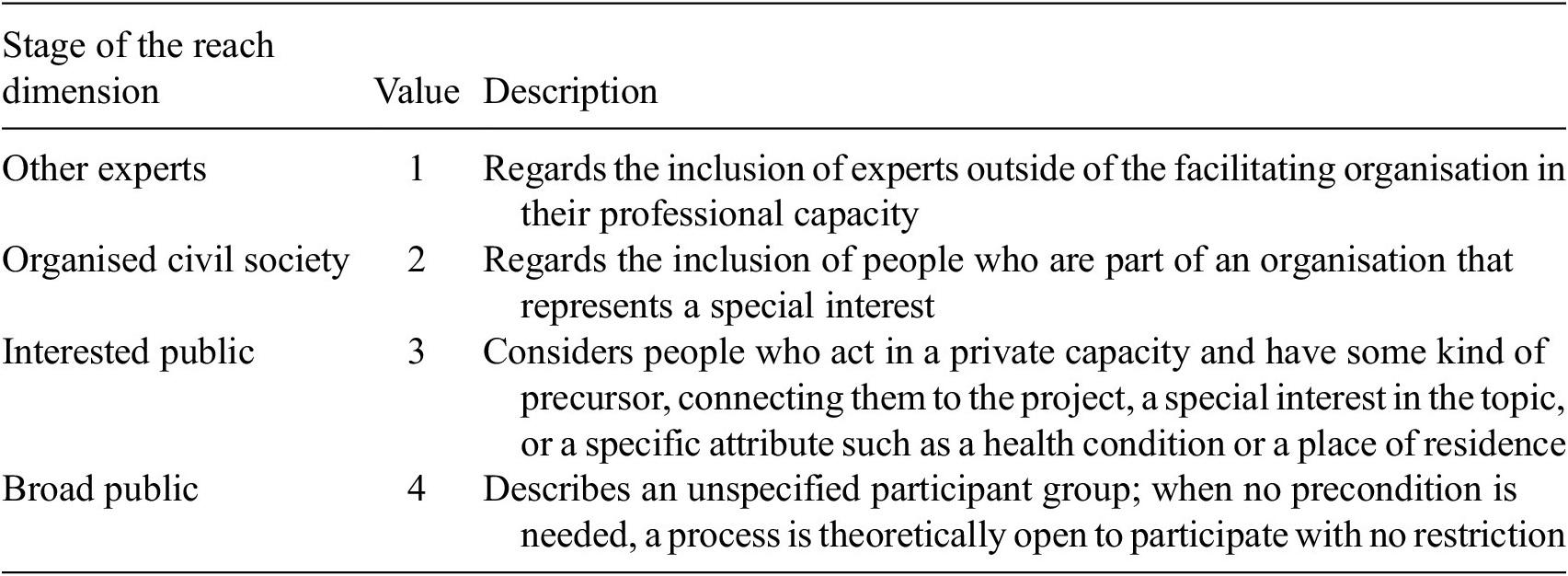
Reach dimension: The reach dimension moves between experts and the broad public (Schrögel and Kolleck, Reference Schrögel and Kolleck2018, 88) and evaluates who is addressed by the participatory processes. Experts may come from different fields, such as academia, NGOs, politics, or industry, and their expertise can relate to technological or domain knowledge. Domain knowledge can refer to specific subjects as well as lived experiences. The greater the range of the reach dimension, the lower the specificity of the expertise that can be assumed. While members of a civil society organisation can participate as experts, they can also participate as representatives of collective interests. Depending on how they are included in the project, the evaluation changes. For cases in which this distinction is not sharp, we assign half-values (Table 4).
Definition of the stages of the reach dimension with their values on the scale
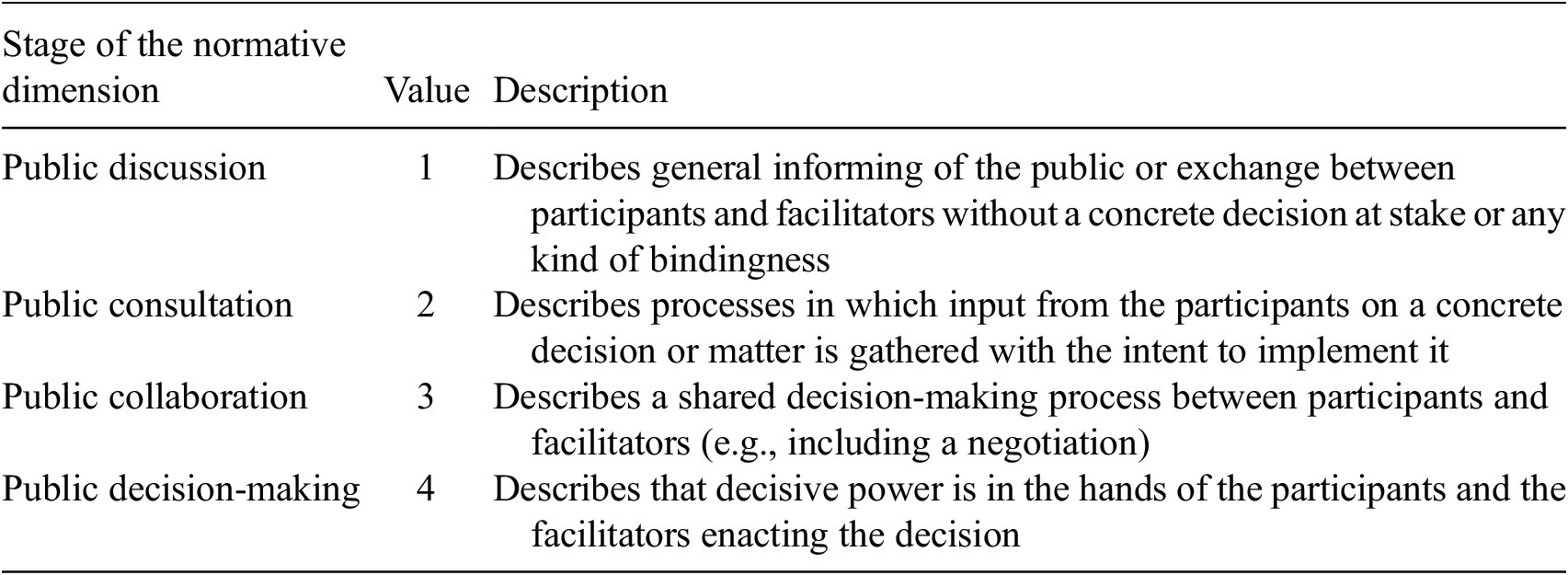
Normative dimension: The normative dimension focuses on “questions of values and norms as well as questions of preferences and interests” (Schrögel and Kolleck, Reference Schrögel and Kolleck2018, 89). It deals with decision-making processes on governance questions that may result in project policies, budget decisions, or restrictions within the project. We define the stages based on increasing decisive power in the hands of participants. Low-ranking examples include general discussions or information sessions, whereas high-ranking examples include co-designing policies or policy-making (Table 5).
Definition of the stages of the normative dimension with their values on the scale
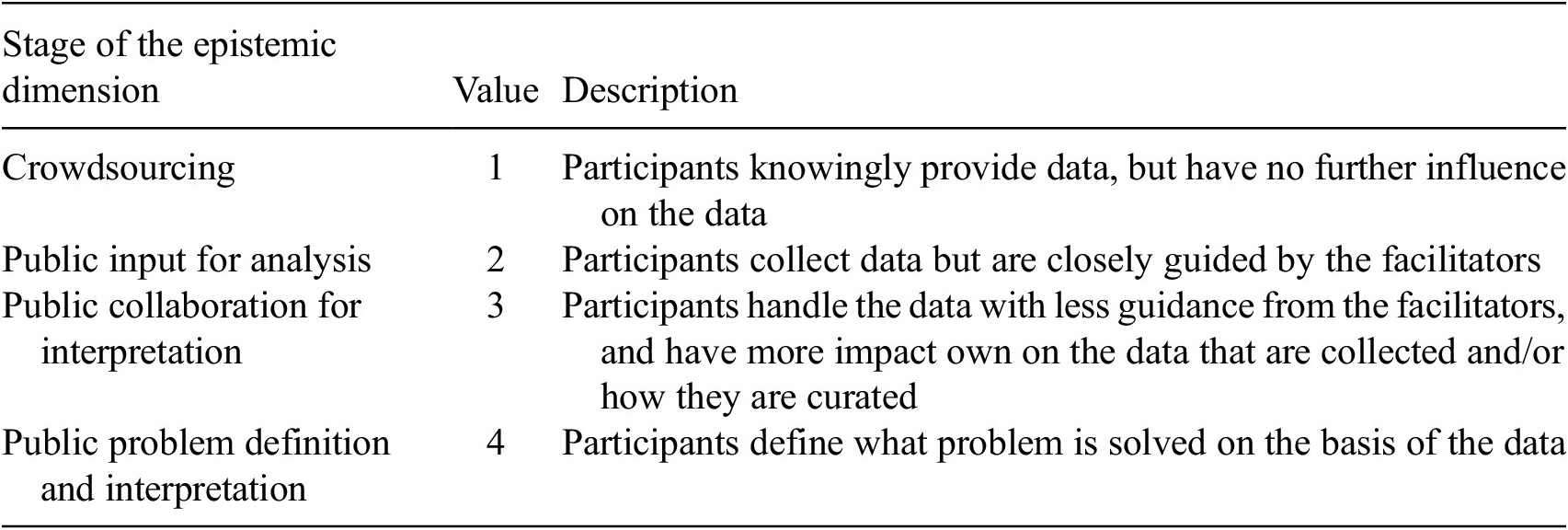
Epistemic dimension or data dimension: The epistemic dimension deals with the degree of participation in knowledge production; we use it in application to data handling while using the same idea and terms of the scale, but with a slightly different focus. As data are inherent in knowledge production processes, we use this dimension to describe the participation in data handling with a decreasing degree of restrictions put on participants in handling the data (Table 6).
Definition of the stages of the epistemic dimension with their values on the scale
The cases are analysed based on the information given in the source papers (for more details, see the Supplementary Material; Fassbender et al., Reference Fassbender, Kuehnlein and Henderson2025). We focused on the openness of the projects for participants and, therefore, did not analyse the kinds of facilitators but mentioned them in the case descriptions in the Supplementary Material.
3.2.2. Data life cycle
The cube gives a structural perspective on the openness of the project towards participants. For a better understanding of the underlying processes and project realities, we added a contextualised perspective, employing the data life cycle to see where and how participatory processes were employed.
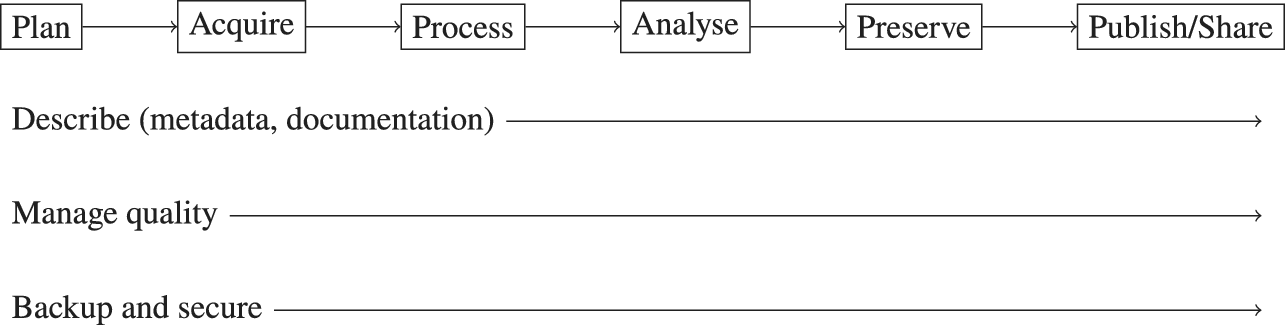
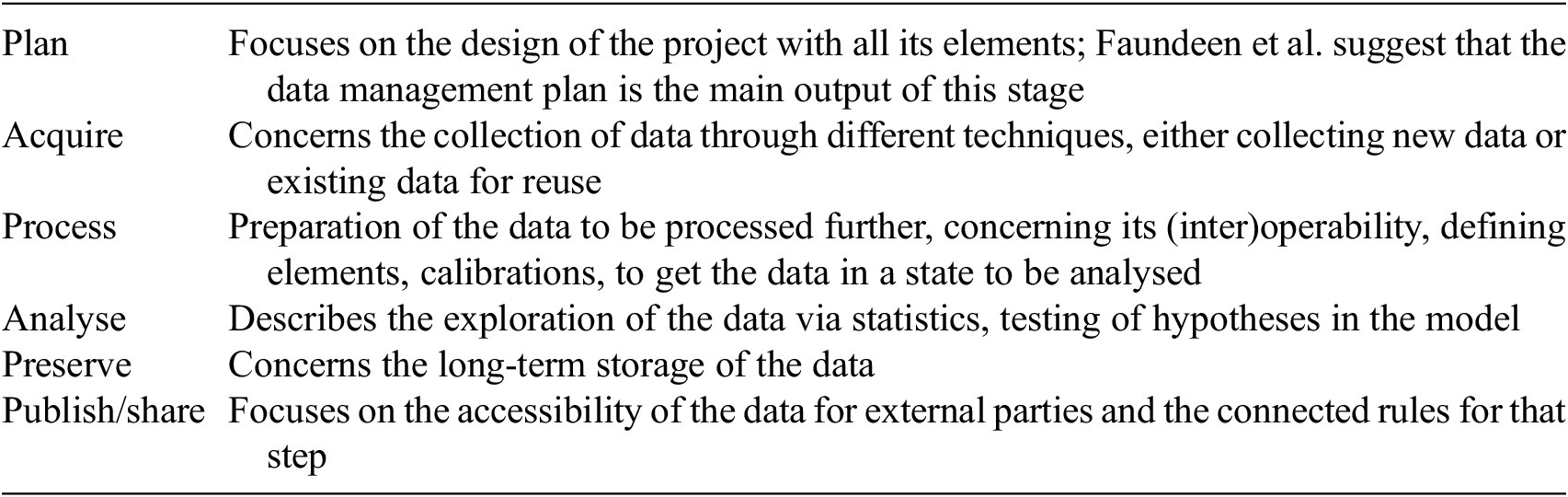
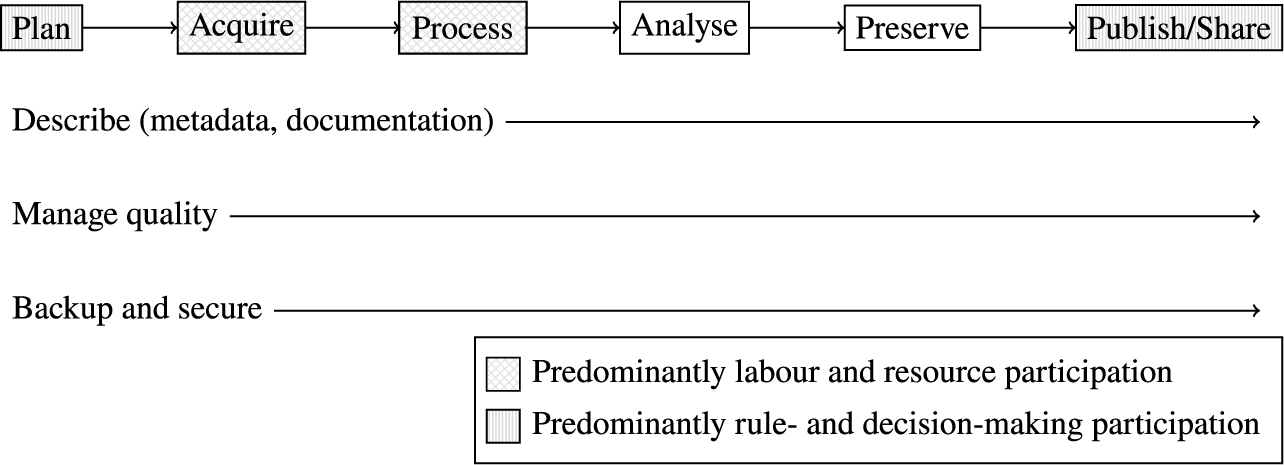
Data life cycle models provide a version of the data handling process in procedural steps. A variety of models exist, differing in the level of detail and to what degree they aim to capture the messy realities underlying the idealised depictions. Faundeen et al. (Reference Faundeen, Burley, Carlino, Govoni, Holl, Hutchison, Martín, Montgomery, Ladino, Tessler and Zolly2014) provide a data life cycle model for scientific data (Figure 3). The model is simplified to a comparably high degree, which is useful for considering a larger number of heterogeneous cases. The life cycle provides the following steps: plan, acquire, process, analyse, preserve, and publish/share. Underlying tasks, concerning the whole cycle, are framed as cross-cutting model elements: describe (metadata and documentation), manage quality, and backup and secure (Faundeen et al., Reference Faundeen, Burley, Carlino, Govoni, Holl, Hutchison, Martín, Montgomery, Ladino, Tessler and Zolly2014). The description of the general steps can be found in Table 7.
Visualisation of the data life cycle.
Source: Visually adapted from Faundeen et al. (Reference Faundeen, Burley, Carlino, Govoni, Holl, Hutchison, Martín, Montgomery, Ladino, Tessler and Zolly2014, 2).
Steps in the data life cycle as defined in Faundeen et al. (Reference Faundeen, Burley, Carlino, Govoni, Holl, Hutchison, Martín, Montgomery, Ladino, Tessler and Zolly2014)
4. Results
Our analysis identified different categories, which we use as a lens to view participation in data-driven projects. In the first step, we group the cases according to their conceptual set-up (Section 4.1). The application of the participatory cube showed two different project layouts regarding openness for participation (Section 4.2). The analysis of the focus points of participatory processes in the data life cycle showed clear hotspots of participatory attention and suggests two kinds of participatory processes (Section 4.3).
4.1. Emergent groups of cases
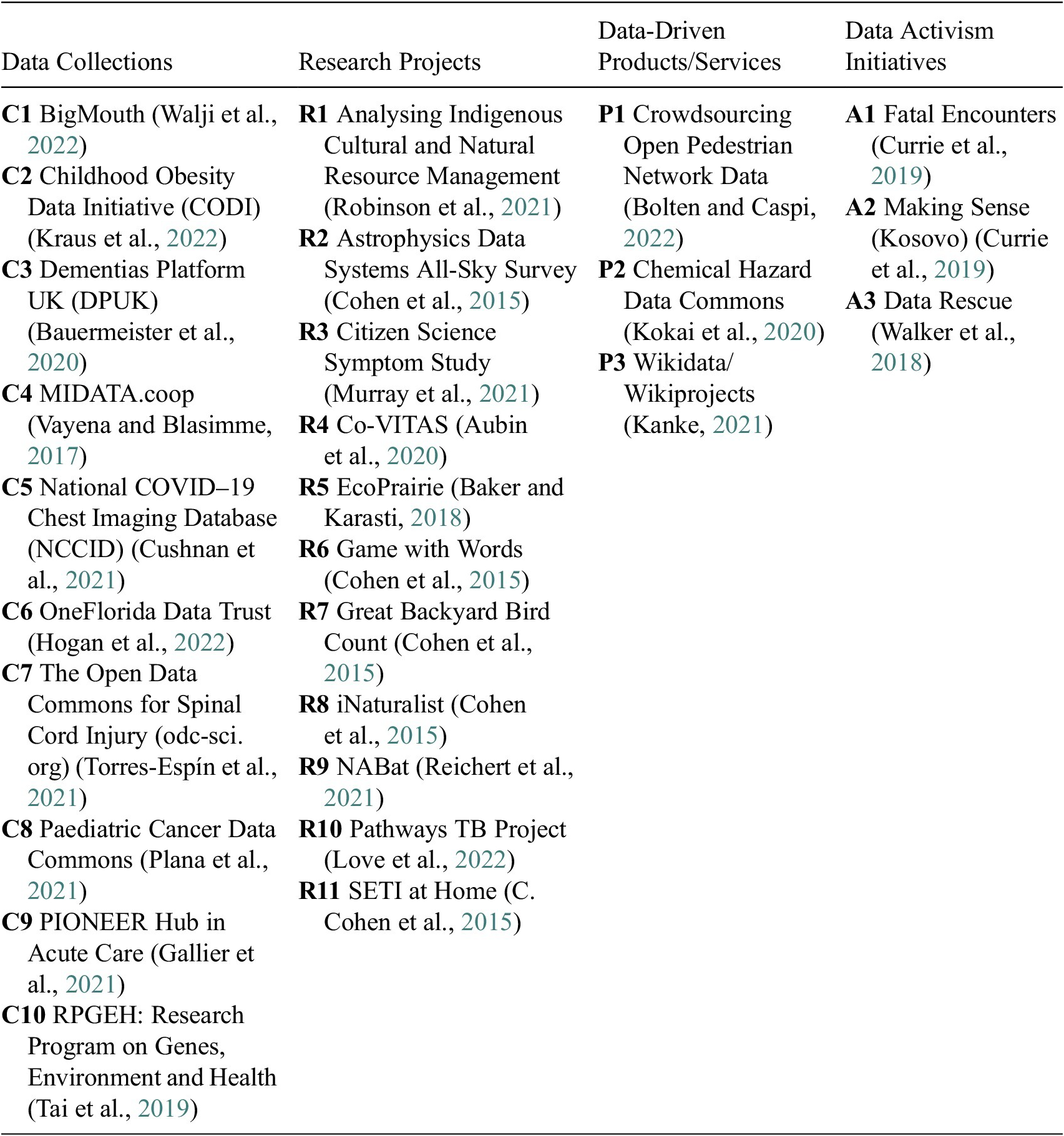
We cluster the cases in four separate groups: Research Projects, Data Collections, Data-Driven Products/Services, and Data Activism Initiatives (Table 8). The groups are not mutually exclusive and are based on the dominant framing of the cases in the source paper; for example, if a project is explicitly described as a data activism initiative but also has a research basis, we placed it in the data activism group. The majority of these projects follow or support an epistemic aim and are connected to research endeavours; 11% of the cases are projects that used data for an application in a service or product. Health & Medicine and Environmental topics dominate the field with encapsulating 77% of the cases in the sample.
The case studies fall into four groups
4.1.1. Research Projects
The first group comprises 11 Research Projects (R1-11). Six projects (R1, R2, R4, R5, R7, R8, and R9) concentrate on environmental issues; two cases deal with health conditions (R3 and R10) and two with other topics (R6 and R11). While the projects take place in academic or academia-related environments, 6 of the 11 cases are further framed as citizen science projects (R2, R3, R6, R7, R8, and R11) 5 of those (R2, R6, R7, R8, and R11) are described in the same paper (C. Cohen et al., Reference Cohen, Cheney, Duong, Lea and Unno2015).
4.1.2. Data Collections
Ten cases focus on creating data collections to be shared with researchers (C1–C10). All 10 cases deal with health data, which mostly stem from care facilities and are compiled from patient treatment records. Each collection is organised around a shared topic, such as specific diseases, conditions, treatment situations, or a geographical area. We assume that in most cases, datasets are created, but we do not know the exact technical organisation of the data collections.
4.1.3. Data-Driven Products/Services
The third group is Products/Services, where data enables an application or service (P1–P3), in distinction to an epistemic aim. This group includes one mapping case (P1) and two encyclopaedia-related cases (P2 and P3).
4.1.4. Data Activism Initiatives
Three Data Activism Initiatives (A1–A3) are all mentioned in one paper, while one case (A3) occurs in one more paper of the sample and is analysed on the basis of Walker et al. (Reference Walker, Nost, Lemelin, Lave and Dillon2018) as the description is more elaborate. The projects are framed as data activism (Currie et al., Reference Currie, Paris and Donovan2019, 1): “groups devoted to representing a contentious political issue through data, either by producing their own data, collecting “missing data,” or keeping vulnerable data in the public domain” (Currie et al., Reference Currie, Paris and Donovan2019, 2). The projects deal with different topics: preservation of public data feared to become censored (A3), documentation of incidents of police killings (A1), and a political activist campaign based on air pollution data (A2).
4.2. Openness of the cases to participation: participatory-at-core or participatory-informed
Locating the cases in the Participatory Science Cube (Schrögel and Kolleck, Reference Schrögel and Kolleck2018) identified two dominant participatory project characteristics: projects that are participatory-at-core and projects that are participatory-informed. Those are structural characteristics that should not be used in isolation to describe a project, but rather provide the first element for building the project types we later discuss.
4.2.1. Participatory-informed
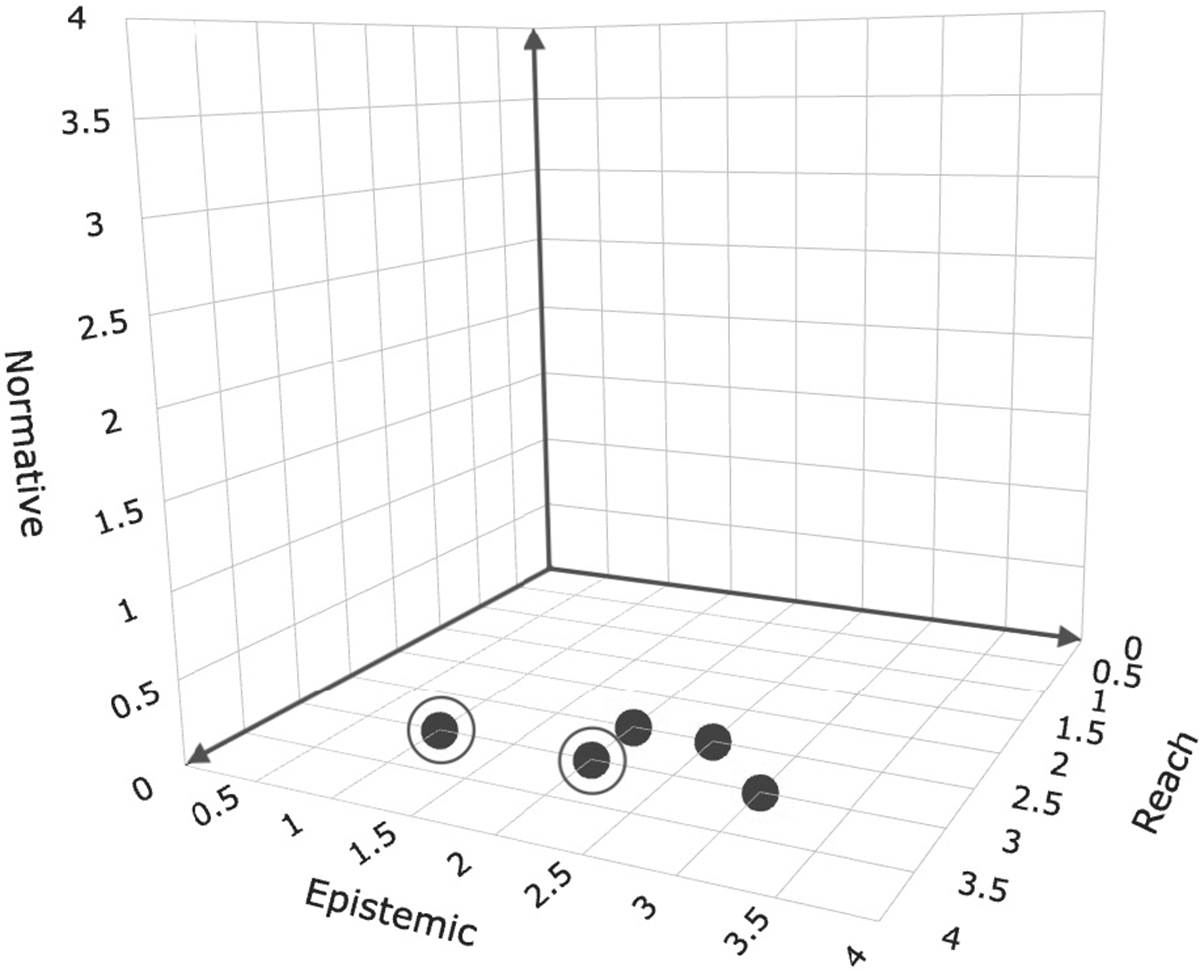
A characteristic that we term participatory-informed (PI) regards projects that have a strong focus on their openness for participation, either on governance participation or on participation in data handling. Therefore, we find projects with this characteristic in two different areas of the participatory cube, which also describe two starkly different types of projects. In one area, we see projects that rely on participation in data handling but not in the project governance (Figure 4). Those cases are open to a broader audience, ranging from organised civil society/interested public (2.5) to an interested public (3). These projects are typically citizen science projects (R2, R3, R6, R7, and R11) where participation takes place in the data acquisition, analysis, and processing. Another example is a data activism case (A1), in which participants submit data collected from different sources to the project to support building a statistic on killings by the police in the United States; the project is hierarchical and run by one journalist; therefore, no participation in governance takes place (Figure 5). The cases in this area share their strong focus on labour participation.
PI-L projects and their position in the participatory science cube; each dot represents one case, and each circle represents an additional case. PI-L cases tend to have a high reach in the participant group; those participants tend to be an interested public. This is matched with a focus on participation in data handling (epistemic dimension) and a tendency for no participation in the data governance of the project (normative dimension).
PI-G projects and their position in the participatory science cube; each dot represents one case. PI-G projects tend to have a lower reach in the participant group; those participants can be called lay-experts and/or experts. This is matched with a focus on participation in the governance of the project (normative dimension) and a tendency for very low participation in the data handling of the project (epistemic dimension).
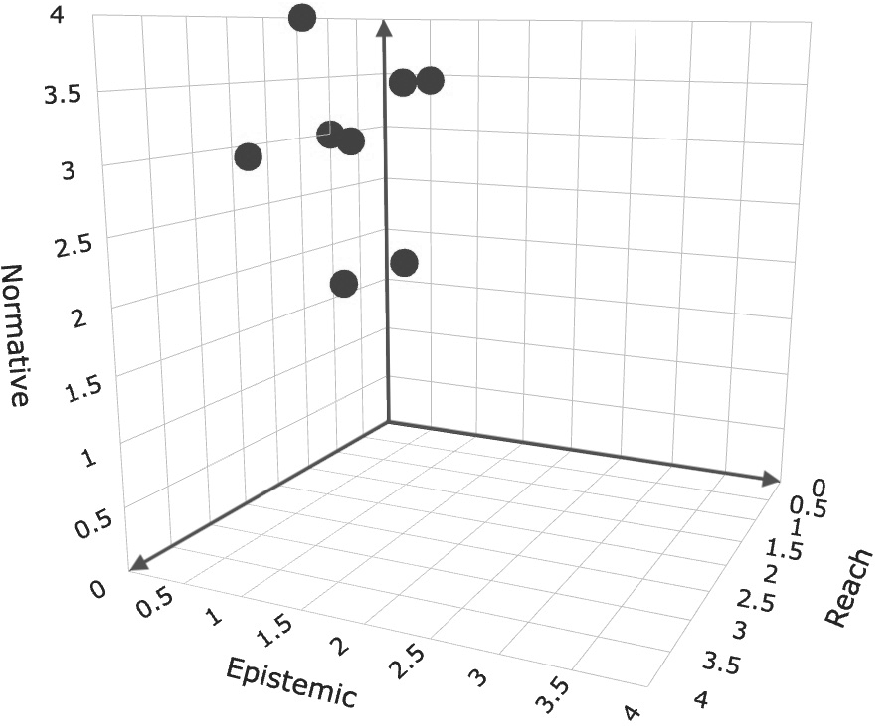
In the other area, we see projects that include participation in project governance but implement hands-on participation to a minimal degree (C2, C4, C5, C7–C10, and R5) (Figure 5). These projects are mainly health data collections. How participation is realised differs in who is participating and how the participation is facilitated. Patients (data subjects) and scientists (data users) are the main participating audiences. The inclusion of patients differs by the directness of their impact and their representation. In one case, facilitators interview a variety of stakeholders regarding their attitude towards data sharing (C10). These interviews informed the facilitators in drafting policies, which has a lower direct impact on participants but includes their positions in the policy-making process. The other extreme can be found in a data cooperative, where participants decide on the data access requests (C4). Between these ends, we find a case facilitated by the NHS where patients took part as in a workshop to co-draft the data sharing procedures (C9). While in the mentioned examples, patients represented patient interests as lay-experts, in other cases, professional experts are the main participants (C1, C2, C5, and C7). Here, experts take part in decision-making aspects of a project, for example, via data access committees (C1, C5, and C7) in which participants represent different perspectives or co-decide on the governance structure of the project (C2). The cases in this area show a varying degree of governance participation but share a focus on participation in the normative aspects of the projects.
4.2.2. Participatory-at-core
The other project characteristic is termed participatory-at-core (PC) and regards projects that employ participatory processes at different moments in the data life cycle and combine participation in governance and data handling to a similar and high extent (Figure 6). Their participatory set-up is a core objective of the projects to realise, maintain, and shape them; most of such projects cannot exist without participation.
PC-LG projects and their position in the participatory science cube; each dot represents one case, and each circle represents an additional case. PC-LG cases tend to have a medium reach in the participant group; those participants can be called lay-experts and/or an interested public. This set-up tends to be matched with participation in a variety of data handling tasks, including the use of the data (epistemic dimension) and a tendency for higher participation in the governance of the project (normative dimension).
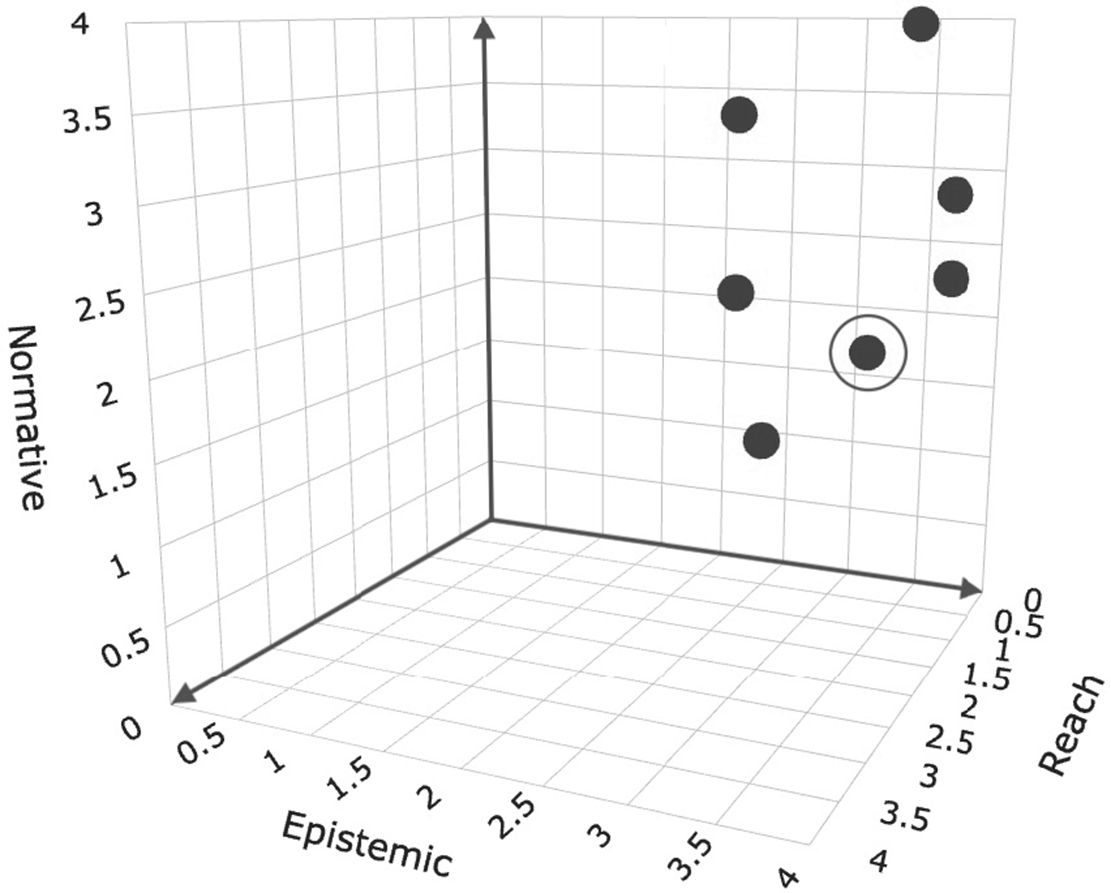
Typical PC examples include a data activism initiative that campaigns based on air pollution data that was collected by participants (A2); the project is governed through democratic decision-making procedures by the participants. Another example is self-organised Wikiprojects to improve Wikidata (P3). An additional case leaning towards PC is a knowledge database framed as a commons on chemical hazards (P2), which is curated and used by experts and lay-experts. The project ranks highly in terms of data handling participation but ranks less highly in participation in governance aspects, because the facilitators want to protect the project against lobbying. Another project collects data for pedestrian navigation (P1), where the transfer of data stewardship and connected governance responsibilities is designed to happen gradually from facilitators to participants.
4.3. Participatory processes in the data life cycle—labour and resource participation and participation in rule- and decision-making
As the cube does not provide insights into the processes themselves, we analysed them separately. We found participatory processes at each step of the data life cycle. Most can be found at the acquisition and sharing/publication steps. After describing the processes along the steps of the data life cycle, we provide a distinction in labour- and resource-related participation as well as rule- and decision-making focused participation.
4.3.1. Plan
Planning is an important step for rule-making in a project, given the negotiation and set-up of, for example, data governance agreements, memoranda of understanding, data management plans or protocols for data access requests, or the data collection (Figure 7). The planning step is in a few cases explicitly subject to participation (C2, C8, C9, C10, and R10). In two cases, policies or binding procedures are developed. One project focused on the adjustment of the planning step during the project (R10). Together with indigenous representatives, the facilitators created a binding data governance agreement. In the other case, the facilitators developed a request protocol for health data access within a project together with patients (C9). In two health data collections, a broader range of participants is involved; in one, 52 people, including both scientists and patients, were interviewed about data sharing within a biobank. The interviews were used to inform the data-sharing policy (C10). In contrast, a data commons on cancer (C8) and a data initiative on obesity (C2) developed policy procedures involving (domain-) experts as participants.
The most relevant steps for labour/resource participation in the life cycle are acquire and process, and for decision- and rule-making participation, plan and publish/share.
4.3.2. Acquire
Data acquisition, a resource- and often labour-intensive step, is connected to participation in 21 of 27 projects (C1–C10, R3, R4, R6, R7, R8, R11, P1, A1–A3). Many projects collect new data, suited to their own needs. We see data gathering in five citizen science projects (R3, R6, R7, R8, and R11), two distributed research projects (R4 and R9), one mapping case (P1), and three data activism cases (A1–A3). Only the health data collections rely on a secondary use of existing data, for example, compiled patient records (C1, C2, C4, C5, C6, C9, and C10) or data from previous research studies (C3, C7, and C8). For the health data collection, the acquisition of secondary data is inherently connected to sharing the data.
As data collection is regularly conducted by a number of different, often non-expert collectors, management of activities and data quality are recurring topics. This regards the training/managing of data collectors to sample data in a consistent manner (P1 and R4), the support of the process with software or other means (R3, R6, R8, R9, R11, and P1), or data quality (R4, R9, P1, and A1). We also see recurring discussions of the management of especially distributed sampling sites (R4, R9, and P1) and the engagement of participants (R4, R7, R8, P1).
4.3.3. Process
The processing step includes labour-intensive aspects that typically require more technical knowledge than the data acquisition. So, some aspects of the data processing are carried out by project facilitators, for example, managing data interoperability (P1) or validation (A1). The definition of elements in the data is, however, frequently subject to participatory processes, for example, where participants, often (lay)-experts, provide their knowledge on a subject matter (P2 and P3), classify data following a protocol (P1 and R2), or when researchers engage in collaborative data curation efforts (C2 and C7).
When a project aims at fostering collaboration among participants, it is usually reflected in discussion spaces (P2 and P3), instructive pages (P3), and related support for finding collaborators (P2) and measures to manage participants’ behaviour (P2).
As the life cycle model is an idealisation, the transitions from one step to the other are not always discrete. For example, in a mapping effort, the data collection is organised in a way that processing elements of the data are included in the data collection (P1 and R3).
4.3.4. Analysis
With regard to participation, this step plays no major role. The health data collections promote independent use of the data by researchers. Most of the other projects appear to conduct the analysis in the facilitating team and/or do not specify participation happening in this step of the data life cycle. A notable exception is a research project that co-investigated research questions with an indigenous community and supported this participating group in using the data in their own right, which led to storing the data in a different format. Nevertheless, the process is connected to the planning step of the data life cycle and to the analysis (R1).
4.3.5. Preserve
The preservation of data is only involved in participation in one case, where the data stem from a research project that ran for several decades and lost its funding (R5). The data needed to be migrated to an external library.
4.3.6. Publish/share
After planning, publishing and sharing the data is the next most prominent moment for rule- and decision-making in the data life cycle. Publishing and sharing are frequent subjects for decision-making participation, mostly in health data collection and in the form of data access request committees. The projects focus in large parts on the researchers using the data (C1, C2, C6, and C8), or different stakeholder groups (C2, C5, C7, C9, and C10), which frequently include patients or patient perspectives (C5, C7, and C10). One exception, which heavily focuses on prioritising patients/data subjects, is a data-cooperative (C4) that is explicitly built around patient control over data access. Recurring topics, related to participation, are consent or the lack of consent by patients, which is addressed by participatory processes as a counterbalance (C5 and C9), and the management of data access, which is addressed in different ways: data cooperative models (C4), data request protocols/agreements (C2 and C9), or access committees (C1, C5, and C10). Further topics related to data access are the participatory drafting of policies and procedures (C2, C8, and C9), committees overseeing the projects (C1 and C2), or general agreement on publishing data (R4).
4.3.7. Labour and resource participation
Following our analysis, we can identify one hotspot for participatory processes in the acquisition of data and other data handling tasks; we call such processes labour and resource participation. By this, we mean the performance of processes in the data life cycle that take effort, as well as the donation of data for secondary use. While receiving existing data is less labour-intensive and includes more coordination and communication tasks than manual tasks, it is a contribution of data as a resource to the project. We find that acquiring and processing data are the most relevant steps for labour and resource participation.
4.3.8. Rule- and decision-making participation
The other process category regards participation in the data governance of the project; we call this rule- and decision-making participation. We consider participation as rule-making when it concerns the drafting of overarching prescriptions, for example, a protocol for data access, the data collection, or the set-up of a board. Participation in executive governance decisions, for example, expert participants in data access boards granting or denying data access on the basis of an application, is considered participation in decision-making. Rule- and decision-making participation is dominant in the planning and publishing/sharing steps. The planning step is more closely connected to rule-making participation, for example, drafting policies. The publishing/sharing aspect is connected to decision-making participation, for example, following protocols for data access/data sharing.
5. Discussion
By combining the structural components participatory-at-core (PC) and participatory-informed (PI) with the process components labour and resource participation (L), and rule- and decision-making participation (G), we can observe three typical project types: projects with a PC structure that include labour and governance processes to a comparable degree (PC-LG), projects with a PI structure that focus on governance participation (PI-G), and projects with a PI structure that focus on labour participation (PI-L). The relation between labour participation and governance participation in the project types is decisive in determining which ambiguities need to be clarified.
In the following, we first discuss the ambiguities of resource/labour participation and decision-/rule-making participation, to then attribute these ambiguities to the three project types. We note how to clarify ambiguities for the different configurations and what possible countermeasures exist for each project type. We do not discuss the differentiation between participatory-informed and participatory-at-core in isolation, as the category does not indicate the nature of participation in the projects in general but merely an element of the project structure. We can see this from the vastly differing projects that share the feature of being participatory-informed. The distinction between the project structures in combination with the labour/governance component does, however, help us to provide a more precise description of the participatory configurations in the project. Therefore, this component is discussed as part of the three project types.
5.1. Ambiguity of participation in labour and resource participation
While labour/resource participation can provide insights into the inner workings of a project for participants and provide an educational dividend (cf. Kelty et al., Reference Kelty, Panofsky, Currie, Crooks, Erickson, Garcia, Wartenbe and Wood2015), it is also a form of participation with a higher risk of being exploitative (Resnik et al., Reference Resnik, Elliott and Miller2015; Sloane et al., Reference Sloane, Moss, Awomolo and Forlano2022). Further, projects implementing labour participation can profit from the generally positive image of participation without necessarily aligning a project with people’s interests, but at the same time, they have the potential to save costs through participatory processes. The possibility to save labour costs through participation stands against the fact that facilitating participation is expensive in itself (Groves et al., Reference Groves, Peppin, Strait and Brennan2023), among others, due to raised (transaction) costs (Steen et al., Reference Steen, Brandsen and Verschuere2018). Responsible forms of participation can be expected to be even more resource-intensive, due to extra care measures.
Otherwise, labour participation can also support the realisation of projects oriented towards public and collective interests; we find, for example, a navigation system for pedestrians, encyclopaedias, or commons projects with a strong labour participation. In several cases that are oriented towards a public value, it is mentioned that the projects fill a gap left by public institutions (P1) or are intended to hold public institutions accountable (A1–A3). One case explicitly mentions that the project objective was not picked up by other actors due to missing incentives (P1). Elsewhere, projects are not conducted by public actors due to conflicts of interest, as the project objective is to observe and/or hold authorities accountable (A1–A3). Splitting laborious tasks among participants can be an enabling factor in non-commercial and resource-scarce settings. The cases in the sample had a tendency to be located in a non-profit realm. Labour and resource participation can support the realisation of data-driven projects that are less affected by a for-profit logic and can therefore realise publicly desirable projects even though they are not profitable. Therefore, the evaluation of such approaches needs to be contextualised. Even though the exploitative potential of labour participation is heightened in projects that aim at enhancing private interests, labour participation in a non-profit context is not free from an exploitative potential.
5.2. Ambiguity of participation in rule- and decision-making
Participation in rule- and decision-making is closely connected to the idea of political participation (cf. Carpentier, Reference Carpentier2016). However, we see that it is a less dominant form of participation in our cases. This category broadly corresponds to Sloane et al.’s (Reference Sloane, Moss, Awomolo and Forlano2022) understanding of participation as justice and the normative dimension in the participatory cube (Schrögel and Kolleck, Reference Schrögel and Kolleck2018), but understands this kind of participation in a procedural manner—not to a fixed intended end. This means that participation in rule- or decision-making does not necessarily need to be connected to justice but may also be employed in an, for example, managerial manner. The differentiation between labour and resource participation has overlaps with Kelty et al. (Reference Kelty, Panofsky, Currie, Crooks, Erickson, Garcia, Wartenbe and Wood2015) dimension goals and tasks, in which the former overlaps more with rule- and decision-making participation and the latter with labour and resource participation. Our categories provide additional context to the nature of the tasks and mode of goal setting.
It is important to clarify that participation in those aspects can increase accountability, but should not be misunderstood by facilitators as a reduction of obligations on their side. This kind of process inherits a heightened risk and potential to obscure and veil responsibilities (Steen et al., Reference Steen, Brandsen and Verschuere2018; Zehner and Ullrich, Reference Zehner and Ullrich2024). This suggests that an explicit and clear attribution of roles and connected responsibilities is necessary. The selection of participants additionally impacts governance participation, especially if processes aim at representation. Such processes carry the risk of enhancing existing power imbalances. Further, possible selection biases of facilitators, for example, to confirm their own beliefs or issues with narrow out-reach channels, should be counterbalanced with context-sensitive selection strategies.
5.3. How to face participatory ambiguities in participatory data-driven projects
In the following, we discuss how to address ambiguities in the project types that combine the project configurations (PI/PC) with the categories of participatory processes (L/G).
5.3.1. PI-L—projects focusing on labour participation
PI-L projects likely focus on participatory processes in the data life cycle steps, acquisition, data processing, and/or data analysis. They tend to be open to a broad group of participants, depending on the affordances that follow from what is necessary to participate. Such a participatory approach can help to realise projects that enhance collective interests but are difficult to realise in a profit-oriented environment. In this kind of project, costs for laborious and resource-intensive tasks may be reduced through participatory processes. PI-L projects have, at the same time, a heightened risk for exploitation, especially if the project enhances private interests.
Labour/resource participation should be considered as a resource contribution to the project in the same way as financial or managerial contributions by stakeholders. Facilitators should clarify for themselves and for participants/the public who has contributed what to the implementation and maintenance of the project. If labour and resource participation take place in isolation, this decision should be explained and justified.
In addition, facilitators should explicitly communicate how participants are considered in the benefits of the project, as participants directly contribute to the output of the project. Benefits for participants can be differentiated into direct and indirect benefits. Non-monetary direct benefits may be the experience and insights in otherwise hidden processes, such as the outcome of a project, for example, a service that participants can use (P1, P3, and P2). Indirect benefits can be collective/public benefits such as accessible research results as public knowledge (e.g., R3, R7, and R9) or the impact of data activism cases, holding public institutions accountable (A1–A3). The clear communication of these aspects can enable participants to make informed decisions for or against contributing to a project.
Therefore, our baseline recommendation for PI-L projects is transparent expectation management: facilitators should communicate towards participants what their realm of impact is and how they contribute to the project. Additionally, facilitators should justify an isolated implementation of labour participation and clarify the project benefits. To raise the legitimacy of such an approach, benefits should exist for participants and the project and/or should be collective benefits. Those benefits should be exemplified and named explicitly. In addition, participation in rule- and decision-making aspects of the project should be considered; participants should at least have insight into the decision-making of the project.
5.3.2. PI-G—projects focusing on participation in governance
PI-G projects likely focus on participation in the data life cycle steps of planning and/or data sharing/publishing; the participatory processes are likely open to (lay-) experts. The expertise may regard the application domain, technological aspects, or the needs of an interest group. Such a participatory approach can align aspects of a project with the interests represented by the participants. In this way, collective interests can be considered in PI-G projects that are otherwise not participatory or community-oriented. At the same time, such projects run the risk to veil the accountabilities of facilitators and potentially reinforce existing power imbalances in the representation of participants.
Facilitators need to draft governance participation with contextual care. Among others, this can mean cautiously limiting participation and marking what is not up for discussion/cannot be altered through participation. In one case, on chemical hazards of building materials (P2), we saw an explicit restriction on participation with the intention to prevent lobbying. In another case, governance responsibility was gradually handed over to participants to ensure a working project (P1). This suggests that simply increasing rule- and decision-making participation is not necessarily better for collective interests and that a contextualised design of governance participation can help to improve the project’s functioning. Additionally, recognition by facilitators of their accountability for the project and its impact is crucial, along with the explicit allocation of other roles and responsibilities within a project.
To counterbalance possible selection biases of facilitators and include additional positions, it can help to install mechanisms for contestation rather than relying on deliberative formats (Crawford and Lumby, Reference Crawford and Lumby2013; Cohen and Suzor, Reference Cohen and Suzor2024). Further, informal channels can be helpful for participants and the public to voice their opinions (Kelty et al., Reference Kelty, Panofsky, Currie, Crooks, Erickson, Garcia, Wartenbe and Wood2015), for example, through simple feedback options, contact information, and an open project culture.
In PI-G projects, responsibilities need to be assigned clearly and should not be “outsourced” to participants. It may be helpful to explicitly state the objectives of the participatory processes and to clarify what can be decided by whom for what reason. It should be clarified how participants are determined by stating the selection procedure and the reasoning behind that. A participant selection by facilitators can contribute to avoiding important, but possibly confrontational, aspects that facilitators may not know about or want to spare. This can be counterbalanced by including mechanisms for contestation.
5.3.3. PC-LG—projects combining governance and labour participation
PC-LG projects focus on participation in potentially all steps of the data life cycle and combine labour and resource participation with participation in rule- and decision-making; the participatory processes are likely open to (lay-) experts and an interested public. This project type often builds on community organising and will thus need heightened attention and resources for community facilitation. PC-LG configurations are found in projects that are difficult to realise in a profit-driven environment and are likely to be non-profit projects. They can realise, for example, data activism efforts or public interest technologies. Those projects are likely set up to be aligned with the needs and wishes of participants and are realised through their labour and resource input. For PC-LG projects, it is a question of whether facilitators manage to build and foster a reliable community or can rely on an existing community.
In this project configuration, the dimension “Collective, Affective, and Communicative Experience of Participation” (Kelty et al., Reference Kelty, Panofsky, Currie, Crooks, Erickson, Garcia, Wartenbe and Wood2015, 483) is naturally more pronounced, given the high intensity and variation of participation. Such an experiential focus may be explicitly desirable, for example, because it developed organically through a community or is considered important for the specific project domain. Yet, for PC-LG projects, there is a risk of overriding other important aspects through an experiential focus; this may affect other parts of the problem orientation, impact, and success of the project. This again can lower the positive experience of being a part of something for participants. Further, participation may not be a suitable solution for every aspect of the data life cycle.
The weight of the experiential dimension and its function should be recognised by facilitators. The experiential dimension should be considered in the problem orientation of the project. This could mean that the connection of the participants among one another and the experience of being part of something belong to the intended outcome of the project and the problem it tackles. Further, impact measures are important in this project type to avoid making participation a means in itself.
The three project types are obviously simplifications describing much more messy realities, but we hope they can contribute to discussing and designing more problem-oriented and transparent approaches to participation in data-driven projects.
5.4. Future work
To close, we highlight some calls to action for the advancement of more problem-oriented and transparent participatory projects, future research, and a short reflection on the use of the model.
Generally, we see a necessity to develop a standard for what elements to consider when aiming at providing problem-oriented and transparent participatory processes. Providing a catalogue of questions and/or checklists can act as a guiding tool for facilitators. Further, such resources can function as a reference to support arguments for better practices within an organisation and as a reference for funders to require respective practices. These questions should look at the problem orientation of the project, communication and transparency measures, the scope of participation, the role attribution, and direct/indirect benefits for participants and the public.
While our research focused on facilitators in the sense of the people who are responsible for the projects, it needs to be recognised that their decisions are not made in a vacuum. Their decisions may be constrained by the availability of resources and (conflicting) interests in an organisation, such as given competencies. Those elements need to be investigated further to provide context-aware recommendations on how to improve participatory practices and to decide where other approaches are more promising.
If the model is to be used further, we note one caveat. We used the terminology provided by the authors of the Participatory Science Cube to define the stages on the scales. To use the model on more general data-driven projects, it may be advisable to use different terms for some stages. This regards the first stage on the epistemic dimension “crowdsourcing” as the lowest level contains less agency than the term in its usual use implies. Further, including a stage “affected public” on the reach dimension is advisable as this group plays an important role in more general data-driven projects; it should be located between “interested public” and “broad public.” We also recommend using the model with data collected for the use of the model, given its specificity.
The analysis based on the cube does not consider the important aspect of who the facilitators are and what kind of organisation they belong to, such as how participants are selected or if they enter the process through self-selection. Looking at those aspects can be a valuable addition.
6. Conclusion
We analyse 27 cases of participatory data-driven projects regarding their openness to participation and participatory processes along the data life cycle. Regarding their openness, we found two project configurations: projects that are participatory-at-core (PC), which cannot be thought of without participation and implement participation in a variety of steps in the data life cycle, and projects that are participatory-informed (PI), which employ participation sporadically in the data life cycle. We find that many projects employ participation regarding the acquisition, publishing, and sharing of the data, while the planning step is less often subject to participation. Those processes can be divided into participatory processes focused on labour and resources (L) as well as processes regarding the governance of the project concerning rule- and decision-making participation (G). We compare these to formulate three typical project types—PI-L, PI-G, and PC-LG—and discuss their ambiguities and potential mitigations to provide greater clarification. PI-L projects can enable the realisation of projects that are underfunded but have a heightened risk of one-sided exploitation. Isolated labour and resource participation should prioritise collective benefits in their outcomes, be justified explicitly towards participants, and involve expectation management. Granting insights into the governance of the projects are possible countermeasures. PI-G projects can support the alignment of a project with people’s needs and wishes, but they also have a heightened risk of veiling accountabilities and increasing existing power asymmetries among participants. Countermeasures can be a public justification of the participant selection, contestation mechanisms, and an explicit attribution of accountabilities. PC-LG can be a collective realisation of projects according to people’s needs and wishes, which would be hard to follow in a profit-oriented environment. At the same time, those projects may have the potential to employ participation predominantly for experiential reasons. The experiential dimension should be taken into account in the problem orientation of projects to avoid using participatory processes for their own sake.
The countermeasures are part of the governance of the project, particularly the policies and procedures. Further research is needed on what those countermeasures can look like in more detail, as well as how to formalise them in the project policies. Additionally, the interplay between further participatory dimensions and contextual expressions of the project types should be investigated.
7. Limitations
As touched upon prior, our use of the Participatory Science Cube for a larger number of projects in combination with using secondary sources—instead of in-depth and first-hand case studies—causes a trade-off between precision/detail and the ability to compare a larger number of cases. The use of secondary sources meant that the descriptions of the cases were not tailored to our analysis. Therefore, it is possible that we needed to evaluate, for example, normative participation with a value of 0, as no such participation was mentioned in the description, which does not have to mean that there actually is no normative participation. The use of secondary data may influence the reproducibility of our evaluations. To counterbalance this, we additionally published the justification of our analysis in the Supplementary Material. This is next to the inability to evaluate the success of the described approaches, which is a limitation. Additionally, it is likely that not all participatory processes present in the cases were described, as this was not the main focus of the analysed papers.
Lastly, our findings may not be representative, given the limitations of our methodology. The evaluation of the cases can be tracked in detail in the Supplementary Material.
Supplementary material
The Supplementary Material on the cases and placement in the Participatory Science Cube can be accessed at https://doi.org/10.6084/m9.figshare.28226423.
Acknowledgements
We thank the anonymous reviewers for their extensive feedback. We are also grateful for valuable feedback from Hadi Asghari, Freya Hewett, Freia Kuper, and Theresa Züger at different stages of the work.
Author contribution
Conceptualisation: J.F. and T.H.; Data curation: J.F. and I.K.; Data visualisation: J.F. and T.H.; Investigation: J.F.; Methodology: J.F. and T.H.; Supervision: T.H.; Writing—original draft: J.F.; Writing—review and editing: J.F. and T.H. All authors approved the final submitted draft.
Funding statement
This research is part of J.F.’s doctoral research, which is funded by a grant from the German Ministry of Education and Research (01IS20058) at the Alexander von Humboldt Institute for Internet and Society and a School of Computer Science Handsel Scholarship from the University of St Andrews.
Competing interests
The authors declare none.
Ethical standard
The research only uses secondary data and meets all ethical guidelines of the University of St Andrews Teaching and Research Ethics Committee.


 Open access


Comments
No Comments have been published for this article.