



Obesity as a major health issue is closely related to morbidity and mortality from non-communicable diseases( Reference Whitlock, Lewington and Sherliker 1 ). In recent decades the prevalence of obesity has been growing rapidly worldwide, turning it into an epidemic( Reference Roth, Qiang and Marban 2 ). Studies show that the prevalence of obesity in the Eastern Mediterranean region is one of the highest in the world( Reference Musaiger 3 ) and Middle East countries are among the leading ones in terms of mean BMI( Reference Yusuf, Hawken and Ounpuu 4 ). Although recently some studies have reported stability or leveling off in trends of obesity in the USA and some other countries( Reference Rokholm, Baker and Sorensen 5 – Reference Flegal, Carroll and Kit 7 ), this does not constitute a cessation of the epidemic, and longitudinal studies still report increasing obesity trends in the adult population of most countries worldwide( Reference Matsushita, Takahashi and Mizoue 8 – Reference von Ruesten, Steffen and Floegel 12 ). Furthermore, the increasing rate of obesity is a major concern in most developing countries and they require special attention in this regard( Reference Hossain, Kawar and El Nahas 13 ).
Most studies investigating obesity trends are based on cross-sectional survey data( Reference Berghofer, Pischon and Reinhold 14 – Reference Marques-Vidal, Paccaud and Ravasco 16 ). Cross-sectional studies and synthetic cohorts (i.e. linking age groups across cross-sectional data at different time points) that are often used for these purposes lack the ability to show the dynamics and these data may not be comparable over time( Reference von Ruesten, Steffen and Floegel 12 , Reference Levy, Mabry and Wang 17 ). Despite these limitations, sufficient longitudinal data are generally not available and more longitudinal studies are needed to overcome these obstacles.
In addition to genetic and lifestyle factors, many sociodemographic and socio-economic indices are closely related to obesity. Cross-sectional literature abounds on unequal prevalence of obesity in subgroups of age, gender, marital status, income, education level and cigarette smoking( Reference Musaiger 3 , Reference Hajian-Tilaki and Heidari 18 ). A significant relationship is also proposed in most studies assessing the temporal trends of obesity in different subgroups of socio-economic status( Reference Prättälä, Sippola and Lahti-Koski 19 – Reference Devaux and Sassi 21 ). However, some other studies suggest that socio-economic status has exerted minimal influence on changes in BMI over time and it seems that because of the obesogenic environment, these associations, though important, may have been weakened over past decades( Reference Reas, Nygard and Svensson 11 , Reference Zhang and Wang 22 ).
We previously reported an increasing trend of obesity and abdominal obesity in both genders in the first three phases of the Tehran Lipid and Glucose Study (TLGS) with a median follow-up of 6·6 years( Reference Hosseinpanah, Barzin and Eskandary 23 ). Considering the need for updated longitudinal data, the present study was designed to determine the trends of obesity and abdominal obesity in different subgroups of Tehranian adults over a 10-year follow-up using generalized estimating equations (GEE).
Materials and methods
Study participants and design
The TLGS was designed to determine the risk factors of non-communicable diseases among the Tehranian urban population and to develop population-based measures to prevent and improve these risk factors( Reference Azizi, Rahmani and Emami 24 ). The design of the TLGS included four components: phase I, a cross-sectional prevalence study of cardiovascular risk factors; and phases II, III, and IV, prospective ongoing follow-up studies for 10 years. A multistage, stratified, cluster random sampling technique was used to select 15 005 people, aged 3 years or older, and under coverage of three medical health centres from district 13 of Tehran, the capital of Iran. The district is located in the centre of Tehran and the distribution of age and other demographic factors in its population is representative of the overall population of Tehran and is compatible with that in the Iranian population. All members of each family, including those without risk factors, were invited for baseline measurments during phase I of the study and were followed in subsequent phases. The interval between every two assessments was approximately 3·6 years: phase I, 1999–2001; phase II, 2002–2005; phase III, 2006–2008; and phase IV, 2009–2011. Details of the study have been published elsewhere( Reference Azizi, Rahmani and Emami 24 ). From this population, only individuals ≥20 years old were selected from phase I and were followed to phase IV. Data on 10 368 participants (mean age of 43·5 years) in phase I, who had at least one further measurement in later phases, were used for analysis in GEE clusters that compensated for the absent information in each phase.
Measurements and definitions
Information regarding age, sex, smoking, marital status and educational level was collected using standard questionnaires. Smoking was defined according to WHO guidelines( 25 ). In our questionnaire, smoking was categorized into yes/no groups; ‘yes’ defined participants who smoked cigarettes (daily or occasionally or ex-smokers) and ‘no’ defined non-smokers. Marital status was categorized as married and non-married (including widowed and divorced). Educational level was defined based on last official educational degree achieved by the individual and was categorized as primary and secondary level, high school level and university level.
Weight was measured using a digital electronic weighing scale (Seca 707, range 0·1–150 kg; Hanover, MD, USA) with an accuracy of up to 100 g (the machine was regularly checked for precision after every ten measurements) and height was determined using a tape meter stadiometer according to standard protocols. Waist circumference (WC) was measured by trained personnel at the level of the umbilicus using an unstretched tape meter, without any pressure to body surface, and was recorded to the nearest 0·1 cm. Instruments and methods used for anthropometric measurements were the same at baseline and follow-ups. BMI was calculated as weight in kilograms divided by the square of height in metres (kg/m2). Obesity was defined as BMI≥30·0 kg/m2 and subcategories of obesity were defind as follows: class I as 30·0≤BMI<34·9 kg/m2; class II as 35·0≤BMI<39·9 kg/m2; and class III as BMI≥40·0 kg/m2 ( Reference Tsigos, Hainer and Basdevant 26 ). WC of ≥89 cm in men and ≥91 cm in women were considered as cut-off points for abdominal obesity, based on national cut-offs( Reference Delavari, Forouzanfar and Alikhani 27 ); although other WC cut-offs also exist for different Iraninan populations, we used the ones proposed by Delavari et al.( Reference Delavari, Forouzanfar and Alikhani 27 ) since they are the only ones representative of the whole nation, with the largest sample size and are widely used in similar studies.
Statistical analysis
All continuous variables are expressed as means and standard deviations, and categorical covariates are expressed as percentages. ANCOVA and logistic regression tests were used to compare age-adjusted differences between the two sexes within each phase for continuous and dichotomous variables, respectively.
Tests of interactions were checked considering time trends and obesity/abdominal obesity for subgroups of age, marital status, smoking and educational level. If the interaction terms were significant, the results were analysed and reported in those subgroups separately. Considering that the responses were dependent, the GEE model with auto-regressive working correlation structure, through log-link function with binomial errors, was used to estimate the relative risk of responses in the age, marital status and educational level subgroups( Reference Zeger, Liang and Albert 28 ). Relative risks (RR) and 95 % confidence intervals were computed. In the present study, obesity and abdominal obesity were considered as responses, separately.
All analyses were performed using the statistical software packages SPSS version 16 and SAS version 9·1 for Windows; the significance level was set at P<0·05 (two-tailed).
Results
The GEE analysis was performed on data of 10 368 participants (4397 males) aged ≥20 years from phase I, who had the information required in at least one of four study phases. The number of crude observations was 10 368, 6246, 6663 and 6217 in phases I, II, III and IV, respectively. The baseline characteristics of those who were lost to follow-up in phase IV were compared with those who remained in the study; there were no clinically significant differences between these two groups regarding age, sex, BMI, marital status and educational level (data not shown).
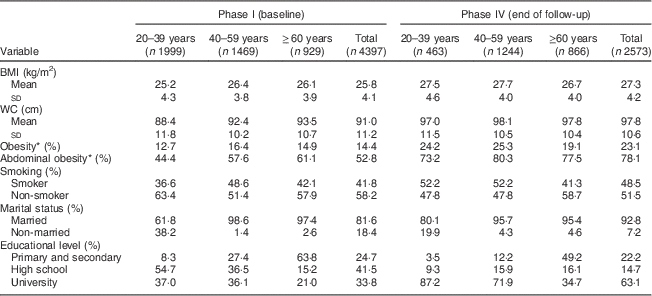
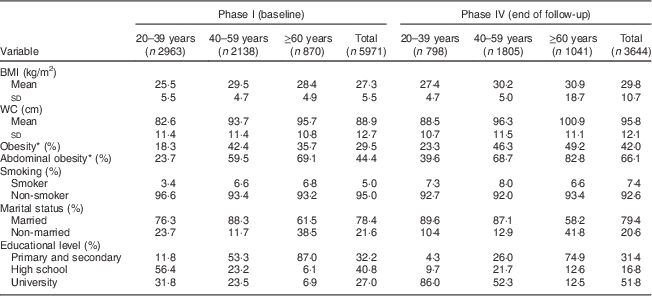
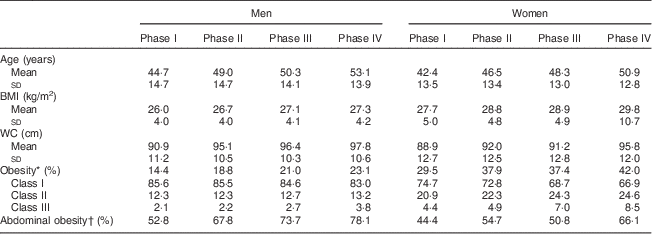
Basic characteristics of participants in phases I and IV of the study are presented for men and women separated into different age groups (Tables 1 and 2). In the whole study population, the crude prevalence of obesity and abdominal obesity increased from 23·1 % and 47·9 % at baseline to 34·1 % and 71·1 % at the end of follow-up, respectively. The crude prevalence of obesity increased from 14·4 % at baseline to 23·1 % in phase IV for men and from 29·5 % to 42·0 % for women. There was also an increase, at the end of follow-up, in the prevalence of abdominal obesity from 52·8 % at baseline to 78·1 % for men and from 44·4 % to 66·1 % for women. Sex-specific mean BMI and WC values, and also prevalences of obesity and abdominal obesity in each phase of the study, are presented in Table 3.
Basic characteristics of study participants at baseline and the end of the study by age group (men), Tehran Lipid and Glucose Study (TLGS), 1999 to 2011
WC, waist circumference.
Values are expressed as mean and standard deviation or as percentages.
* Obesity, BMI≥30·0 kg/m2; abdominal obesity, WC≥89 cm( Reference Delavari, Forouzanfar and Alikhani 27 ).
Basic characteristics of study participants at baseline and the end of the study by age group (women), Tehran Lipid and Glucose Study (TLGS), 1999 to 2011
WC, waist circumference.
Values are expressed as mean and standard deviation or as percentages.
* Obesity, BMI≥30·0 kg/m2; abdominal obesity, WC≥91 cm( Reference Delavari, Forouzanfar and Alikhani 27 ).
Prevalence and trends of obesity and abdominal obesity for Tehranian adults, Tehran Lipid and Glucose Study (TLGS), 1999 to 2011
WC, waist circumference.
Values are expressed as mean and standard deviation or as percentages.
* Obesity, BMI≥30·0 kg/m2; class I, 30·0≤BMI<34·9 kg/m2; class II, 35·0≤BMI<39·9 kg/m2; class III, BMI≥40·0 kg/m2.
† Abdominal obesity: WC≥89 cm in men and ≥91 cm in women( Reference Delavari, Forouzanfar and Alikhani 27 ).
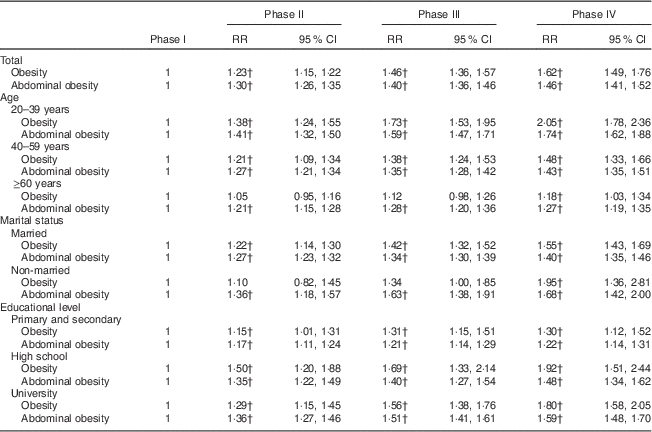
The RR for obesity and abdominal obesity in different subgroups and in each phase are presented in Tables 4 and 5 for men and women, respectively. Sex-specific tests of interaction were statistically significant for subgroups of age, marital status and educational level (P<0·001 for all), but not for smoking. Evaluating the trends using GEE showed that risk of obesity and abdominal obesity increased in both sexes. The total age-adjusted RR for obesity were 1·18, 1·23 and 1·36 in phases II, III and IV compared with baseline, and corresponding values were 1·21, 1·19 and 1·34 for abdominal obesity. Compared with baseline, an increase of 62 % and 46 % in the risk of obesity and abdominal obesity was observed in men at the end of the follow-up, respectively. The risk of obesity and abdominal obesity also increased by 24 % and 22 % in women, respectively. The highest increase in risk of obesity and abdominal obesity was observed in the 20–39 years age group for men (105 % and 74 %, respectively) and also for women (53 % and 79 %, respectively). Non-married men and married women were at increased risk of obesity compared with their counterparts regarding marital status. Regarding educational level, the highest increase in obesity and abdominal obesity was observed in those with high school educational level in both men and women (except for abdominal obesity in men that was higher in those with university educational level). At the end of the study, there was also an increasing trend of obesity and abdominal obesity in all subgroups of age, marital status and educational level, when compared with baseline values.
Relative risks of obesity and abdominal obesity in different study subgroups in phases I to IVFootnote * (men), Tehran Lipid and Glucose Study (TLGS), 1999 to 2011
RR, relative risk; WC, waist circumference.
* Obesity, BMI≥30·0 kg/m2; abdominal obesity, WC≥89 cm in men and ≥91 cm in women; marital status, married and non-married (including widowed and divorced); Phase I was considered as the reference category.
† All comparisons are adjusted for age and P<0·05 is considered statistically significant.
Relative risks of obesity and abdominal obesity in different study subgroups in phases I to IVFootnote * (women), Tehran Lipid and Glucose Study (TLGS), 1999 to 2011
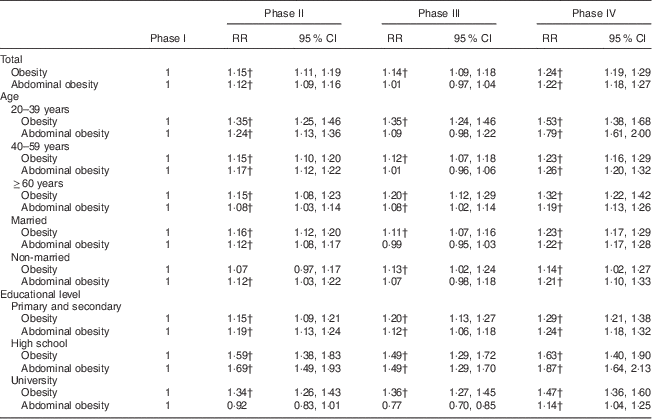
RR, relative risk; WC, waist circumference.
* Obesity, BMI≥30·0 kg/m2; abdominal obesity, WC≥89 cm in men and ≥91 cm in women; marital status, married and non-married (including widowed and divorced); Phase I was considered as the reference category.
† All comparisons are adjusted for age and P<0·05 is considered statistically significant.
Discussion
To our knowledge, the present study is the first one on trends of obesity and abdominal obesity in the region with a decade of follow-up. Our results showed an overall increase in trends of obesity and abdominal obesity in both genders and different study subgroups in the urban adult Tehranian population over a 10-year follow-up. Using a GEE model, the overall risk of obesity and abdominal obesity increased by 36 % and 34 % at the end of study, respectively. This increase was more dramatic in younger age groups and in men.
Most studies addressing obesity trends are based on cross-sectional data and, in contrast to longitudinal studies, lack the ability to genuinely represent the dynamics of the problem over time periods. The trends of obesity vary worldwide and the literature shows conflicting results. Data from developing countries and the Middle East indicate that increasing trends of obesity are still a major health problem in these areas( Reference Hossain, Kawar and El Nahas 13 ). In concordance with our results, numerous studies have reported an increasing trend of obesity in different parts of the world either in cohort studies( Reference Murdock, Salit and Stoffel 9 – Reference von Ruesten, Steffen and Floegel 12 ) or by comparing multiple cross-sectional surveys over time( Reference Neovius, Johansson and Kark 15 , Reference Marques-Vidal, Paccaud and Ravasco 16 , Reference Boylan, McNulty and Walton 29 ). In Iran, Esteghamati et al.( Reference Esteghamati, Khalilzadeh and Mohammad 30 ) showed increasing secular trends of overweight and obesity among Iranian adults over an 8-year period, during which the overall prevalence of obesity increased from 13·6 % in 1999 to 22·3 % in 2007 with an OR of 1·08 per year( Reference Esteghamati, Khalilzadeh and Mohammad 30 ). However, the latter study compared data from three independent cross-sectional studies with different urban and rural populations, and possibly with different socio-economic backgrounds. Interpreting and extrapolating these kinds of data face multiple limitations since it does not represent a longitudinal trend in a single representative population. On the other hand, several studies have reported stability or levelling off in trends of obesity specifically in Europe and the USA( Reference Sundquist, Johansson and Sundquist 6 , Reference Flegal, Carroll and Kit 7 , Reference Howel 31 ). Although concerns about generalizability of both categories of these studies exist, the different composition of study populations, variations in socio-economic status and also implementation of preventive strategies in some countries could partly explain these differences. It is also noteworthy that interpretation of these studies is largely dependent on the type of statistical method applied, choice of statistical models and consideration of possible publication biases as well( Reference Rokholm, Baker and Sorensen 5 ).
Together with the epidemic of general obesity (measured by BMI), the prevalence of abdominal obesity (measured by WC) is also increasing, however with different patterns( Reference Tanamas, Shaw and Backholer 10 , Reference Li, Ford and McGuire 32 ). It is suggested that abdominal obesity is a better indicator for risk of type 2 diabetes, CVD and all-cause mortality, so addressing this index in obesity studies is important( Reference Bigaard, Frederiksen and Tjonneland 33 ). Our results indicated a higher prevalence of abdominal obesity compared with obesity, and this is in agreement with previous TLGS data and the current literature( Reference Hosseinpanah, Barzin and Eskandary 23 , Reference Li, Ford and McGuire 32 ). Low physical activity, sedentary lifestyle, changes in diets and higher energy intake are suggested to play key roles in this shifting trend towards abdominal obesity( Reference Koh-Banerjee, Chu and Spiegelman 34 ). In our study, the prevalence of obesity and abdominal obesity followed an increasing trend in the last 10 years; this trend was more dramatic in men and the youngest age group (20–39 years), a finding in agreement with previous reports in Tehran which had stressed the alarming rates in men and younger age groups( Reference Hosseinpanah, Barzin and Eskandary 23 , Reference Hosseinpanah, Barzin and Amiri 35 ). Regarding abdominal obesity, our results were in contrast to those of another study conducted in northern Iran reporting a slight decline in trends of abdominal obesity in an urban male and female population between 2006 and 2010( Reference Veghari, Sedaghat and Banihashem 36 ); however, that study was based on two cross-sectional data sets that face problems for comparing the trends, used different WC cut-offs (north American and European cut-offs of 102 cm and 88 cm in men and women, instead of national cut-offs) and the results were an exception when compared with other similar studies in Iran. Furthermore, Tehran is a metropolitan city with different levels of population diversity and environmental risk factors compared with smaller towns in the country. Similar to ours, several studies have reported that the prevalence of abdominal obesity is growing using a cohort design( Reference Tanamas, Shaw and Backholer 10 , Reference Niu and Seo 37 ) or multiple cross-sectional surveys( Reference Li, Ford and McGuire 32 , Reference Du, Sun and Yin 38 ). Niu et al.( Reference Niu and Seo 37 ) used longitudinal data from the China Health and Nutrition Survey (CHNS) from 1997 to 2009 and reported that the prevalence of abdominal obesity increased from 17·3 % to 39·4 % during a 12-year follow-up; in that study abdominal obesity (WC ≥90 cm for men and ≥80 cm for women) was more prevalent in Chinese women at baseline, but the increasing trends were observed in both genders and all age groups. On the other hand, Tanamas et al.( Reference Tanamas, Shaw and Backholer 10 ) showed in a 12-year longitudinal study that the mean BMI and WC increased in Australian adults and most prominently in those who were younger at baseline; the incidence of obesity and abdominal obesity also increased in both sexes, but was more prominent in women. The root causes behind these sex differences are unclear and need more investigations; but the higher trends of abdominal obesity in Tehranian men compared with women may in part be because, in recent years: women’s awareness of their health and body has increased; women are getting more educated and involved in social activities; and last but not least, most of the public educational programmes have targeted women, somehow overlooking the male population. These factors may have implemented changes in Tehranian women’s diet and lifestyle in recent years. Despite the increasing trend of abdominal obesity observed in most related studies, comparing these results in various populations is problematic because definitions and cut-off points for diagnosing abdominal obesity, and also the nature of the data used (cohort v. multiple cross-sectional), vary in different studies.
Socio-economic status and factors like smoking, educational level and marital status are regarded as important variables associated with obesity, particularly in women; however, these associations are complex and dynamic( Reference Hajian-Tilaki and Heidari 18 , Reference Monteiro, Moura and Conde 39 ). In our study, the rates of obesity and abdominal obesity increased during the study period in all subgroups, regardless of age group, educational level and marital status, although the extent was different. Similar to our results, several studies have reported that during the epidemic, obesity prevalence increased in all subgroups and socio-economic indicators exerted minimal effect on these growing trends( Reference Reas, Nygard and Svensson 11 , Reference Lahti-Koski, Seppanen-Nuijten and Mannisto 40 ). Recently, in a large sample of Chinese adults, Du et al.( Reference Du, Sun and Yin 38 ) reported that the increasing trends of obesity and abdominal obesity exist in all population subgroups of age, sex and education. Also Prättälä et al.( Reference Prättälä, Sippola and Lahti-Koski 19 ) reported differences in BMI increase at various educational levels according to outcome, but similar to us they also reported that the increasing trend is present at all educational levels. Although Torrance et al.( Reference Torrance, Hooper and Reeder 41 ) found that obesity trends varied with educational level and smoking, more recent evidence suggests that the association between these factors and obesity has been weakened in recent decades, concurrent with the dramatic increase in obesity prevalence( Reference Reas, Nygard and Svensson 11 , Reference Zhang and Wang 22 ). In our study women with high school educational level had the highest trend of obesity and abdominal obesity and the trend was less dramatic in the higher educational level. However, in men this pattern was more complex and those with higher educational levels had higher trends of obesity and abdominal obesity. These findings are in line with most studies on education and obesity that show an inverse association in women, but inconclusive and complex associations in men( Reference Prättälä, Sippola and Lahti-Koski 19 , Reference Wardle, Waller and Jarvis 42 ). It is supposed that women with higher education are more concerned about their body shape and how they look compared with men( Reference Wardle, Waller and Jarvis 42 ), so they may more actively engage in healthy eating and weight-control programmes. Regading marital status we found that married women and unmarried men had higher rates of obesity and abdominal obesity in our follow-up. Most studies show that marriage and weight gain are positively associated; however, these associations may differ based on gender, ethnicity and other socio-economic factors( Reference Janghorbani, Amini and Rezvanian 43 , Reference Sobal, Rauschenbach and Frongillo 44 ). In Iranian women, marriage may be accompanied with less concern about body shape, less physical activity and also childbearing; all may affect their body weight in the long term( Reference Janghorbani, Amini and Rezvanian 43 ). On the other hand, Iranian men may have different dietary patterns and less healthy diets before marriage; lack of support from a spouse may also lead to less concern about body shape in unmarried men. However, one should also consider the dynamic nature of factors like marriage and educational level and the role of other environmental and socio-economic factors in interpretation of these findings. Since we used baseline information of participants in the present study we cannot conclude on these subjects or test the aforementioned hypotheses.
Lack of physical activity is another culprit in the obesity epidemic. Studies show that both leisure-time physical activity and occupational physical activity can be inversely associated with obesity( Reference King, Fitzhugh and Bassett 45 ). Lifestyle patterns are changing and with modernization, the global trend is towards a decrease in physical activity that also plays an important role in trends of obesity and abdominal obesity( Reference Ng and Popkin 46 ). Taken together, it seems that the dynamic roles of lifestyle changes and different socio-economic factors form a complex network to affect obesity trends. Modern life with advances in the food industry, easier and faster access to larger food volumes and also major lifestyle changes are making the world we live in more and more ‘obese-friendly’ and this obesogenic environment is a major contributor to the obesity epidemic.
The present study has several strengths and limitations. Being the first large population-based study in Iran and the Middle East with a 10-year follow-up is the main study strength. We also used measured values for weight, height and WC in order to diagnose obesity and abdominal obesity as opposed to self-reported measures, which could lead to underestimation of BMI and obesity( Reference Nyholm, Gullberg and Merlo 47 ). The other strength of the study is that we used country-specific cut-offs for WC in defining abdominal obesity. We also used GEE as a more flexible and robust model for handling longitudinal data, allowing us to use all available data and better dealing with missing values. Regarding limitations, we did not take into account some factors like physical activity, dietary habits and economic status in our study. Furthermore, TLGS is a population-based study on Tehranian residents and although Tehran is a metropolitan city with a wide range of population variety, these data may not be representative of all the Iranian population.
Conclusion
In conclusion, our study shows that in a representative adult Tehranian population, the trends of obesity and abdominal obesity are fast increasing in both men and women and in different social groups. Moreover, the dramatic increase of obesity and abdominal obesity in men and younger age groups merits special consideration. These alarming trends challenge current health priorities to provide urgent and effective prevention and education strategies targeting the whole population, not just a specific educational level or social group.
Acknowledgements
Acknowledgements: The authors would like to acknowledge Ms Niloofar Shiva for critical editing of English grammar and syntax of the manuscript, and also the staff and participants in the TLGS for their important contributions. Financial support: The TLGS has been supported by NRCI Research Project (grant number 121) and is done with the support of the National Research Council of the Islamic Republic of Iran. The NRCI had no role in the design, analysis or writing of this article. Conflict of interest: None. Authorship: F.H., M.B. and S.G. participated in formulating the research question and designing the study. S.K. and S.S. participated in designing the study, analysing the study and writing the manuscript. F.A. participated in designing the study and final revision of the manuscript. Ethics of human subject participation: The Research Ethics Committee of the Research Institute for Endocrine Sciences, Shahid Beheshti University of Medical Sciences, approved this study that was conducted in accordance with the principles of the Declaration of Helsinki. Written informed consent was obtained from all participants.



