





Introduction
Schistosomiasis is one of the most prevalent neglected diseases in tropical and subtropical regions, affecting millions of people annually (Tamarozzi et al., Reference Tamarozzi, Fittipaldo, Orth, Richter, Buonfrate, Riccardi and Gobbi2021). Schistosomiasis mansoni infection is mostly found in 54 countries in Africa, Eastern Mediterranean and South America, especially in the Caribbean, Venezuela, and Brazil. In Brazil, 1·5 million people are estimated to live in areas at risk. From 2009 to 2019, the average positivity rate for S. mansoni in endemic areas of Brazil was 4·29%, with 423 117 cases detected from nearly 10 million tests (Brasil. Ministério da Saúde, 2024).
In schistosomiasis, the endothelial involvement in hepatosplenic cases, a severe form characterized by the enlargement of the liver and spleen, is significant and are directly impacted by the presence of Schistosoma eggs (Da Silva and Carrilho, Reference Da Silva and Carrilho1992). These eggs, trapped in the hepatic vasculature causes inflammatory response and endothelial damage, leading to granuloma formation and fibrosis, resulting in increased vascular resistance and portal hypertension (Gryseels et al., Reference Gryseels, Polman, Clerinx and Kestens2006). Moreover, the release of pro-inflammatory cytokines and angiogenic factors, such as angiopoietins (ANGs) by the endothelial cells may perpetuates these processes.
ANGs, a family of vascular growth factors, have been studied as potential biomarkers for various inflammatory and vascular conditions (Lymperopoulou et al., Reference Lymperopoulou, Velissaris, Kotsaki, Antypa, Georgiadou, Tsaganos, Koulenti, Paggalou, Damoraki, Karagiannidis and Orfanos2015; Nicolini et al., Reference Nicolini, Forini, Kusmic, Iervasi and Balzan2019). ANG-1 and ANG-2 are crucial growth factors in the Tie system, which is essential for the development and maintenance of blood vessels. ANG-1 primarily acts as an agonist of the Tie2 receptor, promoting vascular stability (Gillen et al., Reference Gillen, Richardson and Moore2019). It helps maintain the integrity of blood vessels, stimulates endothelial cell survival, reduces vascular permeability and also in the repair of blood vessels, playing a role in suppressing inflammation and regulating the endothelial barrier. In contrast, ANG-2 generally acts as a partial or competitive antagonist of ANG-1 at the Tie2 receptor and may destabilize vessels, increasing vascular permeability and facilitating inflammatory responses (Gillen et al., Reference Gillen, Richardson and Moore2019). In inflammatory diseases, high ANG-2 levels reflect worsened vascular inflammation and increased mortality risk (David et al., Reference David, Mukherjee, Ghosh, Yano, Khankin, Wenger, Karumanchi, Shapiro and Parikh2012). Additionally, ANG-2 has been linked to chronic kidney disease and acute kidney injury progression (Araújo et al., Reference Araújo, de Oliveira Neves, de Freitas, Arruda, de Macêdo Filho, Salles, Meneses, Martins and Libório2019), an important clinical complication of Schistosomiasis.
However, there are no studies with ANGs in schistosomiasis patients. Thus, this present study aims to explore the role of ANGs, specifically ANG-2 and the ANG-2/ANG-1 ratio, in schistosomiasis severity, regardless of hepatic alterations. In this context, the role of ANGs could be a valuable for understand inflammatory and vascular processes which are relevant to the pathophysiology of schistosomiasis.
Materials and methods
Study design and population
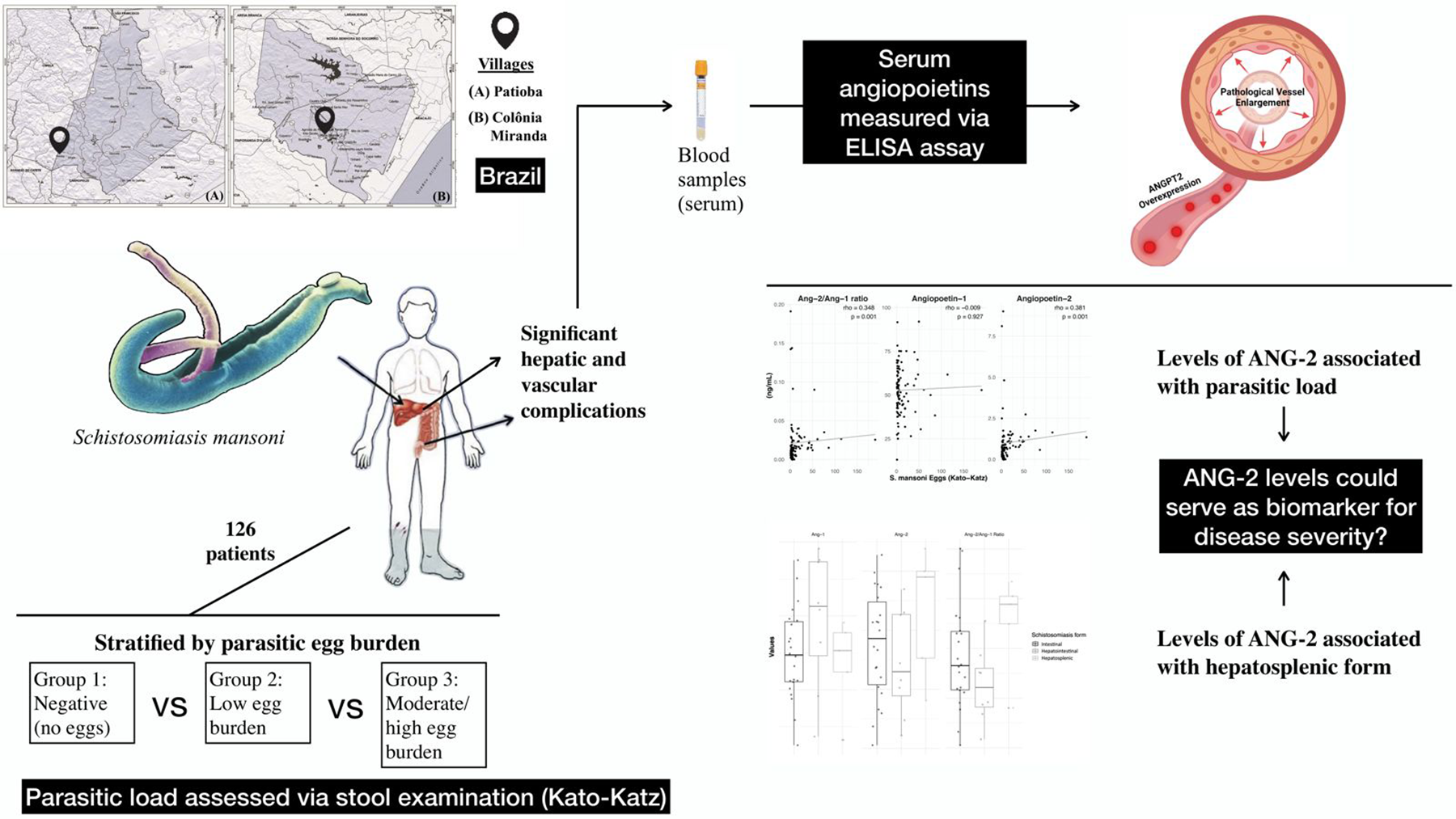
We conducted a cross-sectional study from August 2022 to April 2023, involving patients diagnosed with schistosomiasis in two communities in the state of Sergipe, Brazil: The Patioba community in Japaratuba and the Colônia Miranda community in São Cristóvão. Patients were stratified into three groups based on their parasitic load: negative, low and moderate/high.
Diagnosis of schistosomiasis and clinical data
The parasitological diagnosis of schistosomiasis was performed using the Kato–Katz method (Katz et al., Reference Katz, Chaves and Pellegrino1972). Two stool samples were collected (on alternate days), and two slides were prepared from each. The intensity of infection by S. mansoni was stratified in terms of eggs per gram of faeces (EPG) (WHO, 2002). In the study the patients were categorized into three groups: negative (patients with no eggs in the Kato–Katz method), low burden (EPG < 100) and moderate/high burden (EPG ≥ 100).
Data collection included sociodemographic characteristics such as age, sex, and race, as well as clinical parameters including systolic and diastolic blood pressure, oxygen saturation, and various hepatic and abdominal classifications. The changes and categorization of liver involvement were carried out according to the Niamey-Belo Horizonte protocol (Richter et al., Reference Richter2000). Abdominal ultrasound was performed by a trained professional using a portable device C10RL from Konted®.
Laboratory assessments and ANGs
Serum cholesterol (total and HDL) (expressed in mg/dL), triglycerides (TG) (expressed in mg/dL), direct bilirubin (BD) (expressed in ng/dL), total glutamic oxaloacetic transaminase (SGOT; TGO) and glutamic pyruvic transaminase (SGPT; TGP) (expressed in U/L) were measured using commercial kits from Bioclin® (Belo Horizonte, Brazil) and immunoturbidimetry in the BM-200 biochemical analyzer (Vyttra®, São Paulo, Brazil).
ANGs, ANG-1 and ANG-2 were measured using enzyme-linked immunosorbent assays. The assays was based on manufactured kits procedure (ANG-1: DY923, R&D systems®), and (ANG-2: DY623, R&D systems®). The ANG-2/ANG-1 ratio was calculated to evaluate balance of tie system mechanisms (Saharinen et al., Reference Saharinen, Eklund, Alitalo, Figg and Folkman2008) possible correlations with parasitic load severity and clinical findings.
Statistical analysis
Qualitative variables were expressed as absolute counts and percentages, and comparisons were made using the chi-square test. All quantitative variables were tested for normal distribution using the Shapiro–Wilk test. Normally distributed data were expressed as mean ± standard deviation, while non-normally distributed data were expressed as median and interquartile range. For comparisons between two independent groups, the Student’s t-test or Mann-Whitney test was used, depending on data normality. The parametric ANOVA test with Tukey’s post-hoc test was used for comparisons between three or more groups for normally distributed data, while the Kruskal–Wallis test with Dunn’s post-hoc test was used for non-normally distributed data. To determine correlations between the variables analysed, it was used Spearman’s Rho coefficient. The P < 0·05 was considered significant. All analysis were performed in SPSS for Macintosh (Version 23.0. Armonk, NY: IBM Corp).
Results
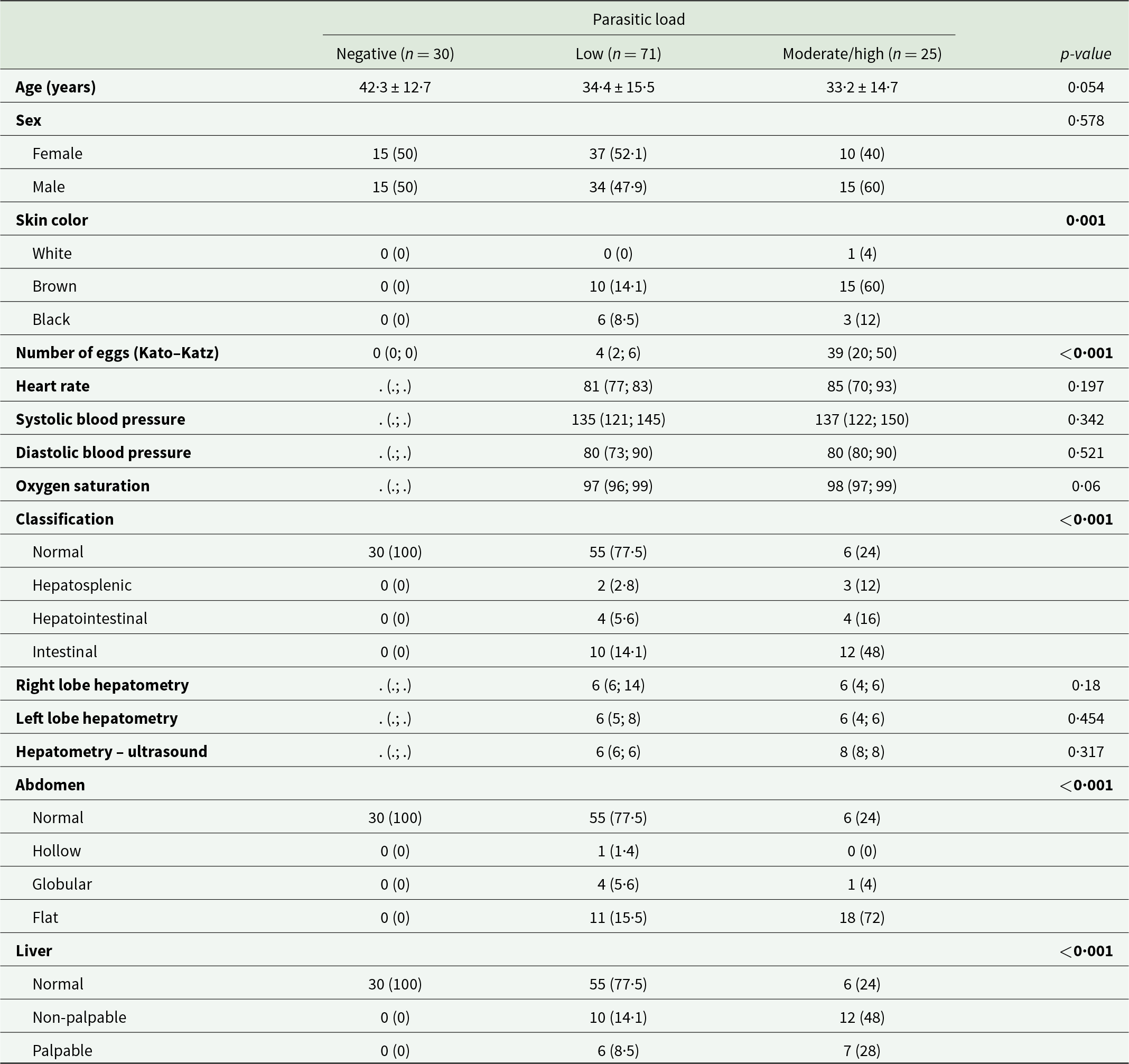
In total, were included 126 schistosomiasis patients. Demographic, clinical, and laboratory parameters were evaluated among schistosomiasis patients, stratified by their parasitic load into negative, low, and moderate/high categories. From the initial cohort, patients were categorized into three groups: 30 patients with a negative parasitic load, 71 with a low load, and 25 with a moderate/high load. Notably, there was no significant age difference between the groups, with mean ages being 42·3 ± 12·7, 34·4 ± 15·5, and 33·2 ± 14·7 years, respectively. Racial composition significantly differed (P = 0·001), with a higher prevalence of mixed-race (Pardo) and Black (Preto) individuals in the moderate/high load group (Table 1).
Sociodemographic and clinical characteristics related to the parasite load of patients with schistosomiasis

Categorical data expressed as absolute counts and percentages in parentheses. Quantitative data expressed as mean ± standard deviation or as median and interquartile range in parentheses. The chi-square test was used for categorical data, and the ANOVA and Kruskal–Wallis tests were used for quantitative data.
The eggs evaluated by Kato–Katz were elevated in moderate/high group with median of 39 eggs (IQR: 20 – 50) and parasite load between 102 and 1·140 EPG. Clinical findings highlighted that hepatic and abdominal changes were significantly associated with this parasitic load. None of the negative load group had palpable livers, whereas 48% of those with a moderate/high load did, along with altered abdominal ultrasonography findings (P < 0·001). Systemic blood pressure and oxygen saturation did not show statistically significant differences across the groups (Table 1).
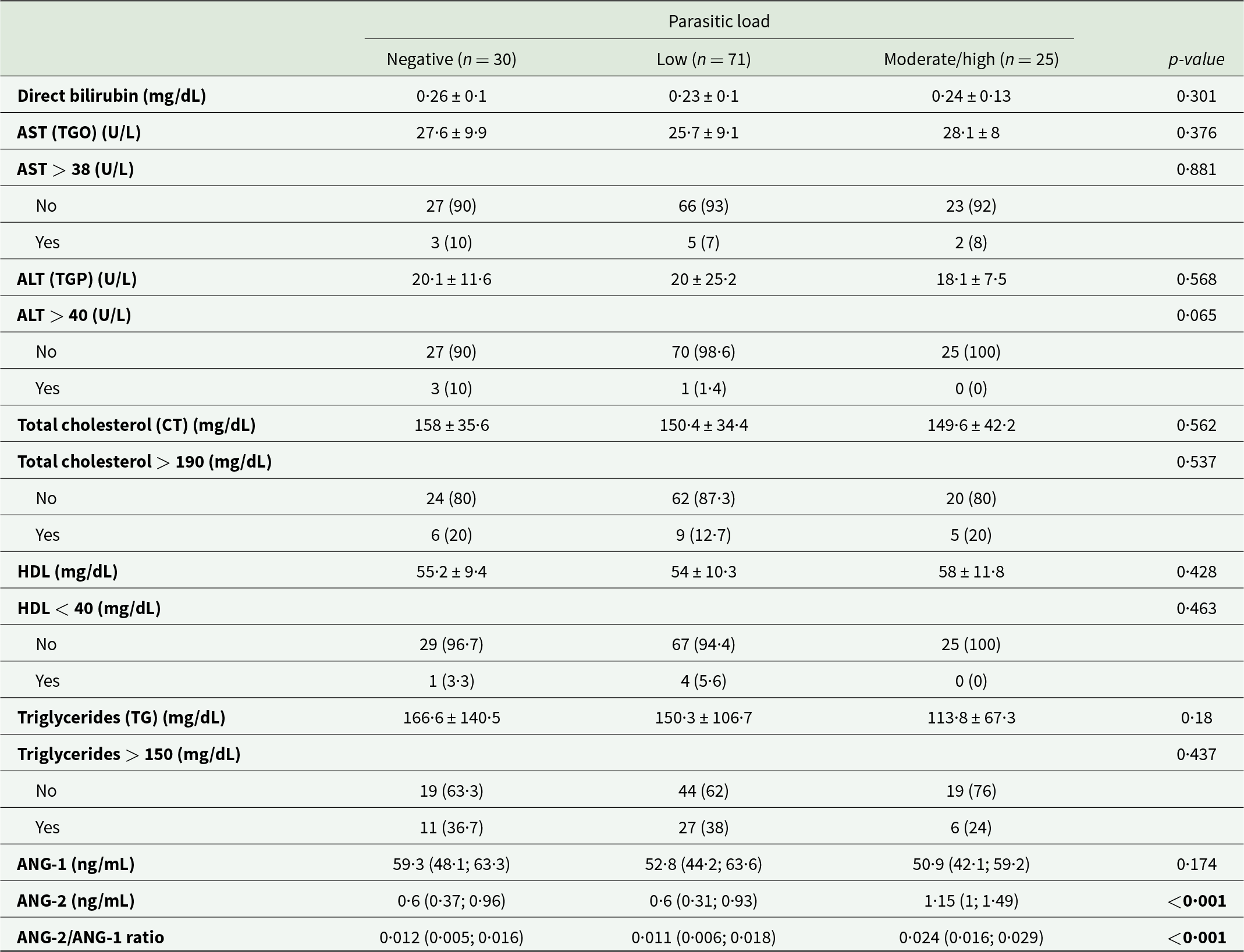
Laboratory tests focused on levels of ANGs and various blood chemistry markers. BD and TGO levels did not vary significantly between groups, with BD levels averaging 0·26 ± 0·1, 0·23 ± 0·1, and 0·24 ± 0·13, and TGO levels at 27·6 ± 9·9, 25·7 ± 9·1, and 28·1 ± 8 across the negative, low, and moderate/high parasitic load groups, respectively (Table 2).
Laboratory data and angiopoietin levels related to the parasite load of patients with schistosomiasis

Categorical data were expressed as absolute counts and percentages in parentheses. Quantitative data were expressed as mean ± standard deviation or as median and interquartile range in parentheses. The chi-square test was used for categorical data, and ANOVA with Tukey’s post-test and Kruskal–Wallis with Dunn’s post-test were used for quantitative data.
Interestingly, a significant positive correlation was observed between EPG with ANG-2 (rho = 0·41, P < 0·001) and ANG-2/ANG-1 ratio (rho = 0·389, P < 0·001) (Figure 1). Moreover, ANG-2 levels and the ANG-2/ANG-1 ratio were significantly different across the groups (P < 0·001), indicating a potential correlation with parasitic load severity. ANG-2 levels were highest in the moderate/high load group at median = 1·15 (IQR: 0·3; 1·49), compared to 0·6 (0·3; 0·89) in the low load group and 0·6 (0·37; 0·96) in the negative group. Similarly, the ANG-2/ANG-1 ratio also increased with higher parasitic loads, being 0·024 (0·016; 0·029) in the moderate/high load group, compared to 0·011 (0·006; 0·018) and 0·012 (0·005; 0·016) in the low and negative load groups, respectively (Table 2, Figure 2).
Correlation between eggs per gram of faeces (EPG) with angiopoietins levels in schistosomiasis patients. Spearman's rank correlation coefficient (Rho).

Angiopoietin levels in the serum of schistosomiasis patients, according parasitic load. Box plot representing median and interquartile range, and also a vertical dispersion, with individual value for each patient. Statistical analysis performed by Kruskal–Wallis test with Dunn's post-test. P < 0.05*** between moderate to high vs others groups.

Evaluation of ANG levels relation with hepatic and intestinal functions in schistosomiasis patients
Demographic, clinical, and laboratory parameters related to hepatic and intestinal functions were explored in relation to ANG-1 and ANG-2 levels, as well as the ANG-2/ANG-1 ratio in schistosomiasis patients. Analysing key biochemical indicators such as total TGO, total TGP, cholesterol levels (CT and HDL), TGs, palpability of the liver, and with disease classification ranging from normal to hepato-intestinal conditions.
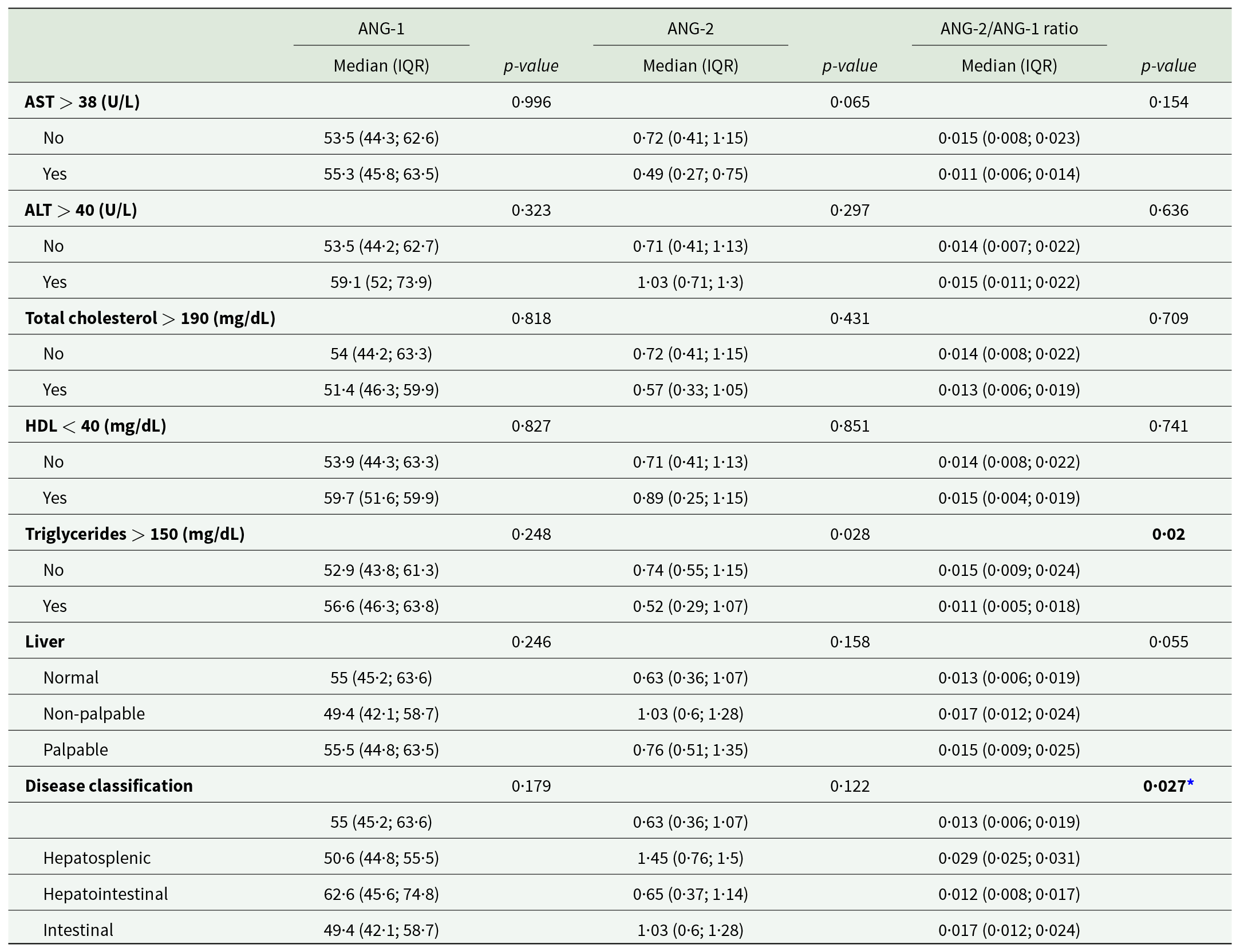
ANG-1 levels remained relatively consistent across various biochemical thresholds and liver palpability, indicating no significant relationship with these clinical parameters. The median ANG-1 levels were similar across groups with abnormal TGO, TGP, cholesterol, and varying TG levels. Moreover, ANG-1 levels did not significantly differ among normal, hepato-splenic, and intestinal categories in schistosomiasis (Table 3).
Changes related to liver and intestinal function, and clinical changes and the relationship with angiopoietin-1 and 2 levels

Quantitative data expressed as median and interquartile range in parentheses. The Mann-Whitney test was used for comparisons between two groups and the Kruskal-Wallis test with Dunn's post-test for comparisons of more than two groups.
* p < 0.05 between hepatosplenic vs. other groups.
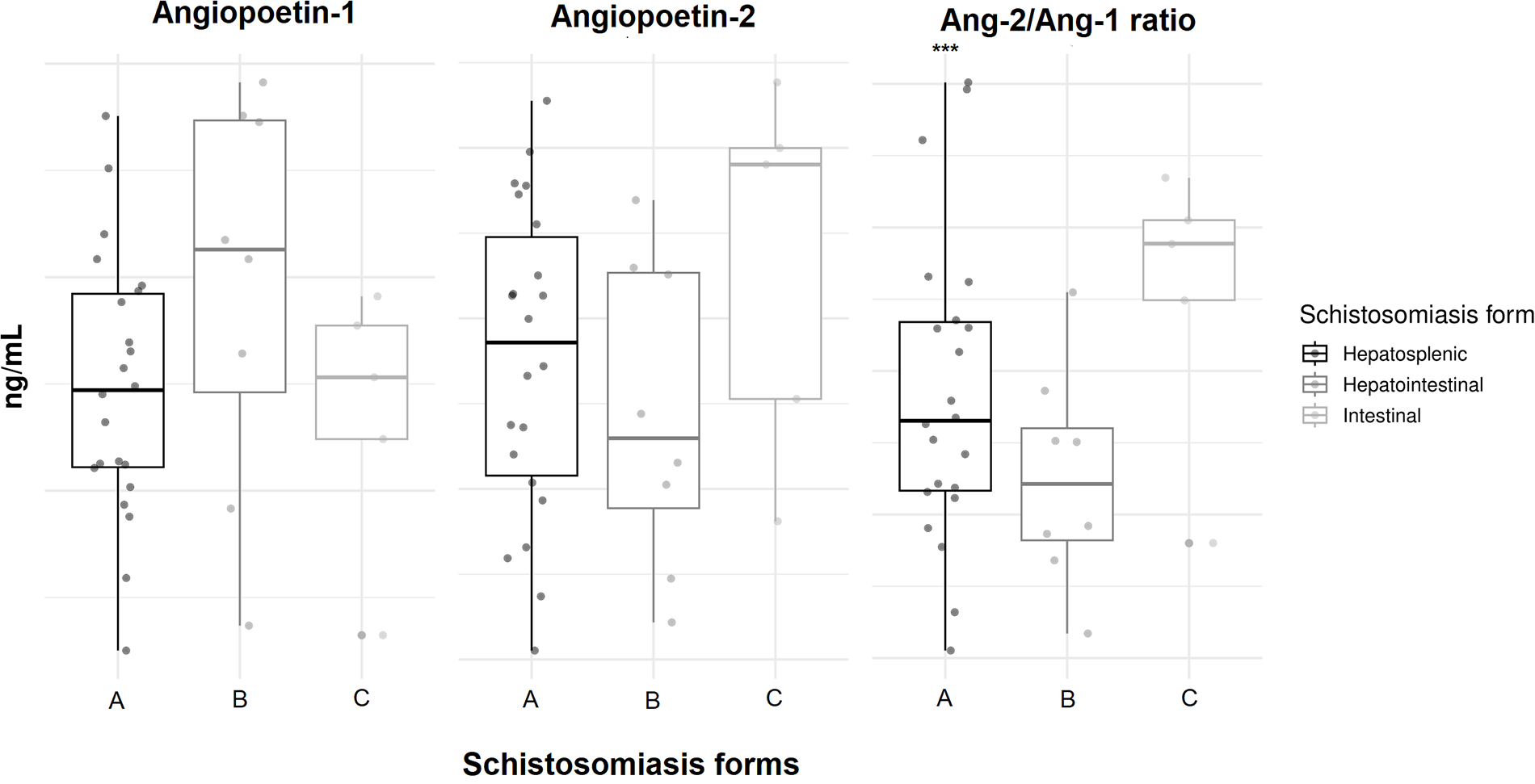
Regarding ANG-2 levels, there was observed a significant difference only in patients with elevated TGs (TG > 150), where low median levels were present in this group (P = 0·028), suggesting a potential link between lipid metabolism and ANG-2 expression. However, other parameters such as elevated liver enzymes (TGO and TGP), cholesterol levels, and liver palpability did not significantly associated with ANG-2 levels. Finally, The ANG-2/ANG-1 ratio was elevated in the hepato-splenic classification of schistosomiasis disease (P = 0·027) (Table 3, Figure 3).
Angiopoietin levels in the different clinical forms of schistosomiasis. Box plot representing median and interquartile range, and also a vertical dispersion, with individual value for each patient. (A) Schistosomiasis hepatoesplenic, (B) schistosomiasis hepatointestinal, (C) schistosomiasis intestinal. Statistical analysis performed by Kruskal–Wallis test. P < 0·05***.

Discussion
In this study, we aimed to explore the relationships between parasitic load in schistosomiasis and levels of ANGs, as well as various biochemical and clinical parameters. ANG evaluation, such as ANG-2 and its ratio with ANG-1 were associated with elevated parasitic load, particularly in relation to lipid levels and severe hepatic conditions, potentially serving as indicators of underlying pathophysiological changes in schistosomiasis. These findings suggest that ANG-2 levels and the ANG-2/ANG-1 ratio may serve as potential biomarkers for assessing the severity of schistosomiasis.
In the present study, there was a significant difference in racial composition across the parasitic load groups, with an increased prevalence of mixed-race and Black individuals in the moderate/high load group. This finding suggests that certain racial demographics may be more susceptible to higher parasitic loads, possibly due to socio-economic or environmental factors influencing exposure. Studies have shown that low socioeconomic status, which often correlates with poor living conditions and limited access to clean water and sanitation, significantly increases the risk of parasitic infections like schistosomiasis (Rinaldo et al., Reference Rinaldo, Perez-Saez, Vounatsou, Utzinger and Arcand2021). Furthermore, the impact of rapid urbanization and the resultant informal settlements with inadequate sanitation and waste management exacerbate the transmission risks of schistosomiasis in urban and peri-urban áreas (Klohe et al., Reference Klohe, Koudou, Fenwick, Fleming, Garba, Gouvras, Harding-Esch, Knopp, Molyneux, D’Souza, Utzinger, Vounatsou, Waltz, Zhang and Rollinson2021).
Clinically, the moderate/high parasitic load group exhibited a significantly higher prevalence of palpable livers and abnormal abdominal ultrasound findings compared to those with low or negative parasitic loads. Increased parasitic load correlates with progressive hepatic damage and fibrosis, resulting in detectable changes such as hepatomegaly (enlarged liver) and characteristic ultrasound findings like periportal fibrosis and splenomegaly (Hu et al., Reference Hu, Xie, Yuan, Li, Li, Gao, Lan, Liu, Xu and Lin2021). These changes are caused by the deposition of parasite eggs in the liver, leading to chronic inflammation, granuloma formation, and fibrosis. This aligns with the well-established notion that increased parasitic load correlates with progressive hepatic damage and fibrosis. However, in this present study systemic blood pressure and oxygen saturation remained unaffected across the groups, possibly indicating that schistosomiasis-related hepatic changes do not severely impair these physiological parameters. This suggests that the primary physiological impacts of schistosomiasis are confined to the hepatic and portal systems rather than causing widespread systemic physiological disruptions (Kamdem et al., Reference Kamdem, Moyou-Somo, Brombacher and Nono2018).
For the first time, in this present study a significant association of ANG-2 levels and the ANG-2/ANG-1 ratio with increasing parasitic load in schistosomiasis patients was observed. ANG-2 plays a significant role in promoting inflammation and increasing vascular permeability, which are key factors in the progression of schistosomiasis-related vascular changes (Saharinen et al., Reference Saharinen, Eklund, Alitalo, Figg and Folkman2008). Elevated ANG-2 levels are associated with endothelial cell activation, leading to increased vascular permeability and destabilization, particularly under inflammatory conditions (Korhonen et al., Reference Korhonen, Lampinen, Giri, Anisimov, Kim, Allen, Fang, D’Amico, Sipilä, Lohela, Strandin, Vaheri, Ylä-Herttuala, Koh, McDonald, Alitalo and Saharinen2016). In the context of schistosomiasis, higher levels of ANG-2 disrupt the protective effects of ANG-1 on the vascular endothelium, exacerbating the inflammatory and fibrotic responses seen with increased parasitic burden (Gillen et al., Reference Gillen, Richardson and Moore2019). This imbalance can lead to the characteristic vascular changes observed in schistosomiasis, including enhanced permeability and fibrosis.
Moreover, the ANG-2/ANG-1 ratio, being significantly elevated in the moderate/high group, further supports the hypothesis of endothelial dysfunction and angiogenic imbalance driven by parasitic infection. The ANG-2/ANG-1 ratio is a critical indicator of endothelial dysfunction and angiogenic imbalance (Korhonen et al., Reference Korhonen, Lampinen, Giri, Anisimov, Kim, Allen, Fang, D’Amico, Sipilä, Lohela, Strandin, Vaheri, Ylä-Herttuala, Koh, McDonald, Alitalo and Saharinen2016; Mota et al., Reference Mota, Albuquerque, Meneses, da Silva Junior, Martins and De Francesco2021). Thus, the findings of elevated ANG-2 and the ANG-2/ANG-1 ratio in the moderate/high parasitic load group further substantiate the role of these biomarkers in the pathophysiology of schistosomiasis-related vascular damage.
Interestingly, ANG-2/ANG-1 ratio was significantly associated with severe form of schistosomiasis, the hepato-splenic form. Angiogenesis plays a dual role in schistosomiasis, contributing to both fibrogenesis and fibrosis degradation. It is involved in periovular granuloma formation and periportal fibrosis genesis, but also aids fibrosis regression after curative treatment. During fibrogenesis, angiogenesis attracts pericytes, which transform into myofibroblasts, key cells in extracellular matrix formation. Post-treatment, actin-containing pericytes appear in tissue remodelling, especially in repairing vascular lesions (Andrade and Santana, Reference Andrade and Santana2010). Hence, we hypothesized that in more severe hepatic conditions, the balance between ANG-2 and ANG-1 shifts, possibly reflecting a more pronounced inflammatory or angiogenic response (Kim et al., Reference Kim, Choi, Steinmetz, Maco, Kammerer, Ahn, Kim, Lee and Koh2005). Additionally, the elevated ANG-2/ANG-1 ratio in hepato-splenic schistosomiasis further illustrates the role of ANGs in the progression of hepatic fibrosis and vascular remodelling.
This study had limitations, mostly due to small sample size, which constrained the statistical power and prevented the performance of multivariate analyses. This limitation affects the generalizability of our findings and the ability to control for potential confounding factors. Additionally, the study’s cross-sectional design restricts the ability to infer causal relationships between parasitic load, ANG levels, and clinical outcomes.
In conclusion, ANG levels and their ratios in the blood of schistosomiasis patients were related with elevated parasitic load and severe form of the disease and had potential use as biomarkers for detection of severe hepatic disorder. Moreover, the evaluating of ANGs in schistosomiasis patients contribute to understanding the vascular pathology of schistosomiasis. Further investigations could elucidate the precise mechanisms through which parasitic load influences ANG expression and how these markers can be leveraged for early diagnosis and therapeutic interventions.
Acknowledgements
We express our gratitude to the residents of the communities of Patioba and Colônia Miranda for participating in this study; Our appreciation goes to the Sergipe State Health Department and the team at the Endemic Epidemiological Surveillance Center coordinated by Sidney Lourdes César Souza Sá and the Municipal Health Departments of the Japaratuba and São Cristovão, for all their collaboration and logistical support; We also thank the Federal University of Sergipe, especially Dr Luciene Barbosa for her collaboration in data collection; We thank everyone at the Pharmaceutical Bioprospecting and Clinical Biochemistry Laboratory (LBFBC) and the Clinical and toxicological analysis laboratory (LACT) at the Federal University of Ceará for all the technical support; Special thanks to Council for Scientific and Technological Development (CNPq) for providing financial support (Process Number: 404966/2021-7/CNPq/MCTI/FNDCT Nº 18/2021). We also thank a Postgraduate Program in Medical Sciences and Coordination for the Improvement of Higher Education Personnel – CAPES, the granting of scholarship (Process Number: 88887.711703/2022-00).
Author contributions
Rachael Lima Sobreira Coimbra: Investigation, Methodology, Validation, Visualization, Writing-original draft preparation, Writing-review and editing. Gdayllon Cavalcante Meneses: Conceptualization, Formal analysis, Methodology, Software, Validation, Writing-original draft preparation, Writing-review and editing. Rosângela Lima de Freitas Galvão: Investigation, Methodology, Validation, Visualization, Writing-review and editing. Marta Cristhiany Cunha Pinheiro: Investigation, Methodology, Visualization, Writing-review and editing. Luciana Maria de Oliveira: Writing-review and editing. Nicole Coelho Lopes: Methodology, Validation, Visualization, Writing-review and editing. Bruna Viana Barroso Martins: Methodology, Validation, Visualization, Writing-review and editing. Letícia Machado de Araújo: Methodology, Validation, Visualization, Writing-review and editing. Rebeca Yasmin Ribeiro Vieira: Writing-review and editing. Reinaldo Barreto Oriá: Conceptualization, Funding acquisition, Resources, Writing-review and editing. Alice Maria Costa Martins: Conceptualization, Resources, Writing-review and editing. Elizabeth de Francesco Daher: Conceptualization, Writing-review and editing. Ângela Maria da Silva: Writing-review and editing. Fernando Schemelzer de Moraes Bezerra: Conceptualization, Data curation, Funding acquisition, Project administration, Resources, Supervision, Writing-review and editing. All authors have read and agreed to the published version of the manuscript.
Financial support
This work was supported by the CNPq (grant number 404966/2021-7); and a scholarship from the CAPES (R.L.S.C., grant number 88887.711703/2022-00).
Competing interests
The authors declare there are no conflicts of interest.
Ethical standards
The study protocol was reviewed and approved by National Research Ethics Commission – CONEP (Opinion number 6.590.838) and Ethics Committee in Research (CEP) from the Federal University of Sergipe (Opinion number 6.044.220). All participants gave written informed consent prior to study enrolment.




 Open access

