


The economic burden of sleep disorders in Australia is estimated to be $5.1 billion per year (Hillman & Lack, 2013), and insomnia is by far the most prevalent sleep disorder, representing 8 out of 10 sleep disorders managed in primary care (Charles, Harrison & Britt, Reference Charles, Harrison and Britt2009). Insomnia is a highly prevalent condition, with one in three people regularly having difficulty with their sleep and approximately 10% of the adult population suffering from the clinical disorder of insomnia (e.g., American Psychiatric Association, 2013; Singareddy et al., Reference Singareddy, Vgontzas, Fernandez-Mendoza, Liao, Calhoun, Shaffer and Bixler2012). Insomnia disorder is defined as chronic difficulty falling asleep or returning to sleep following night-time awakening, at least three nights a week, with a significant impact on daytime functioning. Research has suggested that insomnia increases the risk of physical health problems, mood disorders, accidents, and poorer quality of life (Roth, Reference Roth2007). Insomnia also results in impaired occupational performance (Daley et al., Reference Daley, Morin, LeBlanc, Gregoire, Savard and Baillargeon2009) and higher healthcare usage and costs (Siversten, Krokstad, Mykletun, & Øverland, Reference Sivertsen, Krokstad, Mykletun and Øverland2009). There is also evidence that treating insomnia can: (1) improve treatment outcome for comorbid psychiatric conditions such as depression (Perlis, Giles, Buysse, Tu, & Kupfer, Reference Perlis, Giles, Buysse, Tu and Kupfer1997), and (2) protect against their development (e.g., Harvey et al., Reference Harvey, Soehner, Kaplan, Hein, Lee, Kanady and Buysse2015, in the case of bipolar disorder; and Franzen & Buysee Reference Franzen and Buysse2008, in the case of depressive relapse). Given insomnia's high prevalence, disease burden and role in comorbid conditions, research to maximise effectiveness of treatment is an important priority.
While acute insomnia may be caused by life events, illness or distress about a current situation (Ellis, Gehrman, Espie, Riemann, & Perlis, Reference Ellis, Gehrman, Espie, Riemann and Perlis2012), there is general agreement that persistent insomnia is perpetuated, at least in part, by an interplay of cognitive and behavioural factors that are related to sleep, such as unhelpful sleep habits, worry about sleep, and unhelpful sleep-related beliefs. Unhelpful beliefs and thoughts perpetuate both anxiety about poor sleep and unhelpful behaviours that make poor sleep more likely. For example, if a person believes that they must attain 8 hours sleep every night and has the thought ‘I won't cope tomorrow if I don't fall asleep soon’, they will likely experience increased arousal that interferes with sleep. Further, they may sleep in longer after a poor night of sleep, then use extra caffeine, withdraw from daytime activities, or nap, contributing to poor sleep the following night. Cognitive Behavioural Therapy for Insomnia (CBT-I) is a multi-component treatment that includes a combination of psychoeducation, behavioural interventions and cognitive interventions, and seeks to address sleep-interfering thoughts, beliefs, and behaviours. The conclusion from recent meta-analyses is that CBT-I has an extensive evidence base attesting to its effectiveness (e.g., Okajima, Komada, & Inoue, Reference Okajima, Komada and Inoue2011; Trauer, Qian, Doyle, Rajaratnam, & Cunnington, Reference Trauer, Qian, Doyle, Rajaratnam and Cunnington2015), including in the case of insomnia comorbid with other conditions (see Geiger-Brown, Rogers, Liu, Ludeman, Downton, & Diaz-Abad, Reference Geiger-Brown, Rogers, Liu, Ludeman, Downton and Diaz-Abad2015). Trials also indicate that CBT-I is more effective than pharmacotherapy in the long term (Morin et al., Reference Morin, Vallières, Guay, Ivers, Savard, Mérette and Baillargeon2009; Riemann & Perlis, Reference Riemann and Perlis2009; Sivertsen et al., Reference Sivertsen, Omvik, Pallesen, Bjorvatn, Havik, Kvale and Nordhus2006). The weight of evidence for its efficacy, along with its preferable side-effect profile (compared to medication), has led to CBT-I being recommended as the first-line treatment of insomnia (e.g., Brasure et al., Reference Brasure, Fuchs, MacDonald, Nelson, Koffel, Olson and Kane2016; Qaseem, Kansagara, Forciea, Cooke, & Denberg, Reference Qaseem, Kansagara, Forciea, Cooke and Denberg2016). Robust research findings and clinical guidelines (e.g., Ree, Junge, & Cunnington, Reference Ree, Junge and Cunnington2017) support the use of CBT-I as a first-line treatment; however, Australian research suggests that only 2% of patients seeking treatment for insomnia from their general practitioner (GP) will be referred for CBT-I (Charles, Harrison, & Britt, Reference Charles, Harrison and Britt2009).
Despite recognition of the effectiveness of CBT-I, there is also appreciation that not all individuals with insomnia achieve an adequate treatment response to this approach and that research into improving treatment outcomes is important. Research suggests that 20–30% of patients do not achieve clinically significant improvement following CBT-I (e.g., Bélanger et al., Reference Bélanger, Harvey, Fortier-Brochu, Beaulieu-Bonneau, Eidelman, Talbot and Morin2016; Morin & Benca, Reference Morin and Benca2012). Further, only approximately 40% of CBT-I recipients achieve clinical remission (Morin & Benca, Reference Morin and Benca2012). One promising way to maximise treatment effectiveness is via improved understanding of the mechanisms of change within treatments. Once mechanisms of change are well understood, the most critical treatment targets can be identified.
Two developments in psychologically based insomnia treatments are cognitive therapy (CT) and mindfulness-based therapy (MBT). Each have evidence bases suggesting that they offer promise for treating insomnia in their own right and/or by enhancing traditional CBT-I. These two treatments are reviewed below.
In the past, CBT-I was predominantly a behaviour therapy, with the explicit cognitive therapy element often being delivered in a single session (e.g., Carney & Edinger, Reference Carney and Edinger2008; Jacobs, Reference Jacobs1998; Morin & Espie, Reference Morin and Espie2003). However, following the recognition of the role of cognitive processes in insomnia (Harvey, Reference Harvey2002, Reference Harvey2005; Hiller, Johnston, Dohnt, Lovato, & Gradisar, Reference Hiller, Johnston, Dohnt, Lovato and Gradisar2015), a cognitive model of insomnia and its treatment has been developed (Harvey, Reference Harvey2002). Harvey's (Reference Harvey2002) cognitive model describes five maintaining processes that operate both day and night, namely: (1) worry that triggers arousal and distress (e.g., ‘I won't cope tomorrow if I don't sleep well’), (2) selective attention to and monitoring for sleep-related threats (e.g., paying attention to signs of poor sleep such as daytime fatigue or night-time arousal), (3) overestimation of sleep and daytime deficits (perceiving any mistake made during the day as a result of poor sleep), (4) dysfunctional thoughts and beliefs about sleep (e.g., ‘I must sleep 8 hours every night in order to function well’), and (5) counterproductive safety behaviours (e.g., increased time spent in bed, daytime napping, underexertion, and social withdrawal). The five cognitive processes mutually influence each other, thus creating a vicious cycle that maintains insomnia. Research has found that increased worry, dysfunctional beliefs, selective attention, and safety behaviours each distinguish normal sleepers from those with insomnia (Norell-Clarke, Jansson-Fröjmark, Tillfors, Harvey, & Linton, Reference Norell-Clarke, Jansson-Fröjmark, Tillfors, Harvey and Linton2014). Additionally, there is evidence that CT designed to modify the cognitive maintaining factors is effective both as a stand-alone treatment (Harvey et al., Reference Harvey, Bélanger, Talbot, Eidelman, Beaulieu-Bonneau, Fortier-Brochu and Morin2014; Harvey, Sharpley, Ree, Stinson, & Clark, Reference Harvey, Sharpley, Ree, Stinson and Clark2007) and as an addition to four sessions of CBT-I (Wong, Ree, & Lee, Reference Wong, Ree and Lee2016). Indeed, the Harvey et al. (Reference Harvey, Bélanger, Talbot, Eidelman, Beaulieu-Bonneau, Fortier-Brochu and Morin2014) trial, which compared CBT, CT, and behaviour therapy (BT) for insomnia, found that while BT produced faster treatment gains, CT produced longer lasting effects. CBT was found to be the treatment of choice, utilising both the faster impact of BT and the long-lasting impact of CT.
In addition to evidence supporting the effectiveness of CT for insomnia, there is evidence that change in specific cognitive maintaining factors relates to treatment outcome. For example, several studies suggest that the modification of dysfunctional sleep beliefs in the treatment of insomnia has beneficial effects for sleep improvement (e.g., Carney & Edinger, Reference Carney and Edinger2006; Eidelman et al., Reference Eidelman, Talbot, Ivers, Bélanger, Morin and Harvey2016; Morin, Blais, & Savard, Reference Morin, Blais and Savard2002). Further, there is evidence that dysfunctional beliefs about sleep may interfere with behavioural treatment. For example, Cvengros, Crawford, Manber, and Ong (Reference Cvengros, Crawford, Manber and Ong2015) found that patients with more dysfunctional beliefs about sleep were less likely to adhere to the recommendation of time in bed restriction, which requires individuals to match their time spent in bed overnight to their average perceived total sleep time. Several studies support that interventions that reduce worry produce favourable outcomes for sleep (e.g., Carney & Waters, Reference Carney and Waters2006; Sunnhed & Jansson-Fröjmark, Reference Sunnhed and Jansson-Fröjmark2014). With respect to distorted perception of sleep (i.e., underestimation of total sleep time and overestimation of sleep onset latency), there is evidence that its correction in a therapeutic context results in reduced worry about sleep (Tang & Harvey, Reference Tang and Harvey2004). In terms of investigation of several cognitive processes within one treatment outcome study, the Harvey et al. (Reference Harvey, Sharpley, Ree, Stinson and Clark2007) case series of CT found that worry, dysfunctional beliefs, sleep-related monitoring, and safety behaviours all reduced following CT treatment. While these results are consistent with the cognitive model, the study was not designed to investigate the role of process variables, and so firm conclusions regarding causality cannot be made. Harvey, Dong, Belanger, and Morin (Reference Harvey, Dong, Bélanger and Morin2017) conducted analysis that suggested a composite score of cognitive process measures mediated treatment outcome in CT.
As discussed earlier, the second potential innovation in psychological treatments for insomnia is MBT. In randomised controlled trials targeting insomnia, MBT was found to lead to greater symptom reduction compared to sleep hygiene education (Black, O'Reilly, Olmstead, Breen, & Irwin, Reference Black, O'Reilly, Olmstead, Breen and Irwin2015; Nakamura, Lipschitz, Kuhn, Kinney, & Donaldson, Reference Nakamura, Lipschitz, Kuhn, Kinney and Donaldson2013), self-monitoring (Ong et al., Reference Ong, Manber, Segal, Xia, Shapiro and Wyatt2014), and a waitlist control. MBT has also been compared to active treatments in two randomised controlled trails (Garland et al., Reference Garland, Carlson, Stephens, Antle, Samuels and Campbell2014; Wong et al., Reference Wong, Ree and Lee2016). In both cases, each treatment was found to result in significant improvement over time with no significant differences between MBT and CBT-I (Garland et al., Reference Garland, Carlson, Stephens, Antle, Samuels and Campbell2014) and between MBT and CT (Wong et al., Reference Wong, Ree and Lee2016).
Studies investigating the mechanisms by which MBT decreases insomnia symptoms have begun to appear in the literature (e.g., Garland, Zhou, Gonzalez, & Rodriguez, Reference Garland, Zhou, Gonzalez and Rodriguez2016). Since mindfulness has been found to be of benefit in general stress reduction and results in reduced arousal (Chiesa & Serretti, Reference Chiesa and Serretti2010), and because stress and physiological arousal are associated with insomnia (Hall et al., Reference Hall, Thayer, Germain, Moul, Vasko, Puhl and Buysse2007), it is plausible that mindfulness may assist with insomnia by reducing the arousal associated with everyday stress.
In addition, mindfulness may also reduce the arousal associated with not sleeping. Ong, Ulmer, and Manber (Reference Ong, Ulmer and Manber2012) described how arousal can increase when someone has negative cognitions about their inability to sleep. They also describe that insomnia can be associated with metacognitive processes that further increase arousal via thoughts. This secondary arousal arises from the emotional valence, interpreted meaning, and level of attachment someone has with their sleep-related thoughts (Ong et al., Reference Ong, Ulmer and Manber2012). MBT may be effective in reducing this metacognitive or secondary arousal. As Ong et al. (Reference Ong, Ulmer and Manber2012) note, MBT as a method for reducing arousal can be traced to Buddhist practices that encourage the notion that all things (including thoughts and emotions) come and go. Practice therefore encourages letting thoughts and feelings go, as opposed to forming a strong attachment to them (Ong et al., Reference Ong, Ulmer and Manber2012). Accordingly, Shapiro, Carlson, Astin, and Freedman (Reference Shapiro, Carlson, Astin and Freedman2006) suggest that mindfulness helps people to observe thoughts rather than being involved with them. MBT therefore might help people by disengaging from ruminative processing and facilitate distancing from unhelpful cognitions (Garland et al., Reference Garland, Zhou, Gonzalez and Rodriguez2016).
An essential element of mindfulness is that attention is focused on an immediate experience, and in this way it can work to control attention biases (Larouche, Cote, Belisle, & Lorrain, Reference Larouche, Cote, Belisle and Lorrain2014). This can be advantageous, as mindfulness can help redirect the person's attention to a neutral subject — for example, breathing. With practice, Larouche et al. (Reference Larouche, Cote, Belisle and Lorrain2014) suggest that it becomes easier to control attentional biases. Focusing on neutral stimuli rather than cues that can increase secondary anxiety, such as watching the clock or focusing on cues of sleepiness, has been proposed to facilitate better sleep (Ong et al., Reference Ong, Ulmer and Manber2012).
In summary, treatment development and outcome research to date suggests that CBT-I, CT, and MBT-I are each effective in the treatment of insomnia. Further, from studies investigating the process of change, there is emerging evidence suggesting that these therapies produce their effects by modifying the theoretically proposed maintaining factors. It is tempting to draw the conclusion therefore that CT works by modifying the proposed cognitive maintaining factors and that MBT works by modifying the proposed mindfulness maintaining factors. However, the role of both sets of maintaining processes within each treatment has, to date, not been assessed. Mediation studies that permit investigation of the relationship between change in process measures and treatment outcome across treatment modalities are an important in understanding how these treatments have their effects.
The current study investigates the relationship between process measures and treatment outcome across CT and MBT for insomnia. We examined which interventions (CT vs. MBT) influence which process measures, and which process measures influence treatment outcome. Specifically, do CT and MBT have differential effects on cognitive and mindfulness process measures? The present investigation was conducted as part of a randomised controlled trial designed to evaluate the relative efficacy of four sessions of CT and MBT following a four-session CBT-I intervention (Wong et al., Reference Wong, Ree and Lee2016). Wong et al. (Reference Wong, Ree and Lee2016) found that outcomes for a standardised four session CBT-I intervention were equally enhanced by the addition of four sessions of CT or MBT. Both CT and MBT resulted in significant improvements in insomnia severity, total sleep time and sleep efficiency, and the effects were maintained at follow-up. In terms of the mediation analysis, it was expected that CT would bring about more change in cognitive process measures relative to MBT, and that MBT would bring about more change in mindfulness process measures relative to CT. It was further expected that greater change in both cognitive and mindfulness process measures would be predictive of greater improvement across treatment.
Method
Study Design
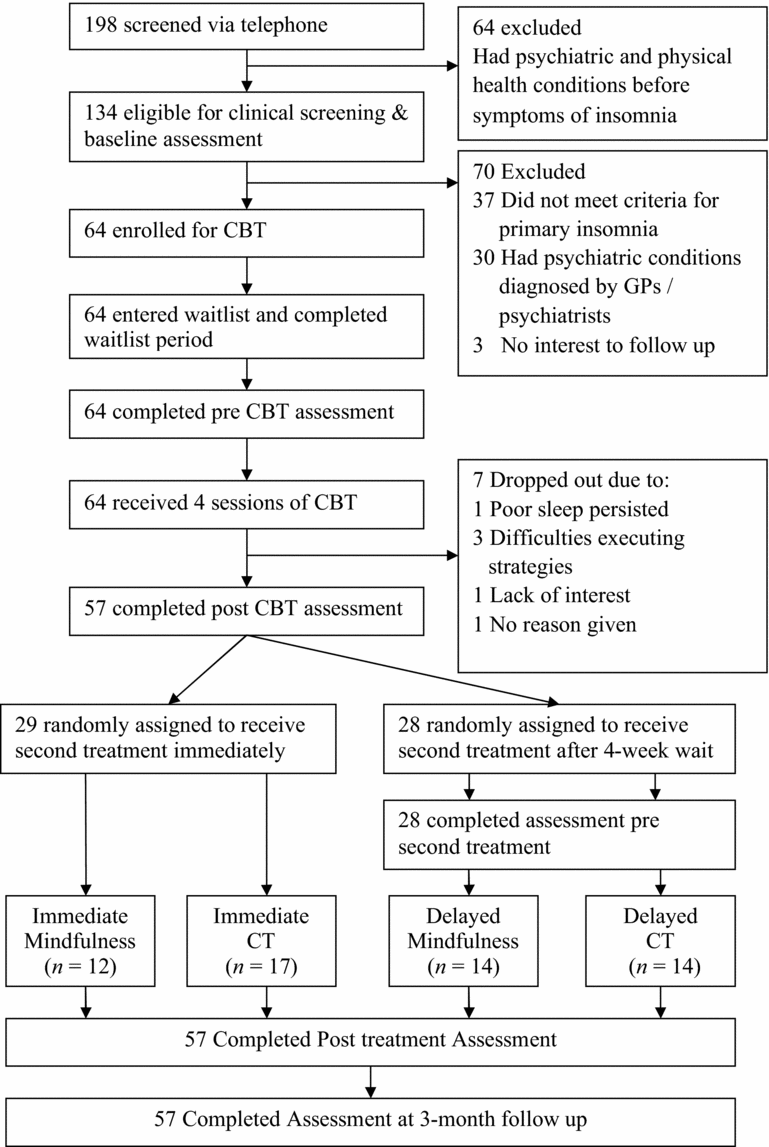
This study employed a randomised mixed-group design. Participants were individually administered four sessions of CBT for insomnia. They were then randomly allocated to immediate or delayed conditions (see Figure 1). This was to allow determination of whether the second treatment improved outcomes beyond the passage of time alone. In the second treatment phase, participants were also randomly allocated to either four sessions of CT for insomnia (Harvey et al., Reference Harvey, Sharpley, Ree, Stinson and Clark2007) or four sessions comprising components of MBT (Segal, Williams, & Teasdale, Reference Segal, Williams and Teasdale2002). Follow-up was at 3 months post-CT/MBT. Further details of the design are described in Wong et al. (Reference Wong, Ree and Lee2016).
Participants flow.
Participants
The sample was recruited from GPs, psychologists, local pharmacies, and advertisements in the local press. Potential participants contacted the researcher to express interest to participate, and underwent telephone screening. A total of 57 participants completed the four sessions of CBT-I and were randomised to receive either CT or MBT. See Figure 1 for participant flow.
Selection Criteria
The inclusion criteria were: (1) 18–65 years of age; (2) complaint of difficulty initiating or maintaining sleep for at least 6 months; (3) mean sleep onset latency or minutes awake after sleep for longer than 30 minutes for at least 3 nights per week; (4) interference in daytime functioning; (5) total sleep time on sleep diary under 6.5 hours for more than 3 nights out of every 7; (6) taking no medication to assist sleep, or be taking a stable dose of medication.
Individuals were excluded if: (1) they presented clear evidence of other sleep disorders; (2) they were receiving treatment of insomnia from another mental health professional; (3) they presented with sleep disturbances due to a medical and/or physical condition as assessed by clinical interview; (4) they had sleep disturbances due to the physiological effect of a substance; (5) the insomnia was assessed as purely secondary to another psychological disorder. Details of the numbers excluded due to these criteria are presented in Figure 1.
Primary Outcome Measure: Insomnia Severity
Insomnia Severity Index (ISI; Bastien, Vallières, & Morin, Reference Bastien, Vallières and Morin2001)
The ISI is a five-item scale that assesses severity of both nighttime and daytime symptoms of insomnia over the period of the past week. The ISI has adequate internal consistency (Cronbach's alpha = 0.74– 0.78) with evidence supporting concurrent, predictive, and content validity (Bastien et al., Reference Bastien, Vallières and Morin2001). The total score of the ISI was used to indicate overall severity of insomnia, with higher scores indicating greater severity.
CT Process Measures
The CT process measures were selected to map onto the maintaining factors in the Cognitive Model of Insomnia (Harvey, Reference Harvey2002).
The Anxiety and Preoccupation about Sleep Questionnaire (APSQ: Tang & Harvey, Reference Tang and Harvey2004)
The APSQ is a 10-item scale that measures sleep-related anxiety and preoccupation associated with insomnia. The participants rate on a 10-point scale how true each statement was over the past 2 days (1 = not true, 10 = very true). The items are then summed to obtain a total score that ranges from 10 to 100. Higher scores indicate higher level of anxiety and preoccupation about sleep. The APSQ has high internal consistency (Cronbach's alpha = 0.92).
Sleep Associated Monitoring Index (SAMI; Semler & Harvey, Reference Semler and Harvey2004)
The SAMI is a valid and reliable instrument that can index monitoring before and after treatment for sleep disturbance. It has 30 items with five subscales assessing presleep monitoring, including: (a) body sensations consistent with falling asleep, (b) body sensations inconsistent with falling asleep, (c) the environment, (d) the clock, and (e) calculation of time. The psychometric properties are adequate (Semler & Harvey, Reference Semler and Harvey2004). Internal consistency of the scale is high (Cronbach's alpha = 0.91) and so is that for the subscales (Cronbach's alpha = 0.77– 0.87) (Semler & Harvey, Reference Semler and Harvey2004).
Dysfunctional Beliefs and Attitudes about Sleep Scale (DBAS; Morin & Espie, Reference Morin and Espie2003)
The DBAS is a 30-item, self-report scale. It was designed to assess misconceptions about the effects of insomnia, the unpredictability of sleep, daily sleep requirements, causes of insomnia and sleep-promoting habits. The average of all DBAS items serves as the total DBAS score. This instrument has been found to have highly acceptable internal consistency (Cronbach's alpha = 0.86; Edinger & Sampson, Reference Edinger and Sampson2002).
Sleep-Related Behaviours Questionnaire (SRBQ; Ree & Harvey, Reference Ree and Harvey2004)
The SRBQ is a 32-item, self-report scale designed to assess the use of safety behaviours employed to promote sleep and cope with tiredness. It showed adequate internal consistency (0.92), and discriminates normal sleepers from those with insomnia (Ree & Harvey, Reference Ree and Harvey2004).
Mindfulness Process Measures
The following instruments were designed to measure key processes that MBCT was designed to alter.
The Kentucky Inventory of Mindfulness Skills (KIMS; Baer, Smith, & Allen, Reference Baer, Smith and Allen2004)
The KIMS is a 39-item self-report measure (Baer et al., Reference Baer, Smith and Allen2004) used for assessing mindfulness skills. The KIMS has adequate to good internal consistency (Cronbach's alpha = 0.83–0.91) and validity (Baer et al., Reference Baer, Smith and Allen2004). The subscales of the KIMS are based on an empirically supported factor structure (Baer, Smith, Hopkins, Krietemeyer, & Toney, Reference Baer, Smith, Hopkins, Krietemeyer and Toney2006). The KIMS measures four facets of mindfulness separately and reliably; namely, observing, describing, acting with awareness, and accepting (or allowing) without judgment (Baer et al., Reference Baer, Smith, Hopkins, Krietemeyer and Toney2006). The total score of the KIMS is used to reflect mindfulness skills. Higher scores reflect more mindfulness skills.
Non-reactivity to inner experience (NRI)
According to Baer and colleagues (Reference Baer, Smith, Hopkins, Krietemeyer and Toney2006), factor analyses of a combined pool of items from mindfulness questionnaires showed that there are five clear interpretable facets of mindfulness. Four of the facets are included in the KIMS. Combined items of the Mindfulness Questionnaire (MQ; Chadwick, Hember, Mead, Lilley, & Dagnan, Reference Chadwick, Hember, Mead, Lilley and Dagnan2005) and Freiburg Mindfulness Inventory (FMI; Buchheld, Grossman, & Walach, Reference Buchheld, Grossman and Walach2001) describe a fifth facet of mindfulness, a non-reactive stance toward internal experience, that the KIMS does not include. To measure this other facet of mindfulness, that is, NRI, four items from the MQ and three items from the FMI were administered (Baer et al., Reference Baer, Smith, Hopkins, Krietemeyer and Toney2006). The FMI is a valid and reliable questionnaire that assesses non-judgmental, present-moment observation and openness to negative experience. It has an internal consistency of Cronbach's alpha = 0.93 (Walach, Buchheld, Buttenmüller, Kleinknecht, & Schmidt, Reference Walach, Buchheld, Buttenmüller, Kleinknecht and Schmidt2006). The MQ assesses a mindful approach to distressing thoughts and images with a good internal consistency (Cronbach's alpha = 0.89; Chadwick et al., Reference Chadwick, Hember, Mead, Lilley and Dagnan2005).
Procedure
Pretreatment assessment
After completion of a phone screen, eligible participants attended a face-to-face clinical interview. The face-to-face clinical interview included questions adapted from the Sleep History Assessment (Morin & Espie, Reference Morin and Espie2003) and an interview guide for assessment of insomnia (Ong, Shapiro, & Manber, Reference Ong, Shapiro and Manber2008). Eligible participants were then asked to complete pencil-and-paper pretreatment questionnaires described above. After completion of the preintervention measures, participants waited 4 weeks without treatment. Participants were then invited to complete the outcome measures described above before commencing CBT treatment.
Therapist
The third author, a registered psychologist, delivered all interventions to the participants. Regular clinical supervision by independent experts, both clinical psychologists, was received in CBT, CT, and mindfulness. The psychologist had specific training in CBT, CT, and MBT.
Cognitive behaviour therapy for insomnia
All participants received four 1-hour intervention sessions following a standard CBT for primary insomnia protocol (Carney & Edinger, Reference Carney and Edinger2008). The majority of this intervention was behaviourally oriented, with one session focused on cognitive strategies, including constructive worry and cognitive restructuring worksheets.
Cognitive therapy
The four CT sessions were comprised of CT components as described in Harvey (Reference Harvey2005) and Harvey et al. (Reference Harvey, Sharpley, Ree, Stinson and Clark2007). Individual insomnia formulations, based on the cognitive model, were derived to conceptualise each participant's cognitive maintaining factors (Harvey, Reference Harvey and Tarrier2006). Cognitive restructuring and tailored behavioural experiments (Perlis, Aloia, & Kuhn, Reference Perlis, Aloia and Kuhn2011; Ree & Harvey, Reference Ree and Harvey2004) were developed to assist in reversing the cognitive maintaining factors: unhelpful beliefs about sleep (Morin et al., Reference Morin, Blais and Savard2002), worry about sleep (Tang & Harvey, Reference Tang and Harvey2004), monitoring for sleep-related threats, and misperception of sleep (Harvey & Tang, Reference Harvey and Tang2012).
Mindfulness-based therapy
The four MBT sessions focused on the development of mindfulness skills with session content based on the approach described by Segal et al. (Reference Segal, Williams and Teasdale2002). In-session meditations were included during each session, and participants were encouraged to listen to mindfulness meditation recordings (e.g., sitting meditation) 6 days out of 7 at times of the day that suited them. Additionally, participants were assigned informal mindfulness tasks each week (e.g., mindful eating and any other activity whereby attention is focused on one activity over a period of time).
The 3-Minute Breathing Space was also introduced for bringing formal meditation practice into daily life. Participants were encouraged to carry out the practice of 3-Minute Breathing Space three times daily at set times and also at any other times when they felt stressed. Barriers and benefits of practice were discussed at each session. A recurrent theme in the MBT sessions was the awareness of present moment experience without judgment.
Results
Demographics of Participants at Pretreatment
The following analyses were performed on data from the 57 participants who received either CT (n = 26) or MBT (n = 31). There were no dropouts in either condition. Both treatments had mainly female participants (MBT: 65.6%; CT: 61.3%). The mean (SD) age of participants was 49.96 (12.6) years for MBT and 48.97(13.4) years for CT (no significant difference, t = -.287, p = .775).
Treatment Outcome
As described in detail in Wong et al. (Reference Wong, Ree and Lee2016), scores on the primary outcome measure (ISI) reduced during CT/MBT treatment significantly more than during the waitlist period; 8.9 at pretreatment, 5.7 at follow-up: F(1, 55) = 7.27, p < .01, η2 = .12. There were no significant differences between posttreatment and follow-up, and no significant differences between treatments.
Changes in MBT Process Measures
This analysis explored whether the MBT process measures were affected by treatment and the degree to which these processes were involved in any improvement (see Table 1 for descriptive statistics). A 3 (Time: pretreatment vs. posttreatment vs. follow-up) × 2 (Intervention: MBT vs. CT) repeated measures MANOVA was computed to compare scores on the KIMS and the NRI. A significant effect for Time on the MBT measures was found, Wilks lambda = .84, F(4, 52) = 2.53, p = .05, η2 = .16, as well as a significant interaction for Time by Intervention, Wilks lambda = .84, F(4, 52) = 2.5, p = .05, η2 = .16. Univariate tests showed a difference for KIMS over time but not for NRI (see Table 1). This indicates that MBT had a greater impact on KIMS than did CT.
Means and Standard Deviations for Mindfulness Process Measures Over Time for MBT and CT Conditions

Note: *p < .01. CT = cognitive therapy; MBT = mindfulness-based therapy. KIMS = Kentucky Inventory of Mindfulness. NRI = non-reactivity to inner experiences. an = 31, bn = 26.
Changes in CT Process Measures
A 3 (Time: pretreatment vs. posttreatment vs. follow-up) × 2 (Intervention: MBT vs. CT) repeated measures MANOVA was computed to compare scores on the APSQ, DBAS, SAMI, and SRBQ respectively. There was a significant effect of Time for the process measures, Wilks lambda =.41, F(8, 48) = 8.59, p < .001, η2 = .59. Univariate tests showed a significant difference for each CT process measure over the treatment period (Table 2). As can be seen in Table 2, for all the CT process measures, there was a trend toward greater reductions for CT posttreatment compared to MBT. However, the size of these differences were not significant, as evident by the Time by Intervention analysis, Wilks lambda = .87, F(8, 48) =.98, p = .52, η2 = .13).
Means and Standard Deviations for CT Process Measures Over Time for MBT and CT
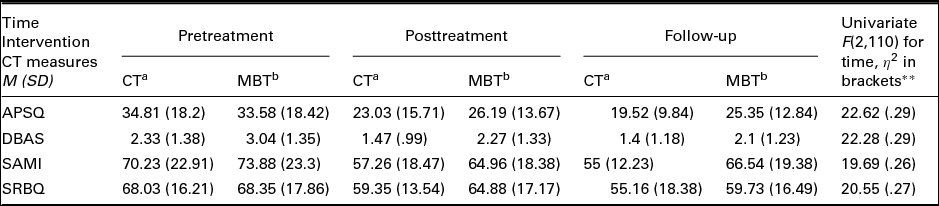
Note: **p < .001 in each case. CT = cognitive therapy; MBT = mindfulness based therapy. APSQ = Anxiety and Preoccupation about Sleep Questionnaire. DBAS = Dysfunctional Beliefs and Attitudes about Sleep Scale. SAMI = Sleep Associated Monitoring Index. SRBQ = Sleep Related Behaviours Questionnaire. an = 31, bn = 26.
Predictors of Sleep Improvement
We tested whether improvement in insomnia severity would be significantly predicted by treatment-related changes for process measures of MBT and CT. Factor analysis was used to derive a single composite score for the MBT process measures and for the CT process measures. These scores were then computed in regression analyses to determine the extent that MBT process measures or CT process measures predict change in insomnia severity. A diagrammatic summary of all the following findings may be found in Figure 2.
Predictors of treatment outcomes.
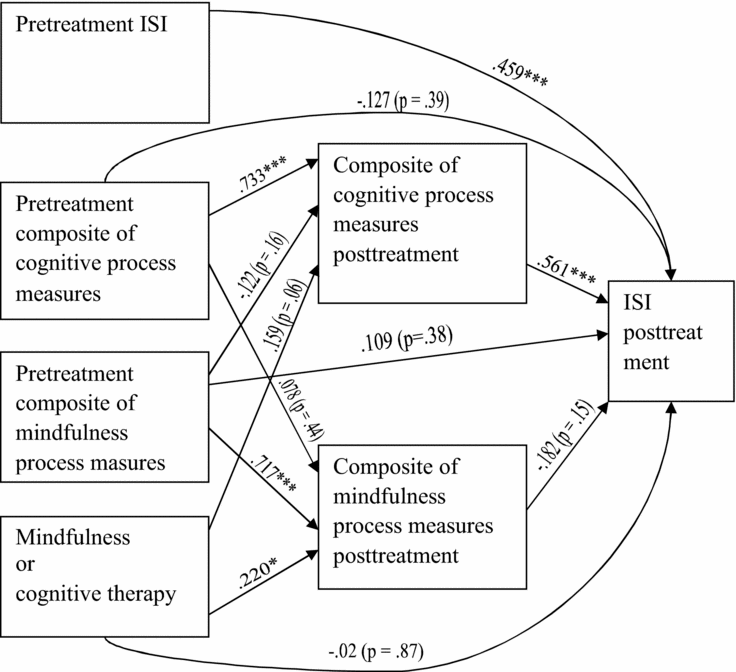
First, we assessed whether the composites of the CT process measures and mindfulness measures at pretreatment predicted change in scores on the composite of CT measures at posttreatment. As can be seen in Table 3, only the composite of CT process measures at pretreatment significantly predicted the composite CT process measure change at posttreatment. The composite of mindfulness process measures at pretreatment did not significantly predict composite CT at posttreatment. As can be seen in Figure 2, the relationship between intervention (MBT or CT) and the composite CT process measures approached significance (p = .06), with the direction being that CT was more likely to result in higher CT process measure change at the end of treatment.
The Associations Between the Composite Cognitive Process Measure Posttreatment, Pretreatment Process Scores, and Treatment Condition
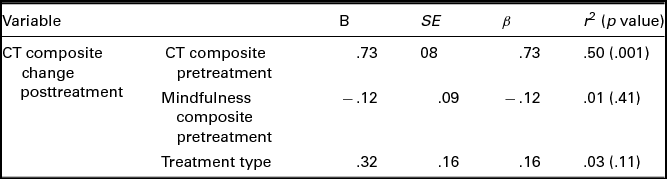
Note: B = unstandardised coefficient B; SE = standard error; β = beta; r 2 = part correlation coefficient square. (n = 57) d
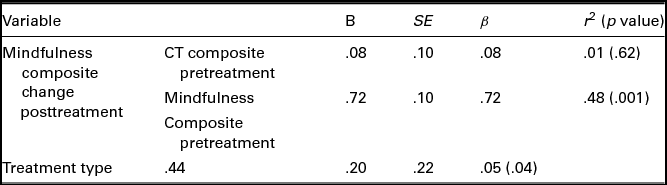
Similarly, we assessed whether the composites of CT process measures and mindfulness measures at pretreatment predicted change in scores on the composite of mindfulness measures at posttreatment. Table 4 presents the process variables predicting change in composite mindfulness process measures at posttreatment.
The Associations Between the Composite Mindfulness Process Measure Post-MBT or CT Treatment, Pretreatment Process Measures, and Type of Treatment Received
Note: B = unstandardised coefficient B; SE = standard error; β = beta; r2 = part correlation coefficient square. (N = 57).
As can be seen in Table 4, mindfulness process measures pretreatment significantly predict the composite of mindfulness measures at posttreatment. The composite CT measure at pretreatment was not significantly related to the mindfulness measures at posttreatment. However, treatment type was found to significantly predict the composite of mindfulness at posttreatment.
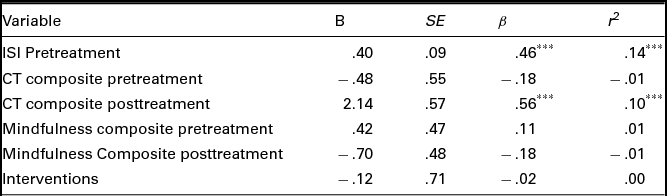
Further analysis was conducted to determine whether the composite CT and mindfulness process measures at pretreatment, composites of CT and mindfulness process measures posttreatment, ISI pretreatment, and intervention type predicted change in scores on the ISI at posttreatment.
As can be seen in Table 5 the only variables significantly related to ISI at posttreatment were pretreatment ISI and the composite CT measure posttreatment. The total R2 value for the model is .66, F(6, 50) = 15.99, p < .001. This included the unique variance explained by each variable, with any overlap or shared variance removed or partialled out. Also, as can be seen in Table 5, 14% of the variance in insomnia severity posttreatment was uniquely explained by insomnia severity at pretreatment, while 10% of the variance in insomnia severity posttreatment was uniquely explained by the composite of CT process measures posttreatment.
Process Variables predicting Insomnia Severity Index Scores Post MBCT or CT
Note: B = unstandardised coefficient B; SE = standard srror; β = beta; r 2 = part correlation coefficient square.
*** p < .001.
Discussion
Two major findings arose from the current study. First, as expected, MBT was associated with significant improvement in mindfulness measures compared to CT. This is in contrast to the CT process measures that were significantly improved by both CT and mindfulness treatment interventions. Second, the CT composite process measure strongly predicted variance in insomnia severity at posttreatment, but contrary to prediction, this result did not differ significantly across CT and MBT. Unlike the CT process measure composite, the mindfulness process measure composite at posttreatment did not significantly predict change in insomnia severity.
The first finding that MBT produced change in cognitive processes is striking given that the version of MBT in the current study did not incorporate any direct work on modifying unhelpful thoughts, beliefs or behaviours. Others have noted that mindfulness-based approaches raise awareness of thoughts and feelings in ways that allow a disengagement from ruminative processes (Nolen-Hoeksema, Reference Nolen-Hoeksema1991), seeing them as ‘mental events’ and not accurate reflections of reality (Segal et al., Reference Segal, Williams and Teasdale2002). The current results are consistent with the notion that mindfulness-based approaches may not only alter metacognitive processes but cognitive processes, such as monitoring, distorted perception and cognitive content. This is in line with research suggesting cognitive change can result from therapies other than CT. For example, an investigation of MBT in the treatment of insomnia suggested that dysfunctional beliefs about sleep and thought-control strategies change with MBT (Larouche et al., Reference Larouche, Cote, Belisle and Lorrain2014). Additionally, in a trial of CBT and pharmacotherapy, Morin and colleagues (Reference Morin, Blais and Savard2002) found that the degree of belief change during both treatments was predictive of treatment response, but CBT produced more belief change than did pharmacotherapy. Further, Eidelman et al. (Reference Eidelman, Talbot, Ivers, Bélanger, Morin and Harvey2016) found that dysfunctional beliefs are modified not just by CT but also by BT, a treatment that does not explicitly aim to modify cognitive processes such as unhelpful beliefs. Finally, Garland, Rouleau, Campbell, Samuels, and Carlson (Reference Garland, Rouleau, Campbell, Samuels and Carlson2015) implemented a mindfulness-based cancer recovery intervention and found improvements in insomnia and dysfunctional beliefs about sleep. These studies, together with the current results, are consistent with the notion that change in cognitive processes is important and that it is achievable via CT or MBT.
The finding that CT process measures changed in each of CT and MBT is particularly noteworthy, given the second finding that the cognitive process measures independently predicted insomnia severity over and above pretreatment insomnia severity scores. Harvey et al. (Reference Harvey, Dong, Bélanger and Morin2017) found a consistent result in finding that a composite CT process measure mediated treatment outcome in both CT and behaviour therapy (BT) for insomnia. The results of the current study and that of Harvey et al. support the cognitive model of insomnia in providing evidence for the importance of cognitive change in insomnia treatment (Harvey, Reference Harvey2002, Reference Harvey2005). Importantly, these results suggest that CT is not the only method for treating these cognitive maintaining factors. Indeed, BT and MBT appear to also be effective. The finding that cognitive processes predict treatment outcome suggests that (1) understanding how best to alter cognitive processes may assist optimisation of treatment effectiveness, and (2) that treatment research should include other therapies in addition to CT/CBT in the quest to maximise cognitive change.
Moving now to the prediction that the mindfulness process measure would predict treatment effects. Findings were contrary to this prediction in that the mindfulness process measure composite did not relate to treatment outcome. Research by Ong et al. (Reference Ong, Shapiro and Manber2009) examined the effects of an integrated CBT/MBT approach to insomnia treatment, finding that although the treatment was effective, it did not bring about changes in the mindfulness process measure, the Kentucky Inventory of Mindfulness Skills (KIMS). This suggests a lack of relationship between the mindfulness process measure and treatment outcome, and in this way is consistent with the current findings. Ong et al. suggested that the exposure to mindfulness was perhaps not enough to sufficiently develop mindfulness skills. In response to this result, Ong and Sholtes (Reference Ong and Sholtes2010), in a single case study, revised their integrated CBT/MBT intervention by extending the number of sessions from 6 to 8, including an all-day meditation retreat. KIMS scores were increased in the case study. Where the current results differ is that the mindfulness process measure score did change with a short, four-session MBT intervention. The fact that process measure change was not associated with an improved treatment outcome is puzzling. In essence, an improvement in mindfulness suggests that participants undergoing MBT had improved skills in observing, describing, acting with awareness, and accepting without judgment. However, it appears that unless this also resulted in a change in cognitions about preoccupation with sleep, dysfunctional thoughts about sleep and/or decreased safety behaviours, insomnia was not likely to change. Further research could therefore focus on what facilitated this cognitive change for the MBT participants.
There are several study limitations to note; the first is that the sample size of the current study may not have had sufficient power to detect significant difference between treatments on the cognitive process measures. There was a trend toward CT being associated with a larger difference on the cognitive process measure compared with MBT, but it only approached statistical significance. Second, it may be that the CT process measures were more sensitive to change in the current study than the MBT process measures. The CT measures were developed for use in insomnia, whereas the MBT measures were developed for transdiagnostic use.
Third, although video recordings were reviewed during regular supervision of the therapist by experts in each approach, no formal fidelity treatment checks were carried out. The design of the study could also be improved by the posttreatment measures being collected by someone independent to the delivery of the treatment. However, the fact we collected an objective physiological measure that showed the same response pattern to the self-report measures suggests this was not a major flaw (see Wong et al., Reference Wong, Ree and Lee2016).
In summary, there is evidence that both CT and MBT are effective treatments for insomnia. There is also evidence that CT produces change in cognitive process measures and that MBT brings about change in both mindfulness and cognitive process measures. The current results support that changing the content of unhelpful thoughts/beliefs (as in CT) or the relationship with unhelpful thoughts/beliefs (as in MBT) results in a reduction in unhelpful cognitive processes. Finally, the results of this study underscore the importance of cognitive factors as mediators in insomnia, given that they were significantly related to treatment outcome regardless of treatment condition.
Compliance with Ethical Standards
This study received no external funding. The project was approved by the Human Research Committee at Murdoch University and deemed to be consistent with the guidelines of the National Statement on Ethical Conduct involving Human Research. Informed consent was obtained from all individual participants included in the study and the information sheet and consent form was approved by the Human Research Committee.
Conflict of Interest
None.



