


Introduction
Agricultural research takes many forms with the approach applied primarily determined by the background and interests of researchers. Agricultural research has a historical bias against resource-poor farmers dependent on agriculture for their livelihoods (Chambers & Ghildyal, Reference Chambers and Ghildyal1984). Focussed on increased production, research has concentrated on better-off farmers in better-endowed areas with the potential to readily adopt high-yielding technologies generated on research stations (Chambers & Jiggins, Reference Chambers and Jiggins1987a). Research has been seen as the territory of trained researchers who are skilled in following the traditions and philosophies of research. Traditional approaches to agricultural research have successfully generated new knowledge but have been less successful in translating research results into actions of small-scale agricultural producers.
The cultures of agricultural research and development are not aligned, and processes of research do not allow seamless integration of new knowledge into production systems. This lack of alignment has been known for many decades and relates to the complexity of human situations. With multiple relationships, interconnections, and feedback loops between multiple elements, alignment cannot be reduced to simplistic and linear chains of cause and effect (Green, Reference Green2016). In complex situations desired outcomes are poorly defined and multiple methodologies and methods are required to appreciate a situation and develop and apply new knowledge (Bawden, Reference Bawden, Williams and Iman2007; Midgley, Reference Midgley2000). However, most approaches to agricultural research are blind to this complexity (Douthwaite & Hoffecker, Reference Douthwaite and Hoffecker2017; Klerkx et al., Reference Klerkx, van Mierlo, Leeuwis, Darnhofer, Gibbon and Dedieu2012; Schut et al., Reference Schut, Klerkx, Sartas, Lamers and Leeuwis2015). Development projects also seek linear attribution rather than embrace complexity and unpredictable change.
Over the past sixty years, researchers have worked to make agricultural research results more aligned to the needs of rural producers and overcome barriers to adoption of new technologies. However, most approaches still begin from the perspective of researchers and answer questions determined by researchers, and supported by funding bodies and research organisations. While participatory tools are applied to bring rural producers into research systems, those producers often become part of the system being researched rather than part of the system performing research.
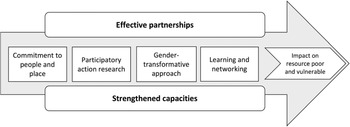
This paper outlines a new approach to generation and application of knowledge, Development Led Inquiry (DLI). DLI has several characteristics that distinguish it from other approaches. These include pluralism in theoretical frameworks and methods, expansion of organisations included in the team, and testing and application of the new knowledge as an integral part of its generation. DLI is dynamic and developmental with learning for all participants central to the process. DLI focuses on human development and sees research and knowledge generation as a supporter rather than the leader of development. This approach unsettles power structures within research systems and suggests inquiring systems as an alternative. DLI emerged from, and was applied in, a twelve-year agricultural research project in India, and was subsequently introduced to, and further developed in an agricultural research project in Pakistan. DLI foregrounds the third sector in Third Sector Research (TSR).
The paper then outlines three approaches developed since the 1960s to overcome barriers to adoption, namely: Transfer of Technology (TOT), Agricultural Research for Development (AR4D), and Research in Development (RinD). It relates DLI to those approaches demonstrating how it builds on and differs from them.
DLI and What Makes it Distinctive
DLI has its theoretical basis in inquiring systems, an approach initiated by Churchman (Reference Churchman1971). In this approach, inquiry is designed and organised as a system to generate knowledge linked to action to improve a complex situation. The approach is pluralist and enables DLI to incorporate multiple perspectives of both the situation to be improved and the processes to improve it. An inquiring systems approach enables participants to view the world as a collection of partial, bounded, and interactive situations. Thinking in wholes enables the co-existence of paradigms such as positivism and reductionism as well as enabling application of pluralism in theoretical frameworks (Midgley, Reference Midgley2002). An inquiring systems approach is a critical approach that produces knowledge as part of a process of reflexively rigorous practice (Colvin et al., Reference Colvin, Blackmore, Chimbuya, Collins and Seddaiu2014). Critical approaches may be described as Third Wave systems thinking, which contrasts to First Wave or positivist systems thinking and Second Wave or Soft Systems Thinking (Williams & Imam, Reference Williams and Imam2007). DLI starts from the understanding that research and the new knowledge produced supports development rather than leading it. DLI does not reject current research approaches but seeks to build a clear understanding of the context so that appropriate approaches are applied to achieve desired ends.
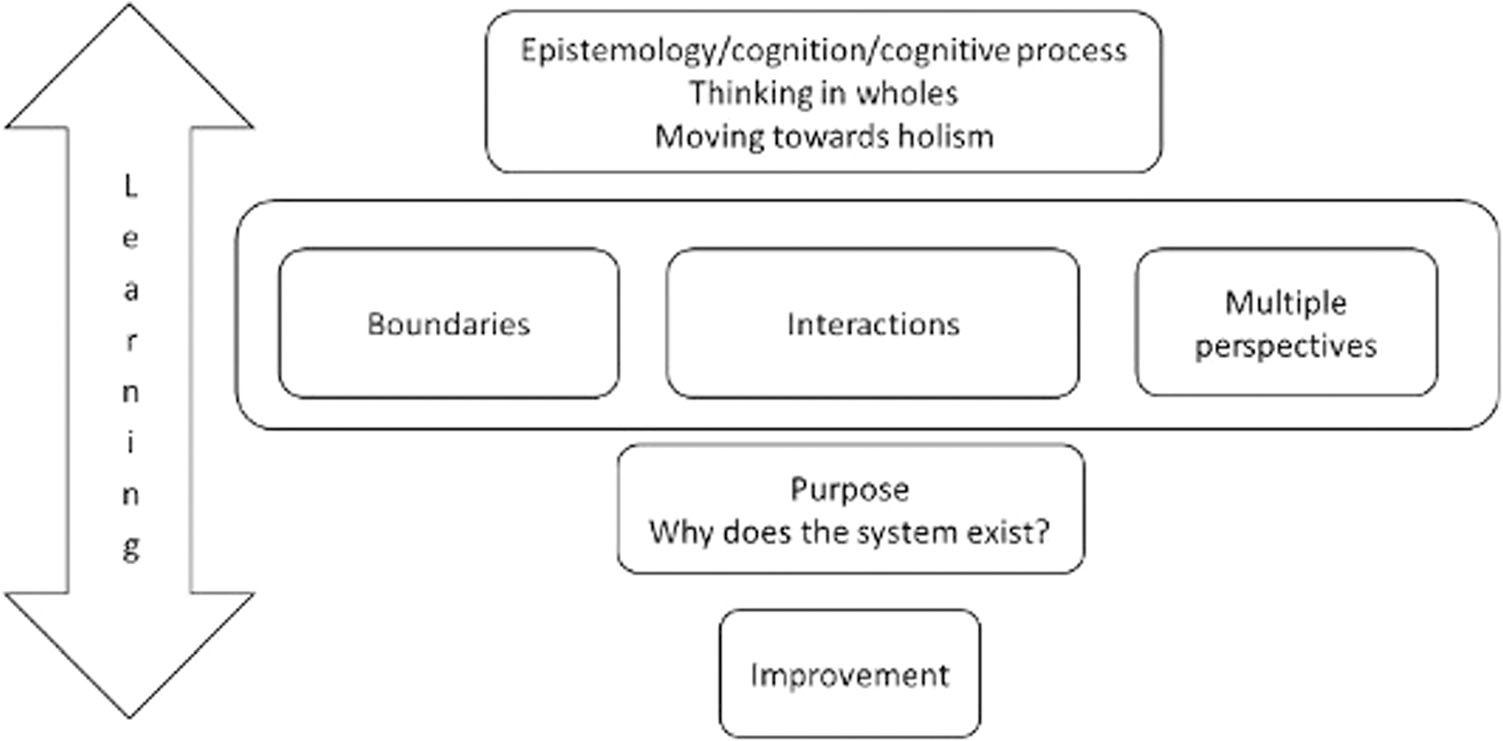
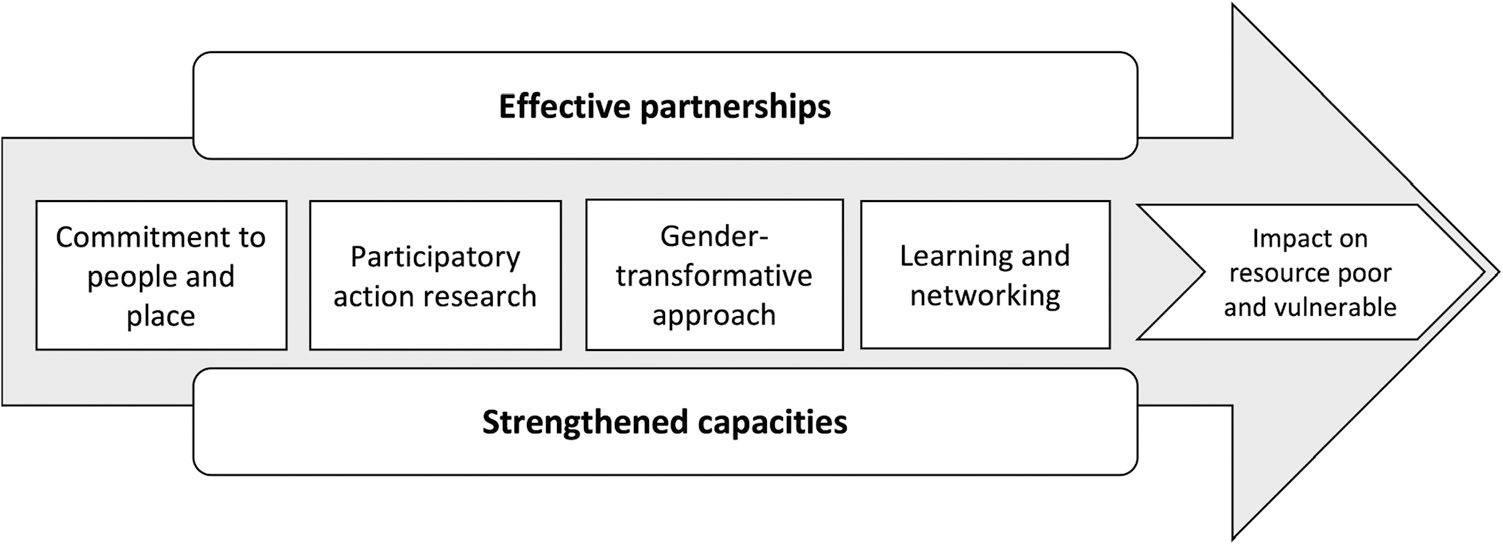
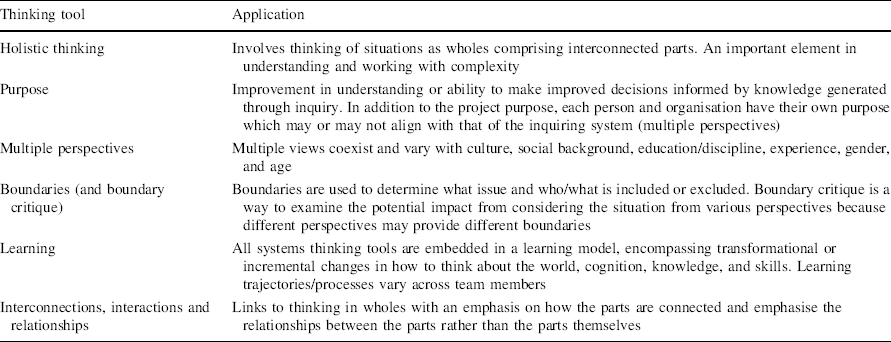
Conceptual or thinking tools have been developed to enhance inquiry (Midgley, Reference Midgley2002). Six systems thinking tools introduced in Table 1 form the basis of DLI. These tools do not stand alone and are not applied linearly: rather they are interrelated in a network and employed in concert as represented in Fig. 1.
Systems thinking tools applied in DLI
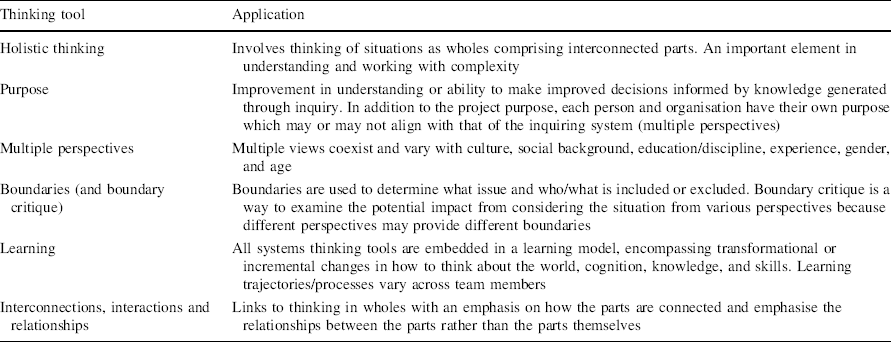
Thinking tool |
Application |
|---|---|
Holistic thinking |
Involves thinking of situations as wholes comprising interconnected parts. An important element in understanding and working with complexity |
Purpose |
Improvement in understanding or ability to make improved decisions informed by knowledge generated through inquiry. In addition to the project purpose, each person and organisation have their own purpose which may or may not align with that of the inquiring system (multiple perspectives) |
Multiple perspectives |
Multiple views coexist and vary with culture, social background, education/discipline, experience, gender, and age |
Boundaries (and boundary critique) |
Boundaries are used to determine what issue and who/what is included or excluded. Boundary critique is a way to examine the potential impact from considering the situation from various perspectives because different perspectives may provide different boundaries |
Learning |
All systems thinking tools are embedded in a learning model, encompassing transformational or incremental changes in how to think about the world, cognition, knowledge, and skills. Learning trajectories/processes vary across team members |
Interconnections, interactions and relationships |
Links to thinking in wholes with an emphasis on how the parts are connected and emphasise the relationships between the parts rather than the parts themselves |
Conceptual model of Systems Thinking as applied to an Inquiring System. (Authors)
DLI involves a change in the nature and structure of knowledge generation from a traditional research system to an inquiring system. With that come changes in membership and how new knowledge is tested and applied. In particular, DLI acknowledges the complexity of situations being improved and expands membership of the inquiring system from those who usually participate in knowledge generation to a team that incorporates a diverse group of stakeholders. Changes in membership expand perspectives of the situation, and processes to generate and test options available to potentially improve the situation. The structure of the system is not fixed but developmental. As understanding of the situation and environment in which it is operating increases so does the membership and approach taken.
DLI teams include third sector organisations (including farmers’ groups and self-help groups) and trained researchers from public, private, and NGO sectors. Non-governmental organisations (NGOs) play a pivotal role as interlocutors crossing diverse cultures, institutions, disciplines, and languages and enabling relationships between diverse stakeholders in the collaborative team. Participants can learn to understand and accept the views of other participants without requiring consensus. Accepting the perspectives of other participants requires a shift in power relationships within the inquiring system. DLI enables participants, particularly scientists and NGOs to recognise the power asymmetries between them and the communities. This change requires researchers to see themselves as members of the team and work to understand the perception other participants have of the situation being improved.
The focus on improving a situation through generation and application of new knowledge requires and supports involvement of diverse participants with different perspectives of the situation; perspectives on what constitutes improvement, how to enable improvement to take place, and the nature of knowledge and processes to generate new knowledge. DLI requires participating individuals and organisations to link to the broader situation being improved; be open to the ideas and understanding of other participants and organisations; and be prepared to reflect on their own perspective including its nature, origins, and impact on others.
DLI integrates all participants into the knowledge generation system rather than seeing them as objects for research or distributors of knowledge generated by research systems. Hence, all participants can become partners in the whole process of knowledge generation.
DLI and the Third Sector
Application of an inquiring systems approach means DLI can be applied in complex situations to enable alignment between development and research. DLI builds integrated teams that include Third Sector Organisations (TSOs) as core partners. It provides a framework that enables TSOs to expand their impact into the research sector, and for NGOs, academics, government departments, and research institutions to shift their roles and approaches towards participating in research with farmer and women’s organisations as partners, to design and carry out research.
The growing body of TSR has addressed the role of the third sector, and of organisational behavior and management, philanthropy, and volunteering on TSO functioning (Hodgkinson & Painter, Reference Hodgkinson and Painter2003). While there is a growing area of TSR about partnerships with the state, and delivery of public services, there is less on the role of TSOs in agriculture research and its utilisation. In this paper, we examine how TSOs relate to and work with other TSOs, and agricultural scientists, and universities. Many poor families live in rural areas and are dependent on agricultural production for food, income, and employment. TSOs operate in rural communities but are not involved in the production and application of new knowledge. While often part of transnational networks and epistemic communities, their role has been outside the research system as objects for research, hosts for research process, contributors of inputs to the research agenda, and distributors of knowledge generated. Yet these organisations, connected directly with communities, can play an important role in all phases of research.
TSOs are characterised by privateness i.e., outside the sphere and control of the government; public purpose i.e., serving the broader community; and free choice i.e. pursued without compulsion (Salamon & Anheier, Reference Salamon and Anheier1992; Salamon & Sokolowski, Reference Salamon and Sokolowski2016). DLI incorporates development NGOs, a subset of TSOs that work with disadvantaged communities, supporting social, political, and economic change locally (Lewis, Reference Lewis1998). DLI also draws on the reconceptualisation of TSOs to include social solidarity economies (Salamon & Sokolowski, Reference Salamon and Sokolowski2016; Defourny et.al., Reference Defourny, Grønbjerg and Meijs2016) such as women’s self-help groups (SHGs) (which do not distribute surplus to members) and farmer cooperatives or groups (which may distribute surplus to members). Whether to include these kinds of organisations is a conceptual debate beyond the purview of this paper. However, DLI reinforces the importance of a more inclusive definition.
The approach is premised on TSOs playing a variety of roles within inquiring systems, including as initiators, implementers, and coordinators of activities, and disseminators of outputs. The paper builds a case for the essentiality of NGOs, particularly where social solidarity organisations are not established or are not mature. NGOs provide a bridge between scientists and social solidarity organisations, contextualising the inquiry and increasing its relevance. However, the structure of agricultural research systems can restrict inclusion of those who are not trained researchers (Chambers & Jiggins, Reference Chambers and Jiggins1987b). For instance, members of farmers’ groups and women’s SHGs are often perceived as agricultural laborers and the subject of research, and rarely as co-researchers, conducting research activities on their farms, monitoring and disseminating the research outputs locally (Bellotti, Reference Bellotti, Unkovich, Ramsay, Narain, Kumar and Gaydon2017).
Approaches to Agricultural Research
DLI links to agricultural research in human development contexts. This section reviews three approaches to agricultural research and development and presents DLI as an alternative. Section 5 presents two case studies from South Asia (India and Pakistan), illustrating the development and application of DLI. Section 6 concludes with implications of DLI for TSOs and research partnerships with academic and research institutions.
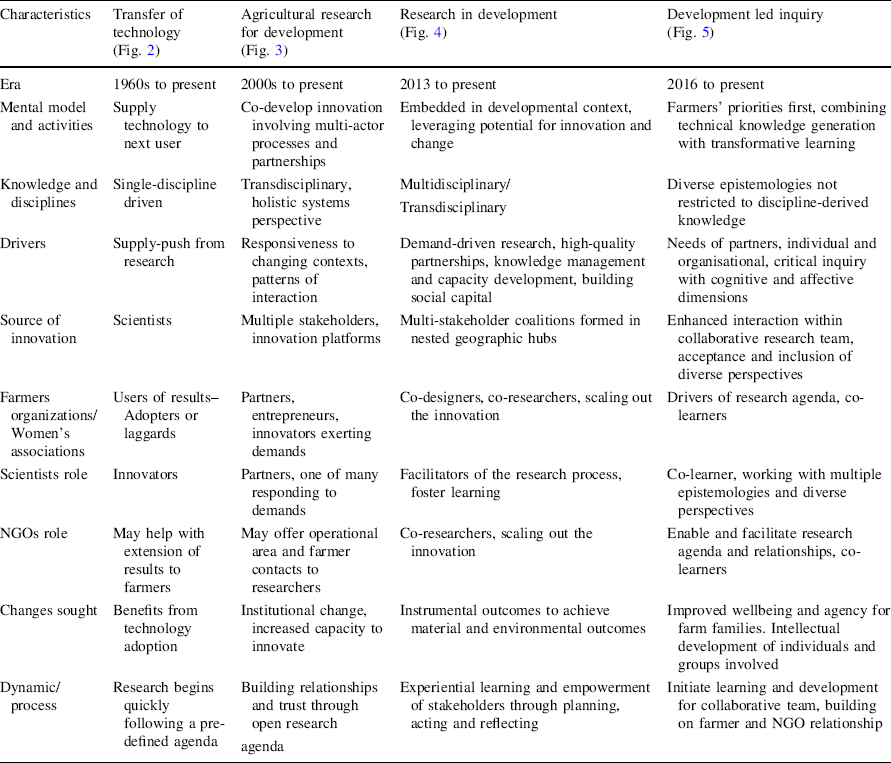
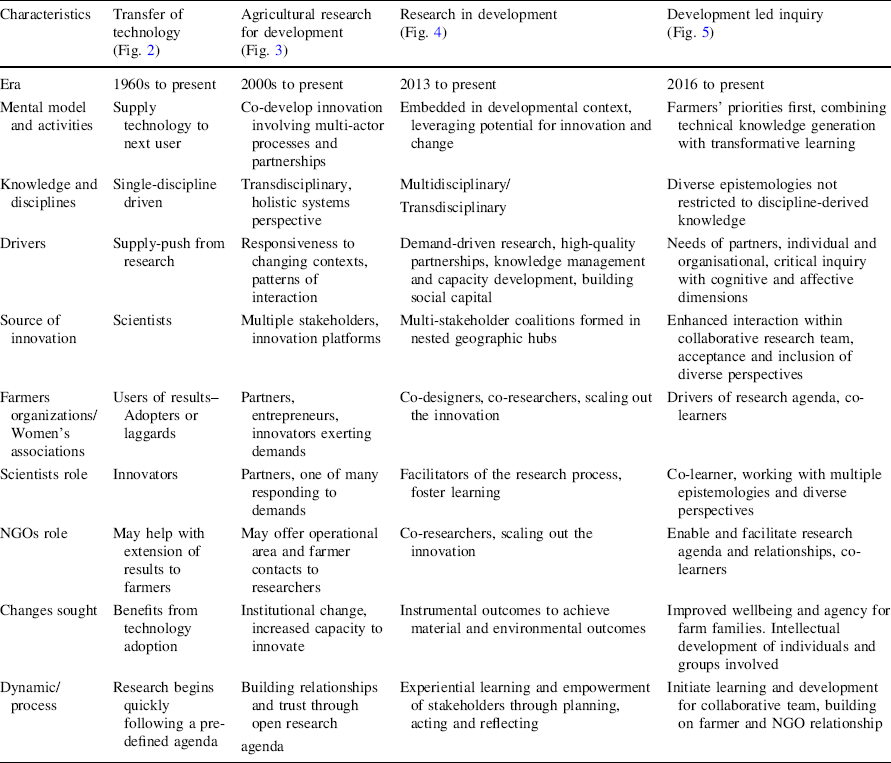
Most research to improve agricultural productivity in poorer countries is carried out by international and national government-supported institutions such as CGIAR centers, agricultural departments, and public universities. The role of TSOs is envisaged as supportive, at best. Building connections between scientists and farmers have been attempted, but the focus has remained on research followed by development. The relationship between agricultural research and development has been considered in multiple ways (presented in Table 2): transfer-of-technology (TOT), agricultural research for development (AR4D), and research in development (RinD). DLI is proposed as a fourth way, related to and distinct from the other three approaches.
Comparison of the approachesa
Characteristics |
Transfer of technology (Fig. 2) |
Agricultural research for development (Fig. 3) |
Research in development (Fig. 4) |
Development led inquiry (Fig. 5) |
|---|---|---|---|---|
Era |
1960s to present |
2000s to present |
2013 to present |
2016 to present |
Mental model and activities |
Supply technology to next user |
Co-develop innovation involving multi-actor processes and partnerships |
Embedded in developmental context, leveraging potential for innovation and change |
Farmers’ priorities first, combining technical knowledge generation with transformative learning |
Knowledge and disciplines |
Single-discipline driven |
Transdisciplinary, holistic systems perspective |
Multidisciplinary/ Transdisciplinary |
Diverse epistemologies not restricted to discipline-derived knowledge |
Drivers |
Supply-push from research |
Responsiveness to changing contexts, patterns of interaction |
Demand-driven research, high-quality partnerships, knowledge management and capacity development, building social capital |
Needs of partners, individual and organisational, critical inquiry with cognitive and affective dimensions |
Source of innovation |
Scientists |
Multiple stakeholders, innovation platforms |
Multi-stakeholder coalitions formed in nested geographic hubs |
Enhanced interaction within collaborative research team, acceptance and inclusion of diverse perspectives |
Farmers organizations/Women’s associations |
Users of results–Adopters or laggards |
Partners, entrepreneurs, innovators exerting demands |
Co-designers, co-researchers, scaling out the innovation |
Drivers of research agenda, co-learners |
Scientists role |
Innovators |
Partners, one of many responding to demands |
Facilitators of the research process, foster learning |
Co-learner, working with multiple epistemologies and diverse perspectives |
NGOs role |
May help with extension of results to farmers |
May offer operational area and farmer contacts to researchers |
Co-researchers, scaling out the innovation |
Enable and facilitate research agenda and relationships, co-learners |
Changes sought |
Benefits from technology adoption |
Institutional change, increased capacity to innovate |
Instrumental outcomes to achieve material and environmental outcomes |
Improved wellbeing and agency for farm families. Intellectual development of individuals and groups involved |
Dynamic/ process |
Research begins quickly following a pre-defined agenda |
Building relationships and trust through open research agenda |
Experiential learning and empowerment of stakeholders through planning, acting and reflecting |
Initiate learning and development for collaborative team, building on farmer and NGO relationship |
aAdapted from Douthwaite & Hoffecker, Reference Douthwaite and Hoffecker2017
TOT prioritises the research agenda set by scientists, funding agencies, and commercial interests (Fig. 2). It is performed on research stations and in laboratories, with knowledge and technology transferred to farmers via extension agents. Decision-makers and farmers, located outside the research system, elect whether to follow that advice or not. TOT is inappropriate for resource-poor farmers, whose conditions are often radically different from those of research stations, and whose farming systems are often complex and diverse (Chambers & Jiggins, Reference Chambers and Jiggins1987b). TOT may be seen as the first wave of systems thinking.
Transfer of technology

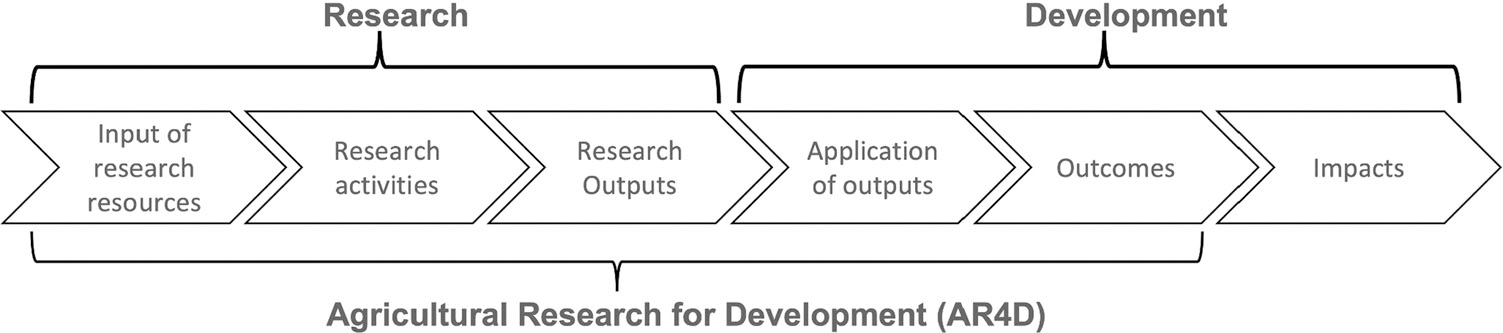
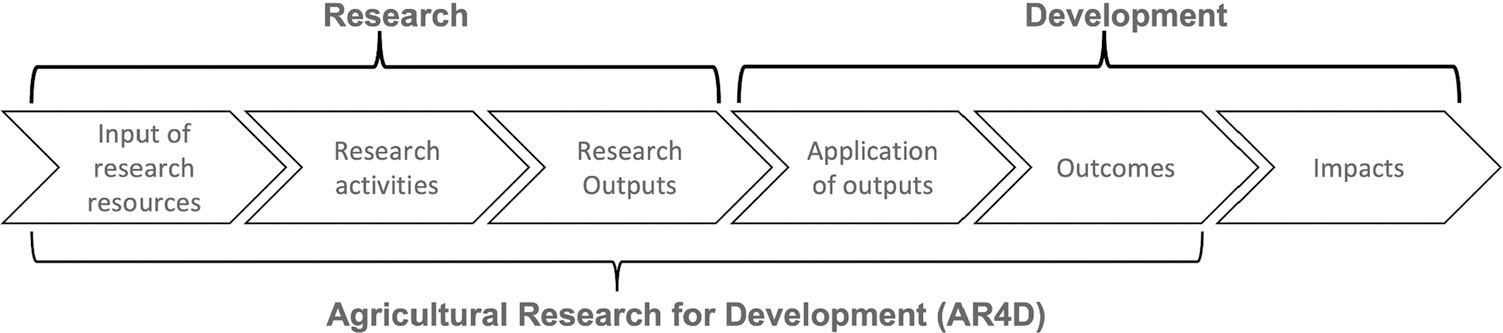
AR4D attempts to remedy the exclusions of TOT from the outset: researchers produce outputs intended to contribute directly to outcomes for resource-poor farmers (Fig. 3). Research and development are distinct sets of activities, and AR4D builds partnerships between all the stakeholders: researchers, development agents, and policymakers (Thornton et al., Reference Thornton, Schuetz, Förch, Cramer, Abreu, Vermeulen and Campbell2017). As with TOT, scientific research in AR4D is undertaken by elite, trained researchers and research drive the development agenda. The pathways for how a particular intervention contributes to an impact are not clearly articulated nor complexity-aware (Douthwaite & Hoffecker, Reference Douthwaite and Hoffecker2017; Douthwaite et al., Reference Douthwaite, Kuby, van de Fliert and Schulz2003).
Agricultural research for development. Thornton et al., Reference Thornton, Schuetz, Förch, Cramer, Abreu, Vermeulen and Campbell2017
RinD is conceptually distinct to the above two approaches, engaging communities and stakeholders through a joint scoping and design process so that the research agenda reflects local challenges and is locally embedded (Fig. 4). It is complexity-aware (Douthwaite & Hoffecker, Reference Douthwaite and Hoffecker2017). However, the role of researchers remains ‘outside’ the development system. Perspectives of farmers are incorporated into the research system through scoping studies and embeddedness, rather than informing the scientific agenda. Capacity building of partners addresses the expansion of skill sets, rather than cognitive learning required for transformation (Fig. 5).
Research in development. Dugan et al., Reference Dugan, Apgar and Douthwaite2013
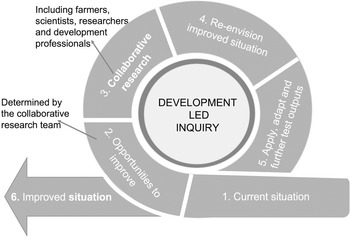
Development Led Inquiry (Authors)
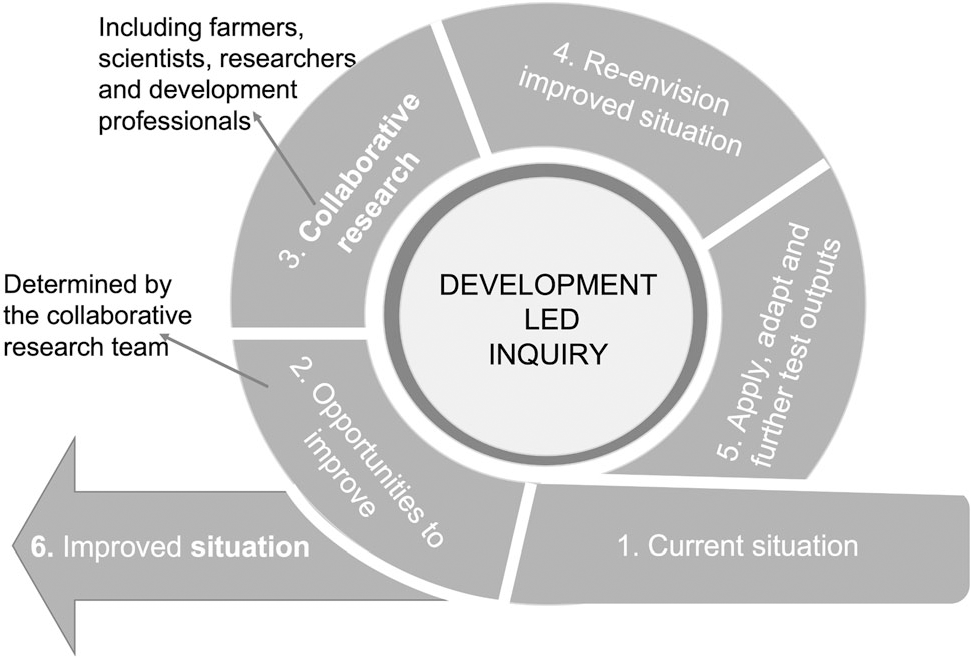
Despite the systematic movement from TOT to AR4D to RinD, research in agriculture (and other fields involving science and technology) still involves scientists driving the research agenda without engaging farmers. Chambers and Jiggins (Reference Chambers and Jiggins1987b) indicate the disadvantages of agricultural research centers and suggest that the main initiative for re-orientation of research would “probably have to come from courageous and original national scientists and imaginative non-government organisations”. Both AR4D and RinD may be linked with the Second Wave or Soft Systems Thinking.
DLI provides a framework to respond to development needs, with continuous iterations to re-envision improved situations and is linked directly to users (farming communities and individuals). It is designed to improve complex and dynamic situations and generate new knowledge. TSOs are integral to the research system: facilitating the research agenda, contributing to the production and analysis of scientific knowledge, and building relationships between farming communities and other stakeholders. In this way, DLI involves all stakeholders driving the process of inquiry rather than as recipients of new knowledge on the conclusion of the research. This approach contrasts to conventional research which conceptualises farmers and women as individuals in communities, to either transfer tools, technology, or innovation. This approach marks a shift in agricultural research to Third Wave or Critical Systems Thinking.
An Assessment of the Use of DLI in Two Agriculture Research Projects in South Asia
According to the global multidimensional poverty index, over 48% of the world’s poor are to be found in agrarian communities in South Asia (Alkire and Robles, Reference Alkire and Robles2017). Agriculture in South Asia is dependent on rainfall and is subsistence-oriented. Most farmers have limited access to improved inputs and technologies. Women are excluded from making decisions, have limited access to, and control over resources, and are socially and economically dependent on their male counterparts (Banu, Reference Banu2016).
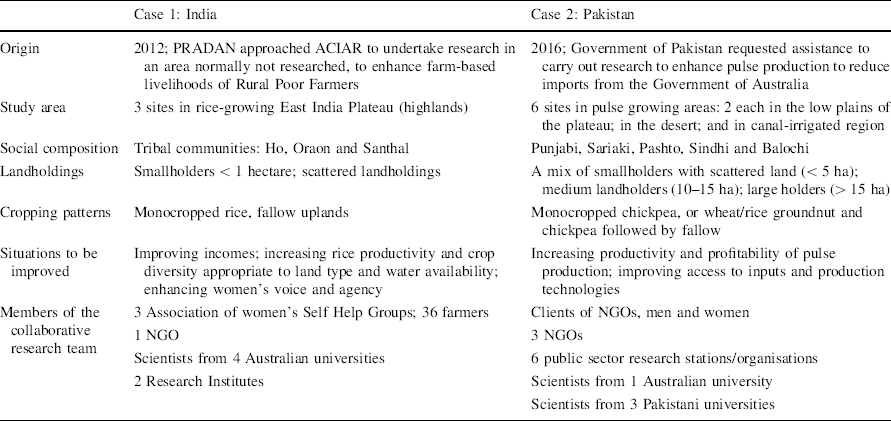
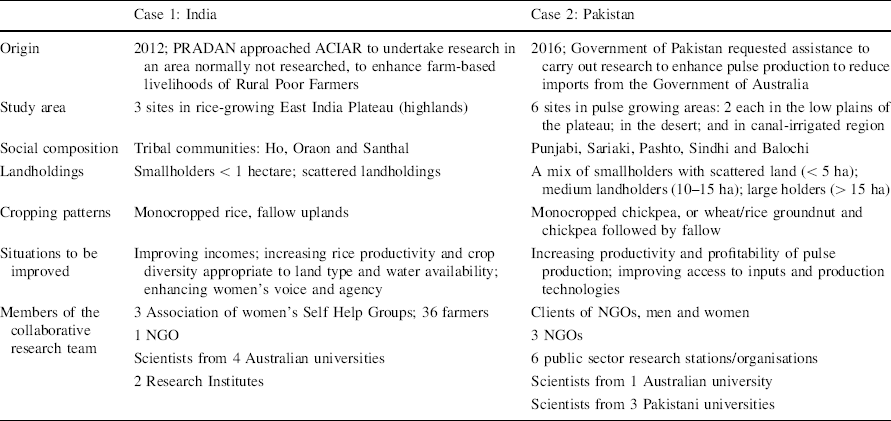
DLI was developed as an approach from the project undertaken by the authors in India and was extended to Pakistan by one of the authors, where it is ongoing. The Indian project was built around PRADAN, a large professional NGO, and the SHGs that it had formed. The project in Pakistan was based in public-sector organisations and national universities and introduced NGOs and farmers groups at a later stage. The Pakistan project began as with TOT approach, and the epistemic development of the research team and introduction of DLI as an approach began within the first year. The case studies demonstrate this introduction and transition process, particularly the inclusion of NGOs as interlocutors between farmers, their associations, and the scientists. Both projects were funded by the Australian Centre for International Agricultural Research (ACIAR) that supports collaborative research projects involving Australian researchers and those in partner countries. Australian researchers in the projects had backgrounds in agronomy, economics, rural systems, and development. Key characteristics of the projects are presented in Table 3.
Key characteristics of the two cases
Case 1: India |
Case 2: Pakistan |
|
|---|---|---|
Origin |
2012; PRADAN approached ACIAR to undertake research in an area normally not researched, to enhance farm-based livelihoods of Rural Poor Farmers |
2016; Government of Pakistan requested assistance to carry out research to enhance pulse production to reduce imports from the Government of Australia |
Study area |
3 sites in rice-growing East India Plateau (highlands) |
6 sites in pulse growing areas: 2 each in the low plains of the plateau; in the desert; and in canal-irrigated region |
Social composition |
Tribal communities: Ho, Oraon and Santhal |
Punjabi, Sariaki, Pashto, Sindhi and Balochi |
Landholdings |
Smallholders < 1 hectare; scattered landholdings |
A mix of smallholders with scattered land (< 5 ha); medium landholders (10–15 ha); large holders (> 15 ha) |
Cropping patterns |
Monocropped rice, fallow uplands |
Monocropped chickpea, or wheat/rice groundnut and chickpea followed by fallow |
Situations to be improved |
Improving incomes; increasing rice productivity and crop diversity appropriate to land type and water availability; enhancing women’s voice and agency |
Increasing productivity and profitability of pulse production; improving access to inputs and production technologies |
Members of the collaborative research team |
3 Association of women’s Self Help Groups; 36 farmers 1 NGO Scientists from 4 Australian universities 2 Research Institutes |
Clients of NGOs, men and women 3 NGOs 6 public sector research stations/organisations Scientists from 1 Australian university Scientists from 3 Pakistani universities |
Case 1: Improving Livelihoods Through Innovative Cropping Patterns in India
PRADAN, the women’s SHGs it promoted, and research scientists from Australia and India constituted a research team. The team acknowledged distinct perspectives of the various participants which intensified interactions and enabled the re-design of the project to align with the diverse purposes of team members. For example, the agenda that emerged from farmers related to water scarcity, soil health, and cash crop alternatives to attract younger generations to farming. This agenda expanded the scientific questions beyond agronomy to farming systems and natural resource management, and alternative cropping systems based on local practices such as direct-seeded rice. The boundaries of the inquiring system thus expanded, and the research team included specialised research organisations. Some trained researchers questioned interactions between research and development and declined to participate whereas those who accepted the interactions continued in the team and were open to producing interrelated academic and developmental outcomes (Bhanjdeo et al., Reference Bhanjdeo, Hernandez-Jover and Ramsay2018). This exemplified how interactions (agreements and disagreements) could be productive, redefine boundaries for the team, and articulate shared values.
Research didis, members of the SHGs, identified areas for inquiry, selected trial sites, collected and triangulated data, and assisted with interpretation of results and production of scientific knowledge. The research organizations trained youth who were selected by the SHGs. Supervised by PRADAN, these youths mapped the quality of wells and tanks and changes in the water table and supported on-farm, farmer-managed trials.
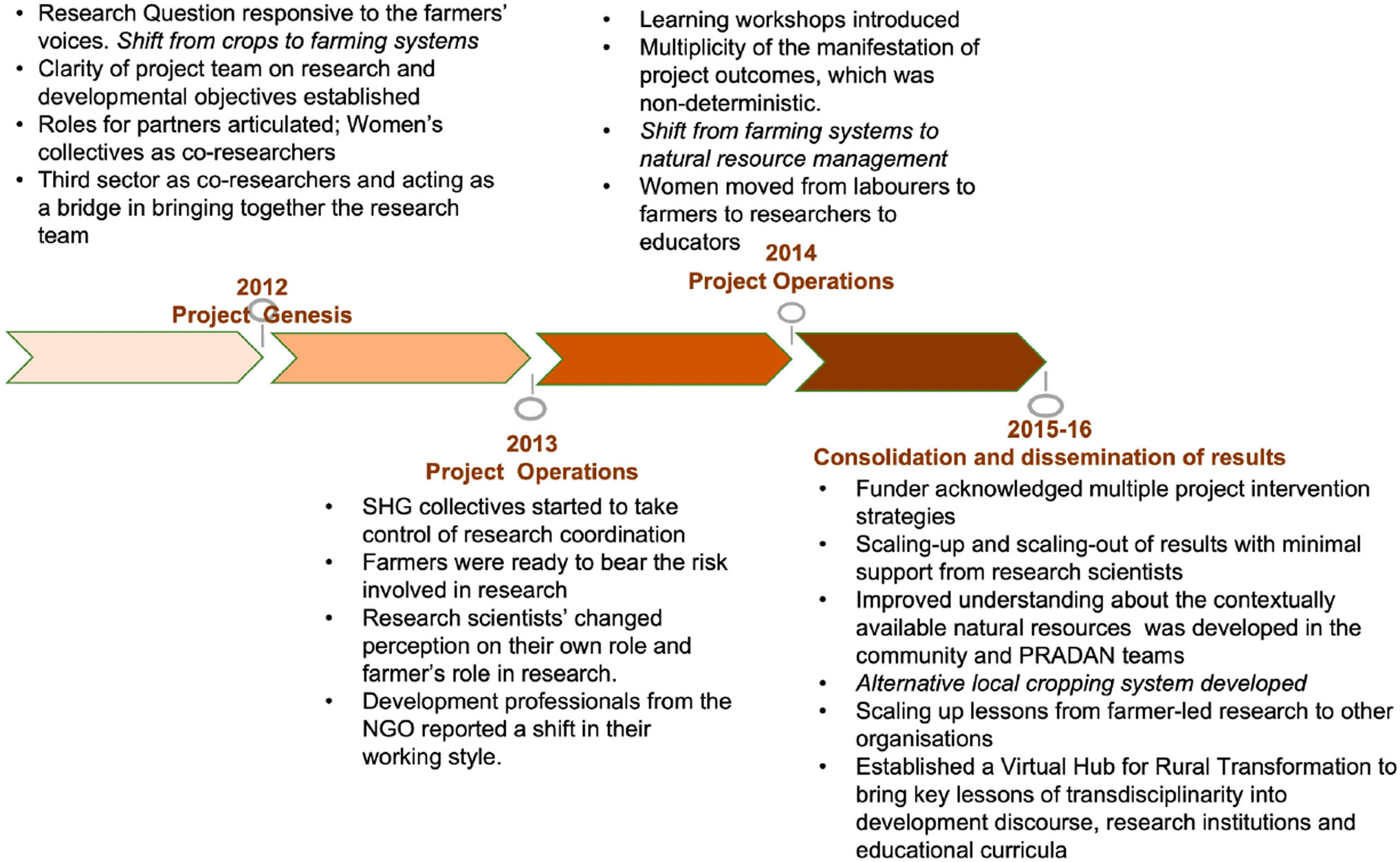
Interactions between the farmer co-researchers and other research team members were facilitated by PRADAN, which played an important role in building the team. In addition to trusted relationships in the local area, PRADAN’s ability to navigate diverse languages and cultures, and its expertise in agriculture-based livelihoods enabled a locally grounded assessment of practices and areas for improvement. Researchers from Australian universities and PRADAN conducted learning workshops for all team members to share their experiences and interpretations, and to reflect on the views of one another. These interactions between scientific principles and farmer practices led to emergence of contextual knowledge and application of improved technology and practices in the field. SHG members, scientists, researchers, and PRADAN professionals built the capacity to undertake research as members of an inquiring system, expanding and modifying their views of the situations under study. Figure 6 illustrates the timeline of the project, how it progressed and led to the development of DLI as an approach.
Case 1 project timeline
The varied purposes and perspectives of the research team manifested in project outcomes in multiple domains. The project demonstrated that soil water and rainfed water supply could secure rice crop yields and a second crop could also be grown (Cornish et al., Reference Cornish, Karmakar, Kumar, Das and Croke2015). The project generated a scientific understanding of the local aquifer systems, providing insights into groundwater use (Patil et al., Reference Patil, Bhave and Kulkarni2015). An alternate agronomic package was developed for medium uplands with a shorter-duration, local rice that was traditionally direct-seeded (Bellotti et al., Reference Bellotti, Unkovich, Ramsay, Narain, Kumar and Gaydon2017). The need for this local cropping system was generated and communicated by women’s associations.
Vegetable and pulse crops in the fallow uplands, with crop timings aligned to local market prices, provided options for higher incomes. Innovative practices and mechanisation reduced women’s labor in transplanting and weeding. This, combined with new knowledge and identity created space for women’s decision-making in the family. The systematic dissemination of research outputs from farmer-to-farmer and via PRADAN’s networks led to adoption by ~ 17,000 farmers within 2016 (Bellotti et al., Reference Bellotti, Unkovich, Ramsay, Narain, Kumar and Gaydon2017).
Case 2: Pakistan Pulses Project
The project was initially conceptualised as a traditional science project based on the assumption that key factors limiting pulse production were technical. Through interaction between the Australian and Pakistani scientists, it was re-oriented as a farmer-focused multi-partner collaborative DLI project. Farmers became focal persons and the basis of research, who exercise choices and make decisions regarding farming and cropping on their land. Initial research engagement involved the development of Groups for Collaborative Research (GCR). These groups were developed by the project because other groups either did not exist or were not able to participate. The GCRs provided the focus for field activities and included farm families, research scientists from government research organisations, and Australian universities. The GCRs assisted farm families to outline local issues and facilitated deliberations and discussions to understand research results and plan how to apply learning.
Initial activities demonstrated that farm families and researchers did not share the same perspectives and had assumptions about each other that were not aligned. Not all team members agreed with the change in approach but almost all continued in the project. As the project progressed, facilitated workshops enabled members to recognise the impact of DLI for researchers and farm families, and Pakistani scientists began to actively apply the approach.
On-farm varietal trials were carried out by farmers in the GCRs, supported by the scientists, enabling selection of varieties best suited to local situations. However, GCRs were inexperienced in disseminating knowledge produced and in distributing preferred seed varieties to farming communities. To address this challenge, the boundaries of the inquiring system were expanded by inviting NGOs operating near project sites to join.
The project is ongoing but some outcomes are visible. The NGOs have taken the lead in developing a seed system to enable farm families from the GCRs and other areas to access preferred varieties. In addition, the NGO also supported microfinance, and their access to activities enabled integration of the inquiry conducted by GCRs into production methods and value addition. The NGOs long and trusted relationships with the communities facilitated women to participate in activities and to benefit from the project’s learning.
The NGOs will continue working with the farmer’s groups and researchers beyond the life of the project supporting ongoing knowledge development, exchange, and application once the project has ended.
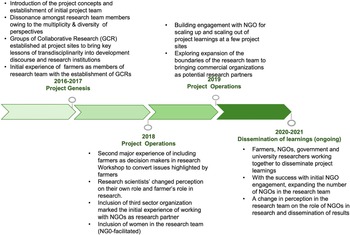
This collaboration added new approaches, knowledge, and skills to the research team, particularly an understanding of inquiring systems. It has provided useful information (technical and process-related) and resources to the NGO. Figure 7 illustrates the timeline of the project and the application of DLI as an approach.
Case 2 project timeline
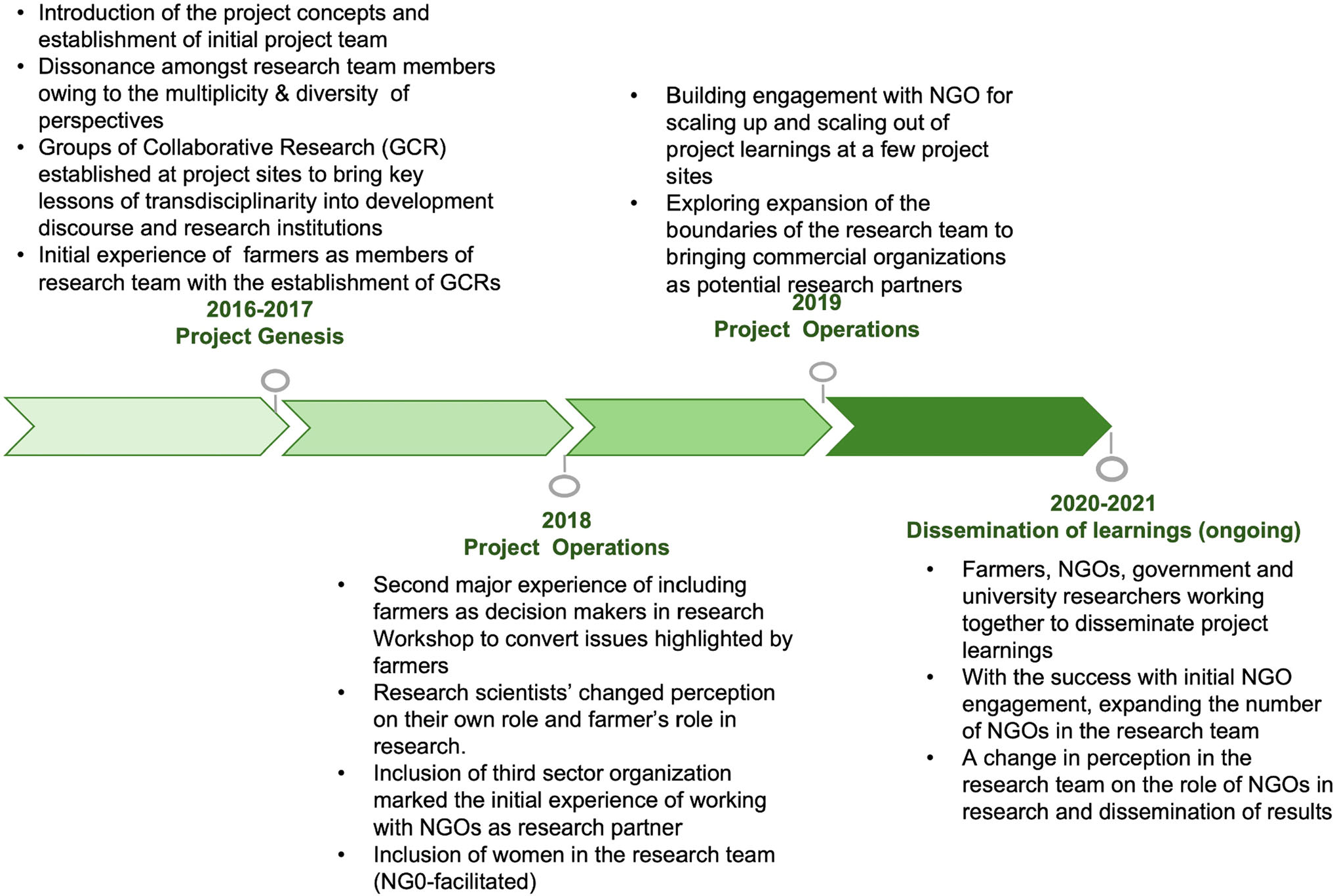
In summary, research engagement in both cases led to improvements in the situations, deeper and greater acceptance of alternative views provided by the various project participants, acceptance of participants’ limitations, and individual and group learning.
Conclusion
DLI is appropriate for use in complex situations through the application of an inquiring systems approach and systems thinking tools. It enables expansion of research team membership to include TSOs as core partners. It provides a framework for NGOs and researchers to shift their roles and approaches towards participating in research with women’s and farmers’ groups/organisations, in contrast to conventional research which conceptualises and reaches out to farmers and women as individuals in communities, to transfer the tools, technology or innovation they have developed. Learning is core to the approach enabling personal, organizational, and team development. While the team has many shared experiences, members’ learning is not congruent and, in DLI pluralistic perspectives are explored and valued.
DLI builds on the emerging roles of agricultural and NGO researchers as third sector researchers. Researchers engaged with the application of science and technology to rural development are shifting towards TSR in terms of adoption of change and innovation. However, researchers are not explicit about this, neither are they prepared for this role. DLI requires researchers to clearly articulate a third sector-related research agenda.
Case studies presented in this paper highlight the benefits of including NGOs, women’s associations, and farmer organisations as members of the research team. But, the full benefits are only derived when relationships are constructed so members of the team, and issues they are working on, are interconnected as an inquiring system.
The shift in the Pakistan project from the TOT approach to DLI (and in India, from AR4D to DLI) indicates the importance of a critically aware partnership between farmer/women’s organisations, scientists, and NGOs in the research system. Scientists played a key role in the research team, as they enabled themselves and other members to participate in the process. Other approaches (RinD, AR4D, and TOT) view stakeholders in silos and do not attempt to unsettle the interrelationships between scientists and individual farmers and households in this way.
DLI is still developing and faces several challenges. The nature of training in universities focuses on discipline-based research. DLI projects require team members to expand their conceptual frameworks and learn to work in diverse teams; this does not suit all participants. For instance, a key factor underlying DLI is the scientists themselves, rather than other structural or epistemological factors. The Australian project scientists were influenced by the Australian Hawkesbury project (Bawden, Reference Bawden, Ison, Macadam, Packham, Valentine and Remenyi1985), and entered the projects with an AR4D approach. However, interactions with PRADAN and the SHGs (in Case 1) produced a shift beyond inclusion of individual farmers to emergence of DLI.
Power asymmetries and biases between participants are challenging and DLI requires trust and mutually respectful relationships. DLI does not seek consensus but requires participants: to be open to the ideas of other participants; to not seek to assert power over others, but to work together to understand and improve situations. DLI projects are dynamic; for example, in the cases presented as the projects progressed and participants learnt, their perspectives of the situation changed. In response to that change, the team developed with researchers more able to appreciate the situation farmers faced and valued farmers' capacity to design, carry out and report research. Farmers brought traditional practices such as direct-seeded rice to scientific assessment, changed their perceptions, underwent intellectual development, and reported shifts in knowledge and practices. For instance, they thought in annual cycles to plan their production using residual soil moisture and precipitation and were no longer focused on one part of the cycle.
Flexible and applicable in various contexts, inquiry is not standardised and cannot be applied as a simple list of steps. It integrates knowledge generation with its application making the process of inquiry itself dynamic. Three key implications of this approach are: development practitioners, researchers, and farmer’s organisations need a clear remit and understanding of their roles and they need time to settle into their roles; it establishes the importance of mechanisms for governance, scrutiny and informed consent required for development led inquiry; and it provides a framework for evaluation of development and research projects.
Acknowledgments
We thank our partners in the project including women and men farmers, associated women’s self-help groups, fellow researchers, and the Australian Center for International Agricultural Research (ACIAR) that funded the research projects. The projects in India were led by Professor Peter Cornish and Avijit Choudhury (LWR/2002/100) and Professor Bill Bellotti and Dr. Nivedita Narain and Ashok Kumar (LWR/2010/082). The project in Pakistan is led by Dr. Shahid Malik and Dr. Ata ur Rehman (CIM/2015/041). We have secured ethics approval and followed the protocols of consent, anonymity, and confidentiality of all respondents.
Funding
Open Access funding enabled and organized by CAUL and its Member Institutions.




 Open access

