


Introduction
Individuals aged 75 and over comprised 8 per cent of the total population of the United Kingdom (UK) in 2014 and this proportion is expected to increase to 13 per cent by 2039, constituting nearly 10 million people (Office for National Statistics 2015). Improvements in longevity mean that more older people are expected to survive into the oldest-old ages, whilst changes in the onset of permanent chronic ill-health and disabilities have resulted in a shift of difficulties and needs associated with such conditions to later life (Christensen et al. Reference Christensen, Doblhammer, Rau and Vaupel2009). A growing number of individuals potentially facing difficulties in coping with basic and instrumental activities of daily living has led to concerns about the maintenance of active and healthy ageing in the population (Deeken et al. Reference Deeken, Taylor, Mangan, Yabroff and Ingham2003; Evandrou and Glaser Reference Evandrou and Glaser2004; Pillemer and Suitor Reference Pillemer and Suitor2014; Vlachantoni et al. Reference Vlachantoni, Shaw, Willis, Evandrou, Falkingham and Luff2011). Informal support from family is a key source of support for older persons, with spouses often being the first point of support, followed by one's children (Chiatti et al. Reference Chiatti, Melchiorre, Di Rosa, Principi, Santini, Döhner, Lamura and Phellas2013; Glaser, Evandrou and Tomassini Reference Glaser, Evandrou and Tomassini2006; Henz Reference Henz2009; Vlachantoni Reference Vlachantoni2010). In the context of an increasing demand for care, understanding the factors associated with the provision of support by adult children is critical, both in terms of maintaining the quality of life of the older individual themselves and for understanding the extent to which such support can contribute towards reducing the demand for formal care from the state and/or the private sector.
Different factors and mechanisms affect both the magnitude and the type of support provided by adult children. Previous studies have explained children's involvement in support provision through a framework that emphasises intergenerational relationships (Steinbach Reference Steinbach2012; Szydlik Reference Szydlik2012). The majority of such studies have found that children's receipt of support from their parents is associated with children's provision of support towards their parents (Alessie, Angelini and Pasini Reference Alessie, Angelini and Pasini2014; Djundeva et al. Reference Djundeva, Mills, Wittek and Steverink2015; Grundy Reference Grundy2005). Furthermore, it has also been established that daughters are more likely to provide care for older parents than sons, even when they have not received previous support from their parents (Geurts, Poortman and van Tilburg Reference Geurts, Poortman and van Tilburg2012; Silverstein, Gans and Yang Reference Silverstein, Gans and Yang2006).
The exchange of support between parents and their adult children has largely been examined from a cross-sectional perspective, with transfers in either or both directions made at one point in time (e.g. Grundy and Henretta Reference Grundy and Henretta2006; Morgan, Schuster and Butler Reference Morgan, Schuster and Butler1991), however, patterns of intergenerational transfers are dynamic and subject to change over time as they may take place at different stages over the lifecourse. In order to capture the dynamic nature of support exchange between family members, longitudinal data recording transfers at different points in time is needed. Recent research using such data and focusing on specific cohorts has aimed to disentangle the dynamics of exchanges over time (e.g. Alessie, Angelini and Pasini Reference Alessie, Angelini and Pasini2014), or to study past exchanges retrospectively (e.g. Henretta et al. Reference Henretta, Hill, Li, Soldo and Wolf1997; Whitbeck, Simons and Conger Reference Whitbeck, Simons and Conger1991). However, most of the existing longitudinal studies in this area have observed support exchanges over a relatively short period of time (e.g. one year in Alessie, Angelini and Pasini Reference Alessie, Angelini and Pasini2014; two years in Grundy and Read Reference Grundy and Read2012; and three years in Schenk and Dykstra Reference Schenk and Dykstra2012), or have included limited information on the type of support received and provided by children (Alessie, Angelini and Pasini Reference Alessie, Angelini and Pasini2014; Grundy and Read Reference Grundy and Read2012). This paper therefore builds upon and extends the existing evidence base in two important ways: firstly, it examines flows of support at different stages of the lifecourse amongst a cohort of women and men currently in mid-life, shedding light on the flows of support received from their parents earlier in the lifecourse (between leaving full-time education and age 42) and the provision of support to their parents when the cohort members are aged 50; secondly, it explores in detail the types of support provided at both sides of the exchange relationship, highlighting that the nature of the exchange relationship varies according to the type of support being provided.
Background
Existing research on intergenerational exchanges of support within families
Most recent studies regarding the provision of informal support towards older individuals focus on support provided by family members, particularly children, since they are the second most common source of social contact and support towards older parents (Grundy and Read Reference Grundy and Read2012). Much research in this area has focused on the extent to which the provision of support from adult children is determined by the children's demographic and socio-economic characteristics, the parental needs, and the strength of the relationship between parents and children. Three main perspectives can be distinguished in such literature. The first perspective examines the impact of caring responsibilities on the carers’ health and employment status (Evandrou and Glaser Reference Evandrou and Glaser2004; Glaser, Evandrou and Tomassini Reference Glaser, Evandrou and Tomassini2006; Jacobs et al. Reference Jacobs, Lilly, Ng and Coyte2013; Vlachantoni Reference Vlachantoni2010; Wittenberg et al. Reference Wittenberg, Comas-Herrera, King, Malley, Pickard and Darton2006). The second perspective analyses the social networks of support for the older population, taking into account the different sources of informal caring such as children, partners and friends (Antonucci, Fuhrer and Jackson Reference Antonucci, Fuhrer and Jackson1990; Fingerman et al. Reference Fingerman, Pillemer, Silverstein and Suitor2012; Grundy and Read Reference Grundy and Read2012). Finally, the third perspective focuses particularly on the relationship and support exchange between parents and their adult children (Alessie, Angelini and Pasini Reference Alessie, Angelini and Pasini2014; Geurts, Poortman and van Tilburg Reference Geurts, Poortman and van Tilburg2012; Roll and Litwin Reference Roll, Litwin, Börsch-Supan, Brandt, Litwin and Weber2013; Silverstein, Gans and Yang Reference Silverstein, Gans and Yang2006). This paper contributes to the third strand of research, focusing on intergenerational family transfers.
Given the scarcity of longitudinal data, the majority of studies have focused on exchange of support at one time-point using cross-sectional data (Alessie, Angelini and Pasini Reference Alessie, Angelini and Pasini2014; Deindl and Brandt Reference Deindl and Brandt2011; Grundy Reference Grundy2005; Pickard Reference Pickard2002). However, the exchange of support between parents and children usually takes place over longer periods and can be unbalanced over time (Silverstein et al. Reference Silverstein, Conroy, Wang, Giarrusso and Bengtson2002). For instance, a study analysing exchange of support between parents and adult children in Amsterdam found that grandparents who had provided support to their adult children earlier in life by caring for their grandchildren were more likely to receive emotional and instrumental support later in life than those who had not provided any grandchild care (Geurts, Poortman and van Tilburg Reference Geurts, Poortman and van Tilburg2012). Another study by Silverstein, Gans and Yang (Reference Silverstein, Gans and Yang2006) found that children who had had an emotionally close relationship with their mothers earlier in life were more likely to support their mothers later in life with functional tasks. Despite the importance of using a lifecourse approach in this type of study, longitudinal data are scarce (Steinbach Reference Steinbach2012). In the British context, a small number of such studies have been undertaken (Geurts, Poortman and van Tilburg Reference Geurts, Poortman and van Tilburg2012; Grundy and Read Reference Grundy and Read2012), often focusing only on women's provision and receipt of support (Grundy and Henretta Reference Grundy and Henretta2006). Moreover, most studies have used only limited information on the type of support exchanged.
Theories about the exchange of social support within families
The exchange of support within families has been conceptualised in two main ways, using the theory of social exchange, on the one hand, and theories of altruism, on the other hand. The former emphasises the role of reciprocity and exchange (Cox and Rank Reference Cox and Rank1992). Norms of reciprocity are central to the understanding of relationships and exchanges of support, which may take the form of financial resources, services or sentiments, whether these are exchanges at one point in time or over a period of time (Alessie, Angelini and Pasini Reference Alessie, Angelini and Pasini2014; Roll and Litwin Reference Roll, Litwin, Börsch-Supan, Brandt, Litwin and Weber2013; Silverstein et al. Reference Silverstein, Conroy, Wang, Giarrusso and Bengtson2002). By contrast, the altruism theory argues that adult children support their parents even when they have received little or no support from them in the past (Silverstein et al. Reference Silverstein, Conroy, Wang, Giarrusso and Bengtson2002). In this latter framework, the provision of support is driven by unconditional motivations, e.g. relating to the needs of the support recipient (Alessie, Angelini and Pasini Reference Alessie, Angelini and Pasini2014; Grundy Reference Grundy2005) or to one's filial sense of obligation, especially among daughters or daughters-in-law (Antonucci et al. Reference Antonucci, Birditt, Sherman and Trinh2011; Ikkink, Tilburg and Knipscheer Reference Ikkink, Tilburg and Knipscheer1999; Lee, Netzer and Coward Reference Lee, Netzer and Coward1994).
Existing research has offered evidence to support both theories. For example, Grundy (Reference Grundy2005) analysed the Retirement Survey for Britain and found evidence of reciprocity between parents and children, but also that the support provided by children was related to their parents’ needs or disability. Similarly, Alessie, Angelini and Pasini (Reference Alessie, Angelini and Pasini2014) used data from the Survey of Health, Ageing and Retirement in Europe to examine the role of transfers in determining the receipt of home care by older parents, and found evidence of both altruism and reciprocity in the motives driving the provision of support by adult children. Other studies have identified a degree of conditionality in the exchange of support between adult children and their parents. For instance, Henretta et al. (Reference Henretta, Hill, Li, Soldo and Wolf1997) analysed data from the United States of America (USA) and found that adult children who had received financial support earlier in life were more likely to provide care to their parents at a later stage, and a similar result was found by Geurts, Poortman and Van Tilburg (Reference Geurts, Poortman and van Tilburg2012) with regard to emotional and instrumental support by children towards their parents, after the latter had cared for their grandchildren earlier in life. Key gender differences were found as the earlier provision of grandchild care by older parents was directly related with greater instrumental and emotional support received later in life (albeit only from sons), while the receipt of affection from parents earlier in life increased the likelihood of (both male and female) adult children providing support towards their parents later in life. The mediation of support exchange by the gender of the adult child is an important finding across several studies (see e.g. Geurts, Poortman and van Tilburg Reference Geurts, Poortman and van Tilburg2012; Grundy and Read Reference Grundy and Read2012), where gender has been linked to expectations of daughters or daughters-in-law to care for family members, compared to sons’ greater likelihood of being responsive to earlier transfers from their parents (Grundy and Read Reference Grundy and Read2012; Silverstein, Gans and Yang Reference Silverstein, Gans and Yang2006).
Against this background, understanding the intergenerational exchange of support between adult children and older parents over the lifecourse is critical, as is the distinction between different types of such support. This paper focuses on the British context and addresses the following questions:
-
1. Do the patterns of support received by children from parents earlier in the lifecourse, and of support provided by adult children to their parents later in life, differ by the gender of the children?
-
2. Does the provision of support by parents towards their children earlier in the lifecourse increase the chances of adult children providing support towards their parents later in life?
-
3. Are patterns of reciprocity between parents and their children modified when different types of support (received and provided) are considered?
Data and methodology
The research employs a cohort study, the National Child Development Study (NCDS), which began with more than 17,000 children born in a single week in March 1958 in Britain, and who were followed up through the course of their lives at several ages. The NCDS collected information on the types of previous support received by respondents from their parents between leaving full-time education and age 42, as well as information on the types of support provided to parents by the respondents when the latter were aged 50. Thus, the sample for the analysis in this paper comprises all individuals who were interviewed at both ages 42 and 50 (sweeps 6 and 8, respectively), and who were ‘at risk’ of providing care towards their older parents at age 50, i.e. who had at least one parent alive. The initial sample interviewed at both waves (6 and 8) constituted 6,621 individuals, however, 376 individuals were excluded from the analysis since they had missing information on one or more of the covariates used in the analysis, resulting in a final analytical sample of 6,245 individuals (3,073 men and 3,172 women). The issues of missing data and attrition are discussed further in the section addressing the paper's limitations.
Respondents age 42 were asked: ‘Tell me if your parents have helped you in any of the following ways since you left full-time education’, prompting the respondent to name any of the following types of help listed on a card: accommodation, child care, financial assistance, emotional support and other types (i.e. domestic help, transportation, gardening, health care and any other). From the wording of the question and the time-frame specified, it is assumed that the question refers to financial support provided after the children have finished full-time education either at the university level or lower, and when they were able to take on paid work and/or family commitments. We also recognise that the receipt of child care for grandchildren along with other types of support such as accommodation, domestic or gardening, might point to a higher geographical proximity between the adult children and their parents, although such information on proximity is not available in the data-set. At age 50, the respondents were asked: ‘Do you regularly or frequently do any of the things listed for your parents?’, and were invited to choose from the following types of help listed on a card: dressing, eating, bathing, washing, ironing, cleaning, cooking, financial assistance, shopping, transportation, gardening, personal affairs and others. It is important to note that the data are collected from the adult children and only reflect their perspective regarding their relationship and support exchange with their parent(s).
Support provided to older persons is usually related with the decline in one's functional ability to maintain independent living, and there is no clear consensus on the types of support which should be taken into account (Hartigan Reference Hartigan2007). Two of the most widely used instruments to measure functional ability are the Katz Index of Activities of Daily Living (ADLs) (Katz et al. Reference Katz, Downs, Cash and Grotz1970) and the Instrumental Activities of Daily Living (IADLs) proposed by Lawton (Reference Lawton1971). The lack of detailed information on the types of support exchanged between parents and adult children has resulted in previous research using a limited variety of types of support, not always distinguishing between different types. Grundy and Henretta (Reference Grundy and Henretta2006) examined any type of support, while others have focused on personal support with difficulties performing various ADLs (Brugiavini et al. Reference Brugiavini, Buia Raluca, Pasini, Zantomio, Börsch-Supan, Brandt, Litwin and Weber2013; Haberkern and Szydlik Reference Haberkern and Szydlik2010; Henz Reference Henz2009) or an indicator of support associated with one or more of the eight domains of the IADLs (Deindl and Brandt Reference Deindl and Brandt2011; Geurts, Poortman and Van Tilburg Reference Geurts, Poortman and van Tilburg2012; Silverstein et al. Reference Silverstein, Conroy, Wang, Giarrusso and Bengtson2002).
In this study, three main types of support provided to older parents are distinguished. The first type includes support provided with three key ADLs: dressing, eating and bathing (referred to hereafter as ‘personal support’). The second and third types of support refer to that associated with IADLs split in two groups in order to create a scale of support which distinguishes between support provided with ‘basic’ activities that are required on a regular basis (e.g. cooking) and support provided with tasks which may be more irregular (e.g. gardening), termed ‘instrumental support’.
-
1. Personal support: dressing, eating, bathing.
-
2. Basic support: washing, ironing, cleaning, cooking.
-
3. Instrumental support: financial assistance, shopping, transportation, gardening, personal affairs and others.
Table 1 shows the socio-demographic characteristics of the analytical sample. Around 80 per cent of the respondents were either currently in a relationship or had been in a relationship in the past, while more than 80 per cent reported very good or excellent health. In terms of factors potentially affecting the respondent's provision of support to their parents, a higher percentage of sons compared to daughters were living with dependent children aged up to 16 years (28 compared to 20 per cent), and similar proportions lived with at least one parent (around 4 per cent). Although the maximum age of parents was similar for sons and daughters (just over 78 years), nevertheless a higher percentage of daughters compared to sons were worried about their parents (79 compared to 71 per cent). In terms of educational qualifications, minor differences existed between sons and daughters, however, sons were more likely to be employed full-time, and daughters were more likely to be employed part-time and looking after the home/family. Mirroring such gender differences, sons were more likely to have a partner who was working part-time or looking after the home/family, and daughters to have a partner working full-time. Finally, daughters were slightly more likely than sons to own their home outright (27 compared to 21 per cent), and the opposite was true in terms of paying a mortgage on their home (65 per cent of sons compared to 60 per cent of daughters), while a similar proportion rented their home (about 11 per cent).
Socio-demographic characteristics of the sample

Note: SD: standard deviation.
Significance level: ** p ⩽ 0.05.
In order to address the first research question, the patterns of support received and provided were described, illustrating the combinations of different types of support and distinguishing by the gender of the adult child. Subsequently, logistic regression models were constructed in order to examine whether the receipt of support earlier in life from parents was later reciprocated through the provision of support towards one's older parents. Multivariate analysis, which allows the researcher to assess the relative importance of a range of factors controlled for using logistic regression models (Abraham and Ledolter Reference Abraham and Ledolter2006), was conducted in two steps, corresponding to the second and third research questions. In the first step, the outcome variable of the model was whether any type of support was provided to one's older parents, using the different types of support received in the past as main predictors. In the second step, three models were estimated, where the outcome variables correspond with each of the types of support provided: personal, basic and instrumental support. As before, the types of support received in the past were used as predictors in the models.
The covariates in the model refer to the characteristics of the children at age 50, many of which have been utilised in previous research on this topic (see e.g. Grundy Reference Grundy2005). We control for socio-demographic variables such as marital status (revised to a binary variable of either currently being or having been in a relationship as opposed to being single never married); living with dependent children (to control for competing demands on time dedicated to children younger than 16 years old); education (none, low O-level, high O-level, A-level and sub-degree, degree and higher) and self-reported health (excellent, very good, good, fair, poor). Moreover, socio-economic variables were also included: housing tenure (own outright, own with mortgage, rent, other) and one's own economic activity status and that of their partner (full-time, part-time, looking after home/family, permanently sick/disabled and not working).
The questionnaire did not include any information regarding the health of the parents, thus we are unable to control directly for the level of parental need. Instead the age of the parents is used, often employed in previous studies to control for parental needs assuming that it reflects the deterioration of health and living conditions of the parents as they grow older (Geurts et al. Reference Geurts, Poortman and van Tilburg2012; Grundy Reference Grundy2005). In this paper, the age of the mother or father is controlled for, if only one parent was alive; or the maximum age between the two parents if both of them were alive, as previously done in other studies (Alessie, Angelini and Pasini Reference Alessie, Angelini and Pasini2014). In addition, a variable is included which controls for the adult children's predisposition to help their parents as a result of worrying about them. The question asked of adult children at age 50 was: ‘As parents get older, are there any aspects of their life that worry you? (i.e. health, money, limitations with daily activities, etc.)’. This variable was included in the analysis of different types of support provided by adult children and was found to work in the same direction as the effect of the parents’ age on the likelihood of adult children providing support. Moreover, the inclusion of this variable, alongside whether the children co-reside with their parents, provides a sense of the relationship between children and their parents, particularly as information on the physical proximity between the two is only available up to the point when the children are aged 16. There is no information on other sources of support for the parents (i.e. formal support or other relatives), however, information on the employment status of the child's partner has been included in order to account for the indirect impact on the time/resources availability of daughters or sons to provide help to their parents.
Results
The results are presented in three sections. The first two sections show the patterns of receiving and providing support from the children's perspective independently, according to the children's gender. The third section, using the longitudinal nature of the data, investigates whether children reciprocate support received from their parents in the past with the provision of support to their parents later in the lifecourse, taking into account the different types of support received and provided and the children's socio-demographic characteristics (and the employment status of the children's partner).
Patterns of support provided by parents to children earlier in the lifecourse
Table 2 shows the percentage of sons and daughters who received support from their parents, between leaving full-time education and the age of 42, and the percentage who provided care to their parents at age 50. Around three-quarters of children reported having received some form of support from their parents in the past, with a slightly higher proportion among daughters compared to sons. At age 50, more than half of the adult children reported having provided support to their parents, with a higher percentage in the case of daughters.
Percentage of individuals receiving support or providing support by gender of the respondent

Notes: Individuals at risk of providing support are those who have at least one parent alive at age 50. 1. Support received between leaving full-time education and age 42. 2. Support provided at age 50.
Source: National Child Development Study waves 6 and 8, authors’ calculations.
Focusing on the type of support received, Figure 1 shows that the most common types of support are help with finances, accommodation and child care, and the percentage of adult children who received such support ranged from 43 to 68 per cent. Around 10 per cent reported receiving emotional and other types of support. There are clear gender differentials, with the two more important types of support received by sons being finances and accommodation (67 and 55 per cent, respectively); whereas among daughters, approximately two-thirds had received support with child care and finances (68 and 63 per cent, respectively).
Percentage of individuals who received support from parents (between leaving full-time education and age 42) by gender of the child and type of support.

Clear gender differences are evident in the different combinations of the type of support received. Figure 2 shows that among children who had received support (excluding ‘other types of support’), a significant proportion had received only one type of support. For example, among sons, 17 per cent had received only financial support, 14 per cent only support with accommodation and 10 per cent only support with child care. However, the majority of sons had received combinations of different types of support, for example 16 per cent had received support with both finances and accommodation, and 14 per cent had received support with these two types in addition to support with child care. Only 3 per cent of sons reported having received all four forms of support from their parents, including emotional support. In comparison, a higher proportion of daughters reported having received support with child care. About 18 per cent of daughters had received support with child care only, while 13 and 6 per cent had received support only with finances and accommodation, respectively. Exploring the combinations of different types of support, Figure 2 shows that 18 per cent of daughters had received child care and financial support, 16 per cent had received support with finances and accommodation, and only 8 per cent had received support with all three types. Overall, a slightly higher percentage of daughters compared to sons had received emotional support (13 as opposed to 10 per cent), but only 4 per cent of daughters reported having received all types of support from their parents.
Percentage of combinations of types of support received (between leaving full-time education and age 42) from parents by gender of the children.

Patterns of support provided by adult children to older parents
Turning to the patterns of support provided by mid-life adult children (at age 50) to their older parents, Figure 3 shows that amongst those providing support to their parents, higher percentages of daughters provided support to older parents compared to sons in all types of support except for support with finances and gardening/house repairs. For example, about 31 per cent of daughters provide support with cooking, compared to 18 per cent of sons, while 15 per cent of sons help with finances compared to 12 per cent of daughters. Such gender differences are in line with existing literature indicating that daughters are more likely to provide support to their older parents, even in terms of more instrumental tasks (Alessie, Angelini and Pasini Reference Alessie, Angelini and Pasini2014; Henz Reference Henz2009). Figure 3 also indicates that higher proportions of (both male and female) children provide support with less-demanding tasks such as transportation (67 per cent of daughters) and gardening and repairs (63 per cent of sons), whereas much lower proportions provide support with more intense or demanding activities, such as personal support (4 per cent of sons and 10 per cent of daughters).
Percentage of individuals providing support to parents at age 50 by gender of the child and type of support.

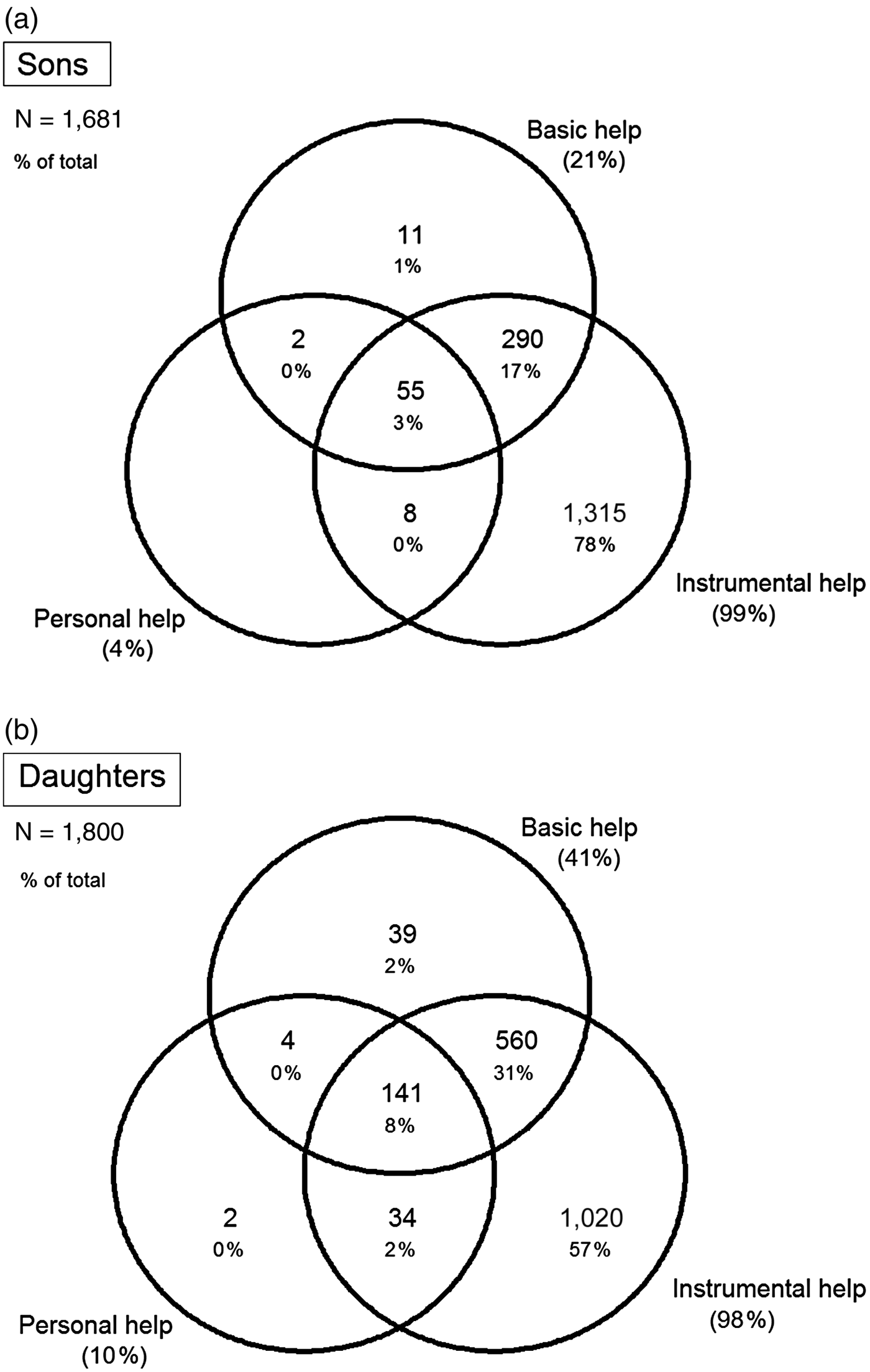
Figure 4 uses the three categories of tasks (basic, personal and instrumental) in order to examine the combinations of types of support provided by adult children to their parents. Among those providing at least one form of support to their parents, more than 98 per cent of both sons and daughters provide instrumental support, and the majority only provide instrumental support (78 per cent of sons and 57 per cent of daughters). The two other types of support show significant gender differences. About 41 per cent of daughters (compared to 21 per cent of sons) provide basic support, and about 10 per cent of daughters (compared to 4 per cent of sons) provide personal support. Looking at the combinations of different types of support provided, about 31 per cent of daughters (compared to 17 per cent of sons) provide both instrumental and basic support. It is, however, significant that if one is providing personal care, they are also likely to be providing other types of care; 8 per cent of daughters and 3 per cent of sons aged 50 were providing all three types of support to at least one surviving parent.
Percentage of combination of types of support provided to parents at age 50 by gender of the children.

Patterns of support exchange between adult children and their older parents
Table 3 shows the relationship between the receipt of support by children earlier in the lifecourse and the provision of support by adult children towards their older parents, beginning to shed light on the extent of reciprocity. Among children who had received support in the past, 57 per cent of sons and 60 per cent of daughters also provided support to their parents later in life. However, even among those children who had not received any support (first row of Table 3), almost half (49 per cent of sons and 47 per cent of daughters) were providing some kind of support to their parents at age 50. Such findings are suggestive of the existence of both altruistic and reciprocal motives in terms of support provision among adult children.
Reciprocity of support between parents and children, by sex of the children

Notes: 1. Support received by children between leaving full-time education and age 42. 2. Support provided at age 50.
Source: National Child Development Study waves 6 and 8, authors’ calculations.
The association between the earlier receipt of support on the later provision of support to parents
The next section investigates the extent to which the earlier receipt of support by children from their parents is associated with the later provision of support by adult children towards their older parents using multivariate analysis. In the first step, the model includes the five types of support received by cohort members before age 42 as predictors (support with accommodation, finance, child care, emotional support and others). These were tested first individually for their association with the outcome variable in order to determine their independent effect, and were then added together in the same model in order to explore their relative importance. In order to disentangle the gender effects observed in the descriptive analysis, separate models were constructed for sons and daughters, which included the same set of control variables.
The independent models for each type of support received (left side of Table 4) indicate that for both sons and daughters, having received support in the past with accommodation, finance and child care was significantly associated with providing support to their older parents at a later point of the lifecourse. For example, among sons who had received support with accommodation, the odds of providing support to their parents were 1.25 times the odds among sons who had not received any support with accommodation; similarly among daughters who had received support with child care, the odds of providing support to their parents were 1.66 times the odds among daughters who had not received such support in the past. The models for ‘other types of support’ show no statistically significant association for any of the sexes, whereas the model for emotional support was only significant for daughters (odds ratio (OR) = 1.30).
Binomial logistic regressions for predicting provision of children's support to parents by sex of the children and past receipt of support from parents

Notes: OR: odds ratio. CI: confidence interval. Ref.: reference category. Models control for marital status, education level, economic status (adult child's and their partner's), self-reported health, living with children, living with parents and housing tenure. 1. Support received between leaving full-time education and age of 42. 2. Maximum age between the parents (if both alive) or age of mother/father if only one is alive.
Source: National Child Development Study waves 6 and 8, authors’ calculation.
Significance levels: * p ⩽ 0.1, ** p ⩽ 0.05, *** p ⩽ 0.01.
The right-hand side of Table 4 shows the results of the model which included all predictors in a single equation simultaneously. When the receipt of different types of support is taken into account simultaneously, it can be seen that only support with accommodation and child care remain significant. For instance, the receipt of support with child care was associated with the later provision of support of parents for both sons and daughters (OR = 1.74 for sons; OR = 1.60 for daughters). For the receipt of support with accommodation, the odds of providing support to parents among sons who had received such support in the past were 1.20 times the odds among sons who had not received such support (1.18 in the case of daughters). In this inclusive model, the variables ‘worries about parents’ and ‘age of the parents’ were also introduced as proxies of the parents’ need of support. Not surprisingly, they are both highly significant for both sons and daughters. The parents’ age is positively associated with the provision of support, thus the older the parents, the higher the probability of adult children providing them with support. Along the same lines, sons and daughters who are worried about their parents are more than twice as likely to provide support as those who are not (OR = 2.84 for sons; OR = 2.91 for daughters).
The association between the type of support received and the type of support provided
The final set of models explores the extent to which the effect of the predictors previously analysed varies when differentiating between the types of care provided to parents as the outcome variable (Table 5). The category of ‘other’ types of support received has been excluded from the list of predictors, since it did not yield statistically significant results in the previous stage of the analysis. The outcome variables in the three models distinguish between personal, basic and instrumental support provided towards one's parents. As before, the regressions were run separately for sons and daughters in order to explore the gender differences in the nature of support provision towards older parents.
Binomial logistic regressions for predicting provision of children's support to parents by type of support provided, sex of children and past receipt of support from parents

Notes: OR: odds ratio. CI: confidence interval. Ref.: reference category. Models control for marital status, education level, economic status (adult child's and their partner's), self-reported health, living with children, living with parents and housing tenure. 1. Support received between leaving full-time education and age of 42. 2. Maximum age between the parents (if both alive) or age of mother/father if only one is alive.
Source: National Child Development Study waves 6 and 8, authors’ calculation.
Significance levels: * p ⩽ 0.1, ** p ⩽ 0.05, *** p ⩽ 0.01.
The results in the top panel of Table 5, show that providing support to parents with personal tasks is not related to the previous receipt of any support from parents. Hence, there are no signs of reciprocity underpinning the provision of support with personal tasks; rather, this finding supports the altruism hypothesis where individuals support their parents even in the absence of previous transfers. By contrast, some degree of reciprocity is evident when examining the predictors of providing basic support to one's parents (middle panel of Table 5). Both sons and daughters who had received support with accommodation in the past (or with child care in the daughters’ case) have a higher likelihood of providing basic support to their older parents. Finally, a similar pattern is observed for the predictors of the provision of instrumental support by sons and daughters, although with higher ORs, indicating a greater degree of reciprocity in the case of instrumental support (lower panel of Table 5). Worrying about one's parents appears to be strongly related to the provision of all types of support towards parents, particularly personal support. For example, among sons who worry about their parents, the odds of providing personal support to their parents are 2.86 times the odds among sons who have no such worries, and the coefficient is almost double for daughters (OR = 5.52). The parents’ age was also significant and positively associated with the provision of support, as observed in the general model in Table 4.
A range of control variables for the three types of support provided to parents show expected patterns and are in line with the gradient of support found so far (Table 6). The provision of support with personal tasks is the least affected by different socio-economic characteristics among the children (both daughters and sons) compared with support provided for basic or instrumental activities. In the case of personal support, daughters provide help independently of any socio-economic variable used, except for those who are already looking after the home or the family (who displayed a higher probability of providing personal support to parents). The daughters’ health status indicates a significant association, with those reporting very good health being more likely to provide personal support than those reporting excellent health.
Binomial logistic regressions for predicting provision of children's support to parents by type of support provided, sex of the children and past receipt of support from parents (odds ratios (OR) of the control variables from the models in Table 4)

Notes: CI: confidence interval. Ref.: reference category. hr: hours.
Source: National Child Development Study waves 6 and 8, authors’ calculation.
Significance levels: * p ⩽ 0.1, ** p ⩽ 0.05, *** p ⩽ 0.01.
Marital status only has an effect for daughters when providing personal and instrumental support, as daughters who either are currently or were in a partnership in the past are less likely to provide such support to their parents than those who are single never married. The provision of any type of support among sons varies according to their economic activity status. Looking after their home/family significantly increases the sons’ likelihood of helping their parents with personal tasks compared with working full-time, while working part-time is associated with the provision of basic and instrumental help among sons. By contrast, looking after the home/family increased the daughters’ chances of providing personal help only compared to other types of help. The employment status of one's partner was included in all models using the individuals with no partner as the reference category, however, only the model for instrumental help yielded significant results. Both sons and daughters whose partner works full-time are more likely to provide support to their parents with instrumental tasks than those without a partner (OR = 1.71 for sons and 1.46 for daughters). In terms of socio-economic characteristics, different education levels do not appear to affect the provision of personal support to parents, however, higher education was associated with lower chances of providing basic support among sons only, and with lower chances of providing instrumental support among both sons and daughters. Finally, in comparison to those owning their home outright, paying a mortgage on one's home and renting one's home were both associated with a lower likelihood of providing basic and instrumental help among sons, while among daughters it was only renting which was associated with a lower likelihood of providing instrumental help.
Discussion
Adult children are one of the main sources of informal care provided towards older individuals, therefore understanding intergenerational exchanges of support between parents and their adult children is key to determining the reasons behind adult children's provision of care and so informing future projections of such care. Previous studies have usually taken into account only one or a limited range of types of support in the exchange of support between parents and adult children, focusing on the exchange of support at one point in time, particularly in the British context (Alessie, Angelini and Pasini Reference Alessie, Angelini and Pasini2014; Grundy Reference Grundy2005; Grundy and Henretta Reference Grundy and Henretta2006). This research builds on previous studies and adds new evidence in terms of understanding the exchange of support from a lifecourse perspective. The analysis examined the patterns of support provided early in life from parents to their children and, at a later stage, from adult children towards their older parents. The research also investigated whether different types of support received in the past are related to the adult children's likelihood of providing support (and if so, of different types) to their parents during mid-life. To our knowledge, this is the first research in the UK that takes into account exchanges between parents and children that have taken place for a period of up to 25 years, and which investigates an extensive range of types of support both received and provided. Overall, the results indicate support for both the altruism and reciprocity hypotheses, albeit with variations in terms of the gender of the children and the types of support provided to parents. The results are summarised in the following four conclusions, which are discussed in the context of existing literature in this area.
Firstly, and addressing the first research question posed in this paper, the analysis found that around three-quarters of children had received at least one type of support from their parents earlier in life, and 55 per cent were providing support to parents at the age of 50. These findings point to higher levels of support exchange than found previously, which could be explained by the longitudinal nature of the data used in this paper compared to previous research (Grundy and Henretta Reference Grundy and Henretta2006), or by the short-term gaps of the exchange of support between parents and adult children used in other studies (Geurts, Poortman and van Tilburg Reference Geurts, Poortman and van Tilburg2012; Henretta et al. Reference Henretta, Hill, Li, Soldo and Wolf1997). Through the analysis of the types of support received by children, it was found that support with finances, accommodation and child care were the most predominant forms of support received, while emotional and ‘other’ types of support were less prevalent. Such results are in line with Henretta et al. (Reference Henretta, Hill, Li, Soldo and Wolf1997) who found financial support received by children to be important in the USA, and with Geurts, Poortman and van Tilburg's (Reference Geurts, Poortman and van Tilburg2012) research, which highlighted the importance of older parents providing child care for grandchildren. The gender differences found in the results were also in line with existing literature (Alessie, Angelini and Pasini Reference Alessie, Angelini and Pasini2014; Geurts, Poortman and van Tilburg Reference Geurts, Poortman and van Tilburg2012); sons were more likely to have received financial and accommodation support, whereas daughters were more likely to have received child care and emotional support. Nearly half of the children had received a combination of the three main types of support, which indicates a significant contribution on the part of the parents to their adult children's lives between leaving full-time education and entering their forties.
Most of the support provided from adult children aged 50 to their parents was related to instrumental tasks (e.g. transportation, shopping, gardening) and to a lesser extent with basic and personal tasks. Nevertheless, a significant proportion of mid-life children, especially daughters, were providing more intense types of support (e.g. three out of ten daughters helped with cooking, and one in ten helped with dressing, eating or bathing), as was shown in existing research (Henz Reference Henz2009; Silverstein, Gans and Yang Reference Silverstein, Gans and Yang2006). The combinations of support provided by adult children at this stage of the lifecourse are limited, and mainly found between instrumental and basic support, although 8 per cent of daughters and 3 per cent of sons were providing instrumental, basic and personal support simultaneously.
The second key finding which addresses the second research question relates to the effect of previously received support on the probability of providing support to one's parents in later life, which is an area where this paper contributes original evidence. When considering the separate models of factors associated with the provision of different types of support, there was evidence of reciprocity amongst both daughters and sons, especially with regard to the past receipt of accommodation, finance or child-care support. However, when all types of support received were considered as predictors in the same model, evidence of reciprocity was found only in the case of accommodation and child-care support received by sons, and child-care support received by daughters. These results offer partial support to previous findings in this area. For example, Geurts, Poortman and van Tilburg (Reference Geurts, Poortman and van Tilburg2012) found signs of reciprocity among sons when receiving child care by their parents, but not among daughters, whereas the analysis here indicates a strong relationship for both genders. This could be due to the differences in the time-gap between receiving the support and providing it; or it could be due to the definitions of support types used and understood by the respondents. For example, this study differentiates between different types of support provided, rather than merging all support with instrumental tasks, as was the case in the study by Geurts, Poortman and van Tilburg (Reference Geurts, Poortman and van Tilburg2012). Moreover, the data-set employed in this paper takes into account a longer period of time in terms of receiving support from one's parents, which may be unmasking more nuanced patterns of support exchange.
An additional point where this paper adds a unique contribution to the existing literature is the two-step analysis of the relationship between support received by children and support provided towards older parents, which allows the investigation of the effect of particular types of support in either direction. This distinction is important not only due to the gender effects observed in this analysis, supported by existing research (Grundy and Read Reference Grundy and Read2012; Silverstein, Gans and Yang Reference Silverstein, Gans and Yang2006), but also due to the relative importance of particular types of support provided or received in the context of individuals’ lifecourses (e.g. the importance of child care received by younger adults and the importance of personal support received by older parents). When measuring the effect of different types of support received in the past on the provision of any type of support towards one's parents, the findings were compatible with previous studies. For example, our analysis found that emotional support was more important for daughters than for sons, which was also identified by Silverstein et al. (Reference Silverstein, Conroy, Wang, Giarrusso and Bengtson2002). However, once all types of support received were examined in the same model, the effect of emotional support received (by daughters or sons) disappeared.
The third key finding contributes to our understanding of the key theories which have been used in this area to explain intergenerational support exchange within families. The analysis in this paper shows evidence supporting both the reciprocity and altruism hypotheses, depending on the type of support received and provided. In addition to providing empirical evidence of support exchange across the lifecourse, the disaggregation of support by different types allows us to contribute to this substantive area from a conceptual viewpoint. More specifically, adult children, both sons and daughters, were found to provide support towards their parents with personal tasks independently of having received support in the past, which clearly supports the altruism hypothesis. Interestingly, support for altruism was found amongst among sons, whereas similar studies which analyse general and/or instrumental types of support provided have previously found some degree of reciprocity (Geurts, Poortman and van Tilburg Reference Geurts, Poortman and van Tilburg2012). The findings in this paper highlight that sons are also altruistic when the provision of support to their parents relates to more demanding tasks. This implies that detailed information on the nature of more demanding tasks is required in order to conduct more nuanced research on intergenerational exchange in the future, e.g. providing greater insight into the needs of the support recipient (Alessie, Angelini and Pasini Reference Alessie, Angelini and Pasini2014; Grundy Reference Grundy2005).
The model findings on basic support indicate that sons who received support with accommodation, and daughters who received support with accommodation and child care, are more likely to provide support to their parents in comparison with those who had not received such support from their parents in the past. The provision of instrumental support, which constitutes the majority of support provided to parents at this stage of the lifecourse, shows the strongest relationship with the earlier receipt of support with accommodation and child care by sons; and with child care by daughters. Overall, the results in this paper are suggestive of a ‘gradient of exchange of support’ that depends on how demanding the support provided to parents is. On the one hand, the provision of personal support by adult children is not based on the receipt of support from their parents previously, which is in line with the altruism hypothesis and may directly point to the children's filial sense of obligation, especially among daughters or daughters-in-law (Antonucci et al. Reference Antonucci, Birditt, Sherman and Trinh2011; Ikkink, Tilburg and Knipscheer Reference Ikkink, Tilburg and Knipscheer1999; Lee, Netzer and Coward Reference Lee, Netzer and Coward1994). On the other hand, support which is relatively less demanding (i.e. instrumental support) does appear to correspond with the receipt of support earlier in life and thus is in line with the reciprocity hypothesis.
Finally, the analysis in this paper has introduced a new dimension to the modelling of support exchanges through two variables which are used as proxies for the parents’ circumstances and need for support, reflected in adult children's worries about their parents, and in the parental age. The added value of these variables is observed across all models, as they are associated with an increased likelihood of providing support to one's parents, by five times in some cases. To our knowledge, this is the first time that the combination of such indicators has been included in the analysis of support exchanges across different generations.
Although this analysis makes a unique contribution to the existing literature in the area of intergenerational support exchanges within families, nevertheless certain limitations of the research should be taken into account when interpreting these results. The first limitation relates to the issues of missing data and attrition which have affected the NCDS, as is the case with most longitudinal surveys. Previous analyses of this data-set have observed that attrition has been higher for respondents who were male, of a lower socio-economic background and with lower educational qualifications (Hawkes and Plewis Reference Hawkes and Plewis2004), which implies that our paper might be under-representing individuals with these specific characteristics. This caveat is particularly important for the paper's findings on the role of education and housing tenure in the provision of basic and instrumental help, especially among sons.
A second limitation of the paper relates to the accuracy and quality of retrospective data collected from adult children regarding the support they received from their parents earlier in the lifecourse. The issue of recall is a ‘widely recognised disadvantage’ in retrospective cohort studies (Elliott Reference Elliott2005: 66–7), including the NCDS (Brown Reference Brown2014), and may have had an impact on the responses of the cohort members. However, recall bias tends to be more prevalent when respondents are asked to identify particular dates, e.g. relating to episodes of employment or unemployment (see Dex and McCulloch Reference Dex and McCulloch1998), which is not the type of data used in the present paper. Thirdly, the analysis was not able to control for unobserved heterogeneity in areas such as family values and the proximity between the adult children and their parents, the latter being recorded in the NCDS until the children were aged 16 only. However, building on existing research, the use of the children's education and co-residence with the parents as control variables goes some way towards addressing this gap (Silverstein et al. Reference Silverstein, Conroy, Wang, Giarrusso and Bengtson2002), as does the inclusion of the proxy indicators for parental needs (age of parents and whether the child worries about their parents) which are partly compensating for the lack of a variable reflecting the parents’ health status. Fourthly, when exploring why children provide care for their parents, other alternatives of caring arrangements may affect the children's decision, such as the receipt of formal state or paid support by the older parents or the provision of informal care by siblings. Unfortunately, information on such competing sources of support was not available in the analysed data-set, although research on the balance between different sources of care received by older people highlights its importance (see e.g. Vlachantoni et al. Reference Vlachantoni, Shaw, Evandrou and Falkingham2015).
Overall, the findings presented in this paper emphasise the importance of examining intergenerational exchange between parents and adult children using longitudinal data, as well as detailed information on the types of support received and provided. The paper serves as a reminder that altruistic or reciprocal responses to the demand for providing informal care to one's older parents can vary significantly depending both on the type of care required and on past exchanges of support within families. Broadly speaking, parents who support their children beyond their adolescence might expect to receive more support with instrumental tasks as they grow older; nevertheless support with other types of tasks might be dependent on a range of other factors, including most importantly parental need.




 Open access

