





Over the past few decades, overweight and obesity have emerged as major global public health concerns(1–Reference Shafiee, Nakhaee and Bahri3). According to recent estimates, the global prevalence of overweight and obesity among children, adolescents and adults has increased markedly. Although the prevalence rates differ across countries and regions, they have generally increased, ranging from approximately one quarter to one-half depending on the specific area(Reference Ng, Dai and Cogen4–7). In parallel, university students – a population undergoing critical lifestyle transitions, are experiencing rising rates of excess weight. A recent meta-analysis estimated that 24 % of medical students globally are overweight or obese, with prevalence steadily increasing over time and disproportionately higher among male students(Reference Shafiee, Nakhaee and Bahri3).
While much of the early burden of obesity was borne by high-income countries, developing regions are now witnessing notable increases in children and adolescent populations. Studies from sub-Saharan Africa report overweight or obesity prevalences approaching 30 % among undergraduates(Reference Telleria-Aramburu and Arroyo-Izaga8) and a multi country survey of twenty-two nations found combined overweight or obesity rates exceeding 20 % in several low- and middle-income contexts. In Vietnam, isolated investigations at individual institutions have documented prevalences ranging from approximately 11 % to 24 %(Reference Tang, Michael and David5,Reference Nguyen, Nguyen and Ngo9,Reference Nguyen, Hong and Hoang10) . However, no national or multicentre study has systematically assessed the burden of excess weight across Vietnamese universities.
This emerging trend among university students coincides with substantial lifestyle changes during higher education. The transition to university life often entails increased sedentary behaviour daily sitting time averaging 8 h or more(Reference Lee and Kim11) – shifts towards energy dense, high fat and high sugar diets(Reference Telleria-Aramburu and Arroyo-Izaga8) and elevated academic stress that may disrupt sleep patterns and coping behaviours(Reference Monserrat-Hernández, Checa-Olmos and Arjona-Garrido12). These factors synergistically contribute to weight gain during the formative university years.
Understanding the dietary, behavioural and socio-economic characteristics associated with overweight and obesity among Vietnamese university students is essential. Examining factors such as meal patterns, physical activity, sleep duration and financial constraints may inform the development of targeted interventions to address this growing public health concern and its potential long-term health implications. Therefore, this study aims to identify the prevalence of overweight and obesity among Vietnamese university students and to describe some associated factors.
Methods
Study design
This was a cross-sectional descriptive and analytical study conducted to estimate the prevalence of overweight and obesity and to identify associated factors among Vietnamese university students.
Participants
The study targeted undergraduate students aged 18–25 years enrolled in universities that offer training in key national occupational groups, as defined by Decision No. 1769/QĐ-LĐTBXH of the Ministry of Labour, Invalids and Social Affairs of Vietnam. Inclusion criteria were (1) students aged 18–25 years and (2) agreeing to participate in the study with signed informed consent. Pregnant students were not eligible for participation, and no pregnant participants were included in the study sample. Students with mobility impairments or loss of lower limbs were excluded from the study.
Data were collected from ten universities located in Northern, Central and Southern Vietnam, representing major academic disciplines including medicine, engineering, education, architecture and construction, finance and banking, agriculture, economics, law and social sciences.
Sample size and sampling
The sample size was calculated using the formula for estimating a population proportion with relative precision: $n ={{z^{2}_{1 - \alpha /2}} \frac{\,p(1 - p)}{(p\,.\varepsilon )^{2}}}$
where
-
• n: Minimum required sample size
-
• p: Estimated prevalence; in this study, we used P = 0·19, based on the 2020 report from the Ministry of Health on the prevalence of overweight and obesity(13)
-
• ϵ: Relative precision, set at 0·1 in this study
-
• z: Confidence level coefficient; with α = 0·05, z(1–α/2) = 1·96
Based on these parameters, the minimum calculated sample size was 1640 participants. An additional 20 % was added to account for potential non-response or dropout among those who initially agreed to participate. Therefore, the final sample size was set at 2000 students.
Sampling method
Participants were selected using simple random sampling from the official student lists provided by the universities. Each participating university was requested to randomly invite 200–300 students to participate in the survey. The student lists were drawn up from academic departments offering nationally prioritised occupational training programmes.
In practice, a total of 2000 undergraduate students from ten universities were included in this study, comprising 910 males (45·5 %) and 1090 females (54·5 %). The participating institutions were Hanoi Medical University (n 196, 9·8 %), Ho Chi Minh City University of Education (n 167, 8·4 %), Banking Academy (n 195, 9·8 %), Thai Nguyen University of Agriculture and Forestry (n 186, 9·3 %), Binh Duong University (n 184, 9·2 %), University of Economics – Vietnam National University (n 183, 9·2 %), University of Education, University of Danang (n 197, 9·9 %), Hanoi University of Science and Technology (n 205, 10·3 %), Vietnam Youth Academy (n 129, 6·5 %) and National University of Civil Engineering (n 358, 17·9 %).
Data collection and measuring
Data were collected using a standardised, structured questionnaire and anthropometric tools. The following information was obtained:
-
Socio-demographic characteristics: Age, gender, marital status, place of residence (urban/rural), academic year, academic major (categorised into five groups), parental education levels and household economic status.
-
Anthropometric measurements: Body weight, height, waist circumference and hip circumference were measured following WHO standardised procedures. All anthropometric indices were measured directly by trained staff using the same equipment to minimise measurement errors, including a Tanita BC-541N digital scale for weight, a SECA 213 stadiometer for height and a SECA 201 measuring tape for circumferences. Prior to data collection, all assessors received standardised instructions on anthropometric measurement procedures to ensure consistency. Instruments were checked and calibrated regularly to maintain measurement accuracy throughout the study period.
BMI was calculated as weight (kg)/height² (m²) and classified according to WHO Asia-Pacific criteria(Reference Tham, Ghani and Cua14,15) : Underweight: < 18·5 kg/m2; normal: 18·5–< 23·0 kg/m2; overweight: 23·0–24·9 kg/m2; obese: ≥ 25·0 kg/m2.
-
Waist:hip ratio (WHR): was calculated and classified using WHO cut-offs: WHR ≥ 0·90 for males and ≥ 0·85 for females indicated central obesity(16). In addition, WHR was included in the analysis as an indicator of central adiposity, reflecting body fat distribution, which may provide complementary information to BMI on abdominal fat accumulation and related metabolic profiles(Reference Sweatt, Garvey and Martins17).
-
Physical activity: In this study, we used the Global Physical Activity Questionnaire, developed by the WHO, to assess physical activity across three domains: work, transport and leisure. The questionnaire consists of sixteen items and captures both the frequency and duration of physical activities. These activities are converted into MET-minutes per week using standard metabolic equivalent values eight METs for vigorous-intensity and four METs for moderate-intensity activities. Based on total MET-minutes/week, physical activity levels are categorised as low (< 600 MET-min/week), moderate (600–2999 MET-min/week) or high (≥ 3000 MET-min/week)(18). The GPAQ also includes a measure of sedentary behaviour (sitting time), providing a comprehensive overview of an individual’s physical activity profile. The tool has been validated and is widely used for population-level surveillance, including in developing countries.
Data analysis
Descriptive statistics were used to summarise participants’ socio-demographic characteristics and the prevalence of overweight and obesity. Chi-square tests were applied to examine associations between categorical variables; however, when the expected frequency in any cell was less than 5, Fisher’s exact test was used as an alternative. For comparisons of continuous variables between two groups, independent t tests were conducted if the data were normally distributed. In cases where the assumption of normality was not met, appropriate non-parametric tests such as the Mann–Whitney U test were employed.
Multivariable logistic regression models were constructed to examine factors independently associated with overweight and obesity. Covariates were selected based on prior literature, biological plausibility and their potential confounding effects on the associations examined. Statistical significance was defined as P value < 0·05.
Results
Characteristics of the study participants
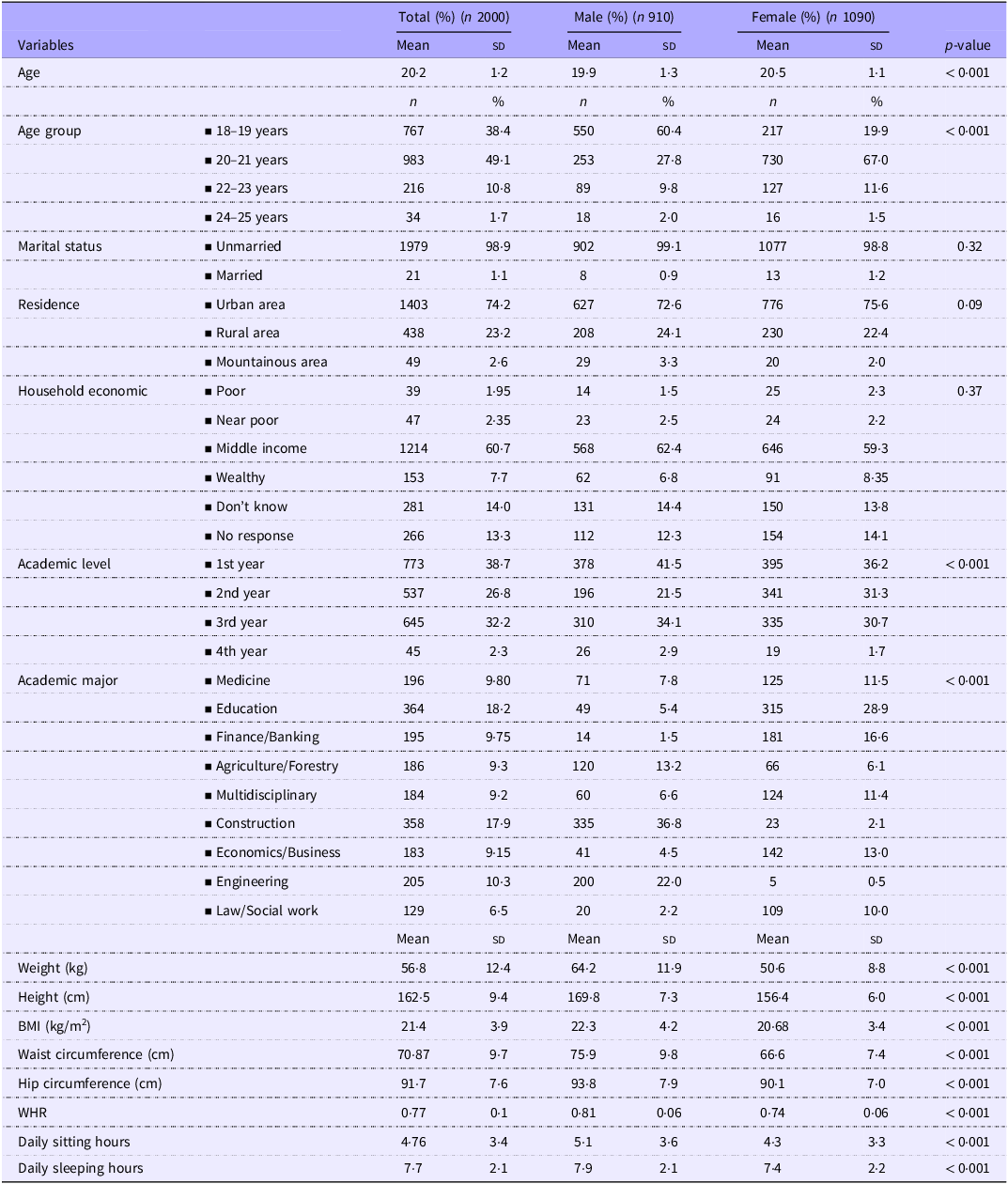
Among the 2000 university students included in the study, the mean age of the participants was 20·2 (sd 1·2) years, with female students being slightly older than male students (20·5 (sd 1·1) v. 19·9 (sd 1·3) years, P < 0·001).
Male students had higher average body weight (64·2 (sd 11·9) v. 50·6 (sd 8·8) kg), height (169·8 (sd 7·3) v. 156·4 (sd 6·0) cm), and body mass index (22·3 (sd 4·2) v. 20·7 (sd 3·4) kg/m²) than female students (all P < 0·001). Waist circumference, hip circumference, and waist:hip ratio were also significantly greater among males.
In terms of lifestyle factors, male students reported longer daily sedentary time (5·1 (sd 3·6) v. 4·3 (sd 3·3) h) and slightly longer sleeping duration (7·9 (sd 2·1) v. 7·4 (sd 2·2) h) compared with female students (all P < 0·001). No significant sex differences were observed in marital status, place of residence, economic background or late-night meal consumption (Table 1).
General characteristics of study participants

Nutritional status and related factors
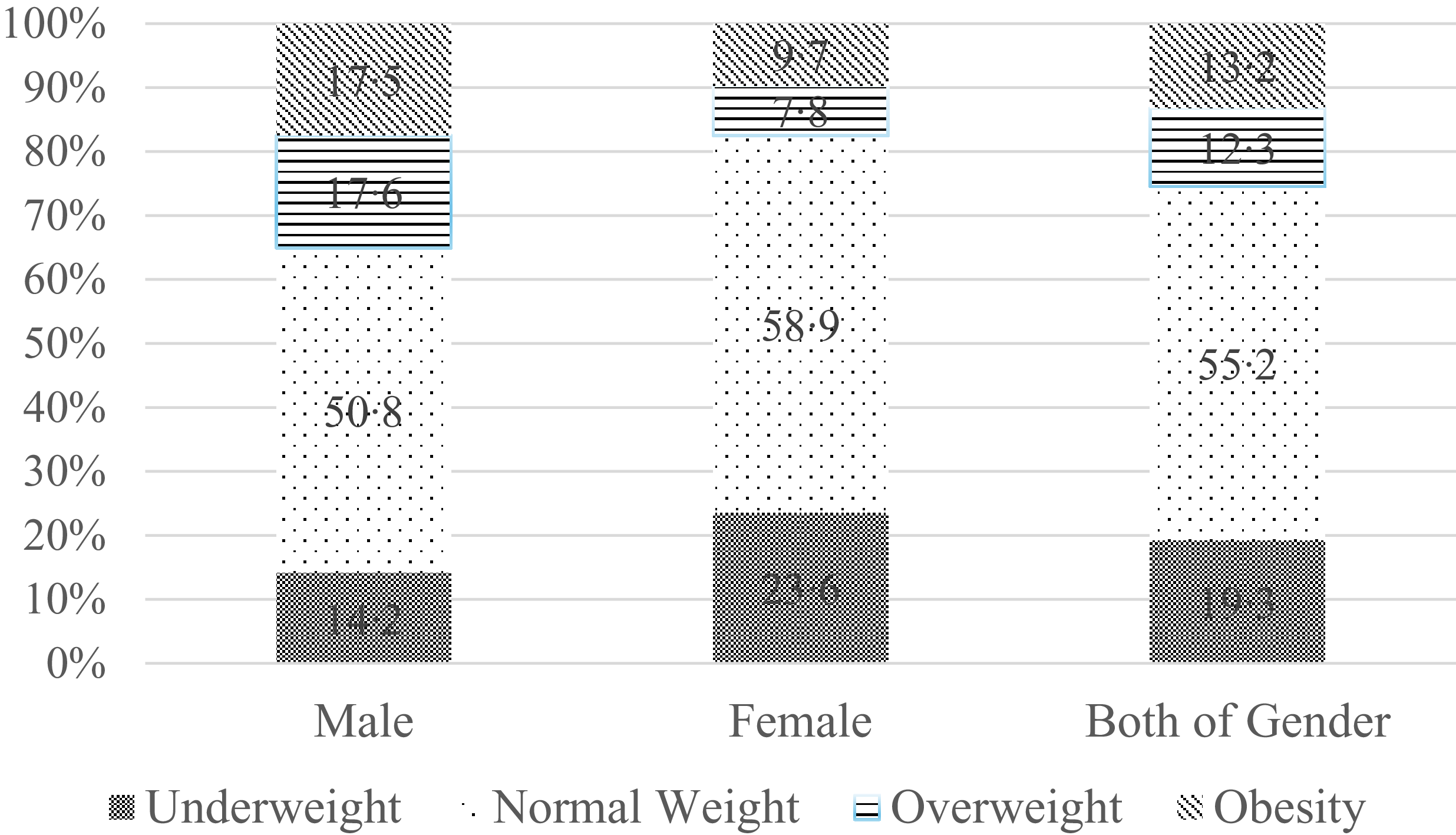
Figure 1 shows that overall prevalence of overweight and obesity among the study population was 25·5 %, with overweight accounting for 12·3 % and obesity 13·2 %. Males had a notably higher combined rate of overweight and obesity (35·1 %) compared with females (17·5 %). In contrast, underweight was more common among females (23·6 %) than males (14·2 %), highlighting significant gender differences in nutritional status.
Nutritional status of students by gender.

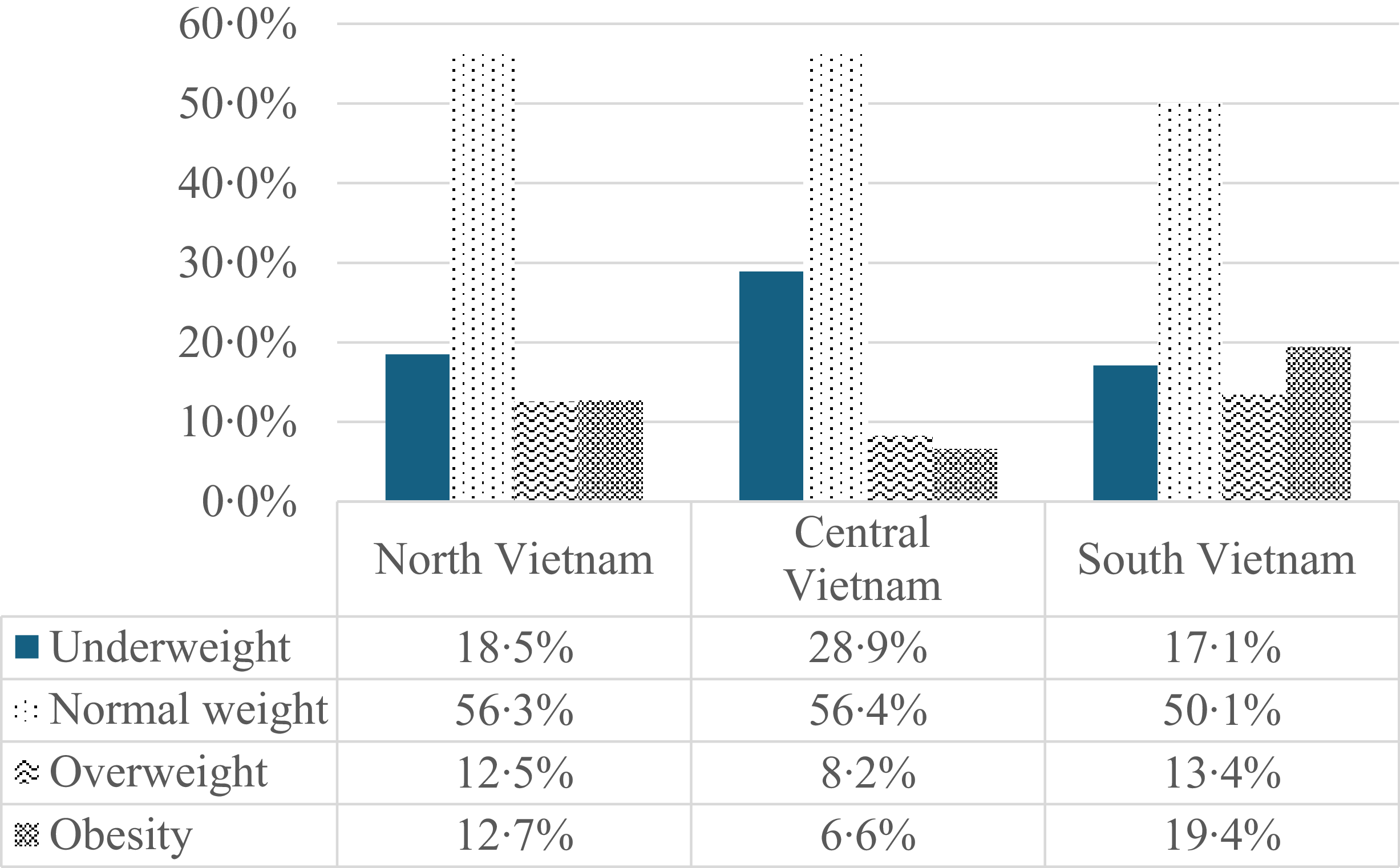
Figure 2 highlights the double burden of malnutrition among Vietnamese university students across the three regions. In Central Vietnam, underweight was most prevalent (28·9 %), while overweight and obesity remained relatively low (8·2 % and 6·6 %), indicating a predominance of undernutrition. In contrast, Southern Vietnam exhibited the highest rates of overweight (13·4 %) and obesity (19·4 %), reflecting a growing challenge of overnutrition. Northern Vietnam showed a more balanced distribution, with notable proportions of both underweight (18·5 %) and overweight or obesity (12·5 % and 12·7 %).
Nutritional status of students by region.

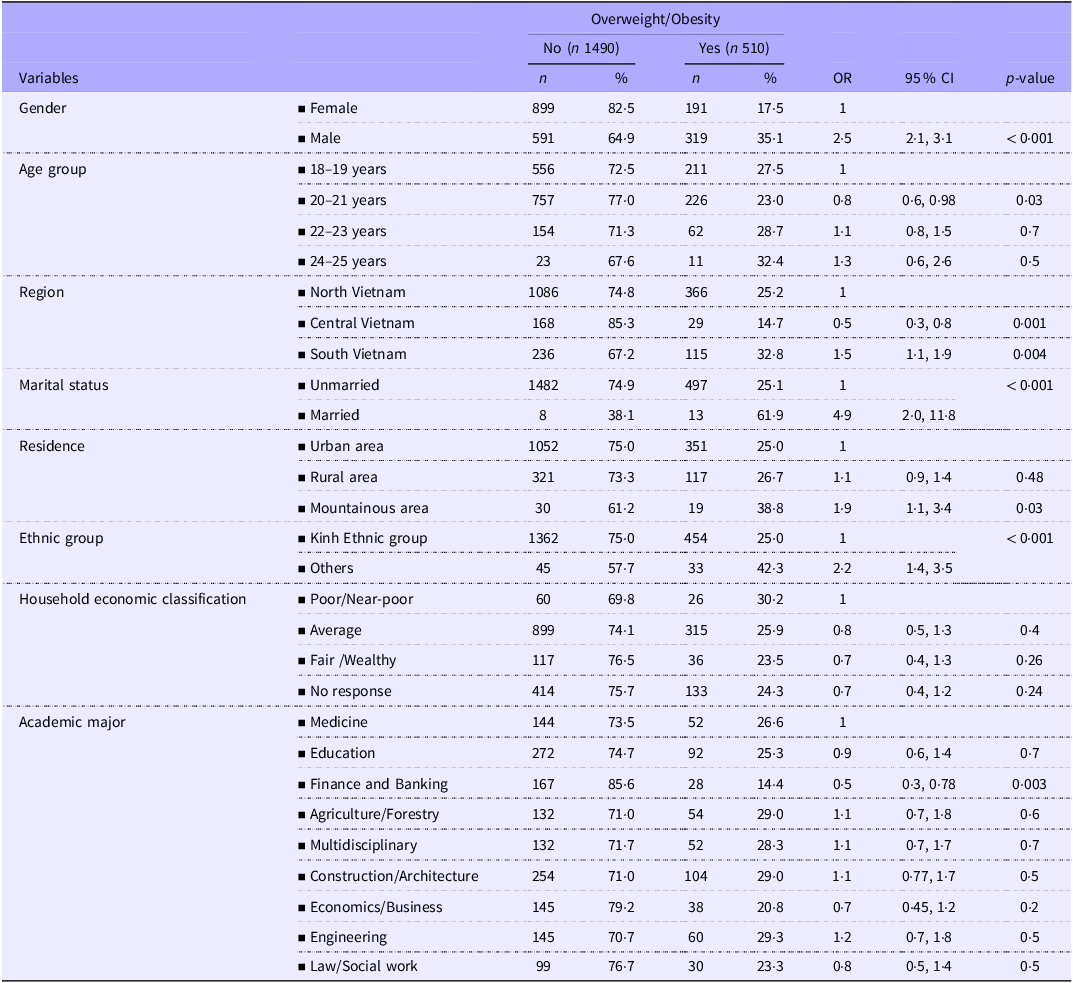
Table 2 presents the associations between socio-demographic characteristics and overweight or obesity. Male students showed markedly higher odds than female students (OR = 2·54, 95 % CI: 2·1, 3·1). Students aged 20–21 years had slightly lower odds compared with those aged 18–19 years (OR = 0·78, P = 0·03), whereas no significant differences were observed in older age groups.
Association between overweight/obesity and students’ socio-demographic characteristics

Regional differences were observed, with lower odds among students in Central Vietnam (OR = 0·50, P = 0·001) and higher odds among those in Southern Vietnam (OR = 1·45, P = 0·004) compared with students in the North. Married students and ethnic minority students were more likely to be overweight or obese, while household economic status was not significantly associated. Among academic majors, only students in finance and banking showed lower odds (OR = 0·50, P = 0·003).
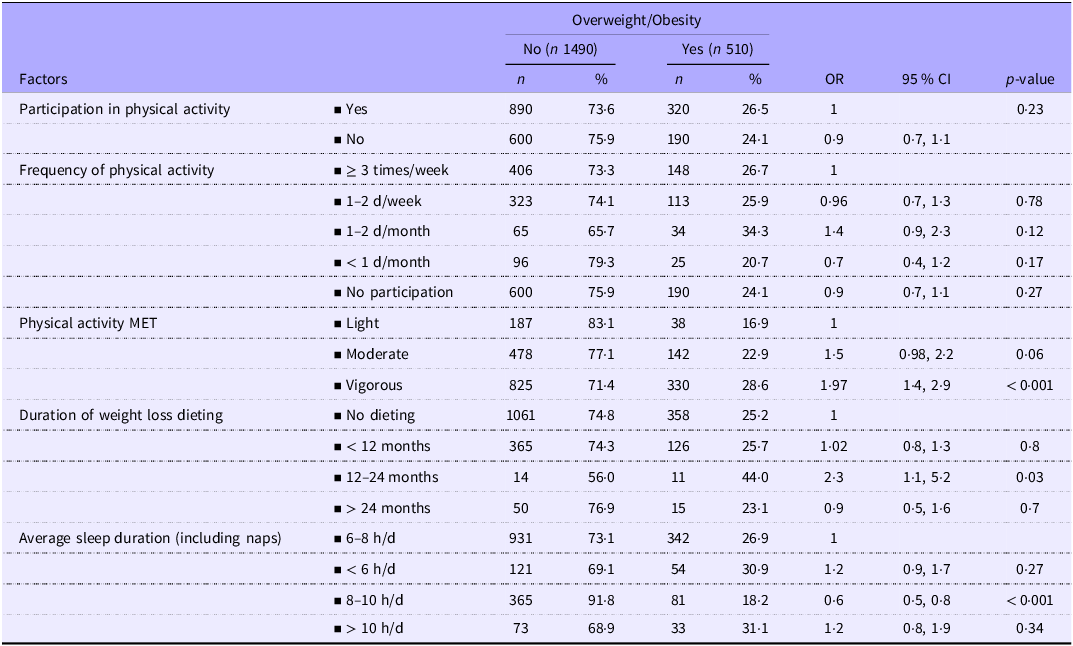
Table 3 summarises the associations between lifestyle factors and overweight or obesity. Overall, participation in physical activity and activity frequency were not significantly associated with overweight or obesity. However, students reporting vigorous physical activity showed higher odds compared with those engaging in light activity (OR = 1·97, 95 % CI: 1·4, 2·9).
Associations of lifestyle habits and physical activity with overweight and obesity

Students who had followed a weight loss diet for 12–24 months were more likely to be overweight or obese (OR = 2·3, P = 0·03), whereas no significant associations were observed for other dieting durations. In addition, students sleeping 8–10 h per day showed lower odds compared with those sleeping less than 6 h (OR = 0·60, P < 0·001).
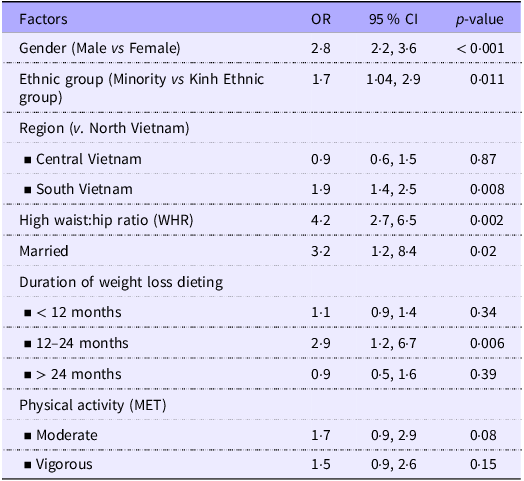
Table 4 presents the results of the multivariable logistic regression analysis. After adjustment for potential confounders, male sex remained strongly associated with overweight and obesity (OR = 2·8, 95 % CI: 2·2, 3·6). Higher odds were also observed among ethnic minority students (OR = 1·7, P = 0·011), married students (OR = 3·2, P = 0·02) and students in Southern Vietnam compared with those in the North (OR = 1·9, P = 0·008).
Determinants of overweight and obesity: multivariable logistic regression analysis

A high waist:hip ratio was one of the strongest determinants (OR = 4·2, P = 0·002). Weight loss efforts lasting 12–24 months remained independently associated with overweight or obesity (OR = 2·9, P = 0·006). Although vigorous physical activity showed a positive association, this relationship was not statistically significant in the adjusted model (OR = 1·5, P = 0·15).
Discussion
Prevalence of overweight and obesity
This multicentre study involving 2000 university students from ten universities across Northern, Central and Southern Vietnam revealed a combined prevalence of overweight and obesity of 25·5 %, signalling a significant public health concern. This is among the first multicentre studies in Vietnam to comprehensively assess the nutritional status of university students across different geographic regions and nationally prioritised occupational training fields. The findings provide important baseline data for future interventions and policymaking aimed at addressing overweight and obesity in young adults. In the present study, overweight and obesity were defined using the WHO Asia-Pacific BMI classification (overweight ≥ 23 kg/m² and obesity ≥ 25 kg/m²). This approach is supported by evidence showing that Asian populations tend to have higher body fat percentages and develop cardiometabolic risks, including type 2 diabetes and hypertension, at lower BMI levels compared with Western populations. The WHO Expert Consultation concluded that health risks in Asian populations increase progressively from BMI 23 kg/m² and recommended lower BMI thresholds for public health action (WHO Expert Consultation, 2004)(15). Consistently, epidemiological data demonstrate that Asian individuals exhibit a higher prevalence of diabetes at BMI levels between 23 and 24·9 kg/m² compared with non-Hispanic White populations(Reference Hsu, Araneta and Kanaya19). Therefore, application of the Asia-Pacific criteria in Vietnamese young adults may allow earlier identification of individuals with elevated health risk and support timely preventive interventions.
In comparison with other populations in Vietnam, the observed prevalence of overweight and obesity among university students (25·5 %) is slightly higher than the estimated combined prevalence of excess weight among Vietnamese adults (approximately 20·3 % based on pooled national data)(Reference Phuc, Duc and Quynh Chi20). This figure is comparable to the global estimate of 24 % among medical students reported in a recent meta-analysis(3) and aligns with findings from Peltzer et al., who reported a 22 % prevalence of excess weight in university students across twenty-two countries(Reference Peltzer, Pengpid and Samuels21). In the USA, the situation is more critical, with nearly 44 % of college students identifying themselves as overweight or obese, and about one-third falling specifically into the obesity category(22). Additional studies from various USA cities report obesity prevalence among university students ranging from 18 % to 31 %(Reference Barrera, Chacon and Terrazas23). In Europe, the 2022 WHO Regional Obesity Report indicated that 59 % of the population is overweight or obese (63 % in men and 54 % in women)(7). Among university students, European studies show a prevalence range of 13 % to 39·5 %, with consistently higher rates among male students(Reference Szemik, Zieleń-Zynek and Szklarek24–Reference Šimunović, Mrčela and Karin27). Asian countries demonstrate considerable heterogeneity, largely reflecting differences in urbanisation and economic status. Studies in Saudi Arabia reported 17·6 % overweight and 6·9 % obesity(18). In Malaysia, rates among medical students were from 19·5 % to 30 % overweight and obesity(Reference Khairul Azhan, Abdul Jalil and Syed Putera28–Reference Ann, Galvan and Sriram30). In conclusion, the global prevalence of overweight and obesity among university students typically ranges from 20 % to 40 %(Reference Ilić, Pang and Vlaški26,Reference Štefan, Čule and Milinović31) , representing a growing and urgent public health challenge across diverse settings.
Some factors related to overweight and obesity
Gender differences in overweight and obesity were notable in this study. The prevalence was 35·1 % in male students, more than double that in females (17·5 %). Multivariate analysis revealed that male students were 2·8 times more likely to be overweight or obese than their female counterparts. Our findings are consistent with those reported in international studies. Across diverse cultural and socio-economic contexts, male university students consistently exhibit higher rates of overweight and obesity than their female peers. For example, in a cross-sectional study of 615 students at Kuwait University, the combined prevalence of overweight and obesity was 52·5 % in males v. 32·0 % in females (28·7 % overweight and 23·8 % obese in men v. 19·9 % overweight and 12·1 % obese in women; P < 0·001)(Reference Alkazemi32). Similarly, at Suranaree University of Technology in Thailand, first-year male students were 1·48 times more likely to be overweight (adjusted OR = 1·48, 95 % CI 1·18, 1·86) and 1·28 times more likely to be class-I obese (adjusted OR = 1·28, 95 % CI 1·02, 1·61) compared with females; conversely, underweight prevalence was significantly higher among women (23·98 % v. 16·37 %; P < 0·001)(Reference Subhaluksuksakorn, Sinjariyanon and Pimsaran33). A global meta-analysis of medical students reported similar gender disparities, with pooled overweight or obesity prevalence of 24 % overall but markedly higher in men (30 %) than women (18 %)(Reference Shafiee, Nakhaee and Bahri3). These patterns likely reflect a combination of physiological and behavioural factors: male students tend to consume larger portions of animal protein and energy-dense foods and engage in less health-seeking behaviour, while female students despite sometimes poorer dietary quality often adopt restrictive eating and body-control practices that lower measured BMI(Reference Alkazemi32). Notably, the double burden of malnutrition among female students characterised by coexisting high underweight and rising obesity emerges in multiple regions, underscoring the need for gender sensitive interventions. Gender differences in hormonal regulation, body composition and societal norms around body image further modulate these trends. In summary, the global evidence indicates that university aged men tend to have a higher prevalence of overweight and obesity compared with women, whereas women face a dual risk of both under and overnutrition. Tailored public health strategies such as male focused nutrition education addressing portion sizes and female focused programmes supporting healthy weight maintenance are essential to address these gender-specific vulnerabilities in student populations.
In addition to BMI, waist:hip ratio reflects central fat distribution and abdominal adiposity, which have been shown to be closely related to metabolic and cardiovascular profiles. Although correlated with BMI, WHR provides complementary information on body fat distribution and visceral fat accumulation that may not be fully captured by BMI alone. Therefore, the inclusion of WHR in multivariable models allowed a more comprehensive assessment of body composition among university students(Reference Mäkinen, Zhao and Ihanus34,Reference Khan35) .
This study identified an intriguing association between the prevalence of overweight and obesity and the geographic regions of Vietnam. Southern Vietnam, represented by Ho Chi Minh City, exhibited the highest combined prevalence of overweight and obesity at 32·8 %. This higher prevalence may be related to rapid urbanisation, increased disposable income, greater exposure to energy-dense, Westernised diets, prolonged sedentary behaviours and academic stress. In contrast, Central Vietnam recorded the lowest prevalence of excess weight (14·8 %) but the highest rate of undernutrition (28·9 %). Northern Vietnam presented a dual burden, with both underweight (18·5 %) and overweight or obesity (25·2 %) being substantial, highlighting the coexistence of under and overnutrition challenges within the same population. Similar nutritional divides have been observed in other low- and middle-income countries, where urban areas face rising obesity due to lifestyle transitions, while rural or economically disadvantaged regions continue to struggle with undernutrition(Reference Popkin36). This pattern reinforces the urgency of regionally tailored policies in Vietnam, moving beyond one-size-fits-all strategies. National nutrition programmes should adopt integrated, dual-action approaches that simultaneously address undernutrition and overweight or obesity through food system reform, school-based interventions and context-specific public health messaging(37). Lessons from countries such as Latin America and the Caribbean where sugar-sweetened beverage taxes and school nutrition regulations have been implemented highlight effective strategies for addressing the double burden of malnutrition(Reference Popkin and Reardon38).
In addition, marital status emerges as a significant correlation of overweight and obesity among young adults, including university populations. In our study, students who were married had significantly higher odds of being overweight or obese compared with unmarried students (OR = 3·2). A comprehensive meta-analysis of twenty-four studies encompassing 369 499 participants reported that married individuals have a 70 % higher odds of obesity (OR 1·70; 95 % CI 1·38, 2·10) compared with unmarried peers, with the effect persisting across different BMI thresholds and world regions(Reference Nikolic Turnic, Jakovljevic and Strizhkova39). Among university students specifically, a cross-sectional study in the United Arab Emirates found that 37·5 % of married students were overweight or obese compared with 23·1 % of single students (P < 0·05), indicating a substantially higher prevalence among married students(Reference Ahmed, Ahmed and Huque40). Several mechanisms may underline this association. Marriage often entails shared meals, joint leisure activities and synchronised daily routines, which can foster mutual adoption of calorically dense diets and reduced physical activity. The transition to married life may coincide with less time for self-care, increased childcare responsibilities and prioritisation of family over personal health behaviours factors particularly pronounced in dual-career student couples balancing academic and familial demands. Given these findings, campus health programmes may consider marital status when designing targeted health promotion programs.
The relationship between physical activity, sleep and overweight and obesity is well-documented globally, with most literature supporting a protective effect of regular physical activity and sufficient sleep duration against excess weight gain(Reference Haidar, Vries and Karavetian41). Physical activity enhances energy expenditure, improves metabolic health and regulates appetite hormones, while adequate sleep is crucial for hormonal balance, including leptin and ghrelin pathways, which influence hunger and satiety(Reference Hirshkowitz, Whiton and Albert42). However, the findings from our cross-sectional study present a contrast: in univariate analysis, students who reported being physically active appeared to have a higher prevalence of overweight and obesity. This counterintuitive result can be interpreted considering several methodological and behavioural factors. As a cross-sectional descriptive study, the temporal sequence between these variables cannot be established; hence, causality cannot be inferred. It is plausible that students with overweight or obesity are more likely to engage in increased physical activity as a deliberate effort to manage or reduce their weight, reflecting heightened health consciousness and behaviour change attempts after the onset of excess weight. This phenomenon, known as reverse causality, is frequently reported in observational studies where individuals adopt healthier behaviours as a response to existing health conditions. Notably, in our multivariate regression model controlling for confounding factors the previously observed association between physical activity and overweight or obesity was no longer statistically significant. This aligns with studies indicating that when adjusted for multiple lifestyle and socio-demographic factors, the isolated effect of physical activity may be attenuated or masked by other dominant influences on weight status(Reference Peltzer, Pengpid and Samuels21).
According to national education statistics, the total number of university students in Vietnam in the 2024 academic year was over 2 million(43). Our study sample of 2000 students therefore represents about 0·1 % of the national undergraduate population. The gender distribution and coverage of multiple academic disciplines and geographic regions in the present study are generally comparable to national trends. Nevertheless, as the study was conducted in selected universities and relied on voluntary participation, some degree of selection bias cannot be excluded.
This study has several limitations. First, the cross-sectional design precludes causal inference and does not allow determination of temporal relationships between exposures and overweight or obesity. In particular, the observed positive association between vigorous physical activity and overweight or obesity in univariate analysis may reflect reverse causality, whereby students with overweight or obesity engage in increased physical activity as a response to weight concerns rather than physical activity leading to weight gain. Therefore, the directionality of this relationship cannot be established in the present study. Second, information on lifestyle behaviours was self-reported and may be subject to recall bias and social desirability bias. Third, although the study included multiple universities across different regions, participation was voluntary and limited to selected institutions, which may introduce selection bias and limit generalisability. In addition, residual confounding by unmeasured factors cannot be excluded. Despite these limitations, the findings provide valuable insight into the correlations of overweight and obesity among university students and can inform future longitudinal studies and targeted interventions.
Conclusion
This study revealed a high prevalence of overweight and obesity among university students in Vietnam and identified several significant associated factors, including male gender, ethnic minority status, living in the Southern region, high waist:hip ratio, marital status and prolonged weight loss efforts. These findings underscore the multifactorial nature of obesity in young adults and highlight the need for tailored, evidence-based interventions focusing on prevention and sustainable weight management within the university setting. Future longitudinal studies are warranted to explore causal pathways and to guide effective policy and program development.
Acknowledgements
We would like to express our gratitude to all participants for their time and effort in the study. Their willingness to contribute made this research possible. We also gratefully acknowledge the financial support from the Ministry of Science and Technology of Vietnam through the National-Level Independent Research Project ‘Application of big data and artificial intelligence in developing optimal nutrition intervention models and enhancing physical fitness for Vietnamese youth’ (Decision No. 3261/QĐ-BKHCN, dated 14 December 2021), coded 08/22-ĐTĐL.XH-XNT. We extend our appreciation to collaborating universities, research staff and fellow scientists whose contributions and coordination enabled the successful execution of this multicenter study.
This study was supported by a research grant from the Government of Vietnam as part of a state-level scientific project ID 08/22-ĐTĐL.XH-XNT.
D. T. P.: Conceptualisation, methodology, investigation, analysis, writing the original draft and editing of the manuscript. L. T. H.: Methodology, project administration, supervision, review and editing of the manuscript. L. T. T. X.: Conceptualisation, methodology, data curation, project administration, review and editing of the manuscript. D. N. K.: data collection, resources, methodology, writing – review and editing. P. T. Q.: formal analysis, data curation, writing original draft. N. T. H. G.: data collection, review and editing of the manuscript. B. H. N.: methodology, investigation, analysis, writing – original draft. N. T. T. L.: data curation, writing the original draft and editing. D. D. H.: data curation, investigation and analysis. L. M. G.: Conceptualisation, project administration, resources, review and editing of the manuscript.
All authors declare no conflict of interest.
The study protocol was approved by the Ethics Review Board of Hanoi Medical University (Approval code: 991/GCN-HMUIRB dated 30 October 2023). It was conducted in accordance with the guidelines of the Declaration of Helsinki. Informed consent was obtained from all individual participants included in the study.

 Open access

