

Background
In 2010, 4.4 million Canadians were living with osteoarthritis (OA); the prevalence is expected to increase to 10.4 million, which will represent 71 per cent of adults over the age of 70 years by the year 2040 (Lagace et al., Reference Lagace, Perrucio, Degano, Nichol, Ansari, Badley and Tyas2010). Osteoarthritis costs approximately $6.4 billion annually in direct and indirect health care costs (Bombardier, Hawker, & Mosher, Reference Bombardier, Hawker and Mosher2011; Lagace et al., Reference Lagace, Perrucio, Degano, Nichol, Ansari, Badley and Tyas2010; Public Health Agency of Canada Health Economics Team, 2014), and it is associated with high disease burden (Alonso et al., Reference Alonso, Ferrer, Gandek, Ware, Aaronson, Mosconi and Leplege2004; Sprangers et al., Reference Sprangers, de Regt, Andries, van Agt, Bijl, de Boer and de Haes2000).
Hallmarks of knee OA are pain, increased disability, and functional decline. There is high inter-individual variation in how people with knee OA experience symptoms of pain, stiffness, and activities of daily living, as well as how these symptoms interact with radiographic evidence of joint disease. Knee OA is associated with reduced mobility, decline in physical activities, and decreased ability to do functional tasks. These functional limitations challenge independence among older adults (Mack, Salmoni, Viverais-Dressler, Porter, & Garg, Reference Mack, Salmoni, Viverais-Dressler, Porter and Garg1997; Wilkie, Peat, Thomas, & Croft, Reference Wilkie, Peat, Thomas and Croft2007).
The Osteoarthritis Research Society International (OARSI) recommends the following core exercise treatments for knee OA: land-based exercise, strength training, and water-based exercise (McAlindon et al., Reference McAlindon, Bannuru, Sullivan, Arden, Berenbaum, Bierma-Zeinstra and Underwood2014). Indeed, a recent Cochrane review of exercise interventions for the treatment of knee OA concluded that land-based therapeutic exercise can improve knee OA symptoms of pain, physical function, and quality of life, with lower limb muscle strengthening and aerobic exercise as the most effective exercise modalities (Fransen et al., Reference Fransen, McConnell, Harmer, Van der Esch, Simic and Bennell2015). The authors judged the quality of evidence to be high, but that the dosage (i.e., duration, frequency, and intensity) of exercise remains to be elucidated. Symptoms of OA appear to depend on how affected people are by their knee OA, thus the heterogeneity of knee OA symptoms remains to be a limiting factor (Fransen et al., Reference Fransen, McConnell, Harmer, Van der Esch, Simic and Bennell2015). In the Cochrane review, tai chi was noted to have a small benefit on pain as compared to a more robust effect with strengthening or aerobic exercise; however, in a tai chi–only review, it effectively reduced knee pain in adults with knee OA (Bannuru, Abariga, & Wang, Reference Bannuru, Abariga and Wang2012). Similarly, yoga appears to have a positive benefit on pain in a review of knee OA participants, although more high-quality research is needed (Cheung, Wyman, Resnick, & Savik, Reference Cheung, Wyman, Resnick and Savik2014; Ebnezar, Nagarathna, Yogitha, & Nagendra, Reference Ebnezar, Nagarathna, Yogitha and Nagendra2012; Kan, Zhang, Yang, & Wang, Reference Kan, Zhang, Yang and Wang2016).
Persons with knee OA experience reduced knee proprioception at a rate that is greater than normal aging, and their reduced proprioception is associated with reduced functional status (Pai, Rymer, Chang, & Sharma, Reference Pai, Rymer, Chang and Sharma1997). Reduced knee proprioception is linked to reduced neuromuscular control, thereby contributing to increased fall risk (Takacs, Carpenter, Garland, & Hunt, Reference Takacs, Carpenter, Garland and Hunt2013). By improving knee proprioception and neuromuscular control through dynamic physical activity, it may be possible to reduce falls risk and maintain mobility in older adults with knee OA through improved functional mobility and balance (Pai et al., Reference Pai, Rymer, Chang and Sharma1997; Takacs et al., Reference Takacs, Carpenter, Garland and Hunt2013). The only known example of a neuromuscular training program for adults with OA is the Good Life with osteoArthritis in Denmark (GLA:D) program. It includes functional exercises aimed at improving sensorimotor control and dynamic stability combined with education sessions to continue the exercises at home (Ageberg, Link, & Roos, Reference Ageberg, Link and Roos2010; Skou, Odgaard, Rasmussen, & Roos, Reference Skou, Odgaard, Rasmussen and Roos2012). This program shows promise in implementation studies on functional outcomes of neuromuscular control (i.e., chair stand, walking speed); however, in randomized controlled trials it has not been shown to be superior to a strength training program (Bennell et al., Reference Bennell, Kyriakides, Metcalf, Egerton, Wrigley, Hodges and Hinman2014; Skou & Roos, Reference Skou and Roos2017).
Square-stepping Exercise (SSE) is a visuospatial working memory task with a cued stepping response; thus, it can be considered a proprioception or neuromuscular training task since proprioception and visuospatial tasks are associated with frontal and parietal lobe activation (Goble et al., Reference Goble, Coxon, Van Impe, Geurts, Doumas, Wenderoth and Swinnen2011; Scherf, Sweeney, & Luna, Reference Scherf, Sweeney and Luna2006). It was originally developed as a falls prevention program in older adults by Shigematsu and Okura (Reference Shigematsu and Okura2006). Specifically, an instructor demonstrates a stepping pattern across a gridded mat and the participants are required to memorize and repeat the pattern. The program is progressive whereby the patterns increase in difficulty from beginner to intermediate to advanced patterns, thus challenging mobility, balance, and visuospatial skills, a surrogate for proprioception, through wide horizontal, diagonal, and backwards steps into specific small squares on the mat.
We were interested in examining whether SSE could enhance mobility and balance through visuospatial training in adults with knee OA. Square-stepping Exercise is similar in administration and intensity to tai chi and yoga and all three are forms of mind-motor exercise, which stimulate visuospatial skills. Square-stepping Exercise may provide added benefits, in comparison to either tai chi or yoga, because of its progressive nature which then allows participants to continuously improve their visuospatial skills. In community-dwelling older adults, SSE has been shown to improve falls risk (Shigematsu, Okura, Nakagaichi et al., Reference Shigematsu, Okura, Nakagaichi, Tanaka, Sakai, Kitazumi and Rantanen2008), balance, strength (Shigematsu, Okura, Sakai, & Rantanen, Reference Shigematsu, Okura, Nakagaichi, Tanaka, Sakai, Kitazumi and Rantanen2008), and lower-extremity functional fitness (Jindo et al., Reference Jindo, Tsunoda, Kitano, Tsuji, Abe, Muraki and Okura2016, Reference Jindo, Kitano, Tsunoda, Kusuda, Hotta and Okura2017; Shigematsu & Okura, Reference Shigematsu and Okura2006; Teixeira et al., Reference Teixeira, Gobbi, Pereira, Ueno, Shigematsu and Gobbi2013). Although SSE has not been previously studied in adults with knee OA, improvements in community-dwelling older adults, as described above, are comparable to improvements shown in tai chi and yoga interventions in adults with knee OA (Bannuru et al., Reference Bannuru, Abariga and Wang2012; Fransen et al., Reference Fransen, McConnell, Harmer, Van der Esch, Simic and Bennell2015). These types of mind-motor interventions (yoga and tai chi) may enhance proprioception and neuromuscular control that could lead to reduced falls risk and improved mobility in adults with knee OA. Furthermore, other neuromuscular training programs (GLA:D) have not demonstrated superior results in randomized controlled trials (RCTs). Accordingly, we hypothesized SSE to be a feasible and potentially effective intervention in adults with knee OA as well.
Methods
Purpose
The primary aim of this study was to determine if a SSE program is feasible in an older adult population with knee OA, assessed via recruitment and attendance. Secondary aims of the study were to determine if any of the following were improved in the SSE group compared to the control group at either 12 or 24 weeks: (a) knee OA symptoms (pain, stiffness, and difficulty performing daily activities), (b) static and dynamic balance, (c) balance confidence, (d) mobility, (e) fitness, or (f) walking speed.
Study Design
We conducted a 24-week pilot randomized controlled trial, whereby participants were randomized to a SSE program (SSE group) or wait-list control group (control group). Randomization sequence was computer-generated, with one-to-one allocation, balancing every four participants. A study investigator who was not involved in the assessments completed the number generation and used concealed envelopes with carbon copy paper for randomization. The group allocation was revealed at the end of the baseline assessment by a study investigator not involved in the randomization sequence. This study was un-blinded for both participants and study personnel due to logistical reasons (i.e., assessors also conducted SSE sessions). We ran it concurrently with a different study of the same intervention and over three waves of enrolment (intervention start dates: June 2015, October 2015, and November 2015) to increase the size of groups per wave as well as convenience. Locations for the intervention included the YMCA Stoney Creek (London, Canada) and YMCA Woodstock (Woodstock, Canada).
There was no cost to participate in the program and no compensation provided, other than to cover the cost of parking at assessment sites. The study was approved by the Health Sciences Research Ethics Board at the University of Western Ontario (No. 106537), and the study was done in accordance with the Declaration of Helsinki. All participants were provided with a letter of information and written informed consent was obtained prior to any data collection or study procedures. This study was registered under clinicaltrials.gov with registration ID number NCT02753634.
Eligibility
Participants were ambulatory, 45 to 85 years old, diagnosed with knee OA, had a Western Ontario and McMaster Universities Arthritis Index (WOMAC) average pain score of four or greater for their index knee across five pain questions (each on a 0 to 10 pain scale), and were available twice weekly for the duration of the study. Exclusion criteria included index knee replacement or planned knee surgery for either knee during the study duration, uncontrolled hypertension (contraindicated for exercise due to the physical nature of the intervention), psychiatric or psychotic disorder (due to the cognitive component of the program), and any other reason the study investigators felt would intervene with study evaluations or intervention, such as planned vacations during the intervention period, or health status that could decline rapidly during the study duration as per study physician discretion.
Recruitment
Participants from previous research studies were pre-screened for OA and contacted by phone regarding their interest to participate in this study (i.e., if they had previously indicated interest in participating in future research studies). Additionally, we placed advertisements in local newspapers, community centre newsletters, local doctor offices, and physiotherapy clinics. Recruitment for the study began in May 2015 and was completed in November 2015.
Assessments
Assessments were completed at community locations in London, and Woodstock, Canada, at baseline (V0), 12 weeks (V1), and 24 weeks (V2).
Baseline participant characteristics included age, sex, race, marital status, a self-reported general health rating question, blood pressure, height, and weight (body mass index [BMI]). The Charlson Comorbidity index score was calculated through the number of medical conditions as per the weighted Charlson criteria (Charlson, Pompei, Ales, & MacKenzie, Reference Charlson, Pompei, Ales and MacKenzie1987).
To assess feasibility of the SSE program in older adults with knee OA, recruitment and attendance were assessed over the program duration.
This article summarizes (see Table 1) the assessments for knee OA symptoms (via WOMAC), mobility (30-second chair stand), balance (activities-specific balance confidence [ABC] scale, and Fullerton Advanced Balance [FAB] scale), leisure activities (cognitive and physical), fitness (STEP [Step Test Exercise Prescription] Test), and walking speed (6-metre walk test).
Study assessment and outcome measures, which were assessed in all participants at baseline, 12 weeks, and 24 weeks
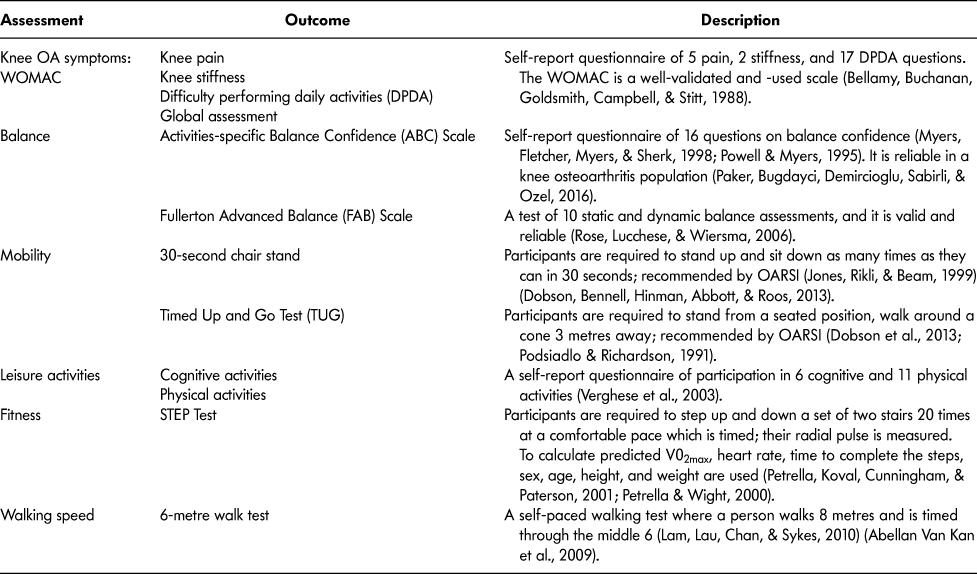
OARSI = Osteoarthritis Research Society International; STEP = Step Test Exercise Prescription
Intervention – SSE Group
SSE is a low-intensity training program, where an instructor demonstrates a stepping pattern across a gridded mat, which is 250 cm × 100 cm and divided into four columns of 10 rows, totalling 40 squares. The participants are required to try to remember and repeat the patterns four times; in our study, the group moved onto the next patterns after 80 per cent of the group completed the pattern correctly. There are over 200 patterns in the program, and they are progressive in nature; the SSE program begins with beginner patterns and progresses to intermediate and advanced patterns. The number of steps in a pattern ranges from two to 16 steps, and steps can be forward, backward, horizontal, or diagonal in direction, which challenges mobility, balance, and visuospatial skills. Each pattern has a right- and left-foot start. SSE is a group-based program that increases social engagement through peer assistance.
The program duration was 24 weeks, and sessions were held twice per week for one hour at a local YMCA. Program duration was chosen based on knee OA literature demonstrating improvements in physical function after 6 months (Fransen et al., Reference Fransen, McConnell, Harmer, Van der Esch, Simic and Bennell2015). During the 1-hour sessions, a 5- to 10-minute warmup, and 5- to 10-minute cool-down were done at the beginning and end to reduce the risk of injury, with a focus on stretching the muscles of the neck to reduce neck strain from looking down at the mat. SSE was done for 45 minutes each session. Participants completed a warmup pattern from the beginner protocols, then moved on to the pattern they had last completed from the previous session. Attendance and pattern progression were recorded at each session. Light music was played in the background to help motivate and encourage participants.
Wait-List Control Group
Participants randomized to the wait-list control group participated in all the assessments (V0, V1, V2). After completing the final assessment (V2), they were invited to participate in the SSE program for 24 weeks to ensure that everyone was given the opportunity to participate in the program.
Sample Size
For this pilot trial, we proposed that 40 participants (20 per group) was a reasonable sample size. Specifically, with 18 participants per group, our study would have 80 per cent power at the 5 per cent significance level to detect an effect size (mean difference divided by standard deviation) of 0.95, a large effect size (Lachin, Reference Lachin1981). We estimated a large effect because our primary aim was feasibility rather than statistical significance. We estimated a dropout rate of 10 per cent, which increased our calculation to 20 participants per group (40 total). We felt that this was a conservative dropout rate given our previous experience.
Statistical Analyses
We conducted the statistical analyses in SPSS, version 24. We used analysis of co-variance (ANCOVA) to assess between group differences at assessment time points (V1 and V2), controlling for baseline (V0) values. To assess attendance rates, we used frequency tables. Effect size, reported as partial eta squared (η p2, where 0.1 is small, 0.25 is medium, and 0.4 is large), was included because this was a pilot study, and the focus was not statistical significance.
Results
Feasibility
Recruitment
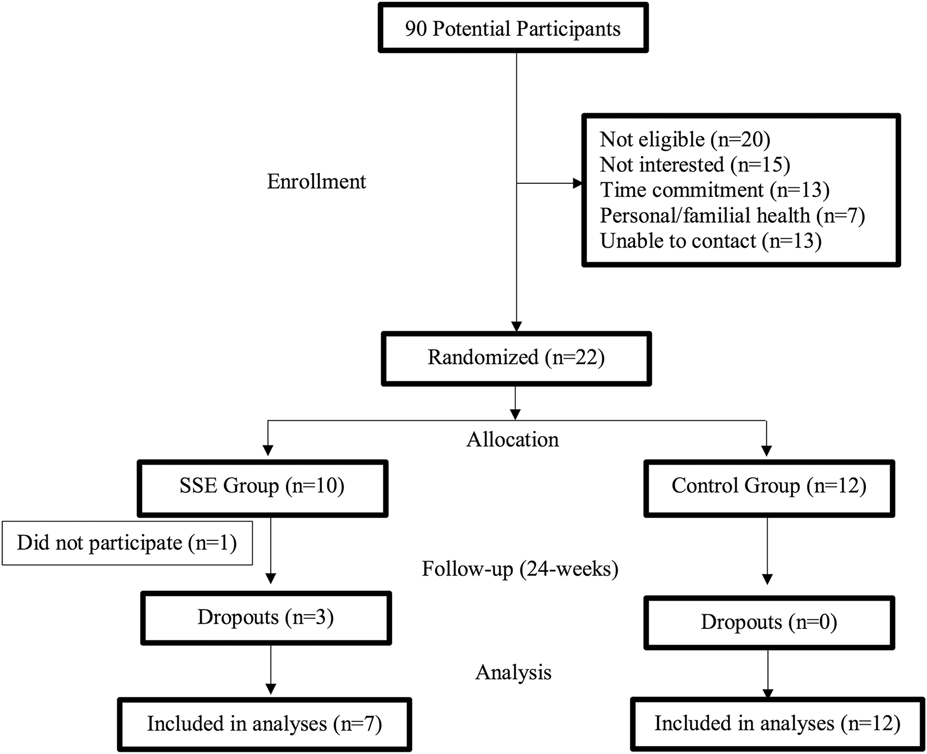
Ninety people were identified as potential participants from May to November 2015. Twenty-two participants provided written informed consent and enrolled in the study, 10 were randomized to the SSE group, and 12 were randomized to the control group (see Figure 1). In the SSE group we had three dropouts due to personal health, familial health, and loss of interest in the program; there were no dropouts in the control group.
Study flow diagram to 24 weeks follow-up (end of intervention).
Attendance
The total possible number of sessions was 48 (i.e., 2 times per week for 24 weeks); however, a range of 45–48 SSE sessions were offered due to poor weather conditions and instructor availability across the three intervention waves. In the SSE group, the average attendance rate was 49.3 per cent for all participants (n = 10), 69.9 per cent for study completers (i.e., those who completed study assessments; n = 7), and 90.5 per cent in participants who attended > 50 per cent of sessions (n = 5).
Participants
Participants (n = 22) were an average of 69.5 (SD 7.4) years of age, 68 per cent female, with a mean BMI of 30.7 kg/m2 (SD 5.6), and mean Charlson Comorbidity Index of 2.1 (SD 1.1) (see Table 2).
Study participant characteristics at baseline, by randomization group
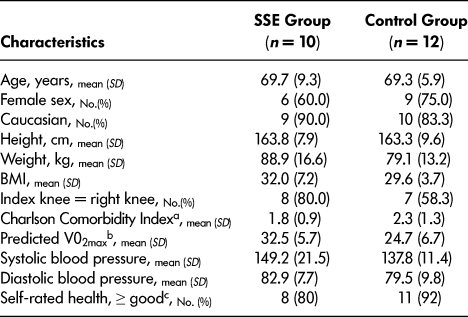
Note. a Charlson Co-morbidity Index (Charlson et al., Reference Charlson, Pompei, Ales and MacKenzie1987). b Predicted V02max is calculated from the STEP Test (Petrella & Wight, Reference Petrella and Wight2000). c Self-rated general health rating question: poor, fair, good, very good, and excellent.
Western Ontario and McMaster Universities Arthritis Index (WOMAC)
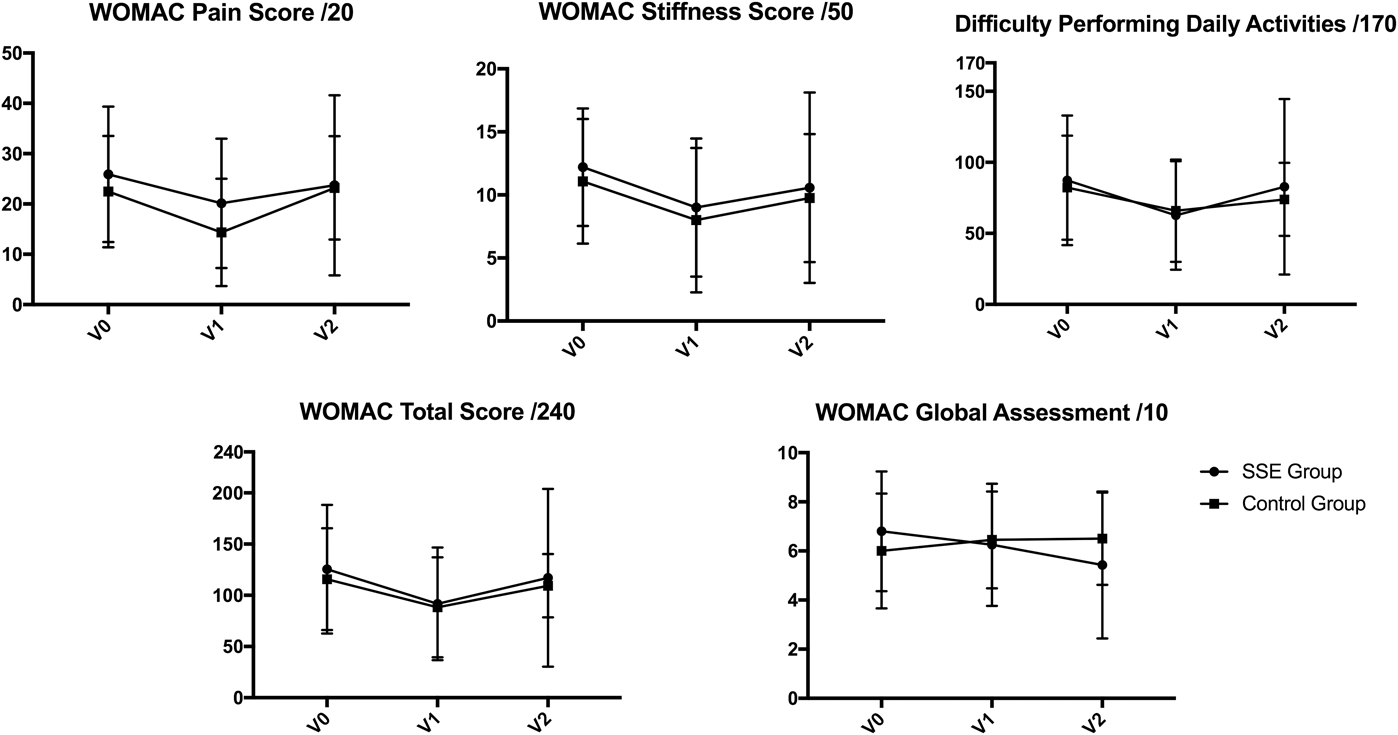
We conducted ANCOVAs to assess differences between groups at V1 and V2, controlling for V0, and found no significant differences or effects, all ps > 0.05, and η p2 < 0.1, with the exception of pain at V1, F = 2.11, p = .17,η p2 = 0.12 (see Figure 2).
WOMAC scores for pain, stiffness, and difficulty performing daily activities (DPDA), total score and global assessment, separated by group allocation, Square-stepping Exercise (SSE) group (n = 10), and control group (n = 12). Lower scores indicated fewer symptoms, except global assessment; mean score at baseline (V0), 12 weeks (V1), and 24 weeks (V2) with standard deviation error bars.
Balance, Mobility, Leisure Activities, Fitness, and Walking Speed
We conducted ANCOVAs to assess differences between groups in balance, mobility, leisure activities, fitness, and walking speed at V1 and V2, controlling for V0 (see Figure 3). The SSE group trended towards improvements in the 30-second chair stand test at V1 and V2, where F = 1.81, p = .12, η p2 = 0.16, and F = 3.39, p = .09, η p2 = 0.18 respectively. Additionally, trends in improved walking speed for the SSE group were seen at V2 when controlling for V0, where F = 2.43, p = .14, η p2 = 0.14. There was a close to positive effect on the ABC scale at V1, where F = 1.54, p = .23, η p2 = 0.09. There were no other statistically significant between-group differences or noteworthy effect sizes for any other measurements on balance, mobility, leisure activities, or fitness; all ps > 0.05, and η p2 < 0.1.
Mobility outcomes scores, by randomization group, control group vs. Square-stepping Exercise (SSE) group at baseline (V0), 12 weeks (V1), and 24 weeks (V2). Mean scores with standard deviation error bars.

Adverse Events
There were three adverse events related to the study. One participant in the SSE group fell during a balance assessment; one in the wait-list control group fell during an SSE session; and one participant in the wait-list control group reported headaches due to neck strain during several SSE sessions. There were no serious adverse events related to the study.
Discussion
Overall, we found SSE had limited feasibility in older adults with knee OA. In the SSE group, the average attendance rate was 49.3 per cent. For participants who had > 50% attendance (n = 5), their mean attendance rate was 90.5 per cent. Further, although our aim was to recruit 40 participants, we were able to recruit only 22 participants out of a potential 90. Our methods of recruitment were to contact previous participants in clinical research studies from our laboratory, and to post advertisements at physiotherapy clinics, doctors’ offices, and seniors’ community centres, as well as in local newspapers. Recruitment for exercise programs in healthy populations is challenging; therefore, recruitment in a population with functional impairments and fairly severe knee pain (i.e., average WOMAC pain scores > 4) likely further limited our recruitment and contributed to the limited feasibility of the program (Arthritis Community Research and Evaluation Unit [ACREU], 2015; Cross et al., Reference Cross, Smith, Hoy, Nolte, Ackerman, Fransen and March2014; McAlindon et al., Reference McAlindon, Bannuru, Sullivan, Arden, Berenbaum, Bierma-Zeinstra and Underwood2014). In the SSE group, we had two people drop out of the program due to ongoing health-related issues, and one participant lost interest. We can relate our issues with recruitment and dropout to the Charlson Comorbidity Index score, which indicated that many participants had a co-morbid condition beyond knee OA, which likely affected attendance and adherence.
Co-morbid chronic diseases are prevalent in adults with knee OA, and thus will likely be a continuing issue with SSE feasibility moving forward. As a potential way to improve feasibility, it may be appropriate to either add make-up sessions offered throughout the week, or provide the opportunity for participants to make up the exercise session at home. A possible way to do this would be through mobile health, such as a smartphone application. Our group has developed a SSE smartphone app called HealtheBrain, which may improve the feasibility of the program in adults with high disease burden (Shellington, Felfeli, Shigematsu, Gill, & Petrella, Reference Shellington, Felfeli, Shigematsu, Gill and Petrella2017). Further work should aim to improve the feasibility of SSE to assist adults with knee OA through various adaptations.
The results presented in this article demonstrate that SSE can elicit similar mobility improvements in adults with knee OA in comparison with community-dwelling older adults. Previous SSE studies in community-dwelling older adults (randomized and non-randomized designs over 3 to 6 months) have demonstrated benefits in lower-extremity functional fitness and lower-limb strength (Shigematsu, Okura, Nakagaichi et al., Reference Shigematsu, Okura, Nakagaichi, Tanaka, Sakai, Kitazumi and Rantanen2008; Shigematsu & Okura, Reference Shigematsu and Okura2006; Shigematsu, Okura, Sakai, & Rantanen, Reference Shigematsu, Okura, Nakagaichi, Tanaka, Sakai, Kitazumi and Rantanen2008). The current study adds to the growing body of literature on SSE related to its effects on mobility for its use in chronic disease populations. Our work showed improvements in mobility, albeit not robust, which were similar in nature to those seen for tai chi in adults with knee OA (Bannuru et al., Reference Bannuru, Abariga and Wang2012). Trends towards improvements in the 30-second chair stand suggest that SSE improved lower-extremity functional mobility. Additionally, trends towards improvements in walking speed suggest that the SSE program may reduce risks associated with low walking speed, such as frailty (Abellan Van Kan et al., Reference Abellan Van Kan, Rolland, Andrieu, Bauer, Beauchet, Bonnefoy and Vellas2009; Rydwik, Bergland, Forsen, & Frandin, Reference Rydwik, Bergland, Forsen and Frandin2012). The results were supported with small effect sizes and indicate that improved lower-extremity mobility and walking speed may be attributed to improvements in neuromuscular control and proprioception, thus potentially reducing fall risk in adults with knee OA.
Even though our results did not demonstrate a robust effect in adults with knee OA, this study adds preliminary evidence for an alternate intervention for adults with knee OA. Further work is needed in a larger population to better understand if the trends we showed are a real effect. Older adults with knee OA may be more likely to enjoy a social program, such as SSE, rather than more traditional types of exercise.
Because adults with knee OA commonly have day-to-day fluctuations in symptoms, the participants felt that the WOMAC may not have accurately assessed their overall knee OA symptoms. In our analyses, we did not see any significant differences between groups, nor did we see any effects in any WOMAC-assessed knee OA symptoms at any time point (V0, V1, or V2). There was much variability in both groups, wherein standard deviations were more than 50 per cent of the WOMAC scores, demonstrating a lot of inter-individual variation – a common occurrence in knee OA studies. If we had administered the WOMAC more often than the three time points, we may have seen more consistent profiles of knee OA symptoms, which may have reduced variability in the WOMAC data and shown trends. The effect of SSE on older adults’ knee OA symptoms of pain, stiffness, and difficulty performing daily activities (DPDA) remains to be elucidated.
Limitations
Our main limitation was the small sample size, which did not allow us to find statistical significance in our secondary outcomes to complement the positive findings in our primary outcome of feasibility. As previously mentioned, the study duration, time of day, and location may have been limiting factors for our study’s participant recruitment. The SSE program was in the afternoon (between 1 and 2 p.m. or 2 and 3 p.m.), which excluded adults who worked, and it was in a location on the north side of the city, which was not easily accessed by public transportation. We chose this time and location on the basis of an established relationship with the YMCA and the availability of space within their facility. Lastly, having a direct measure of proprioception would have been beneficial; however, it was beyond the scope of this feasibility study. Our measures of neuromuscular function using the chair stand and Timed Up and Go Test are similar to other OA studies.
Conclusions
We found that SSE had limited feasibility in adults with knee OA because we had a low recruitment rate (n = 22), and a low average attendance rate (49.3%). However, we found trends towards improved lower-extremity mobility and walking speed as a result of the program. Study results suggest that the feasibility of SSE needs improvement; however, this preliminary data may indicate that SSE can reduce functional limitations and falls risk in adults with knee OA as well as improve neuromuscular function and proprioception. More robust evidence is needed.



