


Parenting styles have been widely studied in disciplines such as psychology and sociology and have more recently been a focus in nutrition research. Parenting style refers to a collection of attitudes, beliefs and behaviours parents use when interacting with their children and serve as a general context through which parents regulate and guide their children( Reference Baumrind 1 ). According to Baumrind, parents display authoritative, authoritarian and permissive parenting styles. Authoritative parents typically have high demands and high responsiveness, as shown by having reasonable expectations, fostering autonomy and providing high emotional warmth. Authoritarian parents typically have high demands and low responsiveness, as shown by having unquestioned rules, strict expectations and low emotional warmth. Permissive parents typically have low demands and high responsiveness, as shown by not enforcing rules, having low expectations and while maintaining emotionally warm relationships with their child. Although parents can be categorized based on their predominant style, there is a spectrum of demandingness and responsiveness among parents in each style, and a given parent may vary on these dimensions over time and across contexts( Reference Macoby, Martin and Hetherington 2 ). Parenting styles have been associated with a wide range of social and behavioural outcomes in children, such as academic achievement( Reference Spera 3 ), sexual risk-taking( Reference Piko and Balázs 4 ) and substance abuse( Reference Baumrind 5 ), as well as child dietary intake( Reference Vollmer and Mobley 6 ).
The values parents hold along with the goals they have for their child help determine parenting styles, and these in turn provide the context in which parenting practices and child outcomes occur( Reference Darling and Steinberg 7 ). This makes parenting styles an attractive variable to examine in relation to child dietary quality because they often set the context in which child dietary decisions are made and therefore may regulate child dietary intake( Reference Shloim, Edelson and Martin 8 ). To our knowledge, however, little work has examined overall dietary quality and parenting styles. The vast majority of work has examined only intake of individual foods such as fruits and vegetables or sugar-sweetened beverages( Reference Vollmer and Mobley 6 ), but it is important to consider overall dietary quality via metrics such as the Healthy Eating Index (HEI). In addition, the extant literature is mixed on the association between dietary intake and parenting styles. For example, some work shows no association between the two, whereas other work shows authoritative and authoritarian styles being both negatively and positively associated( Reference Vollmer and Mobley 6 ). Finally, it is important to understand the social and economic conditions in which parenting styles occur as these contexts might influence parenting styles. For example, parenting in households with low socio-economic status is more stressful and is associated with negative child psychology and development, and children in low-income households have less healthy diets compared with those in higher-income households( Reference Conger and Donnellan 9 , Reference Guenther, Juan and Lino 10 ). Given that 42 % of children in the USA are low-income( 11 ) (i.e. income less than 200 % of the federal poverty threshold), it is important to study this group with regard to parenting styles and overall child dietary intake.
Household food insecurity is another condition that could affect how parents interact with their children. Nearly 40 % of low-income households in the USA are food-insecure( Reference Coleman-Jensen, Rabbitt and Gregory 12 ). Food-insecure households have ‘limited or uncertain availability of nutritionally adequate and safe foods or limited or uncertain ability to acquire acceptable foods in socially acceptable ways’( 13 ). Food-insecure households are markedly different from their food-secure counterparts. For example, caregivers of food-insecure children reduce their children’s meal size, rely on low-quality foods and make considerable changes to how the household acquires food (e.g. relying on coupons and discounted foods)( Reference Burke, Martini and Blake 14 ). These changes create feelings of stress and shame( Reference Hamelin, Beaudry and Habicht 15 ), but also may result in changes to dietary patterns. For example, children in food-insecure households consume less fruit and other nutrients compared with children in food-secure households( Reference Hanson and Connor 16 ) and parents interact differently with their children when household food insecurity occurs, such as discussing food and financial issues with their children( Reference Fram, Frongillo and Jones 17 ).
In sum, parenting styles are a potentially important variable to better understand overall child dietary intake, but little research has examined the association between the two, especially among low-income and food-insecure households. The purpose of the present study was to examine the association between parenting styles and child dietary quality within households that are low-income and food-insecure. To achieve this purpose, we measured both parenting styles and overall child dietary quality within a sample of low-income and food-insecure households in South Carolina, USA. We hypothesized that authoritative parenting style would be positively associated with child dietary quality and that authoritarian and permissive parenting would be negatively associated, adjusting for possible socio-economic and demographic confounders. In addition, given that parenting styles are often interwoven, with parents displaying attitudes and behaviours from each style, it is possible that their individual effects interact (i.e. they are not independent). Therefore, we also hypothesized that authoritarian parenting style would modify the association between authoritative parenting style and dietary quality.
Methods
Participants
Data were from a study that examined food insecurity in households with children between the ages of 9 and 15 years in South Carolina in 2012. Data were collected in two stages. First, a member of the research team conducted an in-person or telephone screening survey. The screening survey collected basic demographic information (e.g. ages of children in the household, race, ethnicity and income) and household food security status. To be eligible for participation in the study, a participant had to meet the following criteria: parent or caregiver of a child between the ages of 9 and 15 years who lives in the household at least 50 % of the time; household classified as low or very low food-secure (i.e. food-insecure); and total household income of less than $US 100 000 in the past year (which is about 300 % of the federal poverty line for a family of four). Participants received a $US 5 gift card for completing the screening survey. Second, if participants were eligible to participate, they were invited to complete the full survey, which included data collection from both the parent or caregiver and one of the children in the household. If there were multiple children in the household between 9 and 15 years old, the parent chose which child participated. Surveys were completed at a location that was most convenient for the participants and ensured privacy (e.g. at their residence or a private location in a local library) and on both weekdays and weekends.
Participants were recruited into the study through in-person contact at local food banks, convenience stores (e.g. gas station marts or dollar stores), child daycare centres, farmers’ markets, family and friends, and flyers. One hundred and ninety-four parents agreed to participate and 179 food insecure parent–child dyads completed the survey. Parents assented for their child to participate and consent was obtained from children and parents. For the current analysis, we focused on the 171 parent–child dyads that had complete data on all variables of interest and had incomes less than 200 % of the 2012 federal poverty threshold (i.e. low-income households). Participants received a $US 20 gift card for completing the second stage of the study. This study was approved by the University of South Carolina Institutional Review Board.
Measures
Child dietary quality was assessed using the Healthy Eating Index-2005 (HEI-2005) and dietary information was collected directly from children, ages 9 to 15 years, via a single interviewer-administered 24 h dietary recall using the multi-pass method( Reference Johnson, Driscoll and Goran 18 ). When needed, a food amount booklet adapted from van Horn and colleagues and provided by the University of Minnesota was used to estimate portion sizes( Reference van Horn, Stumbo and Moag-Stahlberg 19 ). The child provided the 24 h recall in isolation from her or his caregiver, although s/he was present at the interview location (e.g. in a separate room at their residence). If a child could not clearly remember certain foods consumed, a research team member followed up with the caregiver for more information. All 24 h recalls were deemed reliable by the interviewer. Nutrition Data System for Research software version 2011 (2011), developed by the Nutrition Coordinating Center, University of Minnesota, Minneapolis, MN, USA, was used to collect dietary intake information and its nutrient output data were used to compute HEI-2005 scores. The HEI-2005 contains twelve food components that reflect recommendations of the 2005 Dietary Guidelines for Americans( 20 ): (i) total fruit; (ii) whole fruit; (iii) total vegetables; (iv) dark green and orange vegetables and legumes; (v) total grains; (vi) whole grains; (vii) milk; (viii) meat and beans; (ix) oils; (x) saturated fat; (xi) sodium; and (xii) calories from solid fat, alcohol and sugar. Each component is scored, and then all components are summed for a total HEI score that can range from 0 to 100. Higher total HEI-2005 scores indicate better overall dietary quality, with scores of 0–49 considered ‘bad’, 50–70 considered ‘needs improvement’ and 80–100 considered ‘good’. HEI-2005 is a valid measure of dietary quality that can be calculated from a single 24 h dietary recall; a detailed description of the HEI-2005 can be found elsewhere( Reference Guenther, Reedy and Krebs-Smith 21 ). Although the HEI-2005 measures adherence to the Dietary Guidelines for Americans, it can be used in international contexts( Reference Drewnowski, Fiddler and Dauchet 22 – Reference Lassale, Gunter and Romaguera 24 ) and is similar in nature to other dietary quality indices, such as the Diet Quality Index–International( Reference Kim, Haines and Siega-Riz 25 ). We were interested in overall dietary quality in the present study and therefore used total HEI-2005 scores only. Finally, given that our data were collected in 2012, we could have used the HEI-2010 but instead chose the HEI-2005. We did this because: (i) we assumed (and continue to believe) that participants would be most familiar with the 2005 Dietary Guidelines for Americans, as they were promoted from December 2005 to December 2010; and (ii) use of the HEI-2005 was the original intent when the study was conceived.
Parenting styles were measured using the Parenting Styles and Dimensions Questionnaire (PSDQ)( Reference Robinson, Mandleco and Olsen 26 ) and was our independent variable of interest. The PSDQ is a thirty-two-item instrument composed of three scales measuring authoritative, authoritarian and permissive parenting. Fifteen items belong to the authoritative subscale and include items such as ‘I am responsive to my child’s feelings and needs’ and ‘I encourage my child to talk about his or her feelings’; twelve items belong to the authoritarian subscale and include items such as ‘I use physical punishment as a way of disciplining my child’ and ‘I yell or shout when my child misbehaves’; and five items belong to the permissive subscale and include items such as ‘I find it difficult to discipline my child’ and ‘I spoil my child’. All items were answered on a five-point Likert scale (1 = ‘never’ to 5 =‘always’). Subscale items were summed and the resulting subscale scores treated as continuous variables. The PSDQ has been widely used in varying contexts (e.g. race/ethnicity, income and country) and is a valid measure of parenting styles( Reference Olivari, Tagliabue and Confalonieri 27 ).
We controlled for socio-economic and demographic variables that could confound the association between child dietary quality and parenting styles. At the parent level, we adjusted for age (years), sex (male or female), race and ethnicity (White, non-Hispanic; African-American, non-Hispanic) and highest education level (high school or less; high school, General Equivalent Degree (GED) or some college; college or technical degree or higher). At the child level, we adjusted for age (years) and sex (male or female). At the household level, we adjusted for other parent in the household (yes or no), other child in the household (no or yes), household food security status in the previous 12 months (low food-secure or very low food-secure) as measured by the US Department of Agriculture Household Food Security Survey Module( Reference Coleman-Jensen, Rabbitt and Gregory 12 ) and income as a percentage of the federal poverty threshold.
Statistical analysis
Analyses were conducted using the statistical software package Stata version 14.1. We first used descriptive statistics (means and se; percentages) to describe our outcome, independent variable of interest and covariates. In addition, we calculated the intercorrelations among items in each PSDQ subscale (reported as Cronbach’s α) as well as the correlations between each subscale (reported as a Pearson correlation coefficient). Next, we used least-squares linear regression to test the association between overall dietary quality in children and parenting styles, adjusting for covariates. Model 1 of the least-squares linear regression includes parenting styles as independent variables. Given that parents display attitudes and behaviours from all styles, in model 2 we included two-way interactions between the parenting styles to capture possible effect modification (i.e. dependence between parenting styles). Two-sided t tests were used and were considered significant at an α of 0·05.
Results
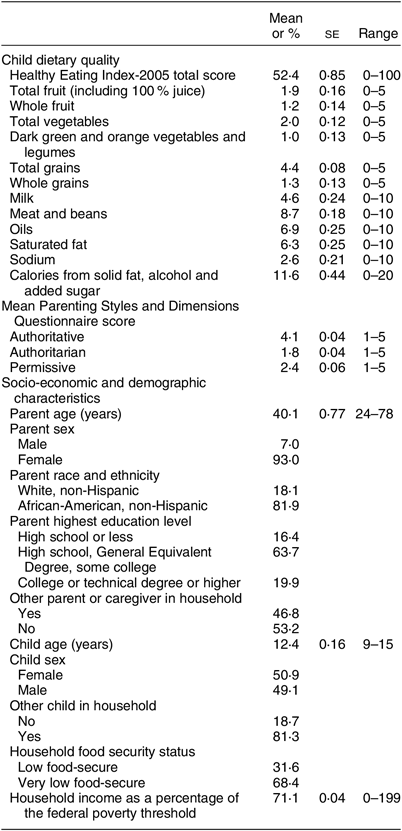
The mean total HEI-2005 score was 52·4 (Table 1). HEI-2005 sub-component scores are presented for descriptive purposes but were not examined in the regression model. The mean authoritative parenting score was 4·1, the mean authoritarian parenting score was 1·8 and the mean permissive parenting score was 2·4. Parents were on average 40 years old, and the majority were female (93 %), African-American non-Hispanic (82 %) and had a high-school diploma, GED or some college (64 %). Children were on average 12 years old, and the slight majority were female (51 %). Most households did not have another parent or caregiver (53 %), had another child other than the sampled child (81 %) and were very low food-secure (68 %); the average income among surveyed households was 71 % of the 2012 federal poverty threshold. Cronbach’s α for the authoritative, authoritarian and permissive parenting subscales was 0·79, 0·72 and 0·64, respectively. Pearson correlations between the (i) authoritative and authoritarian subscales was −0·03 (P = 0·69), (ii) authoritative and permissive subscales was 0·03 (P = 0·96) and (iii) authoritarian and permissive subscales was 0·41 (P < 0·001).
Socio-economic and demographic characteristics of parent–child dyads included in a sample of low-income and food-insecure households (n 171), South Carolina, USA, 2012
In model 1, all three parenting styles were independently and significantly associated with HEI-2005 scores in children (Table 2). Each one-point higher authoritative parenting score was associated with a 3·89 higher child HEI-2005 score (95 % CI 0·60, 7·17). Similarly, each one-point higher authoritarian parenting score was associated with a 4·09 higher child HEI-2005 score (95 % CI 0·21, 7·96). Permissive parenting score was negatively associated with child HEI-2005 score, with each one-point higher permissive parenting style score associated with a 2·56 lower child HEI-2005 score (95 % CI −4·96, −0·17). In model 2, which included two-way interactions between the parenting style subscales, we found a significant interaction between the authoritative and authoritarian subscales (b = 10·09, 95 % CI 3·65, 16·53). We did not find a significant interaction between the permissive subscale and either the authoritative or authoritarian subscale.
Least-squares regression testing the association between child Healthy Eating Index-2005 total score (outcome variable) and mean Parenting Styles and Dimension score (predictor of interest), adjusting for socio-economic and demographic covariates, in a sample of low-income and food-insecure households (n 171), South Carolina, USA, 2012
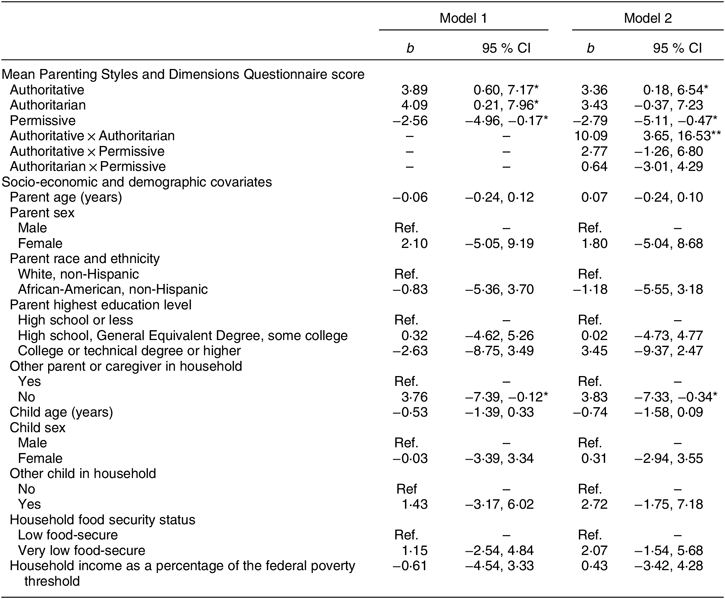
Ref., reference category.
*P < 0·05, **P < 0·01.
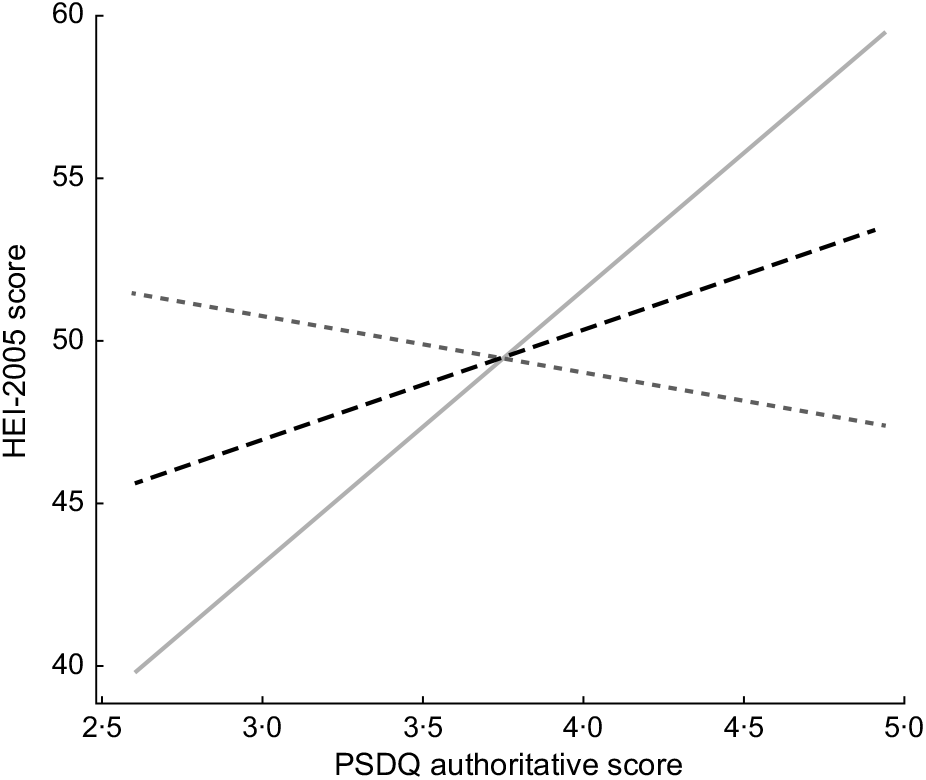
To better understand the results of the interaction, we plotted predicted HEI-2005 scores across PSDQ authoritative parenting scores held constant at the mean ± 1 sd of PSDQ authoritarian scores (Fig. 1). All covariates were centred at their sample mean. For those with a mean authoritarian score, each unit increase in authoritative score was associated with a higher HEI-2005 score (b = 3·36, P < 0·05). Similarly, for those with an authoritarian score that is 1 sd above the mean authoritarian score, each unit increase in authoritative score was associated with a higher HEI-2005 score (b = 8·42, P < 0·01). In contrast, for those with an authoritarian score that is −1 sd below the mean authoritarian score, each unit increase in authoritative score was associated with a lower HEI-2005 score; however, this was not significant (b = −1·69, P > 0·05).
Predicted child Healthy Eating Index-2005 (HEI-2005) scores conditional on an interaction in a linear model between the authoritative and authoritarian subscales of the Parenting Styles and Dimensions Questionnaire (PSDQ). Authoritarian parenting scores are held constant at the mean (---), the mean + 1 sd (----), and the mean − 1 sd (---), in the parent–child dyads included in a sample of low-income and food-insecure households (n 171), South Carolina, USA, 2012
Discussion
Parenting styles were significantly associated with overall child dietary quality in a low-income and food-insecure sample of households in South Carolina, USA. Authoritative and authoritarian parenting styles had a significant interaction such that as parents reported more authoritative parenting attitudes and behaviours, their children were predicted to have higher dietary quality if they also reported an average or greater authoritarian attitudes and behaviours. Permissive parenting attitudes and behaviours were negatively associated with child dietary quality.
Parents who live in low-income and food-insecure households have markedly different economic, social and nutritional contexts compared with parents in higher-income and food-secure households. This context likely makes it more difficult and stressful for parents to raise their children in addition to securing healthy, safe and desirable foods for the household. For example, parents in low-income households face more mental health problems( Reference Belle 28 ), social exclusion( Reference Kabeer 29 ), and have a higher risk of living in a violent neighbourhood( Reference Cunradi, Caetano and Schafer 30 ) compared with those in higher-income households. Similarly, food-insecure households face difficulty in procuring food for the household and protecting children from hunger, which produces altered interactions between parents and children( Reference Fram, Frongillo and Jones 17 , Reference Bernal, Frongillo and Herrera 31 ). Our sample was quite impoverished, with households having a mean annual income that was just 71 % of the 2012 federal poverty threshold, which is equivalent to $US 16 365 for a family of four. In addition, 68 % of households were very low food-secure, which is the most severe category of household food security and likely means that one or more household members reported hunger in the previous 12 months because of a lack of financial or other resources. Although the demographics of our sample differ from previous work, parenting styles, as measured by the PSDQ, were relatively similar. For example, in studies that included participants with a range of incomes, were majority White and a plurality were college-educated, mean scores on the authoritative, authoritarian and permissive subscales were in the same rank order( Reference Topham, Hubbs-Tait and Rutledge 32 – Reference Hubbs-Tait, Kennedy and Page 34 ). That is, the authoritative subscale had the highest mean score, then permissive and finally authoritarian. In addition, there was general agreement in the magnitude of mean scores too, with only the authoritarian subscale varying by 0·75 between studies (subscale range: 1–5).
Vollmer and Mobley( Reference Vollmer and Mobley 6 ) conducted a systematic review of the literature and found that the association between parenting styles and indicators of dietary intake in children is mixed. Some work shows no association between parenting styles and fruit and/or vegetable intake, whereas other work shows that authoritative, permissive and non-authoritarian parents have children with higher fruit and/or vegetable intake. For example, Kremers and colleagues( Reference Kremers, Brug and de Vries 35 ) found that Dutch children with authoritative parents consumed about 75 g more fruit daily than those with authoritarian-style parents. Pearson and colleagues( Reference Pearson, Atkin and Biddle 36 ) found that single parents in the UK who were classified as authoritative had children who ate unhealthy snacks about 0·5 fewer times per day than those with parents classified as authoritarian. When examining other indicators of dietary quality, such as high-fat or sugar intake, Vollmer and Mobley also found that some work shows no association with parenting styles, whereas other work shows that authoritative and authoritarian parents have children with lower high-fat and/or sugar intake. More recent research has also been mixed. For example, Lopez and colleagues( Reference Lopez, Schembre and Belcher 37 ) did not find a significant bivariate association between authoritative, authoritarian or permissive parenting and child dietary quality as measured by the HEI-2010 in a sample of parent–child dyads in the USA. There are numerous reasons why a consistent association between parenting styles and dietary outcomes in children is not observed. For example, studies may be underpowered to detect statistically significant associations or use of different measurement tools that make it difficult to compare study results directly. In addition, it is also possible that the association varies by population characteristics and demographics such as child and parent age, income, education, and cultural and national context, and studies conducted thus far are simply finding these differences (or lack thereof). Although our study cannot address these concerns, it does add to the literature in a few key ways. First, we used reliable and validated measures of both dietary quality and parenting styles that are also widely used in the literature (i.e. the HEI-2005 and PSDQ). Second, we studied low-income and food-insecure households, a population that has received little attention in the parenting styles and diet quality literature. Third, we used the HEI-2005 to examine overall dietary quality of children, not indicators of dietary quality such as fruit and vegetable consumption or added sugar intake. Finally, we showed that parenting styles are indeed associated with overall child dietary quality in a low-income and food-insecure population in the southern USA, important evidence for future meta-analyses.
We found considerable variation in child HEI-2005 scores when considering authoritative and authoritarian parenting jointly. Our results show that the diet quality of children improves as parents become more authoritative if they also report an average amount of authoritarian parenting behaviours and practices. This result is intensified if they report a greater than average amount of authoritarian behaviours and practices (i.e. 1 sd above the mean). These results suggest parents with high scores in both authoritative and authoritarian styles have children with the highest dietary quality. It is unclear why children of more authoritative and authoritarian parents have higher dietary quality. It is possible that these parents are leveraging the most beneficial practices and behaviours of each style to achieve better dietary outcomes for their children; for example, strictly guiding a child’s dietary decisions, but also providing reasons and emotional warmth for why those decisions are being made, making it more likely the child will choose healthier options on her or his own. This may be especially relevant in low-income and food-insecure households where parents need to more strictly guide their children through social and economic environments that are flush with unhealthy food choices. Our results also suggest that the diet quality of children of more authoritative parents does not significantly change if parents report a below-average amount of authoritarian behaviours and practices (i.e. −1 sd), although the trend shows a negative association. It is possible that parents who report lower levels of authoritarian practices lose the ability to more strictly control their children’s diet and this results in a null effect on diet. Finally, we found that parents with higher scores for permissive parenting had children with lower HEI-2005 scores. It is possible that more permissive parents more freely allow their children to choose foods and this results in unhealthier food choices. This is in line with other work that shows children have a preference for sweet and high-fat foods( Reference Drewnowski 38 ), which could lower dietary quality. Future work should consider and examine the causative pathways through which parenting styles could lead to changes in children’s dietary quality.
Limitations
First, we did not measure parenting feeding styles, which are known to be associated with child dietary intake and parenting styles( Reference Hoerr, Hughes and Fisher 39 ). Because our sample was school-age children (mean age of 12 years), currently available measures of feeding styles were not appropriate as they focus on young children. We also did not measure other possible confounders between parenting styles and overall child dietary quality such as nutrition education. In addition, some work in the parenting styles literature classifies parents into one dominant style and performs statistical analysis with authoritative parenting as a reference category and authoritarian or permissive as comparisons (i.e. dummy or factor coding). This was not possible with our study because 90 % of respondents had their highest mean score in the authoritative subscale, so there was little variation left for the other two styles (analysis not shown). Second, we did not explicitly measure an uninvolved parenting style, which is measured in some work examining the association between parenting styles and diet-related outcomes( Reference Vollmer and Mobley 6 ). Third, our sample was composed of low-income and food-insecure households living in South Carolina, USA and was based on a non-probability sample that was mostly female caregivers; therefore, results from this study sample might not generalize to other populations. Fourth, our study only reports associations and cannot not determine causality or temporality. Finally, our sample was limited to 9- to 15-year-old children and adolescents and cannot be generalized to other age groups. Our age range captures children and adolescents who are likely still eating most of their meals at home but are also old enough to make their own dietary choices.
Conclusion
We examined the association between parenting styles and overall dietary quality in a sample of low-income and food-insecure households. We found that authoritative and authoritarian parenting styles were jointly associated with child dietary quality, and that permissive parenting style was associated with lower overall child dietary quality. The differences we found in dietary quality related to parenting styles were large, with each unit increase in parenting style score on the PSDQ associated with a 3- to 8-point change in HEI-2005 score. To put these differences in perspective, there is only a one-point difference in dietary quality between low- and high-income children in the USA as measured by the HEI-2005( Reference Guenther, Juan and Lino 10 ). These large differences are consistent with the understanding that parenting styles reflect parental values and parental goals for children, and therefore likely have considerable influence on behaviour( Reference Darling and Steinberg 7 ). Indeed, parenting styles are thought to be a leading contributor to child behaviour and development( Reference Bornstein, Renninger and Sigel 40 ). To our knowledge, our study is the first to report on this association in a low-income and food-insecure sample of households. Future work should examine if the associations that we observed are representative of the general population of low-income and food-insecure households and should explore possible causal pathways.
With specific regard to nutrition programming, our results might be relevant for practitioners and researchers who frequently provide nutrition education to low-income and food-insecure households; for example, those involved with the Supplemental Nutrition Assistance Program–Education (SNAP-Ed) and the Expanded Food and Nutrition Education Program (EFNEP), two large national nutrition education programmes that often focus on parenting behaviours related to nutrition in low-income settings. Our results suggest that parenting styles might also be important in this context, and future work should consider if and how SNAP-Ed and EFNEP could be used to address parenting styles and child dietary quality. More broadly, our results raise questions about how parenting styles should be used when working with parents and their children. That is, in some work, authoritarian parenting is associated with outcomes such as delinquency( Reference Hoeve, Dubas and Eichelsheim 41 ); however, we found that children of parents with higher authoritarian attitudes and behaviours coupled with higher authoritative attitudes and behaviours have the highest overall dietary quality. This suggests that promoting certain authoritarian attitudes and behaviours could be beneficial for overall child dietary quality, but it is not clear how this would affect other psychological or social outcomes. Future work should carefully consider how parenting styles are associated with both dietary and psychological and social outcomes.
Acknowledgements
Acknowledgements: The authors thank the study participants for their time and effort. M.P.B. completed this work as a doctoral student at the University of South Carolina. Financial support: This work was supported by a grant from the US Department of Agriculture, Economic Research Service’s Research Innovation and Development Grants in Economics (RIDGE) doctoral dissertation programme, administered by Mississippi State University’s Southern Rural Development Center and Purdue University under grant number 59500000014. The funders had no role in the design, analysis or writing of this article. Conflict of interest: There are no conflicts of interest to disclose. Authorship: M.P.B., S.J.J., E.A.F., C.E.B. and M.S.F. conceptualized the study. M.P.B. analysed the data and drafted the manuscript. M.P.B., S.J.J., E.A.F., C.E.B. and M.S.F. contributed to the interpretation of the data and critically reviewed the manuscript for important intellectual content. All authors read and approved the final manuscript. Ethics of human subject participation: This study was conducted according to the guidelines laid down in the Declaration of Helsinki and all procedures involving human subjects were approved by the University of South Carolina Institutional Review Board. Written informed consent was obtained from all subjects.
Author ORCIDs
Michael P Burke, 0000-0002-6704-2294. Edward A Frongillo, 0000-0002-8265-9815.



