


It has been recognized for some time that fruit and vegetables (F&V) constitute an essential part of a healthy diet(1–3). High consumption of F&V has been associated with a decreased risk of morbidity and mortality from a number of chronic diseases like CHD(Reference He, Nowson and Lucas4), stroke(Reference He, Nowson and MacGregor5), type 2 diabetes(Reference Carter, Gray and Troughton6) and certain cancers(Reference Key, Schatzkin and Willett7). F&V are low in energy but contain high amounts of essential nutrients, phytochemicals, dietary fibre and other bioactive compounds that have health-promoting properties(8).
The WHO recommends eating a minimum of 400 g of F&V per day(9), but few children in Europe seem to reach this target according to the previous Pro Children survey(Reference Yngve, Wolf and Poortvliet10) performed in nine European countries in 2003. The 2007 report of the World Cancer Research Fund/American Institute for Cancer Research also proposed an individual consumption of non-starchy vegetables and fruits of over 400 g/d(3). National food-based dietary guidelines for F&V intake can be found in all participating countries(11–20) and most of them are higher than the WHO or World Cancer Research Fund/American Institute for Cancer Research recommendations. The different country recommendations are, however, very diverse and use different approaches to formulating dietary guidelines.
Food habits early in life tend to track to a certain extent into adulthood(Reference Lake, Adamson and Craigie21–Reference te Velde, Twisk and Brug23), which is why it is important to promote F&V consumption among children and adolescents. Therefore, several school-based or family-based initiatives have been implemented in order to promote F&V intake among schoolchildren(Reference te Velde, Brug and Wind24–Reference Evans, Christian and Cleghorn28). These programmes had a positive effect on actual intake levels among this target group in the countries where they were implemented. In order to build further on these programmes and strategies, we need to re-assess the current intake levels among this age group and also disseminate and implement the research tools in other countries in Europe.
The PRO GREENS project was designed to assess actual levels of fruit intake and vegetable intake among 11-year-old schoolchildren in ten European countries (Bulgaria, Finland, Germany, Greece, Iceland, Norway, Portugal, Slovenia, Sweden and the Netherlands). The age group 11-year-olds was chosen since it is a critical time point before adolescence and because it is an age group that is able to complete a questionnaire with some rigour(Reference Haraldsdottir, Thorsdottir and de Almeida29). In addition, the age group made it possible to intervene and follow-up in the schools while minimizing the risk of children changing schools before the end of the intervention. The aims also included to further investigate the determinants of intake and to develop and test feasible, effective and sustainable strategies to promote F&V consumption among schoolchildren. The project builds on methods and results from the Pro Children survey, the first ever cross-national comparison of F&V intake performed in children in Europe(Reference Klepp, Perez-Rodrigo and De Bourdeaudhuij30). In PRO GREENS, five countries that participated in the previous Pro Children survey and five additional countries, including three new EU member states (Bulgaria, Greece and Slovenia), teamed up to provide new information about the F&V intake levels of schoolchildren in Europe and to spread the use of the validated methodology of assessment of F&V intake. So far, little is known about the consumption of F&V in children in the new member states.
The aim of the current paper was to present the findings from the PRO GREENS baseline survey with regard to the current consumption levels of fruit and of vegetables in a sample of 11-year-old children in ten countries in Europe and compare the results with the current WHO recommendations.
Methods
Sampling
The baseline cross-sectional survey was performed during April to October 2009 in the ten countries (Bulgaria, Finland, Germany, Greece, Iceland, Norway, Portugal, Slovenia, Sweden and the Netherlands). Sampling of schools was performed regionally in all countries except in Slovenia and the Netherlands, where the samples were nationally representative. In Bulgaria, Finland, Iceland, Norway and Sweden, schools were selected in the capital regions or in restricted areas. In Finland, only Swedish-speaking schools were included. In Germany, Greece and Portugal, the selection of schools was made in close vicinity to the research centres (Porto, Heraklion and Giessen). The total sample is not representative for the whole of Europe.
From each country, an original sample selection of at least 1000 children was included. The sample was considered large enough not only for the survey reported here but also to serve as the baseline measurement of the subsequent intervention study. For this latter study, the sample will be randomly assigned to an intervention and control group (at the school level). The number of children was sufficient to detect a difference in consumption between the intervention and control group of 20 g/d given a mean intake of 200 g/d, a standard deviation of 175 g/d and α error level of 5 % to reach a power of 80 %.
Ethical considerations
Self-administered questionnaires were the only research instrument used and participation was voluntary. All participating research centres obtained ethical approval from local or national research ethics committees before conducting the survey. Parental consent was in some countries retrieved prior to including the children in the cross-sectional survey, in other countries afterwards. Parents were either contacted directly by mail if home addresses had been provided by the school, or reached through the class teacher. In Norway, data safety authorities were involved, in accordance with national regulations.
Instrument
The validated Pro Children questionnaire(Reference Haraldsdottir, Thorsdottir and de Almeida29) was modified slightly, translated if needed into each local language and used for assessing the F&V intake in all countries. Berries were added and some small adjustments were made to the lunch meal question in order to better capture lunch eaten in school as well as lunch eaten at home and to make it fit circumstances around the lunch meal in all participating countries better. The questionnaire constitutes a pre-coded 24 h recall component with detailed questions regarding yesterday’s intake of fruit and of vegetables and a food-frequency component with questions about usual F&V intake. Quantities in grams per day were estimated according to a protocol described elsewhere(Reference Haraldsdottir, Thorsdottir and de Almeida29). The children completed the questionnaire in the classroom with help from the teacher or research staff. Vegetable intake was divided into four categories; raw, salad, cooked and soup vegetables. Raw vegetables included whole, cut-up or sliced vegetables like carrot sticks, tomatoes, slices of bell pepper, cucumber, etc. served separately (not as part of a salad). Salad vegetables included mixed uncooked vegetables, sliced, grated or chopped. Cooked vegetables included boiled, fried or baked vegetables. One portion of vegetable soup (250 g was considered to include 80 g of soup vegetables.
Data handling
A data management handbook was developed, based on the Pro Children data management handbook(Reference Evans, Christian and Cleghorn28). A child was regarded as a non-participant if he/she had completely misunderstood the questionnaire. The 24 h recalls were defined as incomplete if more than three out of ten answers were missing on questions regarding fruit, raw vegetables, salad or cooked vegetables (e.g. ‘Did you eat fruit yesterday before school?’ yes/no; Table 1). If three or fewer answers were missing the intake was coded as 0 for the missing answers. Missing values on individual questions were in most cases low (<2 %) although in one case (Germany) the number of missing values was in some cases as high as 8 %.
Sample selection, response rates and data cleaning description by country for 236 schools across ten European countries participating in the PRO GREENS project, April–October 2009

Maximum portions were set for ‘berries’ and ‘other fruits’ as children sometimes misunderstood how to report the amount of these food items; reported intake above three portions was set to a maximum intake of three portions. Outliers, less than 1 % of participants, had a calculated intake corresponding to more than 1200 g F&V/d.
Fruit juice was not included in the analysis since it was shown in focus groups that children have difficulties distinguishing fruit juice from other fruit-based and -flavoured beverages(Reference Wind, Bobelijn and De Bourdeaudhuij31). Potatoes, dried fruit, nuts and canned fruit were not included. We did not ask about vegetables included in composite dishes (e.g. carrot cake), except for vegetable soup and salads.
Statistical analysis
Data analysis was performed using the statistical software package IBM SPSS Statistics 20·0. Methods for calculating portions and amounts have been described in more detail elsewhere(Reference Haraldsdottir, Thorsdottir and de Almeida29). The statistical significance for differences in intake between boys and girls was set as P<0·05. Data from the 24 h recall showed a large skewed distribution due to the large number of zeros (child did not eat fruit or vegetables on the day of data collection). Therefore, the non-parametric Mann–Whitney U test was used to compare intakes between girls and boys. The Kruskal–Wallis test was used to compare intake across countries. Next, post hoc pair-wise multiple comparisons (non-parametric) were performed for which adjusted P values were calculated in order to control the type I error ( $$P_{{\rm adj}} =PK(K{\minus}1)/2$$
). Proportions of children meeting the recommendations were compared across countries using the χ 2 test and multiple pair-wise comparisons, adjusted with the Bonferroni correction.
$$P_{{\rm adj}} =PK(K{\minus}1)/2$$
). Proportions of children meeting the recommendations were compared across countries using the χ 2 test and multiple pair-wise comparisons, adjusted with the Bonferroni correction.
When analysing data for the whole sample all children were included; however, for analysis on girls and boys separately, three children were excluded since only the children with known gender could be included.
Results
Participation rates
A total of 8158 children were included in the final database. One hundred and sixty-one questionnaires were excluded from the analysis due to exclusion criteria described above (Table 1). The mean age of the participating children was 11·3 (sd 0·5) years.
Twenty-four-hour recall
Intake of total F&V, intake of fruit and intake of vegetables separately from the 24 h recall are presented in Table 2. The mean intake of total F&V ranged between 220 and 345 g/d in the ten participating countries. Girls had a significantly higher intake of total F&V than boys in five of the countries (Bulgaria, Finland, Iceland, Slovenia and Sweden). The highest mean of total F&V intake was found in Norway and Bulgaria (345 and 320 g/d, respectively) who had a significantly higher intake than all the other countries except for Sweden (291 g/d). The countries with the lowest total F&V intake were Iceland, Slovenia and Finland (231, 226 and 220 g/d, respectively). The children in Sweden had the highest vegetable intake (141 g/d), while children in Norway had the highest fruit intake (240 g/d). Compared with boys, girls had a significantly higher intake of total F&V as well as of fruit separately in Bulgaria, Finland, Iceland, Slovenia and Sweden, and a significantly higher vegetable intake in Bulgaria, Germany, Iceland, Slovenia, Sweden and the Netherlands.
Total fruit and vegetable (F&V) intake, fruit intake and vegetable intake among 11-year-old children (n 8158) from 236 schools across ten European countries participating in the PRO GREENS project, April–October 2009. Results based on the 24 h recall in g/d, showing mean, standard deviation, median, 25th percentile (P25) and 75th percentile (P75) values. P values are shown for gender differences

* Pair-wise comparisons, adjusted significance levels. Countries for which intake levels are significantly different are denoted with different letters a–e (e.g. total F&V intake in Bulgaria differs from intake in Finland, but not from intake in Norway and Sweden).
† Result from the non-parametric Kruskal-Wallis test.
‡ Pair-wise comparisons, adjusted significance levels. Countries for which intake levels are significantly different are denoted with different letters a–e (e.g. fruit intake in Bulgaria differs from intake in Finland, but not from intake in Greece and Sweden).
§ Pair-wise comparisons, adjusted significance levels. Countries for which intake levels are significantly different are denoted with different letters a–e (e.g. vegetable intake in Bulgaria differs from intake in Germany, but not from intake in Finland, Portugal and Sweden).
The vegetable intake proportional by preparation method is shown in Fig. 1. There was a large variation in the types of vegetables consumed when comparing the Nordic countries with e.g. Portugal and Bulgaria. The two countries that differed most from the rest were Portugal and Sweden. Compared with any other country, Swedish children consumed proportionally more raw vegetables. Slovenia and Portugal had proportionally the lowest intake of raw vegetables and significantly lower than all countries except the Netherlands. Children in Portugal consumed proportionally more soup vegetables compared with all the other countries, followed by Slovenia that had a significantly higher intake of soup vegetables than all countries except Portugal, the Netherlands and Germany.
Mean distribution (%) of vegetable intake by preparation method and type ( , cooked vegetables;
  , soup vegetables;
  , raw vegetables;
  , salad vegetables) per country (24 h recall) among 11-year-old children (n 8158) from 236 schools across ten European countries participating in the PRO GREENS project, April–October 2009

The mean consumption of total F&V was below the WHO recommended amounts in all countries included. When the WHO recommendation of ≥400 g/d was used as a cut-off for intake, the percentage of children who reached this target was 13·8–37·0 % depending on country and gender, and 23·5 % of the whole sample (Table 3).
Percentage with total fruit and vegetable (F&V) intake ≥400 g/d by gender and country among 11-year-old children (n 8158) from 236 schools across ten European countries participating in the PRO GREENS project, April–October 2009
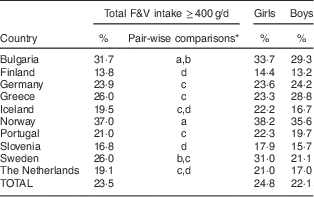
* Pair-wise comparisons with Bonferroni correction. Countries for which percentages meeting the recommendation are significantly different are denoted with different letters a–e (e.g. percentage meeting the recommendation in Bulgaria differs from that in Finland, but not from that in Norway and Sweden).
FFQ
Reported frequencies of fruit and vegetable intakes are presented separately in Fig. 2. There is a large variation between countries in how many children report eating fruit once daily or more. On average 53·3 % of the children reported not to eat fruit daily. Iceland was the country where the largest proportion of children (55·8 %) reported eating fruit at least once daily, in contrast to the results from the 24 h recall, where children in Iceland had the second lowest intake of fruit. The country where the largest proportion of children reported eating vegetables at least once daily was Finland (67·0 %), and the country where the smallest proportion of children reported eating vegetables at least once daily was Norway (48·2 %). On average, 44·9 % of the children reported eating vegetables less than once daily.
Distribution (%) of intake frequencies (times per day) of (a) fruits ( , >2 times/d;
  , 2 times/d;
  , 1 time/d;
  , <1 time/d) and (b) vegetables (
 , ≥2 times/d;
  , 1 time/d;
  , <1 time/d) per country (FFQ) among 11-year-old children (n 8158) from 236 schools across ten European countries participating in the PRO GREENS project, April–October 2009

Discussion
The main results showed that children in the investigated countries still do not meet the recommendations for F&V consumption, with only 23·5 % of the whole sample reaching the WHO recommendation of 400 g/d. More than half (53·3 %) of the children in the total survey reported not eating fruit daily, while the corresponding results for vegetables were slightly more promising according to the FFQ (44·9 %). There were relatively large variations in total F&V intake between countries and also when looking at fruit and vegetable intakes separately, as well as consumption of different types and preparations of vegetables between countries. The mean and median intakes were low in all countries, especially the vegetable intakes. Boys had a lower intake of both fruit and vegetables in general, with the exception of some countries (Germany and Greece for fruit, Greece and Portugal for vegetables) where results showed a tendency of the opposite. The Pro Children study also revealed a gender difference with a lower F&V intake in boys in the countries studied(Reference Yngve, Wolf and Poortvliet10). In Germany, the findings differ slightly from those of a population-wide consumption survey(Reference Mensink, Bauch and Vohmann32), which found a mean daily F&V intake of 230 g in boys and 259 g in girls aged 11 years. The mean gender difference of 10 g/d might reflect regional, ethnic and economic aspects of the study population in PRO GREENS.
In most F&V recommendations, fruit juice is included, either unlimited or up to a certain amount(Reference Yngve, Wolf and Poortvliet10). The evidence for the benefits of fruit juice is, however, much less clear than for F&V. F&V are higher in fibre and less concentrated in sugar and there is even some evidence indicating an increased risk of type 2 diabetes with a high consumption of juice in adults(Reference Muraki, Imamura and Manson33). When comparing the intakes of the group of children participating in the current study with the recommendations, one needs to keep in mind that the intakes most likely would be slightly higher if intake of fruit juice were included. As described in the Methods section, an additional reason why we did not include fruit juice in the calculations was that it was shown in focus group interviews that children had problems distinguishing between real fruit juice and other fruit-based or -flavoured drinks, like lemonade and sodas(Reference Wind, Bobelijn and De Bourdeaudhuij31). However, national intake recommendations are in most cases higher than the WHO population goal of ≥400 g/d and the WHO recommendation does not specify whether fruit juice should be included.
The vegetable intake was lower than the fruit intake in all countries. Children often tend to like fruit better than vegetables and may find fruit more accessible as a snack. The low vegetable intake may also be due to a low availability and/or accessibility at home or in school(Reference Yngve, Wolf and Poortvliet10, Reference Yngve34). The types of vegetables consumed and how they were prepared and served varied significantly between the countries included, which was also seen in the Pro Children study(Reference Yngve, Wolf and Poortvliet10). In the Nordic countries (Finland, Iceland, Norway and Sweden) the most commonly eaten types of vegetables were raw vegetables. Especially in Portugal but also in Bulgaria and Slovenia to a certain extent, soup vegetables were more commonly eaten than in the other countries. The type and preparation method of vegetables affects several factors, such as the matrix of the vegetable, which may hinder uptake; but also heat, exposure to oxygen and/or light, cutting, diffusion, homogenization and fat used during processing can change the nutrient level and/or bioavailability in cooked v. raw vegetables(Reference van Het Hof, West and Weststrate35–Reference Delchier, Ringling and Le Grandois37). The bioavailability of carotenoids is greatly increased by cooking or homogenization and the total antioxidant capacity of vegetables increases, probably due to matrix softening and increased possibilities to extract and absorb the compounds of antioxidant nature(Reference van Het Hof, West and Weststrate35, Reference Miglio, Chiavaro and Visconti36). Ascorbic acid and other water-soluble vitamins and vitamin-like components in vegetables do, however, diffuse into cooking liquids and some are destroyed by heat(Reference Delchier, Ringling and Le Grandois37). The choice of cooked or raw vegetables, which the current study shows to differ between countries, most likely depends on cultural factors and availability at home or at school lunch and not necessarily or primarily the preference of the child. Since vegetable intake seems to be the most difficult to increase in a number of intervention studies(Reference Evans, Christian and Cleghorn28), knowledge regarding the most common type of vegetables and the way they are served might provide useful information to tailor future interventions promoting vegetable intake.
The intake levels observed in the present survey are considerably higher than intakes measured in the previous European survey, Pro Children(Reference Yngve, Wolf and Poortvliet10) in 2003. The mean intakes of total F&V were between 220 and 345 g/d in the present study (231–345 g/d in the Pro Children countries also participating in PRO GREENS and 220–320 g/d in the new countries in PRO GREENS) and in the Pro Children survey intakes were 143–265 g/d (143–264 g/d in the five countries also participating in the current study). These results are however not directly comparable, since different sampling methods were used in the two studies. In Pro Children all countries except for two (Austria and Belgium) had nationally representative samples. Intake levels especially in Norway and especially for fruit seem to have increased substantially (in Pro Children 149 g/d, in the present study 240 g/d). The fact that the sampling method in Norway was different for the two studies may have affected the results, but it is also likely that the several promotional programmes to increase F&V intake that have been run in Norway in the period 2003 to 2009(Reference Bere, Hilsen and Klepp27) have had an effect. The fact that children’s F&V intake was based on child reports, which may evoke socially desirable answers, might result in over-reporting, especially in a country where campaigns have been most widespread and intense. In a study by Fischer et al. mediation analyses showed that knowledge of the recommendations, parental demand and parental facilitation explained most of this difference in fruit intake in the Netherlands between 2003 and 2009. This suggests that school programmes and/or media activities were able to raise awareness among both children and parents(Reference Fischer, Brug and Tak38).
Earlier national dietary surveys including F&V intake in the participating countries were generally in line with the results from the current study(Reference Reinaerts, Crutzen and Candel25, Reference Tak, te Velde and Brug26, Reference Enghardt Barbieri, Pearson and Becker39–Reference Baykova, Petrova and Markov45). Results from the FFQ in the current study also showed a similar pattern for fruit intake as the latest Health Behaviour in School-Aged Children survey (HBSC)(Reference Currie, Gabhainn and Godeau46). Among the PRO GREENS countries included in the HBSC study, Finland reported the lowest percentage of children eating fruit at least once daily, while Iceland, Norway, Portugal and Slovenia were among the countries with the highest percentage of children reporting eating fruit once daily or more according to the HBSC, results in agreement with our data.
The presence or absence of a school meal in some of the countries may partially explain differences between countries in the present study(Reference Stevens, Nicholas and Wood47). For example, Germany, the Netherlands and Norway have no school meals. Instead, children bring a packed lunch to school (the Netherlands, Norway) or eat lunch after school at home (Germany). It is likely that the average packed lunch does not always contain vegetables. The amount of vegetables eaten in school may also vary drastically between schools and countries where school meals are served depending on school meal quality. In Sweden, where the vegetable intake is the highest among the countries in the present study, the school lunch and its salad bar play an important role. Finland offers a similar school lunch to Sweden, which could contribute to why Finnish children consumed more vegetables than the average sample, while the fruit consumption was the lowest of all participating countries. Further studies are needed to confirm the factors behind the differences in consumption between countries. In Norway, a lot of effort has been made to provide fruit in school and to promote fruit breaks in class, which could explain the high fruit intake in the Norwegian sample.
When interpreting the current findings, some limitations need to be taken into account. The sample in the study was not nationally population representative, with the exception of Slovenia and the Netherlands. Therefore it is not possible to draw a general conclusion regarding the overall situation in the eight countries with regional samples. Since participation in the study was done on a voluntary basis, schools actually participating were likely more inclined to be aware of and interested in healthy eating. This may have positively affected the consumption or the responses. Some countries (especially Norway, but also Iceland, Sweden and the Netherlands) had low response rates among schools, which could have introduced a selection bias. If this was the case, the true representative intake levels for the selected region may likely be lower than reported here. This might partially explain why Norway, in contrast to the results in the Pro Children study, had the highest fruit intake as well as total F&V intake in the current study, since it might be the case that only the schools that had a larger interest in this topic, and subsequently a higher intake, chose to participate.
Most countries performed the survey during the period April–June in 2009. Due to difficulties in recruiting schools and delays in obtaining parental consent, the time of assessment was delayed in Norway, Sweden and Iceland to September–October. The seasonal effect could have had an impact on intake levels in these countries compared with the others, since locally grown F&V are more available during the autumn in Scandinavia.
The main limitation of the assessment method was that intakes were recorded for one weekday only in the pre-coded 24 h recall instrument and that the results therefore did not reflect usual individual intake. However, on a group level, this method is more reliable and can be considered to reflect average intake of the group. The FFQ should to some extent reflect usual intake better, but on comparison, the ranking of countries based on actual intake (24 h recall) differed quite substantially from the ranking of usual intake (FFQ). The differences in ranking of countries for actual intake compared with usual intake could be due to the problem with portion size estimation, both in the 24 h recall but also that frequencies of intakes did not take portion sizes into account.
Our study clearly showed that interventions are needed to promote F&V consumption in this age group. From earlier studies such as the Pro Children study(Reference te Velde, Brug and Wind24, Reference Klepp, Perez-Rodrigo and De Bourdeaudhuij30) we know that these interventions should target the most important and modifiable determinants of F&V intake. Home and school availability is a very important facilitating determinant of F&V intake and the subsequent PRO GREENS intervention will address this. Furthermore, our study meant that the Pro Children tool was translated into another four languages (German, Bulgarian, Greek and Slovenian), a questionnaire that can be used for free over Europe(48). PRO GREENS also adds knowledge about the current intake levels of fruit and of vegetables among samples of children in ten European countries measured with a validated questionnaire especially designed to assess F&V intake, and additionally new information about intake in five countries not previously included in a similar study.
Conclusions
The present cross-sectional survey shows that the mean consumption levels of F&V in this sample of 11-year-old children were not reaching the WHO population goal. A large number of children stated a frequency of less than once daily for fruit intake and vegetable intake. Vegetable intake was even lower than the fruit intake, which shows the importance of focusing promotional efforts in this field. Despite not reaching population goals for intake of F&V, results from some countries show positive and promising indications, especially in Norway where it seems that the many promotional programmes over the past decade might have had an effect on fruit intake. In order to draw any definite conclusions nationally representative surveys need to be conducted.
The future analyses of the intervention study based on these data will provide more information about the potential of strategies for F&V promotion among children in Europe.
Acknowledgements
Acknowledgements: The authors would like to thank all the schools that participated and the staff at each centre who contributed to the data collection in this survey. Financial support: The PRO GREENS project was made possible by financial support through the Programme of Community Action in the Field of Public Health 2003–2008 of the European Commission. The study does not necessarily reflect the Commission’s views and in no way anticipates its future policy in this area. Additional support was provided by The Research Fund of the University of Iceland and the Ax:son Johnson Foundation, Sweden. The above-mentioned funders had no role in the design, analysis or writing of this article. Conflict of interest: None. Authorship: C.L. drafted the manuscript and performed the data analyses with support from some of the co-authors. All authors contributed to the collection of data and editing of the manuscript. A.G.K. was responsible for the handling and cleaning of the merged data and double-checked the descriptive analyses. S.J.t.V., T.I.H. and E.P. contributed with support in the statistical analyses of differences in intakes. Ethics of human subject participation: Ethical approvals for this study have been obtained from: the Regional Ethical Review Board, Stockholm, Sweden; Norwegian Social Science Data Services, Bergen, Norway; MedischEtischeToetsingscommissie, VU Medical Center, Amsterdam, the Netherlands; the Ethics Committee at the Department of Public Health, Faculty of Medicine, University of Helsinki, Helsinki, Finland; the National Bioethics Committee, Reykjavik, Iceland; the Ethics Committee of Justus-Liebig University in Giessen, Germany; the Ministry of Education and headmasters of School Julio Saul Dias and School FreiJoão de Vila do Conde, Portugal; the National Medical Ethics Committee of the Republic of Slovenia, Ljubljana, Slovenia; the Ministry of Education, Lifelong Learning and Religious Affairs, Greece; and the Commission of Medical Ethics at the National Centre of Public Health Protection, Sofia, Bulgaria.



