



Currently, Americans spend approximately 50 % of their food budget on foods eaten outside the home( Reference Stewart, Blisard and Jolliffe 1 ), representing a substantial increase from 18 % reported 30 years ago( Reference Guthrie, Lin and Frazao 2 ). Eating out is related to higher intakes of energy and fat( Reference Binkley, Eales and Jekanowski 3 – Reference Stutts, Zank and Smith 9 ) and to higher rates of overweight and obesity( Reference Jeffery, Baxter and McGuire 10 ). Evidence suggests that Americans consistently underestimate the energy content (number of calories) of restaurant foods( Reference Wansink and Chandon 11 – Reference Elbel 16 ). Menu labelling, such as posting energy (caloric) content of foods at the point of purchase in restaurants, has been proposed as one strategy to allow consumers to make informed food purchases. In contrast to complicated and expensive media literacy or nutrition education interventions, menu labels have the advantage of being relatively inexpensive, relatively easy to implement and concurrent with food purchases. However, results from studies examining the effectiveness of menu labels on food purchases have been mixed( Reference Swartz, Braxton and Viera 17 – Reference Kiszko, Martinez and Abrams 34 ). Nevertheless, in March 2010, Congress passed the Patient Protection and Affordable Care Act requiring chain restaurants with twenty or more outlets to start listing caloric information on their menu boards after issuance of final rules, anticipated in 2014( Reference Nestle 35 ).
In terms of menu labelling, adolescents are a group of particular interest. It is estimated that adolescents directly purchase $US 14 billion in goods annually and influence another $US 190 billion in family purchases, comprising mostly food( Reference McNeal 36 , Reference McGinnis, Gootman and Kraak 37 ). Moreover, adolescents tend to eat out regularly( Reference French, Story and Neumark-Sztainer 38 , Reference Lin, Guthrie and Frazao 39 ), putting them at risk for increased consumption of calorically dense foods and weight gain. Although adolescents as a group tend to eat out often, very little research related to menu labels has specifically targeted this group and, to the best of our knowledge, no study has collected qualitative data from adolescents on the topic of menu labels( Reference Harnack, French and Oakes 25 , Reference Elbel, Gyamfi and Kersh 40 – Reference Yamamoto, Yamamoto and Yamamoto 42 ). Therefore, the primary aim of the present study was to gather qualitative information from adolescents regarding their awareness and use of menu labels when eating out, and their suggestions for optimal ways to design menu labels. In addition, because of the noted disparities in availability of healthy foods in lower- v. higher-income communities( Reference Block, Scribner and DeSalvo 43 – Reference Simon, Kwan and Angelescu 46 ), the secondary aim of the study was to explore differences in responses from adolescents living in communities of different socio-economic status.
Methods
The present qualitative study collected and analysed data from forty-one adolescents of high school age through five focus groups conducted in Austin, TX, USA during 2012. The researchers chose the focus group methodology for the study because it can provide more information than self-report surveys and it allows some group interaction among the focus group participants, which is particularly useful when collecting information from adolescents( Reference Peterson-Sweeney 47 ). The study was approved by the Institutional Review Board of the University of Texas Health Science Center.
Participants
In order to achieve a study sample with diverse socio-economic status, adolescents were recruited at public recreation centres located in lower-income communities and at private recreation clubs located in higher-income communities using recruitment posters. In addition, staff at the recreation clubs announced the study to their eligible youth and verbally invited them to participate. These two settings were specifically chosen because members of the different clubs (i.e. public v. private) would allow the recruitment of participants of low and high socio-economic status. The snowballing technique was used to meet the recruitment goal of at least forty adolescents.
Potential participants were asked to meet at a specific time at a public location (either the public recreation centres or an eating establishment near the private recreation centres where respective participants were recruited). Forty-one participants met the inclusion criteria of age (14–19 years) and ability to communicate in English. Before each focus group session, research staff obtained written parental consent by sending consent forms home with parents. Consent forms were available in English and Spanish. Student assent was obtained from all participants at the beginning of the focus group. Participants were informed that participation was confidential, voluntary, and that they could withdraw at any time. However, if participants would have withdrawn half way through the focus group, their data would still have been included in the analysis. No identifiers (i.e. names of participants) were used during the focus group discussions to increase anonymity. Participants were also informed before the start of the session that sessions were audio-recorded.
Focus group questions
Based on the socio-ecological framework( Reference McLeroy, Bibeau and Steckler 48 ), the focus group questions were developed to elicit data related to individual behaviour (i.e. current use of menu labels) and other intrapersonal factors (i.e. exposure to menu labels), interpersonal variables (i.e. influence of friends and family) and the influence of the larger food environment (location and cost). Additionally, information related to optimal ways to design menu labels for restaurants was elicited.
Data collection
Three trained moderators (authors S.C., K.J.M. and S.R.W.) conducted all five focus groups using a standardized protocol of focus group questions and probes( Reference Krueger 49 ). The focus group protocol was based on previous qualitative studies conducted by the research team( Reference Evans, Wilson and Buck 50 , Reference Evans, Chow and Jennings 51 ). The specific questions for the present study were field tested with three adolescents before the questions were used in the field. Each focus group ranged from five to ten participants. At the start of each focus group, participants completed a demographic questionnaire, including age, gender, ethnicity/race and usual practices related to using menu labels. Fruit trays and water were provided during each session for snacks. Sessions lasted approximately 50 min and were audio-recorded. The focus group tapes were transcribed by the three moderators and checked for accuracy by the principal investigator (author A.E.E.). Participants were provided a $US 20 gift card after completion of the focus group.
Data analysis
Descriptive analyses were conducted on the survey responses. Qualitative data analysis consisted of creating a coding scheme based on the focus group questions and responses, and a set of decision rules was established to standardize coding procedure( Reference LeCompte and Schensul 52 ). Analysis was conducted using the qualitative software QSR NVivo version 8 (2008). Coding involved structured organizing of transcript passages into categories to facilitate data analysis and interpretation. Primary themes were identified through frequency of coding within similar social contexts and across focus groups. Each transcript was coded by at least two coders and differences were discussed until agreement was reached. The two coders (S.C. and S.R.W.) were staff with experience in qualitative methodology and were both focus group moderators as well.
Results
Participants
Forty-one adolescents participated in five focus groups. The majority of the lower-income community participants (n 26) were female and Black, and 50 % of this group participated in the free or reduced-price National School Lunch Program. Most of the higher-income community participants (n 15) were non-Hispanic White females and none participated in the National School Lunch Program (Table 1).
Demographic characteristics of the adolescent participants (n 41) according to SES, Austin, TX, USA, 2012

SES, socio-economic status.
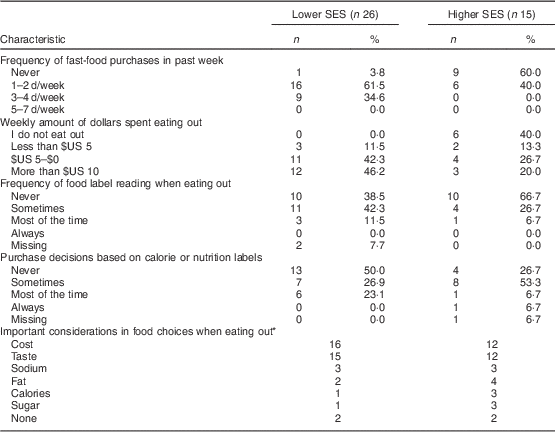
The vast majority of lower-income students reported eating at fast-food establishments during the past week (96 %). Forty-six per cent of this group spent more than $US 10 per week eating out. In contrast, only 40 % of higher-income adolescents reported eating at fast-food restaurants in the past week; 20 % spent more than $US 10. The majority of participants from both groups reported that menu labels did not influence their food purchasing decisions (Table 2).
Behavioural characteristics of the adolescent participants (n 41) according to SES, Austin, TX, USA, 2012
SES, socio-economic status.
*Frequency of times the factor was mentioned.
Emergent themes from qualitative data
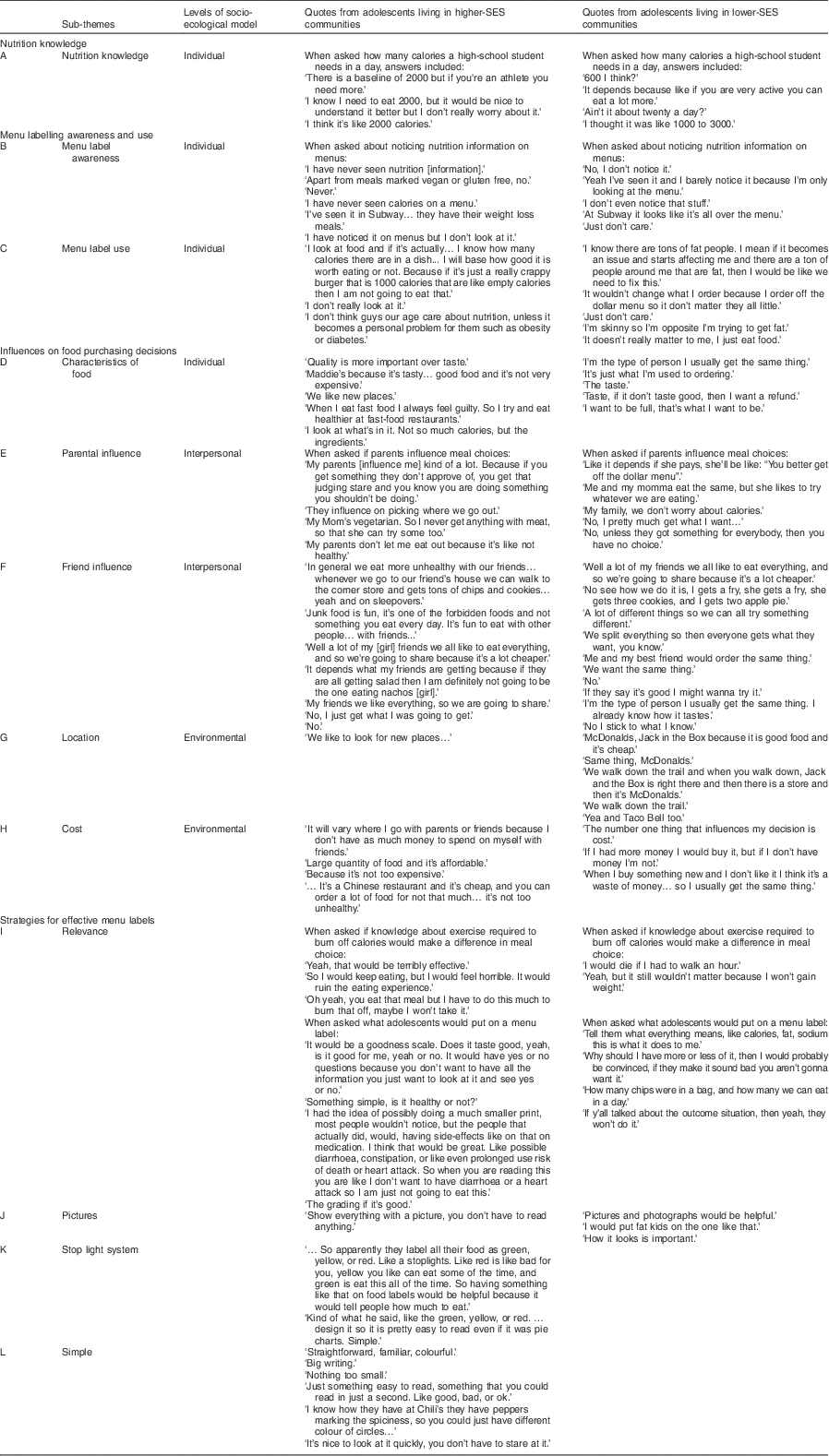
Four overarching themes emerged from the focus group discussions: (i) knowledge about caloric requirements; (ii) menu labelling awareness and use; (iii) influences on food purchasing behaviours; and (iv) strategies for effective menu labels. Direct quotations supporting these themes are provided in Table 3.
Qualitative results from focus group discussions among of the adolescent participants by SES level, Austin, TX, USA, 2012
SES, socio-economic status.
Knowledge about caloric requirements
In general, girls living in the higher-income communities were knowledgeable about the appropriate daily intake of calories. These girls also expressed a desire to learn more about calories and nutrition, illustrated by their questions to interviewers during the focus groups. Adolescents living in the low-income communities suggested a range of appropriate daily caloric intake between 20 and 10 000 calories (84 and 41 840 kJ). These participants reported having mixed feelings about learning more nutrition information.
Menu labelling awareness and use
At the time of the present study, the Patient Protection and Affordable Care Act was not yet in place but several chain restaurants had already implemented menu labelling. Although the majority of participants were knowledgeable about menu labelling, the majority of the participants reported rarely noticing menu labels at eating establishments. They also reported that when they did notice menu labels, they were rarely interested in reading them (Table 3, row B) Additionally, most participants felt they would only become interested in menu labels if they might be personally affected by overweight or weight-related illness (Table 3, row C).
Influences on food purchasing decisions
Although participants were clear that menu labelling did not affect food purchasing decisions, analyses did reveal five other factors.
Characteristics of the food
Except for higher-income community girls, participants reported caloric content as rarely influential in their food purchasing decisions. Instead, cost and taste were cited as the most important factors influencing food choices. However, girls from the higher-income communities reported that fat and sugar content, meal ingredients and food quality were more important factors when making meal choices (Table 3, row D).
Influence of parents
Adolescents from the high-income communities reported being influenced by parents when making food purchasing decisions and reported that their parents want them to eat healthy: ‘… if you got something they don’t approve of, you get the judging stare...’. Lower-income community participants rarely reported their parents speaking with them about healthy eating and reported eating at fast-food restaurants with their parents often: ‘My family, we don’t worry about calories…’.
Peer influences
Friends were also highly influential in meal choices for girls. In general, adolescents from the high-income communities tended to eat less healthy when eating with friends than when eating with their parents: ‘Junk food is fun, it’s one of the forbidden foods and not something you eat every day. It’s fun to eat with other people… with friends…’. In addition, all girls reported sharing meals because it allowed them to spend less and get more variety in their choices (Table 3, row F). High-school boys preferred to order on their own and did not report making meal choices based on friends’ influence.
Location
Two environmental factors that influenced adolescents when making food purchasing decisions were physical location and cost. Girls from the high-income communities reported eating with their friends at restaurants located all over the city and reported wanting to try new places and order different items. The adolescents from the low-income communities reported being confined to walkable restaurants close to their homes or their school (Table 3, row G).
Cost
Cost was overwhelmingly the most important factor for meal decisions among adolescents from the low-income communities. These adolescents reported selecting menu options to stretch the dollar and choosing familiar foods: ‘When I buy something new and I don’t like it, I think it’s a waste of money… so I usually get the same thing.’ Higher-income community participants also reported cost as influential when making meal choices with friends, but not when eating out with parents.
Strategies for effective menu labels
Participants were asked to provide suggestions on how to construct menu labels that were relevant to their age group. In order to facilitate this question, the researchers showed different examples of menu labels that are currently being used in the USA and in other countries on large poster boards. These examples were used as a starting point for the conversation. Participants were asked their reaction to the samples and then asked how/if these menu labels could be improved. At the end of this specific discussion, participants were asked if there were other ways that this information could be portrayed effectively. The most popular suggestions included adding the number of miles or minutes necessary to burn off calories, or listing the health conditions resulting from eating specific foods: ‘I would die if I had to walk an hour. I would eat salads and everything.’ Other suggestions included using relevant pictures to present information or incorporating a traffic light system using big, bold letters or colours to present information: ‘Show everything with a picture, you don’t have to read anything.’ Additionally, the higher-income girls reported being influenced by the ingredients listed next to meals and were interested in seeing labelling of fat, sugar and ingredients.
Discussion
The primary aim of the present study was to collect in-depth information from adolescents about their use of menu labels when eating out and, secondarily, to determine if there were differences according to socio-economic status. In comparing the quantitative results obtained from a short survey, notable differences according to socio-economic status were observed. Participants living in lower-income areas reported eating out more often and spending more money eating out. This is somewhat counterintuitive, assuming that participants living in lower-income areas have less disposable income overall. However, previous studies support these findings( Reference Harnack, French and Oakes 25 , Reference French, Story and Neumark-Sztainer 38 , Reference Elbel, Gyamfi and Kersh 40 ). It is important to note that the lower-income participants reported eating out at fast-food establishments while the higher-income participants reported eating out at more expensive sit-down eating establishments.
Overall, knowledge about appropriate daily energy intake range was fairly poor, especially among the participants living in lower-income areas. When asked about how many calories teens should eat every day, the lower-income group’s guesses ranged from 20 to 10 000 calories per day. Higher-income participants, especially the girls, were more knowledgeable, perhaps because they also reported that their parents talk about this topic quite often. Other studies also suggest that higher-income adolescents tend to have a higher level of nutrition knowledge than lower-income adolescents( Reference Evans, Wilson and Buck 50 , Reference Story and Resnick 53 ). This lack of knowledge is disturbing in that it points to one reason why menu labels providing only calorie information may not work among this age group.
Menu labelling awareness and use was extremely low among all participants. Most participants reported never having seen nutrition information on menu boards when eating out. At the time of the study there was no regulation in place requiring eating establishments to post nutrition information; however, certain fast-food chains were already displaying menu labels, so most of the participants probably were exposed to them. Nevertheless, it is possible that participants had not been to eating establishments with menu labels and, thus, these results are consistent with the adolescents’ environment at the time of the study. However, when asked if they would use nutrition information if it was available when eating out, most adolescents (except girls from the higher-income communities) stated that they would not use it. Several boys mentioned they would use it to make sure they ordered the most calories possible. Previous studies with adolescents are congruent with our findings in that only 9 % of 349 participants reported using menu labelling information if they noticed it( Reference Elbel, Gyamfi and Kersh 40 ). Past studies have also shown that compared with males, females are more likely to use nutrition information( Reference McCullum and Achterberg 54 , Reference Bender and Derby 55 ).
Influences on food purchasing decisions
In terms of what drives their food purchasing decisions, all adolescents reported that calorie content was not important. Fifty per cent of lower-income community participants and 27 % of higher-income community participants reported that caloric information ‘never’ influences their choices when eating out. Instead, cost and taste were reported as the two most important factors (Table 2). These results are consistent with results from other studies( Reference Harnack, French and Oakes 25 , Reference Schindler, Kiszko and Abrams 33 , Reference Elbel, Gyamfi and Kersh 40 ). In one study, when participants were asked to rate the importance of price, taste, nutrition and convenience when purchasing food, taste was the most highly rated factor and nutrition was the least likely factor to be rated as very or somewhat important( Reference Harnack, French and Oakes 25 ). Among participants from the lower-income communities, familiarity and ability to walk to eating establishments determined eating establishment selection. Elbel et al. also found that easy access and convenience of location were important considerations for teens in choosing where to eat( Reference Elbel, Gyamfi and Kersh 40 ).
Both parents and peers are important influences when eating out, underscoring the importance of the social environment. However, an important difference was that participants from the higher-income communities are more often exposed to social norms that promote healthier eating, while adolescents from the lower-income communities are more often exposed to social norms that promote less healthy eating( Reference French, Story and Neumark-Sztainer 38 ). In the present study, higher-income community participants reported that both parents and peers eat out at restaurants with wait staff or more ‘upscale’ restaurants, while parents and peers of lower-income community teens tend to eat at fast-food establishments.
Strategies for effective menu label formats
Overall, participants reported that menu labels in their current format are not useful or relevant to them. However, if labels can be constructed in such a way to make them personally relevant, then they were willing to consider using the labels. Participants suggested the following methods for making labels more personally relevant: (i) post the number of minutes/miles needed to ‘run off’ the calories consumed; (ii) add a silhouette figure that is thin, average or overweight next to each food item to indicate the relative number of calories in the food; and (iii) use simple designs with bold colours such as the traffic light design. If calories had to be posted on the menu, then the participants wanted to have the average daily required calories listed as well.
Experimental studies to test the actual effectiveness of specific menu labelling designs have been mixed. There is some evidence that providing physical activity equivalents as opposed to providing caloric information may be an effective format for adolescents. Bleich et al. conducted a study with low-income adolescents and found that by providing calorie information as a physical activity equivalent, the odds ratio of reducing sugar-sweetened beverage purchases was reduced to 0·51 (95 % CI 0·31, 0·85)( Reference Bleich, Herring and Flagg 41 ). Another study which assessed several formats of menu labelling found that when considering the entire sample of adolescents and adults, 71 % of participants preferred calorie information over physical activity information. However, when broken down by age group (younger than 35 years v. older than 35 years), the younger group was much more likely to prefer the physical activity information (43 % v. 22 %, respectively; P<0·006)( Reference Fitch, Harnack and Neumark-Sztainer 56 ).
Providing caloric menu information through simple graphics is another promising strategy. Children significantly improved their meal choices when exposed to menus with heart symbols v. children exposed to menus with calorie and fat content or children exposed to menus with no nutrition information( Reference Stutts, Zank and Smith 9 ). Adults exposed to colour-coded menus (red/green circles indicating higher/lower calorie choices) ordered menu items with fewer calories( Reference Liu, Roberto and Liu 57 ). Additionally, researchers in Spain found that adolescents ordered menu items with significantly less calories, total fat, saturated fat, sugar and salt when ordering from a menu with traffic light colour-coded nutrition information compared with when ordering from a menu with the same nutrition information, but without colour coding( Reference Babio, Vicent and López 58 ). Further, nearly 90 % of the adolescents preferred the traffic light colour-coded menu to the no-colour menu because it was easier to understand( Reference Babio, Vicent and López 58 ). However, in another study, menu labels with symbols did not result in changes in calories or fat of the menu items ordered( Reference Holmes, Serrano and Machin 59 ). No studies using symbols of different sized silhouettes on menus have been conducted with adolescents.
Limitations
As with any study, the present one has limitations. First, as with many qualitative studies, the sample was a convenience sample and the sample size was small, limiting the generalizability of the findings. However, after five focus groups, the information received from participants became redundant, an indication that the saturation level was reached. A second limitation is that the lower-income community participants were mostly of ethnic minority background, while the higher-income community participants were mostly white. This breakdown of ethnic background is not surprising given data showing that families of ethnic minority backgrounds tend to live in lower-income neighbourhoods. However, because results are confounded by ethnic makeup, it is more difficult to attribute results solely to living in low-income or high-income communities, and cultural factors surely play an important role as well.
Implications and conclusion
Menu labelling has been identified as a potential strategy to help individuals make healthier choices when eating out. However, to have this impact among all sub-populations, including adolescents who tend to use a high percentage of their disposable income on eating out, more research is needed. While the current format of providing the number of calories next to a menu item may be effective for adults, results of the current, small qualitative study suggest that this format of menu labelling may not be the most effective way to provide this information to adolescents. Many of the adolescents in the study were not knowledgeable about the correct range of recommended caloric intake, thus seeing a number of calories next to a food item did not have any meaning for them. Different formats suggested by focus group participants included presenting calorie information in the form of exercise equivalents, using a simple traffic light system, providing pictures of thin, average and overweight people next to specific food items, or listing calories along with suggested daily caloric intake. Given that there is a paucity of studies examining the impact of different menu label designs on adolescents, it is difficult to conclude what will best work with this age group. Future longitudinal quantitative studies to determine the impact of different designs on adolescents’ purchasing decisions are warranted.
Because of the recently enacted national menu labelling legislation, it is not realistic to suggest changing the format of menu labelling in the USA. The results of the present study underscore the need to conduct more research to gain a better understanding of how the current format can be enhanced to be more effective with adolescents. Results indicate a need to provide more nutrition education to adolescents as well. In addition, although it will be difficult to make any changes to the menu labelling format in the USA, results from the current study can benefit other countries that may be in the process of creating similar legislation.
Acknowledgements
Acknowledgements: The authors would like to thank the participants and the adults at the locations of recruitment who made the study possible. They also would like to thank Shadia Lahlou and Cori Nemec Fair for providing technical assistance for this manuscript. Financial support: This work was supported by the Michael & Susan Dell Center for Healthy Living at the University of Texas School of Public Health. The Michael & Susan Dell Center for Healthy Living had no role in the design, analysis or writing of this article. Conflict of interest: None. Authorship: A.E.E. designed the study, created the methodology, analysed the data and developed the manuscript. S.R.W. helped design the study, recruited participants, conducted focus groups and helped analyse the data; she also assisted in writing of the manuscript. K.J.M. recruited participants and conducted focus groups; she also assisted in writing of the manuscript. S.C. conducted focus groups and led the data analysis; he also assisted in writing of the manuscript. E.A.V. helped analyse the data and reviewed the manuscript. R.B.N. helped design the study and critically reviewed the manuscript. Ethics of human subject participation: This study was conducted according to the guidelines laid down in the Declaration of Helsinki and all procedures involving human subjects were approved by the Institutional Review Board of the University of Texas Health Science Center. Written informed consent was obtained from all subjects.



