



The US Department of Agriculture (USDA) maintains a raft of nutrition and food assistance programmes, many of which are directed specifically at children and aim to reduce food insecurity and hunger. In 2013, the fifteen domestic food and nutrition assistance programmes administered by the USDA reached about 25 % of Americans at a cost of nearly $US 109 billion( Reference Oliveira 1 ). Studies of the largest of these programmes (including the Supplemental Nutrition Assistance Program (SNAP) and the Special Supplemental Nutrition Program for Women, Infants, and Children (WIC)) have most frequently found that they are successful in reducing both household and child food insecurity( Reference Fox, Hamilton and Lin 2 – Reference Yen, Andrews and Chen 6 ). However, much less is known about how other nutrition programmes impact household food security.
In particular, almost no previous research has investigated the impact of the Summer Food Service Program (SFSP) and related Seamless Summer Option (SSO; hereafter ‘summer meals’), which are entitlement programmes that offer free meals and snacks to children over the summer when school is not in session. Sponsor organizations can generally operate SFSP sites in the attendance catchment areas of schools where 50 % or more of the student body is eligible for free or reduced-price lunch (i.e. have household incomes <185 % of the federal poverty line (FPL)) or in Census block groups where 50 % or more of the children are eligible for free or reduced-price lunch. Sites are usually designated as open enrolment and serve all children on a first-come, first-served basis. Sites may elect to serve all three meals and morning and afternoon snacks, but lunch is most commonly available( 7 , 8 ).
To minimize administrative burden and to encourage participation in summer nutrition programming, the USDA implemented the SSO in 2004. The SSO allows schools that participate in the National School Lunch Program (NSLP) and the School Breakfast Program to continue to offer free meals over the summer, although reimbursement rates for meals and snacks served are lower for the SSO( 9 ). However, in most other ways, SSO sites are indistinguishable from SFSP sites( 9 ), especially for children or families who are seeking free meals.
Although they are small relative to SNAP, the summer meals programmes are nevertheless an important resource to low-income families. In fiscal year 2014, average daily participation in the SFSP was 2·46 million and the programme distributed 159·9 million meals at a total federal cost of $US 464·4 million( 8 ). Although SSO participation is not reported separately (M Yousefi, personal communication, 23 April 2013), average daily participation for free meals from the NSLP in July 2014 was 1·1 million( 8 ), most of which was accounted for by participation in the SSO, because schools do not typically operate during this month.
While these data demonstrate that the summer meals programmes are a substantial commitment on the part of the federal government to the nutritional well-being of low-income children, participation among eligible children remains fairly low. A comparison between participation in summer meals programming and participation in the NSLP during the academic year is instructive in this regard. In 2014, average participation in the reduced-price and free lunch components of the NSLP was nearly 21·5 million( 10 ). Thus, based on these data, only one in six NSLP participants also participated in the summer meals programmes, implying a substantial participation gap in summer meals programming. A report from the Food Research Action Center using slightly different estimates of participation arrived at a similar conclusion: in 2013 only one in seven children who needed access to food during the summer was getting it from the USDA’s summer meals programmes( Reference Sims, Anderson and FitzSimmons 11 ).
The participation gap provides an important impetus for the present study. Unlike SNAP, which already reaches more than 90 % of eligible children( Reference Eslami and Cunnyngham 12 ), the summer meals programmes could be expanded dramatically to improve nutrition and overall well-being in low-income households with children. Over 40 % of American households with children with incomes less than 185 % of the FPL were food insecure in 2013( Reference Coleman-Jensen, Gregory and Singh 13 ). Food insecurity is of tremendous concern and has been linked to poorer health( Reference Cook, Frank and Berkowitz 14 ), academic and social problems( Reference Jyoti, Frongillo and Jones 15 , Reference Alaimo, Olson and Frongillo 16 ) and anxiety and depression( Reference Weinreb, Wehler and Perloff 17 ) in children, and poorer self-reported health( Reference Stuff, Casey and Szeto 18 ), chronic disease( Reference Seligman, Laraia and Kushel 19 ), poorer food consumption and nutrient intake( Reference Bhattacharya, Currie and Haider 20 – Reference Dixon, Winkleby and Radimer 22 ) and depression( Reference Whitaker, Phillips and Orzol 23 ) in adults. Understanding the effectiveness of the summer meals programmes in reducing food insecurity is thus an essential piece of evidence for policy makers. Two previous studies using data on the number of summer meals sites at the state level have found evidence that these programmes are associated with lower household food insecurity( Reference Nord and Romig 24 , Reference Bartfeld and Dunifon 25 ), but no study has attempted to examine participation directly nor to examine programme sites at a lower level of analysis. Using administrative data from the State of California and surveillance data on a representative sample of Californian households, the present study used geographic accessibility of summer meals sites as a proxy for participation to estimate whether participation is associated with household food security in low-income households with children.
Methods
Data
Unlike SNAP, WIC and the NSLP, participation in the SFSP and SSO is not routinely measured in any major survey. Thus, the present study capitalizes on two sources of secondary data which provide a unique opportunity to estimate the impacts of participation. The first is the California Health Interview Survey (CHIS), a health surveillance survey administered biannually since 2001 that is ‘representative of California’s non-institutionalized population living in households’( 26 ). In each household, an adult was randomly selected to complete a parent survey; in households with children, a random adolescent (aged 12–17 years) and a random child (younger than 12 years) were also selected( 26 ). Data for the current project were taken primarily from the 2011–12 adult survey; data from the teen survey were also used to create household variables for programme participation and citizenship status. The CHIS has the merit of being the only statewide surveillance system to include questions about household food insecurity, which were posed to adults in households with incomes below 200 % of the FPL. The final analytic sample included 5394 low-income households with at least one child under the age of 18 years.
The second source is administrative data from 2011 on California’s summer meals sponsors and sites. These data were obtained through a public information request to the Nutrition Services Division of the California Department of Education, which is responsible for maintaining the summer meals programmes in that state. The data included information on all summer programmes in the site in the 2010–11 fiscal year, which ran from October 2010 until September 2011. In that year, 431 sponsors operated 1947 SFSP and 1440 SSO sites. Table 1 provides information on the 3372 sites that were used in the analyses.Footnote * The vast majority of sites (>90 %) were classified as open. Lunch was the most common meal type offered (at 91·8 % of sites) followed by breakfast (32·7 %) and afternoon snack (23·2 %). Roughly half of the sites served more than one type of meal over the course of the summer. Over the course of the summer, sites were open for lunch for an average of 28·8 d for about 0·88 h/d; breakfast was offered for an average of 8·8 d for an average of about 0·25 h/d.
Characteristics of California summer meals sites (n 3372), 2010–11 fiscal year (October 2010–September 2011)
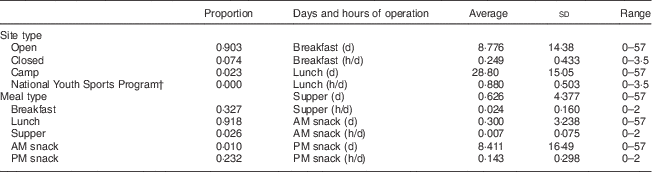
† One site was operated as a National Youth Sports Program.
Measures
Programme accessibility
The CHIS did not directly assess participation in the summer meals programmes. Thus, the present study relied upon geographic accessibility as a proxy for participation in these programmes among low-income households, a novel approach to the study of nutrition programme utilization. The use of accessibility as a measure of programme utilization has a long history and has been important in the study of health-care utilization in particular( Reference Ricketts 27 ). Although it may be categorized in many ways( Reference Guagliardo 28 ), accessibility is presumed to be a predictor of people’s ability to obtain goods or services. Recently, the concept of accessibility has figured prominently in the discourse on food deserts( Reference Walker, Keane and Burke 29 ), which the USDA generally defines as areas without ‘ready access to fresh, healthy, and affordable food’( 30 ). Further, some researchers have suggested the importance of considering availability and accessibility of food as an important framework for understanding food insecurity( Reference Larson and Moseley 31 ).
Low levels of participation among eligible children as well as previous evaluations of the SFSP both point to accessibility as central to participation in the summer meals programmes. For one, the participation gap makes it clear that there are simply not enough sites to feed all eligible children over the summer( Reference Sims, Anderson and FitzSimmons 11 ). In a recent survey( Reference Mabli, Cohen and Potter 32 ), nearly half of a sample of emergency food recipients reported not knowing about the SFSP as the major reason for non-participation, which suggests with some likelihood that there were not summer food sites in close proximity. Further, process evaluations of the SFSP conducted by the USDA have identified transportation as the most consistent barrier to participation and a particular challenge to children living in rural areas( Reference Gordon, Briefel and Needels 33 , Reference Wauchope and Stracuzzi 34 ).
The substantial literature on health-care access suggests multiple ways to measure accessibility( Reference Guagliardo 28 ), some of which have been used in studies of food security and food access( Reference Larson and Moseley 31 , Reference Smoyer-Tomic, Spence and Amrhein 35 ). In the present study, accessibility was measured using a gravity model:
 $$A_{i} \,{\equals}\mathop{\sum}\limits_s {{{Supply_{s} } \over {d_{{is}}^{\beta } v_{s} }}} ,$$
where A i is the accessibility score for CHIS respondent i and is a summative function of the Supply of summer meals at site s, divided by the drive travel time d between respondent i’s residence and site s, and a decay coefficient β, which ‘represents the change in difficulty of travel as travel time change(s)’( Reference Guagliardo 28 ) (p. 8). Together, these terms in the gravity model account for the supply of summer meals sites that are accessible to CHIS respondents, discounting the value of sites that take longer to reach (i.e. by dividing the Supply at site s by the amount of time it would take to drive there, d). The additional term in the denominator, v s , indexes spatially distributed population demand for summer meals at site s and is defined as:
 $$v_{s} \,{\equals}\mathop{\sum}\limits_k {{{p_{k} } \over {d_{{ks}}^{\beta } }}} ,$$
where p is the population of families with children with incomes below 200 % of the FPL (a measure of the eligible population) in nearby census tract k and d is the drive travel time between site s and the centre of tract k ( Reference Guagliardo 28 , Reference Joseph and Bantock 36 ). Thus, the addition of the v s term further adjusts the ‘value’ of the supply at site s by accounting for the demand for summer meals; higher levels of demand in nearby census tracts would further increase the size of the denominator. Travel was calculated as driving time (in minutes) based on the results of evaluations of the SFSP, which found that three-quarters of all children and 90 % of children at rural sites were dropped off by car( Reference Gordon, Briefel and Needels 33 ). For the present study, Supply s was an estimate of the total number of meals served at each site over the course of the summer. The online supplementary material describes the process for the construction of this variable in full detail.
One major choice bounds the gravity model: the value of the decay coefficient, β, which effectively discounts the supply of sites that are further away from CHIS respondents as well as the demand from census tracts that are further from summer meals sites. Decay coefficients can be linear, exponential or binary( Reference Schuurman, Berube and Crooks 37 ). Although they are ideally developed based on existing empirical data( Reference Guagliardo 28 ), no study has investigated use of the SFSP relative to travel time. Lacking this specific information, a parsimonious approach was adopted by setting this coefficient equal to 1. In addition, all analyses were based on an effective upper limit of 30 min of driving. That is, sites that were further than 30 min away were not counted as accessible to CHIS respondents and the low-income population of census tracts greater than 30 min away from programme sites did not contribute to demand. This limit was based on a reasonable approximation of the number of minutes (60 min round trip) that people might be willing to drive to access sites and is tantamount to setting a decay coefficient equal to infinity for driving times greater than 30 min( Reference Schuurman, Berube and Crooks 37 ).
The gravity model is superior to more basic measures of accessibility such as travel time to the nearest site or the number of sites reachable with a certain time period. Most significantly, the gravity model accounts for the spatially distributed supply and demand for summer meals, unlike these more basic measures, which treat each site equally. Also, the gravity model ‘discounts’ the value of sites that are harder to reach or which provide a limited supply of meals in areas of high demand.
Food insecurity
The CHIS 2011–12 included the standard six-item version of the USDA’s food security module. The six-item scale is widely used and has good sensitivity and specificity and minimal bias relative to the full eighteen-item version of the food security module( Reference Blumberg, Bialostosky and Hamilton 38 ). Like the full scale, the six-item scale assesses whether households were able to afford the food they needed in the previous 12 months and can be used to establish various levels of household food insecurity severity( Reference Bickel, Nord and Price 39 ). Households where parents provided affirmative responses to zero or one question(s) were identified as food secure, those affirming two to four responses were identified as having low food security, and those providing affirmative responses to five or six questions were identified as having very low food security( Reference Blumberg, Bialostosky and Hamilton 38 ). Based on this procedure, the present study used two indicators as primary outcomes: (i) whether households experienced any food insecurity and (ii) whether households experienced very low food security in the previous 12 months. Very low food security is a particularly severe type of material hardship and indicates that food intake of some household members was reduced and normal eating patterns were disrupted at times during the year due to limited resources( Reference Coleman-Jensen, Gregory and Singh 13 ). Table 2 provides summary information on both food insecurity indicators as well as all other variables used in the analyses.
Descriptive statistics for the full analytic sample: low-income families with children (n 5394), California Health Interview Survey, 2011–12

TANF, Temporary Assistance for Needy Families; SNAP, Supplemental Nutrition Assistance Program; WIC, Special Supplemental Nutrition Program for Women Infants and Children.
Controls
All analyses controlled for a number of additional variables to rule out potential confounding between accessibility of summer meals and food insecurity. From the CHIS, these included demographic variables such as: parental respondent’s age in years; the number of teens, children and adults in the household; the race and ethnicity of the parental respondent (White, not Hispanic; Black, not Hispanic; Hispanic, any race; Asian/Pacific Islander; other); the gender of the parental respondent; the marital status of the parental respondent (married, living with partner, widowed/separated/divorced, never married); the citizenship status of the parental respondent (US-born citizen, naturalized citizen, non-citizen); the percentage of the parental respondent’s life spent in the USA; and the urbanicity of the parental respondent’s home (based on the Claritas Nielsen classification system: urban, second city, suburban, town and rural). Analyses also included economic variables from the CHIS: parent’s education (less than high school, high-school graduate, some college, college graduate); parent’s work status (not working, working 0–20 h/week, working ≥21 h/week); the natural log of household income; and an indicator for whether the adult or teen in the household reported currently receiving Temporary Assistance for Needy Families. Models also controlled for an indicator of whether the parental respondent experienced severe emotional distress during the most emotionally difficult month is the past year( Reference Kessler, Andrews and Colpe 40 ). To account for the influences of participation in other nutrition programmes, analyses included indicators for current participation in SNAP and WIC.
Finally, all analyses included variables to control for area-level factors that might simultaneously be associated with access to summer meals sites and household food insecurity. First was a set of county indicators which accounted for observed and unobserved differences between counties that may be relevant. Second was a census-tract level standardized index (mean=0, sd=1) of neighbourhood deprivation developed in previous research( Reference Messer, Laraia and Kaufman 41 ).
Analyses
Because the present study used the geocoded addresses of CHIS 2011–12 respondents, analyses for the project were completed via a restricted data agreement with the University of California, Los Angeles’ Center for Health Policy Research. This agreement stipulated that all analyses be completed by staff at the Center. Because drive time calculations required working directly with both the CHIS and SFSP data, all drive-time estimates were developed by CHIS staff. Analyses were run using the Stata statistical software package and ordinary least squares regression to first assess the association between accessibility of summer meals sites and the indicator for food insecurity and then separately between accessibility and very low food security. Alternative models (available upon request) used logistic regression and arrived at nearly the same conclusions. All models clustered standard errors at the county level to control for the non-independence of observations. In addition, two sets of subgroup analyses were run. Previous process evaluations of the SFSP have indicated that more than three-quarters of meals were fed to younger children (of elementary school age or younger)( Reference Gordon, Briefel and Needels 33 ) and that access to summer meals is a particular problem for children in rural areas. Accordingly, all analyses were replicated after splitting the sample by age of children in the households (any children aged 0–11 years or only adolescents aged 12–17 years) and by urbanicity (urban/second city or suburban/town or rural).
Addressing selection bias
Selection bias is an important concern in the study of food and nutrition assistance programmes( Reference Kreider, Pepper and Gundersen 42 ). It is well documented that naïve estimates of the impact of programmes like SNAP tend to suggest that participation is associated with increased rates of food insecurity. This finding may initially seem counterintuitive, but is in fact a natural consequence of the fact that the programme and others like it are reaching families with the greatest need. However, as noted above, carefully constructed empirical designs that take advantage of natural experiments to address selection have found that participation in SNAP and other programmes is associated with decreased food insecurity( Reference Fox, Hamilton and Lin 2 – Reference Yen, Andrews and Chen 6 ). In this sense, the use of geographic accessibility as a proxy for participation is a boon, since it is far less likely that families with high levels of need (food insecurity) choose where to live because of proximity to a summer meals site. Analyses controlled for characteristics of CHIS respondents and their families as a check against selection bias.
In the case of summer meals programmes, however, selection might be also relevant to supply. That is, sponsors might operate sites or expand site supply in areas of high demand. Thus, as a further check, county-level indicators and a standardized measure of neighbourhood-level disadvantage (measured at the census tract level) are important area-based controls. Collectively, these variables control for unobserved differences between counties (like differences in the food environment and access to public transportation) that could be associated with both access to summer meals sites and household food insecurity, and generate results based on within-county variation in accessibility of summer meals for CHIS respondents living in areas of comparable neighbourhood disadvantage.
Results
Descriptive results from Table 2 show that 43·1 % of low-income CHIS households (<200 % of the FPL) with children were food insecure, a figure roughly consistent with data from federal reports( Reference Coleman-Jensen, Gregory and Singh 13 ); 15·1 % of households experienced very low food security. Summer meals sites were generally accessible to CHIS respondents: on average the nearest site was reachable in about 4·5 min of driving, although for a small minority (253 respondents; 4·7 %) no site was reachable within 30 min. Over 60 % of sample respondents were Hispanic of any race, more than half were naturalized citizens or non-citizens, nearly a third lived in suburban or town or rural areas, and 66 % had a high-school education or less. Average household income was approximately $US 23 500, more than 25 % of households were receiving SNAP benefits and average neighbourhood deprivation was more than half an sd greater (0·55) than the overall mean.
Table 3 presents results from ordinary least squares models, which examined associations between geographic accessibility of summer meal programme sites and household food insecurity. Table 3 reports results for the full sample and for the subgroups identified above. To improve interpretation, the accessibility score variable was rescaled to units of 100. As reported in Table 3, although coefficients were uniformly negative, the accessibility score was not significantly (P<0·05) associated with food insecurity in the full sample of low-income CHIS households with children or in any sub-sample.
Accessibility of summer meals sites and any food insecurity in low-income households with children (n 5394), California Health Interview Survey, 2011–12Footnote †

OLS coeff., coefficient from ordinary least squares regression; TANF, Temporary Assistance for Needy Families; SNAP, Supplemental Nutrition Assistance Program; WIC, Special Supplemental Nutrition Program for Women Infants and Children.
(*) P<0·10; *P<0·05; **P<0·01; ***P<0·001.
† All models include indicators for county of residence and standard errors clustered at the county level.
‡ Omitted category.
Table 4 is the same in form as Table 3 but presents results for very low food security. For the full sample, a 100-unit increase in the accessibility score was associated with a significant decrease of 0·028 (P=0·033) in the probability of very low food security. Likewise, an increase of 100 in the accessibility score was significantly associated with lower probability of very low food security in households with younger children (−0·026, P=0·021) and among low-income families living in suburban or town or rural areas (−0·049, P=0·002).
Accessibility of summer meals sites and very low food insecurity in low-income households with children (n 5394), California Health Interview Survey, 2011–12Footnote †

OLS coeff., coefficient from ordinary least squares regression; TANF, Temporary Assistance for Needy Families; SNAP, Supplemental Nutrition Assistance Program; WIC, Special Supplemental Nutrition Program for Women Infants and Children.
(*) P<0·10; *P<0·05; **P<0·01; ***P<0·001.
† All models include indicators for county of residence and standard errors clustered at the county level.
‡ Omitted category.
Discussion
The current paper examined the association between accessibility of summer meals programme sites and food insecurity in low-income households with children in the state of California. Models that controlled for numerous individual and household factors along with county indicators and measures of neighbourhood deprivation found that geographic accessibility was associated with significant decreases in the probability of very low food security in the full sample and among households with younger children and those living in less urban areas. This predicted association was strongest (−0·049) for children in suburban or town or rural areas; and in the full sample, the decrease of 0·028 was large relative to the average level of very low food security in the sample (18·4 %). It is important to note, however, that these predicted associations are related to a 100-unit increase in the accessibility score; as indicated below, 100 is close to the mean level of accessibility for CHIS respondents with the highest accessibility scores and so this level of increase suggests a substantial increase in supply relative to demand. Geographic accessibility was not associated with the probability of overall household food insecurity.
These results are broadly consistent with the two previous studies that used state-level data on the summer meals programmes. Nord and Romig( Reference Nord and Romig 24 ) found that seasonal differences in very low food security were more pronounced (i.e. even higher in the summer) in states that provided a low number of summer meals, although results were only evident for school-aged children. Bartfeld and Dunifon( Reference Bartfeld and Dunifon 25 ) likewise found some evidence that state-level measures of participation in summer meals programmes were associated with reductions in household food insecurity. As noted above, no previous study has attempted to directly assess participation in the programme at the household level.
The gravity model, which produced the accessibility score, accounted for spatially distributed programme supply and demand by discounting sites that were further away in distance as well as the demand from areas that were relatively far away. Thus, while the accessibility score coefficients are difficult to directly interpret, they imply that summer meals sponsors may have an impact on very low household food insecurity in two general ways (assuming fixed demand for the programme, measured here by the proportion of families living below 200 % of the FPL in census tracts proximal to programme sites): (i) by opening more sites in high-need areas; or (ii) by increasing the supply of meals at existing sites.
Although both strategies are likely important in light of previous evaluations of the SFSP that have indicated that transportation to sites is a major barrier for participation( Reference Gordon, Briefel and Needels 33 , Reference Wauchope and Stracuzzi 34 ), increasing supply at existing sites may be a more immediately effective strategy. As noted above, descriptive analyses suggest that the nearest site was less than a 5 min drive on average from low-income CHIS households. Further, additional analyses of California census tracts (available upon request) indicate that summer meals sites are already located in areas with the highest level of need. In 2011, the proportion of households with incomes below 185 % of the FPL in census tracts with no summer meals sites was 0·272, compared with 0·416 in tracts with any site and 0·477 in tracts that had four or more sites. After controlling for total population, neighbourhood deprivation was significantly associated with the number of summer meals sites at the census tract level (incident rate ratio=1·35, P<0·001), an association that was consistent even among the highest-poverty census tracts where greater than 50 % of households lived below 185 % of the FPL (incident rate ratio=1·23, P<0·001). These data also have the important benefit of arguing against an alternative interpretation of the present study’s findings, namely that the negative predicted association between accessibility and very low security is a consequence of the fact the programme is not reaching its intended targets.
Sponsors can increase supply of meals in two ways. For one, sites can remain open more days and for longer hours in the summer. Descriptive information on California’s summer meals sites (Table 1) suggests that the average site was open for lunch for half of all possible days (28·8 d out of 57) and breakfast for only 15 % of the summer (8·8 d). Sites could also expand their hours of operation to offer meals and snacks for more hours during open days. Second, sponsors could open new sites and states could push for new sponsors to enrol in the SFSP and SSO. The USDA and many state agencies are actively engaged in such outreach efforts( Reference Sims, Anderson and FitzSimmons 11 , 43 ), which have increased supply in California( Reference Sharp and Shimada 44 ) and elsewhere, but the participation gap points to the need for many more sponsors and sites.
Descriptive information on accessibility (Table 1) indicates that this variable had significant positive skew (mean=19·31, maximum value=1243·75). Supplemental analyses (not shown, but available upon request) assessed for the influence of outliers on the results reported above. After dropping 255 positive outliers (mean accessibility=105·84), accessibility was not associated with either food insecurity or very low food security. These supplemental results further underscore the importance of increasing the supply of summer meals, as it appears that the results in the main analyses were driven by CHIS respondents with particularly high accessibility levels.
Although accessibility was strongly associated with very low food security in the main analyses, the accessibility of summer meals sites was not associated with overall household food insecurity in low-income households with children. The reason for this may be due to the nature of very low food security, which implies a reduction in food intake or disruption of normal eating patterns( Reference Coleman-Jensen, Gregory and Singh 13 ), a particularly severe form of material hardship. Thus, while participation in the summer meals programmes may be sufficient to offset this most profound level of food insecurity, the limited duration and intensity of typical summer meals programmes may not be enough to eliminate food insecurity altogether. Future research is necessary to understand how participation in the SFSP and SSO helps to affect the dynamics of food consumption for low-income families during the summer months.
The CHIS data set included the six-item version of the food security module, which assessed food insecurity for the entire household. Although this scale is minimally biased relative to the full eighteen-item module( Reference Blumberg, Bialostosky and Hamilton 38 ), it is not able to distinguish between food insecurity among adults and children. As a result, the present study focused on household food insecurity and might underestimate the impact of summer meals accessibility on the food insecurity of children, who are most likely to benefit from summer meals programmes.
The study was also limited by an inability to observe direct participation in summer meals programmes. However, geographic accessibility measures used here are proxies for utilization, similar to previous studies( Reference Nord and Romig 24 , Reference Bartfeld and Dunifon 25 ) that used state-level indicators data on summer meals participation and programme supply to estimate programme impacts. Although geographic accessibility has been used extensively in research on health-care access and utilization and in previous studies of food access, gravity models (and other models of accessibility) require a number of assumptions. Of particular import to gravity models is the form and size of the decay coefficient, which quantifies the difficulty in accessing sites that are further away from CHIS residents and the demand for summer meals from census tracts that are far away from summer meals sites. As noted above, the present study adopted a parsimonious approach of using a decay coefficient equal to 1. In alternative models (not shown), exponential coefficients (powers of 2 and 3) were used. In these models, the coefficients attached to the accessibility measure for very low food security were smaller in size but P values were also smaller than those reported above. In addition, in these models, accessibility was associated with significant decreases in the probability of household food insecurity and very low food security among households with adolescents and household food insecurity for CHIS respondents living in urban areas. Results (not shown) also varied in models that used different upper limits for driving time. For example, in models with a cut-off of 60 min, accessibility was still significantly associated with decreases in the probability of very low food security but with significant increases in the probability of household food insecurity. However, 60 min is likely too high a value to reasonably index accessibility, as it unlikely that people are willing to travel 2 h (round trip) to access summer meals sites or that programme sites are attendant to demand for summer meals from census tracts an hour away. Indeed the cost of gasoline or fares for public transportation for this trip would probably offset the benefit of receiving a meal. Further, among the 95 % of CHIS respondents with access to a summer meals site, the nearest site was less than a 5 min drive away, making long travel times highly unlikely.
It is also important to note that geographic accessibility and actual access are not one and the same, particularly for programmes like the SFSP and SSO. As alluded to above, lack of knowledge about the summer meals programmes was identified as major impediment to participation( Reference Mabli, Cohen and Potter 32 ), which is plausible even when sites are located in proximity to low-income households. And while the lack of explicit asset or income tests for the SFSP might mean that stigma is less of a factor than for other programmes, worries about such stigma may negatively affect perceptions of accessibility for potential participants.
More to the point, the limitations attached to the use of geographic accessibility as a proxy for programme participation speak to the need for novel and high-quality data on participation in the SFSP and SSO. Although the results reported here are consistent with the very small number of previous studies, given the lack of information on summer meals participation in the data used to generate national estimates of nutrition programme participation (the Current Population Survey – Food Security Supplement) and other sources of data typically used by policy analysts, researchers should include questions about participation in ongoing and new data collection efforts and continue to develop innovative strategies to understand these important programmes.
Despite these minor limitations and given the almost total lack of research on the impact of the SFSP and SSO, the present study provides an important complement to existing knowledge on these programmes and to the extensive body of literature that has examined other food and nutrition programmes. Decreasing the participation gap between the NSLP and summer meals programmes may be an effective way to reduce very low food security for low-income households with children.
Acknowledgements
Acknowledgements: The author gratefully acknowledges advice and feedback on earlier versions of this manuscript from Dr Steven Garasky, staff at the USDA’s Food and Nutrition Service, and participants at the University of Wisconsin, Madison’s Institute for Research on Poverty (IRP) RIDGE Spring Workshop. Financial support: This research was funded through the IRP RIDGE Center for National Food and Nutrition Assistance Research at the University of Wisconsin, Madison, which is supported by the USDA’s Economic Research Service. The views and opinions expressed herein are those of the author and do not necessarily reflect those of the IRP, the Economic Research Service, or the USDA. The IRP RIDGE Center and the Economic Research Service of the USDA had no role in the design, analysis or writing of this article. Conflict of interest: None. Authorship: D.P.M. was solely responsible for the formulation of the research question, study design, interpretation of the data and writing of the manuscript. Ethics of human subject participation: All analyses were conducted with de-identified secondary data with no means to link information to individual respondents; accordingly, the project was reviewed by the Boston University Institutional Review Board and deemed exempt from further review.
Supplementary Material
To view supplementary material for this article, please visit http://dx.doi.org/10.1017/S1368980016000033



