Circa 1045 BC, the Zhou, a small polity centred on the Guanzhong Plain in the Wei River Valley, overthrew the Shang dynasty (c. 1600–1045 BC) and established the Western Zhou dynasty (c. 1045–771 BC; Shaughnessy Reference Shaughnessy, Loewe and Shaughnessy1999; for summaries of the archaeological evidence, see Liu Reference Liu and chutu wenxian yanjiusuo2017, Reference Liu2021). To manage the newly acquired lands—which extended as far as present-day Shanxi and Hebei provinces in the north and north-east, the Shandong Peninsula in the east, and the Huai and Middle Yangzi River Valleys in the south—the Zhou court sent members of the Ji clan and its allies to these areas to establish regional polities (Hsu & Linduff Reference Hsu and Linduff1988; Li Reference Li2006, Reference Li2008; Khayutina Reference Khayutina2008, Reference Khayutina2010; Jaffe et al. Reference Jaffe, Wei and Zhao2018). Through these regional polities, and by forging political alliances and establishing military posts, the Zhou court exerted political control over a vast area. Many of these polities, such as Jin, Yan, Lu and Zeng, have been identified archaeologically, and their political and cultural landscapes investigated in general (e.g. Sun Reference Sun2003, Reference Sun2021; Li Reference Li2006, Reference Li2008; Khayutina Reference Khayutina and Shaughnessy2017; Jaffe & Flad Reference Jaffe, Flad, Boivin and Frachetti2018; Liu Reference Liu2019).
Over the past decade, archaeological discoveries have added nuance to this picture, demonstrating that north and north-west China were politically and culturally more complex during the Bronze Age than suggested by ancient written sources. Archaeological research at sites such as Taosi (c. 2300–1900 BC) in Shanxi province and Shimao (c. 2200–1800 BC) in Shaanxi province has promoted fresh understanding of the social and political relationships among the Bronze Age societies of East Asia (e.g. He Reference He and Underhill2013, Reference He2018; Jaang et al. Reference Jaang, Sun, Shao and Li2018; for syntheses, see Jaang Reference Jaang2015; Campbell et al. Reference Campbell, Jaffe, Kim, Sturm and Jaang2022). Traditional ancient sources, for example, state these local polities largely served the interests of the Zhou; however, growing archaeological evidence suggests that at least some of these polities may have exercised significant political autonomy (Li Reference Li2006: 187–91; Sun Reference Sun2021: 37–9). Further, in contrast to the traditional research emphasis on political alliances and military domination, recent work has proposed that craft specialisation and commercial exchange may have played an important role in the interaction between various regional powers (Campbell et al. Reference Campbell, Jaffe, Kim, Sturm and Jaang2022). Chronologically, archaeological attention has focused on the Shang period, especially at the site of Anyang in Henan province; there are relatively few known sites—and, consequently, few studies—of the Western Zhou period that followed (Campbell et al. Reference Campbell, Jaffe, Kim, Sturm and Jaang2022).
The written sources, and inscriptions on bronze objects, identify some cultural groups, such as the Xi, Guai and Bing, who were active in north-west China during the Western Zhou period (e.g. Sun Reference Sun2021), but archaeological evidence indicates a selective and mixed use of material culture and customs of diverse origins, combining local traditions with elements from the former Shang and Zhou centres and from the regions further to the north (Sun Reference Sun2021: 17–62). Communities living in this region were probably of varying ethnic or clan backgrounds, including indigenous populations, immigrants from the north, and remnant Shang groups who were probably relocated by the Zhou regime to this area (Liang Reference Liang2015). As is typical of the Bronze Age archaeology of China, most of the archaeological sites investigated to date in this region relate to funerary activity; one exception is the Jiuzhan site, where rich evidence of settlement has been uncovered (Wang & Shui Reference Wang and Shui1997). Consequently, to date, there has been little non-funerary evidence, such as for residential or craftworking activities, with which to address important questions about the political, cultural and economic organisation of this region.
In this context, recent discoveries at the site of Yaoheyuan are particularly significant and contribute to the ongoing reassessment of the cultural landscapes of Bronze Age East Asia. The Yaoheyuan site is located in the foothills of the Liupan Mountains in the upper reaches of the Jing River Valley, adjacent to the Zhou royal domain in Guanzhong. Yaoheyuan is the only Bronze Age site in north-west China to have yielded such a diverse range of evidence, including a cemetery, city walls and a moat, a palace, pottery- and bronze-working areas, and inscribed bones. This evidence makes it possible for the first time to attempt a holistic examination of a Western Zhou community. Moreover, the Upper Jing River Valley is recorded in the traditional sources as an area where the Zhou waged military campaigns, removing hostile polities and building political and marriage alliances with friendly groups, effectively establishing one of their earliest frontiers prior to their conquest of the Shang (Li Reference Li2006: 50–2). Here, we present findings from Yaoheyuan that shed new light on the relationship between the Zhou court and their northern neighbours, and on the political and cultural complexity of north-west China more broadly. The evidence also raises important questions about the political structure of the Zhou state.
Yaoheyuan: a regional centre in north-west China
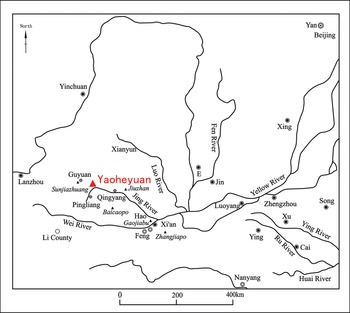
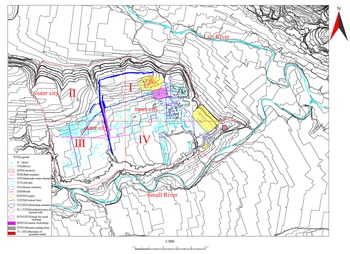
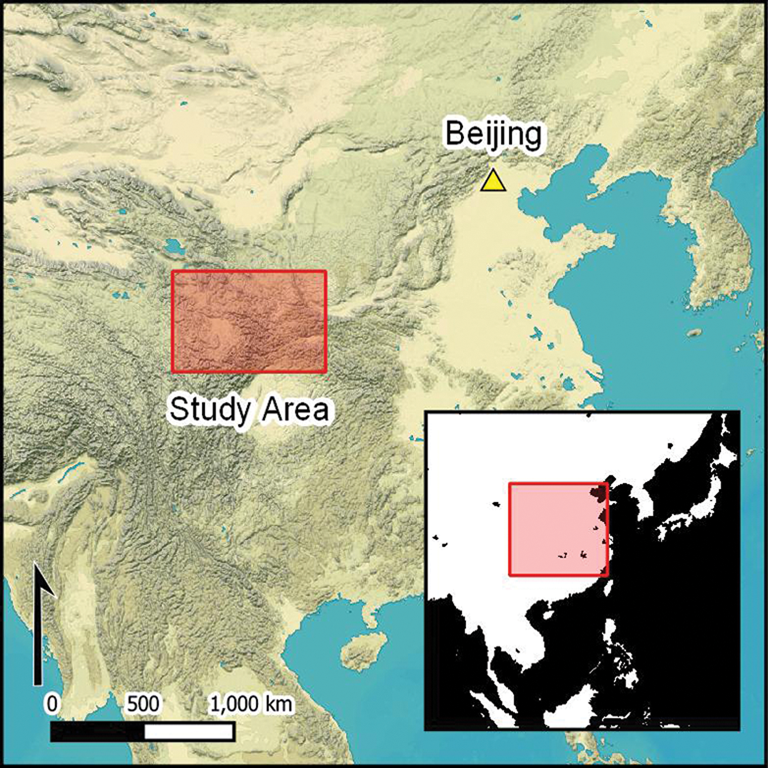
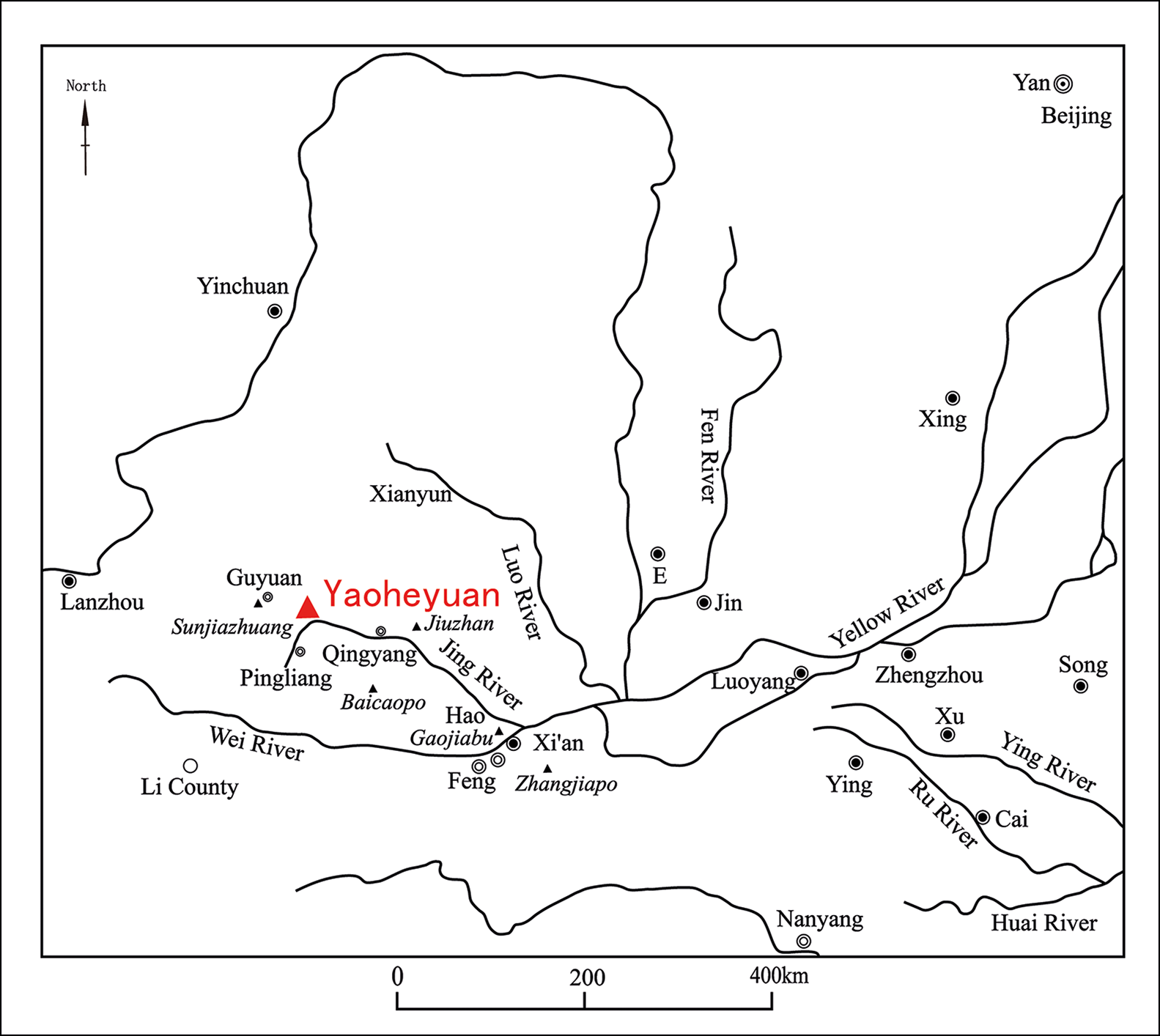
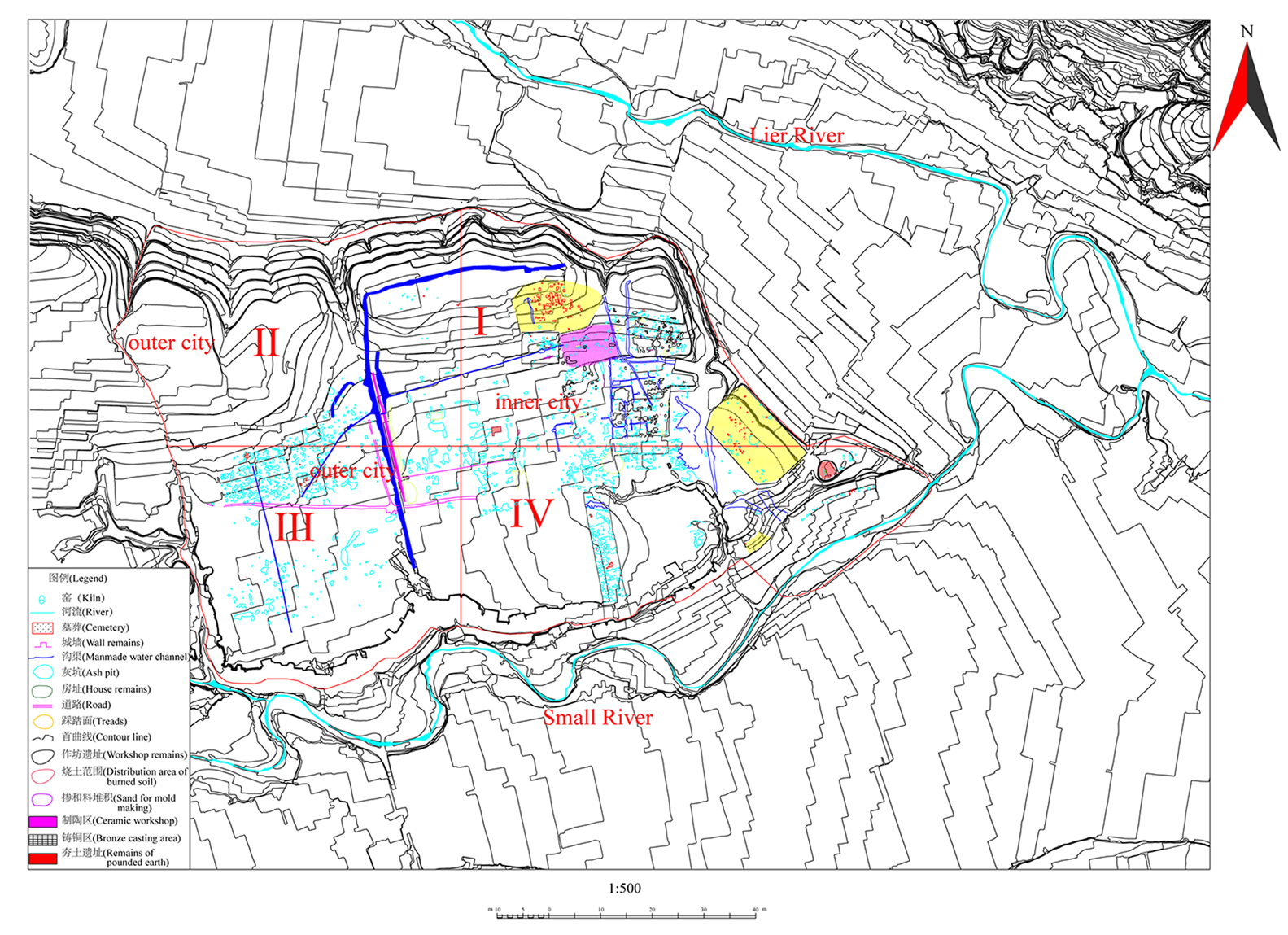
The Yaoheyuan site is located north of present-day Yaohe village of Xinji Township, Pengyang County, Ningxia (Figure 1). It is situated on a triangular terrace above a tributary of the Jing River, in the eastern foothills of the Liupan Mountains in the interior of the Loess Plateau. The recovery at Yaoheyuan of pottery sherds of the Liujia culture—a Shang-period archaeological culture of the Guanzhong Plain to the south of Yaoheyuan site—suggests that human activity in the area dates back to at least the late second millennium BC, but it is unclear whether these inhabitants were under the control of the Shang or had established a local autonomous polity. The site comprises a walled inner city of 56ha and an adjacent outer city of 40ha, and the abundant remains of the Western Zhou period at Yaoheyuan are unprecedented in north-west China.
Location of the Yaoheyuan site in the Jing River Valley (map by Bowen An).
The walled settlement (Figure 2: I and IV) is divided from the rest of the site (II and III) by one arm of an L-shaped moat and a parallel north–south wall. Within the inner city, high-ranking tombs were located in the eastern and north-eastern sectors. A bronze-casting foundry and several pottery workshops were located between the two elite cemetery areas. At the centre of the walled settlement was a large rammed-earth building foundation possibly indicating a palace complex. A third cemetery area, of smaller tombs, was located on the south-eastern edge of the walled settlement. Excavation of the outer city, to the west, has recovered the remains of houses, ash pits, storage pits, kilns and roads. The entire site is densely criss-crossed by a network of canals and water channels, plus several reservoirs. Material culture recovered from the site includes celadon vessels, bronzes, ceramic moulds, jade and stone artefacts, lacquer ware, and objects made of bone, horn, ivory and shell. Some bones and bone artefacts are inscribed with ideograms similar to Chinese characters. So far, more than 150 ideograms have been identified on the bones from the site (research from the site has not yet been published).
Plan of the Yaoheyuan site (map by Bowen An).
The elite cemetery
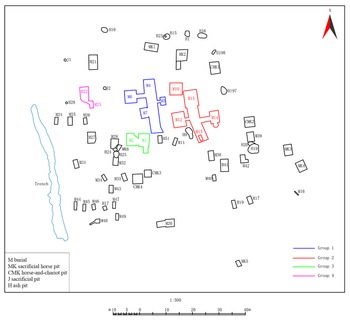
Thirty-eight high-ranking tombs of the Western Zhou period were excavated in the cemetery located in the north-eastern sector of the site (east of I, Figure 2). Radiocarbon measurements indicate these tombs range in date from the mid eleventh to mid eighth centuries BC (Ningxia 2021a, 2021b, 2022). Based on the dimensions of their plans, the tombs can be divided into three groups (Figure 3). The first type includes four tombs: two large pit tombs, each served by a sloping entrance ramp (M4, M13), and two large rectangular pit tombs without ramps (M1, M22). These are substantial tombs: M13, for example, has an area of 38.7m2 and is 7.9m deep. All four of these tombs have several contemporaneous mid-sized satellite tombs, each connected by a narrow passage to the upper part of the large tombs. These interconnected tombs formed distinct burial groups (zu muzang); for example, Group 1 comprises a main tomb, M4, connected with mid-sized tombs M5, M6 and M7 (Ningxia 2021b, 2022).
Plan of elite burials, sacrificial horse pits, horse-and-chariot pits, sacrificial pits in the Yaoheyuan site (map by Bowen An).
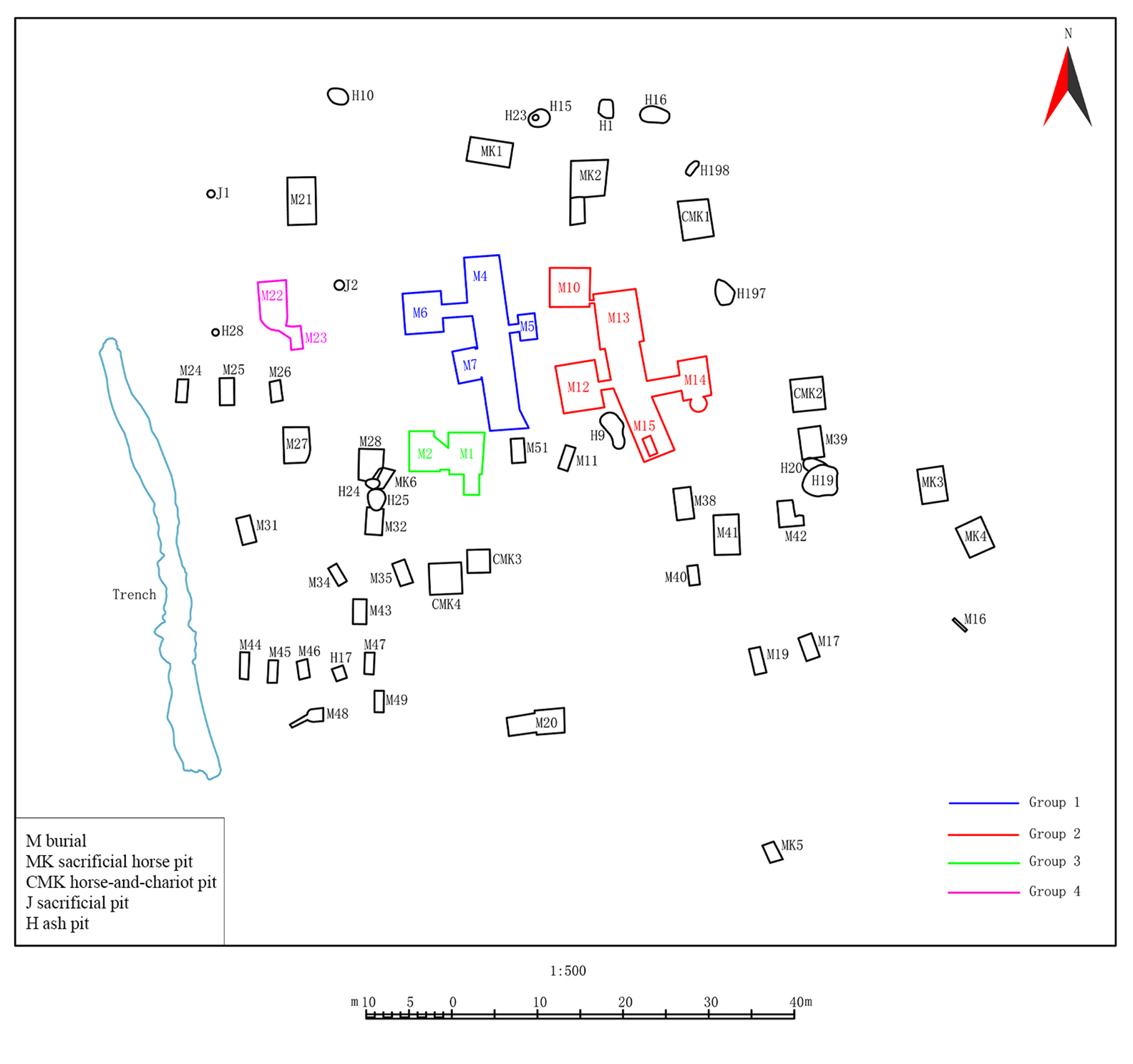
In addition to these special groups are 16 separate mid-sized tombs (e.g. M6: 28.92m2 and 11.5m deep) and 18 small tombs (e.g. M11: 4.71m2 and 2.46m deep); six sacrificial horse pits, four horse-and-chariot pits and two sacrificial pits have also been identified (Ningxia 2023). All the Western Zhou-period tombs are orientated north–south. The large and mid-sized tombs were furnished with nested inner and outer coffins; the deceased were placed with the head to the north and the body in an extended supine position. The large and mid-sized tombs frequently contained sacrificial human victims; and sacrificial animals, including horses, oxen, goats, sheep, chicken, dogs and rabbits were common in the cemetery. Many of the tombs were scattered with cinnabar and featured a so-called ‘waist pit’ (yaokeng), positioned near the waist of the deceased, containing a sacrificial dog (von Falkenhausen Reference von Falkenhausen2006: 192–4).
The phenomenon of several satellite tombs connecting to a larger tomb to form a burial group is a special feature at Yaoheyuan, the first of its type discovered at a Western Zhou site. Located at the centre of the cemetery, these four burial groups may have belonged to four generations of local rulers. Ongoing research on the DNA evidence obtained from the human remains may lend support to this hypothesis. To the north of these burial groups is tomb M21; the occupant could have been another ruler. If this is the case, at least five local rulers were buried in the elite cemetery. Sacrificial horse pits and chariot pits are located on the northern, eastern and southern sides of the cemetery. A trench, orientated north–south, may define the western edge of the cemetery; no tomb has been discovered to the west of this feature (Figure 3). Despite the enormous size of many tombs, poor preservation conditions, looting or damage prior to the excavation mean that few artefacts were recovered. In light of the nearby bronze-casting foundry, the bronze objects recovered from these tombs may have been locally produced. Many of the high-status goods and materials such as proto-celadon, ivory, green tectosilicate stone (tianhe in Chinese/amazonite in English), and jades, however, must have been imported.
The bronze-casting foundry
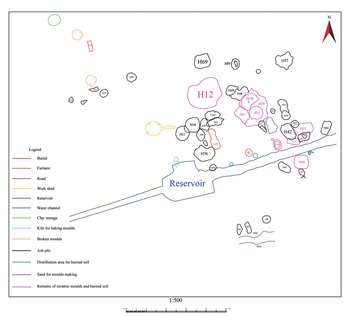
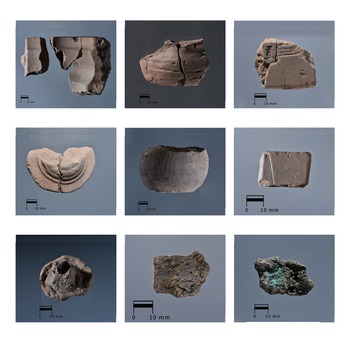
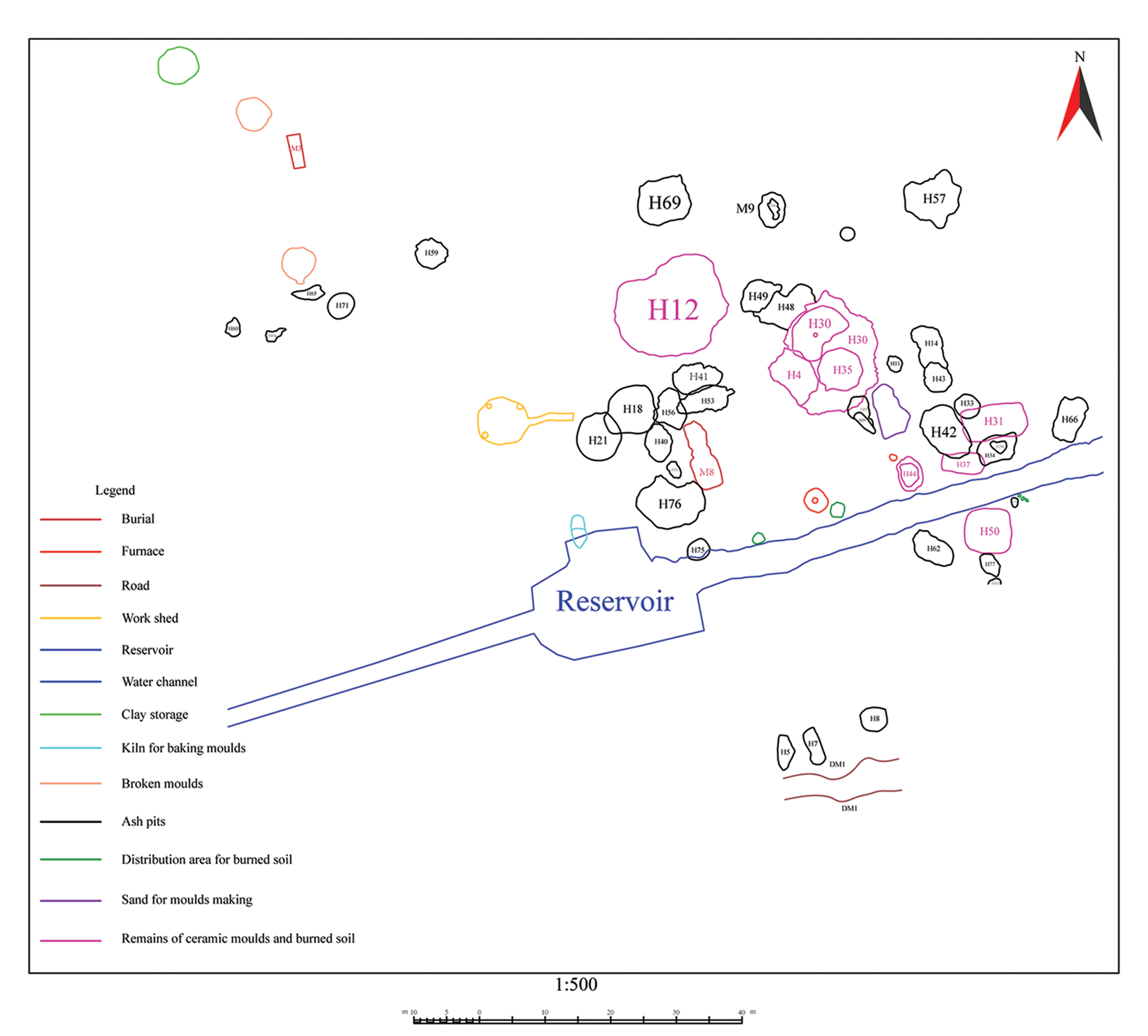
Investigations in the north-eastern sector of the walled settlement have identified a variety of industrial remains, including a water channel and reservoir, sludge tanks, piles of a prepared clay mixture for making moulds and associated kilns for mould firing, building foundations, ash pits and roads (Figure 4). This is interpreted as a bronze-casting foundry (Ningxia et al. 2020), a significant find because it is the first bronze-casting site of the Western Zhou period to be discovered in north-west China. Among the large number of ceramic sherds unearthed from cultural deposits and ash pits in this foundry zone, discernible vessel types include small tripods (li), pots (guan), tureens (gui), high-stemmed plates (dou), basins (pen), pitchers (he), urns (weng) and steamers (yan). In addition, more than 1000 fragments of clay moulds for bronze casting have been recovered. These include moulds for weapons and chariot and horse fittings, as well as some vessels, tools and ornaments (Figure 5). The only known copper mine in Ningxia is at the Zhaobi Mountain in Zhongwei City; mining at the site, however, probably began only during the Warring States period (475–221 BC) (Li et al. Reference Li2019). Copper is therefore likely to have been imported. The full range of production facilities and waste products will allow the reconstruction of the complete chaîne opératoire of bronze casting at Yaoheyuan.
Plan of the bronze-casting foundry zone (map by Bowen An).
Finds from bronze-casting foundry including fragments of moulds for casting of bronze vessels, weapons and tools (photograph by Shaoyi Yang).
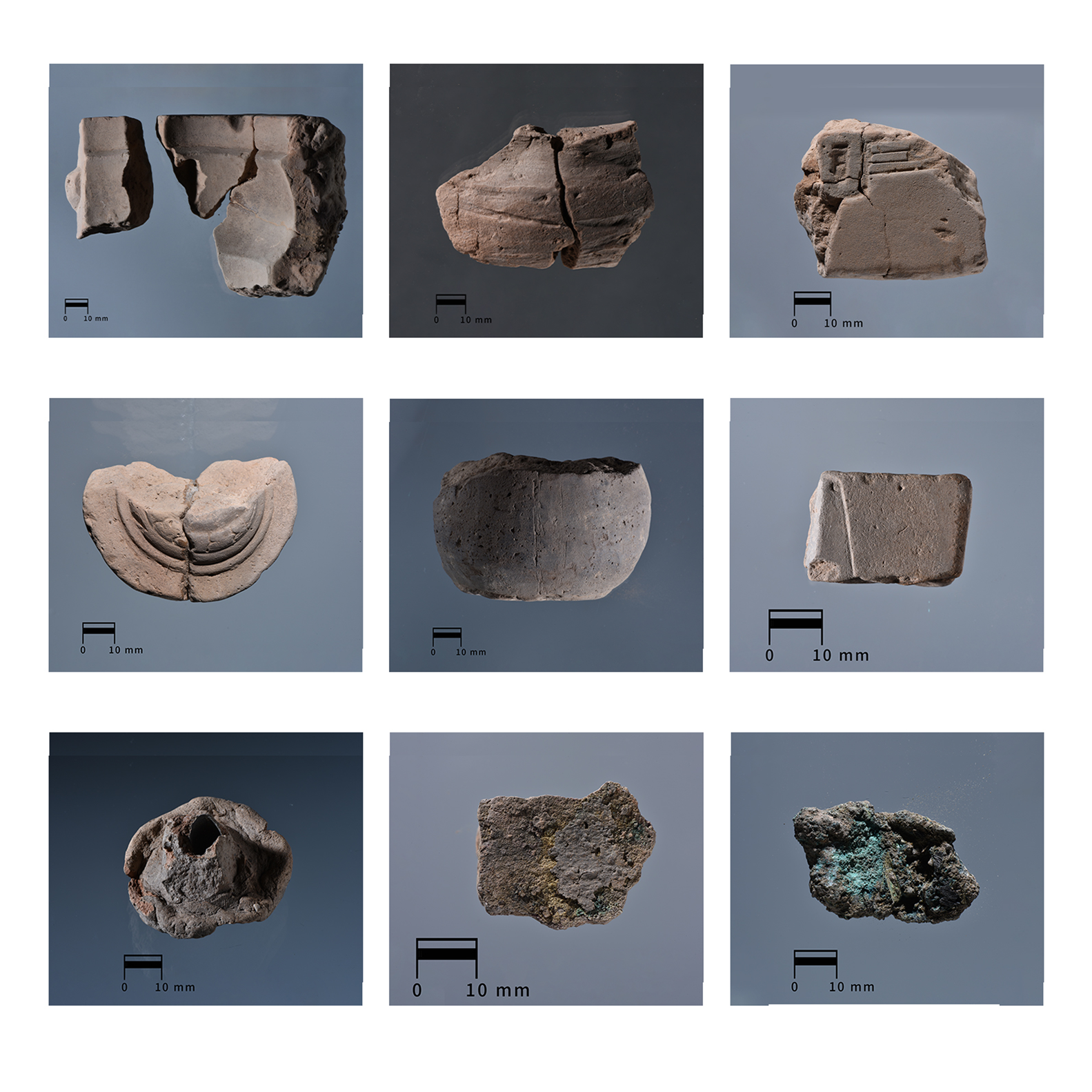
Bronzes datable to the Western Zhou period have been found at numerous locations across China, but there are only a handful of sites where evidence of bronze casting has been identified (Li Reference Li2020: 134–7). Most of the bronze-casting sites found to date are located in the Zhou centre. Beyond these locations, moulds for casting bronzes are known only from Liulihe in the Yan polity and at Hengbei in the Peng polity in the Western Zhou period. The rich evidence of bronze casting at Yaoheyuan will therefore further understanding of the transmission of metallurgical knowledge and practices in Bronze Age East Asia. Bronze casting, and the production of complex ritual vessels in particular, required a high level of technical expertise. The clay moulds and cores, which support the inside of the mould, uncovered at Yaoheyuan were predominantly used for making weapons and horse fittings, with only a few intended for the casting of vessels. The relative scarcity of moulds for the latter could be the result of limited excavation; foundries for bronze-vessel casting might lie in areas of the site not yet investigated. Nonetheless, Yaoheyuan clearly produced a range of bronze products. The discovery of such a large-scale bronze foundry at Yaoheyuan prompts us to rethink the prevailing scholarly opinion that bronze technology was centrally controlled by the Zhou court (Yu Reference Yu, Gao and Yoshinori2002: 1–7). Future archaeometallurgical studies on Yaoheyuan bronzes will contribute to this reappraisal, stimulated by the results of lead isotope studies of Shang and Western Zhou-period bronzes (e.g. Jin et al. Reference Jin, Liu, Rawson and Pollard2017; Liu et al. Reference Liu, Rawson and Pollard2018).
Horse breeding, horse sacrifice and horse consumption
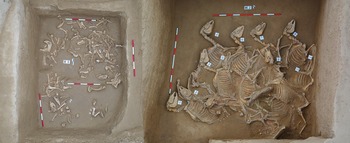
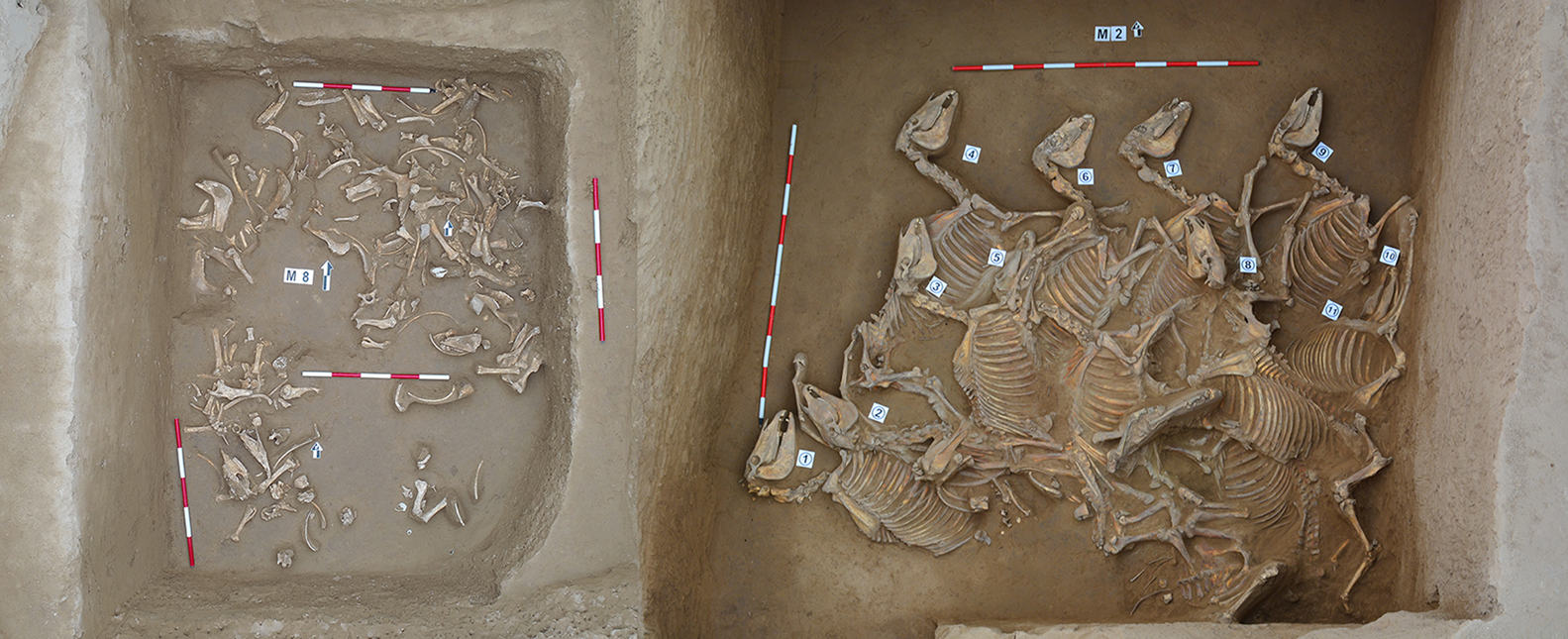
Six sacrificial horse pits and four horse-and-chariot pits have been excavated at Yaoheyuan. The sacrificial horse pits can be classified into large and small examples, which buried more than 10 horses and two horses, respectively (Figure 6). The horses were stacked in two or three layers; the bones in the top layer(s) were fragmented and scattered indicating that the animals had been dismembered before being thrown into the pits without any other special treatment (Figure 6, left). Zooarchaeological studies of material from sacrificial pits at other sites in China suggest that these disarticulated bones are probably the remains of funerary feasts (Luo Reference Luo2018). In contrast, in the higher-status horse-and-chariot pits, the animals are neatly arranged: the skeletons are articulated and largely complete (Figure 6, right). Approximately 120 horses in total have been identified in these pits, some of which were foals; one pit contained as many as 26 animals. The inclusion of horses and chariots in Shang and Zhou elite burials was a marker of the deceased's status, but the large numbers documented at Yaoheyuan is unusual (Wu Reference Wu2009).
Two sacrificial horse pits—MK3, MK2, I at Yaoheyuan site (photograph by Kai Bai).
The sacrificial burial and consumption of horses point not only to the wealth and status of the Yaoheyuan polity but also the availability of horses in this region. Horses were one of the most important resources in north-west China during the Western Zhou period. The Guyuan area, west of the Liupan Mountains, was an important horse-breeding region from the traditional written texts (Shiji 1959: 129). According to traditional accounts, King Yi of Zhou (c. 885–878 BC) commanded the Duke of Guo to lead the Zhou ‘Six Armies’ on a military campaign against the northern Rong at Dayuan, where the Duke captured 1000 horses (Huang & Wang 1997). Feng Li (Reference Li2006) has suggested that Dayuan, or the ‘Great Plain’, likely refers to the present-day Guyuan area. The abundance of horse remains at Yaoheyuan could also point to a local tradition of horse breeding. More generally, the Zhou court also paid close attention to horse breeding. For instance, an inscription on a foal-shaped wine container (zun) of the Middle Western Zhou period from Mei County, Shaanxi province, records a Zhou king's participation in the foal bridling (zhiju) ceremony and his award of two foals to someone named Li, who consequently commissioned the casting of the ritual vessel (Guo Reference Guo1957).
According to the analysis of the pottery lipids from the Yaoheyuan site, together with millet, ruminant meat and dairy products, equine products were consumed by Yaoheyuan people. The domesticated herbivores consumption and rare pig consumption reveal the agro-pastoral economy, and may be related to the cultural customs. The rise of pastoral elements compares to the central plains states heterogeneity of Yaoheyuan, and also indicates the interactions between Yaoheyuan and other areas (Sun & Ma Reference Sun and Ma2023).
Preliminary DNA analysis of horse bones from Yaoheyuan conducted by Zhao Xin at the Institute of Archaeology, Chinese Academy of Social Science, reveals four different lineages—A, C, D and F, all falling within the scope of domesticated horses. A, D and F types are commonly found in modern horse lineages; the C lineage is primarily found in Central Asia and Europe. This work also suggests that the horses at Yaoheyuan had four different colours: bay, chestnut, black and chestnut tobiano. Pit 2017PYMK2, for example, contained the remains of horses of all four colours, whereas two small sacrificial horse pits, 2017PYMK4 and 2017PYMK5, each contained both bay and chestnut-colour animals. Horses of bay and chestnut-colour coat are often visually indistinguishable to the naked eye, though they differ genetically. It is therefore possible that the Yaoheyuan inhabitants selected horses of similar colours for particular sacrificial and ritual ceremonies.
Who lived at Yaoheyuan?
Like similar archaeological sites in this region, such as Yujiawan (Chongxin, Gansu) and Baicaopo (Lingtai, Gansu), Yaoheyuan has yielded artefacts characteristic of Shang and Zhou material culture, as well as of Liujia, Siwa and other local archaeological cultures, suggesting a culturally or ethnically mixed population. Shang-style artefacts and customs include ritual tureens (gui), short-neck urns (weng) and mushroom-shaped tuyeres. The frequent presence of ‘waist-pits’, dog and other animal sacrifices and, in large tombs, human sacrifices, may point to various ethnic groups (Sun Reference Sun2021: 20–9). The ‘waist-pit’ and human and dog sacrifices were standard mortuary customs at the late Shang Anyang (Guo et al. Reference Guo1955), and many Chinese archaeologists use these as criteria to determine the ethnic or lineage affiliation of buried individuals (Liu Reference Liu2021: 74–6). The identification of remnants of the Shang at Yaoheyuan, however, is controversial. A direct link between these archaeological features and ethnic or clan affiliation should not be assumed (von Falkenhausen Reference von Falkenhausen2006: 194).
In this context, a preliminary osteological study of the human bone from Yaoheyuan by Wang Minghui of the Institute of Archaeology, Chinese Academy of Social Science, indicates a possible demographic connection between the inhabitants of Yaoheyuan and those at Anyang. Wang has observed severe ‘kneeling-sitting plane’ (direct translation from Chinese expression) on the primary metatarsal bones among the Yaoheyuan population (Ningxia 2022). This phenomenon is visible via the small osseous outcrops on the distal ends of metatarsals and through pressure marks on the corresponding phalanges. The most prominent area of remodelling is on the proximal first phalange and the distal first metatarsal. This change in joint morphology is related to the long-term pressure exerted on the toes by kneeling (Zhao Reference Zhao2020). The same phenomenon has also been observed in skeletons from Anyang (Shekeyuan Kaogusuo 2005: 705; Zhang Reference Zhang2016). Before the introduction of chairs into East Asia in the seventh century AD, kneeling-sitting (guizuo in Chinese; seiza in Japanese) was the predominant position, and the precise significance of this potential link between Yaoheyuan and Anyang needs further investigation. Another notable observation in the human remains is the occurrence of ‘Poirier's facet’ on the femoral joint, indicating that the individuals may have been engaged in equestrian activities from a young age (Finnegan Reference Finnegan1978; Schultz et al. Reference Schultz2008; Wei et al. Reference Wei2012). Twenty examples of this phenomenon are found, including both male and female, among the 65 human remains from Yaoheyuan. Currently, the earliest archaeological evidence in China of mounted horseback riding dates to the late first millennium BC in Xinjiang (Li et al. Reference Li2020). If the osteological evidence from Yaoheyuan is confirmed by further work, this would represent a significantly earlier date.
Although inconclusive at present, the above evidence suggests that at least part of the population of Yaoheyuan may have been connected with remnant Shang subjects. Ancient texts reveal that after the conquest of the Shang, the Zhou relocated Shang groups to various regional states (Hsu & Linduff Reference Hsu and Linduff1988: 153–8). A frequently cited example is the Yan state at Liulihe in the north-eastern region, where both inscriptional and mortuary evidence seem to suggest their presence (e.g. Sun Reference Sun2021: 161–3). Scholars have long suggested that the Zhou relocated Shang subjects to north-west China where Yaoheyuan is located (Liang Reference Liang2015). Although Lothar von Falkenhausen (Reference von Falkenhausen2006: 177–200) has cautioned that these archaeological features cannot be used alone to determine descent, at least some people at Yaoheyuan adopted elements of Shang material culture and may have been either culturally or ethnically affiliated.
Mitochondrial DNA analysis on the human remains, carried out by Zhao Xin, reveals multiple East Asian mtDNA haplogroups (M, D, G, M8C, B, F, N9a, R) with a more complex matrilineal inheritance among the Yaoheyuan population. Several individuals buried at Yaoheyuan share an identical mtDNA sequence—two individuals from M5 (a female and a male), one female from M7 and one individual from M5, one from M6 and one from M4— suggesting a common matrilineal descent. In contrast, the deceased buried in the joint male-female tombs of M4, M13 and M19 show no matrilineal connections, supporting the traditional interpretation of such burials as those of married couples.
A local polity or a regional state of Zhou?
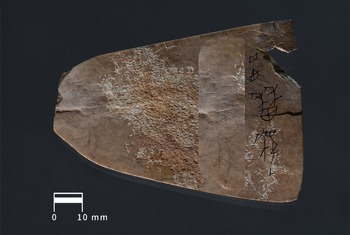
Prior to the discovery at Yaoheyuan, there was no archaeological evidence of walled settlement to support the suggestion that the Zhou court established regional states in north-west China, as it did elsewhere. The evidence from Yaoheyuan raises this possibility for the first time. The discovery at the site of inscribed bone tools and divinatory oracle bones provides important new evidence (Ningxia 2021a: 21). These inscriptions relate to a wide range of topics but, most importantly, they make frequent reference to conflicts between Huo and Rong peoples (Figure 7; Ma Reference Ma2023). One of the bone inscriptions recovered from tomb M13 mentions the name of ‘Huohou’, possibly referring to the ruler of a state or polity by the name of Huo. This title ‘hou’ is highly unusual. Inscriptions on bronzes from this region indicate that local groups often used ‘bo’—literally, ‘elder brother’—to indicate the head of the lineage or polity. Examples include Yuanbo, the elder of the Yuan lineage, and Guaibo, the elder of the Guai lineage (Sun Reference Sun2021: 36–9). During the Western Zhou period, ‘hou’, literally means ‘marquis’, a title granted to the ruler of the Zhou regional states, such as Jinhou (‘marquis of the state of Jin’) and Yanhou (‘marquis of the state of Yan’) as attested in bronze inscriptions (Li Reference Li2008: 44–5). The use of ‘hou’ on the bone inscriptions at Yaoheyuan therefore raises questions about the nature of the Huo polity. Does ‘Huohou’ refer to one of the deceased buried at Yaoheyuan? Was ‘Huohou’ the ruler of Huo polity? Does Yaoheyuan site represent the Huo polity? Was the Huo polity indigenous to the Upper Jing River Valley or a regional state or military post established by the Zhou court? Because the inscriptions are fragmentary, and the context is as yet unclear, these important questions cannot currently be answered.
An inscribed oracle bone from F2, IV at Yaoheyuan site (map by Bowen An).
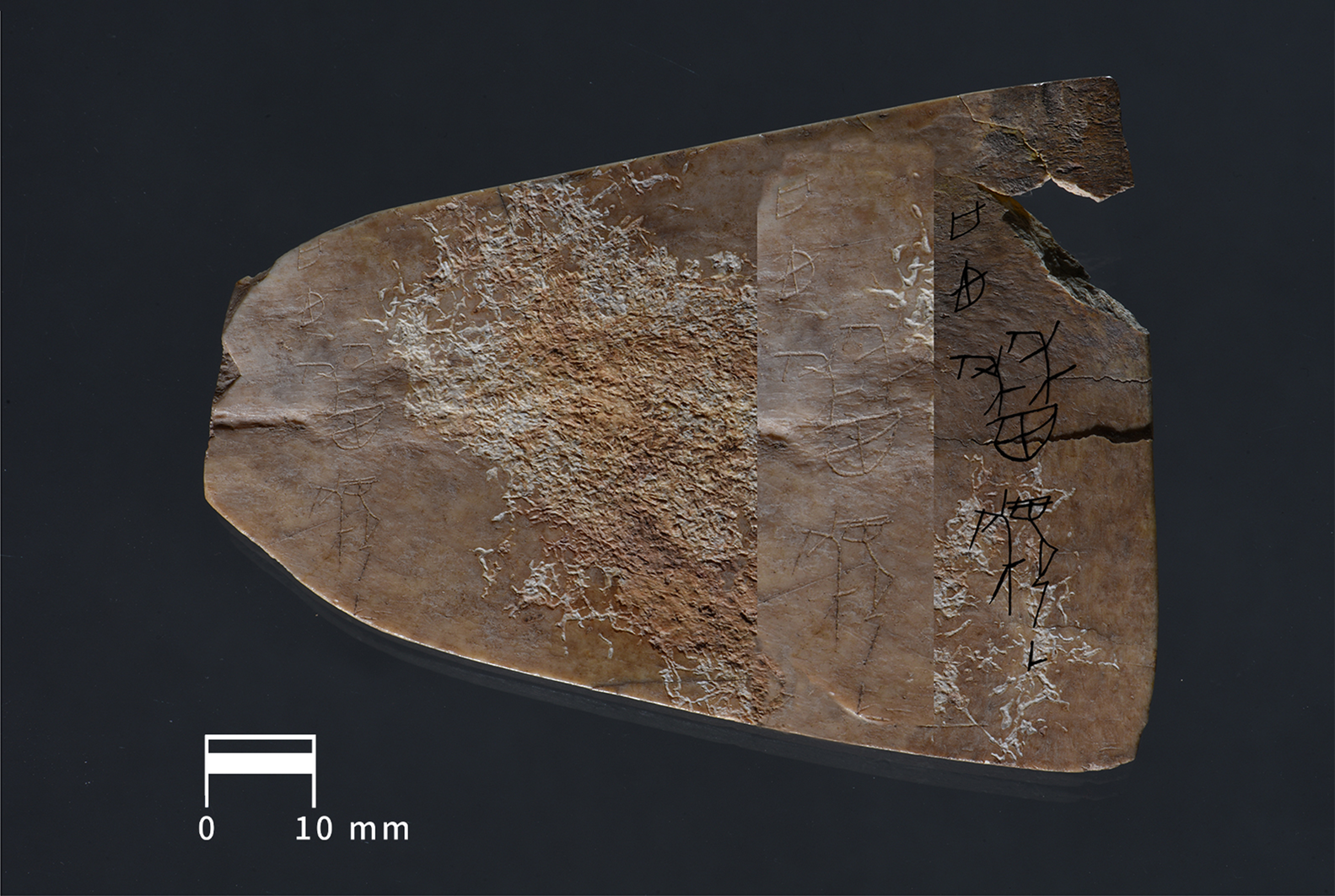
The bone inscription from M13 also records the defeat of the Rong people and the presentation of captives to Huohou, providing direct evidence of the military conflict in this region. Other inscriptions refer to the ‘Rong people’, ‘Rong land’, and the capture of Rong groups on multiple occasions. According to these inscriptions, the Rong people lived in the area west of Yaoheyuan, repeatedly engaging in small-scale skirmishes with the Huo.
Besides Yaoheyuan, there were other polities along the Upper Jing River during the Western Zhou period; the archaeological sites of Yujiawan and Baicaopo may represent two of them (Chu, Reference Chu1977). Like those polities, Yaoheyuan may have been affiliated or allied with the Zhou court and served its interests in this region, at least for a period of time. Indeed, the political reach of the Zhou could once have extended further north-west of Yaoheyuan into the Guyuan region. At the Sunjiazhuang site in Guyuan County, for example, an early Western Zhou tomb was discovered in the 1980s (Figure 1). The tomb, furnished with secondary ledges and a ‘waist pit’ containing a sacrificial dog, yielded a bronze cauldron (ding) and a tureen (gui; Guyuan 1983). Like those excavated at Yaoheyuan, these artefacts and burial customs suggest influence from the Shang and Zhou centres. Given the geographical proximity between Yaoheyuan and Sunjiazhuang, it is possible that the deceased interred in the Sunjiazhuang tomb could have been related to those buried at Yaoheyuan.
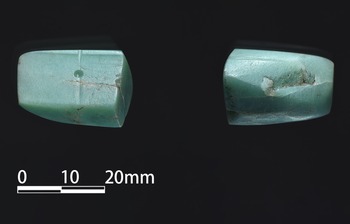
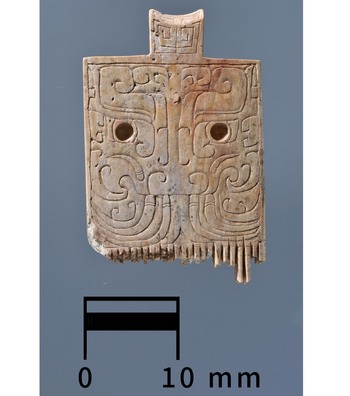
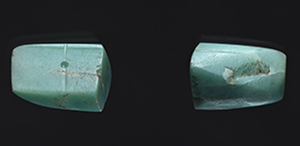
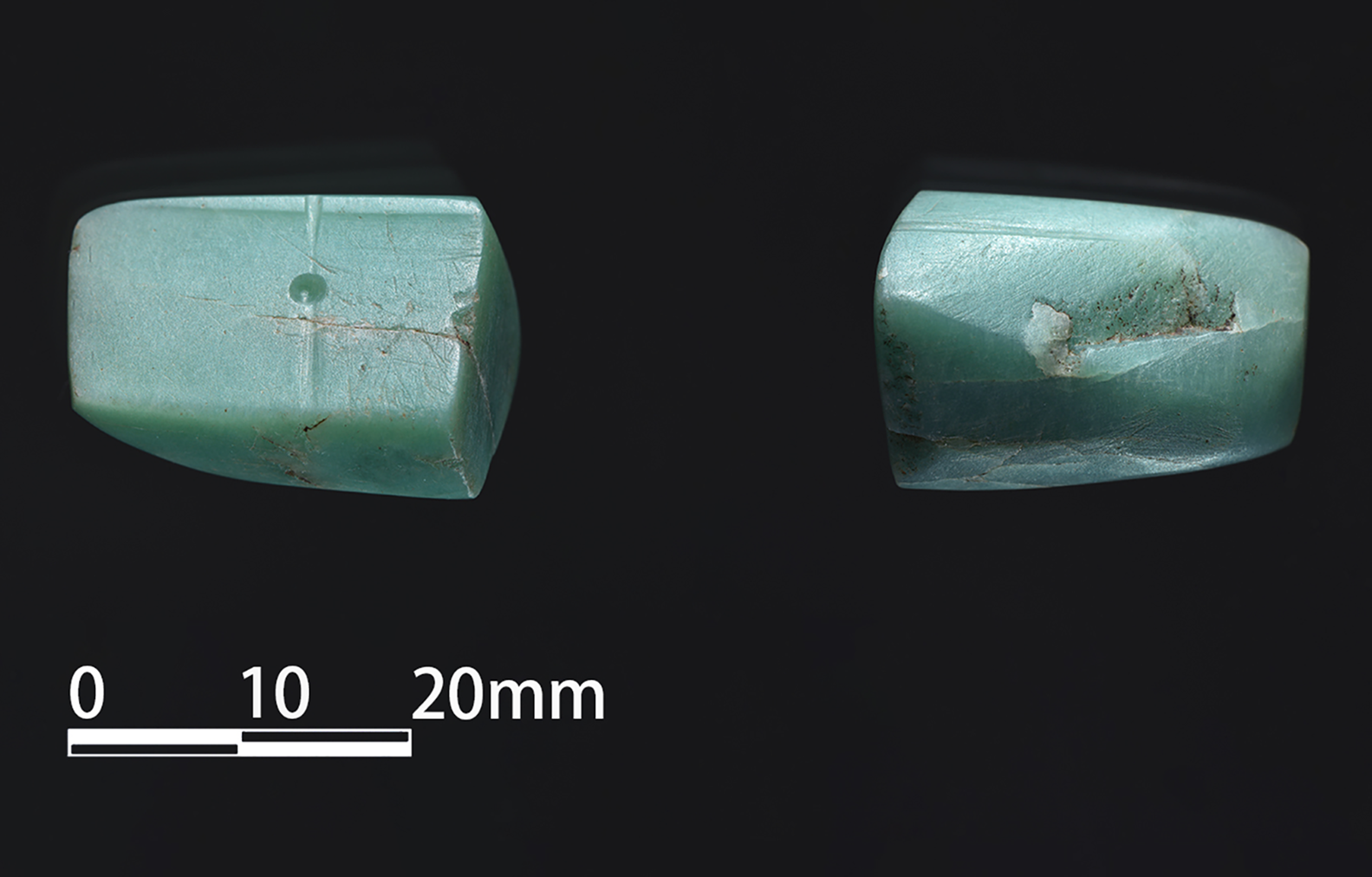
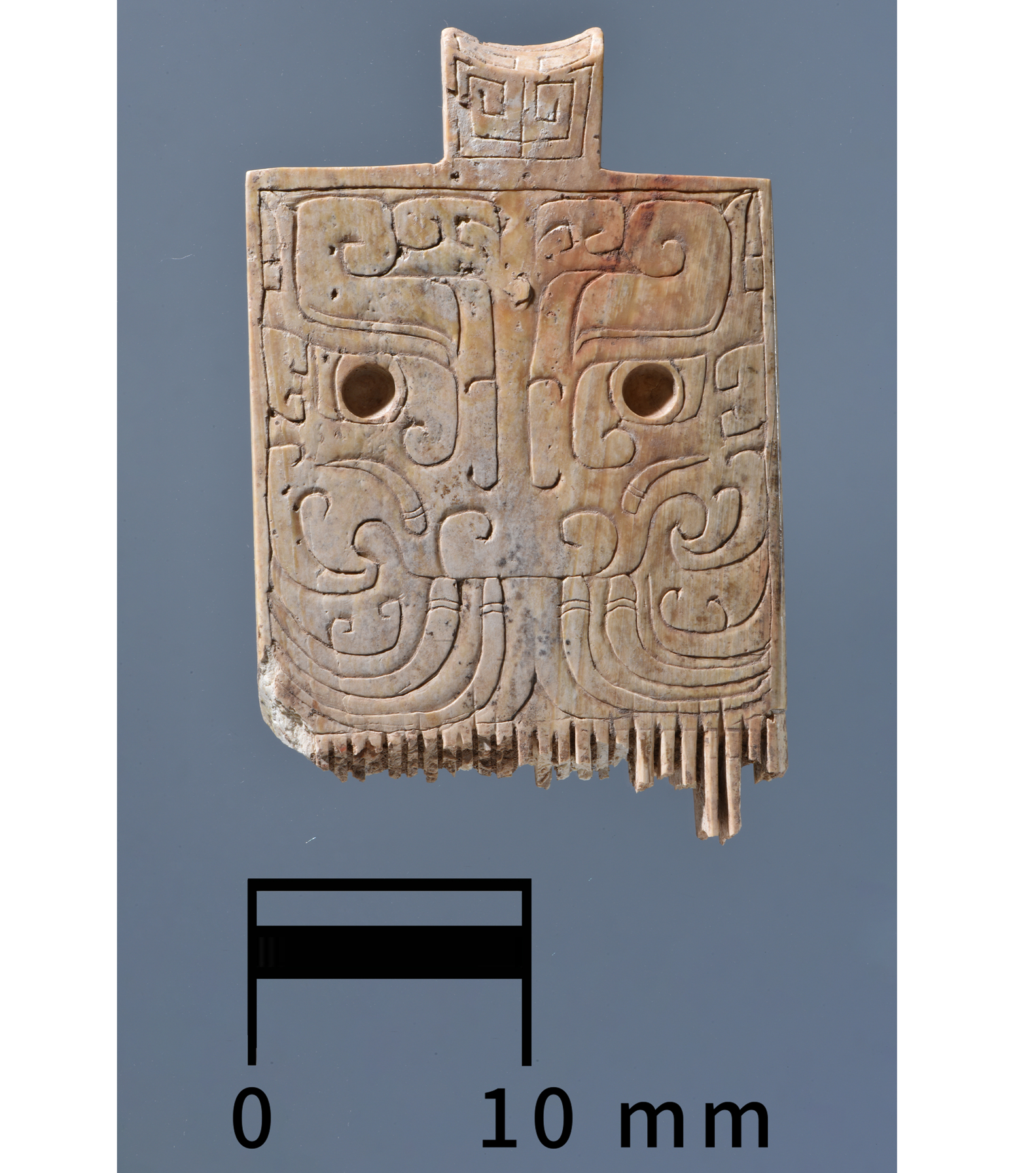
Although the political and ethnic affiliations of Yaoheyuan are still uncertain, the site was likely a participant in the extensive exchange network connecting Bronze Age East Asia. Copper, for example, was not locally available and must have been obtained through exchange. Based on preliminary XRF analysis, the jades recovered from the site could be from Hetian in Xinjiang or the Mazong Mountains in Gansu, and amazonite from north-eastern China (Figure 8). The raw materials for the production of elephant ivory artefacts, including combs, cups and hairpins, were probably imported from the south (Figure 9).
An amazonite object from burial M38, I at Yaoheyuan site (photograph by Yingxia Huang).
An ivory comb with animal face motif from M4, I at Yaoheyuan site (photograph by DongDong Bian).
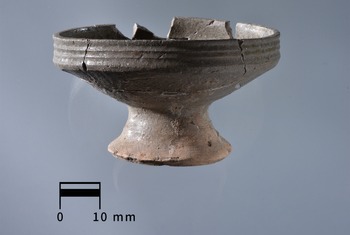
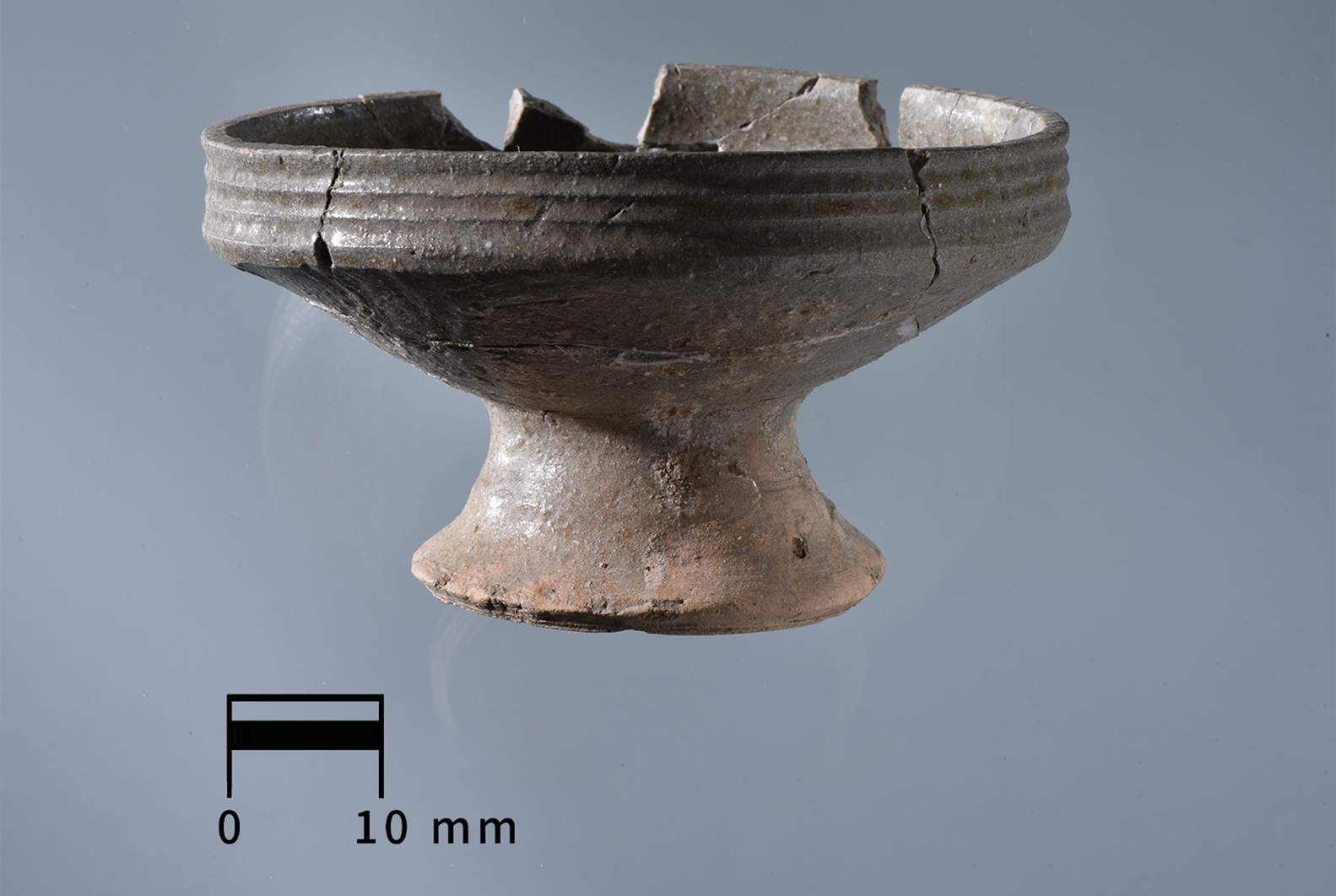
The proto-celadon vessels, such as water containers (lei), pots (guan) and high-stemmed plates (dou) were of a high standard of production. The firing technique of these vessels suggests they were produced in the dragon kilns of southern China, most likely in the Qiantang River Valley in north Zhejiang, and the ceramics were therefore probably imported (Li Reference Li2018). The form of the high-stemmed plate, for instance, is identical to that excavated from the tumulus tomb at Chailingshan in Xiaoshan (Xiaoshan Bowuguan Reference Bowuguan2013; Figure 10). Those vessels may have arrived through long-distance trade directly to Yaoheyuan or via the Zhou centres at Zhouyuan, Feng and Hao, from where they were redistributed (Li Reference Li2018). Horses from Yaoheyuan may have been an important commodity in these exchange networks.
A proto-celadon high-stemmed plate (dou) M7:146, I at Yaoheyuan site (photograph by DongDong Bian).
Conclusion
The discoveries at Yaoheyuan in the Upper Jing River Valley provide unique insights into a Western Zhou-period settlement in north-west China. Excavations have uncovered a 56ha walled settlement including elite burials and craft workshops and associated extra-mural activity areas covering a further 40ha. These findings document, for the first time, a well-established regional polity of the Western Zhou period in north-west China, and attest to its political, economic and cultural characteristics. The site is noteworthy for evidence of bronze casting and for the large size and unusual arrangement of high-status burial groups, including notable numbers of horses. This evidence raises important questions about political and cultural complexity in the Upper Jing River Valley and invigorates investigation of the nature of Zhou political control over north-west China, as well as the extent of exchange networks for raw materials and prestige goods across Bronze Age East Asia.
Acknowledgements
The author wishes to thank Edward Allen and Yuting Gao for initial translation of this article, and Professors Li Feng of Columbia University and Yan Sun of Gettysburg College for their insightful suggestions during the revision of the manuscript. The author is also grateful to Guolong Lai of Westlake University and the two anonymous reviewers for their comments and suggestions.
Funding statement
This article is a report of the research project ‘The northwestern expansion of the Zhou: archaeological research at the Yaoheyuan site of the Shang and Zhou periods’, funded by the National Social Science Foundation of China (Grant No. 18ZDA217) and the Key Research and Development Program of Ning Xia Hui Autonomous Region (Grant No. 2020BFG02008).