

Have you always wanted to know how the world smelled in antiquity? What smells would you have experienced during a stroll about ancient Rome? Above all, what would people have smelled like? I approached these questions with students by attempting to reconstruct the olfactory landscape, not only by exploring written sources and archaeological material but also by employing experimental archaeology. Ancient literature contains many descriptions of smells, ranging from the body odours of different social groups to the smells in urban spaces that characterised specific locations such as thermal baths, theatre complexes, assembly places and libraries. Such places were deliberately perfumed to make them as pleasant as possible for visitors. However, it was not only in public places but also in private homes that perfumes were deliberately employed, with even pets and textiles being scented.
To take a closer look at this widespread use of perfumes, I delivered a seminar on smells in antiquity during the summer term of 2021, in a course that brought together 25 students of History and classical literature. The great benefit of incorporating the senses into teaching is the particularly compelling access it provides for students to the daily life of the ancient Greeks and Romans. Especially for classes in which many students with little knowledge of antiquity participate (in this particular seminar, many of the students specialised in other periods of history), the subject is useful because it provides easier and broader access to certain aspects of the ancient world. As the investigation of sensory perceptions is not bound to specific genres, the students were engaged with many different types of sources. The study of smell, in particular, has a special added value, as it also focuses on marginalised groups in society, such as women, through which study students can gain a sound understanding of ancient social structures. The aim of the seminar was to impart basic information about the use of fragrances in antiquity and to foster a critical and reflective approach to historical texts across a variety of genres. The students prepared for the production of perfumes by looking at original perfume recipes and production methods in texts and archaeological material. From a didactic point of view, the experiment can be integrated well into the seminar environment, enabling students to subsequently apply and reflect on their knowledge in practice. Moreover, it can arouse students’ interest in a particular period or era and greatly facilitate their access to antiquity, especially when they possess no previous knowledge of the subject.
Structure of the seminar
In the seminar, we worked with two crucial resources: archaeological evidence and written sources. This interdisciplinary approach turned out to be very beneficial, as we were able to draw comparisons between the two types of sources. At the same time, the historians in the group were given the opportunity to study archaeological sources and encounter and apply image interpretation methods. During the course, texts on individual topics were read each week and essays were written about them. These texts and essays were then discussed in seminar sessions. For the essays, no guiding topics were given; however, it was noticeable that the students often drew comparisons with contemporary culture. For instance, in one session, we explored women's use of fragrance, looking at both pictorial representations of women holding aryballoi or testing perfumes (e.g., Pompeii, Casa dei Vettii, room q) and descriptions of perfumed women in ancient lyrics. In their essays, the students came up with the idea of examining modern perfume advertising, and found common intersections with ancient representations of ‘the perfumed woman’. To embody their fragrances, perfume manufacturers continue to place a great deal of emphasis on images of attractive and sexy women who are supposed to seduce men. Likewise, in antiquity, the goddess Venus was said to abduct the protagonist Aeneas and cover him with the scent of amaracus (marjoram). Parallels and comparisons to the present time opened up new fields of discussion and gave the students many thought-provoking topics to consider. In the following section, I briefly outline the content and results of the seminar before exploring the process of perfume creation.
Perfumes in ancient literature and iconography
Before we turned to the ancient recipes, we examined the use of fragrances in different spaces, including social, performative, religious and military contexts. Thus, we explored the meaning of odours in the military context (Derrick, Reference Derrick and Betts2017), in medicine (Totelin, Reference Totelin and Bradley2015), in urban spaces (Morley, Reference Morley and Bradley2015; Koloski-Ostrow, Reference Koloski-Ostrow and Bradley2015) and particular buildings (such as theatres, see Day, Reference Day and Betts2017), in nature (Draycott, Reference Draycott and Bradley2015), in the kitchen (Potter, Reference Potter and Bradley2015) and during funeral processions (Hope, Reference Hope and Betts2017; Clancy, Reference Clancy2019), as well as considering human odours themselves (Bradley, Reference Bradley and Bradley2015). Bad smells were directly linked to particular occupations (mainly those of the working class), including prostitution, butchery, laundry and tannery (Bradley, Reference Bradley and Bradley2015; Butler, Reference Butler2010). In the ancient sources, a person's smell was used not only to imply his or her character traits but also to point to negative habits such as excessive wine or food consumption. Thus, heavily perfumed emperors, particularly mali principes or tyrants, were depicted as effeminate and decadent. As revealed by our investigation of the use of perfumes in different spaces, it is evident that perfumes were also often used for medicinal purposes. Bad smells were considered contagious, which is why deodorisation had a protective function at occasions such as funeral processions or in spaces such as the battlefield.
Valuable information on the widespread use of perfumes in medicine can be found in medical treatises. These include Dioscorides' De materia medica and writings by Theophrastus and Pliny, in which recipes for individual perfumes, ointments and creams have been preserved. According to Dioscorides, perfumes were not only applied directly to the skin but were also mixed into ointments or taken as preventative measures against certain diseases. These recipes, which we first had to translate and rewrite into modern technical language, served as the basis for our perfume creations. Translating these recipes from Greek and Latin is a useful exercise for students, provided the required language skills are available. If there is no knowledge of ancient languages, it is still useful to look at individual terminologies for the ingredients with students. Since the recipes are lists of plant species and spices, the texts can be easily translated together. The modern translation of individual plant species is particularly interesting, as they cannot always be identified with certainty and thus leave much room for discussion. The same applies to the reasons for the addition of individual ingredients such as honey. Only through a closer study of the application of honey in other sources, particularly Pliny, could it be understood that honey was considered a disinfectant and was also used as a preservative.
Perfume production
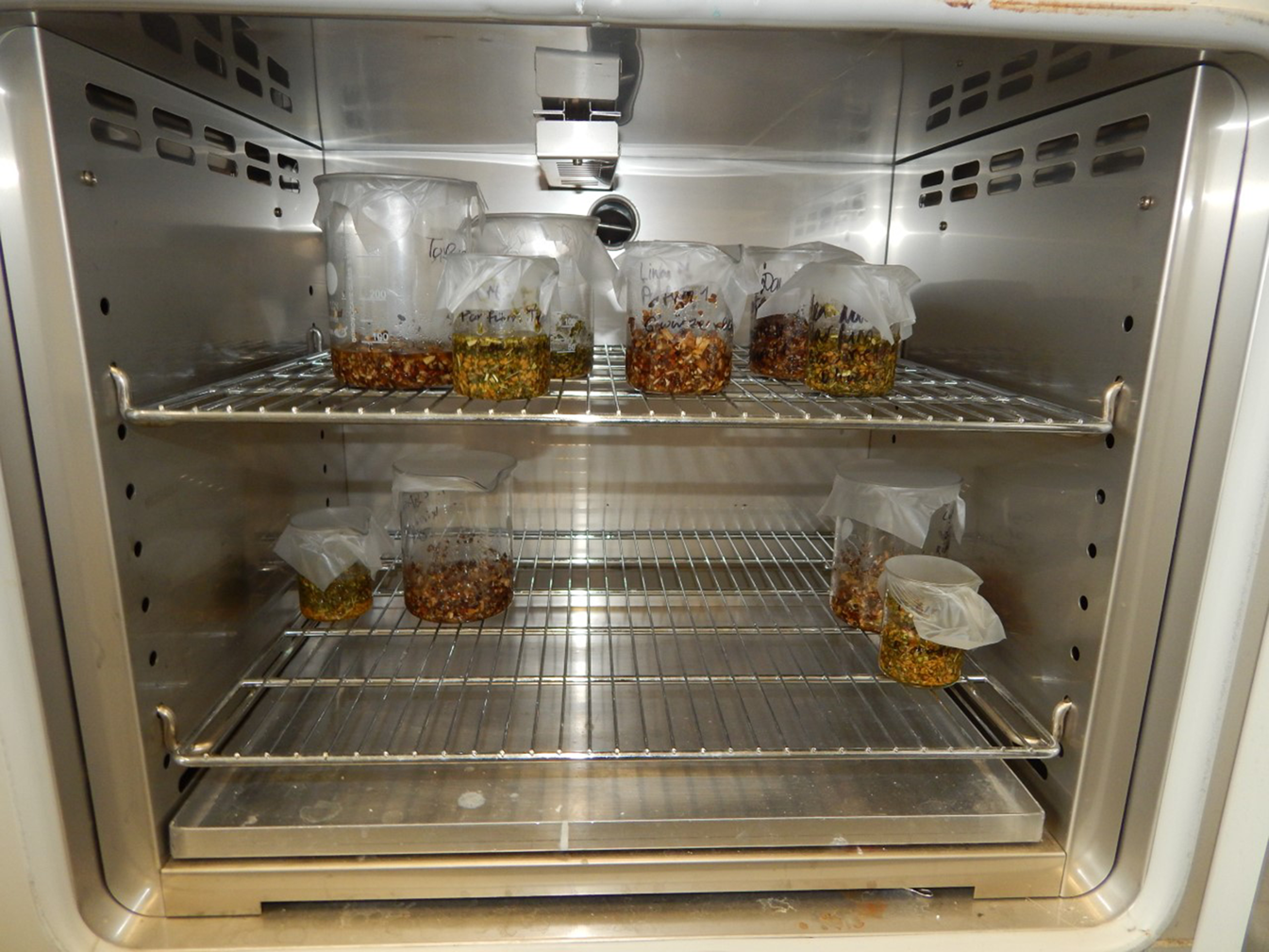
On completion of the seminar, the students worked together in small groups to produce the fragrances. Equipment, lab space and assistance were provided by members of the chemistry department, who also provided us with a tutor for each student group. We needed two days for the whole production process because the mixtures had to be left in the oven overnight (Figure 1). As the basis for the perfumes we created, we used the recipes of Dioscorides, since these, unlike those of Pliny and Theophrastus, provided appropriate indications of quantity. Among the produced perfumes were rhodinon (Theophr. od. X.45; Diosc. I.43), susinum (Theophr. od. X.42, Plin. NH. XIII.12, Diosc. I.52.56) and cyprinum (Plin. NH. XIII.2.5; Diosc. I.55).
The mixtures were left in the oven overnight
The translated recipe and production method for the lily-based oil susinum, which was often used in medicine and especially in gynaecology, is as follows:
Ingredients
26.5 g ben oil
14.8 g calamus root
0.9 g myrrh
25 lily flowers
50 ml spiced wine (mulled wine)
9.5 g cardamom
honey, salt
purified water
Equipment
mortar and pestle
150 ml beaker
hot plate
magnetic stirrer
funnel, filter, linen bags (x 3)
2 x 250 ml beakers
100 ml beaker
2 x Petri/glass dishes
thermometer
separating funnel (100 ml)
bottles (or aryballoi if available)
Implementation day 1:
1. Crush 9.5 g cardamom in the mortar and mix with 25 ml water.
2. Mix 26.5 g of ben oil, 14.8 g of calamus and 0.9 g of myrrh with 50 ml of spiced wine and boil the mixture.
3. Filter the oil mixture and collect the filtrate in a 100 ml separating funnel. Separate the aqueous phase from the oil, retaining the oil for the next step.
4. Add the cardamom to the oil and reheat the mixture to 60–70°C. Then filter the mixture again and collect the filtrate into a separating funnel. Separate the aqueous phase from the oil again.
5. Transfer the scented oil to a Petri dish and add 25 lilies.
6. Stir the oil and lilies with a spatula smeared with honey. Let the mixture stand for 24 hours.
Implementation day 2:
1. Filter the mixture.
2. If there is still an aqueous phase, carefully transfer the oil to a new vessel using a pipette.
3. Pour the oil into a vessel lined with honey and add salt.
Finally, the resulting oil was poured into small vessels and labelled (Figure 2). Because the lilies soaked up the oil, only a tiny amount of final oil could be extracted. The characteristics of the perfumes produced differed greatly between the types, especially in consistency and colour (Figure 3). These characteristics depended on several factors: the number of ingredients added, the duration of boiling of the mixtures and the amount of honey added (this being difficult to extract from the oil and rendering the resulting perfumes very thick).
The students pour the resulting oil into small vessels
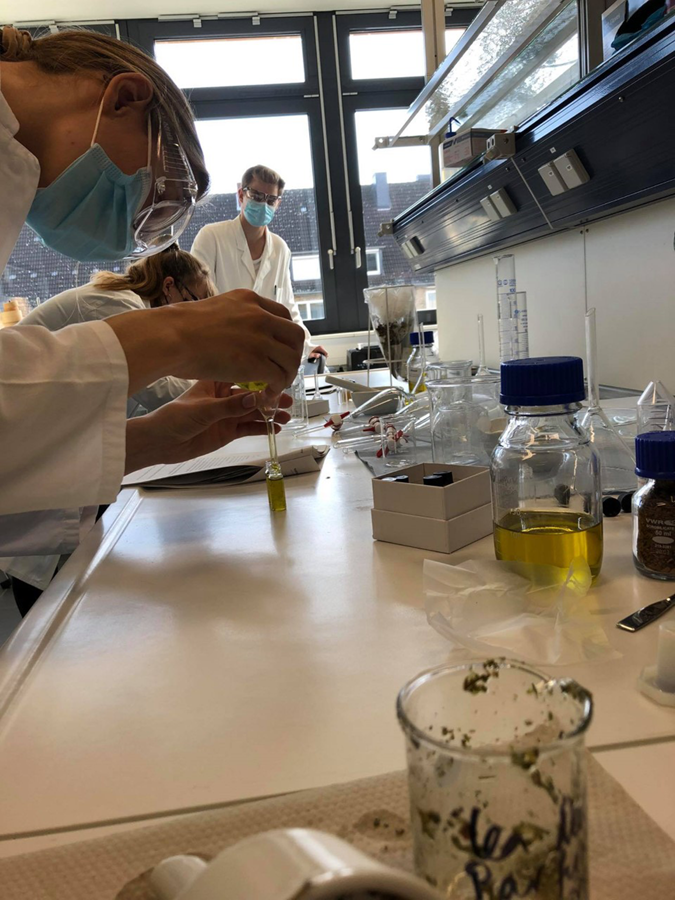
The produced perfumes of all groups. The perfumes differed in consistency and colour

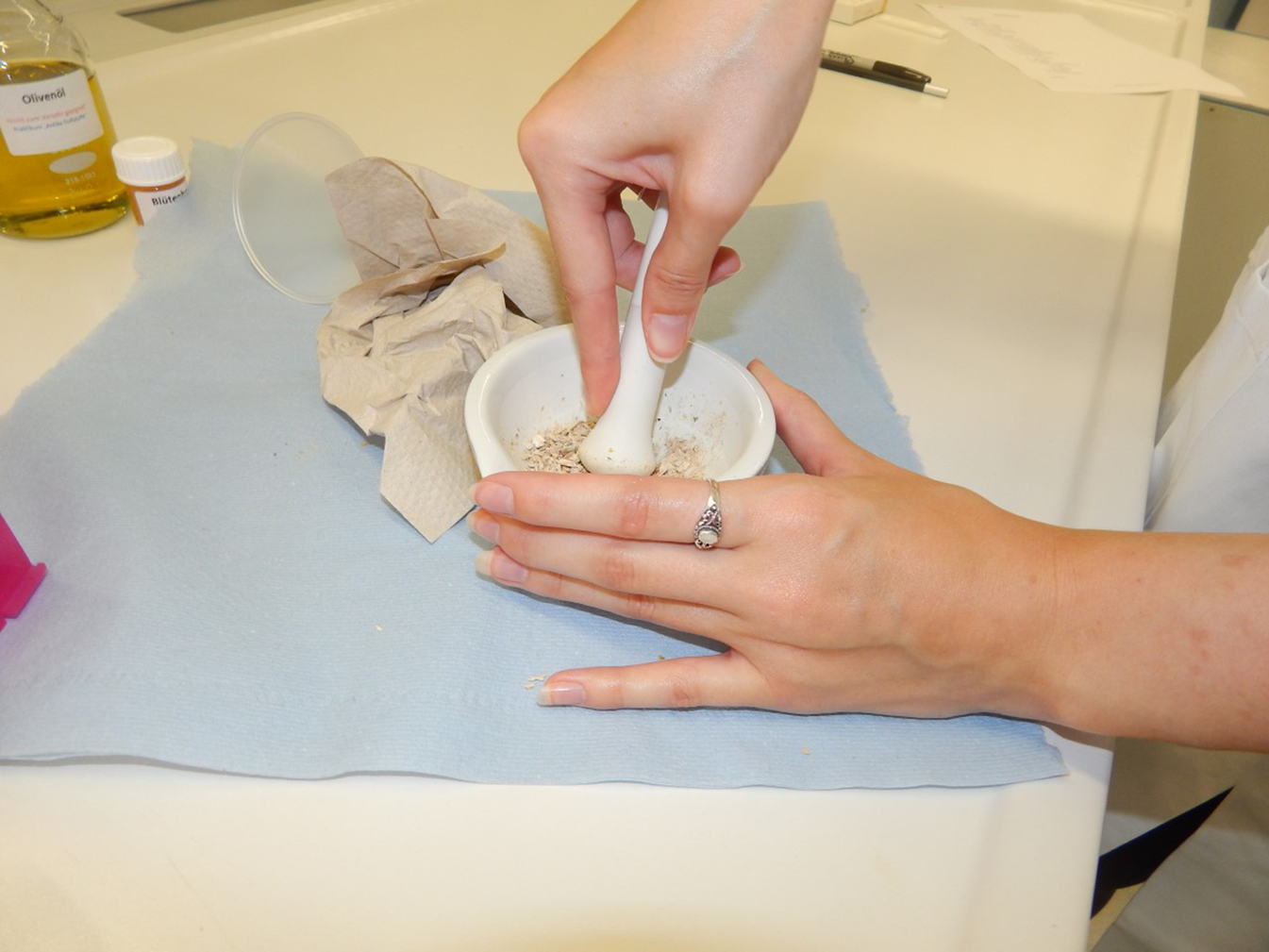
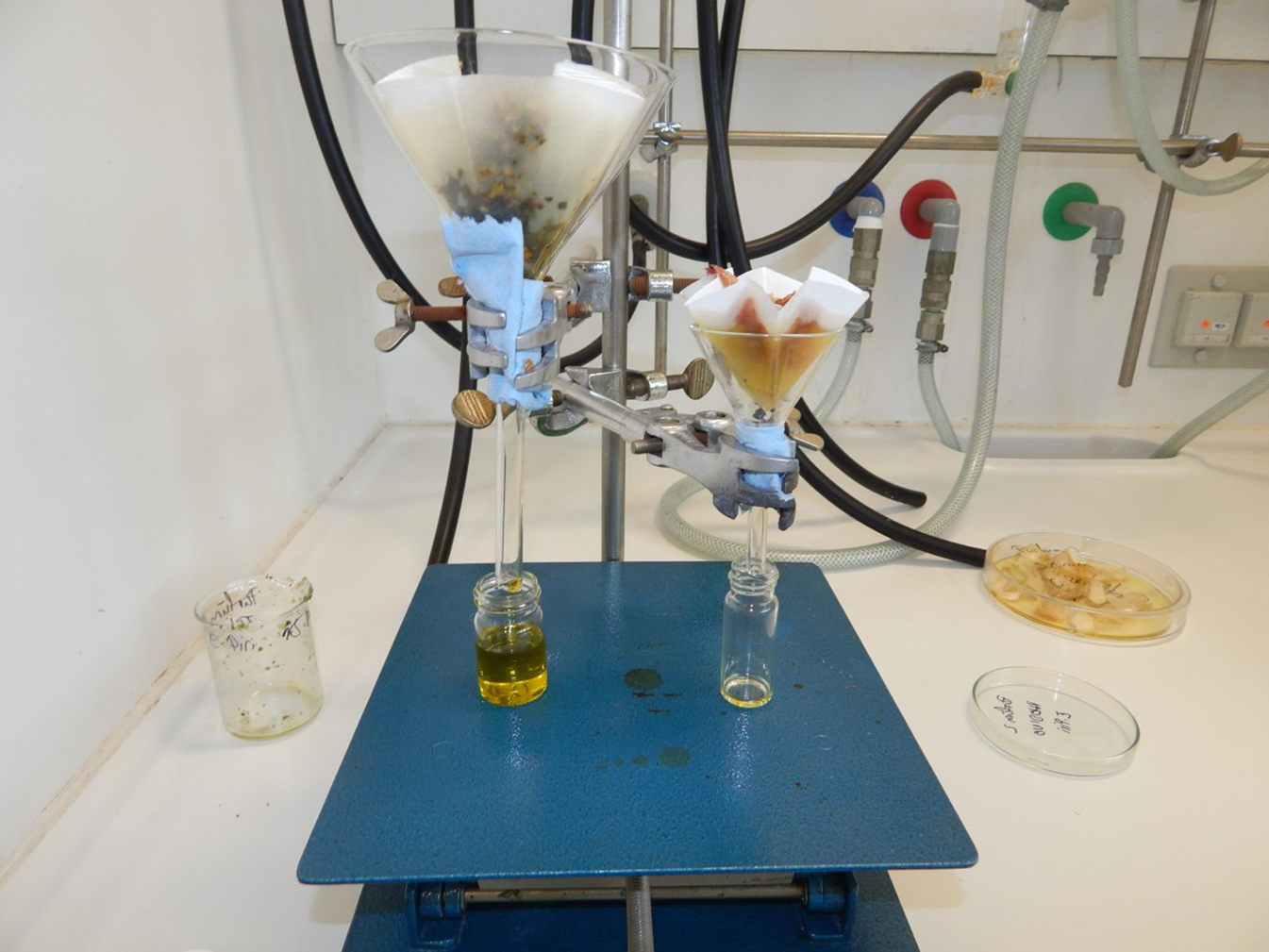
To keep the production of the fragrances as authentic as possible, we deliberately refrained from using modern manufacturing methods that would have made the production process simpler. This also allowed students to gain first-hand insight into the ancient manufacturing processes. Many found the mortaring of the ingredients very laborious (Figure 4). The filtration process was the most time-consuming step, as the oil stuck to the ingredients and had to be pressed out again and again (Figure 5). In the end, a vacuum filtration distillation apparatus was used to briefly demonstrate how much the filtration process could be accelerated with the help of modern technical methods. Instead of hours, the oil could be filtered in a matter of minutes. Here, questions about the ancient manufacturing process and procedure frequently arose from the students. They were particularly interested in the laborious work of the slaves who produced the fragrances in large quantities and endured long working hours.
The mortaring of the ingredients
The filtration process: Here you can see the perfumes susinum (right) and rhodinon (left)
Finally, the highlight of the experiment was smelling the fragrances – this was what the students had been waiting for most keenly. It was interesting to see how different people's experiences of smells can be. Perceptions varied greatly, with some students finding the scent of one perfume very pleasant while others found the same scent very unpleasant. The strength of the perfumes also varied greatly but, smelled from a distance, they were, on the whole, not quite as strong as a modern perfume. Finally, we returned to the previously discussed subject of deodorisation, which the students now understood as much more of an issue in light of the low fragrance intensity. However, it was decided that, provided several body parts were effectively perfumed, one's body odour could actually be totally concealed.
Conclusion
This study aimed to show the value added to a course by engaging with experimental teaching methods in university classrooms, perhaps even being a suitable activity for school teaching contexts. There are many pedagogical benefits of integrating practical experiences into a course that can lead to the better understanding of a subject by students, as well as the introduction of new ideas. From my point of view, the biggest benefit of the seminar was the students’ increased interest in antiquity. Many of the students attending this seminar were studying History without any specialisation in antiquity or in-depth knowledge in this area. It was thus the more remarkable that there was fruitful discussion in the individual sessions, in which the students showed increased interest in antiquity through their engagement with sensory perceptions. In addition to the required reading, I made available further literature and monographs for the students, which were read with great interest and incorporated into their essays. The student evaluation of the seminar was very positive. According to the students, they not only acquired plenty of expertise and knowledge but also overcame their inhibitions towards Latin and Greek texts. I hope that these findings can be used to encourage the integration of experimental methods into teaching.


 Open access

