



The psychiatric health burden of prisoners is substantial, and recent reviewsReference Fazel and Seewald 1 have established that severe psychiatric disorders, such as psychosis, post-traumatic stress disorder (PTSD) and major depression, are highly overrepresented in general prison populations. However, the prison population is very heterogeneous, and there is mounting evidence of a small number of offenders responsible for a very large share of all serious crimes.Reference Falk, Wallinius, Lundström, Frisell, Anckarsäter and Kerekes 2 These high-risk individuals are often characterised by an early onset of conduct problems,Reference Gelhorn, Sakai, Price and Crowley 3 , Reference Hofvander, Ossowski, Lundström and Anckarsäter 4 and we know from follow-up studies that this phenotype carries an increased risk of several other adverse outcomes, such as unemployment, substance abuse and mental illness.Reference Fergusson, Boden and Horwood 5 – Reference Morcillo, Duarte, Sala, Wang, Lejuez and Kerridge 7
The years between the ages of 18 and 25, that is, the ‘emerging adulthood’,Reference Arnett 8 are a key period for studying the development of serious mental health problems and aggressive antisocial behaviour. These are transitional years, marked by a relative instability in terms of young people's experiences in various salient life domains.Reference McAdams and Olson 9 In addition, many authors stress that studies of mental health in prisoners often suffer from methodological problems such as the use of a wide range of screening or self-report tools,Reference Martin, Colman, Simpson and McKenzie 10 and there is a call for higher quality surveys including information on comorbidity and psychiatric historyReference Fazel and Seewald 1 as well as the use of clinically trained interviewers to improve the diagnostic validity.Reference Fazel, Doll and Långström 11 In this article, we have used gold standard methods to produce reliable prevalence figures of psychiatric morbidity among young adults imprisoned for violent offences. A specific aim is to identify systematic differences in previous mental health service use and lifetime psychiatric morbidity between offenders with a childhood onset conduct disorder (COCD) versus those without a history of COCD, that is, a late onset of violent behaviour (LOVB).
Methods
Despite the many caveats in comparative criminological research, best estimates define Sweden as having a middle-to-high level of violence in terms of common violent crimes such as robbery and assaultReference Van Dijk, Van Kesteren and Smit 12 in the European context. The Development of Aggressive AntiSocial Behaviour Study (DAABS) is a multicentre study aimed at investigating the prevalence of developmental and clinical disorders in a nationally representative cohort of young adult male violent offenders sentenced to prison. The study will also follow up the participants on criminal recidivism, consumption of physical and psychiatric healthcare and mortality through official Swedish registers.
In Sweden, a small number (approximately 300/year) of primarily violent offenders, suffering from classical psychotic disorders, are court ordered to forensic psychiatric care after going through a forensic psychiatric investigation. These offenders are not included in the DAABS.
Participants
In March 2010, the study began recruiting men aged 18–25 years, convicted of violent or hands-on sexual (i.e. purely internet-based sexual offences were not included) crimes who were imprisoned in any of nine prison facilities in the western region of the Swedish Prison and Probation Service. This region contains prison facilities of all security levels and is approximately equivalent to one-fifth of the whole Swedish Prison and Probation Service.
All participants were required to understand and express themselves in Swedish well enough to participate in the clinical assessments, and to stay at the prison for at least 4 weeks for the assessments to be planned and executed. Participation was compensated with a SEK 200 payment (approximately £17). By 1 July 2012, 379 individuals had met inclusion criteria for the study. Of these, 109 individuals (29%) declined participation, which yielded a study group of 270 eligible for the study (71%). Between those who consented and those who declined participation, there was no difference in terms of median age, conviction or country of origin. Two clinical assessments were prematurely ended, because of the participants’ clinical conditions, and on some variables there was insufficient or opposing information, which resulted in missing data and hence differing totals in the result section.
Sociodemographic and crime-related characteristics of the cohort are reported by Wallinius and colleagues.Reference Wallinius, Delfin, Billstedt, Nilsson, Anckarsäter and Hofvander 13 There were no significant differences in terms of age, country of origin, educational level or crime characteristics between participants with and without COCD.
Assessments
Inmates who agreed to participate were consecutively assessed according to a structured protocol, including self-rating questionnaires, semi-structured diagnostic interviews and neuropsychological assessments. The questionnaires were completed by the participants before assessment. All clinical assessments were performed during a full day by one of four licensed psychologists with clinical experience from the field and special training in the instruments used. Before assessment, the psychologist had read all file information, including prison healthcare journals, detailed reports on previous living circumstances and criminal history and incidents during ongoing sanction, available from the Swedish Prison and Probation Service.
Psychosocial background
Detailed information on ethnicity, schooling, adverse childhood circumstances, institutionalisation during childhood and previous criminality was collected from files and interviews.
Medical history
A thorough psychiatric history was taken, from files and interviews, covering all previous mental health service contacts including information on care provision, results of assessments, pharmacological and psychological treatments and subjective response to treatment.
Clinical interviews and diagnoses
Psychiatric assessments were based on the Structured Clinical Interview for DSM-IV Axis I Disorders (SCID-I)Reference First 14 and the SCID-II,Reference First 15 but to assess the disorders not covered in the SCID (e.g. developmental disorders, impulse control disorders and sexual disorders), an amendment including a lifetime DSM-IV 16 symptom checklist of individual criteria or symptom definitions was added. The Asperger Syndrome Diagnostic Interview (ASDIReference Gillberg, Gillberg, Råstam and Wentz 17 ) was used to assess socio-communicative problems. Further, signs of perceptual and psychomotor aberrations were systematically documented and a basic neurological and neuropsychiatric status was performed. Diagnosis of mental retardation was supported by a psychometric assessment using the General Ability Index subtestsReference Tulsky, Saklofske, Wilkins and Weiss 18 of the Wechsler Adult Intelligence Test – III (WAIS-IIIReference Wechsler 19 ).
Based on all the available information, provided by the files, registers and the clinical interview, the lifetime presence of disorders was assigned according to the DSM-IV 16 in consensus by the clinical psychologist and one of the principal investigators (E.B or B.H.) according to the LEAD (Longitudinal, Expert, All, DataReference Spitzer 20 ) principle. Because of the high prevalence of polysubstance use in this group, with concomitant difficulties in making reliable decisions on withdrawal symptoms, we decided to collapse the diagnostic categories of abuse and dependence in this study. In accordance with the DSM-IV, COCD was defined as the presence of at least one symptom before the age of 10 among the participants who met the full criteria for conduct disorder.
Data analyses
Barnard's unconditional exact testReference Barnard 21 – Reference Lydersen, Fagerland and Laake 23 was used to compare differences between the subgroups (COCD v. LOVB) in terms of sociodemographics, previous psychiatric healthcare consumption and Axis I and II disorders. The choice of Barnard's test was due to it uniformly being more powerful than, for example, Fischer's exact test. Two-sample t-tests were used for testing between-group differences on continuous variables. Odds ratios (ORs) with 95% confidence intervals were calculated and presented as risk estimates in relation to COCD. We defined clinically relevant effects as double or half the prevalence of psychiatric morbidity between the two study groups,Reference Last 24 measured as an OR of ≥2.0 or ≤0.5, respectively. All statistics were calculated, using anonymised data, with the R software environment, 25 using two-tailed P-values and a significance threshold of P≤0.05. Because of the large number of hypothesis tests, the Benjamini–Hochberg methodReference Benjamini and Hochberg 26 for controlling the false discovery rate (FDR) was applied to each collection of statistical tests (i.e. for results presented in Tables 1–4). Compared with family-wise error rate control methods, such as the Bonferroni correction, the FDR method has greater power but is at the same time less stringent, which is why it is to be preferred when the risk of type II errors or false negatives should be minimised. All P-values are presented in their uncorrected form, with an asterisk indicating that the P-value remained significant also after FDR correction.

| Total (n = 254–269) | COCD (n = 70–73) | LOVB (n = 183–195) | Comparison, P a | |
|---|---|---|---|---|
| n (%) | n (%) | n (%) | ||
| Previous CAP contact | 106 (40) | 36 (50) | 70 (36) | 0.044 |
| Age at first CAP contact, years; mean (s.d.) | 11.1 (3.6) | 10.4 (3.5) | 11.5 (3.7) | 0.153 |
| Pharmacological treatment at CAP | 28 (11) | 10 (14) | 18 (9) | 0.287 |
| Psychotherapy at CAP | 24 (9) | 10 (14) | 14 (7) | 0.093 |
| Previous adult psychiatric (AP) contact | 86 (32) | 31 (43) | 54 (28) | 0.026 |
| Age at first AP contact, years; mean (s.d.) | 19.2 (1.8) | 18.8 (1.8) | 19.5 (1.8) | 0.098 |
| Compulsory treatment | 8 (3) | 4 (6) | 4 (2) | 0.160 |
| Previous forensic psychiatric investigation | 11 (4) | 4 (6) | 7 (4) | 0.560 |
| Treated at forensic psychiatric unit | 27 (10) | 9 (12) | 18 (9) | 0.486 |
| Pharmacological treatment at AP | 51 (19) | 22 (30) | 28 (15) | 0.004 * |
| Psychotherapy at AP | 26 (9) | 9 (12) | 16 (8) | 0.371 |
| Previous pharmacological treatment | ||||
| Any antidepressants, indicated by depression | 75 (28) | 26 (36) | 49 (25) | 0.098 |
| Mood stabilizers, indicated by depression | 16 (6) | 10 (14) | 6 (3) | 0.002 * |
| Lithium, indicated by mood swings | 0 (0) | 0 (0) | 0 (0) | NA |
| Valproate, indicated by mood swings | 4 (2) | 3 (4) | 1 (1) | 0.038 |
| Lamotrigine, indicated by mood swings | 1 (0) | 0 (0) | 1 (1) | 0.992 |
| Any antipsychotics, any indication | 28 (10) | 17 (23) | 11 (6) | 0.000 * |
| Depot injections | 0 (0) | 0 (0) | 0 (0) | NA |
| Classical antipsychotics, any indication | 4 (2) | 4 (6) | 0 (0) | 0.002 * |
| Risperidone, any indication | 7 (3) | 4 (6) | 3 (2) | 0.079 |
| Olanzapine, any indication | 13 (5) | 6 (8) | 7 (4) | 0.121 |
| Quetiapine, any indication | 9 (3) | 7 (10) | 2 (1) | 0.000 * |
| Aripiprazole, any indication | 1 (0) | 1 (1) | 0 (0) | 0.119 |
| Any stimulant, indicated by ADHD | 30 (11) | 10 (14) | 19 (10) | 0.404 |
| Atomoxetine indicated by ADHD | 3 (1) | 0 (0) | 3 (2) | 0.325 |
ADHD, attention-deficit hyperactivity disorder; CAP, child and adolescent psychiatric services; COCD, childhood-onset conduct disorder; LOVB, late onset of violent behaviour; NA, not applicable.
a P-value corrected by the Benjamini–Hochberg false discovery rate (FDR) procedure.
* Values marked with an asterisk remain significant after FDR correction.
| Total (n = 267–270) | COCD (n = 72–73) | LOVB (n = 192–195) | P b | OR (95% CI) c | |
|---|---|---|---|---|---|
| n (%) | n (%) | n (%) | |||
| Any mood disorder | 145 (54) | 50 (69) | 95 (49) | 0.004 * | 2.3 (1.3–4.0) |
| Major depressive disorder | 131 (49) | 43 (59) | 88 (45) | 0.045 | 1.7 (1.0–3.0) |
| Bipolar disorder | 14 (5) | 7 (10) | 7 (4) | 0.051 | 2.8 (1.0–8.4) |
| Any anxiety disorder | 138 (52) | 46 (64) | 92 (47) | 0.016 | 2.0 (1.1–3.5) |
| Panic disorder and/or agoraphobia | 79 (30) | 26 (36) | 53 (27) | 0.160 | 1.5 (0.9–2.7) |
| Specific phobia | 9 (3) | 2 (3) | 7 (4) | 0.803 | 0.8 (0.2–3.8) |
| Social phobia | 7 (3) | 4 (6) | 3 (2) | 0.072 | 3.8 (0.8–17.3) |
| Obsessive–compulsive disorder | 22 (8) | 12 (17) | 10 (5) | 0.003 * | 3.7 (1.5–9.0) |
| Post-traumatic stress disorder | 28 (11) | 9 (13) | 19 (10) | 0.596 | 1.3 (0.6–3.1) |
| Generalised anxiety disorder | 5 (2) | 2 (3) | 3 (2) | 0.596 | 1.8 (0.3–11.2) |
| Acute stress disorder | 13 (5) | 5 (7) | 8 (4) | 0.387 | 1.7 (0.6–5.5) |
| Substance-induced anxiety | 22 (8) | 7 (10) | 15 (8) | 0.732 | 1.3 (0.5–3.3) |
| Any substance use disorder | 226 (84) | 68 (93) | 158 (81) | 0.015 | 3.2 (1.2–8.5) |
| Alcohol | 130 (49) | 43 (59) | 87 (45) | 0.039 | 1.8 (1.0–3.1) |
| Cannabis | 206 (77) | 64 (88) | 142 (73) | 0.012 | 2.6 (1.2–5.6) |
| Stimulants | 156 (59) | 50 (69) | 106 (55) | 0.046 | 1.8 (1.0–3.1) |
| Hallucinogens | 90 (34) | 33 (45) | 57 (30) | 0.016 | 2.0 (1.1–3.4) |
| Sedative–hypnotic–anxiolytic | 129 (49) | 44 (60) | 86 (45) | 0.018 | 1.9 (1.1–3.3) |
| Heroin | 90 (34) | 31 (43) | 59 (31) | 0.069 | 1.7 (1.0–2.9) |
| Opioid analgesics | 111 (42) | 35 (48) | 76 (39) | 0.202 | 1.4 (0.8–2.5) |
| Other substances | 113 (57) | 42 (58) | 71 (37) | 0.002 * | 2.4 (1.4–4.1) |
| Any psychotic disorder | 22 (8) | 13 (18) | 8 (4) | 0.0003 * | 5.1 (2.0–12.8) |
| Somatisation disorder | 1 (0) | 0 (0) | 1 (1) | 0.726 | NA |
| Any eating disorder | 3 (1) | 0 (0) | 3 (2) | 0.325 | NA |
| Any impulse control disorder | 56 (21) | 20 (27) | 35 (18) | 0.119 | 1.7 (0.9–3.1) |
| Intermittent explosive disorder | 10 (4) | 5 (7) | 5 (3) | 0.115 | 2.8 (0.8–9.8) |
| Kleptomania | 5 (2) | 0 (0) | 5 (3) | 0.187 | NA |
| Pyromania | 3 (1) | 1 (1) | 2 (1) | 0.872 | 1.3 (0.1–15.1) |
| Pathological gambling | 43 (16) | 15 (21) | 28 (15) | 0.228 | 1.6 (0.8–3.1) |
| Dissociative disorder | 2 (1) | 2 (3) | 0 (0) | 0.026 | NA |
| Any sexual disorder | 3 (1) | 2 (3) | 1 (1) | 0.139 | 5.4 (0.5–60.9) |
| ≥1 Axis I disorder | 250 (93) | 72 (99) | 178 (91) | 0.038 | 6.9 (0.9–52.6) |
| ≥3 Axis I disorders a | 114 (43) | 43 (59) | 71 (36) | 0.001 * | 2.5 (1.4–4.3) |
COCD, childhood-onset conduct disorder; LOVB, late onset of violent behaviour; NA, not applicable.
a Except neurodevelopmental disorders.
b P-value corrected by the Benjamini–Hochberg false discovery rate (FDR) procedure.
* Values marked with an asterisk remain significant after FDR correction.
c Odds ratios (OR) <1.0 indicate lower risk, OR>1.0 indicate higher risk. Clinically meaningful effects defined as OR≥2.0 or ≤0.5.
| Total (n = 264–268) | COCD (n = 71–73) | LOVB (n = 193–195) | P a | OR b (95% CI) | |
|---|---|---|---|---|---|
| n (%) | n (%) | n (%) | |||
| Any PD | 177 (67) | 64 (90) | 113 (59) | 0.000 * | 6.5 (2.8–14.9) |
| Paranoid | 26 (10) | 12 (16) | 14 (7) | 0.026 | 2.5 (1.1–5.8) |
| Schizoid | 0 (0) | 0 (0) | 0 (0) | NA | NA |
| Schizotypal | 0 (0) | 0 (0) | 0 (0) | NA | NA |
| Conduct disorder | 210 (78) | 73 (100) | 137 (70) | 0.000 * | NA |
| Antisocial | 170 (63) | 66 (90) | 104 (53) | 0.000 * | 8.3 (3.6–18.9) |
| Borderline | 13 (5) | 5 (7) | 8 (4) | 0.404 | 1.7 (0.5–5.4) |
| Histrionic | 0 (0) | 0 (0) | 0 (0) | NA | NA |
| Narcissistic | 0 (0) | 0 (0) | 0 (0) | NA | NA |
| Avoidant | 4 (2) | 1 (1) | 3 (2) | 0.963 | 0.9 (0.1–8.7) |
| Dependent | 1 (0) | 0 (0) | 1 (1) | 0.727 | NA |
| Obsessive–compulsive | 5 (2) | 2 (3) | 3 (2) | 0.596 | 1.8 (0.3–11.0) |
| Depressive | 4 (2) | 0 (0) | 4 (2) | 0.259 | NA |
| Passive–aggressive | 6 (2) | 1 (1) | 5 (3) | 0.732 | 0.5 (0.1–4.7) |
| PD NOS | 19 (7) | 4 (6) | 15 (8) | 0.727 | 0.7 (0.2–2.2) |
| ≥2 PDs | 49 (19) | 21 (30) | 28 (15) | 0.006 * | 2.5 (1.3–4.7) |
COCD, childhood onset conduct disorder; LOVB, late onset of violent behaviour; NA, not applicable; NOS, not otherwise specified; PD, personality disorder.
a P-value corrected by the Benjamini–Hochberg false discovery rate (FDR) procedure.
* Values marked with an asterisk remain significant after FDR correction.
b Odds ratios (OR) <1.0 indicate lower risk, OR>1.0 indicate higher risk. Clinically meaningful effects defined as OR≥2.0 or ≤0.5.
| Psychiatric disorders | Prevalence in study group (N = 270) | Prevalence in diagnostic group n, (%) | ||||||||||
|---|---|---|---|---|---|---|---|---|---|---|---|---|
| n (%) | A. MDD | B. BP | CPD | D. PAD | E.OCD | F.PTSD | G. SIA | H. SUD | I. ICD | J. ASPD | K. COCD | |
| A. Major depressive disorder (MDD) | 131 (49%) | 0 (0.0%) | 17 (13%) | 57 (44%) | 17 (13%) | 18 (14%) | 18 (14%) | 116 (89%) | 29 (22%) | 85 (65%) | 43 (33%) | |
| B. Any bipolar disorder (BP) | 14 (5%) | 0 (0.0%) | 1 (7%) | 5 (36%) | 1 (7%) | 1 (7%) | 1 (7%) | 13 (93%) | 4 (29%) | 9 (64%) | 7 (50%) | |
| C. Any psychotic disorder (PD) | 22 (8%) | 17 (81%) | 1 (5%) |
8 (36%) | 6 (27%) | 4 (18%) | 7 (32%) | 22 (100%) | 5 (24%) | 18 (86%) | 13 (62%) | |
| D. Panic/agoraphobic disorder (PAD) | 79 (29%) | 57 (72%) | 5 (6%) | 8 (10%) | 13 (17%) | 9 (11%) | 3 (4%) | 72 (91%) | 19 (24%) | 57 (72%) | 26 (33%) | |
| E. Obsessive–compulsive disorder (OCD) | 22 (8%) | 17 (77%) | 1 (5%) | 6 (27%) | 13 (59%) | 2 (9%) | 3 (14%) | 21 (96%) | 7 (32%) | 19 (86%) | 12 (55%) | |
| F. Post-traumatic stress disorder (PTSD) | 28 (10%) | 18 (64%) | 1 (4%) | 4 (14%) | 9 (32%) | 2 (7%) | 2 (7%) | 23 (82%) | 8 (29%) | 16 (57%) | 9 (32%) | |
| G. Substance-induced anxiety (SIA) | 22 (8%) | 18 (82%) | 1 (5%) | 7 (32%) | 3 (14%) | 3 (14%) | 2 (9%) | 22 (100%) | 8 (36%) | 18 (82%) | 7 (32%) | |
| H. Any substance use disorder (SUD) | 228 (84%) | 116 (51%) | 13 (6%) | 22 (10%) | 72 (32%) | 21 (9%) | 23 (10%) | 22 (10%) | 49 (22%) | 163 (72%) | 68 (30%) | |
| I. Any impulse control disorders (ICD) | 56 (21%) | 29 (52%) | 4 (7%) | 5 (9%) | 19 (34%) | 7 (13%) | 8 (14%) | 8 (14%) | 49 (88%) | 46 (82%) | 20 (36%) | |
| J. Antisocial personality disorder (ASPD) | 170 (63%) | 85 (50%) | 9 (5%) | 18 (11%) | 57 (34%) | 19 (11%) | 16 (10%) | 18 (11%) | 163 (96%) | 46 (27%) | 66 (39%) | |
| K. Childhood-onset conduct disorder (COCD) | 73 (27%) | 43 (59%) | 7 (10%) | 13 (18%) | 26 (36%) | 12 (17%) | 9 (13%) | 7 (10%) | 68 (93%) | 20 (27%) | 66 (90%) | |
Note. Coloured background indicates statistically significant overlap between diagnostic categories after correcting for multiple comparisons, light green = p FDR≤0.10, mid-green = p FDR≤0.05, dark green = .p FDR≤0.01.
Ethics
The study was approved by the regional ethical review board at Lund University (register #2009/405). All individuals participated voluntarily after giving their written informed consent.
Results
Previous consumption of psychiatric health services
As shown in Table 1, 40% of participants had been in contact with child and adolescent psychiatric services (CAP) and approximately a third (32%) had previous contacts with adult psychiatric services, both being more common in the COCD group (both P≤0.05). A small minority (4%) had undergone a forensic psychiatric investigation and 10% had previously received forensic psychiatric treatment at some point in their lives, though in none of the cases was it court ordered, that is, this care was provided during a prison sentence. There were no differences between the groups on these variables.
In terms of pharmacological treatments, almost a third (28%) had been treated with an antidepressant with depression as indication, with a tendency of the COCD group to be overrepresented, though the differences did not reach statistical significance (P = 0.098). Mood stabilisers (P = 0.002*) and particularly valproate (P≤0.038) were more common in the COCD group. Anti-psychotics (P≤0.001*), both classical (P = 0.002*) and quetiapine (P≤0.001*) were also more common in the COCD group.
Clinical disorders and global functioning
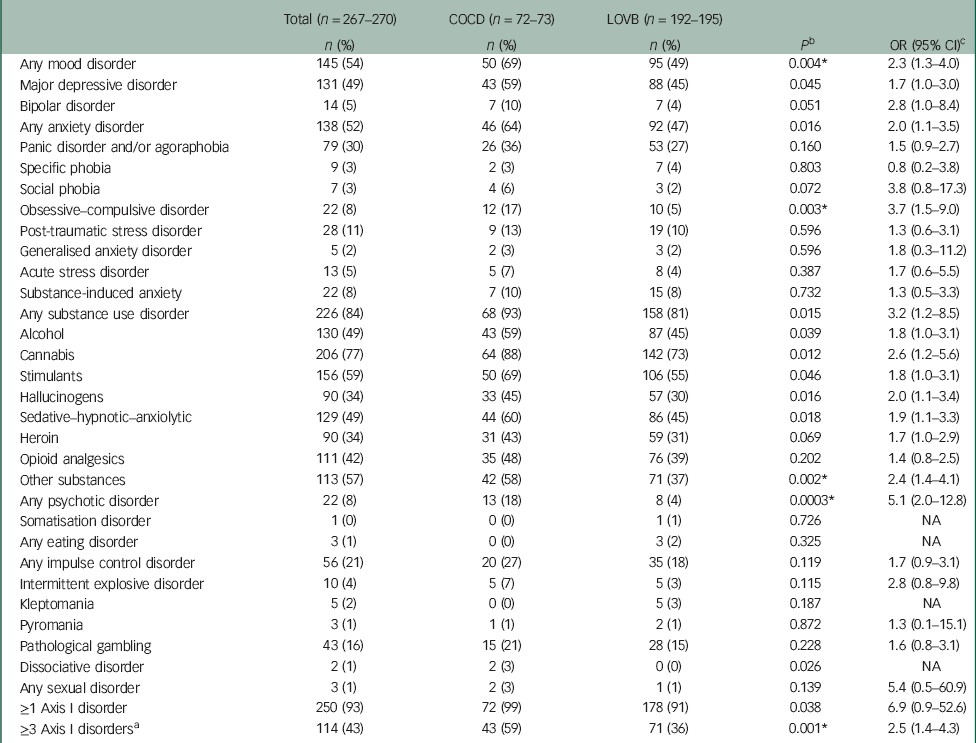
As shown in Table 2, almost the whole cohort (93%) met criteria for at least one Axis I disorder in a lifetime perspective. Mood disorders (54%) and anxiety disorders (52%) were the most common clinical categories.
Many of the participants met criteria for substance use disorders (SUDs) (n = 226, 84%) and in most cases they abused multiple substances simultaneously or sequentially (72% had abused two or more substances during their lifetime). A third of the total group (34%) had used heroin, including smoking heroin, and approximately half of this group (14%) injected the drug, with no difference between the subgroups (P = 0.548).
A total of 21 participants (8%) met criteria for a psychotic disorder during their lifetime. In most participants these psychotic episodes were assessed as substance induced (n = 20) but in a few participants a brief psychotic disorder (n = 1) or psychosis not otherwise specified (NOS) (n = 1) was diagnosed.
In terms of clinically meaningful effects, participants with COCD had two times higher odds (OR = 2.3, 95% CI 1.3–4.0) of a mood disorder, a four times higher odds (OR = 3.7, 95% CI 1.5–9.0) for obsessive–compulsive disorder (OCD), two times higher odds (OR = 2.4, 95% CI 1.4–4.1) for abusing substances other than the large substance groups (i.e. those in Table 1 referred to as ‘Other substances’ including inhalants, anabolic steroids and gamma-hydroxybutyrate), three times higher odds (OR = 2.7, 95% CI 1.3–5.5) for polysubstance abuse and five times higher odds (OR = 5.1, 95% CI 2.0–12.8) of a psychotic disorder. These associations persisted after statistically controlling for FDR.
In addition, there were a number of clinical conditions that were clearly overrepresented among participants with COCD, such as major depressive disorder, bipolar disorders, social phobia, several individual SUDs and dissociative disorder, though these associations did not quite reach statistical significance or were reduced below the significance threshold when we controlled for multiple comparisons.
At the time of the assessment, the total group had a mean Global Assessment of Functioning (GAF) score of 53.0 (s.d. = 9.6). The score was significantly lower, 50.0 (s.d. = 9.6), at the time before detention (P≤0.001, by paired-samples t-test). The GAF score of the two groups differed significantly both at the time of the assessment (COCD M = 48.6 (s.d. = 8.5) v. LOVB M = 54.7 (s.d. = 9.5), P≤0.001) and at the time before detention (COCD M = 45.9 (s.d. = 7.1) v. M = 51.5 (s.d. = 10.0)) for the LOVB group (P≤0.001*).
Personality disorders
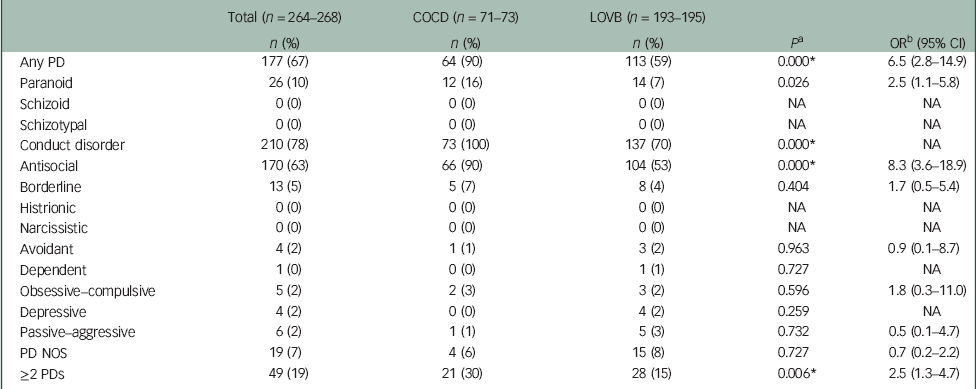
Prevalences and ORs for personality disorders are presented in Table 3. Half of the group (n = 137, 51%) met criteria for an adolescent-onset conduct disorder, and in the whole group 78% (n = 210) were diagnosed with either childhood-onset or an adolescent-onset conduct disorder. COCD was significantly associated with having a personality disorder diagnosis (P≤0.001*) and the odds were almost seven times higher in this group (OR = 6.5, 95% CI 2.8–14.9). Among the personality disorders, antisocial PD stood out as the dominant with almost two-thirds (N = 170, 63%) meeting criteria for this disorder. Here the COCD group had eight times higher odds (OR = 8.3, 95% CI 3.6–18.9). The COCD group was also overrepresented in paranoid personality disorder (P = 0.026), but this association did not stand when controlled for FDR. A complex personality constellation, as measured by meeting criteria for two or more personality disorders, was significantly more common in the COCD group (P = 0.006*) and the odds were almost three times higher in this group (OR = 2.5, 95% CI 1.3–4.7).
Comorbidity
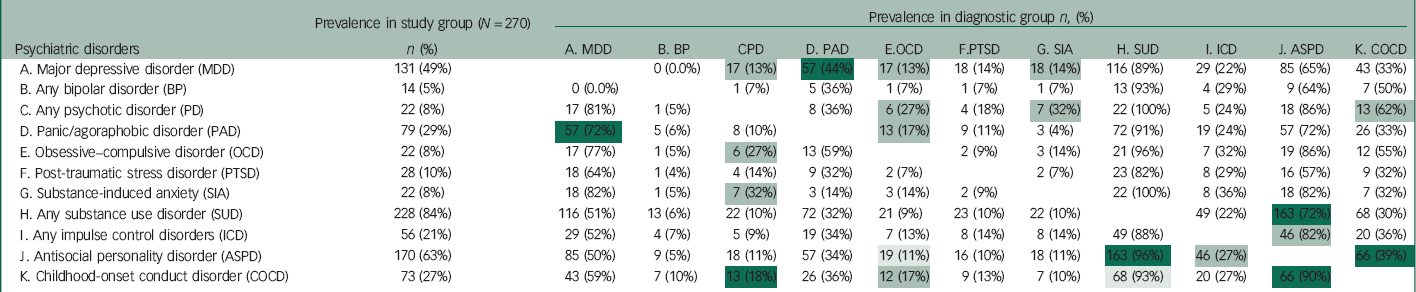
The comorbidity between different clinical disorders was extensive and 43% (n = 114) met criteria for three or more clinical disorders (Table 2). As seen in Table 4, there was also a marked overlap between different diagnostic categories. Particularly having a history of at least one major depressive episode was related to three different anxiety disorders and psychotic disorders. Psychotic disorders, many of which were substance induced, were related to OCD, substance-induced anxiety and COCD. There were also associations between antisocial personality disorder, OCD, impulse control disorders, SUDs and COCD. COCD was significantly related to psychotic disorders and OCD.
Comorbidity was more common in the COCD group compared with the LOVB group (Table 2) and the odds for having three or more clinical disorders were almost three times higher for the COCD group (OR = 2.5, 95% CI 1.4–4.3).
Discussion
This article reports psychiatric prevalences from a representative cohort of young adult prisoners with a presumed high risk of becoming chronic offenders. In response to limitations in previous studies, we used well-trained clinicians and assessment procedures resembling best practice in general psychiatric healthcare services in our data collection. We also studied the effects of COCD on psychiatric comorbidity and framed the results in the context of clinically important effects, defined as an OR of more than 2.0 or less than 0.5, i.e. a double or half risk of comorbidity between the two study groups. This approach allowed us to conclude that there were several clinically relevant differences.
Overall psychiatric morbidity
This article confirms the important finding from previous studies that young male prisoners sentenced for violent crimes carry a highly disproportionate burden of psychiatric disorders. Excluding neurodevelopmental disorders, only 18 of the 270 young men sentenced for violent crimes never met criteria for a psychiatric diagnosis. This is twice as much as the highest rate previously found (47%) in national and cross-national household surveys.Reference Kessler, Berglund, Demler, Jin, Merikangas and Walters 27 , Reference Kessler, Angermeyer, Anthony, DE Graaf, Demyttenaere and Gasquet 28 However, it is more in agreement with previous research on offender groups, where lifetime prevalence rates of psychiatric disorders of between 57 and 84% have been reported.Reference Longato-Stadler, Von Knorring and Hallman 29 , Reference Vicens, Tort, Duenas, Muro, Pérez-Arnau and Arroyo 30 A previous review on the epidemiology of psychiatric disorders among prisoners has emphasised very high rates of comorbidity of psychiatric disorders, especially psychiatric disorders in combination with substance-related disorders.Reference Sirdifield, Gojkovic, Brooker and Ferriter 31 Fazel and colleaguesReference Fazel, Doll and Långström 11 concluded that the risk increase for psychotic illnesses among adolescents in juvenile detention and correctional facilities was about ten times, which is in line with the present results. Other serious psychiatric disorders, such as bipolar disorder and PTSD, were also clearly overrepresented.
However, no previous research has reported prevalence rates as high as those found in the present study, which might be because of the methods applied (extensive clinical assessments by clinically experienced psychologists) and the study of lifetime prevalence instead of current state only, as well as this study including only violent offenders in emerging adulthood, as late adolescence and young adulthood have been portrayed as the periods with the highest risk of developing psychiatric disorders.Reference Burke, Burke, Regier and Rae 32 , Reference Newman, Moffitt, Caspi, Magdol, Silva and Stanton 33 When considering the high prevalence rates of psychiatric disorders in this study, it must also be kept in mind that this is a specific cohort that also shows a considerable amount of childhood adversity,Reference Wallinius, Delfin, Billstedt, Nilsson, Anckarsäter and Hofvander 13 something that is known to be associated with a higher risk for developing psychopathology.Reference Kessler, McLaughlin, Green, Gruber, Sampson and Zaslavsky 34
Many of these participants come from deprived backgrounds with less access to and use of healthcare in the community. Although many of the participants had been in contact with the CAP services, there are reasons to suspect that the treatments and interventions provided previously were insufficient or inadequate. Within CAP services, there is still a strong focus on the familial and social correlates of mental health issues. The diagnostic culture, at least outside the neurodevelopmental realm, is still restrained and interventions are often cautious. In services for young, as well as adult, patients, disruptive behaviours and substance abuse often shield comorbidity such as mood or anxiety disorders from clinicians’ attention. The present findings of approximately 30% of the young adult violent offenders having been in contact with adult psychiatric services should be seen in the context of the much higher actual prevalence (approximately 70–80%) of psychiatric disorders requiring referrals to secondary mental healthcare providers. That is, the mental healthcare needs of young violent offenders have not been adequately met by society.
The importance of COCD
To explore the possibility that conduct problems in childhood may have resulted in developmental ‘snares’,Reference Moffitt 35 making this group especially prone to developing symptoms of psychiatric disorders, we compared the group with an early onset of conduct disorder with those with a later onset of violent behaviour.
In this study, which is one of the first to address these issues, we have been able to show that within a prison setting, the subgroup with an early onset of serious conduct problems represents a particularly vulnerable group. There was an increased risk of all large categories of psychiatric disorders in the COCD group, in line with previous findings from, for example, Fergusson and colleagues,Reference Fergusson, Boden and Horwood 5 MoffittReference Moffitt, Cicchetti and Cohen 36 and Kretschmer and colleagues.Reference Kretschmer, Hickman, Doerner, Emond, Lewis and Macleod 37 Despite increased prevalence of CAP contacts during childhood, we did not find a difference regarding age at first psychiatric contact or level of treatment at this stage. However, the COCD group consumed more psychiatric care and significantly more pharmacological treatment, including antipsychotics, as adults. These findings could reflect the fact that these children often lack support from family members and that community representatives, for example, in school, often explain their behaviour solely as a result of their social situation. There is reason to argue that these children could be identified and treated at an earlier age. These findings have important implications for social welfare institutions, the school system and all healthcare providers.
Limitations
There are several limitations to this study. First, it has a retrospective design, which might interfere with the reliability of historical data. However, to allow neurodevelopmental and lifetime mental health perspectives on relatively large samples of rare phenotypes such as these, possibly persistent, violent offenders, this design is one of few available. The choice of young adults gives the benefits, apart from the study of an important developmental period per se, of participants whose age is high enough for them to conceive their own medical history and low enough for them to remember a fair amount of their background. Data collection also included file information such as medical registers and all other available documents. For all participants we also asked permission to contact their parents, caregivers or others who knew them as children. However, in many cases we were unable to reach these people. There are reasons to believe that oppositional defiant disorder (ODD) plays an important part in the heterotypical pattern of psychiatric disorders in this group.Reference Copeland, Shanahan, Costello and Angold 38 However, the SCID-I and II do not cover ODD and in the DSM-IV, ODD is ruled out if criteria for conduct disorder are met.
Finally, we have not been able to establish inter-rater reliability for the assessments. However, the same expert instructors have educated the clinicians, most often simultaneously, with several training sessions focusing on agreement between assessments. Diagnostic decisions were also made in consensus by the clinicians and the principal investigators.
Implications
The results of this study emphasise the need to improve prison medical services to increase the ability to assess and treat the large burden of psychiatric disorders among prisoners. Prisons provide a rare public health opportunity to screen and intervene in a young, marginalised and highly exposed group. A recent, longitudinal cohort study on nearly 50 000 prisonersReference Chang, Larsson, Lichtenstein and Fazel 39 showed that treatable psychiatric disorders were related to reoffending and that the risk of reoffending increased with the number of diagnosed disorders. In young adult male offenders, the 3-year recidivism rates are about 50%. 40 This makes it urgent to review the provision of mental healthcare in prison settings to counteract this cycle of reoffending. There are also strong reasons to specifically address individuals with an early onset of conduct problems, because a persistent pattern of antisocial behaviour in young children is an important precursor to future mental health problems and severe criminality. We need to improve our methods to identify and provide evidence-based interventions for these children.
Acknowledgements
The authors thank Lennart Palmgren and Svenolov Svensson for their generous support of the study, all site managers for their hard work during the assessments, Therese Olsson, Natalia Theander and Mattias Filipazzi for indispensable help during data collection and Monika Montell, Jan Wikdahl and Stefan Axelsson for their help with the database. We also thank Carl Delfin for his statistical advice. Finally we would like to express our gratitude to all participants and their families for their participation.
Funding
The study was supported by grants from the Swedish Prison and Probations Services, Region Skåne, Region Kronoberg, Södra sjukvårdsregionen, Stiftelsen Lindhaga and government grants under the ALF agreement.


 Open access


eLetters
No eLetters have been published for this article.