Over thirty observational studies and four small interventions have explored the concept that added sugars dilute the micronutrient content of the diet. Several reviews have concluded that evidence for micronutrient dilution is generally inconsistent, and that where associations are found, these are weak(Reference Gibney, Sigman-Grant, Stanton and Keast1–Reference Gibson7). Furthermore, relationships between sugars and micronutrients may not be nutritionally meaningful in a context where intakes of most nutrients are adequate. However, these reviews also acknowledge that some inconsistencies may be due to methodological differences. These include different definitions of sugars (e.g. total sugars, non-milk extrinsic sugars (NMES) or added sugars), adjustment for energy intake (EI) and confounding factors such as misreporting error. It is therefore important that research should attend to confounding factors and attempt to quantify the observed associations to provide a better evidence base for dietary recommendations(Reference Rennie and Livingstone6, Reference Gibson7).
Associations have previously been reported between micronutrient intakes and the proportion of sugars in the diet among young children, adults and older people in Britain(Reference Gibson8–Reference Gibson12). Some studies included an examination of status indices to help validate the dietary assessment and evaluate the biochemical significance of any dilution effect. This new analysis of data from the National Diet and Nutrition Survey of Young People aged 4 to 18 years (NDNS4–18)(Reference Gregory and Lowe13) examines the strength of association between micronutrients and the proportion of added sugars in the diets and the likely significance of this for nutritional health in this age group. It includes an evaluation of the impact of low reported EI. Added sugars were chosen as the exposure variable rather than NMES because the latter definition includes fruit juices, which may give rise to positive associations with some nutrients such as vitamin C.
Methods
Survey method
The NDNS4–18 consists of a nationally representative sample of 2672 young people aged 4–18 years, randomly sampled from 132 postcode sectors throughout mainland Britain in 1997. The survey fieldwork spanned a full calendar year. Only one young person per household was recruited. An interview was conducted to provide information on socio-demographic circumstances, medication use, and eating and drinking habits. Each young person or carer was supplied with a set of digital food scales and two recording diaries; the ‘home record’ diary for foods eaten in the home and the ‘eating out’ diary for foods that were eaten outside the home and could not be weighed. A description was recorded of each food or drink item consumed over the 7 d, including brand name and method of preparation. Ethical approval for the survey was obtained from National Health Services Local Research Ethics Committees.
Data analysis
Data files were obtained from the UK Data Archive (www.data-archive.ac.uk). Of the 1701 completed 7 d dietary records, thirteen records were rejected due to missing data (zeros) for nutrient sources, leaving a sample of 1688. Values for NMES intake were used to estimate added sugars intake (from total NMES intake minus NMES from fruit juices). The percentage of energy from added sugars (%EAS) for each individual was calculated as: Added sugars (g) × 3·75 × 100/EI (kcal).
Quintile cut-offs were generated for each age group (4–6, 7–10, 11–14, 15–18 years) in boys and girls separately. These groups were then amalgamated to provide quintiles matched for age and sex. Mean intakes of EAS across the five quintiles (Q1–Q5) were 9, 12, 15, 18 and 23 %.
From survey data on weight and height, BMI z-scores were calculated based on UK reference curves(14). Children were classified as ‘overweight/obese’ using International Obesity Task Force cut-offs for BMI z-scores of 1·3 (boys) and 1·19 (girls); these correspond to the adult criteria of BMI>25 kg/m2, extrapolated back to childhood(Reference Bellizzi and Dietz15–Reference Dietz and Robinson17).
Adjustment for low energy reporting
Previous work has shown that children in this survey who recorded relatively low EI compared to their predicted BMR reported eating diets lower in sugars (% energy)(Reference Gibson and Neate18). Since this may attenuate any inverse association between sugars and micronutrient intake, the impact of excluding low energy reporters (LER) was explored using a cut-off for EI:BMR of 1·2, below which records are not considered a plausible measure of food consumed during the survey period(Reference Goldberg, Black, Jebb, Cole, Murgatroyd, Coward and Prentice19). While cut-offs lack good sensitivity and specificity for identifying individual under-reporters(Reference Black20), they are adequate for exploring how an under-reporting bias might influence trends.
Statistical methods
Differences between quintile groups in regard to under-reporting, social class, ethnicity, dieting and illness during the survey were examined by cross-tabulation and χ2 tests. Trends in micronutrient intakes across quintiles were examined visually using error bar charts (mean and 95 % CI), both before and after excluding LER. Differences between groups were evaluated using ANOVA and contrast tests (with correction for unequal variances and Bonferroni adjustment for multiple comparisons). Individuals' intakes were expressed as a percentage of their reference nutrient intake (RNI) and estimated average requirement (EAR)(21) to identify which nutrients were most marginal in the diet. The prevalence of inadequate intakes within a group was estimated as the percentage of the population with usual intakes below the EAR(Reference Murphy and Susan22).
Micronutrient status
A total of 1075 children provided a fasting blood sample (59 % of the sample completing 7 d diaries). Distributions of status measures were examined for normality and the presence of extreme values. One outlier with serum ferritin of 990 g/l (indicative of infection/inflammation) was excluded, since other serum analytes can be distorted by an acute phase response. All other values were under the normal upper limit of 300 g/l. Several analytes (serum ferritin and the plasma carotenoids) were positively skewed (as indicated by skewness estimates greater than +1). For these, log-transformed values (log n) were used in analysis. One-way ANOVA and post hoc tests for contrast (Q1 v. Q5) were used to assess differences in status by quintile of %EAS. Partial correlations between variables (adjusted for sex and age) were examined.
Three indices commonly used in population screening were selected for assessment of iron status. The prevalence of low iron status was compared across quintiles of %EAS using χ2 tests. Prevalence criteria for low iron status were based on the definitions used in the NDNS report(Reference Gregory and Lowe13), as follows. Anaemia: Hb < 110 g/l for children under 6 years, Hb < 120 g/l for girls age 6–18 and boys age 6–15 years, Hb < 130 g/l for boys over 15 years; low iron stores: serum ferritin < 15 μg/l for girls, < 20 μg/l for boys; low transferrin saturation: < 15 %.
All methods of blood analysis and quality control are described in Appendix Q of the published survey report(Reference Gregory and Lowe13).
Results
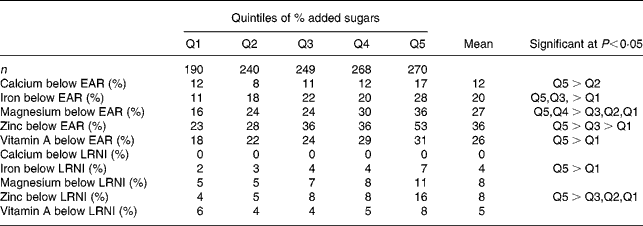
The mean intake of added sugars as %EAS was 15·4 (sd 5·3) % (Fig. 1) with Q1–Q5 means of 9, 12, 15, 18 and 23 % (Table 1). The corresponding intakes of NMES across the quintiles were about one percentage point higher than those of added sugars. Thus, Q1 corresponds closely to the recommended population level of 10 % total energy from NMES(21), while Q5 is close to the maximum level of added sugars suggested by the American Institute of Medicine report(23). Soft drinks (including fruit squash but not fruit juice) contributed 4·4 % of energy overall or about 28 % of added sugars.
Frequency distribution of added sugars (as a percentage of total energy intake) (n 1688).
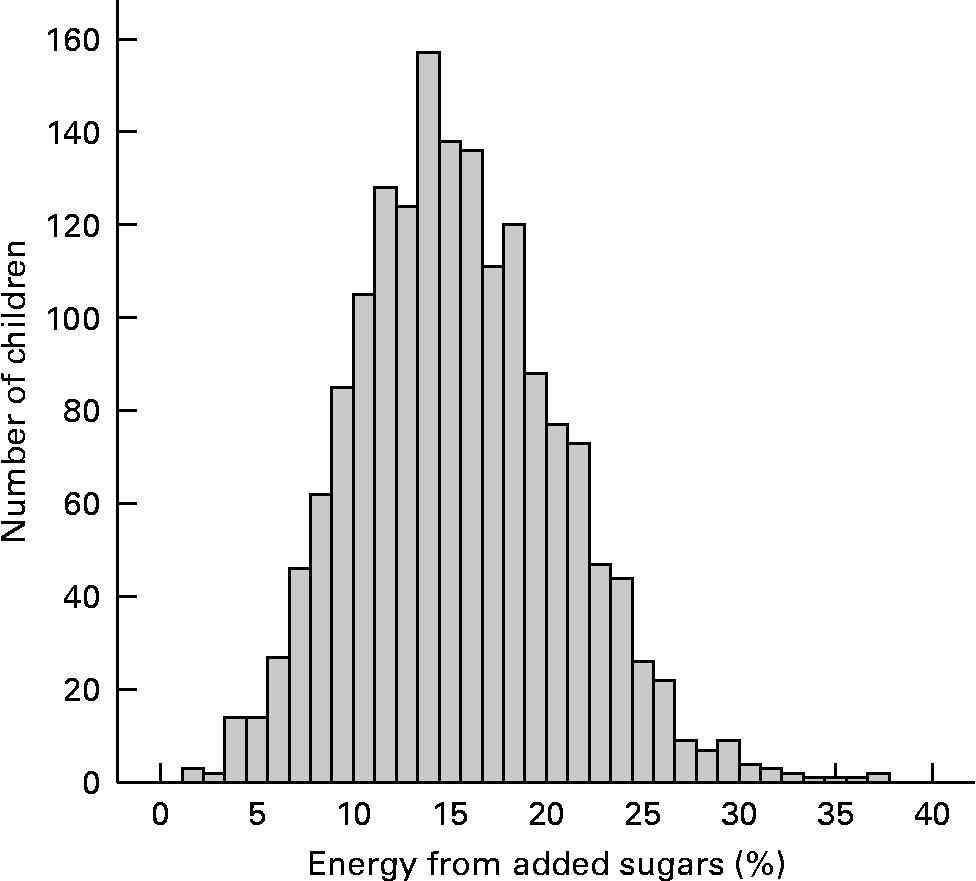
Background differences for young people according to added sugars intake (n 1688)*
* For details of procedures, see Methods.
† Age/sex-adjusted quintiles of percentage energy from added sugars (%EAS).
‡ BMI z-score: >1·3 (boys), >1·19 (girls).
Young people with the lowest sugar intake (Q1) were more likely to be overweight (BMI>25 kg/m2), or dieting, or to report an EI below the plausible threshold (EI:BMR < 1·2; Table 1). There were slightly more non-Caucasians in this group, but no other significant differences in regard to social class, vegetarianism or illness that affected eating during the survey.
Micronutrient adequacy
In the total sample, intakes of micronutrients tended to be highest in Q2 (mean 12 % EAS) and lowest in Q5 (mean 23 % EAS) for all nutrients except vitamin C (Table 2). Vitamin C showed no relationship with the level of added sugars in the diet, largely due to fruit drinks (squash etc.) being a major source of both sugar and vitamin C for these children. Mean intakes of iron, magnesium, zinc and vitamin A in the total sample were 97, 92, 82 and 97 % of the RNI, respectively (data not shown). Calcium, folate and riboflavin were between 110 and 150 % of the RNI, while intakes of other nutrients (thiamin, niacin, vitamin B6, vitamin B12, vitamin C, vitamin E) were well above recommended levels at all levels of added sugars.

Impact of low energy reporting
Exclusion of LER (i.e. confining the analysis to children with plausible records or EI:BMR>1·2) gave associations that were more linear but at higher levels of adequacy.
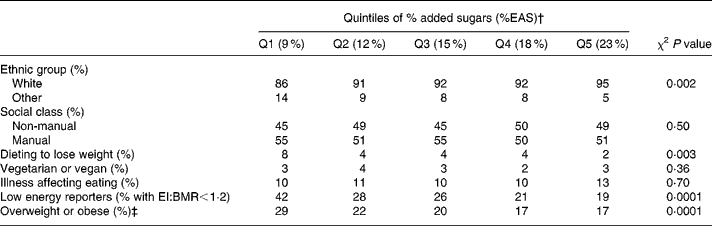
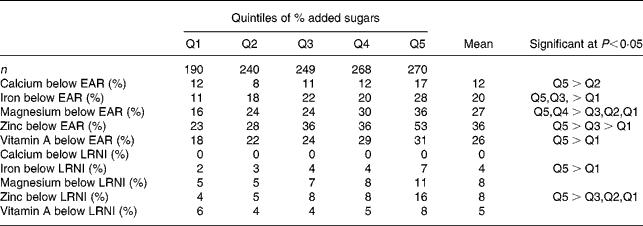
Zinc intakes were below the RNI at all levels of added sugars (Table 3). There was a downward trend in intakes of most nutrients with increasing added sugars intake such that intakes in Q5 were 10–20 % lower than in Q1 (14–18 % lower for the four ‘marginal’ minerals: iron, calcium, magnesium and zinc). However, vitamin B6 and vitamin C showed no trend with sugars intake and vitamin E showed a weak positive association. At the highest level of added sugars (Q5), mean intakes of zinc, magnesium and vitamin A fell below the RNI (Fig. 2). The likely prevalence of inadequacy, as estimated by the percentage of children with intakes below the EAR, was significantly higher in Q5 compared with Q1 for the five nutrients most at risk (iron, calcium, magnesium, zinc and vitamin A) (Table 4). Few children had intakes below the lower RNI, although in Q5, 11 % had magnesium intakes and 16 % had zinc intakes below this threshold. Energy intake, which is recognised as the main determinant of nutrient adequacy(21, 24) rose by approximately 6 % from Q1 to Q5.

Trends in intake of selected nutrients according to added sugars (n 1217 excluding low energy reporters). ♦, Calcium; ▲, iron; ○, magnesium; ░, vitamin A; ●, zinc. RNI, reference nutrient intake.

Food intake
Unsurprisingly, given the classification of respondents according to the proportion of added sugars in their diet, consumption of most other food groups declined across Q1–Q5 (Table 5). In particular, consumption of fruit juice, fruit, vegetables, meat, bread, fats, cheese and eggs fell by more than 20 %. Around 3–5 % of the variance in intake of these food groups was explained by the level of added sugars in the diet.

Micronutrient status
Associations between sugars intake and selected micronutrient status indices for the total sample are shown in Table 6. Exclusion of LER weakened the power to detect significant associations but did not alter the direction of associations. Serum ferritin was 12–17 % higher among low-sugar consumers (Q1) compared with consumers in other quintiles (P = 0·03) while transferrin values showed a smaller difference (24 % in Q1 v. 22 % in Q5, P = 0·046). However, there was no significant rise in the prevalence of low iron status with a higher sugars intake (data not shown). Plasma selenium declined by around 8 % (mean 0·9 μmol/l in Q1 v. 0·83 μmol/l in Q5; r − 0·17, P < 0·0001). Overall 13 % of children (18 % in Q5) had levels below the reference range for age 4–16 years (0·7–1·7 μmol/l)(25) although none had levels indicative of frank selenium deficiency. There was no evidence of any association between %EAS and glutathione peroxidase (data not shown). Plasma zinc did not vary with added sugar intake and levels were consistently above the recognised deficiency level. There was a weak positive association with α-cryptoxanthin (P = 0·003) but no association with other carotenoids.
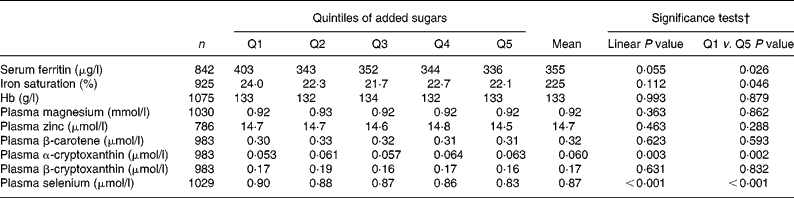
Correlations of these status measures with food intakes were also examined (data not shown). Serum ferritin was positively correlated with meat consumption (r +0·21, P < 0·0001) with weaker associations for Hb (r +0·18, P < 0·0001) and transferrin saturation (r +0·11, P < 0·001). Selenium status was positively associated with intake of fish (r +0·23, P < 0·0001), cereal dishes (pasta/rice/pizza) (r +0·23, P < 0·0001), eggs (r +0·15, P < 0·0001) and meat (r +0·16, P < 0·0001), but inversely with savoury snacks (r − 0·15, P < 0·0001). With the exception of selenium status, the correlation coefficients were larger with these foods than with %EAS.
Discussion
A major strength of the present study is the dietary methodology (7 d weighed record), which is better able to estimate the prevalence of inadequacy than 24 h recall methods used in many large-scale epidemiological studies. Estimated BMR values also allowed us to examine the impact of LER bias, which has not always been possible in other studies. Limitations of the NDNS include a moderate sample size (n 1688, or n 1217 after exclusion of LER), which limited the ability to stratify the sample further. Blood samples were only available for around 1000 children, also limiting the statistical power to detect associations with nutrient status. Selenium intake data were also absent due to insufficient analytical data.
Prior to adjustment for LER, associations with some nutrients (calcium, iron, magnesium, zinc, riboflavin and folate) were curvilinear, with highest values in Q2 (12 % added sugars) and Q3 (15 % added sugars). A similar pattern has been found in the literature(Reference Gibney, Sigman-Grant, Stanton and Keast1, Reference Bolton-Smith2, Reference Gibson9, Reference Bolton-Smith and Woodward26), as summarised by Ruxton et al. (Reference Ruxton, Garceau and Cottrell3). However, on exclusion of LER the trends became more linear and levels of nutrient intake were elevated. Rutishauser et al. (Reference Rutishauser and Mackerras27) have pointed out that failure to correct for implausible energy values may lead to misleading (overinflated) estimates of inadequacy in populations.
We have attempted to quantify the micronutrient dilution observed in the present study. Overall, a 2·5-fold difference in sugars concentration (23 % in Q5 v. 9 % in Q1) was associated with a reduction in micronutrient intake (as a percentage of the RNI) of the order of 10–20 % (range − 24 to +6 %). With respect to iron and calcium, for example, the impact is equivalent to a 1 % reduction relative to the RNI for every percentage point increase in EAS. A recent review(Reference Gibson7) found associations which varied between nutrients and between population groups, as well as with the definition of sugars intake. It reasoned that inconsistency in the literature may be due to confounding by EI. For example, in the large CSFII (US) dataset reviewed by the Institute of Medicine(23), there was evidence of a subtle decline in EI at both extremes of the spectrum ( < 5 % EAS and >30 % EAS), which may explain, in part, the observed curvilinear associations with micronutrient intakes(Reference Forshee and Storey28). In the present study, exclusion of suspiciously low energy records produced estimates of the impact of added sugars on micronutrient and food intakes that should be relatively robust. These indicate that dilution effects start to become significant above Q3 (i.e. >15 % EAS). Our conclusions are similar to other recent European studies of children in Germany(Reference Alexy, Sichert-Hellert and Kersting29) and Norway(Reference Overby, Lillegaard, Johansson and Andersen30) who consumed a similar range of added sugars.
It is likely that the impact of added sugars on micronutrient intakes depends on the types of sugar-containing foods consumed and whether these contribute nutrients or facilitate consumption of other nutrient-rich foods. For example, consumption of soft drinks, sugar/confectionery, and biscuits and cakes (g/d adjusted for total EI) were all weakly inversely correlated with zinc intake while breakfast cereals were positively correlated. However, as associations differed between nutrients it is not possible to quantify the impact of soft drinks at this stage.
Studies and reports in the literature vary in their interpretation of dietary sugars' impact on micronutrient intake or dietary quality. Some emphasise the negative direction of most trends, tending to ignore their strength, implying that an optimal diet contains no added sugars at all. Others consider that inverse associations are inconsistent, and weak or unquantifiable, that nutrient intakes are generally adequate, and dilution by sugars is relatively unimportant in terms of public health. However, the balanced view should avoid both over-exaggeration and complacency. The importance of a 10–20 % reduction in nutrient intake hinges on whether intakes are more than adequate or are borderline, but the data and criteria for assessing requirements are themselves an issue of debate. For many nutrients, homeostatic mechanisms affecting absorption and excretion cannot be factored in to estimated requirements, while estimates for zinc requirements in children are ‘probably generous’(21). The EAR cut-point method is a straightforward and accurate measure of the prevalence of inadequate intakes in a population when nutrient requirements are normally distributed and the true prevalence is between about 8 and 92 %(Reference Rutishauser and Mackerras27, 31–Reference Beaton, Shils and Shike34). However, when the distribution of requirements is skewed (as for iron in women) the EAR cut-point method tends to underestimate the prevalence of inadequacy(31).
Biochemical measures of status for key nutrients provide a useful means of validating the dietary findings. Reduced levels of transferrin saturation ( < 15 %) and serum ferritin ( < 15 or < 20 μg/l) are often used to define iron deficiency(35). Serum ferritin is a reliable and sensitive parameter for the assessment of iron stores in healthy subjects and is widely used in clinical practice and screening. Transferrin saturation, the ratio of serum iron to iron-binding capacity, is the most accurate indicator of iron supply to the bone marrow although it has wide diurnal variation and low specificity. In the present study, serum ferritin and transferrin saturation showed a weak inverse association with %EAS but were more strongly (positively) associated with consumption of meat. Plasma magnesium is regulated by the kidneys but low levels may be due to long-term dietary deficiency, malabsorption or renal loss(21). Mean plasma magnesium levels in all quintiles were within the normal reference range (0·75–0·95 mmol/l). Plasma zinc is not a particularly reliable indicator of status but deficiency has been defined as a plasma concentration below 10·7 μmol in fasted adults(Reference Gregory and Lowe13, Reference Pilch and Senti36). Mean zinc levels were well above this level and there was no evidence of a decline with increasing sugars intake. Plasma carotenoids reflect intake in the short and medium term(Reference Basu and Dickerson37). The weak positive association found between α-cryptoxanthin and %EAS is difficult to explain and probably spurious. Finally, plasma selenium was included in the present analysis due to concerns about suboptimal intakes in the population. Although frank selenium deficiency (plasma levels below about 0·11 μmol/l) is rare, the normal reference range for children aged 4–16 years is 0·7–1·7 μmol/l(25). Plasma selenium was inversely correlated with %EAS (r − 0·17), but positively correlated with consumption of fish, cereal dishes, meat and eggs. Similar associations between selenium status and consumption of fish have recently been reported among British adults(Reference Bates, Prentice, Birch and Delves38). Since there is no known biological mechanism directly implicating sugar in low selenium status, high %EAS is most likely acting as a surrogate marker for a diet lower in protein, particularly fish and meat. Unfortunately, selenium intake data were not included in the NDNS4–18 due to inadequacies in the composition tables.
Interestingly, levels of glutathione peroxidase, the more sensitive indicator of functional selenium status and the criterion for sufficiency adopted in setting most dietary reference values(Reference Thomson39), was uncorrelated with %EAS (data not shown). On the other hand, since current plasma selenium concentrations in the UK do not allow maximal expression of glutathione peroxidase(Reference Rayman40), it would be wise to monitor selenium status in general, preferably using more sensitive indices such as glutathione peroxidase and selenoprotein P(Reference Burk and Hill41).
In conclusion, the impact of added sugars on micronutrient intakes appears modest but may have relevance for children who have inadequate micronutrient intakes coupled with a diet high in added sugars (i.e. around 23 % EAS). However, the major determinant of micronutrient adequacy is the consumption of foodstuffs rich in nutrients. Thus an important question posed by this research is how the association between dietary sugars and micronutrient intake is modulated by food choices, both in regard to high-sugar foods and to other foods. Some foods high in added sugar are good sources of micronutrients and have a positive impact on diet quality (e.g. breakfast cereals, yogurts)(Reference Gibson12, Reference Frary, Johnson and Wang42). Further work may be warranted to distinguish between sources of added sugars in regard to impact on micronutrient intakes, while statistical modelling could also be used to explore the impact of various dietary change scenarios. A related question is whether advice to reduce added sugars would necessarily improve nutritional status and promote healthy body weight. This cannot be assumed, as diets low in sugar tend to be higher in fat energy and also salt(Reference Gibson10), while the jury is still out on whether body weight is influenced by the proportion of dietary carbohydrate or its type(Reference Vermunt, Pasman, Schaafsma and Kardinaal43, Reference van Dam and Seidell44). Interventions are therefore required to test how individuals, and particularly those who are nutritionally disadvantaged, respond in practice when attempting to reduce added sugars intake. Secondly, given the apparent discrepancies between dietary and biochemical assessments of adequacy, these may need to be reviewed.
Acknowledgements
S. G. is a registered public health nutritionist working as an independent consultant. A. B. is Head of the Sugar Bureau and a registered dietitian and registered nutritionist. S. G. was responsible for study design, data analysis, and writing and revising the paper. A. B. assisted with protocol design and critically reviewed the paper. This secondary analysis of NDNS data was funded by a grant from the Sugar Bureau (UK). The NDNS4–18 was commissioned and funded jointly by the UK Ministry of Agriculture, Fisheries and Food and the Department of Health and obtained under licence from the UK Data Archive. We are grateful to Professor Margaret Rayman, University of Surrey, UK, for helpful discussions on selenium nutrition.