Introduction
Glacierized basins generally have suspended-sediment yields in excess of global averages (Gurnell and others, in press). However, nearly all glaciofluvial suspended-sediment studies have been conducted in temperate glacier basins and little is known of the range of erosion rates in high-Arctic locales such as Svalbard. In temperate latitudes, the accumulation of ice with temperatures below the pressure-melting point requires very high altitudes (Paterson, 1994), and so glacial thermal regimes are dominated by ice at the pressure-melting point (warm ice), particularly at the glacier bed. In Svalbard, the widespread presence of glacier ice at temperatures below the pressure-melting point (cold ice) may strongly influence basin sediment yields (Hodson and others, in press).
Recent work in Svalbard has determined the thermal structure of a number of glaciers (e.g. Dowdeswell and others, 1984; Hagen and Sætrang, 1991; Ødegård and others, 1992; Björnsson and others, 1996). Many of these studies have involved radio-echo sounding across the glacier surface and the detection of internal reflecting horizons (IRHs), which borehole temperature measurements show to represent the interface between warm and cold ice (e.g. Hagen and Sætrang, 1991). Several processes are considered to be significant controls on the distribution of warm ice in Svalbard’s glaciers (Björnsson and others, 1996): (1) insulation by thick snow in the accumulation area and the release of latent heat * Present address: Department of Geography, University of Sheffield, Sheffield S10 2TN, England.
by freezing of melt within the snowpack; (2) advection of warm ice formed by the above process into deeper parts of the glacier; and (3) the warming of ice at or near the glacier bed by heat of deformation and basal sliding (this is particularly enhanced by glacier surges). Variations in the relative magnitude of these processes give rise to a diverse range of thermal structures in Svalbard glaciers, although two end members of this range may be identified: glaciers dominated by warm basal ice and glaciers dominated by cold basal ice.
Typically, cold ice is assumed to restrict the penetration of meltwaters to the glacier bed, and the entrainment of subglacial sediments by meltwater runoff will therefore be restricted in predominantly cold-based glaciers (Hodson and others, in press). This paper examines this hypothesis through a comparison of the fluvial suspended-sediment yield from two glaciers: Austre Brøggerbreen, a predominantly cold-based glacier (Björnsson and others, 1996), and Finsterwalderbreen, a predominantly warm-based (or polythermal-based) glacier (Ødegård and others, 1997). Suspended-sediment yields from these two glaciers are then compared with estimates from other glacier basins in Svalbard.
Field Sites And Methods
Austre Brøggerbreen (see Fig. 1) is a ~12 km2 glacier, occupying a catchment of ~32 km2, which consists almost entirely of cold ice except for a very restricted basal area ~10 m thick in the central region of the glacier (Björnsson and others, 1996). No advection of warm ice from the accumulation area occurs, because the “cold wave” which results from cooling during winter is not eliminated by latent-heat release in the accumulation area by freezing snowmell during the ablation season (Bjòrnsson and others, 1996). Finsterwalderbreen (see Fig. 1) is a 44 km2 polythermal glacier, occupying a catchment of 68 km2, with a strong IRH lying at depths of 50–100 m from the ice surface. Ice at the bed is at the pressure-melting point, except in the lower 500 m of the glacier (èdegård and others, 1997).
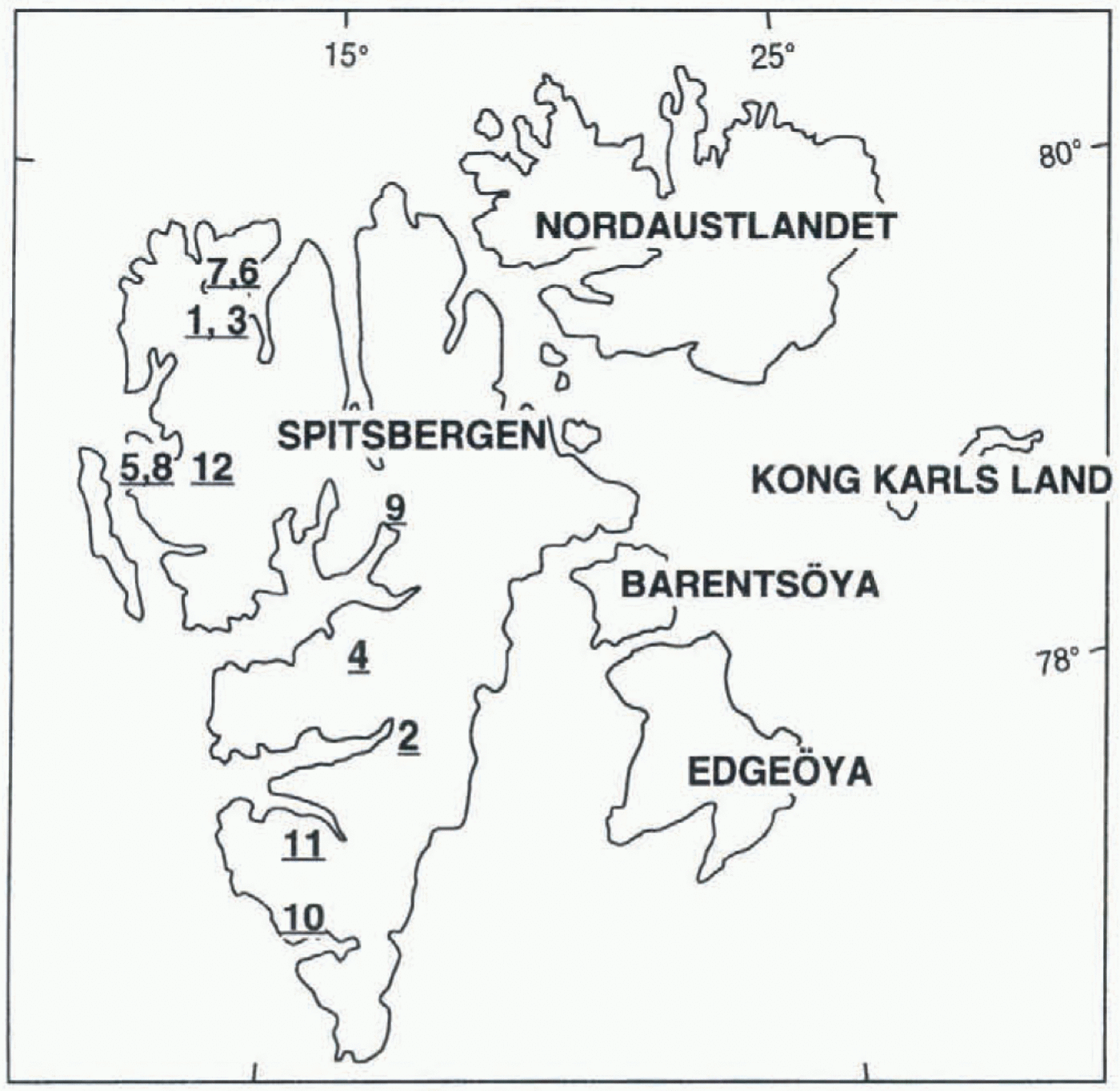
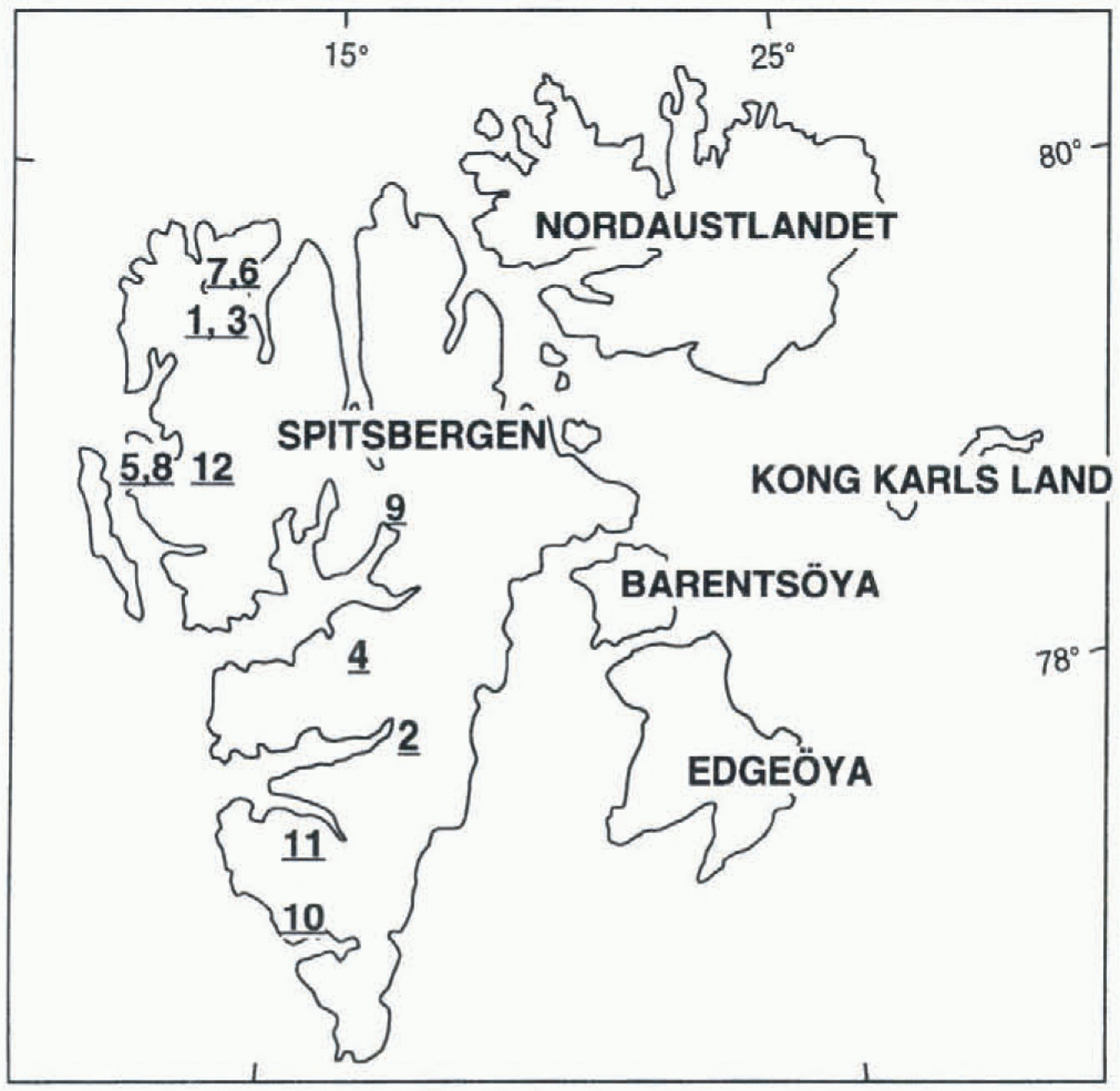
The Svalbard archipelago and the locations of glacier basins with known suspended-sediment yields. The glacier basins are numbered in order of increasing glacier area: 1, (Barsch and others, 1994); 2, Bjuvbreen (Hamilton, 1992); Д Glopbreen (Barsch and others, 1994); 4, Scott Turnerbreen (Hodgkins, 1996); 5, Austre Brøggerbreen UGS (Hodson and cithers, in press); 6, 7, Hannabreen, Erikbreen (Sollid and others, 1994); 8, Brøggerbreen LGS (Hodson and others, in press); 9, Ebbabreen (Kostrzewski and others, 1989); 10, Werenskioldbreen (Krawczyk and Opolka-Gadek, 1994); 11, Finsterwalderbreen; 12, Kongsvegen (Elverhøi and others, 1980).
Both glaciers last surged in the interval 1890–1910 (Bjòrns-son and others, 1996). Since the end of the Little Ice Age (LIA), which occurred between 1910 and 1920 in Svalbard (Dowdeswell, 1995), strong negative mass balances have been recorded at both glaciers (Lefauconnier and Hagen, 1990; Dowdeswell and others, 1995). At Austre Brøggerbreen, these changes have been particularly significant and the glacier is believed to have lost ~30% of its volume and thinned considerably since the end of the LIA.
The geology of both catchments is similar, with Permian, Carboniferous and Tertiary sedimentary rocks (sandstones, shales, dolomites and limestones) at Austre Brøggerbreen (Hjelle, 1993), and Permian, Triassic, Jurassic and Cretaceous rocks (sandstones, dolomites, limestones, siltstones and shales) at Finsterwalderbreen. In addition, there are isolated regions of Proterozoic basement rocks (carbonates, phyllite and quartzite) at the southern limit of both glaciers (Hjelle, 1993).
Discharge and suspended-sediment concentration were monitored during 1991 and 1992 in the Austre Brøggerbreen basin. During 1991 and 1992, data were collected from a lower gauging site (LGS), to which runoff was supplied by two glaciers (Austre and Vestre Brøggerbreen) and an intervening proglacial valley train some 2.5 km long. Glaciers cover 54% of the 32 km2 catchment area draining to the LGS. In 1992, monitoring was also conducted at an upper gauging site (UGS) ~100 km2 downstream from the terminus of Austre Brøggerbreen, where runoff was delivered almost exclusively by a ~7 km2 portion of the glacier. We estimate that ~70% and ~80% of annual discharge was monitored during 1991 and 1992, respectively. Most runoff arose from subaerial, ice-marginal channels. At Finsterwalderbreen, monitoring was conducted during 1994 and 1995 at a single gauging station ~100 m downstream of the western margin of the glacier. We estimate that this site received ~90% of total discharge from the highly glacierized catchment, largely via a single sub-glacial channel, and that ~80% of the annual discharge was measured. The same monitoring techniques were implemented for the estimation of discharge and suspended-sediment concentration in both glacier basins. This involved the abstraction of ~400 ml water samples every 2–4 h using automatic pump samplers to determine suspended-sediment concentration and the application of a velocity-area technique for the estimation of discharge from pressure-transducer records (Hodson and others, in press).
Results
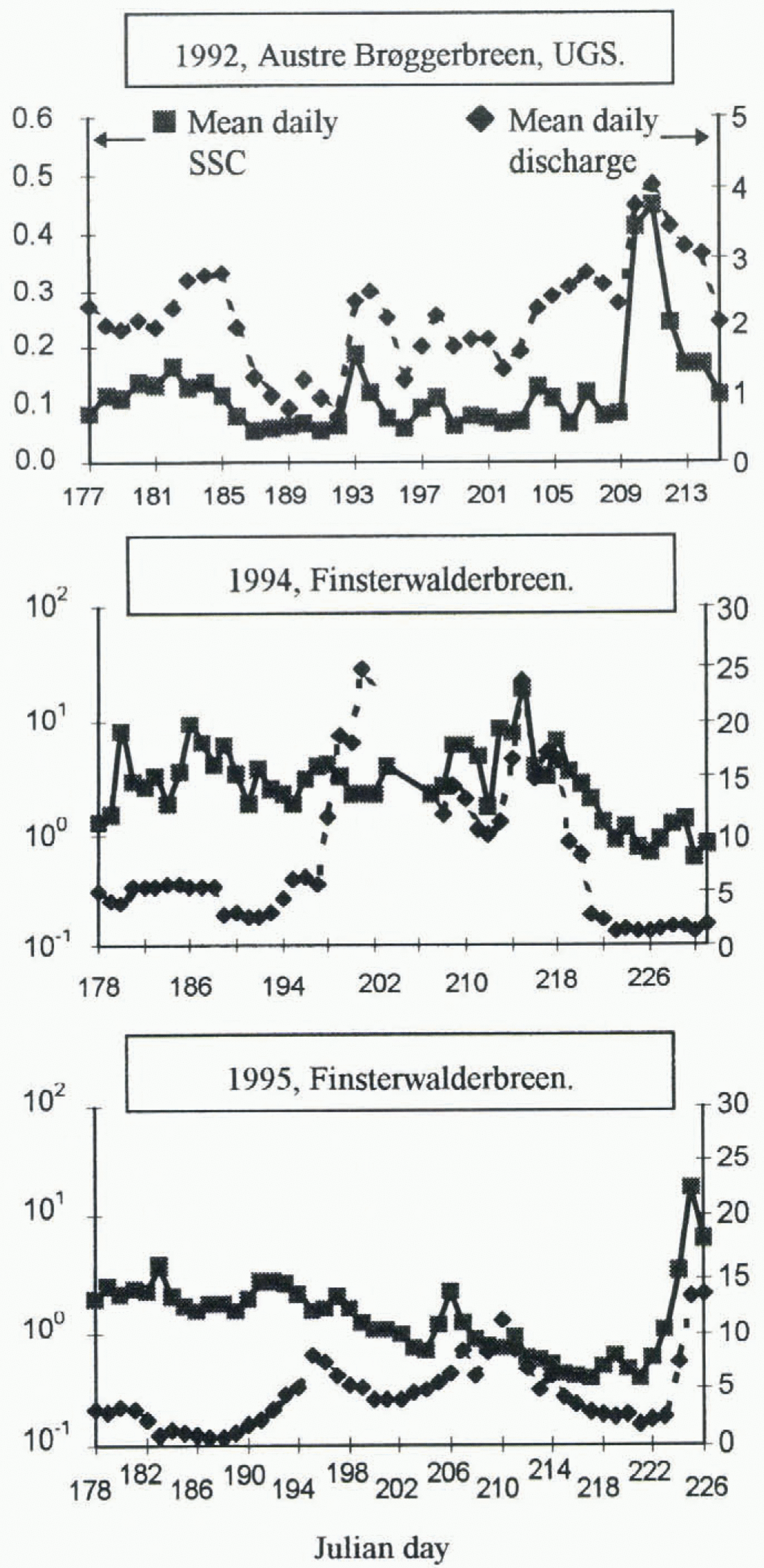
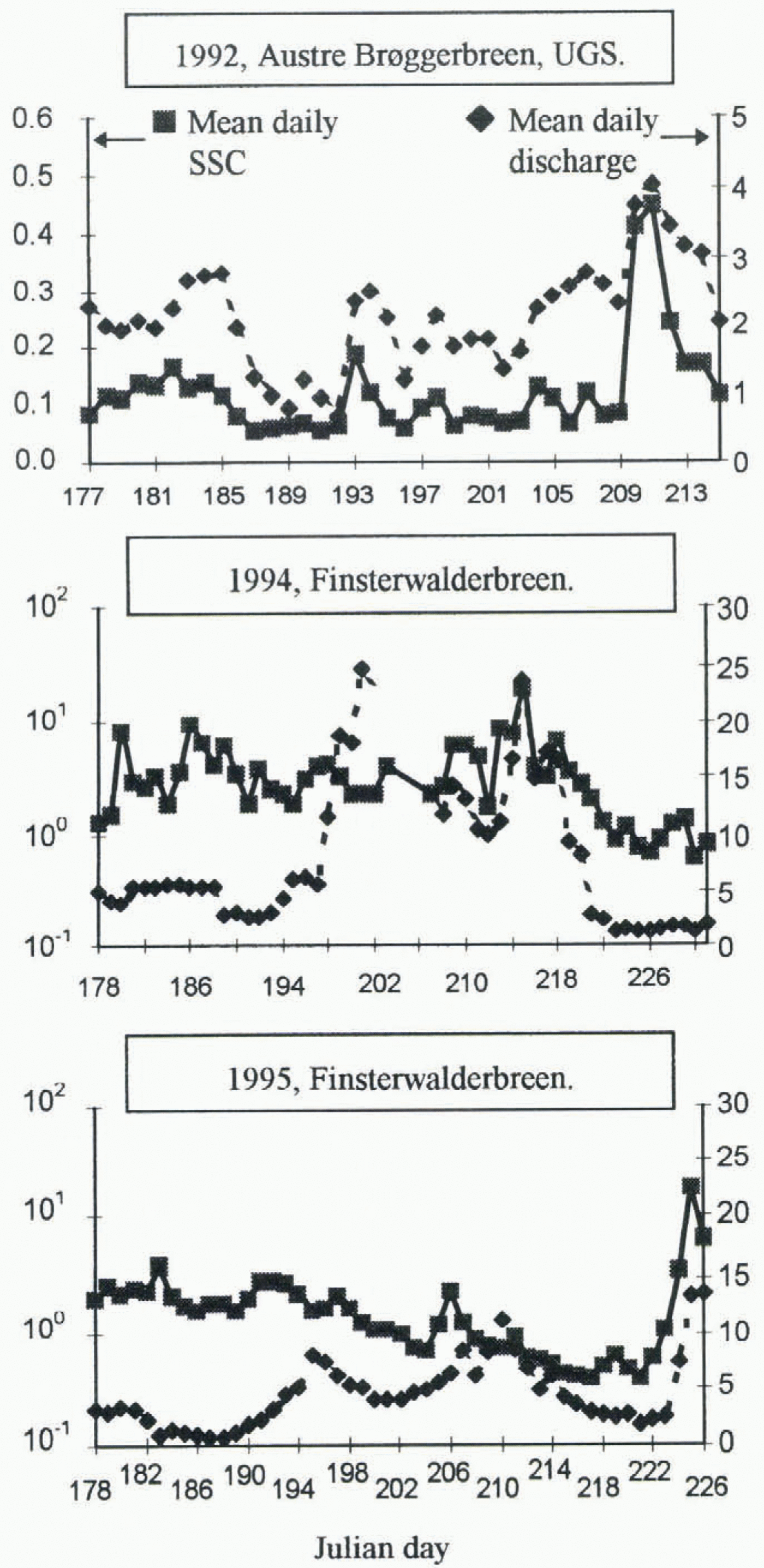
Figure 2 presents mean daily suspended-sediment concentration and discharge from the sites close to the termini of the two glaciers: the UGS at Austre Brøggerbreen and the Finsterwalderbreen monitoring site. The following characteristics are evident.
Austre Brøggerbreen
At the UGS, mean daily suspended-sediment concentrations ranged from ~0.05 to 0.5 g l−1 during 1992 (see Fig. 2). Mean daily discharge ranged from ~0.1 to 4 m s−1. Mean daily discharges of > 2 m3 s−1 occurred during three intervals of the monitoring period, Julian days 177–185, 193–195 and 204–215. These high-flow periods resulted in progressively higher mean suspended-sediment concentrations: ~0.15, 0.19 and 0.45 g l−1, respectively. This illustrates the increased suspended-sediment concentrations associated with higher discharges during the latter stages of the monitoring period, which is confirmed by a more comprehensive analysis of these data (Hodson and others, in press). The lowest mean daily suspended-sediment concentration (<0.05 gl−1) occurred during a flow recession period (Julian days 186–192).
Finsterwalderbreen
At Finsterwalderbreen, the range in mean daily suspended-sediment concentration during the 1994 and 1995 monitoring periods was far greater than at Austre Brøggerbreen, with values ranging from 0.5 to 20 gl−1 (for clarity, a logarithmic scaling has been adopted for the Finsterwalderbreen data in Figure 2). Mean daily discharge ranged from < 1 to 25 m3 s−1 in 1994, and <0.5 to 14 m3 s−1 in 1995. There were some important similarities in the temporal pattern of mean daily discharge and mean daily suspended-sediment concentration during 1994 and 1995:
A period of low mean daily discharges (<6 m3 s−1) occurred during both monitoring seasons before Julian day 192, which was associated with relatively high mean daily suspended-sediment concentrations (2–10 gl−1);
After Julian day 192, periods of higher mean daily discharges occurred which were not associated with a concomitant increase in mean daily suspended-sediment concentration. This was particularly apparent between Julian days 193 and 222 in 1994, and Julian days 193 and 214 in 1995.
Flow recessions late in the monitoring period (after Julian day 223 in 1994 and between Julian days 214 and 223 in 1995) were associated with the lowest mean daily suspended-sediment concentrations (<1 gl−1), although the mean daily discharges remained higher than during the low flows at the beginning of the monitoring period.
Seasonal maximum mean daily discharges (Julian clay 215 in 1994 and 225 in 1995) were associated with very high mean daily suspended-sediment concentrations of up to 25 g1−1.
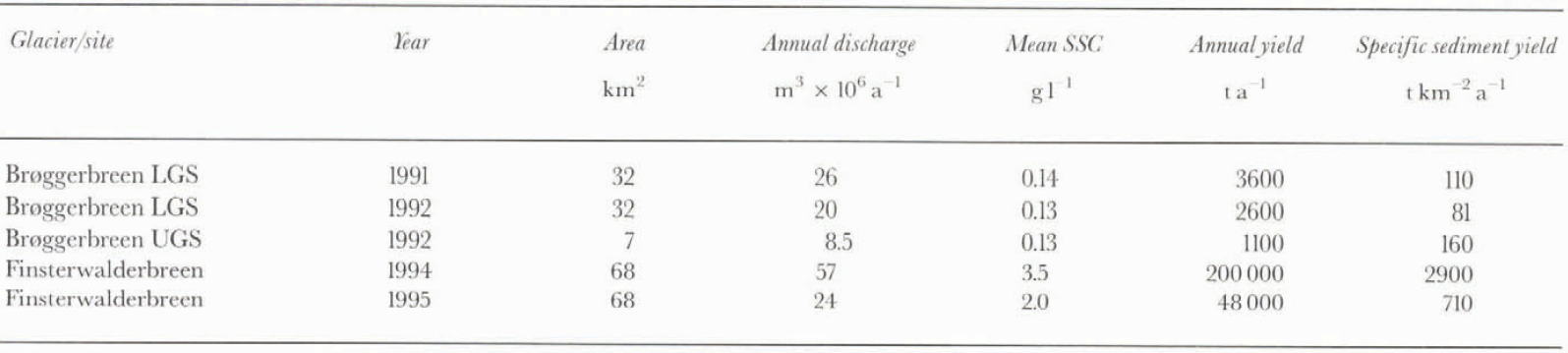
Observations from all monitoring stations and field sites are summarised in Table 1. Annual discharge was derived from the sum of measured discharge (~70–80% of annual discharge; see above), adjusted to take into account discharge that was not monitored. Annual sediment yield (t a−1) was calculated from the products of the raw discharge and suspended-sediment concentration data, and specific sediment yield (t km−2 a−1) was obtained by dividing was annual sediment yield by the catchment area.
Similar mean suspended-sediment concentrations were observed at the UGS and LGS in 1992, although the estimated specific suspended-sediment yield was lower at the LGS. This difference may reflect the storage of suspended sediment within the sandur between the UGS and the LGS (Hudson and others, in press). There were also very marked differences in the specific sediment yield between the two study areas. Specific sediment yields were approximately one order of magnitude greater at Finsterwalderbreen (table 1). There were also marked differences in the specific sediment yields between the two monitoring periods at each of the two glacier basins.
Time series of mean daily discharge (m3 s−1) and suspended-sediment concentration (SSC: gl−1) for Austre Brøggerbreen UGS and Finsterwalderbreen. A logarithmic scale has been adopted for the Finsterwalderbreen SSC data.
Discussion
The magnitude and temporal pattern in suspended-sediment transport is very different in the two glacier basins studied. The contrasting thermal regimes of the two glaciers may be the key control of these differences.
Austre Brøggerbreen
The relatively low mean daily suspended-sediment concentrations observed at Austre Brøggerbreen (Fig. 2) suggest that access to sources of suspended sediment by meltwater runoff was restricted. One cause of this is likely to be the absence of subglacial drainage in the glacier basin. Runoff routed through lateral and other ice-marginal pathways was observed to acquire sediment from lateral moraine and supraglacial sediment sources, and these sources are believed to dominate the transported suspended sediment (Hudson and others, in press). The increasing input of sediments from these sources during high flows throughout both monitoring periods was believed to result from snow-cover recession, ground thaw and flushing by rainfall delivery (Hodson and others, in press). The high interannual difference in specific sediment yield observed at the LGS was in part the result of a progiacial lake-burst that occurred early in the 1991 monitoring period (Hodson and others, in press).
Finsterwalderbreen
Since the discharge at Finsterwalderbreen was predominantly derived from a single subglacial channel emerging on the western side of the glacier terminus, it appears that subglacial areas were a more significant source area than marginal moraines in this glacier basin. The subglacial zone appears to be capable of supplying relatively high mean daily suspended-sediment concentrations, and the observed stable mean concentrations during strong increases in mean daily discharge after Julian day 192 in both years suggest a relatively stable subglacial drainage system. This pattern is not dissimilar to patterns observed in temperate glacier basins (Gurnell and others, in press). Superimposed on the periods of relatively stable mean concentrations of suspended sediment during both monitoring seasons were sudden rapid increases in mean daily suspended-sediment concentration to levels in excess of 20 gl−1, associated with high-discharge events. Such concentrations are very high, even by glaciofluvial standards, and were believed to have been caused by the collapse of sections of the subglacial channel, since large quantities of ice debris (often >1 m in length) were observed in the proglacial river during these events.
Annual discharge and specific sediment yield estimates for Brøggerbreen and Finsterwalderbreen catchments
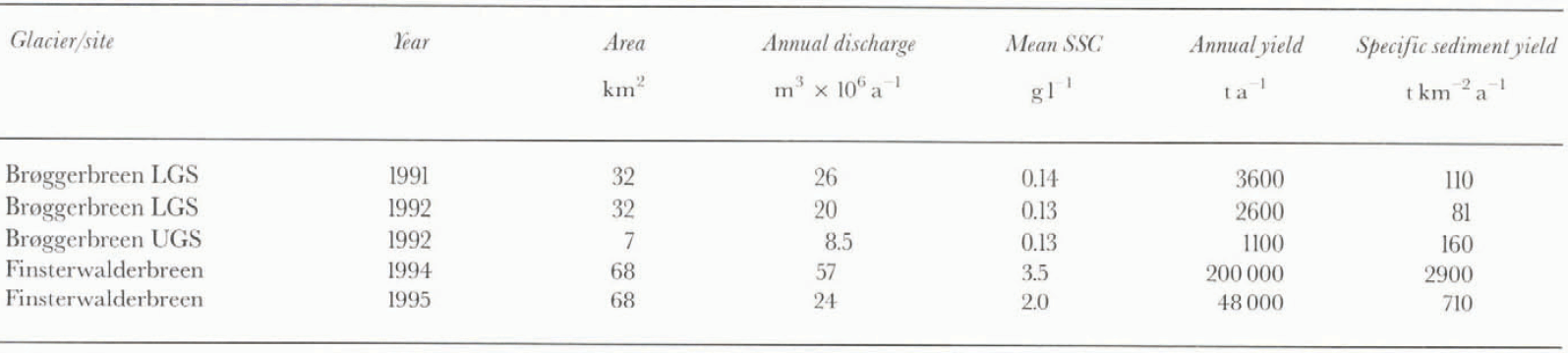
The above interpretations of the suspended-sediment and discharge observations from the two study basins suggest that the strong differences were largely caused by the absence of subglacial drainage and thus the availability of subglacial sediments to the drainage system at the predominantly cold-based Austre Brøggerbreen. The higher suspended-sediment yield at Finsterwalderbreen suggests that the thin surface layer of cold ice does not restrict penetration of meltwater to the glacier bed, and that, once at the bed, the meltwaters are able to tap subglacial sediment sources.
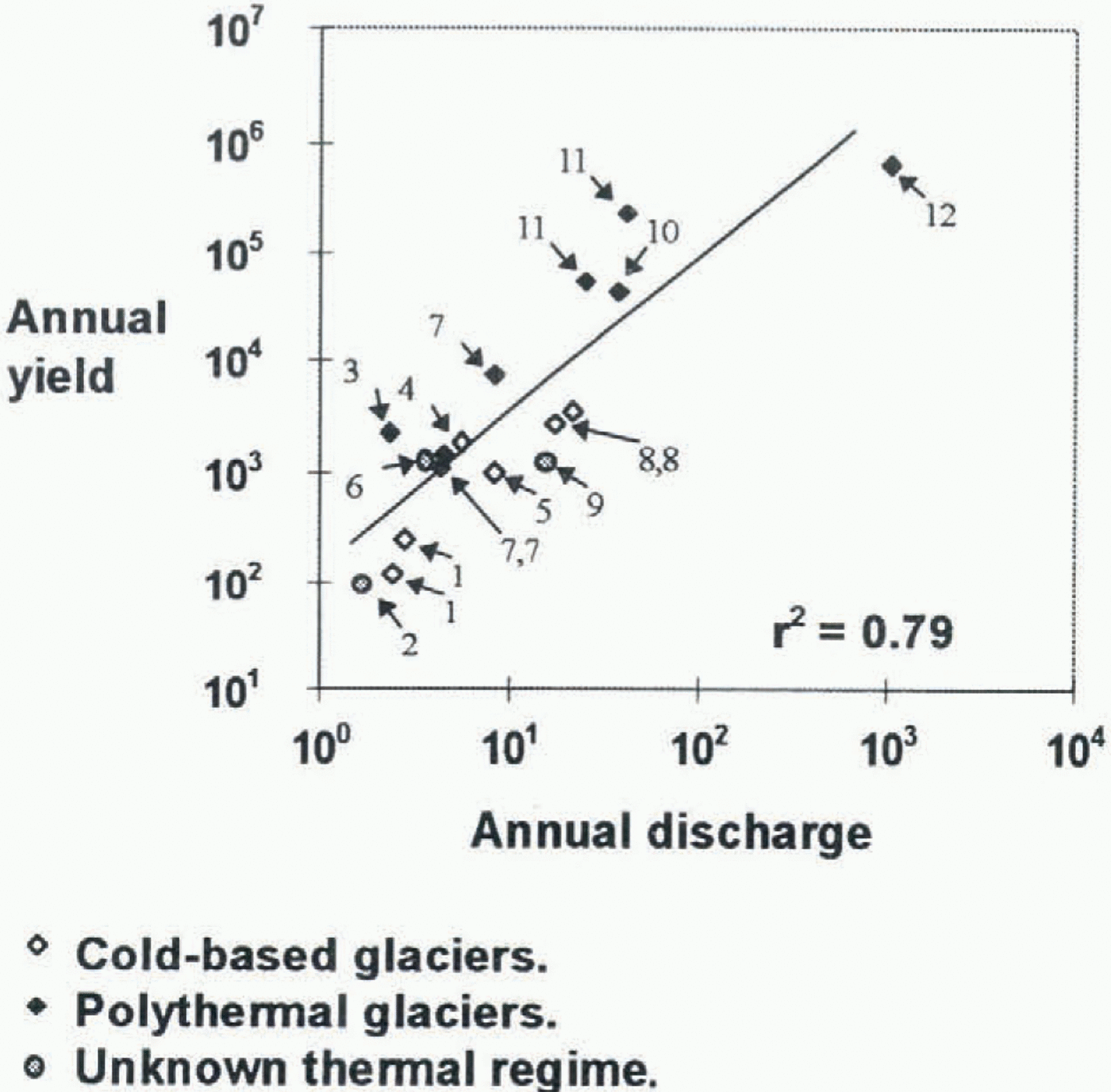
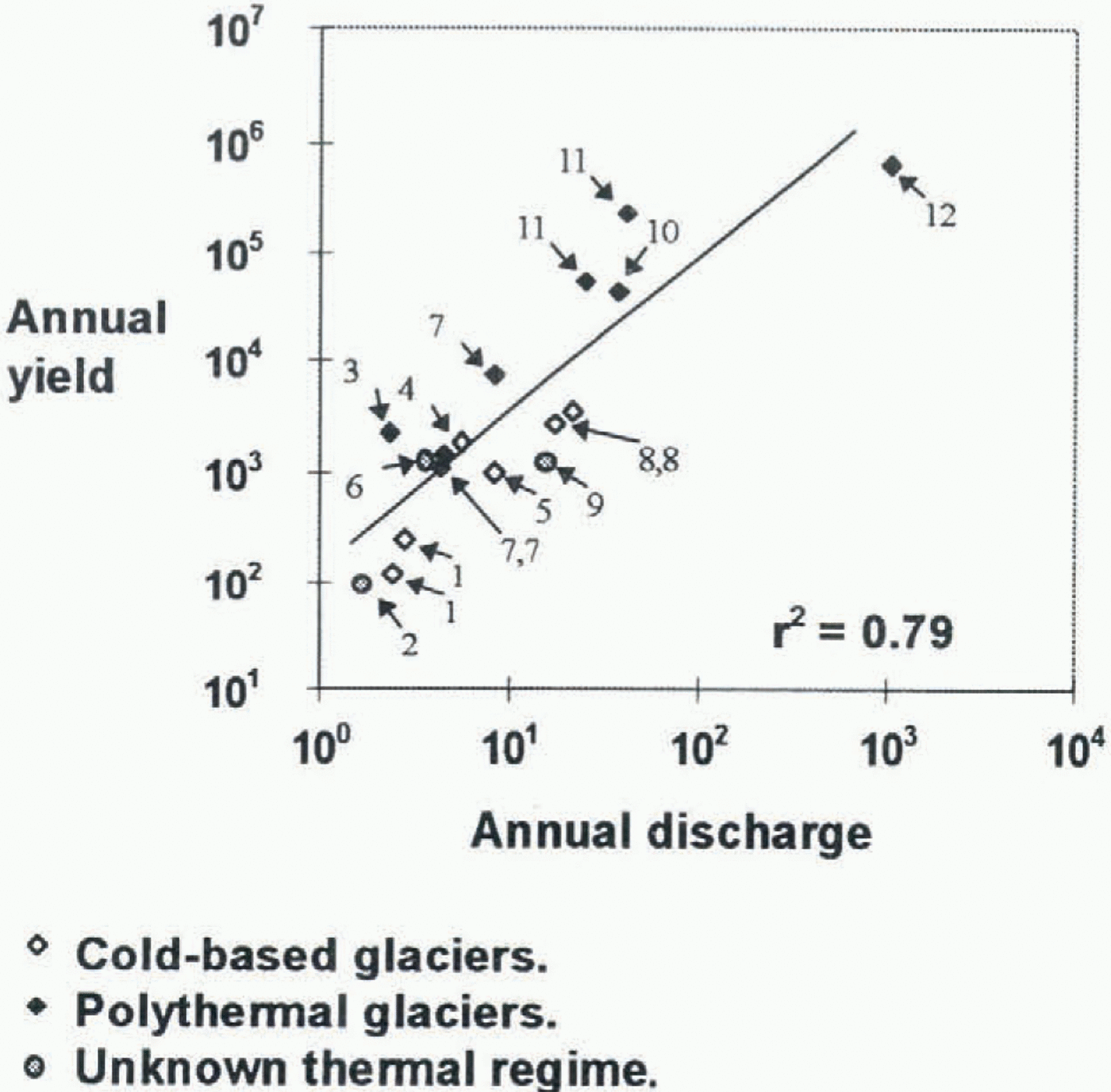
Observations and simple regression relationship between annual sediment yield (t a−1) and annual discharge (m3 × 106 a−1) for the 12 Svalbard glaciers denoted in Figure 1.
Comparison with other studies
The specific sediment yield from the UGS at Austre Brøggerbreen is almost identical to an estimate presented by Hodgkins (1996) for the cold-based Scott Turnerbreen, whilst the specific sediment yield estimate at Finsterwalderbreen is similar to a ~3300 t km−2 a−1 estimate for the warm-based Kongsvegen (original data from Elverhoi and others, 1980).This section presents a preliminary analysis of specific sediment yield estimates from 12 different glacier basins in Svalbard. The locations of these glaciers are given in Figure 1, whilst the annual sediment yields and annual discharge from these studies are presented alongside those for Austre Brøggerbreen and Finsterwalderbreen in Figure 3. A simple linear regression analysis of the annual sediment yield and annual discharge, following a logarithmic transformation of both variables, results in a coefficient of determination of 79% (Fig. 3). Given the observations at Austre Brøggerbreen and Finsterwalderbreen, it can be hypothesised that some of the unexplained variation is caused by the different thermal regimes of the glaciers, although different sampling methodologies, ganging locations, surge history and geology are also likely to be influential. The predominantly cold-based glaciers plot below the regression line (except Scott Turnerbreen, which plots on the regression line), indicating a lower suspended-sediment yield than might be expected if the thermal regimes were not important However, the results from the analysis of this small sample of basins must be supported by a greater number of data points if this interpretation is to be confirmed.
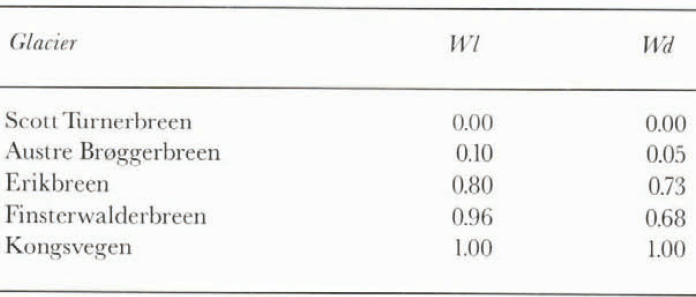
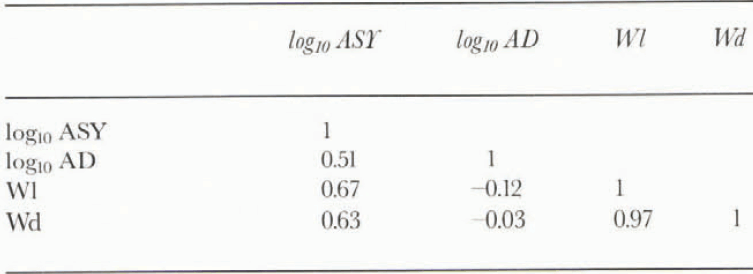
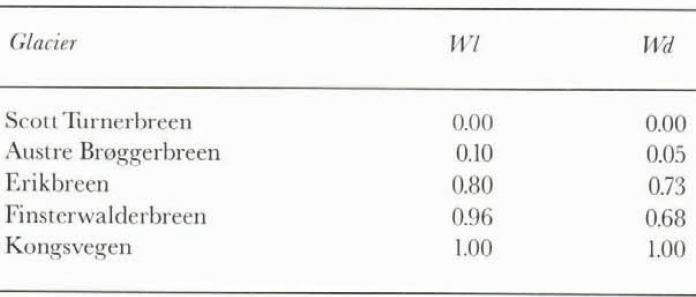
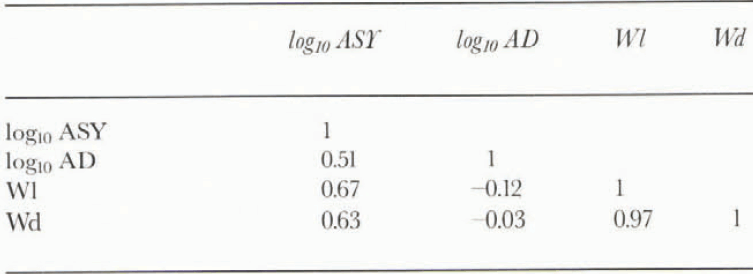
Five of the glaciers have been subject to radio-echo sounding surveys, which has allowed the characteristics of any IRHs within the glaciers to be determined. Temperature measurements in these glaciers show that the IRHs compare well with the interface between warm and cold ice, and allow the distribution of the warm ice in each of the glaciers to be deduced (Hagen and Sætrang, 1991). Table 2 lists two indices of this distribution, namely Wl, the proportion of the glacier’s central flowline with warm basal ice, and Wd, the normalised thickness of warm ice at the estimated equilibrium-line altitude. Table 3 provides a correlation matrix describing the association between these indices and the specific suspended-sediment yield and specific discharge volume. The sample of five glaciers (resulting in ten data points) is far too small for any firm conclusions to be drawn, but the high, positive correlations between specific sediment yield and both the Wl and Wd indices provides an interesting avenue for further research. From the current analysis, we favour the Wl index as most suitable, since this parameter describes the range of subglacial conditions most suitably and results in the highest correlation with specific sediment yield.
Indices of the relative proportion of warm basal ice for five Svalbard glaciers. Wl is the proportion of warm basal ice beneath the glacier centre flow, and Wd is the normalised thickness of warm ice at the estimated equilibrium-line altitude
regimes upon sediment yield has important implications for single glacier basins adjusting to mass-balance change since the end of the LIA. Dowdeswell and others (1995) have shown that prolonged negative mass balances at Scott Turnerbreen have caused a shift toward a cold-based thermal structure in this former surge-type glacier. This mass-balance change was initiated by an abrupt increase in mean annual air temperature in Svalbard by as much as 5°C after 1910–20 (Hanssen-Bauer and others, 1990; Dowdeswell, 1995). At the onset of this air-temperature rise, most glaciers were close to their maximum extent for the last 10 000 years, and they have experienced a sustained retreat and thinning since this maximum (Dowdeswell and others, 1995). Like Scott Turnerbreen, Austre Brøggerbreen has been subject to a strong and prolonged mass-balance change (Lefauconnier and Hagen, 1990), causing a shift towards the dominance of sub-freezing temperatures at the glacier bed (personal communication from J. O. Hagen, 1996). Given the high specific sediment yields at Finsterwalderbreen and other warm-based glaciers, the implication of this shift towards cold basal ice is a potential reduction in specific sediment yield by as much as one order of magnitude. Furthermore, the mass-balance and thermal-regime changes imply that the significance of marginal and supragiacial suspended-sediment sources, which are most effective in supplying suspended sediment to meltwater runoff during the latter stages of the ablation season, increase with an increase in cold basal ice and that this change in dominant suspended-sediment sources has implications for the temporal characteristics of suspended-sediment delivery at the seasonal scale (Hodson and others, in press).
Correlation matrix between log10 ASY (annual sediment yield), log10 AD (annual discharge), Wl and Wd (definedin Table 2)
Conclusions
A comparison of suspended-sediment concentration and discharge observations from the Austre Brøggerbreen and Finsterwalderbreen glacier basins in Svalbard reveals strong differences in both the annual rate and seasonal temporal pattern of suspended-sediment yield. These differences are believed to result from restricted penetration of meltwaters to the glacier bed at Austre Brøggerbreen associated with the dominance of cold ice throughout this glacier. In contrast, Finsterwalderbreen is dominated by warm basal ice, with only a thin cold-based ice margin and cold surface ice layer. Nearly all meltwaters emerge from Finsterwalderbreen through a single subglacial channel. High suspended-sediment concentrations are transported by low flows at the beginning of the ablation season, and concentrations generally decline thereafter. However, very high suspended-sediment concentrations occur periodically in association with very high flows which transport large quantities of ice debris, suggesting major short-term disturbances within the subglacial drainage system.
Specific sediment yields at Austre Brøggerbreen are similar to estimates from other cold-based glaciers in Svalbard, whilst the specific sediment yields from Finsterwalderbreen are similar to the only other estimate for a large, warm-based glacier in Svalbard, namely Kongsvegen. At present there are very few estimates of specific sediment yield from glacier basins with known thermal structures.
The impact of thermal regime on specific sediment yield has significant implications for individual glacier basins which have undergone marked changes in mass balance since the termination of the LIA in ~1910. At least two glacier basins (Austre Brøggerbreen and Scott Turnerbreen) can be shown to have experienced a shift towards the dominance of cold basal ice as a result of thinning associated with mass-balance change. Given the information presented in this paper, it is possible that this has induced a marked decline in specific sediment yield in these glacier basins.
Acknowledgements
We wish to acknowledge U.K. Natural Environment Research Council (Cooperative Awards in Science and Engineering) award GT4/90/AAPS/63 and EU grant ENV5V-GT93-0299 for the Austre Brøggerbreen and Finsterwalderbreen work, respectively, and C. Hill, I. Frearson, J. Evans, D. Garbett and W. Nandris for their field assistance. The Norsk Polarinstitutt, Oslo, and the University of Southampton provided logistical and equipment support.