


Overweight and obesity (excess body weight) has increased dramatically in southern Latin America( Reference Finucane, Stevens and Cowan 1 ). In south-eastern Brazil 40·3 % of boys and 38·0 % of girls are overweight or obese( Reference Radominski 2 ). There has been a threefold increase in the incidence of excess body weight (8·9 % to 26·5 %) from 1974–75 to 2008–09( Reference Radominski 2 ). This increase in childhood overweight and obesity has been attributed to behavioural factors that cause a long-term imbalance between energy intake and energy expenditure. Behavioural problems require behavioural solutions( Reference Baranowski, Cullen and Nicklas 3 , Reference Brug, van Lenthe and Kremers 4 ) and therefore prevention of excess body weight through targeted behavioural change has become a public health priority( Reference Lobstein, Baur and Uauy 5 , Reference Summerbell, Waters and Edmunds 6 ).
In Brazil, consumption of energy-dense, high-fat foods has increased to above recommended levels, while physical activity (PA) and consumption of fruit and vegetables (F&V) have fallen well below the recommended levels( Reference Andrade, Barros and Carandina 7 ). These behaviours have resulted in an increase in obesity-related co-morbidities such as IHD, stroke and diabetes, which account for a high percentage of total disability-adjusted life years lost( Reference Schramm, Oliveira and Leite 8 ). Sedentary lifestyles account for 69 % of the cardiovascular risk factor prevalence in Brazil( Reference Taylor 9 ).
Suggested behavioural solutions include increased moderate-to-vigorous PA among school-aged children and reduced sedentary time. One report notes that a minimum of 30 min of moderate-to-vigorous PA should be accomplished during the school day. This school-based PA should be linked with school health curricula that provide adequate attention to nutrition education, PA promotion and decreasing sedentary activities (such as leisure screen time) and that include a behavioural skills focus( 10 ).
A recent one-year multicomponent PA intervention for schoolchildren successfully increased PA levels and improved a cardiovascular risk score that included all components of the metabolic syndrome( Reference Kriemler, Zahner and Braun-Fahrlander 11 ). Systematic reviews of school-based interventions reveal that combining diet and PA may help prevent children from becoming overweight( Reference Brown and Summerbell 12 , Reference Flynn, McNeil and Maloff 13 ). Leisure-time media use (television, DVD, video games and computers) is the most important contributor to sedentary behaviour and is also related to energy intake and unhealthy dietary behaviours( Reference Robinson 14 – Reference Sisson, Shay and Broyles 18 ).
There is not enough evidence to draw firm conclusions regarding the behavioural benefits of programmes addressing childhood obesity in a school setting due to the limited number of published studies, methodological concerns that limit the validity and comparability of programme evaluations and the relatively poor efficacies of a number of major interventions( Reference Brown and Summerbell 12 , Reference Kropski, Keckley and Jensen 19 , 20 ). A recent systematic review demonstrated that the role of psychological theories and behavioural or cognitive mediators was rarely investigated( Reference Saffrona, Cislak and Gaspar 21 ).
The objective of the present study was to compare the impact of two school-based intervention programmes on students’ readiness to engage in health behaviour with a focus on students’ movement through stages of change.
Materials and methods
Design
The current cluster randomized, controlled, multicomponent school-based health-promotion trial was conducted in Belo Horizonte, south-east Brazil, where the incidence of excess body weight in children is relatively high (39·7 %)( 22 ).
Sample
A two-stage, randomized cluster sampling plan identified eighteen elementary schools located in administratively divided city regions that were comparable in socio-economic status and randomly assigned them to either the experimental (n 9) or a matched comparison (n 9) group. Both public and private schools participated in the study. From a list provided by the each of the randomly selected schools, five elementary-school classes (units of study) were randomized to include all students (in the selected five classes) in the 1st to 5th grades, 6 to 11 years of age.
Given an α of 0·05, a sample size of 403 children in each group corresponded to a β of 0·20 for detecting a 12 % reduction in the incidence of a sedentary lifestyle, which was previously estimated at 28·1 %( Reference Ribeiro, Lotufo and Lamounier 23 ). To avoid intra-class correlation( Reference Kish 24 ), a design effect was calculated to be 2·069 for the sedentary lifestyle variable in a previous study( Reference Ribeiro, Lotufo and Lamounier 23 ). Therefore, each sample group needed to have 403 × 2·069 = 834 children. Assuming an estimated 30 % attrition rate, the final target sample size was determined to be 1668 + 500 = 2168 students, or approximately 2200 students.
Interventions
Two programmes addressing healthy nutrition, active living and healthy lifestyle choices were provided by the regular classroom teachers, who received training from the study staff in the programme's operational standards. Five behaviours were targeted for change: (i) decreased consumption of fatty foods; (ii) increased F&V intake; (iii) increased PA; and decreased time spent in two subgroups of sedentary activity (iv) watching television/DVD and (v) video games/computer use. In the intervention group, a modified version of the US-based ‘TAKE 10!®’ programme was implemented( Reference Kibbe, Hackett and Hurley 25 ). TAKE 10! was modified to reflect Brazilian education standards, content requirements, culture and language. The result, the ‘TIRE 10!’ programme, maintains the core purpose of TAKE 10!, which is to reduce sedentary behaviour during the school day by enabling teachers to deliver classroom-based PA and health promotion content. It integrates grade-specific academic learning objectives in mathematics, science, social studies (history and geography) and language arts with age-appropriate PA, nutrition and health content( 26 – Reference Lloyd, Cook and Kohl 28 ). In the comparison group, the ‘Agita Galera’ (‘Shake it up Kids’) programme model was implemented. Agita Galera was developed by CELAFISCS (Centro de Estudos do Laboratório de Aptidão Física de São Caetano do Sul) and is recommended by the WHO as a model for developing countries. Agita Galera encourages children to participate in sports, walking, running, cycling, skating and other moderate-to-vigorous activities for at least 30 min/d, continuously or in intervals, on most days of the week. It also incorporates strategies from the ‘Five-a-Day’ programme to increase F&V consumption( Reference Matsudo, Matsudo and Araujo 29 , Reference Matsudo, Andrade and Matsudo 30 ).
The study protocol did not include a ‘no treatment’ control group because we believed would be unethical to have the benefits of a healthy lifestyle intervention withheld from the group of comparison schoolchildren since there is already a usual Brazilian health promotion programme (Agita Galera) directed to schoolchildren incorporated by the Brazilian State of Health Secretariats( Reference Matsudo, Matsudo and Araujo 29 – 31 ). Instead, we chose a design similar to that of other clinical trials, in which a novel treatment with structured in-classroom PA (Tire 10) is compared with a usual programme with general advice about diet and exercise but no structured PA (Agita Galera).
Outcomes
For interventions designed to address excess body weight in children, it is recommended that the focus be on improvements in healthy behaviours and well-being rather than on BMI reduction or weight loss. Therefore, a health-centred, rather than a weight-centred, approach directed the study outcomes( Reference Berg, Buechner and Parham 32 ). The main outcomes were sedentary activity reduction, PA increase and healthy eating habits adoption, which were evaluated as stages within the Transtheoretical Model (TTM) of behaviour change. The TTM is conceptualized in several major dimensions. The core constructs, around which the other dimensions are organized, are the stages of change. These represent ordered categories along a continuum of motivational readiness to change a problem behaviour( Reference Prochaska, DiClemente and Norcross 33 , Reference Kristal, Glanz and Curry 34 ). The success of the programmes was evaluated by evidence of the children moving forward through the five stages of the process of behaviour change, since those who are ready to make a lifestyle change are most likely to do so( Reference Prochaska and Velicer 35 ). This movement was assessed through specific questions that were derived and adapted from validated questionnaires evaluating the stages of behaviour change (SBC) relating to excess body weight( Reference Baranowski, Perry and Parcel 36 , Reference Baranowski 37 ). The SBC theory was represented by four questions, each in a five-stage algorithm format, that asked participants about five behaviours: (i) fatty food consumption; (ii) consumption of five or more F&V portions daily; (iii) 30–60 min of moderate-to-vigorous PA daily; and engaging in sedentary activity (iv) television/DVD and (v) video games/computer use for ≥2 h/d. Each of the five algorithms assessed one of the five behaviours. This five-stage format included yes-or-no response options that indicated whether or not the participants had the behaviour. If participants responded ‘no’ to F&V consumption or PA or responded ‘yes’ to fatty food consumption or sedentary activity, they were asked to choose three additional responses which were used to categorize them into one of the first three TTM behaviour change stages: not thinking of changing behaviour (pre-contemplation); thinking of changing (contemplation); or not changing yet but planning to (preparation). If participants responded ‘no’ to the unhealthy behaviours or ‘yes’ to the healthy behaviours, they were asked to choose between two additional responses (two TTM behaviour change stages): ‘yes, have been for less than 6 months’ (action); or ‘yes, have been for more than 6 months’ (maintenance). The outcomes were assessed longitudinally through pre-intervention (time 1, May 2009) and follow-up (post-intervention, time 2, December 2009) student surveys. A previously trained teacher administered the surveys to students as classroom questionnaires on normal weekdays.
Studies on school-based programmes promoting healthy behaviour have demonstrated that the impact of these programmes is often attenuated by inadequate teacher implementation, which is determined by many factors such as competing job demands, insufficient time, teacher health practices and values( Reference Taggart, Bush and Zuckerman 38 – Reference Resnicow, Davis and Smith 40 ). We also adapted a validated five-point Likert scale questionnaire to evaluate the teachers’ motivation levels in implementing the interventions based on their opinion on utility values related to their participation in this additional school task( Reference Baranowski 37 ). All scales were scored with items ranging from 1 to 5. The scores were averaged and higher scores on the resulting five-issue scale represent better outcomes. To compare the scales in the two stages of the research, we used the non-parametric Wilcoxon test.
Despite evidence in the TTM literature showing a situation of some confusion and entrenched disputes, interventions based on health promotion/TTM constructs are reported to be effective in PA and healthy eating promotion( Reference Spencer, Pagell and Hallien 41 – Reference Wright, Velicer and Prochaska 46 ).
Analyses
All tests used a 0·05 level for significance. The analyses were performed using the STATA statistical software package release 10·0. The marginal homogeneity test was used to compare the ordinal SBC variables at pre-intervention and post-intervention. The major outcome analyses were controlled for gender and age of the students and type of school. A multivariate analysis by the Poisson model with generalized estimating equations( Reference Hanley, Negassa and Edwardes 47 ), which consider intra-cluster correlation of the studied outcomes, was used to determine which variables predicted the change stage for the behaviours studied. In the continuum of TTM stages of behaviour, four movements along the stage spectrum were defined. These movements could be to the right (positively or towards better behaviours = +1 to +4), to the left (negatively or towards worse behaviours = −1 to −4) or towards relatively better behaviours = −4 to −1). The movements were categorized into three categories: (i) improved behaviour; (ii) behaviour that stayed constant; and (iii) behaviour that became worse. The scores after the intervention were compared with those before the intervention and the differences were categorized as improved (a difference greater than zero), remaining constant (a difference of zero) or worsened (a difference of less than zero).
The relative risk (RR) for children grouped in the best category (+1 to +4) v. children grouped in the worst category (−1 to −4) or who stayed constant (difference = 0) was estimated for each covariate.
In these analyses, we used the population-attributable risk (PAR) as an estimate of the excess fraction, the proportion of cases (eating and/or PA behaviours improvement) that would not have occurred if the exposure of interest (Tire 10 programme) had not been present.
We also calculated the number needed to treat (NNT) as the number of participants who needed to receive an intervention to achieve change in one individual. NNT was calculated as the inverse of absolute risk reduction.
Ethics
The study was approved by the local research ethics committee (Comitê de Ética em Pesquisa da Fundação Hospitalar do Estado de Minas Gerais – Minas Gerais State Hospital Foundation Ethics Committee) and the schools’ governing bodies. Parental consent was also obtained.
Results
One of the eighteen schools discontinued its participation in the study due to the cumulative extracurricular activities demanded by the state educational authority. Of the 2200 students in the sample, 2038 were assessed at the pre-intervention evaluation, 847 (41·6 %) in the comparison group and 1191 (58·4 %) in the intervention group, and 1677 (82·3 %) were assessed at the post-intervention evaluation. Overall, there was a total attrition of 17·7 % in number of students. With the exception of male gender, which had a significantly higher (P < 0·001) rate of missing data, the loss of data was not selective for age (P = 0·825), intervention group (P = 0·238) or type of school (P = 0·195). Except for the video games/computer use behaviour-stage variable, which had a significantly (P = 0·014) higher rate of missing data in the comparison group, the rate of missing data at the post-intervention evaluation was not significantly different between the intervention and comparison groups for any of the behaviour-stage variables: P = 0·135 for fatty food consumption, P = 0·083 for F&V consumption, P = 0·678 for PA and P = 0·445 for television/DVD use.
The sex distribution was fairly homogeneous, with 50·4 % of male participants. The average age was 9 (sd 2) years, with a minimum age of 5 years and a maximum of 15 years. Race, parental education and socio-economic status variables were not analysed because of the large amount of data missing (68·6 % of the total sample) from questionnaires sent home for the parents to complete. However, most of the children in public schools came from low social classes and many of these schools were located in slum areas.
Except for the type of school and the stages of behaviours, the randomization scheme resulted in comparable covariates in each group (Table 1). There was a statistically significant difference between the control and intervention groups for all stages of behaviour at baseline. Except for PA, the control group started at a healthier stage than the intervention group for all stages and studied behaviours (Table 1).
Frequency distributions of the baseline covariates in the intervention and comparison groups: 2038 children from nine intervention and eight comparative public and private elementary schools, Belo Horizonte, south-east Brazil

F&V, fruit and vegetables; PA, physical activity.
*Pearson's χ 2 test.
†Student's t test.
In children in the intervention group, there were significant changes between the two evaluations in all of the behaviour-stage variables (P values <0·001). Overall, there were significant reductions in the percentages of children from the intervention group in the pre-contemplation and contemplation stages and significant increases in those in the preparation, action and maintenance stages for all of the behaviour-stage variables except PA, which did not show an increase in the number of children in the preparation stage only (Table 2).
Stages of behaviour change among children in the intervention and comparison groups at the pre-intervention (time 1) and post-intervention (time 2) evaluations: 2038 children from nine intervention and eight comparative public and private elementary schools, Belo Horizonte, south-east Brazil

F&V, fruit and vegetables; PA, physical activity.
*Marginal homogeneity test.
Children from the comparison group did not show any significant differences (P values = 0·055 to 0·745) between the two evaluations for any of the stages of behaviour, except for the fatty foods variable, which showed significant (P = 0·045) increases in the percentages of children in the pre-contemplation, preparation and maintenance stages (Table 2).
When we analysed only the subgroup of children whose teachers were motivated, the same relationships (P < 0·001) found in the intervention group as a whole were observed. For this subgroup of children from the comparison group with motivated teachers, there was a borderline difference for fatty food consumption and PA (P = 0·050); however, there was a shift away from healthy change in consumption of fatty foods and a slight improvement in PA behaviour (P = 0·043; Table 3).
Stages of behaviour change among children in the intervention and comparison groups at the pre-intervention (time 1) and post-intervention (time 2) evaluations whose teachers were motivated: 2038 children from nine intervention and eight comparative public and private elementary schools, Belo Horizonte, south-east Brazil

F&V, fruit and vegetables; PA, physical activity.
*Marginal homogeneity test.
The group status (intervention or comparison) was the strongest predictor of the children's change stages for PA and sedentary activity video games/computer use and the second strongest predictor for eating behaviours (fatty food and F&V consumption) and sedentary activity television/DVD use. Except for PA and sedentary video games/computer use, having motivated teachers was the strongest predictor of the change stage for the studied behaviours. Public school status was the third strongest predictor for change in these behaviours. Children from motivated teachers’ classrooms had 62 % to 96 % increased risk of changing their stage of behaviours towards healthier ones. Children from the intervention group had 67 %, 75 %, 78 % and 79 % increased risk of increasing PA, reducing television/DVD screen time, increasing F&V consumption and reducing fatty food consumption, respectively, and were two times more likely to reduce video games/computer screen time (Table 4).
Results of multivariate analyses by the Poison model with generalized estimating equations of the factors associated with improvements in the stages of behaviour change: 2038 children from nine intervention and eight comparative public and private elementary schools, Belo Horizonte, south-east Brazil

RR, relative risk; F&V, fruit and vegetables; PA, physical activity.
*Teachers’ motivation to implement the interventions.
†Each 1 year of increasing age, there was a 10 % greater risk of behaviour improvement (reduction of fatty food consumption).
In order to achieve the behaviour change benefits, except for sedentary activity video games/computer use, we needed only about three children participating in the intervention group. For example, we needed only three children (NNT = 3·21) participating in the intervention group in order to have the benefit of 79 % (RR = 1·79) in risk of improvement in their behaviour related to fatty food consumption; that is, to reduce its consumption (Table 5).
Clinical significance of the association between the intervention programme and behaviour improvement at post-intervention time 2: 2038 children from nine intervention and eight comparative public and private elementary schools, Belo Horizonte, south-east Brazil

ARR, absolute risk reduction, NNT, number needed to treat; F&V, fruit and vegetables; PA, physical activity.
The intervention programme, implemented by motivated teachers, accounted for more than half the schoolchildren who changed their unhealthy eating and PA behaviours, and for an overwhelmingly large proportion (PAR = 99·4 %) of those who improved all five studied behaviours (Table 6).
Population-attributable risk (PAR) percentage of the intervention programme in changing children's unhealthy behaviours, Belo Horizonte, south-east Brazil
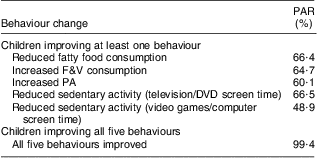
F&V, fruit and vegetables; PA, physical activity.
Discussion
According to the TTM, also known as the Stages of Change Model, those who are ready to make a lifestyle change are most likely to do so( Reference Prochaska, DiClemente and Norcross 33 , Reference Kristal, Glanz and Curry 34 ). Therefore the study results are interpreted as the ‘likelihood’ to change behaviours. Similar to Frenn et al.'s study( Reference Frenn, Malin and Roger 48 ), the present intervention programme has the potential of moving high-risk individuals closer to adopting healthy behaviours and therefore has the potential to decrease the prevalence of excess body weight that is related to unhealthy behaviours in this population. A review of sixteen school-based cardiovascular risk factor prevention intervention studies found that short-term interventions were most effective in changing cognitive variables, but least effective in changing physiological variables such as excess body weight( Reference Resnicow and Robinson 49 ).
Support for the efficacy of the programme is provided by the greater progression and lower regression in change stages in the intervention group than in the comparison group. Most of the children from the intervention group moved from the first two stages (pre-contemplation and contemplation) to the preparation and action stages (and to the maintenance stage, to a lesser degree), indicating a tendency towards healthy change in all five behaviours. This movement was more prominent for eating behaviours than for PA and sedentary activities, except for the pre-contemplation stage of sedentary activities. We think that the smaller number of children in the maintenance stage, rather than the action stage, may have been due to the short duration of the intervention.
Basic research has determined that 40 % of at-risk populations are in the pre-contemplation stage, 40 % are in contemplation and 20 % are in preparation( Reference Prochaska and Velicer 35 ). Except for the PA and video games/computer use behaviours, this pattern was similar to that of our baseline results. The increased number of children in the maintenance stage for PA (43·6 %) was probably due to the children not fully understanding the PA question. Although we explained to the teachers that PA during school break times should not be included, they probably forgot this instruction and PA at those times was included in the children's questionnaire responses. There were not as many children (31·4 %) in the maintenance stage for video games/computer use in the pre-intervention evaluation because most of the children did not have computers at home due to their families’ low socio-economic status.
Our study could estimate the importance of the intervention programme on the PAR for changing unhealthy lifestyle related to eating and PA behaviours, suggesting that the intervention accounted for more than half of each specific behaviour change and most of the change in the collective five behaviours in the intervention group.
In a recent large review of TAKE 10! programme study results, Kibbe et al.( Reference Kibbe, Hackett and Hurley 25 ) showed higher PA levels, reduced time off task, improved reading, maths, spelling and composite scores, moderate energy expenditure levels (6·16 to 6·42 MET (metabolic equivalents)) and suggested that BMI decreased over 2 years in participating children. However, none of the cited studies evaluated change in eating and PA behaviours. Most PA intervention studies have not been done in countries with low and middle incomes and have not addressed the question of the extent to which findings can be applied to other populations, settings and times( Reference Pratt, Sarmiento and Montes 50 ).
For all five of the behaviours, consistent with other studies( Reference Taggart, Bush and Zuckerman 38 , Reference Resnicow, Davis and Smith 40 ), we found a significant association between the teachers’ motivation to implement the intervention programme and the children's improvements in the behaviour change stages( Reference Taggart, Bush and Zuckerman 38 – Reference Resnicow, Davis and Smith 40 ).
A recent study evaluating computer-tailored advice in improving diet, PA and other lifestyle behaviours demonstrated greater values of NNT ranging between 15 and 58( Reference Parekh, Vandelanotte and King 51 ). That study found that for every fifteen people who received the intervention, one would adopt sufficient change to achieve guideline recommended fish intake.
Our study's strengths are the use of a cluster randomized controlled study design, which compensated for the pairing, the lack of independence among the children within a school and the study size. A matched distribution of the important covariates and the consequent comparison of homogeneous groups reduced the likelihood of selection bias. Schools were matched in terms of socio-economic status, as they were located in administrative divisions of the city that were comparable in socio-economic status. Except for school status and stages of behaviours, we found no significant differences between the students assigned to the comparison and intervention groups in gender, age, excess body weight or teachers’ motivational levels (P values > 0·05). A person's stage predicts his or her readiness to change over time and the preparation stage is the crucial stage for progressing to action( Reference Greene and Rossi 52 ). Comparing the baseline preparation stage between the two groups, except for PA, there were more children at the preparation stage in the comparison group than in the intervention group for the other studied behaviours. This unbalanced distribution favoured movement towards the action stage in the comparison group.
Except for gender, there were no selective missing data by study group (P = 0·238). Except for video games/computer time (P = 0·014), there were no selective missing data at the post-intervention evaluation (selective attrition bias) for fatty food consumption (P = 0·135), F&V consumption (P = 0·083), PA (P = 0·678) or television/DVD time (P = 0·445). The overall attrition rate of 17·7 % reflected the appropriate inclusion and exclusion criteria and careful field work that included systematic visits to schools and the provision of alternative means of contact for the educators, children and parents.
The early exit of an entire school from the intervention group led to a higher proportion of public school students in the comparison group. We believe that this imbalance had no impact on the final results because studying at a public school was a determinant of better performance in the TIRE 10! intervention group (the group that lost the public school); nevertheless, this programme was shown to be effective.
Having the teachers help the children to understand and complete the questionnaires contributed to improved confidence in many of the answers. Other strategies for reaching quality standards were the intensive teacher training on the programmes' implementation techniques and questionnaire use and the intensive training of the study staff on the TAKE 10! and Agita Galera programmes, which was provided by the respective programme developers.
Studies have demonstrated that lifestyle changes deteriorate over time after participation in a programme is completed( Reference Baranowski, Perry and Parcel 36 ). The lack of long-term follow-up prevented us from assessing the sustainability of the behavioural changes from the TIRE 10! programme, which was a potential limitation of the study. Because of time and funding limitations, the intervention was designed for one academic year only. Additional research is needed on the long-term influences of programme participation.
Conclusion
The TIRE 10! intervention programme was highly effective in moving children closer to modifying their eating habits, PA and time spent in sedentary pursuits. Therefore, it promotes healthy behavioural changes and has great potential for reducing the incidence and prevalence of excess body weight in children and its future co-morbidities.
Acknowledgements
Sources of funding: The study was funded through the International Life Sciences Institute (ILSI) Research Foundation as part of the Healthy Lifestyles, Healthy People (HLHP) Project and granted through the Conselho Nacional de Pesquisa (National Research Board), Brazil and the Research Assistance Foundation of the State of Minas Gerais (FAPEMIG). Conflict of interest: The authors declare no conflicts of interest. The neutrality of the study was ensured by no study data being transmitted to ILSI, one of the sponsors of the study (from the global selection grant) and the owner of the TAKE 10! programme; moreover, the funder was not involved in the interpretation of the study results. Authors' contributions: R.Q.C.R. was responsible for the study concept, design and the acquisition of data. He also participated in data analysis and interpretation, and wrote the manuscript. L.A. coordinated the data collection process. Acknowledgements: The authors would like to thank all children and teachers who took part in the study. They also thank Debra L. Kibbe for TAKE 10! programme implementation training, Dr Victor K.R. Matsudo for Agita Galera programme implementation training and Mery S. Abreu who performed the statistical analysis of the collected data.



