

Introduction
The prevalence of dementia is increasing as the global population ages. The World Health Organization (WHO) (2017) estimated that 47 million people currently live with dementia around the world and that this number will triple by the year 2050. Currently, most individuals living with dementia are cared for by families and friends (WHO, 2017), who are essential to the care recipient’s quality of life (Farina et al., Reference Farina2017).
Family and friend caregivers incur physical, psychological, social, and financial costs as part of their role and often experience stigmatization due in part to the lack of understanding surrounding dementia in the majority of countries (WHO, 2018). Caring for a loved one with dementia can be burdensome, and many caregivers suffer from reduced quality of life (Takai et al., Reference Takai, Takahashi, Iwamitsu, Oishi and Miyaoka2011; Tomomitsu et al., Reference Tomomitsu, Perracini and Neri2014), limiting social engagement and support (Waligora, Bahouth & Han, Reference Waligora, Bahouth and Han2018), stress-related cognitive dysfunction (Oken et al., Reference Oken, Fonareva and Wahbeh2011), and depression and anxiety (Sörensen and Conwell, Reference Sörensen and Conwell2011; Laks et al., Reference Laks, Goren, Dueñas, Novick and Kahle-Wrobleski2016). Evidence suggests that caring for a PWD is more burdensome than caring for persons living with other illnesses (Alzheimer’s Association, 2012; Pinto and Barham, Reference Pinto and Barham2014). Research suggests that the prevalence of anxiety disorders is higher for caregivers of PWD than for other caregivers (Cooper et al., Reference Cooper, Balamuri and Livingston2007) and that the likelihood of self-reported depression is higher for caregivers of persons with dementia than non-caregivers (Posner et al., Reference Posner, Sutter, Perrin, Ramirez Hoyos, Arabia Buraye and Arango-Lasprilla2015; Tomomitsu et al., Reference Tomomitsu, Perracini and Neri2014). When comparing caregivers of PWD to other caregivers, caregivers of PWD were found to have significantly worse subjective well-being and physical health (Brodaty and Donkin, Reference Brodaty and Donkin2009; Pinto and Barham, Reference Pinto and Barham2014). Taken together, these studies point to the importance of understanding the unique psychosocial needs of caregivers of PWD.
The needs of caregivers have been researched in the United Kingdom, United States, and Canada, and these studies have all called for agencies to assess caregivers’ needs and provide them with targeted support and services. Usually, caregiver´s needs relate to the physical, psychological, and social demands of providing assistance to the person with dementia. The C.A.R.E. (Caregivers’ Aspirations, Realities and Expectations) Tool is a psychosocial assessment tool to identify and understand aspects of the caregiver’s situation, such as their problems, strengths, and needs (Guberman et al., Reference Guberman, Keefe and Fancey2018, Keefe et al., Reference Keefe, Guberman, Fancey, Barylak and Nahmiash2008), and is used with multiple populations including caregivers of PWD.
Given decision-makers’ growing interest in supporting PWD to age in place, a synthesis of existing evidence on PWDs’ key source of support, family and friend caregivers, is essential. In the last decade, a handful of reviews surrounding the health and well-being of caregivers of PWD have been published. These reviews vary in objective, having examined the roles of caregiver self-efficacy (Crellin et al., Reference Crellin, Orrell, McDermott and Charlesworth2014), meaning and motivation (Quinn et al., Reference Quinn, Clare and Woods2010), as well as psychological interventions that support caregivers of PWD (Elvish et al., Reference Elvish, Lever, Johnstone, Cawley and Keady2013) and their quality of life (Farina et al., Reference Farina2017). To date, reviews have typically examined caregiver needs at a particular time point; for example, during the care recipient’s transition from home to long-term care (Afram et al., Reference Afram, Verbeek, Bleijlevens and Hammers2015). Others have introduced inclusion criteria that limit the review to certain research designs (e.g., McCabe et al., Reference McCabe, You and Tatangelo2016), or are narrow in focus, such as Bangerter et al.’s (Reference Bangerter, Griffin, Zarit and Havyer2017) a recent review of measurement strategies to assess the needs of caregivers of PWD.
While these reviews have contributed to new understandings, their restricted aims and inclusion criteria have led to a patchwork understanding of caregiver needs. To our knowledge, a broad overview of the literature including qualitative and quantitative studies has not been undertaken. In order to address this gap, a scoping review of primary research assessing the needs of caregivers of PWD was conducted. A more comprehensive understanding of caregivers needs and what recommendations are being made to address these needs are essential to supporting the development and enhancement of appropriate interventions to facilitate PWD to age in place.
Objective: To understand the needs of caregivers of persons with dementia and the recommendations being made to meet these needs. Questions guiding the review were: What do we know about the needs of caregivers of PWD? How are caregiver needs measured and described? What types of recommendations are being made about how to address caregivers’ needs?
Methods
Search strategy
A literature search was performed in the following databases: PsycInfo, Medline, CINAHL, SCIELO, and LILACS to identify articles published between January 2007 and January 2018. The search was limited to peer-reviewed articles within the last 10 years to ensure that the current needs of caregivers of PWD were captured. Search terms were selected through consultation with a research librarian from standardized words compatible with Descriptors in Health Science (a trilingual thesaurus providing common terminology). Related review papers were also consulted. All searches were performed using the terms in English, Spanish, and Portuguese. Examples of key search terms included: “caregivers,” “care providers,” “elder care,” “elderly,” “old person,” “care recipient,” “dementia,” “caregiver support,” “needs,” and “demands”. For a complete list of search terms, see Table S1 published as supplementary material online attached to the electronic version of this paper at http://journals.cambridge.org/ipg.
Study selection
Studies were included in the review if they met the following criteria: (a) published in Portuguese, English, or Spanish; (b) published since 2007; (c) peer-reviewed primary research; (d) evaluated the needs of family caregivers; and (e) involved caregivers of PWD. Studies were excluded from this review if they: (a) did not address caregiver needs; (b) were not related to the caregiver’s health; (c) addressed caregiving unrelated to people living with dementia; (d) focused only on the needs of the PWD; (e) were books, reviews, or meta-analyses.
The process used for collection, evaluation, and selection of the articles is represented in Figure 1, following the PRISMA recommendations for systematic reviews (Moher et al., Reference Moher, Liberati, Tetzlaff and Altman2009). Articles retrieved from each database were imported into Mendeley, and any duplicates were removed. Based on the inclusion and exclusion criteria, the abstract and title of the studies were screened by two reviewers independently (FQ, EK). The reviewers obtained 98% agreement; disagreements during title and abstract screening were resolved through further discussion between the same two reviewers. The full texts of identified studies (n = 55) were then reviewed independently by the same two reviewers. The reviewers reached 100% agreement in independent evaluation during full-text screening and 36 articles were excluded. The reference lists of the remaining 19 articles and of the 5 systematic reviews that were found in the first screening were consulted to identify other possible studies. This search yielded 12 additional articles published in journals not indexed in the databases included in the original search. A total of 31 studies were selected for this review.
PRISMA flow diagram (Moher et al., Reference Moher, Liberati, Tetzlaff and Altman2009) illustrating an overview of the search strategy.

Data extraction and synthesis
The coding was completed collaboratively by FQ and EK, and any disagreements/questions requiring further discussion were resolved in team meetings. A combination of deductive and inductive coding strategies was used according to Bardin’s (Reference Bardin1977) categorization; thus, approach decisions were grounded in existing categorization schemes to sort and organize information. In this review, the data were organized considering the relevance of the content and if the content obeyed the inclusion and exclusion criteria. The focus was on articles that studied the caregiver´s needs including the physical, psychological, and social demands of providing assistance to the person with dementia.
However, attention was also given to identifying novel or nuanced data points that appeared salient to answering the review questions. Coding strategies were refined several times throughout the process. The review team held weekly meetings to refine coding procedures and promote methodological rigor through discussion.
A data extraction spreadsheet was designed to capture the pertinent characteristics of the reviewed studies. Major data extraction categories included: (1) sociodemographic characteristics (e.g. gender, age, living arrangement, country of the study, and caregiver’s relationship to PWD); (2) methodological approach (e.g. research design and sample size); and (3) the eight domains of the C.A.R.E. Tool as representing caregivers’ experiences, realities, and needs (Keefe et al., Reference Keefe, Guberman, Fancey, Barylak and Nahmiash2008). The tool consists of eight evidence-based domains providing a comprehensive view of caregivers’ situational needs and areas where support could be targeted: caregiving tasks, relationship with formal service providers, housing, juggling responsibilities, financial costs, personal health, relationships, and planning. Finally, authors’ recommendations for addressing the needs of caregivers as identified in each of the 31 studies were extracted.
After extraction was completed, FQ and EK conducted a descriptive analysis (frequencies, means) where applicable and organized the authors’ recommendations for addressing caregivers’ needs into broad themes. Thematic categories were reviewed with the team and refined for clarity. Consistent with the exploratory nature of scoping reviews and typical methodological approaches applied in other published scoping reviews, we did not conduct a quality assessment of studies (Arksey and O’Malley, Reference Arksey and O’Malley2005).
Results
Socio-demographic and methodological characteristics
Most studies were conducted in Europe (n = 14) and North America (n = 9), with the remaining taking place in Thailand (n = 2), Brazil, Japan, Australia, and China. One study was conducted across Europe (Kerpershoek et al., Reference Kerpershoek2017). Although the selection criteria allowed for articles written in Portuguese, English, and Spanish, all included articles had a version available in English. A total of 7,533 caregivers was captured in the included studies. Study sample sizes ranged from 9 (Jong and Boersma, Reference Jong and Boersma2009) to 1,494 (Zwaanswijk et al., Reference Zwaanswijk, Peeters, van Beek, Meerveld and Francke2013), with 42% of studies involving less than 100 participants and 19% of studies involving 20 participants or less. In all but one study (Millenaar et al., Reference Millenaar2018), the proportion of female caregivers was higher than the proportion of male caregivers. Caregivers were most often the spouse/partner of the PWD, but in 26% of the studies, the largest caregiver group was adult children. Caregivers were typically more than 50 years of age. In 39% of the studies, the living arrangement of caregiver and PWD was reported, and only three (Galvin et al., Reference Galvin, Duda, Kaufer, Lippa, Taylor and Zarit2011; Jong and Boersma, Reference Jong and Boersma2009; Landmark et al., Reference Landmark, Aasgaard and Fagerström2013) indicated that most caregivers were not co-residing. Most studies did not specify the care recipient’s type of dementia (65%). In the 10 studies that did report this information, the majority of care recipients had Alzheimer’s disease.
In 35% of the studies, the primary data on caregiver needs was collected with the aid of questionnaires. General descriptions of interviews and focus groups suggested that researchers typically asked open-ended questions to caregivers about their primary needs as caregivers. Four studies reported using a published instrument to evaluate caregiver needs; studies by Nicolaou et al. (Reference Nicolaou, Egan, Gasson and Kane2010) and Kerpershoek et al. (Reference Kerpershoek2017) used the Camberwell Assessment of Need for the Elderly (CANE) (Orrell and Hancock, Reference Orrell and Hancock2004), and studies by Hughes et al. (Reference Hughes, Black, Albert, Gitlin, Johnson, Lyketsos and Samus2014) and Black et al. (Reference Black, Johnston, Rabins, Morrison, Lyketsos and Samus2013) used the Johns Hopkins Dementia Care Needs Assessment (JHDCNA) (Black et al., Reference Black, Johnston, Handel, Morrison, Robbins and Rye2008). See Table 1 for complete information.
Socio-demographic and methodological characteristics of the articles by year of publication

Key code: Type of dementia – AD = Alzheimer disease; FTD = Frontotemporal; VD = Vascular dementia; MD = Mixed dementia; LB = Lewy body dementia; PD = Parkinson’s disease; DUC = Dementia of an unknown cause; NFD = No formal diagnosis; Method – SSI = Semi-structured interview; IDI = In-depth interview; IT = Interview (nonspecific); FG = Focus group; Q = Questionnaire; SA = Secondary Analysis; S = Survey, IHA = In-home assessment.
* Although authors may have provided age range or age category frequencies, they did not specify explicitly the mean age of caregivers.
** Secondary analysis of questionnaire data.
*** Reported in the study as “most.”
Caregivers’ needs
Needs reported in primary studies were dispersed across many domains, with only three domains consistently identified across more than 50% of studies: caregivers’ emotional health (58%), formal or informal help received from others (55%), and information about dementia and dementia care (52%). The emotional health domain encompassed caregivers’ need for assistance with managing emotional strain due to concern for the PWD (Cascioli et al., Reference Cascioli, Al-Madfai, Oborne and Phelps2008); the need to be recognized as a caregiver by others (Wawrznicsky et al., Reference Wawrziczny, Pasquier, Ducharme, Kergoat and Antoine2017); and to be supported when discussing one’s emotions with friends, family, and professional counsellors (Vaingankar et al., Reference Vaingankar2013). Studies that identified a need for formal or informal help from others found that the absence of family support in caring for the PWD could result in inadequate time for the caregiver to get sufficient sleep or to engage in leisure activities (e.g., Gratão et al. Reference Gratão2010; Landmark et al., Reference Landmark, Aasgaard and Fagerström2013). Caregivers participating in focus groups in Landmark et al. (Reference Landmark, Aasgaard and Fagerström2013) expressed feelings of disappointment, frustration, grief, and anger regarding family members who refused to support them, and authors in three studies (Kerpershoek et al., Reference Kerpershoek2017; Landmark et al., Reference Landmark, Aasgaard and Fagerström2013; Lilly et al., Reference Lilly, Robinson, Holtzman and Bottorff2012) suggested that this lack of support can directly affect the caregiver’s physical and mental health. For caregivers whose needs involved information about dementia, information specifically about the progression of dementia and what behavior changes to expect throughout the disease trajectory seemed to be especially important (Diehl-Schmid et al., Reference Diehl-Schmid2013).
Several studies found needs surrounding physical health (32%), professional support and formal services (29%), and relationships with formal service providers (29%). Needs surrounding physical health included having the time to take care of oneself and one’s own health concerns (Wawrznicsky et al., Reference Wawrziczny, Pasquier, Ducharme, Kergoat and Antoine2017) and managing the physical burden of providing care and supervision for the PWD (Galvin et al., Reference Galvin, Duda, Kaufer, Lippa, Taylor and Zarit2011). In relation to formal support, caregivers in many studies suggested that they would like to receive more information about services available nearby and the costs associated with these services (Raivio et al., Reference Raivio2007; Vaingankar et al., Reference Vaingankar2013). In some studies, caregivers expressed a desire to find information all in the same place (e.g., Cascioli et al., Reference Cascioli, Al-Madfai, Oborne and Phelps2008; Diehl-Schmid et al., Reference Diehl-Schmid2013). The literature pertaining to caregivers’ relationships with formal service providers suggested a need for caregivers’ concerns to be addressed separately from those of the PWD and to have opportunities to address sensitive issues without the PWD present (Cascioli et al., Reference Cascioli, Al-Madfai, Oborne and Phelps2008). There was also a need for a good “fit” with the service provider, as almost half of respondents in one study believed that their provider(s) did not understand their needs (Gibson et al., Reference Gibson, Anderson and Acocks2014). The C.A.R.E Tool domains that were found the least frequently in primary studies included difficulty in care coordination (3%), housing (10%), and household work (10%). Planning for the future (23%) was cited more often than planning for crises (13%). None of the primary studies reported needs that were categorized as juggling responsibilities. See Table 2 for complete information.
Frequency analysis of caregiver needs identified in primary studies according to C.A.R.E. Tool domains (N = 31)

Suggested solutions to address needs
Studies concerning caregivers’ needs appear to use “needs” as an umbrella term for programs, services, and information identified by caregivers (Griffiths and Bunrayong, Reference Griffiths and Bunrayong2016; Wawrznicsky et al., Reference Wawrziczny, Pasquier, Ducharme, Kergoat and Antoine2017). Often there is no clear distinction between needs that are met and needs that are unmet, although a handful of studies we reviewed do focus specifically on caregivers’ unmet needs (Black et al., Reference Black, Johnston, Rabins, Morrison, Lyketsos and Samus2013; Hughes et al., Reference Hughes, Black, Albert, Gitlin, Johnson, Lyketsos and Samus2014; Millenaar et al., Reference Millenaar2018; Stirling et al., Reference Stirling, Andrews, Croft, Vickers, Turner and Robinson2010; Vangainkar et al., Reference Vaingankar2013). Based on this narrow segment of the literature, it is possible that some needs are met less often than others, such as the need for referrals to appropriate community resources (Black et al., Reference Black, Johnston, Rabins, Morrison, Lyketsos and Samus2013) and obtaining adequate support for one’s emotional health (Vaingankar et al., Reference Vaingankar2013).
Primary authors proposed many possible solutions to address the needs of caregivers identified in their studies. Two overarching themes emerged: improved educational and informational resources and expansion of formal services. For example, the provision of psychoeducational activities tailored to the stage of dementia (52%) and information about coping with behavioral problems and changes in PWD (55%) were the most frequent information-focused recommendations (See Table 3). Three studies (10%) recommended that information resources, including self-care for caregivers, be delivered in one place for easier access. Authors put forward an array of potentially relevant information topics: dementia (Hirakawa et al., Reference Hirakawa, Kuzuya, Enoki and Uemura2011; Lai and Chung, Reference Lai and Chung2007), first aid (Hirakawa et al., Reference Hirakawa, Kuzuya, Enoki and Uemura2011), public long-term care services (Hirakawa et al., Reference Hirakawa, Kuzuya, Enoki and Uemura2011; Lilly et al., Reference Lilly, Robinson, Holtzman and Bottorff2012), food and nutrition (Hirakawa et al., Reference Hirakawa, Kuzuya, Enoki and Uemura2011; Nicolaou et al., Reference Nicolaou, Egan, Gasson and Kane2010), chronic and/or life-altering conditions (Lilly et al., Reference Lilly, Robinson, Holtzman and Bottorff2012), stress management (Hirakawa et al., Reference Hirakawa, Kuzuya, Enoki and Uemura2011; Rosa et al., Reference Rosa, Lussignoli, Sabbatini, Chiappa, Lamanna and Zanetti2010), and when to take the care recipient to a hospital (Nichols et al., Reference Nichols, Martindale-Adams, Greene, Burns, Graney and Lummus2009; Vaingankar et al., Reference Vaingankar2013), among others.
Suggested solutions put forward by primary authors to address caregivers’ needs (N = 31)
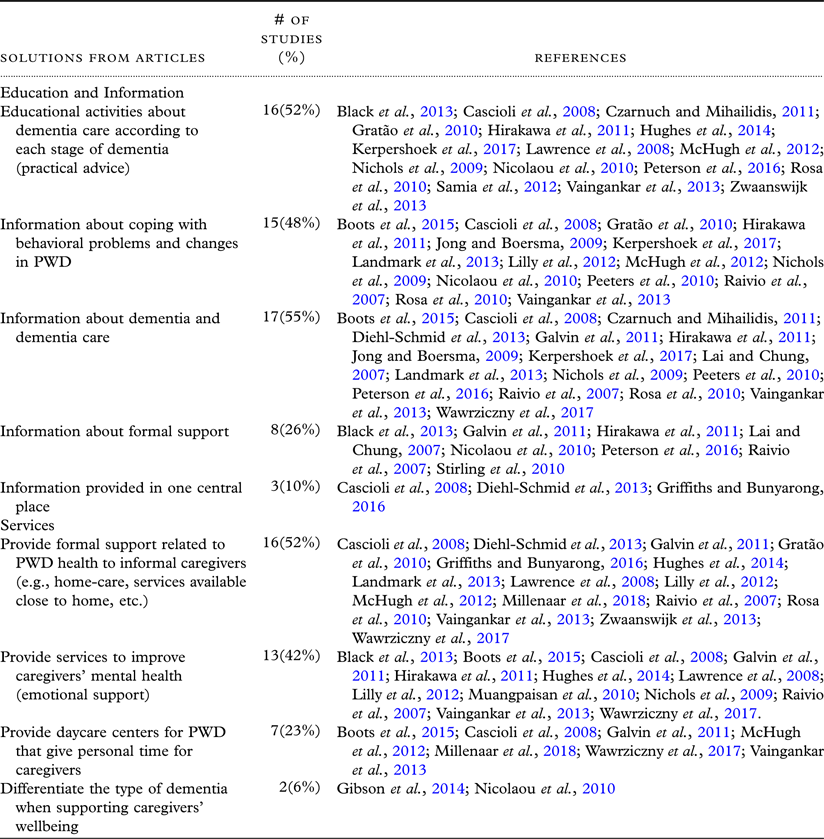
In addition to informational supports, study authors also made recommendations related to the provision of formal support to family caregivers, generally (52%), services specifically directed to caregivers’ emotional health (42%) and respite/daycare services for PWD (23%) in order to give caregivers more personal time. One study by Nicolaou et al. (Reference Nicolaou, Egan, Gasson and Kane2010) further recommended that services be differentiated according to type of dementia.
Discussion
The objective of this scoping review was to map the most current literature surrounding the needs of caregivers of PWD, the characteristics of studies in which needs have been assessed, and the emerging solutions proposed to meet these needs.
What are the defining characteristics of studies reporting on the needs of caregivers of PWD?
The results found in this scoping review are consistent with recent findings (Bangerter et al., Reference Bangerter, Griffin, Zarit and Havyer2017; Mansfield et al., Reference Mansfield, Boyes and Sanson-Fisher2017) that many instruments used to identify the unmet needs of caregivers of people with dementia lack indices of psychometric properties. The two published instruments identified in our review are in the initial phase of validation, and the remaining studies provided limited insights into instrumentation for interviews and focus groups. This suggests caution when interpreting results, as measures may lack consistency or theoretical stability. This review is among the first to apply recommendations for bringing attention to the conceptualization and classification of caregivers’ needs to build a stronger foundation for measurement (Bangerter et al., Reference Bangerter, Griffin, Zarit and Havyer2017). By applying the validated psycho-social assessment C.A.R.E Tool as an organizing framework for data extraction, we captured both frequently and infrequently reported needs. An important caveat to this approach, however, is that the frequency of studies reporting on C.A.R.E Tool domains does not infer that those needs are viewed as more important by caregivers; therefore, the current literature may not align with caregivers’ priority needs. Furthermore, each person’s unique caregiving context will prompt different needs that may vary across situations and throughout the caregiving trajectory, demonstrating the merit of person-centered methods of assessment and treatment. The findings of this review do point to important new lines of research that could map some of the variations among caregivers’ needs, including the intensity of caregivers’ needs—their perceived urgency, level of burden, or clustering of needs over time, as well as across different types of dementia. Some preliminary work by Whitlatch and Orsulic-Jeras (Reference Whitlatch and Orsulic-Jeras2018) that mapped resources for caregivers from early-stage diagnosis until end of life is a practical example of trying to capture the dynamically evolving needs of caregivers.
This review also highlighted two important gaps in the reporting of caregiver needs. Less than half of the studies reviewed reported on caregivers living arrangements, and three-quarters did not report on the type of dementia of the care recipient. These reporting gaps are troubling. A substantive body of research has established that co-residing and being a spousal caregiver are significant predictors of caregiver distress (e.g., Brodaty and Donkin, Reference Brodaty and Donkin2009). Recent findings have also underscored the unique implications of different types of dementia on caregiver tasks and subsequent level of burden (Cheng, Reference Cheng2017). Lack of reporting on these critical dimensions of the caregiving experience makes it difficult to compare, contrast, and contextualize caregivers’ needs appropriately. As the academic literature around caregiver needs is quickly evolving, consensus around and consistent reporting on a common set of socio-demographic factors would advance comparative enquiry. Scaling up (or down) of services from one caregiver population to another should be informed by context-specific analysis of which living arrangements and type of dementia play significant roles. Primary study authors have an important role in ensuring the literature is complete and maximizing opportunities for secondary analysis.
Finally, the four largest studies in our review, representing 62% of all caregivers captured in our review, were conducted in United States, Finland, and Netherlands. It is crucial that large-scale studies using validated instruments are undertaken in other countries to ensure perspectives on caregivers’ needs that are driving service development reflect the cultural, political, and social realities of caregivers in their own contexts. Updating the knowledge base on these issues is vital as some of the foremost reviews on racial and cultural differences in caregivers’ experiences (e.g., Connell and Gibson, Reference Connell and Gibson1997; Janevic and Connell, Reference Janevic and Connell2001) are now almost two decades old. With only one study in our review comparing needs across multiple countries, there appears an opportunity to advance the understandings of caregivers’ needs across different contexts.
What types of caregiver needs are being reported in the literature?
Given previous findings that the mean number of unique needs reported by caregivers of people with dementia is 10 (Miranda-Castillo et al., Reference Miranda-Castillo, Woods and Orrell2013), it was not surprising that this review found significant heterogeneity within and across studies. Consistent with other reviews, the most frequently cited need was related to caregivers’ personal health, in particular their emotional health. The results from this scoping review align with previous literature showing the limited self-care performed by caregivers once they begin caring for a loved one (Ferreira et al., Reference Ferreira, Queluz, Ximenes, Isaac and Barham2017; Keefe et al., Reference Keefe, Guberman, Fancey, Barylak and Nahmiash2008; Pinto and Barham, Reference Pinto and Barham2014; Schulz and Martire Reference Schulz and Martire2004; Tomomitsu et al., Reference Tomomitsu, Perracini and Neri2014). The impact on personal health is directly related to lack of help from others (Pinto et al., Reference Pinto, Barham and Del Prette2016). When caregivers do not receive help from others, they do not have time for self-care, which can contribute to perceived burden, higher probability of depression, and worse quality of life (Pinto et al., Reference Pinto, Barham and Del Prette2016; Yikilkan et al., Reference Yikilkan, Aypak and Görpelioğlu2014).
The emphasis in primary studies on informational needs underscores the learning processes that are inherent in the role of caregiving and their evolution over time. Caregivers who don’t know what to expect about the disease prognosis or where to access formal support can feel overburdened because they do not have the information necessary to better manage care or to plan for assistance they may need in the future (McCabe et al., Reference McCabe, You and Tatangelo2016).
The needs reported least often were related to coordination and housing. Juggling responsibilities was not reported as an issue in any of the primary studies in this review. One possible explanation for this is that researchers solicited information from caregivers on the outcomes (i.e., feeling burdened or depressed), not information on the reasons why those outcomes were occurring (i.e., feeling depressed because they were juggling too many responsibilities). Accordingly, attention should therefore be given to measures that capture outcomes and factors contributing to them. It may be that housing is largely a stable experience for caregivers, except for specific events when their needs in this area peak (e.g., transition of care recipient from home to long-term care). Single-data point data collection may not be capturing these low-prevalence events. Thus, future work needs to capture both prevalence and incidence longitudinally—across the caregiver journey. Cohort and time series designs should measure not only changes in caregivers’ psychological distress and quality of life (e.g., Bleijlevens et al., Reference Bleijlevens2014), but also changes in caregiver needs to provide insight into services needed along the caregiving trajectory. Given the limited descriptions of actual interview questions and survey items, it was not possible to explore how the way questions were posed might have contributed to these low frequencies. The application of the C.A.R.E. Tool domains to categorize needs provided a useful lens for a broad scope of primary studies. All C.A.R.E. Tool domains, except for “juggling responsibilities,” had at least one primary study in which it was identified by caregivers.
What solutions and services are proposed to meet the needs of caregivers?
In the face of wide-ranging needs and complex caregiving contexts, it was not entirely unexpected that recommendations made by primary study authors would be fairly abstract and imprecise. Many studies recommended “more information” must be provided to caregivers, with some providing topical areas in which information might be useful: self-care, relationship management with others involved in caring, social interactions (communication, empathy, control of aggressiveness, and assertiveness), and general information (dementia prognosis, stages of dementia, behavior changes, and formal support available). Three studies recommended that information be located in one central place, suggesting that the accessibility of reliable information could be lacking. Other studies identifying caregivers’ informational needs indicated a demand for information by type and stage of dementia. Taken together, these recommendations could signal a need for more targeted, tailored resources to support caregivers in finding information relevant to their needs. Importantly, results of this review suggest that while we have some broad areas of general consensus around caregivers’ informational needs, considerable work is needed to move from the broad to the specific. Evidence suggests tailored psychoeducational interventions are particularly effective in reducing caregiver burden (Beinart et al., Reference Beinart, Weinman, Wade and Brady2012). Mapping specific caregiver needs, such as those identified in this review, to specific services, however, remains challenging. Realist methodologies that have recently been applied to caregiver intervention research (e.g., Parkinson et al., Reference Parkinson, Carr, Rushmer and Abley2017) may also be useful in improving our understanding of needs. Rather than focusing on “what are the needs?” realist methods would explore “what needs, for whom, in what circumstances, and in what respects?.” The findings of this scoping review suggest further “unpacking” of caregiver needs via these methods is warranted.
Access to formal supports was itself a common recommendation. Authors postulated that services such as day care centers, home visits, and service navigators might be helpful, as well as merging the services offered to caregivers and care recipients into one place (e.g., Diehl-Schmid, et al., Reference Diehl-Schmid2013). In the same vein, recommendations for expanding the capacity of formal services included the delivery of a service model that combines the assistance of health professionals and community to create sustainable, ongoing support for caregivers. Having access to a professional navigator of the care system for caregivers of persons with dementia, for instance, would greatly benefit the sustainability of the caregiving situation. For example, if the person with Frontotemporal Dementia (FTD) is physically resisting the caregiver when attempting to bathe, caregivers would benefit from access to health professionals for clinical understanding and approaches to support the individual with FTD. In addition, community-based educational support resources about specific types of dementia would be helpful. Nicolaou et al. (Reference Nicolaou, Egan, Gasson and Kane2010) calls for the need to develop specific supports and education for caregivers of individuals with FTD because of their unique needs in comparison to other types of dementia. Knowledge translation will prove invaluable as we continue to take what is known about caregiver needs and realize real-world practices and policies for this population.
Limitations
This review included studies from different countries, but all of them have been published in English (or in both Portuguese and English). Therefore, we may not have captured the needs of caregivers from countries outside of the United States and Europe that were not published in the selected languages. Descriptors and key terms relevant to this study are wide-ranging. We acknowledge that some relevant articles may not have been captured as a function of our key search term selection. However, this search was informed by an experienced librarian and guided by search terms used in other relevant reviews. We did not assess the methodological quality of included studies, and while this limits the reliability and generalizability of findings, our approach is consistent with most published scoping reviews. We limited our search to peer-reviewed articles and reported on key methodological characteristics to facilitate some level of critical appraisal.
Conclusions
Understanding the needs of caregivers is vital to developing and delivering the kinds of services and resources that will alleviate burden and improve quality of life. As this body of research matures, it will need to advance the validity of instruments used to collect data on caregiver needs, report consistently on dimensions of caregivers’ experiences well-known to mediate levels of burden, and explore in earnest not just what the needs are but how, when, and where those needs manifest across the caregiver journey.
Conflict of interest
None.
Description of authors’ roles
All authors contributed to the conception and design of the review and interpretation of the results. FQ and EK independently reviewed and selected studies for inclusion, conducted data extraction, and checking. FQ wrote the manuscript with assistance from EK, and all authors provided substantive edits. All authors read and approved the final manuscript.
Acknowledgements
This research was supported by Canadian Institutes of Health Research Foundation Grant Program (FS2 201509FDN-IWKI-20675) and by São Paulo Research Foundation (FAPESP Grant #2017/13807-0). The authors gratefully acknowledge Lucy Knight for her editorial assistance.
Supplementary material
To view supplementary material for this article, please visit https://doi.org/10.1017/S1041610219000243


 Open access

