


Introduction
Declines in biological diversity have accelerated the need for efficient conservation plans (Pullin, Reference Pullin2002), and the determination of the main threats to wildlife is fundamental for the formulation of such plans (Soulé & Orians, Reference Soulé and Orians2001). Quantitative assessment of threats is important for two main reasons: it improves our ability to protect wildlife and ecosystems according to their conservation status and requirements (Letcher et al., Reference Letcher, Priddy, Walters and Crowder1998; Wemmer et al., Reference Wemmer, Özesmi and Cuthbert2001; Sullivan et al., Reference Sullivan, Reid and Bugoni2006; Leston et al., Reference Leston, Amanda and Rodewald2006), and helps sustain and justify calls for support and action to governmental and international bodies (Johnson et al., Reference Johnson, Singh, Duangdala and Hedemark2005; Mishra et al., Reference Mishra, Madhusudan and Datta2006).
The migratory nature of birds, with many species covering great distances in seasonal and reproduction migrations, and also during daily foraging, make it difficult to collect a comprehensive data set on threats. However, wildlife rehabilitation centres can provide information (International Wildlife Rehabilitation Council, 2007) that could also be used to improve our knowledge of factors affecting the viability and persistence of both species and populations (Rijksen, Reference Rijksen1974; Barten, Reference Barten1986; Underhill et al., Reference Underhill, Bartlett, Baumann, Crawford, Dyer and Gildenhuys1999; Parsons et al., Reference Parsons, Calf, Underhill and Strauss2006). Data collected at rehabilitation centres include treatment, success of rehabilitation and post-release survival of wildlife (Clumper et al., Reference Clumpner, Hansen and Borgia2000), especially with respect to treatment and rehabilitation success of wild animals affected by oil spills (Mignucci-Giannoni, Reference Mignucci-Giannoni1999; Tseng, Reference Tseng1999; Parsons & Underhill, Reference Parsons and Underhill2005) and the rehabilitation of animals released after fire (Lunney et al., Reference Lunney, Gresser, Mahon and Matthews2004).
Data on the main causes of morbidity and mortality of wildlife species is recorded by rehabilitation centres (Burton & Dufour, Reference Burton and Dufour2000; Casey & Casey, Reference Casey and Casey2000). Studies that focus on particular groups (Miller, Reference Miller1997; Deem et al., Reference Deem, Terrell and Forrester1998; Morishita et al., Reference Morishita, Fullerton, Lowenstine, Gardner and Brooks1998; Brown & Sleeman, Reference Brown and Sleeman2002), species of particular interest (Schulz, Reference Schulz1986; Porter & McEntyre, Reference Porter and McEntyre1988), and specific types of injuries or diseases (Jones, Reference Jones1999) can help evaluate potential threats and population trends at local or regional scales (Casey & Casey, Reference Casey and Casey2000).
Here we use data collected over a 10-year period at the Hellenic Wildlife Hospital, Greece, to provide insights into the main threats to wild birds in the country. To our knowledge this is the first such study in the eastern Mediterranean. Greece, as a member of the European Union, has rights and obligations under international and European law, and our findings could help identify possible gaps in law enforcement or conservation efforts.
We have four main objectives: (1) To examine the numbers of birds admitted to the Hospital during a 10-year period, documenting the main reasons for entry and whether these causes of morbidity and mortality vary over time. (2) To examine seasonal patterns in numbers of birds admitted and reasons for admittance. (3) To examine and describe possible links between specific threats, species and areas by comparing records of birds received from the zoogeographical regions of Greece. (4) To study whether particular groups of species are more sensitive to specific threats.
Methods
Data collection
Data used in this study were collected during a 10-year period (1996–2005) from the Hellenic Wildlife Hospital, established in 1984 in Aigina, Greece. The centre receives birds, mammals, amphibians and reptiles from throughout Greece. All animals admitted receive a physical examination and individual records include the date and reason of admission, taxon, area of origin, and suggested treatment. In our analysis we classified the reasons for admission of birds as: (1) shooting, (2) poisoning/illness, (3) accident, (4) weakness, (5) orphan/newborn, (6) captivity. Accidents include electrocution, oiling and vehicle-caused injuries, weakness includes exhausted birds, and captivity includes illegally captured birds or abandoned pets.
Data analysis
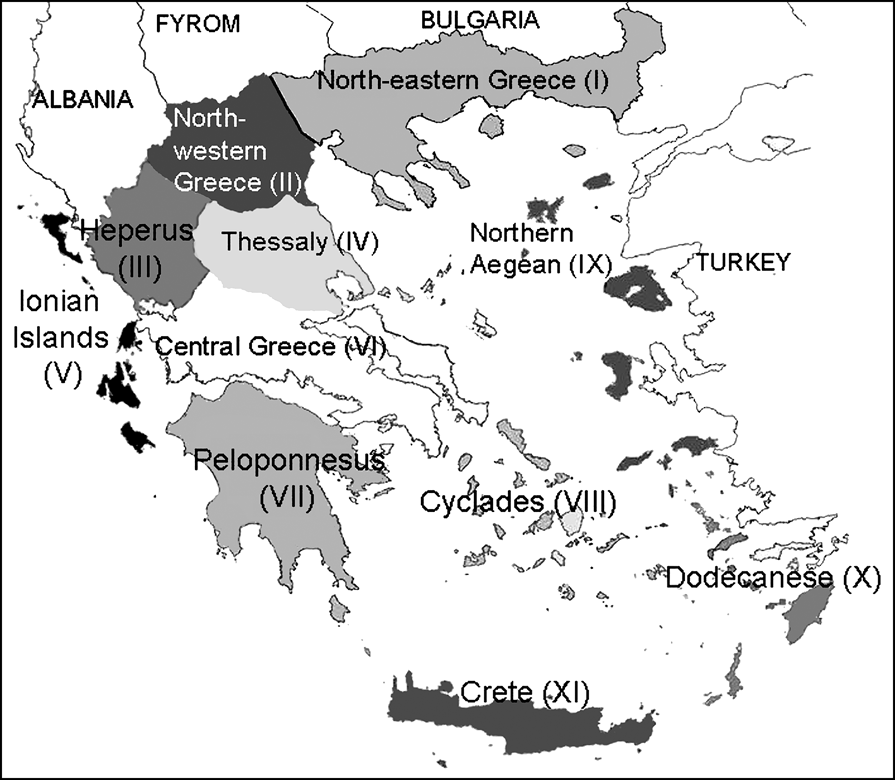
To evaluate any differences among the birds received from different areas, we determined their distribution based on the 11 zoogeographical regions of Greece (Dafis et al., Reference Dafis, Papstergiadou, Georgiou, Mpampalonas, Georgiadis and Papageorgiou1997; Fig. 1). Bird records were subdivided into raptors, aquatic and migratory. Species of conservation interest were determined based on the Birds Directive of the European Union 79/409/EEC; this Directive lists species that need protection and occur in the wild in European territory. Date of admission data were classified into four 3-month periods (autumn, September–November; winter, December–February; spring, March–May; summer, June–August) to facilitate seasonal analysis. To interpret our findings with respect to hunting and non-hunting periods we assumed that autumn and winter are the hunting period and spring and summer the closed season. However, the opening and closing dates for hunting in Greece vary depending on species (starting dates 15 August–20 September; closing dates 30 October–28 February), and variations in these dates occur for the same species between years.
Zoogeographical regions of Greece (based on Dafis et al., Reference Dafis, Papstergiadou, Georgiou, Mpampalonas, Georgiadis and Papageorgiou1997, as modified by Kuehnelt, Reference Kuehnelt and Kanellis1965, and Willemse, Reference Willemse1984).
We used Kruskal-Wallis tests to examine differences in the number of birds admitted per season, from different zoogeographical regions, and per season according to the reasons for admittance, and the Nemenyi test for non-parametric multiple comparisons (Zar, Reference Zar1999). We used a χ2 test for the hypothesis that the number of birds received per season is uniform among the 10 years of the study.
We used non-metric multidimensional scaling analysis (NMS) to examine the association among the 11 zoogeographical regions regarding the taxonomic composition of species received at the hospital. NMS is an ordination technique that attempts to explain the observed similarities or dissimilarities between the studied objects. All pairwise similarities or dissimilarities (distances) between the objects are expressed in correlation matrices that are then analysed to identify the orthogonal axes that are able to explain most of the variation. The depiction of those axes in ordination diagrams allows the visual detection and exploration of similarities or dissimilarities within the data. A goodness of fit test, the stress value, was used to assess whether the ordination plot reproduces the observed distance matrix successfully; lower values of stress demonstrate a better representation, with values < 0.1 suggesting an acceptable configuration of the data. We performed a further NMS to investigate the relationships between the 11 zoogeographical regions based on the causes of mortality or morbidity. Prior to NMS analysis data were square root transformed. Bray-Curtis similarity was used as a similarity measure. The minimum stress results were obtained after 100 iterations. NMS ordinations were performed using the PRIMER package (Clarke & Gorley, Reference Clarke and Gorley2001). Other statistical analyses were performed using SPSS v. 13 (SPSS, Chicago, USA).
Results
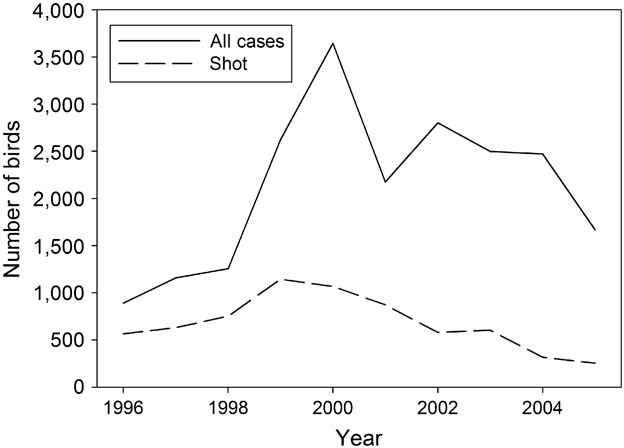
During the 10 years a total number of 21,190 individuals belonging to 469 bird species were admitted to the Hellenic Wildlife Hospital, with a marked increase from 1998 to 2000, and a general reduction thereafter (Fig. 2). Almost 15% (73 out of 469) of the species admitted to the Hospital are listed in the Birds Directive of the EU.
It was not possible to determine clearly the reasons for entry of 16% of the individuals received (Fig. 3). The greatest number of admissions (32%) were due to shooting, with accidents and orphans/newborns the second and third most common reasons for admission (26 and 12% respectively; Fig. 3). The reasons for admission differed between raptors, migratory and aquatic species (Fig. 4). Gunshot wounds were the most frequent cause of injury for raptors (60%) and aquatic (36%) species, followed by accidents (raptors, 20%; aquatic, 32%). Accidents were the most frequent reason for injury of migratory (41%) species followed by gunshots (26%). Weak individuals and orphans were more frequently recorded among migratory and aquatic species, respectively, and less frequently for raptors. Shooting was the main cause of morbidity or mortality for species of high conservation importance, followed by accidents.
Numbers of all birds and shot birds admitted each year over 1996–2005 to the Hellenic Wildlife Hospital.
Percentage of all birds and of birds of conservation interest in Europe received by the Hellenic Wildlife Hospital over 1996–2005, categorized according to the reason for entry.

Percentage of raptors and migratory and aquatic birds received by the Hellenic Wildlife Hospital over 1996–2005, categorized according to the reason for entry.

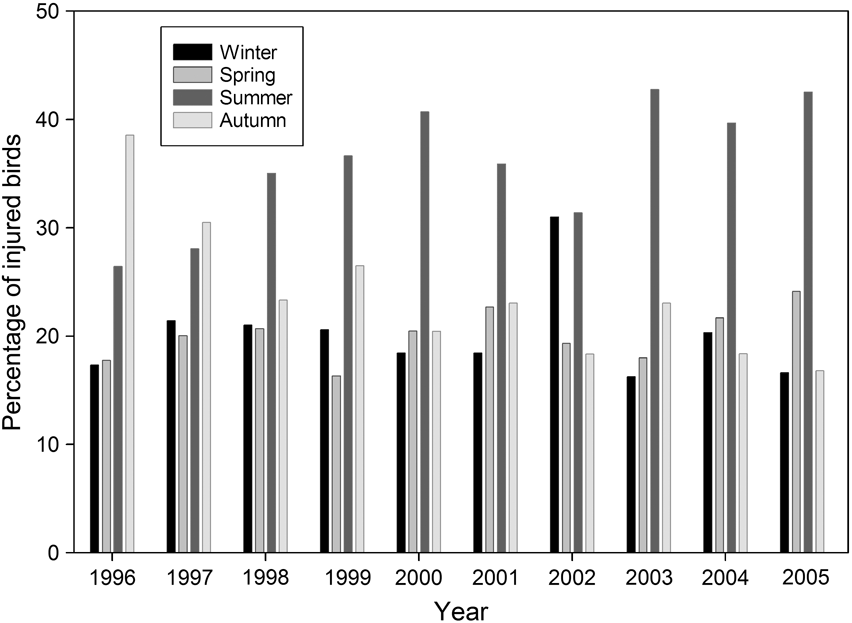
There were significant differences in the mean number of birds received per season (Kruskal-Wallis H=8496.437, P < 0.001), and the number of birds per season differed between years (χ2 = 63.570, P < 0.001). The greatest number of injured birds were received during the summer (Fig. 5). Except for the first 2 years, when autumn was the season with the highest contribution to the annual number of birds received, no clear seasonal pattern was apparent.
Percentage of birds received, categorized by season, by the Hellenic Wildlife Hospital over 1996–2005.
Percentage of birds received by the Hellenic Wildlife Hospital per season (see text for details) over 1996–2005, categorized by reason for entry.
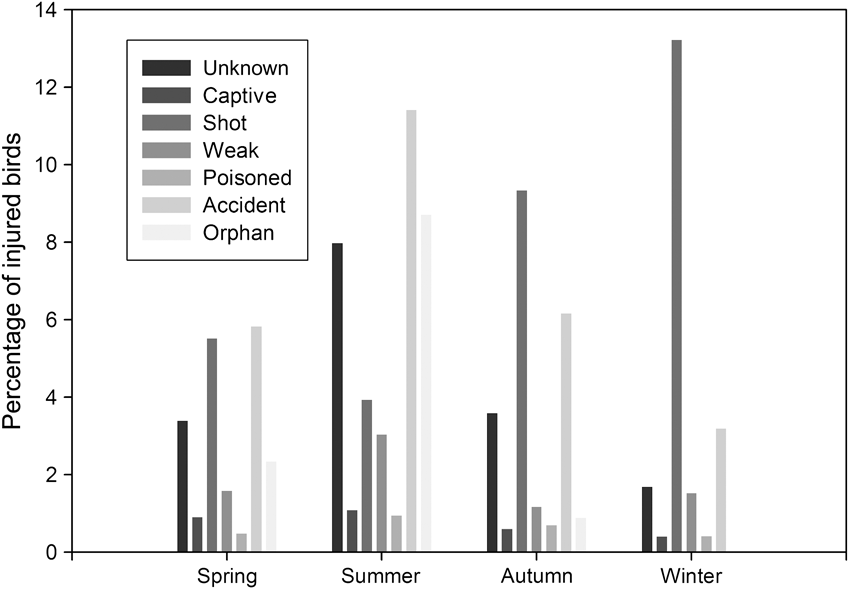
Multiple comparisons indicated significant differences in the number of shot birds received during winter and spring (q = 4.085, q crit,0.05 = 3.858), winter and summer (q = 5.653, q crit,0.05 = 3.858) and autumn and summer (q = 3.922, q crit,0.05 = 3.858). There were also significant differences in the number of cases recorded as accidents and in injured birds with undetermined cause of injury during summer and winter (accidents: q = 4.761, q crit,0.05 = 3.858; unknown: q = 6.438, q crit,0.05 = 3.858).
Ordination analysis demonstrated a clear association among zoogeographical regions regarding the taxonomic composition of species received at the centre (NMS stress 0.01). A strong grouping occurs between North-eastern and Central Greece, which are clearly separated from other regions of the country (Fig. 7a).
Non-metric multidimensional scaling ordination plot (see text for further details) of zoogeographical regions (Fig. 1) based on (a) species composition of admissions, and (b) causes of mortality and morbidity of admissions. Bray-Curtis similarity was used for both ordinations. I, North-eastern Greece; II, North-western Greece; III, Heperus; IV, Thessaly; V, Ionian Islands; VI, Central Greece; VII, Peloponnesus; VIII, Cyclades; IX, Northern Aegean; X, Dodecanese; XI, Crete.
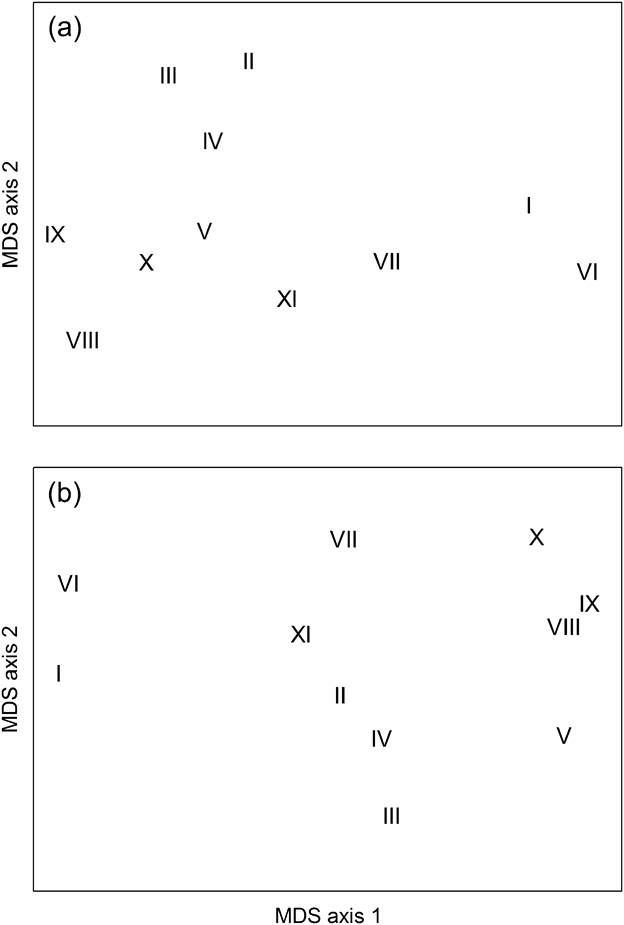
The number of birds received differed significantly among the 11 zoogeographical regions (Kruskal-Wallis test, H = 73.288, P < 0.001), with > 60% received from North-eastern and Central Greece. Ordination based on the causes of mortality or morbidity revealed a clear grouping among regions (NMS stress 0.04). There were three clusters (Fig. 7b). North-eastern and Central Greece were grouped together and clearly separated from the Ionian Islands, Cyclades, Dodecanese and Crete, which comprise marine areas of the country (Fig. 1). There was greater variation among the remaining regions, although they were grouped together. With the exception of North-eastern and Central Greece, in which most of the cases were due to accidents (35 and 39%, respectively), shooting was the dominant reason for injury, contributing to c. 50% of the injuries in other regions (41–72%).
Discussion
Data collected at rehabilitation centres could provide an additional tool to recognize wildlife threats because it allows the evaluation of the impact of several factors that are difficult to study directly. Our analysis has demonstrated that shooting was the main cause of injury to birds admitted to the Hellenic Wildlife Hospital during 1996–2005. Most shooting incidents occur during autumn and winter, which coincides with the hunting period in Greece (end of August to end of February), although shot birds were admitted throughout the year. However, the lack of significant differences in the number of shot birds between autumn and spring and spring and summer indicates that even though shooting is limited during the non-hunting period it is nevertheless an ongoing activity. This finding highlights the inefficiency of law enforcement against illegal shooting. In addition, the high number of shot birds admitted to the Hospital from throughout Greece during the non-hunting periods demonstrates that these breaches of the law are a national, rather than regional, phenomenon. The fact that several of the shot species are large bodied and have a characteristic flight (e.g. Ciconia nigra, Pelecanus onocrotalus), and are therefore easily identifiable, demonstrates the severity of illegal hunting.
Hunting regulations in Greece comply with European Union directives, international conventions and treaties for the protection of wildlife. These include the Bern Convention on Nature Protection, the Bonn Convention on the Conservation of Migratory Species of Wild Animals, the RAMSAR International Convention, the Habitat Directive of the European Council 92/43/EEC, the Birds Directive of the European Council 79/409/EEC, and CITES. Hunting is prohibited for all species included in the IUCN Red List (IUCN, 2007) and in the Birds Directive of the European Council. However, the inefficiency of law enforcement and the lack of compliance of hunting regulations with international conventions have been criticized (Hellenic Ornithological Society, 2006). The results of this study support such criticisms. In contrast to most European countries, where the location and spatial extent of hunting sites is explicitly determined, no private areas for hunting exist in Greece. Hunting is allowed at all public sites except for areas of particular interest (defined by the law on Measures for the Management of Wild Avifauna ref. no. 414985/29-11-85-O.G.R. 757/B’/18-12-85).
Fewer birds were admitted because of poisoning than for any other mortality factor. It is probable that poisoned birds die immediately and therefore only a limited number of poison victims are admitted to wildlife centres, leading to an underestimation of the significance of poisoning as a mortality factor (see also Mineau et al., Reference Mineau, Fletcher, Glaser, Thomas, Brassard and Wilson1999). Similar studies have also highlighted the relatively high contribution of orphaned young to the number of animals admitted to rehabilitation centres (Fix & Barrows, Reference Fix and Barrows1990; Wendell et al., Reference Wendell, Sleeman and Kratz2002).
Most of the birds admitted to the Hospital originated from North-eastern and Central Greece. This could be because of the higher density of people in this urbanized region, a higher degree of ecological awareness, or better facilities for shipping birds to the Hospital. The reduced admissions from other regions is most likely because of limited transportation options in rural areas and the expenses of shipping. Nevertheless, causes of morbidity and mortality varied between regions. Accidents were the most frequent cause of admission for animals received from North-eastern and Central Greece probably reflecting the increased human pressure in this area, which has a dense human population and busy transportation network.
The high number of shot raptors admitted during non-hunting periods provides clear evidence for the persecution of this group of species. Both gunshots and accidents were the main causes of injury to migratory and aquatic species, further demonstrating the significance of shooting as a major threat. The relatively high number of migratory and aquatic species admitted due to accidents may reflect increased public concern regarding specific species that could also be used as flagship species (sensu Bowen-Jones & Entwistle, Reference Bowen-Jones and Entwistle2002). Public awareness programmes and research projects in Greece often focus on such species.
The types of injuries of animals submitted to rehabilitation centres are likely to be associated with human activities (Spalding & Forrester, Reference Spalding and Forrester1993) reflecting local conditions or threats (Casey & Casey, Reference Casey and Casey2000). This could produce biased evaluations of the causes of mortality or morbidity. We attempted to reduce this sampling bias by analysing data from all regions of the country (Brown & Sleeman, Reference Brown and Sleeman2002) but we acknowledge this limitation and suggest that complementary data from field surveys are also required. We consider the information collected at the Hellenic Wildlife Hospital to be a comprehensive data set for analysing threats for bird species in Greece. However, we caution that fluctuations in the number of individuals could reflect public awareness and concern (Brown & Sleeman, Reference Brown and Sleeman2002).
Habitat loss, fragmentation and degradation are critical factors affecting population viability but hunting has also led to extinction of several species in the past and is still one of the main threats to wildlife (BirdLife International, 2004). In addition to being a major source of mortality, hunting is also an important source of disturbance, affecting migratory behaviour and distribution of species (Fox & Madsen, Reference Fox and Madsen1997; Béchet et al., Reference Béchet, Giroux, Gauthier, Nichols and Hines2003). However, large scale assessments of its impact on population sizes and composition are difficult to conduct because of practical difficulties. To estimate hunting pressure, data are collected by combining environmental and social surveys (Kaul et al., Reference Kaul, Hilaluddin, Jandrotia and McGowan2004; Johnson et al., Reference Johnson, Singh, Duangdala and Hedemark2005; Lehman et al., Reference Lehman, Ratsimbazafy, Rajaonson and Day2006). The collected information is often analysed with the use of a geographical information system and time series of satellite or aerial images (Ostwald, Reference Ostwald2002; Campbell, Reference Campbell2005), although the applicability of such combined methods is limited to local studies.
There is an urgent need for conservation actions to conserve the bird populations of Greece. Actions need to focus on strengthening the enforcement of existing regulations. We are preparing a detailed report for submission to the Greek governmental agencies responsible for hunting regulations. The results presented will provide evidence highlighting the need for strict enforcement of the existing legislation for protecting birds and closer compliance with EU regulations.
Acknowledgements
We thank Maria Zomeni and Joseph Tzanopoulos for constructive comments on the manuscript. We wish to thank all volunteers who participated in the 1996–2005 projects of the Hellenic Wildlife Hospital. We thank Panoriou Euegenia and Galinos Spyros for their help with data processing.
Biographical sketches
Antonios Mazaris is carrying out research on conservation biology, reserve selection, population dynamics and ecological risk assessment. Yiannis Mamakis works with the management of the Hellenic Wildlife Hospital and conducts research on the ecology, behaviour and biology of various bird species. Stauros Kalpakis has worked on various conservation issues in Greece since the 1980s, with a particular focus on the ecology and behaviour of bird species, and is currently working on the establishment of protected areas for birds. Yiannis Poulopoulos established the Hellenic Wildlife Hospital in 1984. He participates in conservation and monitoring programmes for bird species throughout Greece. Yiannis Matsinos has a particular interest in the ecology and population dynamics of birds.



