





Introduction
Problem behavior refers to a range of actions that deviate from societal norms and expectations, often resulting in negative consequences for the individual and those around them. These behaviors can include aggression, delinquency, substance abuse, and other forms of antisocial conduct (Loeber & Farrington, Reference Loeber and Farrington2000) and often emerge during childhood and adolescence, known as critical periods for social and emotional development. Problem behavior has the potential to disrupt developmental trajectories, leading to long-term adverse outcomes such as academic failure, mental health issues, and criminal involvement (Moffitt, Reference Moffitt1993). Early identification and effective prevention and intervention strategies can mitigate the risk that these behaviors escalate into more severe forms of antisocial conduct – thus promoting healthier development – for which detailed knowledge on possible origins and pathways of problem behavior is needed.
An importantnotionto build on to is the intergenerational continuity of problem behavior, that is, parents and children show similarities in problem behavior that include criminal tendencies, delinquency, and aggressive behavior (Besemer et al., Reference Besemer, Ahmad, Hinshaw and Farrington2017; Doumas et al., Reference Doumas, Margolin and John1994; Eichelsheim & van de Weijer, Reference Eichelsheim and van de Weijer2018). The concept of intergenerational transmission refers to the passing of such behaviors from one generation to the next and can occur through both environmental and genetic pathways. Environmental pathways include parenting practices, socio-economic status, and exposure to stressors, which can shape a child’s behavior and development (Conger et al., Reference Conger, Ge, Elder, Lorenz and Simons2002). For instance, children raised with harsh or inconsistent discipline or physical punishment – facets of problem behavior in the parenting domain – are more likely to exhibit problem behavior themselves (Patterson et al., Reference Patterson, DeBaryshe and Ramsey1989) as they learn to use aggression as a means of resolving conflicts (Patterson et al., Reference Patterson, DeBaryshe and Ramsey1989). Similarly, low socio-economic status can explain transmission: parents who engage or have engaged in problem behavior tend to have lower educational attainment and job prestige and less well-paid jobs, all indicators of lower socio-economic status that have been associated with stressors such as financial instability, neighborhood violence, and limited access to resources. These stressors can negatively impact parenting practices and children’s behavior (Conger et al., Reference Conger, Ge, Elder, Lorenz and Simons2002).
Genetic pathways, on the other hand, involve the inheritance of genetic predispositions that can influence behavior. Twin and adoption studies have demonstrated that genetic factors play a significant role in the development of problem behavior in showing that genetic factors account for a significant portion of the variance in, for instance, aggressive behavior (Rhee & Waldman, Reference Rhee and Waldman2002).This suggests that genetic predispositions for problem behavior such as aggression are passed from parents to children and increase the likelihood of aggressive behavior in the next generation.
It is essential to recognize that environmental and genetic factors shape behavior in interplay with each other (Plomin et al., Reference Plomin, DeFries and Loehlin1977; Kretschmer et al., Reference Kretschmer, Vrijen, Nolte, Wertz and Hartman2022) and one of the ways in which such gene–environment interplay can be expressed is genetic nurture. Genetic nurture adds to direct genetic transmission – that is, the effects of parents’ genes on offspring behavior via offspring genes – by suggesting that parental genes also influence the child’s environment and, through this pathway, child development (Kong et al., Reference Kong, Thorleifsson, Frigge, Vilhjalmsson, Young, Thorgeirsson, Benonisdottir, Oddsson, Halldorsson, Masson, Gudbjartsson, Helgason, Bjornsdottir, Thorsteinsdottir and Stefansson2018). In the context of parenting and parent–child interactions, genetic nurture suggests that parents’ genetic predispositions influence their own behavior and their parenting behaviors, which in turn affect their children’s development (Brook et al., Reference Brook, Balka, Zhang and Brook2015; Plomin & Bergeman, Reference Plomin and Bergeman1991). In other words, this implies not only that direct genetic transmission increases the child’s likelihood for a particular outcome but also that parents’ genes also affect the proximal environment they provide for their children. With respect to intergenerational transmission of problem behavior, genetic nurture would be present if a parent’s genetic predisposition for problem behavior would not only predict offspring problem behavior through direct genetic transmission, that is, through passing on the genetic predisposition for problem behavior to the next generation where it increases the likelihood for problem behavior, but also through parents’ problem behavior, which might be observed and modeled by offspring.
It is also plausible that parental genetic predisposition for problem behavior not only affects their problem behavior but also their parenting, that is, another environment they create for their offspring. Specifically, harsh parenting practices, such as physical punishment or verbal aggression, can be facets of problem behavior that emerge when someone becomes a parent. As such, harsh parenting should be directly associated with both parental problem behavior and function as predictor of offspring problem behavior because harsh parentingpractices create a stressful and hostile home environment, which can lead to the development of aggressive behaviors in children. Taken together, we would assume a model where parents’ genes predict parental problem behavior which in turn predicts harsh parenting which in turn predicts offspring problem behavior, all while accounting for direct genetic transmission – a model which we coined as “serial genetic nurture.”
Despite the growing body of research on the intergenerational transmission of problem behavior and the concept of genetic nurture, several gaps remain. First, there is a need for more longitudinal studies that track families over multiple generations to better understand the mechanisms underlying intergenerational transmission. Unfortunately, many studies have relied on retrospective data whereby the parent generation reflected on behavior some decades back, or studies compared parental problem behavior in adulthood to offspring behavior in childhood or adolescence (e.g., Wu et al., Reference Wu, Zhang and Slesnick2020). Other limitations of prior work include that studies did not disentangle whether parental problem behavior actually occurred prior to offspring problem behavior or used official criminal records which tend to underestimate the occurrence of some types of problem behavior such as domestic violence (Besemer et al., Reference Besemer, Ahmad, Hinshaw and Farrington2017). Second, actual genetic and environmental pathways have hardly been tested simultaneously for their relative contributions to and interplay in explaining intergenerational continuity. And third, while genetic nurture has been explored in the context of educational attainment and other traits (e.g., Hughes et al., Reference Hughes, Torvik, van Bergen, Hannigan, Corfield, Andreassen, Ystrom, Ask, Smith, Davies and Havdahl2024; Wang et al., Reference Wang, Baldwin, Schoeler, Cheesman, Barkhuizen, Dudbridge, Bann, Morris and Pingault2021; Willoughby et al., Reference Willoughby, McGue, Iacono, Rustichini and Lee2021), its application to problem behavior and parenting practices is scarce (but see Frach et al., Reference Frach, Barkhuizen, Allegrini, Ask, Hannigan, Corfield, Andreassen, Dudbridge, Ystrom, Havdahl and Pingault2024; Kretschmer, Reference Kretschmer2021). Where as Kretschmer (Reference Kretschmer2021) provides a theoretical discussion of the value of multiple-generation cohort data for disentangling genetic and environmental influences in the context of parenting and child behavioral development, Frach and colleagues (2024) employ the Norwegian cohort study (MoBa) to test the genetic transmission and genetic nurture effects on conduct problems in childhood and adolescence. Using polygenic scores for thirteen different behavioral traits, this study found evidence for direct genetic transmission rather than genetic nurture (Frach et al., Reference Frach, Barkhuizen, Allegrini, Ask, Hannigan, Corfield, Andreassen, Dudbridge, Ystrom, Havdahl and Pingault2024). The study did not, however, include parental (problem) behavior in these models (as a formal test for intergenerational transmission of conduct problems) nor did it include parenting behaviors. As a whole, there is a need for more integrative approaches that consider the interplay between genetic and environmental factors in the intergenerational transmission of problem behavior. The data needed for such approaches, however, is complex to collect and currently rarely available.
The current study
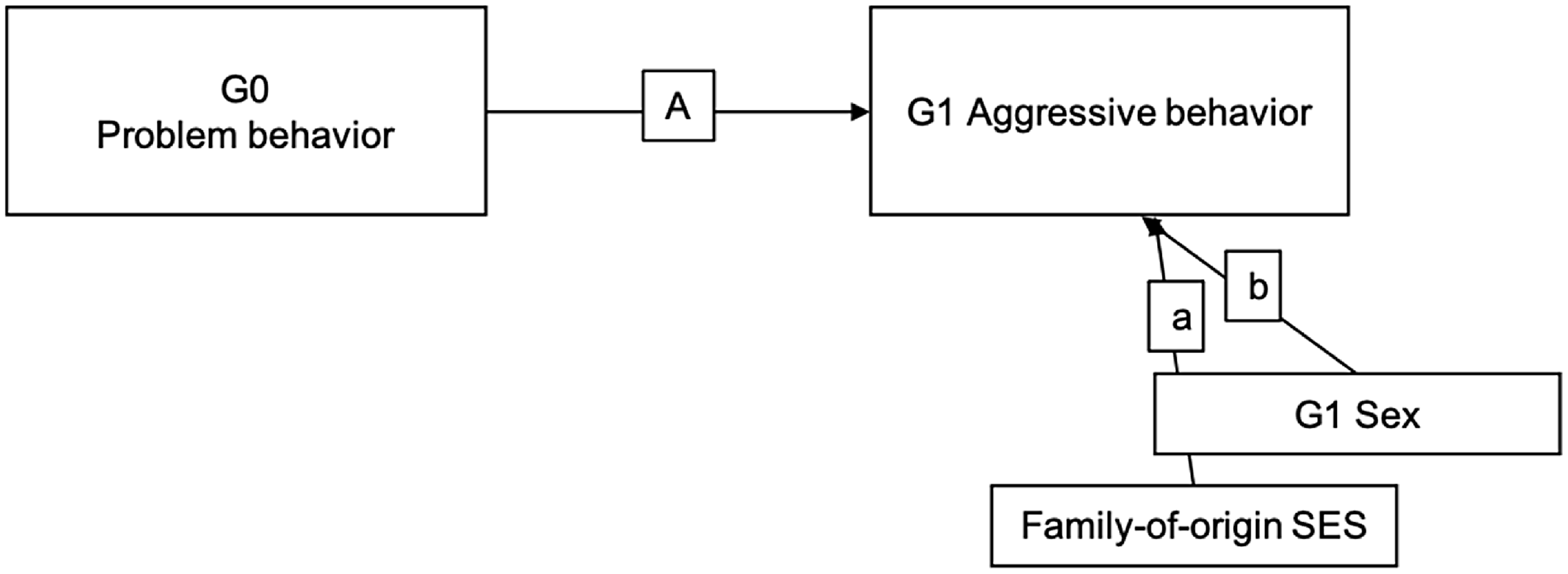
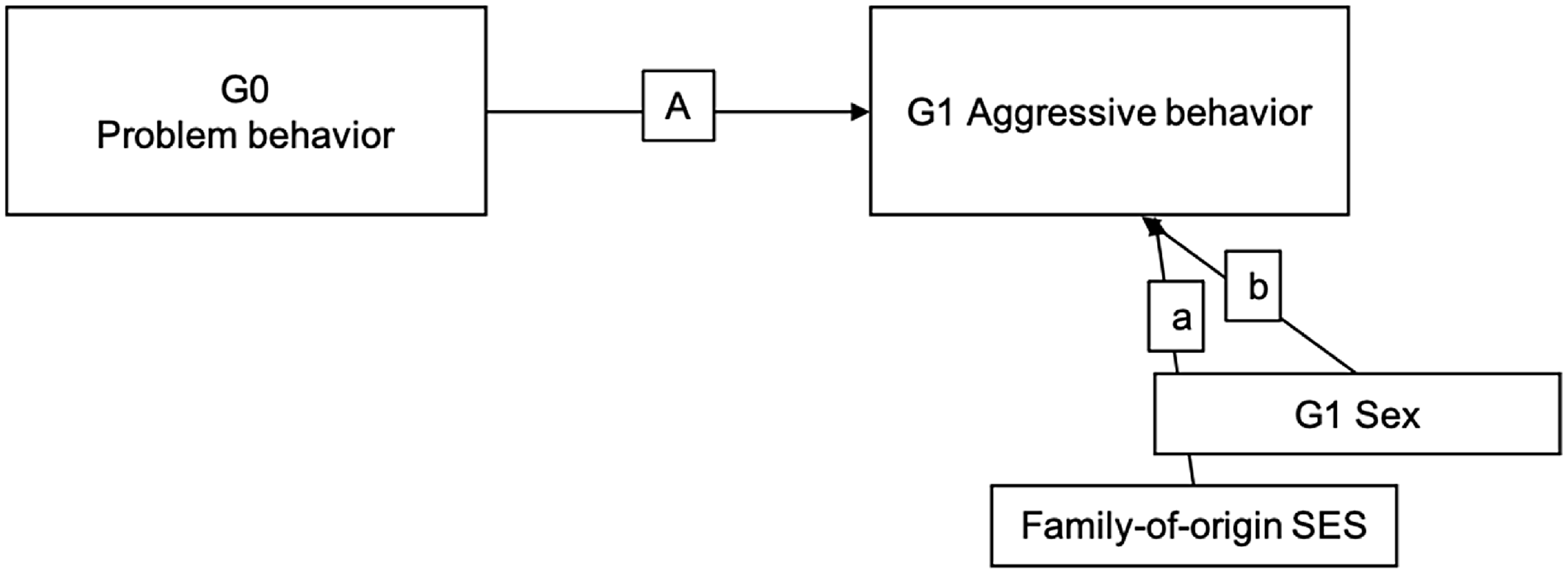
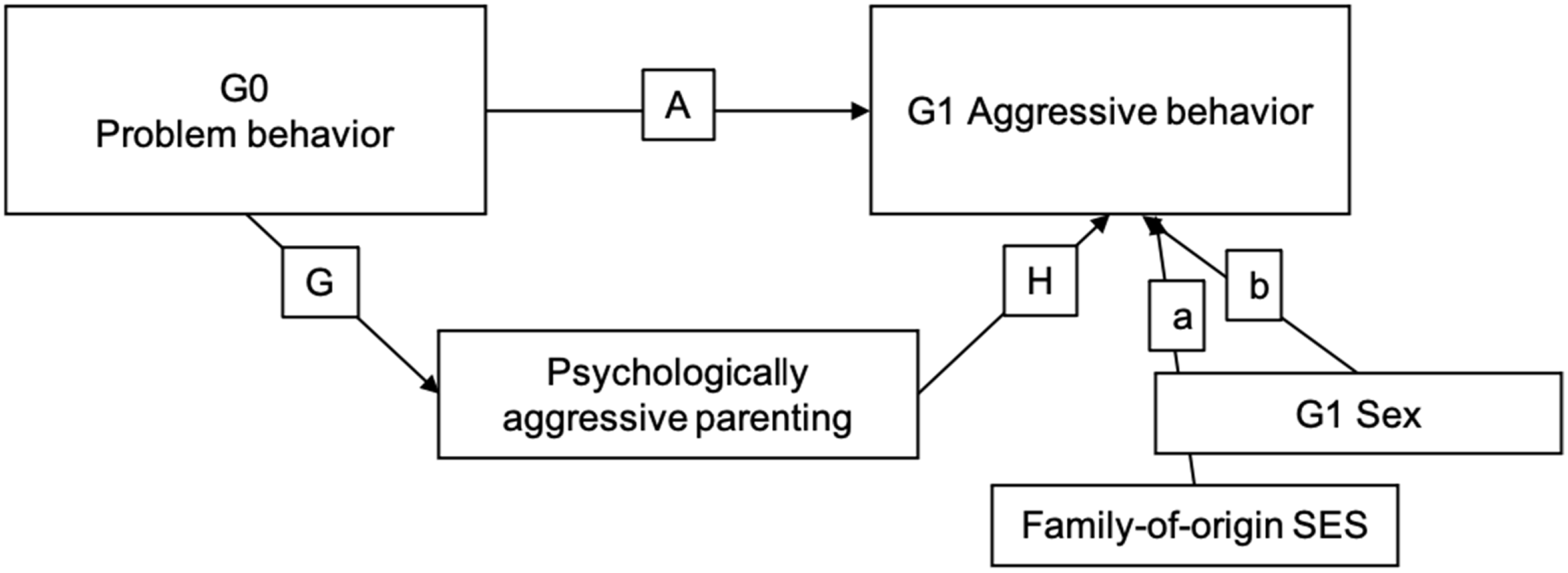
We used unique longitudinal data from a prospective multiple-generation cohort study that provide the optimal setup to explore intergenerational transmission of problem behavior while circumventing limitations of previous research. First, we examined whether problem behavior among parents (measured as antisocial behavior and substance abuse when offspring were approximately 11 years old and parents were on average 40 and 42 years old) predicts offspring own problem behavior nearly two decades later (measured as aggression and delinquency when offspring were at age 29, and again when they were 32 years old). This means that we tested intergenerational transmission of problem behavior in similar developmental periods – adulthood – for both generations. We expected to detect intergenerational continuity, that is, parent’s behavior to predict offspring behavior (Figure 1).
Association between G0 problem behavior and G1 aggressive behavior. Note. G0 = parent generation, G1= offspring generation.
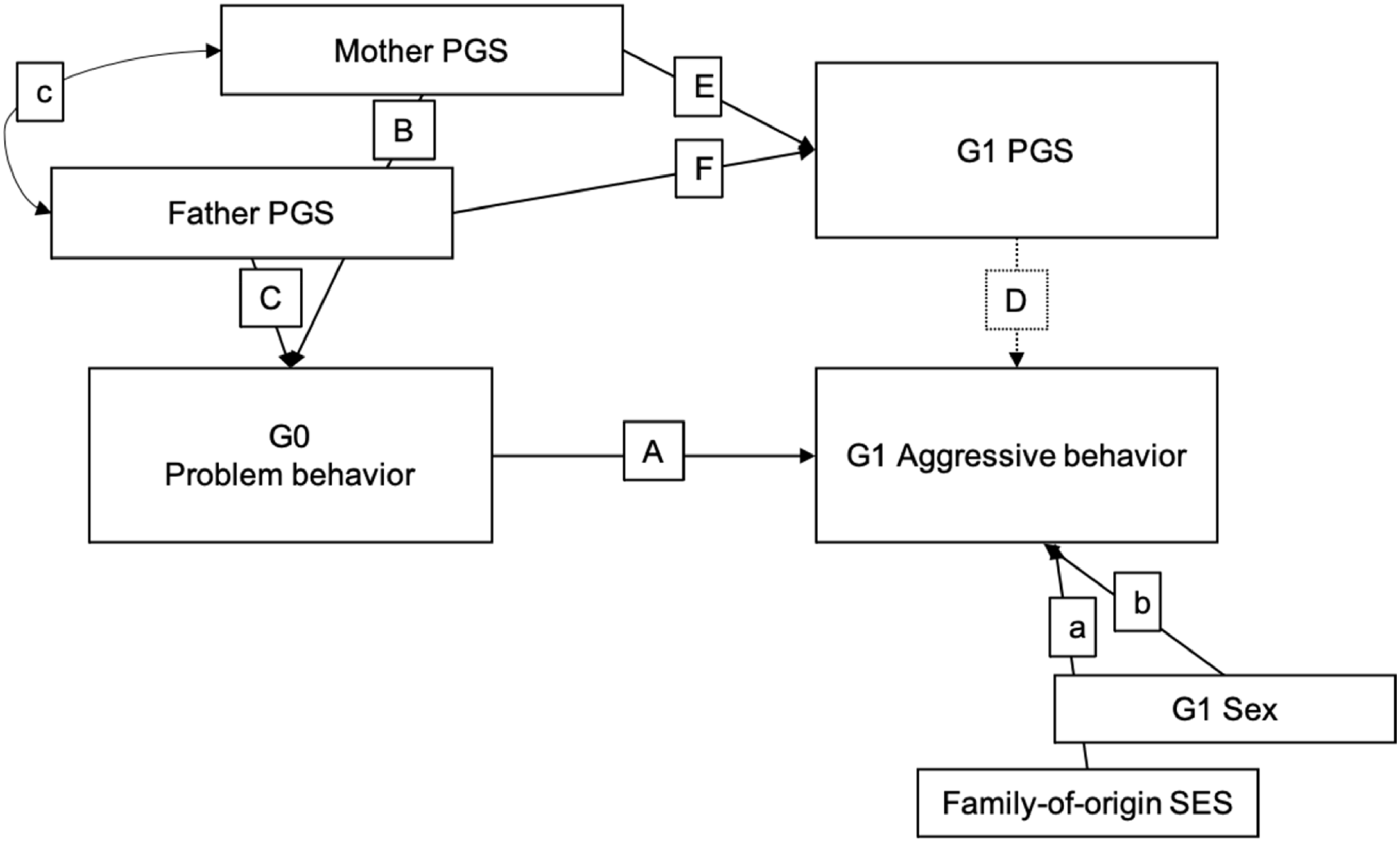
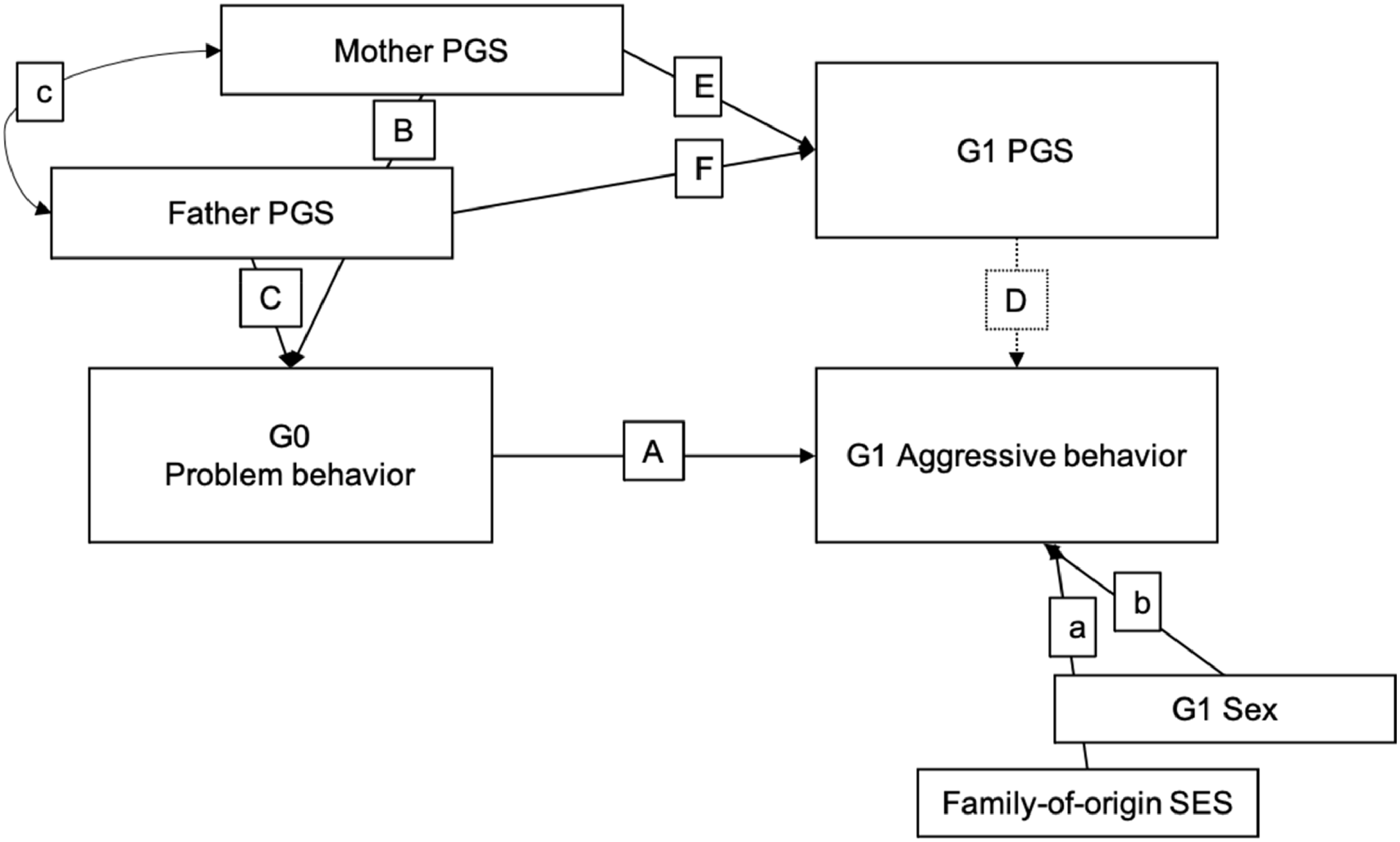
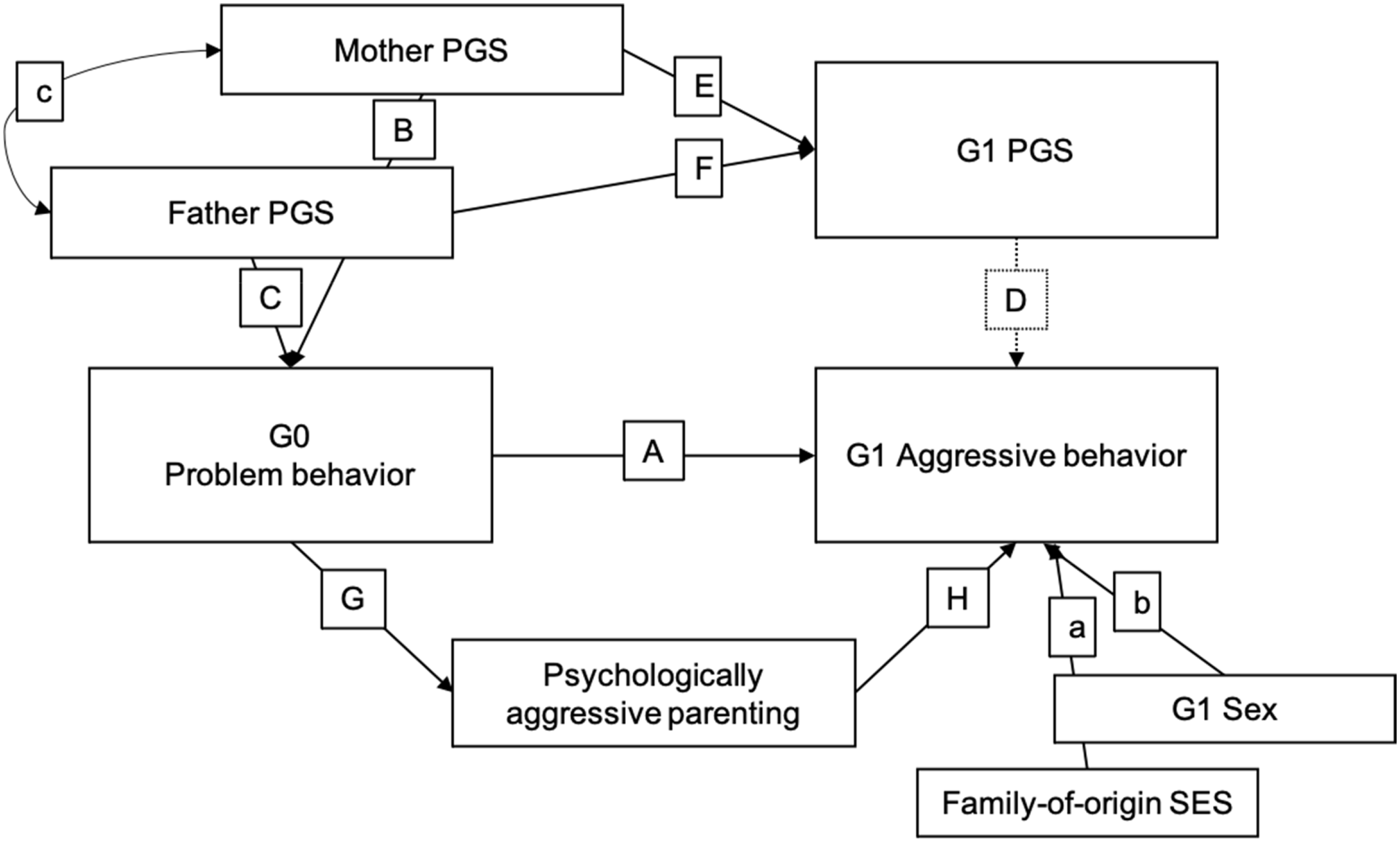
Second, we examined whether predisposition for problem behavior as expressed in polygenic scores for parents and offspring explains intergenerational transmission. Given substantial heritability of aggression (Koyama et al., Reference Koyama, Kant, Takata, Kennedy and Zai2024), delinquency (Azeredo et al., Reference Azeredo, Moreira, Figueiredo and Barbosa2019), and crime involvement (e.g., Boutwell & Connolly, Reference Boutwell and Connolly2017), we hypothesized that at least part of the shared variance between parent and offspring problem behavior will be due to shared genes (Figure 2).
Association between G0 problem behavior and G1 aggressive behavior and genetic mediation. Note. G0 = parent generation, G1= offspring generation, PGS = polygenic score.
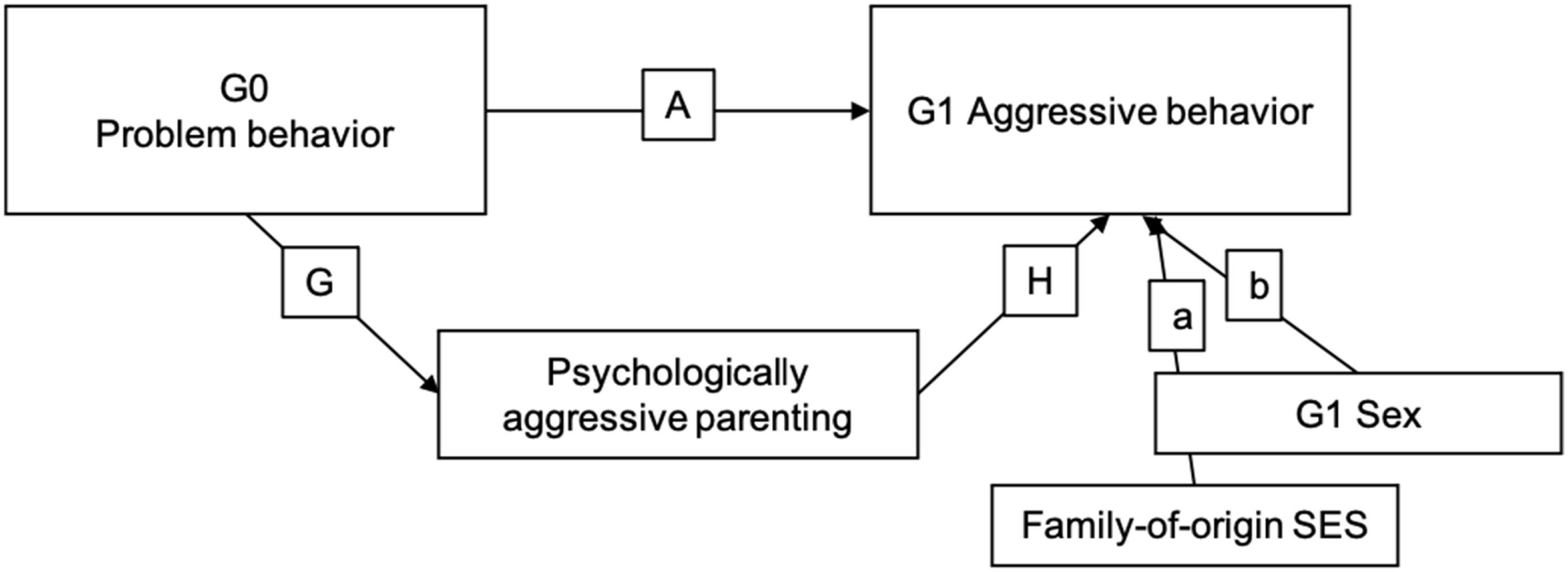
Alternatively, intergenerational transmission might also run via environmental pathways. To this end, we examined whether harsh parenting – psychological aggression from parents toward offspring – mediates the prediction of offspring problem behavior by parents’ problem behavior (Figure 3).
Association between G0 problem behavior and G1 aggressive behavior and environmental mediation via psychologically aggressive parenting. Note. G0 = parent generation, G1= offspring generation, PGS = polygenic score.
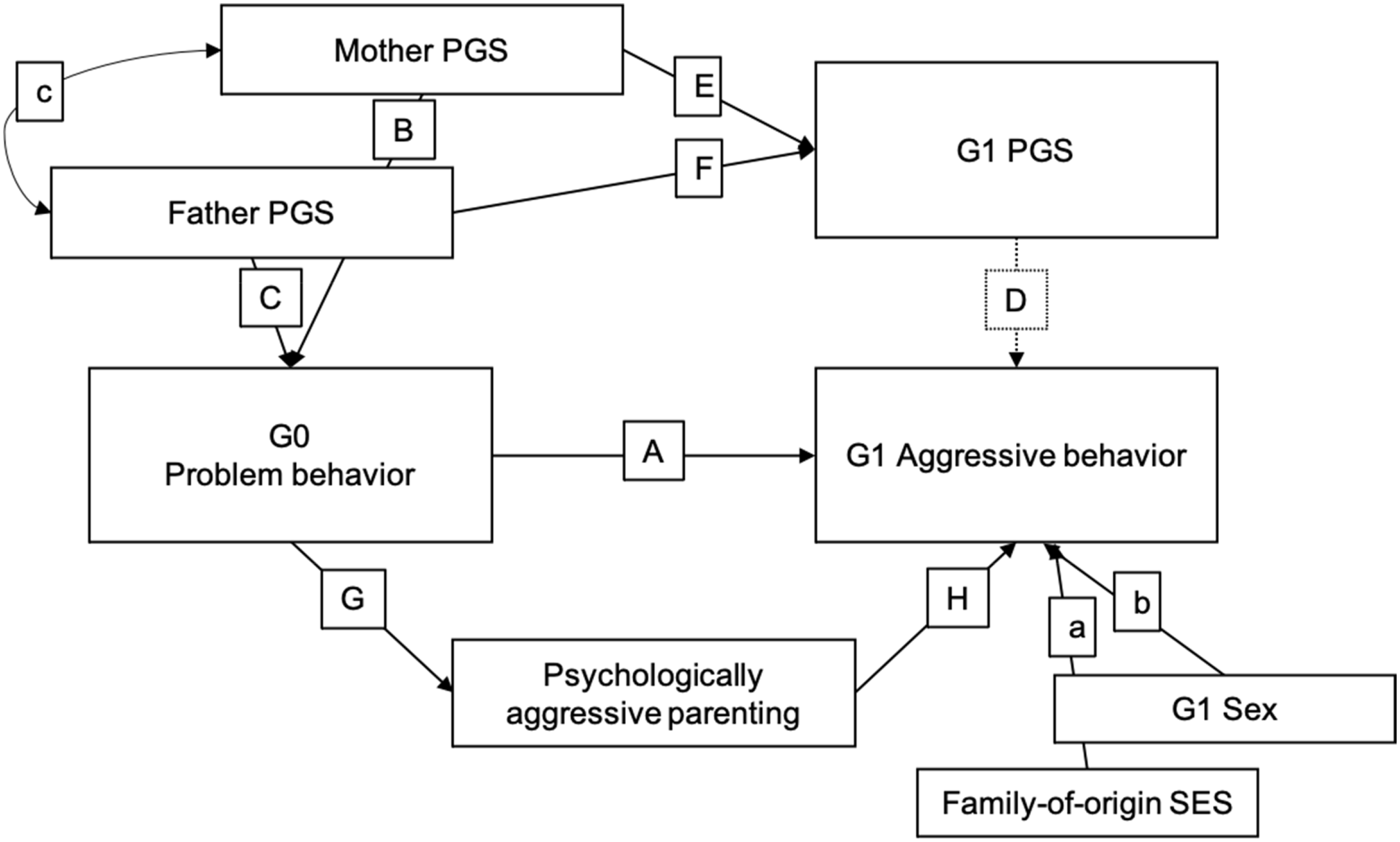
Lastly, we included both genetic and environmental pathways simultaneously and explored their relative contributions (Figure 4). We hypothesized to find evidence for serial genetic nurture whereby genetic predisposition predicts parental problem behavior, which in turn predicts harsh parenting which in turn predicts offspring problem behavior. We controlled for parents’ and offspring sex and family socio-economic status in all models.
Association between G0 problem behavior and G1 aggressive behavior and genetic and environmental mediation. Note. G0 = parent generation, G1= offspring generation, PGS = polygenic score.
Taken together, by using multi-generation cohort data we were able to study intergenerational continuity of problem behavior across the same developmental period while disentangling genetic and environmental transmission pathways and explore their interplay. As such, this study can provide useful information for intervention and prevention strategies toavert problem behavior to reoccur in future generations.
Method
Participants
The present study includes data from waves 1, 5, 7, and 8 of the TRacking Adolescents’ Individual Lives Survey (TRAILS), a prospective cohort study of Dutch adolescents, with bi- or triennial follow-up assessments. The population sample was collected in five municipalities in the north of the Netherlands, including urban and rural areas. Initially, 135 primary schools were approached of which 122 agreed to participate. In brief, a total of 2935 children were invited to participate of whom 2229 (51% female) did so at T1. Data collection at the first assessment wave (T1) took place in 2001 and 2002 when target adolescents were, on average, 11 years old, the fifth wave (T5) was conducted in 2012 and 2013 (average age 22 years), the seventh wave was conducted in 2019 (T7, average age 29 years), and the eighth wave took place in 2023 (T8, average age 32 years). Details about the study and attrition can be found in various other publications (Huisman et al., Reference Huisman, Oldehinkel, de Winter, Minderaa, de Bildt, Huizink, Verhulst and Ormel2008; Oldehinkel et al., Reference Oldehinkel, Rosmalen, Buitelaar, Hoek, Ormel, Raven, Reijneveld, Veenstra, Verhulst, Vollebergh and Hartman2015). We use the descriptor G1 for the TRAILS target participants who were adolescents in the 2000s and G0 for their parents. We maximize data availability by employing full information maximum likelihood estimation in path models, but n = 27 individuals did not have data on any of the measures used and were thus not included in analyses. Pairwise correlations are based on available data, which means that n’s differ, but path models are based on n = 2202. Ethics approval for TRAILS was obtained from the Dutch national ethics committee CCMO, and both parents and children provided informed consent.
Measures
G1 Problem behavior was assessed at ages 29 and 32 years using the Aggressive Behavior and Delinquent Behavior subscales from the Adult Self Report (Achenbach & Rescorla, Reference Achenbach and Rescorla2003). The Aggressive Behavior subscale consisted of 14 items (sample item “I fight a lot”) and the Delinquent Behavior subscale consisted of 15 items (sample item “I don’t stick to rules at work or elsewhere”). Response options were 0 = absolutely not/not true, 1 = a bit/sometimes, and 2 = definitely/often. Internal consistency ranged from .73 (Delinquent Behavior at T8) to .86 (Aggressive Behavior at T7). We computed separate models for Aggressive and Delinquent Behavior and the two assessment moments and thus did not compute averages or merge the data otherwise.
G0 Problem behavior was assessed as familial loading for externalizing problems from parents when offspring were at age 11 years. The measure reflects parental antisocial behavior and substance abuse as reported by one of the parents (95.6% mothers), based on vignettes that described the main DSM-IV characteristics of the domains together with questions as to whether these symptoms were ever experienced by the parent (for details see Ormel et al., Reference Ormel, Oldehinkel, Ferdinand, Hartman, De Winter, Veenstra, Vollebergh, Minderaa, Buitelaar and Verhulst2005). The lifetime prevalence of substance use and antisocial behavior in the sample was low: 2.1% of mothers and 6.7% of fathers reported substance abuse and 2.9% of mothers and 7.1% of fathers reported antisocial behavior. Maternal and paternal antisocial behavior and substance use scores were summed.
G0 psychologically aggressive parenting was assessed from parents when offspring were at age 22 years. This scale was adapted from the Conflict Tactics Scale Parent to Child version (Straus et al., Reference Straus, Hamby, Finkelhor, Moore and Runyan1998) for the use in TRAILS and consisted of three items for mothers and fathers (scores were combined), including “used swear words against son/daughter”. One caregiver (95.6% mothers) completed the questionnaire for both parents. Response options ranged from 0 = never to 4 = often and no temporal restriction was given. Internal consistency was .70 for fathers and .71 for mothers.
Polygenic scores. Genotyping procedures for TRAILS are described in detail elsewhere (Kretschmer et al., Reference Kretschmer, Vrijen, Nolte, Wertz and Hartman2022). Polygenic scores for externalizing problems for parents and offspring were based on summary statistics (excluding 23and Me)reported by the International Externalizing Consortium (Karlsson Linnér, Reference Karlsson Linnér, Mallard, Barr, Sanchez-Roige, Madole, Driver, Poore, de Vlaming, Grotzinger, Tielbeek, Johnson, Liu, Rosenthal, Ideker, Zhou, Kember, Pasman, Verweij, Liu and Dick2021; Williams et al., Reference Williams, Poore, Tanksley, Kweon, Courchesne-Krak, Londono-Correa, Mallard, Barr, Koellinger, Waldman, Sanchez-Roige, Harden, Palmer, Dick and Karlsson Linnér2023). TRAILS data were excluded from the summary statistics using R package MetaSubtract version 1.60 (Nolte, Reference Nolte2020). We used LDpred2-auto to calculate the polygenic score, which automatically estimates single nucleotide polymorphism (SNP) heritability (h2) and the proportion of causal variants (p) from the data without the need for a validation data set (Privé et al., Reference Privé, Albiñana, Arbel, Pasaniuc and Vilhjálmsson2023). Only HapMap3+ variants were included in the polygenic score estimation, which have passed rigorous quality control and provide a good coverage of the whole genome (Privé et al., Reference Privé, Albiñana, Arbel, Pasaniuc and Vilhjálmsson2023). We used the linkage disequilibrium reference panel based on European individuals of the UK Biobank provided by the developers of LDpred2. Finally, we only included one child per family and thus excluded one member of all sibling pairs (n = 18), retaining the sibling for whom most data were available. If data availability was the same for both siblings, we retained the one with the highest subject ID number. Genetic data were available for n = 1676 children after the exclusion of 18 siblings. Complete genetic data for both parents and child (trios) were available for n = 760 families. Additionally, genetic data were available for n = 1087 mothers and n = 870 fathers. Polygenic scores were corrected for population stratification using 20 principal components.
Analytic procedure
Descriptive statistics and correlations between variables were computed in Stata, and path models including estimation of indirect effects were computed in RStudio, using the Lavaan package (Rosseel, Reference Rosseel2012). We built a number of models, first with G1 Aggressive Behavior at age 29 years as outcome and subsequently with G1 Aggressive Behavior at age 32 years as outcome, followed by models with G1 Delinquent Behavior at age 29 years and G1 Delinquent Behavior at age 32 years as outcome. We describe all steps for Aggressive Behavior at age 29 years as outcome below; these were identical for Aggressive Behavior at age 32 years and Delinquent Behavior at ages 29 and 32 years. We controlled for G1 sex, and family-of-origin SES in all models.
To test intergenerational transmission, that is, the link between G0 Problem Behavior and G1 Aggressive Behavior, we first entered G0 Problem Behavior as predictor of G1 Aggressive Behavior at age 29 years(Figure 1).
To test genetic transmission as explanation for intergenerational transmissionof problem behavior, we next added polygenic scores of G0 and G1 and tested whether the direct link between G0 Problem Behavior and G1 Aggressive Behavior would be weaker when G0 polygenic score as predictor of G0 Problem Behavior as well as G1 polygenic score, and G1 polygenic score as predictor of G1 Aggressive Behavior were included (Figure 2).
To test whether intergenerational transmission is explained by environmental factors, we added psychologically aggressive parenting as mediator to the initial model, that is, without controlling for genetic transmission (Figure 3). In a final model (Figure 4), we explored genetic and environmental transmission as competing mechanisms by entering both pathways simultaneously. Indirect effects were explicitly modeled using the standard Lavaan notation. Throughout, standardized coefficients are reported.
Results
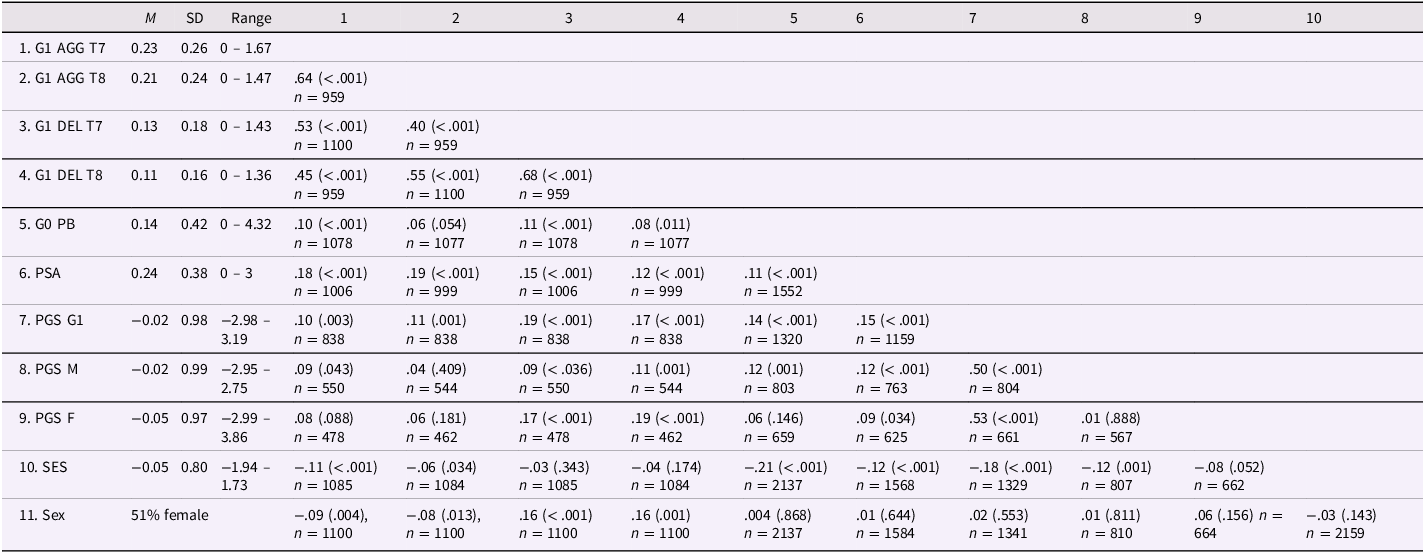
Descriptive statistics and pairwise correlations are depicted in Table 1. More G0 problem behavior was associated with lower SES, more psychologically aggressive parenting, and greater likelihood for G1 aggressive behavior in adulthood. Mothers’ – but not fathers’ –polygenic score (PGS) was linked to G0 problem behavior, and both parents’ PGS were associated with risk for psychologically aggressive parenting. G1 aggressive behavior was more common when G0 problem behavior was high and when there were higher levels of psychologically aggressive parenting, as well as in boys and offspring from lower SES families. Mothers’ and G1’s own PGS were also associated with G1 aggressive behavior. Genetic disposition explained at most 4% of the variance in directly related phenotypes (i.e., G0 problem behavior and G1 aggressive and delinquent behavior, not tabled).
Descriptive statistics and pairwise correlations for variables used in main and additional analyses
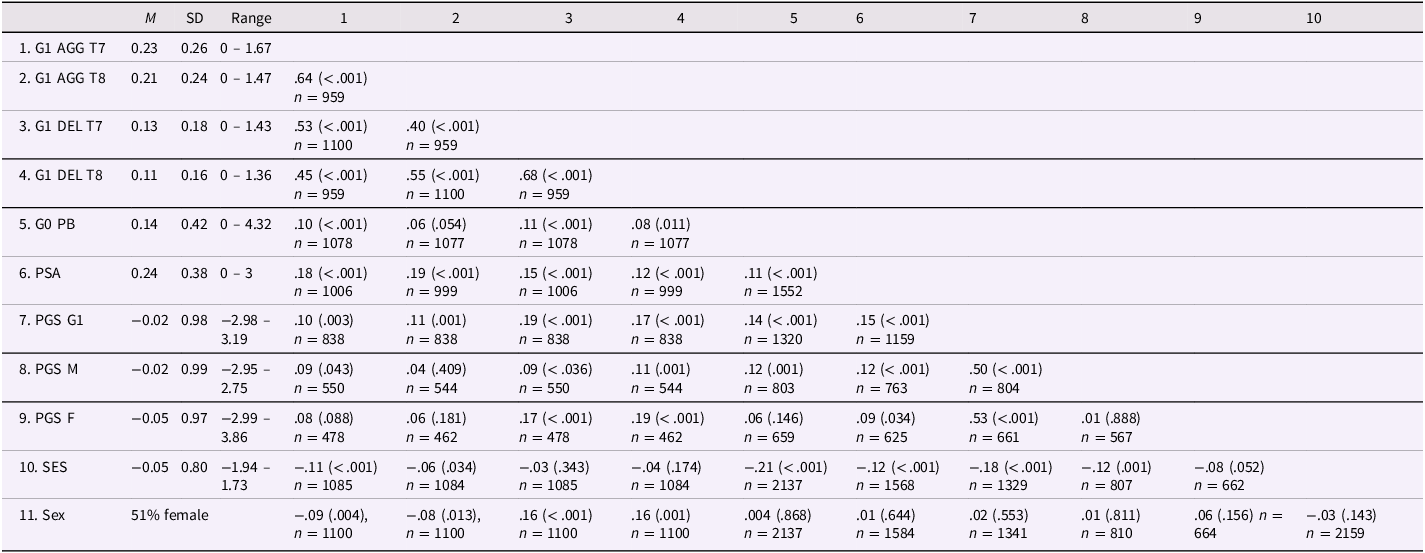
Note. AGG = Aggressive Behavior, DEL = Delinquent Behavior, PB = Problem Behavior, PSA = Psychologically Aggressive Parenting, PGS = Polygenic Score, M = Mother, F = Father. SES refers to G0 education, occupation, and household income. Descriptives and correlations with PGS are PC-corrected.
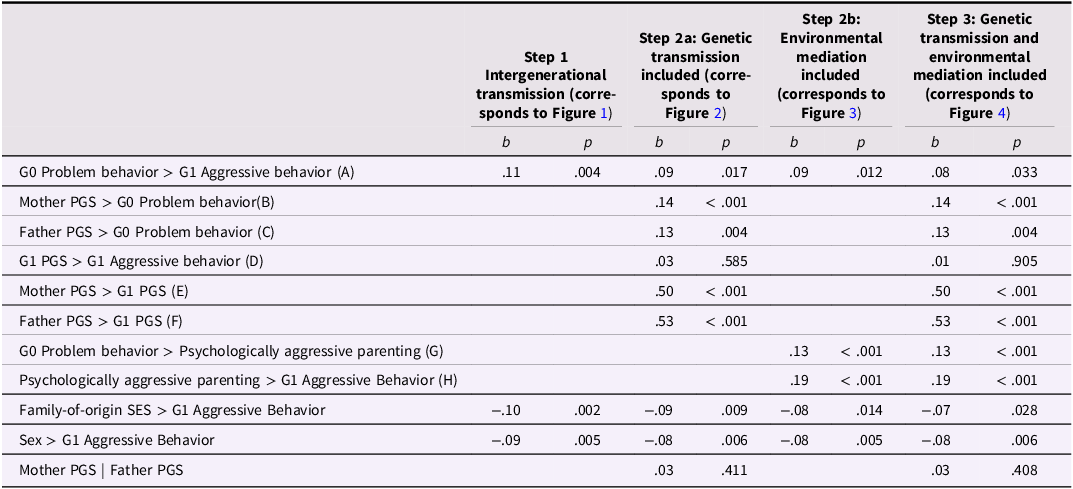
We next computed path models for age 29 aggressive behavior(see Table 2), with paths corresponding to those depicted in Figures 1 to 4. All models were subsequently computed for age 29 delinquent behavior and age 32 aggressive and delinquent behavior, results are briefly reviewed below and presented in Supplementary Tables 1 to 3.
Genetic and environmental pathways explaining intergenerational transmission, G1 aggressive behavior at age 29 as outcome
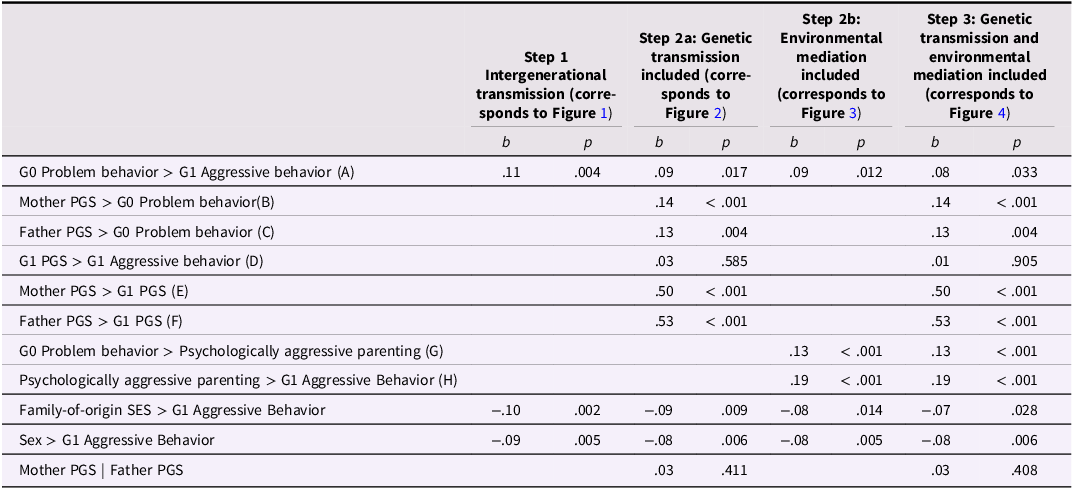
In step 1, G1 aggressive behavior at age 29 was predicted by G0 problem behavior. The effect was similar in size to the bivariate correlation despite both family-of-origin SES and sex being associated with G1 aggressive behavior as well.
In step 2a, direct genetic transmission was not found as path D (G1 PGS as predictor of G1 aggressive behavior) was not significant in the path model, in contrast to bivariate correlations. As we would expect, G1 PGS was predicted by paternal and maternal PGS (paths E and F). The indirect effect from G0 PGS to G0 problem behavior to G1 aggressive behavior was only significant for mother’s PGS (b = .01, p = .040). Though not the focus of this model, we note that genetic nurture with parental problem behavior as environmental factor was evident, with maternal PGS predicting parental problem behavior (paths B and C), which in turn predicted G1 aggressive behavior (path A) while genetic transmission is taken into account.
In step 2b, PGS were not included in the model. Instead, we estimated whether psychologically aggressive parenting mediated the association between G0 problem behavior and G1 aggressive behavior. As depicted for paths G and H, both the effect from G0 problem behavior to psychologically aggressive parenting and psychologically aggressive parenting to G1 aggressive behavior were significant, as was the indirect effect: b = .02, p = .001.
Finally, in step 3, direct genetic transmission, genetic nurture via G0 problem behavior and serial genetic nurture with psychologically aggressive parenting added as mediator between G0 problem behavior and G1 aggressive behavior were all estimated simultaneously. Effects mirrored those from separate models, as did the indirect effect from G0 problem behavior to psychologically aggressive parenting to G1 aggressive behavior (b = .02, p = .001). The serial genetic nurture effect from mother PGS to G0 problem behavior to psychologically aggressive parenting to G1 aggressive behavior was also present (b = .003, p = .01).
Additional analyses
In a set of additional models, we examined all steps for age 29 delinquent behavior as outcome, age 32 aggressive behavior as outcome, and age 32 delinquent behavior as outcome (presented in Supplementary Tables 1-3).
In step 1, G0 problem behavior was associated with G1 delinquent behavior at ages 29 and 32 but not G1 aggressive behavior at age 32, while accounting for SES and sex.
In step 2a, direct genetic transmission was again not found, because G1 PGS did not predict G1 outcomes in the presence of G0 problem behavior, except forG1 delinquent behavior at age 29. Genetic nurture with parental problem behavior as environmental factor was also evident again for G1 delinquent behavior at age 29, with significant indirect effects (maternal PGSb = .02, p = .025; paternal PGSb = .01, p = .036) but not for G1 aggressive behavior at age 32 or for G1 delinquent behavior at age 32.
In step 2b, psychologically aggressive parenting mediated the associations between G0 problem behavior and G1 problem behavior. For all outcomes, both the effect from G0 problem behavior to psychologically aggressive parenting and from psychologically aggressive parenting to G1 problem behavior were significant, as were the indirect effects which ranged from b = .02 to b = .03, all p < .005.
Finally in step 3, effects were again similar in combined models, with serial genetic nurture indirect effects being significant albeit small for G1 delinquent behavior at age 29 as outcome (maternal PGSb = .002, p = .020; paternal PGSb = .002, p = .038), G1 aggressive behavior at age 32 as outcome (maternal PGSb = .004, p = .011; paternal PGSb = .003, p = .030), and partly for G1 delinquent behavior at age 32 as outcome (maternal PGSb = .002, p = .033; paternal PGSb = .002, p = .055).
The non-significant path from G1 PGS to G1 outcomes (step 2a) is surprising and prompted us to explore evocative rGE in addition to all other paths. To this end, we added a path from G1 PGS to parenting and estimated the resulting indirect effect from G1 PGS to G1 outcome via parenting. We conducted these analyses for all ages and outcomes, with results for the additional G1 PGS > parentingpath being b = .15, p < .001(across all models) and the indirect effect (G1 PGS > parenting > G1 outcome) beingb = .03, p < .001 for aggressive behaviorat age 29;b = .02, p = .002 for delinquent behavior at age 29; b = .03, p < .001 for aggressive behavior at age 32; and b = .02, p = .008 for delinquent behavior at age 32. All effect sizes as presented in the tables were largely similar to effects from these models that included the evocative rGEpath. An exception to this is the serial mediation path from maternal PGS to parental problem behavior to parenting to offspring delinquent behavior at 32, which was already small, but now not significant anymore (b = .002, p = .051). Of note, G0 problem behavior continued to predict parenting. Overall, these additional results suggest that parenting is not only affected by parents’ genes and own behavior, but also by offspring genes, supporting an evocative rGE mechanism concurrent to the gene–environment mechanisms this study set out to examine.
Taken together, parenting as pathway was a stable intergenerational transmission mechanism, even when taking genetic effects into account. In contrast, we only found partial support for genetic prediction of G1 problem behavior in models that also included G0 problem behavior which suggests that, when tested together, environmental influence seems more robust.
Discussion
With the present study, we aimed to increase the understanding of the development of problem behavior by elucidating the relative contributions of genetic and environmental pathways through which these behaviors are passed from parents to offspring. Using unique genetically informed, longitudinal multi-generation data that span two decades, we were able to show that problem behavior is to some extent transmitted from parents to offspring and that environmental pathways, especially via psychologically aggressive parenting, play an important role, perhaps more significantly so than shared genetic make-up.
Although intergenerational transmission of problem behavior has been studied widely (e.g., Doumas et al., Reference Doumas, Margolin and John1994), most data on the topic are limited in some ways. Therefore, the evidence for intergenerational transmission of problem behavior across a two-decade time span and across several ages and outcomes (aggressive and delinquent behaviors) as found in this study is still striking. Especially because the offspring generation was still quite young when their parents reported on their own problem behavior and this parent problem behavior also covered the life span, thus periods that could well precede the arrival of the offspring. That said, it is feasible that parents who have engaged in problem behavior in the first few decades in life also continue to do so when they have become parents and could thus still be a negative model for social learning for offspring (Brook et al., Reference Brook, Balka, Zhang and Brook2015; Plomin & Bergeman, Reference Plomin and Bergeman1991).
It has been a quest for intergenerational transmission research to elucidate the mechanisms that explain why parents and offspring are similar on traits and behaviors even when assessments are decades apart and based on different reporters, as in the present study. We were fortunate to rely on rich longitudinal data with detailed information on various theoretically meaningful pathways in the proximal and distal environment as well as genetic information for a subset of parents and offspring. Interestingly, genetic effects were only able to explain this intergenerational link to a limited extent. It might be that previous studies that found strong evidence for direct genetic transmission have not simultaneously accounted for those proximal environmental factors that are relatively more impactful than genetic influence. We note that offspring problem behavior was genetically influenced in bivariate correlations but not anymore when parent problem behavior was also taken into account, which supports this assumption.
In addition, we found that psychologically aggressive parenting, another facet of the proximal environment, also consistently mediated the association between parents’ and offspring problem behavior, even while genetic disposition was taken into account and alongside an evocative gene–environment correlation (from offspring genes via parenting to offspring behavior). Again, this effect was present consistently across outcomes and ages. The robust role of the environment observed in our study highlights the importance of considering the context in which genetic predispositions are expressed and aligns with other research on genetic nurture (Kong et al., Reference Kong, Thorleifsson, Frigge, Vilhjalmsson, Young, Thorgeirsson, Benonisdottir, Oddsson, Halldorsson, Masson, Gudbjartsson, Helgason, Bjornsdottir, Thorsteinsdottir and Stefansson2018; Plomin & Bergeman, Reference Plomin and Bergeman1991) and with previous research that has highlighted the critical role of environmental factors, particularly parenting practices, in shaping long-term behavioral outcomes (Repetti et al., Reference Repetti, Taylor and Seeman2002).The evocative gene–environment correlation from offspring genes to offspring behavior via parenting mightalso, at least in part, explain the absence of a direct effect between offspring genes and offspring behavior. However, we have included only one parenting dimensionin our study,while previous research suggests that there are alsoother contextualfactors within the family environment thatmay play a role.
Notably, both genetic nurture pathways (via parental problem behavior and serially via both parental problem behavior and harsh parenting) were only found for maternal but not paternal genetic predisposition. Bivariate associations already showed that maternal but not paternal polygenic scores correlated with parental problem behavior. This might suggest that genetic nurture effects in this study are driven by mothers’ genetic predisposition. Previous research also found that specifically maternal genetic nurture can significantly influence health and psychopathology, highlighting the influence of maternal genotypes on the child’s environment, beyond direct genetic transmission (Pingault et al., Reference Pingault, Barkhuizen, Wang, Hannigan, Eilertsen, Corfield, Andreassen, Ask, Tesli, Askeland, Davey Smith, Stoltenberg, Davies, Reichborn-Kjennerud, Ystrom and Havdahl2023; Tubbs et al., Reference Tubbs, Porsch, Cherny and Sham2020). Not only the – often assumed – primary caregiving role of mothers has been linked to stronger environmental and genetic nurture effects compared to fathers (Repetti et al., Reference Repetti, Taylor and Seeman2002), but also biological and prenatal factors may contribute to the stronger genetic nurture effects observed for mothers. For instance, the prenatal environment provided by the mother can have lasting impacts on offspring development. This includes the influence of maternal stress, nutrition, and health during pregnancy, which are all shaped by maternal genetics (Rutter, Reference Rutter2006). However, it is also possible thatgenetic nurture pathways were only found for maternal predisposition because in most of the cases it were mothers who reported the parental behavior measures on behalf of both parents. As such, the variables in the genetic nurture pathways mayactually reflect mothers’ (parenting) behaviorsand not – or to a lesser extent – thoseof fathers.
Practical implications
Our data show that the relative importance of a problematic environment is larger than the impact of genes on offspring aggressive and delinquent behavior, which is positive given that the environment is malleable. To begin with, interventions aimed at improving parenting practices could be evaluated as a potential way to help reduce the continuation of problem behaviors across generations and potentially extended to educate parents about intergenerational effects of their own problem behaviors. It might also be effective to target people known for problem behavior with specific anti-violence parenting training to help them develop other strategies for challenging parenting situations than psychologically aggressive tactics like shouting and swearing at offspring. Another link that could be tackled is that from psychologically aggressive parenting to offspring aggressive behavior. We know from literature that harsh parenting has detrimental effects on child and adolescent adjustment (Gershoff, Reference Gershoff2002), and strategies have been devised to strengthen young people from at-risk backgrounds (Backhaus et al., Reference Backhaus, Leijten, Jochim, Melendez-Torres and Gardner2023). A combination of pre- and intervention elements covering transmission as well as parenting will likely be most effective and to invest resources wisely, targeted efforts might have to be the way forward.
Limitations and future directions
The longitudinal datafrom twogenerationsthat containboth genetic andenvironmental measureslend this study weight, but some limitations need to be acknowledged. First, we need to acknowledge that despite the advantages of our research designit is still impossible to disentangle cause and consequence, and (unobserved) confounding factors might play a role. We further considered a limited operationalization of the proximal environment and recognize that other factors, such as other aspects of parenting orother behaviors that are modeled in the family system, may also play a role in the intergenerational transmission of problem behavior. We also did not consider siblings or other relatives and their behaviors while it is likely that in families where parents show problem behavior, offspring will be exposed to many more negative role models.
Second, while we were able to employ separate maternal and paternal polygenic scores, we used combined parental problem behavior scores. It might be that fathers’ and mothers’ behavior differentially impact offspring behavior and that the strength of transmission, and the genetic and environmental pathways even depend on dyad composition of parents and offspring (mother–daughter, father–daughter, mother–son, father–son). There is some indication that intergenerational transmission is stronger among same-sex dyads but including multiple-group analyses here would have distracted from the core message of our study. In addition, ourmeasures of parental problem behavior and parenting could be biased due to mothers being the reporter on behalf of both parents in over 95% of the cases, and as such they may reflect maternal behaviors more so than paternal behaviors. Lastly,even thoughall behavioral measures tap into the same construct of problem behavior, which consists of a range of behaviors including aggression, delinquency, and substance abuse (Loeber & Farrington, Reference Loeber and Farrington2000), the operationalization of parental problem behavior is not identical to that of offspring problem behavior, and we cannot be sure they really tap into the same construct. Unfortunately, this is in part inherent to using data collected over the span of 20 years.
Third, other moderators than dyad composition are also feasible and future studies should consider the potential moderating effects of offspring characteristics, such as temperament and resilience, on the relationship between parenting and problem behavior. Understanding these moderating factors could help tailor interventions to be more effective for different subgroups of individuals.
Fourth, our findings cannot be generalized to non-Western contexts, because polygenic scores cannot be compared across populations with different genetic ancestries (Raffington et al., Reference Raffington, Mallard and Harden2020). To better understand gene–environment interplay in development, future research should conduct longitudinal studies across different cultural contexts to explore how varying family structures and cultural norms impact the relative contributions of mothers and fathers. Of course, as long as fundamental research informing application of genetic data in cohort studies is Eurocentric, rigorous genetically informed, multiple culture studies on intergenerational transmission are a distant dream.
Finally, we examined genetic nurture, a specific form of gene–environment correlation that exists next to other forms of gene–environment interplay, such as evocative gene–environment correlation whereby offspring genes elicit specific parental behavior, or gene–environment interaction, whereby offspring with higher genetic risk for externalizing problems might be particularly vulnerable to certain environmental factors. Though it is likely that these processes all occur in families and influence offspring development and the environment offsprings encounter, it is not feasible to test these mechanisms simultaneously.
Conclusion
Our study underscores the enduring impact of parenting as an environmental pathway in the intergenerational transmission of problem behavior. While genetic factors are not to be discounted, the robustness of environmental influences, particularly parenting, calls for continued focus on improving family environments as a possible strategy for mitigating problem behavior across generations.
Supplementary material
The supplementary material for this article can be found at https://doi.org/10.1017/S0954579425100503.
Data availability statements
The code necessary to reproduce the analyses presented here is available at the following URL: https://osf.io/kjqay . European and Dutch privacy legislation prevent data sharing. Researchers seeking to use TRAILS data should apply for the data via the route described here: https://www.trails.nl/en/researchers/working-with-trails
Acknowledgements
This research is part of the TRacking Adolescents’ Individual Lives Survey (TRAILS). Participating centers of TRAILS include various departments of the University Medical Center and University of Groningen, the University of Utrecht, and the Parnassia Group, all in the Netherlands. We are grateful to everyone who participated in this research or worked on this project to make it possible.
Financial support
TRAILS has been financially supported by various grants from the Netherlands Organization for Scientific Research (NWO), ZonMW, GB-MaGW, the Dutch Ministry of Justice, the European Science Foundation, the European Research Council, BBMRI-NL, and the participating universities. We acknowledge generous funding through a European Council Consolidator Grant awarded to Tina Kretschmer under the Horizon Europe program (grant agreement 101087395). Neither the European Research Council nor TRAILS had a role in the design and conduct of the study.
Competing interests
The authors declare none.


 Open access

