

1 Introduction
From the very beginning of the design process, designers usually have to choose which directions to follow from a multitude of possible options. This is a particularly challenging phase, also known as the fuzzy front end (Buijs Reference Buijs2012), as it is when the level of uncertainty about how to proceed is higher (Khurana & Rosenthal Reference Khurana and Rosenthal1997). During this phase, it is often difficult to identify and formulate the problems at hand and, in turn, to specify which directions to follow, because of the ill-defined nature of design problems (Simon Reference Simon1973). Uncertainty is challenging for designers, especially novices, who are considered to be less structured in focusing their attention and might struggle while trying to choose which direction to follow (Kavakli & Gero Reference Kavakli and Gero2002). In this early context of the design process, designers commonly seek external stimuli with the aim of framing and solving the problems they are engaged with (Goldschmidt Reference Goldschmidt1997; Dorst & Cross Reference Dorst and Cross2001; Gonçalves, Cardoso & Badke-Schaub Reference Gonçalves, Cardoso and Badke-Schaub2013). A number of research studies have investigated the impact of external stimuli on the generation of ideas (e.g., Yang, Wood & Cutkosky Reference Yang, Wood and Cutkosky2005; Christensen & Schunn Reference Christensen and Schunn2007; Mougenot, Bouchard & Aoussat Reference Mougenot, Bouchard and Aoussat2008; Goldschmidt & Sever Reference Goldschmidt and Sever2010; Howard, Culley & Dekoninck Reference Howard, Culley and Dekoninck2010; Fu et al. Reference Fu, Chan, Cagan, Kotovsky, Schunn and Wood2013). However, far too little attention has been paid to how designers actually select external stimuli for inspiration during the early stages of the design process. This is a particularly important issue, as designers face the problem of having to decide which potential inspiration sources to search for, when there is a virtually unlimited number of available stimuli around them (Atman et al. Reference Atman, Chimka, Bursic and Nachtmann1999; Wulff, Rasmussen & Westgaard Reference Wulff, Rasmussen and Westgaard2000; Prabha et al. Reference Prabha, Silipigni Connaway, Olszewski and Jenkins2007). With such information overload, designers are forced to prioritize information, and by selecting certain stimuli, they might be neglecting other relevant ones. This can lead less experienced designers to struggle to find the most relevant stimuli to satisfy their needs (Atman et al. Reference Atman, Chimka, Bursic and Nachtmann1999).
Therefore, the aim of this study is to understand designers’ approaches to the selection of external stimuli for inspirational purposes. The main research question is the following one.
How do designers select external stimuli for inspirational purposes during the ideation phase?
To complement the main research question, a number of sub-questions are formulated.
-
(i) How does the selection of stimuli change when their access is limited, compared with unlimited access?
-
(ii) What are the drivers for the selection of external stimuli?
We define selection of external stimuli as the decision process of defining keywords, searching and selecting stimuli to help to frame a given problem and generate ideas during ideation. In the context of this study, ideation entails both diverging and converging phases. The diverging phase follows from a task clarification phase, where problems are interpreted, and it mainly consists of the exploration of the solution space. In the converging phase, ideas are elaborated, which eventually results in a final concept. Therefore, in our study, ideation is distinguished from idea generation, which usually only addresses the creation of a large pool of ideas, without necessarily interpreting the problem or synthesizing ideas later (Jonson Reference Jonson2005).
Studying how designers select external stimuli can help us to gain a better understanding about the inspiration process in design and, ultimately, support design creativity, in both education and practice. Design creativity refers to the development of novel and useful solutions for open, complex and ill-defined problems (e.g., Stein Reference Stein1953; Sternberg Reference Sternberg1988; Boden Reference Boden1994; Lubart Reference Lubart, Carterette, Friedman and Sternberg1994; Sarkar & Chakrabarti Reference Sarkar and Chakrabarti2007; Hennessey & Amabile Reference Hennessey and Amabile2010; Runco & Jaeger Reference Runco and Jaeger2012). By reflecting on the inspiration process, designers can potentially engage in a deliberate process of finding, selecting and using the most advantageous inspiration sources, instead of blindly chancing upon an unlimited number of stimuli.
The remainder of the paper is structured in the following manner. Section 2 comprises the literature review, where we consider relevant research on design inspiration sources. Section 3 elaborates on the methodology applied in this study, and in Section 4 we describe the results of the think-aloud protocol study and interviews. Sections 5 and 6 present the discussion and conclusions of this study and implications for design practice and education.
2 Theoretical review
2.1 Designers’ inspiration process
According to Court, Culley & Mcmahon (Reference Court, Culley and Mcmahon1993), managing information is a major task in the design process, usually taking up to 18 % of the designers’ time. Information is defined by Hicks et al. (Reference Hicks, Culley, Allen and Mullineux2002) and Howard (Reference Howard2008) as data with context, which refers to facts that carry meaning. Subsequently, stimuli can be considered as information encountered, perceived and understood by a receiver (e.g., designer), which prompts a reaction, which can later be revealed as positive, negative or neutral. External stimuli (not to be confused with internal stimuli, i.e., one’s internal representations) can vary across different types and forms. In terms of representation modalities, stimuli can be pictorial, verbal/textual or three-dimensional, among others (Eastman Reference Eastman and Eastman2001). Moreover, stimuli are context-dependent. Closely related stimuli refer to entities found within a domain, for instance, when looking at existing exemplar solutions for the same problem (e.g., Pasman Reference Pasman2003). Conversely, distantly related stimuli are sources found in-between domains, or outside the scope of the problem (e.g., Ansburg & Hill Reference Ansburg and Hill2003). External stimuli can also vary in terms of the medium in which they are conveyed and accessed (with the Internet being the most used medium by designers, according to Mougenot et al. (Reference Mougenot, Bouchard and Aoussat2008) and Gonçalves, Cardoso & Badke-Schaub (Reference Gonçalves, Cardoso and Badke-Schaub2014)) or in the type of content they entail (which kind of information is communicated).
Certain information can become inspirational, but not all information is inspiring. Information only may become inspirational after it is perceived, understood by a receiver and included in the designer’s interpretation of problem and solution space, usually with a positive influence. In this way, inspiration is clearly distinguished from information. Inspiration sources can be defined as any stimulus retrieved from one’s memory or from the outside world, during (or beyond) a design process, that directly or indirectly influences the thinking process leading up to the framing of the problem or generation of a solution. This definition of inspiration can contain tangible entities but also digital artefacts (e.g., web pages) or even intangible entities (e.g., talk with a friend).
According to Ware (Reference Ware2008), our search mechanisms are systematic, but the goal of the search is not always clearly defined. Thus, inspiration can entail several types of search procedures.
Active search with purpose refers to deliberately searching for particular stimuli with a specific goal in mind. Examples of these practices are searching on the Internet or in books for specific stimuli, but can also include an intentional walk in a museum to observe an art piece (Eckert & Stacey Reference Eckert and Stacey2003).
Active search without purpose (or ongoing search) refers to active search but without a specific intention to solve a problem at hand. The goal of this type of search is to update or expand one’s knowledge on a topic (Wilson Reference Wilson1997). Active search without purpose refers to designers’ widespread routine of keeping informed about pertinent topics in their domain (Eckert & Stacey Reference Eckert and Stacey2003).
Passive search refers to random encounters with relevant stimuli, which are consciously integrated into the design process, also known as serendipity (e.g., Keller, Pasman & Stappers Reference Keller, Pasman and Stappers2006). Although there is a conscious goal to solve a problem in this type of situation, the search process is not deliberate and occurs unintentionally. Even when the search query (or keyword) is not fully defined, our mind is open to recognize stimuli, which could be somehow related to the current problem, and might fit a set of vague criteria (Wilson Reference Wilson1997; Ware Reference Ware2008).
Passive attention refers to the moments when stimuli are encountered but not consciously integrated in the context of an existing problem. This can occur while watching TV or talking with someone, for instance. In this situation, there is no urgent intention to solve a problem nor a conscious perception of the possible influence of a stimulus (Wilson Reference Wilson1997).
Our constant state is one of passive attention, which can quickly change into a more alert or deliberate type of search for stimuli. Therefore, all of these types of search can develop into another, depending on the situation.
The value of inspiration sources and their ubiquitous presence in design is often acknowledged by designers and in research (e.g., Eckert & Stacey Reference Eckert and Stacey2003, Yang et al. Reference Yang, Wood and Cutkosky2005). Thus far, the inspiration process in design has been researched by only a small number of researchers (Eckert & Stacey Reference Eckert and Stacey2003; Mougenot et al. Reference Mougenot, Bouchard and Aoussat2008; Gonçalves et al. Reference Gonçalves, Cardoso and Badke-Schaub2013). According to these authors, the type of stimulus designers search for is dependent on the context of the problem at hand. The nature of the problem tends to change their preferences for representation modalities, semantic distance or even quantity of stimuli needed. Moreover, search mechanisms also differ depending on whether designers are browsing the Internet or skimming through a magazine. Based on the work of Eckert & Stacey (Reference Eckert and Stacey2003) and Mougenot et al. (Reference Mougenot, Bouchard and Aoussat2008), Gonçalves et al. (Reference Gonçalves, Cardoso and Badke-Schaub2013) developed a flowchart of inspiration, which represents it as a cyclic and iterative process, occurring multiple times within any design process (Figure 1).
Designers’ inspiration process flowchart (Gonçalves et al. Reference Gonçalves, Cardoso and Badke-Schaub2013).

The inspiration process is initiated by an intention (a keyword or search input), which guides the following steps of the flowchart. When confronted with a design problem, designers use stimuli as starting points, which need to be searched, selected, analysed and, depending on their suitability, discarded or adapted into the design process. Different goals motivate a new cycle of the inspiration process, which either results in reframing of the problem (or parts of it), exploration of the solution space or refinement of sub-solutions. The process is repeated until the problem is reframed or solved. Although this flowchart describes the main steps involved in the use of inspiration sources in design, it does not shed light on how designers arrive at search inputs (keywords) to initiate a search nor on what drives their selection of stimuli. In fact, in analogical reasoning studies, the phase of stimuli selection has been characterized as the ‘least understood’ moment of analogical problem solving (Holyoak & Koh Reference Holyoak and Koh1987). This paper argues that a comprehensive understanding of these parts of the inspiration process could be used to better support designers in their inspiration use.
2.2 Visual versus textual stimuli
From the myriad of stimuli available to designers, there is a striking preference for visual representations (e.g., Muller Reference Muller1989; Henderson Reference Henderson1999; Gonçalves et al. Reference Gonçalves, Cardoso and Badke-Schaub2014). This comes as no surprise, as designers are considered to be visualizers (Mednick Reference Mednick1962), and they are considered to be skillful in making and using visual representations. This is especially the case with visual examples that highlight form and function (Herring et al. Reference Herring, Chang, Krantzler and Bailey2009). One of the reasons for the efficiency of images is that less cognitive effort is required when accessing, storing and communicating pictorial information compared with written information, especially when it refers to spatial relationships (Sarkar & Chakrabarti Reference Sarkar and Chakrabarti2008; Ware Reference Ware2008). The efficiency of images is also achieved due to the close relationship between what is represented in the image and our perception of what is represented (Ware Reference Ware2008). Conversely, written language enables the communication of abstract relationships, at the expense of loss of immediate understanding (Ware Reference Ware2008). Thus, some information can only be processed in words, while other information is better communicated via images, or even within a combination of both (Ware Reference Ware2008).
Nevertheless, research has shown that the potential usefulness of textual stimuli as an inspiration source should not be overlooked by designers. Chiu & Shu (Reference Chiu and Shu2007, Reference Chiu and Shu2012) have demonstrated that (written) language enables the exploration of the solution space during design idea generation. The ambiguity of interpretation that textual stimuli offer has the potential to stimulate creative results. Similarly, in an idea generation study conducted by Goldschmidt & Sever (Reference Goldschmidt and Sever2010), they found that textual stimuli led to more original results when compared with a no-stimulus condition.
In our study, we have used both visual and textual stimuli to investigate designers’ approaches to selection of inspiration sources. There has been little discussion about the usefulness of employing textual stimuli as potential inspiration sources, especially when compared with visual stimuli. Nonetheless, much of the information designers find when searching for inspiration entails elements of both typologies, as well as three-dimensional, auditory and other representation modes. Visual chunks of information are sometimes grouped with verbal chunks, temporarily combining visual and verbal working memory. Frequently, visual thinking and language-based thinking overlap and interconnect (Ware Reference Ware2008). However, for the purpose of clarity, we have researched the roles of visual and textual stimuli provided separately.
2.3 Closely related versus distantly related stimuli
In addition to the different representation modalities that stimuli can embody, it is also possible to characterize them in terms of distance — i.e., how close or distant the stimulus is from the context of the problem at hand. Research on analogical reasoning defines this as analogical distance: the distance between the source of the stimulus and the target, which can range from near/within-domain to far/between-domain (e.g., Gick & Holyoak Reference Gick and Holyoak1980; Gentner Reference Gentner1983; Christensen & Schunn Reference Christensen and Schunn2007; Fu et al. Reference Fu, Chan, Cagan, Kotovsky, Schunn and Wood2013). Analogy is defined as a ‘similarity between relationships’ (Goldschmidt Reference Goldschmidt, Eastman, Newsletter and McCracken2001, p. 201). However, since it is possible to extract meaning from a stimulus without establishing a relationship between two domains, inspiration can be triggered by cognitive mechanisms other than just analogical reasoning (such as categorization, visualization or associations (Sawyer Reference Sawyer2006; Kerne et al. Reference Kerne, Smith, Koh, Choi and Graeber2008a ; Smith & Ward Reference Smith, Ward, Holyoak and Morrison2012)). Considering that this study is not solely interested in one single cognitive mechanism, and that not all inspiration sources are analogies, the term analogical distance is not used. Instead, we refer to semantic distance in terms of the meanings entailed by the stimulus and problem context, as the degree of relatedness between the two (Gick & Holyoak Reference Gick and Holyoak1980).
Designers commonly use existing and similar solutions as stimuli when tackling a problem, as they enable them to frame its context and suggest a reference point (Pasman Reference Pasman2003). These design precedents are considered to be closely related stimuli, as they are found within the domain of the problem context, thus, sharing mainly superficial similarities. Ozkan & Dogan (Reference Ozkan and Dogan2013) investigated the selection of sources of analogical reasoning, and they found that the selection of stimuli depends on the goals and expertize of the individual. While expert architects selected closely related sources more often (for efficiency purposes), novices preferred distant sources (to strive for originality).
There is a common agreement that, although closely related stimuli are easier to use than distantly related stimuli (Ozkan & Dogan Reference Ozkan and Dogan2013), the former can hinder the creative generation of ideas. Research has extensively shown that providing designers with examples of similar solutions can cause designers to become fixated (e.g., Jansson & Smith Reference Jansson and Smith1991; Purcell & Gero Reference Purcell and Gero1992; Cardoso & Badke-Schaub Reference Cardoso and Badke-Schaub2011; Cheng, Mugge & Schoormans Reference Cheng, Mugge and Schoormans2014). Design fixation is defined as an unconscious tendency to reuse parts and principles of examples, where their appropriateness is not considered (Jansson & Smith Reference Jansson and Smith1991; Purcell & Gero Reference Purcell and Gero1992). Conversely, distantly related stimuli are considered to be more advantageous for creativity (Gentner & Markman Reference Gentner and Markman1997; Bonnardel & Marmèche Reference Bonnardel and Marmèche2005; Christensen & Schunn Reference Christensen and Schunn2007). However, recent findings by Chan, Dow & Schunn (Reference Chan, Dow and Schunn2014) challenge the perspective of distantly related stimuli as more beneficial to creativity than closely related stimuli. Their findings indicate that more concepts were considered to be creative when using near/closely related stimuli than when using far/distantly related stimuli.
In any case, as distantly related stimuli do not share surface similarity with the problem context (but functional or structural similarities instead), the potential analogical link between stimulus and problem context is not usually obvious. Thus, it can result in being more difficult to implement distantly related stimuli as inspiration in design.
This paper reveals that there are conflicting perspectives regarding the usefulness of closely and distantly related stimuli in design. The role of semantic distance remains unclear, and there is still insufficient information on how designers select stimuli during an ideation phase. In order to investigate how designers search, select and retrieve a varied sample of stimuli, this study includes both closely related and distantly related stimuli, textual and visual.
3 Research method
3.1 Study design
In order to investigate designers’ selection approaches to potential inspirational stimuli during the development of a design problem, the study was composed of an ideation session and a follow-up interview. We chose protocol analysis as the method to analyse the design process of the students. Thus, participants were requested to think aloud during the ideation session, while they were videotaped. Verbal protocols have been considered to be a valuable method, as they enable the analysis of aspects of the designers’ thought processes with minimal disruption (Ericsson & Simon Reference Ericsson and Simon1993; Atman et al. Reference Atman, Cardella, Turns and Adams2005). However, this approach has also been criticized as it may affect participants’ performance due to an increase in cognitive load (Chiu & Shu Reference Chiu and Shu2010). To improve the validity of verbal protocol analysis, Lloyd, Lawson & Scott (Reference Lloyd, Lawson and Scott1995) advocated that other methods should be added to the analysis, to obtain a richer perspective of the process and performance of the designer. Therefore, other types of enquiry were added to this study, namely their pen-and-paper outcome and interviews.
After the ideation session, the designers were interviewed, where they were asked to elaborate on the ideas generated in a retrospective manner, and to discuss their usual inspirational approaches. In this way, the interviews with each participant enabled a comparison between their usual stimuli selection strategy and their performance during the ideation session. The 31 semi-structured interviews varied between 20 and 50 min. The participants’ sketches were used as visual elicitation material to retrieve information on certain topics of the interview (Crilly, Blackwell & Clarkson Reference Crilly, Blackwell and Clarkson2006).
In order to capture their inspiration process, we created a ‘search tool’ with a view to exploring how the participants would search for stimuli. This search tool can be compared with a simple downsized version of an online search engine. It included a visual and textual stimuli database to provide a range of possible sources for the designers to choose from.
The outcome of the ideation session resulted in a set of ideas and final concepts by each participant. Considering the total number of participants, ideas and final concepts were only evaluated to complement the analysis of the design activity and interviews. Statistical results were not included in this study, as they were considered to be insufficient to carry a meaningful quantitative analysis. Thus, this paper presents findings solely focused on the impact of designers’ inspiration approaches on the design process.
3.2 Participants and conditions
The participants of this study comprised 31 Masters design students from an Industrial Design Engineering faculty. Of the 31 participants, 17 were female and 14 were male, with an average age of 24 years. The participants reported having an average of five years studying design, and only four indicated previous professional experience.
The participants were divided in the following groups.
-
(i) ‘Control’ condition ( $N=10$
). The participants did not have access to the search tool or any other information, other than the design brief. They were also not aware of the existence of the search tool.
$N=10$
). The participants did not have access to the search tool or any other information, other than the design brief. They were also not aware of the existence of the search tool. -
(ii) ‘Unlimited’ condition (
$N=10$
). The participants received unlimited access to the search tool, at any point during ideation. Participants could search for as many keywords and choose to see as many stimuli as they wished. There were no time constraints in how the participants used the search tool, as they could organize the ideation time as desired. No extra time was given to stimuli search. -
(iii) ‘Limited’ condition (
$N=11$
). The participants received limited access to the search tool. They could only search for one keyword and choose only one stimulus from the options available, during ideation (both diverging and converging phases). There were no time constraints in how the participants used the search tool, as they could organize the ideation time as wished. No extra time was given to stimuli search.


The reason for dividing the participants into these three conditions was to enable comparison between different levels of access to stimuli. On one hand, the ‘unlimited’ condition aims to replicate the ‘real-world’ situation, where there is a considerable overload of information (Atman et al. Reference Atman, Chimka, Bursic and Nachtmann1999; Wulff et al. Reference Wulff, Rasmussen and Westgaard2000; Prabha et al. Reference Prabha, Silipigni Connaway, Olszewski and Jenkins2007). With more and more information available at a distance of one click, designers tend to spend extensive time managing it (Court et al. Reference Court, Culley and Mcmahon1993), and they may have difficulties in selecting the most relevant stimuli. Nevertheless, a prioritization needs to occur, as it is unreasonable to extend the stimuli search period endlessly. The ‘limited’ condition aims to simulate this prioritization, by compelling them to select only one keyword to initiate the search, and, from the options available, only one stimulus. Finally, the ‘control’ condition enables us to have a baseline comparison of the ideation process without influence of external stimuli.
3.3 Procedure
The ideation session, which took on average one hour, was divided into three phases (see Figure 2) after the introduction. In the first phase – diverging – participants were asked to generate as many different ideas as possible for 30 min. In the second phase – converging – the goal was to elaborate on a final concept during 10 min. Participants from the ‘limited’ and ‘unlimited’ conditions could search for stimuli at any point during the diverging and converging phases. Finally, in the third phase – interviewing – the participants were asked a number of questions related to their own inspiration approaches, in a semi-structured interview.
Sequence of activities in the ideation session, which took on average one hour.

All sessions took place in the same room, prepared for experimental purposes (plain white walls stripped of any information). Three cameras videotaped the participants, two focusing on the sketches generated and another capturing their general behaviour (Figure 3, channels 1–3). We used the Quick Time Player software to digitally record the laptop screen and capture the participants’ interaction with the search tool (Figure 3, channel 4).
The four channels: channels 1–3 focus on the participant’s work; channel 4 records the search tool.

Participants had to create as many different ideas as possible for the following design brief.
‘Learning to sleep alone at night is a challenge for children at young age. Normally, until the age of two, parents keep their children close and have them sleep in a crib in the parents’ room or even in their own bed. However, it is recommended that children make the transition to their own room and bed. Having the kids wake up during the night and come into the parents’ bed is quite common and it is a big problem for parents. No one sleeps and rests conveniently, the child doesn’t conquer his/her fears and parents don’t have their privacy. Your task is to design a product to help children of young age (3–5 years old) sleep alone through the night, in their own bed.’
Additionally, the participants were asked to take into account the following requirements: safe for the child and comfortable. A pre-test established that the brief was accessible and enabled the exploration of many different ideas, without requiring detailed technical knowledge.
3.4 Search tool and stimuli
In both the ‘unlimited’ and ‘limited’ conditions, participants were informed that they would have access to the laptop in front of them, to use a closed-circuit database specifically prepared for their design problem (not connected to the Internet). Additionally, they were informed that the search tool contained both pictures and pieces of text with closely or distantly related information. We informed the participants that the use of the search tool was not mandatory.
Unlike other studies that have investigated design information retrieval, where the goal was to create or test a computational tool (Yang et al. Reference Yang, Wood and Cutkosky2005; Mougenot et al. Reference Mougenot, Bouchard and Aoussat2008; Setchi & Bouchard Reference Setchi and Bouchard2010), our stimuli database and search tool were meant as a platform for studying the selection process of designers when searching for potential inspiration sources. Thus, several requirements needed to be fulfilled. The search tool should enable the following:
-
(i) a more controlled environment to run the experiment, compared with existing search engines (but similar enough to maintain a high ecological validity);
-
(ii) the creation of meta-data (not visible to the participants), embedded in the stimuli;
-
(iii) the search for keywords, by using meta-data;
-
(iv) to randomly display stimuli retrieved by the participants;
-
(v) to display multiple stimuli that shared the same meta-data at the same time;
-
(vi) the modification of the size of the stimuli displayed;
-
(vii) to partially display stimuli, so that participants can have only an impression of the stimulus.
For this purpose, we used the existing platform www.blogger.com to build the closed-circuit database of the search tool. The process of assembling such a large quantity of stimuli required five phases of preparation, which are succinctly presented in Figure 4.
Overview of the creation process of the stimuli for the search tool used in this study.

During phase 1, 50 Master students developed ideas for the design brief, resulting in 385 ideas. Phase 1 also enabled us to pre-test the design brief to evaluate whether it was sufficiently accessible and open for exploration. In phase 2, two design experts, who were unaware of the solutions created in phase 1, devised entities (situations, products or actions) associated with the resolution of the brief, aiming to assemble possible associations or directions that one could use as inspiration source. The experts of phase 2 were a professional product designer with five years of experience and a fellow design researcher, who were unaware of the goals of this study. In phase 3, the first author clustered the entities resulting from phases 1 and 2, in order to create 50 main categories (e.g., ‘communication’). For each category, four stimuli were created or found: two pictures and two texts with two levels of semantic distance to the topic of ‘children sleeping alone at night’, closely related and distantly related. This process resulted in a total of 200 stimuli. The remaining phases were reserved to evaluate the stimuli. In phase 4, 15 designers rated the semantic distance of the stimuli, regarding the topic of helping children to sleep alone at night, in three levels: closely related, distantly related or unrelated. The goal was to validate whether the 200 stimuli adequately conveyed the intended level of semantic distance. When the professional designers could not reach perfect agreement, alternative stimuli were found. During phase 5, the initial two experts from phase 2 were asked to evaluate the semantic distance level of alternative stimuli, and verbal validation was reached. Finally, there were a total of 200 stimuli (100 images and 100 short texts) that were either distantly or closely related to the design brief. The 200 stimuli were clustered into 50 categories (e.g., ‘light’ or ‘touch’). Each category contained two images and two short texts, each one being either closely or distantly related, as illustrated in Figure 5. In this example, four stimuli from the category ‘glow in the dark” are represented. The image and text on the left are closely related stimuli, as they present products that glow in the dark, and could be a possible solution for the design brief ‘sleeping alone at night’. The image and text on the right are considered to be distantly related to the problem, as they refer to glowing animals in nature.
From left to right: closely related image, closely related text, distantly related image and distantly related text. Note: this is a visualisation of how the stimuli were created and clustered, and not a representation of how the stimuli were presented to the participants.

We manually generated tags (or meta-data), using a thesaurus. This process, although not mechanized, was considered to be comprehensive and enabled us to identify an average of 62 keywords per pair of stimuli ( $M=62.5$
;
$M=62.5$
; $SD=17.7$
). The same tags were attributed to both image and text from the same semantic level, to ensure that when the participants made a certain search query, both visual and textual counterparts would be shown. When a participant typed a keyword, all stimuli that shared the same meta-data would be retrieved, and thumbnails (images and texts) were displayed in a random order. In order to clearly see the stimulus, the participant needed to select the thumbnail (i.e., click). For instance, when a participant typed the keyword ‘light’, the four stimuli of Figure 5 and other stimuli sharing the same tag would appear in the search tool. The participant could then decide to choose images or texts by clicking on the thumbnails.
$SD=17.7$
). The same tags were attributed to both image and text from the same semantic level, to ensure that when the participants made a certain search query, both visual and textual counterparts would be shown. When a participant typed a keyword, all stimuli that shared the same meta-data would be retrieved, and thumbnails (images and texts) were displayed in a random order. In order to clearly see the stimulus, the participant needed to select the thumbnail (i.e., click). For instance, when a participant typed the keyword ‘light’, the four stimuli of Figure 5 and other stimuli sharing the same tag would appear in the search tool. The participant could then decide to choose images or texts by clicking on the thumbnails.
3.5 Design protocols and interview analysis
The design protocols were analysed using a software tool (INTERACT Mangold International), by coding segments of the participants’ speech. Using the four channels of Figure 3, which captured the overall experiment, together with the synchronized recording of the search tool and the ideas generated, it was possible to analyse the design protocols in a comprehensive and holistic manner. This reduced misinterpretations while coding. The coding scheme used to analyse the participants’ design process can be found in Appendix A. The main themes arose from the general phases the participants implicitly took while solving the design problem, such as analysis, idea generation or stimuli selection. Taking that theme as an example – stimuli selection – it was possible to discern two categories of action: deliberate (where the participants vocalized their deliberate reasons to choose a stimulus during the session) or unconscious/latent (where the participants did not deliberately reflect on the selection). The interviews provided then the opportunity to ask the participants to reflect on their latent stimuli selections retrospectively. Furthermore, by analysing the recording of the search tool, it was possible to clearly discern single codes, such as when participants selected closely related images or selected a keyword (see Appendix A). Although a segment of the participants’ session could include several codes simultaneously (from different themes and categories), the codes were mutually exclusive.
Each interview was videotaped, transcribed and coded according to emergent categories (using the software Atlas.ti). Evidently, another coding scheme was used to analyse the interviews, as they aimed to cover common inspiration strategies and to support retrospective reflection on the ideation session. The first author coded all interviews, while the second author analysed a subset of the data using the same coding scheme. The two coders reached an agreement of 74,1%. While some of the codes naturally arose from the interview guide used in this set-up, other codes emerged from the participants’ behaviour observed during the ideation session. For instance, the theme use and selection of stimuli in the search tool included the category reasons for selection of stimuli (among others). Within it, several codes emerged from the participants’ reflections on latent selections during the ideation session but also from reflections on their usual inspiration strategies. To avoid overlaps, several coding iterations were conducted, which finally resulted in 57 codes, grouped into 14 categories and five main themes (Appendix A).
Only two main themes are going to be fully discussed in the following sections: use and selection of stimuli in the search tool and reflection on inspiration sources, as they were considered to be the most relevant to the topic being tackled in this paper.
4 Results on the design process and interviews
The following sections present the results of two data sources: the protocol analysis of the design process (complemented by the participants’ ideas, videos and recordings of the search tool) and interviews. From these analyses, a number of topics emerged, which are explained by including direct quotes from the participants.
4.1 Use of (and refusal to use) the search tool
Here, we present general observations on the ‘unlimited’ and ‘limited’ participants’ behaviour, particularly on the use of (or refusal to use) the search tool. The two treatment groups used the search tool mainly when they seemed to have run out of ideas during the diverging phase (first 30 min). Only three participants preferred to use the search tool during the converging phase (last 10 min) (See Table 1).
Use of the search tool across treatment conditions (diverging and converging phases)
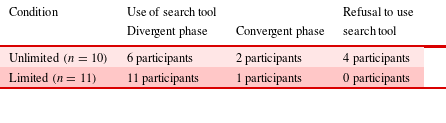
Four out of 10 participants from the ‘unlimited’ condition opted to not use the search tool. These participants, who could be considered to be ‘inspiration avoiders’, refused to use the tool even when they were unable to generate ideas, indicating the following.
-
(i) They were aware of the possible negative influence of stimuli and did not want to be steered to think in specific ways. This could be related to a conscious decision to avoid becoming fixated by precedents (e.g., Jansson & Smith Reference Jansson and Smith1991; Purcell & Gero Reference Purcell and Gero1992; Cardoso & Badke-Schaub Reference Cardoso and Badke-Schaub2011).
-
(ii) They preferred to rely on their own experience and internal stimuli.
-
(iii) They considered the time of the session to be sufficient to continue generating ideas without assistance.
-
(iv) They did not know the search tool beforehand and assumed that it would be similar to existing search engines.
-
(v) They were unsure what to search for.
Although they avoided searching for stimuli in the session, these participants reported later that inspiration search is part of their usual design process. Thus, they do not necessarily avoid all inspiration: they prefer to refrain from searching for additional external stimuli and rely on their internal stimuli.
Conversely, all 11 participants from the ‘limited’ condition decided to use the search tool. Two types of search behaviour could be observed: while the four ‘unlimited’ participants who refused to search for inspiration could be considered to be ‘inspiration avoiders’ in the context of this experiment, the remaining participants from the ‘unlimited’ and ‘limited’ conditions could be defined as ‘inspiration seekers’. Contrary to ‘inspiration avoiders’, ‘inspiration seekers’ preferred to surround themselves with as much information as they could find.
With only one selection, it was sometimes necessary for the ‘limited’ participants to make the most of a stimulus and ‘force fit’ it into the context of the problem. Participant L4 (‘limited’ condition) reported the following.
‘I would have wasted many things [stimuli] that I used, actually. (…) Actually I would have not used these kind of inputs, if I had the chance to change them over and over, I would have wasted them.’
Additionally, even though the imposed limitation required a higher effort in selecting one search input and one stimulus, all 11 participants from the ‘limited’ condition were positive about its usefulness. In fact, using the search tool in a limited way was appraised as a way to save time in stimuli searching.
4.2 Formulating keywords in the search tool
During the interviews, we also investigated how designers initiated a stimulus search. Using as a starting point previous research on designers’ inspiration processes (Gonçalves et al. Reference Gonçalves, Cardoso and Badke-Schaub2013), we focused on the initial phases of the search process, especially on three moments: definition of search input, search of stimuli and selection of stimuli (Figure 1).
At the beginning of every design process, designers implicitly and/or explicitly define directions that guide their search, which are operationalized by using ‘keywords’.
All participants considered that some keywords became prevalent throughout the session, opening possible directions to solve the problem. However, there were differences across conditions regarding how explicitly participants defined keywords. Participants in the ‘limited’ condition were more cautious and took longer in the selection of keywords and made more explicit decisions than those in the ‘unlimited’ condition. Ultimately, these participants regarded the option of using the search tool as a ‘trump card’ to be used as a last resort, especially when they ran out of ideas. Conversely, participants in the ‘unlimited’ condition quickly decided on keywords, not explicitly relating them to a search goal.
The ‘limited’ condition participants typed, in total, 16 keywords, from which 10 were successful (i.e., the search tool produced results). On the six occasions when participants typed keywords that were not included in the search tool they were allowed to change them. There were 29 search inputs in the ‘unlimited’ condition, from which 20 were successfully associated with the data in the search tool. Figure 6 shows the keywords (in bold) most frequently selected by each treatment condition.
When both treatment conditions (‘limited’ and ‘unlimited’) are added together, ‘fear’ was the most chosen search input (22.75%, selected by five participants). When clustering synonyms of the most common words, ‘children’ was equally highly chosen (22.75%, selected by five participants, taking into account the terms ‘kid’ and ‘toddler’), but also ‘sleep’ (13.64%, selected by three participants, considering the term ‘kids sleeping’) and finally ‘stuffed toy’ (13.64%, chosen by three participants, including the term ‘teddy’). In the ‘unlimited’ condition, closely related keywords were chosen most frequently and earlier in the participants’ search for stimuli. Other keywords, which could be considered to be distantly related to the design brief, were chosen later. In the ‘limited’ condition, similar numbers of closely and distantly related keywords were selected.
Search inputs chosen by the ‘limited’ (left) and ‘unlimited’ (right) conditions.

4.3 Forcing a strike of inspiration
A number of participants across treatment conditions reported that they wanted to be struck by inspiration, in a random way, especially because finding useful distantly related stimuli was difficult for them. Especially in the case of two participants (from the ‘unlimited’ and ‘limited’ conditions), using ‘random’ as a keyword in Internet search engines was an acknowledged strategy, in order to increase the chances of coming across inspiration. In this manner, they are able to find unrelated stimuli that they subsequently try to force fit into their project. Participant U11 (‘unlimited’) explains as follows.
‘If I was really stuck and couldn’t generate ideas anymore, I think I would search for just a random image and then try to use that in any way to solve my problem. So it’s basically a random stimulus as an image. (…) I just type in ‘random image’ on Google. It works because you get images you don’t know.’
This behaviour was also visible during the experiment, as one participant from the ‘limited’ condition chose to search for the word ‘random’ in the search tool. This did not produce any results and the participant was authorized to choose another search input. Although most Internet search engines require a keyword to initiate a query, searching for stimuli in the Internet was considered by eight participants (one from ‘control’, three from ‘unlimited’ and four from ‘limited’) as passive search, due to the unlimited amount of information it contains.
This is also a possible explanation for the refusal to use the search tool (Section 4.1), as participant U4, from the ‘unlimited’ condition, who intentionally did not use it, revealed the following.
‘Yeah, I don’t know, what do I type? And see images for what, as inspiration? (…) Then I would look into the Internet, but not for my final product. I prefer books and yeah. It’s not the format, but I don’t know exactly what to search there.’
This suggests that U4’s hesitation about using the search tool might have to do with not knowing what to search for.
4.4 Most selected stimuli from the search tool
In alignment with previous findings (e.g., Muller Reference Muller1989; Henderson Reference Henderson1999; Gonçalves et al. Reference Gonçalves, Cardoso and Badke-Schaub2014), the participants expressed a preference for using visual stimuli for inspirational purposes, despite textual stimuli also being used during the experiment. These novice designers seemed to be aware of how potentially useful distantly related stimuli might be for ideation, as shown also by Ozkan and Dogan’s findings (Reference Ozkan and Dogan2013). However, they appeared to struggle to formulate keywords that could allow them to reach for more distant (stimuli) domains. There were striking differences between the treatment conditions regarding the selection of stimuli, which are visualized in Figure 7. Participants in the ‘unlimited’ condition selected a variety of images and texts (in total, 48 images and 27 texts). On the other hand, the majority of those in the ‘limited’ condition selected textual stimulus in their only opportunity to use the search tool (eight out of 11 participants). The six participants from the ‘unlimited’ condition who used the search tool selected (clicked on) a total of 75 stimuli entities. From this selection of stimuli entities, 34 (i.e., 45.3%) were closely related images, 20 (26.7%) were closely related texts, 14 (18.7%) were distantly related images and only seven (9.3%) were distantly related texts. Besides designers’ preference for visual stimuli, the ‘unlimited’ condition’s substantial use of images is also due to expectations of their inspirational value. This is illustrated by participant U8 (‘unlimited’) as follows.
‘I don’t expect to get inspiration from it [text]. I expect to get more inspiration from images.’
Numerical proportion of the ‘unlimited’ (left) and ‘limited’ (right) conditions’ selection of stimuli.

In the ‘limited’ condition, there were 10 selected (clicked) stimuli. From these, six (60%) were closely related text, two (20%) were distantly related text, one (10%) was a closely related image and one (10%) was a distantly related image. As a result of the restricted tool use of the participants in the ‘limited’ condition, they adopted a different search strategy when compared with those in the ‘unlimited’ condition. Participants in the ‘limited’ condition reported that their goal was to select a stimulus that could provide them with the highest exploitation value, to create as many ideas as possible with the one option they had. In an attempt to increase the chances of success in their restricted search, participants in the ‘limited’ condition went against their general preferences for visual stimuli and opted to use textual stimuli instead, because they believed that they could provide additional information.
4.5 Most used stimuli for ideas generated
In this section, we compare how far the stimuli selected for idea generation correspond to the stimuli used by the participants. We considered that ideas were ‘directly’ influenced by a stimulus when the form, function and physical principle were transferred without transformation of the idea (Figure 8). Conversely, ideas were considered to be ‘indirectly’ influenced by a stimulus when form and function were transferred, but transformed, or when only the principle was transferred (Figure 9). For this analysis, we included not only the selected stimuli but also stimuli that happened to influence the participants even without selection, when the thumbnail was already sufficient to develop an idea.
Example of participant U1’s idea, which was directly influenced by a closely related image.

Example of participant L3’s idea, which was indirectly influenced by a closely related text.

In the ‘unlimited’ condition, ideas were influenced by 27 stimulus entities (36% of the 75 stimulus selection). From the 27 stimuli used by the ‘unlimited’ group, 12 were direct influences, while the remaining 15 stimuli were indirect influences.
The ‘limited’ condition ideas were influenced by 20 stimuli, which means that 10 other stimuli inadvertently influenced participants’ ideas without selection. From these 20 stimuli, 17 were indirect influences, and only three were considered to be direct influences by the participants.
4.6 Reasons for stimuli selection
By asking participants about their reasons for choosing certain stimuli, it was possible to identify a number of drivers that motivated the selection of stimuli. Designers first need to decide on the keywords to find appropriate stimuli, and only then they decide on whether they want to use a particular stimulus for designing. Table 2 indicates the number of participants, per treatment condition, who based their stimuli selection on each driver.
Selection based on relevance – With this driver, stimuli were selected (or dismissed) depending on how appropriate they were perceived to be in relation to the problem at hand (Hicks et al. Reference Hicks, Culley, Allen and Mullineux2002; Kwasitsu Reference Kwasitsu2003). This driver brought into focus familiar stimuli, and it was dependent on the design problem being solved. Participant U1 (‘unlimited’) reported on how easy it was to choose a relevant stimulus, as there was a clear connection with the design brief.
‘I immediately thought of the connection, it just rang with me, it was a very natural thing. (…) That’s why there was an inspiration.’
When focusing on relevance, there was a tendency to overlook distantly related stimuli, as the links between stimuli and target were not obvious or immediately available (in both the ‘limited’ and ‘unlimited’ conditions).
Number of participants per treatment condition and their use of selection drivers.
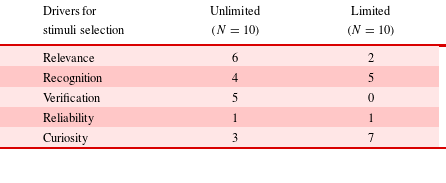
Selection based on recognition – These selections were based on whether the participants recognized or were already aware of the content of a stimulus. However, selections based on recognition did not usually result in generation of ideas. This, to some extent, explains the considerable number of selections of the ‘unlimited’ condition, reported in Section 4.5. Selections based on recognition occurred also in the ‘limited’ condition, as reported by participant L2.
‘Here there was ‘children afraid clowns’ [closely related textual stimulus] and I was afraid of clowns as well. I have always wondered why and now I know why.’
In general, recognition was an important motivator to select stimuli (or to overlook them), and it could be compared with experience with source (one possible determinant for information selection, identified by Kwasitsu (Reference Kwasitsu2003)). Selection based on recognition, though, is different from selection based on relevance. A stimulus could be considered to be relevant because it was recognized to be appropriate to the problem. However, recognition is independent of the context of the problem and can occur even when a stimulus is considered to be irrelevant. Selections based on recognition also led to misinterpretations, with participants hoping to obtain a certain stimulus and receiving unexpected information. This resulted either in fortuitous encounters, with the stimulus being considered useful, or, especially in the ‘limited’ condition, these misunderstandings led to frustration and disappointment with the search tool. Selections caused by misinterpretations could be related to what Shah et al. (Reference Shah, Vargas Hernandez, Summers and Kulkarni2001) refer to as creative misinterpretations, caused by provocative stimuli. According to these authors, provocative stimuli could be ‘any external stimuli to the designers that provide for a change of reference’ (p. 173). Although some selections based on recognition (or, in fact, misinterpretation) did result in creative ideas, many others were met with disappointment, when the stimulus did not fulfil the expectations of the participants. Thus, although being provocative, unexpected stimuli do not seem to always lead to creative input.
Selection based on verification – Another reason for selection is based on the need to verify ideas generated or decisions made. Verification became important at later stages of their process (mainly in the ‘unlimited’ condition), when they had already generated some ideas and needed to validate them. In general, it can be assumed that verification as a driver occurs mainly in the converging phases of the design process. As an example of this, participant U7 (‘unlimited’) indicated the following.
‘And you should do more research to know which kind of stimulus works for children now, because I don’t have experience with children. And it takes a lot more research.’
Selection based on reliability – With this driver, selection was based on how reliable a stimulus appeared to be. Choosing a stimulus was dependent on the appearance of formality or how grounded on factual information it appeared to be, as explained by participant L5 (‘limited’).
‘The term “co-sleeping” was quite new for me, I thought I just had found something scientific, something that is used by authorities.’
Reliability can be compared with authenticity or credibility as factors that influence the selection of information (respectively, Wilson Reference Wilson1997; Hicks et al. Reference Hicks, Culley, Allen and Mullineux2002).
Selection based on curiosity – Contrary to selections based on relevance, verification and recognition, some participants selected stimuli specifically because they were unfamiliar to them, eye-catching or unexpected. Participant L11 (‘limited’) reported the following.
‘This one was the only thing I didn’t expect that should be there.’
Selections driven by curiosity in the ‘unlimited’ condition were very brief, with just enough time to click and open the image/text. In the ‘limited’ condition, these selections were more strategic, chosen to provide new and unexpected information. In general, unexpected stimuli selected by curiosity were also distantly related to the brief, thus entailing a higher effort in adapting the information into a solution.
5 Discussion
As previously mentioned, this study was guided by the research question how do designers select external stimuli for inspirational purposes during the ideation phase?
The following four sub-sections tackle different parts of the main research question and address the two sub-questions presented in Section 1. The process of searching is elaborated in Sections 5.1 and 5.2, where different aspects of the first sub-question (How does the selection of stimuli change when their access is limited, compared with unlimited access?) are discussed. Section 5.3 addresses the second sub-question (What are the drivers for the selection of external stimuli?), which focuses on the reasons for selection. Finally, in Section 5.4, we present an overall discussion of the inspiration process, based on our results.
5.1 Inspiration avoiders and inspiration seekers
In this study, we encountered two distinct inspiration behaviours: there were participants who were inspiration seekers and those who were inspiration avoiders. The reactance theory (Brehm Reference Brehm1966) offers a possible explanation for the difference between ‘inspiration-avoider’ and ‘inspiration-seeker’ behaviour. Reactance can occur when a person’s perceived freedom is limited, such as when ‘limited’ participants’ search processes were restricted to only one search input and only one selection. When a behavioural freedom is externally restricted or eliminated, people tend to desire their lost freedom even more and try to reinstate it. According to Brehm (Reference Brehm1966), there are two possible manifestations of the occurrence of reactance behaviour: (1) to try to restore the lost/endangered freedom and (2) to perceive it to be more attractive than before. When questioned about whether they would have used the search tool had there been no limitations, on either the number of search inputs or stimuli chosen, all participants from the ‘limited’ condition expressed the importance of the inclusion of inspiration search in the creation of ideas. Thus, the participants in the ‘limited’ condition considered the search tool as more appealing than those in the ‘unlimited’ condition, who had no restrictions. Furthermore, the ‘limited’ participants also tried to restore that option by taking advantage of the stimulus they selected.
On the other hand, it is possible that the participants’ awareness of being in an experimental setting may have biased their behaviour. Nevertheless, our results do not support that being inspiration seeker or avoider is any better than the other.
5.2 Random active search of stimuli
The majority of designers in all conditions seemed to recognize the positive influence that distantly related stimuli can have as potential inspiration sources. However, one of the challenges of using distantly related stimuli is the difficulties in recognizing what could be inspiring. When there are no strict time constraints in a project, activities such as a walk in the park or ‘people watching’ can lead to these random passive encounters with inspiration sources. When time is limited, though, as it frequently is in design studios, designers can adopt alternative methods to support fruitful encounters with different types of stimuli. In this study, we observed a possible alternative, which was the use of search engines as a medium to provoke opportunistic encounters with stimuli and to take advantage of any relevant information in this way (Seifert et al. Reference Seifert, Meyer, Davidson, Patalano and Yaniv1995). These results coincide with findings by Mougenot et al. (Reference Mougenot, Bouchard and Aoussat2008) and Herring et al. (Reference Herring, Chang, Krantzler and Bailey2009), who indicated that the Internet can be used as a brainstorming tool, to come up with keywords designers initially did not think of. Similarly, participants in this study interpreted the search tool as passive search, which enabled them to stumble upon potentially inspiring stimuli. This behaviour might be caused by the uncertainty of not knowing what to search for. Without having a specific direction, designers might be dependent on randomly finding relevant stimuli in an opportunistic manner, which shows that even the process of defining a search input can be uncertain. Furthermore, our results show that there is another type of search designers engage in, in addition to the ones presented in section 2.1: random active search. This type of search is characterized by being active and intentional but without a specific goal.
Five types of search for information, for inspiration purposes.

Table 3 summarizes the five types of search approaches designers might follow to find stimuli, organized into three criteria: whether there is a problem at hand to solve (and the search is motivated by the problem), whether the search for stimuli is intentional, and whether designers know what they want to find.
Our results indicate that the issue of not being able to reach more distantly related stimuli is a knowledge problem, not a motivational one. These novice designers did want to incorporate distantly related stimuli, under the assumption that they can lead to more creative ideas. Although they were motivated, they could not simply reach disparate domains because they did not know what to search for. For this purpose, they devised a strategy that enabled them to actively force passive encounters with stimuli.
5.3 Drivers for inspiration search
Five drivers for inspiration search were revealed in the analysis of the designers’ processes. Again, differences were found between ‘unlimited’ and ‘limited’ conditions. ‘Unlimited’ participants selected stimuli by their relevance, because they were recognizable and enabled verification of their ideas. This explains, to some extent, why these participants might have made less efficient use of the search tool (see Section 4.5): selections based on recognition and verification usually did not lead to idea generation. Many ‘unlimited’ participants were constantly browsing for additional stimuli without incorporating them into ideas. Furthermore, these drivers, especially relevance, offer an explanation as to why there were so many ideas directly influenced by stimuli in the ‘unlimited’ condition. By being relevant to the problem at hand, the chosen stimuli were often also closely related. Thus, there were more superficial similarities between ideas and stimuli, which were considered to be less rare than the ones created by the ‘control’ condition.
The ‘limited’ condition selections were mostly driven by curiosity and recognition. While recognition as a driver enabled participants to be more confident in their stimuli selection (as they were already experienced with the source), selections driven by curiosity aimed to access unknown information and exploit the potential value of the stimulus. This reveals that the ‘limited’ condition had to select stimuli more strategically than the ‘unlimited’ one, hoping to find stimuli that could help them to generate as many ideas as possible. However, selections driven by curiosity usually led to unexpected or provocative stimuli (Shah et al. Reference Shah, Vargas Hernandez, Summers and Kulkarni2001), normally distantly related to the brief, which are considered to be more difficult to implement than closely related ones (e.g., Christensen & Schunn Reference Christensen and Schunn2007; Ozkan & Dogan Reference Ozkan and Dogan2013). Therefore, the higher cognitive effort of perceiving, transferring and transforming distantly related stimuli into the context of the brief might have led the participants in the ‘limited’ condition to develop less unique ideas.
5.4 Revision of designers’ inspiration process
Building on the previously mentioned framework of the designers’ inspiration process, adapted from Gonçalves et al. (Reference Gonçalves, Cardoso and Badke-Schaub2013) and based on Eckert & Stacey (Reference Eckert and Stacey2003), we are able to elaborate on the initial three phases of the inspiration process, which are the most relevant for this study (Figure 10).
Focus on three phases of the inspiration process: definition of keywords, search and selection of stimuli.

Regarding the ‘definition of keywords’, we have observed that this is an essential step, which normally happens implicitly. It is through these keywords that pattern-finding mechanisms in the brain are adjusted to focus on the most relevant stimuli for the problem at hand. When these triggers are recognized, associations between information already stored in the brain and external stimuli can lead to the creation of new meanings (Mednick Reference Mednick1962). Initially, most search keywords aim to collect contextual information on the problem, which tends to be closely related, and only later can remote associations be established. The keyword definition influences the remaining steps of the inspiration process, as it directs which kind of stimuli can be found. Concerning the ‘search of stimuli’, we have identified one more type of search – random active – besides the four aforementioned types (Section 2.1).
Figure 10 emphasizes active, passive and random active search typologies, as they refer to searches motivated by existing problems (passive attention and ongoing search might occur independently of a problem). While active search is intentional and occurs mainly to obtain specific information (to frame the problem), passive and random active search tend to result in unexpected encounters with stimuli. These types of search coincide in the lack of a specific keyword to guide the search and differ in intentionality. With passive search, designers either miss or stumble upon inspiration, without much control of the result, while random active search refers to intentional active search but without a specific keyword/direction. This influences the selection of stimuli, which can be unconsciously motivated by five drivers. Depending on the designers’ goals and on the phase of the design process, certain drivers can become prominent. These drivers also influence the type of stimuli found.
6 Conclusions
In this paper, the inspiration process of design students has been described and analysed by identifying how they search, select and retrieve external stimuli for inspirational purposes. Designing requires, among other factors, a continuous switch between information stored in the memory and external stimuli (Norman Reference Norman1993; Ware Reference Ware2008). Internal and external stimuli enable us to describe, analyse and understand the world, which makes them powerful reasoning aids (Ware Reference Ware2008). By understanding how designers choose external stimuli, we are in a better position to support design creativity and, in tandem, to adapt innovation efforts to the real need for information and avoidance of unstructured Internet search.
We have unveiled a number of findings. Our results highlighted the importance of carefully considering the stage at which keywords are defined, when designers are trying to come up with appropriate terms to initiate their search process. This is the initial step of the inspiration process, which has not been thoroughly considered by previous research. Furthermore, the study revealed the search typologies that novice designers go through intuitively without reflection, to be able to search for stimuli from further domains. Finally, we have identified some of the possible drivers that motivate designers in their selection of stimuli. These are relevant findings because we can now tackle each step of the inspiration process individually, to better support it in general.
By reflecting on the use of external stimuli, designers can potentially make more efficient choices instead of blindly chancing upon an unlimited diversity of available sources. In this way, the key to a more effective search for inspiration lies in designers’ awareness of their own inspiration process. Thus, they can redirect their attention focus, to be able to recognize the potential value of keywords (formulated to initiate a search) and drivers (to select stimuli), which could otherwise be dependent on pure chance. However, designers are prone to engaging in the process of causing random encounters with potential inspiration sources (Shah et al. Reference Shah, Vargas Hernandez, Summers and Kulkarni2001). At present, Internet search engines (the most common medium to obtain stimuli) require keywords to initiate a search, but they are still used as a brainstorming tool to be able to access further directions (Mougenot et al. Reference Mougenot, Bouchard and Aoussat2008; Herring et al. Reference Herring, Chang, Krantzler and Bailey2009). This process can continue for a considerable time as it is based either on chance or on trial and error. In fact, search engines, such as Google, are more effective when the keyword is well defined, compared with when keywords are ambiguous (Kules Reference Kules2005; Karlsen, Maiden & Kerne Reference Karlsen, Maiden and Kerne2009). To increase the efficiency of finding relevant distantly related stimuli, computational tools could be developed to support a less time-consuming search for stimuli with different levels of sematic distance to the problem domain, to fit different phases of the design process. However, previous research on computational tools and their usefulness for retrieval of analogue or bio-inspired stimuli assumes that designers know what to search for and, thus, how to actually initiate their search (Vattam et al. Reference Vattam, Wiltgen, Helms, Goel, Yen, Taura and Nagai2010; Linsey, Markman & Wood Reference Linsey, Markman and Wood2012). In such studies, retrieval of stimuli was considered to be the most difficult stage in order to successfully use analogies or bio-inspired stimuli. However, the challenges associated with the formulation of keywords when initiating a search process would precede the retrieval of external stimuli. Although existing computational tools support the retrieval of stimuli, they do not aid in the process of framing the problem, defining directions and formulating appropriate keywords. By clarifying which steps designers go through in the inspiration process, we were able to recognize that an important stage – defining keywords – was excluded from current computational tools, and should thus be considered in future developments. This requirement was, to some extent, recognized by recent studies on existing software tools supporting analogical and biomimetic design (e.g., Kerne et al. Reference Kerne, Koh, Smith, Webb and Dworaczyk2008b ; Vattam & Goel Reference Vattam and Goel2011; Tö & Crilly Reference Töre Yargin and Crilly2015). In particular, these studies recommend that the development of software tools should enable several modes of accessibility, such as browsing, but also other forms of data categorization. These alternative modes of accessibility could support designers even when they do not clearly know what they are looking for.
Our findings are relevant for design education and practice, as they provide insights into how designers come across stimuli, how they select them and how these might influence design creativity.
Finally, a number of limitations need to be considered. Although our number of participants is considered to be adequate for a qualitative analysis, it is limited for a statistical analysis, which prevented any evaluation on the influence of the participants’ selections of stimuli on their ideation outcome. Nevertheless, this study enabled an in-depth analysis of designers’ inspiration process.
On the other hand, further avenues for future research emerge from this study. It would be interesting to investigate the influence of added cognitive efforts of formulating keywords and selecting external stimuli in a larger sample of participants. This would provide insights into the difference between ‘given’ and ‘intentionally retrieved’ stimuli and their influence on the creative outcome. Moreover, it would be relevant to investigate the usefulness of certain selection drivers in relation to the creative design outcome. This would enable the development of computational tools that could support designers’ search, selection and retrieval of stimuli, even when the goal is uncertain or unknown.
Acknowledgments
This research was co-funded by the ESF (the European Social Fund), FCT (Fundação para a Ciência e Tecnologia) and POPH (Programa Operacional Potencial Humano).
Appendix A. Coding scheme used to analyse designers’ process

Appendix B. Coding scheme for analysis of interviews


 Open access

