



Recently, extensive studies have focused on the identification of more sustainable dietary patterns( Reference Birt, Buzeti and Grosso 1 – Reference Jones, Hoey and Blesh 6 ). They were defined in 2010 by the FAO as ‘those with low environmental impacts, contribute to food and nutritional security and to healthy lives for present and future generations, are protective and respectful of biodiversity and ecosystems, culturally acceptable, accessible, economically fair and affordable, are nutritionally adequate, safe, and healthy, and optimise natural and human resources’( 7 ). Indeed, a large shift toward more sustainable diets is fundamental to manage the current challenges encompassing climate change, biodiversity loss, population growth and the expansion of nutrition-related chronic diseases( Reference Springmann, Godfray and Rayner 8 – Reference Mathijs 10 ).
Historically, a large number of organisations have developed indexes based on several indicators to evaluate food security( Reference Cafiero, Melgar-Quiñonez and Ballard 11 ). For example, the FAO, in collaboration with the Voices of the Hungry Project, recently developed the Food Insecurity Experience Scale of eight items referring to the level of access to adequate food by the population( Reference Ballard, Kepple and Cafiero 12 ). However, the consideration of sustainability has often been absent when assessing food security, which is mainly based on quantitative and qualitative insufficient intake. In this context, Gustafson et al.( Reference Gustafson, Gutman and Leet 13 ) proposed a seven-metric systems based on a wide range of indicators to assess the sustainable nutrition security within varying world regions.
At the individual level, previous studies proposed indicators to assess the sustainability of diets( Reference Jones, Hoey and Blesh 6 ). Most focused on environmental (e.g. diet-related greenhouse gas emissions or land use) or nutritional (e.g. nutrition quality index or compliance with specific dietary patterns) dimensions and often considered only a small number of indicators. They were not based on a multicriteria approach( Reference Auestad and Fulgoni 5 ). Moreover, most of the studies have not included the environmental indicators as a component of the index but have explored the environmental impact of diets based on dietary quality scores( Reference Hallström, Davis and Woodhouse 14 ). The systematic review of the assessment of sustainable diets conducted by Jones et al. ( Reference Jones, Hoey and Blesh 6 ) highlighted a notable under-representation of social indicators (such as cultural heritage, equity, rights or governance), although the assessment of the social dimension is of central importance for the understanding of the ability of individuals to shift towards more sustainable diets( Reference Jones, Hoey and Blesh 6 , Reference Pieniak, Żakowska-Biemans and Kostyra 15 ). Furthermore, in a recent review by Perignon et al. ( Reference Perignon, Vieux and Soler 2 ), the authors reported that sustainable indicators were not necessarily compatible with each other. Therefore, there is a need to develop a holistic individual index to assess the sustainability of diets encompassing many components.
The purpose of this study was thus to develop a validated index to assess and compare the sustainability of diets in the NutriNet-Santé French cohort, taking into account multiple indicators based on current scientific knowledge and covering the four factors of diet sustainability as defined by the FAO: environmental, nutritional, economic and sociocultural aspects. The content and construct validities of the index were further assessed. Finally, the individual characteristics of the cohort participants were estimated according to their adherence to the index.
Methods
Study design and population
The NutriNet-Santé study was a web-based prospective cohort launched in 2009 in France, previously described in detail elsewhere( Reference Hercberg, Castetbon and Czernichow 16 ). Briefly, the participants were Internet-using adult volunteers from the general population. At inclusion and then periodically, the participants had to complete a set of self-administered questionnaires regarding socio-economic status, anthropometrics, lifestyle, physical activity and dietary intake. Moreover, they were regularly invited to complete specific complementary questionnaires.
This study was conducted in accordance with the Declaration of Helsinki, and all of the procedures were approved by the Institutional Review Board of the French Institute for Health and Medical Research (IRB Inserm 0000388FWA00005831) and the Commission Nationale de l’Informatique et des Libertés (CNIL 908450 and 909216). The study was registered at ClinicalTrials.gov (NCT03335644). All the participants provided informed consent with an electronic signature.
Data collection
Dietary intake assessment
From June to December 2014, the participants were invited to complete an annual organic semi-quantitative FFQ (Org-FFQ), based on a previously validated FFQ( Reference Kesse-Guyot, Castetbon and Touvier 17 ) supplemented by a section to collect information of organic food consumption. The Org-FFQ included 264 items for which participants had to report their consumption frequency (yearly, monthly, weekly or daily units) and the quantity consumed using standard portion sizes. Daily food intake in g/d was obtained by multiplying the portion size and frequency.
The participants were also asked to indicate the frequency of items consumed in their organic forms (certified and labelled agro-ecological practise based on European Union regulations) according to a five-point ordinal scale. Scores of 0, 0·25, 0·5, 0·75 and 1 were allocated to the corresponding respective modalities: never, rarely, half of time, often and always( Reference Baudry, Méjean and Allès 18 ). This enabled us to calculate the share of organic food (in g) in the whole diet and for each food.
Finally, individual nutrient intake was estimated using the published NutriNet-Santé food composition table( 19 ).
Dietary index
We computed a generic nutritional index, the PANDiet( Reference Verger, Mariotti and Holmes 20 ). Briefly, the PANDiet reflects the probability of adequacy to French recommendations for twenty-four nutrients: proteins, total carbohydrates, total fats, PUFA, fibre, vitamins A, B1, B2, B3, B6, B9, B12, C, D and E, Ca, Mg, Zn, P, K, Fe, SFA, cholesterol and Na. The PANDiet includes two sub-scores: an adequacy sub-score assessing the probability that nutrient intake satisfied the requirements (above a reference value) and a moderate sub-score assessing the probability that nutrient intake was not excessive (over a reference value). The PANDiet is the average of adequacy and moderate sub-scores.
Environmental impact assessment
The diet-related environmental impacts were assessed using a specifically developed French database of environmental indicators of raw agricultural products collected from DIALECTE( Reference Pointereau, Langevin and Gimaret 21 ) and completed with published literature data. Three indicators were included in the database: greenhouse gas emissions (in kg CO2eq), primary energy consumption (in MJ) and land occupation (in m2). A set of conversions extensively described elsewhere( Reference Seconda, Baudry and Allès 22 ) were computed to assign environmental indicators, taking into account shifts from raw agricultural products until consumer use as well as the method of agricultural production (organic v. conventional) for each food item. Finally, we computed for each a partial ReCiPe (pReCiPe) score, including the greenhouse gas emissions, primary energy consumption and land occupation relative to the food production. This score reflects the environmental impacts of food production and is computed as following( Reference Kramer, Tyszler and van’t Veer 23 ): pReCiPe=0·0459×greenhouse gas emissions (in kg CO2eq/kg)+0·0025×primary energy consumption (in MJ/kg)+0·0439×land occupation (in m2/kg).
Environmental impacts of individual diets were estimated by multiplying the pReCiPe by the quantity of consumed food (g/d), accounting for the method of agricultural production.
In addition, the share of organic food in the diet was used as a proxy for biodiversity preservation in farm( Reference Fess and Benedito 24 , Reference Reganold and Wachter 25 ).
Economic-related data assessment
Concomitant to the Org-FFQ, the participants were also asked to complete an optional questionnaire, focusing on attitudes and motivations (Org-AMQ) regarding food choices inquiring about the places of purchase.
A national database gathering the retail prices of each food item, taking into account the place of purchase and the method of food production (organic v. conventional), was formed from the 2012 Kantar database and price collections in autumn 2014 and spring 2015 in short supply chain outlets. More information was provided elsewhere( Reference Seconda, Baudry and Allès 26 ).
The individual daily monetary cost of diets was computed by multiplying the food quantity consumed (g/d) by the price (€/g). Finally, we assessed the share of budgets allocated to food by dividing the total diet monetary cost by the income reported by the participants( Reference Seconda, Baudry and Allès 26 ). As in the study of Barosh et al. ( Reference Barosh, Friel and Engelhardt 27 ), we considered that the affordability of diets could be assessed by the percentage of available household income for food. The more the budget allocated to food, the less affordable the diet was.
Practice and motivation data assessment
An index to assess the diversity of purchase places other than supermarkets was developed according to the answers to the Org-AMQ. For thirty-one food groups, the ‘favoured’ places of food group purchases were declared for each of the methods of production (organic v. conventional). To compute the index, two points were assigned for short supply chains defined as direct food commercialisation between producers and consumers or with only one intermediary (producers’ markets, farmers’ shops, AMAP (associations supporting small farming), artisans, farms and self-production) and one point for other places: markets, groceries, specialised organic shops or cooperatives. No point was attributed to supermarkets. Then the index (out of two) was obtained by summing the points and dividing by the total answers.
We also computed an index to assess the consumption of ready-made products. In the Org-AMQ, the participants were asked to report their frequency of consumption of canned goods, ready-made meals, and frozen foods through a 5-point ordinal scale ranging from ‘never’ to ‘always.’ Scores of 0, 0·25, 0·5, 0·75 and 1 were allocated to the corresponding modalities: never, rarely, half of time, often and always. This enabled us to calculate, for each participant, the amounts of ready-made products consumed.
Covariates
The socio-demographic and lifestyle data used were those collected closest to the Org-FFQ completion date.
Socio-demographic data included sex, age (over 18 years), scholar education (<high school diploma, high school diploma and post-secondary graduate), place and area of residence (rural community, urban units with a population <20 000 inhabitants, between 20 000 and 200 000 inhabitants, and >200 000 inhabitants) and monthly income per household unit (<1200 euros, between 1200 and 1800 euros, between 1800 and 2700 euros and >2700 euros per household unit) obtained using the household income by month and the household composition. Lifestyle variables included smoking status (former, occasional, current or non-smoker), level of physical activity as measured by the International Physical Activity Questionnaires( Reference Craig, Marshall and Sjostrom 28 , Reference Hallal and Victora 29 ), vegetarian (a diet that did not include any meat) or vegan diets (a diet that excludes all foods of animal origin) and alcohol consumption status (abstainers, moderate drinkers (<14 g alcohol/d), and heavy drinkers).
Weight and height were assessed by a health operator, medical doctor or from self-measurement guided by standardised procedures. BMI (kg/m2) was then computed and the participants were classified into four groups (underweight, normal weight, overweight (25≤BMI<30 kg/m2) and obese (BMI≥30 kg/m2)), according to the international BMI classification of the WHO( 30 ).
Development and computation of the sustainable diet index
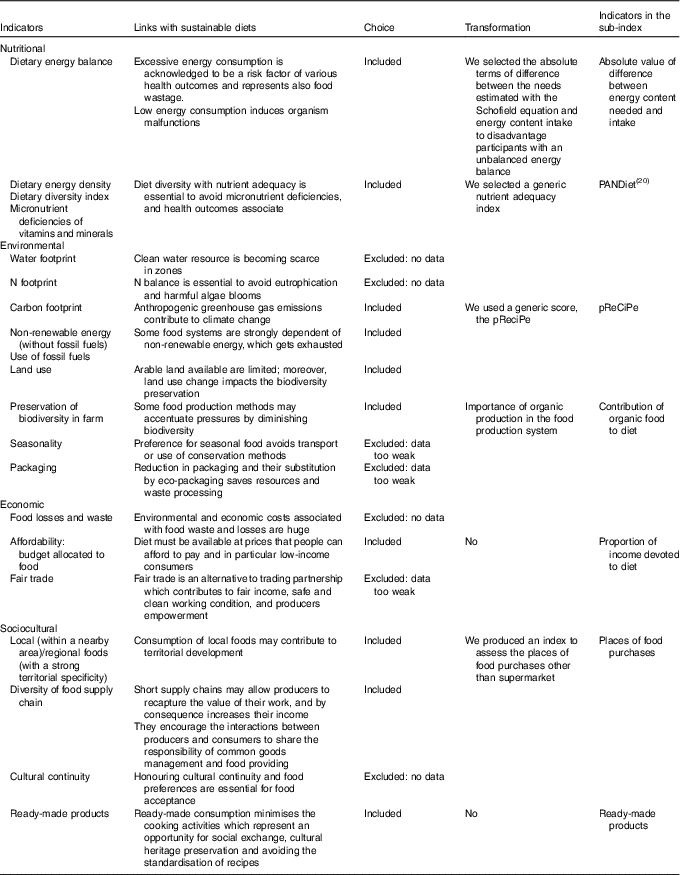
Based on the available scientific literature in September 2017, we collected information about indicators recommended in other studies( Reference Auestad and Fulgoni 5 , Reference Cafiero, Melgar-Quiñonez and Ballard 11 , Reference Gustafson, Gutman and Leet 13 , Reference Dernini, Berry and Serra-Majem 31 – Reference Lele, Masters and Kinabo 39 ) to assess the diet sustainability herein. These indicators and their links with sustainable diet are presented in Table 1.
Indicators selected from the literature reviewFootnote * by sustainability factors, choices of inclusion or exclusion and potential transformation
pReCiPe, partial ReCiPe.
* Adapted from the available scientific literature( Reference Auestad and Fulgoni 5 , Reference Cafiero, Melgar-Quiñonez and Ballard 11 , Reference Gustafson, Gutman and Leet 13 , Reference Dernini, Berry and Serra-Majem 31 – Reference Lele, Masters and Kinabo 39 ) in September 2017.
The selected indicators were those that( Reference Birt, Buzeti and Grosso 1 ) covered at least one of the following four fields: environment, economy, sociocultural and nutrition-health and( Reference Perignon, Vieux and Soler 2 ) could be computed at an individual level (at this stage, disease burden and respect for the community right were, for example, excluded).
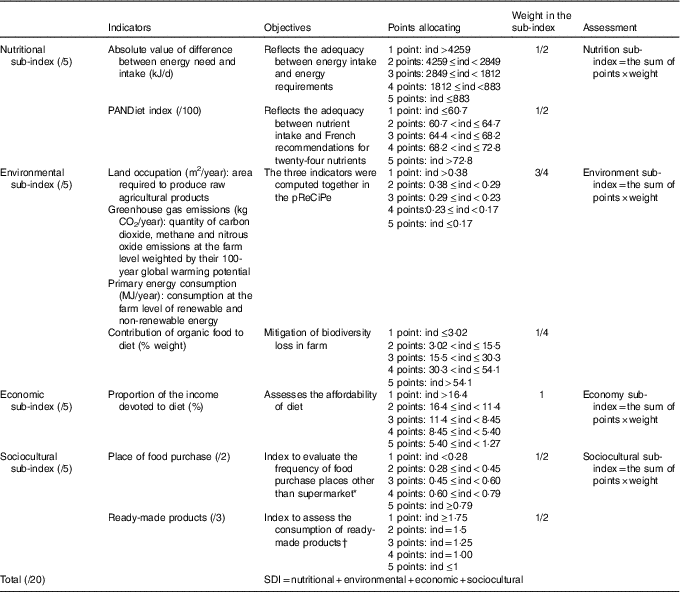
The computation of the index was as follows: a value of 1–5 was assigned to each of the seven indicators as presented in Table 2, using the population quintile values as the cut-offs. For indicators considered ‘valuable’ for sustainability, one point was assigned to the participants in the first quintile, two points were assigned to the participants in the second quintile and so on. For indicators presumed to be ‘damaging’ to sustainability, the allocations were reversed.
Description of indicators and computation of sub-indexes and the sustainable diet index (SDI)
pReCiPe, partial ReCiPe.
* For each food group, the privileged places of purchase were collected according to the mode of production (organic v. conventional). To compute the index, we assigned two points if the following food places were cited (markets of producers, farmers’ shops, AMAP (associations supporting small farming), artisans, farms and self-production), then we assigned one point if the following food places were cited (markets, groceries, specialised organic shops or cooperatives). Then we summed the points and divided by the number of answers.
† To assess ready-made products, the participants were asked to report their frequency of consumption of canned goods, ready-made meals and frozen foods via a five-point ordinal scale ranging from ‘never’ to ‘always’. Scores of 0, 0·25, 0·5, 0·75 and 1 were allocated to the corresponding modalities: never, rarely, half of the time, often and always. This enabled us to calculate, at the individual level, the share of ready-made products.
The indicators in a same domain are equally weighted, except for the ReCiPe which accounts three times that organic food consumption because the ReCIPe gathers the information of three indicators. Then the sub-indexes were obtained by summing up the points provided by each indicator in the same domain and then standardised for obtaining sub-indexes with analogous scale (ranging between 1 and 5). Indeed, the nutrition, economy, environment and sociocultural domains are considered equally important in the sustainable definition of diet at this time. The sustainable diet index (SDI) was then calculated for each individual as the sum of the four sub-indexes ranging from 4 to 20.
Evaluation of the sustainable diet index’s validity
The SDI’s content validity was tested to estimate the content representativeness or relevance of the indicators of the index( Reference Streiner, Norman and Cairney 40 , Reference Bland and Altman 41 ). First, the relevance of each indicator was justified regarding the FAO sustainable diet definition as shown in Table 1. Second, the correlation between the individual indicators and the SDI and between the sub-indexes and the SDI were estimated (reflecting the importance of each indicator in the ranking). Finally, to better grasp the influence of each sub-index on the SDI ranking, we estimated the concordance between the overall SDI and a modified index computed by removing a sub-index from the total index. The weighted κ coefficients and Pearson correlation coefficients between the SDI and the modified indexes were computed to estimate whether or not one sub-index led the ranking.
The construct validity indicated whether the index correctly assessed the theoretical concept of the phenomenon of interest, here the sustainability of diets. We used external sustainable guidelines to appropriately investigate the construct validity( Reference Streiner, Norman and Cairney 40 , Reference Bland and Altman 41 ). In recent years, many organisations have designed sustainable diets. The World Wide Fund for Nature (WWF) designed French Livewell 2030 diets( Reference Alleweldt, Kara and Béteille 42 ). In collaboration with the ECO2 Initiative, the WWF also proposed a French flexitarian plate for low-carbon, healthy and affordable diets( Reference Asal, Geoffroy and Simon 43 ). The Solagro non-governmental organisation designed the Afterres2050 scenario, a prospective scenario for the French food system, leading to the definition of a diet meeting several challenges such as climate change, farmers’ incomes or ensuring the food quality for the overall population( Reference Couturier, Charru and Doublet 44 ). Our strategy consisted of a qualitative comparison of the relative differences (to avoid artificial discordance due to methodological disparities in the dietary data assessment method) in food group consumption across different levels of sustainability in the diet according to the SDI (fifth v. first quintile) with sustainable plates designed by some organisations compared to the diet observed in a national representative population of French adults (INCA2 survey (second national survey of food consumption) 2006–2007, in a sample of n 1918).
Statistical analyses
For the present analyses, we selected the participants who completed the Org-FFQ (n 37 685). Under- and over-reporters identified by a ratio of energy intake to energy requirement estimated with Schofield equations( Reference Schofield 45 ) below or above the previously defined cut-offs were excluded (n 2109) as well as those with missing covariates (n 391). Finally, the subjects who did not complete the place of purchase questionnaire were also excluded, leading to a final sample of 29 388 participants (online Supplementary material). The SDI was computed for each participant and they were ranked according to SDI quintiles.
Standard statistics (means with 95 % CI or percentages), Pearson correlation coefficients and weighted κ coefficients were computed for the indicators, sub-indexes, and modified SDI by removing the sub-indexes one by one. Post hoc differences in means across quintiles were estimated, accounting for multiple testing using Dunnett’s correction. For statistical tests, the type I error was set at 5 %. All of the analyses were conducted using SAS 9.4 software (SAS Institute Inc.).
Results
Selection of indicators for sustainable diet index computation
Many indicators were collected from the literature review( Reference Auestad and Fulgoni 5 , Reference Cafiero, Melgar-Quiñonez and Ballard 11 , Reference Gustafson, Gutman and Leet 13 , Reference Dernini, Berry and Serra-Majem 31 – Reference Lele, Masters and Kinabo 39 ) as presented in Table 1. Their links with the sustainability of diet were presented. Because of non-available data to assess some indicators, we had to remove seven at this stage. Some indicators were pooled in a single indicator, as explained in Table 1. Finally, seven indicators composed our index and were allocated to one of the four pillars of sustainability (Table 2).
Content validity
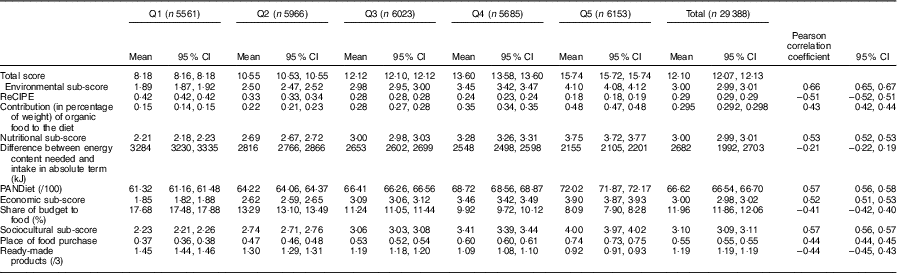
Table 3 shows the distribution of each indicator across the SDI quintiles.
Sustainable diet index (SDI), sub-indexes and indicators across quintiles (Q)* of the SDI, the Pearson correlation coefficient and the NutriNet-Santé Study, 2014 (N 29 388) (Mean values and 95 % confidence intervals)
* Quintile of sustainable index.
Greenhouse gas emissions, primary energy consumption, land occupation, difference between energy content needed and consumed, share of the budget for food and ready-made product consumption decreased across the SDI quintiles. Conversely, the PANDiet index, contribution of organic food and place of food purchase increased across the SDI quintiles. The maximum of the relative difference between the quintiles was obtained for organic food consumption (68·60 %) and the ReCiPe (57·10 %), whereas indicators with the lowest relative difference was obtained for the PANDiet (14·8 %). The correlations between each sub-index and the SDI were strong. The environmental sub-index was the most correlated with the SDI (R 2 0·66).
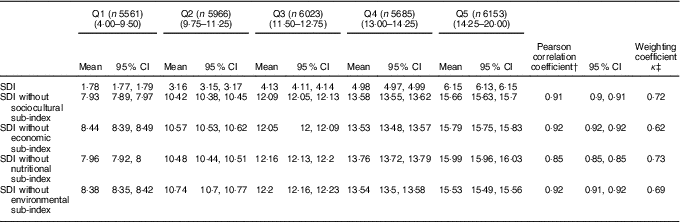
Table 4 indicates that whatever the sub-index removed, the ranking of individuals was disturbed to the same extent for each sub-score. Indeed, Pearson correlation coefficients and weighted κ coefficients (based on the quintile of the SDI and the modified indexes) between the modified SDI and the SDI were close (ranging from 0·62 to 0·73).
Global and modified sustainable diet index (SDI) across quintiles (Q)Footnote * of the SDI, the NutriNet-Santé Study, 2014 (n 29 388) and the sensitivity analyses (Mean values and 95 % confidence intervals)
* Quintile of sustainable diet index.
† Correlation coefficient between the index and the transformed index (without sub-indexes).
‡ Measured according to differences in the distribution of individuals in the quintiles of the SDI and the transformed index tested (without sub-indexes).
Results of the construct validity
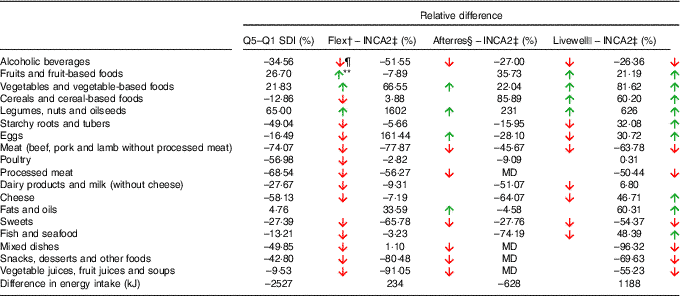
Table 5 shows the relative differences in food group consumption between the fifth and first SDI quintiles and between the sustainable diets designed by organisations and the French INCA2 consumption data.
Relative differences in food intake between extreme quintiles (Q)Footnote * of the sustainable diet index (SDI), the NutriNet-Santé Study, 2014 (n 29 388) and different sustainability scenarios of transition
MD, missing data; WWF, World Wide Fund for Nature.
* Quintile of the sustainable diet index.
† Flex: flexitarian plate from WWF and ECO2 Reference Asal, Geoffroy and Simon (43 ).
‡ INCA2: individual and national study of food consumption (2006–2007 in France).
§ Afterres2050: plate developed in the Afterres2050 scenario from Solagro( Reference Couturier, Charru and Doublet 44 ).
|| Livewell 2030: plate from WWF( Reference Alleweldt, Kara and Béteille 42 ).
¶ A 15% decrease or more.
** A 15% increase or more.
An increase in the SDI was associated with less animal food (meat and processed meat, dairy products and milk, seafood and fish), alcoholic beverages, fruit juices and soups and sweet foods (Table 5). Comparable reductions in meat were observed in some sustainable diets. Disparities were observed in fish, eggs and dairy product consumption. Indeed, fish and egg consumption was drastically decreased in the Afterres2050 plate compared to the French INCA2 consumption, while their consumption increased in the WWF Livewell 2030 plate. The consumption of dairy products was increased only in Livewell 2030 plate.
An increase in SDI was also associated with an increase in the consumption of fruits, vegetables and legumes, but the differences between the fifth and first quintiles were less marked than those observed when comparing the modelled sustainable plates with French INCA2 consumption.
Socio-demographic characteristics of participants across quintiles
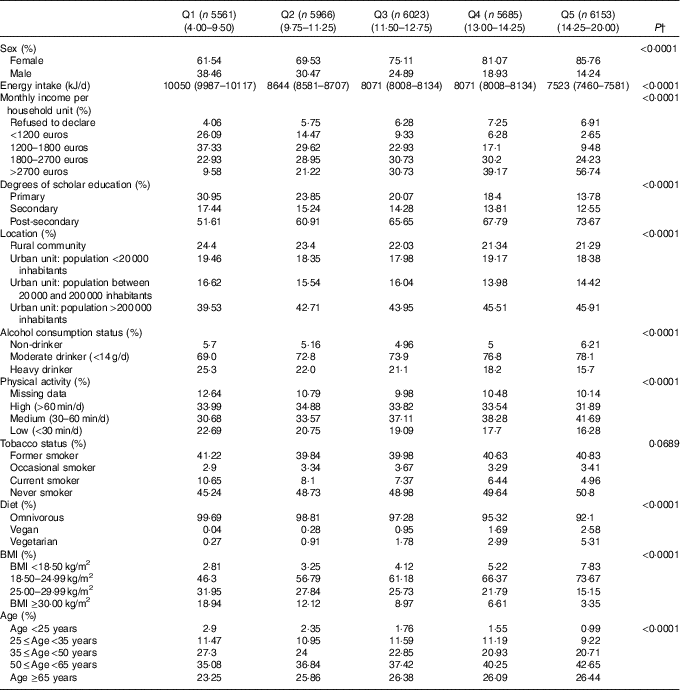
Table 6 shows the lifestyle and socio-demographic characteristics across the SDI’s quintiles. All of the factors were significantly associated with the SDI. The participants with the most sustainable diets in our study (the fifth quintile) exhibited more favourable socio-economic characteristics and lifestyle such as higher incomes, post-secondary degrees, no smoking or more physical activity. The percentage of women and vegetarians also increased across the SDI’s quintiles.
Sociodemographic and lifestyle characteristics across quintiles (Q) of the sustainable diet index and the NutriNet-Santé Study, 2014Footnote * (n 29 388)
* Quintile of sustainable index.
† P referred to χ 2 test.
Discussion
The present study described a new index, the SDI, to assess the sustainability of diets at the individual level. This index is composed of four equally weighted sub-indexes reflecting the four sustainable fields (environmental, nutritional, economic and sociocultural aspects) as defined by the FAO in 2010( 7 ).
The evaluation of the content validity based on the correlation assessment and the evaluation of the concordance between the overall index and a modified index showed that all of the sub-indexes and their indicators contributed independently to the global SDI, arguing for their inclusion in the index. The environmental sub-index was the most correlated with the SDI. This result may be explained by the different correlation structures between the indicators of each sub-index, which remains an unresolved issue for the index’s development( Reference Panagiotakos 46 , Reference Waijers, Feskens and Ocké 47 ).
Only the absolute difference between energy consumption and needs was poorly correlated with the SDI. Indeed the participants with low energy intake v. needs obtained a lower index value for this specific indicator, while recent published studies have documented that a low energetic diet is often associated with a lower environmental impact (greenhouse gas emissions or land use)( Reference Perignon, Vieux and Soler 2 ). Thus, the conflict between these indicators may explain the poor correlation with the SDI. Moreover, the self-reported food consumption methods such as FFQ are prone to measurement errors and mostly lead to overestimation( Reference Cade, Thompson and Burley 48 ) which could also explain the low correlation observed, even if our FFQ was previously validated( Reference Kesse-Guyot, Castetbon and Touvier 17 ).
The last test performed (modified index by removing a sub-index) for evaluating the content validity showed that all of the sub-indexes exerted substantial influence on the participants’ scoring and ranking. Indeed, removing one sub-index from the SDI disturbed the participants’ ranking with almost the same strength for each sub-index. Interestingly, no sub-index appeared to lead the ranking. The Pearson correlation coefficients and weighted κ coefficients between the modified SDI and the SDI were of similar extent in any case. This result indicates a relatively good balance between the sub-indexes.
The assessment of the construct validity was relatively more subjective since the gold standard or references were lacking. Indeed, the new French food-based guidelines integrating sustainable consideration should be soon published. Thus, to cope with this issue and to provide elements for external validity, our strategy consisted of comparing the relative differences in food group consumption across different levels of sustainable diets according to the SDI (the first and fifth quintiles) with sustainable transition plates designed by some organisations promoting sustainable development and compared to the current average French diet. These comparisons showed overall consistent results: the changes in terms of food group consumption needed to reach a more sustainable diet, corresponding to a high SDI as herein, or calculations made by organisations were comparable for most food groups, and in particular for those whose production may lead to particularly low or high greenhouse gas emissions or environmental impact such as vegetables and fruits or animal foods, respectively. Also, results are consistent with the food classification of van Dooren et al. ( Reference van Dooren, Douma and Aiking 49 ) in three groups from red to green according to the sustainable nutrient-rich food (SNRF) index and climate impact of food products. Indeed food exhibiting increased consumption in SDIQ5 compared to SDIQ1 in our study are those classified in the green class (low greenhouse gas emissions relate to food production and high SNRF), while those with a decrease are in the red class (high greenhouse gas emissions relate to food production and low SNRF). Moreover, meats from ruminants are related to more greenhouse gas emissions, energy and land consumption compared to poultry, pork and eggs( Reference Perignon, Vieux and Soler 2 , Reference Hallström, Carlsson-Kanyama and Börjesson 4 , Reference Bryngelsson, Hedenus and Johansson 50 ) that is why the relative differences in these food group consumption between SDIQ1 and SDIQ5 are lower than for red meat.
Finally, it is noteworthy that for some food groups, such as fish, egg and dairy products, no consensus has emerged certainly due to the differences in methodological and arbitrary choices concerning the objective function and constraints of linear programming with conflicting views on nutrition (adequate nutrient intake), environment (fish stock collapse or livestock environmental impacts) and contaminant exposition (in particular from fatty fish). Thus, it will be necessary in the future to collect more relevant data relating to the impact of production and consumption on the environment, nutrition, toxicology and the co-production links consideration (for instance, between beef meats and milk).
Our results showed that all socio-demographic or lifestyle factors were significantly associated with the SDI. The participants with the most sustainable diets (the fifth quintile) were more likely to be socially favoured and exhibited healthier lifestyles. Thus, one hypothesis may be that for a part of this population healthy and eco-friendly diets are too expensive in relation to their income and some may encounter difficulties to have a geographical access of sustainable food. That raised questions about the accessibility and/or affordability of sustainable diets for the general population in France, highlighting the need to develop public policies to promote these more sustainable behaviours.
Some limitations in this investigation should be noted. First, as for other indexes developed using an a priori method, the development presented several methodological limits( Reference Waijers, Feskens and Ocké 47 ). For instance, the choice of 1–5 rating has effect in the index development. We chose to make five categories for each indicator to sufficiently discriminate the participants without having too many categories. Moreover, equal weights to the four sub-indexes were allocated to reflect the absence of hierarchy in the FAO definition. However, as some sub-indexes are composed of only one indicator while others are composed of several, the indicators constituting the sub-indexes in the current version do not have the same weight. This issue could be raised in the future and more data may allow rebalancing the weight of each indicator. For further development of the SDI, it could be useful to include new indicators such as water footprint, fair trade or crop treatment frequency index to account for toxicology and improve the accuracy of some indicator assessment, in particular consumption of ready-made products. Hence, the classification of some indicators within the sub-indexes may be questionable. For instance, the purchase place indicator was included in the sociocultural sub-index, while some implications of short supply chain are related to economic scope (e.g. farmer income). In fact, we tried to include indicators in the more representative sub-index. However, our study is the first, to the best of our knowledge, to develop a holistic approach to compute an index at the individual level, compared to previous studies that assessed sustainability only partially( Reference Jones, Ngure and Pelto 34 ). In the future, it will be important to supplement the SDI with other indicators to improve the index’s quality and to better account for potential conflicts between sustainability components. Indeed, as highlighted by Gustafson et al. ( Reference Gustafson, Gutman and Leet 13 ), advising an increase in fruit consumption can, in some contexts, intensify the depletion of water or deteriorate the work conditions of vulnerable people labouring in fields. Also, our aim was to assess the sustainability of the diet at an individual level, which implies some decisions. For example, we assessed the affordability using a low-income contribution for food supply( Reference Barosh, Friel and Engelhardt 27 ). However, at the societal level, this low-income contribution may constitute a threat to the economic viability of sustainable production systems unless the actual cost is paid by the communities using taxes, for instance. Nonetheless, the use of the indicator ‘percentage of income contribution for food’ seemed closer to the notion of affordability compared to food prices that do not account for income levels. The construct validity assessment was based on some recent works by others but not on a gold standard objectively reflecting the concept of sustainability. Indeed, this scientific domain is rather recent and based on assumptions that have not yet properly been validated and therefore require reinforcement. Finally, the SDI construction was conducted in a French context, based on data from a large but specific cohort that implies caution when extrapolating the findings to other populations. Indeed, the participants were self-selected and exhibited particular characteristics including socio-demographic and dietary patterns and in particular organic food consumption( Reference Andreeva, Salanave and Castetbon 51 – Reference Kesse-Guyot, Péneau and Méjean 54 ). This might have reduced the range of the SDI, with some missing segments of the population. Moreover, the SDI was built with some French-specific indicators, as the PANDiet which is based on French nutrient intake guidelines. Light modifications to some indicator assessments (as PANDiet or the food purchase places) could make the SDI appropriate to assess the sustainability of diet in other Western region. However, a lot of available data are needed, and hence it remains an important challenge. Moreover, further validation would be needed to ensure the relevance of SDI from other cohorts.
Finally, our research exhibited important strengths such as the large population sample, a wide spectrum of behaviours and robust and validated data quality.
In conclusion, the new SDI is based on a multicriteria approach and could be a useful tool to easily assess the sustainability of diets, to follow sustainability-related changes in dietary patterns and to study the link with long-term health to help in guiding future public health policies.
Acknowledgements
The authors especially thank their computer scientists Younes Esseddik, Paul Flanzy and Thi Hong Van Duong; their statisticians and data managers Veronique Gourlet, Fabien Szabo, Nathalie Arnault and Laurent Bourhis; and their dietician, Cédric Agaësse. The authors warmly thank all the dedicated and conscientious volunteers involved in the Nutrinet-Santé cohort. The authors also thank the Bioconsom’acteurs’ members for price collection.
The NutriNet-Santé study is supported by the French Ministry of Health (DGS), the National Public Health Agency (Santé Publique France), the National Institute for Health and Medical Research (INSERM), the National Institute for Agricultural Research (INRA), the National Conservatory of Arts and Crafts (CNAM) and the University of Paris 13. This study was supported by the BioNutriNet Project, which is a research project supported by the French National Research Agency (Agence Nationale de la Recherche) in the context of the 2013 Programme de Recherche Systèmes Alimentaires Durables (ANR-13-ALID-0001). Louise Seconda is supported by a doctoral fellowship from the French Environment and Energy Management Agency (ADEME) and the INRA.
All authors read and approved the final manuscript. L. S., J. B., P. P., C. L., B. L., S. H., D. L., B. A. and E. K.-G. designed and conducted the research; L. S., B. A. and E. K.-G. analysed the data; and L. S. wrote the paper. L. S., J. B., P. P., B. L., D. L., B. A. and E. K.-G. were involved in interpreting the results and editing the manuscript. L. S. and E. K.-G. had a primary responsibility for the final content.
None of the authors has any conflicts of interest to declare.
Supplementary material
For supplementary material/s referred to in this article, please visit https://doi.org/10.1017/S0007114519000369



