Introduction
Watermelon is the most widely planted crop in Delaware and Maryland for which plasticulture production methods are used. In 2017, 1,618 ha of watermelon were planted in Delaware (USDA 2019a), and 1,659 ha were planted in Maryland (USDA 2019b). Furthermore, 190 ha of watermelon were grown in New Jersey, mostly in the southern part of the state (USDA 2019c). Advantages of using plastic mulch for watermelon production include increased soil moisture retention, reduced nutrient leaching, soil warming, weed suppression, and higher yields (Lament Reference Lament1993).
Weeds can cause significant yield loss in plasticulture production systems. Watermelons are typically planted with wide row spacing (1.8 to 2.4 m), leaving large portions of the field bare early in the growing season. Weeds in row middles can reduce crop yield and quality (Gilreath and Santos Reference Gilreath and Santos2004; Monks and Schultheis Reference Monks and Schultheis1998; Price et al. Reference Price, Williams, Duzy, McElroy, Guertal and Li2018; Terry et al. Reference Terry, Stall, Shilling, Bewick and Kostewicz1997). In watermelon, herbicides are the most common tactic for controlling weeds between plastic mulch, but the wide row spacing in watermelon requires that herbicides maintain residual control for a longer period before vine elongation effectively covers the soil surface. Therefore, PRE-transplant herbicides applied at time of laying plastic mulch often do not provide season-long control. In addition, there are few POST-transplant herbicides that are both effective and available for use in watermelon production systems. Some POST-transplant herbicides can be applied to row middles with shielded sprayers but must be applied before watermelon vines spread into the row middles. Halosulfuron, an acetolactate synthase (ALS)-inhibiting herbicide, is registered for use in many cucurbit crops (Wyenandt et al. Reference Wyenandt, Kuhar, Hamilton, VanGessel and Arancibia2019), and fomesafen, a protoporphyrinogen oxidase (PPO)-inhibiting herbicide, is also currently labeled for use in Delaware and Maryland. However, many weed species in Delaware, Maryland, and New Jersey have developed ALS resistance, including Palmer amaranth and smooth pigweed; and species such as common ragweed (Ambrosia artemisiifolia L.) have developed multiple resistance to ALS- and PPO-inhibiting herbicides (Heap Reference Heap2019).
The lack of available herbicide options in watermelon highlights the need for integrated weed management, or using multiple control tactics to manage weeds. Cultivation and mowing are two other control tactics that may be used. However, multiple cultivations or mowings are required because weeds such as Palmer amaranth can emerge throughout the growing season (Ward et al. Reference Ward, Webster and Steckel2013). Moreover, cultivation is difficult because it cannot get too close to the plastic mulch or the mulch may be ripped (Bonanno Reference Bonanno1996).
Planting cover crops is a strategy that has been used for weed suppression in agronomic (Korres and Norsworthy Reference Korres and Norsworthy2016; Mischler et al. Reference Mischler, Curran, Duiker and Hyde2010; Nord et al. Reference Nord, Ryan, Curran, Mortensen and Mirsky2012; Reddy et al. Reference Reddy, Zablotowicz, Locke and Koger2003; Ryan et al. Reference Ryan, Curran, Grantham, Hunsberger, Mirsky, Mortensen, Nord and Wilson2011; Teasdale et al. Reference Teasdale, Pillar and Collins2003; Wiggins et al. Reference Wiggins, Hayes and Steckel2016), and vegetable (Brennan and Smith Reference Brennan and Smith2018; Buchanan et al. Reference Buchanan, Kolb and Hooks2016; Campiglia et al. Reference Campiglia, Radicetti, Brunetti and Mancinelli2014; Chen et al. Reference Chen, Kolb, Leslie and Hooks2017; Price et al. Reference Price, Williams, Duzy, McElroy, Guertal and Li2018) cropping systems. In particular, the benefits of using fall-seeded cereal rye for weed suppression have been well documented for agronomic systems (Korres and Norsworthy Reference Korres and Norsworthy2016; Mischler et al. Reference Mischler, Curran, Duiker and Hyde2010; Nord et al. Reference Nord, Ryan, Curran, Mortensen and Mirsky2012; Ryan et al. Reference Ryan, Curran, Grantham, Hunsberger, Mirsky, Mortensen, Nord and Wilson2011; Wiggins et al. Reference Wiggins, Hayes and Steckel2016), but few studies have evaluated its use for weed control between the rows of plastic mulch (Price et al. Reference Price, Williams, Duzy, McElroy, Guertal and Li2018).
In the mid-Atlantic United States, cover crops, such as cereal rye, are often planted in the fall, giving them plenty of time to grow and establish before the cash crop is planted in the spring. In plasticulture production, beds are formed by moving a swath of soil (1.5- to 2-m wide and 5- to 10-cm deep) to shape beds (0.9- to 1.2-m wide and 10- to 15-cm tall), before plastic mulch is laid. However, the presence of cover crop residue can result in uneven bed formation. Price et al. (Reference Price, Williams, Duzy, McElroy, Guertal and Li2018) reported that a subsoiling shank pass could be used to avoid residue interference when incorporating fall-planted cereal rye with plastic mulch. However, in this system, shorter beds (2.5-cm tall) were formed, with little soil movement occurring. This approach is not compatible with plasticulture production in the mid-Atlantic United States because taller beds are required for the cooler soils in the region. Some farmers have tried forming beds and laying the plastic mulch in the fall, but it is often ripped and not intact in the spring, because of wind and wildlife activity.
Seeding cover crops such as cereal rye in the spring after plastic is laid, but several weeks before transplanting the crop, may allow sufficient time for cereal rye to establish and suppress weeds early in the growing season. Although studies have documented the use of spring-seeded cereal rye for weed control for direct-seeded crops (Akemo et al. Reference Akemo, Regnier and Bennett2000; Ateh and Doll Reference Ateh and Doll1996; Bordelon and Weller Reference Bordelon and Weller1997), few studies have evaluated its potential to provide weed suppression between rows of plastic mulch (Reid and Klotzbach Reference Reid and Klotzbach2012). Furthermore, cereal rye has been shown to have an inconsistent effect on weed density (Mischler et al. Reference Mischler, Curran, Duiker and Hyde2010) and weed biomass (Akemo et al. Reference Akemo, Regnier and Bennett2000). Therefore, cover crops may need to be integrated with other weed control tactics, such as herbicides, to improve weed control. Reddy et al. (Reference Reddy, Zablotowicz, Locke and Koger2003) demonstrated a reduction in weed biomass when cereal rye plus hairy vetch (Vicia villosa Roth) was supplemented with flumetsulam plus S-metolachlor, and Price et al. (Reference Price, Williams, Duzy, McElroy, Guertal and Li2018) reported that halosulfuron in conjunction with fall-seeded cereal rye was effective for controlling several grass and broadleaf weed species between the row middles of plastic mulch. The objective for the current study was to evaluate a spring-seeded cereal rye cover crop with different application timings of residual herbicides for weed management in watermelon between the row middles of plastic mulch.
Materials and Methods
Trials were conducted in 2017 and 2018 at the University of Delaware Carvel Research and Education Center near Georgetown, DE (38.64°N, 75.46°W) (hereafter referred to as Delaware), and in 2018 at the Rutgers Agricultural Research and Extension Center in Bridgeton, NJ (39.5°N, 75.2°W) (hereafter referred to as New Jersey). Soil type at the Delaware location was Rosedale loamy sand (loamy, siliceous, semiactive, mesic Arenic Hapludults), 81% sand, 12% silt, and 7% clay, with pH values of 6.5 and 6.0, and 0.9% and 1.1% organic matter in 2017 and 2018, respectively. Soil type at the New Jersey location was a Chillum silt loam (fine-silty, mixed, semiactive, mesic Typic Hapludults), 15% sand, 68% silt, and 17% clay, with pH values of 5.5, and 1.7% organic matter.
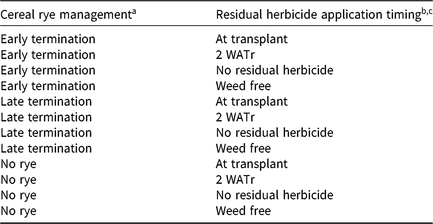
The study was a two-factor factorial, with cereal rye management and residual herbicide application timing as the main factors. The factors were arranged in a randomized complete block design with four replications per treatment. Cereal rye management consisted of no rye, rye terminated 3 wk after watermelon transplanting (WATr; referred to as early terminated) or 5 wk (referred to as late terminated) in 2017; and 4 WATr (early terminated) or 6 WATr (late terminated) in 2018 (Table 1). Residual herbicide application timings were at transplanting, 2 WATr, no residual herbicide, and a weed-free (hand-weeded) check. Cereal rye was terminated with clethodim (Select Max®; Valent USA Corp., P.O. Box 8025, Walnut Creek, CA 94596) at 136 g ha−1 plus nonionic surfactant (Scanner®; Loveland Products, Inc., P.O. Box 1286, Greeley, CO 80632) at 0.25% vol/vol. Residual herbicides used at both timings consisted of halosulfuron (Sandea®; Gowan Co., 370 South Main St., Yuma, AZ 85364) at 15 g ha−1 plus S-metolachlor (Dual Magnum®; Syngenta Crop Protection, P.O. Box 18300, Greensboro, NC 27419) at 1,346 g ha−1 plus nonionic surfactant (Scanner®) at 0.25% vol/vol.
Cereal rye management and residual herbicide application timings for 2017 and 2018.

a Cereal rye was terminated with clethodim 136 g ha−1 + nonionic surfactant 0.25% vol/vol at 3 (early termination) or 5 (late termination) wk after transplant in 2017, and 4 (early termination) or 6 (late termination) wk after transplant in 2018.
b Residual herbicide application: halosulfuron 15 g ha−1 + S-metolachlor 1,346 g ha−1 + nonionic surfactant 0.25% vol/vol.
c Abbreviation: WATr, wk after transplant.
Individual plots were two rows of plastic mulch, 9-m long and 2-m wide. Watermelons were transplanted with a spacing of 91 cm between plants. Beds were formed and plastic mulch laid on April 12, 2017, in Delaware, and on April 13 and 23, 2018, in Delaware and New Jersey, respectively. Cereal rye (134 kg ha−1) was broadcast by hand and raked in within 24 h of laying plastic mulch. Background populations of common lambsquarters, common ragweed, and smooth pigweed were present at each site. To ensure adequate weed density, 0.5 m2 microplots between the two rows of plastic, were located at 3, 5, and 7 m from the front of the plots; and in separate microplots, 500 seeds of common lambsquarters, common ragweed, or smooth pigweed were spread over the soil surface and lightly raked in. All plots received rainfall or overhead irrigation 24 h after seeding cereal rye, to ensure cover crop establishment.
‘Fascination’ watermelon and ‘Ace’ pollenizers were transplanted on May 17, 2017, May 16, 2018 (Delaware), and June 4, 2018 (New Jersey). Drip irrigation was used at all sites. Irrigation, fertilizer, fungicide, and insecticide were applied according to local recommendations (Wyenandt et al. Reference Wyenandt, Kuhar, Hamilton, VanGessel and Arancibia2019).
At the Delaware site, clethodim plus nonionic surfactant were applied using a shielded CO2-pressurized backpack sprayer with a spray volume of 187 L ha−1 at 179 kPa and 11002 spray nozzles (Greenleaf Airmix® spray nozzles; Greenleaf Technologies, P.O. Box 1767, Covington, LA 70434) for early-terminated cereal rye. To minimize sprayer passes, the late cereal rye termination treatment was co-applied with mancozeb (ADAMA USA, 3120 Highwoods Blvd #100, Raleigh, NC 27604) at 180 g L−1 water, applied using a tractor-mounted sprayer with a spray volume of 281 L ha−1 at 1,724 kPa and TX-VK4 VisiFlo® hollow cone spray nozzles (TeeJet, 200 W. North Ave., Glendale Heights, IL 60139) over the entire trial. Halosulfuron plus S-metolachlor treatments were applied using a shielded, compressed CO2-pressurized backpack sprayer with a spray volume of 187 L ha−1 at 179 kPa and 8002 even-spray nozzles (Greenleaf Airmix® spray nozzles). At the New Jersey site, all herbicides were applied using a shielded, compressed CO2-pressurized backpack sprayer with a spray volume of 187 L ha−1 at 105 kPa and 8004 extended-range flat-fan nozzles (TeeJet).
Cereal rye biomass was collected prior to each termination date by removing rye at the soil level from four 0.25-m2 quadrats and were oven-dried at 60 C for 7 d before weighing. There were 4 quadrats per plot. Two were placed between the two rows of plastic in the front and back of each plot, and two were placed adjacent to the plastic in the front and back of each plot to account for potential differences due to drip irrigation and soil warming. A naturally occurring population of Palmer amaranth was also present in addition to smooth pigweed in both years at the Delaware site; therefore, these species were analyzed together as Amaranthus spp. Furthermore, the seeded weed species (i.e., common lambsquarters, common ragweed, and smooth pigweed) were often present as background weeds in each microplot; therefore, all species were counted in each microplot. Weed densities were measured at 2 and 5 WATr in the microplots. Amaranthus spp., common lambsquarters, and total weed biomass data were collected 5 WATr from microplots and oven-dried at 60 C for 7 d before weighing. Total weed biomass was the sum of all weeds present in the microplots, including Amaranthus spp. and common lambsquarters.
Watermelons were harvested at least twice. In 2017, plots were harvested on August 3 and 9. In 2018, the Delaware site was harvested on August 2, 9, and 21; the New Jersey site was harvested on August 1, 8, and 22. Fruit number and weight per fruit were recorded. Watermelons weighing at least 4 kg were considered marketable fruit (Johnson and Ernest Reference Johnson and Ernest2018). Average sugar content was analyzed using a hand-held refractometer on at least three representative melons from each plot.
Data were subjected to ANOVA with the Fit Mixed procedure in JMP Pro, version 14 (SAS Institute, SAS Campus Drive, Building T, Cary, NC 27513), with site-year, cereal rye management, and residual herbicide application timing as fixed effects. Replications and replications nested within site-year were treated as random effects. Fixed effects and interactions were tested using the Fisher LSD test with significance set at P = 0.05. If no interactions were observed, data were combined over fixed effects or site-year. Weed-free plots were not included in analysis of weed density and weed biomass.
Results and Discussion
The effect of site-year was significant for all parameters tested; therefore, data are presented separately by site-year (data not shown).
Cereal Rye Biomass
Total cereal rye biomass differed by site-year (P = 0.0031). The greatest biomass was observed in New Jersey in 2018 (1,510 kg ha−1), followed by Delaware in 2017 (920 kg ha−1), and Delaware in 2018 (310 kg ha−1) (data not shown). A difference in growing degree-days (GDD; baseline, 0 C), or heat units needed for growth, helps explain differences in biomass accumulation for each site-year (Baraibar et al. Reference Baraibar, Mortensen, Mitchell, Barbercheck, Kaye, Finney, Curran, Bunchek and White2018). New Jersey in 2018 accrued 3,215 GDD from cereal rye seeding to the late cereal rye termination date, whereas the Delaware site accrued 2,461 GDD and 2,689 GDD in 2017 and 2018, respectively. Furthermore, the Delaware site in 2018 received twice as much rainfall (48 cm) compared with the site in 2017 (24 cm), which likely influenced rye establishment and growth.
In addition, the main effect of residual herbicide treatment was not significant for any site-year (P > 0.05); however, the main effect of cereal rye management was significant for Delaware in 2018 (P = 0.0076), with early-terminated rye (360 kg ha−1) having greater biomass than late-terminated rye (250 kg ha−1) (data not shown). Differences in cereal rye biomass were detected when analyzed by quadrat sampling location (between the rows vs. adjacent to the plastic), but results were not consistent across site-years.
Weed Density
For Amaranthus spp. density, only the main effect of cereal rye management was significant 2 WATr at Delaware in 2017 (P = 0.0004); however, there was a significant cereal rye management by residual herbicide application timing interaction at New Jersey in 2018 (P = 0.0125). Main effects and interactions were not significant for Amaranthus spp. density 2 WATr at Delaware in 2018 (P > 0.05). Furthermore, it should be noted that no cereal rye was terminated at the 2WATr sampling date; therefore, no differences could be detected between early- and late-terminated cereal rye. At Delaware in 2017, cereal rye reduced Amaranthus spp. density from 182 plants m−2 with no cereal rye to an average of 66 plants m−2 (63%) with cereal rye (data not shown). At New Jersey in 2018, Amaranthus spp. density was greater in treatments that had no cereal rye and no residual herbicide application at the time of sampling (average, 26 plants m−2), compared with cereal rye with and without a residual herbicide (average, 6 plants m−2) and with the no rye at transplant treatment (8 plants m−2) (data not shown).
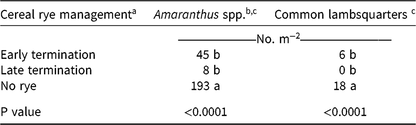
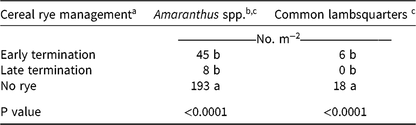
At 5 WATr, only the main effect of cereal rye management was significant at Delaware in 2017 (P < 0.0001) (Table 2), but only the main effect of residual herbicide application timing was significant at Delaware in 2018 (P = 0.0154); main effects and interactions were not significant at New Jersey in 2018 (P > 0.05). At Delaware in 2017, cereal rye reduced Amaranthus spp. density from 193 plants m−2 with no cereal rye to 45 plants m−2 (77%) and 8 plants m−2 (96%), with early- and late-terminated cereal rye, respectively. At Delaware in 2018, Amaranthus spp. density was greater with the at-transplant treatment (9 plants m−2), compared with the no residual herbicide (5 plants m−2) and 2 WATr (4 plants m−2) treatments (data not shown).
For common lambsquarters density, only the main effect of cereal rye management was significant 2 WATr for Delaware in 2017 (P = 0.0004) and for New Jersey in 2018 (P = 0.005), but main effects and interactions were not significant for Delaware in 2018 (P > 0.05). At Delaware in 2017, cereal rye reduced common lambsquarters density from 14 plants m−2 with no cereal rye to an average of 2 plants m−2, or by 86% with cereal rye (data not shown). We observed similar results at New Jersey in 2018, with more common lambsquarters without cereal rye, 23 plants m−2, compared with an average of 12 plants m−2 with cereal rye (data not shown).
At 5 WATr, only the main effect of cereal rye management was significant for common lambsquarters density at Delaware in 2017 (P < 0.0001) (Table 2), but main effects and interactions were not significant at Delaware and New Jersey in 2018 (P > 0.05 for both). At Delaware in 2017, common lambsquarters density was reduced from 18 plants m−2 to 6 plants m−2 (67%) and 0 plants (100%), with early- and late-terminated cereal rye, respectively. Neither halosulfuron nor S-metolachlor are labeled for POST control of common lambsquarters.
Effect of cereal rye management on Amaranthus spp. and common lambsquarters density 5 wk after transplant at Delaware in 2017.
a Cereal rye was terminated with clethodim 136 g ha−1 + nonionic surfactant 0.25% vol/vol at 3 (early termination) or 5 (late termination) wk after transplant in 2017.
b Includes Palmer amaranth and smooth pigweed.
c Data averaged over herbicide treatment. Means followed by the same letter are not significantly different according to Fisher LSD (P = 0.05).
Although, common ragweed was seeded in microplots, density was low; therefore, analysis could not be run on the plant as a separate species. Ivyleaf morningglory (Ipomoea hederacea Jacq.) was also present at all locations but was not significantly affected by cereal rye management and herbicide treatments. Ivyleaf morningglory was better able to compete with rye, which also provided support for the vining morningglory. In addition, ivyleaf morningglory is not controlled by S-metolachlor and, like other broadleaf weeds, was too large to control with the POST-transplant halosulfuron.
Weed Biomass
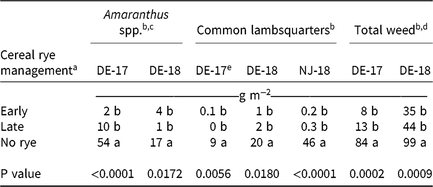
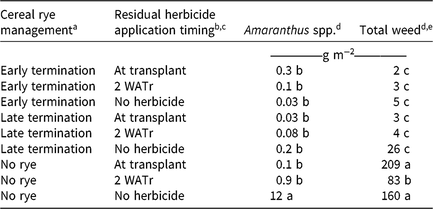
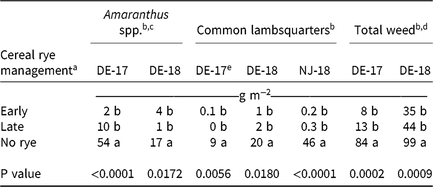
Only the main effect of cereal rye management was significant for Amaranthus spp. biomass at Delaware in 2017 (P < 0.0001) and Delaware in 2018 (P = 0.0172) (Table 3). At Delaware in 2017, cereal rye reduced Amaranthus spp. biomass from 54 g m−2 with no cereal rye to 2 g m−2 (96%) and 10 g m−2 (82%), with early- and late-terminated rye, respectively (Table 3). At Delaware in 2018, cereal rye reduced Amaranthus spp. biomass from 17 g m−2 with no cereal rye to 4 g m−2 (77%) and 1 g m−2 (94%), with early- and late-terminated rye, respectively. There was a significant cereal rye management by residual herbicide application timing interaction for New Jersey in 2018 (P < 0.0001), but all treatments reduced Amaranthus spp. biomass by an average of 98% compared with the no cereal rye, no herbicide treatment (Table 4). Residual herbicide treatments were likely more effective on Amaranthus spp. at the New Jersey site because the Delaware sites included ALS-resistant Palmer amaranth, which would not have been controlled by halosulfuron applications.
The effect of cereal rye management on Amaranthus spp., common lambsquarters biomass, and total weed biomass at study sites in 2017 and 2018.
a Cereal rye was terminated with clethodim 136 g ha−1 + nonionic surfactant 0.25% vol/vol at 3 (early) or 5 (late) wk after transplant in 2017, and 4 (early) or 6 (late) wk after transplant in 2018.
b Data averaged over herbicide treatment. Means followed by the same letter are not significantly different according to Fisher LSD (P = 0.05).
c Includes Palmer amaranth and smooth pigweed.
d Total weed biomass consisted of carpetweed (Mollugo verticillata L.), common lambsquarters, common purslane (Portulaca oleracea L.), common ragweed, yellow woodsorrel (Oxalis stricta L.), Amaranthus spp., ivyleaf morningglory, and large crabgrass [Digitaria sanguinalis (L.) Scop.].
e Abbreviations: DE-17, Delaware 2017; DE-18, Delaware 2018; NJ-18, New Jersey 2018.
For common lambsquarters biomass, only the main effect of cereal rye management was significant at Delaware in 2017 (P = 0.0056) and in 2018 (P < 0.018), and New Jersey in 2018 (P < 0.0001) (Table 3). At Delaware in 2017, cereal rye reduced common lambsquarters biomass from 9 g m−2 with no cereal rye to 0.1 g m−2 (99%) and 0 g m−2 (100%), with early- and late-terminated rye, respectively. Results were similar for Delaware in 2018 and New Jersey in 2018. At Delaware in 2018, cereal rye reduced common lambsquarters biomass from 20 g m−2 with no cereal rye to 1 g m−2 (95%) and 2 g m−2 (90%) with early- and late-terminated rye, respectively. At New Jersey in 2018, cereal rye reduced common lambsquarters biomass from 46 g m−2 with no cereal rye to 0.2 g m−2 (99%) and 0.3 g m−2 (99%), with early- and late-terminated rye, respectively.
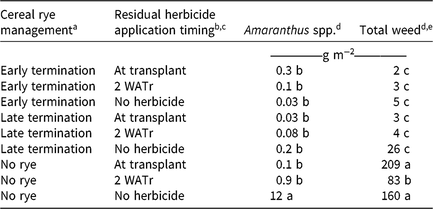
The effect of cereal rye management and residual herbicide application timing on Amaranthus spp. and total weed biomass at New Jersey in 2018.
a Cereal rye was terminated with clethodim 136 g ha−1 + nonionic surfactant 0.25% vol/vol at 4 (early termination) or 6 (late termination) wk after transplant in 2018.
b Residual herbicide application: halosulfuron at 15 g ha−1 + S-metolachlor at 1,346 g ha−1+ nonionic surfactant at 0.25% vol/vol.
c Abbreviation: WATr, wk after transplant.
d Means followed by the same letter are not significantly different according to Fisher LSD (P = 0.05).
e Total weed biomass consisted of American black nightshade (Solanum americanum Mill.), broadleaf dock (Rumex obtusifolius L.), carpetweed, common hawkweed (Hieracium lachenalii Suter), common lambsquarters, common mallow (Malva neglecta Wallr.), common purslane, common ragweed, common speedwell (Veronica officinalis L.), cutleaf evening-primrose (Oenothera lacinata Hill), dandelion (Taraxaxum officinale F.H. Wigg), European woodsorrel, giant foxtail (Setaria faberi Herrm.), oakleaf goosefoot (Chenopodium glaucum L.), horseweed (Erigeron canadensis L.), smooth pigweed, ivyleaf morningglory, large crabgrass, smallflower galinsoga (Galingsoga parviflora Cav.), spurred anoda [Anoda cristada (L.) Schltdl.], velvetleaf (Abutilon theophrasti Medik), white clover (Trifolium repens L.), and yellow nutsedge (Cyperus esculentus L.).
Only the main effect of cereal rye management was significant for total weed biomass at Delaware in 2017 (P < 0.0002) (Table 3); however, the main effects of cereal rye management (P = 0.0009) and residual herbicide application timing (P = 0.0042) were significant for Delaware in 2018, but there was no interaction (P = 0.4728). At Delaware in 2017, cereal rye reduced total weed biomass from 84 g m−2 with no cereal rye to 8 g m−2 (91%) and 13 g m−2 (85%), with early- and late-terminated rye, respectively. We observed analogous results for Delaware in 2018, with cereal rye reducing total weed biomass from 99 g m−2 with no cereal rye to 35 g m−2 (65%) and 44 g m−2 (56%), with early- and late-terminated rye, respectively. When averaged over cereal rye management, a residual herbicide application timing reduced total weed biomass from 92 g m−2 with no residual herbicide to 34 g m−2 (63%) and 52 g m−2 (44%), with residual herbicides applied at transplant and 2 WATr, respectively, at Delaware in 2018 (data not shown).
There was a significant cereal rye management by residual application timing interaction for total weed biomass at New Jersey in 2018 (P < 0.0063) (Table 4). Treatments planted with cereal rye, regardless of residual herbicide application timing, had lower total weed biomass, (average, 7 g m−2) compared with no cereal rye (average, 151 g m−2). When cereal rye was absent, total weed biomass was lower when a residual application was made 2 WATr (83 g m−2), but no differences in biomass were observed between the at-transplant herbicide application (209 g m−2) and no herbicide treatment (160 g m−2).
Yield
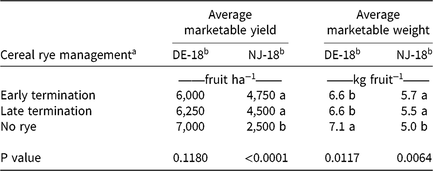
Yields were low for Delaware site in 2017. The average number and weight of marketable fruit were 135 fruits ha−1 and 10 kg fruit−1, respectively; however, main effects and interactions were not significant (P > 0.05). At Delaware in 2018, the total number of marketable fruit averaged 6,417 fruit ha−1, but the main effects and interactions were not significant (Table 5). At New Jersey in 2018, the main effects of cereal rye management (P < 0.0001) and residual herbicide application timing (P = 0.0003) were significant for marketable fruit number, but there was no interaction (P = 0.7179). When averaged over residual herbicide application timing, the average marketable fruit number was higher for early- and late-terminated rye compared with no rye. When averaged over cereal rye management, the average number of marketable fruit for the weed-free and residual herbicide treatments (4,250 fruit ha−1) was higher compared with the no herbicide treatment (2,750 fruit ha−1) (data not shown).
The effect of cereal rye management on average marketable watermelon yield and weight in Delaware and New Jersey in 2018.

a Cereal rye was terminated with clethodim 136 g ha−1 + nonionic surfactant 0.25% vol/vol at 4 (early termination) or 6 (late termination) wk after transplant.
b Means followed by the same letter are not significantly different according to Fisher LSD (P = 0.05). If no letters were included for a column, then no statistical differences were noted.
Only the main effect of cereal rye management was significant for average marketable weight at Delaware in 2018 (P = 0.0117) and New Jersey in 2018 (P = 0.0064). Although there were no differences between early- and late-terminated cereal rye, results were not consistent across trials. At Delaware in 2018, average marketable watermelon weight was lower in cereal rye compared with no cereal rye; however, at New Jersey in 2018, average marketable weight was higher in cereal rye compared with no cereal rye (Table 5).
Average watermelon sugar content differed by site-year (P = 0.0129), but the main effects of cereal rye management and residual herbicide application timing and their interactions were not significant (P > 0.05). Average sugar content for Delaware in 2018 (11.6 brix) was higher than Delaware in 2017 (9.8 brix) and New Jersey in 2018 (10.0 brix). The difference in sugar content for the Delaware sites is likely due to lower yield and poorer fruit quality in 2017, compared with 2018. The difference in sugar content for Delaware in 2018 and New Jersey in 2018 can be attributed to the different soil types at both locations. Watermelon grows best in well-drained, sandy to sandy loam soils, and watermelons grown on heavier soils may contain less sugar (Saha and Ernst Reference Saha and Ernst2018). The soil type in Delaware is typical for watermelon growth, but the New Jersey site had a heavier soil type. Furthermore, excessive rainfall can also reduce fruit quality (Masabni Reference Masabni2011), and the New Jersey site had nearly two to four times more rainfall (83 cm) compared with the Delaware sites (24 to 45 cm during 2017 and 2018, respectively).
Our results are consistent with those of previous studies in which a reduction in summer annual-weed density and biomass was observed with spring-seeded cereal rye (Akemo et al Reference Akemo, Regnier and Bennett2000; Ateh and Doll Reference Ateh and Doll1996). Although spring-seeded cereal rye reduced weed density and biomass, other weed management tactics were needed for season-long control. High-biomass production is often the influential driver in the suppression of summer annual weeds (MacLaren et al. Reference MacLaren, Swanepoel, Bennet, Wright and Dehnen-Schmutz2019; Smith et al. Reference Smith, Atwood, Pollnac and Warren2015). Target biomass production for weed suppression with fall-planted cover crops in the mid-Atlantic region is at least 4,480 kg ha−1 (Wallace et al. Reference Wallace, Lingenfelter, VanGessel, Johnson, Vollmer, Besançon, Flessner and Chandran2019); however, other studies have reported good weed suppression with at least 2,440 g ha−1 cereal rye (Mischler et al. Reference Mischler, Curran, Duiker and Hyde2010; Price et al. Reference Price, Williams, Duzy, McElroy, Guertal and Li2018, Wiggins et al. Reference Wiggins, Hayes and Steckel2016). In addition to biomass production, cereal rye used for weed suppression is often terminated near the boot stage (Feekes stage 10). This high-residue cover includes lignified stems with a high C:N ratio, resulting in slower decay, and longer weed suppression (Norsworthy et al. Reference Norsworthy, Ward, Shaw, Llewellyn, Nichols, Webster, Bradley, Frisvold, Powles, Burgos, Witt and Barrett2012; USDA 2011). However, spring-seeded cereal rye in this study was terminated prior to stem elongation (Feekes stage 6). As a result, less than 2,000 kg ha−1 biomass was produced, and it was primarily leaf tissue and less-rigid stem tissue prone to rapid decay. Therefore, cereal rye did not remain on the soil surface long after termination.
Although residual herbicides were included in the study, cereal rye alone often performed as well as cereal rye with a residual herbicide, and as well as or better than a residual herbicide alone. Residual herbicide applications did not influence lambsquarters density or biomass. Likewise, Price et al. (Reference Price, Williams, Duzy, McElroy, Guertal and Li2018) showed no difference in early-season broadleaf weed control with herbicide compared with no herbicide treatments in the presence of fall-seeded cereal rye. On the contrary, due to a lack of ALS-resistant Palmer amaranth, herbicide applications alone provided similar results for Amaranthus spp. density and biomass as did herbicide applications with cereal rye and cereal rye alone at the New Jersey site. Therefore, spring-seeded cereal rye may provide an additional tool for suppressing herbicide-resistant weeds in watermelon and other plasticulture systems where fewer herbicide options are available.
Although we did not evaluate additional tactics for full-season weed control, the reduction in weed density and biomass provided by cereal rye could result in more efficient control with effective POST herbicides or other weed control tactics. For example, in this study, cereal rye biomass accumulation peaked before vines began to grow off the plastic mulch (approximately 4 WATr). Consequently, a shielded, nonselective, POST-transplant herbicide application could be used at this time to terminate the cereal rye and control emerged weeds. Additional research is needed to determine how this system may be integrated with other tactics to manage weeds throughout the entire growing season.
Acknowledgments
This project was funded by the Northeastern IPM Center through grant no. 2014-70006-22484 from the National Institute of Food and Agriculture, Crop Protection and Pest Management Regional Coordination Program. The authors thank the weed science and farm crews at the University of Delaware Carvel Research and Education Center and the Rutgers Agricultural Research Center in Bridgeton for their assistance and technical support. No conflicts of interest have been declared.