


Introduction
I was very disappointed when we asked the [nursing home] staff if we could come and visit; they told us that the patients needed peace and quiet …We used to go there from the senior association and the dementia association and offer [to arrange different] activities. But, [the staff] did not even answer us. Eventually, we just told them that we were coming! Once we brought … last year, we arranged for a marching band to come. [Marching bands] do make quite a bit of noise! They then allowed us to go into the hallway [just inside the entrance door], and there we held a concert. It was SO popular! And many of the … There was this demented man – he clapped his hands, kept the pace and really enjoyed it. Oh, it was great! Imagine – they had told us not to come there with … not to bring anything noisy because it was impossible and because then [the patients] would be completely hopeless to deal with, restless, and so on. (Senior volunteer)
Voluntary work largely contributes to society, both at the community and individual levels. In financial terms, estimates suggest that volunteer activities are worth US $225 billion per year in the United States and US $57 billion per year in the United Kingdom (UK) (Petriwskyj and Warburton Reference Petriwskyj and Warburton2007). Even in Norway, which has an extensive public sector, the value of voluntary work is estimated at 4 per cent of Gross Domestic Product (Dam and Brathaug Reference Dam and Brathaug2010). Seniors represent valuable resources in the voluntary sector. Because people are living longer and healthier lives, the number of senior volunteers is likely to increase in the coming years.
Voluntary work has been defined as ‘unpaid work provided to parties to whom the worker owes no contractual, familial, or friendship obligations’ (Tilly and Tilly Reference Tilly, Tilly, Smelser and Swedberg1994: 291). Other scholars have argued that the definition should be broadened to also include ‘the myriad informal ways of ‘helping out’, such as running errands for an elderly neighbor, that should also be treated as productive activity’ (Wilson and Musick Reference Wilson and Musick1997: 694). Voluntary work carried out in the context of organisations is often referred to as formal volunteering, whereas voluntary work independent of organisations is referred to as informal volunteering (United Nations Volunteers 2015; Wilson and Musick Reference Wilson and Musick1997; Wollebæk, Sætrang and Fladmoe Reference Wollebæk, Sætrang and Fladmoe2015).
A systematic review of the literature on senior volunteering revealed that relatively few studies have focused specifically on seniors or include seniors as a specific group (Petriwskyj and Warburton Reference Petriwskyj and Warburton2007). The literature on senior volunteering has tended to focus on these individuals’ motivations for and benefits of volunteering. Some of the literature focusing on motivations for senior volunteering has distinguished altruistic and egoistic reasons for volunteering. Chappell and Prince (Reference Chappell and Prince1997) found that seniors were more likely to volunteer than younger adults for reasons related to obligation and social value. Wymer (Reference Wymer1999) also suggested that seniors are more altruistic than younger volunteers. Other scholars (Wuthnow Reference Wuthnow1991) have suggested that the motivations to volunteer may be twofold: to benefit oneself and others. Callow (Reference Callow2004: 263) argued that a distinction should be made between motives and benefits because they are not always the same: ‘a person may be motivated to volunteer for altruistic reasons, yet at the same time be satisfied with the experience because it meets socialisation needs’. Based on a meta-analysis of 37 independent studies, researchers concluded that senior volunteers’ sense of wellbeing was strengthened through volunteering (Wheeler, Gorey and Greenblatt Reference Wheeler, Gorey and Greenblatt1998). Their study also showed that older adults represented an important adjunct resource for meeting the service needs of other older adults. More recent research has also concluded that senior volunteering has positive effects on the volunteers’ self-esteem, quality of life, wellbeing and health (Anderson et al. Reference Anderson, Damianakis, Kröger, Wagner, Dawson, Binns, Bernstein, Caspi and Cook2014; Greenfield and Marks Reference Greenfield and Marks2004; Lum and Lightfoot Reference Lum and Lightfoot2005; Musick and Wilson Reference Musick and Wilson2003; Narushima Reference Narushima2005; Onyx and Warburton Reference Onyx and Warburton2003), contributes to informal learning (Serrat et al. Reference Serrat, Petriwskyj, Villar and Warburton2016), and results in social and economic benefits for individuals and the community (Ironmonger Reference Ironmonger, Warburton and Oppenheimer2000; Morrow-Howell et al. Reference Morrow-Howell, Lee, McCrary and McBride2014; Narushima Reference Narushima2005; Neill, Morrow-Howell and Wilson Reference Neill, Morrow-Howell, Wilson, Setterson and Angel2011). Few studies have focused on individual experiences of volunteering (Wilson Reference Wilson2012). Based on a critical review of the literature on senior volunteering, Petriwskyj and Warburton (Reference Petriwskyj and Warburton2007) noted that most studies neglect to acknowledge diversity by treating volunteering as one category of activity regardless of the context and the types of activities performed.
This study does not focus solely on seniors’ motivations for and benefits of volunteering. Rather, we explore how policy makers, society, health-care professionals and senior volunteers perceive senior volunteers. Moreover, the study focuses on volunteering in a specific context: older adult care.
Voluntary work and care services in the Norwegian context
During the 1960s and 1970s, there was a large degree of consensus regarding the development of the Norwegian welfare state (Selle Reference Selle1993). However, since the 1980s, responsibility has shifted between levels (from the state to the regional and local administrative levels) and between sectors (from the public sector to the private and voluntary sectors) (Rømming Reference Rømming1999). These shifts were induced by several reform processes during the 1980s and 1990s that resulted from increased pressure on the welfare state. Additionally, an ideological shift occurred regarding the responsibilities of the welfare state given the strengthening of neo-liberal ideas, the introduction of New Public Management involving an increased focus on cost effectiveness (Christensen and Lægreid Reference Christensen and Lægreid2001; Rømming Reference Rømming1999), and management according to objectives and results (Lægreid, Nordø and Rykkja Reference Lægreid, Nordø and Rykkja2013). Scholars have noted that New Public Management is a double-edged sword that prescribes both centralisation and devolution (Christensen and Lægreid Reference Christensen and Lægreid2001). The national policy makers outline the policies, whereas the financing and execution of the policies has become a local (municipal) responsibility. These shifts have resulted in an increased interest among policy makers on how the voluntary sector can contribute to the co-production of cost-effective and sustainable care services.
Although Norway still has an extensive public sector, the voluntary sector is strong (Selle Reference Selle1993). In 2009, the Norwegian adult population performed nearly 200 million hours of voluntary work (Wollebæk and Sivesind Reference Wollebæk and Sivesind2010).
Popular movements have dominated Norwegian civil society since the mid-1800s. These movements have been characterised by a hierarchical organisational model that consists of three organisational levels, namely the national, regional and local levels (Gulbrandsen and Ødegård Reference Gulbrandsen and Ødegård2011). Prior to the 1970s, the voluntary sector was rarely mentioned in Norwegian public documents. However, throughout the 1970s and 1980s, attention increased (Strømsnes Reference Strømsnes, Trägårdh, Selle, Henriksen and Hallin2013). The idea of a third sector was officially introduced in the late 1980s in the NOU 1988:17 Frivillige organisasjoner [Norwegian Official Report 1988:17 Voluntary Organisations] (Finans- og tolledepartementet 1988).
In 2007, the Norwegian government published an official report entitled Frivillighet for alle [Volunteerism for All] (Det kongelige kultur- og kirkedepartement 2007). The objective of this report was to establish a ‘new and overall voluntary policy’ and establish the ‘voluntary sector as an independent sector in society-at-large’ (Det kongelige kultur- og kirkedepartement 2007: 11). In 2005, a national umbrella organisation for voluntary organisations, Frivillighet Norge [Volunteerism Norway], was established. During the 1990s, volunteer centrals were established. According to the Norwegian government, the volunteer centrals are ‘local meeting places where individuals and organisations are tied together in order to create good conditions for volunteerism, activities and co-operation with the local public services’ (Kulturdepartementet 2016). The volunteer centrals were designed to link individual volunteers, voluntary organisations and individuals in need of assistance. In 2015, there were 419 volunteer centrals in Norway (Frivillig Sentraler Reference Frivillig Sentraler2015). The municipalities owned approximately one-half of the centrals, whereas various groups, organisations and foundations owned the rest. Each central has a board and an employed manager. In 2012, 80 per cent of the managers were women, and many of them had professional experience in health-care services (Lorentzen Reference Lorentzen2014). Since 1991, the subsidies of the volunteer centrals have been a state responsibility (Kommunal- og moderniseringsdepartementet 2015). In June 2016, the Norwegian national government transferred the responsibility for subsidies of the volunteer centrals to the local (municipal) governments (Kulturdepartementet 2016). To some extent, the volunteer centrals represented the formalisation of informal voluntary work. They were a new element in a field previously dominated by the public sector and governed by politicians and professionals, and the voluntary sector was dominated by democratic voluntary organisations (Lorentzen Reference Lorentzen2010, Reference Lorentzen2012).
The Norwegian voluntary sector is currently undergoing changes. According to recent research, the voluntary sector is moving towards a format of organised individualism (Wollebæk and Sivesind Reference Wollebæk and Sivesind2010). That is, individuals do not largely identify with specific organisations and are less willing to enter formalised and binding relationships with organisations (memberships). Researchers suggest that more research is required to understand the mechanisms behind these changes. However, researchers note that the increased level of prosperity in Norwegian society may be one reason. More people can and are willing to pay for services. Additionally, because of increased expectations for success in work and family life, people may be less likely to spend their spare time performing voluntary work (Wollebæk and Sivesind Reference Wollebæk and Sivesind2010). The Norwegian trend is consistent with the development of new forms of volunteer activities, which are more episodic, ‘short in duration and shorn of commitment’, as described by scholars in other industrial societies (cf. Wilson Reference Wilson2012: 194). Volunteers’ motivations are more closely related to self-development and self-realisation, and people are more willing to contribute donations (money) than time (work). Simultaneously, policy makers frequently discuss efforts by unpaid volunteers rather than organisation membership as a solution to future welfare challenges (Wollebæk and Sivesind Reference Wollebæk and Sivesind2010). This tendency is alarming considering the findings from the Johns Hopkins Comparative Nonprofit Sector Project that involved 24 countries (Salamon and Sokolowski Reference Salamon and Sokolowski2001). Their study indicated that the countries with more developed non-profit organisational structures tended to have a higher volume of volunteer activity, because these structures were instrumental in recruiting and maintaining volunteer participation.
Since the 1980s, Norway has become more similar to other European countries, where the third sector has traditionally played a major role in providing care services, such as Germany and the Netherlands, or where the significance of these organisations has increased over recent decades because of outsourcing in the 1990s, such as the UK (Brandsen and Pestoff Reference Brandsen and Pestoff2006). Paradoxically, although the interest in and dependence on it have increased, the voluntary sector seems to have lost some of its distinctiveness. The traditional boundaries between the state, market and voluntary sector have been blurred (Brandsen and Pestoff Reference Brandsen and Pestoff2006). In the present article, we demonstrate that senior volunteers’ efforts tend to be perceived both by policy makers and health-care professionals as supplementary or complementary and, to a lesser degree, as alternative or adversarial, to public services. In this respect, our study is consistent with the findings from the studies on the third sector in other countries, for example, in Japan, where a closer co-operation between third-sector organisations and the government reportedly has caused a loss of their distinctiveness and independence (Tsukamoto and Nishimura Reference Tsukamoto and Nishimura2006).
Theoretical considerations
According to Foucault, discourse is the production of meaning through language. It is a ‘group of statements that belong to a single system of formation’ (Foucault [1972] Reference Foucault2002: 121), ‘a group of statements which provide a language for talking about – a way of representing the knowledge about – a particular topic at a particular historical moment’ (Hall Reference Hall, Wetherell, Taylor and Yates2001: 72). Every society has a regime of truth (Foucault and Gordon Reference Foucault and Gordon1980: 1972–7). These regimes of truth are sustained by the discursive formations produced by the relationships between statements. Texts, such as government white papers, are both products of and actively produce discursively based understandings of aspects of the social world (cf. Cheek Reference Cheek2004). Consequently, we believe that a closer examination of government white papers written at two different points in time can provide insight into the predominant understanding of a particular phenomenon, such as senior volunteers, in a specific society at different points in time.
Furthermore, Bamberg (Reference Bamberg2004) noted that discourses generate positions that subjects can adopt. Individuals’ stories are framed and shaped by pre-existing dominant discourses or master narratives. However, individuals are not merely passively ‘subjected’ to pre-existing discourses. They are also ‘agentively (and responsibly) bringing about (in the sense of drawing up) a position vis-à-vis the kind of master narratives that seem to position him or her’ (Bamberg Reference Bamberg2004: 336) by embracing, distancing themselves from or resisting such discourses. In this article, we explore how senior volunteers are positioned, both in their own stories and in health-care professionals’ stories, in reference to the dominant discourses represented in the government white papers.
Methods
This article is based on an analysis of two central Norwegian government white papers regarding older adult care and welfare services and focus group interviews with senior volunteers in one municipality in northern Norway and health-care personnel in three different municipalities in northern Norway.
The following questions guided the analysis:
• What dominant discourses on senior volunteers are represented in the government white papers?
• How are senior volunteers positioned in health-care professionals’ narratives?
• How do senior volunteers position themselves in their own narratives?
• How do health-care professionals and senior volunteers negotiate the dominant discourses on senior volunteers in their narratives?
Government white papers
Two Norwegian government white papers regarding older adult care and welfare services were included in this study. We focused on government plans because these documents describe what policy makers perceive as realities and challenges at a given point in time and contain their suggestions for initiatives to meet the described challenges. Care Plan 2020: The Norwegian Government's Plan for the Care Service Field for 2015–2020 (Helse- og omsorgsdepartementet 2015) was included because this plan is the most recently published Norwegian government white paper that addresses older adult care and welfare services. We also included a government plan published at the early outset of a period with increased public attention on the voluntary sector (described above). Report No. 50 (1996–1997) Action Plan for the Care of the Elderly (Sosial- og helsedepartementet 1996) was the first government white paper that focused solely and comprehensively on older adult care and welfare services and was consequently included in this study. These two documents were published over a period of 19 years.
These documents are presented in Table 1.
Government white papers
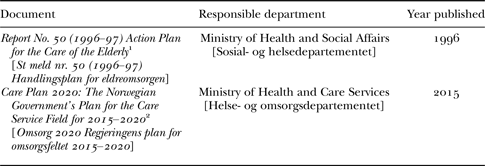
Notes: 1. This is referred to as the ‘Action Plan’ in the text. In the Results section, the abbreviation AP is used in the citations. 2. This is referred to as the ‘Care Plan’ in the text. In the Results section, the abbreviation CP is used in the citations.
Participants and recruitment
The focus group interviews with health-care professionals were conducted in the framework of a larger study that focuses on the co-operation between formal and informal care-givers of persons with dementia. Only the interview material related to the health-care professionals’ experiences with volunteers were included in the analysis for this article. The idea of conducting a focus group interview with senior volunteers was a direct result of the fact that senior volunteers’ efforts and contributions were a recurring theme in the focus group interviews with the health-care professionals. New research questions arose from the results of the larger study, and consequently, stepwise sampling was conducted because new material was needed to answer the evolving research questions effectively (cf. Malterud Reference Malterud2001).
Barbour (Reference Barbour2007) suggested that preliminary fieldwork can sensitise the researcher to relevant criteria for sampling. No such fieldwork was conducted in this study. However, one of the authors (TH) had conducted a research project in one of the involved communities several years prior to the current study. Throughout this previous research project, she established contact with individuals and learned about several voluntary organisations in the community. As stated by Barbour (Reference Barbour2007: 58), ‘researchers can benefit from the knowledge of community groups, which can play an important role in educating the researcher as to the diversity, nuances and sensitivities involved’. The interviewers contacted a person from the previous research project with extensive knowledge of voluntary organisations and volunteers in the community and informed this person of the study. Based on the focus of this study, we asked this person to distribute informational material and consent forms to the seniors involved in voluntary work for older adults in the community. We asked the contact person to invite people from the most significant voluntary associations in the community and from different geographical areas in the municipality in a purposeful sampling strategy. Persons who were interested in participating returned letters of consent in prepaid envelopes addressed directly to the researchers. After receiving six letters of consent, we scheduled interview appointments. One of the individuals who had returned the letter of consent did not come to the interview. Consequently, five persons were interviewed. The use of local gatekeepers for recruitment always involves a risk that they only invite persons that they assume will report experiences and opinions similar to their own (gatekeeper bias). We cannot rule out the possibility that this was the case in our study, although the focus group participants related a rich variety of experiences in their stories. Instead of applying a local gatekeeper to contact senior volunteers, we could have simply contacted the official voluntary associations in the community. However, by applying such a strategy, we would only have reached persons involved in the respective associations, and it would have been more difficult to recruit participants from different geographical areas of the municipality.
The participants in the focus group of volunteers are presented in Table 2. Four of the participants were above the retirement age, and one of the participants was employed. The participants lived in different parts of the municipality. None of the participants had health care-related educational backgrounds, and none had been employed in health-care services. Two of the participants (V1 and V3) were formerly employed in other municipal services and were consequently well informed regarding the municipal administrative system. Two of the participants (V1 and V2) had extensive experience from local political and organisational activities.
Volunteers
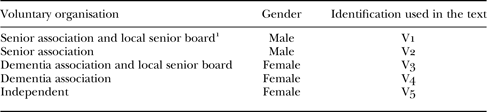
Note: 1. The local senior boards are statutory consultative bodies for the municipal administrations.
The participants in the focus groups of health-care professionals were recruited in three Norwegian municipalities. The only inclusion criterion was that the participant was involved in providing everyday care for the users of local health-care services, which means that the participants were either registered nurses or licensed practical nurses. The participants’ work experience ranged from seven to 40 years in the public health-care service sector. All the participants were women, which reflects the fact that the majority of registered nurses and licenced practical nurses in local health-care services for older adults in Norway are women. The managers of local care services distributed informational material and consent forms to potential participants. Signed consent forms were returned directly to the researchers in prepaid envelopes. Consequently, the local managers had no information about who chose to participate in the study. After receiving letters of consent, we scheduled focus group interviews in the respective communities. The focus groups varied in size and composition, with the smallest group consisting of only two participants and the largest group consisting of eight participants (see Table 3).
Health-care professionals
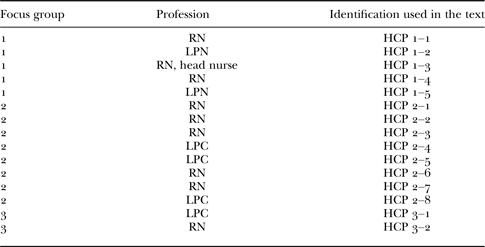
Notes: RN: registered nurse. LPN: licensed practical nurse.
The size of the groups influenced the group dynamics. The interview with only two participants could scarcely be considered a focus group, whereas the focus group consisting of eight participants was balanced at its maximum, both in terms of moderating and in terms of transcribing and analysing the data.
Focus group interviews
Our understanding of a focus group is consistent with Barbour (Reference Barbour2007: 2), who noted that ‘any group discussion may be called a focus group as long as the researcher is actively encouraging of, and attentive to, the group interaction … ensuring that participants talk amongst themselves rather than interacting only with the researcher’.
The focus group interview with the volunteers was conducted at a hotel located in the community, whereas the interviews with the formal care-givers were conducted in meeting rooms at local nursing homes or health centres. The interviews were digitally recorded and were from 90 to 130 minutes in duration. The interview with the volunteers was the longest, lasting 130 minutes.
Two researchers were present during the interviews; one was responsible for asking the questions and initiating group discussions and the other focused on observing and taking notes regarding the group interactions and identifying new leads as they appeared. All participants were active and engaged in the interviews. However, the interviewees varied in the manner in which they told their stories. Some of the interviewees spoke unsolicited, whereas other participants needed prompts from the two researchers to speak. As mentioned, the interviews with the health-care professionals were conducted in the framework of a larger study that focused on several other issues in addition to volunteering. Consequently, not all participants in the focus groups of health-care professionals addressed issues related to volunteers and volunteering.
Broad topic guides were used in the interviews. In the guide for the interviews with health-care professionals, experiences with volunteers were only one among several other topics regarding the co-operation between formal and informal care-givers for persons with dementia. One of the topics introduced in these focus groups regarded resources in the communities other than public services, such as voluntary organisations and associations. The main topic of the interview with the volunteers was their experiences of co-operation with the public care services. The topic guide also included previous and current voluntary associations in the community, reasons to engage in voluntary work and the recruitment of new volunteers.
Immediately after the interviews, the researchers discussed them and wrote field notes; then, the interviews were transcribed. Before proceeding with a new interview, the interviewers listened again to the audio recordings of the previous interviews to identify neglected leads and situations in which the interviewers failed to seek clarification. The topic guide for the focus group of health-care professionals was revised accordingly throughout the entire interview period.
At the beginning of the interviews, the interviewer described the purpose of the interview and assured the participants of their anonymity. All group members agreed to maintain confidentiality. All participants introduced themselves, which later proved to be useful with respect to voice recognition during transcription.
Ethics
The study was approved by the Norwegian Social Science Data Services. All participants provided their informed consent to participate. The participants were informed of their right to withdraw from the study without stating a reason, and they were assured that confidentiality would be maintained.
Analysis
Initially, we read the government white papers several times to obtain an overall impression of the background. We then scanned the documents for passages focusing specifically on volunteerism, in general, and senior volunteers, in particular. Passages and statements in the texts that appeared to be relevant were highlighted. Finally, the highlighted statements were compared to identify similarities of, differences between or conflicts among statements that were found in the same or different documents.Footnote 1
The audio recordings of the focus group interviews were replayed, and the transcribed texts were reread several times.Footnote 2 We examined a single interview at a time in a process that involved a purposeful search for segments related to voluntary work, volunteers and volunteerism. A positioning analysis, as suggested by Bamberg (Reference Bamberg1997, Reference Bamberg2004), is a suitable approach to study the construction of senior volunteers in their own and health-care professionals’ stories. A positioning analysis focuses on how characters are positioned in the time and place of the story (positioning level 1) and on the interactive work performed between the participants in an interactive setting (positioning level 2). However, in this article, we pay particular attention to the participants’ positioning of themselves and others with regard to broader discourses – that is, social and cultural processes beyond the immediate storytelling situation; in other words, Bamberg's positioning level 3. We agree with De Fina (Reference De Fina2013: 58) who argued that positioning level 3 ‘constitutes a middle ground construct that allows for linking local talk and identities with socio cultural processes and relations that surround and have an impact on the local interaction in more or less direct ways’.
Limitations and strategies to enhance the quality of the study
This is a qualitative study that involved relatively few participants and was conducted in a specific geographical and socio-political context. Our results must be read and applied considering these limitations. Two researchers with different clinical, theoretical and methodological expertise were involved in the entire research process (planning the study, formulating the research questions, constructing and revising the interview guide, conducting the interviews, and analysing the government white papers and the transcribed interviews). Their involvement provided rich opportunities for investigator triangulation in order to reduce the risk of biased decisions and interpretations (cf. Polit and Beck Reference Polit and Beck2012: 593). For example, in the immediate post-session debriefings, the two researchers involved in the focus group interviews compared notes, discussed issues and themes, and shared our views about the group dynamics. Furthermore, we believe that the analysis and discussion benefited from the two researchers bringing in our respective methodological and theoretical expertise. Moreover, we have presented and discussed our results and interpretations with a reference group consisting of representatives from the voluntary sector, the public health-care sector, senior boards, researchers and educators (https://uit.no/prosjekter/prosjektsub?p_document_id=458800&sub_id=460716). These discussions were not intended to be a substitute for participant validation or member checking (cf. Mays and Pope Reference Mays and Pope2000). However, the discussions with the reference group made us more confident about our interpretations. Furthermore, we have attempted to make our study interpretively rigorous by providing our readers with sufficient information regarding the context for our research and through the extensive use of quotations from both the governmental white papers and the interviews. However, more research involving larger samples in other geographical and socio-political contexts is necessary to extend our knowledge on senior volunteers as a resource in older adult care.
Results
Two documents, three discourses: prevention, sustainability and the crisis of capacity
Overall, the extent to which volunteers and volunteerism were addressed significantly differed in the two documents, the Action Plan for the Care of the Elderly (Sosial- og helsedepartementet 1996) and the Care Plan 2020 (Helse- og omsorgsdepartementet 2015). In the Action Plan, which was published in 1996, the topic was addressed in one specific sub-section (3.3.4 Familieomsorg og frivillige organisasjoners innsats [Family care and the efforts of voluntary organisations]). By contrast, in the Care Plan, which was published in 2015, the concepts of volunteerism and the voluntary sector recurred in several parts of the document. This result could imply increased attention to the role of volunteers in health-care services during the 19-year period studied, which is in line with previous research (Strømsnes Reference Strømsnes, Trägårdh, Selle, Henriksen and Hallin2013).
The Action Plan noted the problem of recruiting new members to long-established voluntary organisations. The concept of ‘a new type of volunteerism’ was introduced:
While the voluntary organisations traditionally have evolved around idealistic, charitable organisations’ desire to help others, the new type of volunteerism is to a greater extent a forum for self-activity and mutual help. (AP: 15)
The concept of a new type of volunteerism was not used in the Care Plan. However, the document referred to a ‘changing volunteerism’ (CP: 17). This document emphasised the voluntary sector's independence from political governance:
Volunteerism should be more independent of political governance than it has been the last years. The Government will give fewer guidelines for subsidies and transfers to the voluntary sector. (CP: 16)
However, the independence seemed to be restricted to the formal voluntary sector at the national level because other statements in the Care Plan indicated a more formalised co-operation between individual volunteers and the local public care services, for example, co-operation related to the care of individuals:
Agreements with family and volunteers should be established in individual plans to co-ordinate their efforts with the public care services. (CP: 15)
The representation of individual volunteers as resources to be administered by the local public care services was reinforced by the presentation of the training, guidance and co-ordination of volunteers as a public responsibility and the transmission of knowledge from the public care services to the volunteers (CP: 6, 15, 17, 18, 23).
Both documents indicated a change from long-established voluntary organisations towards more individually based volunteerism. In the Care Plan, general terms such as ‘the voluntary sector’ and ‘volunteerism’ were more frequently used with reference to individuals (CP: 6, 7, 9, 13, 15, 17, 18, 23, 49, 58) than to voluntary organisations (CP: 12, 16, 19).
In sum, we identified a change in who is considered the collaborating partner in the public sector – from national, partially publicly funded voluntary organisations to individual volunteers who are trained and managed by the local public sector.
The two documents suggested different actual tasks for volunteers to perform. In the Action Plan, two tasks were suggested as suitable for senior volunteers: assistance in the delivery of food to home-care service users and voluntary work at senior centres (AP: 17). Activities such as work at local senior centres (CP: 17) and activities in nursing homes and day care services (CP: 17) were suggested as suitable activities for senior volunteers in the Care Plan. However, the role of volunteers was also related to other aspects of the care services, such as the planning and design of the care services (CP: 12) and the design of individual care plans (CP: 15).
The most striking difference between the two documents with regard to the presentation of senior volunteers was related to the functions of volunteerism. In the Action Plan, voluntary work was presented primarily as a means to prevent loneliness among the senior volunteers and as a self-activating measure that could, in turn, reduce their need for care services:
Opportunities to engage in voluntary organisations, senior associations and in cultural activities in the municipalities are important to maintain social contact. Such activities could contribute to the maintaining of the elderly's social needs and consequently reduce their need for care services. (AP: 30)
In other words, voluntary work was presented as primarily benefiting the volunteers. Although this aspect of volunteerism was mentioned in the Care Plan (CP: 17), it was not predominant. Rather, in several sections throughout the document, volunteerism was presented as a necessity for providing future ‘sustainable care services’ along with other initiatives, such as rehabilitation, preventive measures and assistive technology (e.g. CP: 6, 23, 49).
There seems to have been a change in the discursive formations of senior volunteers from 1996 to 2015. In line with the definition of discourse as a group of statements that represent a particular topic at a particular historical moment, one might say that the two government white papers represent two different discourses on senior volunteerism. The prevention discourse, represented by the Action Plan, presents senior volunteers as individuals in need of self-activation and presents volunteerism as a measure to prevent volunteers’ loneliness and need for care services. The sustainability discourse, represented by the Care Plan, presents senior volunteers and volunteerism as necessary contributions to future ‘sustainable care services’.
The two documents differ regarding the discursive construction of individual senior volunteers as active agents. The prevention discourse positions senior volunteers at the receiving end, and the sustainability discourse positions senior volunteers as active contributors. However, both discourses are based on the assumption that care services are scarce. Within the prevention discourse, the activation of senior volunteers is a means to reduce their need for care services, and the sustainability discourse is based on the assumption that public care services alone cannot sufficiently meet the needs of the ageing population in the future. Both discourses echo a third overarching discourse concerning the disproportionate burdens that arise from the ageing population (Martin, Williams and O'Neill Reference Martin, Williams and O'Neill2009), which is called a crisis of capacity (Charise Reference Charise2012). The use of the concept of sustainability, commonly associated with environmental issues, reinforces the association with an anticipated crisis. The tendency to use concepts associated with environmental crisis in the public discourse on ageing has been noted elsewhere. For example, the literature has used the concepts of ‘apocalyptic demography’ (cf. Martin, Williams and O'Neill Reference Martin, Williams and O'Neill2009), ‘the ageing tsunami’ (cf. Barusch Reference Barusch2013), the ‘silver (or grey) tsunami’ and the ‘age wave’ (cf. Charise Reference Charise2012).
In the following section, we explore how senior volunteers are positioned in the health-care professionals’ narratives. Thereafter, we inquire into the senior volunteers’ positioning of themselves in their own narratives. We discuss how both the health-care professionals and the senior volunteers relate to the discourses represented in the government white papers by embracing, distancing themselves from, or explicitly or implicitly resisting these discourses.
Positioning of senior volunteers in health-care professionals’ narratives
The volunteers’ contributions to public care services were evident in the health-care professional’ narratives. Several of the health-care professionals praised the initiatives of the senior volunteers in their communities:
We have fantastic volunteers! They do everything … They do a fantastic job!’ (HCP 1–2)
We have an amazing Senior Association in our community … And, of course, the Dementia Association. That's a really strong association. (HCP 2–8)
The phrase ‘strong association’ indicates that the health-care professionals considered the Dementia Association an active and agentive partner in the community rather than merely a forum for social contact and activity among its members. However, the closeness and the formalisation of the co-operation between the senior volunteers and the public care services varied. In one community, the health-care professionals described close and formalised co-operation:
We have co-operated with [the senior volunteers] since 2008. Quite close co-operation. We make half-year plans for their activities. (HCP 1–3)
In another community, the health-care professionals reported no formalised partnership with senior volunteers:
There are two Senior Associations here. We have no contact with them. (HCP 3–1)
The health-care professionals described the volunteers as individuals involved in a wide range of aspects of the care services, such as accompanying patients to the hospital, dentist (HCP 1–3) or eye doctor (HCP 1–1), and even aiding in the medical treatment of home-care service users:
We recently had a man, an old bachelor, who needed help with his eye drops. A neighbour helped him on weekends four times a day. (HCP 3–1)
However, first and foremost, the health-care professionals’ narratives about the involvement of senior volunteers were related to their engagement in social activities with nursing home patients and users of home care services:
They make waffles, sing and organise the lottery. And bingo! … They have been on boat trips. Once they went on a trip in the forest … And sometimes they go for a drive. (HCP 1–3)
Once a week, they gather all the seniors in the community. Every Wednesday, they have an event. [The seniors living at home] are brought here [to the health-care centre] by bus. It is very popular! (HCP 2–4)
The health-care professionals’ narratives referenced the prevention discourse:
One of the volunteers who started volunteering said, ‘This is just as rewarding for us as for the patients’. (HCP 1–3)
The sustainability discourse was also evident in their narratives. For example, the social activities arranged by the senior volunteers were considered important in preventing nursing home admissions:
[The social events arranged by the Senior Association are] very popular for those who still live at home. I believe it functions as a sort of day care service. I believe that people can stay at home longer because of these events. (HCP 2–8)
Capacity issues were presented in the health-care professionals’ examples of senior volunteers who provide assistance that the health-care professionals cannot provide, such as the above-mentioned eye drop administration and transportation services:
For example, tomorrow, the volunteers will come to the day care centre. They will then bring one of the users from further out in the fiord because we don't have the capacity to bring all the users here. We simply don't have the capacity. (HCP 1–3)
In sum, all three discourses represented in the government white papers were evident in the health-care professionals’ narratives. Volunteering was presented both as a benefit for the volunteers (the volunteers positioned at the receiving end) and as a significant contribution to the public health-care services facing capacity issues (the volunteers positioned as active contributors).
Positioning of senior volunteers in their own narratives
The partner
In the senior volunteers’ own narratives, their co-operation with public care services appeared to be complex. In several of their narratives, they positioned themselves as respected and valued partners of the municipality administration:
Recently, at the International Day of Older Persons, the Mayor spoke about how important it is to be in contact with us. And he was kind of open. He repeatedly said that he, as Mayor, was willing to listen to us. But, he couldn't promise, of course, that we would gain acceptance for everything. (V1)
They also positioned themselves as competent and knowledgeable partners of the municipality administration:
We were recently invited to a meeting with the municipality administration to be involved with the implementation of health technology – new technology. She wanted seniors to be involved in the initial phase, to hear our opinions … So she, at least, was very enthusiastic about involving seniors in that work. I believe she had the impression that we were knowledgeable. (V1)
However, in their narratives about encounters with the health-care service staff, the senior volunteers did not position themselves as valued and respected:
It seems as if the staff and leaders in higher and middle positions cannot believe that elderly people with plenty of resources can contribute to anything! (V3)
The staff doesn't even respond [to our offers]. We are not answered. There is a lot we could do. We have so many resources in our generation. But, there is no use for us. We don't reach out with our offers. (V3)
Rather, they expressed feeling as though they were not taken seriously:
We have invited the care staff to meetings. None of them has attended. Oh yes, they send us emails with smiley faces, but not much else. There is a lack of understanding of how we can be a resource to the community, how we can contribute. (V3)
The senior volunteers positioned themselves as occasionally more informed and well read than some of the health-care professionals:
I think the reason is that they lack knowledge, the ones in charge. They simply don't know enough about dementia. (V5)
They told us that the patients needed peace and quiet. That does not fit with what I have read about persons with dementia! (V5)
The active agent
In their own narratives, the senior volunteers positioned themselves as actively involved in issues reaching far beyond serving waffles, organising bingo and providing transportation. Rather, they positioned themselves as active agents in the social and political arena:
We confront the municipality administration with various issues … For example, today, I sent an email to the municipality administration to confront them about the missing implementation of a budget resolution from December. I requested a report of the progress on that [particular] matter. It was an extra allocation of 500,000 kroner, and nothing has happened since then. (V1)
In their narratives, the senior volunteers’ positioning as agentive actors was reinforced by their emphasis on their skills in contemporary channels of communication and their capability to address and join forces with persons in powerful positions:
I wrote a letter on behalf of the Dementia Association to the Health and Social Services Ombudsman. No, I did not write a letter; I wrote an email! She phoned me back to discuss the matter. She wanted me to write a letter to the County Governor, and I did. The County Governor took it seriously. Two or three days later, a letter was sent to the Chief Executive in our municipality – a three-page letter from the County Governor, and we had a copy, so we knew what it said. (V3)
We know what to do: first the Social Services Ombudsman, then the County Governor. We do it! We never give in! … The municipality administration realised that if they ever want to have peace and quiet, they would have to start listening. They would have to try to co-operate. (V3)
The senior volunteers also described changes in the voluntary sector:
Earlier, there were smaller voluntary associations in all the smaller villages in our municipality. For example, the women's associations … There were several of those, but now there are only two left. The same thing happened with other organisations everywhere in the municipality. There are now very few left because people are not that interested in participating in associations anymore … That is very sad, I think because there are not many associations and organisations that serve older people or people with dementia anymore. (V5)
With fewer individuals and associations engaged in voluntary work, those who remained involved took on increased responsibilities:
I'm the leader of the Senior Board as well, so I wear many hats. (V1)
Those who remained engaged in voluntary work had increased power:
Four years ago, the municipality administration wanted suggestions for persons for the Senior Board. So we [the Senior Association] gave them the name of the leader and the treasurer. We made that decision too. (V2)
The spokesperson for the less empowered
In several of their stories, the senior volunteers positioned themselves as spokespersons for individuals who were less empowered. Their engagement with others was partly presented as an individual matter of conscience:
I don't have any family members with dementia or anything. But, I'm thinking of those who have no children or family around. Who will stand up for them? Who will stand up and be their spokesman to confront the home-care services, the municipality administration, or… (V4)
They also presented their role of spokesperson as a collective responsibility and emphasised the need for voluntary associations to adopt this responsibility:
In the transition period [the closing of local nursing homes and moving the patients to assisted living facilities], there was a strong group of relatives. That was very significant for the further development of that matter. What they did laid the foundation for many changes. It was a really strong group. But I'm thinking … We don't always have such strong groups of relatives. Therefore, the Senior Association will continue our efforts. (V1)
Furthermore, as spokespersons, the senior volunteers demonstrated their efficiency and capacity to navigate the health-care system and solve problems directly at the local level:
There are quite a few individuals who have presented their cases to the leader of the Senior Association. He then immediately raises the issue with the municipality administration by email. Immediately! Several cases have been resolved like this because you don't have to raise the issue at all levels. Things [could be] resolved quite quickly. (V3)
Moreover, as spokespersons for the less empowered, the senior volunteers positioned themselves as a critical correction to health-care services:
For example, there was this case. One person had visited the nursing home, and there was this old lady standing there crying and asking for a glass of water. He told her to ask the staff for water, but she told him that they wouldn't give her water because she would wet her bed at night. They wouldn't give her water! This was early in the afternoon! He gave her water, and after the visit he contacted the leader of the Senior Association. [The leader] then raised the issue with the Chief Executive. The Chief Executive raised the issue with the leader of the care services, and the leader of the care services took the matter directly to the nursing home. They immediately had a staff meeting. (V3)
Through their descriptions of their functions as spokespersons, the senior volunteers appear to be competent, efficient and critical actors. This image of senior volunteers contrasts with the prevention discourse's positioning of senior volunteers as individuals in need of self-activation and at risk of experiencing loneliness. Hence, the senior volunteers’ positioning as spokespersons for the less empowered could be perceived as an act of resistance against the image of seniors represented in the prevention discourse.
The independent
The senior volunteers were well aware of the attention given to volunteerism in the government white papers:
In the government white papers, there are lots of words of praise for the involvement of voluntary organisations … We know that the national government has high expectations … At least, it appears as if they do based on what is written in the white papers. The national government has high expectations of the volunteers, and maybe we are not capable of meeting those expectations. (V1)
The senior volunteers expressed a commitment to contributing to the health-care services and a desire to be considered valued and respected partners of the health-care professionals. However, they resisted being taken for granted:
I thought about it the other day when the leader of the volunteer central spoke at the Senior Association. I didn't hear everything she said because I was on duty in the kitchen. I did hear her coming to the Senior Association to have seniors sign up as volunteers. I thought: are only seniors supposed to do all the volunteering everywhere and do everything? (V3)
The reference to the government white papers showed that the senior volunteers saw that they were expected to contribute. However, the expectations were not very specific. Consequently, the senior volunteers were not confident in their ability to meet the expectations. They also expressed scepticism about actually wanting to meet the expectations:
We don't want to do the public care service jobs! (V1)
The senior volunteers requested clarification regarding the public care services’ and the volunteers’ expectations of one another:
I have mentioned to the Mayor that we should have a conference in our community, and maybe in all communities, to discuss the public administration's expectations of the volunteers and so on so we can reach a common understanding of what the administration expect from us. We then can explain what we can contribute … At present, we don't know what is what. (V1)
The senior volunteers’ references to the government white papers demonstrated that they were well aware of the sustainability discourse. However, their insistence on maintaining their right to choose whether and what to contribute represented a negotiation of the positioning of volunteers in the sustainability discourse.
In summary, in their narrations, the senior volunteers negotiated both the prevention discourse and the sustainability discourse by positioning themselves as partners, active agents and spokespersons for the less empowered, and as independent.
Discussion
The analysis of the two government white papers published 19 years apart revealed changes in the discursive formations of senior volunteers – from individuals in need of self-activation and at risk of loneliness to significant contributors to future ‘sustainable care services’. The prevention discourse and the sustainability discourse are, however, based on the common assumption that care services are scarce. The senior volunteers were positioned as partners and active agents in both their own narratives and the health-care professionals’ narratives. Their positions as spokespersons for the less empowered and as independent agents were, however, only evident in the senior volunteers’ own narratives. Furthermore, only the health-care professionals referenced the prevention discourse and capacity issues. The senior volunteers instead presented themselves as competent, knowledgeable, well-informed, efficient and critical political actors. Young (Reference Young2000) has argued that the relations between the public sector and the third sector can be conceptualised as supplementary, complementary or adversarial. Similarly, according to Najam (Reference Najam2000), non-governmental organisations can pursue four alternative strategies, namely co-operation, confrontation, complementation or co-optation. In our study, policy makers and health-care professionals tended to emphasise the supplementary and complementary functions of volunteers, whereas the volunteers’ narratives demonstrated the adversarial and confrontational functions.
Of note, the senior volunteers were preoccupied with discussing their activities rather than their motivations for or benefits of volunteering, with their self-positioning as spokespersons for the less empowered as an exception. This emphasis may be because the interviewers did not focus sufficiently on these issues in the interviews or because the interviewees considered issues of personal motivations and benefits inappropriate for group conversations. Nonetheless, interestingly, when given the opportunity to talk freely about volunteering, the seniors chose to focus on their actual tasks rather than ‘what's in it’ for them personally. The motives that have been reported by other researchers, such as a need for socialisation (Callow Reference Callow2004), a sense of wellbeing (Anderson et al. Reference Anderson, Damianakis, Kröger, Wagner, Dawson, Binns, Bernstein, Caspi and Cook2014; Callow Reference Callow2004; Wheeler, Gorey and Greenblatt Reference Wheeler, Gorey and Greenblatt1998) and a search for purpose (Callow Reference Callow2004; Greenfield and Marks Reference Greenfield and Marks2004), were not discussed by the senior volunteers in our study. The senior volunteers’ avoidance of a discussion on motives may be perceived as an act of distancing themselves from or resisting the prevention discourse.
The senior volunteers’ emphasis on their knowledge, competence and capability to join forces with persons in powerful positions could also be perceived as a dismissal of the prevention discourse. They explicitly describe themselves as ‘elderly people with plenty of resources’. Senior volunteers’ desire to contribute their specific skills and knowledge has also been documented in previous research (Narushima Reference Narushima2005). Furthermore, interestingly, the senior volunteers positioned themselves as valued and respected partners of the municipality administration, while their interactions with the health-care staff were much more complicated. In the interview with the senior volunteers, stories about their engagement in overarching and principal issues were much more salient than stories about performing specific tasks requested by the health-care services. This could be perceived as resistance to the sustainability discourse's positioning of senior volunteers as instrumental in future sustainable care services. The senior volunteers wished to contribute, but they claimed the right to define how and the extent to which they contributed. While the health-care professionals referred to both the prevention discourse and the sustainability discourse in their narratives, the senior volunteers tended to resist both discourses.
Previous research has suggested that factors such as gender and educational and professional background have an impact on how, where and why people volunteer (cf. Bussell and Forbes Reference Bussell and Forbes2002; Wymer and Samu Reference Wymer and Samu2002). The methods and the sample sizes in our study do not allow for inferences regarding the impact of such factors. However, we notice that the two most active participants in the focus group of volunteers were a woman and a man. Both of them had leading positions in their respective associations, and both of them were formerly employed in municipal services. Thus, in the restricted sample included in our study, professional background and experience seemed to have a greater impact than gender on the interviewees’ positioning.
Serrat et al. (2015) noted that the literature tends to differentiate between two spheres of civic participation. Social participation refers to actions such as care-giving and volunteering, whereas political participation refers to actions aimed at influencing political outcomes. Our study demonstrates that senior volunteers’ engagement in the field of older adult care is indeed a matter of social participation. In the health-care professionals’ narratives, the senior volunteers’ engagement in social activities with other older adults and their contributions to health-care services under pressure were evident. However, the senior volunteers also positioned themselves as spokespersons for the less empowered and as agentive actors in the political sphere. In the senior volunteers’ narratives, the two spheres of participation were interrelated.
The seniors engaged in the political sphere by raising issues directly with persons in powerful positions, such as the Mayor, the Chief Executive, or the Health and Social Services Ombudsman, rather than raising the matters through the hierarchical structures of their respective associations. However, they raised the matters by virtue of their positions as representatives of their respective associations, which gave them the legitimacy to act on behalf of the less empowered. Additionally, based on their organisational experience, the senior volunteers had knowledge of how to navigate the system. As noted by Wollebæk and Strømsnes (Reference Wollebæk and Strømsnes2007: 206), organisations ‘demonstrate the rationality and utility of collective action … [by] choosing structures and purposes that enable them to play a political role vis á vis the government and other power arenas’. Consequently, we argue that the impact of the voluntary organisations should not be underrated even though the seniors chose to fight their battles directly at the local level rather than raising the issues through the structures of their associations. With fewer persons engaged in voluntary work, the power to make decisions about how to act was concentrated among fewer individuals, and these individuals were involved in several voluntary associations. Scholars have argued that multiple memberships in voluntary organisations may be important for the creation of social capital and that multiple affiliations may facilitate the development and dissemination of social trust (Wollebæk and Strømsnes Reference Wollebæk and Strømsnes2007). Consequently, the current situation with fewer active members in voluntary organisations, as described both in policy documents and by the senior volunteers in our study, does not necessarily imply that the voluntary sector and voluntary organisations have lost terrain.
The story about the marching band presented at the outset of this article elegantly summarises the senior volunteers’ perceptions of themselves and their activities. The planned concert was intended as a contribution to the public care services and an activity in contrast to the monotonous everyday life that the patients were offered in the public nursing home (the partner). In the story, the volunteers positioned themselves as much more agentive and innovative than the nursing home staff, who resisted the idea of a concert (the active agent). Furthermore, the senior volunteers positioned themselves as more knowledgeable than the staff, who, against better judgement, insisted on the patients’ need for ‘peace and quiet’. The volunteers also positioned themselves as spokespersons for the less empowered, represented by the man who ‘clapped his hands and kept the pace and really enjoyed it’ despite the fact that the staff presupposed that he and his fellow patients would be ‘completely hopeless to deal with, restless, and so on’. Finally, the senior volunteers positioned themselves as independent, capable and willing to overrule the judgements of the nursing home staff. The story about the marching band demonstrates that the senior volunteers are not merely ‘saints’ but also loud, proud, organised, and ready to march in and claim the arena.
Concluding remarks
Scholars have noted that the trend towards increased interaction between non-governmental and governmental entities, and the subsequent increased attention to the voluntary sector, is a global phenomenon (cf. Najam Reference Najam2000). This study indicates that senior volunteers, health-care professionals and policy makers consider senior volunteers to be pivotal resources in the provision of care services to other older adults. However, the expectations and roles remain unclear. Confusion regarding roles and expectations may have caused some of the reported conflicts between the senior volunteers and health-care providers. However, the reasons for such conflicts may be more deeply rooted. Our study suggests that the senior volunteers and the health-care professionals related to the dominating discourses regarding senior volunteers differently. In the health-care professionals’ narratives, both the prevention discourse and the sustainability discourse were evident, whereas the senior volunteers’ narratives displayed resistance against the dominant discourses.
The senior volunteers in our study suggested the need for dialogue between volunteers, health-care staff and the health-care administration. Their proposed conference is a fruitful approach on several levels. First, such a conference would provide the volunteers, the health-care professionals and the local health-care administration with the opportunity to discuss their mutual expectations. Moreover, discourses are negotiated through dialogue. Individual stories have the capacity to shape and revise discourses and create new discursive landscapes. Discourses that position seniors as recipients – as individuals in need of self-activation – and discourses that position seniors as instrumental contributors to sustainable care services are clearly insufficient to capture the diversity among the senior volunteers and their efforts. A dialogue can contribute to the construction of new discursive formations of senior volunteers.
For the substantial resource of senior volunteering to be fully appreciated and utilised, senior volunteers must be meaningfully involved in the decision making, planning and design of the services to which they are expected to contribute. Senior volunteers should be involved in the co-governance of services, not merely in their co-production (cf. Pestoff, Osborne and Brandsen Reference Pestoff, Osborne and Brandsen2006). Simultaneously, our study illustrates the importance of ensuring the senior volunteers’ positions as independent and active agents and their positions as spokespersons for the less empowered. These positions are at least partially grounded in the seniors’ affiliations and experiences with voluntary organisations. Consequently, policies that reinforce ‘the changing volunteerism’, which involves movement away from voluntary organisations towards individual volunteers who are trained and managed by the public care services, may consolidate the positioning of senior volunteers as instrumental contributors at the cost of their positions as independent and agentive actors and spokespersons for the less empowered. Authentic partnerships between senior volunteers and public health-care services involve a balance between involvement and independence.
This study contributes to the field of knowledge by seeking to understand policy makers’, health-care professionals’ and senior volunteers’ perceptions of senior volunteering with reference to wider contemporary discourses regarding older adults. The study involved relatively few participants and was conducted in a specific geographical and socio-political context. Hence, more research involving larger samples in other contexts is necessary to extend our knowledge on the topic. The research is framed and shaped by dominant discourses. Our preconceptions of senior volunteers and older adults in general impact our inquiries. Contemporary discourses, such as the prevention and sustainability discourses, may have contributed to the focus on individual motivations for and social and economic benefits of senior volunteering in previous research. It is hoped that future research can illuminate the diversity among senior volunteers and challenge and nuance the perceptions of older adults as individuals in need of self-activation or as useful contributors to sustainable care services. Thereby, research can also contribute to the construction of more multifaceted discursive formations of senior volunteers.
Acknowledgements
This study was funded by the Research Council of Norway (NFR 238146). The funders did not play a role in the design, execution, analysis or interpretation of the data or in writing the paper. This study was approved by the Norwegian Social Science Data Services (Number 42469).


 Open access

