


What we have learned since Pettigrew and Tropp: a 10-year retrospective and update
For more than a century, researchers have sought to understand what causes people to harbor and express prejudice against outgroups. Sustained attention to the topic of prejudice reflects the fact that in every era and region, stereotyping, discrimination and xenophobia manifest themselves in ways that contribute to social inequality and sometimes erupt into intergroup violence.
Policy-makers have historically looked to social science for guidance about how to reduce prejudice (Myrdal, Reference Myrdal1944), and social scientists themselves have sought to conduct research on prejudice that could inform programs and policies. In 2006, the American Psychological Association resolved to “call upon psychologists to use findings from relevant psychological research on prejudice, stereotyping and discrimination to inform their research, practice, training and education … [and] to inform anti-prejudice, anti-stereotyping and anti-discrimination positions in public and organizational policy” (APA, 2006, p. 308).
Among the many prominent theories in this domain (for a review, see Paluck & Green, Reference Paluck and Green2009), the promotion of intergroup contact has arguably become the foremost strategy for reducing prejudice. The palliative effect of intergroup contact is a central theme of Gordon Allport's landmark book, The Nature of Prejudice (Reference Allport1954), which drew its inspiration from earlier studies suggesting that housing and workplace desegregation in the United States reduced prejudice toward black people (Williams, Reference Williams1947; Mussen, Reference Mussen1950). Although skeptical of the notion that any form of contact diminishes prejudice, Allport conjectured that prejudice
may be reduced by equal status contact between majority and minority groups in the pursuit of common goals. The effect is greatly enhanced if this contact is sanctioned by institutional supports (i.e., by law, custom, or local atmosphere), and provided it is of a sort that leads to the perception of common interests and common humanity between members of the two groups. (p. 281)
The so-called contact hypothesis set in motion decades of research assessing whether and under what conditions intergroup contact diminishes hostility toward outgroups.
A crucial turning point in the prejudice reduction literature came in 2006 with the publication of Pettigrew and Tropp's (Reference Pettigrew and Tropp2006) influential review of more than 500 studies of the effects of intergroup contact. Their widely cited meta-analysis provided evidence so decisive that the authors concluded “[t]here is little need to demonstrate further contact's general ability to lessen prejudice. Results from the meta-analysis conclusively show that intergroup contact can promote reductions in intergroup prejudice” (p. 751). As Hewstone (Reference Hewstone2003) put it, thanks to “the Herculean labors of Pettigrew and Tropp,” we may now answer the question of whether contact reduces prejudice “with an emphatic ‘yes’” (p. 352). This conclusion is echoed in an array of social psychology articles and textbooks that describe intergroup contact as a “clearly demonstrated” method for reducing intergroup hostility (Yablon, Reference Yablon2012, p. 250).
The Pettigrew and Tropp meta-analysis is also noteworthy for what it did not find. The four special conditions – equal status between the groups in the situation; common goals; intergroup cooperation; and the support of authorities, law or custom (p. 752) – that Allport believed made for propitious intergroup contact received relatively little empirical support. Evidently, “Allport's conditions are not essential for intergroup contact to achieve positive outcomes. In particular … samples with no claim to these key conditions still show significant relationships between contact and prejudice” (p. 766). These effects were said to extend beyond direct exposure, which further magnified the policy implications of intergroup contact:
Indeed, the generalization of contact's effects appears to be far broader than what many past commentators have thought. Not only do attitudes toward the immediate participants usually become more favorable, but so do attitudes toward the entire outgroup, outgroup members in other situations, and even outgroups not involved in the contact. This result enhances the potential of intergroup contact to be a practical, applied means of improving intergroup relations. (p. 766)
A decade has passed since the publication of Pettigrew and Tropp's meta-analysis. Many new studies have been conducted in the meantime, some of them quite elegant and well-powered. How would the meta-analysis look today if the literature were brought up to date and expanded to include pertinent research conducted outside psychology? In this paper, we set ourselves the task of updating the original meta-analysis and broadening its disciplinary scope.
A second and central aim of this paper is to attend specifically to policy-relevant studies that speak to the practical applications of intergroup contact. Scholars who have looked to the prejudice-reduction literature as a guide to public policy have lamented its common design limitations. Non-experimental studies are prone to bias due to well-known threats to validity (Campbell & Stanley, Reference Campbell and Stanley1963), and research has specifically found that the positive correlation between contact and non-prejudiced behavior in observational data can be explained by less-prejudiced individuals seeking contact (Bertrand & Duflo, Reference Bertrand and Duflo2017). Among experimental studies, another limitation is that researchers tend to focus on outcomes that can be measured immediately after an intervention. A policy-maker might reasonably ask whether the effects of contact endure for days, weeks, months or years; yet as Abrams (Reference Abrams2010) observes in his report to the UK's Equality and Human Rights Commission, “there is a dearth of good-quality longitudinal research on prejudice or prejudice reduction” (p. 68).
When searching for policy-relevant findings among the hundreds of studies that comprise the contact literature to date, we used the following two critiques of the literature as criteria for determining whether a research study was capable of generating actionable research findings: first, did the study assign a contact intervention randomly, allowing for unbiased causal inference about the effects of intergroup contact? Second, were outcomes measured at least one day after the contact intervention began?Footnote 1 Testing whether intervention effects endure beyond the first day of engagement is a minimum policy standard of efficacy. This requirement also reflects the greater stock we put in studies that separate the experimental intervention process from the measurement process. Of the hundreds of studies we reviewed, only 27 experiments track post-intervention outcomes for at least one day. Notably, just 11 of these studies focus on contact across racial or ethnic lines, which has been a concern of courts and policy-makers from the start of intergroup contact research.
We review this select group of studies both qualitatively and quantitatively. After describing the evolution of the contact literature and our procedures for identifying relevant studies, our qualitative review attends to important design nuances, such as details of the contact interventions, the contexts in which they were launched and the outcomes measured. Our quantitative analysis assesses the statistical robustness of the meta-analytic estimates given various coding and estimation choices. (Our database, replication programs and archive of digitized reprintsFootnote 2 are publicly available so that readers may retrace our steps.)
The results we obtain are much more equivocal than those presented by Pettigrew and Tropp. Our analysis reveals that effects vary significantly by the type of prejudice addressed. This finding runs counter to one of the main findings from Pettigrew and Tropp's (Reference Pettigrew and Tropp2006) meta-analysis: namely that racial and ethnic prejudices are affected to approximately the same degree as other prejudices (p. 762). Furthermore, the literature has some important gaps; for example, not one study assesses the effects of interracial contact on people older than 25. Given the narrow scope and mixed findings of the policy-relevant contact literature, we conclude that the jury is still out regarding the contact hypothesis and its efficacy as a policy tool. In particular, we note that the scope conditions suggested by Allport (Reference Allport1954) under which contact is more likely to be effective have not been systematically investigated.
A timeline of developments in the contact literature
The birth of the contact hypothesis
The history of the contact hypothesis begins in the early 20th century, when American social scientists initiated empirical studies of the effects of intergroup contact. For example, Williams (Reference Williams1934) measured the effects of a series of activities involving white and black women in the Young Women's Christian Association aged 14–18, including a field trip and a buffet dinner. Smith (Reference Smith1943) arranged for a “four-day seminar in Negro Harlem” (p. 26) on black cultural life and accomplishments for white students at Teacher's College, followed by a social tea at which Harlem residents were guests and speakers.
Following the desegregation of the military and other institutions after World War II, the social psychologist Gordon Allport (Reference Allport1954) distilled ideas about the benefits of intergroup interaction and friendship into a testable proposition. His core idea was that contact reduces prejudice. But, wary that contact could merely affirm existing social group hierarchies, Allport also proposed the set of conditions described above, under which contact should be especially influential. His work grew in prominence with the United States' struggles with desegregation. Many social scientists took up the call to test the contact hypothesis in the service of legal and public policy questions about the effects of school, neighborhood and workplace desegregation (Cook, Reference Cook1985).
Thus, at its inception, the contact hypothesis served both an academic and a policy agenda. In the service of theory, the contact hypothesis characterized prejudice as a product of fear, ignorance, hierarchy or a lack of shared life patterns and goals. In the service of policy, the contact hypothesis has been proposed as a rationale for desegregation policies (Mussen, Reference Mussen1950; Pettigrew, Reference Pettigrew1979), as a guide for designing peacebuilding interventions (Kelman, Reference Kelman1998; Maoz, Reference Maoz2010) and as a theoretical narrative for interpreting the persistence of discrimination and interracial conflict (for an overview of the literature, see Pettigrew, Reference Pettigrew2016). Hundreds of studies followed, gauging the relationship between intergroup prejudice and interaction across racial, ethnic, religious and other group lines.
The canonical meta-analytic result describing the effect of contact on prejudice
When Pettigrew and Tropp (Reference Pettigrew and Tropp2006) assembled the contact literature, they counted 515 studies, dating from the 1940s through the year 2000, comprising “slightly more than 250,000 participants from 38 different countries” (Pettigrew et al., Reference Pettigrew, Tropp, Wagner and Christ2011, p. 16). Approximately half of these studies focused on racial or ethnic divisions; the rest investigated prejudice against groups including the mentally and physically handicapped, the elderly, political partisans, and gays and lesbians.
While all studies resulted in some type of empirical estimate of the effect of contact, the studies varied widely in terms of their research designs. Seventy-one percent of the meta-analysis database consisted of observational surveys of broad populations. In one widely cited study, Pettigrew (Reference Pettigrew1997) surveyed 3806 people in France, Great Britain, The Netherlands and West Germany in 1988. Controlling for seven covariates, Pettigrew found that self-reported contact with members of immigrant outgroups was strongly associated with more positive evaluations of those groups.
Another 24% of the meta-analysis database consisted of observational intervention studies designed to assess outcomes among those experiencing intergroup contact and comparison groups who did not experience contact. For example, Lazar et al. (Reference Lazar, Gensley and Orpet1971) studied the effects of a four-week curriculum unit developed by one teacher about “creative Americans” for a class of high-IQ children. As part of the curriculum, students interacted with people with physical disabilities and with a special education teacher. The treatment class's scores on an Attitudes Toward Disabled Persons (ATDP) survey were compared to one control classroom whose students were similar in terms of age, IQ and prior attitudes.
Just 5% of the database employed an experimental design. Within that subset, contact interventions, target groups, outcomes and settings vary widely. In a college setting, Pagtolun-an and Clair (Reference Pagtolun-an and Clair1986) had a gay man answer questions about homosexuality for 90 minutes in a “deviant behavior class” (p. 125) and then post-tested students within the hour. The 35 students who experienced this form of contact with the speaker displayed statistically significant reductions in homophobia vis-a-vis an untreated control group. In one of a handful of experimental studies conducted outside the laboratory or classroom, DiTullio (Reference DiTullio1982), a special education job coordinator for the school district of Philadelphia, studied the effects of a job-training program that integrated adolescents with intellectual disabilities into custodial positions in Philadelphia elementary schools. Among coworkers and supervisors of the adolescents, this experimentally induced contact induced more positive attitudes toward individuals with intellectual disabilities across a battery of measures.
The next ten years: adding to the meta-analytic database
The value of Pettigrew and Tropp's (Reference Pettigrew and Tropp2006) monumental collection of studies is beyond dispute. Taken together, the studies provide rich descriptions of contact experiences, develop new approaches to measuring attitudes toward stigmatized versus dominant groups and illustrate the many contexts within which intergroup contact may occur (e.g., within a programmatic intervention setting, an exchange program, a school setting or an incidental encounter in a community). Analyzed as a whole, they provide evidence for an association between contact and reduced prejudice that is robust to substantial variation across time, place and subjects.
However, the value of this collection of studies is less clear in one particular respect: for understanding whether contact causes policy-relevant reductions in prejudice. The vast majority (95%) of studies do not randomly assign contact; of those that do, just eight measure outcomes at least a single day after treatment. Of those eight, three study interracial contact. Thus, evidence for whether contact's effects on racial prejudice persist – the focus of policy and legal work on intergroup contact research and advocacy – is sparse.
In the 10 years since Pettigrew and Tropp's meta-analysis, contact research has entered a more methodologically sophisticated era in which social scientists are paying attention to new and re-emerging issues of research design, analysis and transparency. None of Pettigrew and Tropp's experimental studies, for instance, feature a pre-analysis plan or open-access data. Subsequently, three studies featuring one or both have been published (Broockman & Kalla, Reference Broockman and Kalla2016; Finseraas & Kotsadam, Reference Finseraas and Kotsadam2017; Scacco & Warren, Reference Scacco and Warren2018).
As an example of recent developments, consider two high-quality experiments conducted after Pettigrew and Tropp's (Reference Pettigrew and Tropp2006) meta-analysis. Scacco and Warren (Reference Scacco and Warren2018) provided 16 weeks of small computer training classes for low-income Christian and Muslim men in northern Nigeria. Classes were randomly assigned to be religiously homogenous or mixed. The authors found that contact produced “no changes in prejudice,” and that while subjects in heterogeneous classes discriminated less than those in homogeneous classes, this was attributable to “increased discrimination by homogeneous-class subjects” (p. 1) relative to those who had not taken the class. In an American university context, Page-Gould et al. (Reference Page-Gould, Mendoza-Denton and Tropp2008) brought white and Latinx students into an immersive laboratory friendship-building experience over the course of three consecutive weeks, randomly assigning students to work with a same- or cross-group student partner. In the 10 days following the final session, the authors found statistically insignificant and substantively small effects on participant likelihood of initiating cross-group interaction, although the effects were somewhat larger among participants who scored high on a pre-treatment test of implicit prejudice. Overall, the authors found “benefits of cross-group friendship, particularly among people who are most likely to experience anxiety in intergroup contexts” (p. 1089).
We reassess two core propositions about intergroup contact in light of these and other studies. First, we assess whether contact reduces prejudice. Second, we assess whether Allport's original moderating conditions shape the extent to which contact reduces prejudice.
Assembling studies for meta-analysis
Following Pettigrew and Tropp (Reference Pettigrew and Tropp2006), we “define intergroup contact as actual face-to-face interaction between members of clearly defined groups” (p. 754). To update the universe of relevant studies, we sought all studies that met this definition, randomly assigned contact, had delayed outcome measures and were published (or available as working papers) by July 2016. Next, we summarized the resulting set of studies qualitatively and conducted a meta-analysis using methods similar to those of Pettigrew and Tropp (Reference Pettigrew and Tropp2006).
Assembling the collection of studies
First, we identified all studies in Pettigrew and Tropp's database that randomly assigned intergroup contact and measured outcomes more than a day after treatment. To do so, we cross-referenced each study that Pettigrew and Tropp classified as experimental with the bibliography provided in their subsequent book, When Groups Meet: The Dynamics of Intergroup Contact (Reference Pettigrew, Tropp, Wagner and Christ2011). After removing studies that did not have over-time outcome measures, were mislabeled as randomly assigned, did not feature “actual face-to-face interaction” or did not have a non-contact control group, we were left with eight research reports comprising nine experiments on intergroup contact.
Second, we incorporated studies cited by other recent literature reviews and meta-analyses. For example, Lemmer and Wagner (Reference Lemmer and Wagner2015) compiled every contact and “imagined contact” study taking place in the field through 2012 that measured outcomes more than one month after treatment; this collection furnished an additional four randomized controlled trials.Footnote 3 A literature review on anti-prejudice interventions (Paluck & Green, Reference Paluck and Green2009) provided three studies comprising four samples, and an unpublished literature review of interracial roommate pairings (Green, Reference Green2014) provided four studies. Lastly, a review of sexual discrimination (Tucker & Potocky-Tripodi, Reference Tucker and Potocky-Tripodi2006) provided one study.
Third, we informally canvassed intergroup contact researchers, discussing our project with, among others, Linda Tropp, Thomas Pettigrew, Kristin Davies and Ryan Enos, as well as attending conferences and reading relevant journals. This furnished four additional studies; those studies' citations led to two more.
Fourth, we searched Google Scholar for all studies that cited Pettigrew and Tropp (Reference Pettigrew and Tropp2006) and had the words ‘random’, ‘assign’ and ‘contact’ somewhere in the text, which revealed one further study, bringing our final sample to 27 studies and 31 treatment arms.
Intergroup contact studies: who, what, where and when
Looking within the group of studies that comprise this meta-analysis, we now ask: who are the participants, what were the treatments, where did they take place and when? By answering these questions, we attempt a richer qualitative description of this evidence than the numbers alone can provide.
Who: participants and types of prejudice
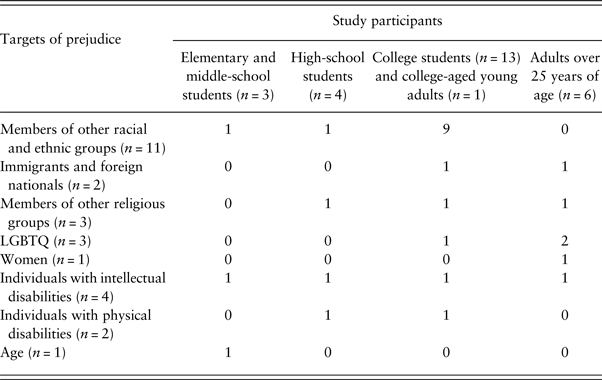
First, whose prejudices are being studied? And who are the targets of the prejudice under study? Table 1 summarizes our universe of cases along these two dimensions.
Participants and targets of prejudice
Participants
Thirteen of the 27 experiments study college students, and all but one of these experiments took place in the USA. The exception is Burns et al. (Reference Burns, Corno and La Ferrara2015), who studied students at the University of Cape Town. Scacco and Warren (Reference Scacco and Warren2018) examined young adults in Nigeria of college age who were not in college.
Of the six studies of adults over 25 years of age, three took place outside of the USA: one in a housing complex in Hyderabad, India (Barnhardt, Reference Barnhardt2009) and two studies with Norwegian military recruits (Finseraas et al., Reference Finseraas, Johnsen, Kotsadam and Torsvik2016; Finseraas & Kotsadam, Reference Finseraas and Kotsadam2017). In the USA, Dessel (Reference Dessel2010) studied teachers in an evangelical Christian community; DiTullio (Reference DiTullio1982) studied custodial teams in Philadelphia; and Broockman and Kalla (Reference Broockman and Kalla2016) canvassed residents of Miami, Florida.
Elementary and middle-school students participated in studies in the USA (Katz & Zalk, Reference Katz and Zalk1978; Meshel & McGlynn, Reference Meshel and McGlynn2004) and Australia (Clunies-Ross & O'Meara, Reference Clunies-Ross and O'Meara1989), and high-school students participated in Israel (Yablon, Reference Yablon2012), Germany (Krahe & Altwasser, Reference Krahe and Altwasser2006) and the USA (Sheare, Reference Sheare1974; Green & Wong, Reference Green and Wong2009).
Types of prejudice
Pettigrew and Tropp (Reference Pettigrew and Tropp2006) point out that the contact hypothesis was
originally developed to address racial and ethnic prejudices, but recent decades have witnessed a massive use of the theory for a range of different target groups. Is this expansion of contact theory justified? And do these nonracial and nonethnic samples yield meta-analytic patterns that are similar to those for racial and ethnic samples? (p. 762)
Their meta-analysis seems to provide a resounding ‘yes’: average effects of contact are strikingly similar across a range of target groups, and confidence intervals always overlap (see their Table 11, p. 764). Like their database, ours features a preponderance of studies focusing on ethnic or racial prejudice: 11 out of 27, or 40%. Camargo et al. (Reference Camargo, Stinebrickner and Stinebrickner2010), Marmaros and Sacerdote (Reference Marmaros and Sacerdote2006), Katz and Zalk (Reference Katz and Zalk1978) and Sayler (Reference Sayler1969) addressed relations between blacks and whites in the USA, and Burns et al. (Reference Burns, Corno and La Ferrara2015) addressed relations between whites and blacks in South Africa. Four other studies (Boisjoly et al., Reference Boisjoly, Duncan, Kremer, Levy and Eccles2006; Green & Wong, Reference Green and Wong2009; Markowicz, Reference Markowicz2009; Sorensen, Reference Sorensen2010) tested relations among blacks, whites and members of other groups, such as Asians, Latinxs and “Native Hawaiian and Other Pacific Islander” (Markowicz, Reference Markowicz2009, p. 66). Lastly, Page-Gould et al. (Reference Page-Gould, Mendoza-Denton and Tropp2008) assessed relations between whites and Latinxs, and Furuto and Furuto (Reference Furuto and Furuto1983) assessed relations between white and “Polynesian and Oriental” (p. 153) students at Brigham Young University – Hawaii. As Table 1 shows, all of these studies were conducted with populations from elementary school through college.
All other categories of prejudice, discrimination and stigma are addressed by four or fewer studies, and yet contain a great deal of demographic and geographic heterogeneity. One study addressed discrimination against foreign nationals in the USA (Hull, Reference Hull1972), and another against immigrants in Norway (Finseraas & Kotsadam, Reference Finseraas and Kotsadam2017). Three studies tested prejudice, discrimination and stigma against LGBT individuals: either transgender people (Broockman & Kalla, Reference Broockman and Kalla2016) or gays and lesbians (Grutzeck & Gidycz, Reference Grutzeck and Gidycz1997; Dessel, Reference Dessel2010).
The three studies examining contact between religious groups selected Hindus and Muslims in India (Barnhardt, Reference Barnhardt2009), Christians and Muslims in Nigeria (Scacco & Warren, Reference Scacco and Warren2018) and Jews and Arabs in Israel (Yablon, Reference Yablon2012).Footnote 4 Four studies targeted prejudice against the intellectually disabled; three of those took place in the USA (Hall, Reference Hall1969; Sheare, Reference Sheare1974; DiTullio, Reference DiTullio1982) and one in Australia (Clunies-Ross & O'Meara, Reference Clunies-Ross and O'Meara1989). Prejudice against people with physical disabilities was studied in the USA (Evans, Reference Evans1976) and Germany (Krahe & Altwasser, Reference Krahe and Altwasser2006). Finally, we note one study targeting prejudice against the elderly (Meshel & McGlynn, Reference Meshel and McGlynn2004) and one targeting discrimination against women (Finseraas et al., Reference Finseraas, Johnsen, Kotsadam and Torsvik2016).
What: interventions and measurements
What kind of contact did the study authors randomize across participants? Some contact was crafted by researchers, while other types of contact were more naturalistic; some contact was sustained, while other engagements were very brief. We also describe the variety of outcomes measured following the intervention. Most outcomes were self-reported attitudes and social evaluations, while behavioral outcomes mostly included observed interactions and measures of friendship with members of the other group. Outcome measures also varied in whether they focused on reduced prejudice toward the outgroup involved in the study or on general levels of social tolerance.
What type of contact?
The contact interventions can roughly be characterized as falling along two interrelated dimensions: scriptedness, or the degree to which experimenters control and direct the treatment content and whether they employ confederates as a means to steer the contact experience (e.g., Evans, Reference Evans1976); and duration, which ranges from brief and impersonal exposure to sustained and intimate contact.
In an example of a brief, unscripted encounter, Hall (Reference Hall1969) examined University of Alabama students who were gathered together with residents of an institution for people with severe intellectual disabilities and encouraged to pair up or assemble groups to sing songs or practice skills like tying shoes. Far more common are brief, scripted interactions. These typically take place in a laboratory or classroom and involve a structured conversation or an activity with a member of a presumed outgroup. Evans (Reference Evans1976), for instance, randomly assigned college students (n = 40) to have one of two types of conversation with a blind woman. In one, they were asked to discuss their hometowns, majors and family; in the other, the woman who was blind explicitly invited questions about blindness. Katz and Zalk (Reference Katz and Zalk1978) assigned interracial and racially homogenous groups of second and fifth graders to work on puzzles for 15 minutes under observation by their teachers.
Scripted and sustained interventions are typically designed around intergroup dialogue and excursion interventions. Yablon (Reference Yablon2012) studied the effects of six monthly meetings between Palestinian and Israeli high-school students in which they discussed social issues and concluded with a joint trip to an amusement park. Dessel (Reference Dessel2010) led discussion groups between straight teachers and LGB volunteers over the course of two months for nine hours in total; Sorensen (Reference Sorensen2010) and Markowicz (Reference Markowicz2009) each studied the effects of interracial dialogues held at universities.
Sustained, unscripted intergroup encounters featured extensive contact in a naturalistic environment that researchers cannot directly control or sometimes even monitor. In general, they follow Allport's (Reference Allport1954) argument that to reduce prejudice, intergroup contact experiences “should occur in ordinary purposeful pursuits, [and] avoid artificiality” (p. 489). Ten studies targeted intergroup living situations, such as interracial college roommates, ranging in duration from a weekend (Hull, Reference Hull1972) to eight weeks (Finseraas et al., Reference Finseraas, Johnsen, Kotsadam and Torsvik2016; Finseraas & Kotsadam, Reference Finseraas and Kotsadam2017) to a year (Boisjoly et al., Reference Boisjoly, Duncan, Kremer, Levy and Eccles2006; Camargo et al., Reference Camargo, Stinebrickner and Stinebrickner2010) or more (Barnhardt, Reference Barnhardt2009).
Another way to describe the type of contact in these interventions is to ask whether they fit the conditions that Allport specified as critical for prejudice reduction. Very few interventions fit all four conditions. Most interventions, because they needed approval to be launched, are characterized by authority approval of the contact (26 out of 27 – all but Broockman & Kalla, Reference Broockman and Kalla2016). Seventeen studies could be characterized as featuring equal status contact, 14 feature cooperation and 12 have a common goal between groups in contact. Several of the interventions, however, are difficult to characterize according to Allport's classification scheme. Given a general lack of detailed description about the interventions, it was particularly difficult to determine whether an intervention involved equal status or a common goal. Roommate studies and more generally naturalistic and sustained interventions are also challenging, given that conditions of cooperation or equal status likely fluctuate over time. Naturalistic studies are also likely to involve some amount of negative contact experiences, like misunderstandings or outright conflict, which could affect outcomes.
What kinds of outcome measures?
Because our collection of studies spans six decades, four continents and a host of different demographic groups, it is not surprising that outcome measures range widely. We group outcome measurements into four broad categories: (1) explicit evaluations of the outgroup; (2) political and cultural attitudes commonly associated with prejudice (e.g., opinions about affirmative action); (3) behavioral measures of actions toward the outgroup, such as white subjects' numbers of black friends or the percentage of all emails that white subjects sent to black peers; and (4) indirect or projective measures of prejudices such as implicit attitude tests or the evaluation of hypothetical vignettes.
Explicit evaluations of the outgroup typically took the form of a series of evaluative questions. Such outcomes were common in studies of prejudice against people with intellectual disabilities; Hall (Reference Hall1969), for instance, asked participants to rate the “mentally retarded along a clean–dirty axis” (p. 31). Studies of ethnic, racial and religious prejudice also featured explicit outcome measurements in settings where it is (or was) more common to express outright hostility toward an outgroup, such as the USA in the 1960s (Sayler, Reference Sayler1969), contemporary Nigeria (between Christians and Muslims; Scacco & Warren, Reference Scacco and Warren2018) and India (between Hindus and Muslims; Barnhardt, Reference Barnhardt2009).
Experimenters sometimes used more oblique measures to elicit prejudiced attitudes. Some focused on political and cultural attitudes, soliciting opinions about affirmative action (Boisjoly et al., Reference Boisjoly, Duncan, Kremer, Levy and Eccles2006) or policies discriminating against transgender people (Broockman & Kalla, Reference Broockman and Kalla2016). This category also includes measures of nationalism and world-mindedness (Hull, Reference Hull1972) and general beliefs about the extent of racial privilege in the USA (Markowicz, Reference Markowicz2009).
Other experimenters used behavioral indicators to track interactions with outgroup members. Marmaros and Sacerdote (Reference Marmaros and Sacerdote2006) unobtrusively tracked how many emails Dartmouth students sent to white and black peers, including and excluding their own roommates. Camargo et al. (Reference Camargo, Stinebrickner and Stinebrickner2010) asked white students at Berea College with and without black roommates to report how many black friends they have, again with and without their roommates included. Page-Gould et al. (Reference Page-Gould, Mendoza-Denton and Tropp2008) included a daily diary report following intervention of how likely participants are to initiate a cross-group interaction. A novel behavioral measure of social distance between whites and blacks comes from Katz and Zalk (Reference Katz and Zalk1978). After 15 minutes of cross-group interaction, children were asked to place a variety of felt objects on a flannel board, with either a black or white examiner standing to one side of the board; the outcome measure was “literally the average distance the subject placed the five forms from the examiner” (p. 451).
Finally, a minority of studies (four) gathered evidence typically tested in social scientific laboratories: behavioral games (Scacco & Warren, Reference Scacco and Warren2018), the implicit attitude test (IAT; Barnhardt, Reference Barnhardt2009; Burns et al., Reference Burns, Corno and La Ferrara2015) and a vignette experiment (Finseraas et al., Reference Finseraas, Johnsen, Kotsadam and Torsvik2016).Footnote 5 Scacco and Warren (Reference Scacco and Warren2018) used behavioral games to assess cooperation and trust between Nigerian Christians and Muslims, specifically dictator and destruction games in which individuals allocated real money to their real partners. The vignette experiment in Finseraas et al. (Reference Finseraas, Johnsen, Kotsadam and Torsvik2016) varied the qualifications of female and male officers in the Norwegian military to measure proclivity to discriminate based on gender.
An additional feature of outcome measurement is whether a dependent variable pertains to a particular outgroup or toward outgroups in general. For example, Green and Wong (Reference Green and Wong2009) measured tolerance toward a variety of groups, and Markowicz (Reference Markowicz2009) investigated awareness of racial privilege in the USA. Most studies in our sample focus on how prejudice reduces discrimination toward the group to which the treatment subjects were directly exposed.
Where
Of the 27 studies, 19 (70%) took place in the USA. Of the remaining eight, two were located in Norway and one study was located in each of the following countries: India, South Africa, Australia, Germany, Nigeria and Israel.
Of the seven studies with child or adolescent subjects, five took place in a classroom or in the context of a school-required activity such as a field trip; the two in naturalistic settings took place during after-school activities with the elderly (Meshel & McGlynn, Reference Meshel and McGlynn2004) or during an outdoor hiking expedition (Green & Wong, Reference Green and Wong2009).
Of the 13 studies with college students, six took place in a naturalistic setting like a dormitory, a neighborhood center (Sayler, Reference Sayler1969) or a living facility for the severely intellectually disabled (Hall, Reference Hall1969). Three others were structured, monitored intergroup discussions (Hull, Reference Hull1972; Markowicz, Reference Markowicz2009; Sorensen, Reference Sorensen2010); two were studies that students enrolled as part of a class (Evans, Reference Evans1976; Page-Gould et al., Reference Page-Gould, Mendoza-Denton and Tropp2008); and one took place in a normal class lecture (Grutzeck & Gidycz, Reference Grutzeck and Gidycz1997). The 13th study took place at Brigham Young University – Hawaii and consisted of 14 weekly “spiritual, cultural and social experiences” in integrated settings, both on and off campus (Furuto & Furuto, Reference Furuto and Furuto1983, p. 150).
When
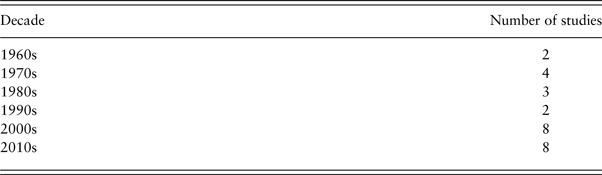
The breakdown by decade of study is shown in Table 2. The majority of evidence for our review was generated since 2000.
Contact studies by decade. Note that we place Meshel and McGlynn (Reference Meshel and McGlynn2004) in the 1990s and Dessel (Reference Dessel2010) in the 2000s, going by the initial publication of the relevant data in the authors' dissertations (Meshel, Reference Meshel1997; Dessel, Reference Dessel2008)
Meta-analytic methods
This section describes the criteria used to identify the key outcome variable in each study and the procedures used to transform each study's reported results into the inputs for our meta-analysis.
Selecting dependent variables
Some studies in our sample reported a single outcome (Hull, Reference Hull1972), while others reported dozens (Burns et al., Reference Burns, Corno and La Ferrara2015). Some tested multiple subgroups, such as Broockman and Kalla (Reference Broockman and Kalla2016), whose pre-analysis plan specified looking for heterogeneous treatment effects by party identification, and Scacco and Warren (Reference Scacco and Warren2018), who tested for contact effects on both Christians and Muslims. Some experiments involve multiple, conceptually distinct treatment arms, such as Boisjoly et al. (Reference Boisjoly, Duncan, Kremer, Levy and Eccles2006), who measured separately the effects of having a black roommate and having a non-black minority roommate. Others varied the intensity of one treatment, such as Barnhardt (Reference Barnhardt2009), who measured the effects of having one, two or three Muslim or Hindu households in one's four-household living unit.
Some outcome measurements are composites of multiple subscales (Sayler, Reference Sayler1969) or multiple items intended to evaluate feelings toward the outgroup (DiTullio, Reference DiTullio1982). One study delineated a ‘main outcome’ (Finseraas & Kotsadam, Reference Finseraas and Kotsadam2017), while others present a collection of response variables with no ranking system. We sought to apply consistent rules for choosing which outcomes to demarcate as representative of a study's overall findings so that we could condense each paper's findings down to a single estimate and accompanying standard error. We decided on the following rules:
• First, we chose estimates evaluating the highest dosage (experimentally varied intensity) of contact whenever possible.
• Second, when estimates are split by dominant versus subordinate or majority versus minority groups, we chose estimates evaluating prejudice reduction among the dominant or majority groups.
• Third, we considered studies to have multiple treatment arms if they met any of the following criteria: (a) featured one ingroup exposed to multiple distinct outgroups; (b) measured the effects of contact on multiple participant groups; or (c) featured one intervention across multiple, distinct settings. Our meta-analysis includes one effect size for each treatment arm.
• Fourth, when studies look at contact between two groups in conflict, in which neither is clearly dominant, we chose effect sizes that measure changes across both populations.
• Fifth, we chose the prejudice outcome on which the author(s) focused primarily.
• Sixth, if there were multiple post-tests, we chose the latest possible post-test.
• Seventh, when faced with a choice among estimators, we chose linear estimators so that we could express treatment effects in terms of standardized units.
• Eighth, when multiple econometric specifications were present, we chose the specification that estimated the treatment effect with the smallest apparent standard error.
After selecting our dependent variables, we next turned to converting them to a common framework.
Creating a common statistical framework
The most common analytic strategy for meta-analyses in the social sciences is to calculate standardized mean difference, commonly referred to as Cohen's d, defined in Cooper et al. (Reference Cooper, Hedges and Valentine2009, p. 226) as
 $$d = \displaystyle{{\mu _1 - \mu _2} \over \sigma} $$
in which μ 1 and μ 2 represent the population averages of the treatment and control groups and σ is the sample standard deviation.
Estimating the numerator of equation (1) is straightforward, whereas there is some debate about how to estimate the denominator. Lemmer and Wagner (Reference Lemmer and Wagner2015) follow the recommendation of Morris (Reference Morris2008) to pool standard deviations from the treatment and control groups at pre-treatment as
 $$\sigma _{\,pre} = \sqrt {\displaystyle{{\left( {n_t - 1} \right)\sigma _{\,pre,T}^2 + \left( {n_c - 1} \right)\sigma _{\,pre,C}^2} \over {n_t + n_c - 2}}}. $$
Using pre-treatment information to estimate population standard deviation has the advantage of not making any additional distributional assumptions about the effects of treatment. However, pre-treatment standard deviations are not available for all of the studies in our sample. To keep comparisons constant across studies, we standardized all changes associated with treatment by the standard deviation of the control group, a statistic commonly called Glass's Δ.Footnote 6 After standardizing effect sizes for each study, we calculated standard errors for each, correcting for bias arising in small studies using Hedge's G correction factor (Cooper et al., Reference Cooper, Hedges and Valentine2009).
Two studies (Hall, Reference Hall1969; Katz & Zalk, Reference Katz and Zalk1978) and one treatment arm of a study (Sayler, Reference Sayler1969) did not provide enough information about sampling variability to compute standardized effect sizes. We exclude these studies, representing a total of four treatment arms, from our meta-analysis, although they remain relevant for the sign tests that we conduct below. This left us with 25 studies comprising 27 treatment arms.
Meta-analytic results
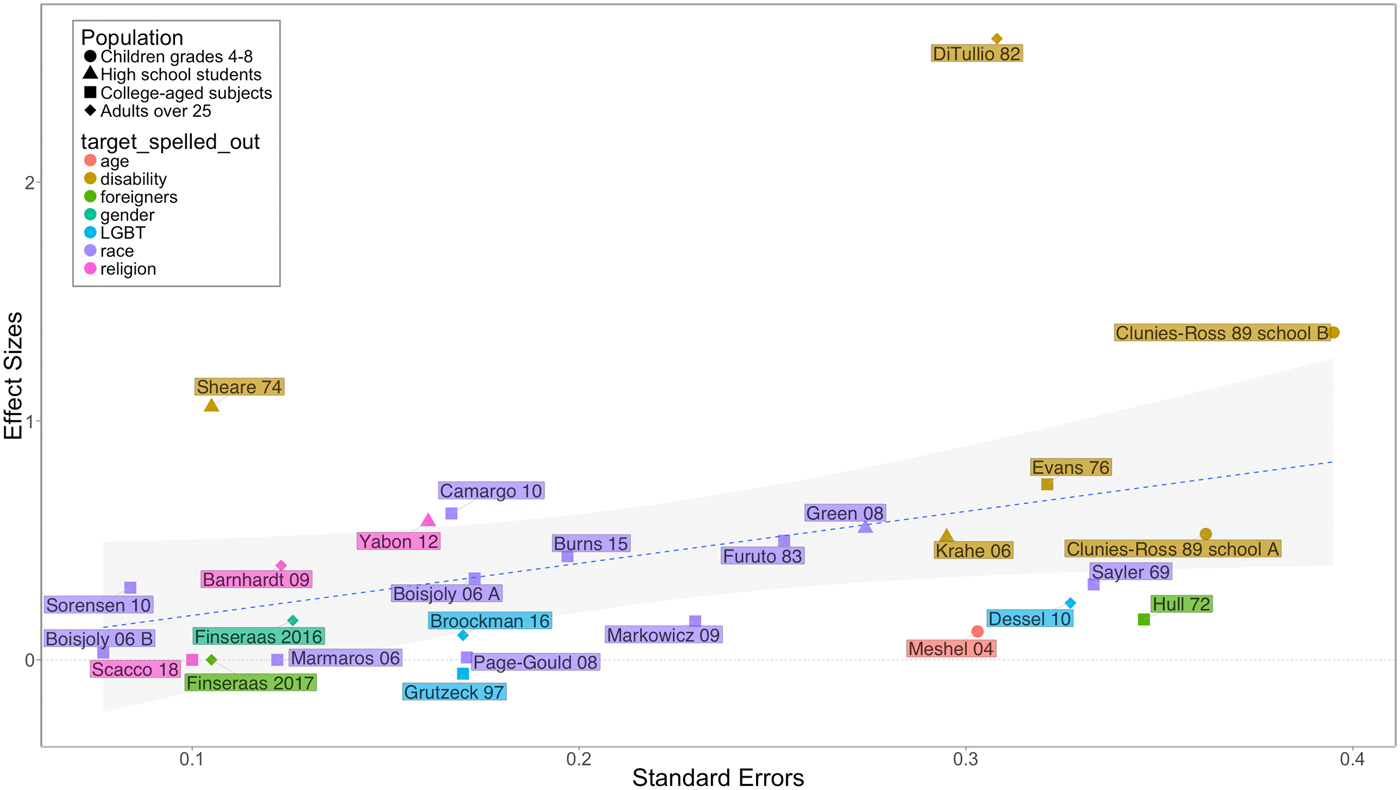
A graphical overview of results from our 27 comparisons can be found in Figure 1. This scatterplot depicts the relationship between the effect estimate (vertical axis) and its standard error (horizontal axis) for each of the 27 effect estimates in our analysis. To aid interpretation, we color-coded each study according to whether it focuses on prejudice against ethnic or racial groups, religious groups, immigrants, people with mental or physical disabilities, the elderly, women or LGBT individuals. The participant pool for each study is also indicated according to the polygon used to represent each observation. Study participants who are children are depicted with circles, teenagers with triangles, college students and young adults with squares and adults aged 25 years or older with diamonds.
Standard error and effect size (Glass's Δ) of each experimental comparison. Colors of points and of labels correspond to target of intervention; shapes of plotted points correspond to population. Fitted line is ordinary least squares and gray bands are 95% confidence intervals. Boisjoly ‘A’ and ‘B’ refer, respectively, to effects associated with having black or ‘other minority roommates’
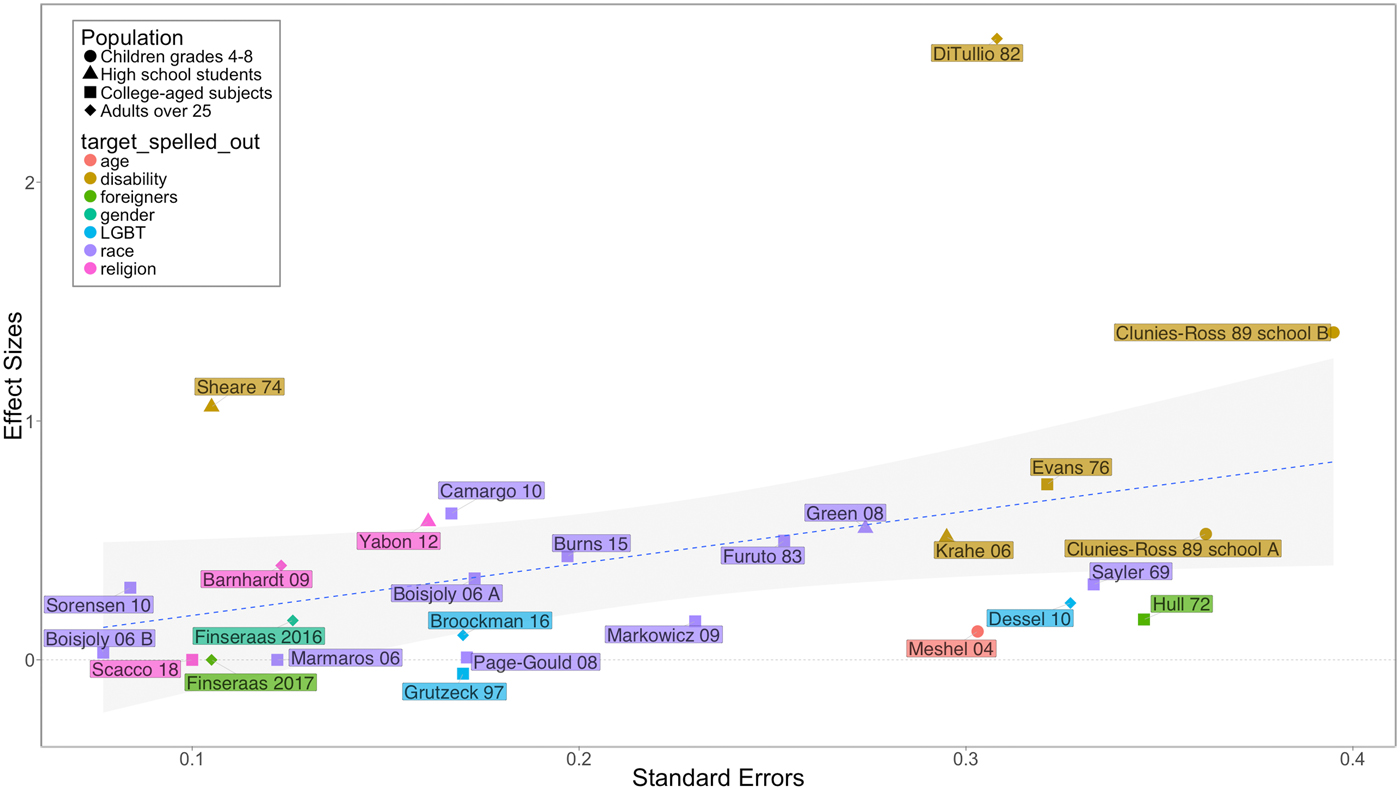
This graphical overview of the core studies underscores several noteworthy features of the contact literature. First, effect sizes vary considerably by target group, with substantially larger effects observed in studies that target prejudice toward those with disabilities. Second, four out of six studies with adult subjects are clustered on the bottom left of the figure, reflecting both smaller effect sizes and standard errors than the collection of studies on average. Third, vertical positioning of the points indicates that the overwhelming majority of experiments (24 out of 27) report a positive effect of contact. The probability of observing 24 positive estimates out of 27 studies is less than 0.001 under the null hypothesis of no effect.Footnote 7 The distribution of estimated effects seems to offer strong support to the hypothesis that the types of contact facilitated in these studies led to reductions in prejudice.
However, Figure 1 also suggests that caution is warranted when summarizing the results via meta-analysis. The regression line that passes through the points calls attention to the fact that studies with smaller standard errors tend to report weaker effects than studies with larger standard errors. In other words, the larger the study, the smaller the standard error and the smaller the estimated effect. This pattern is symptomatic of a ‘file drawer problem’, in which studies are more likely to be reported when they show significant results (Rosenthal, Reference Rosenthal1979). In light of this pattern, our meta-analysis considers not only the pooled study average effect, but also the study average that would be forecasted as the standard errors tend toward zero.
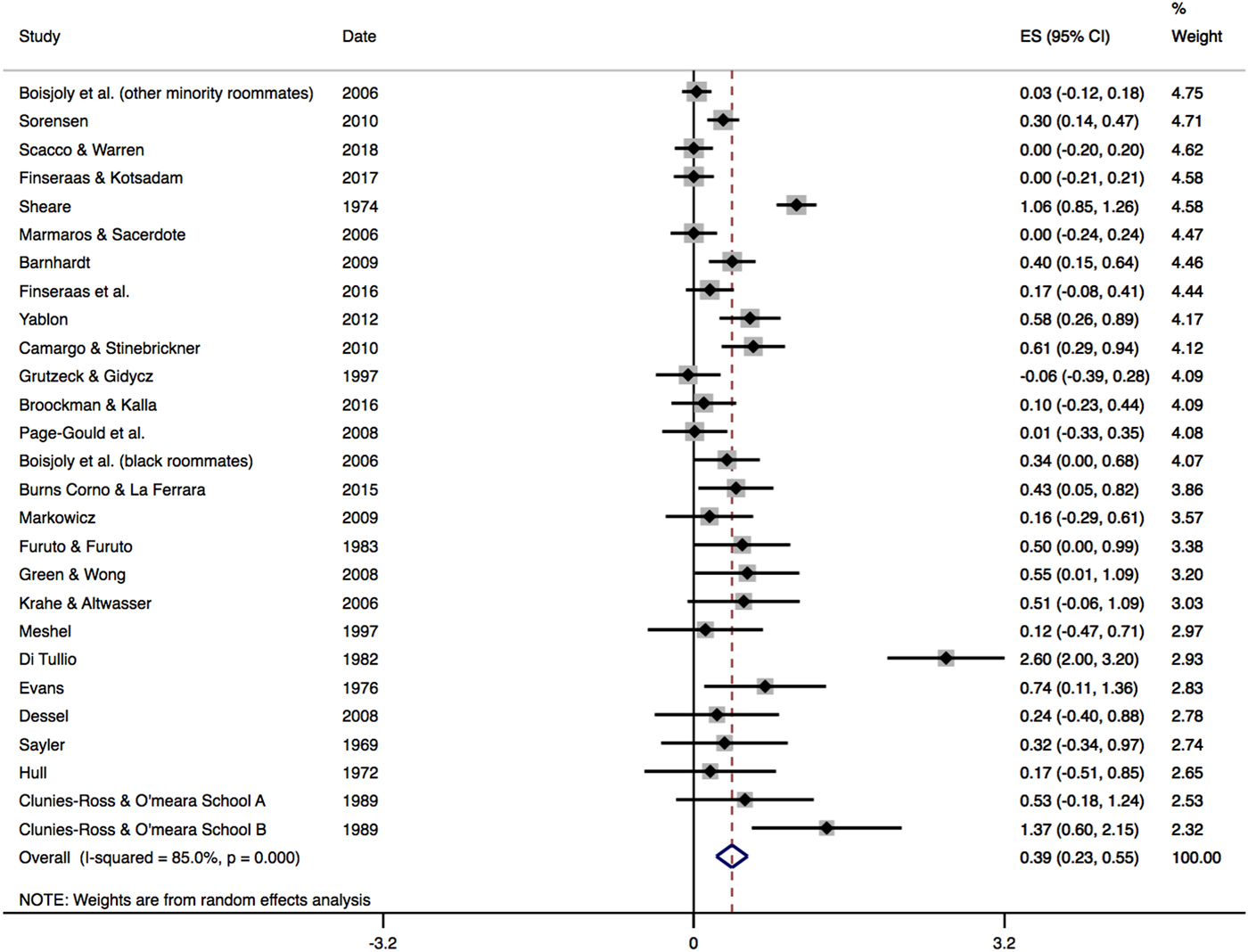
We begin our quantitative analysis by assessing cross-study heterogeneity using Cochran's Q. The test decisively rejects the null hypothesis of homogeneity of effects across studies (Q(26) = 173.178, p < 0.001; I 2 = 0.85). We therefore reject the fixed-effects meta-analysis model in favor of a random-effects meta-analysis model, where the variance of the normal random component is estimated using method of moments. The resulting estimate is 0.39, with a 95% confidence interval ranging from 0.231 to 0.554. This pooled estimate of the effect of contact on prejudice suggests that, on average, the contact induced by these experiments reduced prejudice by more than a third of the standard deviation in the control group.
The pooled average, however, glosses over the heterogeneous effects found in the experimental literature. This heterogeneity is illustrated in Figure 2, which displays the results of the meta-analysis in the form of a study-by-study forest plot, where the studies have been sorted by their estimated standard errors. If a single causal parameter were at work in these studies, one would expect 95% of the experiments' confidence intervals to overlap with 0.39. In fact, only 20 of the 27 studies produce 95% confidence intervals that overlap with this pooled estimate (p < 0.001). The problem of coverage is especially acute among larger studies, which tend to produce relatively precise estimates: of the 10 studies with the smallest standard errors, four have 95% confidence intervals that fall below the overall meta-analytic average effect.
Forest plot of standard errors and effect sizes (ES). Areas of squares correspond to weight given to each study; lines represent 95% confidence intervals (CI). Dotted line is a random effects estimate of average effect (Δ = 0.39); solid line is an effect size of 0. Studies are sorted by the inverse of their standard errors
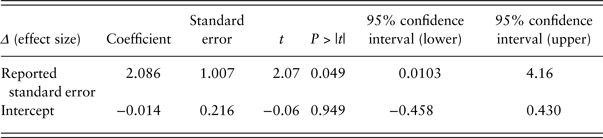
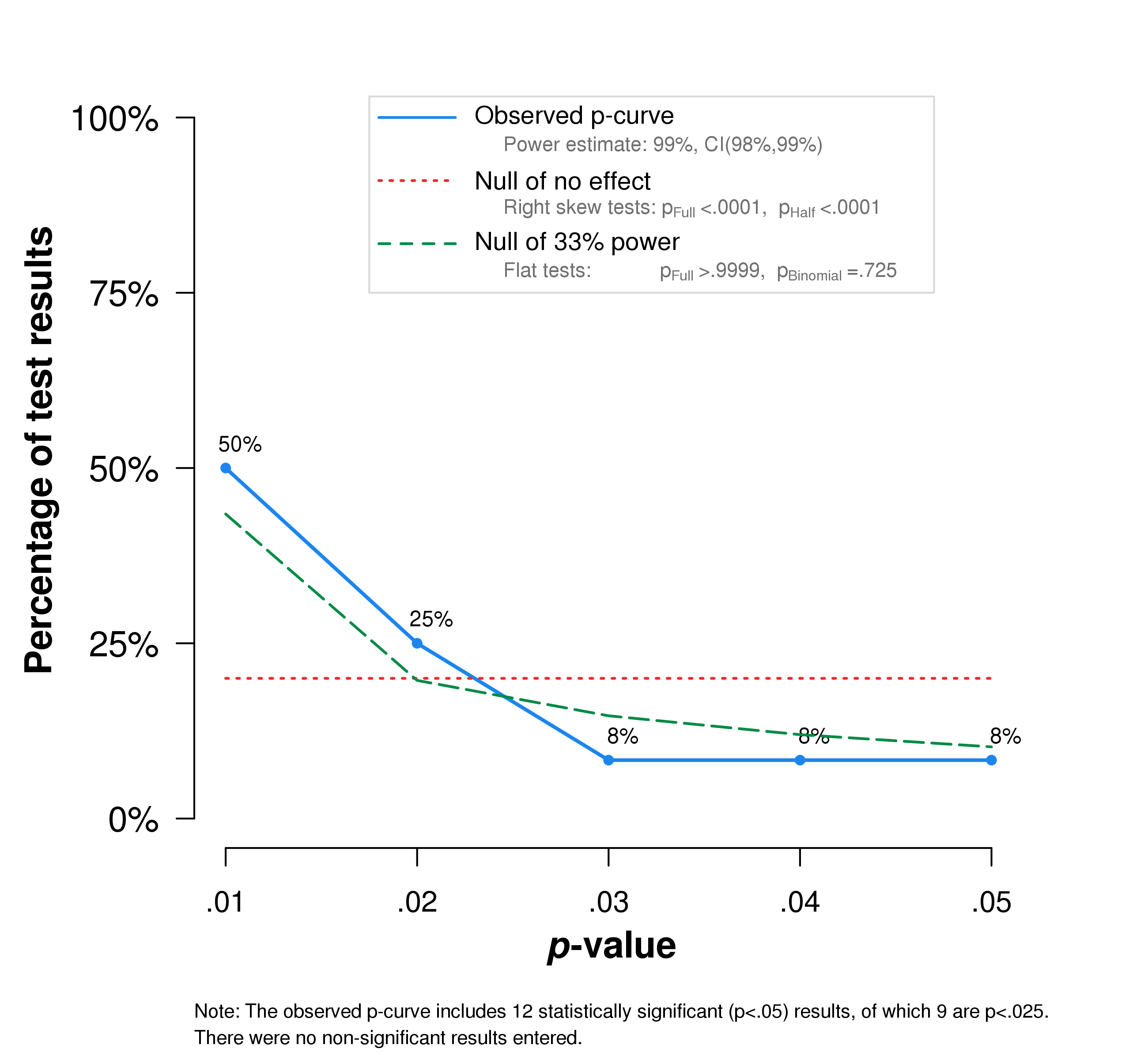
One way to model between-study heterogeneity is to allow effects to vary as a function of their standard errors, on the grounds that publication bias inflates the average effects observed in smaller studies. In this meta-regression model, the slope represents the expected change in effect size when the standard error increases by one unit. The intercept is also of interest, as it represents the expected effect if the standard error were zero (i.e., if the study were of infinite size). The results presented in Table 3 suggest that a one-unit increase in standard error is associated with a 2.09-unit increase in effect size, although the pattern is of borderline significance (two-tailed p-value = 0.049). Notably, the intercept is –0.014 with a 95% confidence interval ranging from –0.46 to 0.43. The implication is that a very large study would be expected to produce a minuscule increase in prejudice. Like the tests for publication bias presented by Pettigrew and Tropp (Reference Pettigrew and Tropp2006, p. 758), our results are statistically equivocal. The same may be said for our analysis of p-hacking (Simonsohn et al., Reference Simonsohn, Nelson and Simmons2014; Head et al., Reference Head, Holman, Lanfear, Kahn and Jennions2015), which is symptomatic of research discretion that favors significant relationships. These tests may be found in the Online Supplementary Materials.
Relationship between standard error and effect size
Another way to model effect heterogeneity is to focus on the targets of prejudice in these studies. Here, we regress effect size on indicator variables for disabilities, gender, LGBT status and age with racial, ethnic, religious and immigrant targets at the base category. In contrast to the rather muted degree of heterogeneity found by Pettigrew and Tropp (Reference Pettigrew and Tropp2006), we find some prejudices to be much more responsive than others. An F-test indicates significant heterogeneity in effects across target groups (p = 0.01). Especially significant is the contrast between disability and the base category, where p = 0.001. When ethnic, racial, religious and immigrant studies are considered on their own (i.e., the estimated intercept), the estimated effect is 0.25, with a 95% confidence interval ranging from 0.08 to 0.42. This remains a fairly strong and significant pooled effect, although it is subject to the proviso that four of the five largest studies come in below this average.
In sum, meta-analysis offers qualified support for the contact hypothesis. On the one hand, the overwhelming majority of studies report positive effects, and a random-effects model suggests that the true underlying effect is substantively quite large. On the other hand, the collection of studies has three important limitations. First is the gap in coverage. We know little about the effects of contact on adults over 25 years of age. In particular, the meta-analysis furnishes no evidence about contact's effects on adults' racial or ethnic prejudices, which was the original policy-based motivation for this body of work. Second, the larger experiments tend to produce weaker effects, which suggests that a file drawer problem may be concealing smaller studies with more equivocal findings. Finally, effect sizes vary significantly according to the target of prejudice, suggesting that certain kinds of prejudice are more amenable to contact-based remediation.
Robustness check: including seven borderline studies
Many studies fall just short of the selection criteria we used to identify the most policy-relevant research.Footnote 8 Some studies, for instance, do not use a fully randomized design, but instead capitalize on quasi-experiments. van Laar et al. (Reference van Laar, Levin, Sinclair and Sidanius2005) studied interracial roommate pairings at University of California, Los Angeles, which we did not include because of uncertainty about randomness of roommate assignment in this particular context. Other studies assign something similar, but not exactly identical, to intergroup contact; Enos (Reference Enos2014), for instance, randomly assigned physical proximity to outgroup members (Mexican nationals living in the USA) without assigning face-to-face interaction, and Fuegen (Reference Fuegen2000) varied whether an experimental confederate identifying as a feminist displayed stereotype-confirming or -disconfirming behaviors.
When we augment our meta-analysis using seven studies that fall in this category, our results remain largely unchanged. Random-effects meta-analysis renders an overall estimate of 0.373 (standard error = 0.075), which is very similar to what we obtained above. We continue to find significant heterogeneity in effects across target groups (p = 0.0024) and marginally significant evidence that treatment effects diminish as studies' standard errors decrease (p = 0.058).
Robustness check: studies with pre-analysis plans
Another way to test for the presence of publication bias is to look separately at studies that meet the very highest standards of experimental quality and research transparency. In our sample, three studies – Broockman and Kalla (Reference Broockman and Kalla2016), Scacco and Warren (Reference Scacco and Warren2018) and Finseraas and Kotsadam (Reference Finseraas and Kotsadam2017) – have pre-analysis plansFootnote 9. As Olken (Reference Olken2015, p. 69) writes, “[f]or readers, referees, editors, and policy-makers, knowing that analysis was pre-specified offers reassurance that the result is not a choice among many plausible alternatives, which can increase confidence in results.”
The relationship between effect size and study quality has played a central role in the assessment of contact's effects. Pettigrew and Tropp (Reference Pettigrew and Tropp2006) contend that “research rigor is routinely associated with larger effect sizes. Put differently, the less rigorous studies sharply reduce the overall relationships observed between contact and prejudice” (p. 759). Revisiting the same theme a decade later, Pettigrew (Reference Pettigrew2016) writes: “the most rigorous studies tend to provide the largest effects. This phenomenon is repeated in 21st-century research. Recent work is more rigorously executed and yields larger contact effects than earlier work” (p. 14). In their meta-analysis of the effects of contact on sexual prejudice, Smith et al. (Reference Smith, Axelton and Saucier2009) hypothesized that “those studies with higher methodological quality will have more scientific rigor which will produce results with stronger effects than those studies with lower methodological quality” (p. 181).
In our sample, however, we find that studies conforming to the very highest standards of research qualityFootnote 10 show much smaller effects on average than the sample as a whole. Studies with pre-analysis plans have a random effects estimate of 0.016. The studies without pre-analysis plans, by contrast, have a random effects estimate of 0.451. Given broader discussions of replicability in science (Ioannidis, Reference Ioannidis2005; Nosek et al., Reference Nosek2015), this divergence is of particular concern for policy-makers interested in assessing the reliability of contact as a policy tool.
Conclusion
In reviewing the contact literature, previous authors have lamented a dearth of high-quality designs. Tucker and Potocky-Tripodi (Reference Tucker and Potocky-Tripodi2006), who reviewed the effects of contact on prejudice against gays and lesbians in the USA, concluded that “[n]o intervention met the criteria of a well established or probably efficacious treatment, as all studies had substantial methodological limitations” (p. 176). Yuker (Reference Yuker1994) reviewed studies of discrimination against people with disabilities and argued that the “general quality of research … is not very high. Many studies suffer from faults such as inadequate sampling, the lack of adequate control groups, failure to randomly assign subjects to groups, the lack of pretests or retrospective pretests, etc.” (p. 4). Speaking generally, Hopkins et al. (Reference Hopkins, Reicher and Levine1997) wrote, “the initial hopes of contact theorists have failed to materialize” (p. 306).Footnote 11 Pettigrew and Tropp (Reference Pettigrew and Tropp2006, p. 752) explicitly challenged these earlier literature reviews on the grounds that they assembled and analyzed the literature in an unsystematic manner.
To prepare our review, we spent years attempting to gather all of the contact studies that used high-quality research designs. Our assessment of the policy-relevant contact literature falls somewhere between the pessimistic accounts and Pettigrew and Tropp's (Reference Pettigrew and Tropp2006) declaration that “meta-analytic results provide substantial evidence that intergroup contact can contribute meaningfully to reductions in prejudice across a broad range of groups and contexts” (p. 766).
On the one hand, the vast majority of these experiments do indeed show positive effects of contact. Of the 27 experimental comparisons that seem most policy relevant, 24 reveal positive effects. The average effect across these experiments is substantively large, diminishing measured prejudice by 0.39 standard deviations. Both results are statistically significant at the 0.001 level, and the inclusion of seven quasi-contact experiments studies does not materially affect the size or significance of the meta-analytic estimates.
On the other hand, five features of the contact literature give us pause. First, the set of policy-relevant studies has important gaps. What we know about prejudice reduction comes largely from studies of children or young adults. Few studies address prejudice in adults over 25 years of age. Notably, no studies of ethnic or racial contact include participants over 25 years of age.
Second, the extent to which contact diminishes prejudice seems to vary according to the target of prejudice. Contact seems to work especially well as a strategy for reducing prejudice toward people with mental or physical disabilities. Prejudice toward individuals with disabilities may differ from other types of prejudice due to the distinctive ways in which disabled people are perceived (Fiske, Reference Fiske2011). When studies involving disabilities are excluded, the meta-analytic estimate remains significant but diminishes to 0.20. This finding suggests a rather different theoretical interpretation from the one offered by Pettigrew and Tropp (Reference Pettigrew and Tropp2006), who found that “[c]omparisons across the racial and ethnic subsets and the nonracial and nonethnic subsets yield virtually identical mean estimates of contact-prejudice effect sizes” (p. 762). It now appears that some types of prejudice may be more malleable than others, or that some combinations of contact and prejudice mesh especially well.
Third, larger studies – those that estimate the effects of contact with greater precision – tend to reveal weaker effects. Weaker effects are also characteristic of studies that adhere to the highest standards of analytic transparency. Time will tell whether these correlations are statistical flukes or a genuine cause for concern.
Fourth, we know little about what happens within the contact interventions we are assessing. The authors of these research reports rarely describe the contact programs in sufficient detail to allow others to recreate the experience with other populations. In particular, few state explicitly whether their contact intervention meets one or more of Allport's four conditions for reducing prejudice. As a result, we learn little about what specific aspects of the contact are reducing participants' prejudice.
Fifth, and relatedly, no randomized study with over-time outcome measurement has systematically varied, as part of its experimental design, Allport's facilitating conditions. Without manipulating the features of group contact or the conditions under which it occurs, one can only speculate about whether divergent results reflect the treatments, subject pools or conditions of contact (such as equal status or a common goal). For example, one recent study found that prejudice increased when non-Hispanics were exposed to, but did not interact with, randomly assigned confederates speaking Spanish at commuter train stations (Enos, Reference Enos2014).
Allport did not believe that ‘mere contact’ would reduce prejudice. Indeed, Allport warned that without moving beyond casual contact into a deeper engagement characterized by the conditions he set forth, “the more contact the more trouble” (Reference Allport1954, p. 263). This prediction stands in direct contrast to Pettigrew and Tropp's conclusion that “Allport's conditions are not essential for intergroup contact to achieve positive outcomes” (Reference Pettigrew and Tropp2006, p. 766). Given the lack of experiments that systematically test the moderating impact of these conditions on prejudice reduction, we conclude that the literature is not in a place where we can adjudicate between these two positions.
Reinvigorating the study of these moderating conditions means rediscovering innovative experimental designs from decades past. An example of how to experimentally manipulate the conditions of contact comes from Cohen and Roper (Reference Cohen and Roper1972), who attempted to create an experience of equal status contact between white and black male junior high-school students. In the study, groups of four students, some black and some white, played a strategy game involving cooperation and collective decision-making. The investigators varied study participants' perceptions of outgroup status by preparing them differently in terms of skills and behavioral expectations. While neither this study nor a follow-up replication (Riordan & Ruggiero, Reference Riordan and Ruggiero1980) measured prejudice, nor had long-term outcome measures, they make the point that “equal-status contact should not be assumed,” but rather experimentally manipulated and tested (Riordan & Ruggiero, Reference Riordan and Ruggiero1980, p. 131).
Discovering whether Allport's conditions are important for prejudice reduction is not just a matter of theoretical importance – it is an urgent policy question. Scholars reviewing the contact literature often express skepticism about the feasibility of orchestrating the kinds of high-quality contact that Allport (Reference Allport1954) had prescribed. Dixon et al. (Reference Dixon, Durrheim and Tredoux2005), for example, lament that contact in “rarefied conditions” may not generalize to “everyday life in divided societies” (p. 697). Amir (Reference Amir1969), meanwhile, writes that
if most studies have appeared to prove that contact between ethnic groups reduces prejudice, it does not necessarily follow that these results are typical of real social situations. Intergroup contact under the circumstances studied is unfortunately quite rare in actual life, and even when it occurs, it produces only casual interactions rather than intimate acquaintances. (p. 337)
If future research concludes that Allport's conditions are in fact necessary, then policy-makers have a challenging but clear recipe for improving intergroup relations. However, if Allport's conditions are not always necessary, this knowledge could contribute to less expensive interventions that are more readily scalable. Thus, we conclude by renewing Pettigrew and Tropp's call for further investigation of the conditions under which contact reduces prejudice. The contact hypothesis has profound policy implications for the potential benefits of bringing groups together in schools, workplaces and housing. The surge in high-quality research outside the lab and outside the USA brings the policy community closer to answers about the long-term effects of intergroup contact, but important gaps must be addressed before this research can reliably guide future policy decisions.
Acknowledgements
For invaluable research contributions, the authors thank Jason Chin and Kulani Dias. For detailed comments on their meta-analyses, we thank Linda Tropp, Thomas Pettigrew, Gunnar Lemmer and Ulrich Wagner. For helpful comments on an early draft, we thank Ethan Busby, Alex Coppock, Ruth Ditlmann, Jamie Druckman, Al Fang, Nour Kteily, Arnfinn H. Midtbøen, Laura Paler, Alexandra Scacco and Jay Van Bavel. For help assembling and evaluating the contact literature, we thank David Broockman, Lucia Corno, Kristin Davies, Rafaela Dancygier, Greg Duncan, Ryan Enos, Joe Evans, Sarah Gaither, Michael Green, Josh Kalla, David Laitin, Winston Lin, Elizabeth Page-Gould, Gautam Rao, Bruce Sacerdote, Anna Schickele, Nicole Shelton, Natalie Shook, James Sidanius, Samuel Sommers, Todd Stinebrickner, Thomas Trail, Colette van Laar, Wolfgang Viechtbauer, Tessa West and Shahar Zaks. All errors are our own. This research was supported by an NSF Grant #1322356 to Elizabeth Levy Paluck.
Supplementary Material
To view supplementary material for this article, please visit https://doi.org/10.1017/bpp.2018.25.





 Open access

