


Food insecurity can be defined as the lack of availability of nutritionally adequate and safe foods or the lack of ability to acquire acceptable foods in socially acceptable ways(Reference Anderson1). Food insecurity has been recognized as more than just a concern of underdeveloped or developing countries, as research has shown that even affluent Western nations share this problem(Reference Insel, Turner and Ross2). Many countries have made efforts to define and measure the extent of these problems. On the basis of these efforts, research led to the development of methodologically sophisticated and empirically grounded measurement scales for food insecurity(Reference Anderson1, Reference Campbell3–Reference Habicht, Pelto and Frongillo6). The experiential food insecurity measures have the advantage of incorporating as essential elements the perceptions of food insecurity by the people most affected, so that they are more direct measures of food insecurity than other proxy measures(Reference Anderson1, Reference Coates, Webb and Houser4, Reference Habicht, Pelto and Frongillo6). Currently, the measures have been extensively tested and proven robust in many countries(Reference Bickel, Nord and Price7–Reference Temple10).
Several studies have examined the risk factors and consequences of food insecurity(Reference Anderson1, Reference Campbell3, 11–13). In particular, limited food accessibility, which is known to be affected by physical, social and economic resources, has been a major concern among members of modern society(14–Reference Nord and Hopwood18). Many studies have examined the association between food insecurity and factors related to food acquisition, including social and demographic characteristics and financial resources(Reference Campbell3, Reference Alaimo, Briefel and Frongillo19–24). The effects of these factors on food insecurity have been varied across a number of countries, regions and specific populations(Reference Temple10, Reference Olson, Rauschenbach and Frongillo21, Reference Rose, Gundersen and Oliveira23, Reference Che and Chen25–Reference Wehler, Weinreb and Huntington29). Understanding the factors related to the problems of food insecurity is crucial for addressing public nutritional policies and programmes, which provide nutrition and health services to populations with limited resources.
Recently, food insecurity has been recognized as an issue in Korean society and, as such, several studies have examined the nature of food insecurity in the Republic of Korea(Reference Kim and Kim30–Reference Shim, Oh and Nam33). However, as these studies examined different populations and used a variety of different assessment measures, the prevalence of food insecurity has been estimated to range from 7·6 % to 62·7 %. Recently, the nationwide prevalence of food insecurity has been evaluated using the six-item short form of the Korean Household Food Security Survey Module (KHFSS) from the Korean Welfare Panel Study (KoWePS)(Reference Kim, Kim and Shin34). The purpose of the present study was to examine the prevalence of food insecurity and the factors that contribute to food insecurity in Korea.
Methods
Study population and data collection
Data were taken from KoWePS, which was conducted by the Korean Institute of Social and Health Affairs in conjunction with the Social Welfare Research Institute of Seoul National University. That study was designed to obtain nationally representative information on household financial status, housing, pension funds, employment histories, use of welfare services, health conditions and more, since the year 2006. The panel sample consisted of 14 469 individuals from a national probability sample of 7072 households. The sampling frame was based on the Survey of Least Living Expenditures including 30 000 households, which were selected by a two-stage stratified cluster sampling from 2005 census data. With the sampling design of a stratified systematic two-phase sampling, the panel sample was selected from the Survey of Least Living Expenditures on the basis of income levels, such that 3500 of the households sampled were low-income households under 60 % of median income. The sample distribution according to income included 3789 (53·6 %) participants over 60 % of median income and 3283 (46·4 %) participants under 60 % of that. The data for the present study were taken from the third wave of the KoWePS (2008) because information on food insecurity has been recorded since 2008. Among the 6314 households surveyed in the third wave, households with missing values for food insecurity and income were excluded. The final sample for the analysis included 6238 households. Since no personal identifiers were used, the present study was exempt from human subjects review.
Dependent variables
Food insecurity was measured with the six-item short form of the KHFSS (Table 1). The KHFSS is an eighteen-item food insecurity index, which was previously developed and validated among adults aged ≥40 years living in rural communities and among children participating in food assistance programmes(Reference Kim and Kim30). This scale is based on the eighteen-item US Household Food Security Survey Module. According to the results of the previous study, when the six-item scale was compared with the eighteen-item scale, the classification power of the six-item scale was weaker for households with children than for households without children(Reference Kim and Kim30), which is consistent with the results of other studies(Reference Bickel, Nord and Price7, Reference Blumberg, Bialostosky and Hamilton35). In the present study, the six-item questionnaire had a Cronbach's α reliability coefficient of 0·85 and the point-biserial correlation coefficient for each item ranged from 0·49 for balanced meals to 0·69 for the decreased amount of meals or skipped meals.
English reverse translation of the six-item food insecurity questionnaire from the Korea Household Food Security Survey ModuleFootnote *
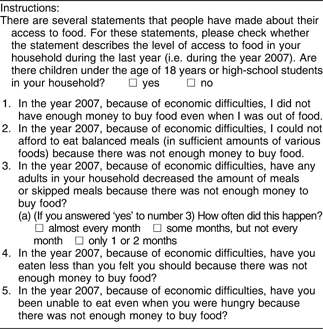
* Response options for items 1 and 2 were often, sometimes, never and do not know/refusal; response options for items 3, 4 and 5 were yes, no and does not know/refusal.
In order to assess household food insecurity status, each item was assigned a score of 1 if the answer was affirmative (often/sometimes, yes, or almost every month/some months, but not every month) and 0 for all other responses. Households were classified into a food security group (additive total score ≤1) and a food insecurity group (additive total score ≥2) according to the household's additive total score. Households were defined as having low food security if the score was 2–4 and very low food security if the score was ≥5. All questions were administered to participants by trained interviewers.
Independent variables
Factors related to food insecurity were examined across four areas: (i) household characteristics; (ii) householder's characteristics; (iii) factors related to economic status; and (iv) social benefits. The household characteristics included household type (two-adult headed, female head with no spouse, male head with no spouse, youth head, living alone), households with children of age <18 years, households with elders aged >65 years, elder-only households, households with disabled persons and family size.
Householder's characteristics included sex, age (≥65 years), education level (middle school or less (≤9 years of schooling), high school (10–12 years of schooling), college or higher (≥13 years of schooling)) and job status (none, unemployed, manual, non-manual). Non-manual jobs included managers, professionals, technicians and clerks, whereas manual jobs included service and sales workers, agricultural and fishery workers, craft and related trade workers, plant and machine operators and assemblers and unskilled workers.
Factors related to household economic status included household income, monthly food expenditure, the ratio of food to total expenditures and housing type. Household income was categorized into three groups according to the poverty index ratio (household income/national poverty line × 100): ≤100 % (poor households), 100–120 % (near poor households) and >120 % (middle- and higher-income households). Housing type was categorized into four groups, including one's own house, leased house, rented house and others. In a leased house, the tenant pays a large deposit at the time of signing the housing contract without paying monthly rent. In a rented house, the tenant pays a small deposit at the time of contract and also pays monthly rent. The other category included cases of living in a relative's home without paying rent.
Social benefit variables included the national basic living security and food assistance programmes. The beneficiary of national basic living security was defined as a household that has received cost of living, housing, medical, educational, childbirth, funeral and self-support benefits. Participation in food assistance programmes was defined as a household that has received free meal services or home-delivered meals during the last year.
Statistical analysis
The KoWePS includes post-stratification weight using 2005 census data, weight for primary sampling units and weight for an intentional over-sampling of low-income households(Reference Kim, Yeo and Lee36). Thus, all results were estimated using the sample weight. In the analysis of household income and food expenditures, household equivalence scales were applied to adjust for household size. The proportion or mean values of the factors by food insecurity status and the differences between food security and food insecurity were tested with χ 2 tests for categorical variables and by t tests for continuous variables. In order to examine the effects of factors on food insecurity, OR was estimated using the multivariate logistic regression analysis. The multivariate logistic regression analysis was used to select the best contributors among household characteristics, householder's characteristics, household economic status and participation in food assistance programmes. All analyses were conducted using the SAS statistical software package version 9·1 (SAS Institute Inc., Cary, NC, USA).
Results
The overall prevalence of household food insecurity is shown in Fig. 1. The prevalence of food insecurity was 5·3 %. For low-income households (defined as households with a poverty index ratio ≤120 %), the prevalence of food insecurity was 25·7 %, and, of these, 6·3 % had a very low food security status.
The prevalence of household food insecurity ( , low food security;
  , very low food security) by household income level, Republic of Korea, 2007. Middle- and higher-income households represent households with a poverty index ratio (household income/national poverty line × 100) > 120 %. The lower-income households represent households with a poverty index ratio ≤120 %
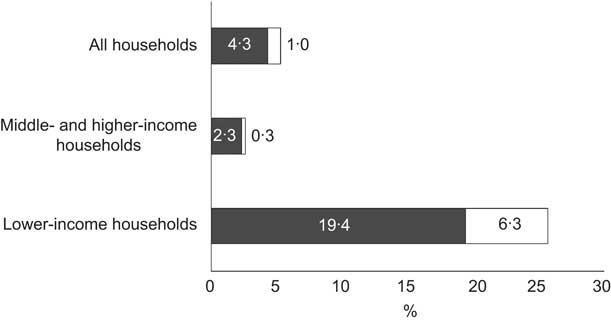
Table 2 describes household characteristics, householder's characteristics, economic status and social benefits by food insecurity status. Compared with food-secure households, food-insecure households were more likely to be headed by a single woman or man, to be single-person households (especially elder-only households) or to be households with elders or disabled persons. The proportion of households with children was higher among food-secure households (42·9 %) than among food-insecure households (31 %), and the mean family size was larger among food-secure households (2·95 v. 2·17). With respect to householder's characteristics, food-insecure households had a relatively higher proportion of female (40·8 % v. 17·5 %) and elders as heads of the household (40·5 % v. 22·9 %) than did food-secure households. The householder's educational level was lower and the proportion of householders with an unstable job status (none or unemployment) was higher among food-insecure households than among food-secure households. Lower household income was related to a higher risk of food insecurity. About half of the food-insecure households were low-income households (poverty index ratio ≤120 %), whereas most food-secure households had a poverty index ratio >120 %. Monthly food expenditures among food-insecure households were lower compared with food-secure households. About half of the food-insecure households paid monthly rent, whereas 15·9 % of food-secure households paid monthly rent. Of the food-insecure households, 36·5 % received public assistance benefits and 26·1 % participated in food assistance programmes. Among low-income households, the results were generally similar to those described above, with several exceptions. Specifically, the proportion of households with children did not differ between food-secure and food-insecure households, and the proportion of households with elders or disabled persons was higher among food-secure households. The proportion of recipients of public assistance and participation in food assistance programmes among low-income food-insecure households were 64·4 % and 34·3 %, respectively.
Characteristics of household by food insecurity status, Republic of Korea, 2007
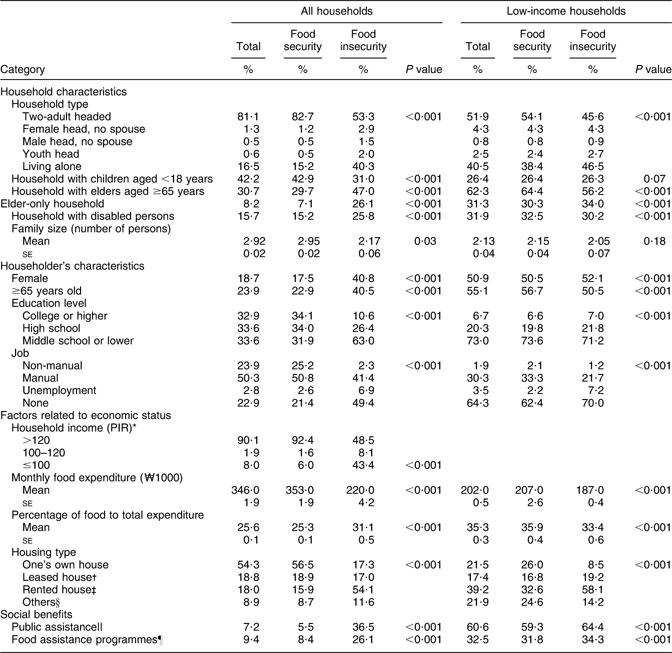
PIR, poverty index ratio.
*PIR = household income/national poverty line × 100.
†Paying a large deposit at the time of signing a housing contract without paying monthly rent.
‡Paying a small deposit at the time of signing a housing contract while paying monthly rent.
§Living in a relative's house without paying rent.
||The national basic living security scheme providing cost of living, housing, medical, educational, childbirth, funeral and self-support benefits.
¶Participation in free meal services or home-delivered meal services.
The effects of factors related to household food insecurity were examined using multivariate logistic regression models (Table 3). Model 1 included household and householder's characteristics, and model 2 included factors related to economic status in addition to the variables in model 1. In the full model (model 3), because receiving public assistance and participation in food assistance programmes were highly correlated, each of these factors was examined separately with all of the other variables in model 2. Among the household characteristics in model 1, households headed by a single woman or man, youth-headed households and single-person households were more likely to be food insecure than other households. Households with children or disabled persons were more likely to be food insecure than those without these types of household members (OR = 1·94, 95 % CI 1·39, 2·72 for the households with children; OR = 1·62, 95 % CI 1·22, 2·15 for the households with disabled persons). With respect to householder's characteristics, lower educational level of the householder was associated with food insecurity. Households in which the householder had a manual job or was unemployed or jobless were more likely to be food insecure than those in which the householder had a non-manual job.
Factors related to household food insecurity, Republic of Korea, 2007
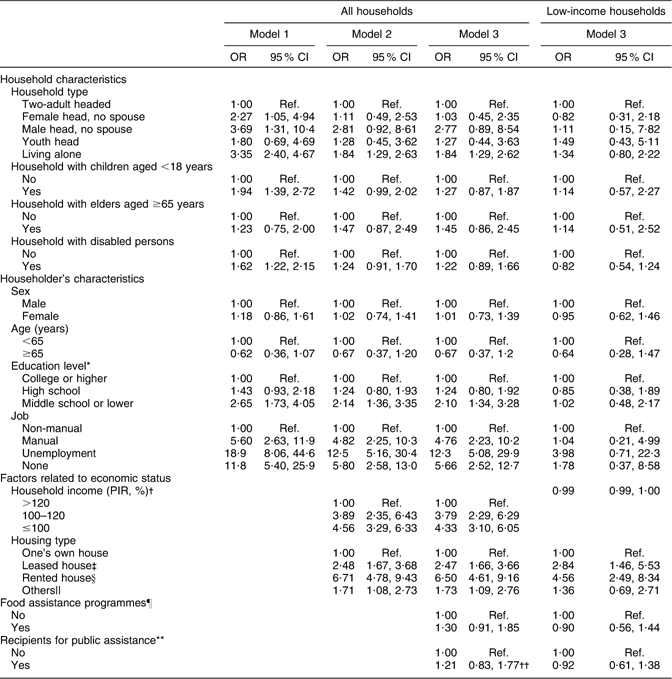
PIR, poverty index ratio; Ref., reference category.
Model 1 food insecurity = household characteristics + householder's characteristics.
Model 2 food insecurity = household characteristics + householder's characteristics + economic factors.
Model 3 food insecurity = household characteristics + householder's characteristics + economic factors + food assistance programmes.
All statistical significance was tested at P < 0·05 level.
*P for trend of risks across education level ≤0·0001 for all households, NS for low-income households.
†PIR = household income/national poverty line × 100.
‡Paying a large deposit at the time of signing a housing contract without paying monthly rent.
§Paying a small deposit at the time of signing a housing contract and paying monthly rent.
||Living in a relative's house without paying rent.
¶Participation in free meal services or home-delivered meal services.
**The national basic living security scheme providing cost of living, housing, medical, educational, childbirth, funeral and self-support benefits.
††OR was estimated when recipients of public assistance were included in the full model, instead of participants in food assistance programmes.
When factors related to economic status were examined with both household and householder's characteristics in model 2, it was determined that single-person households (living alone), householder's job status and all factors related to economic status were significantly related to the risk of food insecurity. Among these variables, factors reflecting unstable household economic resources, such as unemployment status or living in a rented home, showed strong associations with risk of food insecurity (OR = 8·75, 95 % CI 3·58, 21·4 for unemployment status; OR = 7·01, 95 % CI 4·96, 9·92 for living in a rented home). When participation in food assistance programmes or public assistance was included in the model, the coefficients were low and not statistically significant (OR = 1·30, 95 % CI 0·92, 1·85 for food assistance programmes; OR = 1·18, 95 % CI 0·81, 1·70 for public assistance). Among low-income households, in the full model, living in a leased or rented home was related to increased risk of food insecurity (OR = 3·06, 95 % CI 1·57, 5·98 for living in a leased house; OR = 4·62, 95 % CI 2·49, 8·55 for living in a rented house). Participation in food assistance programmes and public assistance were not related to risk of food insecurity among low-income households.
Discussion
Given the globally increasing relevance of food insecurity, the present study examined the prevalence of food insecurity and risk factors associated with food insecurity among Korean households. The prevalence of food insecurity was 5·3 % in all of the households and 25·7 % in the low-income households examined (19·4 % for the low food security group and 6·3 % for the very low food security group). The factors that were significantly associated with an increased risk of food insecurity included living alone, unstable job status/unemployment, low household income and living in a leased or rented home. For low-income households, living in a leased or rented home was significantly associated with a higher risk of food insecurity. Receiving public assistance and participating in food assistance programmes were not significantly related to food insecurity, even among low-income households.
Food insecurity was influenced by a number of household characteristics, as is consistent with the results of previous studies(9, Reference Temple10, Reference Nord20, Reference Olson, Rauschenbach and Frongillo21, Reference Che and Chen25, Reference Casey, Szeto and Lensing37–Reference Nord, Andrews and Carlson40). Households headed by a single woman or man, youth-headed households and single-person households had a higher risk of food insecurity, which is consistent with the results of other studies(9, Reference Temple10, Reference Olson, Rauschenbach and Frongillo21, Reference Che and Chen25, Reference Nord, Andrews and Carlson40). However, these relationships became non-significant after adjusting for economic factors. In addition, for low-income households, these household characteristics were not significantly related to food insecurity. These findings imply that food insecurity of households with these demographic factors can be almost entirely traced to their poorer economic status. Interestingly, the findings related to households with children were different for the full sample of households and for the sample of low-income households. The proportion of households with children was lower among food-insecure households than among food-secure households in the full sample, which was inconsistent with other studies(Reference Temple10, Reference Nord, Andrews and Carlson40), but these findings were reversed in the sample of low-income households. As such, this result was explained by the household's socio-economic status. The OR for households with children was 0·59 (95 % CI 0·47, 0·76). However, after adjusting for other variables related to socio-economic status, households with children appeared to be at an increased risk of food insecurity. These findings represent a unique characteristic of low-income households in Korea. Currently, Korea has a very low fertility rate (1·19/1000 persons in 2008)(41), and it is known that a household's economic status partly contributes to the number of children raised in a household(9, Reference Jeong, Hwang and Kum42, Reference Lee, Kim and Noe43). That is, because of the high cost of raising children, low-income households are less likely to have children. According to work by Kim, the relative poverty rate (50 % of median income) has increased from 16·1 % (2003) to 19·7 % (2006); however, that of households with children has decreased from 12·6 % to 11·0 %.
The present study showed that unstable job status and housing type were risk factors for household food insecurity, even after adjusting for household income. In particular, housing type was significantly related to risk of food insecurity among low-income households. Rented houses in Korea have been shown to be associated with lower housing stability, amenities, quality and per capita living space, reflective of the household's socio-economic status(Reference Oh and Yeo44, Reference Yoon, Kim and Park45). Unemployment status or paying monthly rent may lead to a cut food expenditures when there are limited resources(Reference Kirkpatrick and Tarasuk46–Reference Kendig48). Kirkpatrick and Tarasuk(Reference Kirkpatrick and Tarasuk46) found that among low-income households, households that paid rent or mortgages had lower food expenditures than those without housing payments. These findings imply that a multifaceted intervention approach, such as appropriate labour market programmes, unemployment benefits and housing subsidies, as well as food assistance programmes, may be helpful in alleviating food insecurity by making family resources more stable and sustainable. The importance of stable and sustainable family resources is represented by the elderly population whose income is relatively more likely to be stable because of social security. Several studies showed that food-insecurity of elderly households was relatively lower than that of non-elderly households(Reference Nord20, Reference Nord49). The present study also showed that, specifically for low-income households, the proportion of households with elders was higher in food-insecure households than in food-secure households.
In situations in which poor people have to make choices among several basic necessitates with limited resources, food assistance programmes may be important in reducing food insecurity. Previous studies on the effects of participation in food assistance programmes have resulted in inconsistent findings(Reference Alaimo, Briefel and Frongillo19–Reference Olson, Rauschenbach and Frongillo21, Reference Rose, Gundersen and Oliveira23, Reference Che and Chen25, Reference Onianwa and Wheelock28, Reference Wehler, Weinreb and Huntington29, Reference Nord, Andrews and Carlson40). In the present cross-sectional study, the association between food insecurity and participation in food assistance programmes was weak and not statistically significant. One reason could be that the research design was not able to control for self-selection of more food-needy households into the programme, leading to weakened effects of the programmes(Reference Alaimo, Briefel and Frongillo19–Reference Olson, Rauschenbach and Frongillo21, Reference Wehler, Weinreb and Huntington29). Several studies suggested that participation in programmes can be coincident with food insecurity rather than factors that contribute to or protect against food insecurity(Reference Olson, Rauschenbach and Frongillo21, Reference Kim and Frongillo50). Another reason may be that the programmes did not completely meet the food needs of the participating household during the entire year as other studies showed, or households do not get assistance immediately upon becoming food insecure. In the present study, the prevalence of food insecurity among households participating in food assistance programmes was 29·3 % for the full sample, 45·7 % for elderly households and 13·1 % for households with children. Further studies providing better information on dynamic changes in food insecurity and programme participation will be needed to assess the impacts of participation in food assistance programmes on food insecurity.
The present study has several limitations. Because of the cross-sectional nature of the study, a causal association among the factors and food insecurity cannot be estimated. In addition, because the cross-sectional data lacked information on the pattern and period of programme participation, as well as the duration of food insecurity, unbiased effects of participation in programmes on food insecurity could not be assessed. With respect to the measurement of food insecurity, the six-item index of the KHFSS used in the present study has not been validated among representative samples.
In conclusion, single-person households, low-income households, households whose heads are unemployed or jobless and households living in leased or rented homes were more likely to be food insecure. Specifically, living in leased or rented homes was strongly related to food insecurity among low-income households. Participation in food assistance programmes was not significantly related to food insecurity. These findings will be helpful in identifying segments of the population to be targeted for interventions. Furthermore, more active food assistance programmes with strategies to address the problems of unemployment and unstable housing are needed to alleviate food insecurity among the Korean population.
Acknowledgements
The present study received no specific grant from any funding agency in the public, commercial or not-for-profit sectors. None of the authors have any conflict of interest to declare. K.K., M.K.K. and Y.-J.S. conceived and designed the research; K.K. conducted all the statistical analyses and drafted the paper; M.K.K. and Y.-J.S. contributed to interpretation of the data and reviewed the manuscript; S.S.L. assisted in the study design and analyses. All authors have read and approved the final version of this manuscript.



