

Introduction
While traditional waqfs have always fallen outside of the purview of rulers and states in the past, why are contemporary cash-based waqfs administered and regulated by the state in some countries and by non-state entities in others? In Islamic tradition, a waqf is an endowment established by a founder (waqif) into perpetuity to serve the community’s socio-economic needs. Historically, it is usually the case that another individual, the mutawalli, is tasked with managing the waqf on the waqif’s behalf, ensuring that the waqf is being utilized in the manner detailed in its title deed, or waqfiyya (Abbasi, Reference Abbasi2012, 124). Upkeeping waqfs required extensive management and administration, leading to a greater likelihood of a trail of documentation left behind for some waqfs. This has enabled scholars to learn and uncover much from them.Footnote 1
Waqfs of the traditional sort do not play as prominent a role in the contemporary Muslim world as they used to, largely because postcolonial states have become the primary provider of public goods and services.Footnote 2 In recent times, however, cash waqfs have become increasingly present across many countries in the Muslim world as charitable institutions. Although cash waqfs serve the same ends of providing public goods and services as their traditional counterparts, they differ in several ways. Cash waqfs typically rely on pooled capital from multiple waqifs, in a method not too dissimilar from crowdfunding, to create an endowment. The funds generated are then used to acquire the requisite land or property to fulfill the requirements of the waqf deed and/or to invest in Sharia-permitted business modelsFootnote 3 to generate profits to sustain the endowment into the future. The waqifs of traditional waqfs also have sole discretion over the type of waqf they want to establish since it is sourced from their own wealth, whereas contributors to cash waqfs have a range of choices over the types of cash waqf projects they can opt to fund. Typically, only wealthy and high-status individuals could afford to establish a traditional waqf, but the barriers to entry for contributing to cash waqfs are much lower since they rely on pooled capital. Arguably, they also represent a more efficient method of mobilizing community resources to provide goods and services that the community itself requires.
While traditional waqfs, as an institutionalized form of charity, have historically existed outside of state control for the most part, contemporary cash waqfs exhibit striking variation in the ways that they are administered and regulated across the Muslim world. Two cases in the Muslim world illustrate this point well. In Bangladesh, Islamic banks play the leading role in the provision of cash waqf programs. In November 1995, the Social Investment Bank Limited—later renamed to Social Islami Bank Limited (SIBL) in 2009—was established in Bangladesh, with a clear focus on social enterprise. Two years later, it became the first Bangladeshi bank to introduce cash waqf deposit programs, and the other Islamic banks then followed suit. In April 2007 in Malaysia, the National Council of Islamic Religious Affairs (MKI), a federal-level coordinating body that provides advice and guidance on Islamic-related affairs, issued a fatwa deeming cash waqfs as permissible. Soon after, the federal government established the Malaysian Waqf Foundation (YWM) to administer cash waqfs, and the State Islamic Religious Council (SIRC) of every state in Malaysia began to offer them too. The state is, therefore, the primary administrator of cash waqfs in Malaysia. Why is the state deeply entrenched in the administration and regulation of institutionalized charitable giving in the form of cash waqfs in Malaysia, while private Islamic banks administer and regulate them in Bangladesh? Even as charitable giving remains a defining feature of Muslim societies (Singer, Reference Singer2013), why does the state loom large in the domain of religious charity in Malaysia but not in Bangladesh?
I argue that addressing these questions requires an examination of the issue of religious regulation and, in turn, how it relates to religious charities. In countries where the state has not or has failed to claim regulative authority over all matters pertaining to religion, non-state actors may step in to regulate the different facets of it, one of which includes the administration and regulation of religious charities. The argument I make in this article to explain the markedly different approaches toward the administration and regulation of cash waqfs in Bangladesh and Malaysia is twofold. First, regulatory frameworks for religion, especially in postcolonial states, typically have their roots in the colonial period, emerging either out of prudence or expedience. Following from that, the institutional development of these regulatory frameworks continued to provide the baseline for how religion would be regulated moving forward, with consequences for religious charities in the contemporary period. However, this explanation alone is incomplete as it is too deterministic. The second component of the argument is that actors within the postcolonial state actively made choices and decisions pertaining to the regulation of religion. Political elites can choose to deprioritize the regulation of religion, maintain the existing framework, or shore up the framework and further entrench themselves; all these options create implications for the regulation of religious charities.
In India—including the Bengal Presidency, of which modern-day Bangladesh forms a part—the East India Company (EIC) and the Crown relied largely on legal arbitration to adjudicate on matters pertaining to both Hinduism and Islam. Court decisions and rulings thus became the primary mode of running the rule over religion, tabling only matters that were worthy of being heard by the courts. Consequently, the day-to-day administration of religion did not fall within the purview of the state. In the postcolonial period, Bangladesh has faced numerous politically turbulent periods, most of which have driven successive governments to prioritize survivability above all else. This meant that successive governments have chosen to politicize the bureaucracy to foster support from bureaucrats instead of professionalizing the bureaucracy to meet the needs of a rapidly modernizing society. Consequently, the regulation of Islam by the state, including religious charities, has not been a priority. Cash waqfs emerged in the private sector in Bangladesh, with the Islamic banks offering cash waqf programs within the existing Islamic banking and finance (IBF) regulatory framework.
In Malaya, the British claimed to govern most of the Malay states indirectly; in reality, the British held power over all matters of governance except for those involving custom and religion, which were left to the local sultans. The sultans then embarked on a process of religious centralization and bureaucratization within their respective realms to reassert their already weakened legitimacy. These state-level bureaucracies persisted well into the postcolonial period. However, with the federalization of ‘bureaucratic Islam’ under Mahathir Mohamad’s administration in the 1980s due to religious outbidding pressures, the federal government began to take a more active role in coordinating the regulation of Islam among the various SIRCs, even as the latter remain as the predominant regulating authority of Islam in their respective states. Under an all-encompassing bureaucratic framework coordinated at the highest levels of government, cash waqfs became available only after the 2007 fatwa to permit them was issued by the MKI at the federal level. The federal government first began to offer cash waqfs, and the respective state-level bureaucracies followed suit.
Why does the topic of regulation of institutionalized religious charity, especially in the Muslim world, matter at all? First, it contributes to scholarly debate regarding how development affects state capacity and the state’s ability to regulate religion (Buckley and Mantilla, Reference Buckley and Mantilla2013). Economic development arguably increases the degree of state capacity, in turn allowing it to penetrate sectors that it previously could not, including religion. Economic development also strengthens the state apparatus and increases the likelihood for the bureaucracy to professionalize, becoming a more effective tool of governance. Both the cases of Bangladesh and Malaysia provide evidence that the regulation of religion can, instead, be unrelated to economic development. While Bangladesh remains a developing country in the present day, it has witnessed marked levels of sustained economic growth that have not spurred the development of ‘bureaucratic Islam’. Malaysia has a far more advanced economy than Bangladesh’s, having grown to become a hub for the global Islamic economy as well. Yet its moves to further undergird the regulation of religion and its emergence as a global Islamic economy hub have occurred due to political calculations rather than economic factors. Second, the involvement of both state and non-state actors in charitable giving also addresses the larger global trend of the increasing fuzziness in the boundaries between charity, state, and market, the Muslim world included (Bromley and Meyer, Reference Bromley and Meyer2017). The Bangladesh case presents an example of for-profit banks offering cash waqf programs as part of their social enterprise operations, whilst the Malaysia case describes a context where the governmental bureaucracy itself is involved in the provision of cash waqfs, aligning charity and state.
The different modalities for regulating religion
Regulation refers to a set of commands or binding rules introduced and enforced to influence behavior, typically carried out by a body or set of actors tasked with such a responsibility (Baldwin et al., Reference Baldwin, Cave and Lodge2012, 2–3). Religious regulation thus refers to the range of commands and binding rules that work to shape, if not directly interfere with, the religious attitudes and behaviors of individuals and institutions. As of 2014, barring ten countries, every other country had measures in place to regulate religion (Fox, Reference Fox and Hannah2019, 12). Conceiving religious regulation as a continuum, with one end denoting “perfect” religious regulation and the other denoting unfettered religious liberty, allows us to capture its multidimensional nature (Gill, Reference Gill2008, 11).
There are four reasons why states might want to regulate religion (Fox, Reference Fox and Hannah2019). First, it may have guiding ideologies that are antireligion, such as in France, where its laïcité policy represents an “assertive” brand of secularism (Kuru, Reference Kuru2009). Second, there can be a general desire to support religion instead, such as how post-Soviet Russia has chosen to uphold the Russian Orthodox Church’s privileged status through various regulatory measures (Koesel, Reference Koesel2014, 35–42). Third, the strategic political interests of politicians in positions of power can dictate regulatory policies. Religious regulation, or a lack thereof, is thus a function of “political survival […], the need to raise government revenue, and the ability to grow the economy” (Gill, Reference Gill2008, 9). Fourth, as religious groups tend to be excellent at collective action and are active in the civil society sector, they can pose a credible threat to states, especially those headed by authoritarian regimes, necessitating various strategies to regulate religion as a means of repression and co-optation (Sarkissian and Wainscott, Reference Sarkissian and Wainscott2023).
The orthodox approach of conceptualizing regulation, especially in mainstream political science, typically assumes that the state is the primary, if not the sole, purveyor of it. However, as with many other actions and policies that we typically associate the state with, regulation is not the state’s sole purview. Non-state actors, both from the private and the ‘third’ sectors, have also taken on various regulatory responsibilities. That non-state actors are noteworthy, if not critical, partners and participants of regulatory action reflects the “polycentricity” of regulation, in which regulation has different “modalities” (Neo, Reference Neo, Neo, Jamal and Goh2019, 44–51). There are four such modalities to regulate religion. The first concerns the passing of laws, both generic laws that pertain to religion indirectly and specific laws that pertain to religion directly, a modality which is commensurate with the judicial approach toward religious regulation (Moustafa, Reference Moustafa2018; Sezgin and Künkler, Reference Sezgin and Künkler2014). Second, the bureaucratic approach entails the establishment of a governmental bureaucracy that regulates religion, which is a common approach in Southeast Asia (Künkler, Reference Künkler2018). If the first two modalities are state-centric, the third and fourth modalities involve non-state actors. Co-regulation describes regulatory frameworks in which state and non-state actors collaborate to formulate and implement religious regulations. The extent and nature of collaboration between both sets of actors will vary from context to context, thus leveraging flexibility and “rigor” in regulation. Last, self-regulation mainly revolves around non-state actors. They initiate and enforce regulation, imposing commands and rules upon themselves. Self-regulation may arise out of the actors’ expertise, the lower transaction costs involved, a greater range of flexibility afforded, legal decrees, or governmental abstinence and even fecklessness. Given the multidimensional nature of religion itself, different modalities might co-exist in various configurations to regulate its different domains.
Cash waqfs in Bangladesh and Malaysia
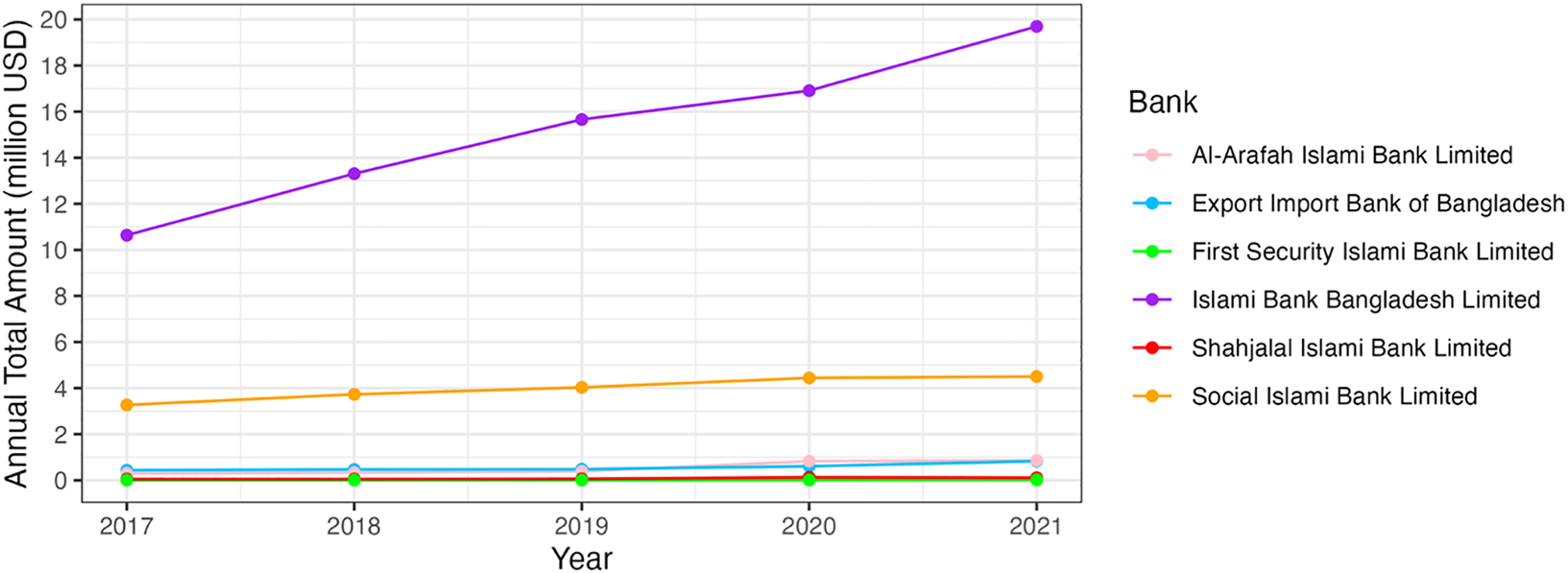
In both Bangladesh and Malaysia, the regulation of Islam, the majority religion in both countries, is defined by contrasting modalities in place, with consequences for how cash waqfs are administered and regulated. In Bangladesh, several non-state actors have emerged as self-regulators to administer domains of Islam that the state has not staked a regulatory claim over. Regarding cash waqfs, they are administered and regulated by private Islamic banks that have claimed administrative and regulative authority over the IBF sector in Bangladesh. Including the SIBL, there are at least six out of ten Islamic banks and at least four conventional banks with Islamic banking windows that offer some type of cash waqf deposit programs (Sarker, Reference Sarker, Ali, Hassan and elrahman Elzahi Saaid Ali2019; Uddin, Reference Uddin, Mansour and Vadell2023). In Bangladesh, cash waqfs have been used to fund the construction of numerous private colleges and universities. An example is the Social Science Institute (SSI), where pooled funds are reinvested in a Sharia-compliant investment fund, and its profits help to sustain the activities of the university (Hassan et al., Reference Hassan, Karim, Karim, Ali, Hassan and elrahman Elzahi Saaid Ali2019, 64). Cash waqf funds have also been used to fund education for underprivileged children in remote villages (Rahman and Sohel, Reference Rahman, Sohel, Ali, Hassan and elrahman Elzahi Saaid Ali2019). In these cases, the donors have been able to funnel cash waqf funds to aid specific demographic groups and geographical areas, showcasing an advantage of cash waqf deposit programs in Bangladesh. Figure 1 shows the amount of cash waqf deposits for six Islamic banks in Bangladesh across a five-year period between 2017 and 2021 (Uddin, Reference Uddin, Mansour and Vadell2023).
Contrastingly, in Malaysia, virtually all aspects of Islam are heavily regulated by the state; consequently, the federal-level YWM and the various SIRCs are primarily in charge of the administration of cash waqfs. The YWM also distributes some of the cash waqf contributions it raises to the SIRCs on an annual basis,Footnote 4 presumably to top up the amount of money raised through the cash waqf programs of the SIRCs. This simultaneously strengthens the collaborative networks between the YWM and the SIRCs, with the former serving as the central node. The products and services funded by cash waqfs in Malaysia have been wide-ranging. The YWM and the SIRCs have displayed a particular penchant for hotels, with cash waqf-funded hotels constructed in Melaka, Negeri Sembilan, Perak, and Terengganu thus far. Cash waqf funds have also been mobilized to construct pipelines to bring potable water to at-risk communities in some rural areas of Malaysia as well.Footnote 5 Figure 2 shows the amount raised through the YWM’s general cash waqf deposit program from 2009 to 2022.Footnote 6
Comparing Bangladesh and Malaysia
Cash waqfs have been widely mobilized for various projects in both Bangladesh and Malaysia, but they are administered and regulated by different entities in the respective countries. Why is the reach of “bureaucratic Islam” so sweeping in Malaysia, to the extent that even cash waqfs lie within its ambit, while the regulation of Islam, including cash waqfs, is much more diffuse in nature in Bangladesh? Before discussing both cases in the following sections, I posit that Bangladesh and Malaysia are appropriate comparative cases for the purposes of this article. From a case selection perspective, both cases are comparable for two reasons. First, they share a commonality regarding their precolonial and postcolonial Muslim-majority population makeup, in addition to their historical experience as erstwhile British colonies. Even though the British had established the Bengal Presidency earlier than they had established themselves in Malaya, the eventual colonization of Malaya began with the economic expansion of the EIC that had already firmly gained a strong foothold in India. In both the Bengal Presidency and Malaya, the British encountered Muslim natives who already had their own rulers and governance structures, which meant that they had to develop governing and administrative approaches appropriate to both colonies. Second, at the point of independence (1971 for post-East Pakistan Bangladesh; 1957 for pre-Malaysia Malaya), both states began as secular states in principle (Fernando, Reference Fernando2006; Islam, Reference Islam2018). Eventually, both underwent gradual Islamization—albeit distinct in nature and with consequences for the administration and regulation of cash waqfs in both countries.
From a theoretical perspective, the cases represent two distinct “ideal-typical” cases of modalities for regulating religion that are at the ends of the regulatory spectrum. Bangladesh represents a case whereby non-state actors play a leading role in religious regulation (i.e., self-regulation modality), even as the judicial approach was the prevailing one during the colonial era. Contrastingly, Malaysia represents the full-blown bureaucratic approach of religious regulation by the state, one that is highly centralized and deeply penetrative. The juxtaposition of these cases enables a deeper level of appreciation of the factors and processes that have led to the different ways in which cash waqfs in the Muslim world are administered and regulated.
The argument I present in this article is twofold. First, the roots of the distinction in the regulatory modalities can be traced back to the colonial period, even though both states are erstwhile British colonies. The specific policies that the colonial authorities adopted in India, including the Bengal Presidency, and Malaya had implications for how religion came to be regulated during the colonial period. Second, while these colonial-era frameworks have remained as the foundation for the regulatory regime for religion in the postcolonial period, actors within the postcolonial states themselves have had a hand in determining whether cash waqfs eventually fell under the state’s regulatory scope or not.
In India, the EIC, and then the Crown, took a deep interest in the regulation of religion but relied largely on a judicial approach to do so. The British invested significantly in the creation and enshrinement of Anglo-Hindu and Anglo-Muhammadan laws, and courts of law became the sites of religious administration across British India as a result. Established as a nominally secular state upon independence, Bangladesh became increasingly “Islamized” beginning in the mid-1970s. However, no all-encompassing bureaucracy to regulate Islam emerged in Bangladesh; what happened instead was that the bureaucracy became increasingly politicized, subject to elite capture. Islam was only important to the political elites to the extent that it afforded them opportunities to bolster their credentials to ensure the survival of their governments, which meant that there was little incentive to regulate Islam through more extensive bureaucratization. Cash waqfs thus emerged in Bangladesh in a context where little practical regulation of Islam by the state exists, with the banking sector taking the lead in this instance.
On the other hand, in British Malaya, the responsibilities of the day-to-day governing of the Malay states came under the purview of British Residents, but the realm of religion and local customs were left to the local sultans to administer. The basis of legitimacy of rule for the enfeebled sultans now lay in their ability to present themselves as the protector of Islam, prompting them to establish bureaucracies to manage and regulate as many aspects of it as possible, including charity. In the postcolonial period, these state-level bureaucracies became further institutionalized as the SIRCs. “Bureaucratic Islam” became federalized beginning in the mid-1980s, as the federal government under Mahathir Mohamad sought to outflank political competitors as part of its religious outbidding strategy. The federal government strove to take the lead in coordinating interstate policies of the different SIRCs. While the individual SIRCs remain as the ultimate regulatory body in their respective states in Malaysia, the federal government has become increasingly interventionist in its advisory and coordinating roles. Consequently, once the federal government sanctioned the provision of cash waqf programs, the SIRCs implemented them thereafter.
Regulating religion in British India
The British had largely perceived India to be sui generis, populated by people who could claim to have descended from an ancient civilization and who had been governing themselves with their respective native laws and legal institutions (Cohn, Reference Cohn, Starr and Collier1989, 132). Consequently, EIC employees preferred to avoid any form of interference in the affairs of both the majority Hindus and the minority Muslims since it could have negative consequences for trade and governance. Therefore, the roots of the company’s general policy of “religious neutrality,” which rested largely on non-interference and religious toleration, bore mostly out of expedience (Smith, Reference Smith1963, 66-69). The eventual growth of the EIC’s operations to become more state-like in the Bengal, Bombay, and Madras Presidencies reflected the greater need for standardization and legitimation of more extensive rule. This spawned efforts to compile both Hindu law and Islamic law into a compendium-style format in the latter half of the eighteenth century. The first of these types of books concerning Islamic law, Principles and Precedents of Muhammadan Law (1825), served to introduce the common law concept of “binding precedent” based on a compilation of court decisions, a concept that was rather alien to Islamic jurisprudence. The goal behind publishing such books was to make Islamic law more predictable, and thus more palatable, to British dispositions (Kugle, Reference Kugle2001, 282–283). The incorporation of Islamic and Hindu law into a judicial institutional structure familiar to the British also served the larger goal of the economic domination of India (Hallaq, Reference Hallaq2009, 371–372)
In line with the policy of respecting local customary norms and laws and the “divide-and-rule” approach to governance, the EIC and the Raj initially became protectors and patrons of Hinduism and Islam in the subcontinent (Smith, Reference Smith1963, 66–75). The British became financial supporters and administrative managers of temples and mosques, and actively supported and openly participated in religious festivals. This policy of religious neutrality underpinned by active and financial support for religious institutions and festivals shifted during the mid-nineteenth century, largely resulting from the increasing influence of Christian missionaries and proselytizers in India, while the Indian Rebellion was also a watershed moment that forced a major rethink of British rule and Britain’s relationship with their colonial subjects (Bender, Reference Bender2016, 56–80). By 1858, the last vestiges of the Mughal Empire had finally crumbled, and this granted the British a renewed vigor to revamp their system of governance in India through direct rule by the Crown. The newly installed Raj created a judicial system that now relied on a common law system, including matters pertaining to religion. Since judges now ruled on precedent rather than pre-existing customs, there was little need for them to be experts on Anglo-Hindu or Anglo-Muhammadan laws (Kugle, Reference Kugle2001, 271); consequently, pandits and muftis became redundant. Religious institutions at the local level were now left to their own devices as well, as the government withdrew from its role of funding and managing mosques and temples (Smith, Reference Smith1963, 76–77).
Beginning in 1862, the Indian Penal Code was introduced to standardize criminal laws in India and did away with many Anglo-Hindu and Anglo-Muhammadan laws regarding criminal law. In the realm of personal law and inheritance law, the British enshrined religion-based customary laws in the legal system of British India and enacted additional laws to refine them. There was also a drive in the early twentieth century to pressure the colonial authorities to implement reforms to Muslim personal law, which culminated in the passing of the Muslim Personal Law (or the Shariat Act) in 1937 that touched upon matters relating to inheritance, marriage, divorce, property rights, trusts, and trust properties—including waqfs (Bhuiyan, Reference Bhuiyan2017). The act standardized Muslim personal laws that would apply to all Muslims in India unequivocally, except for matters of intestate inheritance, in which they could adhere to local customary laws. These colonial-era legacies in the legal realm have persisted well into the postcolonial era. Bangladesh’s criminal justice system is largely a continuation of the colonial-era criminal justice system, with only several amendments to it, as is the case with personal law, including inheritance law (Kozlowski, Reference Kozlowski1997).
Regulating Islam in postcolonial Bangladesh
In the wake of the Bangladesh Liberation War, which led to the country’s independence from (West) Pakistan, secularism was enshrined as the foundational component of the new state’s constitution in 1972 to placate India and the Soviet Union, both of whom had aided Bangladesh in the war (Huque and Akhter, Reference Huque and Akhter1987, 203). Since then, Bangladesh has undergone transitions between different military regimes and unstable democratic governments. Due to this near-constant vacillation between the different governments in the first few decades of its independence, political elites have mostly chosen to politicize the bureaucracy to create a bastion of support for rule. The turbulent nature of politics meant that each time a new government came to power, regime loyalists would replace holdover high-ranking bureaucrats. Partisan loyalty, rather than professional qualifications, became the fundamental criterion for attaining positions of authority in the state bureaucracy. Under the military governments of Ziaur “Zia” Rahman (1977–1981) and Hussain Ershad (1981–1990), the bureaucratic-military nexus reigned supreme, as both leaders staffed the upper echelons of the bureaucracy with loyalist military officers (Mollah, Reference Mollah2011; Salehin, Reference Salehin2013).
Bangladesh moved toward multiparty democracy following Ershad’s forced resignation in December 1990, and political leadership since then has largely become a tussle between Khaleda Zia, Ziaur Rahman’s widow and leader of the Bangladesh National Party (BNP), and Sheikh Hasina, the daughter of Bangladesh’s first president Sheikh Mujibur “Mujib” Rahman, and leader of the Awami League. While the players had changed, the game remained the same. Both political parties ensured that the bureaucracy always served its own partisan interests when in power, further institutionalizing the patron-client relationship between the political and bureaucratic elites (Huque and Rahman, Reference Huque and Rahman2003; Rashid, Reference Rashid2014). This has entrenched an enervated bureaucracy severely lacking in qualified and professionalized personnel, but one that is highly corrupt at the same time (Alam and Teicher, Reference Alam and Teicher2012).
In such a context, it is thus unsurprising that there remains a continued absence of “bureaucratic Islam” in Bangladesh—certainly not to the degree witnessed in British Malaya and postcolonial Malaysia (refer to the next section). This is not to say that Islam has no role to play in the politics of Bangladesh; this point could not be farther from reality. Islam became a politically useful legitimating tool to shore up support for the successive military and democratic regimes in Bangladesh, with political elites all too willing to rely on grandstanding policies pertaining to Islam to serve such ends. Although Mujib, as the first Bangladeshi president, began as a committed secularist, he soon began to alienate vast segments of Bangladeshi society who believed that he had gone too far with his secularist project, and he quickly changed tack. Beginning in 1973, Mujib started to make references to Islam in his speeches, granted amnesty to those who had collaborated with the Pakistani army during the war, including many pro-Pakistani Islamic clerics and leaders, promoted cooperation with the Middle Eastern states, and pushed Bangladesh to become an active member of the Organization of Islamic Countries (OIC) (Islam and Islam, Reference Islam and Islam2018). Under the Zia regime, the Ministry of Religious Affairs was established, but this was also a tokenistic move (Riaz, Reference Riaz2003, 311). Under the Ershad regime, Islam was officially made the country’s state religion and the Islamic call to prayer began to be broadcast on all forms of media five times a day (Islam and Islam, Reference Islam and Islam2018, 339). In the multiparty era, stiff inter-party competition between the Awami League and the BNP also meant that Islam became a tool of political expediency. Post-1990, the much smaller Islamist Jamaat-e-Islami party has become important to both parties, to the extent that it has helped to achieve their political goals. The BNP governed with the party in a coalition government between 2001 and 2006, while the ostensibly more secular Awami League had collaborated with it to oust the BNP from power in 1996 (Lorch, Reference Lorch2019, 264). Political expediency in the form of grandstanding has thus remained central to the strategy of embracing Islam merely for legitimation purposes; “the invocation of religion for political legitimacy [in Bangladesh] is driven by a cynical opportunism among a ruling elite that cannot deliver real development for the country” (Griffiths and Hasan, Reference Griffiths and Hasan2015, 236).
As a lived reality, Islam in Bangladesh is very much alive and permeates all levels of society. Non-state actors have played and continue to play a pivotal role in the entrenchment of Islam in Bangladeshi society; as such, they also serve as the regulators of the religious domains in which they are active. For example, in the field of religious education, graduates of “Qoumi” madrasas, or the privately funded madrasas with traditional and orthodox Islamic-centered curricula, continue to be the main supply line for ulama of standing. Many Bangladeshi Muslims look up to them for guidance and consider their fatwas and opinions as gospel since they are viewed as “specialists” of Islamic scholarship (Bano, Reference Bano2014). To be sure, the ulama class in Bangladesh should not be viewed as a monolith, even if Qoumi-affiliated scholars comprise the dominant group (Raqib, Reference Raqib2020). Although the extent of the ulama’s political influence has waxed and waned throughout the years since Bangladesh’s independence, they continue to command a high degree of social standing and authority in general. The ulama class may not advertise themselves as regulators of Islamic education and knowledge in the formal sense of the term, but for all intents and purposes, they serve as self-regulators of this domain of Islam in Bangladesh.
Beyond the ulamas and madrasas, another type of prominent non-state actor in an Islamic-related domain in Bangladesh are the Islamic banks. While still an expanding sector, IBF has gained a significant foothold in Bangladesh’s banking sector. As of over a decade ago, the IBF sector was already holding about 30% of all deposits and just under 20% of the total credit supplied (Suzuki et al., Reference Suzuki, Barai and Uddin2013, 416). Bangladeshi Islamic banks are also relatively more efficient than most of their counterparts in other Muslim countries (Abdul-Majid et al., Reference Abdul-Majid, Saal and Battisti2010). Many of them are also the pioneers of Islamic microfinance in Bangladesh. These banks are at the forefront of a gamut of Sharia-compliant financial vehicles in spite of and because of the lack of standardized and comprehensive regulations provided by the state. From a financial-legal perspective, Bangladesh Bank, the state’s central bank, is tasked with regulating both the conventional and Islamic banking sectors. However, unlike most other Muslim countries, Bangladesh lacks a set of laws that are targeted specifically at regulating the IBF sector (Ahmad and Hassan, Reference Ahmad and Hassan2007). Additionally, recall that Bangladesh had inherited the British Raj legal system that had subsumed Islamic criminal, personal, and inheritance laws within the secular-legal framework in the late colonial period. Any matters requiring guidance and structure that Islamic law provides, such as Islamic finance, have no analogs in the current Bangladeshi legal system.
The onus then fell on the Islamic banks themselves to fashion a regulatory framework that would apply specifically to Islamic banking. Consequently, many Islamic banks established their own Sharia Supervisory Committees (SSCs) to formulate and issue their own fatwas to ensure that the implementation of their programs and the sales of their products are Sharia-compliant (Uddin and Mohiuddin, Reference Uddin and Mohiuddin2020, 274). On their own accord, they also work together with Bangladesh Bank and the Central Sharia Board of Islamic Banks (CSBIB), a non-profit body, to promote cooperation, the standardization of fatwas, and the self-implementation of regulatory standards (Uddin and Mohiuddin, Reference Uddin and Mohiuddin2020, 275). Nevertheless, inconsistencies in the formulation and implementation of Sharia-compliant financial vehicles and products remain an industry-wide issue. The state thus serves, at best, as co-regulator of the IBF sector alongside the banks; in reality, the reticence of the state to get involved places the preponderance of the burden of enforcement of standards and regulation on the banks.
It is thus unsurprising that the initiative to introduce cash waqfs emerged, when it did, from the non-state sector—specifically, the IBF sector. When the SIBL was established in 1995, one of its major thrusts was to engage in social enterprise-geared banking, centered around microcredit loans. One of the bank’s founders, Muhammad Abdul Mannan, an academic, then pioneered the concept of cash waqf certificates issued by the bank in 1997 (Çizakça, Reference Çizakça2011, 114–115). This allowed Muslims from various socio-economic backgrounds to contribute to the establishment of a waqf, as the barriers to entry became much lower. Funds raised through the issuance of these certificates were to be invested in Sharia-compliant business ventures, and the returns from them were then channeled toward the creation and maintenance of waqfs. The other Islamic banks then followed SIBL’s lead, facilitated and governed by the IBF regulatory framework already in place. The state has yet to involve itself in the administration and regulation of cash waqfs properly, even though the Ministry of Religious Affairs houses an office tasked with the administration of waqfs. A major reason for this is that the relatively small office is already inundated with the responsibilities of managing numerous traditional waqf properties countrywide (Nabi et al., Reference Nabi, Islam, Bakar, Masuduzzaman, Ali, Hassan and elrahman Elzahi Saaid Ali2019, 126–127), leaving little latitude for it to administer or regulate cash waqfs. Given that “bureaucratic Islam” is not at all the centerpiece of the regulatory framework for Islam in Bangladesh, the self-regulation of cash waqfs by the Islamic banks is likely to remain as the status quo into the future. The banks have virtually free rein over how to regulate cash waqfs, which also allows them to have the prerogative over where and how to invest and allocate the funds from the cash waqfs, but it is also quite likely that they will continue to be overburdened with all there is to do with the management of cash waqfs, absent governmental support.
Regulating Islam in British Malaya
The EIC established its presence in the Malay Peninsula sometime after it had done so in the Indian subcontinent. For much of the nineteenth century, British presence was largely confined to the Straits Settlement territories of Malacca, Penang, and Singapore, even though the British held economic interests throughout Malaya. It was only in the latter half of the nineteenth century that the British began to expand deep into the peninsula, with the aim of forestalling potential encroachment by its European rivals. Beginning with Perak in 1874, the position of “Resident” was established by the British, primarily to advise the local sultans of the Malay states on all matters pertaining to governance, barring religion and custom. The British also established State Councils, advisory bodies at the state level that comprised a group of local Malay elites together with the Resident, ostensibly to advise each sultan on matters of governance. In reality, the Resident held full executive powers and the councils merely served to rubber-stamp British directives (Gullick, Reference Gullick1992, 50–51).
The British did not seek to administer religion and custom in Malaya as they had endeavored to protect the Malays and their way of life as they had understood it. As with earlier general British attitudes toward the natives of India, the British initially perceived the Malays to be “civilized” as their language, customs, and religious practices had significant Hindu-Buddhist influences (Carroll, Reference Carroll2011). The Resident system eventually took hold in several other states of Malaya—Selangor in 1874, followed by Pahang and Negeri Sembilan in 1888. These four states were reorganized into the Federated Malay States (FMS) in 1896 and administered centrally from Kuala Lumpur by a Resident-General who served as its chief executive officer. The other five Malay states, comprising the southern state of Johor and the northern states of Kedah, Perlis, Kelantan, and Terengganu, that Siam had ceded to Britain in 1909, also had British Residents appointed to “‘advise” the sultans, but these states formally remained outside of the FMS. Although the Malay states were being governed under a patchwork of different administrative systems, the British remained the true power brokers in Malaya.
As the British Residents gained control over almost all aspects of governance at the expense of the sultans, the legitimacy of the throne now rested firmly on the sultans’ ability to project themselves as the protectors and defenders of Islam in their respective states; “[b]y making Malay sultans guardians and arbiters of religion and custom, legal negotiations over the control of the Malay peninsula placed local rulers at the center of Malay ethnic and Muslim religious identity during the colonial period and made legal codes and institutions a key instrument of their power” (Hussin, Reference Hussin2007, 765). The sultans thus began to consolidate their ability to administer Islam in the form of a centralized bureaucracy at the state level. This process entailed “the concentration of doctrinal and administrative religious authority in the hands of a hierarchy of officials directly dependent on the sultanate establishments for their position and power” (Roff, Reference Roff1967, 72). Therefore, in contrast to the developments in India, in which the British left local religious institutions to their own devices and administered the affairs of Hindus and Muslims through the courts, the various Malay sultans held free rein over the administration of Islam. While matters pertaining to religion were divided between the centralized judicial management of personal and criminal laws of Muslims (and Hindus) and the fissiparous nature of the management of religious institutions in India, centralized and expansive bureaucracies were established by the sultans to manage virtually every single aspect of Islam in the Malay states.
During the colonial period in Malaya, muftis, qadis, imams, and other members of the ulama effectively became civil servants, whereas previously they had never been a part of the official ruling stratum (Mohamad, Reference Mohamad2020, 35–38; Yegar, Reference Yegar1979, 92–93, 144–169). In the realm of Islamic legal institutions, its standardization and rationalization in the Malay states had also begun in the mid-1880s as the British began to consolidate their power and position in the Malay Peninsula (Peletz, Reference Peletz2002, 48). Eventually, every state began to establish some type of administrative and bureaucratic agency with the consent and support of the colonial authorities to regulate Islam, be it in the form of special committees, sub-committees of the individual state councils, or religious departments. Of these, the establishment of the Majlis in Kelantan in 1915 was unique for the time. The Majlis effectively claimed bureaucratic and judicial jurisdiction over all matters pertaining to Islam, a degree of governance that had not yet been achieved in the other Malay states at the time. The Majlis supervised all imams, had the power to appoint officials to administer the mosques, supervised cemeteries, printed religious magazines, collected zakat, established religious schools, and even partook in adolescent healthcare (Yegar, Reference Yegar1979, 75–76).
Regulating Islam in postcolonial Malaysia
Kelantan’s Majlis system became the yardstick for the administration of Islam for all the Malay states during the colonial period and well into the postcolonial period as well. Following the end of World War II, the Malay states were placed on the road map toward eventual independence in the form of a united and sovereign Federation of Malaya. While the independent Reid Commission tasked to draft the constitution for the federation intended for Malaya to be secular in its outlook (Fernando, Reference Fernando2006, 252–253), the right for each state to administer Islam became formally enshrined in Article 3 of the Federal Constitution of Malaysia, which also declares that the sultans and the chief executives of the other non-sultanic states as the final arbiters of all legal and administrative matters pertaining to Islam, given their roles as the “Head of the Religion of Islam” (Roff, Reference Roff1998, 216). The individual states then began to enact laws and statutes pertaining to Islamic law and the administration of Islam, all of which served as further consolidation of many of the arrangements already in place during the colonial period. Selangor first passed the Selangor Administration of Muslim Law Enactment in 1952, and this served as a blueprint for other states moving forward. It became a standard measure for each state to establish a Majlis-style body, now known as the State Islamic Religious Council (SIRC), headed by a state-appointed mufti. The body exercised all authority to issue fatwas, appoint all qadis, certify Islamic educators, and supervise zakat collection, amongst other responsibilities. Beginning in the 1950s, laws had also begun to be passed in the individual states to centralize the administration of traditional waqfs in the hands of SIRCs as well, making the body the sole trustee, or mutawalli, of all waqfs. It is highly likely that this move disincentivized private individuals from establishing any traditional waqfs in the name of charity as well (Çizakça, Reference Çizakça2018, 99). In addition to the establishment of the SIRCs, each state also established a Department of Religion to manage the day-to-day administration of Islam and the Shariah courts (Ibrahim, Reference Ibrahim1965, 147–173).
Members of the ulama, many of whom had already gained employment in the colonial-era bureaucracy, continued to swell the ranks of the postcolonial bureaucracy as more employment opportunities emerged with its expansion (Osman, Reference Osman2008, 137). To be sure, many of them have also remained outside of the auspices of the government, including being prominent members of the rural-conservative Pan-Malaysian Islamic Party (PAS), the longtime competitor to the Malay-based United Malays National Organization (UMNO), the leading party in the successive ruling coalitions of Malaysia from 1955 to 2018. Nevertheless, the state has persisted in its efforts to co-opt the ulama; in recent times, this has even afforded opportunities for the ulama to push the federal government toward adopting more conservative religious stances (Abdullah, Reference Abdullah2021, 507–511).
The centralization of Islamic authority and its administration at the federal level began earnestly in the mid-1980s under the first Mahathir Mohamad administration. The main driver of the bureaucratization of Islam at the federal level was UMNO’s response to the increasing political popularity of PAS beginning in the early 1980s. Mahathir and UMNO then began a concerted effort to project themselves as the guardians of the ‘correct’ interpretation of Islam, as opposed to the more ‘deviant’ or ‘radical’ elements of Islam ostensibly represented by PAS (Liow, Reference Liow2004, 190). The co-optation of Anwar Ibrahim, who had risen to popularity in the 1970s as a prominent Islamist youth activist, the institutionalization of IBF within the economic and banking sector, and the establishment of the International Islamic University of Malaysia (IIUM), among other things, represented deliberate efforts by Mahathir to enforce top-down Islamization to outflank PAS. This calculated strategy further reinforced the all-embracing logic of an already well-entrenched bureaucracy that administers Islam at the state level. While this would run counter to the legal prerogative of the individual states to regulate Islam, the bureaucratization of Islam at the federal level seemingly served to streamline guidelines and coordinate policies relating to Islam across the states. The establishment of the Department of Islamic Development of Malaysia (JAKIM) in 1997 under the aegis of the Prime Minister’s Office should be viewed in this light. Since the federal government cannot establish a de jure “Ministry of Religious Affairs,” JAKIM exists as a de facto but powerful advisory body to the respective SIRCs (Mohamad, Reference Mohamad and Yew-Foong2013, 111).
Due to the centripetal proliferation of “bureaucratic Islam” from the state to the federal level of the government of Malaysia that had begun in the 1980s, it is therefore unsurprising that it took the issuance of a fatwa in 2007 from the federal-level MKI to permit the rollout of cash waqfs in Malaysia. Following that, the federal government then established the YWM to administer cash waqfs at the federal level, and the individual SIRCs soon followed suit. In Malaysia, cash waqf programs exist within the regulatory frameworks already established to manage traditional waqfs. The Selangor SIRC was the first to issue cash waqfs in 2009, following which it established the Selangor Waqf Corporation (PWS) in 2011 to manage all its traditional waqfs and cash waqfs (Hussin et al., Reference Hussin, Kader, Rashid, Suhaili, Sidek, Said and Hasan2019, 243). The other states have since established their own cash waqfs through their respective SIRCs as well. The coordinating role of the federal government in the realm of cash waqfs can be seen in the following example. In December 2020, the Ministry of Environment and Water,Footnote 7 in conjunction with the YWM, launched a cash waqf program to raise funds to introduce and/or improve water delivery systems countrywide, focusing on rural areas that did not have access to a clean or reliable supply of water. In just over a four-month period, the program had raised RM2.4 million (just over USD500,000).Footnote 8 This example highlights the good that a well-coordinated and centralized bureaucracy can do. This, however, grants greater leeway to the federal-level bureaucracy to make decisions on behalf of the state-level bureaucracy, on top of other issues that can plague bureaucracies in general—rigidity, inefficiencies, and the misallocation of resources, among others.
That the introduction of cash waqfs in Malaysia came more than a decade after they had already been first introduced in Bangladesh is a curious point of note, even though “bureaucratic Islam” had already long existed at the state and federal levels of government in Malaysia, and the government had already worked to fashion itself as a global IBF hub beginning in the 1980s. However, this detail should not come as a surprise; a robust bureaucracy that has successfully claimed for itself jurisdiction over all matters concerning Islam leaves little to no space for grassroots-based initiatives and “organic” inventiveness outside of formalized state institutions. In contrast, it was the initiative of Abdul Mannan, a private citizen of Bangladesh, and his ability to pursue social enterprise-focused goals through the bank he had helped establish that enabled him to pioneer the cash waqf certificate program.
Conclusion
I have illustrated that an examination of the administration and regulation of cash waqfs reveals the nature of the regulation of religion, which is shaped by colonial-era legacies at the baseline level, and then further “refined” by strategic decision-making by political actors in the postcolonial period. In Bangladesh, where the self-regulation modality is preponderant, cash waqfs are primarily administered and regulated by Islamic banks. In Malaysia, they are primarily administered and regulated by the state itself, as “bureaucratic Islam” is all-encompassing at the state and federal levels. At this juncture, it is worth briefly discussing how the argument advanced in this article can be applied to other cases as well. Consider Indonesia, the most populous Muslim-majority country in the world. In contrast to Bangladesh and Malaysia, cash waqfs are administered and regulated in a co-regulation modality in Indonesia. The Waqf Agency of Indonesia (BWI), a government body, various private banks, social enterprise-focused organizations, and community-based foundations are all involved in the administration and regulation of cash waqfs in Indonesia (Ambo Masse et al., Reference Masse, Rahmatullah and Achruh2024). This example provides a snapshot of how religion, specifically Islam, is regulated in Indonesia. During the colonial era, religious regulation entailed efforts by the Dutch to clamp down on Islamic expression in the Dutch East Indies and acculturate Islam to Dutch culture (Benda, Reference Benda1958); however, it was also during the late colonial era that popular Islamic-oriented mass organizations such as Muhammadiyah and Nadhlatul Ulama emerged to dominate the civil society sector. Even as postcolonial Indonesia has inched toward “bureaucratic Islam” (Sezgin and Künkler, Reference Sezgin and Künkler2014), non-state organizations continue to play a prominent role in regulating Islam in Indonesia; the emergence of the independent National Council of Ulama (MUI) as the de facto source of religious authority in Indonesia attests to this (Menchik, Reference Menchik2022). In such a context, the administration and regulation of cash waqfs exist within a networked regulatory framework that involves both state and non-state entities.
There are two main academic contributions that this article makes. First, this article discusses the topic of cash waqfs beyond the typical lens of finance, banking, Islamic jurisprudence, and normative theories; instead, it approaches cash waqfs from the perspectives of historical institutionalism, political economy, and regulatory politics. Cash waqfs are therefore not only “religious,” “moral,” “economic,” or “historical,” but also “political”. Second, it highlights how institutional frameworks with deep historical roots intersect with elite decision-making strategies within those confines to explain the variation in the administration and regulation of cash waqfs. This explanatory framework can be extended to demonstrate how other faith-based financial or charitable institutions, both Islamic and non-Islamic, are administered and regulated, and why such configurations exist.
The analysis in this article points toward several broader policy implications as well. First, there is no inherently superior regulation modality in which the efficacy and reach of cash waqfs are contingent upon. In the first instance, policymakers need to be sensitive to the similarities and differences in the historical or colonial legacies and the institutional contexts of the various countries in the Muslim world before transplanting ideas and methods of administering and regulating cash waqfs. Second, the modalities that characterize how religion is regulated, and in turn how cash waqfs are administered and regulated, are not always set in stone. Changes in the relative priorities of actors or the capacities of state institutions and/or non-state entities may have implications for how the regulatory framework for religion evolves and, by extension, for the administration and regulation of cash waqfs—and vice versa. Third, as the case of Bangladesh has shown, non-state entities can be vital partners, if not key players. Policymakers must at least consider the possibility that non-state entities can play a critical role, be it formal or informal, in the administration and regulation of cash waqfs, rather than planning to exclude or supplant them altogether.
Cash waqf deposits in Bangladeshi Islamic banks.

Cash waqf deposits in the Malaysian Waqf Foundation.

Acknowledgements
Sections of this article are derived from the author’s doctoral dissertation, Essays on the Demand for and Supply of Cash Waqfs in the Muslim World, submitted to the University of Washington in 2023. The author would like to thank Caitlin Ainsley, Asli Cansunar, Anthony Gill, and Jacob Ricks for their comments and feedback on earlier drafts of this article.
Competing interests
The author declares none.
Yusri Supiyan is a Research Fellow at the School of Social Sciences at Nanyang Technological University, Singapore. His research focuses on comparative politics, political economy, and religion and politics, particularly in Asia.


 Open access

