The fallibility of knowledge and the web of trust.
1.1 ‘I Could Be Wrong’
How do you know that you know something? Throughout history, people have attempted some very different approaches to this question, based on, for example, authority, observation, reason, consensus, introspection, or religious revelation. We think it is safe to say that one of the many attempted approaches has been singularly successful. It has allowed humankind to develop knowledge even about phenomena beyond our direct perception, such as molecular and sub-atomic processes, as well as deep space, and fuelled practical applications such as medicine, aviation and electronics. The approach we refer to is of course science. But what precisely do we mean by ‘science’? The answer to this question is surprisingly elusive. When pressed about it, could you articulate what you mean by science? Does it matter?
There is a prevailing sentiment among scientists and philosophers alike that both groups of people should stick to what they do best. That is, scientists should stay in their labs and leave the philosophy of science to the professionals. It may be true that all serious work requires specialisation, but this does not mean that philosophy of science is of no consequence to the scientist. It is important to have at least a basic understanding of different approaches to how we build scientific knowledge, their merits and potential problems, and ‘how we know that we know something’, if for no other reason than to understand why we do science as we do. We are also convinced that any working scientist – or really, anyone using scientific results – should be able to articulate what makes science different from other means of gaining knowledge. You can sometimes hear that science doesn’t have to be properly defined, since ‘we know it when we see it’. This may be true to some extent, but it is not very helpful when trying to explain or defend the special position that science has in our society. In today’s world of fast-spreading misinformation and widespread science-scepticism, this has become even more important. There is an increasing need to explain why we should believe statements of scientific consensus over any other kind of opinion. How can we defend the special standing of science in society if we cannot articulate what we mean by it?
Understanding the nature of science, and how scientific knowledge is built, is also important in order to understand its limitations. The chapters in this book should make it clear that to believe that science is the best available means of gaining knowledge about the world is perfectly compatible with the realisation that it is also fallible. The demonstration that a particular published scientific result is wrong does not mean that we cannot trust science. Quite the contrary. In one important sense, it is this internalised realisation that ‘I could be wrong’ that makes science so powerful. It is what allows it to progress by learning from its mistakes. Few other human endeavours have such error correction built into its very foundation. This is such an important aspect of science that we may call it a cardinal rule.
Understanding what makes science special, what it is that makes it work, also means that we learn what aspects of it that we need to protect. Science has been remarkably successful, but some of its basic tenets are fragile and may need to be guarded, be it from deliberate attempts to undermine the trust in science or well-meaning administrative changes.
1.2 Is There Anything Out There?
To start from the beginning, how can we know that there is anything out there to learn about at all? In other words: is there an objective reality that exists independently of you and your senses? This has been (and still is) a contested question among philosophers, especially with respect to phenomena that cannot directly be experienced through our senses. And even if such a reality exists, how can we know that our sensual experiences or our theories have any true connection to this objective reality? Philosophers have taken up different positions on these questions – commonly called realism and antirealism. In short, realists assume that we can learn about the true nature of the world by careful observation and testing of hypotheses. The fact that we can make increasingly precise predictions about the world, and manipulate it in complex and subtle ways, suggests that we are getting closer to a true understanding of it. Antirealists, however, argue that if there is such a thing as an external mind-independent reality, we can never be sure that our theories have a true correspondence to it. Instead, they view scientific theories as pragmatic constructs that allow us to make predictions, but that are not necessarily accurate descriptions of an underlying reality.
This question may be interesting from a philosophical standpoint (and perhaps impossible to truly resolve), but we believe that in practice the different positions tend to converge, at least for working scientists. Few realist scientists would argue that we can say with certainty that our observations and theories are true representations of the world. If they did, they would violate the cardinal rule we just mentioned, that ‘I could be wrong’. They may see them as tentative truths but must be willing to accept that new observations or theoretical developments will require them to change their interpretation. In a similar way, few antirealist scientists would argue that trying to learn about what is beyond our own experience is just a mental exercise, since that would make most scientific work meaningless. Even if an antirealist believes that we can never know for sure if our concepts actually correctly describe the ‘true’ reality, trying to build increasingly sophisticated theories with better predictive power will still be an important goal.
Thus, in the end, it seems to us that more qualified versions of realism and antirealism end up being similar in scientific practice. The antirealists just emphasise the inherent uncertainty of knowledge a little more. Moreover, we would argue that few scientists really spend much time worrying over whether our theories actually bring us closer to an accurate representation of reality (or to what extent we can say that such a mind-independent reality even exists). Most of us are content to assume that either the world exists or it behaves as if it does, and for all practical purposes that is the same for us. Nevertheless, this issue has been important for many formulations of philosophy of science, and we may have reason to briefly revisit it. The important thing to note is that doing science involves making inferences in the face of uncertainty. Almost by definition, a scientific study attempts to answer a question that has not yet been asked. There is no set answer you can look up at the end of the study to check if you got it right. Scientific conclusions are almost always reached by conjecture, and this is true wherever you place yourself on the realist–antirealist scale.
However, there is a related – and perhaps more practical – issue with our perception of reality, and how we can know anything about it. We are constantly made aware of events and phenomena in the world, not just new scientific discoveries but all kinds of events happening worldwide. Almost all of this is beyond our immediate ability of personal verification. Strictly speaking, there is not much of what we call reality that is possible for us to confirm through personal experience. There may have been a time when most of the events that came to the awareness of a typical person concerned their immediate local reality. If so, this is certainly not the case today, when most of the events that we are made aware of, for example, through news and social media, are not part of our own personal reality. How can you be sure that the events that are reported in the news have even taken place? In most cases, you simply cannot. Almost all information that we encounter requires a certain degree of trust for us to accept. But who and what can you trust? It is not easy to evaluate the various sources of information that we are exposed to, and conspiracy theories exploit this need for trust, by sowing uncertainty and making you question what you would normally rely on. Why should you trust the news rather than the conspiracies on the internet? Why indeed should you trust science?
After all, trust is just as important when it comes to scientific information as it is for everyday knowledge about what is happening in the world. Indeed, science is highly dependent on trust. The realist–antirealist debate concerns itself with whether it is possible to attain true knowledge about the world, but in order to do science in a meaningful way we also have to trust other people’s observations and conclusions, at least to some extent (as we shall see in later chapters, especially Chapters 6–8, there is an important role of dissent among scientists as well, as a quality-check and to promote discussion and growth of knowledgeFootnote 1). Much of what we do as scientists builds directly on what others claim to have found, and without some trust it would be impossible to build on such knowledge. Moreover, the technical nature of scientific papers makes them difficult to penetrate for anyone not in the field, and relatively few people are truly able to assess and verify any particular scientific claim.
Thus, to understand science, it is of fundamental importance to ask why we should trust a paper in a scientific journal more than any other source of information, such as an authoritative social media posting. It turns out that science does have some built-in mechanisms to build trust, and we will get back to these in Chapters 8–10. For now, we will begin by turning the question around and look at it from the reverse perspective. How do you make your own subjective observations worthy of other people’s trust? Is there anything you can do that does not amount to authoritative posturing?
1.3 Making the Subjective Objective
Since we are all different individuals, without direct access to the experiences of others, all our observations are inherently subjective. The natural sciences, however, are typically not interested in subjective knowledge as such, but strive for objective knowledge about the world. How is that even possible when our observations are fundamentally subjective?
If you observe something, say an oak tree at a distance, how can you be sure that you are indeed observing an oak tree? Perhaps you are looking at a cleverly placed photograph, or what you see is actually a reflection in a mirror? Since we have two eyes that allow stereoscopic vision, the first thing you would do to make sure you are observing a large tree at a distance, rather than a small image of a tree close up, is probably to move your head or your point of view. This would provide you with enough useful information to evaluate if it is a real tree you see. In other cases, we could also involve other senses or make the observation under different conditions. Much of those actions are done without thinking, but they are nevertheless active. We do things to establish what it is we see. Observation is an active process, not a passive reception of information.
You may now have convinced yourself that what you think you observe is correct. But this conviction is still subjective, and what if the tree is just an illusion, a trick of your mind? Again, there are things you can do to make your subjective observation more objective. For example, you can ask someone else to make the same observation, and hopefully they agree that they are observing an oak tree. In this simple case, this may be enough to convince you and your fellow observer, but scientific observations are often made at the edge of current knowledge, and understanding what such observations mean is by no means easy. Making subjective observations more objective is an important part of the scientific process and is not as simple as it may intuitively seem. There are a number of steps that researchers typically take to increase the objectivity of observations. These steps include careful method descriptions to increase repeatability of the observations, transparent calculations and data transformations, calibration of instruments, ‘blinded’ observations and so forth. Or, like we just did with the oak tree, someone else can repeat the observation (or experiment). Scientists typically go to great lengths to convince their peers that thier interpretations are accurate, and all of these efforts involve shifting the observation from the subjective towards the objective.
1.4 Facts and Theory
One of the most commonly held notions of science, at least among laypeople, is that it is ‘based on facts’. But what does that mean? What is a fact? A typical answer would be an unbiased observation – an observation that is not tainted by assumptions or theory. This is, however, a notion that does not hold up to scrutiny.
If we return to our observation of the oak tree, it seems straightforward enough to approach the kind of unbiased observation that would make it an unproblematic fact. But even if you have established that it is not an illusion or a photograph, how do you know that you are looking at an oak tree? What, indeed, is an oak tree? The very words ‘oak’ and ‘tree’ are actually not really factual statements but are best thought of as (well-established) theories. Within botany, a tree is a perennial plant with an elongated woody structure that supports its external branches, leaves and flowers. It is not a taxonomic group but a growth form that has evolved independently in many distantly related groups of plants. As with many such concepts, its boundaries are not clear-cut. In some instances, it may be difficult to decide whether you are observing a small tree or a large shrub, and there is disagreement about whether a palm tree should be regarded as a tree (because it has no secondary growth). Presumably, you would also not call a young oak sapling a ‘tree’, even if it may well become one. It should be clear from this that ‘observing a tree’ actually requires some prior knowledge of what a tree is. This is even more evident when you claim that it is not only a tree but an oak tree. An ‘oak tree’ is an even more elaborate theory, one that involves the concept of biological species and the phylogenetic relationships between them. In this case, an ‘oak tree’ refers to a plant in the genus Quercus. The genus Quercus is in fact a large group of about 500 related species, and depending on your prior knowledge, and where you are, the statement ‘I see an oak tree’ could mean some different things. In northern Europe, where the authors of this book live, there is only one species of oak growing in the wild, so if this is where you made the statement, this prior knowledge would imply that you are indeed observing a tree of the species Quercus robur. If you made it somewhere else, perhaps in southern Europe or the Americas, the statement would be less specific, since there are several species of Quercus in these regions, some quite different from each other.
A consequence of this is that when we say that the oak tree is an observable fact, this ‘fact’ cannot be said to truly refer to the actual object itself. We have already established that we do not have direct access to the external reality, only our subjective interpretation of it. So strictly speaking, when we say ‘I see an oak tree’, it is a statement about the object we observe – a theory if you like. This matters, because as our statements can (at best) only be tentative representations of a true reality, all ‘facts’ must be regarded as tentative theories. Indeed, the history of science is full of observations of phenomena that are now considered dubious or even non-existing.
For example, for a long time, scientists made observations confirming the existence of phenomena such as the ether and phlogiston. These concepts originated in ancient Greece but were used to explain several natural phenomena well into the nineteenth century. In classical Aristotelian physics, the cosmos was divided into the sub- and super-lunar spheres. The space between the earth and the moon consisted of the four elements: air, earth, water and fire. Above the moon was the unchanging sphere made up of the fifth element, ether. Closer to our time, the ether was used to explain the movement of light through a vacuum, and Newton used it to explain gravity. The existence of the ether was thus repeatedly confirmed by observations such as light travelling from stars and bodies falling towards the earth, and it was not until Einstein formulated his theory of relativity that the ether finally fell into the scientific bin. Phlogiston was thought to be a substance released during combustion, and the loss of weight when substances such as wood burned was attributed to the release of phlogiston. As phlogiston was considered to be lighter than air, its existence also provided a neat explanation for why flames move upwards, away from the gravitational pull. Again, observing how burning objects lost weight and how flames moved upwards confirmed the existence of phlogiston. We can still make the exact same observations today, but now we interpret them differently.
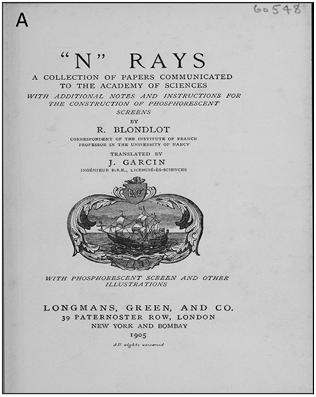
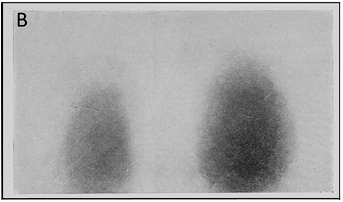
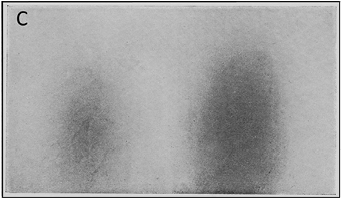
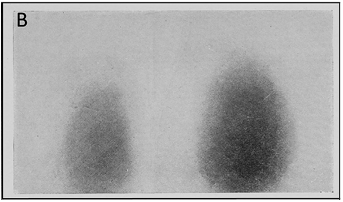
A more recent ‘discovery’ was made by the accomplished French scientist René Blondlot in 1903. Blondlot had been experimenting with the newly discovered X-rays to determine if they are waves or streams of particles. He correctly determined that they are in fact waves, but during his further experimentation he made unexpected observations that he interpreted as evidence of something entirely new: a form of radiation which he called N-rays [Reference Blondlot1] (Figure 1.1). This caused quite a sensation at the time and many tried – usually unsuccessfully – to replicate Blondlot’s findings, which among other things could only be done (according to Blondlot) if you didn’t watch the phenomena caused by N-rays straight on; you had to use your peripheral vision. This may sound ridiculous in retrospect, but remember that phenomena that are invisible in themselves always require a certain amount of faith in the supporting axioms and in the methodology used to observe their effects. Blondlot, however, even registered the effects of N-rays photographically (Figure 1.1) in order to have what he deemed to be objective evidence. Scientists often choose to believe in phenomena that fit into their current models or whose existence provide neat explanations for other phenomena that would otherwise be hard to explain. To actually demonstrate the veracity of such a phenomenon is not trivial. In 1904, Robert W. Wood convincingly showed that N-rays in fact do not exist but were a product of Blondlot’s incorrect interpretation of observations.
The cover of a collection of papers describing the results of René Blondlot’s experiments on the N-rays, in detail.

Photographic registering of the action of a small electrical spark without and with N-rays ‘emitting from a Nernst lamp’.
Without and with N-rays ‘produced by two large files’. N-rays were soon plausibly demonstrated to be non-existent, meaning that what was observed and ‘objectively’ registered by Blondlot must have been spurious phenomena.

These examples should be enough to illustrate that the observations we make are to a large extent dependent on currently accepted theory. Even the simplest observation statements, such as ‘I see a tree’ require prior knowledge of the observed and an interpretive framework. This is not at all a trivial point to make. Students in biology often have to learn a large number of plants and animals by heart. One perhaps unexpected consequence is that after this exercise, words such as ‘trees’ or ‘grass’ will have taken on new meanings. Where the untrained eye would just see ‘grass’, the trained botany student will see several different species, all with their own distinct characteristics. Their eyes have access to exactly the same information, but in a very important sense they will actually see different things.
The types of observations that are made in scientific studies are typically even more theory-dependent. Very often, such observations are not direct but come in the form of instrument readings, and the construction and calibration of such instruments are heavily dependent on theory. Even when observing through a microscope with our own eyes, we rely on the optical theory of diffraction, reflection and refraction, among other things. Not to mention the highly sophisticated theory behind electron or laser microscopy. Clearly, observations are not as straightforward and unbiased as they may seem. We will explore such theory dependence further in Chapter 2.
A final complication worth mentioning before we leave this topic is that the terms ‘fact’ and ‘theory’ are used quite differently among scientists than outside academia. While a layperson may say ‘that is just a theory’ to insinuate that a statement has no factual basis at all, for a scientist a theory is a well-supported statement about the world. Indeed, you will rarely see or hear a scientist use the term ‘fact’. There is a good reason for this, since it would run in the face of the scientific built-in error-checking mechanism. As stated at the beginning of this chapter, it is a basic tenet in science that we cannot say anything with absolute certainty, so using words that signal such conclusiveness feels out of place. Scientists further distinguish between theory, hypothesis and prediction. There is some overlap between these terms, especially in everyday language, but they do have distinct meanings. A theory is a well-supported set of cohesive ideas. A hypothesis is derived from a theory and is akin to a tentative truth or a qualified guess. Finally, a prediction is derived from the hypothesis and is a specific statement about what to expect in a given test situation – such as an experiment – if the hypothesis is true. For all intents and purposes, what lay people refer to as a ‘fact’ would for a scientist translate as a ‘well-supported theory’.
1.5 ‘Follow the Science’
Not everybody accepts the superiority of science as a way to gain knowledge about the world. In fact, science-scepticism has gained much ground in recent years, following the rise of social media. These platforms thrive on engagement, which seems to encourage increasingly polarised opinions and ideology. The resulting factions can easily develop world views that clash with established views, and if they do, they can promote their own authorities, and dismiss the scientific experts. Resolute science sceptics probably cannot be reached with a book such as this one, but we do hope that it can address the problem indirectly by giving the readers a deeper understanding of science and hence some tools to explain and defend its standing as the most reliable source of knowledge.
You only need to browse any form of news or social media to realise that science has a special standing in society. References to science are commonly used to back up all forms of statements, including those that are really about politics, or even religion. ‘Now even scientists say …’; ‘scientific studies show …’; and similar sentences abound. During the COVID-19 pandemic, this became almost painfully clear. Thousands of scientific studies on COVID-related topics were performed during the pandemic, and to an unparalleled extent first drafts of such studies – not yet scrutinised and reviewed by scientific peers – were reported in the news. The results were then often immediately used to back up any opinion already held, and broadcasted in social media. The rally cry that we should ‘follow the science’ was routinely used by all sides of any discussion about what interventions should be used (or not) to mitigate the pandemic. This period offered people outside of the academic world unique insights into the inner workings of science, but it was also clear that in many cases, the scientific output was misrepresented due to a failure to understand the scientific process. In particular, it highlighted how difficult it is to embrace the fallibility of knowledge and the tentative nature of findings at the cutting edge of science. These features of the scientific process are easy to perceive as a weakness of science as a means of gaining knowledge about the world, but as we stated already in the beginning of this chapter, they are in fact integral to its success.
Remarkably, even science sceptics have a tendency to refer to ‘scientific evidence’ whenever it happens to suit their purposes. One example is the field of alternative medicine, such as homeopathy, where proponents often claim that it is not possible to test their methods using normal scientific practice. This, they say, is because every patient, every therapist–patient interaction and every situation is unique and not repeatable in the controlled way that science demands. Nevertheless, whenever a study of alternative medicine happens to obtain results that can be construed as support of such methods, proponents can still be quick to refer to them as evidence that their ideas work. Another example is climate change, where there is near-complete scientific consensus that the planet is warming and that the warming is largely caused by human activities. Non-believers will simultaneously dismiss these ‘so-called experts’ and use the few dissenters that exist to demonstrate that even scientists share their view. The fact that science sceptics also resort to using science to back up their claims when this is possible is a stark demonstration of the special standing that science has in our society as a source of trustworthy knowledge.
1.6 Understanding Science
Science-scepticism notwithstanding, it is hard to avoid the conclusion that science has been a remarkably successful human endeavour. Science has been an incredibly important part of the advancement of human societies during at least the most recent centuries, possibly much longer than that. With that in mind, it may seem somewhat paradoxical that the exact nature and definition of science is plagued by controversy and confusion. Indeed, the nature of science has been a topic of a heated debate that has been raging among philosophers for hundreds of years. Since most people appear to agree that there is something special about science, it is puzzling that it seems to be so hard to agree on exactly what we mean by it.
It is not that we lack attempts or suggestions to define and understand science, and, in this book, we will guide you through some of the most influential. We will also end by sharing our perspective on it and why we think that it has been so hard to reach a universal agreement. Before we present these ideas, we should point out that what activities people would typically want to include under the label science is not that coherent, which of course makes our task no easier. To some extent, this has cultural reasons. In some parts of the world, science is a rather inclusive term, typically referring to all subjects studied at universities, while in other places (such as the Anglo-Saxon world), science usually implies the natural sciences. Other subjects may need a prefix, such as the ‘social sciences’, or they are referred to as ‘arts’, or ‘the humanities’. As individuals, we may hold different views on what qualifies as a ‘real’ science as well. It is worth keeping this in mind while reading this book, as the history of philosophy of science will be quite different in the natural sciences and the social sciences or humanities. This is not surprising, considering that it may not be a realistic goal to study human societies in the same way that you study electron particles.
Compared to the natural sciences, the research traditions in the social sciences and humanities are much more heterogeneous. Interesting as these traditions are, being biologists ourselves, our focus in this book will be on the natural sciences. We believe others are better suited to explain and interpret the research traditions of the social sciences and humanities. Nevertheless, we will briefly return to some of these research traditions in Chapter 7 to see how they fit into the view of science that emerges throughout its chapters.
But before we get to that point, we need to take a journey to see the various ways that philosophers have tried to tackle this question, how they relate to each other, and to what extent they succeed in their endeavours. Following this journey, we will take a closer look at the modern practice of science and its peculiarities. We will investigate the extent to which this practice seems to fit the theories of the philosophers but also highlight the components of what we have chosen to call the web of trust. What is it about science that makes it more trustworthy than other sources of knowledge? And how do you know which science to trust? And indeed, what does it mean to ‘follow the science’?