


Although almost 90% of the world population of children and adolescents live in low- and middle-income countries, few trials of psychosocial interventions to prevent child mental health problems have been conducted in these countries. Reference Kieling, Baker-Henningham, Belfer, Conti, Ertem and Omigbodun1 Early-onset conduct problems are the most common mental health concern in childhood, affecting 5–8% of the population at the severity level for an ICD-10 diagnosis. Reference Moffitt, Scott, Rutter, Bishop, Pine, Scott, Stevenson and Taylor2 Long-term outcomes are very poor, with three- to sixfold increases in the prevalence of adult criminal violence, drug misuse, school failure, teenage pregnancy and unemployment. Reference Fergusson, Horwood and Ridder3 Although proven preventative interventions exist, they reach few children, even in high-income countries. This problem is amplified in low- and middle-income countries where child mental health services are extremely limited. Reference Patel, Aroya, Chatterjee, Chisholm, Cohen and De Silva4,Reference Belfer5
Schools offer a logical setting for interventions for children, and school-based violence prevention programmes in high-income countries have shown significant reductions to children’s aggressive and disruptive behaviour and increases in child competencies. Universal interventions promote the mental health of all children, avoid stigmatisation and generally attract community support. Reference Offord6 However, there is limited information on the effectiveness of these programmes in low- and middle-income countries where schools often have few resources and poor conditions. In Jamaica, violence among youth and adults is particularly prevalent. Reference Le Franc, Samms-Vaughan, Hambleton, Fox and Brown7 However, there are good opportunities for early intervention as 98% of 3- to 6-year-old children attend pre-schools so there is potential for almost universal coverage. In pilot studies we implemented the Incredible Years Teacher Training programme and showed large benefits to teachers’ practices and to class-wide measures of child behaviour, Reference Baker-Henningham, Walker, Powell and Gardner8 and also demonstrated that the intervention was acceptable, feasible and relevant. Reference Baker-Henningham and Walker9 The aim of this study was to evaluate on a larger scale the effect of the intervention on the behaviour of high-risk children at home and at school.
Method
Study design and participants
A cluster randomised trial was conducted in the school year September 2009 to June 2010 in 24 community pre-schools in inner-city areas of Kingston, Jamaica. Over 75% of pre-school children in Jamaica attend community pre-schools, which are provided through community organisations with government oversight. Parents pay a small fee and also provide school materials such as books and pencils. Most teachers are paraprofessionals and the schools generally have poor physical conditions, including overcrowding and few teaching and learning materials. We used ‘pre-school’ as the unit of randomisation to prevent contamination among teachers. Inclusion criteria for pre-schools were: three to four classes of children, at least 20 children per class, situated in a specified geographical area and all teachers consented to the trial. In total, 50 pre-schools were approached and 24 meeting the inclusion criteria were recruited (Fig. 1).
Children at high risk for subsequent externalising problems were selected for evaluation. Reference Moffitt, Scott, Rutter, Bishop, Pine, Scott, Stevenson and Taylor2 An interviewer-administered screening questionnaire was conducted with each teacher. Teachers rated each child on ten items from the ICD-10 Diagnostic Criteria for Research 10 for conduct disorder (loses temper, back chats, disobedient/breaks rules, annoys others, blames others, easily annoyed, often angry, spiteful to others, fights or bullies and destroys property), using a four-point scale. The three children from each class with the highest scores were enrolled.
Trial profile.
a. 24 high-scoring children excluded: 17 children with low attendance (<70%), 3 siblings of enrolled child, 1 child with autism, 3 living in an institution.

Children were excluded if school attendance was <70%, they had a developmental disability, lived in an institution or were a sibling of an enrolled child. Twenty-four high-scoring children were excluded (Fig. 1) and replaced by the next highest-scoring child in their class. A total of 225 children were recruited, 113 from intervention and 112 from control schools.
The trial was approved by the University of the West Indies ethics committee. Written informed consent was obtained from all teachers and from the parents of the selected children.
The study is registered in the International Standard Randomised Controlled Trial Number Register: ISRCTN35476268.
Sample size
To detect a difference of 0.5 standard deviations with 85% power at the 0.05 level of significance, 75 participants in each group would be sufficient for a parallel group design. To take account of the cluster design, we assumed an intracluster correlation coefficient (ICC) of 0.05 Reference Campbell, Grimshaw and Steen11 on the primary outcome of observed child behaviour. With nine children per school, the design effect was 1.4 (design effect: 1 + (cluster size) ICC) giving a required sample size of 105 children in each group.
Randomisation and masking
Schools were randomised to intervention or control using a computer-generated simple-randomisation sequence by an independent statistician who was masked to school identity. Schools comprised separate classes of 3-, 4- and 5-year-old children, with one class per age group. One school had an additional class. Children were recruited in the summer term prior to randomisation except for the 3-year-old children entering school in September who were screened and recruited after randomisation by a researcher who was masked to group allocation. Parents of these children were unaware of the school’s intervention status.
Intervention
Teacher training intervention
Intervention involved training all teachers and principals in the intervention schools using the Incredible Years Teacher Training Programme. Reference Webster-Stratton12 The training methods make the intervention inherently adaptable and culturally sensitive. Methods include the use of collaborative and experiential learning, individual goal setting and self-monitoring, building teachers’ self-efficacy, a focus on teachers’ cognitions, behaviour and emotions, and emphasis on teachers’ ability to generalise the skills learned. Reference Webster-Stratton, Reinke and Herman13 The intervention was tailored for the Jamaican pre-school context based on piloting work. Reference Baker-Henningham, Walker, Powell and Gardner8,Reference Baker-Henningham and Walker9,Reference Baker-Henningham14 The following adaptations were made.
-
(a) Supplementary video vignettes showing Jamaican classrooms were used.
-
(b) The intervention was delivered over 8 days rather than 5–6 days.
-
(c) Additional role-plays, practical activities and small group exercises were designed based on the experiences and concerns of Jamaican teachers.
-
(d) Additional emphasis was placed on aspects of the intervention including building positive relationships with children and parents, which is the foundation of the training programme, and being proactive in managing children’s behaviour, found in piloting to be a highly valued topic, but one which teachers found challenging to implement.
-
(e) Handouts were revised to include examples relevant to the Jamaican context.
-
(f) The module on teaching social–emotional skills to children was enhanced by training teachers in specific techniques and activities to teach and reinforce child social skills.
The additional training exercises and use of Jamaican examples were aimed at increasing teachers’ self-confidence and their understanding and application of the skills introduced in the programme and enhancing their ability to generalise the skills to their classroom.
Intervention school staff attended eight full-day workshops from December 2009 to April 2010. Four days were routinely held in-service training days, and teachers attended in two groups of 25–30 participants. For the remaining 4 days, teachers attended in four groups with 12–16 teachers per group. To ensure fidelity, in-class assistance involving modelling, coaching, and support and feedback in the implementation of the strategies was provided to each teacher once a month for 4 months for 1 h. A small amount of educational materials was provided to facilitate use of the strategies. Teachers in control schools attended the regular in-service workshops focusing on curriculum delivery provided by the Ministry of Education, and were visited twice from January to April to record child attendance and received the same educational materials.
Personnel
Workshops were conducted by H.B.H. who had attended accredited training in the Incredible Years teacher, parent and child programmes, conducted the Incredible Years Teacher Training Programme for the pilot study in Jamaica, and co-led Incredible Years teacher and parent training groups with an Incredible Years mentor in Wales. In-class support was provided by a psychology graduate who had co-led the teacher training workshops and facilitated a series of child training workshops based on the Incredible Years child training programme in 15 Jamaican pre-school classrooms in the pilot study. She received additional training and continuing supervision from H.B.H.
Monitoring of intervention implementation
The workshop facilitator completed a training protocol and self-evaluation after each workshop and the teachers completed workshop evaluations. All content was covered and teachers rated the workshops (content, video vignettes, group leader skills and group discussion) as helpful or very helpful for all eight workshops. The strengths and needs of each teacher were documented following in-class consultations and used to inform the ongoing planning of the intervention.
Measures
The primary outcome was directly observed in-class child behaviour. Secondary outcomes were teacher and parent reports of child behaviour, child attendance and parents’ attitude to school. All measures were completed at baseline (October– November 2009) and post-intervention (May–June 2010) except for parents’ attitude to school, which was completed at post-intervention only.
Observations of child behaviour
Within each class, three children were observed for 5 min each on a rotational basis for a total of 15 min each day per child over 4 days, across different times of the school day giving a total of 1 h of observation. Event recording was used to count aggressive/destructive behaviours (e.g. hitting, pushing, throwing objects) and friendship skills (e.g. sharing, working together) and expressed as frequency per hour. Instantaneous sampling (i.e. recording whether or not the behaviour was present at each sample point) was used to code disruptive behaviours (e.g. shouting, out of seat) at 15 s intervals, with a maximum possible score of 240. The aggressive/destructive and disruptive behaviours chosen were based on the Dyadic Parent–Child Interaction Coding System (DPICS) Reference Eyberg and Robinson15 and Multi-Option Observation System for Experimental Studies (MOOSES) Reference Tapp, Wehby and Ellis16 behaviour categories, operationalised for the Jamaican pre-school context. All behaviours were defined in a manual. At the end of each 5 min observation period, observers rated the frequency of conduct problems, activity level, on-task behaviour and follows rules/expectations of the classroom using seven-point rating scales (with behavioural descriptors on each point of the scale). Higher scores indicate higher levels of the behaviours.
Teacher and parent reports of child behaviour
For teacher-reported child behaviour, we used the Sutter–Eyberg Student Behavior Inventory (SESBI) Reference Rayfield, Eyberg and Foote17 to measure child conduct problems, Connor’s Global Index Reference Kollins, Epstein, Conners and Maruish18 to measure hyperactivity and attention difficulties, the Strengths and Difficulties Questionnaire (SDQ) Reference Goodman19 to measure behaviour difficulties and prosocial skills, and the Preschool and Kindergarten Behavior Scales (PKBS): Social Skills Scale Reference Merrell20 to measure social skills. For parent-reported child behaviour, we used the Eyberg Child Behavior Inventory (ECBI) Reference Eyberg and Ross21 to measure child conduct problems, and the SDQ Reference Goodman19 to measure behaviour difficulties and prosocial skills.
Other outcome measures
Child attendance was taken from school records. The parents’ attitude to school was measured through a ten-item questionnaire that included items on the parents’ relationship with the teacher and their opinion on teacher effectiveness and the teachers’ relationship with their child (range 0–40). Higher scores represent a more positive attitude.
Quality of measures and masking
For the child observational data, intraclass correlation coefficients between the observers and trainer and between each pair of observers were calculated for 5 min observation periods prior to data collection at baseline and post-intervention and for 15% of observations during the study. The ICCs were: median 0.86 (range 0.74–0.96) during training and 0.83 (range 0.67–0.91) during the study (online Table DS1). All teacher and parent questionnaires were interviewer administered and inter-interviewer ICCs were >0.95. Internal reliabilities and test–retest over 2 weeks were adequate (online Table DS2). Measurements were conducted by researchers masked to study design, hypothesis and group allocation, who conducted equal numbers of measurements per group. Five researchers conducted child observations, three conducted teacher questionnaires and two conducted parent questionnaires. Teachers were aware of allocation status at baseline and post-intervention. To maintain masking of researchers: teachers were asked at initial contact and prior to each assessment not to reveal intervention status; observers and interviewers were not informed of the study design and were employed during the measurement phases of the study only; and intervention and control schools were provided with the same materials.
Statistical analysis
All analyses were pre-specified. The distributions of continuous dependent variables were examined for normality. Reference Shaprio and Wilk22 Normality was rejected for observed aggressive/destructive behaviour, friendship skills and disruptive behaviour, and for child attendance and parent attitude to school. The three behaviour variables were log transformed, whereas child attendance and parent attitude to school were normalised by squaring. Factor analyses, with varimax rotation, were used to reduce the number of outcome variables and identify underlying constructs with separate factor analyses conducted for the observational, teacher report and parent report variables. The numbers of children scoring above the clinical cut-off for conduct problems by teacher and parent report at baseline and post-intervention was also calculated.
The effect of intervention on continuous variables was examined using multilevel multiple regression models, which are the appropriate form of analysis for a clustered trial where outcomes are observed at level 1 (children), who are taught in classes (level 2) and the intervention is at level 3 (pre-school). Reference Hayes and Moulton23 The dependent variables were the post-intervention scores for the summary variables created from the factor analyses. In all analyses, child age and gender, baseline score and intervention status were entered as fixed effects and school and classroom were entered as random effects. We analysed the binary outcomes using random-effects logistical-regression models with the same covariates. Models were estimated with Markov chain Monte-Carlo (MCMC) estimation methods, which are known to give better estimates when the number of units is relatively small. Reference Browne24 Analyses were conducted on an intention-to-treat basis, using the baseline scores for missing data at post-intervention. Multilevel analyses were conducted with MlwiN (version 2.10, Centre for Multilevel Modelling, University of Bristol, UK) Reference Rasbash, Charlton, Browne, Healy and Cameron25 for Windows.
Results
Uptake of intervention
Teachers attended a median of eight workshops (range 2–8), with 70% attending all eight and 95% attending at least six workshops; 89% of teachers received all four in-class consultations with four teachers (11%) receiving 0–3.
Sample characteristics
All 24 pre-schools were followed to the end of the trial (Fig. 1). Fifteen children were lost to follow-up (eight intervention and seven control) and these children did not differ from those retained.
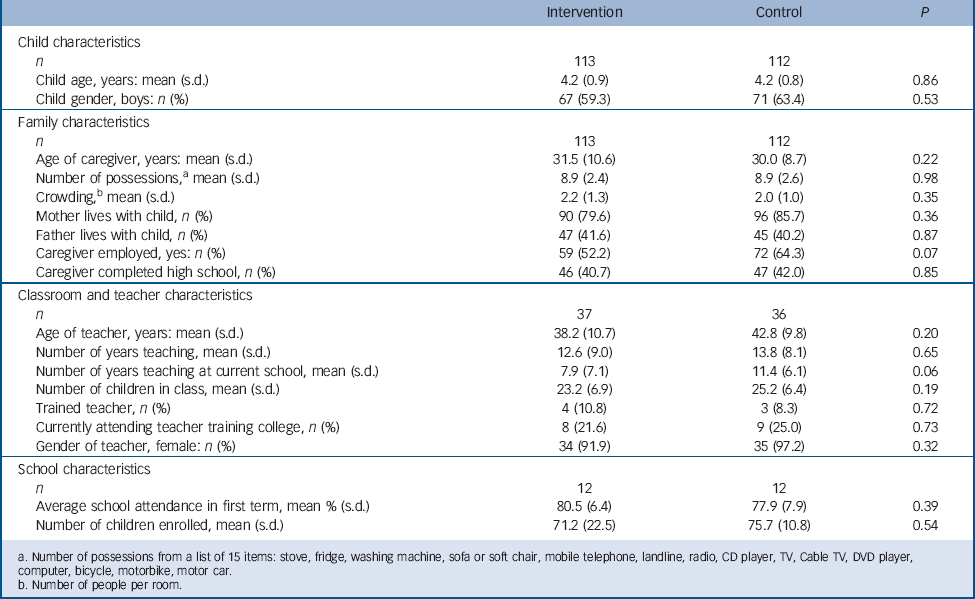
There were no significant differences between the groups on child, family, classroom or school characteristics at baseline (Table 1).
Findings
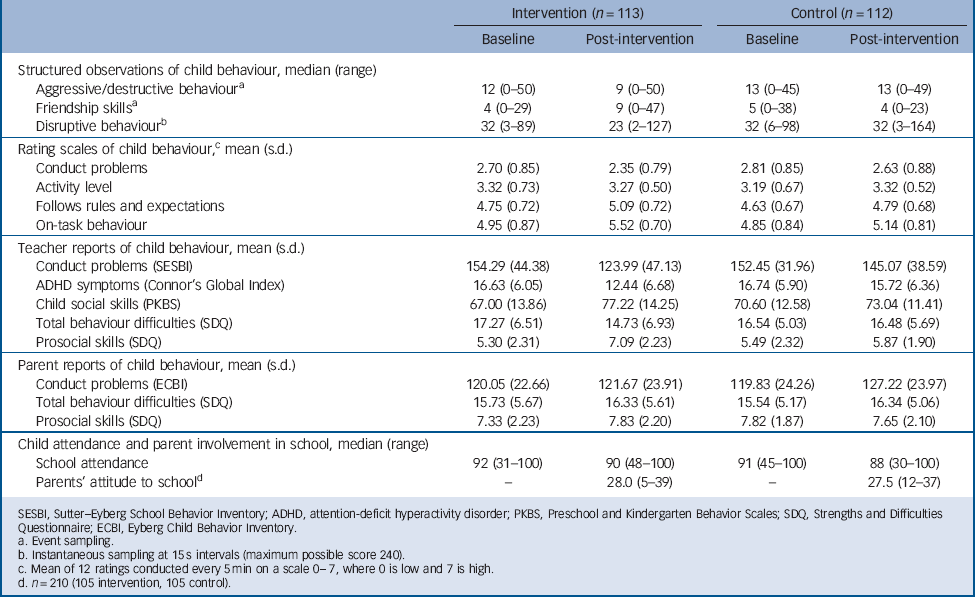
Table 2 shows the raw scores of all outcomes by group at baseline and post-intervention; there were no significant baseline differences between the groups.
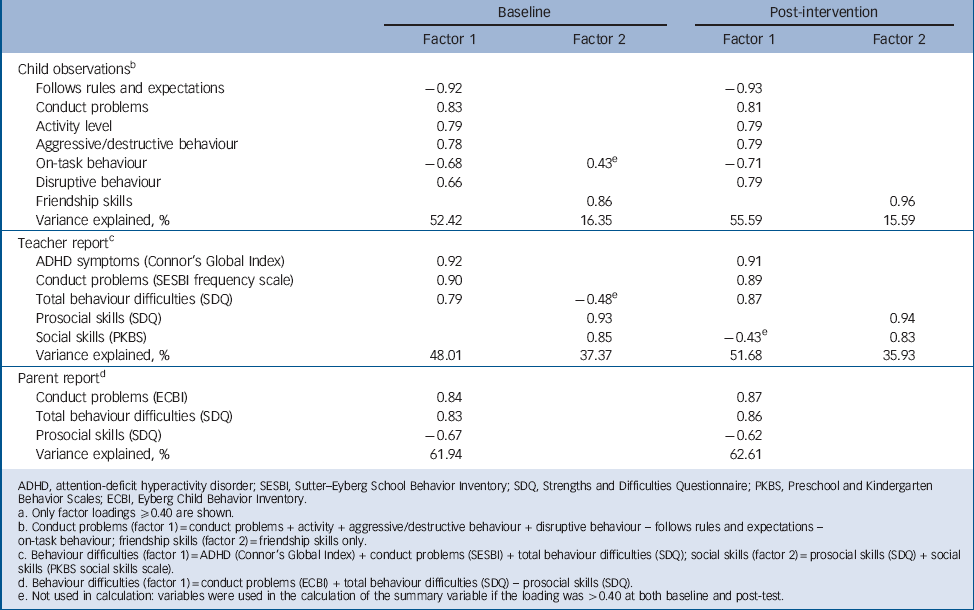
Factor analysis yielded similar results at baseline and post-intervention producing five factors: observed conduct problems, observed friendship skills, teacher-reported behaviour difficulties, teacher-reported social skills and parent-reported behaviour difficulties (Table 3). Summary variables were calculated by summing the standardised scores of the variables loading on each factor (Table 3).
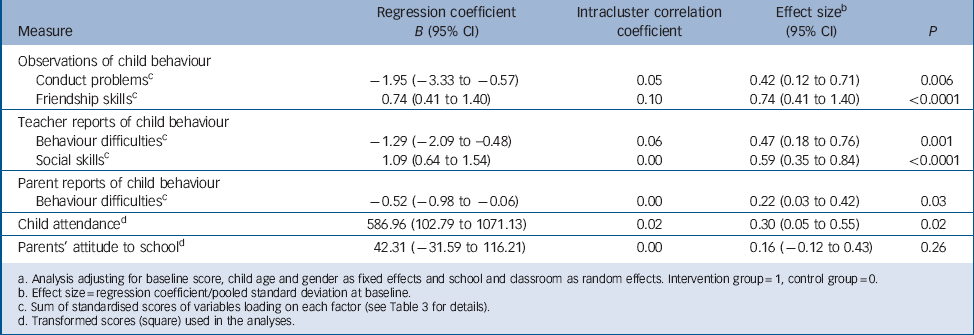
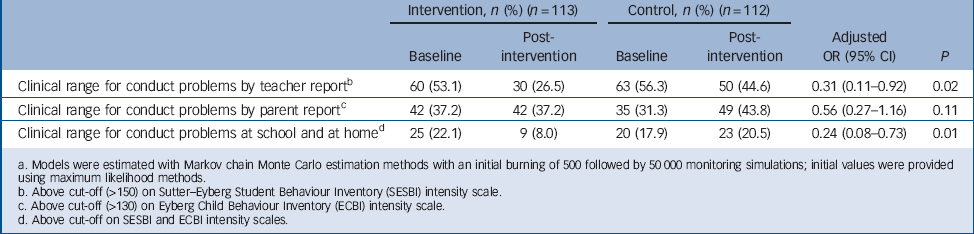
Intervention led to significant benefits in observed child behaviour (Table 4), with reductions in conduct problems (effect size (ES) = 0.42) and increased friendship skills (ES = 0.74). Significant benefits were also found for teacher-reported child behaviour difficulties (ES = 0.47) and social skills (ES = 0.59), and parent-reported child behaviour difficulties (ES = 0.22). There were significant benefits for child attendance (ES = 0.30) but not for parents’ attitude to school (ES = 0.16, P = 0.26). A similar proportion of children from both groups were rated as being in the clinical range for conduct problems by teachers and parents at baseline (Table 5). Children in the intervention group were less likely to be rated in the clinical range by teachers at post-test and were less likely to have pervasive conduct problems (Table 5). There was no significant change in the proportion of children scoring in the clinical range by parent report.
Discussion
This study is the first in a middle-income country to show that training teachers in classroom behaviour management and social skill promotion can lead to significant and clinically important reductions in child conduct problems and increases in social skills among pre-school children with antisocial behaviour. Benefits were demonstrated by direct observation as well as by teacher and parent report; the mean effect size for child behaviour was 0.49. Meta-analyses of universal school-based violence prevention programmes have shown mean effect sizes of 0.21 for child aggressive behaviour Reference Wilson and Lipsey26 and 0.24 for child social skills. Reference Durlak, Weissberg, Dymnicki, Taylor and Schellinger27 The larger effect sizes found in this study could be because of the relatively poor initial level of training of the teachers thus widening the intervention–control gap, because we evaluated only children with high levels of conduct problems at baseline and because
Child, family, classroom/teacher and school characteristics by study group
| Intervention | Control | P | |
|---|---|---|---|
| Child characteristics | |||
| n | 113 | 112 | |
| Child age, years: mean (s.d.) | 4.2 (0.9) | 4.2 (0.8) | 0.86 |
| Child gender, boys: n (%) | 67 (59.3) | 71 (63.4) | 0.53 |
| Family characteristics | |||
| n | 113 | 112 | |
| Age of caregiver, years: mean (s.d.) | 31.5 (10.6) | 30.0 (8.7) | 0.22 |
| Number of possessions, a mean (s.d.) | 8.9 (2.4) | 8.9 (2.6) | 0.98 |
| Crowding, b mean (s.d.) | 2.2 (1.3) | 2.0 (1.0) | 0.35 |
| Mother lives with child, n (%) | 90 (79.6) | 96 (85.7) | 0.36 |
| Father lives with child, n (%) | 47 (41.6) | 45 (40.2) | 0.87 |
| Caregiver employed, yes: n (%) | 59 (52.2) | 72 (64.3) | 0.07 |
| Caregiver completed high school, n (%) | 46 (40.7) | 47 (42.0) | 0.85 |
| Classroom and teacher characteristics | |||
| n | 37 | 36 | |
| Age of teacher, years: mean (s.d.) | 38.2 (10.7) | 42.8 (9.8) | 0.20 |
| Number of years teaching, mean (s.d.) | 12.6 (9.0) | 13.8 (8.1) | 0.65 |
| Number of years teaching at current school, mean (s.d.) | 7.9 (7.1) | 11.4 (6.1) | 0.06 |
| Number of children in class, mean (s.d.) | 23.2 (6.9) | 25.2 (6.4) | 0.19 |
| Trained teacher, n (%) | 4 (10.8) | 3 (8.3) | 0.72 |
| Currently attending teacher training college, n (%) | 8 (21.6) | 9 (25.0) | 0.73 |
| Gender of teacher, female: n (%) | 34 (91.9) | 35 (97.2) | 0.32 |
| School characteristics | |||
| n | 12 | 12 | |
| Average school attendance in first term, mean % (s.d.) | 80.5 (6.4) | 77.9 (7.9) | 0.39 |
| Number of children enrolled, mean (s.d.) | 71.2 (22.5) | 75.7 (10.8) | 0.54 |
a Number of possessions from a list of 15 items: stove, fridge, washing machine, sofa or soft chair, mobile telephone, landline, radio, CD player, TV, Cable TV, DVD player, computer, bicycle, motorbike, motor car.
b Number of people per room.
Raw scores of child behaviour outcomes observed over a total of 1 h, child behaviour through teacher and parent report, child attendance and parents’ attitude to school at baseline and post-intervention by group
| Intervention (n = 113) | Control (n = 112) | |||
|---|---|---|---|---|
| Baseline | Post-intervention | Baseline | Post-intervention | |
| Structured observations of child behaviour, median (range) | ||||
| Aggressive/destructive behaviour a | 12 (0–50) | 9 (0–50) | 13 (0–45) | 13 (0–49) |
| Friendship skills a | 4 (0–29) | 9 (0–47) | 5 (0–38) | 4 (0–23) |
| Disruptive behaviour b | 32 (3–89) | 23 (2–127) | 32 (6–98) | 32 (3–164) |
| Rating scales of child behaviour, c mean (s.d.) | ||||
| Conduct problems | 2.70 (0.85) | 2.35 (0.79) | 2.81 (0.85) | 2.63 (0.88) |
| Activity level | 3.32 (0.73) | 3.27 (0.50) | 3.19 (0.67) | 3.32 (0.52) |
| Follows rules and expectations | 4.75 (0.72) | 5.09 (0.72) | 4.63 (0.67) | 4.79 (0.68) |
| On-task behaviour | 4.95 (0.87) | 5.52 (0.70) | 4.85 (0.84) | 5.14 (0.81) |
| Teacher reports of child behaviour, mean (s.d.) | ||||
| Conduct problems (SESBI) | 154.29 (44.38) | 123.99 (47.13) | 152.45 (31.96) | 145.07 (38.59) |
| ADHD symptoms (Connor's Global Index) | 16.63 (6.05) | 12.44 (6.68) | 16.74 (5.90) | 15.72 (6.36) |
| Child social skills (PKBS) | 67.00 (13.86) | 77.22 (14.25) | 70.60 (12.58) | 73.04 (11.41) |
| Total behaviour difficulties (SDQ) | 17.27 (6.51) | 14.73 (6.93) | 16.54 (5.03) | 16.48 (5.69) |
| Prosocial skills (SDQ) | 5.30 (2.31) | 7.09 (2.23) | 5.49 (2.32) | 5.87 (1.90) |
| Parent reports of child behaviour, mean (s.d.) | ||||
| Conduct problems (ECBI) | 120.05 (22.66) | 121.67 (23.91) | 119.83 (24.26) | 127.22 (23.97) |
| Total behaviour difficulties (SDQ) | 15.73 (5.67) | 16.33 (5.61) | 15.54 (5.17) | 16.34 (5.06) |
| Prosocial skills (SDQ) | 7.33 (2.23) | 7.83 (2.20) | 7.82 (1.87) | 7.65 (2.10) |
| Child attendance and parent involvement in school, median (range) | ||||
| School attendance | 92 (31–100) | 90 (48–100) | 91 (45–100) | 88 (30–100) |
| Parents’ attitude to school d | – | 28.0 (5–39) | – | 27.5 (12–37) |
SESBI, Sutter–Eyberg School Behavior Inventory; ADHD, attention-deficit hyperactivity disorder; PKBS, Preschool and Kindergarten Behavior Scales; SDQ, Strengths and Difficulties Questionnaire; ECBI, Eyberg Child Behavior Inventory.
a Event sampling.
b Instantaneous sampling at 15s intervals (maximum possible score 240).
c Mean of 12 ratings conducted every 5min on a scale 0–7, where 0 is low and 7 is high.
d n = 210 (105 intervention, 105 control).
the intervention was implemented with high levels of fidelity. All these factors have been shown to predict greater effectiveness. Reference Wilson and Lipsey26,Reference Durlak, Weissberg, Dymnicki, Taylor and Schellinger27
Significantly more children attending intervention schools moved into the non-clinical range on teacher-reported conduct problems than in control schools, although the difference by parent report was not significant. Intervention also reduced the proportion of children with pervasive conduct problems who were at highest risk for long-term negative outcomes. Reference Moffitt, Scott, Rutter, Bishop, Pine, Scott, Stevenson and Taylor2 Although the
Factor analyses of observations of child behaviour and teacher and parent reports of child behaviour at baseline and post-intervention a
| Baseline | Post-intervention | |||
|---|---|---|---|---|
| Factor 1 | Factor 2 | Factor 1 | Factor 2 | |
| Child observations b | ||||
| Follows rules and expectations | –0.92 | –0.93 | ||
| Conduct problems | 0.83 | 0.81 | ||
| Activity level | 0.79 | 0.79 | ||
| Aggressive/destructive behaviour | 0.78 | 0.79 | ||
| On-task behaviour | –0.68 | 0.43 e | –0.71 | |
| Disruptive behaviour | 0.66 | 0.79 | ||
| Friendship skills | 0.86 | 0.96 | ||
| Variance explained, % | 52.42 | 16.35 | 55.59 | 15.59 |
| Teacher report c | ||||
| ADHD symptoms (Connor's Global Index) | 0.92 | 0.91 | ||
| Conduct problems (SESBI frequency scale) | 0.90 | 0.89 | ||
| Total behaviour difficulties (SDQ) | 0.79 | –0.48 e | 0.87 | |
| Prosocial skills (SDQ) | 0.93 | 0.94 | ||
| Social skills (PKBS) | 0.85 | –0.43 e | 0.83 | |
| Variance explained, % | 48.01 | 37.37 | 51.68 | 35.93 |
| Parent report d | ||||
| Conduct problems (ECBI) | 0.84 | 0.87 | ||
| Total behaviour difficulties (SDQ) | 0.83 | 0.86 | ||
| Prosocial skills (SDQ) | – 0.67 | – 0.62 | ||
| Variance explained, % | 61.94 | 62.61 | ||
ADHD, attention-deficit hyperactivity disorder; SESBI, Sutter-Eyberg School Behavior Inventory; SDQ, Strengths and Difficulties Questionnaire; PKBS, Preschool and Kindergarten Behavior Scales; ECBI, Eyberg Child Behavior Inventory.
a Only factor loadings ≥ 0.40 are shown.
b Conduct problems (factor 1) = conduct problems + activity + aggressive/destructive behaviour + disruptive behaviour - follows rules and expectations - on-task behaviour; friendship skills (factor 2) = friendship skills only.
c Behaviour difficulties (factor 1)=ADHD (Connor's Global Index) + conduct probl ems (SESBI) + total behaviour difficulties (SDQ); social skills (factor 2) = prosocial skills (SDQ) + social skills (PKBS social skills scale).
d Behaviour difficulties (factor 1) = conduct problems (ECBI) + total behaviour difficulties (SDQ) - prosocial skills (SDQ).
e Not used in calculation: variables were used in the calculation of the summary variable if the loading was >0.40 at both baseline and post-test.
Effect of intervention on child behaviour through independent observations and teacher and parent report and on child attendance and parent attitude to school a
| Measure | Regression coefficient B (95% CI) | Intracluster correlation coefficient | Effect size b (95% CI) | P |
|---|---|---|---|---|
| Observations of child behaviour | ||||
| Conduct problems c | –1.95 (–3.33 to –0.57) | 0.05 | 0.42 (0.12 to 0.71) | 0.006 |
| Friendship skills c | 0.74 (0.41 to 1.40) | 0.10 | 0.74 (0.41 to 1.40) | <0.0001 |
| Teacher reports of child behaviour | ||||
| Behaviour difficulties c | –1.29 (–2.09 to –0.48) | 0.06 | 0.47 (0.18 to 0.76) | 0.001 |
| Social skills c | 1.09 (0.64 to 1.54) | 0.00 | 0.59 (0.35 to 0.84) | <0.0001 |
| Parent reports of child behaviour | ||||
| Behaviour difficulties c | –0.52 (–0.98 to –0.06) | 0.00 | 0.22 (0.03 to 0.42) | 0.03 |
| Child attendance d | 586.96 (102.79 to 1071.13) | 0.02 | 0.30 (0.05 to 0.55) | 0.02 |
| Parents’ attitude to school d | 42.31 (–31.59 to 116.21) | 0.00 | 0.16 (–0.12 to 0.43) | 0.26 |
a Analysis adjusting for baseline score, child age and gender as fixed effects and school and classroom as random effects. Intervention group = 1, control group = 0.
b Effect size = regression coefficient/pooled standard deviation at baseline.
c Sum of standardised scores of variables loading on each factor (see Table 3 for details).
d Transformed scores (square) used in the analyses.
Effect of intervention on clinical significance of conduct problems by teacher and parent report a
| Intervention, n (%) (n =113) | Control, n (%) (n =112) | |||||
|---|---|---|---|---|---|---|
| Baseline | Post-intervention | Baseline | Post-intervention | Adjusted OR (95% CI) | P | |
| Clinical range for conduct problems by teacher report b | 60 (53.1) | 30 (26.5) | 63 (56.3) | 50 (44.6) | 0.31 (0.11–0.92) | 0.02 |
| Clinical range for conduct problems by parent report c | 42 (37.2) | 42 (37.2) | 35 (31.3) | 49 (43.8) | 0.56 (0.27–1.16) | 0.11 |
| Clinical range for conduct problems at school and at home d | 25 (22.1) | 9 (8.0) | 20 (17.9) | 23 (20.5) | 0.24 (0.08–0.73) | 0.01 |
a Models were estimated with Markov chain Monte Carlo estimation methods with an initial burning of 500 followed by 50000 monitoring simulations; initial values were provided using maximum likelihood methods.
b Above cut-off (>150) on Sutter-Eyberg Student Behaviour Inventory (SESBI) intensity scale.
c Above cut-off (>130) on Eyberg Child Behaviour Inventory (ECBI) intensity scale.
d Above cut-off on SESBI and ECBI intensity scales.
cut-offs for clinical conduct problems have not been validated for Jamaica, the cut-offs likely identify children at elevated risk of continuing conduct problems.
The intervention focused on training teachers and it was encouraging that small benefits were also found for parent reports of their child’s behaviour difficulties. Evidence of benefits from classroom-based interventions for child behaviour at home are inconsistent, Reference Grossman, Neckerman, Koepsell, Liu, Asher and Beland28–Reference Webster-Stratton, Jamila and Stoolmiller30 and for children with elevated conduct problems at home, adding a parenting component may be necessary. There were no significant benefits for parents’ attitude to school; however, attitudes were generally positive in this population. The intervention benefited child attendance, indicating that parents sent their children to school more regularly. School-based violence prevention programmes have been shown to reduce school drop-out and truancy in older children. Reference Wilson, Gottfredson and Najaka31
Meaning and implications of study
The Incredible Years Parenting Programme has been shown to be culturally transferable across ethnic groups in the USA, Reference Reid, Webster-Stratton and Beauchaine32 but to our knowledge this is the first trial of an Incredible Years programme in a low- or middle-income country. The community pre-schools in this study had high child–staff ratios, few resources and poor physical conditions including overcrowding and high noise levels. Most teachers were paraprofessionals without formal teacher training and schools were situated in disadvantaged, inner-city communities with high levels of community violence. Reference Baker-Henningham, Meeks-Gardner, Chang and Walker33 Uptake by teachers was high and the benefits to child behaviour substantial, demonstrating that with careful piloting and adaptation, and attention to fidelity to the original model, this programme can be effective in a middle-income country setting.
The evidence base for psychosocial interventions to prevent behaviour problems in low- and middle-income countries is extremely limited. Reference Kieling, Baker-Henningham, Belfer, Conti, Ertem and Omigbodun1,Reference Patel, Aroya, Chatterjee, Chisholm, Cohen and De Silva4,Reference Belfer5 The finding that teacher training leads to widespread benefits in child behaviour is extremely important for child mental health prevention and promotion in low- and middle-income countries where services are few; it is also relevant for high-income countries. The intervention is integrated into existing services, and is relatively low cost, requiring few specialist resources. In addition, teachers can reach a number of high-risk children and can continue benefiting new cohorts of children over time. As the intervention is integrated into the pre-school system, this should be a cost-effective approach and has potential for expansion and sustainability.
Strengths and weaknesses
The trial had high response and follow-up rates, assessments were conducted by trained researchers masked to study design, hypothesis and group allocation, and analysis was by intention to treat. The primary outcome involved gold-standard direct observations of child behaviour in school. Teachers were aware of group allocation and it is possible that intervention teachers rated children more favourably post-intervention. However, effect sizes by teacher report were similar to those by independent observations. The control schools did not receive an alternate intervention and hence the benefits may be as a result of the additional attention received by intervention schools. However, teachers in control schools attended their regular training workshops hosted through the Ministry of Education and similar materials were provided to all schools. Furthermore, high-quality intervention implementation has been shown to be essential for the effectiveness of school-based violence prevention programmes. Reference Wilson and Lipsey26 Although cluster randomised trials are susceptible to bias, there were no significant differences between the groups at baseline. Contamination between groups was minimised through the cluster design. Approximately 23% of teachers in both intervention and control schools were attending teacher training colleges where some sharing of strategies may have occurred. If this led to implementation of strategies by some teachers in control schools, this would reduce the size of the benefits detected. There were exclusions to participation at the level of the school and the child that may limit the generalisability of the results. Schools with less than 20 children per class were excluded to maximise the likelihood that children with the highest scores on the conduct disorder screen had behaviour problems; we anticipate that the intervention would benefit antisocial children attending schools with smaller class sizes. We excluded schools with fewer than three or more than four classes. However, as the intervention is provided for all class teachers, we would hypothesise that children attending smaller and larger schools would also benefit. Children with low attendance were excluded to ensure timely data collection; it is likely poor attendance would also reduce the benefits of intervention. The benefits reported are post-intervention only and we do not know whether these benefits will be sustained when children transition into new classrooms or schools with untrained teachers.
Questions and future research
The workshops comprised new concepts and skills for the teachers that were modelled and rehearsed. Teachers also received in-class consultations to assist them in the application of these skills. The study design does not allow us to identify the relative importance of these components, which is important for planning wider dissemination of the programme.
Although we implemented a universal intervention, only children with elevated levels of conduct problems at school were evaluated, and hence we do not know whether the intervention benefited children with low-to-moderate levels of conduct problems. It is possible that the intervention benefited the mental health of all children. Furthermore, previous studies have found benefits to academic achievement from school-based violence prevention Reference Wilson and Lipsey26 and social skills training programmes Reference Durlak, Weissberg, Dymnicki, Taylor and Schellinger27 and school readiness should be measured in future studies. It will also be important to determine whether the benefits to child behaviour are sustained, especially as children transition to primary school.
Funding
The project was funded by a Wellcome Trust Research Training Fellowship to H.B.H. [080534/Z/06/Z].
Acknowledgements
We thank Professor Judy Hutchings for training H.B.H. through a 3-month placement at the Incredible Years Wales Centre. We thank Yakeisha Townsend for assisting with the intervention, the staff, parents and children of the 24 community pre-schools for their participation and the research assistants for data collection.


 Open access


eLetters
No eLetters have been published for this article.