

By the late nineteenth century, the general reading public in Britain was aware of the advances made by geology and palaeontology and had some sense of the impact that these related sciences had had on the understanding of the planet's natural past. Louis Figuier's enormously successful and influential work La terre avant le deluge, of which nine editions were published in French between 1863 and 1883 and six in English between 1865 and 1891, set the standard for an emergent genre which we might call the ‘popular history of life’. Figuier's narrative was structured around the stratigraphical column, each section of the book corresponding to a major epoch in the history of life, and each chapter to an age within those epochs. The idea was to offer the reader a serial description of the successive stages of the emergence of life on Earth, as illustrated by the findings of empirical science. With the aid of a series of dramatic imaginative visual reconstructions of life on Earth at various ages – executed by one of Jules Verne's illustrators, Edouard Riou – Figuier turned a difficult and potentially dry technical subject into a sensational story capable of arousing the excitement of popular and juvenile audiences. This was possible despite the fact the story was told in naturalistic terms. It was presented as ‘nature's own’ story; a story whose ‘factual’ plot gave the reader a thrilling but reliable insight into the material history of the Earth and the forms of life inhabiting it. This capacity to deploy the formal codes of naturalistic narrative was what made Figuier's text so innovative and so effective. It was the first true ‘history of life’, the starting point of a genre of remarkable subsequent impact and significance.Footnote 1
It may seem surprising that the genre took such a long time to emerge. After all, the most striking protagonists of the story as told by Figuier – the plesiosaurs and ichthyosaurs, the megalosaurs, iguanodons and pterodactyls – were known from the 1820s and 1830s, and had been widely publicized in the periodical press and, increasingly, in museum displays and public shows such as the Crystal Palace reconstructions of 1853.Footnote 2 Why, then, did it take such a comparatively long time for the material to be ‘plotted’, for something like what we now mean by a ‘history of life’ to emerge?
The key challenge faced by writers working in the area of the historical earth sciences was to find an effective marriage of form and content. In theory it was obvious that palaeontology, with its chronological sequence of gigantic extinct beasts, might be treated in strikingly narrative form. Responsibly executed, such an account would be a good example of the sort of rational entertainment that progressive voices within the establishment wanted to feed to new readerships in the mid- to late century. On the other hand, there were also dangers in going down the narrative pathway. As Adelene Buckland has usefully reminded us, much of the fiction of the period – the cheap popular novels and romances – was regarded by cultural elites as frivolous or even harmful.Footnote 3 To indulge too freely in the pleasures of ‘storytelling’ would be to risk undermining the credibility of the discipline as whole. A very particular sort of writerly skill was required successfully to mobilize the heuristic potential of narrative plottedness without being judged to have caved in to the vulgar appeal of sensationalism, antithetical to both scientific credibility and tasteful exemplarity. Considerations of this sort applied to all writers attempting to engage with the findings of geology, but they would have been more constraining for those who saw themselves as insiders representing the emergent discipline than they were for the less institutionally engaged voices of pedagogical popularizers.
However, the distinction between ‘science’ and ‘literature’ – of which the writings of ‘scientists’ and ‘popularizers’ might presumably be taken as a particular exemplar – is resisted by Adelene Buckland. In Novel Science: Fiction and the Invention of Nineteenth-Century Geology, she argues that ‘there can be no meaningful distinction between science and literature, since writing can be … a mode of scientific practice, a means by which a science becomes a science’.Footnote 4 This identification may explain why she sees plot and plottedness as the characteristic problem for the early geologists, and assesses the narrative of Charles Lyell's Principles of Geology (1830–1833) in essentially literary terms as an exercise in plot stifling.Footnote 5 For Buckland, Lyell's mass of material evidence was arranged in such a way as to impede narrative construal, thus forcing readers to experience the work as a treatise, not a novel. But while this is a useful characterization of the writerly design of the Principles, the question perhaps needs to be asked as to the mix of conceptual and writerly motivations that underlie it. Clearly Lyell's writerly strategy was viscerally related to his ‘steady-state’ interpretation of the Earth's geological past. In writing as he did on his subject, the geologist was not just acting negatively to deromanticize the packaging of his treatise; he was also seeking to naturalize the content of his theory. His suppression of formal narrativity was thus itself a form of emplotment: it suggested a natural world whose changes were produced by variations in local conditions, not by the teleological action of an immanent vital force. Other writers could and did use different versions of plot suppression as a way of promoting quite different hypotheses. For example, Louis Figuier – already mentioned at the outset as the author of the first naturalistic ‘history of life’ – stressed the discontinuities in the story of life as a way of naturalizing his preferred hypothesis of a series of distinct divine creations.Footnote 6
While it is certainly true that texts presented as scientific can and should also be read as literary productions – as texts that deploy the arms specific to such production – it seems to me important not to conflate the conceptual or ideological message contained in a text and the narrative means deployed by the author in the furtherance of that message. A large array of narrative strategies are potentially available, each with its own distinctive sort of credibility, each with its own conceptual and imaginative appeal. As Buckland points out, this is in theory equally true of ‘expert’ voices in geology as it is of the ‘popularizing’ since all use narration one way or another as part of the knowledge-building process. However, the popularizer does so openly and therefore – potentially – adventurously and illuminatingly. It is only if we allow at least a functional distinctness to the popularizing mode that we will recognize its particular contribution to the shaping of perceived natural knowledge.
This article studies the early history of the emergence of an educational genre, which I have called the ‘history of life’. Specifically, it looks at the efforts of four authors working in the 1820s and 1830s to produce introductions to geology for young people which would appeal at all requisite levels: works that would be perceived as factually informative, textually engaging and morally improving. With close comparative readings, I hope to show how widely varied, formally and conceptually, these early popularizing efforts were, and how their experimentations with plot helped to construct the narrative norms for the emergent ‘history of life’ genre. Particularly significant in this respect will be the progressive disappearance of the formalized framing narrative, as the pedagogue–narrator was replaced by ‘nature herself’ as the primary vector of instruction. Although not our immediate subject here, it is significant that these naturalistic histories of life, with nature itself playing the role of unmediated narrator, would prove a powerful polemical vehicle in the confrontation of evolutionary and anti-evolutionary world views in the later part of the century.Footnote 7
Our texts, produced between 1828 and 1837, were among the earliest attempts to educate young audiences in the lessons of palaeontology.Footnote 8 Taken in chronological order, they are James Rennie's anonymously published Conversations on Geology (1828),Footnote 9 Maria Hack's Geological Sketches and Glimpses of the Ancient Earth (1832), Mary Roberts's The Progress of Creation, Considered with Reference to the Present Condition of the Earth (1837) and Samuel Clark's pseudonymous piece Peter Parley's Wonders of the Earth, Sea and Sky (1837). All of these texts have already been discussed in varying degrees of detail by Ralph O'Connor in The Earth on Show, and indeed a number of the specific elements that we will treat here were also mentioned by him. But where O'Connor's concern was with the deep past as spectacle, and the role of popular representation – whether materialized or narrated – in giving life to that spectacle, the approach of this article is more comparative. By comparing the specifically narrative functioning of four early examples of palaeontological popularizing, we seek to show how the narrative experiments such authors deployed were particularly apt to form not just an idea of the specific otherness of the deep past, but also notions of its vital relations to the present. Offering a range of differing visions, and capable of catering for a wide set of cultural, moral and aesthetic preoccupations, this was a theatre in which the implications of geological discoveries for our general sense of the world we live in could be put under the microscope. This work was more freely done by voices talking to the discipline from the fringes, or at least from what seemed the fringes from an institutional perspective.
The four authors we are concerned with here can be considered ‘fringe’ voices on these terms. They all engaged directly with the technical subject matter of geology, but none could realistically be described as an active participant in the discipline even at an amateur level. They were first and foremost professional writers, not academics or leisured aristocrats with the time and the means to develop the requisite specialized competences. James Rennie is the only partial exception since he was briefly professor of natural history and zoology at King's College London (1830–1834); however, his lack of success in this role prompted him to emigrate to Australia, where he became a natural-history writer focusing mainly on the physiology of birds and insects.Footnote 10 Conversations on Geology, his one foray into the domain of geology and palaeontology, was essentially a recasting of the arguments of the scriptural literalist Granville Penn, whose own writing was judged too turgid to reach a general audience.Footnote 11 Maria Hack and Samuel Clark were generalist science educators who wrote popularizing manuals specifically for children on a range of scientific subjects. Mary Roberts, perhaps the most idiosyncratic of our four voices, was – like Hack – a lapsed Quaker, but in Roberts's case a certain religious sensibility remained central to the world view expressed in her writings. She wrote numerous works on natural history in which the descriptions of natural scenery often took on a markedly human coloration, as suggested by such titles as Voices from the Woodlands, Descriptive of Forest Trees, Ferns, Mosses and Lichens (1850).
Four early ‘histories of life’
As we have already remarked, the challenge before our authors was to find an effective way to translate the findings of geology into a story that would be understandable to young readers discovering a new way of looking at the world, while maintaining an adequate degree of scientific credibility and moral integrity. Each writer was seeking their own way of rebuilding the world as we know it in the light of recent palaeontological finds and geological theories, offering a specific vision of the whole that would make sense to their readers in both conceptual and moral terms. To achieve this, each had an idea of the dynamics they wanted to find at the heart of nature, and by what narrative form they might best give expression to that vision. In the most general terms, Rennie and Roberts sought to foreground arguments in support of the claim of a fundamental compatibility between the findings of geology and the Genesis account of the creation of the Earth and its life, while Hack and Clark concentrated on geology as a distinct and independent domain, limiting their religious material to incidental (though not insignificant) remarks on the lessons of pious morality that the study of nature can and does inculcate in its young adepts. But the choice of narrative form cuts across these ideological orientations, with the traditional pedagogical mode – the teacher–pupil dialogue – being used by Rennie and by Hack, while Roberts and Clark produced their own specifically designed mixed modes, Roberts combining the philosophical treatise with elements of personal experience recounted in the first person, and Clark using some of the conventions of travel writing as an analogical way into the idea that the observer of fossil remains is also effectively a traveller in time.
The easiest way to gain an overview of each author's conceptual and methodological orientations will be to start with the front matter of each text, including frontispieces, title pages and – in some cases – tables of contents. These elements will give us a sense of each text's overall construction. Having thus established the general packaging, we will then look in more detail at specific examples of each author's favoured narrative technique in action, and then, finally, at their handling of the particularly sensitive subject of extinct species found in fossil form.
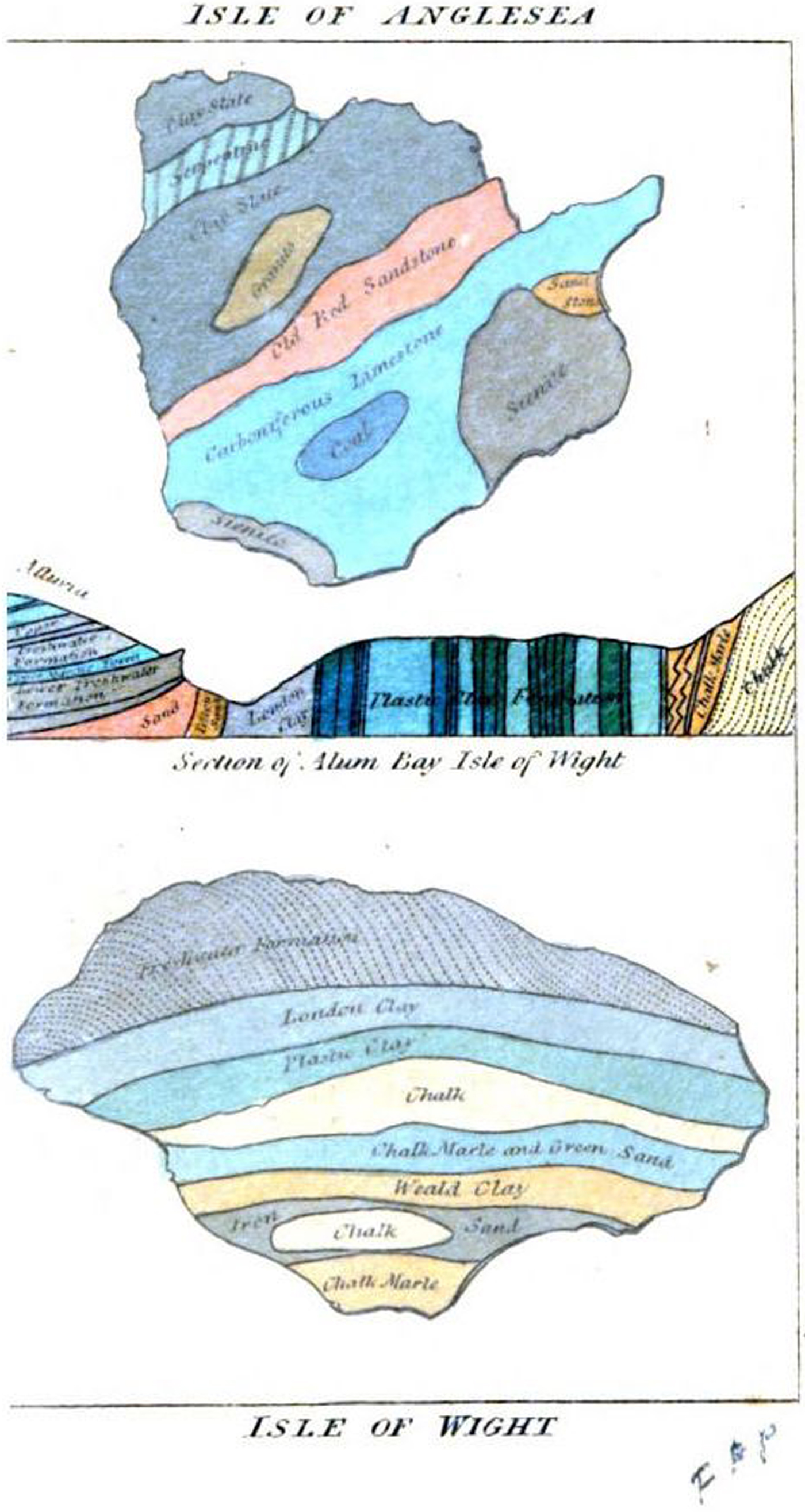
Starting with James Rennie's text – the earliest and perhaps most conventional of the four – it is immediately striking that the frontispiece and title pages announce the mixed nature of the account.Footnote 12 The full title rather laboriously spells this out: Conversations on Geology; comprising a familiar explanation of the Huttonian and Wernerian Systems; the Mosaic Geology, as explained by Mr. Granville Penn; and the late discoveries of Professor Buckland, Humboldt, Dr Maccolloch and others. The author's name is not specified; instead the book is presented as a disinterested comparison of three rival systems: Hutton's ‘Plutonian’ geology, Werner's rival ‘Neptunian’ theory and a new system of ‘Mosaic geology’ offered by Granville Penn.Footnote 13 In reality, the text was the work of a committed partisan of Penn whose main goal was to promote his mentor's claims to ‘reconcile’ geology and Scripture. Rennie's revival of the old – and by now redundant – distinction between ‘Plutonists’ and ‘Neptunians’ was really just about placing Penn's name alongside those of Hutton and Werner, and so to bestow upon him a comparable aura of scientific authority. Similarly, Rennie made every effort to present his own book as participating in mainstream science. For example, the authorities cited in the title (with the exception of Penn himself) all had impeccable scientific credentials, and the illustrations used in the title pages depict only material geological phenomena: a view of Fingal's cave and its famous basalt columns on the title page; and two geological charts for the frontispiece, showing the very different stratigraphic structures of Anglesey and the Isle of Wight (see Figure 1). The only concession to the subjective or the sensorial in this front matter is the presence of a small boat at the entrance to Fingal's cave, an element that brings the human observer into the scene and, by the difference of scale, potentially suggests an emotive response to the natural spectacle. However, Rennie would argue – still following Penn – that Scripture should be preferred to strata as a more reliable source of material information about the history of the Earth. Bizarrely enough, then, Conversations on Geology offered readers an allegedly rational refutation of the applicability of empirical method in the earth sciences.
The frontispiece of James Rennie's Conversations on Geology, Comprising a Familiar Explanation of the Huttonian and Wernerian Systems; the Mosaic Geology, as explained by Mr. Granville Penn; and the Late Discoveries of Professor Buckland, Humboldt, Dr. Maccoulloch, and Others, London: Samuel Maunder, 1828.
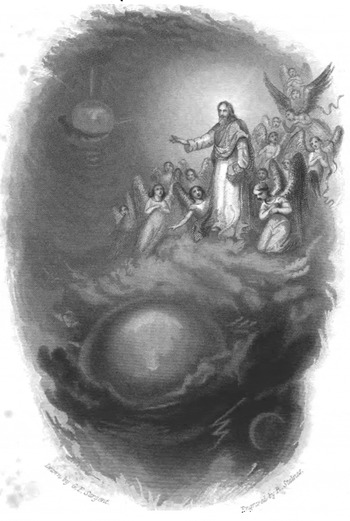
The contrast with the front matter on offer in the other work offering a Scripture–geology compromise, Mary Roberts's Progress of Creation, could hardly be stronger.Footnote 14 Here the frontispiece presents a materially impossible view of the act of divine creation in which God, poised on a convenient bank of cloud and surrounded by a host of adoring angels, blesses a globe at his feet – presumably the newly created Earth – while other planets are dimly glimpsed in the background (see Figure 2). The author's literalist tendencies are also displayed in the table of contents, which announces one chapter for each ‘day’ of the creation. On the other hand, the title page offers a rather different balance. The work's full title, The Progress of Creation Considered in Reference to the Present Condition of the Earth, contains no references to God or to Scripture, unless it be in the choice of the word ‘creation’. But this term could as well refer to material formation as to a miraculous springing-into-being, and indeed the choice of the term ‘earth’ as opposed to ‘world’ or ‘globe’ does tend to suggest that focalization. So too does the unexpected pairing of the terms ‘progress’ and ‘creation’, a conjunction implying that ‘creation’ might in fact have a history.Footnote 15 That past worlds were to be compared to ‘the present condition of the earth’ is also significant, implying that the past is to be understood by comparison to the present – that is, by essentially empirical means.
The frontispiece of Mary Roberts's The Progress of Creation, Considered with Reference to the Present Condition of the Earth, 2nd edn, London: Smith, Elder and Co., 1837.

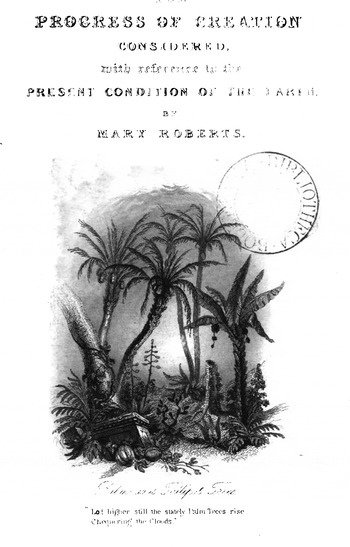
Roberts's title page illustration tends in a similar direction. A group of palm trees and ferns dominates the scene, against a sunrise or sunset suggesting the start or end of a phase of the story, as well as the general glory of the scene (see Figure 3). In the foreground is a small fragment of masonry apparently overwhelmed by the vigour of the surrounding vegetation. At one level, this seems to invoke the conventional contrast of the brevity of human existence to the apparent eternity of nature; but in the context it could also be read as suggesting that human history and natural history might be joined into a single continuity. Roberts's ‘progress of creation’ might thus bridge the divide, offering a single narrative joining natural history to civil history as a sort of prequel. Such a conjunction was not entirely novel at the time, but it was more commonly associated with writers of materialist tendency such as Percy Shelley or with French philosophes such as Constantin François de Volney.Footnote 16 Roberts's version of ‘Mosaic geology’ was based upon a genuine aspiration for ‘reconciliation’ between empirical and revealed sources of knowledge, in contrast to Rennie's, where the rational stance was simply a cover for the discrediting of empirical geology as a source of reliable information relating to historical process.
The title page of Mary Roberts's The Progress of Creation, op. cit.

Our third example, the work published by Maria Hack in 1832, resembles Rennie's in virtue of its utilization of the dialogue mode, but strongly contrasts in conceptual orientation. Hack's framing narrative is built around a mother–son relationship continued from her first pedagogical work, Harry Beaufoy, or the Pupil of Nature (1821).Footnote 17 In the earlier work, Harry had been a child of ten, an age at which he had been introduced to the beauties of nature; now in Geological Sketches he is fifteen and old enough to face more challenging lessons. The framing narrative is used by Hack, in part, as the context within which to develop the subjacent theme of the place of science in the education of young middle-class men. Thus the introductory chapter of Geological Sketches goes into considerable detail about young Harry's situation, in order to explain why he is being educated alone by his mother rather than in the company of other similar young men at school. This potentially asocial arrangement is justified by Harry's father as a matter of individual temperament. The father figure also becomes increasingly involved as the book progresses, marking a shift in Harry's education from an initially homely and feminine bias towards the more actively worldly and masculine. Hack's combined educational programme was meant to offer the ideal preparation for the man of action, one that builds the rational and pragmatic qualities upon the bedrock of moral qualities.
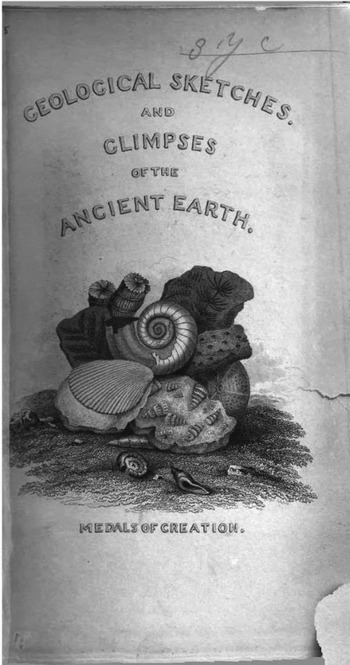
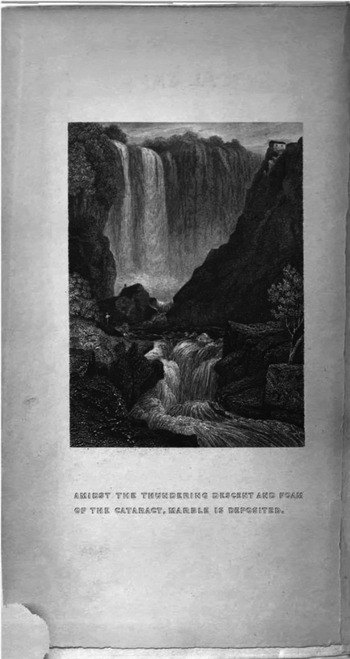
Much like the books already considered, Hack's front matter also suggests a fundamental combination of concerns, mixing scientific considerations with the more personal or spiritual. But where Rennie and Roberts – each in their own way – situated their works explicitly at the junction point between science and religion, Hack's presentation is more secular in its imagery and terminology. Thus the book's title focuses the reader's attention on the investigative gaze of the empirical enquirer, promising us ‘glimpses of the ancient earth’ which are to be gained through the close study of the ‘medals of creation’ – the fossil remains depicted on the pictorial title page (see Figure 4). This formulation – significantly connecting civil to natural history – was not novel: it had been used by respected naturalists since the beginning of the century, notably in the work of James Parkinson.Footnote 18 As for the frontispiece, it is essentially a romantic landscape of the sort that would be familiar to readers of travel accounts, and with no immediately obvious connection to geological, or – even less – to palaeontological themes. It features a large waterfall rushing over a mountain ledge, and running out as a tumultuous stream in the foreground (see Figure 5). Looking closely, it is possible to pick out a small house on the clifftop and an even smaller viewer near the bank of the stream. These elements give a sense of scale to the waterfall and the presence of the viewer provides the opening for the pedagogical theme particularly dear to Hack of the capacity of the educated gaze to unlock the mysteries of nature. The underlying geological significance of the scene is hinted at in the accompanying caption: ‘Amidst the thundering descent and foam of the cataract, marble is deposited.’ This phrase is cited from an episode where Mrs Beaufoy describes rivers in the Apennine mountains in which calcareous deposits form, even in its most turbulent waterfalls. The deposits solidify into marble, the source of stone quarried in ancient times and still visible in the nearby monuments of Paestum.Footnote 19 The point of the story is to demonstrate the capacity of small effects to lead over time to major consequences, thus hinting at the counterintuitive idea that even the most impressive geological features of the Earth's surface can be accounted for by gradualistic natural processes, and obviating the need to invoke extraordinary or miraculous interruptions of the normal course of things. Without ever saying as much, Hack's book was effectively an attempt to popularize Charles Lyell's actualist or uniformitarian theory of geological process – a theory expounded in the first volume of his Principles of Geology which had appeared only two years before, in 1830.
The title page of Maria Hack's Geological Sketches and Glimpses of the Ancient Earth, 3rd edn, London: Harvey and Darton, 1839.

The frontispiece of Maria Hack's Geological Sketches, op. cit.

One further element in Hack's front matter should be mentioned, and this is the citation of a passage from William Paley's Natural Theology (1802) as an epigraph on the title page: ‘Whatever is done, God could have done without the intervention of instruments or means; but it is in the construction of instruments, in the choice and adaptation of means, that a creative intelligence is seen.’ This reference gives notice of a certain commonality of spirit with the natural theologians. But in her text Hack never directly invoked God or providence to account for material phenomena; instead she preferred to use her pedagogue–pupil pair to demonstrate the aptitude of the natural sciences to heighten the moral senses and so to instil feelings of piety. Religion and religious considerations are constantly present in the book but only as the follow-on consequences of scientific study, never as a substantive constituent of the lesson itself.
The last of our four books has the simplest presentation. The front matter is minimal to the point of austerity, and it offers no anticipation of a ‘history of life’ theme. Peter Parley's Wonders of the Earth, Sea and Sky is not in fact a work devoted to geology or palaeontology, and only the first half of the opening section on the ‘Wonders of the earth’ – a mere forty-two out of a total of 335 pages – has anything at all to do with these disciplines.Footnote 20 As the title suggests, the book is presented as a compendium of material relating to a variety of subjects in natural science. The frontispiece shows a figure in an arctic landscape observing the aurora borealis – a scene which relates to Part Three, the ‘Wonders of the sky’. The title page, for its part, carries only the most basic factual information. However, it is worth mentioning the discreetly playful games with authorial identity indulged in here. The book's conventional narrator is the ‘Peter Parley’ of the title, and the title page prolongs this illusion by suggesting the publication had been ‘edited’ by a certain Rev. T. Wilson. Both figures were in fact inventions: Clark was pretending to be a reverend who pretended to have edited the work of Peter Parley. But if Clark invented Rev. T. Wilson, he certainly did not invent Peter Parley. This persona had been created by an American author, Samuel Goodrich, who produced a whole series of ‘Parley’ titles starting in 1827 with Peter Parley's Tales of America. Clark simply took over Goodrich's persona and used it without permission for his own ends in what was effectively a pirated ‘Peter Parley’ publication.Footnote 21
James Secord suggests in his introduction to the modern edition of Clark's work that the ‘editorial’ pseudonym was chosen to give the book an air of clerical respectability,Footnote 22 but it is also important to remark the unusual author–reader dynamics made possible by this unconventional and rather elusive narrative setting. The use of a fictitious first-person narrator who frequently apostrophizes the reader creates a special relationship. More than this, the narrator's quirky voice allows Clark to give particular meaning to key episodes in his character's supposed journeys – as we shall see in due course.
Narrative strategies
Amongst our four pieces, those by Rennie and Hack are closest to one another in formal terms since both use the traditional pedagogical format of the teacher–pupil dialogue in a domestic setting where the role of pedagogue is played by the mother figure and that of the pupil or pupils by her offspring. Their preference for the dialogue convention was clearly connected to the supposed capacity of this form to render a difficult subject lively and engaging, and, by demonstrating in action its beneficial effects on the hearts and minds of the books’ ostensible protagonists, to defend the place of the natural sciences in the education of the middle classes. In both works, the pupils therefore function more as model representations of ideal scholarly attitudes than as posers of important questions in the Socratic tradition. In the case of Rennie's text, the dialogue features a brother and sister pupil pair, which enables the author to demonstrate the supposed benefits for both boys and girls of a training in natural sciences. Predictably, the female pupil is attracted to the picturesque potentials of geological knowledge, while the rational evaluation of rival theories is almost exclusively reserved for her brother.Footnote 23
But the particular places made by these two authors for the conventions of dialogue are not quite the same. In Rennie's more conventional usage, the dialogues are always set in the same space – the family home – and apart from a few evocations of prior readings or of objects visible in the room, the setting has little impact on the content of the lessons. In contrast, Hack's framing narrative is far more elaborate. The mother-and-child relationship is not presented in strict dialogue form, like a theatrical script, but in fully realized novel-like narrative. The protagonists are therefore more mobile, and their lessons more apt to be prompted by real-world encounters. In the opening chapter, for example, we discover Harry with his mother on a walk to the nearby downs, where they visit a disused chalk quarry and pick up a pebble which later proves to have a fossil shell in it. Sitting on the downland hilltop soon thereafter, Mrs Beaufoy uses the elements visible in the landscape around them to introduce Harry to the idea that these hills were formed at the bottom of an ocean, with the fossil shell providing the clinching piece of evidence. Plot incidents of this sort constitute a relatively minor portion of the book as a whole, but the narrative frame nevertheless resurfaces regularly and is often made to interact with the substance of Mrs Beaufoy's lessons. Nor is the nature of these incidents always strictly limited to the specific subject in hand: for example, in their opening walk on the downs, time is found to evoke the mysteries of birdsong or to condemn the boyish habit of stealing their eggs, and to evoke the difficult life of a poor family making a living by burning lime in the chalk pit.Footnote 24
Another interesting example occurs much later on when Harry receives a parcel from his father, travelling in the north of England. Having read the letter with his mother, the pair proceed to inspect the rocks contained in the parcel:
‘How abruptly the letter finishes!’ said Harry. ‘I dare say somebody came in and interrupted him. But how kind it was of papa to write, and send me these fossils!’
‘Indeed you have reason to value them, both as a proof of your father's kindness, and as affording you an opportunity of studying some of the Medals of Creation, to which we owe our knowledge of the successive revolutions that have taken place in the Earth. These fossils belong to a much earlier period than your cockle-shell of the chalk-pit.’
‘Here is the specimen papa mentions so particularly,’ said Harry, taking the piece of slate-clay out of its envelope, and a beautiful one it is. Look! Here is the impression of the fern, as distinct as that of a seal upon wax. How wonderful that a soft, delicate leaf should have left such a perfect image of itself upon the stone! Here is every little vein and fibre clearly marked, as if by the tool of an engraver. Mamma, I believe the stone must have hardened beneath the plant, without disturbing it in the least.’
‘Then you do not think it looks as if it had been swept away by the waters of the Deluge from the torrid zone to Lancashire?’
‘Oh no, mamma,’ said Harry laughing; ‘that must be impossible!’Footnote 25
Although the plot action is thin at best, it is made to carry a great deal of pedagogical import. Most importantly, the rocks are inspected by Harry himself, and his observation leads him to the significant conclusion that the fossil was deposited in calm conditions. With a little prompting from his teacher, he works out for himself the implication that the early history of the earth's surface must be one of gradual, not cataclysmic, change, much like the current world visible today. Furthermore, in his excitement at receiving these new fossils, Harry does not forget to pay due homage to the kindness of his father, who found time amidst his professional activities not only to procure these fossils but to send them home with a letter. In the space of a few lines, then, the several interacting values that Hack wishes to promote are demonstrated in action: first, the proper attitudes of the empirical enquirer who learns not from authority but from direct observation of nature; second, through this vicarious observation made by our hero, Hack quietly and effectively naturalizes the specifically Lyellian reading of the history of life; and third, the general intellectual and moral vivacity of the pupil raised on this regime of scientific study of nature is shown to be thoroughly intact. In contrast to Rennie's conventional dialogue, Hack's more integrated narrative framing permitted a relatively seamless presentation of a multi-layered text. However, it did not permit any naturalization of the chronology of nature: in the passage cited, the relative ages of the fossils examined are simply stated ex cathedra by the pedagogue.
Our two other authors, Mary Roberts and Samuel Clark, turned away from the conventional dialogue format to seek new narrative solutions suited to their needs. As we have seen, Roberts's idea was to demonstrate the compatibility of Scripture and geology by showing how the biblical narrative might be ‘naturalized’. However, this was not meant to entail the reinterpretation of the sacred texts as metaphor: the days of creation, for example, were clearly understood to be literal days, not an obscure reference to geological ages. Scriptural statements constituted the highest authority, but empirical science had a useful complementary role to play, helping us make sense of those aspects of the sacred texts that seemed problematic. For example, the fact that light was meant to have been created on the first day, but the Sun only on the fourth, was dealt with by referring to the claim of the renowned astronomer William Herschel that the body of the Sun was ‘an opaque substance, surrounded with a luminous atmosphere’. This was taken to suggest that light (presumably from the luminous atmosphere) might pre-exist the mass of the orb itself: a gratifying example of empirical observation confirming the factual accuracy of Genesis.Footnote 26
The sections relating to the days in which various forms of living things were meant to be created – Days 3, 5 and 6 – are by far the longest, and it was clearly here that Roberts was most in her element. Her treatment endlessly reiterates the central claim of the natural theologians that the perfect adaptation of all forms of living things pointed infallibly to the existence of a designing providence responsible for the natural scheme of things. However, Roberts went further down this line than most and argued that the divine imprint could be discerned not only in the design of individual animals and plants, but also in the patterns of their distribution. For example, in the long chapter devoted to Day 3 – most of which consists of travellers’ accounts of the extraordinary variety of exotic forms of plant life – we are introduced to the South American ‘cow tree’, a species that grows in arid areas and stocks water in its trunk, thus helping the human populations to survive in areas where they would otherwise go thirsty: a conventional proof of providential wisdom and beneficence. But Roberts goes one step further. If cow trees are so useful in the arid areas of South America, why do they not also live in similar zones in Africa? The answer we are offered is that God preferred to provide this part of the world with camels whose abundant milk serves the same purpose.Footnote 27 This is clearly an ad hoc argument, but the sheer mass of evidence encourages the reader not to notice. Here and elsewhere in Roberts's text, what starts out as the particular description of a given species shades into a parallel treatment of quite a different type of living being in a quite a different setting. This movement shapes the world of living things in a particular way, responding not to the anatomical logic of taxonomical classification, but to an ecological conception of environmental adaptation. Based on William Paley's teleologically oriented natural theology, Roberts's descriptive engagement with this material was in a sense fleshing out its adaptive implications, and offering a way of envisaging the natural order that would be significant for the subsequent development of evolutionary thought.
As can be seen from our description so far, Roberts's narrative took on a rather particular form: one that oscillated between the abstract argumentation of the systematic treatise on the one hand, and, on the other, more personally anchored accounts of the varieties of living things based on the sort of writing that might have been produced by explorers or travelling botanists.Footnote 28 This mass of reported witnessing acted as the empirical credit behind Roberts's core narrative. But it is fundamental to this outlook that while it is amenable to such empirical exemplification – which forms much of the bulk of the text – the crux of the matter nevertheless remains the intimate conviction of the ultimate goodness of God's creation. In order to bring this dimension into the account, we occasionally find Roberts shifting gear from the naturalists’ descriptive survey of exotic or unfamiliar types of living things, and plunging into first-person accounts of moments of heightened sensorial experience.
For example, the presentation of birds in the chapter devoted to the fifth day of creation starts out in essentially technical terms. Roberts tells her readers about their unusual bone structure, combining strength and lightness, then the various forms of their beaks, eyes, wings and tails, including remarks on different manners of flying, the structure and arrangement of feathers, the variety of types of feathers, and the form of the legs and feet.Footnote 29 But in the midst of this physiological account of the forms of the created avian order, Roberts suddenly shifts to a personal register:
Curiosity having led me some time since to the summit of the magnificent Dinas-braw, which overlooks the lovely valley of Llangollen, I surveyed, in the ascent, with equal surprise and wonder, the scene below. As far as the eye could reach, appeared a vast sea of vapour, which seemed to cover the plain, and to terminate the wide horizon, excepting when the summits of lofty hills, gilded by the first rays of the sun, occasionally lifted up their heads, and appeared to rise and fall in shapes the most pleasingly striking and romantic. By degrees the mist began to roll away, and the magic of the aërial hues imparted a new character to every object.Footnote 30
The passage continues, in similarly exalted tone, to describe the view of the town below, and the general aspect of the surrounding hills running away to the horizon, before briefly returning to the more immediate scene of the hilltop itself:
A few sheep were tranquilly grazing on the summit of the Braw, or resting beneath the shelter of the dilapidated ruin that crowned its highest elevation – once the rampart of iron war in the days of feudal barbarism.
This spot will often recur to my remembrance; for here I first observed the flights and motions of innumerable birds, and was hence induced to consider this portion of my subject, with a reference to their general utility.Footnote 31
Clearly Roberts was trying to provide her readers with both empirical and emotive hooks for her natural-theological reading of nature and its patterns. The order she invites us to see is manifested in the rational construction of individual types and the systems they exist in, but also in a mysterious aesthetic order perceptible only to the loving gaze of the systematic eye guided by the believing mind. It is also worth mentioning that many of these ‘narrative interludes’ feature moments in which exemplars of the natural and the human worlds are brought together as elements of the same scene. In the scene just cited, the most obvious human artefact is the town nestled in the hills; more significant, though less apparent, are the ancient hilltop ruins amongst which the sheep graze or shelter. This detail is reminiscent of the title page illustration, in which luxurious vegetation was depicted overcoming a small fragment of ruined classical architecture. The fact that Roberts includes human artefacts in her evocation of a natural landscape is meant to stress the participation of both in God's creation; however, the fact that the human elements are often ruins has the effect of giving to that landscape a certain temporal depth. The unity of the whole, under the loving gaze of God, now implies that nature itself might prove to be as changeful – on its own scale – as the domain of human affairs. Without ever making the point explicitly, one of the main tasks of Roberts's occasional departures into the mode of the personal journey in a bucolic setting is to dramatize and give material consistency to the notion of a single continuity of natural and human time. It is this overarching historical unity under the guidance of God that is the central object of this account of the ‘progress of creation’.
Samuel Clark's work, Peter Parley's Wonders of the Earth, Sea and Sky, has nothing in common with Roberts's apart from the merely circumstantial fact that it too eschewed the traditional pedagogical form of the instructional dialogue. Clark presented an account of the material past of the Earth and its life forms based purely on empirical findings, making no explicit appeal to scriptural authority. God or moral precepts were evoked, as with Hack, only as a spin-off, not as a constitutive element of the lesson itself. The narrative was presented as a form of travel account, with Peter Parley telling the readers of the ‘wonders’ he had supposedly seen at first hand in his journeys around Europe and the rest of the world. This sort of account is arguably derived from the dialogue format since the first-person voice which regularly apostrophizes the reader implies an exchange between a pedagogue speaker and a pupil hearer, but the travel format allows the dialogue to be dematerialized. By preferring the form of the travel account, Clark was able to invest his core narrative with other dynamics than those determined by the pedagogical setting. This new narrative setting turned out to be quite propitious to the formulation of something close to a naturalistic treatment of the history of life.
‘Parley’ in turn visits Lyme Regis in Dorsetshire, Paris, and then a variety of British and German caves in which the bones of extinct animals had been found. At each stage the characteristic local fossil remains are described in some detail, and it is always emphasized that these are the beings that formerly inhabited this very space. The sequence of sites visited is, of course, chosen to produce a chronology: in Lyme Regis the reader is introduced to the giant reptiles of the Secondary epoch; in Paris, the quadrupeds of the Tertiary; and in the bone caves, those Quaternary inhabitants of Europe that resemble modern tropical species such as elephants and hyenas. In this way Parley's materialized journey in space, from Dorset to Paris to the bone caves, can take on a metonymical relationship with the reconstructed journey through time formerly followed by nature itself.
Clark used the language of travel expressly as a way of building up an understanding of geological periodicity. For example, the transition from Lyme Regis to Paris starts as an actual journey over the South Downs which provides the material frame for a lesson in basic stratigraphy. ‘After leaving the formations of Dorsetshire, in which the great saurian or lizard-like reptiles are found, we come to chalk in Hampshire and the Isle of Wight; and after the chalk, to some beds of clay, and then above them some beds of limestone’.Footnote 32 Clark's narrator explains that the sequence encountered in this trip from Lyme Regis to the Isle of Wight is effectively the equivalent to a ‘trip’ from the Secondary epoch to the Tertiary; and that since the same sequence occurs in the Isle of Wight as in the environs of Paris, the Parisian quadrupeds are in a sense the successors of the Dorset reptiles.
Along the way Clark focused not just upon the fossil remains but also on the probabilistic reconstructions of the living animals and the landscapes they inhabited.Footnote 33 Each chapter opens with an illustration depicting the animals of the given epoch, captured naturalistically going about their daily existences in contemporary landscapes. The chapter headings also demonstrate Clark's strategy of making the fossil remains readable by historicizing familiar geographical spaces: hence we pass in Chapter 2 from ‘What creatures once lived where Dorsetshire now is’, to Chapter 3 and ‘What sort of a place existed where the neighbourhood of Paris is now’. The illustrations show the change in the created order of things, while the text puts into place the relative time frame: ‘I shall now show you a picture representing a state of things much more like the present, than the one we looked at before. It existed at a later period, though still a great many years ago’.Footnote 34 When Clark speaks of the ‘picture’ that he ‘shows’ his readers, he was clearly thinking of the illustration of the Paris fauna that appears on the facing page, but the ‘pictorial’ metaphor is also central to his narrative strategy. The virtual voyage across Europe produces a series of traveller's images, one set representing things actually seen (fossils), and another set things reconstructed (landscapes and creatures of the past). Clark proposes to understand the geological past by thinking of it as a series of ‘pictures’ capturing the successive states of the world and its life forms. The difficult idea of a changeful nature is thus made readily accessible by this appropriation of the conventions of travel writing: transit through space is used to lend substance to transit through time.
Dealing with extinct life forms
There had been a consensus among naturalists since the 1820s that living examples of such giant land beasts as the Iguanodon or Mastodon were unlikely to be discovered in some underexplored part of the world, and as that possibility receded, so the reality of species extinction seemed increasingly unavoidable. It was the resulting challenge to static conceptions of the natural economy that prompted the elaboration of the ‘history of life’ genre. These writings offered a variety of schemes for taming, directing and perhaps containing the chronological dynamics of a changeful nature. For authors like Rennie or Roberts who believed that scriptural time had to remain at the heart of the ‘scientific’ narrative of the story of life, extinction was particularly problematic and some specific strategy would have to be found for explaining away this awkward evidence. But there were problems too for authors such as Hack and Clark who had elected to leave scriptural authority out of their accounts and to concentrate on material phenomena empirically considered. A presentation that focused on the successive forms of life would tend to give form and credence to a naturalistic creative process operating independently of divine fiat. Thus to court controversy would be counterproductive for authors one of whose main concerns was the normalization of natural science. So all our authors needed strategies for making acceptable sense of extinct animal species in their readings of the history of life.
The strategies adopted by Rennie and by Roberts were broadly similar: both needed to find a way of marginalizing the extinct animals and keeping them off the core narrative of created life. They attempted to do this by focusing on the ‘monstrous’ character of the extinct species, insisting upon their enormous size and their carnivorous habits, a combination of qualities which made their cohabitation with man particularly undesirable. Despite the curious silence of the scriptural texts on the subject, it was suggested by our authors that these unduly ferocious beasts had been providentially eliminated at the Flood, with the animal creation thus getting a purging similar to that conventionally limited to the human race. Roberts developed these claims more explicitly than Rennie:
With respect to the animal creation [surviving the Flood], we are left without any positive data on which to rest; yet certainly we have every reason to conclude, that when the Most High made known to Noah, the species, which he designed to preserve, he was pleased to except some from that preservation. The abundant monumental evidence, by which we are surrounded, tends to confirm the supposition; more than thirty different species of animals have been found bedded in the secondary strata, of which no living specimens are known to exist in any quarter of the globe.Footnote 35
We can see in this passage that Roberts contrasts ‘positive data’, by which she means scriptural references, to ‘monumental evidence’, by which she means fossil remains. For her, as for Rennie, fossils signify only in the light of Scripture – if they are to be used for the purposes of historical reconstruction.
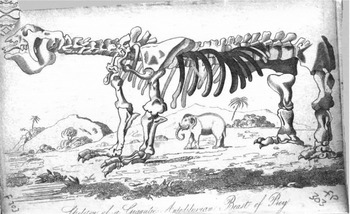
Implausibly, Rennie invoked the authority of Cuvier to defend the claim of carnivorousness for extinct elephant-like forms, praising the French naturalist for ‘his splendid researches’, thanks to which he had ‘discovered and described forty or fifty animal species, most of them beasts of prey, which are now extinct’. He also explained how Cuvier's principle of the correlation of parts allowed such interpretations to be made even from limited fossil remains. ‘A single tooth’, we are told, ‘of the mammoth or antediluvian elephant, or the foot of the mastodon, with its enormous claws, are amply sufficient to demonstrate the enormous size of the animals to which they belonged’.Footnote 36 On the facing page an illustration appears depicting a giant skeleton in a vaguely tropical landscape, and dwarfing in the distance a modern elephant so small as to fit beneath the body of the foregrounded giant (see Figure 6). The accompanying caption reads, ‘Skeleton of a Gigantic Antediluvian Beast of Prey’. The unnamed specimen is meant to be a mastodon, beguilingly compared to the diminutive modern elephant for size. The claws mentioned in the text, supposedly the sign of its carnivorousness, are prominently displayed. The far less impressive teeth are not mentioned.
Rennie's ‘gigantic antediluvian beast of prey’. Conversations on Geology, op. cit., facing p. 364.

This whole passage is full of basic factual errors. The beast displayed has nothing to do with the elephant family: it is not a mastodon but a megatherium or giant ground sloth. Its appearance is based on an outdated reconstruction which incorrectly shows the claws flat, to look like those of a bear.Footnote 37 The amended reconstruction, based on work by Cuvier dating from 1796, more commonly showed the beast propped up on or pulling down a tree trunk to get at the more tender branches, for the megatherium was anything but carnivorous, as should have been obvious from the toothless jaws visible in Rennie's illustration.
Roberts made similar claims about extinct elephant-like forms, but without Rennie's blunders. With remarkable boldness, she simply contested Cuvier's authority:
The carnivorous elephant, or Mastodon of Ohio, is one of the most remarkable [examples of an extinct species]. Cuvier describes this animal as herbivorous, but surely without reason. We can judge of its nature, only by its remains; and as the most striking characteristic is found in the enormous grinding teeth, which resemble those of the carnivorous species, there is good reason to believe, that the creature preyed on animal food; the more especially, as the grinders of the elephant indicate that it is herbivorous.Footnote 38
Where Rennie was content simply to sideline the mastodon/megatherium, Roberts had a more elaborate scheme in mind, as can be seen when she offers a comparison of the modern and the antediluvian faunas:
Surrounded as we are by graceful species of animal creation, among which the elephant, rhinoceros, and hippopotamus are the only ones that appear to us as unwieldy, and colossal, we can scarcely figure to ourselves such enormous animals, with their formidable grinders, or terrific spines. Yet such there were, and these, we have reason to conclude, perished at the era of the deluge.Footnote 39
Unlike the extinct species, modern animals are ‘graceful’, and this aesthetic gives a hint as to the sort of dynamic Roberts saw as driving the ‘progression’ of the animal creation.
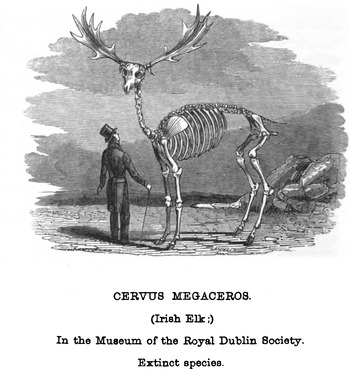
Roberts's treatment of this material also features an illustration, not dissimilar to Rennie's (see Figure 7). Once more there is a confrontation between the skeleton of an extinct form and a representative of the modern world, only in this case the pair are not meant to be related. Instead, we have the skeleton of a giant elk confronted by a gentleman in top hat and coat tails. Both these ‘skeletal confrontations’ serve to materialize the sense of the otherness of the extinct forms – which is why the extinct forms are contrasted to modern species rather than to contemporary forms. In Rennie's case, the contrast is intended primarily to show the supposed carnivorousness and monstrousness of the extinct forms, while for Roberts it simply marks a disjunction between the two worlds.
Roberts's representation of an extinct species. The Progress of Creation, op. cit., facing p. 242.

Our two other authors, Hack and Clark, were, of course, trying to build up a rather different picture. The implied narrative underlying the sequence of natural forms was not an issue that Hack chose to foreground, preferring instead to revert to her favourite theme of the moral advantages of the practice of geology. We accordingly find that the passages relating to the charismatic ‘monsters’ of the deep past are relatively sober in tone and treatment, and that the lessons Mrs Beaufoy draws from them relate more to the inquiring attitude of the naturalist than to their aptitude to hint at an underlying narrative of natural progression:
The history of the fish-lizard offers great encouragement to perseverance; the joint enquiries of the naturalists I have mentioned were at length so successful, that if the colour of the animal and the form of its scales could be ascertained, we might have a faithful portrait of a creature which perhaps the eye of man has never seen alive, and which has probably not existed upon the earth for many thousands of years! Since that is unattainable, I am glad I have it in my power, to give you a little drawing of the entire skeleton, from which you may form a very tolerable idea of the animal …
[Of the Plesiosaur, Mr Conybeare] thinks it may have lurked in ambush among the weeds in the shallow water near the coasts, where, raising its nostrils to the surface like the cayman, it might find a secure retreat from its enemies, or dart unexpectedly upon its prey …
[Harry:] How astonishing that these animals, after being buried in the earth for thousands and thousands of years, should be brought to light again in a state enabling naturalists to form a probable judgment of their habits and characters! I like such facts as these, mamma.Footnote 40
In this passage, Mrs Beaufoy focuses primarily on the perseverance of the naturalists working on the interpretation of fossil remains. The speculative reconstruction of the plesiosaur's mode of life does offer a brief glimpse of a piece of the geological past, but the sketch is quoted from the proper scientific authority, an external intrusion that has negligible impact on the course of the narrative. The accompanying illustration is a mere silhouette, not like a living animal at all (see Figure 8). Ever the dutiful son, Harry closes the sequence by expressing his enthusiasm not for scenes but for facts. Hack was not trying to sideline extinct species, but nor was she actively engaging their inherent narrative potential.
One of Hack's representations of an extinct species. Geological Sketches, op. cit., facing p. 296.

Of all our authors, only Clark was willing and able to offer his readers a narrative that attributed to extinct fossil forms a specific place in a chronological sequence. In the fifth and final chapter devoted to fossils, entitled ‘Of other animals that once lived in England and elsewhere’, Clark offers a survey of some of the more recent examples of extinct species, starting with mammoths and giant elks and finishing with beavers and dodos – the latter having been killed off by man, either locally (the beaver) or totally (the dodo). This construction helps to naturalize extinction as a phenomenon. Put alongside familiar man-made extinctions, there seems no reason to doubt that the same could have happened before – and the implication of a natural process involving the birth and death of species is thus allowed quietly to establish itself.
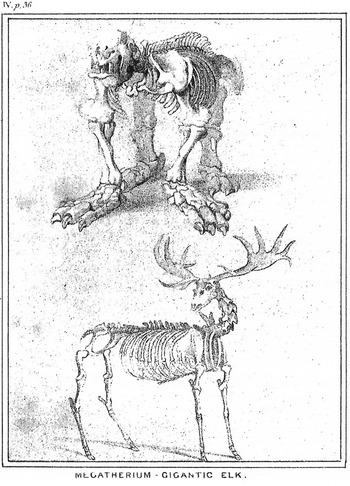
In this section Clark offers an illustration different from his chapter-head scenes and his other specimen diagrams in the sense that it places two fossil specimens in the same frame (see Figure 9). At first sight it may remind us of the ‘skeletal confrontations’ used by Rennie and Roberts, but the underlying logic is in fact quite different. First of all, the specimens are not arranged in confrontational posture contrasting a vitiated or monstrous past and an improved or tamed present. Instead they are simply aligned as contemporaneous examples of recent extinctions. In the accompanying text, each of the beasts is briefly described with some admixture of contextualizing remarks. On the giant elk, for example, Clark remarks, ‘It is not known when these creatures became extinct, but it is probable that it may have been since Britain has been inhabited by man.’Footnote 41 Appearing just two pages before shifting to beavers and dodos, the implied narrative of naturalistic progression is not difficult to make out. On the megatherium, Clark offers a familiar description that could relate to a living beast:
Its teeth show it lived on vegetables, and the great ungainly fore feet, armed with tremendous claws, would lead one to suppose that it used to dig in the ground for roots, and tear down the branches of trees. If one might decide from its likeness to other animals in its various parts, it was a sulky beast, and, if it could have spoken, would only have said to its neighbours, ‘Let me alone – I want nothing of you, if you want nothing of me.’Footnote 42
The playful imitation of the voice of the megatherium clearly acts as a strategy of naturalization; for, by having the extinct beast speak, and express a commonplace sentiment, Clark stresses the ‘normality’ of the animal – a marked contrast to the monstrosity attributed by Rennie to the same species – and by the same token hints at the increasing closeness of the ages of extinct animals to the modern creation. That this ‘normalized megatherium’ might be just as capable of engaging the interest of readers as the lurid dramatization of the ‘monsters’ of the past practised by Rennie was a significant insight. Clark was already showing how a naturalistic engagement with the dynamics of the story of life might be harnessed to produce engaging narrative.
One of Clark's representations of an extinct species. Peter Parley's Wonders of the Earth, Sea and Sky, Bristol: Thoemmes Press, 2003, facing p. 36.

Concluding remarks
In the decade between 1828 and 1837, authors writing pedagogical material for young audiences were already engaging in the complex set of issues raised by contemporary discoveries in palaeontology and, more than the recognized scientific authorities, were seeking ways to engage with the broader implications of those findings for the history of life. In the four texts considered here we have seen a variety of conceptual outlooks and ideological agendas served by a variety of more or less innovative narrative strategies. All had some role for religious considerations as well as scientific, but they also all claimed to focus primarily on empirical evidence. In varying degrees they also appealed to value systems – moral or aesthetic – not strictly germane to the subject matter.
The efforts of our authors need to be compared at a formal as well as a conceptual or systematic level. Some were more innovative in one domain than the other, but all tried to find specific ways of adapting the forms they deployed to the systems they defended. James Rennie, by some distance the author most hostile to the claims of palaeontology to revise the understanding of the history of nature, nevertheless offered in his conventional pedagogical dialogue a form of defence of the empirical attitude and the value of a scientific training for the young middle classes. Mary Roberts, the staunchest biblical literalist, offered the widest array of narrative styles, ranging from the rational expository mode of the philosophical treatise to the empirical report of the travelling naturalist, and beyond that even to the intensely subjective response to evocative landscapes. Roberts used this mix to thicken out her orthodox core narrative with a form of natural theology that conceived of design historically, and thus hinted at a unified grand narrative linking natural and human history. This strategy of broad-ranging naturalization of the biblical creation narrative was not strictly coherent since she also insisted on maintaining the biblical timescale; nevertheless, her compromise approach was perhaps an effective way of accustoming generalist readers to the counterintuitive idea of change in nature.
The innovations of Hack were both conceptual and formal. At the conceptual level, she was a significantly early espouser of Lyell's gradualist account of geological process, and so her lessons were designed to carry hints of a dynamic of natural history characterized not by sudden change but by gradual process. At the formal level, she carried the traditional dialogue format to a highly elaborate level which permitted the text to carry scientific, methodological and pedagogical agendas in parallel. Samuel Clark was equally bold in the conceptual outlook he presented, but even more significant for his formal innovations. His fictional narrator travels across the European continent and, by connecting geographical sites to geological ages, the journey translates the story of life itself. It is the only one of our four texts to have attempted a stage-by-stage material résumé of that story.
Although we have presented Clark's text as the most forward-looking in the sense that it most closely anticipates the norms of the naturalistic ‘history of life’ genre as it would be developed in the second half of the nineteenth century, we should, of course, be wary of retrospective judgements. Clark's text was not the only one to contribute to the evolving genre, and much that is more clearly present in the other texts would continue to subsist in later Victorian scientific pedagogy. For example, Hack's strategy of displacing the onus of proof of moral respectability from the content of science onto the consequences of scientific study, and Roberts's alternative focalization on intense personal experience as completing rather than opposing scientific insight, would both continue to be influential amongst later producers of scientific manuals for young readers.
The ‘history of life’ genre was a literary as much as a scientific innovation, and it was the difficulty of finding an effective articulation between these two levels of engagement that made the process of elaboration so slow. The problems of conceptualization and the problems of communication were, in this case, largely one and the same: practitioners had to work at the same time on what they took the dynamics of natural history to be, and the formulations that might make that understanding conceptually legible and morally acceptable to a middle-class readership. Writing for children was a good place to start, since it was a context that allowed authors initially to foreground contextual issues such as the moral benefits of a scientific course of study, behind which screen the more controversial themes of natural processes could be allowed to take form discreetly. These strongly encoded early efforts to communicate on palaeontology were probably a necessary experimental first stage in the elaboration of that degree of narrative confidence that would permit a later generation of popularizers boldly to attack the subject in naturalistic terms. The naturalist stance is the most powerful expository mode for the ‘history of life’ genre because it permits the total identification of textual and natural narrative. But its confident interpretation requires readerly maturity. The history of life needed to be explained to impressionable children – and their parents – before it could be told directly.


 Open access

