


A high prevalence of body size dissatisfaction (BSD) has been reported among adolescents in the USA and Europe( Reference Truby and Paxton 1 , Reference Collins 2 ) and, more recently, in Asian countries including China( Reference Lo, Ho and Mak 3 – Reference Lee and Lee 5 ). In cross-sectional and prospective studies of adolescents and young adults, BDS is predictive of low self-esteem( Reference Killen, Taylor and Hayward 6 , Reference Paxton, Neumark-Sztainer and Hannan 7 ), depressive symptoms( Reference Lo, Ho and Mak 3 , Reference Paxton, Neumark-Sztainer and Hannan 7 – Reference McCreary and Sasse 10 ), sleep disturbance, stress and low confidence in social situations, often irrespective of actual weight status( Reference Xie, Chou and Spruijt-Metz 4 , Reference Huang, Tao and Wan 11 ).
Until recently BSD was thought to emerge during adolescence( Reference Field, Cheung and Wolf 12 , Reference Hoare and Cosgrove 13 ), but new research suggests that children develop concerns about their size at a younger age( Reference Truby and Paxton 1 , Reference Pallan, Hiam and Duda 14 – Reference Truby and Paxton 16 ). A positive association between BMI and BSD has been observed in UK South Asian children as young as 5 years of age( Reference Pallan, Hiam and Duda 14 ). Children as young as 4 years have expressed negative attitudes towards a ‘fat’ body shape( Reference Musher-Eizenman, Holub and Edwards-Leeper 15 ) and BSD is associated with restrained eating by the age of 9 years( Reference Hill, Draper and Stack 17 ).
In a population-representative study of Hong Kong (HK) adolescents, significant sex differences in body size misperception were reported( Reference Lo, Ho and Mak 3 ). Girls were more likely to misperceive their body size than boys. Sex differences in BSD have also been reported in 9–10-year-old children in Beijing in the north of China( Reference Li, Ma and Schouten 18 ). These sex differences may be indicative of a culture in which it is socially acceptable, perhaps even desirable, for boys to be relatively large, while girls feel the pressure to conform to the ‘ideal thin’ physique. Whether these patterns exist in young HK Chinese children is currently unknown.
As the prevalence of childhood obesity in China and HK converges towards that of Western countries( Reference Ji 19 , Reference So, Nelson and Li 20 ), it becomes increasingly important to understand the extent of body image concerns and predictors of BSD in this population. Therefore, the aim of the present study was to determine the extent and potential predictors of BSD in young HK Chinese children.
Methods
Participants and study design
Participants were HK Chinese children, aged 6·1 to 12·9 years (mean age: 9·2 (sd 1·7) years), from a government-run primary school in HK. All children in all year groups were eligible to take part. Of a possible 660 children, 620 (95 %) are included in the present study (53 % male). The 5 % of children excluded from the present analysis were either absent on the day of measurement or did not provide body image and/or anthropometric data. All procedures were approved by the Hong Kong University Hospital Authority Cluster West ethics committee and written parental consent and child assent was obtained for all participants.
Anthropometric measures
Children attended the session barefoot and in light clothing. Height was measured in duplicate to the nearest 0·1 cm using a portable stadiometer (Invicta 2007246, Leicester, UK). The average of the two readings was used in the analysis. Weight was measured to the nearest 0·1 kg using Tanita bio-impedance scales (Tanita TBF-410, Japan). BMI was calculated (kg/m2), and weight status (underweight, normal weight, overweight, obese) was defined according to the age- and sex-specific criteria of the International Obesity Task Force (IOTF)( Reference Cole, Bellizzi and Flegal 21 ) that are based on data from six countries including HK. These international reference data, as opposed to local reference data, were chosen for the present study primarily because the BMI range covered by the categories of the Child’s Body Image Scale (CBIS) is known to represent the BMI distribution of the IOTF reference data( Reference Truby and Paxton 16 ). Moreover, use of the IOTF definitions facilitates comparison with existing studies.
The Child’s Body Image Scale
The CBIS, a body image assessment tool for young children, consists of seven gender-specific photo images of children ranging from very thin to obese( Reference Truby and Paxton 1 ). For the present study, the CBIS was translated into Chinese and administered on a class-by-class basis, following anthropometric measurements. All children were informed that there were no right or wrong answers and were assured of the confidentiality of their responses. Chinese-speaking researchers were present to check understanding of the task, provide assistance as needed and ensure that children did not communicate with their peers while completing the questions. Children were asked to indicate their perceived size (‘Which child looks most like you?’) and their ideal size (‘Which child would you most like to look like?’). Accuracy of body size perception was calculated as the discrepancy between actual and perceived body size (actual minus perceived), giving a score ranging from +6 to −6. A positive score indicates underestimation of one’s actual body size; a negative score indicates overestimation of actual body size; and a zero score indicates accurate estimation of actual body size. BSD was calculated as the discrepancy between perceived and ideal body size (perceived minus ideal). Positive scores were interpreted as desire to be thinner, negative scores were interpreted as desire to be larger, and a score of zero was interpreted as satisfaction with current body size.
The main advantage of the CBIS is that each photo corresponds to a known BMI percentile range, originally based on the National Center for Health Statistics’ 1979 reference data (ranging from the 3rd to the 97th percentile)( Reference Hamill, Drizd and Johnson 22 ), and more recently mapped onto the UK90 and IOTF standards( Reference Truby and Paxton 16 ). This feature allows one to assess the accuracy of a child’s perception of his/her own body size, which is not possible with most other scales (for example, Stunkard’s rating scale( Reference Stunkard, Sorenson and Schulsinger 23 )). The CBIS is a valid measure of size perception in girls as young as 7 years and boys as young as 8 years, and is a good measure of BSD in both boys and girls aged 7–12 years( Reference Truby and Paxton 1 ). Test–retest reliability of the CBIS is also supported in this age group( Reference Truby and Paxton 16 ).
Statistical analysis
The χ 2 test and Student’s t test were used to examine age and sex differences in participant characteristics and CBIS scores. Logistic regression analyses were used to calculate adjusted odds ratios (AOR) for desire to be thinner, desire to be larger and satisfaction with current size (dependent variables in three separate models), with age group, gender and actual weight status entered as dependent variables in model 1. Model 2 was further adjusted for perceived weight status. All analyses were performed in the statistical software package PASW Statistics 18. Statistical significance was considered as P<0·05.
Results
Participant characteristics
Children who were excluded from the analysis (5 %) were significantly younger than those who did provide valid data (mean difference −1·5 years, P<0·001), but were similar in terms of BMI (based on data for nineteen of the forty children excluded from the analyses). Girls and boys were similar in terms of age, height and weight (Table 1). A larger proportion of boys were overweight or obese (28·5 % of males v. 17·4 % of females) and fewer boys were underweight (6·7 % of males v. 11·9 % of females, P<0·01). There were no significant age differences in weight status among females. Among boys, the two older age groups were more overweight/obese than the youngest age group (<8 years: 18·3 % v. 33·3 % and 32·1 % of boys aged 8–10 years and >10 years, respectively; P<0·05; Table 2). Overall, there was a bias towards underestimation of body size using the CBIS (Table 1). The majority of children (86·2 % of males and 85·0 % of females) selected an ideal size equating to the 25th percentile or lower (photos 1 to 3) and approximately half (52·3 % of males and 44·4 % of females) selected an ideal size equivalent to the 10th percentile or below (photos 1 and 2).
Participants’ characteristics and CBIS scores; young Hong Kong Chinese children aged 6·1–12·9 years
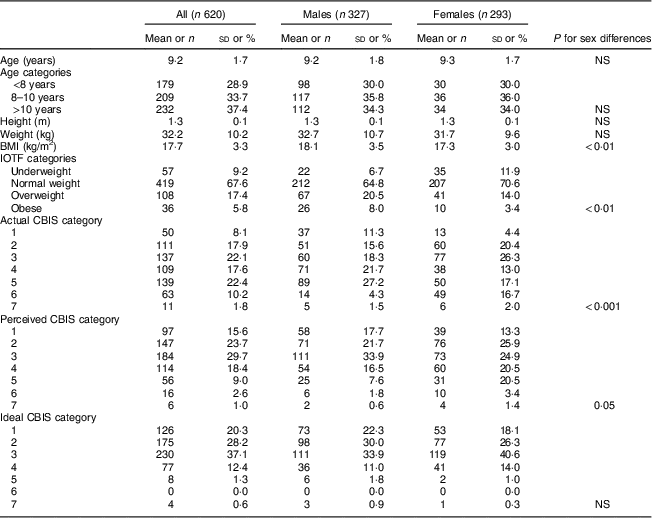
CBIS, Child’s Body Image Scale; IOTF, International Obesity Task Force.
Values are presented as mean and standard deviation for continuous variables or as number and percentage for categorical variables.
Weight statusFootnote * distribution by age and gender among young Hong Kong Chinese children aged 6·1–12·9 years
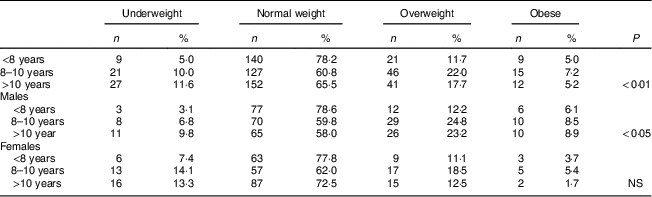
* Weight status based on the International Obesity Task Force categories for underweight, overweight and obese, defined as BMI crossing through 18·5 kg/m2, 25·0 kg/m2 and 30·0 kg/m2, respectively, at the age of 18 years( Reference Cole, Bellizzi and Flegal 21 ).
Body size perception
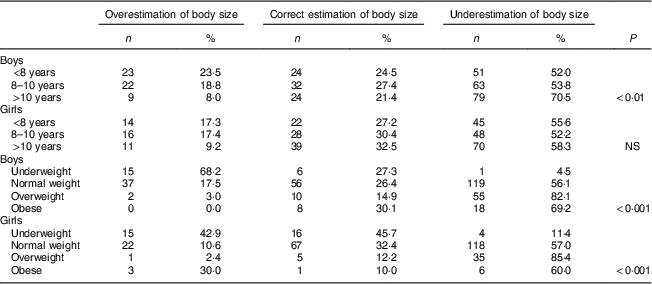
There were no significant sex differences in body size perception (see Table 3). Children in the lowest two age groups were more likely to overestimate their body size than children aged >10 years (P<0·01). When stratified by sex, the age differences in body size perception were evident only among boys (P<0·01). Across all age groups, just over a quarter of children correctly estimated their size and over half underestimated (53 %–64 % across age groups). Over half of underweight children thought they were larger than in reality, whereas 67 % of obese children underestimated their size (P<0·001). These results were similar for both boys and girls.
Body size perception (actual minus perceived size) by sex, age and weight status among young Hong Kong Chinese children aged 6·1–12·9 years
Body size dissatisfaction
There were no significant sex differences in BSD (Table 4). Approximately 50 % of children wanted to be thinner (45 % of boys and 51 % of girls) and only a quarter were happy with their size. The youngest age group was considerably more likely to desire a larger body size than the two older age groups (P<0·001). This trend was evident in both boys and girls, and across all weight status categories. Approximately 50 % of boys and 55 % of girls in the older two age groups wanted to be thinner, compared with just 30 % in the youngest age group.
Body size dissatisfaction (perceived minus ideal size) by sex, age and weight status among young Hong Kong Chinese children aged 6·1–12·9 years

There was a strong relationship between higher weight status and desire for a thinner body (Table 4); 10 % of underweight, 40 % of normal-weight, 80 % of overweight and over 90 % of obese children wanted to be thinner (P <0·001). Within weight status categories, there were no sex differences in BSD among underweight, overweight or obese children but, among normal-weight children, girls were more likely than boys to desire a thinner body size (49·3 % and 32·5 % of normal-weight girls and boys, respectively; P<0·01). Among normal-weight children, those who overestimated their size were more likely to want to be thinner than those who underestimated or correctly estimated their size, and those who underestimated their size were more likely to be satisfied than those who overestimated (P<0·01).
Predictors of body size dissatisfaction
In the logistic regression analysis adjusted for age group and weight status (model 1, Table 5), girls were almost twice as likely as boys to desire a smaller body than their current size (AOR=1·91, 95 % CI 1·32, 2·76). Compared with the youngest age group, older children were at least twice as likely to desire a smaller body size (AOR=2·62; 95 % CI 1·65, 4·16 for 8–10 years; AOR=2·16; 95 % CI 1·38, 3·38 for >10 years). Compared with normal-weight children, overweight and obese children were over six and nineteen times more likely to want to be thinner, respectively (AOR= 6·23; 95 % CI 3·66, 10·60 and AOR=19·04; 95 % CI 5·64, 64·32).
Adjusted odds ratios for desire to be thinner, desire to be larger and satisfaction with current body size among young Hong Kong Chinese children aged 6·1–12·9 years
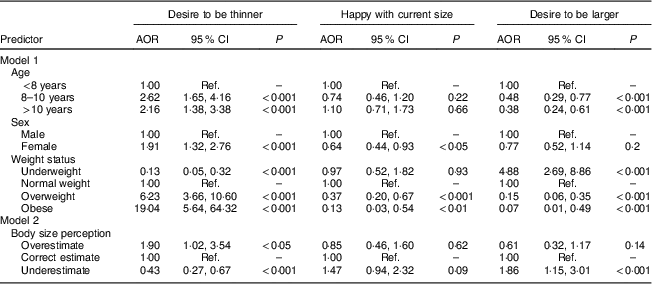
AOR, adjusted odds ratio; Ref., referent category.
Model 1: adjusted for age group, sex and weight status. Model 2: adjusted for age group, sex, weight status and body size perception.
When body size perception was considered as a predictor of BSD (model 2, Table 5), those who overestimated their size (perceived themselves to be larger than they really are) were almost twice as likely to desire a thinner body (AOR=1·90; 95 % CI 1·02, 3·54) compared with those who correctly estimated their body size.
Discussion
Main findings
Our study is the first to examine the prevalence and potential predictors of BSD in young HK Chinese children. We observed a high prevalence of BSD among 6–13 year olds: only 25 % of children were satisfied with their size and approximately half desired a thinner body size. Older children (>8 years), and girls, were twice as likely to desire a thinner body compared with younger children, and with boys, respectively. There was a clear dose–response relationship between higher weight status and desire to be thinner. Specifically, overweight and obese children were six and nineteen times more likely to desire a thinner body than their normal-weight peers, after adjusting for age and gender. Another important finding of our study is the potential importance of size misperception as a predictor of BSD. Irrespective of actual body size, children who overestimated their size were almost twice as likely to desire a thinner body compared with children who accurately estimated their size. Nevertheless, girls appeared to have a relatively good awareness of their size from the age of 6 years, whereas boys seemed to become more perceptive of their size at a slightly older age. Taken together, these results suggest that, by the age of 8 years, and possibly younger among girls, HK Chinese children are already aware of the social pressures to conform to, and strive towards, the stereotypical ‘thin ideal’ physique.
Comparison with other studies
Our findings support the growing body of evidence which suggests that BSD occurs before adolescence( Reference Collins 2 , Reference Pallan, Hiam and Duda 14 , Reference Tiggemann and Pennington 24 – Reference Schur, Sanders and Steiner 26 ). Similar to our findings, previous studies have found that approximately 40 % of pre-adolescent girls( Reference Collins 2 , Reference Hill, Draper and Stack 17 , Reference Schur, Sanders and Steiner 26 , Reference Rolland, Farnill and Griffiths 27 ) and about 30–35 % of boys want to be thinner( Reference Truby and Paxton 1 , Reference Collins 2 ). A study of adolescent girls in HK( Reference Lee and Lee 5 ), and another of 18–27-year-old HK Chinese adults( Reference Cheung, Lee and Ho 28 ), found that 75 % expressed a desire to be thinner, a considerably higher prevalence than that reported in our study, likely due to the age differences between the study cohorts.
With regard to the predictors of BSD, namely age, female gender and high weight status, our findings are generally in agreement with previous research( Reference Pallan, Hiam and Duda 14 , Reference Hill, Draper and Stack 17 , Reference Presnell, Bearman and Stice 29 ). For instance, the strong dose–response association between higher weight status and desire to be thinner, observed in our study, has also been reported in similar studies of children in Western countries( Reference Pallan, Hiam and Duda 14 , Reference Presnell, Bearman and Stice 29 ). For example, in a cohort of 5–7-year-old South Asian children in the UK, being overweight or obese was associated with a 1·5 unit increase in BSD score, and 52 % and 73 % of overweight and obese children, respectively, wanted to be thinner( Reference Pallan, Hiam and Duda 14 ).
In our study, girls were twice as likely to desire a thinner body compared with boys. Previous studies have been inconsistent in reporting sex differences in body image issues in children and adolescents. Some studies report no differences between young boys and girls( Reference Pallan, Hiam and Duda 14 , Reference Tiggemann and Pennington 24 ), whereas others have reported higher BSD and weight perception among girls( Reference Collins 2 , Reference Hill, Draper and Stack 17 , Reference Schur, Sanders and Steiner 26 – Reference Presnell, Bearman and Stice 29 ). It is possible that methodological differences (e.g. silhouette matching tasks( Reference Truby and Paxton 1 , Reference Stunkard, Sorenson and Schulsinger 23 ) v. video-adjustment techniques; for example, Gardner et al.( Reference Gardner, Friedman and Stark 30 )) or study population contribute to these discrepancies. Further research is needed to establish whether sex differences in body image distortion and dissatisfaction are due to different cultural expectations on boys and girls or are limitations of body image assessment techniques.
The potential importance of body size misperception as a predictor of BSD has also been reported in cross-sectional and prospective studies of adolescents in China( Reference Xie, Chou and Spruijt-Metz 4 ), the USA( Reference Sonneville, Calzo and Horton 31 ) and Norway( Reference Cuypers, Kvaloy and Bratberg 32 ). It seems that, irrespective of weight status, body size misperception is highly predictive of BSD and may also be associated with other adverse outcomes such as depressive symptoms and anxiety( Reference Tang, Yu and Du 33 ). With this in mind, it is of concern that, in our study, over 80 % of overweight children, and 70 % of boys in the older age group, underestimated their body size. In a population in which childhood obesity has risen rapidly, especially among young boys( Reference So, Nelson and Li 20 ), it may therefore be important to improve awareness of what constitutes a healthy weight among high-risk children who underestimate their size.
Some authors have argued that a modest amount of BSD may inspire healthy lifestyle changes among overweight and obese people( Reference Heinberg, Thompson and Matzon 34 ) and may therefore be beneficial to those living in a so-called ‘obesogenic’ environment. However, data from prospective studies suggest that the opposite is true: BSD leads to extreme weight-control behaviours such as unhealthy dieting, eating disorders and binge eating( Reference Killen, Taylor and Hayward 6 , Reference Ohring, Graber and Brooks-Gunn 8 , Reference Stice, Presnell and Spangler 35 ), whereas satisfaction with one’s body size is protective against eating disorders, excess weight gain and other unhealthy behaviours such as physical inactivity( Reference Huang, Tao and Wan 11 , Reference Sonneville, Calzo and Horton 31 , Reference Neumark-Sztainer, Paxton and Hannan 36 , Reference Wardle, Waller and Rapoport 37 ). Prospective studies show that extreme weight-loss behaviours are associated with increased BMI gain over time, increased risk of metabolic syndrome, high TAG and accumulation of visceral adipose tissue( Reference Sonneville, Calzo and Horton 31 , Reference Tanofsky-Kraff, Shomaker and Stern 38 ). These extreme weight-loss behaviours may occur when one’s ideal size is unachievable or unrealistic. It is disconcerting, therefore, that about half of the children in the present study selected an ideal size that was less than or equal to the 10th percentile, and about 85 % selected a picture corresponding to the 25th percentile or lower. Almost identical findings were reported in 7–12-year-old British children( Reference Truby and Paxton 1 ). Thus, improving body size satisfaction may be an important component of obesity and eating disorder interventions, even in the absence of weight loss. Interventions and educational programmes should focus on the importance of a healthy lifestyle, rather than emphasising unrealistic thin physiques that may inadvertently contribute to the development of body image issues. Further research should also try to explore the extent to which the discrepancies between ideal and perceived size are due to social desirability bias and how much is due to genuine dissatisfaction with one’s size as the two concepts are not necessarily synonymous.
Strengths and limitations
The main strengths of our study are the relatively large cohort of young HK Chinese children, a less frequently studied population in the area of obesity and body image research, and the high response rate (95 %). Our study also benefits from the use of standardised protocols and objective measurement of BMI. Moreover, while many previous studies have been limited to the assessment of BSD only, the use of the valid and reliable CBIS in our study also enabled us to assess body size perception, which appears to be an important determinant of BSD.
Our study has some limitations which should be taken into consideration. First, the CBIS was originally developed for use in white Australian children aged 7–12 years( Reference Truby and Paxton 1 ). Thus, the application of this tool in non-Caucasian ethnic groups and slightly younger children (in our case, as young as 6 years) who may struggle with comprehension of such tasks may be an issue. However, the children seemed to understand that the focus of the task was on body shape and size, rather than specific facial features, and none seemed deterred by the depiction of non-Chinese children in the CBIS, which is possibly a result of the multicultural ethnic mix in HK and exposure to Western-focused media. Our sample did include seventy-eight children (forty-one boys, thirty-seven girls) who were under the age of 7 years (12·6 %) and we found the younger children considerably more likely to desire a larger body size; it is possible that the 6-year-olds did not understand the task or that this simply reflects the common expectation that children at this younger age to want to be bigger and older.
Additionally, although the CBIS was designed to reflect the BMI distribution of 7–12-year-old children, it does not cover the extreme ends of the scale (<3rd percentile and >97th percentile) and might therefore be inappropriate for very thin or very obese children. This could be a limitation in populations such as the Chinese where the BMI distribution is lower than that of many Western countries( Reference Cole, Bellizzi and Flegal 21 ) and where there is a dual burden of over- and underweight. In our study, eleven boys and four girls were below the 3rd percentile and five boys and one girl were above the 97th percentile, but results were unchanged when these children were excluded from the analysis. It is also possible that the tool could be improved by random ordering of the figures to prevent any anchoring effect of having the smallest figure as the first one on the scale.
The CBIS does not take into account desired body composition, body shape or fat distribution; it focuses only on size and assumes that body shape is consistent across children within each BMI category( Reference Truby and Paxton 1 , Reference Cohane and Pope 39 ). It has been suggested that this limitation may lead to inaccurate assessment in boys who might desire a more muscular, lean physique( Reference Cohane and Pope 39 ). Future research could include a qualitative component to further explore this theory among HK youth. Finally, due to practical issues and time constraints, the CBIS, which was originally intended to be used on a one-to-one basis, was administered on a class-by-class basis in the present study. It is possible that the children were influenced by their peer group while completing the CBIS. However, children were asked not to communicate with their peers while completing the task, the activity was supervised by research assistants and none of the children appeared to be distracted, so it is unlikely that this had any major influence on our findings.
Conclusion
Our findings add to the growing body of evidence which suggests that BSD and size perception develop at a very early age, particularly among girls. Overweight and obesity, female sex and size misperception are significant risk factors for BSD in children as young as 6 years of age. These findings suggest that young HK children may be susceptible to the social pressures of achieving the stereotypical ‘ideal slim’ physique. Prospective studies are required to confirm these results. As BSD is a risk factor for future weight gain and eating disorders, early education and prevention of body image concerns should be considered an important component of obesity and eating disorder interventions.
Acknowledgements
Financial support: This work was supported by the University of Hong Kong Research Council Strategic Research Theme Public Health and Small Project Funding; and a Postgraduate Overseas Research Grant from the University of Birmingham. The funders had no role in the design, analysis or writing of this article. Conflict of interest: None. Authorship: G.K., P.A., G.N.T. and A.M.M. conceived and designed the study; F.C.M.L. and A.M.M. recruited the study participants; G.K., F.C.M.L. and A.M.M. collected the data; G.K. and A.M.M. cleaned and analysed the data; G.K., F.C.M.L., G.N.T., P.A. and A.M.M. interpreted the results; G.K. wrote the first draft of the manuscript; G.K., F.C.M.L., G.N.T., P.A. and A.M.M. critically reviewed and revised the initial manuscript and approved the final manuscript as submitted. Ethics of human subject participation: All procedures were approved by the Hong Kong University Hospital Authority Cluster West ethics committee and written parental consent and child assent was obtained for all participants.



