





Policy Significance Statement
This study underscores the policy significance of understanding the interplay between government funding programs, research funding decisions, and their profound impact on successful research collaborations and grant application success rates. Focusing on three decades of cross-country policy dynamics, particularly in the context of academic-industry collaboration versus sole academic or industry funding, our research provides critical insights for policymakers. By examining data from Innosuisse and SBIR, we highlight the prevalence of repeated funding to the same individuals, including cross-country differences, and the comparative effectiveness of different funding programs. The study highlights the need for policymakers to adopt a nuanced and adaptive approach that fosters innovation, interdisciplinary collaboration, and research excellence amidst the evolving research landscape.
1. Introduction
Competitive funding refers to the financial support provided to organizations to help them develop their knowledge and capabilities. This type of funding is often used to support the implementation of new technologies or business processes. It can be used for a wide range of purposes, including training, research and development, and capital investments. Competitive funding can come from various sources, including government agencies, private foundations, and venture capitalists. The specific terms and requirements of competitive funding vary depending on the source and type of funding, but generally, it provides financial support to help organizations improve their competitiveness.
Previous work, such as Fleming et al. (Reference Fleming, Greene, Li, Marx and Yao2019) has shown that research that generates knowledge used in patents has historically come from both industry and government, with a recently increasing trend towards industry. Despite this increase in industry spending on research, modern firms appear to be pursuing less basic science (Arora, Reference Arora, Belenzon and Patacconi2017).
Although many studies have examined the publication collaboration patterns (Sonnenwald Reference Sonnenwald2007, Jones et al. Reference Jones, Wuchty and Uzzi2008, Wuchty et al. Reference Wuchty, Jones and Uzzi2007), only a few works have explored collaborations for research funding. For example, Cummings and Kiesler (Reference Cummings and Kiesler2005) discussed collaborative research across disciplinary and organizational boundaries. At the same time, little is known about the characteristics of project funding collaborations (Ma et al., Reference Ma, Mondragón and Latora2015). The amount of funding a project receives depends on both the research area and mode of collaboration, and potentially influences the way the project collaboration is performed. Universities are known to facilitate large-scale multi-partner research collaborations (Jones et al, Reference Jones, Wuchty and Uzzi2008); but also, with whom and how they collaborate may have an impact on the success of a bid (see Ma et al. Reference Ma, Mondragón and Latora2015). Because of the limited grasp of the underlying mechanics and dynamics, the establishment of a project consortium for a grant proposal often requires extensive strategic thought. Davies et al. (Reference Davies, Gush, Hendy and Jaffe2022) analyzed whether research funding contests promote co-authorship within-researcher-pair variation in co-authorship. They found that among pairs who ever co-authored or co-proposed, co-authorship was 13.8 percentage points more likely in a given year if they had co-proposed during the previous ten years than if they had not. In another study, Aagaard et al. (Reference Aagaard, Kladakis and Nielsen2020) investigated the relationship between the distribution of research funding and scientific performance answering the question “Do high shares of funding handed out to a limited number of elite scientists yield the most value for money, or is scientific progress better supported by allocating resources in smaller portions to more teams and individuals?” they demonstrated a strong inclination toward arguments in favor of increased dispersal, which also exhibits stagnant or diminishing returns to scale for the relationship between grant size and research performance. Also, in this context, Heyard and Hottenrott (Reference Heyard and Hottenrott2021) investigated the effect of competitive project funding on researchers’ publication outputs using detailed information on applicants at the Swiss National Science Foundation and their proposal evaluations. They estimated the impact of the grant award on a set of output indicators such as the number of peer-reviewed articles, number of citations, and relative citation ratios, as well as the publication of preprints. The results showed that “the funding program facilitates the publication and dissemination of additional research amounting to about one additional article in each of the three years following the funding. The higher citation metrics and altmetrics by funded researchers suggest that impact goes beyond quantity and that funding fosters dissemination and quality.”
Chai and Shih (Reference Chai and Shih2016) studied Danish funding for academic-industry partnerships finding an increase in publications and patents for small businesses. Abbas et al. (Reference Abbas, Avdic, Xiaobao, Mahmudul Hasan and Ming2019) carried out a study in China showing that government funding and collaboration with research institutes improve innovation, but university collaboration does not. O’Dwyer et al. (Reference O’Dwyer, Filieri and O’Malley2023) discussed university-industry collaborations through a conceptual framework and emphasized the importance of joint government funding. However, none of these prior works has performed an in-depth analysis of cross-country policy dynamics with a specific emphasis on the support for academic-industry collaboration versus sole company funding, drawing insights and policy trends.
Another important aspect of academic-industry collaborations is that they are often inherently interdisciplinary. Already in 2016, the 5th Annual Meeting of the Global Research Council highlighted increasing interest in interdisciplinary domains and the concern that such research is not adequately supported under current funding schemas. Funding agencies play a key role in shaping interdisciplinary research, and there is a widely held belief that interdisciplinary proposals fare poorly in competitive funding rounds (Bromham et al., Reference Bromham, Dinnage and Hua2016). Critical to this evaluation is the ability to compare levels of interdisciplinarity of research projects to track trends, evaluate outputs, and compare success rates (Langfeldt, Reference Langfeldt2006, and Nichols, Reference Nichols2014).
Our research seeks to address these critical questions by examining cross-country differences in research funding success rates, grant amounts, and future collaborations. We delve into the effectiveness of distinct funding schemas, specifically differences between academic-industry collaborations and independent funding, to unravel their impact on the trajectory of research projects. Furthermore, we investigate the attributes that make principal investigators (PIs) more appealing candidates to receive multiple grants, unveiling the traits and strategies that transcend borders.
In pursuit of these objectives, our study adopts a comprehensive and data-driven approach, drawing from an extensive dataset encompassing research projects and collaborations in Switzerland and the USA. We focus on funding schemas that allow for collaboration between distinct partners, specifically where one is a research partner from the academy and an implementation partner from the industry who forms a consortium to submit a grant proposal. Research partners are primarily universities, but can also include research institutions, government agencies, and non-profit organizations. The specific role of a research partner can vary depending on the nature of the project but can include access to resources and expertise, and assistance with data collection and analysis. Partnerships can be established for a specific project or ongoing collaboration between the institutions. Having a research partner can also help increase the visibility and impact of the findings. On the other hand, implementation partners provide a wide range of services, typically including project management, technical assistance, training, and capacity building. They are often brought on board to help organizations and individuals successfully plan, execute, and complete a project. The specific role of an implementation partner can vary depending on the nature of the project but typically includes several of the aforementioned roles. Implementation partners can also help ensure that a project is completed on time and within budget while providing guidance and support.
2 Research design
2.1 Research questions
Understanding cross-country differences in funding success rates is important because it can reveal patterns and factors that lead to success and identify potential biases in funding schemas or approaches. This knowledge is vital for policymakers and funding agencies who aim to ensure equitable access to research resources and support. Moreover, by examining how government policies and support mechanisms relate to these differences, our research question aims to address the critical issue of policy effectiveness. It allows for the identification of policies that are successful in promoting novel research and collaborations, thereby offering valuable insights for crafting evidence-based policies that can enhance research outcomes.
The nature of the funding schema can significantly impact the research landscape through changes to resource allocation and the promotion of new or existing relationships. The question of which funding schema works better addresses the need to optimize the allocation of research funds, which ultimately come out of government funding. Prior work has explored industry-academic funding across a variety of countries (Fan et al. Reference Fan, Huang and Chen2019, Hou et al. Reference Hou, Hong, Wang and Zhou2019, Nugent et al. Reference Nugent, Chan and Dulleck2022, Behfar and Shekhtman Reference Behfar and Shekhtman2024). Notably, however, few studies have attempted to carry out comparisons between funding sources and none have explored the specific funding patterns of the Swiss Funder Innosuisse. Understanding how different country funding schemas perform is essential for policymakers and funding agencies seeking to foster successful research projects. Moreover, this has implications for academic-industry partnerships, offering insights into the most effective collaboration models.
Research Question 1: How do academic-industry collaborations and government support for such joint collaborations, particularly within specific programs, differ? How can these collaborations be better supported across country settings?
Principal investigators (PIs) are the primary recipients of research grants, and they ultimately determine how and what research to perform. Understanding the distribution of funding across PIs is important because it can shed light on which research gets done and if some individuals or institutions are left behind (Ma et al. Reference Ma, Mondragón and Latora2015). Here we aim to explore how researchers may be left behind at Innossuisse, especially in comparison to the major funding in the US by SBIR. This knowledge is valuable not only for funding agencies but also for aspiring researchers aiming to enhance their competitiveness in grant applications.
Research Question 2: How is funding distributed across PIs? Do prior successful principal investigators (PIs) have a higher chance of winning future grants, or do the rich-get-richer?
Government policies play a pivotal role in shaping the research environment. The question of how policies can be tailored to promote successful research collaborations and foster novel scientific research is crucial for national and global human progress. Policymakers are continually seeking ways to support research ecosystems and understanding cross-country differences and best practices can provide actionable insights (Nugent et al. Reference Nugent, Chan and Dulleck2022, Langfeldt Reference Langfeldt2006). By identifying policy failings in different countries, it becomes possible to incubate environments conducive to research excellence and innovation. Here we aim to explore potential policy failures, especially as they relate to our first two research questions regarding the rates of funding for academic-industry collaborations and the way such funding is distributed by the funders we analyze.
Research Question 3: How can government funding schema be tailored to promote successful research collaborations and improve funding allocation decisions? What recommendations can be made to policymakers based on cross-country differences and best practices?
2.2 Research model
The methodology of this study aims to examine the relationship between the network characteristics of grant winners and their subsequent success in winning future grants, specifically within the context of academic-industry collaborations. The methodology includes:
Data.
-
1. Data Sources:
-
○ We collected data from two major funding schemas: Innosuisse (Swiss Innovation Project Funding) and SBIR (US Small Business Innovation Research); the main reason is that Innosuisse has never been explored before, while SBIR is a well-known major funder with similar information allowing for comparisons.
-
○ Data included information on grant applications, grant winners, grant amounts, project descriptions, and collaboration details (academic-industry or sole company funding).
-
2. Time Frame:
-
○ The analysis covered a period of about 40 years to capture long-term trends and policy changes.
Network Analysis
-
1. Network Construction:
-
○ We constructed a network of grant winners, where nodes represent principal investigators (PIs) and edges represent collaborations between PIs in winning projects.
-
○ The network was divided into sub-networks of academic-industry collaborations and sole company funding.
-
2. Betweenness Centrality:
-
○ Betweenness centrality was calculated for each PI to measure their influence within the network. This metric captures the extent to which a PI lies on the shortest paths between other PIs, indicating their role in connecting different parts of the network.
Statistical Analysis
-
1. Probability of Winning Future Grants:
-
○ We model the probability of winning future grants as a function of variables such as the PI’s past success in winning grants and the type of funding schema.
-
○ We conduct robustness checks by comparing results across different periods and funding schemas to ensure that the observed relationships remain consistent.
-
2. Cross-Country Policy Evaluation:
-
○ We assess how government decisions and policies on funding schema have evolved in various countries over the past 30–40 years about funding schemas.
-
○ We assess how the total amount for research projects differs between academic-industry collaboration and sole company funding, and how these differences are influenced by cross-country policies.
2.2.1 The principal concepts
To continue with our experimental studies, we must first define basic concepts such as:
Government Policies and Research Ecosystem: Government policies on funding schema play a pivotal role in shaping the dynamics of the research ecosystem. These policies extend beyond mere financial allocations to influence the broader research culture, collaboration frameworks, and the prioritization of specific research domains. Effective policies incentivize collaboration between academia and industry, promote interdisciplinary approaches, and prioritize sectors aligned with national development goals. The theoretical framework guiding this study acknowledges the diverse nature of government policies, ranging from research funding mechanisms to support structures for collaborative initiatives.
Funding Schemas and Collaboration Models: The choice of funding schema, whether it be academic-industry collaboration or sole academic or company funding, introduces critical variables into the research equation. Theoretical perspectives on collaborative funding highlight the potential synergies between academia and industry, emphasizing the benefits of interdisciplinary research and knowledge transfer. Literature also explores the challenges and opportunities associated with different funding schemas, shedding light on factors influencing the success of collaborative projects. Understanding the theoretical underpinnings of these funding schemas is paramount for policymakers and funding agencies seeking evidence-based insights into resource allocation and partnership strategies.
Funding decisions: Ultimately, decisions on whom to fund are generally made through either peer review or appointed experts who manage the funding schema and programs on behalf of the government. The approaches of peer review and the way that such processes lead to funding decisions have at times suffered from criticism in that committees are often likely to fund the most conservative possible research projects and reject overly novel ideas. Understanding how to arrange funding schema to obtain the best possible decisions requires an important combination between policy and the scientific enterprise.
The Principal Investigator (PI): is the lead researcher or scientist who is responsible for the overall direction and management of the project. In the Innosuisse framework, there are two PIs, one representing the implementation partner and another representing the research partner. The PI network showing the patterns of collaboration between these key individuals can help address complex research questions that require the expertise and resources of multiple institutions or research groups. By working together, the PIs and their teams can share data, collaborate on research, and pool resources. Understanding the PI collaboration network allows us to observe how scientists and researchers share ideas, collaborate, and build on each other’s work to make breakthroughs that would not be possible alone.
2.2.2 Methodology: network modeling
To analyze research funding, we created a complex network of collaboration funding partners. A complex network is composed of interconnected nodes (or vertices) that have a wide range of relationships. Examples of complex networks include social networks, transportation networks, communication networks, and biological networks. These networks have highly specific structures, which can be studied and modeled using various mathematical and computational techniques. A complex network can be composed of different types of nodes, and the connections between them can be weighted or directed. It can also have different levels of hierarchy and can be dynamic, changing over time. In this study, we aim to create complex networks of
-
• PIs (principal investigator)
-
• Bipartite structures of research partners and implementation partners
We also investigate network properties by
-
• Dividing projects based on the amount of funding
-
• Grouping by:
-
○ implementation PI.
-
○ implementation organization.
-
○ research PI.
-
○ research organization.
-
-
• Categorizing based on research disciplines
A bipartite network is a type of network in which two different types of entities or nodes are connected. These nodes can be individuals, organizations, or any other type of entity that forms a relationship or partnership with nodes of the other type. For example, a bipartite network could show the connections between researchers and their institutions. In our bipartite network, the connections between the two types of nodes represent a partnership or a relationship between them. The bipartite network between research and implementation partners allows us to identify and analyze the relationships between these different types of entities. It can provide insights into how the different types of entities interact and collaborate, and how these relationships impact the overall patterns of collaboration (Saavedra et al., Reference Saavedra, Reed-Tsochas and Uzzi2009).
Project partners’ degree:
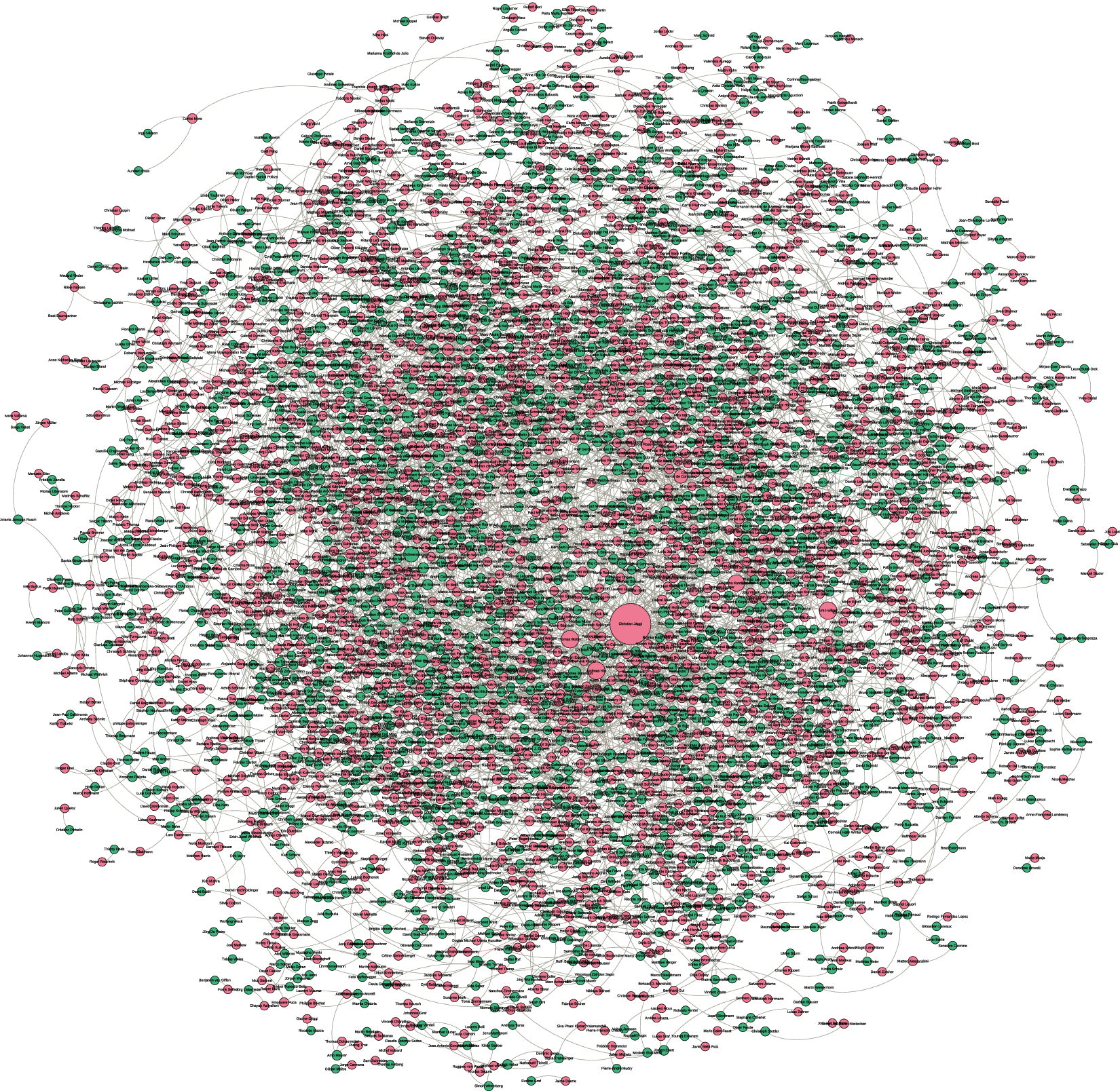
In graph theory, the “degree” refers to the number of incoming edges to a vertex in a directed graph. It represents the number of connections a node has with other nodes pointing towards it. The degree of a node can be used to measure its popularity or importance in a network. In a project collaboration network, the degree of a node represents the number of partners that a particular entity (researcher or organization) works with as a collaborator. A high degree for a node in a project collaboration network may indicate that the entity is highly sought after or well-respected in the field, or that they can effectively manage multiple projects at once while maintaining many distinct relationships. Figure 1 shows the bipartite network of research and implementation partners, where the green nodes are research partners, and the pink nodes are implementation partners. The size of the nodes represents the number of projects that the organization has won. In total, the network contains 3710 PIs (2096 implementation PIs and 1614 research PIs) with 2540 partnerships (links) between implementation and research partners.
Network of project funding for the Innosuisse project data that we have collected.
Project partners’ betweenness:
Betweenness centrality is a measure of the centrality of a node in a network, which takes into account the number of shortest paths between all pairs of nodes that pass through that node. It represents the extent to which a node lies on the shortest paths between other nodes and can reveal if a particular node “bridges” between different parts of the network. Calculating betweenness centrality involves counting the number of shortest paths between all pairs of nodes that pass through a given node, and dividing that count by the total number of shortest paths. The higher the proportion, the higher the betweenness centrality of the node. Betweenness centrality is commonly used to identify nodes that play a key role in connecting other nodes in a network, which we hypothesize may have an impact on winning grants.
3 Empirical Analysis
In an era where scientific discovery knows no borders, understanding the dynamics of research funding and academic-industry collaboration has become paramount. Funding agencies, policymakers, and stakeholders are increasingly interested in deciphering the intricate web of factors that influence the success of research projects and collaborations and, more importantly, how government policies can shape these outcomes. We aim to explore the multifaceted terrain of research funding and collaboration, analysis of cross-country variations, and provide invaluable policy insights using empirical analysis.
3.1 Data collection
In this study, we use the data collected from the websites of Innosuisse (belonging to Switzerland) and SBIR (belonging to the USA), see the references for sources of data. Innosuisse and SBIR data are summarized as:
-
• Innosuisse
-
○ Every year funding consists of 2–3 billion CHF.
-
○ Data exists for about 40 years.
-
○ Total of 25,099 Innosuisse grants since 1981.
-
○ Data mainly contains projects with both research (academic) and implementation (industry) partners.
-
-
• SBIR
-
○ Every year funding consists of 2–3 billion USD.
-
○ Data exists for about 40 years.
-
○ A total of 201,426 SBIR Grants have been awarded since 1983, but only 18,339 have a research institute partner.
-
○ Data contains projects with companies as the only partners, as well as joint projects with academia.
-
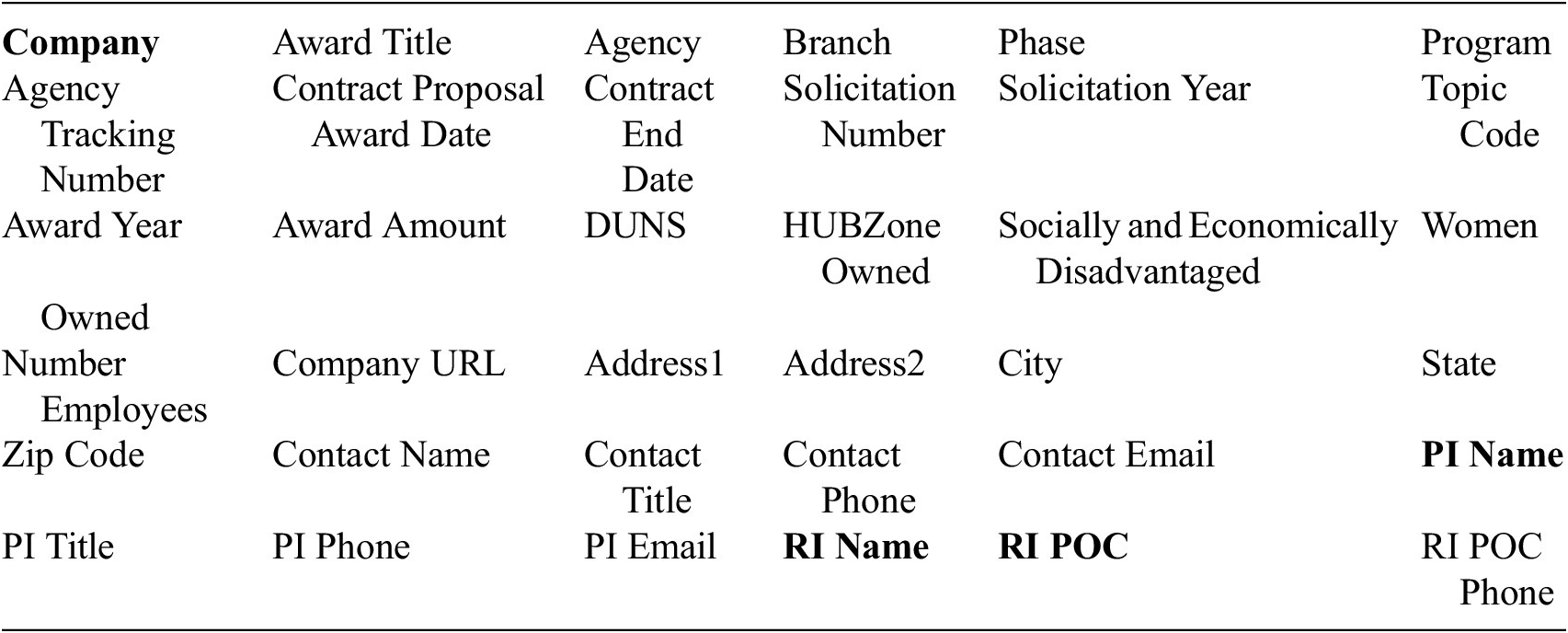
The main fields that we use to create the networks include:

Other data fields (for Innosuisse) include:

SBIR data fields are, where we made the corresponding fields bold:
3.2 Analysis and Results
As stated in the research questions, not only do we seek to determine the rate of the research/ implementation partner’s success in obtaining new project funding, but also show variations of those results in both Innosuisse and SBIR datasets.
3.2.1 Probability of next grant-winning success
Before discussing the probability of successfully winning the next grant, we first explore the implications of academic-industry collaborative projects with RQ1.
To address the research question on how academic-industry collaboration and government support for such joint collaborations are operationalized, especially within particular programs in comparison to sole company funding, we examine the data on the allocation of grants and the trajectory of funding success for research and implementation partners. Our analysis is rooted in understanding the longitudinal success rates of different partners at the Innosuisse and SBIR programs, which serve as proxies for assessing the efficacy of government support mechanisms in different national contexts. This will shed light on how these collaborations can be better supported across country settings.
We now discuss how such high levels of support are allocated in practice. As shown in Figure 2 (left), we find that research partners who achieve an initial grant, often struggle to achieve their second grant. This is based on the fact that the first data point at 1, representing the likelihood of getting a second grant is very low. In contrast, those who have achieved 2 grants have a 72% chance of getting a 3rd grant, and so on. In the graph to the right, there are more than 1000 partners with 1 grant, but only about 100 partners with 2 grants, and so on. Therefore, the key barrier appears to be in achieving the second collaborative project, which then pushes the collaborator onto a “rich-get-richer” track where they continue to win additional projects at a high likelihood.
(top-left) probability of obtaining 2nd and more grants in the case of Innosuisse, (bottom-left) SBIR, (top-right) number of partners with 1 grant and more in case of Innosuisse, and (bottom-right) SBIR.
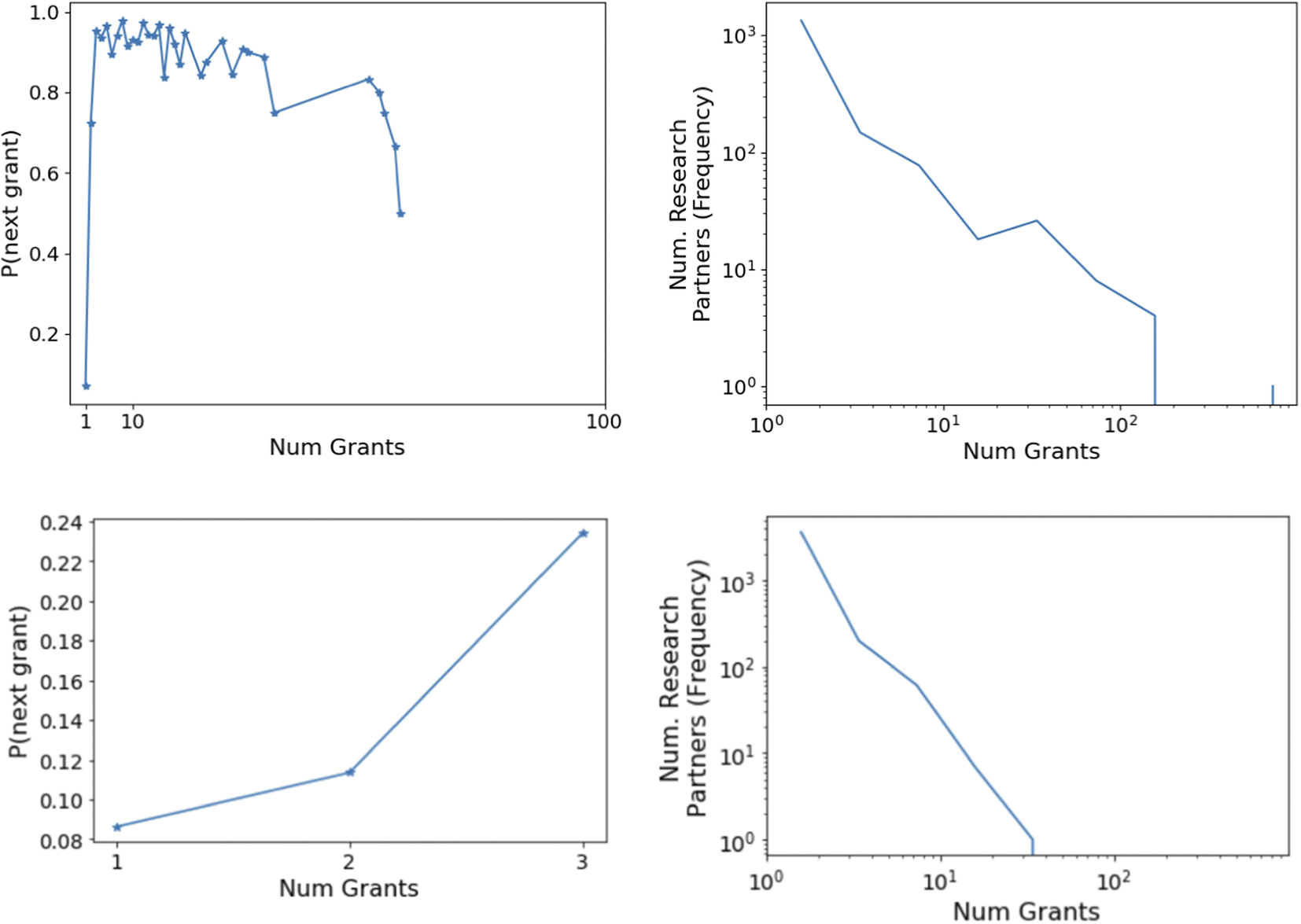
A similar effect is observed for implementation partners. In the case of Innosuisse, we find that there are more than 1000 implementation partners with 1 grant, but only about 100 with 2 grants. Once again, the key barrier appears to be in achieving the second collaborative project. In the case of SBIR, we find that the research partners struggle to obtain a 2nd grant, but for SBIR applicants the challenges remain even after the 2nd grant with only 11% achieving a 3rd grant, which is very different from Innosuisse. Also, in the case of Innosuisse many partners achieved over 50 grants, whereas in the case of SBIR, only 2 have achieved so many grants.
Analysis of Grant Allocation and Success Trajectory
The allocation of grants exhibits a significant disparity in the likelihood of continuing funding success following the initial grant award. For research partners who successfully secure an initial grant, the probability of obtaining a second grant is notably low. Conversely, partners who have secured two grants demonstrate a high likelihood of securing a third. This pattern suggests a pivotal challenge in transitioning from the first to the second grant, which appears to be the most significant barrier to sustaining funding success. The data further reveals a “rich-get-richer” dynamic where, once partners overcome the initial hurdle of securing a second grant, they are likely to continue receiving additional grants with high probability.
Comparative Analysis Between Innosuisse and SBIR
The comparative analysis between the Innosuisse and SBIR programs highlights notable differences in funding trajectories:
-
• Innosuisse: The pattern shows a steep drop in the number of partners with more than one grant, but for those who surpass this threshold, there is a substantial increase in the likelihood of subsequent grant success. Several partners in Innosuisse have achieved more than 50 grants.
-
• SBIR: Partners face challenges not only in obtaining a second grant but also in continuing beyond the second grant. Only 11% of partners who have obtained a second grant manage to secure a third, indicating persistent challenges across funding rounds. Very few partners in SBIR reach higher numbers of grants, with only two having achieved more than 50 grants.
Also, we discuss network properties’ impact on winning grants, which also reflects on choosing the right partner, and analyze associations between network properties and winning grants. As seen in Figure 3, the betweenness of the implementation partner has a higher impact on winning grants compared to the research partner betweenness. We also ran a partial correlation for the number of grants versus betweenness where we control for the degree on the graph (number of partners). Interestingly, betweenness is somewhat more predictive than degree, meaning the network position also matters in addition to just working with many partners. For each of our funding schemas, we find them as follows.
(top-left) the betweenness centrality (on the PI graph) of the Implementation PI versus the number of grants in the case of Innosuisse, (bottom-left) SBIR, (top-right) the betweenness centrality of the Research PI versus the number of grants in the case of Innosuisse, and (bottom-right) SBIR.

Innosuisse:
-
• The network position (betweenness) of the implementation (industry) partner is more impactful on grants than the position of research partner betweenness.
-
• Partial correlation between the number of grants versus betweenness controlling for the degree (number of partners), suggested that betweenness is more predictive than the degree, meaning the network position also matters in addition to just working with many partners.
-
• Total of 25,099 Innosuisse grants since 1981.
SBIR:
-
• The betweenness of the research partner has a higher impact on winning grants compared to the implementation partner betweenness, which is the opposite of Innosuisse, suggesting that for SBIR the research partner’s ability to bridge is more important than the implementation partners.
-
• Total of 201,426 SBIR grants awarded since 1983; out of which 18,339 have a research partner.
3.2.2 Cross-country policy on academic-industry or solely company funding
Having examined cross-country disparities and the success rates of research funding applications thus far, our focus now shifts toward an exploration of funding schemas—namely, academic-industry collaboration and sole company funding—and funding distribution over PIs as mentioned in RQ2, while elucidating the cross-country policy landscape over the past three decades. Our objective is to illustrate the superior outcomes with regard to securing future project grants and the amount of funding obtained. Investigating the effectiveness of these distinct funding schemas and their synergy with government policies assumes paramount significance. This research endeavor holds the potential to furnish actionable insights that resonate with policymakers, funding agencies, and stakeholders entrenched in the sphere of research collaboration and resource allocation. As we unravel the intricate interplay between funding schemas and evolving policy dynamics, we aspire to unearth best practices and strategies conducive to enhancing research outcomes and optimizing resource allocation on a global canvas. Below, we present two pertinent questions and their corresponding answers to elucidate our pursuit.
-
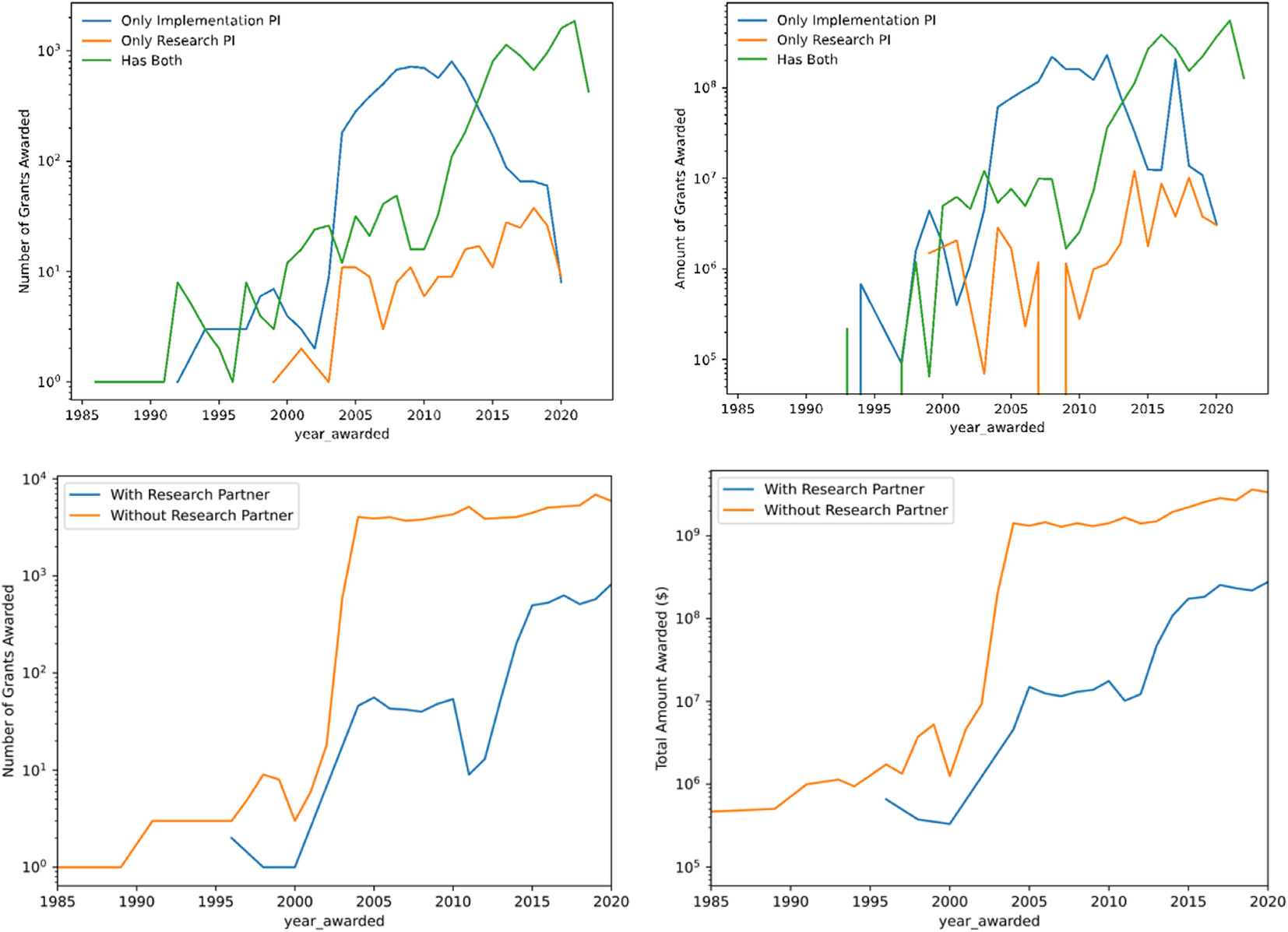
1. How have government decisions and policies on funding schema evolved in various countries over the past 30–40 years with regard to funding schemas, specifically academic-industry collaboration and sole company funding? This question addresses the need to track and analyze changes in the funding decisions in different countries over a substantial period, providing a comprehensive view of policy dynamics. As observed in Figure 4 (top-left), the number of grants awarded for only research or implementation PI’s decreased significantly prior to 2020, but collaborative project funding (joint academic-industry) has been increasing (up until 2023 when we last obtained data). This is not the case for SBIR, as the graphs in Figure 4 (bottom-left) show that funding collaborative projects and company alone funding have been either constant or increasing (but not decreasing). Furthermore, SBIR’s policy appears to be to fund more companies alone rather than joint projects. This implies different policies applied by different countries when it comes to collaborative project funding.
-
2. How does the total amount for research projects differ between academic-industry collaboration and sole company funding, and how are these differences influenced by cross-country policies implemented during the last three decades? This question explores the financial aspects of funding schemas, assessing the amount of grants for research projects. It also seeks to establish connections between these differences and the policies enacted in different countries over the studied period. As shown in Figure 4 (bottom-right) the SBIR total amount going to companies alone since 2005 has been almost constant, while the SBIR total amount awarded for academic-industry collaboration has been increasing since 2012 in correspondence with the number of grants awarded.
(top-left) the trend of Innosuisse grants awarded to academic-industry and company alone, (top-right) the trend of total Innosuisse amounts for academic-industry versus individually, (bottom-left) the trend of SBIR grant awarded to academic-industry and company alone, and (bottom-right) the trend of total SBIR amount awarded to academic-industry.
3.2.3 Rich-get-richer: Prior successful PIs are more appealing
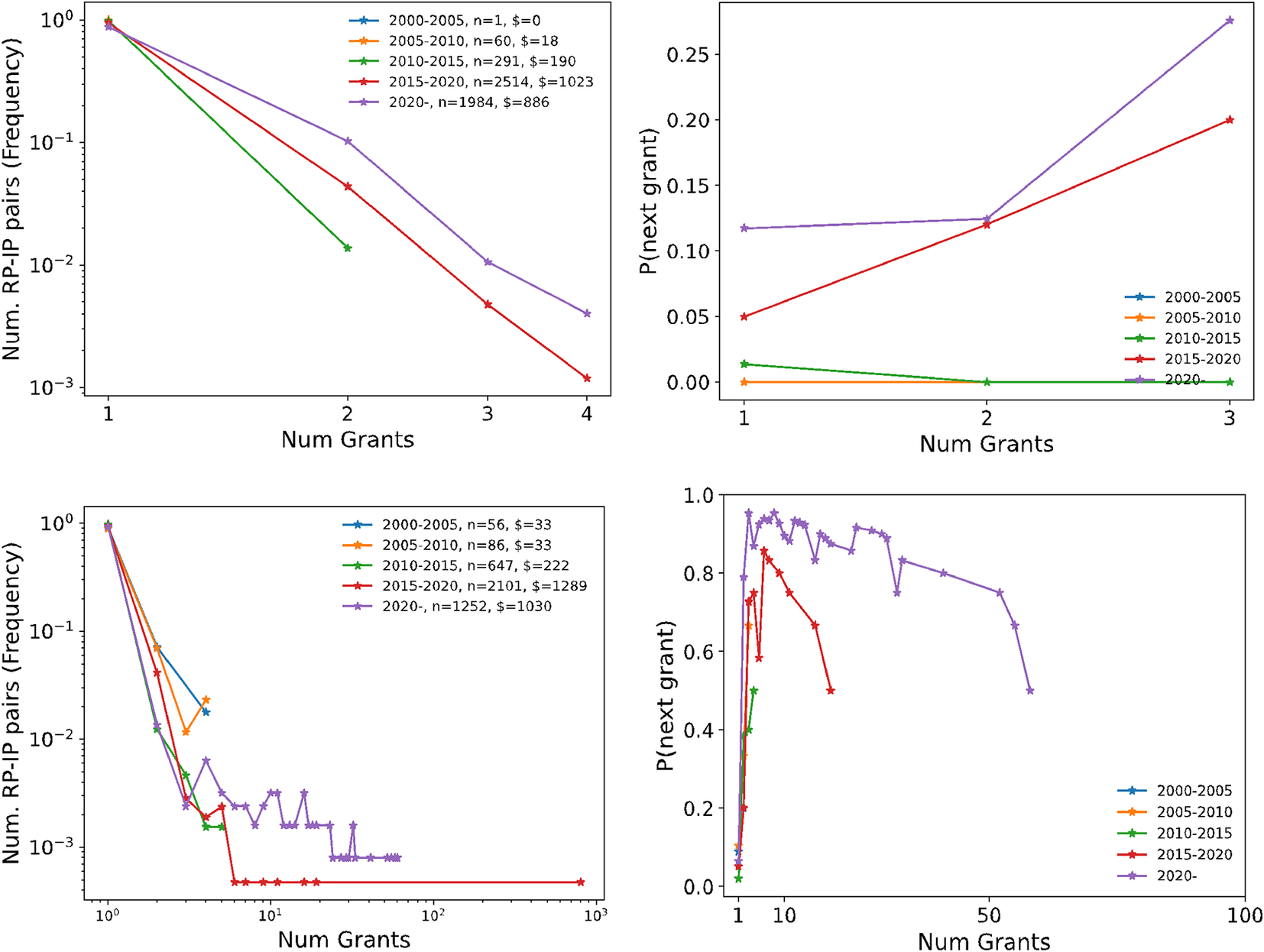
Principal investigators (PIs) are central figures in research projects, and their ability to secure multiple grants is often indicative of their research excellence. Understanding the factors that make certain PIs more appealing candidates for receiving multiple grants is relevant because it can shed light on the qualities and strategies that lead to research success. This knowledge is valuable not only for funding agencies but also for aspiring researchers aiming to enhance their competitiveness in grant applications. Additionally, variations in these factors across countries can highlight the importance of context-specific strategies. In Figure 5, we find that funding agencies awarded more grants to collaborative projects in recent years, and the probability of obtaining additional grants has been increasing over the years. As easily observed, the top-left figure illustrates the frequency of research-implementation partner pairs with respect to the number of grants from 2000 onwards for SBIR, whereas the top-right figure shows the probability of obtaining the next grant from 2000 onwards in the case of SBIR. We compare this with the case of Innosuisse, where the bottom-left figure shows the frequency of research-implementation partner pairs with respect to the number of grants from 2000 onwards for Innosuisse, and the bottom-right figure illustrates the probability of obtaining the next grant from 2000 onwards in the case of Innosuisse. This demonstrates the rich-get-richer phenomenon.
(top left) frequency of research-implementation partner pairs with respect to the number of grants from 2000 onwards for SBIR, (top right) probability of obtaining the next grant from 2000 onwards in the case of SBIR, (bottom left) frequency of research-implementation partner pairs with respect to the number of grants from 2000 onwards for Innosuisse, and (bottom right) the probability of obtaining the next grant from 2000 onwards in the case of Innosuisse.
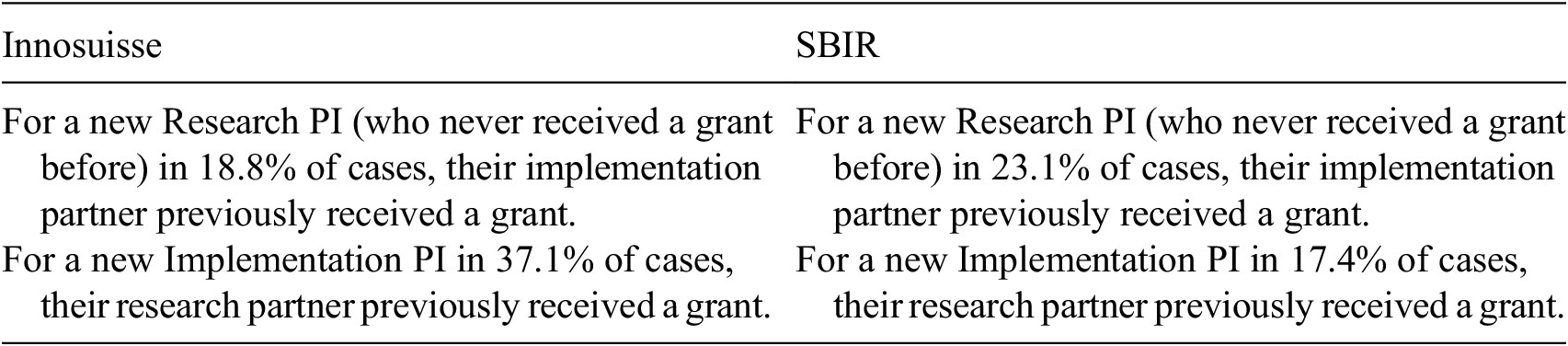
We now discuss RQ3, on how government funding schema can be tailored to promote successful research collaborations and improve funding allocation decisions. When funding agencies allocate grants to collaborative projects, it becomes imperative to discern the prior grant acquisition status of each Principal Investigator (PI). Specifically, we seek to determine whether one of the PIs has previously secured a grant. Table 1 presents a comparative analysis of the probability of obtaining new grants for partners engaged in research-implementation projects. Notably, our findings reveal that in a substantial fraction of 20–40% of cases, either the research or implementation partner previously received a grant.
Comparison of cross-country probability of having a partner who has already received the grant
In addition to having received a prior grant and possessing a track record, several other parameters are essential when identifying ideal partners for collaborative research endeavors. These criteria encompass a broad range of factors that contribute to the success of research partnerships. These include expertise, cultural alignment, effective communication, ongoing support, project-management capabilities, flexibility, and scalability skills. The amalgamation of these attributes ensures a robust and productive collaboration that can navigate the complexities of research projects and adapt to changing circumstances, ultimately contributing to the achievement of research objectives and innovative outcomes.
Government policies in designing funding schema play a pivotal role in shaping the research environment and fostering collaboration across sectors. At the same time, industry-academic collaborations have unique needs and not all PIs may be immediately suited to carrying out such collaborations, perhaps explaining the high rate of repeated grants observed in the two datasets in our study. At the same time, repeated funding of the same recipients has risk and suggests that there may be certain PIs that choose to focus on this type of funding thereby excluding other potentially equal or better recipients from obtaining these grants. Notably, a similar phenomenon was hypothesized in philanthropy where most grants tended to repeat multiple years (Behfar and Shekhtman Reference Behfar and Shekhtman2024). While the SBIR grants are somewhat more evenly distributed with fewer PIs receiving multiple grants, the Innosuisse grants are highly concentrated, which may not be desirable.
To avoid sucha phenomenon where some PIs dominate receipt of funding, policies such as the NIH’s proposal to limit a PI’s number of grants could be considered (Kaiser Reference Kaiser2017). While such policies can be criticized as limiting potentially very productive PI’s from reaching their full potential, they also ensure that funds are spread sufficiently broadly to allow a wide range of projects to be carried out. In particular, for industry-academic collaborations, it is possible that much of the benefit comes from the initial interactions between the sides and thus additional grants to the same PIs may have less value in circulating novel ideas between the different sides.
Related to the previous issue of funding concentration, funders should make considerable efforts to publicize grants specifically for industry-academic collaborations to more PIs and potentially assist in identifying matches between partners of different types. Such projects have been proposed (Manotungvorapun, Reference Manotungvorapun and Gerdsri2019), however, the implementation can still be improved in many contexts. Likewise, policymakers should ensure that sufficient benefits and minimal costs exist to establish such collaborations. In terms of the former, benefits can come from direct funding calls, other funding channels, or support of some other type (e.g., research tax credits for companies). In terms of costs, reducing the bureaucratic and reporting costs of such collaborations could be beneficial, especially since industry and academic partners already tend to have distinct calls in terms of applied versus basic research (Manotungvorapun, Reference Manotungvorapun and Gerdsri2019).
4 Conclusion
Our research revealed a dynamic interplay between government policies, research funding schemas, and their influence on research collaborations and grant application success rates. Our analysis of policy trends over the past three decades, coupled with empirical insights from Innosuisse and SBIR programs, could support policymakers, funding agencies, and stakeholders in the research ecosystem.
Our findings underscore the prevalence of policy adaptability. The case of Innosuisse exemplifies some reversing policies that suggest a shift in support for academic-industry collaboration. Such adaptability potentially allows governments to align their funding policies with evolving research needs and objectives, including through promoting collaboration across sectors. The SBIR program places less specific focus on academic-industry collaboration, though many projects do involve partners from both areas. While the program exhibited a significant decrease in academic-industry collaboration support during the early 2000s, a subsequent about 10% improvement in the fraction of grants awarded by 2015 demonstrates a responsiveness to changing dynamics. However, the lingering preference for company-alone research support suggests that the program could support considerably more academic-industry collaborations. Further work should explore additional schema in other countries and contexts to better understand global trends in academic-industry collaborations.
Finally, our study, drawing from these observations, offers concrete recommendations for policymakers. We advocate for regular policy evaluation, the promotion of interdisciplinary research, and the provision of incentives for collaborative projects. We emphasize the value of long-term funding commitments, transparent and accountable grant allocation processes, and international collaboration. By adopting these measures, policymakers can create an ecosystem that nurtures successful research collaborations, encourages innovation, and bolsters grant application success rates. Likewise, policymakers will want to consider measures of the impact of academic-industry collaborations which could include incorporating data on publications, patents, or the founding of new start-ups to understand how researchers involved in this collaboration may go on to have diverse impacts.
Data availability statement
In this paper, we use public data available in these two links:
Innosuisse project data, at: https://www.aramis.admin.ch/About/ (Project search).
SBIR data, at: https://legacy.www.sbir.gov/data-resources (Award data without abstract information).
However, due to GDPR concerns over personal data, we would rather not publish them as open data.
Acknowledgment
The authors acknowledge the review comments received by the reviewers, which we benefited from in revising this article.
Author contribution
Conceptualization: S.K.B.; Methodology: S.K.B. and L.S.; Supervision: All authors; Validation: All authors; Writing—original draft: S.K.B.; Writing—review and editing: S.K.B. and L.S. All authors approved the final submitted draft.
Funding statement
This work received funding from HES-SO Switzerland (Domaine Economie et Services) under the program RCSO ISNet and the grant number 120057/ES-ISNET22-08.
Competing interest
Conflict of Interest Statement: The authors declare that they have no competing interests.


 Open access


Comments
No Comments have been published for this article.